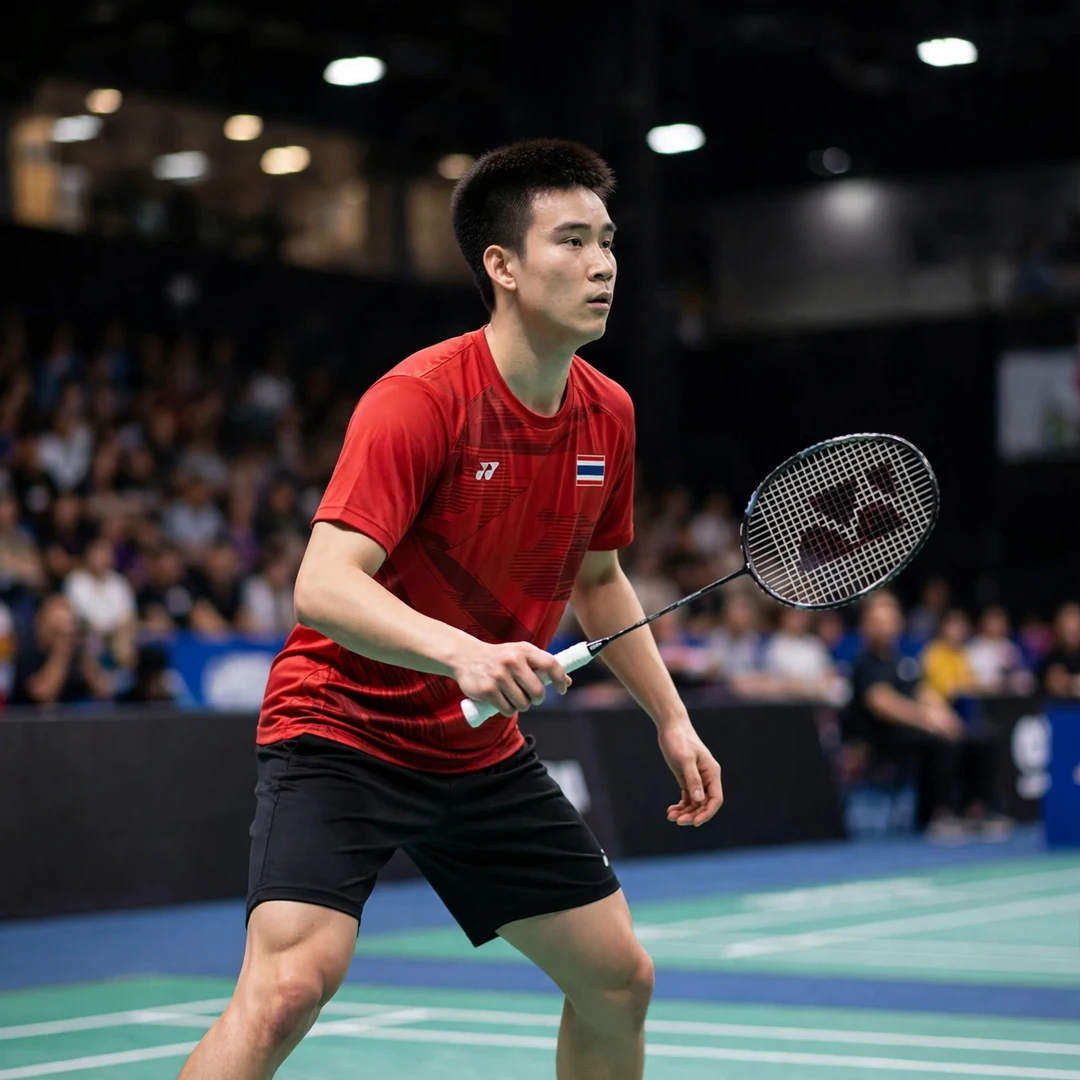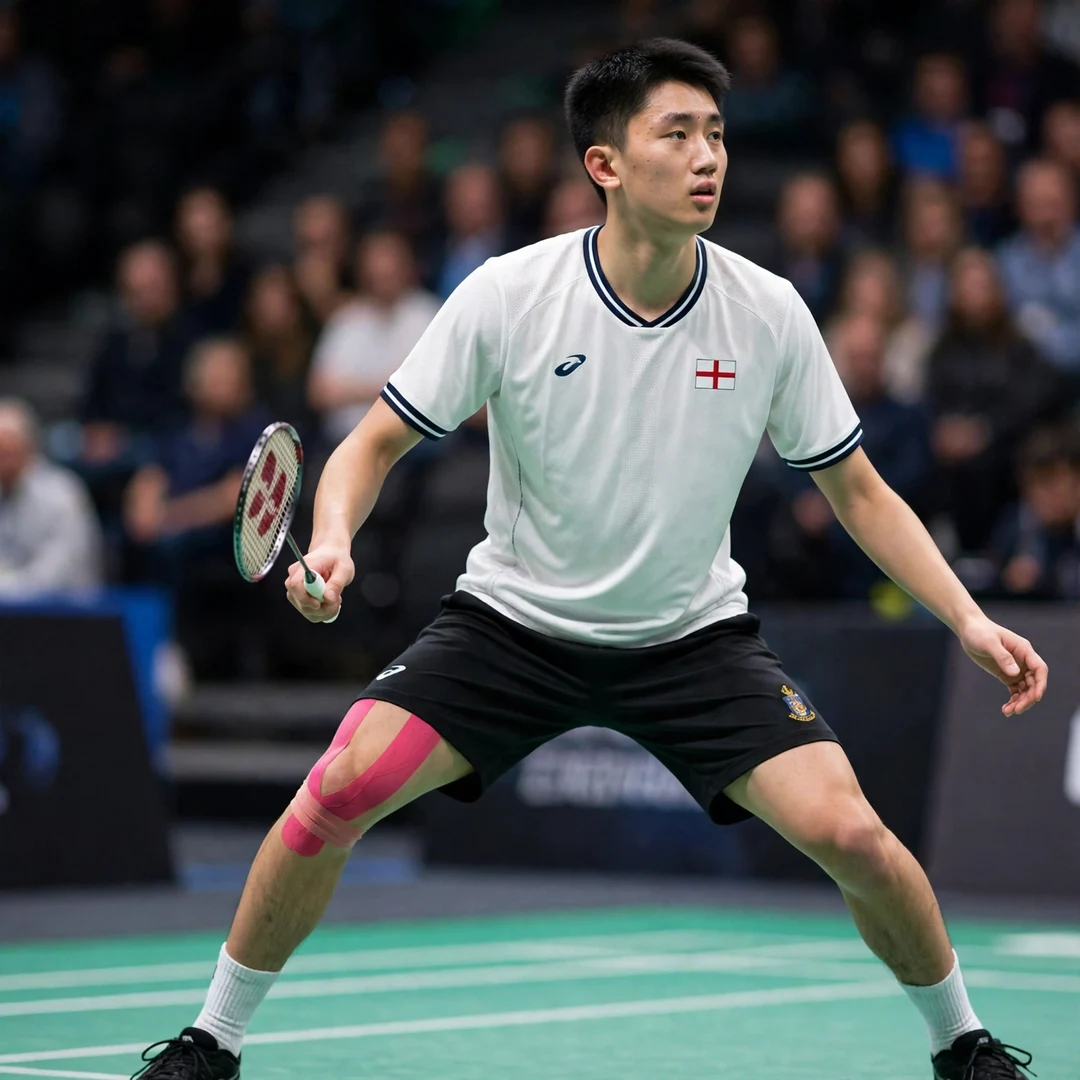
English Men’s Singles Badminton Star
Harry Huang

England
Player Event: Men’s singles
Born 25 August 2001 · From Bedford, England · Right-handed · 185 cm tall
Playing Style: Right-handed all-court rally player built on fitness, stubborn defence and third-game nerve
Understanding Harry Huang (English Badminton Star)
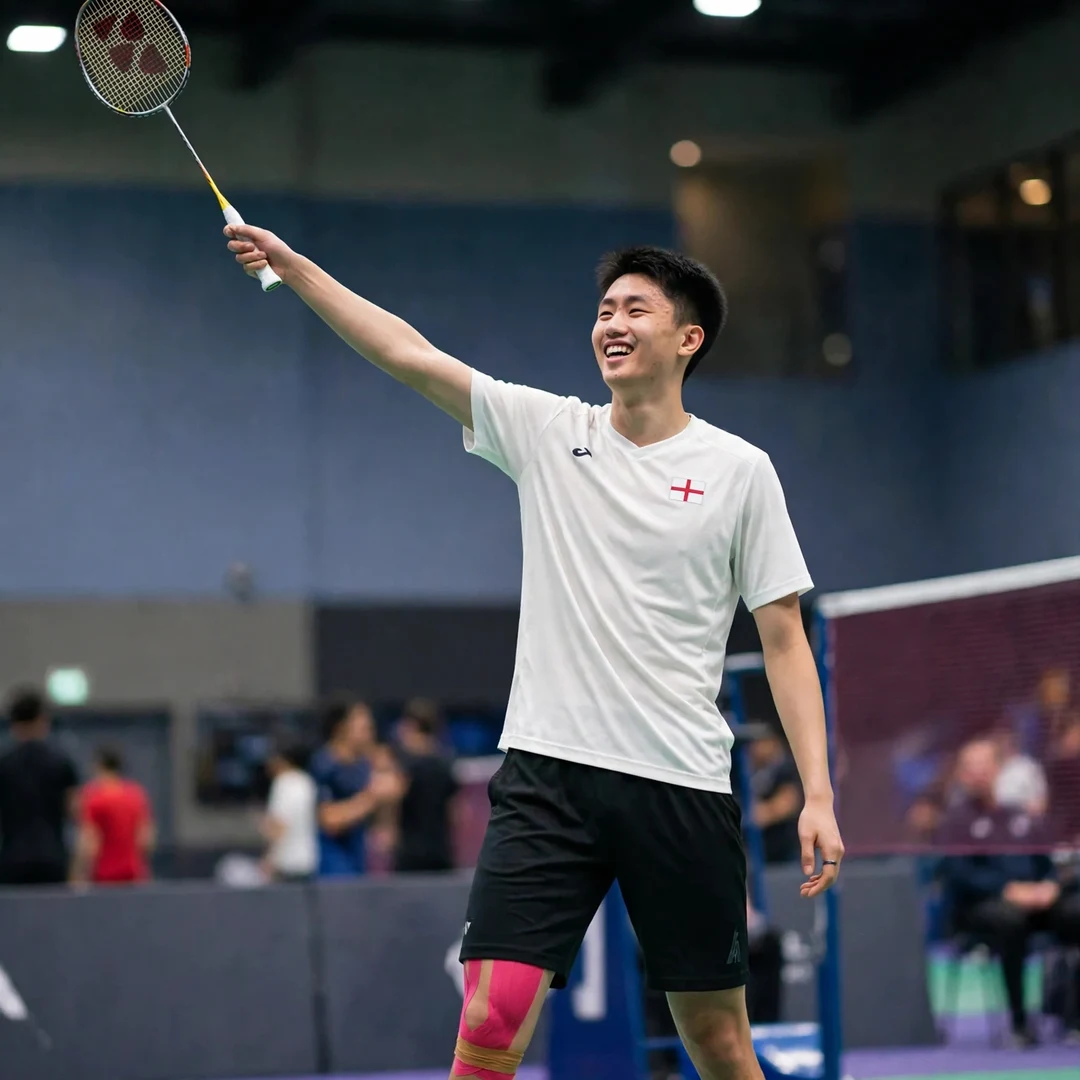
Harry Huang is a professional badminton player from England and one of the most admired English men’s singles players on the BWF World Tour. In the Week 43 world rankings published on 20 October 2026 he stands at world No. 64 with 28,594 points, a fortnight after reaching a career-high No. 52. He is the 2024 English national champion, a three-time winner on the BWF International Challenge and Series circuit, and a three-time European team bronze medallist with England. His story — a European Under-15 champion who needed eight patient years to break through as a senior — is why coaches use him as a case study in long-term development.
Early Life in Bedford and the Road to Milton Keynes
Harry Huang was born on 25 August 2001 in Bedford, Bedfordshire, England, and his Chinese name is Huang Hanrui. He started playing club badminton for the All Stars in Milton Keynes, one of England’s strongest junior clubs, and the talent showed early: as a schoolboy he won the European Under-15 singles gold medal, beating the best young players on the continent. Bedford and Milton Keynes are not famous badminton towns like the great academies of Asia, but the English club system gave him weekly competition, committed coaches and a clear pathway into the national setup.
Growing Up in the English Club System
From club badminton, Huang moved through the Badminton England pathway while studying at the University of Nottingham, a university with a strong sporting tradition that has supported many English internationals. Balancing lectures with training camps and junior tournaments is never easy, and his late-teen years did not bring the flood of junior titles that his Under-15 gold had promised. Instead of chasing headlines, he kept building: better footwork, a stronger body, and the rallying patience that would later become his trademark on the senior circuit.
A European Title at Under-15
Here is the fact that makes Huang’s career unusual: he was a European champion at Under-15 level, yet his first senior international title did not arrive until he was 22. Many young champions disappear during those in-between years, when results stall and funding is scarce. Huang treated the plateau as part of the process. He played the European circuit week after week, accepted early-round defeats against higher-ranked opponents, and collected the experience that junior medals cannot teach — how to win ugly, how to travel, and how to peak for the matches that matter.
University Years in Nottingham
The junior highlight remains the European Under-15 singles title, won for the All Stars club in Milton Keynes, and it still shapes how he plays today. Early success taught him to construct rallies rather than blast winners, because at junior level he beat bigger hitters by moving them until they broke down. Those habits — discipline in defence, patience in attack, and calm under pressure — became the foundation of the senior game that finally flowered in 2023.
Career Milestone #1
First Senior Titles: Egypt and Hungary Gold in 2023
Huang came to prominence in 2023 with two titles in a single autumn. At the Egypt International in Cairo he beat France’s Yanis Gaudin in a final that showed his nerve: 21-11, 9-21, 22-20, saving his best badminton for the very end of a deciding game. Weeks later he won the Hungarian International as well, defeating Denmark-based Karan Rajan Rajarajan 21-18, 21-16 in the final. Two senior titles in one season announced that the former Under-15 champion had become a genuine professional threat on the International Challenge and Series circuit.
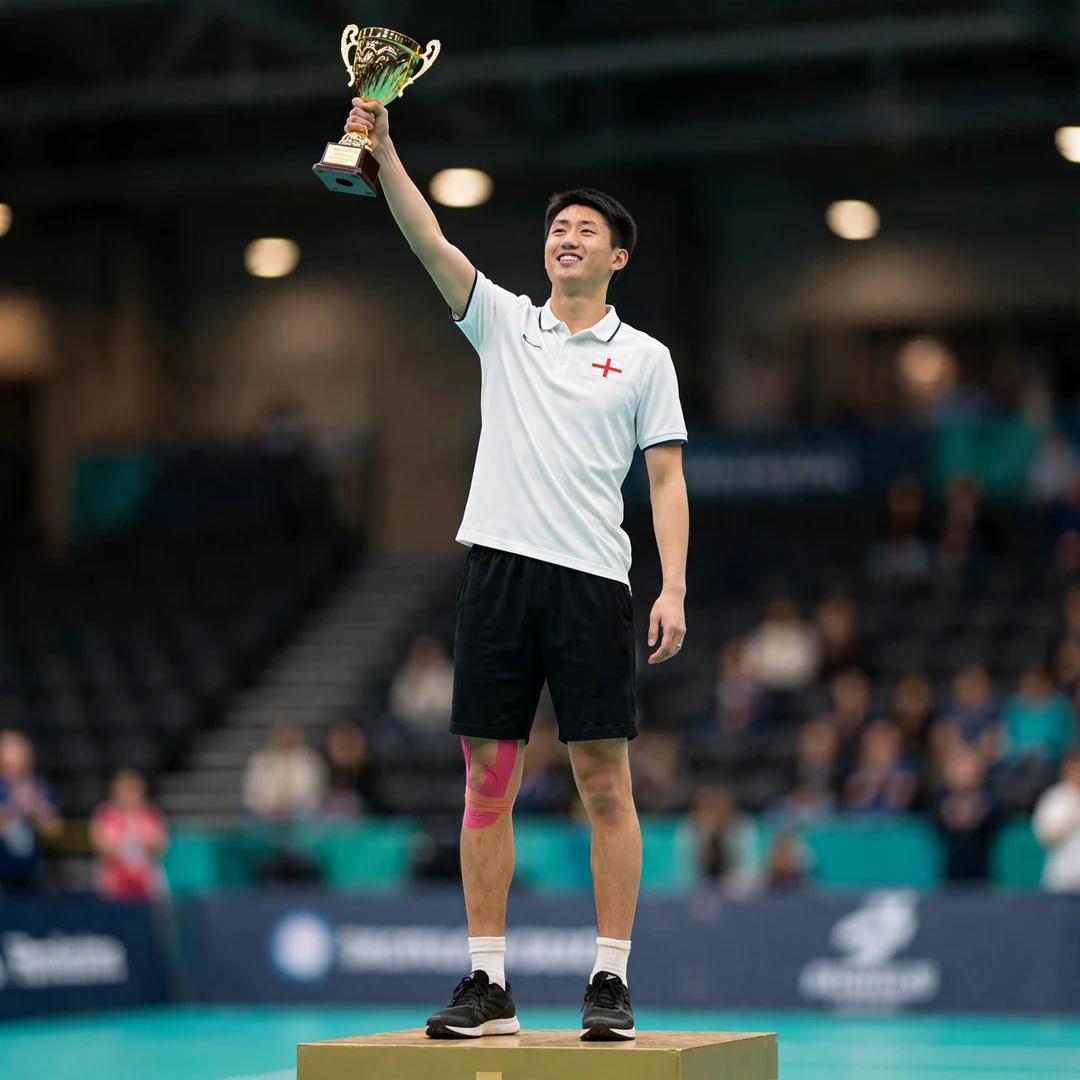
In February 2024, Huang became the English national champion. Seeded number one for the men’s singles at the English National Badminton Championships in Nottingham, he justified his seeding by beating Cholan Kayan in the final to win his first national title. For an English player, the national crown still matters enormously: it confirmed Huang as the country’s leading singles player, earned him selection leadership within the squad, and less than two weeks later he led England at the European Men’s Team Championships in Łódź, where England took bronze.
Career Milestone #2
English Champion: The 2024 National Title
The rest of 2024 was an education at the highest level. At the Thomas Cup in Chengdu, Huang opened the tie for England against defending champions India and lost 15-21, 15-21 to HS Prannoy — a defeat, but a first taste of leading his country in the world team championship. At the European Championships in Saarbrücken he took Denmark’s Rasmus Gemke, a top-20 player, to three games before falling 12-21, 21-16, 13-21. He was not winning these matches yet, but he was learning exactly what the top level demanded.
The 2025 season opened with team silverware. In February, Huang was part of the England squad that won bronze at the European Mixed Team Championships in Baku — his second European team medal in two years, after the men’s team bronze in Łódź. Team events ask something different of a singles player: you play for the tie, not for yourself, and points won early can decide everything. Huang’s reliability in that environment is a large part of why England’s coaches keep selecting him for championship squads.
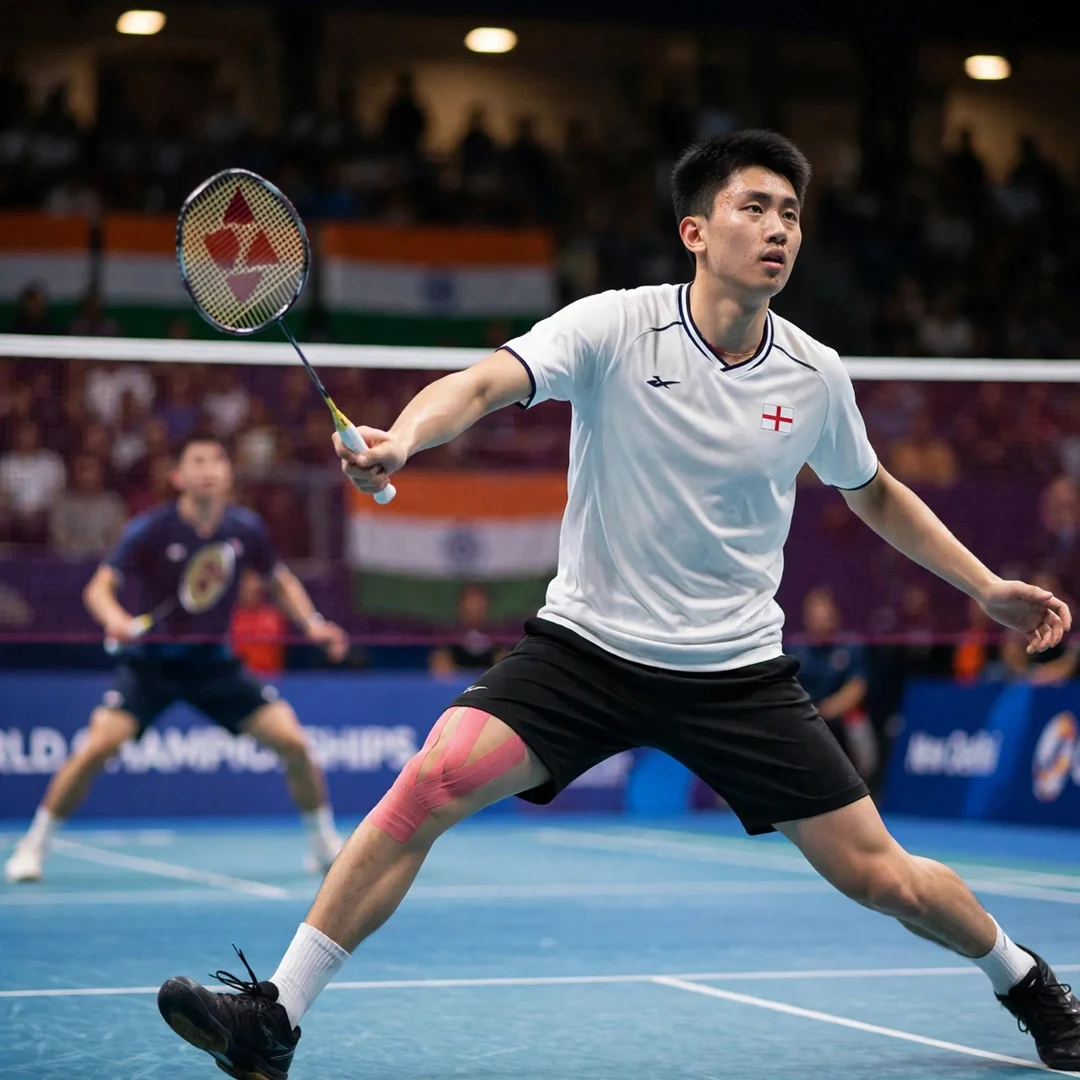
His 2025 season was his best yet. At the Austrian Open in Vienna he was England’s standout performer: a marathon semi-final win over Chinese Taipei’s Liao Jhuo-Fu, 21-16, 21-23, 21-14 in over an hour, took him into the final, where he lost 17-21, 14-21 to top seed Magnus Johannesen of Denmark. A silver medal at International Challenge level, won by beating seeded players across the week, showed that the 2023 breakthrough was no one-off — Huang could now go deep in strong European fields again and again.
Career Milestone #3
Austrian Silver and the Yusuf Double-Header in 2025
Two weeks of autumn 2025 summed up Huang’s career better than any statistic. In Istanbul he won the Turkey International, his third senior international title, by beating Indonesia’s rising star Muhamad Yusuf in the final, 21-19, 11-21, 21-16 — another deciding game taken by the Englishman when the pressure peaked. It was the kind of win, against a young opponent from a great badminton nation, that changes how a player is seen on the circuit: no longer a hopeful, but a man who closes finals.
Seven days later in Prague, the same two men met again in the Czech Open final — and this time Yusuf won, 21-14, 21-12. Back-to-back finals against the same opponent, one won and one lost, is the reality of professional badminton at this level: there is no time to celebrate or to sulk. Huang took the defeat, kept his ranking moving, and stayed on the road. Players and coaches who followed the two finals saw the rivalry clearly: two 2025 finals, two different winners, and a contest that is not finished yet.
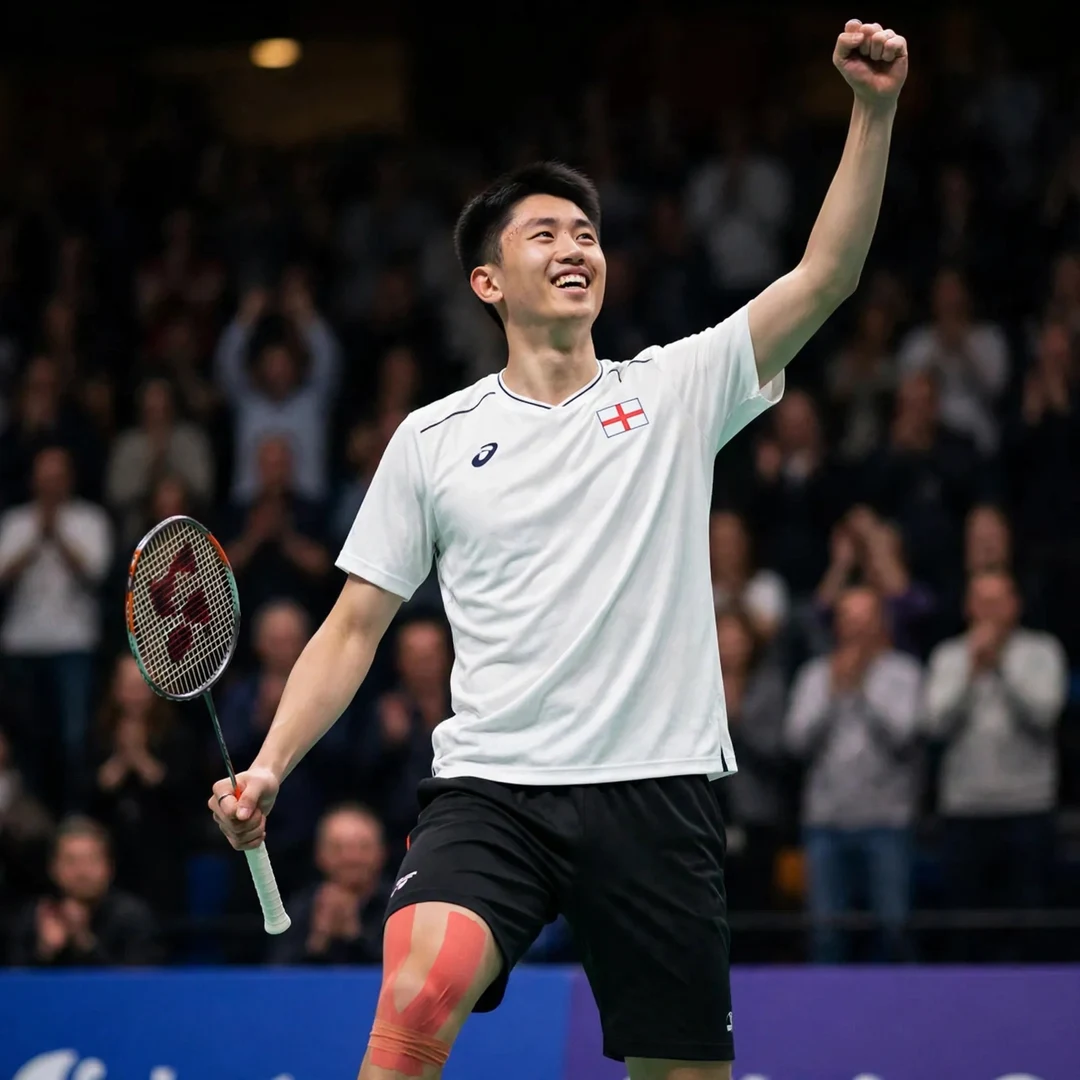
By 2026, Huang had added the biggest stages of all. He won European team bronze medals with England at the 2025 European Mixed Team Championships in Baku and the 2026 European Men’s Team Championships in Istanbul, on top of the 2024 bronze in Łódź. At the 2026 World Championships in New Delhi he beat El Salvador’s Uriel Canjura Artiga 21-10, 21-8 in the first round before losing to Japan’s Kodai Naraoka in the round of 32.
Career Milestone #4
Career-High No. 52 and the World Championships Stage
The autumn of 2026 then brought the ranking reward. Consistent weeks on the European circuit carried Huang to a career-high world No. 52 on 6 October 2026 — the highest standing of his life, reached at 25 years old and still rising through the system rather than bursting onto it. The same month he reached the Dutch Open quarter-finals, where he lost to Daniil Dubovenko, and the Czech Open quarter-finals in Prague, where Denmark’s Ditlev Jaeger Holm beat him in three games. Quarter-finals at Super 100 level, added to his International Challenge titles, mark the next frontier clearly: Huang now needs one big week at a higher-grade event to break into the world’s top 50 and stay there.
The rankings tell the story of a player still climbing. A career-high of No. 52 at the start of October 2026 became No. 64 with 28,594 points in the Week 43 rankings of 20 October, as points from his big 2025 weeks came under pressure — the weekly reality for every player outside the elite. What matters is the direction of travel: national champion, three international titles, three European team bronzes and World Championships experience by the age of 25. Huang’s schedule stays deliberately European-heavy, built around the International Challenge circuit where his consistency earns its keep, with Super 100 and World Tour appearances whenever the ranking opens the door.
Playing Style
The All-Court Rallying Style: Fitness, Defence and Nerve
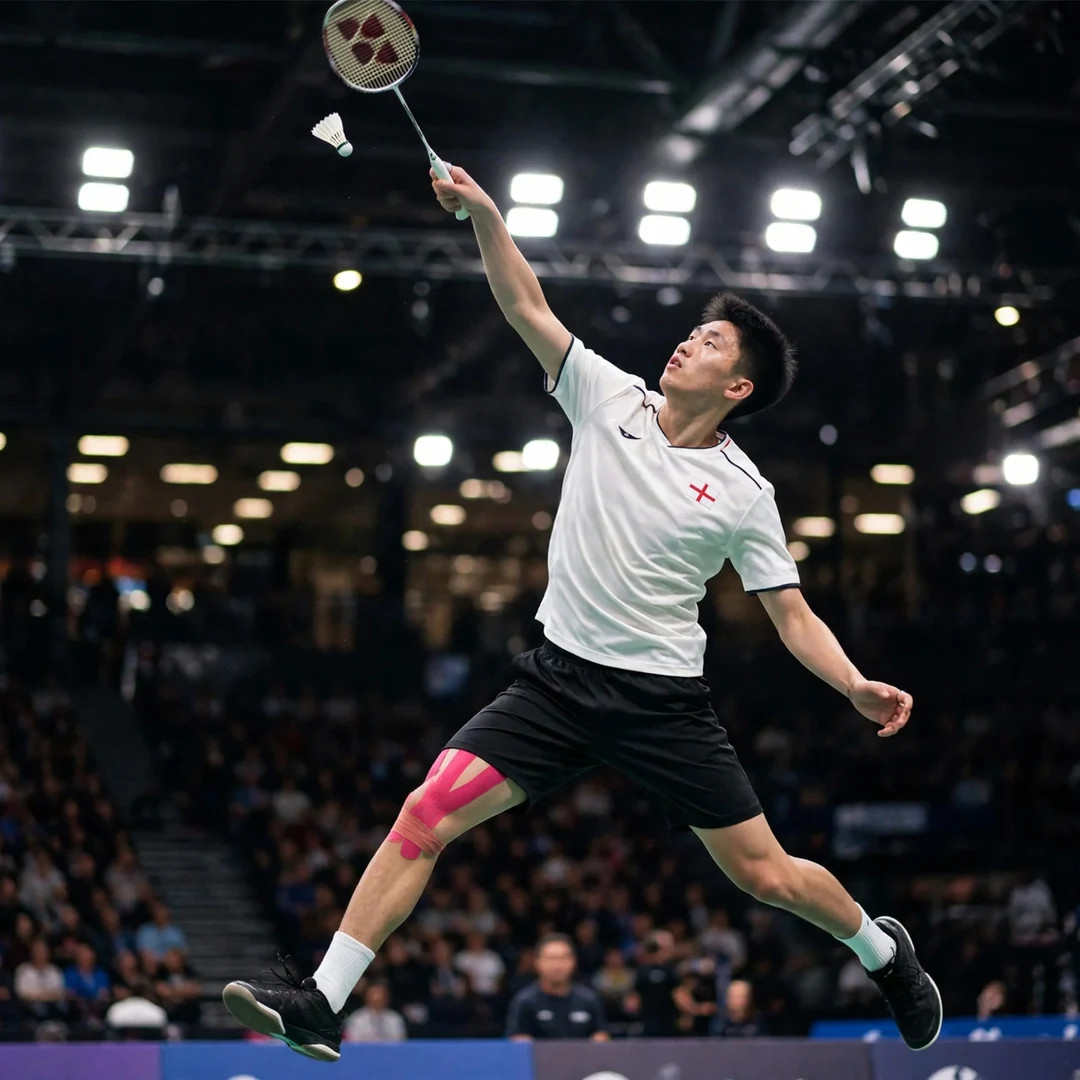
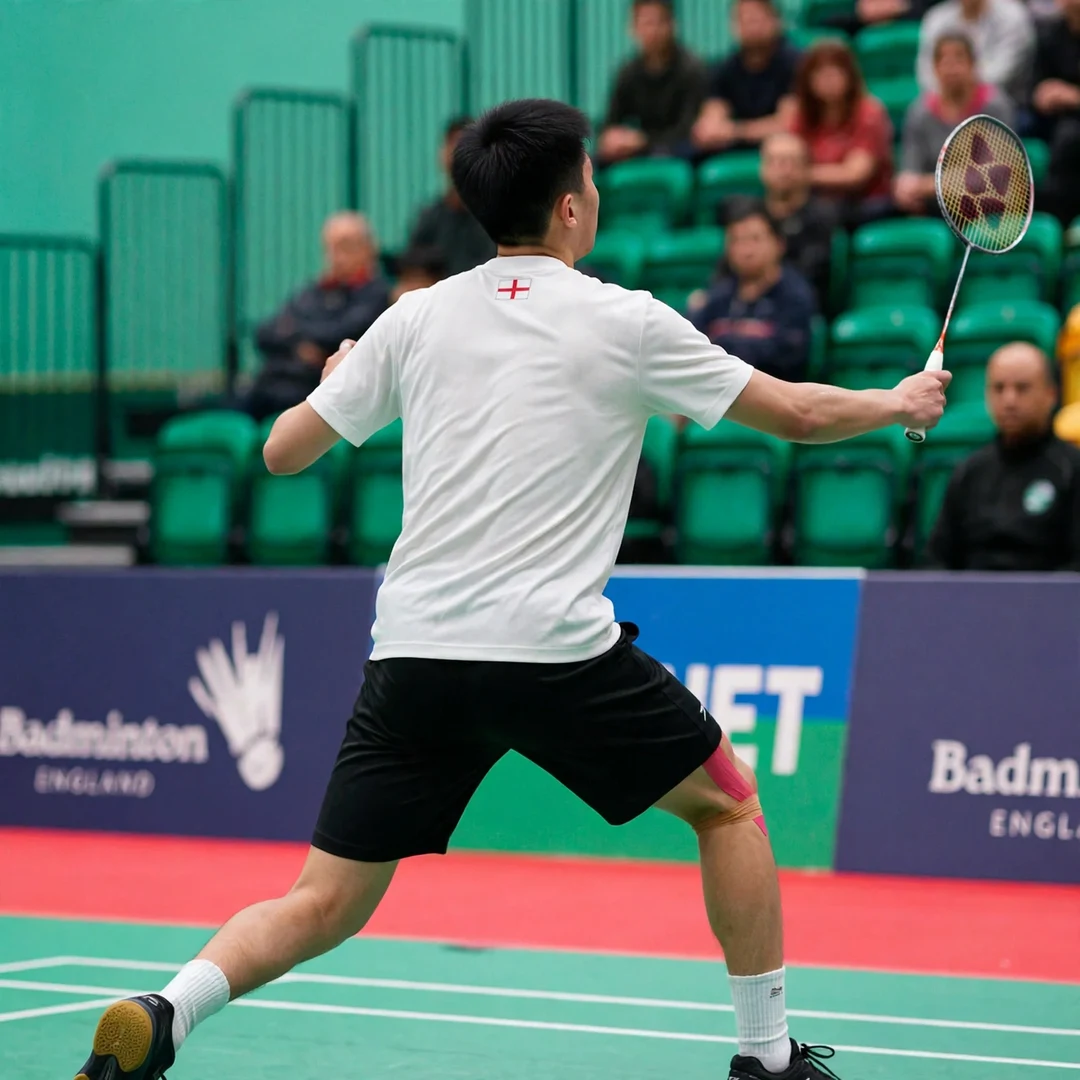
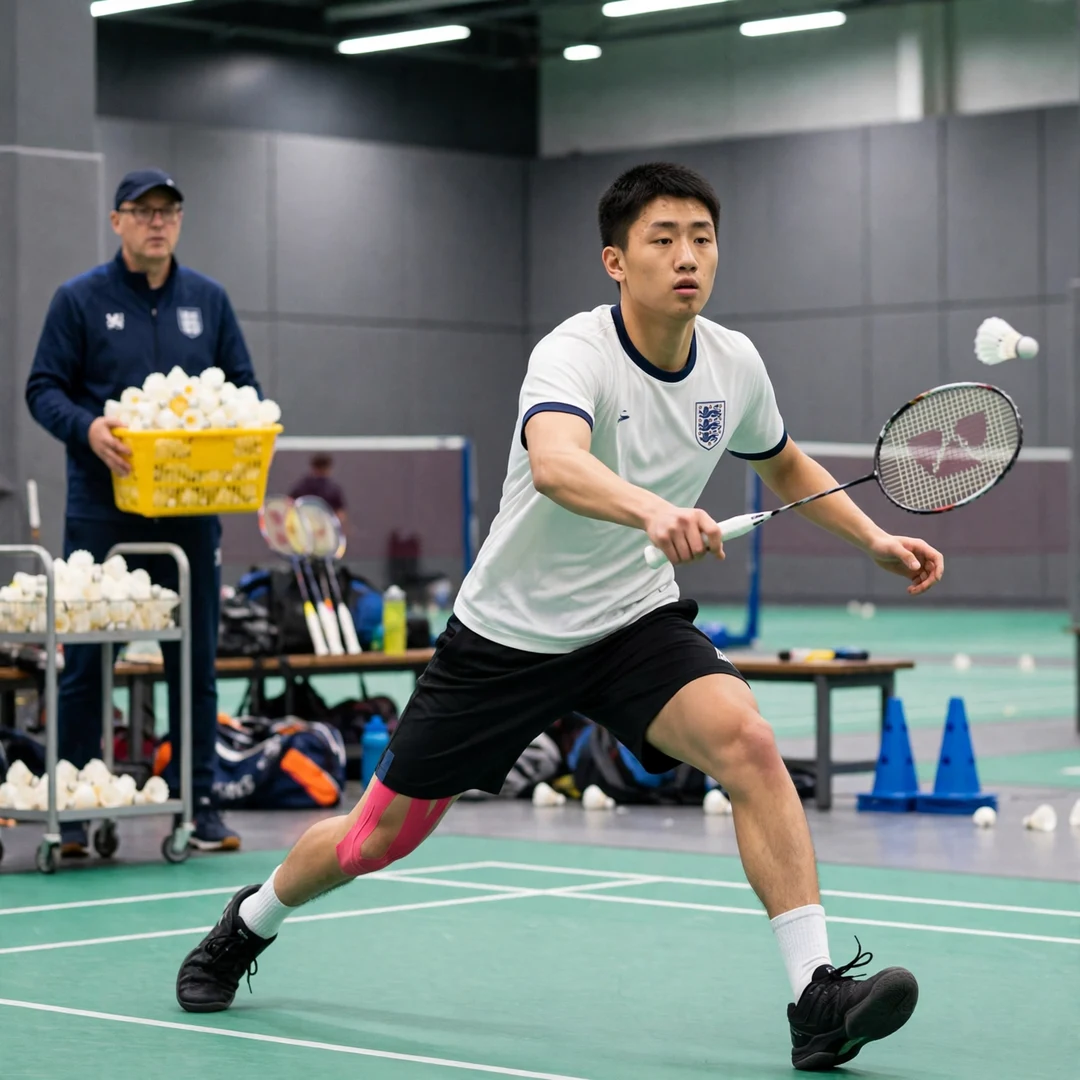
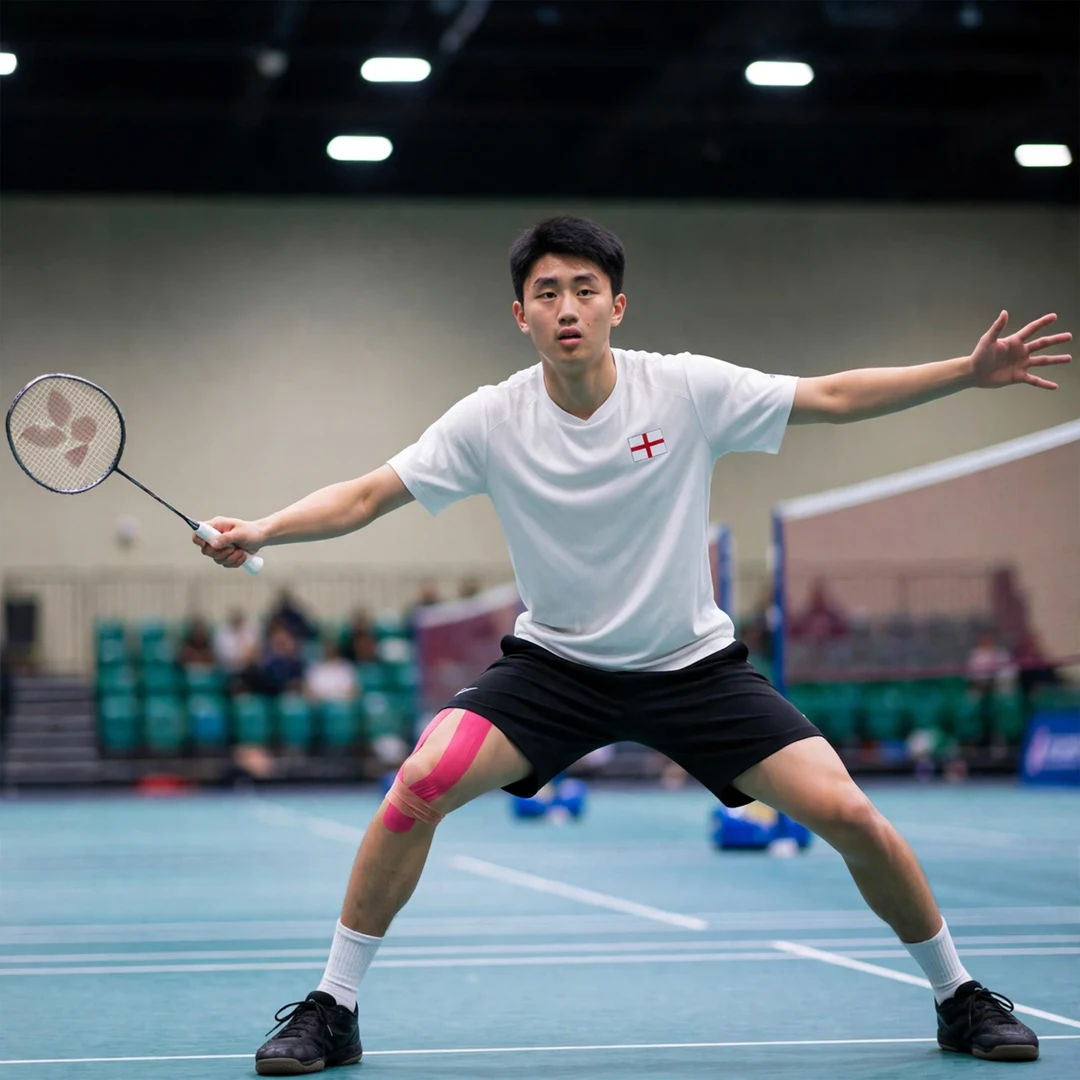
Harry Huang’s playing style is all-court rallying built on an exceptional fitness base. At 185 cm he covers the court with long, economical strides, defends stubbornly from a low centre of gravity, and is content to play thirty-shot rallies until the opponent’s patterns crack. He does not own the biggest smash on the circuit, so he wins points the honest way: by moving the shuttle, varying the pace, and choosing the attack only when the rally has been built. Coaches describe him as a percentage player — few wild errors, few gifts, and a defensive wall that frustrates power players.
His signature strength is the deciding game. The Egypt International final was won 22-20 in the third; the Turkey International final was won in three; the Austrian Open semi-final was won in three after more than an hour on court. When matches stretch and legs burn, Huang’s training base and composure separate him from opponents with more natural weapons. He reads the big points calmly, keeps his length under pressure, and trusts the rally to come back to him — a temperament that cannot be faked and that young players can absolutely train.
Young players should watch three things in Huang’s game. First, his defensive resets: after every deep lunge he recovers to base in one balanced movement, ready for the next shot. Second, his backhand corner: instead of avoiding it, he has built a reliable round-the-head and backhand clear that keep rallies alive. Third, his error management: he would rather play one more safe rally than donate points chasing a spectacular winner. None of these need talent. They need coaching, repetition and patience — exactly what an academy environment provides.
Mental Strength
Composure, Patience and Self-Belief
The first life lesson from Harry Huang’s career is that early success guarantees nothing, and slow progress proves nothing either. A European Under-15 champion at school, he waited eight years for his first senior title — and arrived as a better, more complete player than the prodigies who burned brighter and faded. Belief, in his career, is not a poster on a wall. It is turning up for another ordinary training week in Nottingham or Milton Keynes, year after year, convinced the work will eventually be paid back.
The second lesson is how to answer defeats. Huang lost a Czech Open final a week after winning in Turkey, lost to HS Prannoy on his Thomas Cup debut, and lost to Kodai Naraoka at the World Championships — and each time the response was the same: analyse, train, enter the next event. He does not protect his ranking by hiding from strong opponents, because he understands that the losses against the best players are the lessons that built his game. Young players who fear defeat should study that attitude carefully.
Parents can take practical lessons too. Huang balanced university study with elite training, proving that education and professional sport can strengthen each other when the schedule is honest. He played the full European circuit rather than only glamorous events, because ranking points and match craft are earned in ordinary halls. And he treated the national championships and team events as seriously as any final — the habits of a professional are built in how a player handles every week, not just the famous ones.
Learning Reference
ST Badminton Academy Connection
ST Badminton Academy has no partnership, sponsorship or endorsement relationship with Harry Huang or Badminton England. This profile is an educational case study for our students and parents, built from public tournament records. We study his career because the habits behind it — patience, fitness, defensive discipline and composure — are the same habits we coach in Kuala Lumpur and Singapore, whatever level a child plays at.
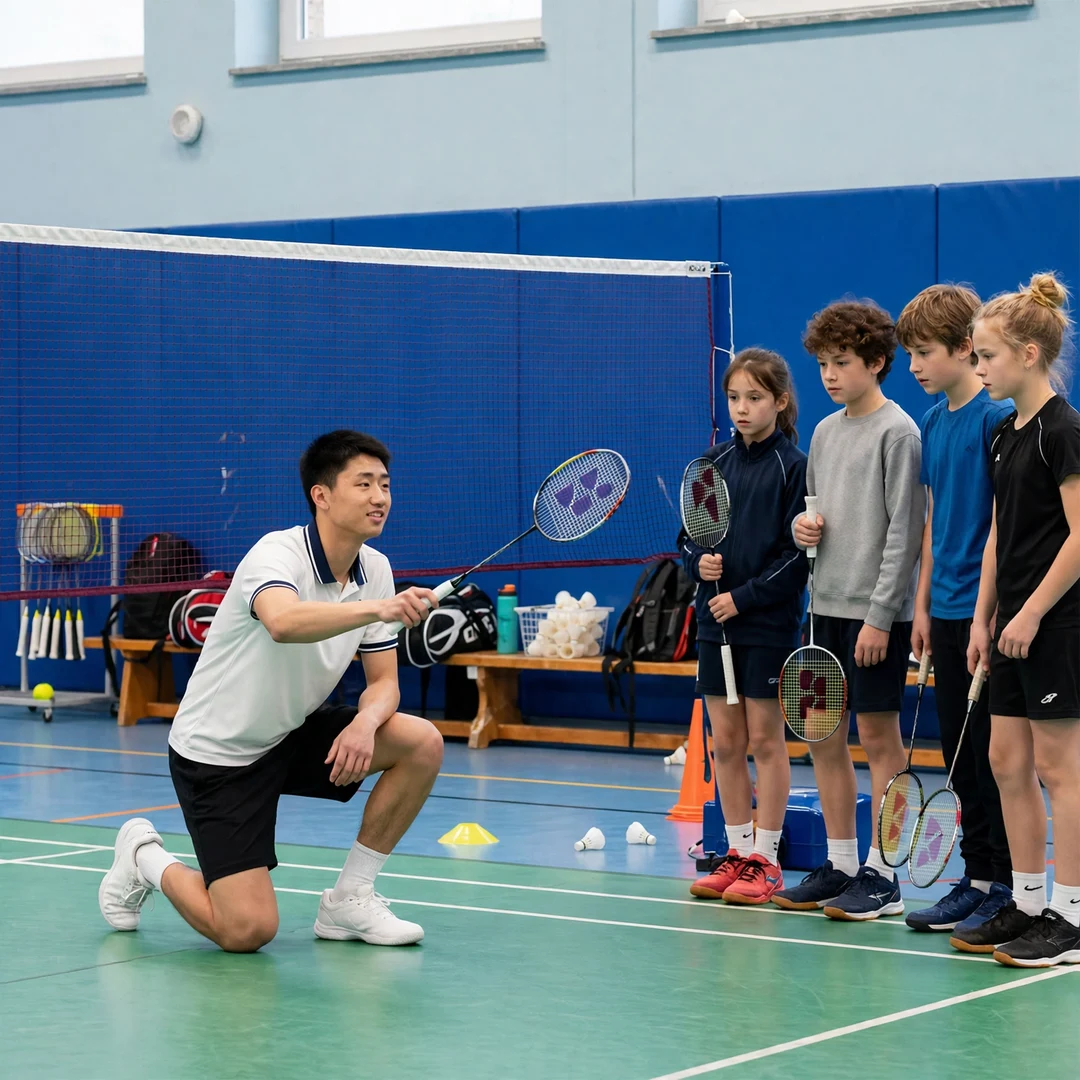
Why do our students study Harry Huang? Because his game is copyable. A child cannot copy the smash of a player with a once-in-a-generation arm, but any child can copy Huang’s recovery steps, his defensive stance, his rally patience and his deciding-game calm. He also proves that the English pathway — club badminton, university sport, the European circuit — can produce a world top-60 player, which tells young players everywhere that geography is not destiny. What matters is the quality and consistency of the work.
If your child dreams of playing professionally, Harry Huang’s career offers honest encouragement: the road can be long, and that is normal. Eight years separated his junior gold from his senior breakthrough, and the years in between were not wasted — they were the making of him. Start with sound coaching, build the body and the basics, compete regularly, and let development take the time it takes. The players who last are rarely the ones who peak first.
FAQs: Harry Huang English Badminton Player
In this FAQ section, we answer the questions parents and young players ask most often about Harry Huang: his background, his titles, his playing style, his team career for England, and how Malaysian juniors can learn from his journey.
Who is Harry Huang and which country does he represent in badminton?
Harry Huang is an English professional badminton player. He was born on 25 August 2001 in Bedford, England, represents England in international competition, and plays right-handed. In the Week 43 BWF world rankings of 20 October 2026 he stands at world No. 64 with 28,594 points, having reached a career-high No. 52 earlier the same month.
What are Harry Huang’s biggest badminton achievements?
Harry Huang’s biggest achievements are the English national singles title in 2024, three BWF International Challenge and Series titles — the Egypt International and Hungarian International in 2023 and the Turkey International in 2025 — plus finals at the Austrian Open and Czech Open in 2025. With England he has won three European team bronze medals, and he reached the round of 32 at the 2026 World Championships.
What is Harry Huang’s playing style?
Harry Huang is a right-handed all-court rally player. His game is built on fitness, stubborn low defence, long economical footwork and patience: he constructs rallies, varies the pace, and attacks when the opening has been earned. His greatest strength is his deciding-game record — finals in Cairo and Istanbul were both won in three games under maximum pressure.
How has Harry Huang performed for England in team events?
Harry Huang has been a trusted England team player for years. He won European Men’s Team Championships bronze in Łódź in 2024 and Istanbul in 2026, European Mixed Team Championships bronze in Baku in 2025, and made his Thomas Cup debut in Chengdu in 2024, leading off the tie against India. Three European team bronze medals show how highly England’s coaches rate his reliability in team competition.
How can my child learn from Harry Huang’s training approach?
Children can copy Harry Huang’s approach in three ways. Build fitness first, because his whole game stands on the ability to play long rallies at full quality. Practise defensive recovery until returning to base becomes automatic. And study how he manages errors: he plays one more safe rally instead of donating points. A good academy coach will turn these habits into weekly drills, just as English club and university coaching did for him.
Did Harry Huang win any junior titles?
Yes. Harry Huang’s biggest junior title was the European Under-15 singles gold medal, won while playing for the All Stars club in Milton Keynes. That early continental title, followed by years of steady development through the Badminton England pathway and the University of Nottingham, is exactly the junior foundation his senior career was built on.
What are Harry Huang’s best World Tour and championship results?
On the biggest stages, Harry Huang reached the round of 32 at the 2026 World Championships in New Delhi, beating Uriel Canjura Artiga before losing to Kodai Naraoka, and he took Rasmus Gemke to three games at the 2024 European Championships. In October 2026 he reached the Dutch Open and Czech Open quarter-finals, and his Austrian Open final in 2025 is his best result at International Challenge level.
What playing style should young players learn from Harry Huang?
Young players should learn Harry Huang’s all-court rallying style, because it is built from trainable parts: balanced footwork, a low defensive stance, reliable backhand-corner defence and calm shot selection in deciding games. It is a style that rewards discipline over highlights — perfect for juniors who are still growing into their power and need a game that wins matches now and scales later.
Does ST Badminton Academy have any connection with Harry Huang?
No — ST Badminton Academy has no official connection, partnership or endorsement relationship with Harry Huang or Badminton England. This profile is purely an educational case study for our students. If you would like your child to train the habits his career demonstrates — fitness, defensive discipline and composure — you are welcome to book a trial class with our coaching team.
Harry Huang Career Highlights
Career Statistics and Rankings
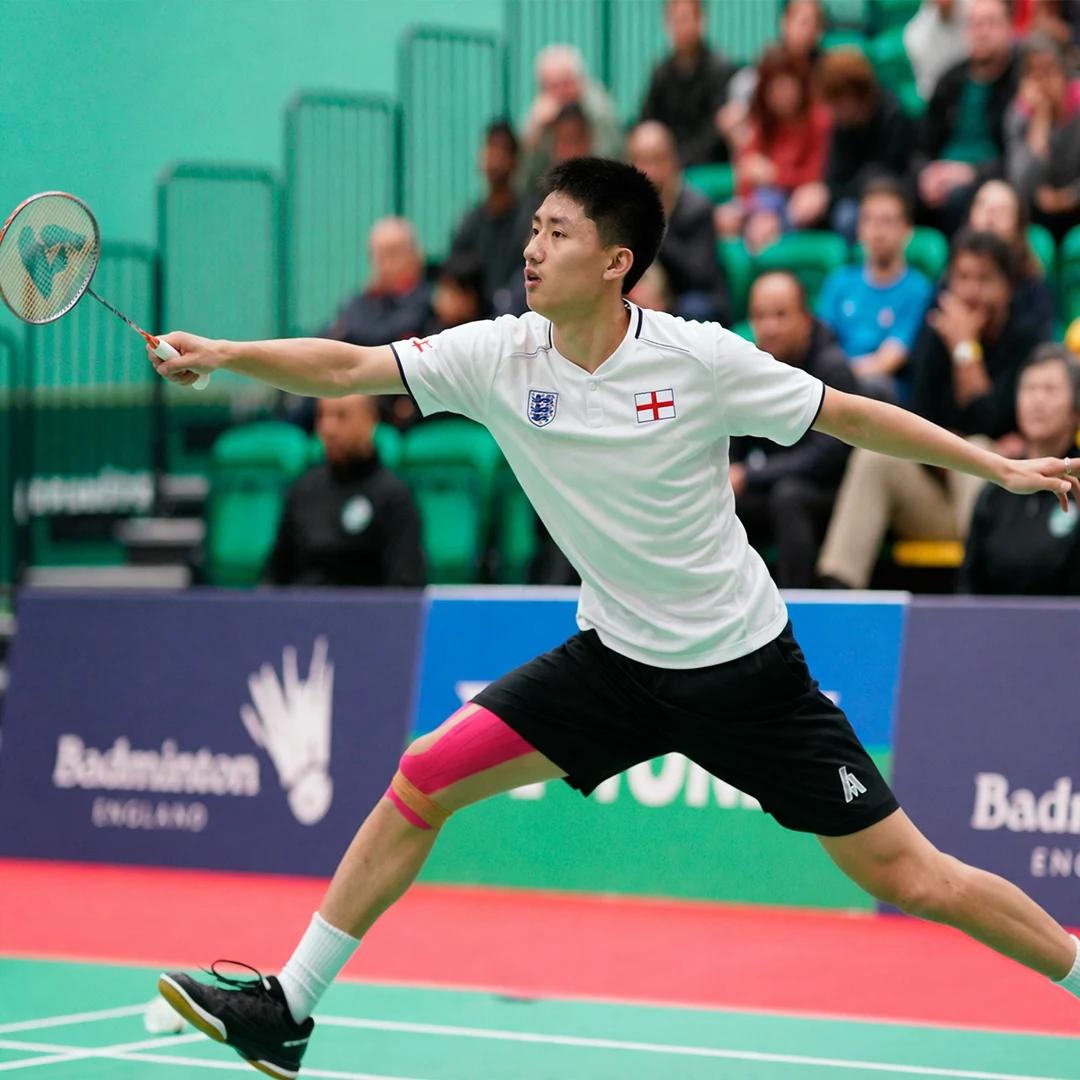
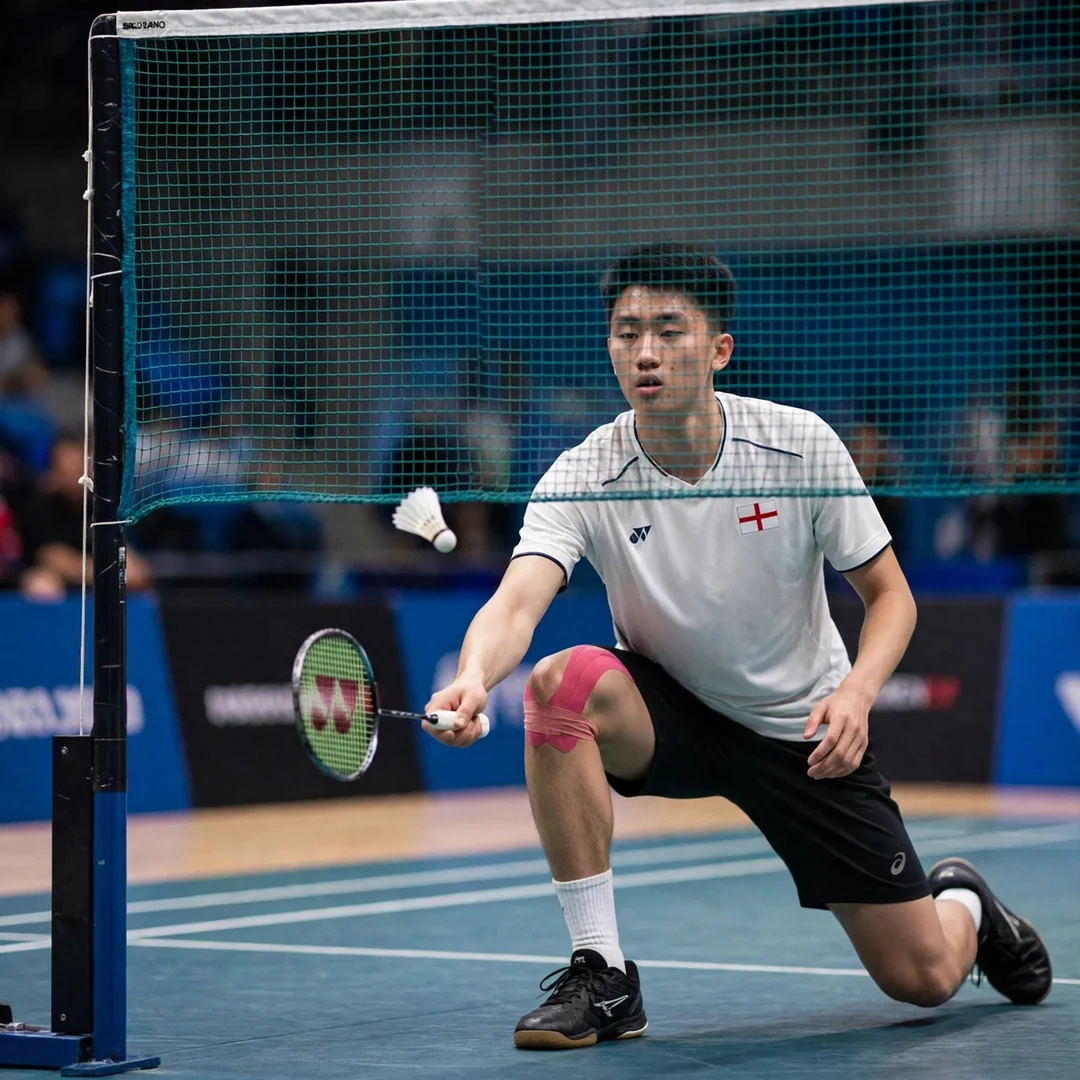
Harry Huang, born 25 August 2001 in Bedford, England, has built his career the slow and honest way: European Under-15 champion, English national champion in 2024, three senior international titles in Egypt, Hungary and Turkey, three European team bronze medals with England, and a career-high world No. 52 in October 2026. Standing at No. 64 in the Week 43 rankings with 28,594 points, he remains one of the most instructive players in world badminton for any young player learning that patience is a skill.
| Development Area | Common Misconception | What Harry Huang's Career Shows REALITY |
|---|---|---|
| Junior Foundation | Talent alone decides who becomes a champion. | Huang started at the All Stars club in Milton Keynes and won the European Under-15 singles title as a schoolboy — a structured junior base came first. |
| Playing Style Priority | Kids should copy the flashiest attacking shots. | Huang built a complete game first; his titles are the finishing touch on reliable footwork, defence and rally patience, not on one spectacular shot. |
| Fitness Importance | Juniors can out-train everyone without rest. | Huang balanced university study in Nottingham with a full European circuit calendar — his three-final season in 2025 came from smarter scheduling and stubborn consistency, not more hours. |
| Mental Approach | Top players never get nervous or upset. | Huang lost the Czech Open final a week after winning the Turkey title against the same opponent, yet he keeps returning to finals — mental skills are trained, not inherited. |
| Attacking Training | Smashing harder is always the answer. | His 2025 Turkey International final win over Muhamad Yusuf (21-19, 11-21, 21-16) and his 22-20 deciding-game win in the Egypt International final came from controlled rally placement, not raw power. |
| National Milestones | Only world titles matter. | Huang's three European team bronze medals with England (2024 and 2026 men's team, 2025 mixed team) made him a trusted England team player — continental milestones build a career step by step. |
| Career Timeline | Champions peak once and fade fast. | From European Under-15 champion to English national champion in 2024 and a career-high world No. 52 in 2026, Huang proves sustained development beats a short peak. |
Study Harry Huang's Work Ethic and Professional Approach
Would your child like to train like a professional? Book a badminton trial class at ST Badminton Academy in Kuala Lumpur or Singapore on WhatsApp +60 17-684 2136. Our coaches build the same foundations Harry Huang's career is built on — footwork, fitness, defensive discipline and match composure — for children from beginner level to competitive squads.