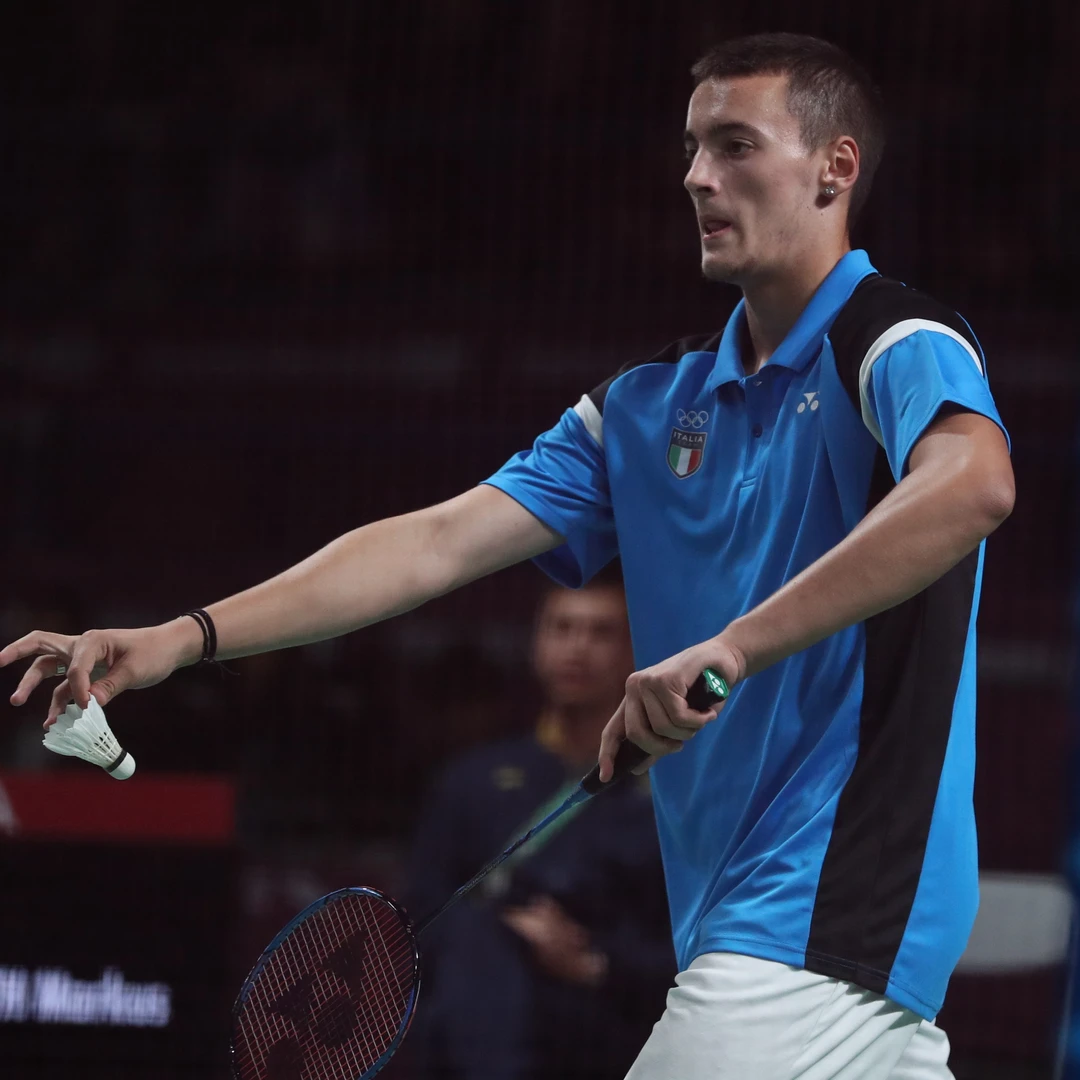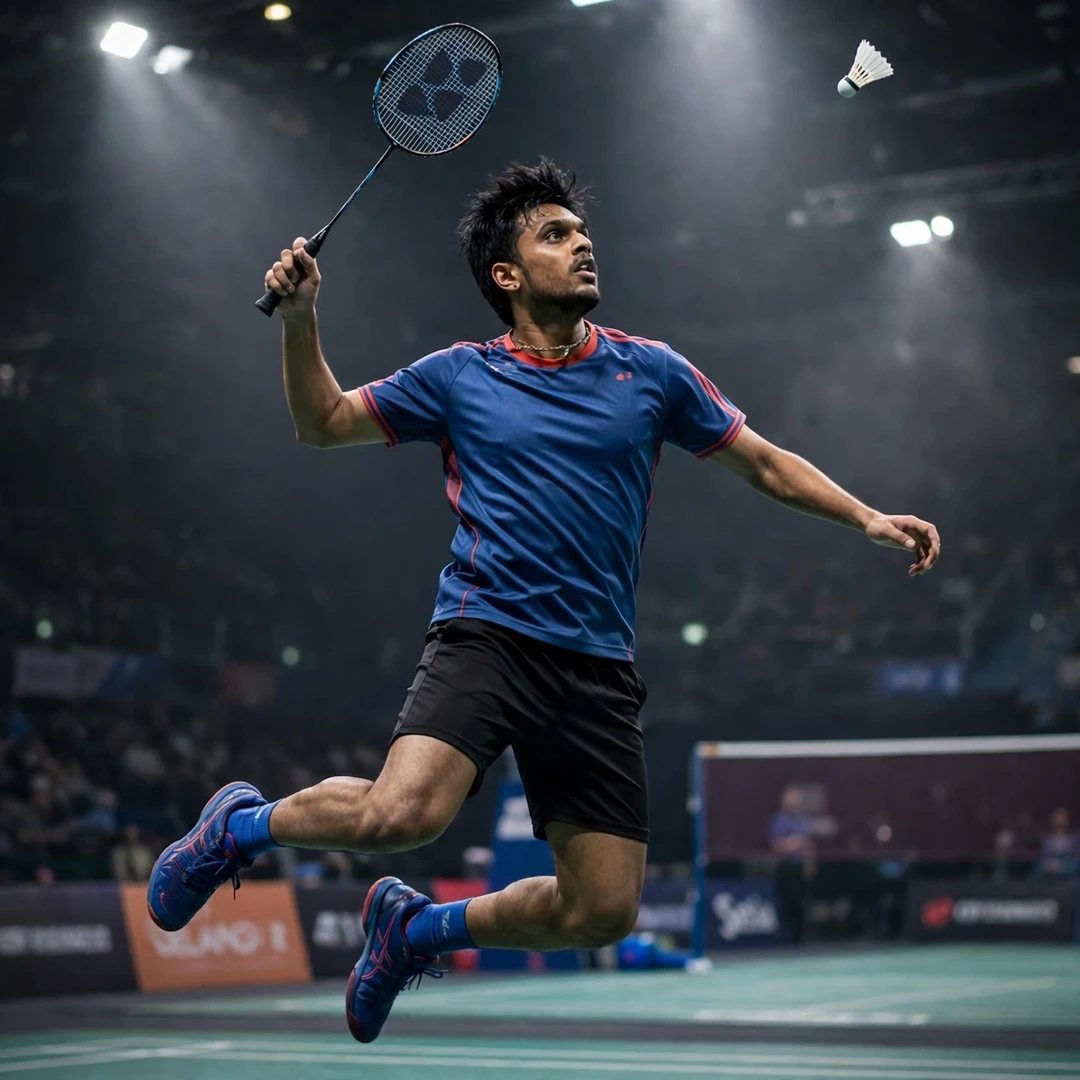
Indian Men’s Singles Badminton Star
Mithun Manjunath

India
Player Event: Men’s singles
From Bengaluru, Karnataka, India · Right-handed
Playing Style: Right-handed defensive counter-attacker built on a rock-solid defence, long rally tolerance and clever placement
Known For: 2023 Indian national champion, Asian Games team silver medallist with India, former world No. 33 and two BWF World Tour finals
Journey: Prakash Padukone Badminton Academy, Bengaluru · Pune 7 Aces in the Premier Badminton League · Orléans Masters finalist 2022 · Guwahati Masters finalist 2025
Understanding Mithun Manjunath (Indian Badminton Star)
Mithun Manjunath is an Indian men’s singles badminton player ranked world No. 86 in the BWF rankings for Week 43 (20 October 2026) with 21,970 points. The number only tells half his story: this is a former world No. 33, the 2023 Indian national champion, and a man who stood on an Asian Games podium with India’s men’s team in Hangzhou. Developed at the Prakash Padukone Badminton Academy in Bengaluru, Manjunath built his career the slow way — domestic titles, continental events, a giant-killing run in France — and at 28 he is still reaching World Tour finals while much younger rivals come and go.
Early Life in Karnataka and the Bengaluru Badminton Base
Mithun Manjunath was born on 28 June 1998 in Karnataka, India, and is based in Bengaluru — the Garden City that became one of Indian badminton’s great nurseries thanks to the legacy of Prakash Padukone, the country’s first All England champion. Growing up in Bengaluru meant growing up around serious badminton: strong state circuits, respected academies and a steady line of Indian internationals to measure himself against from a young age.
A Junior Name Who Had to Wait: The Early Senior Years
He developed at the Prakash Padukone Badminton Academy in Bengaluru, the institution founded by India’s greatest player of the amateur era. Manjunath was rated highly as a junior inside that system, but unlike the teenage prodigies who headline junior world events, his honours would come the patient way. Before the world noticed him, he had already won four All-India ranking titles on the domestic circuit — the unglamorous foundation on which everything else on this page was built.
The Night He Pushed a World No. 39: The PBL Semi-Final
His senior ranking history stretches back to 2016, when he first appeared in the BWF rankings as a teenager, but the early senior years were spent on the fringes of the international game. The first real signs came in 2018: a quarter-final at the Czech Open, followed by back-to-back semi-finals at the Vietnam Open and the Russian Open, both Super 100 events. For a 20-year-old ranked outside the world’s top 150, reaching the last four twice in one season was a quiet announcement that he belonged on the circuit.
The Orléans Masters Breakthrough of 2022
In February 2020, Manjunath played for Pune 7 Aces in India’s Premier Badminton League — and produced the night that first made coaches across India sit up. In the semi-final against Bengaluru Raptors, the world No. 131, aged 21, took on world No. 39 Brice Leverdez of France and pushed him all the way, winning the second game before going down 14-15, 15-9, 6-15. He had arrived at that tie fresh from winning a Senior Ranking Tournament in Bangalore, and against one of Europe’s most experienced players he showed the defence, patience and nerve that would define his career.
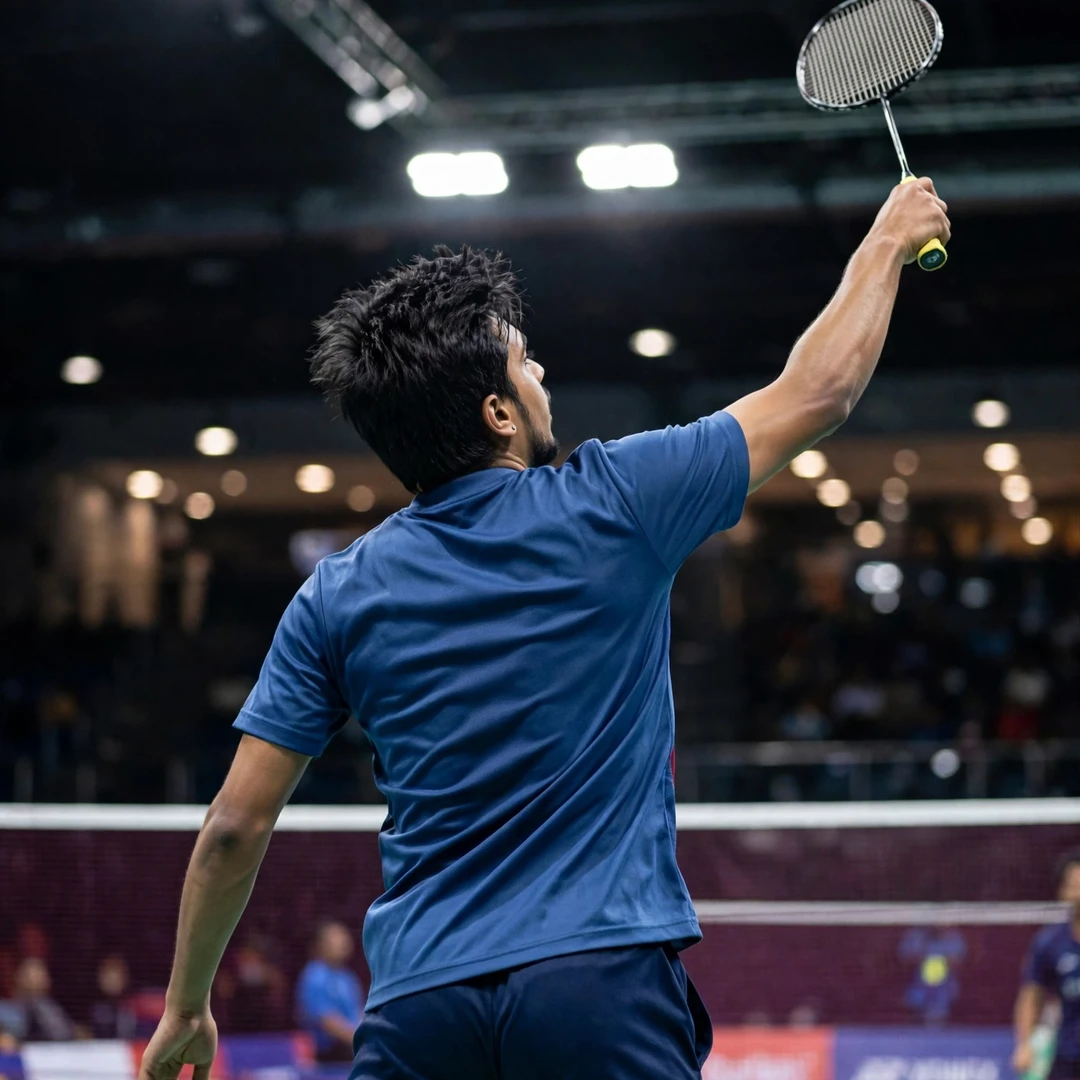
Career Milestone #1
Two International Titles and a Career-High No. 33
When the pandemic shut the circuit down, Manjunath used the break to rebuild his fitness with a specific goal: to stay longer in rallies and outlast opponents in three-game contests. The results showed immediately when he returned — a semi-final at the Infosys Foundation India International in October 2021, then a cruel twist in January 2022, when a positive COVID test forced him to withdraw from the India Open before a second-round match against H. S. Prannoy. He responded within weeks: semi-finals at the Syed Modi International, a Super 300, and a quarter-final at the Odisha Open.
His World Tour breakthrough came in April 2022 at the Orléans Masters in France. Unseeded at the Super 100 event, Manjunath stunned world No. 22 and second seed Hans-Kristian Vittinghus of Denmark, then beat Indonesia’s Christian Adinata 21-18, 21-14 in the semi-finals to reach his maiden World Tour final. The title went to home favourite Toma Junior Popov, who won 21-11, 21-19, but a silver medal in France transformed Manjunath from a domestic name into an international one. That same spring he also served team duty for India at the Badminton Asia Team Championships in Malaysia, winning the deciding match against Hong Kong to keep India’s knockout hopes alive.
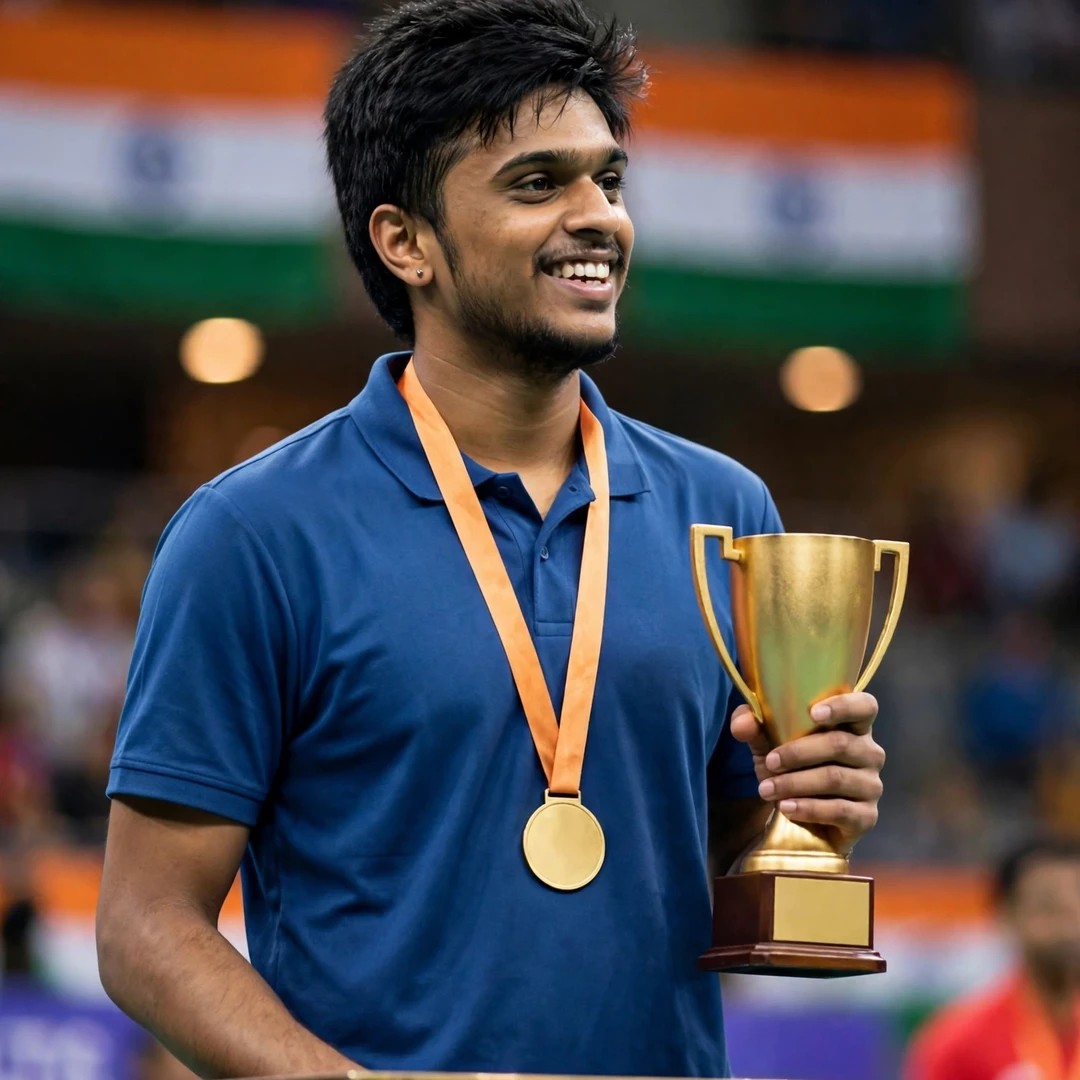
Career Milestone #2
Asian Games Silver: The Night India Led China 2-0
The rest of 2022 turned promise into numbers. Manjunath reached two finals at India International events — losing to Meiraba Maisnam, then to Sourabh Verma in three games — before finally converting at the Bangladesh International, beating his young compatriot Priyanshu Rajawat 21-12, 16-21, 21-9 in the final. Weeks later, on 3 January 2023, his world ranking peaked at No. 33 — the reward for a season of deep runs, and proof that an academy grinder from Bengaluru could stand inside the world’s top 35.
Two months after that career-high ranking, he added the title every Indian player dreams about. At the 84th Senior National Championships in Pune on 28 February 2023, Manjunath beat Priyanshu Rajawat again — this time 21-16, 21-11 in just 38 minutes — to become Indian national champion. Reports of the final praised his superior defence and his clever strategy of never letting Rajawat get underneath the shuttle, a masterclass in winning a big match with control rather than power.
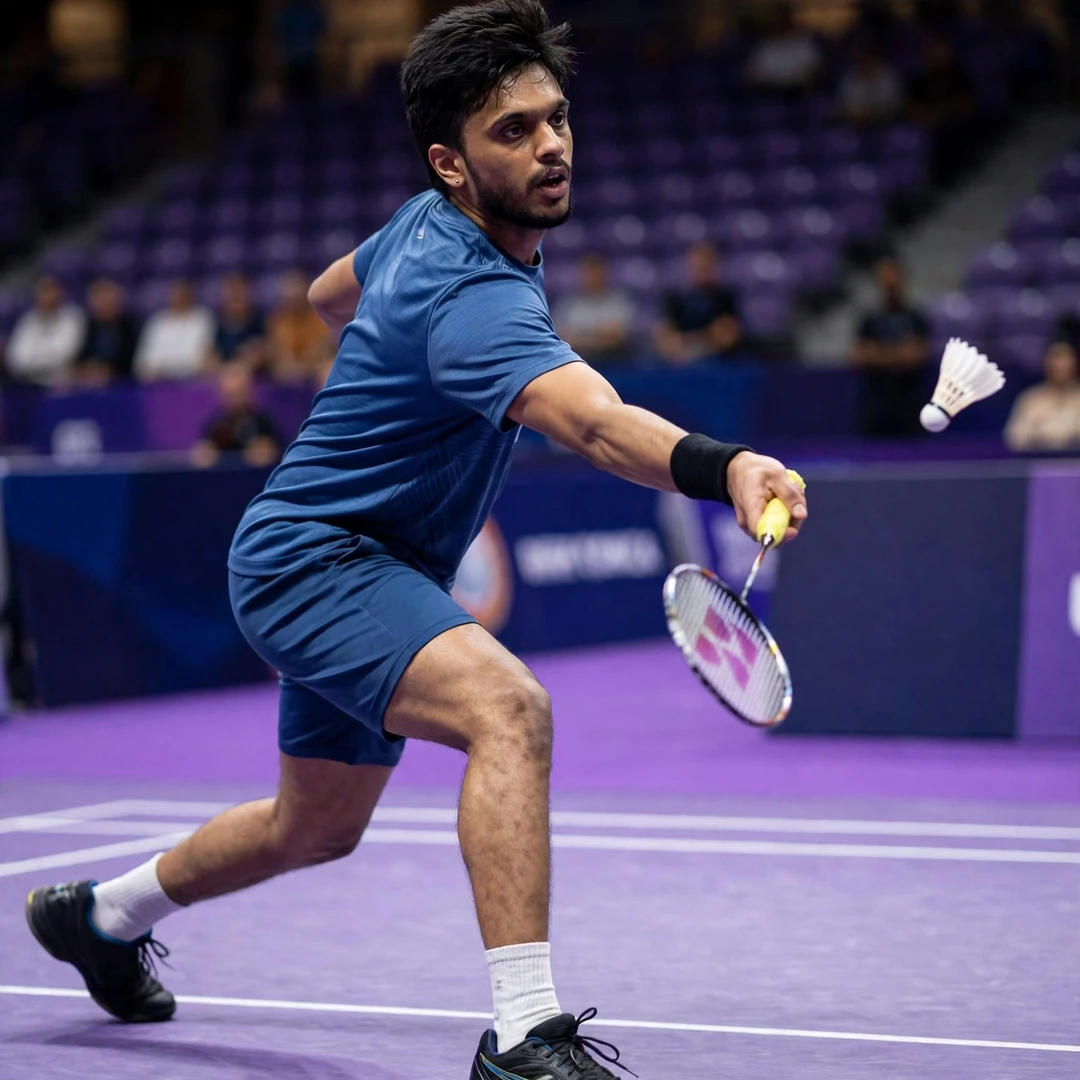
In October 2023 came the biggest team honour of his career. At the Hangzhou Asian Games, India’s men’s team beat Nepal 3-0 and South Korea 3-2 to reach the final — and then stunned hosts China by taking a 2-0 lead, as Lakshya Sen beat Shi Yu Qi and Satwiksairaj Rankireddy and Chirag Shetty beat the world No. 2 pair. India were one win from gold.
Career Milestone #3
The Raipur Title and the Long Road Back
With H. S. Prannoy ruled out by a back injury, the deciding third singles fell to Manjunath, then ranked No. 53, against China’s world No. 20 Weng Hong Yang. The fairytale ending did not come — he lost in straight games and India took silver, 2-3 — but the silver itself was historic: India’s first-ever Asian Games men’s team silver, and the country’s first men’s team medal at the Games in 37 years. Being the player your team trusts with a deciding Asian Games final, at 25, tells you everything about Manjunath’s standing in the Indian squad.
The seasons after Hangzhou were harder. His ranking drifted as deep runs dried up, and by 2024 the former world No. 33 was rebuilding from International Challenge events — the same unglamorous level where he had started. The rebuild produced a title that autumn: the CM Trophy India International Challenge in Raipur, where his final against B. M. Rahul Bharadwaj ended when his opponent retired in the second game. It was his second International Challenge crown, and a sign the wall of defence was being rebuilt brick by brick.
In 2025 the comeback became undeniable. A semi-final at the Malaysia International Challenge and a quarter-final at the Al Ain Masters were followed by a runner-up finish at the Telangana India International Challenge, where he lost the final to young compatriot Ginpaul Sonna. Then came two statement weeks: at the Syed Modi International, a Super 300, he reached the semi-finals and took a game off former world No. 1 Kidambi Srikanth before losing 15-21, 21-19, 13-21; and at the Guwahati Masters he beat Tushar Suveer to reach his second World Tour final, losing to Sanskar Saraswat in three games. At 27, nine years after his first ranking points, he was playing finals again.
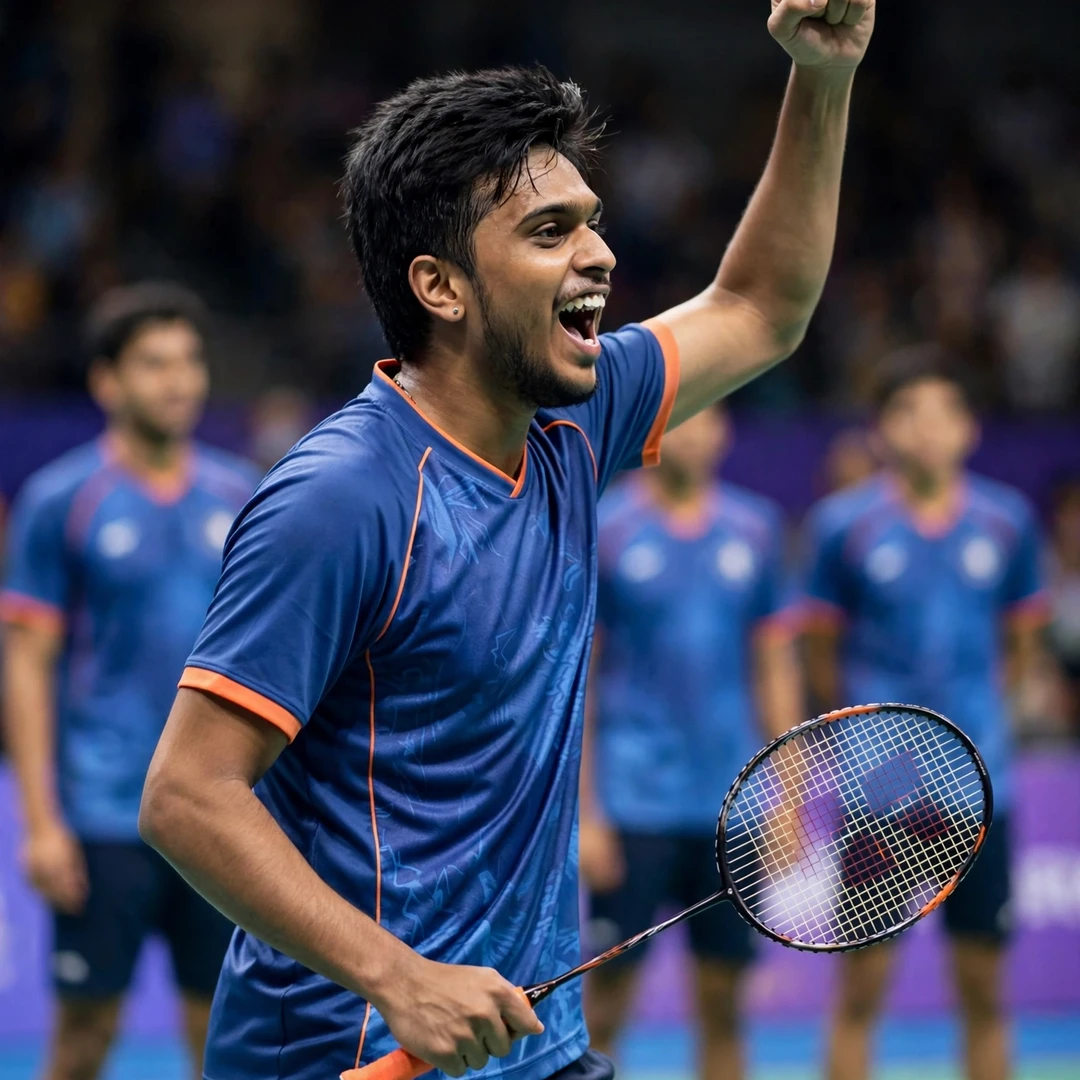
Career Milestone #4
Still on Tour at 28: The 2026 Season
There has been no farewell tour in 2026. Manjunath has kept a full international calendar at 28: the Azerbaijan International, the Thailand Masters, the Chinese Taipei Open, the Korea Masters, the Indonesia Masters in Pontianak and the Malaysia Super 100, where he lost a three-game round-of-32 match to Huang Ping-Hsien in Johor just a week before the Week 43 rankings confirmed him at No. 86 with 21,970 points. The names beating him now — Jason Gunawan in Taipei, Zhu Xuan Chen in Korea — belong to the next generation; the point is that he is still out there testing himself against them.
For a veteran, the season is a puzzle of its own. Manjunath’s experience shows in how he manages it: choosing events where his ranking earns him main-draw places, protecting a body that has played senior badminton for a decade, and arriving at tournaments ready to grind through long matches rather than hoping for short ones. Younger teammates on the Indian circuit also gain from his presence — a national champion who has played deciding Asian Games matches is a living textbook in the training hall.
Playing Style
The Defensive Wall: Defence, Strategy and Rally Craft
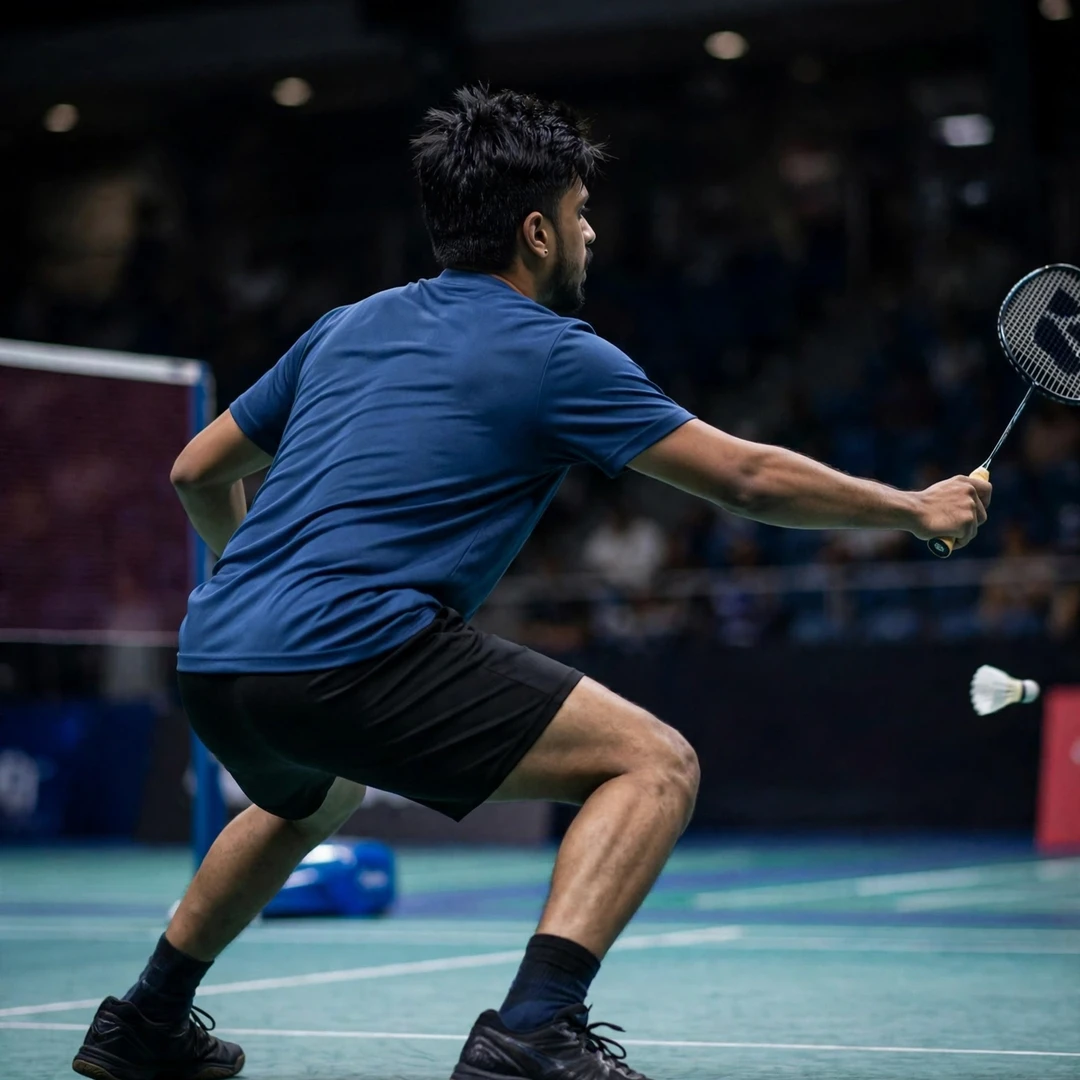
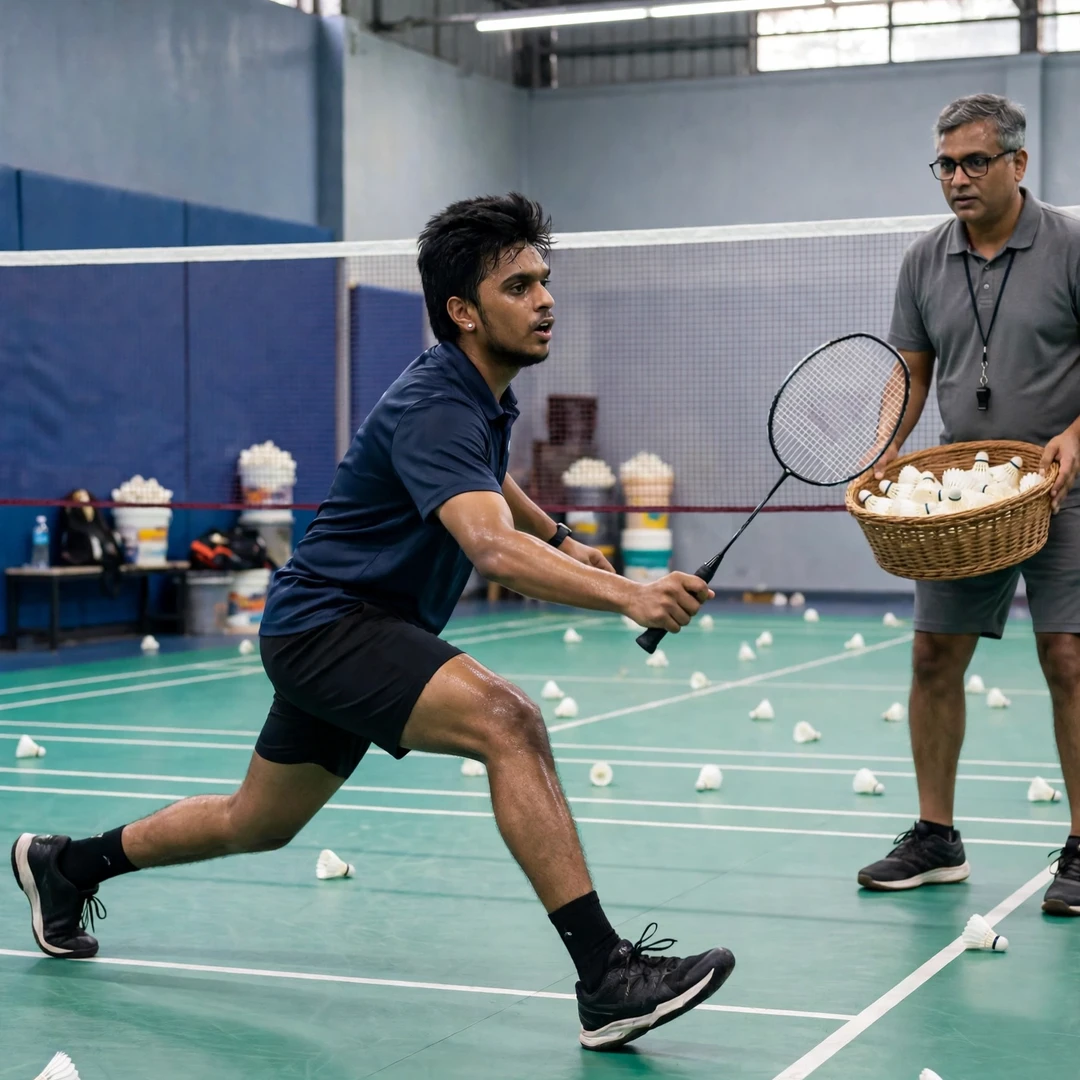
Manjunath’s game starts from a simple idea: make the rally long, and make the opponent win every point twice. Right-handed, he is a defensive counter-attacker whose first weapon is a wall-like defence — low, balanced and early to the shuttle. When he won the 2023 national title, analysts pointed to exactly this: superior defence, and a strategy of denying Priyanshu Rajawat the position underneath the shuttle from which power is generated. If you cannot get set, you cannot smash him off the court.
The second weapon is rally tolerance. The fitness rebuild of his COVID years was designed for three-game contests, and his signature results keep proving the point: the Bangladesh title won in three games, the Syed Modi semi-final against Srikanth that went the distance, the Guwahati final decided in a third game. Manjunath is comfortable at 18-all in the third in a way that many flashier players are not — because he has trained specifically to still be fresh, balanced and thinking clearly at exactly that moment.
What young players should study most is his placement. Manjunath does not need to hit the hardest smash on court; he moves opponents with accurate clears, tight net play and changes of pace, and he grew more creative at the net as his career matured — the 2023 national final was praised for that creativity as much as for the defence. His game is proof that at international level, where the shuttle goes is often worth more than how fast it travels.
Mental Strength
Patience, Setbacks and the Comeback Habit
Patience is the thread through Manjunath’s whole career. He was a highly rated junior who had to wait years for senior success, winning domestic ranking titles in near-empty halls while contemporaries collected international medals. When the chances finally came — a league semi-final against a top-40 player, a Super 100 draw in France, a national final — he was ready for every one of them, because the waiting had been spent working.
His setbacks were real: a COVID withdrawal at his home India Open with a big match waiting, a deciding Asian Games final he could not win, two World Tour finals that ended in silver, and a ranking slide that sent him back to the sport’s smallest events in 2024. Each time, the response was the same — no complaints, no disappearance, just entry forms for the next tournaments and a return, eventually, to finals in 2025.
The practical lessons for developing players are direct. Defence is trainable: footwork patterns, a low centre of gravity and early racket preparation can be drilled every day. Fitness is a weapon: the player who is still fresh in the third game owns the rally. Enter tournaments: Manjunath’s career turned on events in Orléans, Dhaka, Raipur and Guwahati, not on waiting for perfect conditions. And when you lose a final, study it and come back — his trophy cabinet and his silver medals were won by the same habit.
Learning Reference
ST Badminton Academy Connection
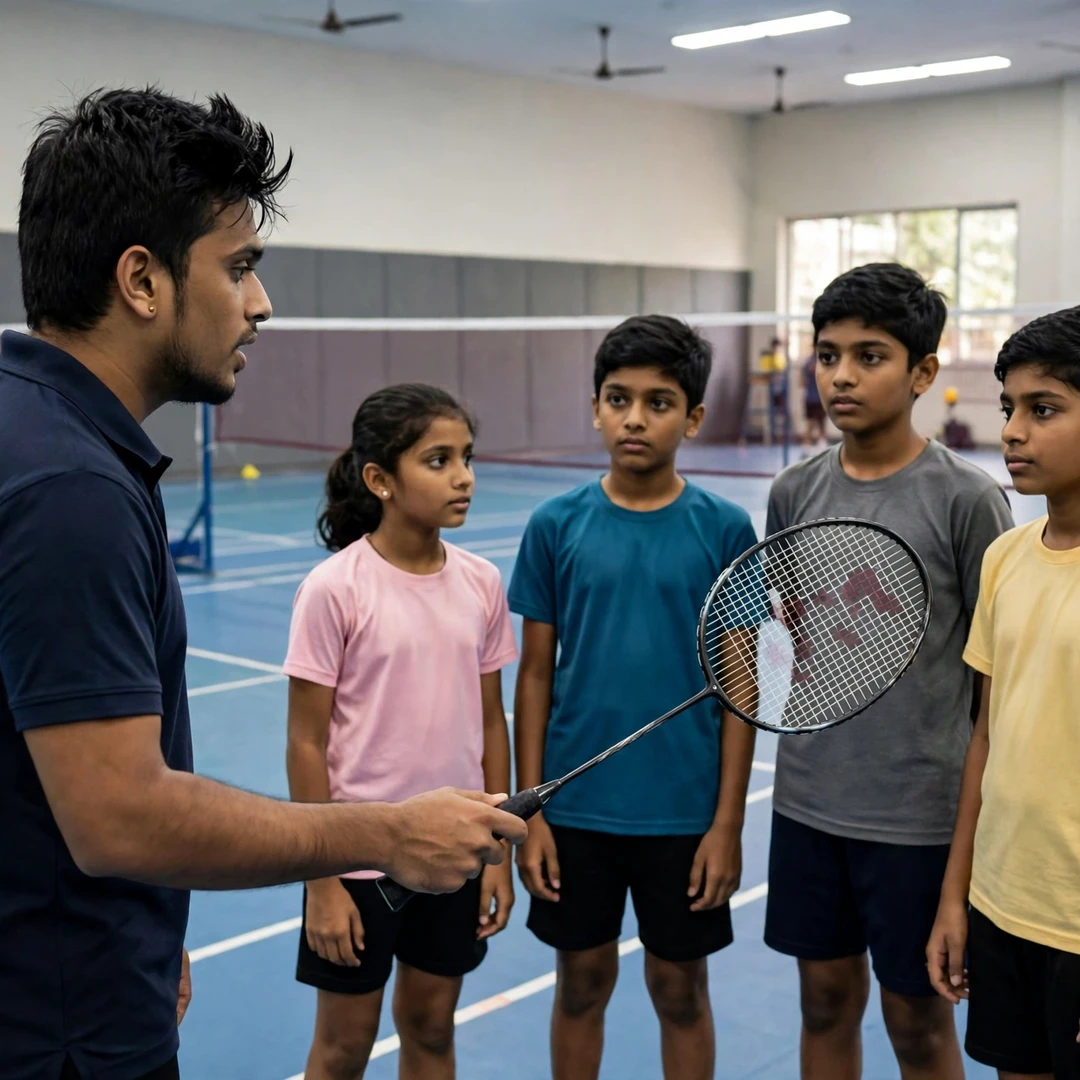
ST Badminton Academy has no official partnership or endorsement from Mithun Manjunath. He is not connected with our academy, and this profile is published purely as an educational case study for parents and junior players who want to understand how a defensive, patient player built a decade-long international career from an academy in Bengaluru.
Our students in Malaysia and visiting learners from Singapore study his matches to understand the value of defence and composure: how the world No. 131 pushed a top-40 player in a league semi-final, how a national title was won by denying an opponent the shuttle, and how a squad player handled the pressure of a deciding Asian Games final. His 2023 national championship run is required viewing in our lessons on defensive structure.
We encourage our students to observe his defensive positioning, his low balanced stance, his patience in long rallies and his professionalism across ten seasons — and to notice that his biggest nights came at 24, 25 and 27, not at 17. Development is not a race to peak early; Manjunath shows what a career looks like when the basics are built to last.
FAQs: Mithun Manjunath Indian Badminton Player
Here are answers to common questions about Mithun Manjunath’s career, achievements and what young players in Malaysia can learn from the Indian defensive specialist’s long journey.
Who is Mithun Manjunath and which country does he represent in badminton?
Mithun Manjunath is an Indian professional badminton player competing in men’s singles. Born on 28 June 1998 in Karnataka and based in Bengaluru, he developed at the Prakash Padukone Badminton Academy. He is the 2023 Indian national champion, an Asian Games men’s team silver medallist, a former world No. 33, and is ranked world No. 86 in Week 43 of October 2026.
What are Mithun Manjunath’s biggest badminton achievements?
His biggest achievements are the Asian Games men’s team silver medal with India at Hangzhou in 2023 — the country’s first men’s team medal at the Games in 37 years — the Indian national title in 2023, two BWF World Tour final appearances at the Orléans Masters 2022 and the Guwahati Masters 2025, two International Challenge titles in Bangladesh and Raipur, and a career-high world ranking of No. 33 in January 2023.
What is Mithun Manjunath’s playing style?
Manjunath is a right-handed defensive counter-attacker. His game is built on a rock-solid defence, outstanding rally tolerance and clever placement: he lengthens rallies, denies opponents the position to attack, and wins with control and creativity at the net rather than raw power. Coaches describe the strategy behind his 2023 national title as never letting his opponent get underneath the shuttle.
How did Mithun Manjunath perform at the Asian Games?
Manjunath played a central role in India’s historic Hangzhou 2023 campaign. India beat Nepal and South Korea to reach the men’s team final and led China 2-0 before losing 2-3; with H. S. Prannoy injured, Manjunath played the deciding third singles against world No. 20 Weng Hong Yang. India took silver — the country’s first-ever Asian Games men’s team silver.
How can my child learn from Mithun Manjunath’s training approach?
Young players can learn from the environment that produced him: the Prakash Padukone Badminton Academy in Bengaluru combined daily high-level sparring with patient, technique-first coaching. At ST Badminton Academy we teach the same foundations his career is built on — defensive footwork patterns, rally-building drills that reward patience, and the fitness to stay balanced late in the third game — then test them in match play, exactly as his academy years prepared him for the senior circuit.
Did Mithun Manjunath win any junior titles?
No major junior titles are on his record — and that is part of his story’s value. Manjunath was rated highly as a junior in Bengaluru and won four All-India ranking titles on the domestic circuit, but his international honours all came as a senior: a first World Tour final at 23, a national title and an Asian Games medal at 24 and 25. His career proves development does not end at the junior level.
What are Mithun Manjunath’s best World Tour results?
His best World Tour results are two runner-up finishes — the Orléans Masters 2022 (Super 100), where he beat world No. 22 Hans-Kristian Vittinghus on the way to the final, and the Guwahati Masters 2025 (Super 100). He has also reached Super 300 semi-finals at the Syed Modi International in both 2022 and 2025, taking a game off Kidambi Srikanth in the 2025 edition.
What playing style should young players learn from Mithun Manjunath?
Young players should learn his complete defensive game: the low, balanced ready position, footwork that arrives early to every corner, clears and lifts placed with purpose, and the patience to build a rally until the attack is truly on. Above all, they should copy his professionalism — a decade of entering tournaments, absorbing defeats and returning stronger is a skill in itself.
Does ST Badminton Academy have any connection with Mithun Manjunath?
No, Mithun Manjunath is not a student, coach or ambassador of ST Badminton Academy. He represents India and developed through the Prakash Padukone Badminton Academy in Bengaluru. However, coaches at our academy in Kuala Lumpur regularly use his matches as teaching material, because his national title, his Asian Games medal and his comebacks show what defence, fitness and patience can build.
Mithun Manjunath Career Highlights
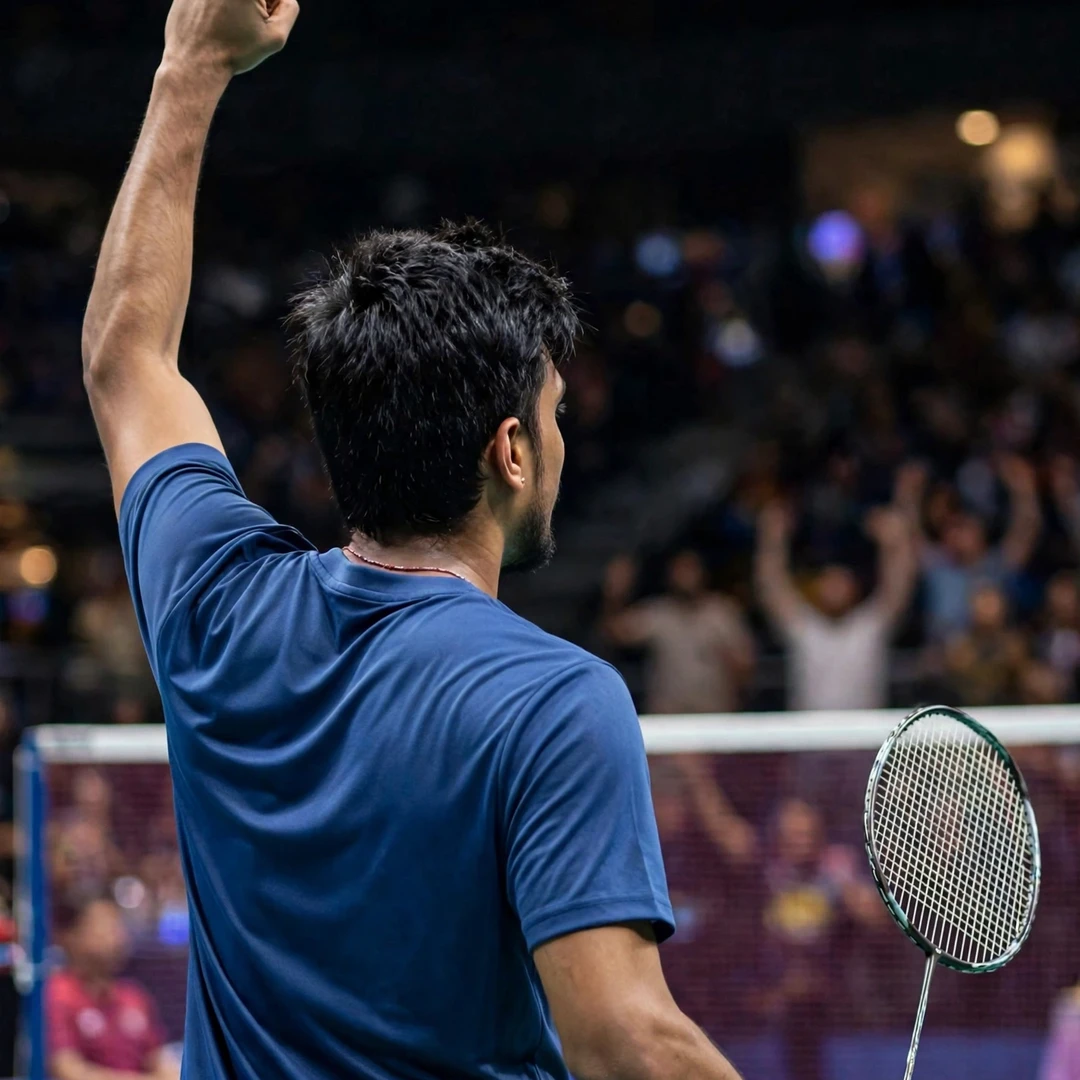
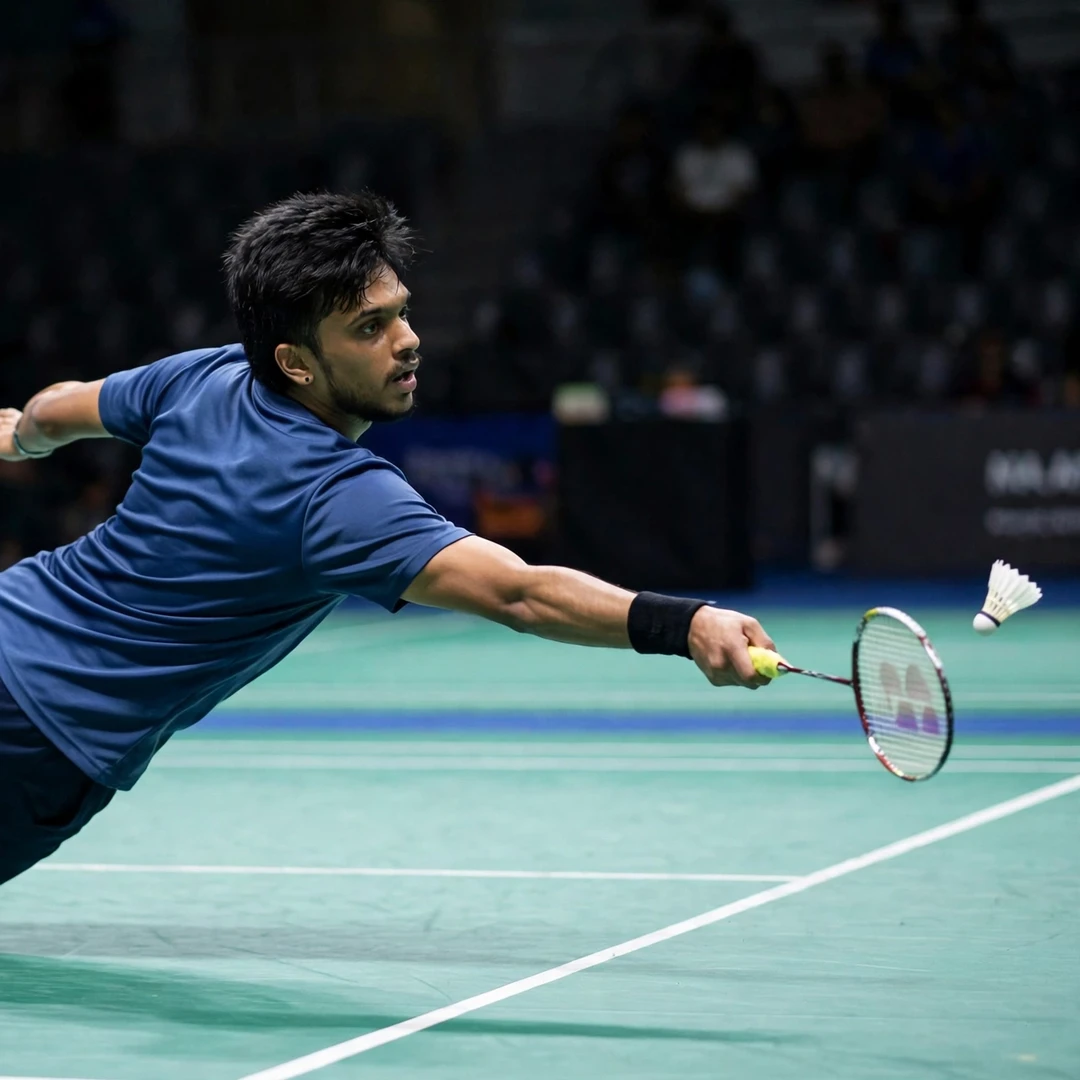
Career Statistics and Rankings
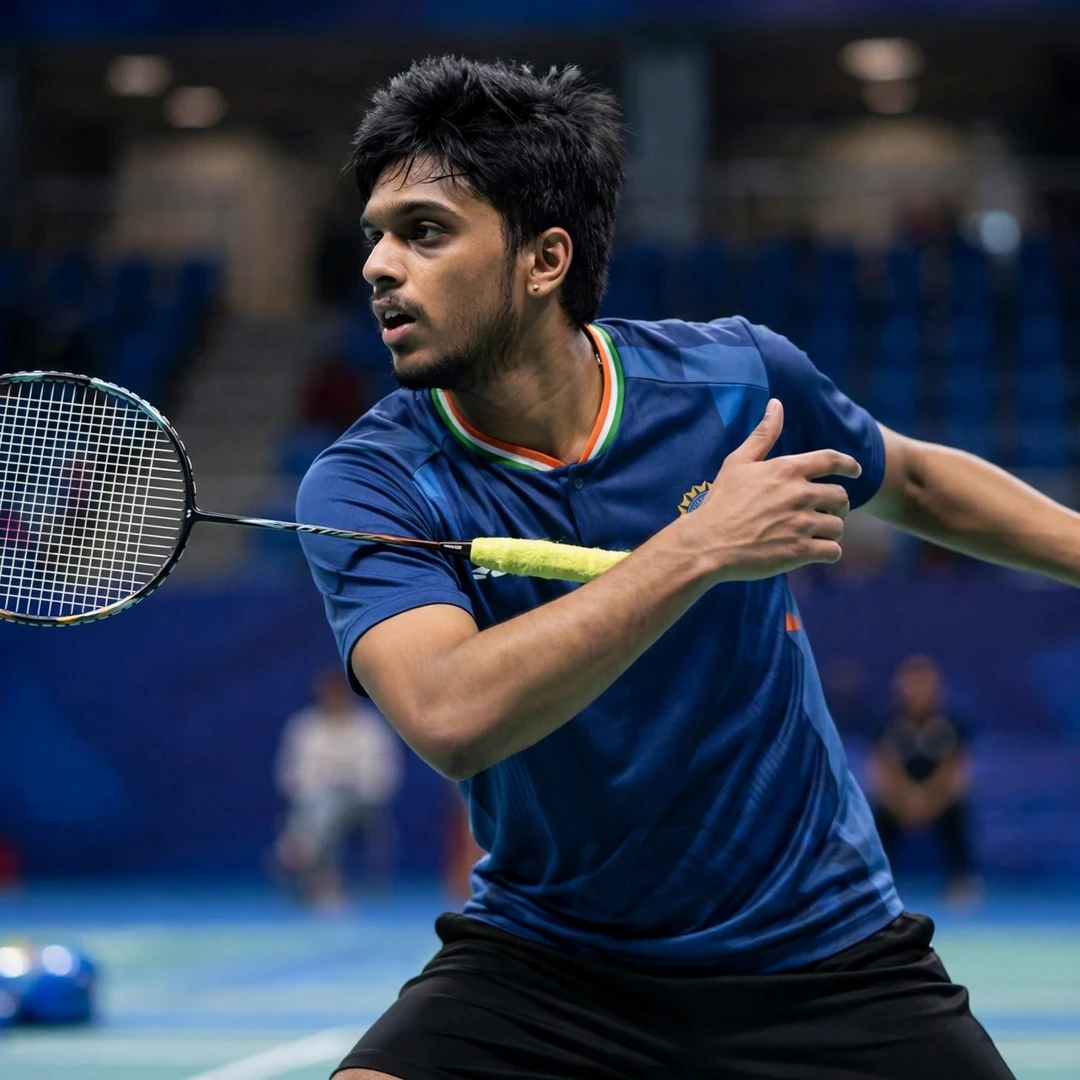
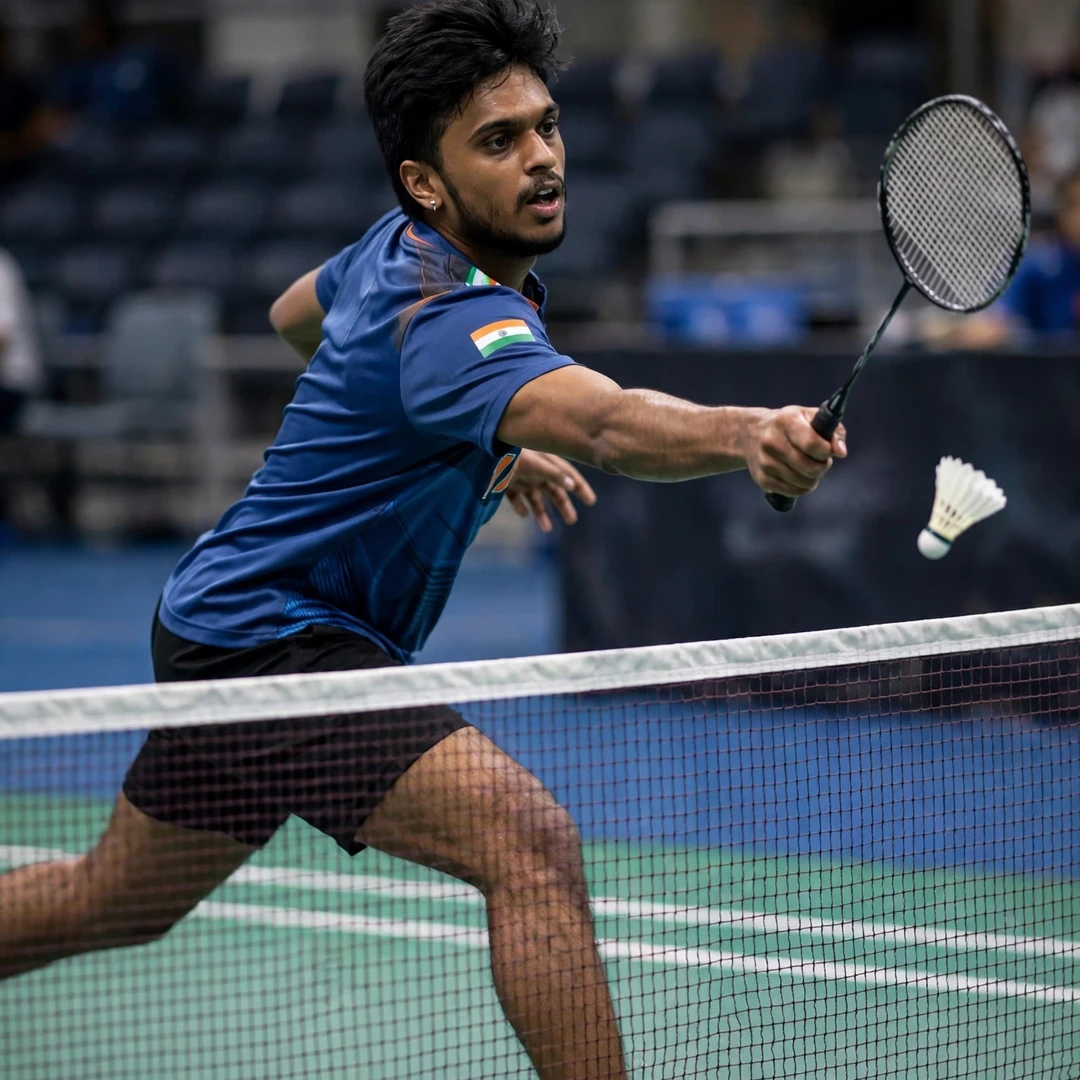
Mithun Manjunath, born 28 June 1998 in Karnataka, India, has built one of the most persistent careers in Indian badminton: a Premier Badminton League breakthrough at world No. 131, a first World Tour final in Orléans, a career-high of world No. 33, the 2023 national title, Asian Games team silver with India, and World Tour finals again at 27 — a decade of proof that defence and patience travel a long way.
| Development Area | Common Misconception | What Mithun Manjunath's Career Shows REALITY |
|---|---|---|
| Junior Foundation | Talent alone decides who becomes a champion. | Manjunath was a highly rated junior in Bengaluru, but his honours came the slow way — four All-India ranking titles and years of senior circuit work before his first World Tour final at 23. |
| Playing Style Priority | Kids should copy the flashiest attacking shots. | Manjunath built a complete defensive game first; his counter-attacks are the finishing touch on elite defence, footwork and rally tolerance built at the Prakash Padukone academy. |
| Fitness Importance | Juniors can out-train everyone without rest. | Manjunath used the COVID shutdown to rebuild his fitness so he could outlast opponents in three-game contests — preparation, not more matches, changed his career. |
| Mental Approach | Top players never get nervous or upset. | Manjunath lost the deciding singles of an Asian Games final and two World Tour finals, yet kept returning to finals — mental skills are trained, not inherited. |
| Attacking Training | Smashing harder is always the answer. | His 2023 national title, won 21-16, 21-11 over Priyanshu Rajawat in 38 minutes, came from superior defence and denying his opponent the shuttle — strategy, not raw power. |
| National Milestones | Only world titles matter. | Manjunath's Asian Games team silver with India in 2023 — the country's first men's team medal in 37 years — shows how continental milestones build a career step by step. |
| Career Timeline | Champions peak once and fade fast. | From world No. 131 in the 2020 Premier Badminton League to a World Tour final again in 2025, Manjunath proves sustained development beats a short peak. |
Study Mithun Manjunath's Work Ethic and Professional Approach
This profile explains who Mithun Manjunath is, his major achievements, and what developing players can learn from his journey. Whether you are a parent in Kuala Lumpur, Cheras or anywhere in Malaysia whose child is a patient, hard-working player rather than a teenage prodigy, Manjunath's story carries the answer: with the right coaching, defence and enough tournaments, a long career is possible — book a trial class with ST Badminton Academy on WhatsApp at +60 17-684 2136 and let your child begin a development journey built to last.