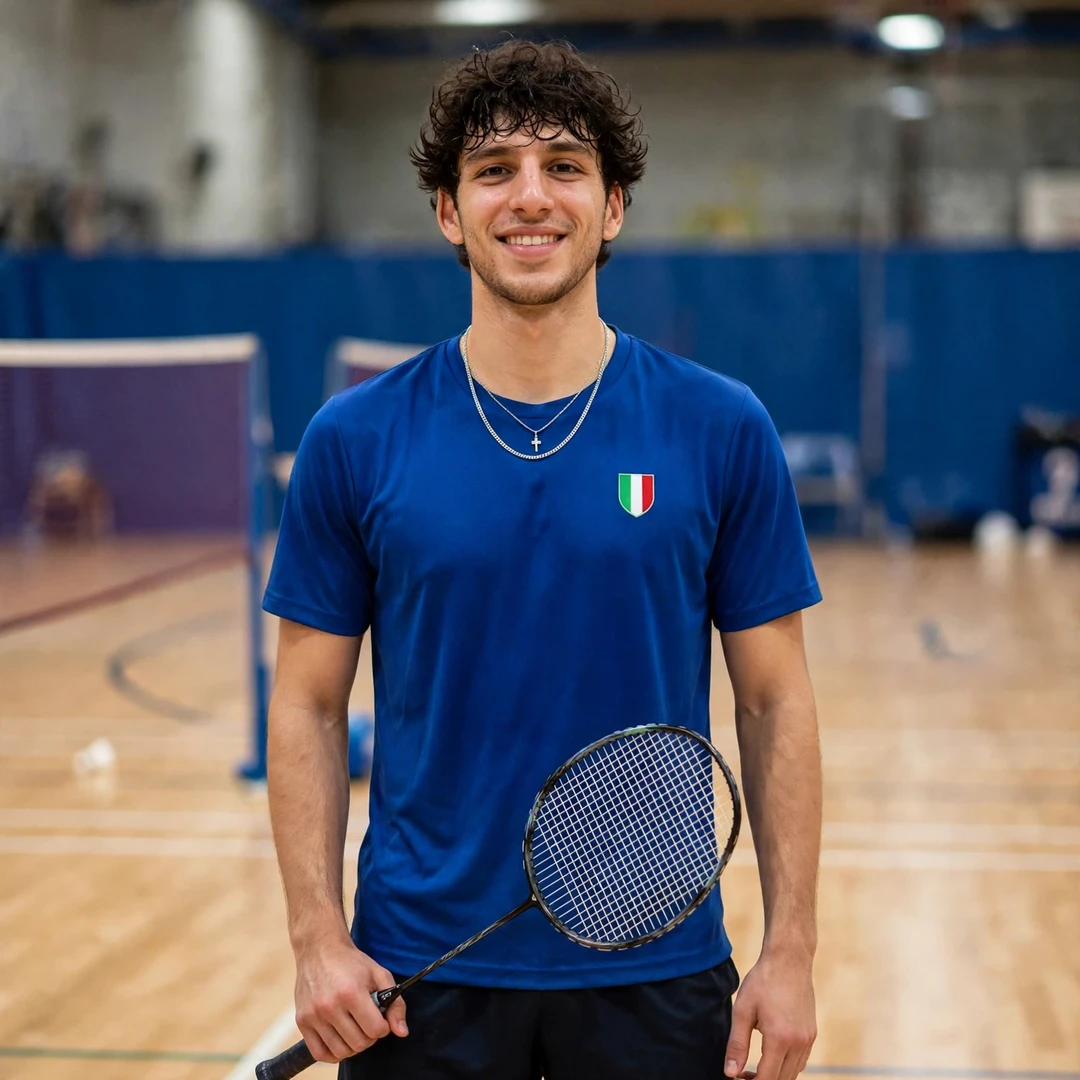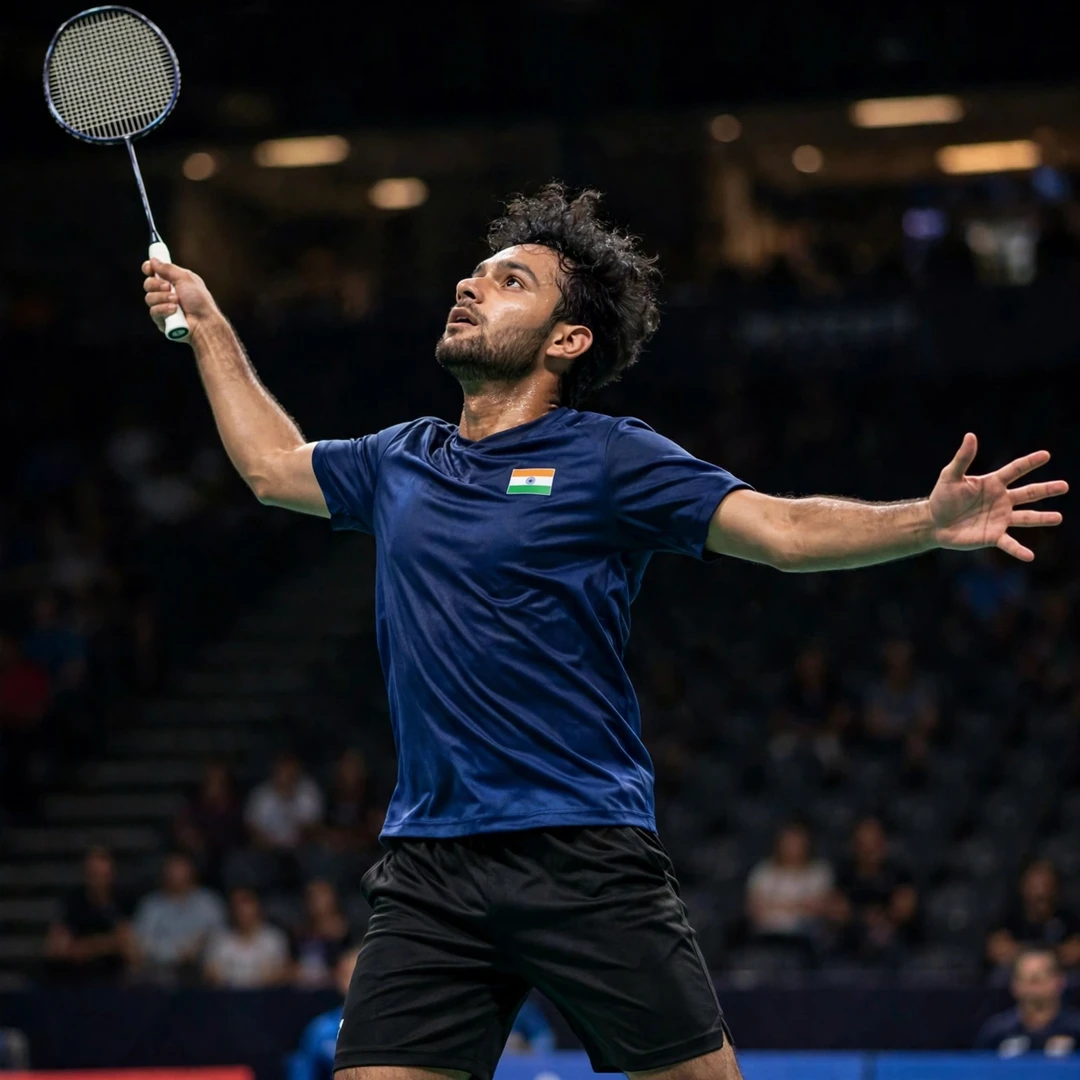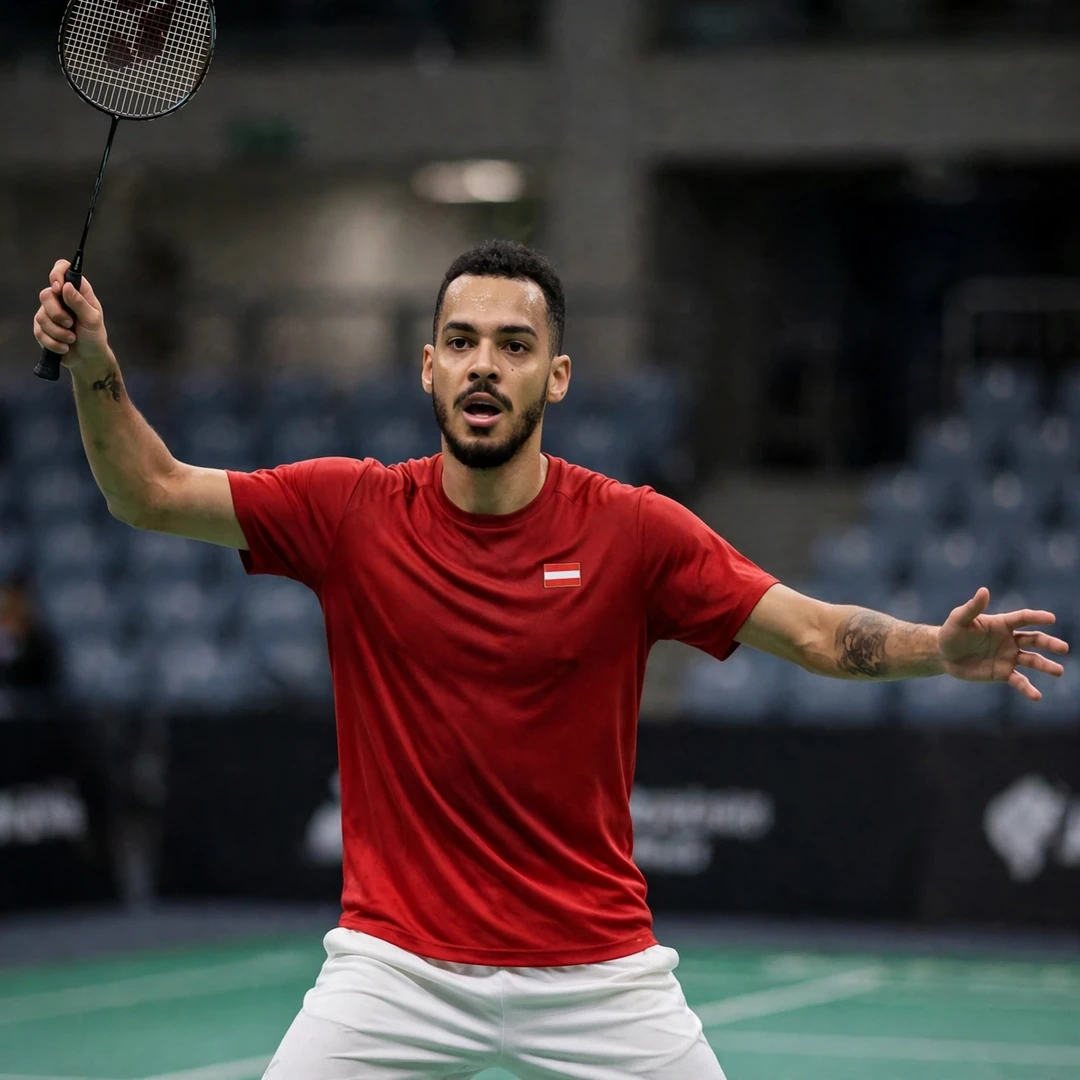
Austrian Men’s Singles Badminton Star
Collins Valentine Filimon
Austria
Player Event: Men’s singles
From Bucharest, Romania · Born: 14 February 1998 · Right-handed · Height: 1.90 m (6 ft 3 in)
Playing Style: Right-handed all-court player who turns a 1.90 m frame into steep smashes, sweeping defensive reach and a composed net game
Known For: Representing Austria at the Paris 2024 Olympic Games, three senior international titles in Slovenia, Malta and the Czech Republic, and pushing fourth seed Anders Antonsen to 21-18 in the second game of his Olympic debut
Club: ASKÖ Traun (Austrian Bundesliga)
Understanding Collins Valentine Filimon (Austrian Badminton Star)
Collins Valentine Filimon is an Austrian men’s singles badminton player who stands at world No. 115 in the BWF rankings for Week 43 (20 October 2026) with 16,339 points. His is one of the most unusual journeys in this part of the rankings: born in Bucharest and developed inside Romania’s national team, he became an Austrian citizen in 2021, rebuilt his career under a second flag, won three senior international titles, reached a career-high world No. 84, and walked out at the Paris 2024 Olympic Games — where his first Olympic match put him across the net from fourth seed Anders Antonsen. In October 2026, days before these rankings were published, he reached the Santo Domingo Open semi-finals, a sign that the climb is gathering pace again.
Born in Bucharest: A Romanian Start in Badminton
Collins Valentine Filimon was born on 14 February 1998 in Bucharest, Romania — Valentine’s Day, a date his middle name happens to share. Romania was where the badminton began: he joined the Romanian national team set-up in 2012, at fourteen years old, and came through one of Europe’s smaller but proud badminton systems. Everything about his formation was Romanian — the junior circuits, the Balkan rivalries, the national-team camps — which is what makes the second half of his story, under Austria’s red-white-red, so unusual.
Junior Success in Cyprus and Balkan Medals
The junior results came early and they came abroad. Filimon won the boys’ singles title at the Cyprus Junior International in both 2014 and 2015, back-to-back titles that marked him out as Romania’s leading junior of his age group. In doubles he was medalling too: a bronze in mixed doubles at the Balkan Championships in Stara Zagora in 2014, partnering Catalina Simionescu, and a silver in mixed doubles at the 2015 under-19 Balkan Championships with the same partner. He was, by sixteen, already a tournament winner in two disciplines.
European Games 2019 and the Switch to Austria
The senior breakthrough for Romania arrived at the 2016 Balkan Championships in Iasi, on home soil, where the eighteen-year-old reached the men’s singles semi-finals and took bronze, losing 16-21, 18-21 to Bulgaria’s Ivan Rusev. Three years later he carried Romania’s colours at the 2019 European Games in Minsk, the multi-sport stage every European player covets: in the group stage he beat Luxembourg’s Robert Mann, while defeats to Russia’s Vladimir Malkov and Indonesia-born Azmy Qowimuramadhoni ended his run. He had played a European Games for his birth country. Nobody, then, was talking about Austria.
First International Title: Slovenia International 2022
The change, when it came, was total. In September 2021 Filimon became a naturalised Austrian citizen and began representing Austria in international tournaments, basing himself with ASKÖ Traun, one of the powerhouses of the Austrian Bundesliga. Changing flags at twenty-three means starting again in practical terms: new national coaches, new team-mates, a ranking to rebuild in new colours and a home crowd to win over. Filimon did it the only way that works — by playing, week after week, on the European circuit where he had always earned his living.
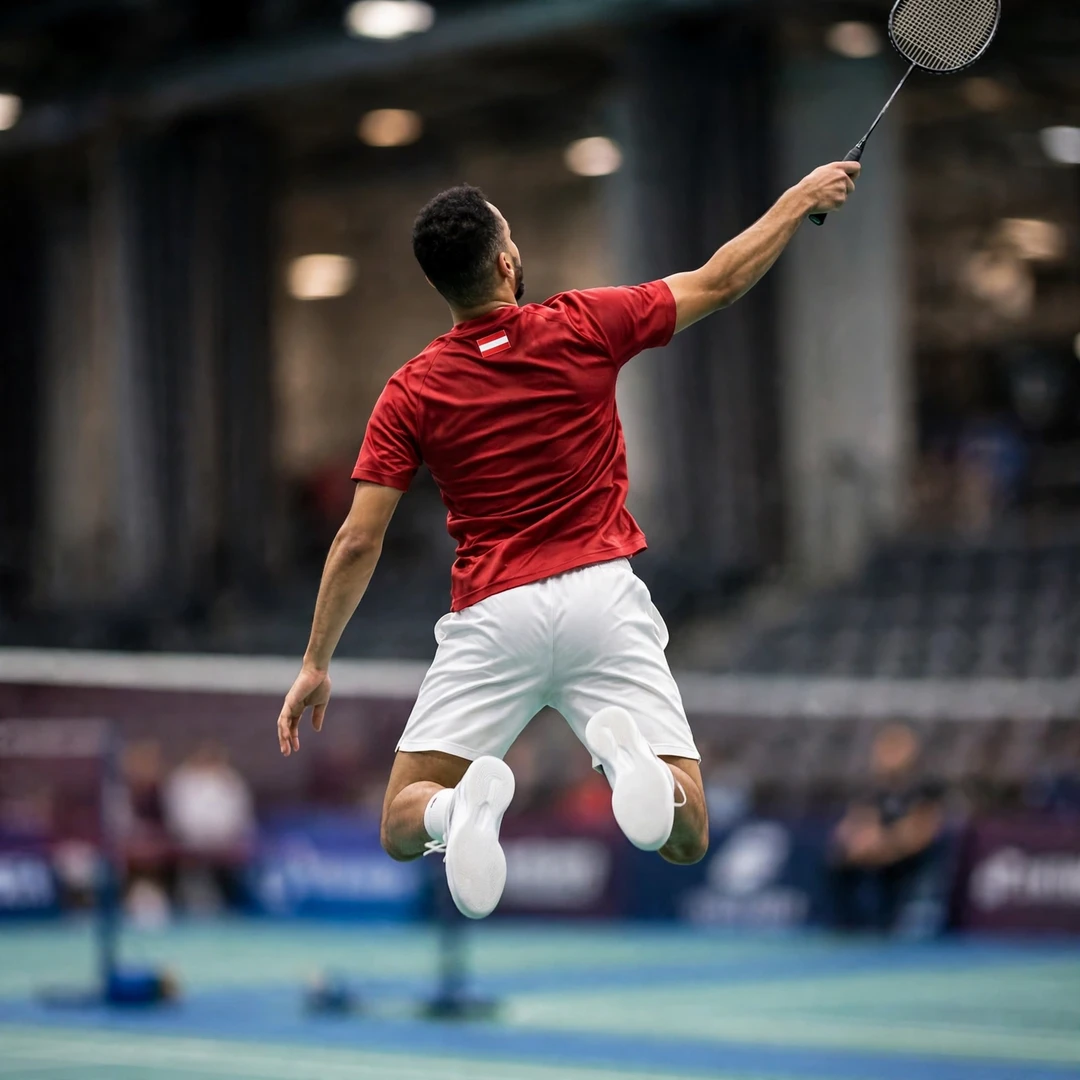
Career Milestone #1
Career-High World No. 84 and the Malta Title
The first title in Austrian colours arrived within eight months. At the Slovenia International in 2022 he worked through the draw and beat Lin Kuan-ting of Chinese Taipei 21-17, 23-25, 21-12 in a three-game final — his first senior international title, won the hard way after dropping the second game 23-25. A first title changes a player’s paperwork problem into a selection argument: Austria now had a men’s singles player who could win on the circuit, and Filimon had proof that the move, however disruptive, had not cost him his level.
Club badminton carried the rebuild between internationals. ASKÖ Traun are serial contenders for the Austrian Bundesliga title, and Filimon became one of the side’s bankers in the men’s singles — in the 2023 championship final series against ASV Pressbaum he beat Iskandar Zulkarnain, until then unbeaten in the league, in straight games to put Traun 3-1 up in the tie. Those Bundesliga weekends matter more than they look from outside: regular high-pressure team matches, in front of home supporters, are where a newly naturalised player stops being a signing and becomes a team-mate.
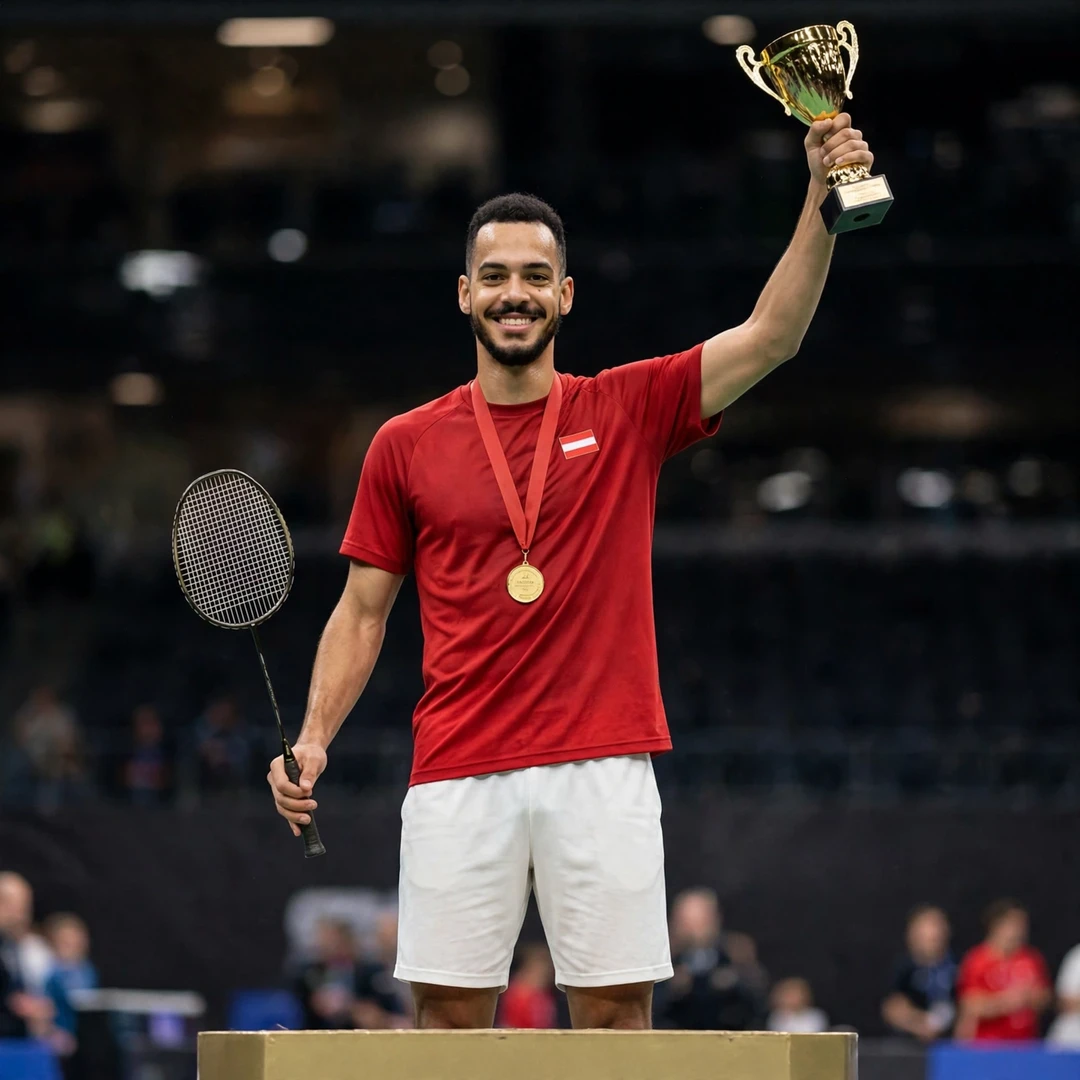
Career Milestone #2
Paris 2024: Olympic Debut Against the Fourth Seed
By the spring of 2024 the project was ahead of schedule. On 19 March 2024 his world ranking peaked at No. 84, the highest of his career, and weeks later he added a second senior title at the Malta International — beating his own compatriot Wolfgang Gnedt 19-21, 21-17, 21-11 in an all-Austrian final, a scoreline that tells its own story about Austrian badminton’s improving depth. Form like that settles selection debates, and it carried Filimon into Austria’s team for the biggest event of all.
Paris 2024 placed him in Group E of the Olympic men’s singles, alongside fourth seed Anders Antonsen of Denmark and Azerbaijan’s Ade Resky Dwicahyo. His Olympic debut, on 28 July 2024 at the Arena Porte de la Chapelle, was against Antonsen himself — a baptism against one of the most complete players in the world. The Dane took the first game 21-10, but in the second Filimon settled, attacked the occasion rather than admiring it, and pushed the fourth seed all the way to 21-18. Badminton Europe’s headline said it plainly: Antonsen had been made to hold off a determined Filimon.
His second group match, against Dwicahyo the following day, ended 18-21, 11-21, and with it his Olympics: two defeats, no knockout round. Judged coldly it was a group-stage exit; judged properly it was something else — a player born in Bucharest, developed in Romania, naturalised in Austria, standing in an Olympic arena and taking eighteen points off the fourth seed in a single game. Olympic debuts are rarely won. They are learned from, and Filimon left Paris with the most valuable education his sport offers.
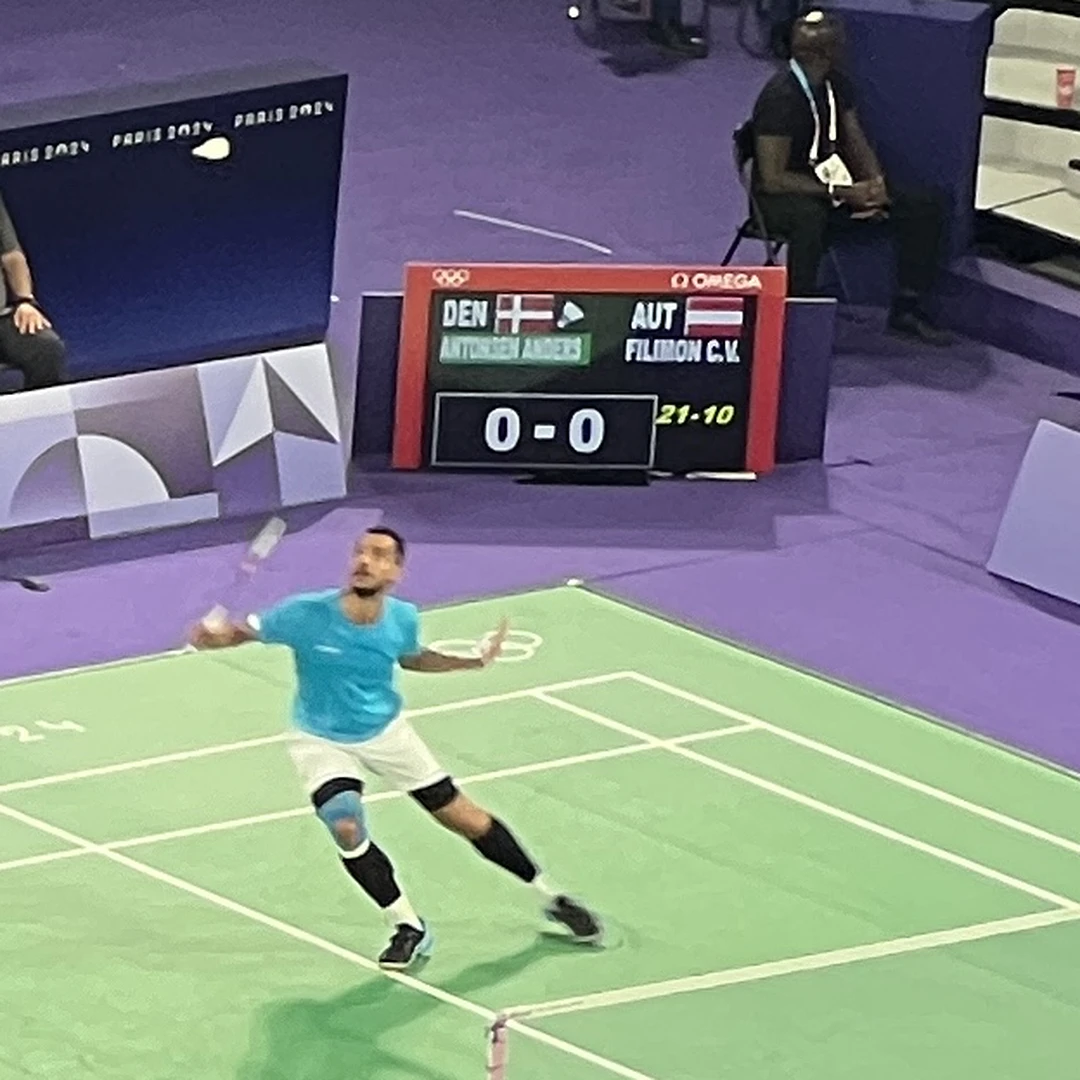
Career Milestone #3
Czech Gold, a Welsh Final and a Game Off Lakshya Sen
The season after the Olympics brought his third senior title. At the Czech International in 2025 he beat Turkiye’s Emre Lale 15-10, 15-7 in the final — the short scoreline belongs to that event’s recorded results — to complete a hat-trick of titles in three different countries: Slovenia, Malta and now the Czech Republic. Three titles at International Series and Challenge level is the signature of a player who has mastered his tier of the sport, the level at which most professional careers are honestly built.
Later in 2025 he came within one match of a fourth title at the Welsh International, defeating everyone in his path until the final, where Denmark’s Ditlev Jaeger Holm beat him 10-21, 21-14, 5-21 — a match that showed both halves of his game: the second-game fightback that levelled it, and the third-game fade he is still working to eliminate. At home, meanwhile, his club duties with ASKÖ Traun kept him at the sharp end of the Austrian Bundesliga, where Traun contested the championship finals series.
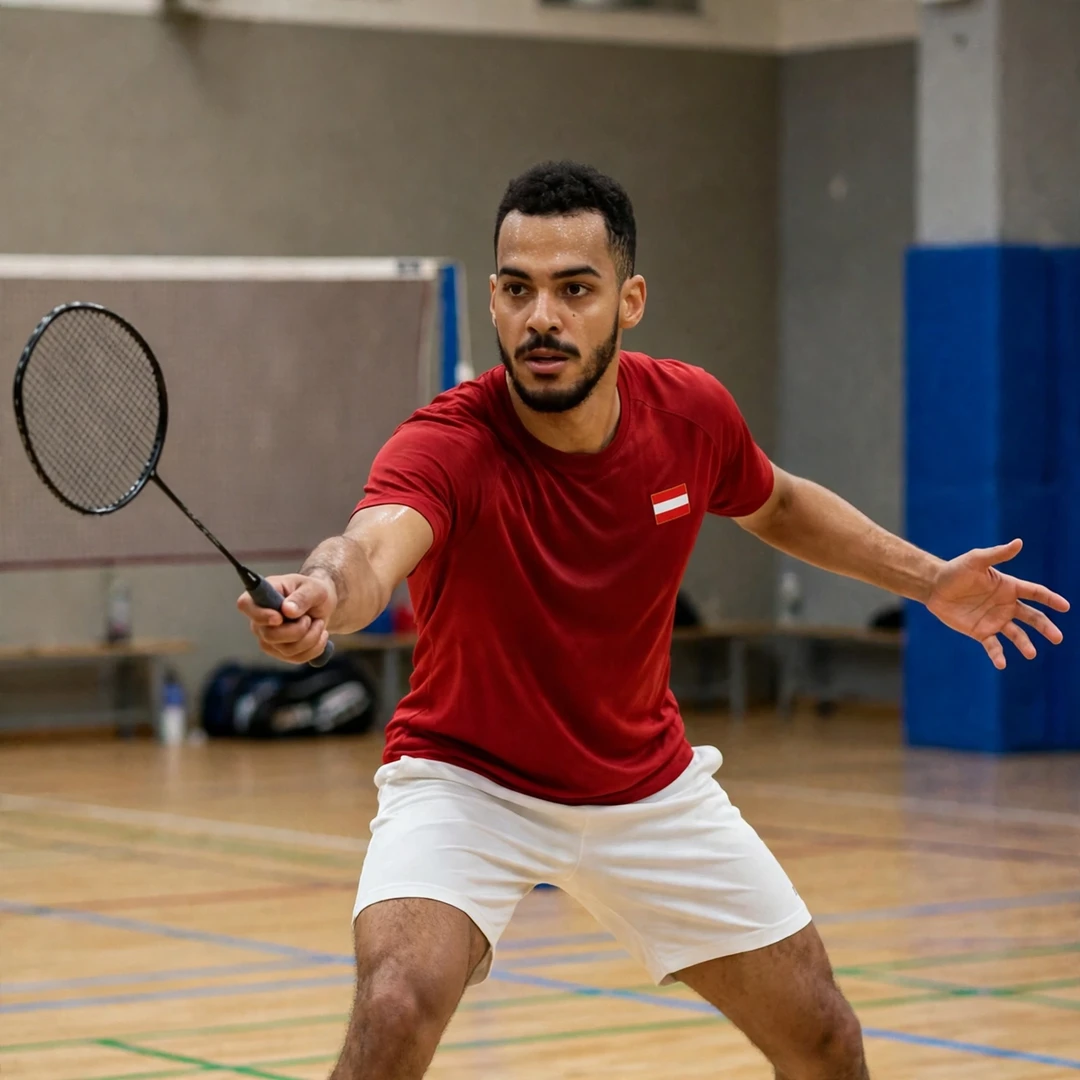
The 2026 season has been a study in knocking on bigger doors. At the European Championships in Huelva he beat Dicky Dwi Pangestu in straight games before losing to Denmark’s Rasmus Gemke in the round of 16. He reached the quarter-finals of the Luxembourg Open and the round of 16 at his home Austrian Open in Graz. Then, at the World Championships in New Delhi in August, he produced the result neutrals remembered: drawn against home star Lakshya Sen in the round of 64, the towering Austrian won the first game 21-16 before Sen, stung into life, stormed back 21-8, 21-4 in forty-five minutes. Taking a game off a former world No. 6 on his home court is not a footnote — it is a measure.
Career Milestone #4
Still Climbing: The Santo Domingo Semi-Final and Beyond
The autumn of 2026 has supplied the momentum. After a round-of-16 finish at the Arise International Challenge, Filimon travelled to the Caribbean for the Santo Domingo Open (14-18 October) and reached the semi-finals — three match wins, his deepest international run of the year, banked in the very week these rankings closed. The Week 43 list therefore catches him mid-rise: world No. 115, 16,339 points from twelve counted tournaments, with fresh points still to defend and add. His club season brought silverware too, as ASKÖ Traun won the Austrian Bundesliga team championship in 2026.
What remains is the gap between No. 115 and the player he has already shown he can be: the world No. 84 of March 2024, the man who troubled Antonsen in Paris and Sen in New Delhi. At twenty-eight, in the physical prime of a 1.90 m athlete whose game is built on reach rather than mileage, the next targets are concrete — a return to the top 100, main-draw consistency at Super 100 level and above, and a place in the qualification race for the Los Angeles 2028 Olympic Games, where a second Olympic campaign would complete the strangest journey in this ranking band: Bucharest to Paris, by way of Traun.
Playing Style
The Towering All-Court Style: Reach, Power and Net Composure
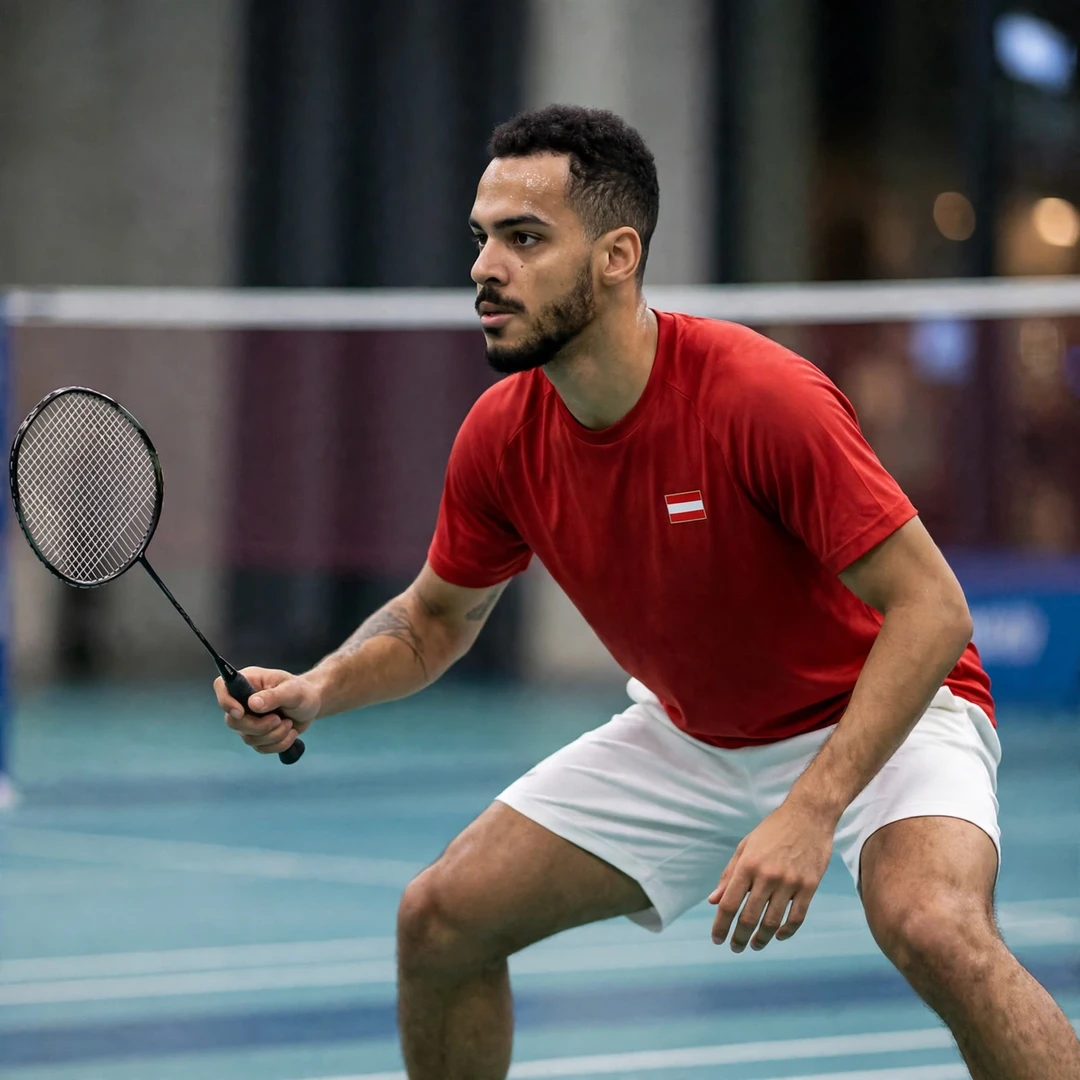
Filimon’s game starts with the tape measure. At 1.90 m (6 ft 3 in) he is among the tallest men in elite singles, and height in badminton is leverage: he takes the shuttle at a higher contact point than almost anyone he faces, which steepens his smash angles, shortens the court his opponents can safely lift to, and turns his defensive reach into a wall — low returns that beat smaller players outright are still within one long stride and a full-length lunge for him. Coaches analysing his game start there, because every opponent must.
What surprises opponents is the composure that comes with the power. In the drifting hall in New Delhi, it was Lakshya Sen who second-guessed his net shots early while Filimon, unhurried, punished the uncertainty and took the first game — front-court calm under conditions designed to destroy it. His three title runs tell the same story: patient rally construction, a willingness to play one more neutral shot, then the kill when the lift finally comes short. Height gives him the angles; patience decides when to use them.
His remaining frontier is the third game. The Welsh final slipped away 5-21 in the decider after he had levelled; the Sen match followed the same arc — a brilliant first game, then a favourite’s level rising beyond him. Sustaining his first-game quality for three games against top-twenty pace, and converting deep runs at Challenge level into titles at the next tier, is the work of his next two seasons. The encouraging part is that the pattern is consistent and therefore coachable: he starts matches against anyone. Finishing them is a trainable skill, and he has built a career out of trainable skills.
Mental Strength
Development Travels: Lessons From a Two-Flag Career
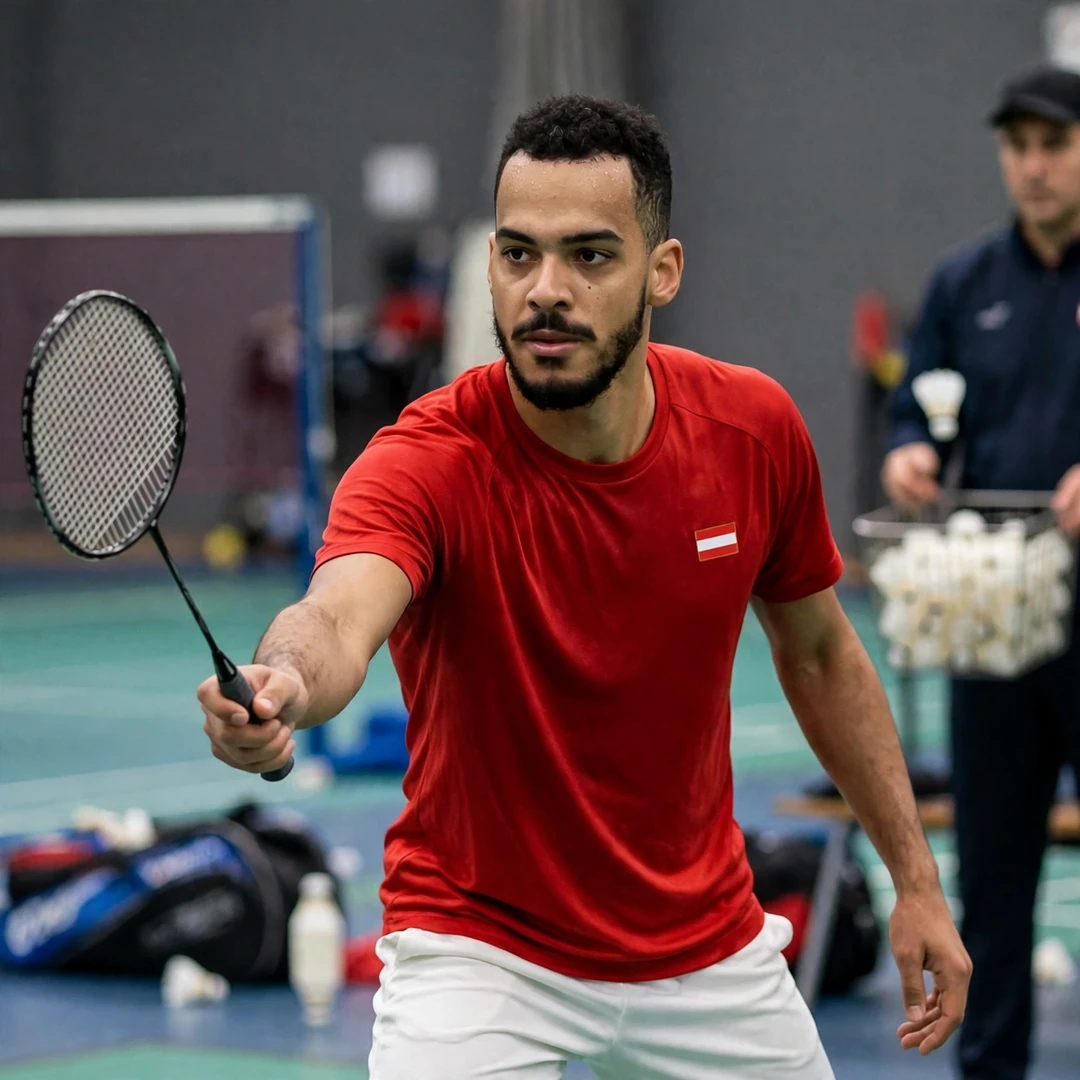
Young players studying Filimon should start with the map, because it breaks every rule of the standard career story. His development was done properly in one country — national team at fourteen, junior titles at sixteen, Balkan medals, a European Games — and then, at twenty-three, he changed countries and did the hardest part again: new system, new colours, ranking rebuilt, Olympic debut three years later. Development done well is portable. The footwork, the rally craft and the competitive habits he built in Romania did not expire at the border; they transferred, because fundamentals always do.
His manner carries the same lesson. There was no bitterness in the flag change and no triumphalism either — he simply went to work for ASKÖ Traun, played Bundesliga weekends, won his first title in Austrian colours within a year and kept accumulating. When the Olympic draw gave him the fourth seed in his very first match, he played the second game like a man who belonged there. Gratitude to both systems that built him, and total focus on the next tournament: that combination is a professional skill, and it is learnable.
Practical lessons from his journey include building your game around the body you actually have — reach and height trained as a system, not a coincidence; mastering your circuit level before chasing the next, as his three Challenge and Series titles did in sequence; starting matches fast and staying calm at the net, the two habits that won him games off Antonsen-level and Sen-level opposition; treating the ranking as a fifty-two-week planning problem; and letting club badminton carry your match sharpness between internationals. None of it requires a famous academy — it requires sequence, patience and honesty about which tier you are really in.
Learning Reference
ST Badminton Academy Connection
ST Badminton Academy has no official partnership or endorsement from Collins Valentine Filimon. He is not connected with our academy, and this profile is published purely as an educational case study for parents and junior players who want to understand how a Bucharest-born player reached the Olympic Games under the Austrian flag — and what his two-flag career teaches about development that lasts.
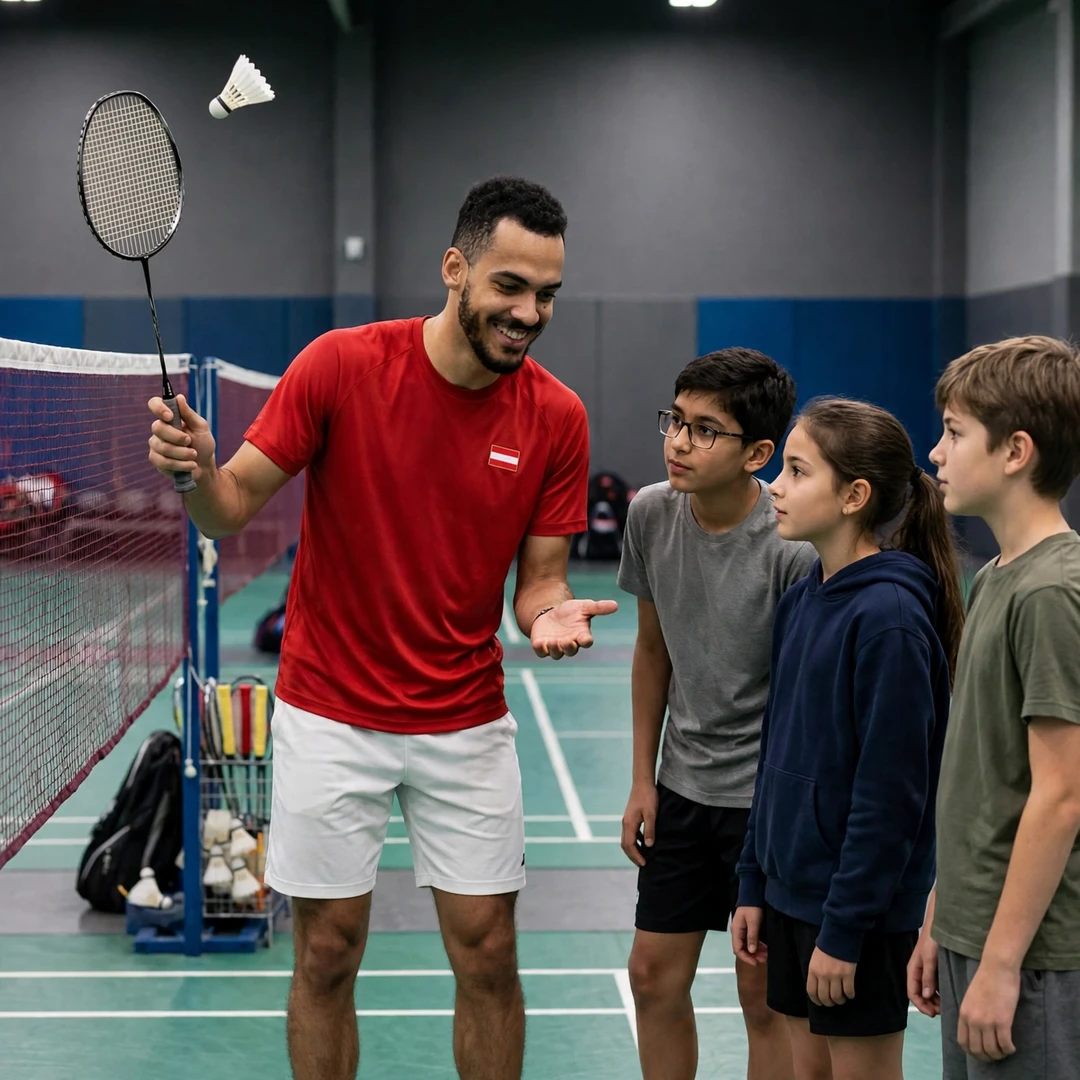
Many of our students from Malaysia and visiting learners from Singapore study his matches to understand reach-based badminton: how a tall player turns defence into counter-attack, how steep smash angles are manufactured by contact height, and how his Paris match against Anders Antonsen and his first game against Lakshya Sen in New Delhi were constructed shot by shot. His three titles in Slovenia, Malta and the Czech Republic are used in our discussions of mastering one level of competition before chasing the next.
We encourage our students to observe his front-court composure, the way he uses every centimetre of his reach without lunging wildly, and his refusal to let a change of country — or a group-stage Olympic exit — define the ceiling of his career, and to notice that his rise ran through junior halls in Bucharest and club courts in Traun, through small titles in Slovenia, Malta and the Czech Republic, not through a single televised breakthrough. Sometimes a career is built one flag, one tier, one season at a time.
FAQs: Collins Valentine Filimon Austrian Badminton Player
Here are answers to common questions about Collins Valentine Filimon’s career, achievements and what young players in Malaysia can learn from the Austrian Olympian’s journey from Bucharest junior to Paris 2024.
Who is Collins Valentine Filimon and which country does he represent in badminton?
Collins Valentine Filimon is an Austrian professional badminton player competing in men’s singles. Born on 14 February 1998 in Bucharest, Romania, he represented Romania from 2012 to 2021 — winning junior titles and Balkan Championships medals — before becoming an Austrian citizen in September 2021. He plays for ASKÖ Traun, reached a career-high BWF world ranking of No. 84 in March 2024, represented Austria at the Paris 2024 Olympic Games, and stands at No. 115 in the Week 43 rankings of 20 October 2026 with 16,339 points.
What are Collins Valentine Filimon’s biggest badminton achievements?
Filimon’s biggest achievements are his appearance at the Paris 2024 Olympic Games for Austria, his three senior international singles titles — the Slovenia International 2022, the Malta International 2024 and the Czech International 2025 — a runner-up finish at the Welsh International 2025, and his career-high world ranking of No. 84. For Romania he won Balkan Championships medals, including men’s singles bronze in 2016, and back-to-back Cyprus Junior International titles in 2014 and 2015. In October 2026 he reached the Santo Domingo Open semi-finals.
What is Collins Valentine Filimon’s playing style?
Filimon is a right-handed, all-court player built around a 1.90 m frame. His height gives him steep smash angles, an unusually high contact point and a defensive reach that turns defence into counter-attack, while his front-court composure — shown when he out-started Lakshya Sen in the drift in New Delhi — underpins patient rally construction. He is not a pure power player: his three international titles were won by building rallies and finishing them, not by blasting through draws.
How did Collins Valentine Filimon perform at the Paris 2024 Olympics?
Filimon made his Olympic debut at Paris 2024 in Group E, drawn against fourth seed Anders Antonsen and Azerbaijan’s Ade Resky Dwicahyo. He lost his opening match to Antonsen 10-21, 18-21 — pushing the Dane hard in the second game — and his second match to Dwicahyo 18-21, 11-21, so he exited in the group stage. It remains the defining honour of his career: an Olympic campaign for Austria three years after changing nationality.
How can my child learn from Collins Valentine Filimon’s training approach?
Young players can study Filimon’s approach by copying its sequence: complete junior fundamentals first, master one circuit level at a time, and build the game around your own physical gifts. At ST Badminton Academy we use his Paris 2024 match against Anders Antonsen and his first game against Lakshya Sen at the 2026 World Championships as video lessons in how reach, composure at the net and fast starts can trouble the world’s best — then train the same patterns in front-court and rally-building drills.
Did Collins Valentine Filimon win any junior titles?
Yes. Filimon won the boys’ singles title at the Cyprus Junior International in 2014 and again in 2015, and took a silver medal in mixed doubles at the 2015 under-19 Balkan Championships with Catalina Simionescu, alongside a Balkan Championships mixed doubles bronze in 2014. His junior record, built entirely in Romania’s colours, is the foundation on which the whole senior career — for two countries — was built.
What are Collins Valentine Filimon’s best senior international results?
Filimon’s best senior results are his three titles — Slovenia International 2022 (beat Lin Kuan-ting 21-17, 23-25, 21-12), Malta International 2024 (beat Wolfgang Gnedt 19-21, 21-17, 21-11) and Czech International 2025 (beat Emre Lale 15-10, 15-7) — plus the Welsh International 2025 final, the Santo Domingo Open semi-final in October 2026, a European Championships round-of-16 finish in 2026, and taking the first game off Lakshya Sen at the 2026 World Championships.
What playing style should young players learn from Collins Valentine Filimon?
Young players should study how Filimon builds a game around his body: the high contact point that steepens every smash, the long reach that makes his defence a weapon rather than a rescue act, and the calm net play that earns him the lifts his height then punishes. Just as important is the mindset — a player who changed countries at twenty-three, rebuilt his ranking from the European circuit floor, and still walked out at an Olympics three years later.
Does ST Badminton Academy have any connection with Collins Valentine Filimon?
No, Collins Valentine Filimon is not a student, coach or ambassador of ST Badminton Academy. He represents Austria and developed through Romania’s national team and the ASKÖ Traun club in Austria. However, coaches at our academy in Kuala Lumpur regularly use his matches as teaching material, because his journey — junior patience in Bucharest, a flag change, three titles and an Olympic debut — shows what portable fundamentals and sequenced development can achieve.
Collins Valentine Filimon Career Highlights
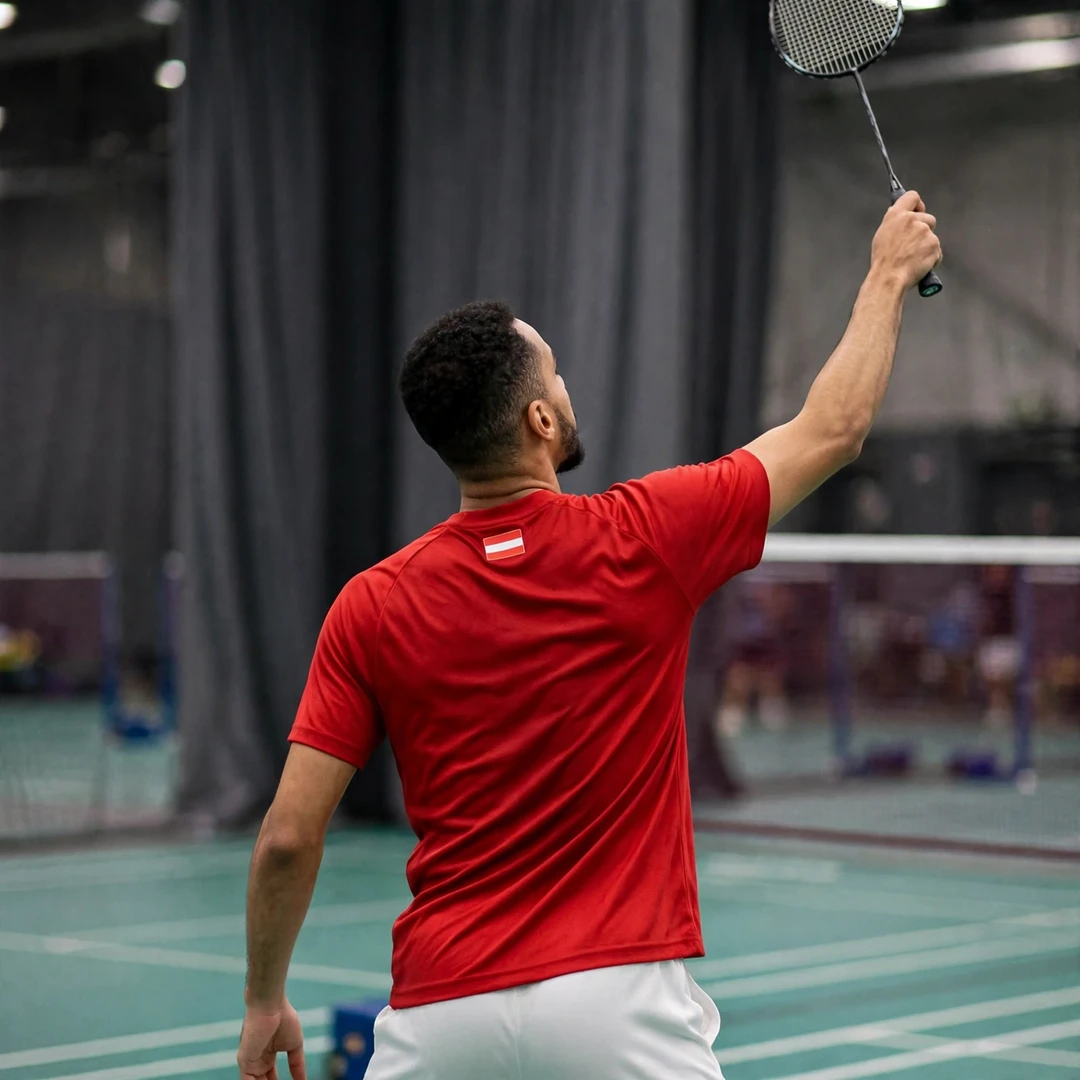
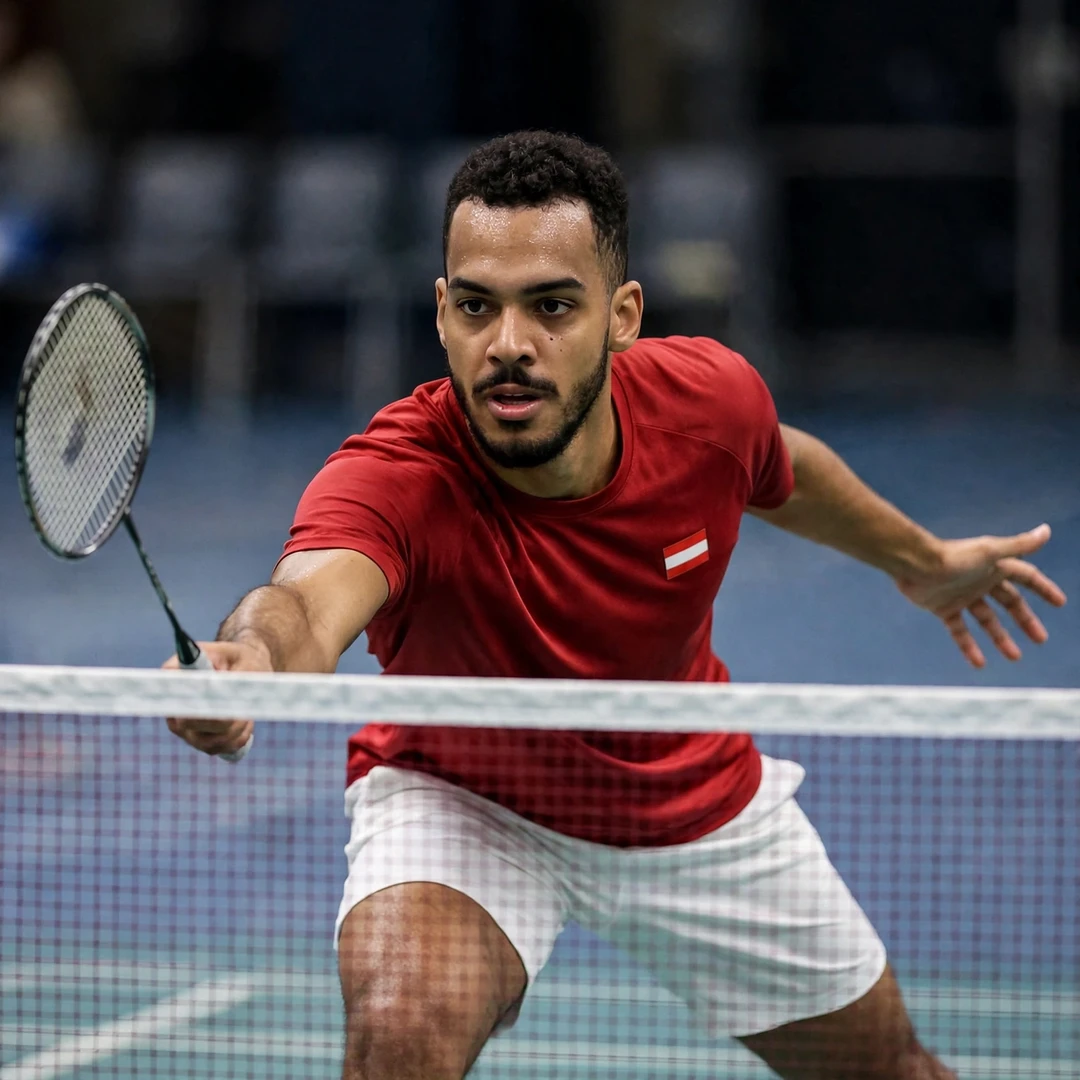
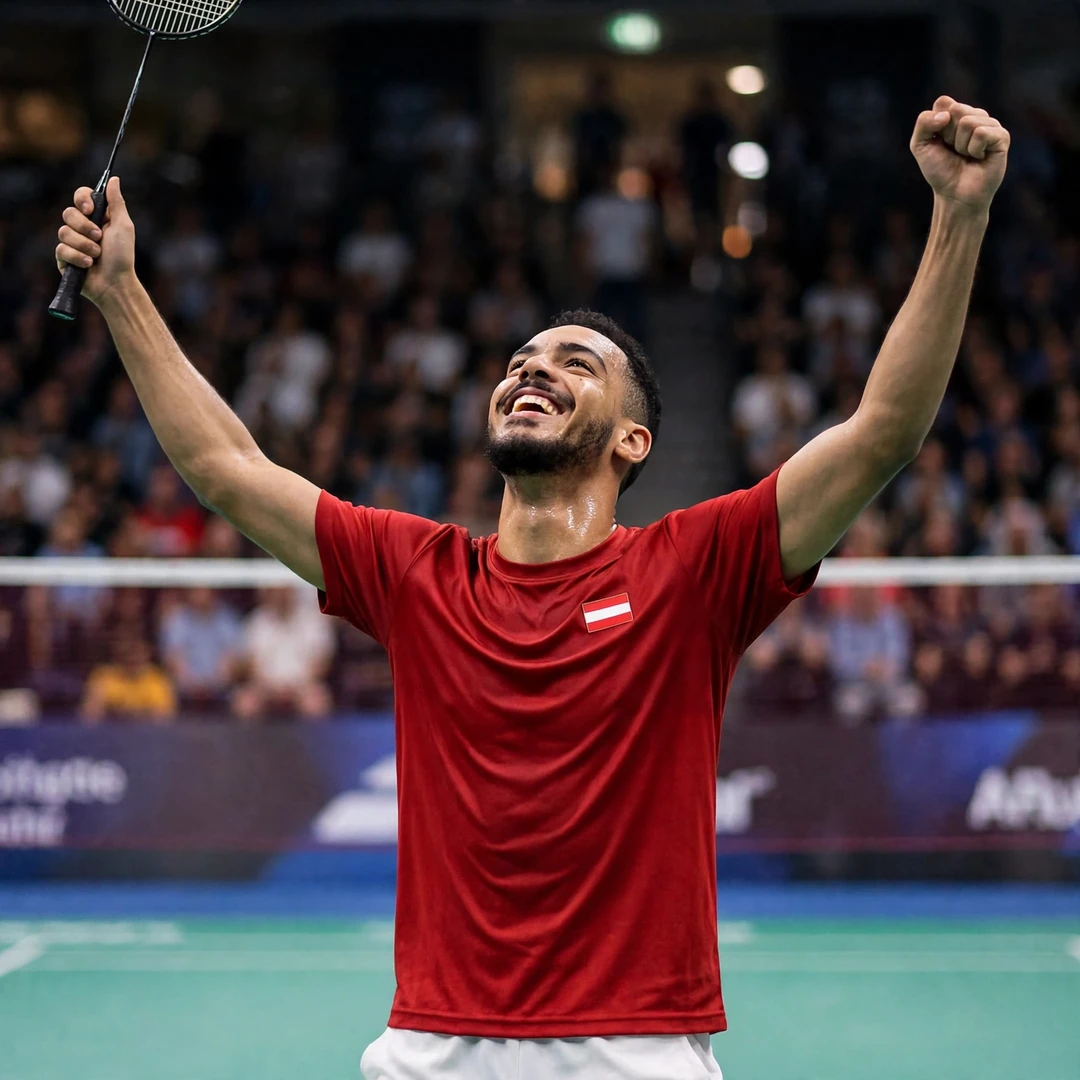
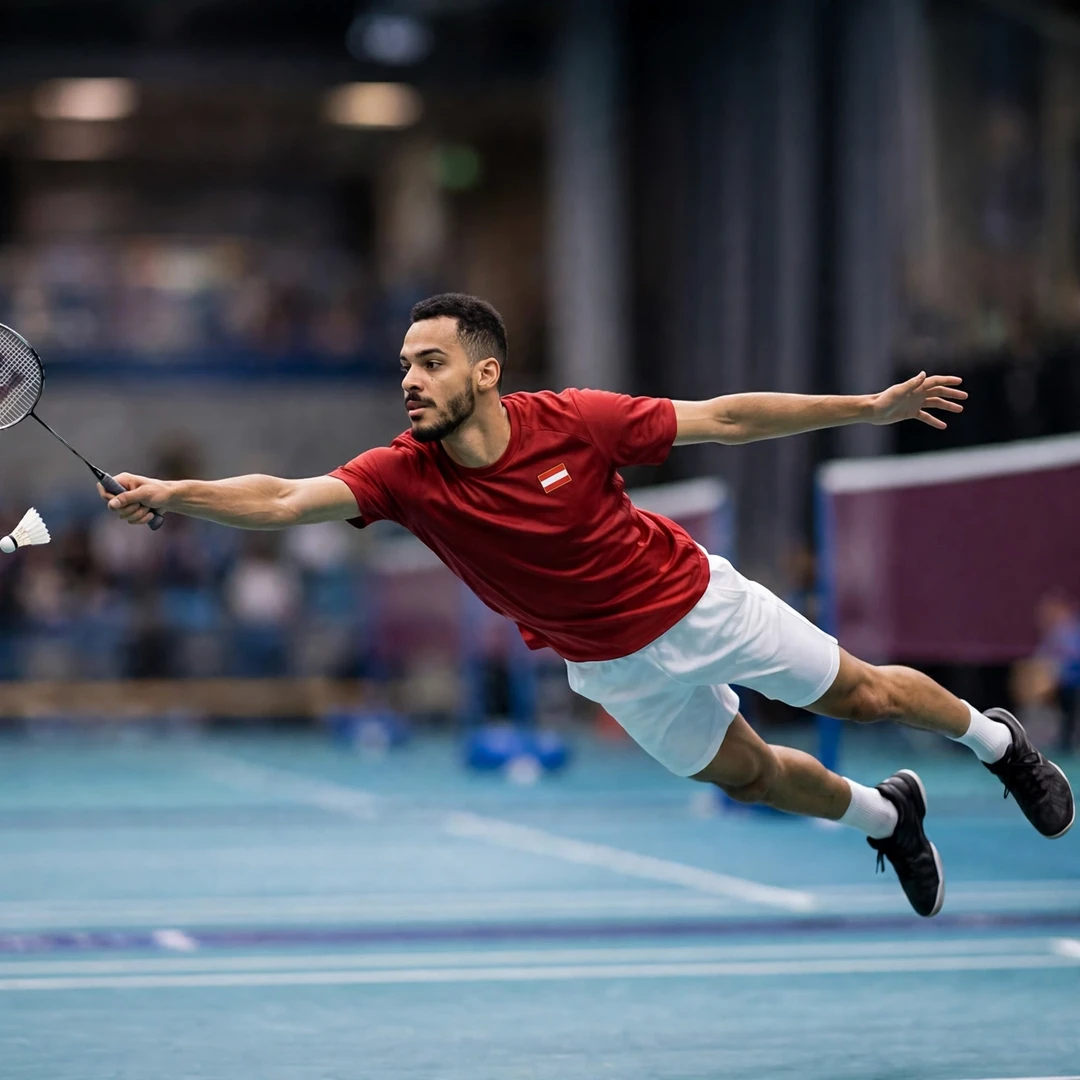
Career Statistics and Rankings
Collins Valentine Filimon, born 14 February 1998 in Bucharest, has lived two badminton lives in one career: Romanian junior champion and Balkan medallist, then Austrian citizen, title winner in three countries, world No. 84 at his peak and an Olympian at Paris 2024 — and, at world No. 115 in October 2026 with a fresh Santo Domingo semi-final behind him, still climbing.
| Development Area | Common Misconception | What Collins Valentine Filimon's Career Shows REALITY |
|---|---|---|
| Junior Foundation | Talent alone decides who becomes a champion. | Filimon joined Romania's national team at fourteen and won the Cyprus Junior International boys' singles title in 2014 and 2015 — a structured junior base in his birth country came first. |
| Playing Style Priority | Kids should copy the flashiest attacking shots. | Filimon built a complete game first; his steep smashes from a 1.90 m reach are the finishing touch on long defensive coverage and a composed net game. |
| Fitness Importance | Juniors can out-train everyone without rest. | Filimon changed countries mid-career, naturalising as an Austrian citizen in 2021, then rebuilt his career under a second flag — his Olympic debut and career-high No. 84 came from patient rebuilding, not more hours. |
| Mental Approach | Top players never get nervous or upset. | Filimon took the fourth seed to 21-18 in a game on his Olympic debut and won a game off Lakshya Sen at the 2026 World Championships, yet he keeps working for the next level — mental skills are trained, not inherited. |
| Attacking Training | Smashing harder is always the answer. | His three senior international titles — Slovenia 2022, Malta 2024 and the Czech International 2025 — came from patient rally construction and controlled finishing, not raw power. |
| National Milestones | Only world titles matter. | Filimon's Balkan Championships medals for Romania and his Paris 2024 Olympic campaign for Austria made him a standard-bearer in two countries — milestones build a career step by step. |
| Career Timeline | Champions peak once and fade fast. | From the Romanian junior team in 2012 to an Olympic debut in 2024 and a Santo Domingo Open semi-final in 2026, Filimon proves sustained development beats a short peak. |
Study Collins Valentine Filimon's Work Ethic and Professional Approach
This profile explains who Collins Valentine Filimon is, his major achievements, and what developing players can learn from his journey. Whether you are a parent in Kuala Lumpur, Cheras or anywhere in Malaysia wondering whether your child has started too late or is in the wrong system, Filimon's story carries the answer: development done properly travels with the player — book a trial class with ST Badminton Academy on WhatsApp at +60 17-684 2136 and let your child begin building fundamentals that will hold up anywhere.