Badminton learning in Kuala Lumpur
Why Your Badminton Technique Works in Drills but Breaks Down in Matches
A clean shot in a predictable drill is a starting point. Learn how to connect that technique to movement, choices and the changing demands of a rally.
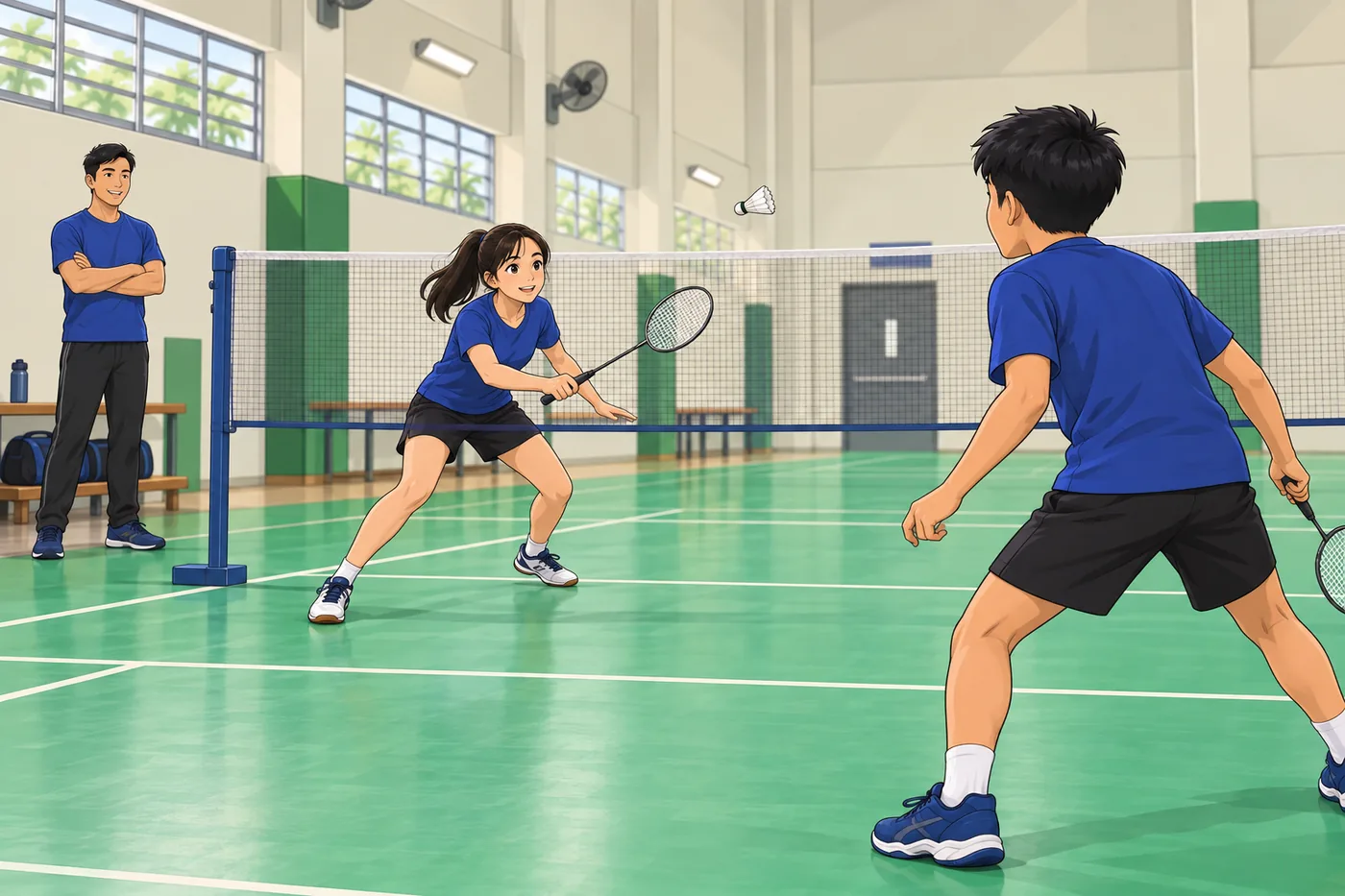
Your badminton technique can look comfortable in a drill and feel unreliable in a match because the two tasks ask different things of you. In a drill, you may already know where the shuttle is going. In a rally, you must notice the shot, move, choose a response and recover while your opponent keeps changing the situation.
That gap does not automatically mean the technique was taught badly or that you need to start again. Your badminton training may need a clearer bridge between learning a movement and using it when the next shot is uncertain. The useful question is: exactly which part changes when the rally becomes less predictable?

A repeated feed removes several decisions
Imagine a coach feeding repeatedly to your forehand rear court. You can prepare for that destination before the shuttle leaves the racket. You know the shot you intend to play, and there may be a pause before the next feed. This is useful when you are learning contact, preparation or a particular movement.
Now imagine receiving a similar shuttle after defending a shot near the body. Your starting position is different. You need to judge whether you can get behind the shuttle, notice where your opponent is standing and decide how much control you have. The hitting action is only one part of the task.
Predictable practice still has a place. The mistake is judging match readiness only by how neat the shot looks when the surrounding decisions have already been made for you.
Find the first thing that breaks down
Describe one repeatable situation to your badminton coach instead of saying that everything goes wrong. For example: your clear works from a ready position, but becomes short after a backhand net reply. That gives the coach something concrete to observe.
| What you notice | What to examine in practice |
|---|---|
| You reach the shuttle but feel rushed | Preparation, starting position and the previous recovery |
| You wait too long before choosing a shot | Recognition and the number of options you are considering |
| Your first shot is comfortable, then the next one breaks down | How the first shot affects your next position |
| You attempt a difficult winner from an awkward position | Shot selection and a more manageable alternative |
| The technique changes when the score is close | How you practise with a score and what you focus on |
These are observation prompts, not diagnoses. A coach may see a different cause. Watch the whole sequence, including the shot before the visible mistake, rather than blaming the final racket movement alone.

Build a bridge with small changes in uncertainty
Moving straight from a fixed drill into an unrestricted game can make the gap feel enormous. Ask whether the task can change in smaller steps. A sample progression might look like this:
- Repeat the target movement with a clear destination and enough time to understand the coaching cue.
- Keep the destination similar, but vary the timing or depth of the feed within your current ability.
- Introduce a second possible destination so you must recognise where to move.
- Start a short rally with the same opening situation, then let the rally continue.
- Use that situation in a game with a score and review what happened afterwards.
This is a conversation framework, not a universal session plan. A beginner may need a simpler version, while an experienced player may already handle several changing conditions. If quality disappears immediately, the next task might have added too many demands at once.
The aim is to retain something useful from the coached movement while gradually accepting the uncertainty that makes badminton a game.

Practise choosing a playable shot
A match rarely gives you ideal conditions for your favourite shot. Useful training includes recognising when a familiar attacking option is available and when a more controlled response makes sense.
Suppose you enjoy playing an overhead attacking shot. In a fixed drill, the shuttle may arrive where you can prepare comfortably. During a rally, the shuttle might already be beside or behind you. Trying to reproduce the same attacking outcome can turn a manageable rally into an immediate error.
Ask your coach for two or three understandable options tied to the position you actually reach. The coach might distinguish a balanced contact from a stretched or late one, then help you choose an appropriate response. Avoid memorising a long tactical menu while you are still learning to recognise the situation.
For newer players, the beginner badminton class information is a useful starting point for discussing foundations before adding more complex rally decisions.
Give recovery a place inside the exercise
If every repetition ends when you hit the shuttle, it is easy to overlook what happens next. A successful shot can still leave you watching the shuttle, moving in the wrong direction or unprepared for the reply.
One useful coaching question is: where should this repetition finish? Depending on the task, the answer might include recovering into a position that keeps the next likely options manageable, preparing the racket and watching the opponent. There is no single spot that solves every rally.
A short linked sequence can reveal more than an isolated shot. For example, practise a controlled net reply followed by responding to either a lift or another net shot. The coach can adjust the difficulty while observing whether you recover and recognise the reply. In doubles, the discussion also includes your partner’s position and shared understanding, rather than treating your movement as an individual route around the court.
Use a score without turning every session into a test
Some players look settled until points begin to count. They may hurry between rallies, attempt an ambitious shot too early or forget the one cue they understood during practice. A score can be a useful practice condition, but constant judgment can distract from the learning task.
Agree on one process to observe during a short game. It could be preparing before the opponent hits, making a deliberate shot choice from a late position or staying available for the next reply. Discuss that process after the game instead of stopping after every mistake.
Keep the score and the observation separate. You can lose a practice game while making a better decision than last time. Equally, winning against an easier opponent does not prove that the original technical problem has disappeared. Both the rally context and the quality of the attempt matter.


Bring a small, useful record to your coach
You do not need a complicated training dashboard. After a session or friendly game, record the situation you were practising, what you noticed and one question for the next class.
A useful note might read: ‘My rear-court shot stayed controlled when the opening feed was predictable. With a choice of front or back, I prepared late on several rallies. Can we check whether I am watching the feed or leaving my recovery too late?’
If you use video, get permission from the people involved and follow the venue’s recording policy. A few ordinary rallies can be more informative than a highlight reel. Include the lead-up to the mistake and some successful attempts from similar situations. Your badminton coach can then compare what changes without relying only on how the shot felt.
Ask how your class connects practice to play
When discussing a badminton class, ask how players move from technical work into linked movement and rallies. You are looking for an explanation suited to your current level, not a promise that every session will follow an identical formula.
A balanced conversation covers what needs isolated attention, what can be practised with a partner and where decision-making enters the task. The badminton training programme information can help you prepare those questions. Explain the match situation you want to improve so the discussion goes beyond the name of a shot.
Questions about this badminton training topic
Should I stop predictable drills if I want to play better matches?
No. Predictable drills can make a movement easier to understand. Ask how that movement will also be practised with changing feeds, linked shots and rally decisions.
Does losing a practice match mean my technique is getting worse?
Not necessarily. Opponents, shot choices and the task itself affect the result. Review the specific movement or decision you were practising alongside the score.
Should a beginner practise under pressure?
Pressure can be introduced in manageable ways, such as choosing between two destinations. A coach should adjust the complexity rather than expect a beginner to handle every match demand immediately.
What should I tell my coach when my shot feels different in games?
Describe your starting position, the incoming shot and what happened immediately before the error. That is more useful than simply saying your technique feels wrong.
Will more match play solve the problem on its own?
It might reveal the problem without changing it. Combining observed match situations with focused practice gives you a clearer way to work on the part that breaks down.
Discuss your training
If you are looking for badminton training in Kuala Lumpur, contact ST Badminton Academy with your current playing experience and one situation that repeatedly troubles you. A specific example gives the coaching discussion a practical starting point: what you can already do, what changes in a rally and what to practise next.