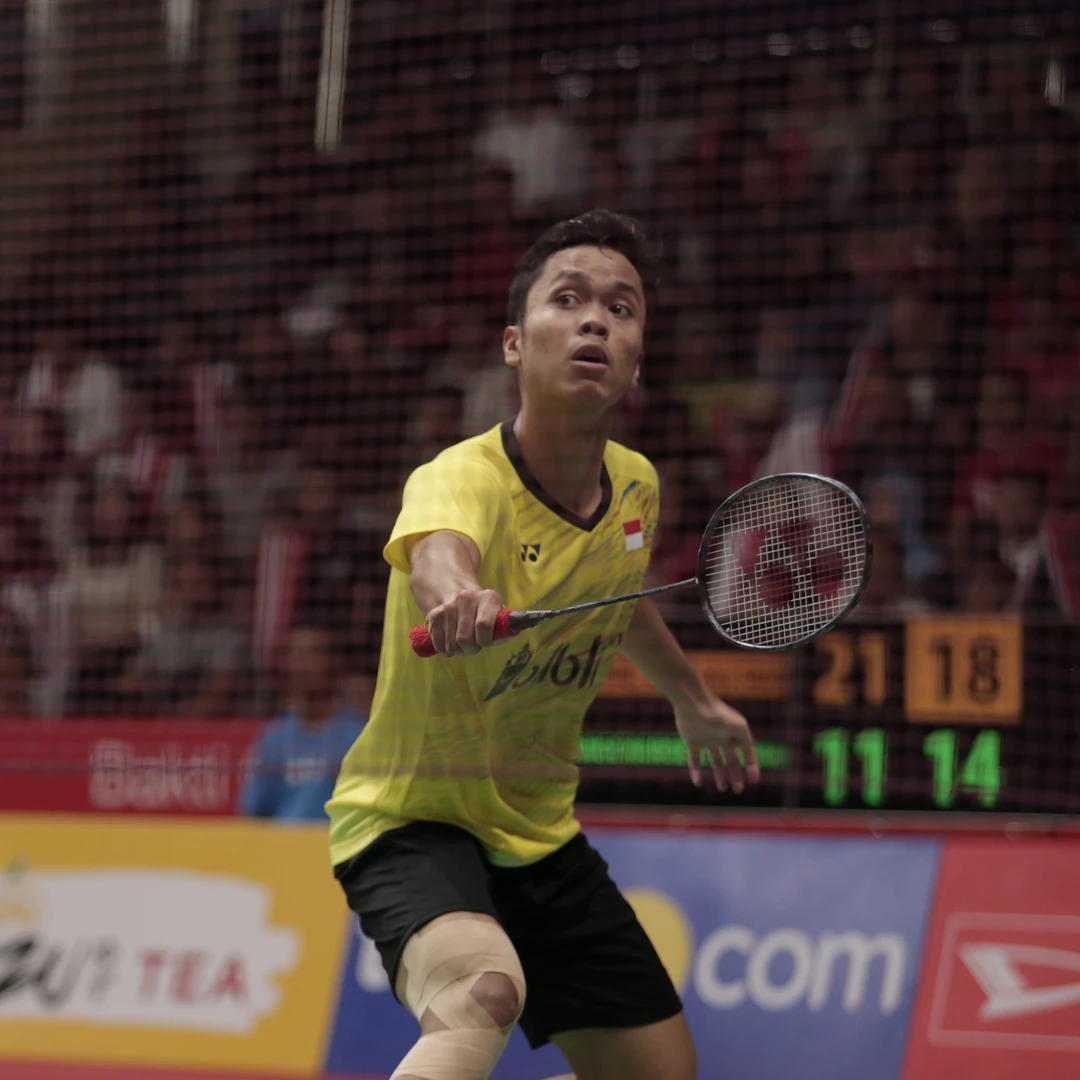
Indonesian Men’s Singles Badminton Star
Anthony Sinisuka Ginting

Indonesia
Player Event: Men’s singles
From Cimahi, West Java, Indonesia · Height: 1.71 m (5 ft 7 in) · Right-handed
Playing Style: Right-handed speedster with explosive footwork, deceptive net play and a famous cross-court smash
Known For: The Tokyo 2020 Olympic bronze medal, the 2018 China Open ‘Giant Killer’ run, the 2023 Asian Championships gold and six BWF World Tour titles
Journey: PB SGS PLN Bandung · Youth Olympic bronze 2014 · Korea Open champion 2017 · World No. 2 in January 2023
Understanding Anthony Sinisuka Ginting (Indonesian Badminton Star)
Anthony Sinisuka Ginting is an Indonesian men’s singles badminton player who stands at world No. 60 in the BWF rankings (Week 43, 20 October 2026) with 29,159 points — a number that tells only half his story. This is a former world No. 2, an Olympic bronze medallist, an Asian champion and the man the badminton world nicknamed the ‘Giant Killer’ after he beat a string of world and Olympic champions in a single week. Across a senior career that began in 2013, Ginting has won six BWF World Tour titles, helped Indonesia lift the Thomas Cup, and produced some of the fastest, most deceptive badminton ever played. For parents and junior players in Malaysia, his career is a masterclass in how speed, skill and resilience — built year by year from a childhood club in Bandung — can carry a player to the very top of the sport.
Early Life in Cimahi and Junior Career
Anthony Sinisuka Ginting was born on 20 October 1996 in Cimahi, West Java, to Edison Ginting and Lucia Sriati, and he is of Karo descent. Badminton arrived almost before school did: his father introduced him to the game in kindergarten, and once the young Ginting started winning local tournaments at the age of nine, his father brought him to train more intensely. In a country where badminton is a national passion, the boy from Cimahi had found his path early.
PB SGS PLN and the National Team Call-Up
As a child, Ginting joined PB SGS PLN in Bandung, one of Indonesia’s famous talent factories — the same club that fostered Taufik Hidayat, the Olympic champion Ginting grew up idolising. The Indonesian club system is a proven production line: structured group training, senior role models on the next court, and a clear ladder into the national setup. Ginting climbed it quickly, and at just 16 years old he was called up to the Indonesian national team.
World Junior and Youth Olympic Bronzes in 2014
His junior career peaked in 2014, a year that announced him to the badminton world. At the BWF World Junior Championships in Alor Setar, Malaysia, Ginting won the boys’ singles bronze medal, losing his semi-final 19-21, 15-21 to China’s Shi Yuqi — a rival he would meet again and again as a senior — and he also took silver with the Indonesian mixed team.
A Teenage Breakthrough at the Indonesia Open
Later in 2014 came the medal that started a unique Olympic story. At the Summer Youth Olympics in Nanjing, China, the 17-year-old Ginting beat India’s Aditya Joshi 21-17, 21-16 in the bronze-medal match to stand on a global podium for the first time. He had also reached the Asian Junior Championships quarter-finals that year. Nobody knew it yet, but the Nanjing bronze would one day make him the first badminton player in history to medal at both the Youth Olympics and the Olympic Games.
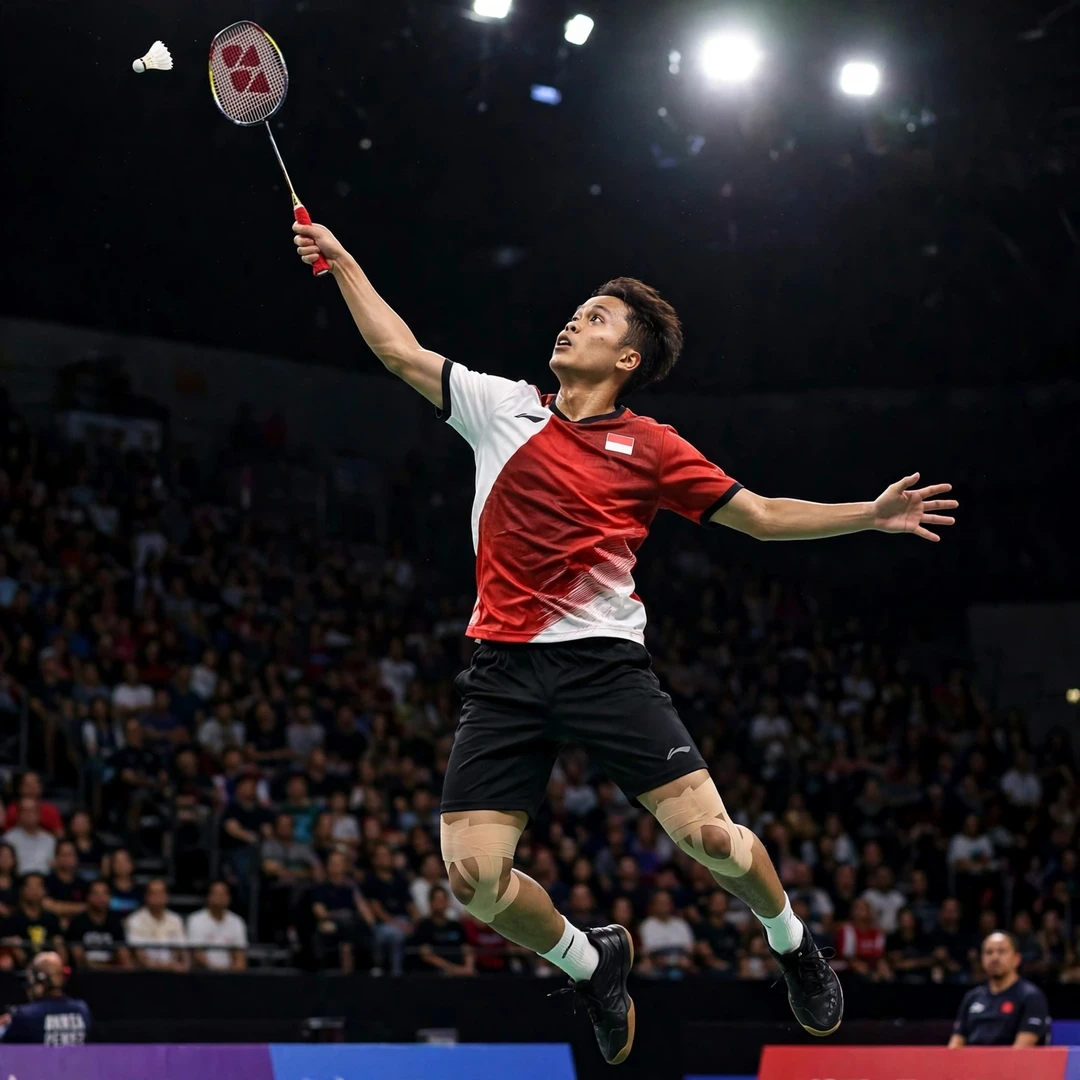
Career Milestone #1
Senior Breakthrough: First Titles and Team Golds
Ginting’s senior transition began with a bang at the 2015 Indonesia Open. Starting from the qualifying rounds of the Superseries Premier event in Jakarta, he upset India’s fourth seed Srikanth Kidambi 14-21, 22-20, 21-13 before losing a three-game quarter-final to Japan’s Kento Momota. The same year he helped Indonesia’s men’s team win the SEA Games gold medal in Singapore, beating Thailand 3-2 in the final — the first of many team golds.
The rise continued in 2016: Ginting reached the Thomas Cup final with Indonesia (losing 2-3 to Denmark), won the Asia Team Championships in Hyderabad by beating Japan 3-2, and made the Australian Open semi-finals after defeating Olympic champion Chen Long. In 2017 he won his first senior title at the Korea Open, beating compatriot Jonatan Christie 21-13, 19-21, 22-20 in the final, and at the Sudirman Cup he stunned world champion Viktor Axelsen 13-21, 21-17, 21-14 — an early warning of the giant-killing to come.
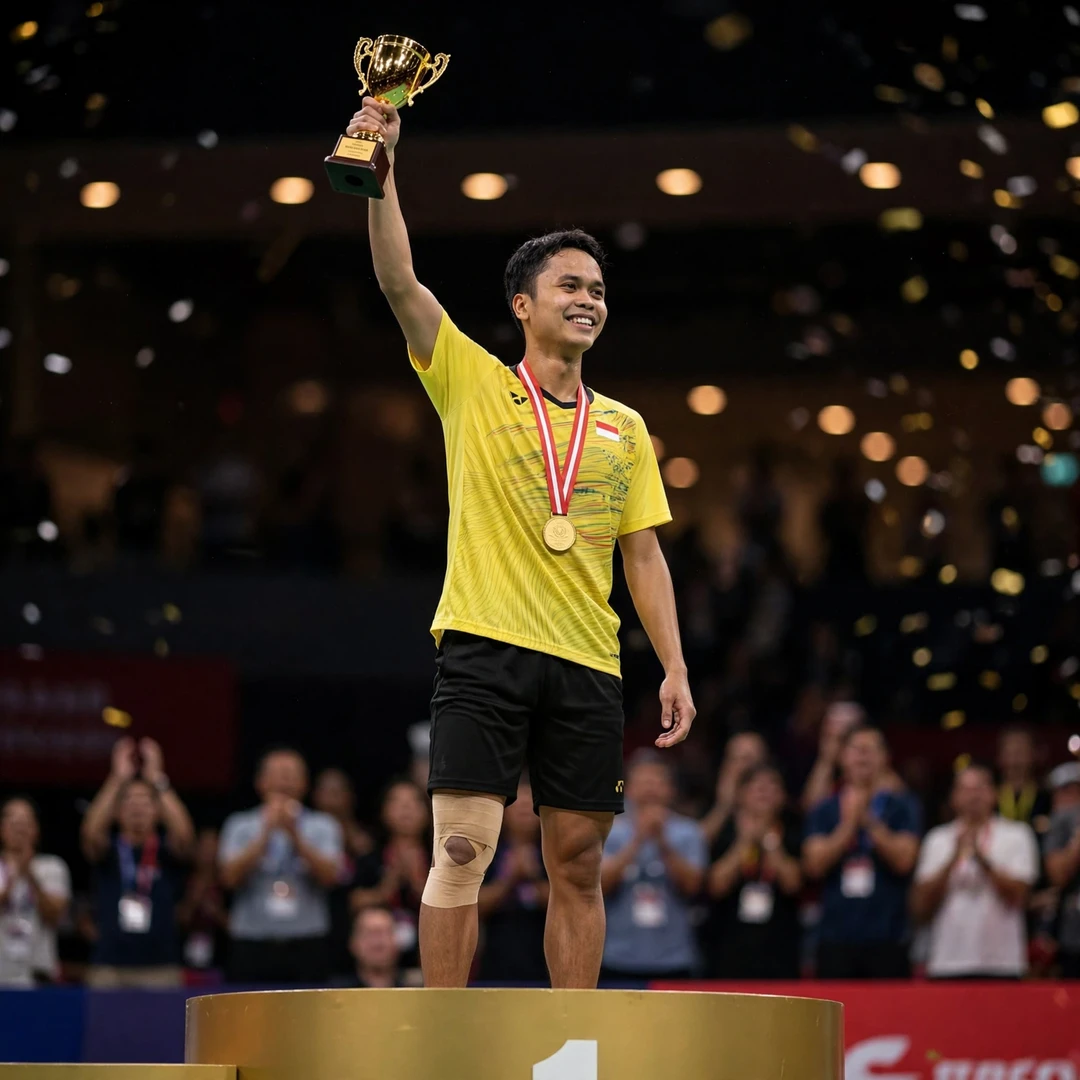
Career Milestone #2
The Giant Killer Year
In 2018 Ginting won his first title on home soil, beating Japan’s Kazumasa Sakai 21-13, 21-12 to lift the Indonesia Masters in Jakarta, and helped Indonesia defend the Asia Team Championships title against China. At the Asian Games in Jakarta he produced a heroic individual run — beating world champion Kento Momota and Olympic champion Chen Long in straight games — before losing a thrilling semi-final to Chou Tien-chen 21-16, 21-23, 17-21 to take the bronze medal. In the team final, cramps forced him to retire against Shi Yuqi at 20-21 in the third game, and Indonesia took silver.
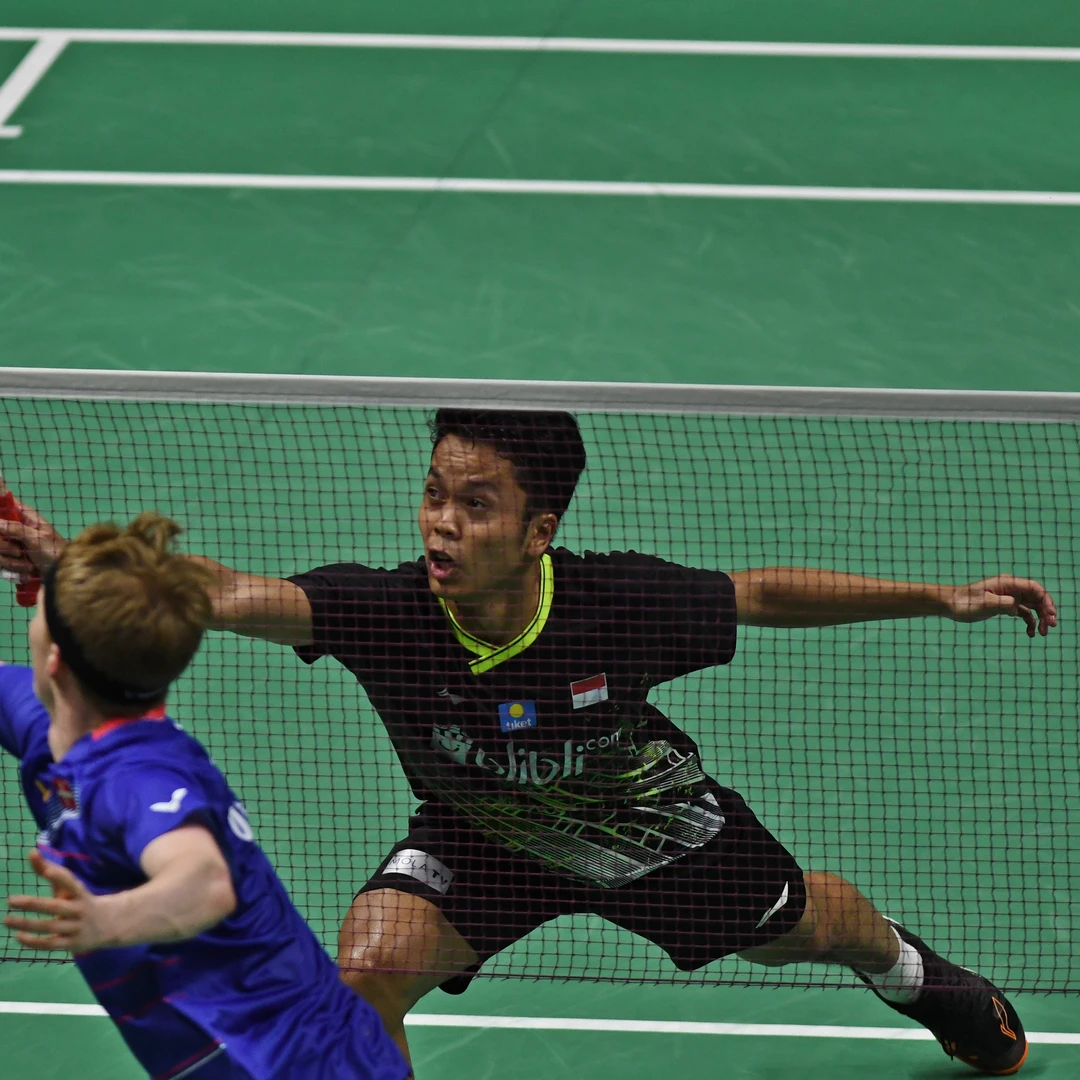
Weeks later came the week that defined him. At the 2018 China Open, a Super 1000 event, Ginting defeated Lin Dan, Viktor Axelsen, Chen Long and Chou Tien-chen one after another, then beat world champion Kento Momota 23-21, 21-19 in the final. Five of the greatest players of the era, beaten in a single tournament: the badminton world had a new nickname for him — the Giant Killer. It remains one of the finest giant-killing runs in World Tour history.
The Giant Killer became a fixture in finals. In 2019 Ginting reached five finals — the Singapore, Australian, China and Hong Kong Opens and the World Tour Finals — losing four of them to his great rival Momota, and finished the year at world No. 7. In January 2020 he won the Indonesia Masters for a second time, beating defending champion Anders Antonsen 17-21, 21-15, 21-9 in the final, helped Indonesia to a third straight Asia Team Championships gold, and climbed to a then career-high world No. 3 in February 2020.
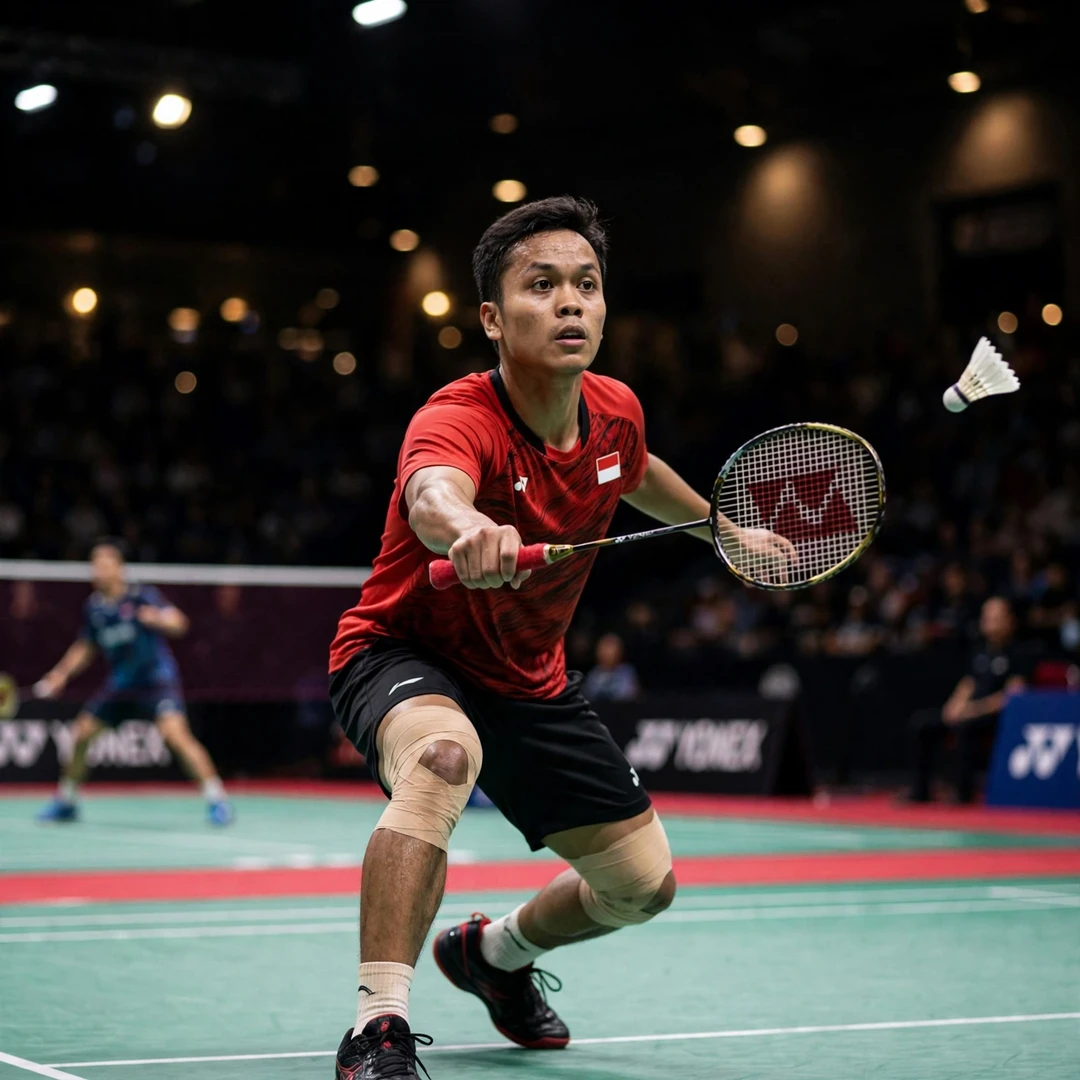
Career Milestone #3
Olympic Bronze and Thomas Cup Glory
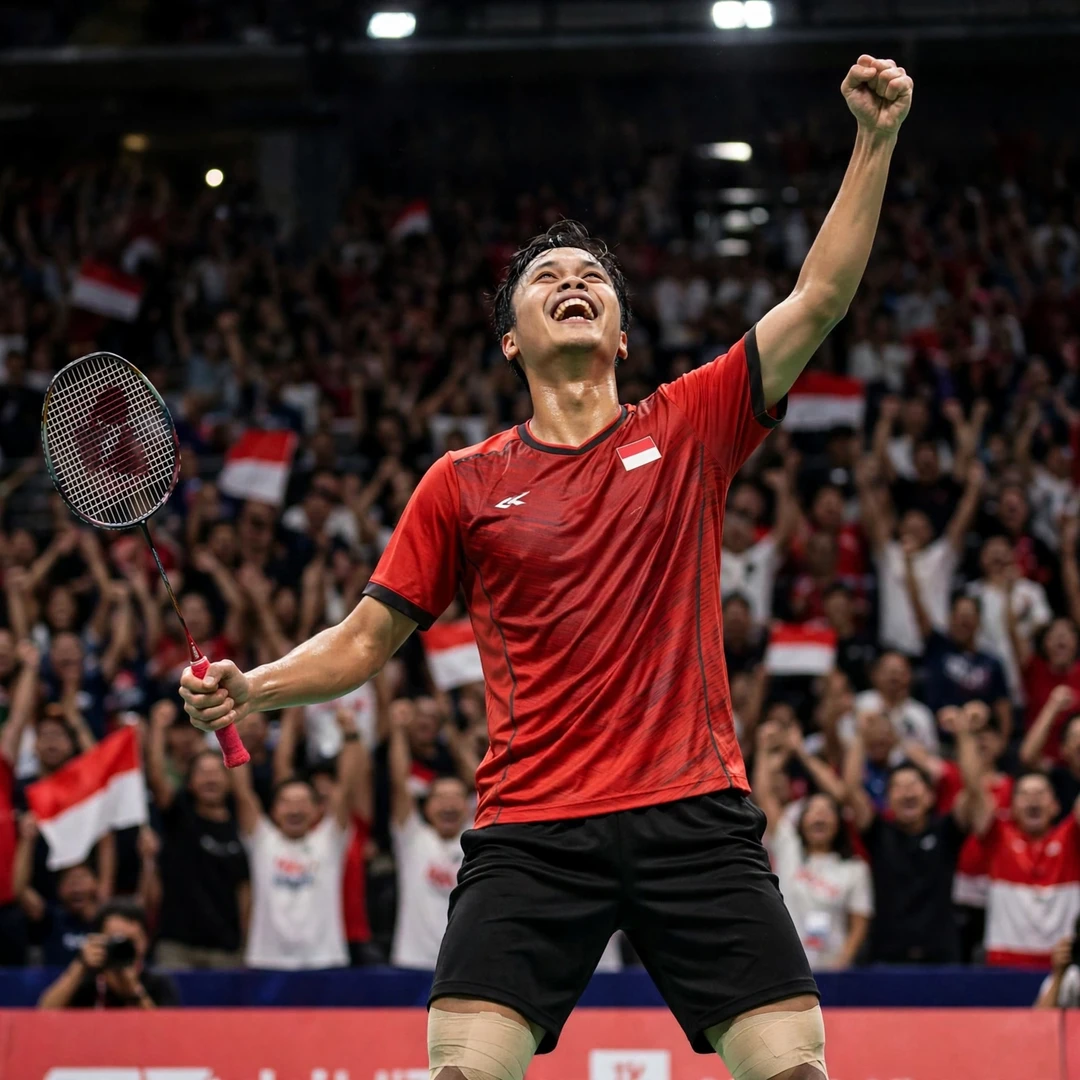
At the Tokyo 2020 Olympic Games, played in 2021, Ginting wrote his name into history. He beat Guatemala’s Kevin Cordón 21-11, 21-13 in the bronze-medal match to become the first Indonesian men’s singles player to win an Olympic medal since Sony Dwi Kuncoro in 2004 — and the first badminton player ever to win medals at both the Youth Olympic Games (Nanjing 2014) and the Olympic Games. Seven years separated the two bronzes; the pathway between them was built on thousands of training sessions.
Ginting has always been a team player for Indonesia. Weeks after Tokyo he helped Indonesia win the Thomas Cup in Aarhus — the world men’s team title — adding to Thomas Cup silvers in 2016, 2022 and 2024, a Sudirman Cup bronze in 2019 and three Asia Team Championships golds. At his second Olympics, Paris 2024, he beat Howard Shu but lost to France’s Toma Junior Popov in group H, so his campaign ended in the group stage — a reminder that even champions face lean weeks.
After a two-year title drought, Ginting roared back in 2022: he won the Singapore Open (beating world champion Loh Kean Yew in the semi-finals and Kodai Naraoka in the final), the Hylo Open (beating Chou Tien-chen 18-21, 21-11, 24-22) and reached the World Tour Finals title match. On 24 January 2023 he reached his career-high of world No. 2. That April he won the Asian Championships in Dubai, defeating Loh Kean Yew 21-12, 21-8 in the final — Indonesia’s first Asian men’s singles title in 16 years, since his idol Taufik Hidayat in 2007 — and in June he defended his Singapore Open crown, beating Antonsen in the final, before finishing runner-up at the Indonesia Open.
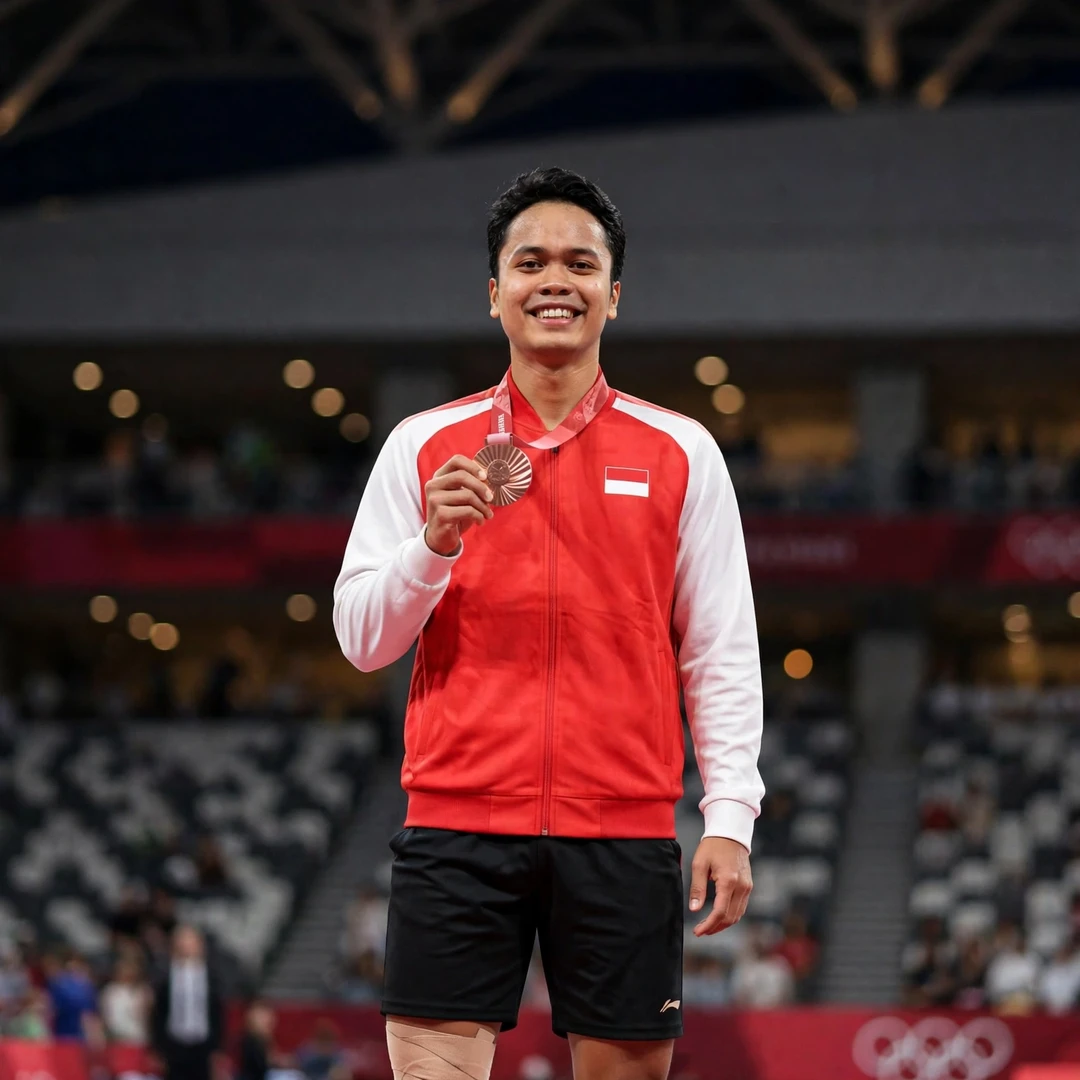
Career Milestone #4
World No. 2 and Asian Champion
In March 2024 Ginting beat Viktor Axelsen in the All England quarter-finals and Christo Popov in the semi-finals to create the first all-Indonesian All England men’s singles final in 30 years, losing the title match to Jonatan Christie. Injuries and a back problem have interrupted his rhythm since — he withdrew from the 2023 World Championships after the death of his mother and from several events with injury — and his ranking has slid as younger players have risen. Yet the comeback signs are real: a Swiss Open semi-final in 2026 and an Asia Team Championships bronze with Indonesia in Qingdao. At world No. 60 in October 2026, the 30-year-old Giant Killer is still on tour, still fighting.
Managing a full season at the top level requires intelligent planning of tournament peaks, injury management and recovery. Ginting’s career shows the honest cost of explosive badminton: cramps in the 2018 Asian Games team final, a back injury that forced him out of the 2021 Denmark Open, and seasons shortened by withdrawals. His longevity secret is not avoiding setbacks — it is structured rehabilitation, honest load management with his coaches, and returning patiently rather than rushing back. Young players should copy the professionalism, not just the highlights.
Playing Style
The Giant Killer Style: Speed and Deception
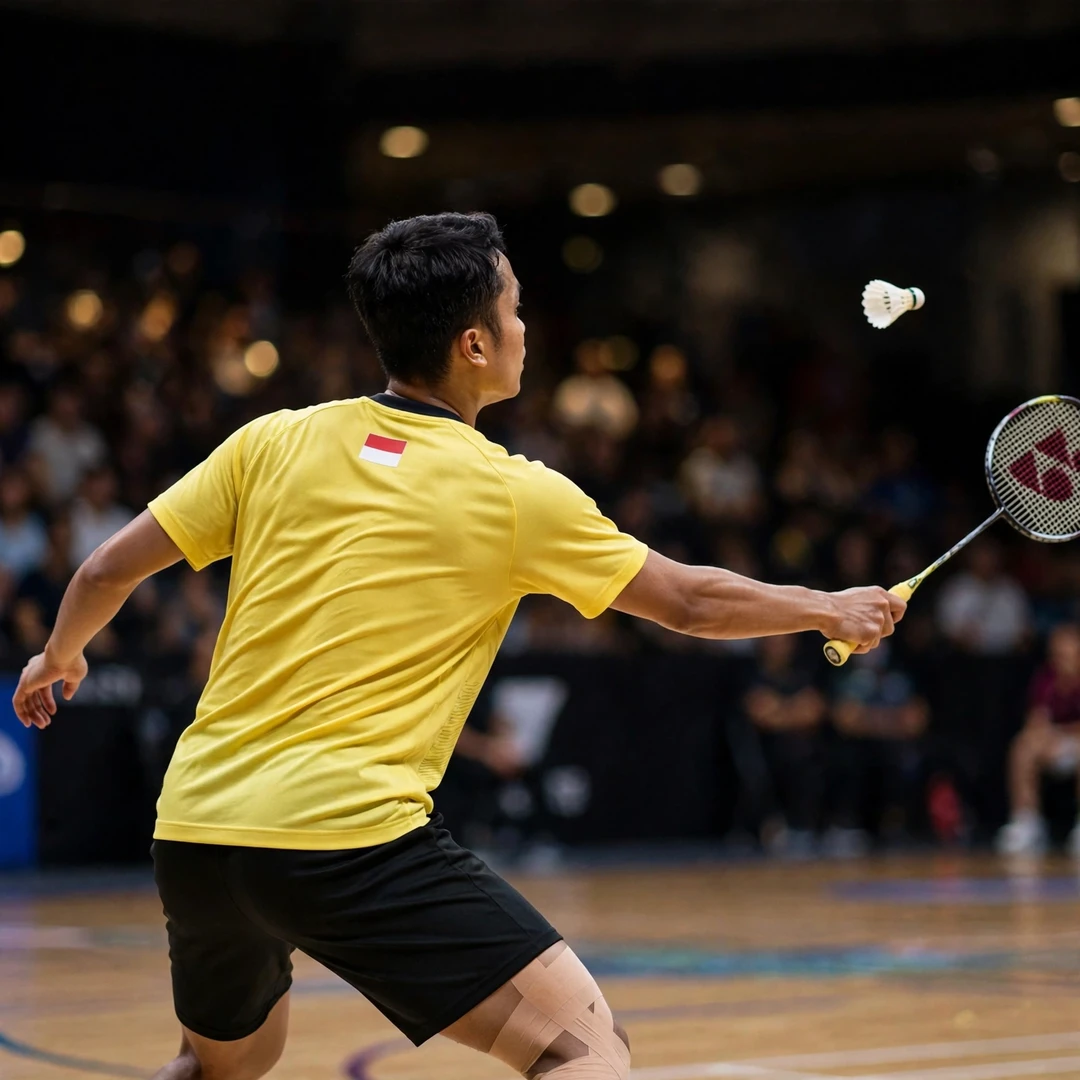
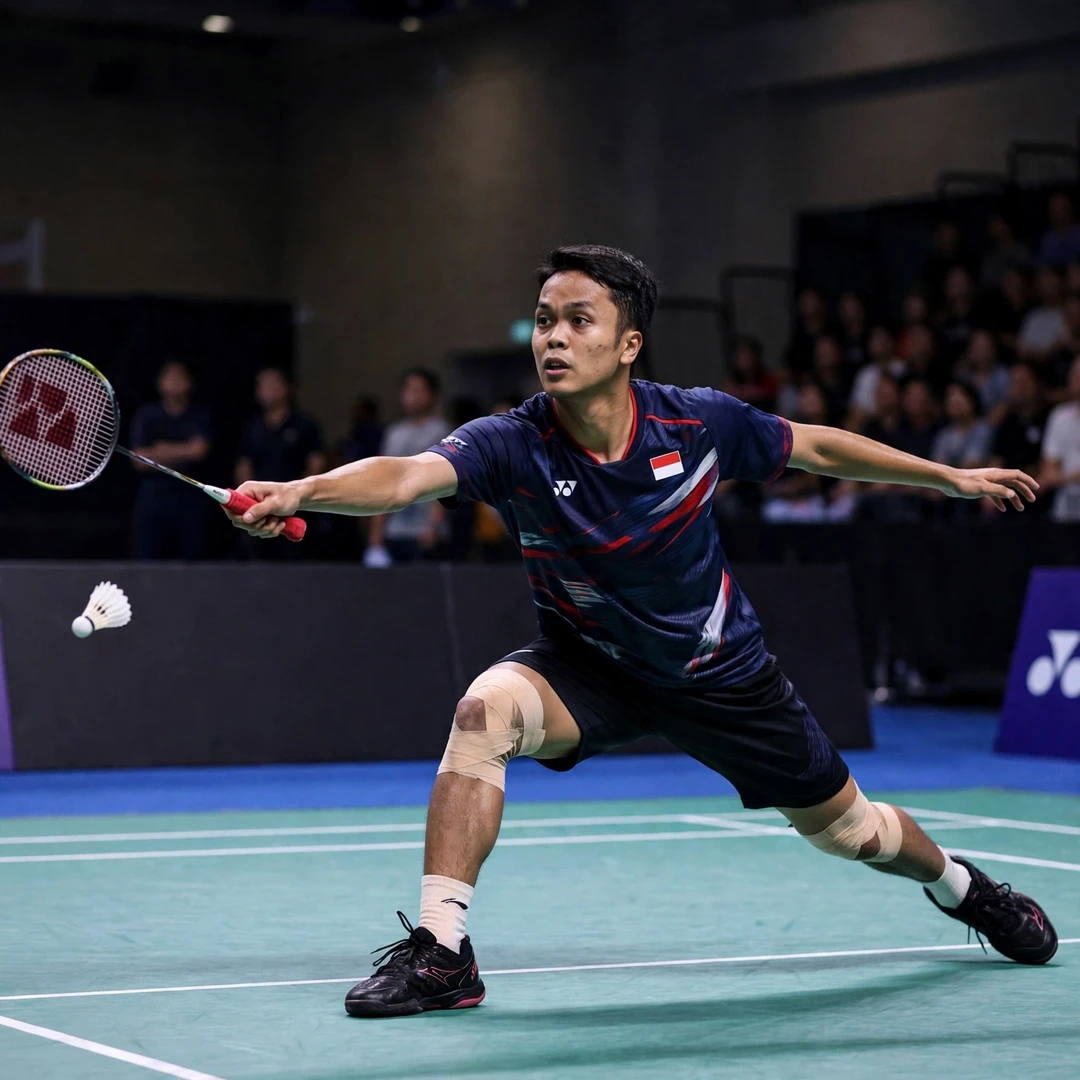
Ginting plays one of the most exciting styles in men’s singles: a speed-based, all-court game built on explosive footwork and deception. At 1.71 m he is not the tallest player on tour, so he wins with pace — lightning first steps, sudden changes of direction, and the ability to take the shuttle earlier than opponents expect. His trademark shot is a deceptive cross-court smash, backed by a late, wristy flick at the net that sends opponents the wrong way.
His attacking weapons sit on top of elite defence and net control. Ginting’s low centre of gravity makes him brutally hard to beat in flat exchanges, his backhand defence under pressure is among the best in the game, and his famous wins over taller champions — Lin Dan, Chen Long, Axelsen, Momota — were built on speed of thought as much as speed of feet: disguised clears, spinning net shots and sudden injections of pace that taller players cannot match.
Young players studying his matches can observe how he builds points before attacking: he probes with fast, flat rallies, drags opponents forward with tight spinning net shots, and only unleashes the cross-court smash when the reply is short. Coaches call this rally construction — patience first, explosion second — and it is exactly the sequence junior players should copy, in the same order Ginting learned it at PB SGS PLN.
Mental Strength
Resilience, Patience and Comeback Ability
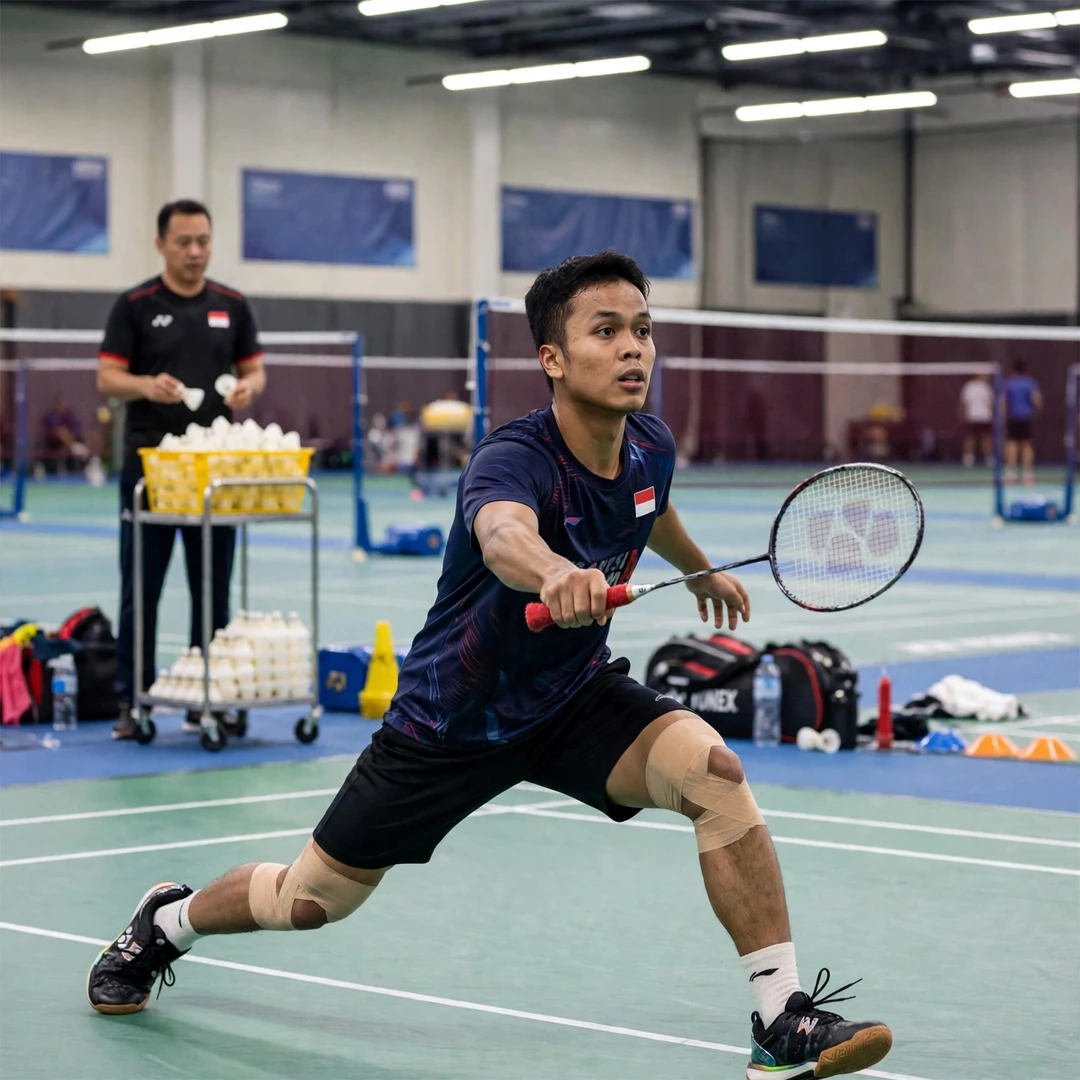
Ginting demonstrates remarkable resilience. This is the player who cramped and retired in a home Asian Games final, lost five finals in a single year, and watched his ranking slide from world No. 2 — and who keeps coming back: after a two-year title drought he won two World Tour titles in 2022 and an Asian title in 2023. His emotional honesty on court and his willingness to rebuild after every setback make him a model for any young player who has lost a final they thought they would win.
His ability to come back after tough losses, injuries and personal grief — he played on through the season of his mother’s death in 2023 and reached the All England final months later — demonstrates a resilience that young players can learn from. Setbacks in his career were never treated as endings. Each one became information: about his body, his preparation and his schedule.
Practical lessons from his journey include attending regular coaching sessions instead of only playing matches, building footwork speed before raw power, studying deception and net skills early, managing the body honestly, and treating every final lost as data for the next one. None of these lessons requires talent money can buy — they require structure, patience and coaches who build the complete player.
Learning Reference
ST Badminton Academy Connection
ST Badminton Academy has no official partnership or endorsement from Anthony Sinisuka Ginting. He is not connected with our academy, and this profile is published purely as an educational case study for parents and junior players who want to understand how a champion’s game and career are built.
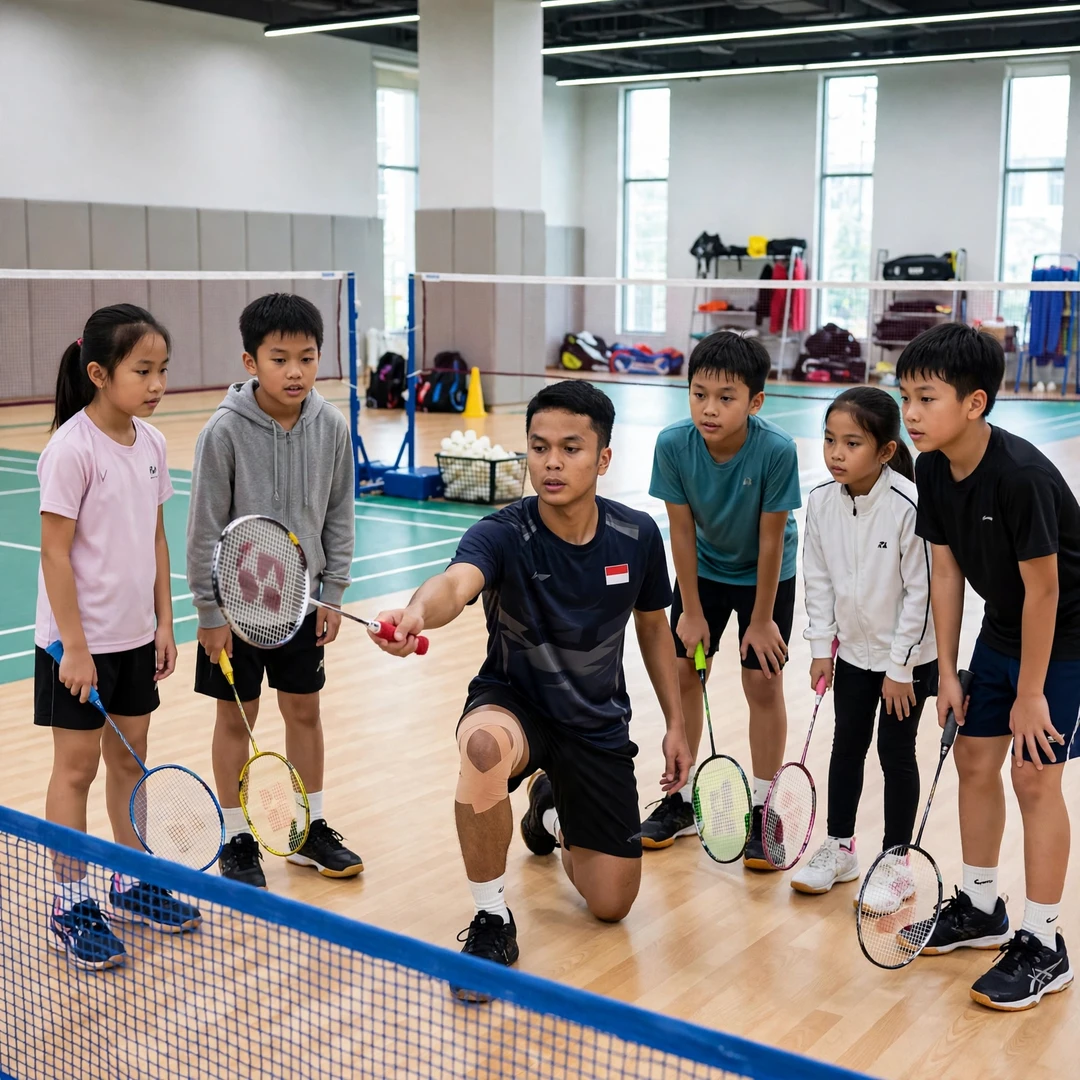
Many of our students from Malaysia and visiting learners from Singapore study his matches to understand elite speed and deception: how a 1.71 m player beats taller champions, how spinning net shots create smash opportunities, and how a professional manages injuries and comebacks across a thirteen-year career. His 2018 China Open run is required viewing in our discussions of giant-killing belief.
We encourage our students to observe his rally construction, his deceptive shot-making and his competitive resilience — and to notice that every weapon was built in a club system, one training block at a time. The Giant Killer was not born beating world champions; he was coached into a player who could.
FAQs: Anthony Sinisuka Ginting Indonesian Badminton Player
Here are answers to common questions about Anthony Sinisuka Ginting’s career, achievements and what young players in Malaysia can learn from the Indonesian star’s journey.
Who is Anthony Sinisuka Ginting and which country does he represent in badminton?
Anthony Sinisuka Ginting is an Indonesian professional badminton player competing in men’s singles. Born on 20 October 1996 in Cimahi, West Java, he is a former world No. 2, the Tokyo 2020 Olympic bronze medallist, the 2023 Asian champion and one of the most exciting shot-makers of his generation, developed through the PB SGS PLN club in Bandung and the Indonesian national team.
What are Anthony Sinisuka Ginting’s biggest badminton achievements?
Ginting’s major achievements include the Tokyo 2020 Olympic bronze medal, the 2023 Asian Championships gold medal, the 2018 China Open Super 1000 title from his famous Giant Killer run, six BWF World Tour titles in total, the 2017 Korea Open Superseries title, the 2020 Thomas Cup team title with Indonesia, the 2018 Asian Games singles bronze, and a career-high world ranking of No. 2 in January 2023.
What is Anthony Sinisuka Ginting’s playing style?
Ginting plays a speed-based all-court game built on explosive footwork, deception and early interception. His signature weapons are a deceptive cross-court smash, spinning net shots and sudden changes of pace; at 1.71 m he beats taller opponents by taking the shuttle earlier and moving faster, with elite defence and net control underneath the attacking highlights.
How has Anthony Sinisuka Ginting performed at the Olympics?
Ginting has played two Olympic Games. At Tokyo 2020 he won the bronze medal, beating Kevin Cordón 21-11, 21-13 in the bronze-medal match — becoming the first player to medal at both the Youth Olympics and the Olympics. At Paris 2024 he beat Howard Shu but lost to Toma Junior Popov in the group stage and did not reach the knockout rounds.
How can my child learn from Anthony Sinisuka Ginting’s training approach?
Young players can study Ginting’s approach by watching how he constructs rallies before attacking, how his footwork speed was built through years of structured club training, and how he manages his body and schedule through injuries. At ST Badminton Academy we break down his net deception and cross-court smash in video sessions, then train the same patterns in footwork and multi-shuttle drills.
Did Anthony Sinisuka Ginting win any junior titles?
Yes. Ginting won the Indonesia Junior International title in 2013, then in 2014 took two major junior medals: boys’ singles bronze at the BWF World Junior Championships in Alor Setar (plus mixed team silver) and the boys’ singles bronze medal at the Nanjing Youth Olympic Games, beating Aditya Joshi in the bronze-medal match.
What are Anthony Sinisuka Ginting’s best World Championships results?
Ginting’s best World Championships result is the quarter-finals in Tokyo in 2022, where he lost to eventual champion Viktor Axelsen. He withdrew from the 2021 edition with injury and from the 2023 edition following the death of his mother, and he reached the third round in 2019 — a record that shows how even champions’ biggest weeks can be interrupted by life and the body.
What playing style should young players learn from Anthony Sinisuka Ginting?
Young players should study Ginting’s complete game rather than just his cross-court smash: the footwork speed that gets him to the shuttle early, the spinning net shots that create his attacks, the backhand defence that keeps rallies alive, and the patience to build a point before exploding. Speed without control is just running; Ginting’s speed is a skill, and skills can be trained.
Does ST Badminton Academy have any connection with Anthony Sinisuka Ginting?
No, Anthony Sinisuka Ginting is not a student, coach or ambassador of ST Badminton Academy. He represents Indonesia and developed through PB SGS PLN and the Indonesian national team. However, coaches at our academy in Kuala Lumpur regularly use his matches as teaching material, because his career shows how structured coaching and long-term development can produce an Olympic medallist.
Anthony Sinisuka Ginting Career Highlights
Career Statistics and Rankings
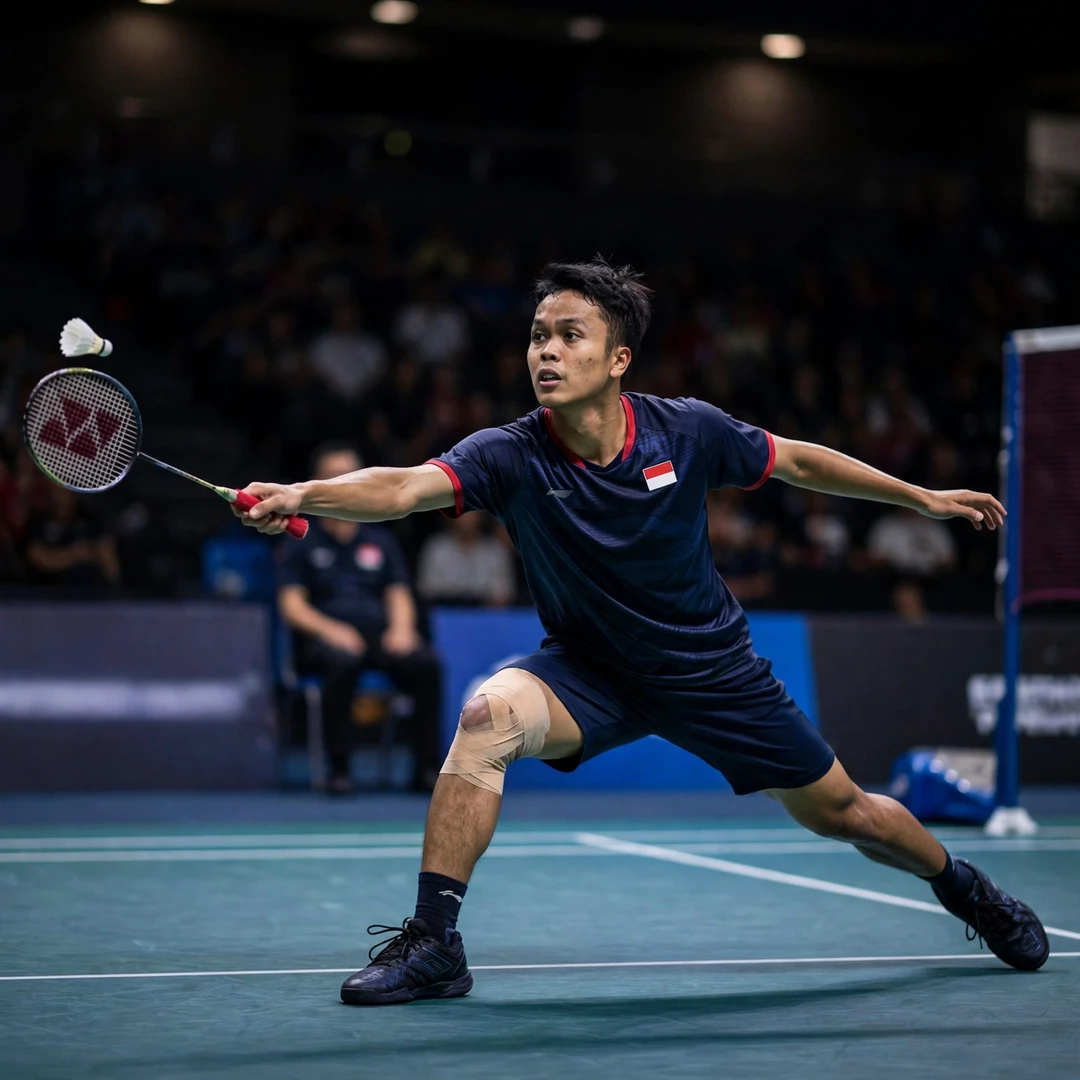
Anthony Sinisuka Ginting, born 20 October 1996 in Cimahi, Indonesia, has been one of men's singles badminton's most thrilling players for a decade: a Youth Olympic medallist at 17, a Giant Killer at 21, an Olympic bronze medallist at 24, an Asian champion and world No. 2 at 26 — and, at world No. 60 in October 2026, still competing on the World Tour at 30.
| Development Area | Common Misconception | What Anthony Sinisuka Ginting's Career Shows REALITY |
|---|---|---|
| Junior Foundation | Talent alone decides who becomes a champion. | Ginting started in kindergarten with his father in Cimahi and joined PB SGS PLN — Taufik Hidayat's club — before the national team called at 16: a structured junior base came first. |
| Playing Style Priority | Kids should copy the flashiest attacking shots. | Ginting built a complete game first; his spectacular winners sit on elite footwork, defence and net play that coaches drilled for years. |
| Fitness Importance | Juniors can out-train everyone without rest. | Ginting's career is a catalogue of comebacks — cramps in the 2018 Asian Games team final, back injuries, a two-year title drought — and each return came from smarter management, not more hours. |
| Mental Approach | Top players never get nervous or upset. | Ginting beat Lin Dan, Chen Long, Axelsen and Momota in a single week at the 2018 China Open, yet still lost five finals in 2019 and kept returning — mental skills are trained, not inherited. |
| Attacking Training | Smashing harder is always the answer. | His 2023 Asian Championships gold, won 21-12, 21-8 over Loh Kean Yew, and his Singapore Open title defence that year came from speed and placement, not raw power. |
| National Milestones | Only world titles matter. | Ginting's Asian Championships gold (2023), Asian Games bronze (2018) and three Asia Team Championships golds show how continental milestones build a career step by step. |
| Career Timeline | Champions peak once and fade fast. | From Youth Olympic bronze in 2014 to Olympic bronze in 2021 and world No. 2 in 2023, with titles across a decade, Ginting proves sustained development beats a short peak. |
Study Anthony Sinisuka Ginting's Work Ethic and Professional Approach
This profile explains who Anthony Sinisuka Ginting is, his major achievements, and what developing players can learn from his journey. Whether you are a parent in Kuala Lumpur, Cheras or anywhere in Malaysia wondering how far structured coaching can take a child, Ginting's story carries the answer: elite speed and skill are trained, not born — book a trial class with ST Badminton Academy on WhatsApp at +60 17-684 2136 and let your child begin a development journey built to last.