Malaysian Men’s Singles Badminton Star
Lee Zii Jia

Malaysia
Player Event: Men’s singles
Born 29 March 1998, Alor Setar, Kedah
Playing Style: Right-handed attacking all-courter, famous for his explosive jump smash, his trademark backhand smash and his speed in every corner of the court
Understanding Lee Zii Jia (Malaysia Badminton Star)
Lee Zii Jia is a Malaysian men’s singles badminton player who has carried his country’s hopes in the era after Lee Chong Wei. Born on 29 March 1998 in Alor Setar, Kedah, he stands 1.86 metres tall and holds the racket in his right hand. He won the All England Open in 2021, became Asian champion in 2022, rose to a career-high world No. 2 in October 2022, and won the bronze medal at the Paris 2024 Olympic Games – only the third Malaysian men’s singles player ever to stand on an Olympic podium. After an ankle injury wrecked his 2025 season, he has fought his way back up the rankings as an independent professional: in the Week 43 BWF world rankings of 20 October 2026 he stands at No. 42 with 35,095 points, fresh from a semi-final run at the Arctic Open in Finland.
Early Life in Alor Setar and the Road to the National Team
Lee Zii Jia was born in Alor Setar, in the northern Malaysian state of Kedah, to Malaysian Chinese parents, Lee Chee Hin and Leow Siet Peng. Both were school teachers – and both had represented Malaysia at basketball, so elite sport ran in the family. Lee was handed a badminton racket at six years old, studied at Keat Hwa Primary School in Alor Setar, and played so well in under-12 competition that he was drafted into the Bukit Jalil Sports School in Kuala Lumpur, the national academy system famous for producing Malaysia’s best players. In 2015 he became the junior champion at the Perak and Selangor Opens, results that earned him a full place in the Badminton Association of Malaysia (BAM) set-up.
The 30-29 All England Final
His junior breakthrough came in 2016. At the World Junior Championships in Bilbao, Spain, Lee won the boys’ singles bronze medal, losing his semi-final to Indonesia’s Chico Aura Dwi Wardoyo, and he helped Malaysia to the silver medal in the mixed team event. In the same month he reached the final of the India International Series, where he lost to India’s Lakshya Sen – a rival he would meet again, in very different circumstances, in an Olympic bronze-medal match eight years later. In September 2017 he won his first senior international title, the Polish International, beating fellow Malaysian Soong Joo Ven 21-17, 21-16 in the final.
Olympic Bronze in Paris
The step up to senior badminton came quickly. In October 2018, at the Chinese Taipei Open, the 20-year-old Lee beat the world No. 4, Chou Tien-chen, in the semi-finals and then defeated Japan’s Riichi Takeshita 21-17, 16-21, 21-11 in the final to win his first BWF World Tour title. A few weeks later he reached the final of the Korea Masters, losing to South Korea’s Son Wan-ho. The Taipei title was the announcement: Malaysia had a new men’s singles leader in the making.
Asian Champion in Manila
In 2019 the progress continued. Lee reached the quarter-finals of the World Championships in Basel, Switzerland, losing to the eventual champion, Kento Momota of Japan, and in November he climbed to world No. 11. In December he delivered his first major medal for Malaysia, winning the men’s singles gold at the SEA Games in the Philippines – he beat Singapore’s Loh Kean Yew 21-18, 21-18 in the final – and helped the Malaysian men’s team to the silver medal at the same Games.
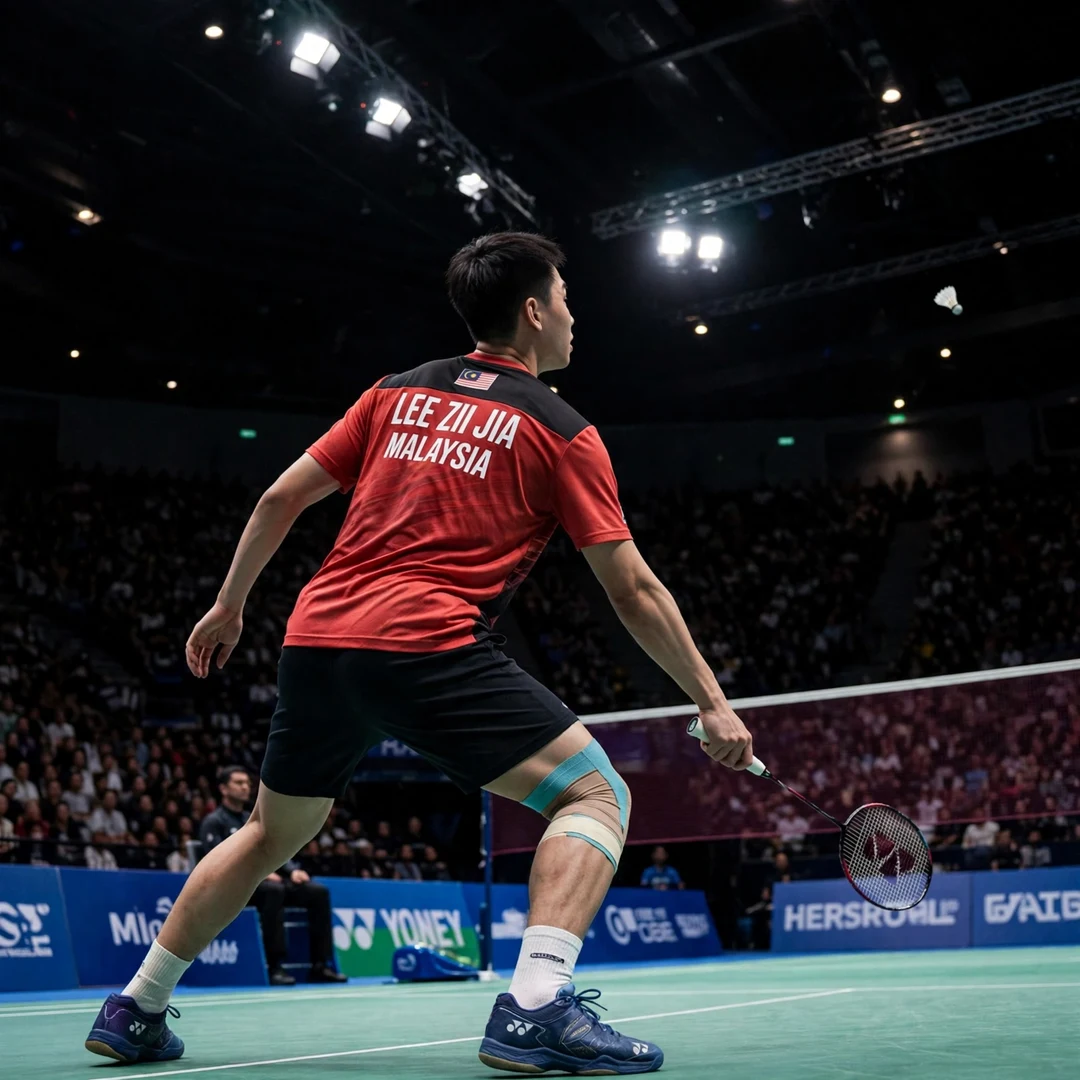
Career Milestone #1
World Junior Bronze and a First World Tour Title at 20
In 2020 Lee announced himself to the wider world. As captain of Malaysia at the Asia Team Championships, he won four of his five matches as the team took the silver medal. Then came his All England Open debut in Birmingham: he beat Jonatan Christie of Indonesia, Lu Guangzu of China and the reigning Olympic champion, Chen Long, before losing a 73-minute semi-final to Viktor Axelsen of Denmark. The run lifted him into the world top 10 for the first time – and it left him with a promise to keep, because he had pushed the world’s best player to the limit and intended to finish the job next time.
He finished it in March 2021. At the All England Open, Lee defeated the defending champion, Viktor Axelsen, in one of the great modern finals: 30-29, 20-22, 21-9. The first game alone, won at the rarely seen 30-point maximum, announced a new star. At 22 years old Lee Zii Jia was an All England champion – Malaysia’s first winner of the men’s singles title since Lee Chong Wei – and the whole country believed it had found its next great champion.
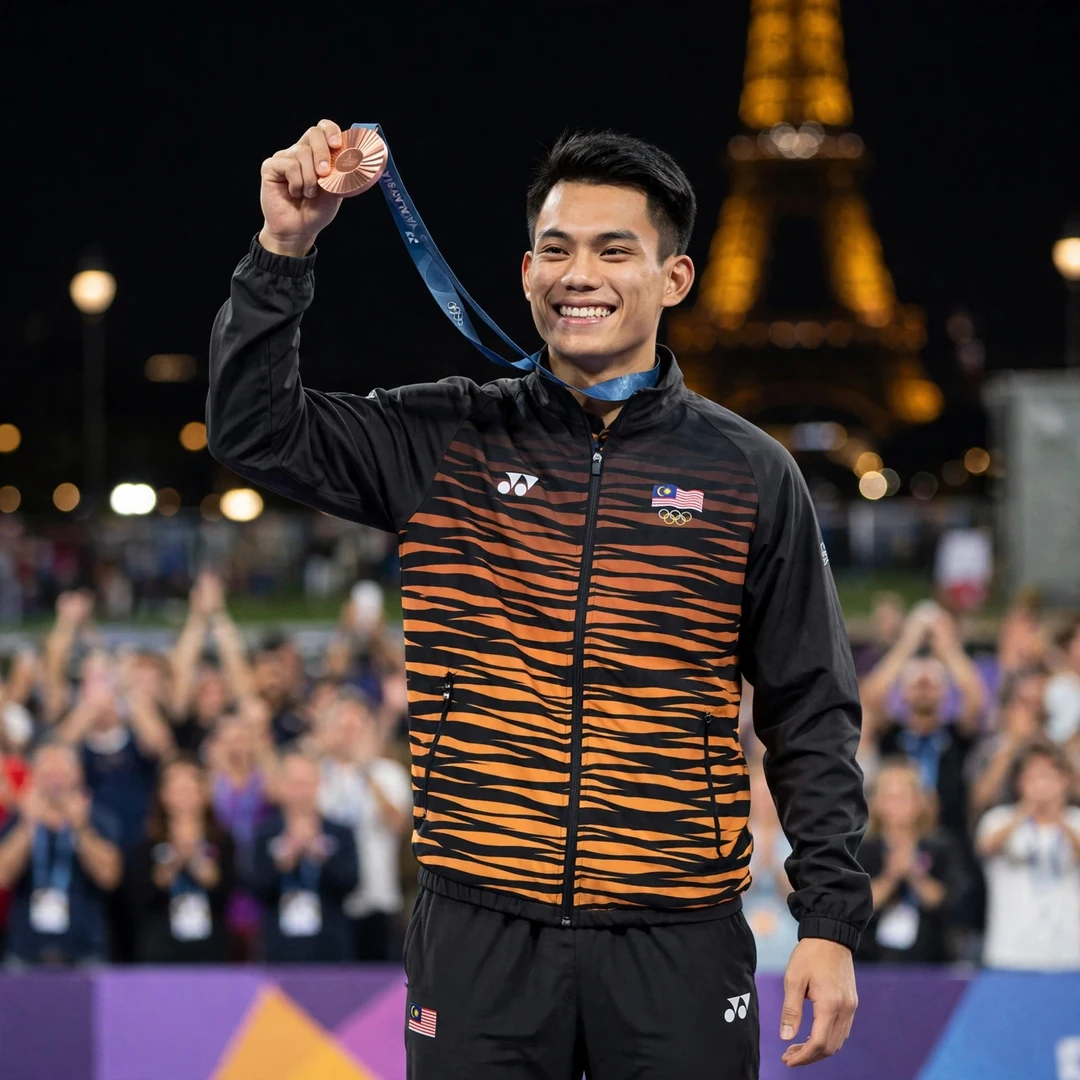
Career Milestone #2
All England Champion and an Olympic Debut
That summer he made his Olympic debut at the Tokyo 2020 Games, winning his group matches against Artem Pochtarov and Brice Leverdez before losing an epic round-of-16 battle with China’s Chen Long, 21-8, 19-21, 5-21. The rest of 2021 was a story of near-misses and injuries: a semi-final at the World Tour Finals, a Hylo Open final in Germany that he had to abandon injured against Loh Kean Yew, and a World Championships quarter-final in Huelva, Spain, that injury also cut short, against Anders Antonsen. He ended the year ranked world No. 7 – inside the elite, but with his body already sending warnings.
In January 2022 Lee made the boldest decision of his career: he resigned from the national association to become an independent professional. BAM responded by banning him for two years from international tournaments; after a public outcry and an appeal, the ban was lifted within days, and Lee built his own support team – known as Team LZJ – around him. His answer came on court. In May he won the Asian Championships in Manila, beating Jonatan Christie 21-17, 23-21 to become only the sixth Malaysian man ever to win the continental title. Weeks later he won the Thailand Open, his first Super 500 title, edging China’s Li Shifeng 17-21, 21-11, 23-21 in a 70-minute final. In October he reached the Denmark Open final and climbed to world No. 2, the highest ranking of his career.
The climb was never smooth. Lee parted with coach Indra Wijaya in late 2022, played for a spell without a coach at all, and endured a miserable run of early exits in 2023 that dropped him out of the top 10 and led him to say publicly that he had considered taking a break from tournaments. There were still big days for Malaysia: at the Sudirman Cup in Suzhou, China, he won five straight matches, beating players such as Kidambi Srikanth and Chou Tien-chen, as Malaysia took the bronze medal. In May 2023 he hired the experienced coach Wong Tat Meng, and in October the work paid off: Lee won the Arctic Open in Finland, beating fellow Malaysian Ng Tze Yong 21-14, 21-15 for his first title in 17 months, then reached the Denmark Open final for the second year in a row.
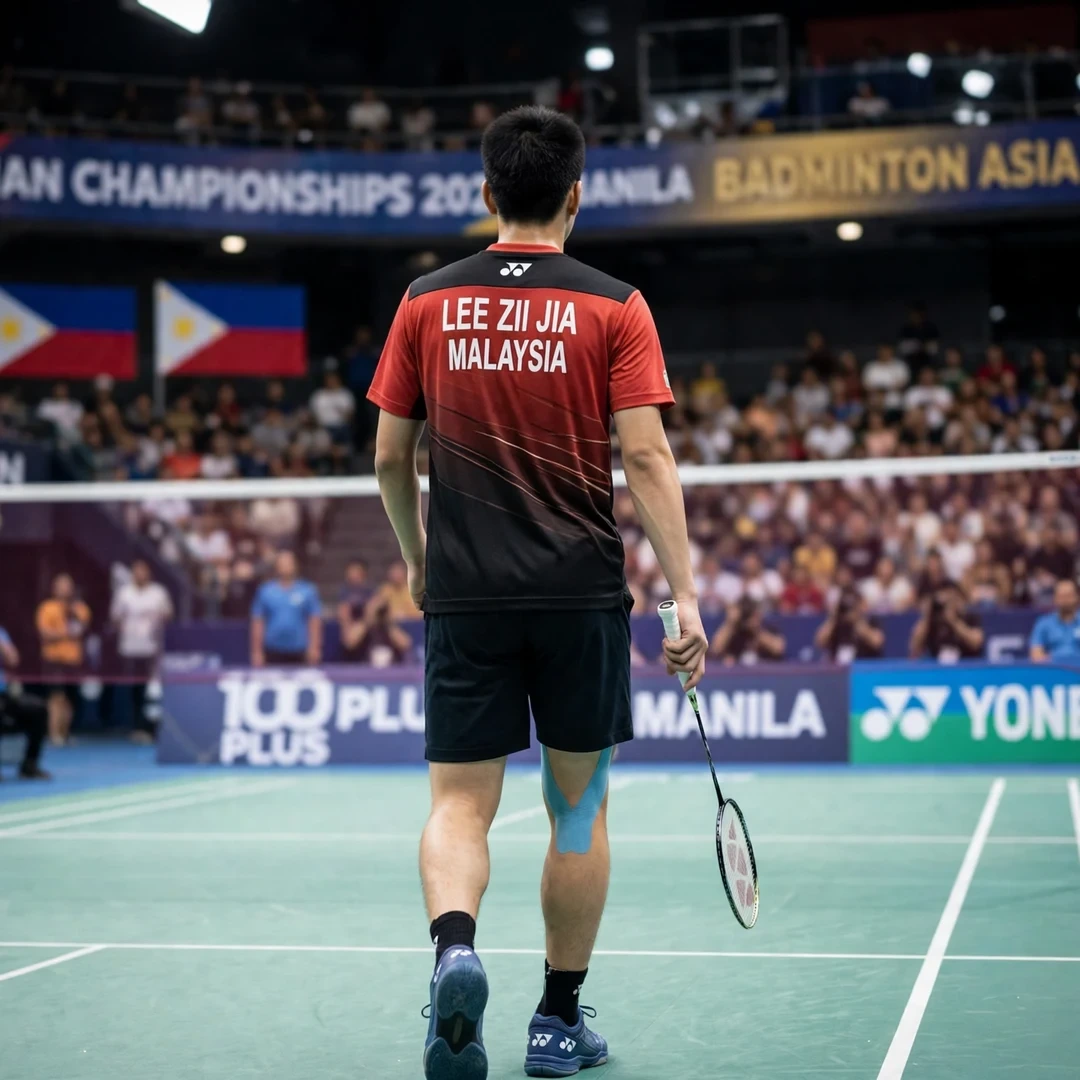
Career Milestone #3
Asian Champion, World No. 2 – and His Own Boss
In 2024 the titles came in pairs. In May, Lee won the Thailand Open for a second time, overwhelming Hong Kong’s Ng Ka Long 21-11, 21-10 in the final, and a week later he reached the Malaysia Masters final in front of his home crowd, losing to Viktor Axelsen in three games while carrying a foot injury. In June he added the Australian Open in Sydney, beating Japan’s Kodai Naraoka 21-19, 11-21, 21-18 – the first season of his career with two BWF World Tour titles. With Malaysia he also won the bronze medal at the Thomas Cup in Chengdu and the silver medal at the Asia Team Championships in Selangor.
Then came Paris. At the 2024 Olympic Games, Lee Zii Jia produced the result that will define his career. In the bronze-medal match he faced India’s Lakshya Sen – the same rival who had beaten him in that junior final back in 2016. Lee lost the first game 13-21 and trailed by five points in the second, one game from leaving Paris empty-handed. He refused to fold: he lengthened the rallies, trusted his defence, took the second game 21-16 and ran away with the decider 21-11 to win the bronze medal. He became only the third Malaysian men’s singles player to win an Olympic medal, after Rashid Sidek and the great Lee Chong Wei. For a player who had left the national system to bet on himself, it was the ultimate vindication.
The cost of that peak arrived in December 2024, when Lee injured the ligaments in his right ankle at the World Tour Finals. His 2025 season never really began. A comeback at the Orleans Masters in France in March ended in the quarter-finals; the ankle, and a persistent lower-back problem, forced withdrawal after withdrawal; and his brief appearances at the World Championships in Paris, the Hong Kong Open and the China Masters all ended in the first round, the last of them in another retirement. The man who had been world No. 2 was losing to the draw, the calendar and his own body at the same time.
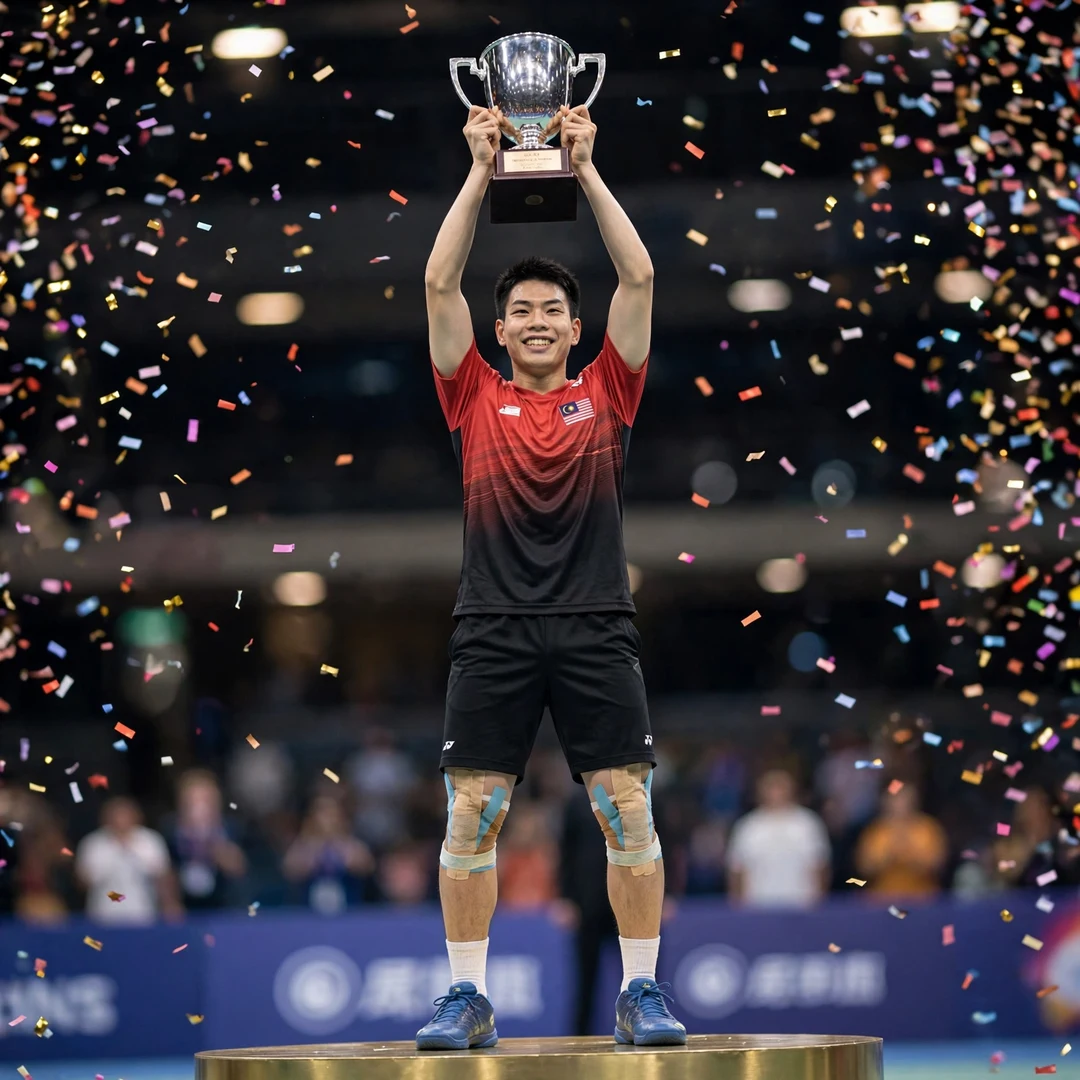
Career Milestone #4
Olympic Bronze in Paris and the Comeback at 28
In November 2025, Lee announced a temporary break from badminton to let his body heal properly, ending the year ranked outside the world’s top 100. Many players would have quietly faded away. Instead, under new coach Liew Daren – himself a former Malaysian international, who took over after Yeoh Kay Bin’s time with Team LZJ ended around the 2026 Malaysia Open – Lee started again from the bottom: helping Malaysia at the Thomas Cup, then grinding through qualifying rounds and smaller events that his younger self would never have needed to enter. Slowly, tournament by tournament, the ranking began to move: from the 140s, into the 80s, the 60s, the 50s.
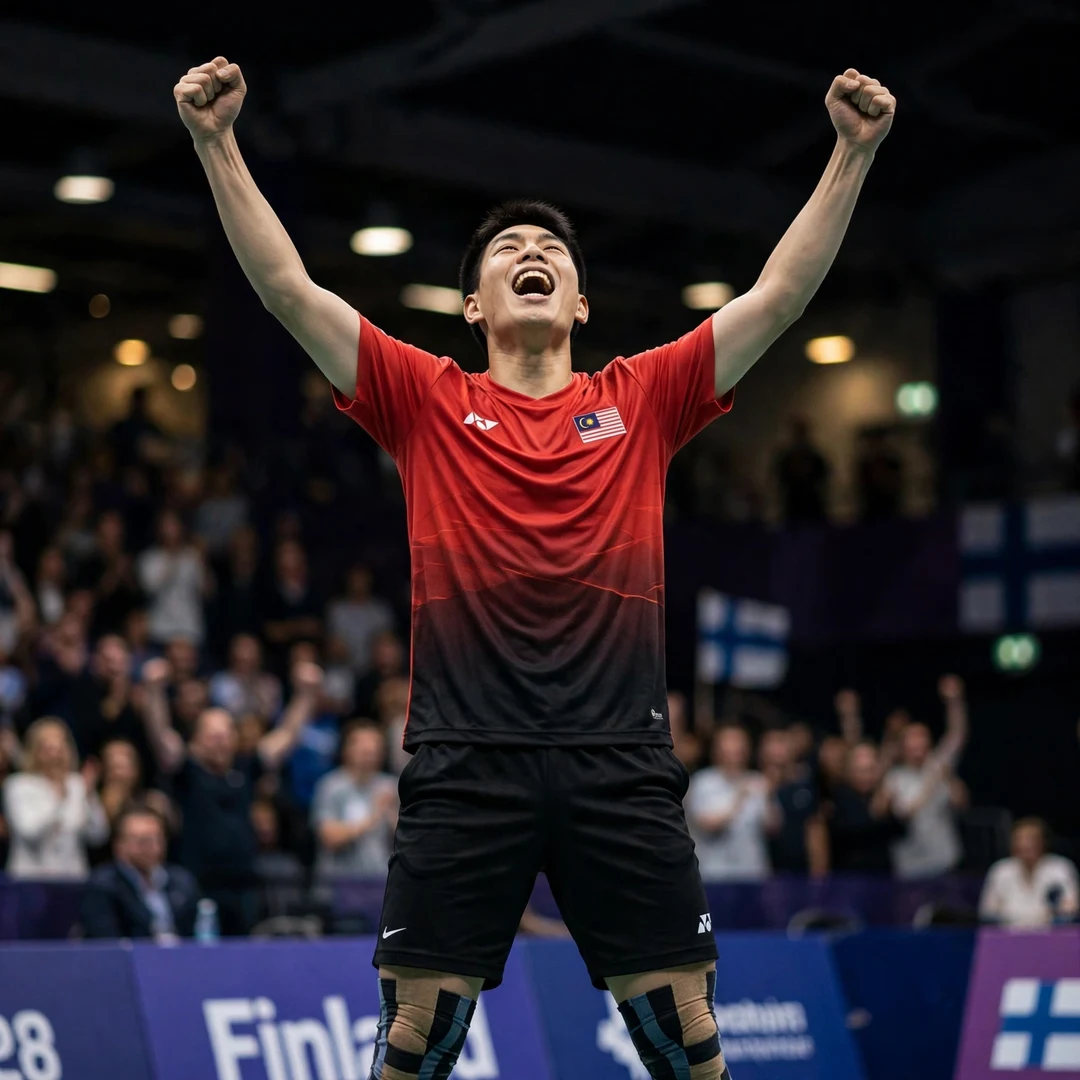
The reward came in October 2026, back at the Arctic Open in Vantaa, Finland – the tournament he had won in 2023. Now ranked outside the top 50, Lee had to start in the qualifying rounds. He came through them, then beat China’s Dong Tianyao and Chinese Taipei’s Su Li Yang, and in the quarter-finals he stunned France’s Christo Popov, one of the top two players in the world, 21-11, 21-16. In the semi-final he pushed the eventual champion, Anders Antonsen of Denmark, through a 78-minute three-game battle before falling 11-21, 21-15, 16-21. The run lifted him to world No. 42 in the rankings of 20 October 2026 – Malaysia’s second-highest ranked men’s singles player – with the Hylo Open in Germany next on his European schedule.
Playing Style
The Explosive, Fearless Attacking Style
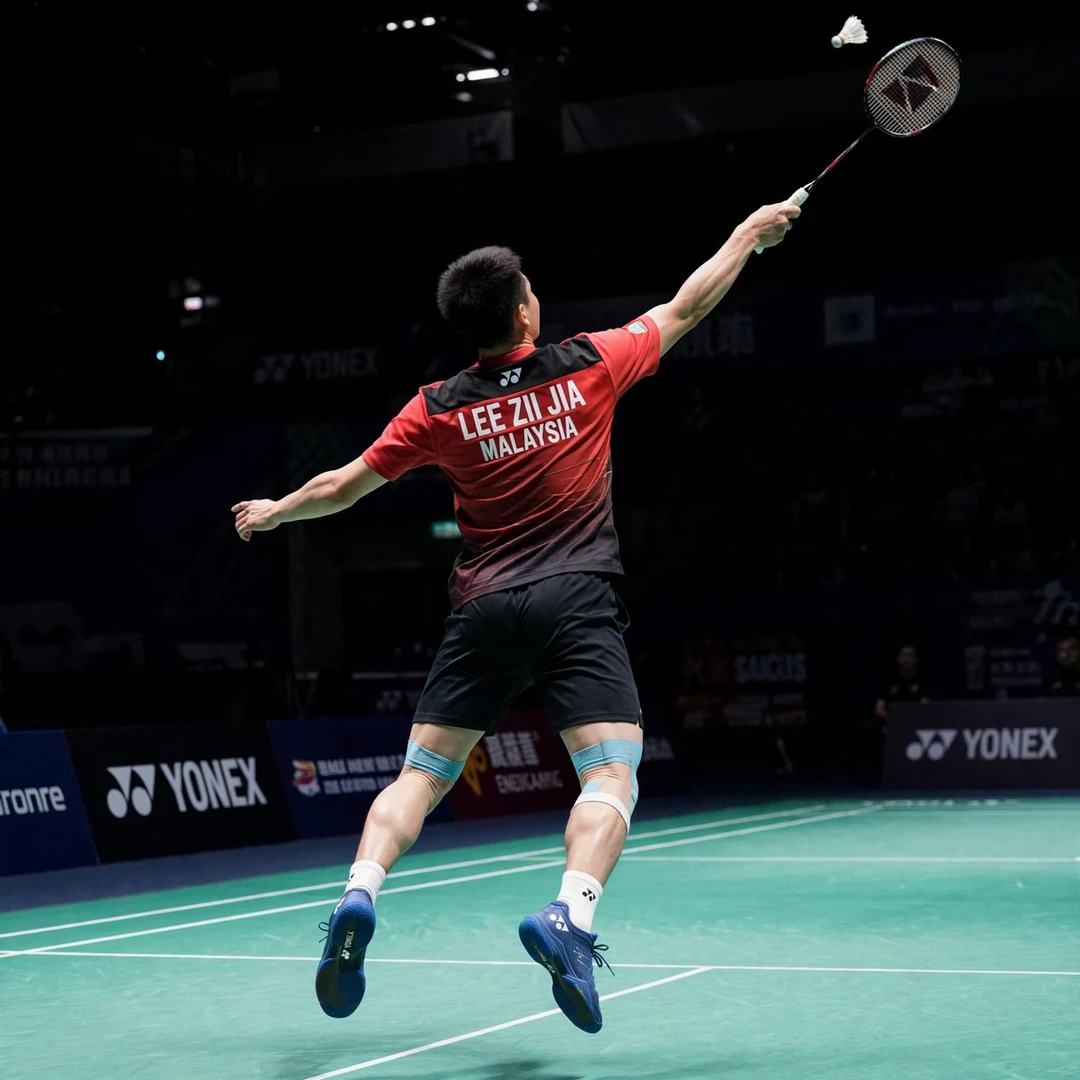
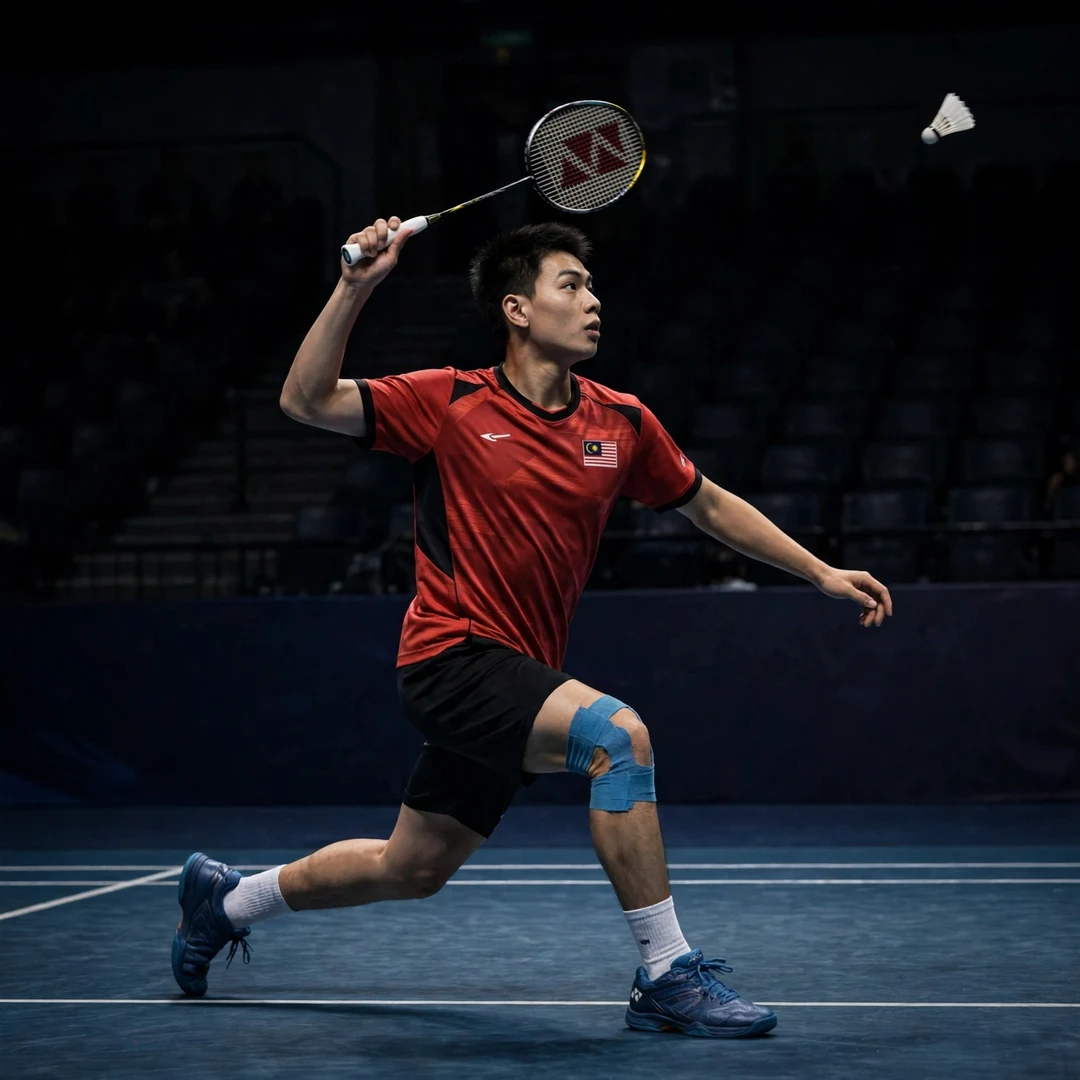
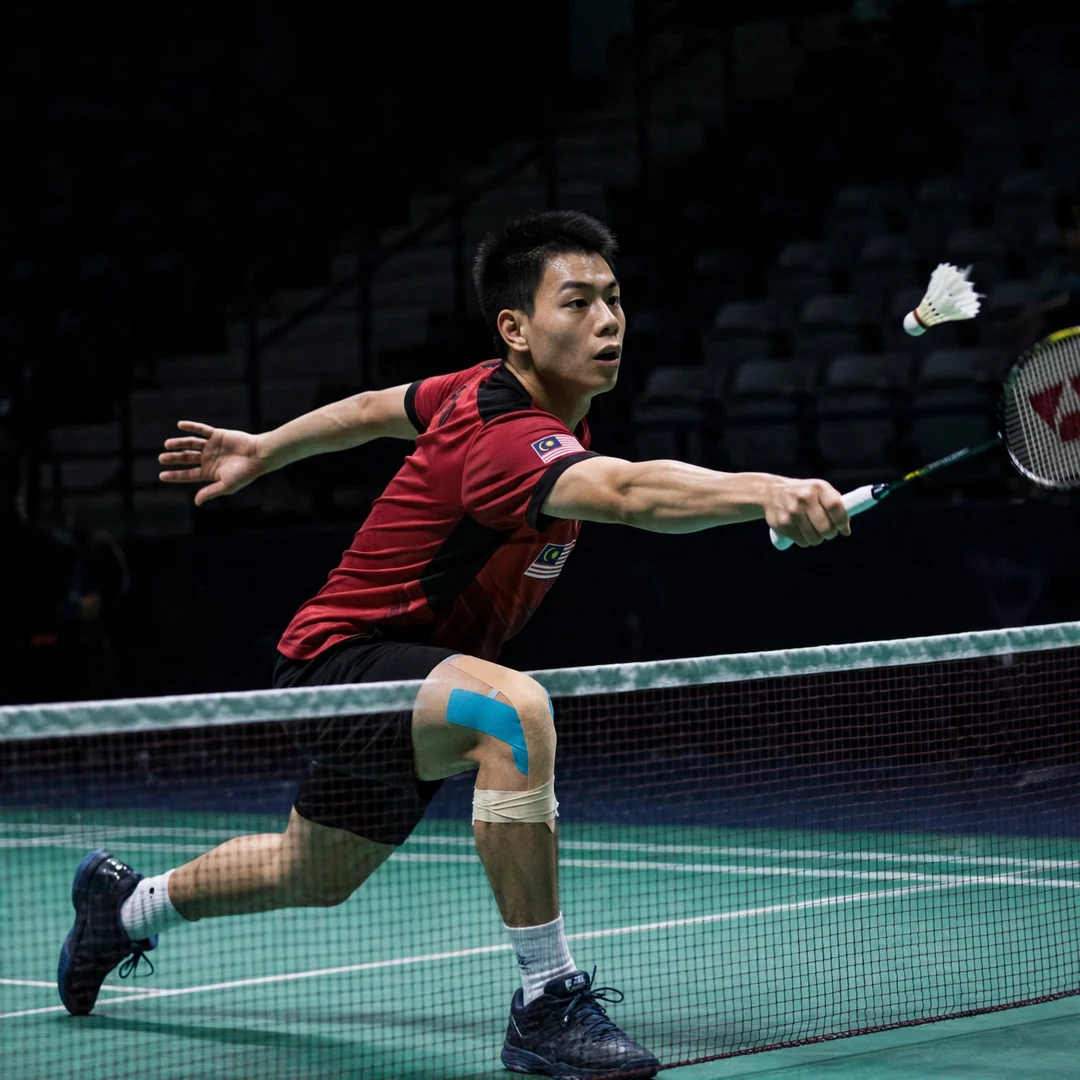
Lee Zii Jia plays an explosive attacking game built around one of the most feared smashes in badminton. At 1.86 metres tall he hits steep, heavy jump smashes from the back of the court, and his signature shot – a whipping backhand smash played at full stretch from the deep backhand corner – has become a trademark that young players all over the world try to copy. Around that weapon he is a genuine all-courter: fast feet, sharp reflexes at the net, and a deceptive hold-and-flick game that keeps opponents guessing whether the shuttle is going short or deep.
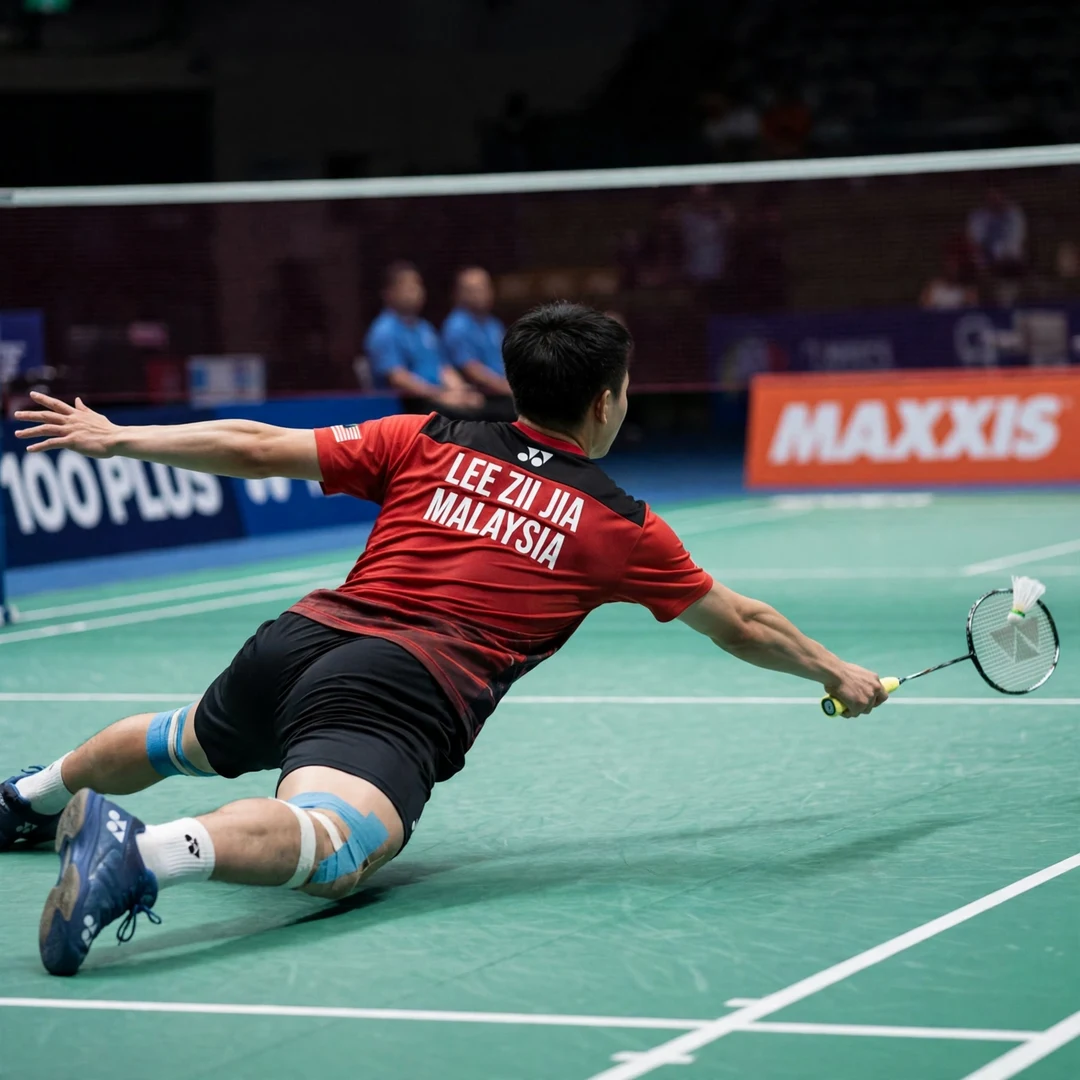
What separates Lee from other big hitters is what happens when the smash does not end the rally. His defence and recovery speed are elite – watch how often a rally that looks finished restarts because he has dived, recovered and reset in a single motion. The Paris bronze-medal match was his complete game in one afternoon: when the attack stalled in the first game, he lengthened the rallies, trusted his defence and his legs, and let his opponent’s errors come to him. Power opens the door for Lee Zii Jia – but patience and athleticism are what walk him through it.
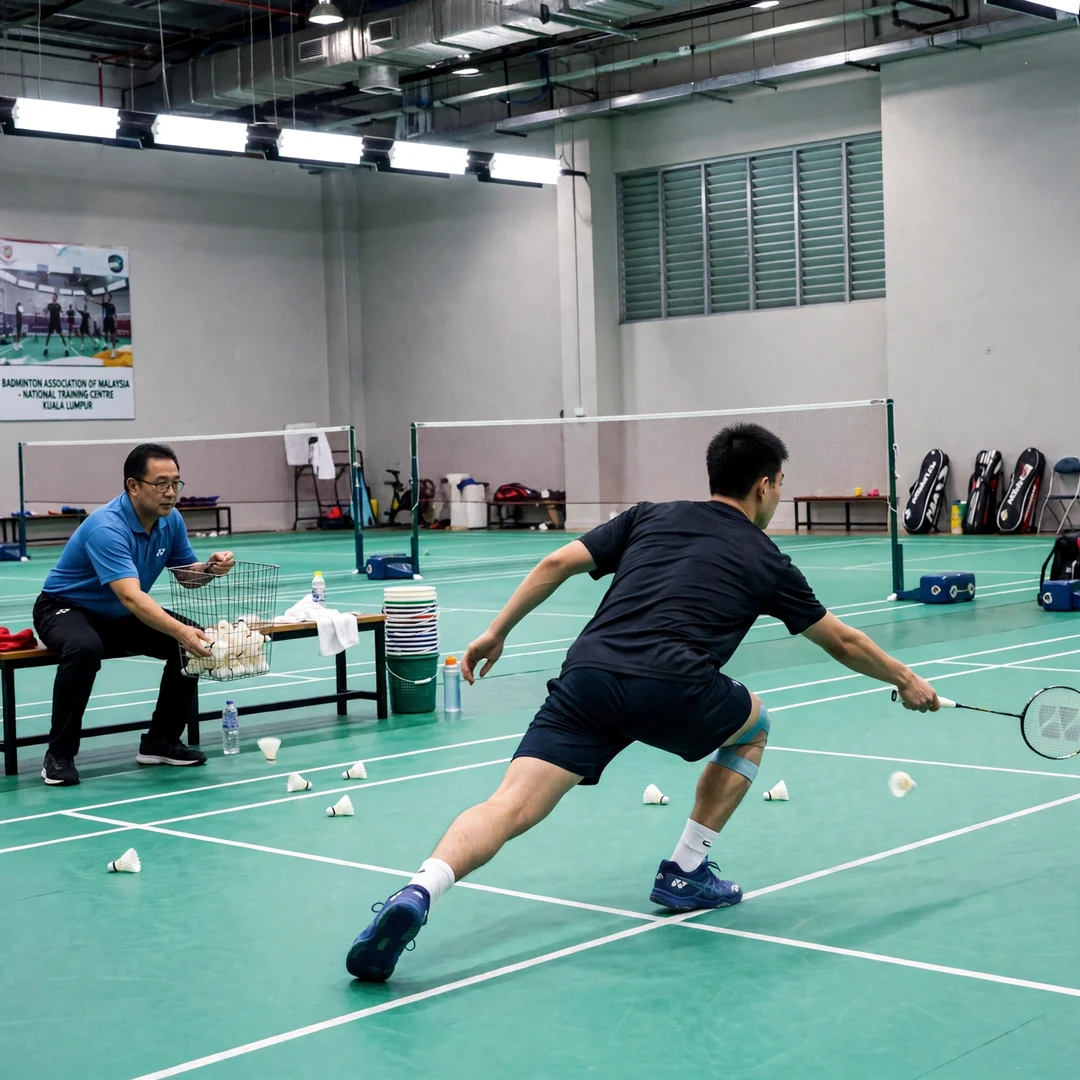
Young players who study Lee should copy the order in which he built his game. The foundations came first: Bukit Jalil footwork patterns, a reliable clear and drop shot from the back court, and a defence that buys one more shot in every rally. The spectacular shots came later, once the base was strong enough to support them. His backhand smash is not a trick to imitate in a week – it is the end product of a decade of strength work, timing and trust in his own technique. Build the base first, then add the fireworks: that is the Lee Zii Jia sequence.
Mental Strength
Bans, Breakdowns and Comebacks: The Lesson from Lee Zii Jia
Lee’s career is a study in betting on yourself – and in surviving the consequences. When he left the national association in 2022 to control his own career, he was banned, doubted and told by many that he had made a terrible mistake. He answered with an Asian title, a world No. 2 ranking and an Olympic medal, all as an independent professional. The lesson is not that leaving a system is always right. It is that a player who takes responsibility for his own career – his coach, his schedule, his body – must then accept full responsibility for the results, good and bad. Lee has never blamed anyone else for a defeat.
His honesty about the hard times is just as instructive. During the 2023 slump he admitted in public that he had thought about stepping away from tournaments altogether. In 2025, broken down by injury, he did step away – and used the break properly, to heal rather than to hide. Then he came back through qualifying rounds at 28 years old: a former world No. 2 willing to start again from the very bottom of the draw. Lee Chong Wei, the legend whose shoes he was asked to fill, publicly backed him during the 2026 comeback, saying the talent was returning together with the confidence. Great players are not the ones who never fall – they are the ones who keep answering.
For our students, the practical lessons from Lee are clear: build your game on footwork and defence before you chase spectacular shots; if you believe a different path is right for you, take it – but own every consequence of the choice; when your body breaks down, rest properly instead of playing hurt and making the damage worse; and never be too proud to rebuild from the qualifying rounds, because rankings follow the players who keep showing up and winning matches, at whatever level they have to start from.
Learning Reference
ST Badminton Academy Connection
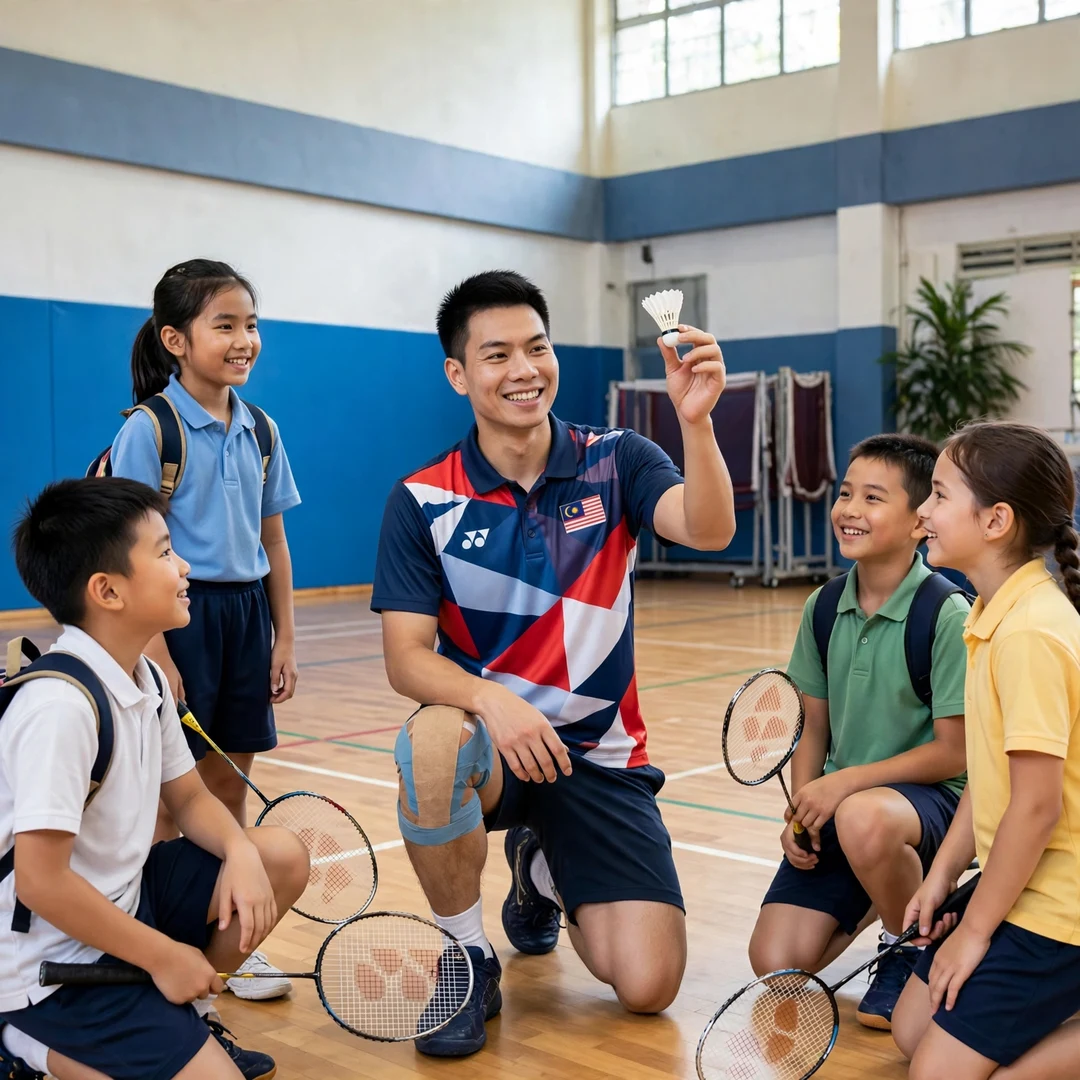
ST Badminton Academy has no official partnership or endorsement arrangement with Lee Zii Jia, Team LZJ or the Badminton Association of Malaysia. This page is an educational profile created so Malaysian juniors and parents can learn from his career, his playing style and his journey.
Our students study two Lee Zii Jia matches above all: the 2021 All England final, where a 30-29 first game against Viktor Axelsen shows how to hold your nerve at the very edge of a match, and the Paris 2024 bronze-medal match, where he turned a lost first game into an Olympic medal by changing his game plan in the middle of the match. His path also shows Malaysian families a complete development route: school badminton in Kedah, the Bukit Jalil Sports School, the national junior system – and then the courage to become his own boss as a professional.
We encourage our players to watch Lee the way coaches watch him: for the recovery steps after the smash, for the patience in the long rallies, and for the honesty after defeats. Copy his backhand if you can – but first copy his work ethic, his willingness to rebuild, and his refusal to let a bad year, a ban or an injury write the final chapter of his story.
FAQs: Lee Zii Jia Malaysia Badminton Player
Here are the questions Malaysian parents and junior players ask most often about Lee Zii Jia, answered with the key facts from his career.
Who is Lee Zii Jia and which country does he represent in badminton?
Lee Zii Jia is a Malaysian men’s singles badminton player, born on 29 March 1998 in Alor Setar, Kedah. He is 1.86 metres tall, holds the racket in his right hand, and is the leading Malaysian men’s singles player of his generation. He won the All England Open in 2021, the Asian Championships in 2022 and the bronze medal at the Paris 2024 Olympic Games, and he reached a career-high world ranking of No. 2 in October 2022.
What are Lee Zii Jia’s biggest badminton achievements?
His biggest achievements are the bronze medal at the Paris 2024 Olympic Games; the All England Open title in 2021, won by beating Viktor Axelsen 30-29, 20-22, 21-9 in the final; the Asian Championships gold medal in 2022; six BWF World Tour titles, including two Thailand Open crowns; the SEA Games gold medal in 2019; and team bronze medals with Malaysia at the Sudirman Cup in 2021 and 2023 and at the Thomas Cup in 2024.
What is Lee Zii Jia’s playing style?
Lee plays a right-handed attacking all-court game. His jump smash is among the most powerful in the sport, and his trademark backhand smash from the deep backhand corner is one of badminton’s signature shots. Beneath the power he has elite footwork, fast reflexes, deceptive net play and a defence strong enough to win long rallies on the days when his attack is not firing.
How did Lee Zii Jia win the 2021 All England Open?
Lee won the 2021 All England Open in Birmingham by beating the defending champion, Denmark’s Viktor Axelsen, in a classic final. Lee took an extraordinary first game 30-29 – the highest score possible in a badminton game – then lost the second game 20-22, and dominated the decider 21-9. At 22 years old he became Malaysia’s first All England men’s singles champion since Lee Chong Wei, and the victory announced him as a genuine world star.
How can my child learn from Lee Zii Jia’s training approach?
Children can learn from Lee’s pathway: school badminton in Kedah, the Bukit Jalil Sports School, a World Junior Championships medal, and senior titles built year by year rather than overnight. At ST Badminton Academy we follow the same order he did – footwork, defence and rally-building first, the big attacking shots second – and we teach our players his other great lesson: when you fall, through injury or results, you rest, you rebuild, and you come back through the draw like everyone else.
Did Lee Zii Jia win any junior titles or medals?
Yes. Lee won the boys’ singles bronze medal at the 2016 World Junior Championships in Bilbao, Spain, and the silver medal with Malaysia in the mixed team event at the same championships. Earlier in his junior career he was the Perak and Selangor junior champion in 2015, and in 2016 he also reached the final of the India International Series as a junior stepping up into senior competition.
How many BWF World Tour titles has Lee Zii Jia won?
Lee has won six BWF World Tour titles: the Chinese Taipei Open in 2018, the All England Open in 2021, the Thailand Open in 2022 and again in 2024, the Arctic Open in 2023, and the Australian Open in 2024. He has also finished as a runner-up five times on the World Tour, including twice at the Denmark Open and in the final of his home Malaysia Masters in 2024.
What playing style should young players learn from Lee Zii Jia?
Young players should learn Lee’s complete package rather than only his famous smash: the fast, low footwork that gets him behind the shuttle early, the defensive resilience that restarts rallies other players have already lost, and the deceptive holds at the net. His backhand smash shows what becomes possible after years of technical work – but the everyday lesson is simpler: attack with courage, defend with patience, and never let one bad rally decide how you play the next one.
Does ST Badminton Academy have any connection with Lee Zii Jia?
No. ST Badminton Academy has no official connection, partnership or endorsement with Lee Zii Jia or Team LZJ. This profile is published for education only, so our students and parents in Malaysia can study his career achievements, playing style and journey.
Lee Zii Jia Career Highlights
Career Statistics and Rankings
Lee Zii Jia's career is a masterclass in carrying a nation's expectations. From a schoolboy in Alor Setar to All England champion at 22; from Asian champion and world No. 2 as his own boss, to an Olympic medallist in Paris; and then - broken by injury - a qualifier again at 28, fighting his way back up the rankings one tournament at a time. Every chapter was written by the same qualities: explosive talent, stubborn self-belief, and a refusal to accept that the story was over.
| Development Area | Common Misconception | What Lee Zii Jia's Career Shows REALITY |
|---|---|---|
| Junior Foundation | Talent alone decides who becomes a champion. | Lee was not a teenage sensation who arrived fully formed: he won a World Junior bronze medal at 18, his first World Tour title at 20 and the All England Open at 22, adding a breakthrough almost every year. His game was built in layers over a decade in Kedah, at Bukit Jalil and on the senior circuit - there was no single moment of magic. |
| Playing Style Priority | Kids should copy the flashiest attacking shots. | Everyone remembers Lee's backhand smash, but coaches study what comes before it: Bukit Jalil footwork, a reliable defence and rally-building patience. At the Paris Olympics his bronze medal was won as much by lengthening rallies against Lakshya Sen as by smashing - the spectacular shots are the finishing touch, not the foundation. |
| Fitness Importance | Juniors can out-train everyone without rest. | Lee's 2025 season is the warning every junior should hear: an ankle ligament injury picked up at the 2024 World Tour Finals, followed by months of playing and withdrawing in turns, cost him almost a whole year and his place in the top 100. His recovery only began when he stopped completely, took a proper break in November 2025, healed fully, and only then rebuilt. |
| Mental Approach | Top players never get nervous or upset. | Lee has spoken openly about nearly stepping away from tournaments during his 2023 slump, and about the pressure of following Lee Chong Wei as Malaysia's No. 1. He kept the struggle honest and public - and kept playing. Top players are not fearless; they are the ones who learn to compete well while carrying the fear with them. |
| Attacking Training | Smashing harder is always the answer. | In the Paris bronze-medal match, Lee lost the first game 13-21 while trying to blast through Lakshya Sen. He changed the plan, not just the effort: longer rallies, tighter defence, attacking only on the right shuttle - and won 21-16, 21-11. The smartest attacking player in the arena is the one who knows when not to smash. |
| National Milestones | Only world titles matter. | Lee's bronze medal in Paris made him only the third Malaysian men's singles player ever to stand on an Olympic podium, after Rashid Sidek and Lee Chong Wei. Add his Sudirman Cup and Thomas Cup bronze medals with Malaysia, and his record shows a player who has delivered for his country in team events for a decade - not a player who only plays for himself. |
| Career Timeline | Champions peak once and fade fast. | Lee has had three careers in one: the national-team prospect who won the All England Open at 22, the independent star who reached world No. 2 and an Olympic bronze, and the 28-year-old who fell out of the top 100 injured and climbed back to No. 42 through qualifying rounds in Finland. Champions do not peak once and fade - they rebuild, repeatedly, for as long as they keep playing. |
Study Lee Zii Jia's Work Ethic and Professional Approach
For Malaysian juniors, his message is the one every young player in this country needs to hear: the path will not be smooth, the setbacks will be public, and the only answer that has ever worked is to keep training, keep believing and keep showing up. Lee Zii Jia showed up in Finland in October 2026, ranked No. 42 in the world, and beat one of the best players in the game. The comeback is not finished - and neither is he.