Best Badminton Class in KL: Turning a Missed Shuttle into a Useful Question
After a missed shuttle, describe the task and the attempt before deciding what went wrong. Ask the coach which observation matters and what the learner should try next. The result alone does not identify a technical cause or a child’s attitude. Families searching for the best badminton class in KL may hear many quick explanations from spectators: a grip was wrong, the child was late or concentration was missing. Those claims need context that one result cannot supply. This guide helps a family turn the moment into a specific teaching question in a badminton class for kids at ST Badminton Academy in Kuala Lumpur. Images are AI-generated educational illustrations of generic people, not photographs of Eric Chuar or actual students.

Name the result carefully
What did the attempt actually show?
Begin with the visible outcome: the learner did not make the intended contact or the shuttle did not reach the agreed area. Use a description that matches what happened rather than attach a cause you have not assessed. The coach can consider the movement alongside the actual task and instructions. A parent does not need a technical diagnosis before asking for help. A factual account leaves room to understand the attempt instead of forcing the next explanation to defend a spectator’s first guess.
Also avoid a character judgement. A missed shuttle does not establish that the child was lazy, unwilling or incapable of learning. If there is a participation concern, describe the relevant behaviour separately and discuss it with the responsible coach. That question should not be inferred from every unsuccessful result. The learner needs a clear response to the current activity. Treating an attempt as information can support that response without pretending the outcome is irrelevant or automatically praising everything the child does.

Restore the task context
What was the learner trying to do?
Ask about the activity’s purpose and the cue the child was expected to use. A beginner might be learning a starting action or recognising a target, while another activity might be exploring a choice in a familiar situation. These are examples, not a description of any particular STBA lesson. The actual purpose belongs in the discussion. A spectator may judge the outcome against a different goal from the one currently being taught. Knowing the task helps make the question fair and answerable.
Let the child explain what they understood without demanding a technical lecture. ‘I was trying to send it there, but I did not know when to start’ identifies a different uncertainty from ‘I forgot which cue to use’. The responsible coach can consider these accounts and observe the learner. A parent can help convey the question at an appropriate time, but should not supply a new instruction during every turn. The child needs a coherent direction for the activity, not several adults interpreting the miss at once.
Ask one useful question
Which question helps the coach choose the next response?
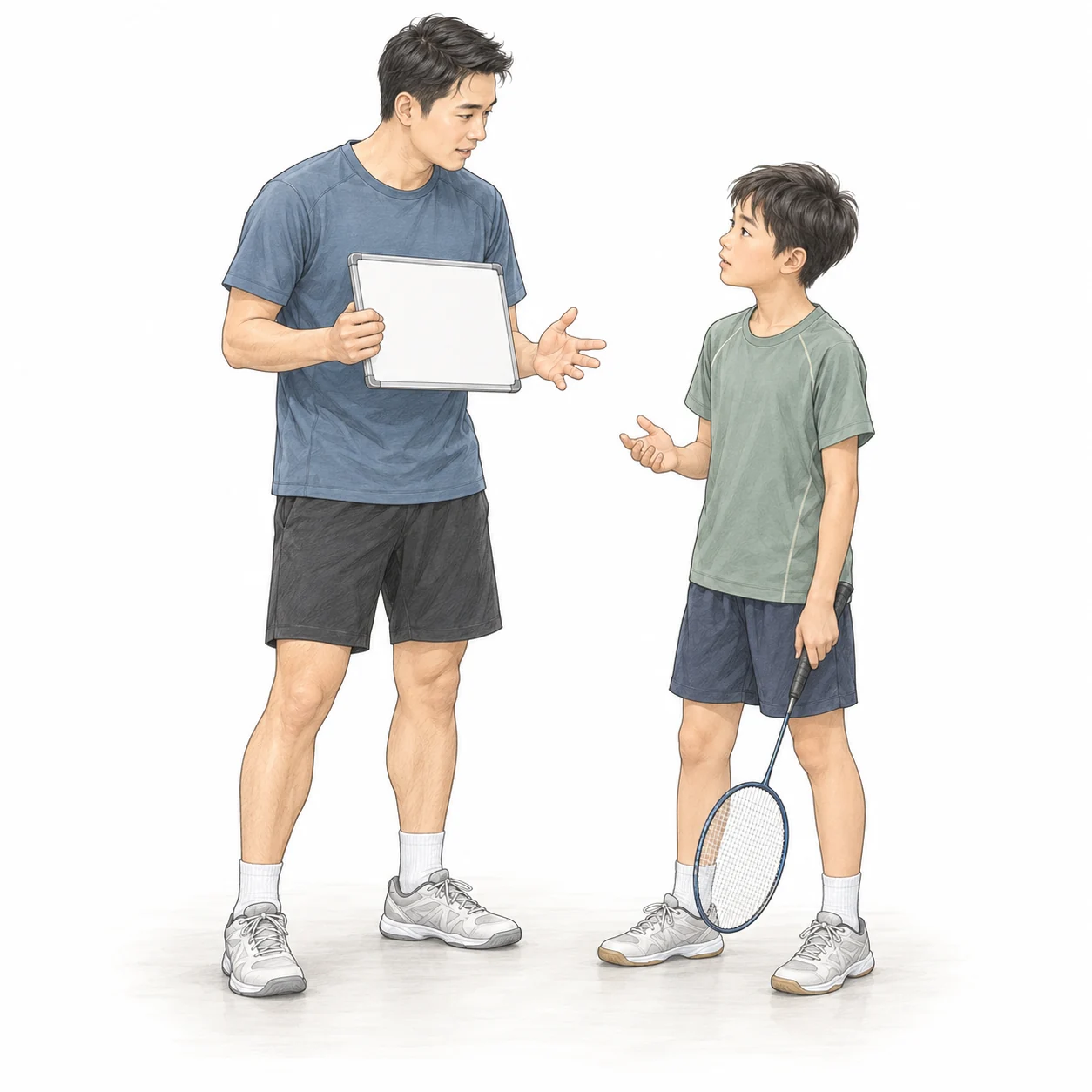
A focused question might be, ‘What should I pay attention to in the next attempt?’ or ‘Can you explain this cue again for the activity?’ Use wording suitable to the child and the actual class. The question should identify uncertainty, rather than require the learner to confess a fault. It gives the coach a chance to explain a manageable next action. Asking about everything wrong with the child’s badminton can make a small learning moment unnecessarily broad.
The coach may need another observation before selecting a cue. That is different from ignoring the question. Ask what the next suitable task is meant to reveal and how the child can begin it. The response should connect to the activity and learner, not simply use the longest technical vocabulary. A useful explanation is clear enough to guide the next attempt. The family can assess that connection without deciding the technical solution from an article or a single missed shuttle.

Keep feedback manageable
Does every miss require another correction?
Several attempts may serve the same teaching question. Adding a new correction after each miss can leave the learner unsure which instruction belongs to the current task. Ask the coach how the priority is being chosen and which cue should be used now. This does not mean a teacher must ignore important information. It means relevant observations need to become an understandable plan rather than a collection of simultaneous directions. The learner should know what to try next and what the activity is for.
Parents can avoid amplifying every result from the sidelines. Calling a different instruction after each shuttle may interrupt the coach’s observation and make the child switch attention between adults. If a concern remains, keep a factual example for the agreed discussion opportunity. The teacher can then explain what was observed and how feedback relates to the task. Support from the family can be calm and specific without becoming another technical lesson during the activity.
Give the next attempt a purpose
What can another suitable turn help clarify?
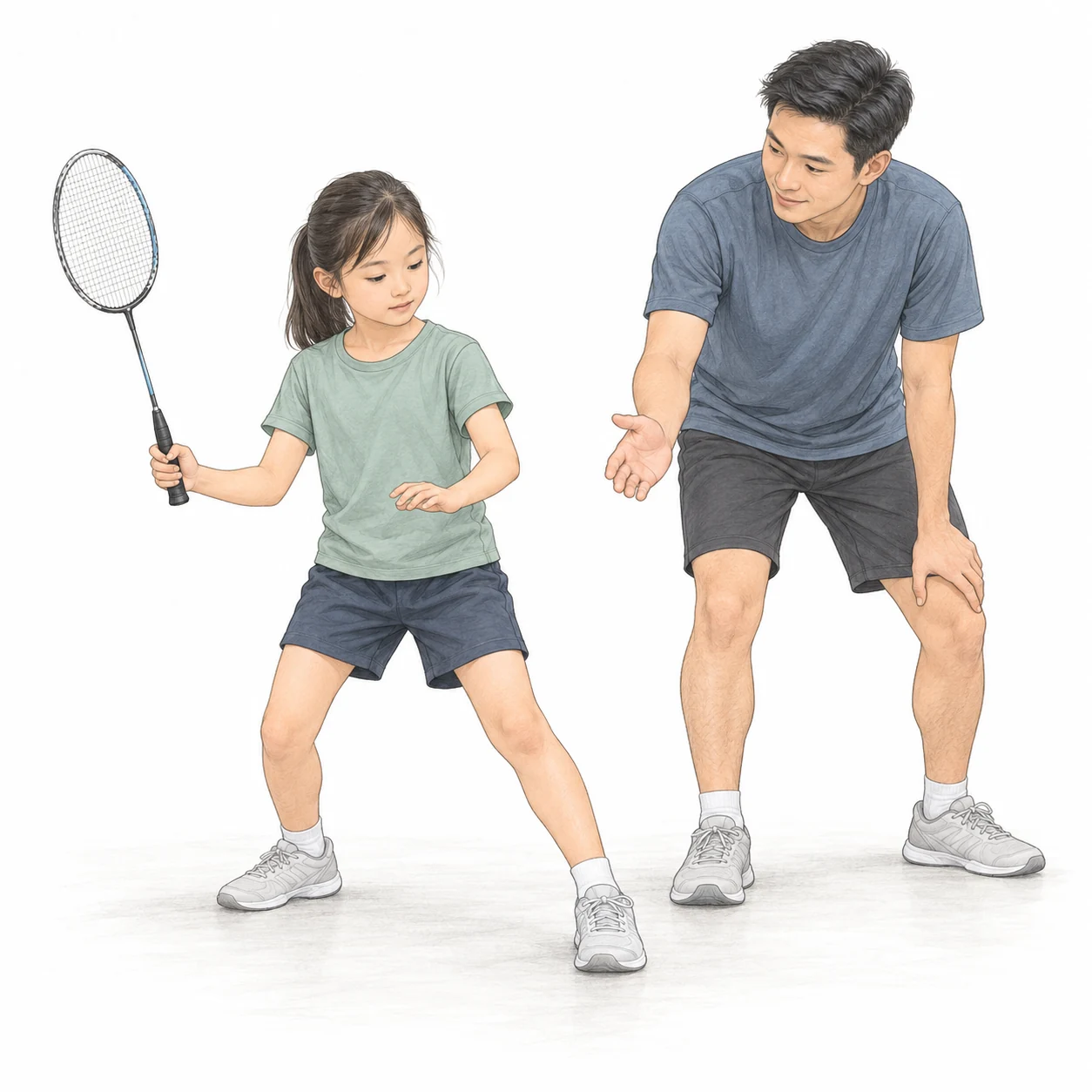
The next turn should have a clear relationship to the question. The coach may check whether the cue is understood, demonstrate the starting action again or adjust the activity to make a detail more observable. Those are possible teaching decisions, not universal instructions for a particular stroke. Ask what is relevant to this learner and task. A manageable next attempt can help distinguish an unclear explanation from a difficulty that needs another kind of support.
Keep the assistance used in view when reviewing the result. An attempt with reminders provides information in that context; a later familiar task with different support may provide another perspective when appropriate. Do not withdraw help abruptly to demand independence or claim that one assisted success proves everything is learned. The coach chooses suitable opportunities to observe. The family can ask what has become clearer and what still needs explaining rather than treat every result as a final assessment.
An unsuccessful next attempt can still narrow the teaching question. The learner may now understand the target but remain unsure about the starting cue, for example. That hypothetical situation offers more specific information than the original label ‘keeps missing’. The response can become clearer without pretending the desired outcome has already been achieved. Ask how the coach connects this observation to the next task. Useful feedback is a teaching decision supported by context, not a requirement that every explanation immediately produce a perfect shot.
Review patterns without labels
What if the same difficulty continues?
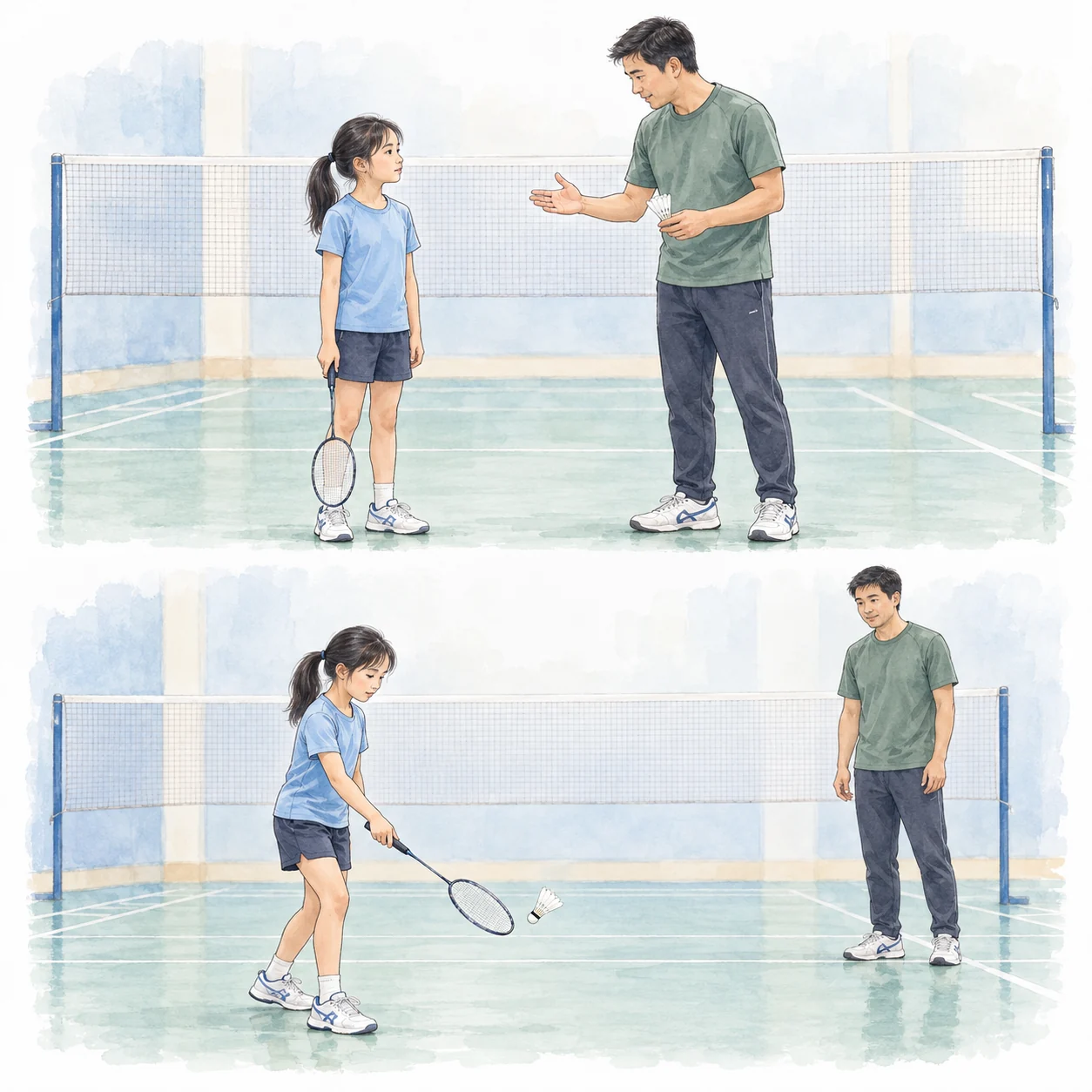
Discuss a recurring pattern through actual examples. What activity was being attempted, which cue was used and what support helped or remained unclear? The coach can consider whether another observation or starting task is appropriate. Do not set a universal number of misses after which a learner must improve. A repeated outcome may deserve attention, but its meaning depends on the task and context. The family should have a practical way to ask about the pattern without diagnosing the child from a success count.
Listen to the learner’s account as part of the discussion. The child may be unsure which instruction to follow, may not understand the goal or may have a different question. These possibilities need clarification; they are not diagnoses based on this article. A short factual note can preserve the example if that helps the provider’s actual communication arrangement. Avoid an evening of repeated testing to reproduce the problem. The aim is a useful conversation that informs the next suitable teaching opportunity.

Judge the teaching response
What does a missed shuttle reveal about a badminton class in KL?
A missed result creates an opportunity to observe how teaching responds. Does the coach identify a relevant question, explain a usable cue and connect feedback to the next task? A class should not be judged only by a promotional sequence in which every shuttle looks successful. Learning can include difficult attempts, and the value lies partly in how those attempts are understood. Credentials and playing achievements provide background, while the actual response to a learner offers a different kind of evidence.
Eric Chuar has described how demanding teaching can be and how satisfying it is to see a student develop. That teaching effort is meaningful when it becomes a clear response to the learner’s actual difficulty, rather than a claim of an objective world ranking. Families enquiring with ST Badminton Academy can bring a task description and one specific question after an unsuccessful attempt. Ask about current Kuala Lumpur class arrangements and suitable starting information. The application opens an enquiry; availability and suitability need confirmation, and no article guarantees a particular learning result.
Useful questions after a missed shuttle
Keep the result, task and possible cause separate. These answers guide a teaching conversation without diagnosing technique or judging a child from one attempt.
Does a missed shuttle tell us exactly what went wrong?
Not by itself. The activity, cue, learner’s understanding and assistance all provide context. Describe the outcome and ask the coach what observation is relevant. The family does not need a diagnosis before asking for help. A result can begin a useful question without establishing a technical cause.
What should the child explain first?
What they were trying to do and which point was unclear. Ordinary words can identify whether the target, cue or starting action needs explanation. Avoid demanding expert terminology or a confession of fault. The responsible coach can connect the learner’s account to a suitable observation and next task.
What is a useful question for the next attempt?
Ask what to pay attention to in the current activity or request clarification of the cue. Keep it specific and appropriate to the learner. The coach may need another observation before choosing a response. The useful link is between the actual uncertainty, an understandable instruction and a manageable next turn.
Should a coach add a different correction after every miss?
Ask how the current priority is being chosen. Several relevant observations do not all need to become simultaneous directions. The learner should know which cue to use in this activity. A clear plan can address important information without making the child combine a new instruction after every shuttle.
Should parents call technical advice from the sidelines?
Use the provider’s agreed communication route. Competing instructions can make the learner switch between adults while the coach is observing. Keep a factual example for a suitable discussion if needed. The family can support a clear question without becoming another technical teacher during each attempt.
Does one success after feedback prove lasting learning?
One attempt gives information in its particular task and support context. Ask how the question can be reviewed after appropriate opportunities. Do not claim every skill is permanently learned or remove support abruptly. The coach chooses a suitable later check, and the family can discuss what is clearer and what remains uncertain.
Can another missed attempt still provide useful information?
Yes, it may help make the question more specific when considered with its instruction and context. That does not pretend the desired result has been achieved. Ask what the coach observed and how it informs the next task. A useful response should clarify teaching rather than attach a fixed label to the learner.
What if a similar result keeps occurring?
Discuss actual examples with the task, cue and assistance visible. Ask whether another observation or starting activity is appropriate. Avoid an invented miss count or improvement deadline. Listen to the child’s question without diagnosing motivation, and use the provider’s actual opportunity for a focused parent conversation.
What can I include in an STBA enquiry after a difficult attempt?
Describe the learner’s experience, the activity and the point you want explained. A specific question is more useful than an assumed technical solution. Ask about current Kuala Lumpur class arrangements and suitable starting information. The application begins a discussion; it does not confirm a place or guarantee a result.
Teaching illustrations: an attempt, a question and a clearer next cue
Four steps after an unsuccessful attempt
Describe the result without inventing its cause. Restore the task and cue the learner was trying to use, then ask the coach which observation matters. Agree a manageable next action and keep the amount of support visible when reviewing it. Avoid a new correction after every shuttle or a fixed label based on one miss. The useful aim is a clearer teaching decision connected to the actual learner and activity.
| Situation | Adds confusion | Supports teaching Compare the next cue |
|---|---|---|
| Missed result | Assume its technical cause immediately | Describe what happened and restore the task |
| Learner’s response | Label character from one outcome | Ask what the child understood |
| Correction | Add a competing direction after every shuttle | Clarify one current teaching priority |
| Parent concern | Call technical opinions throughout practice | Use a factual example at a suitable time |
| Next attempt | Demand a perfect result to validate the explanation | Review relevant information with support visible |
| Recurring outcome | Set an invented miss count or progress deadline | Discuss the actual pattern and next observation |
Ask about clearer feedback in a badminton class in KL
Tell ST Badminton Academy what your child attempted and which instruction or result needs explanation. You do not need to diagnose the movement before asking. Enquire about current badminton class arrangements in Kuala Lumpur and the information useful for discussing a suitable next task. The application begins a conversation; availability and suitability require confirmation. A factual example can help the coach understand the question more clearly than a broad label about repeated misses.