A New Badminton Coach Finds Old Habits: What Should Parents Ask?
Your child has trained for two or three years. At the first lesson with a new coach, you hear that their grip, preparation or movement needs rebuilding. It is frustrating to wonder what the previous years were for. Start by asking the new coach to make the concern specific.
Discuss your child’s training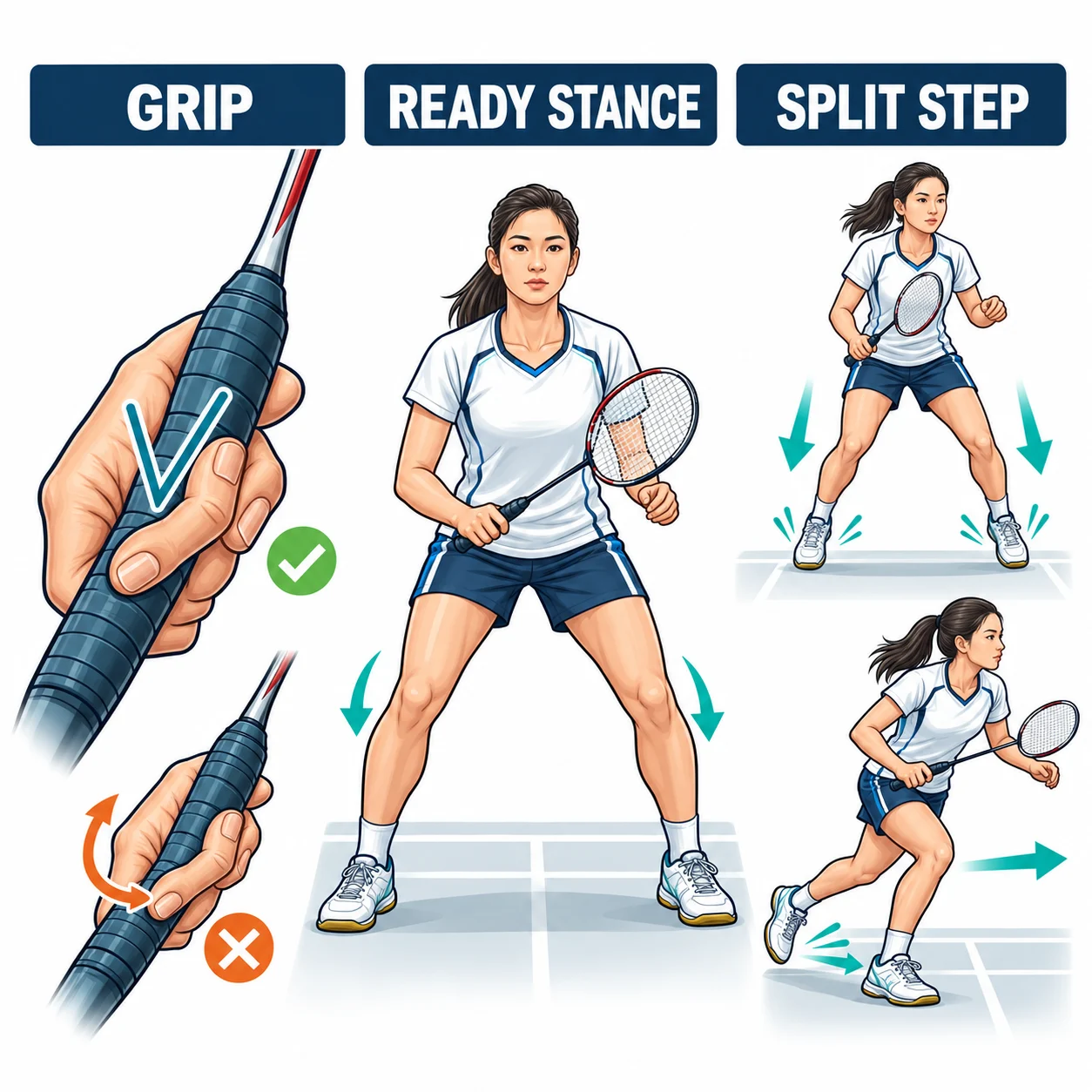
An old habit is a description, not a complete explanation
“There are many bad habits” leaves a parent with worry but little direction. Which action is the coach referring to? During which shot does it create a problem? Is it repeated in an easy task, only under pressure, or while your child is adjusting to unfamiliar instructions?
One coach’s preferred style is not automatically the only acceptable technique. Ask about the practical consequence: late contact, a restricted choice of shot, difficulty recovering or another observable issue. A useful assessment connects a movement with what happens on court.
Keep the earlier learning that still works
Your child may have learned how to join a class, handle a racket, serve, play with a partner or stay involved in a rally. A technique problem does not erase all of that. Avoid telling them that several years were wasted or that they cannot play properly.
Give the new coach the training history, usual class format and any feedback you still have. Tell them which tasks your child finds comfortable and which fail in games. That is a better handover than asking the child to defend the previous coach.
A simple checklist for your next conversation
| What the coach says | Ask for this detail |
|---|---|
| The grip is wrong | Which shot is affected, and can you demonstrate the alternative? |
| Footwork must be rebuilt | Which part of movement causes the problem: start, approach or recovery? |
| Everything needs changing | What is the first priority, and what can stay as it is? |
| Improvement will take time | What will you check first, and when will we review it together? |
Ask for one correction priority before a complete rebuild
Suppose the child holds the racket in one position for both forehand and backhand tasks. The coach should be able to show the relevant change and create a task in which the child can practise it. That is more actionable than a demand to replace every part of their game immediately.
Ask what will remain unchanged while this priority is learned. Changing grip, swing, stance and recovery at the same time can leave the family unable to tell which instruction the child is trying. The coach should decide the sequence after seeing the actual tasks, not from a parent checklist alone.
Agree on what the review will show
A correction plan needs more than a promised finish date. Ask what the coach expects to observe first, when the task will become less predictable and how you will discuss the outcome. You might compare the same easy task before looking at a short rally.
With the coach’s permission, a short clip can help everyone refer to the same action. Film the agreed task, not a compilation of embarrassing misses. The aim is to understand change, not to collect evidence for an argument about which coach is better.
When the explanation still does not feel trustworthy
It is reasonable to ask for clarification when the coach cannot demonstrate the issue, dismisses every earlier lesson, or pressures you into an expensive package before explaining the task. You can seek another assessment without asking your child to choose sides.
In Malaysia or Singapore, compare the actual coach, class suitability, travel and weekly routine rather than assuming a different country or a higher price guarantees better teaching. STBA’s available training location and schedule need direct confirmation before you make arrangements.
Questions parents ask
Does this prove the previous coach was bad?
No. A new assessment alone does not establish why a habit developed or what the earlier lessons addressed. Ask for evidence about the current task.
Must my child start from zero?
Not automatically. A coach can separate useful existing skills from the specific action that needs attention.
How quickly can an old habit be changed?
A text description cannot give a reliable deadline. The task, existing pattern, understanding and opportunities to practise all need assessment.
Should we practise the new action at home immediately?
First ask the coach to show the task and the cue. Do not add several online tips to an instruction your child is still trying to understand.
A practical next step
Bring previous feedback and one clear example to an assessment. Discuss the first correction and a workable practice routine before deciding on a training format.
Compare badminton training options and children’s private badminton training. Confirm the suitable group, venue, times and fees directly before enrolling.
For the wider picture, read the slow-progress review, the guide to changing established habits, or return to badminton learning problems.


