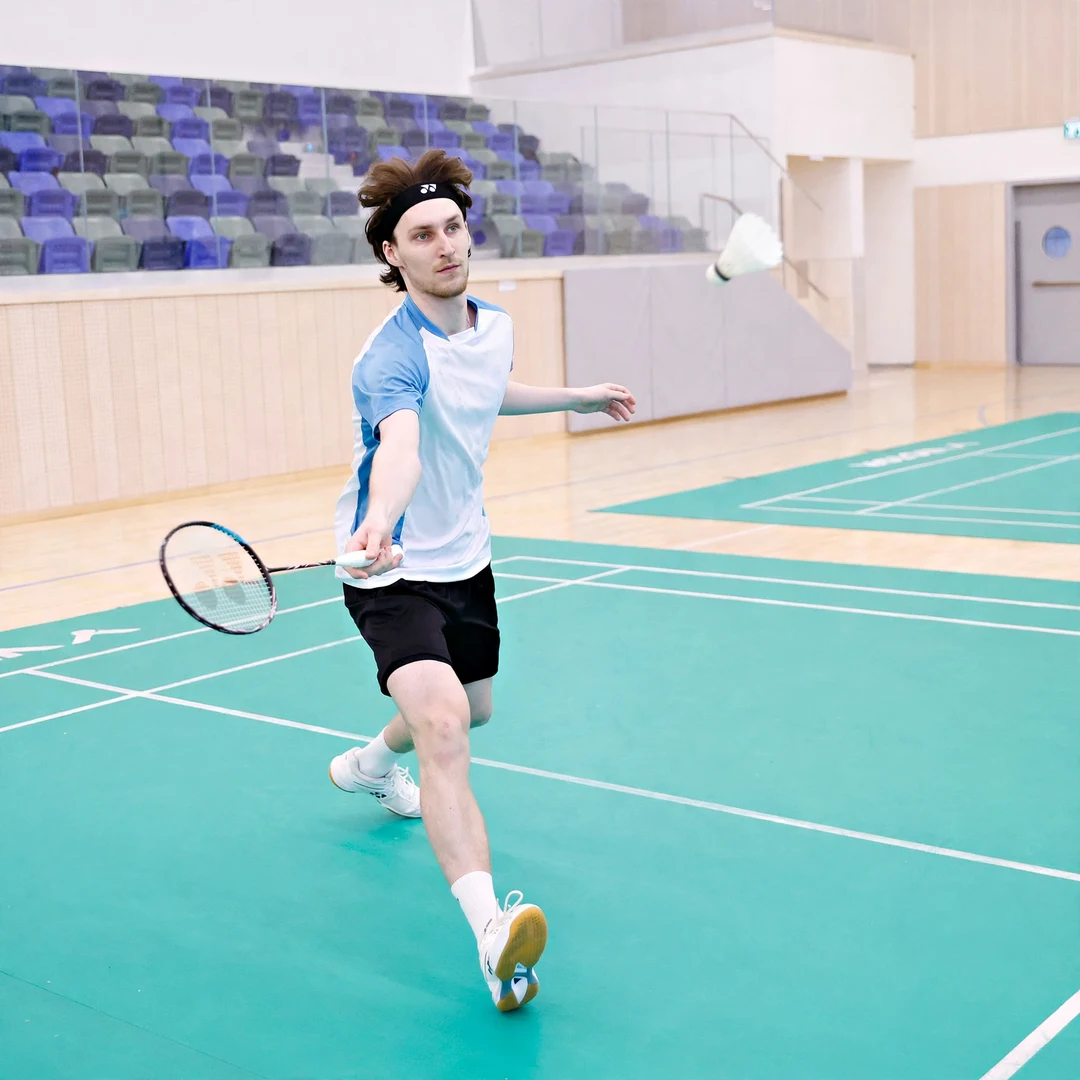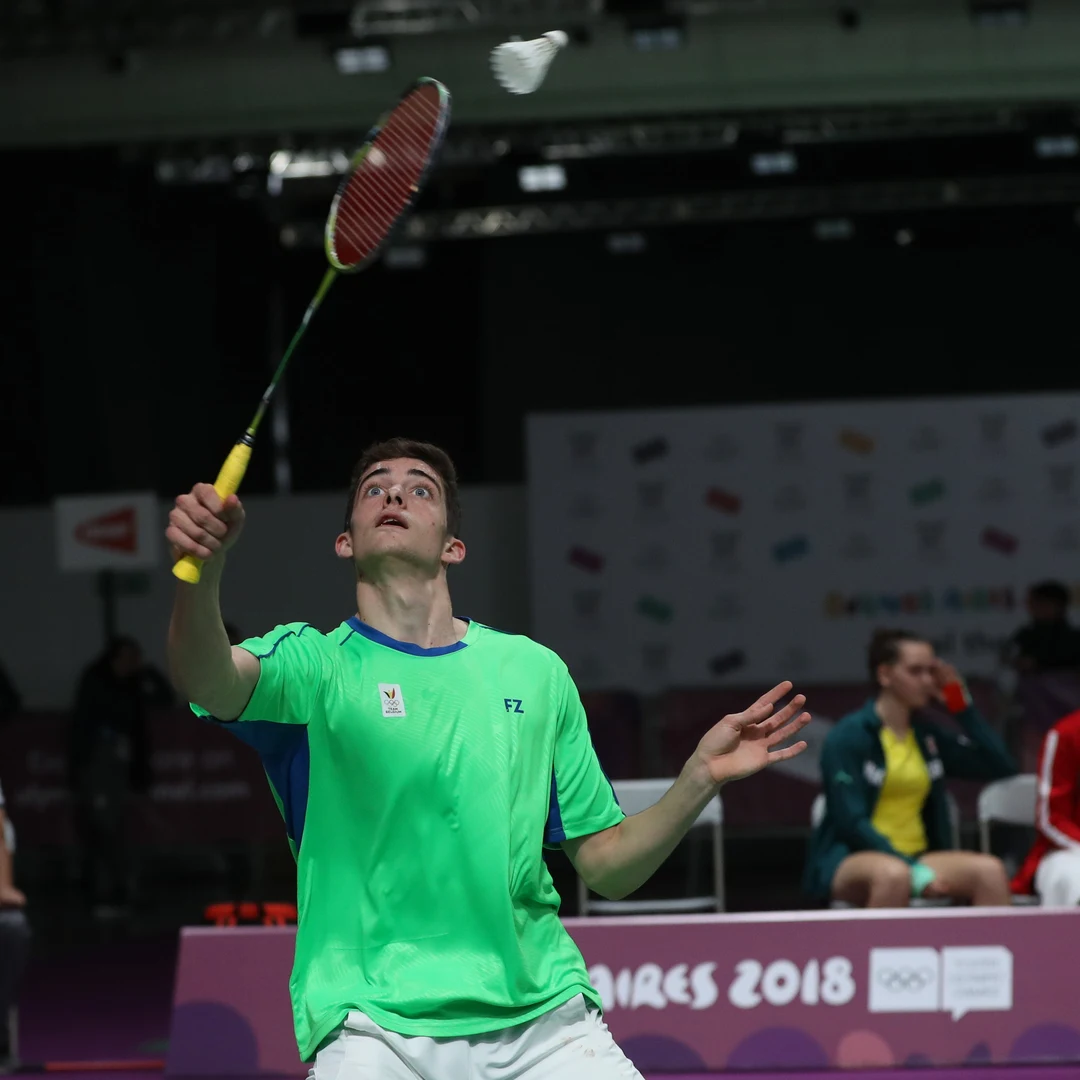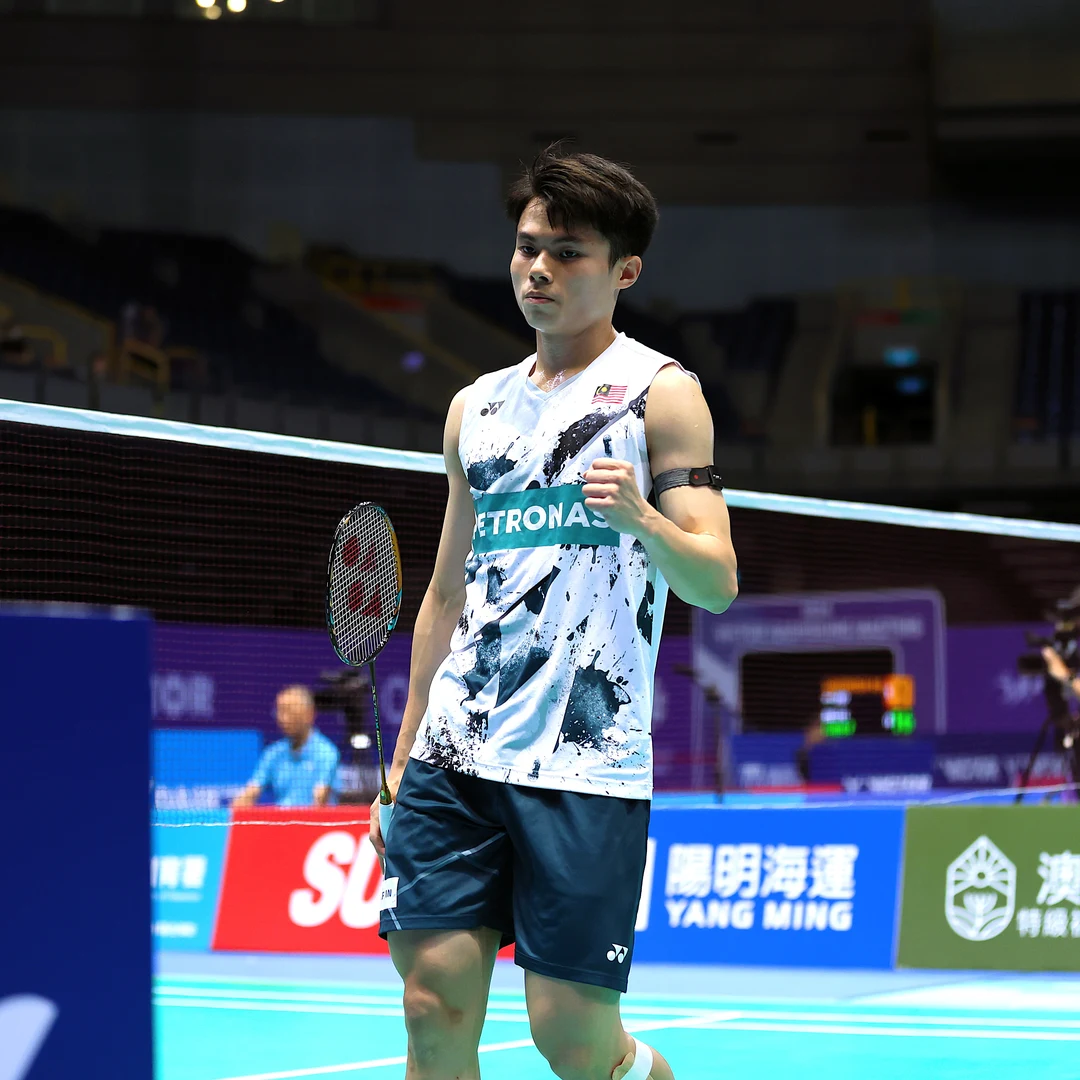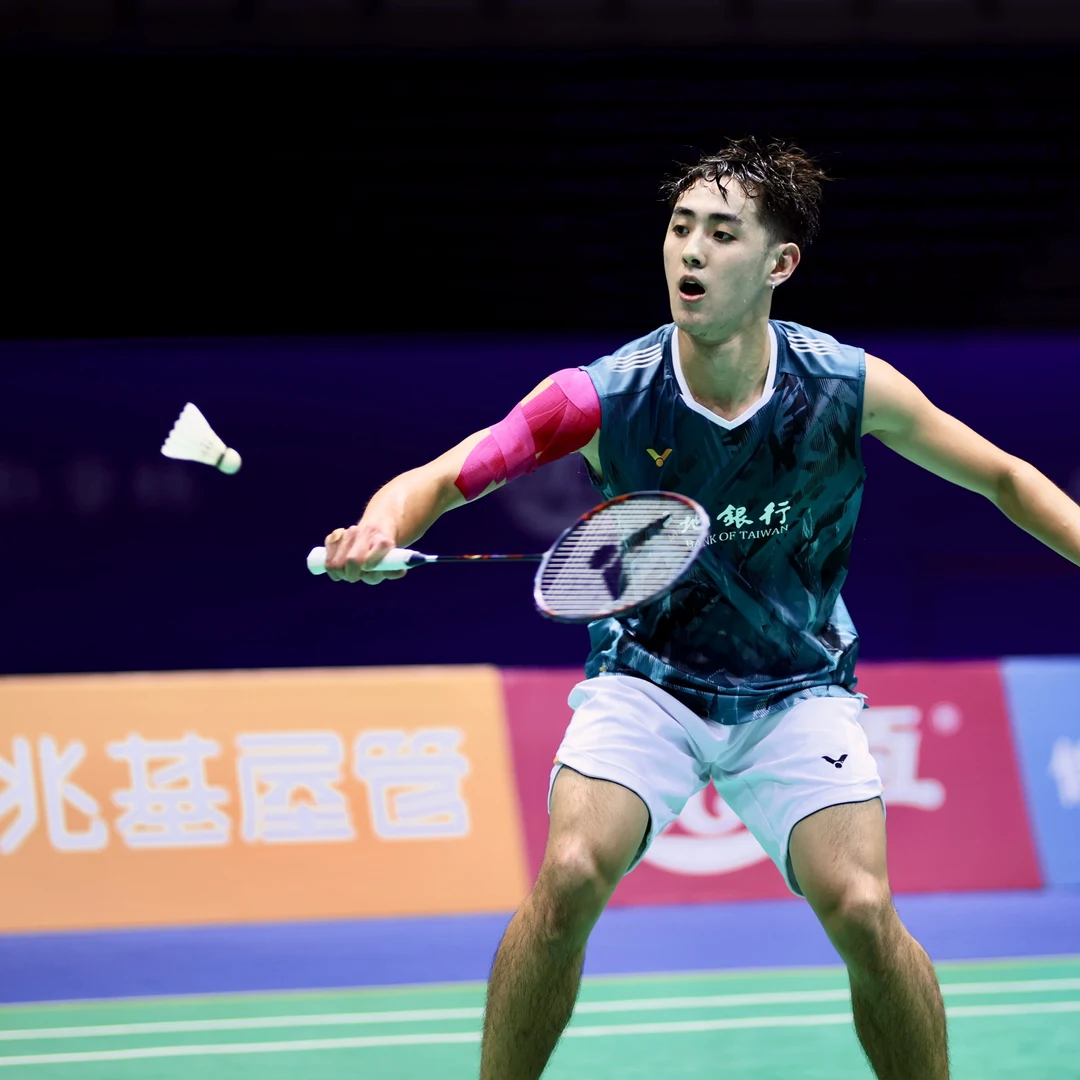
Chinese Taipei Men’s Singles Badminton Star
Wang Po-Wei

Chinese Taipei
Player Event: Men’s singles
Born 12 February 2002 in Magong, Penghu, Taiwan
Playing Style: Right-handed all-court player who holds the racket in his right hand and wins with stamina, retrieving and relentless pressure — he lost the first game of both his big 2025 finals and still won them both
Understanding Wang Po-Wei (Chinese Taipei Badminton Star)
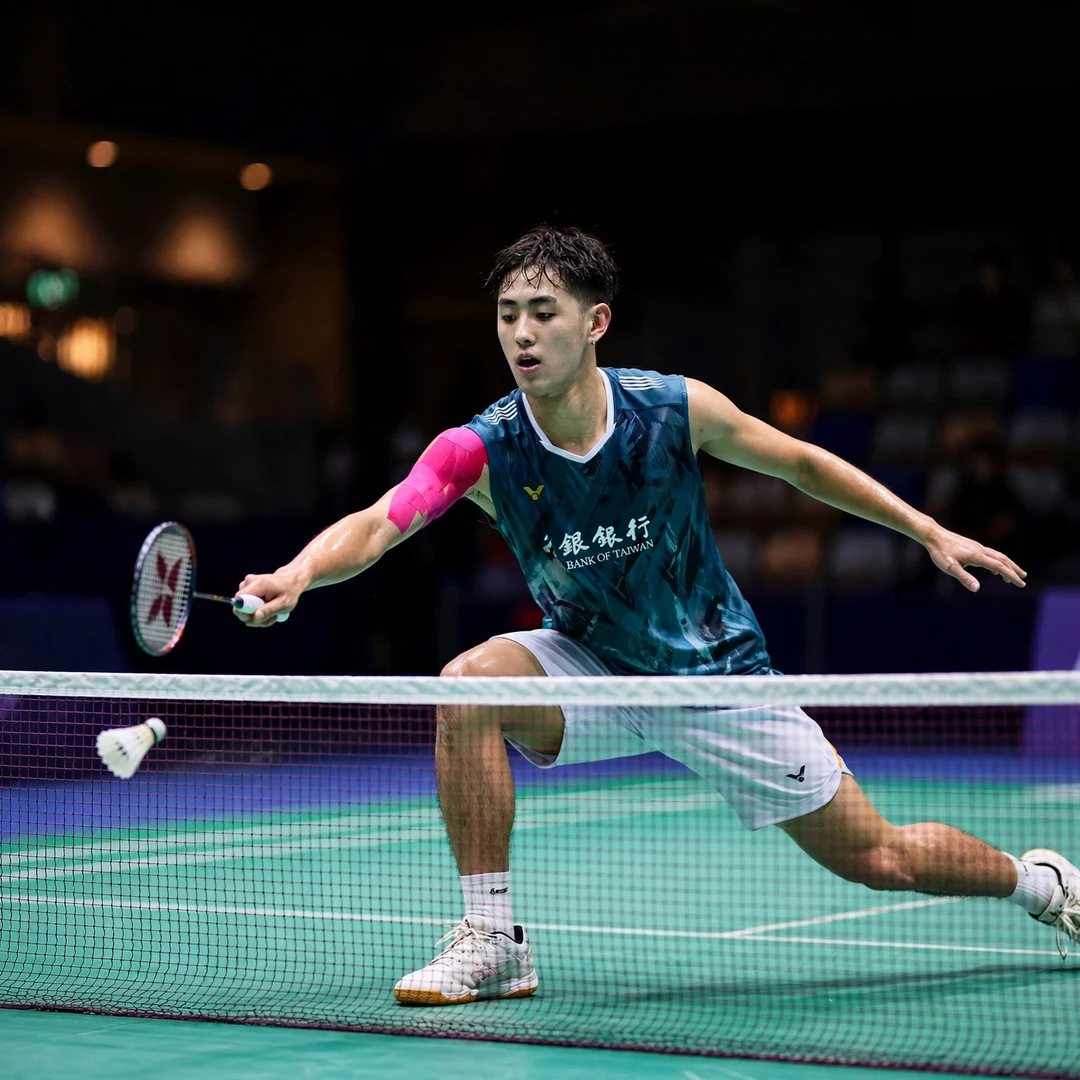
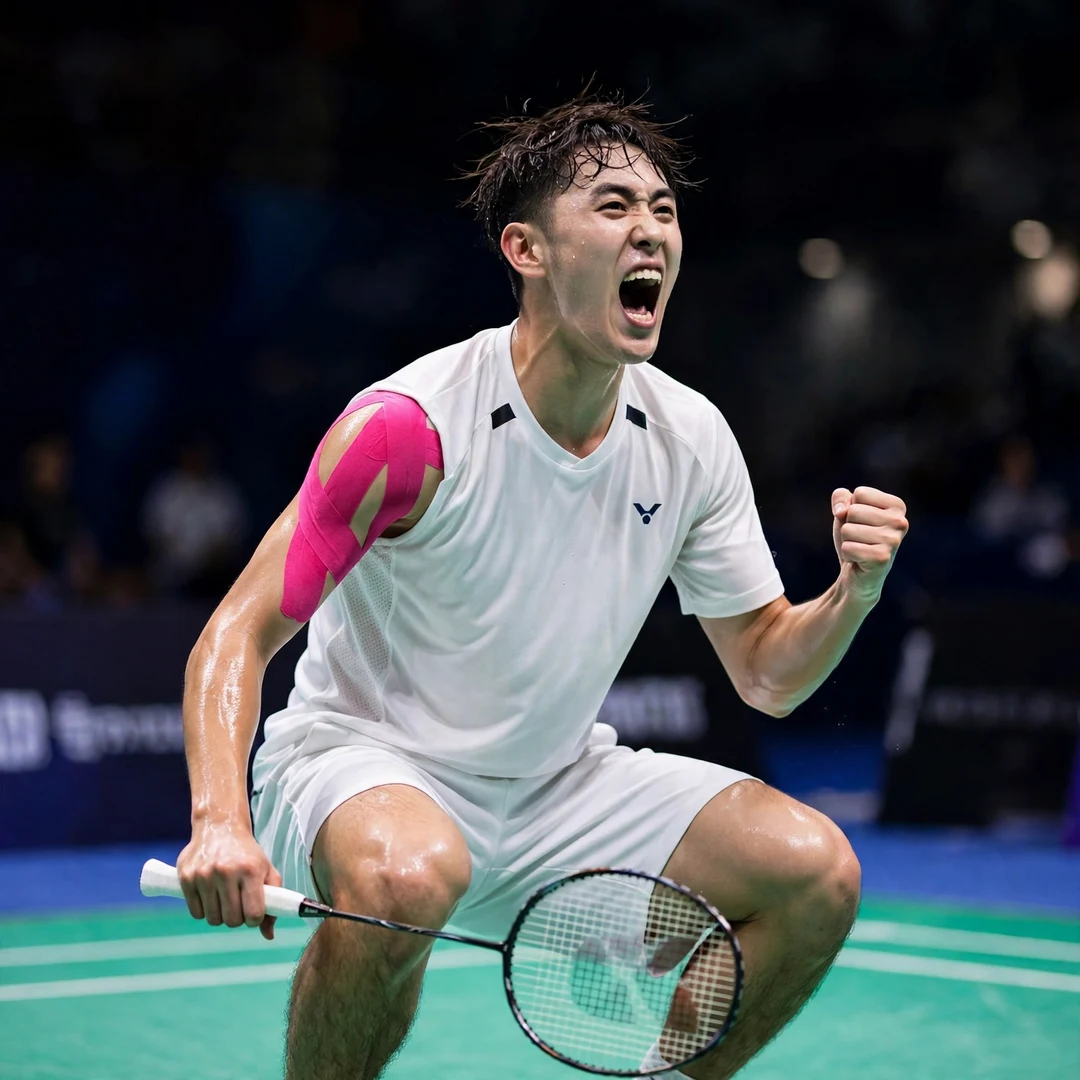
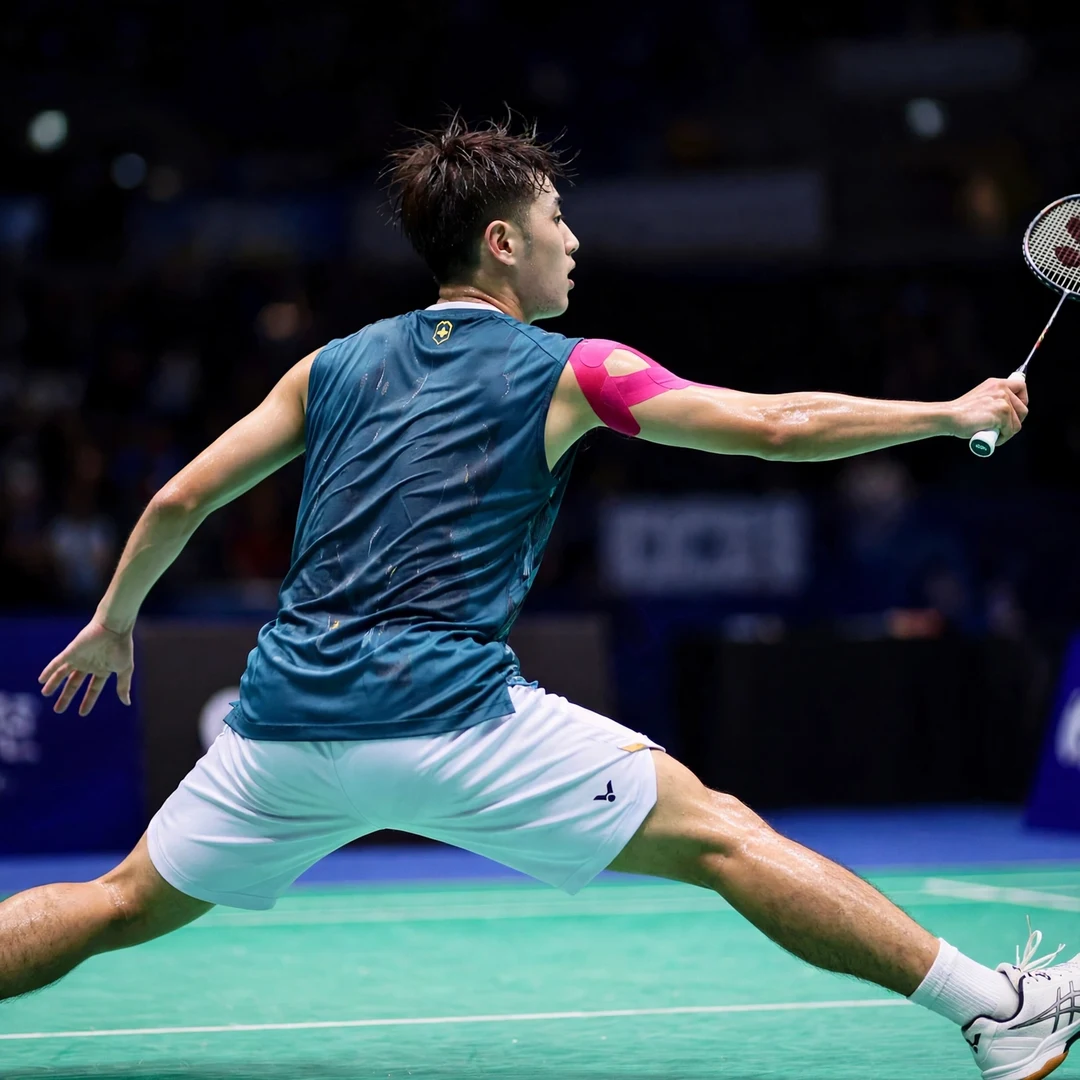
Wang Po-Wei is a Chinese Taipei men’s singles badminton player from Penghu, and the comeback story of Taiwanese badminton. A right-hander instantly recognisable by the pink tape on his right shoulder, he won his first international titles in Europe in 2022 and 2023, made National Games history for his island home county, then lost more than eight months to an ankle ligament injury — and returned in 2025 to win five titles in a year, including his first BWF World Tour crown at the Kaohsiung Masters. A second Super 100 title in Pontianak in September 2026 carried him to a career-high world No. 37, and in the Week 43 BWF world rankings of 20 October 2026 he stands at No. 45 with 34,270 points. This is the profile of a player who has been counted out more than once — and keeps answering.
Early Life in Penghu and the Road to Kaohsiung
Wang Po-Wei was born on 12 February 2002 in Magong, the main city of Penghu — an archipelago of islands in the Taiwan Strait, famous for wind, seafood and fishing boats, and not famous at all for badminton. Penghu is one of the smallest badminton communities in Taiwan, and its young players grow up knowing that the road to the top runs through somewhere else. Wang took his first badminton steps at primary school in Penghu, one of a handful of island children chasing a sport the big cities dominate.
A First World Tour Title at Home
To chase it properly, he had to leave. Wang crossed the strait to Kaohsiung, on Taiwan’s south-west coast, for his schooling — Yingming Junior High School and then Kaohsiung Senior High School — joining the serious junior training environment that the island could not offer a player of his ambition. It is a classic Taiwanese sporting story with an island twist: talent spotted early, family backing a move away from home, and a teenager measuring himself every day against the best juniors in the big-city system.
The Comeback in Auckland
From school badminton he climbed into Taiwan’s corporate-team system, the backbone of the sport there, joining the Cooperative Bank team before moving to the Land Bank team in 2024, and competing as a Land Bank / University of Taipei student-athlete. In 2023 he won the second National Ranking Tournament of the year — the domestic event that effectively ranks Taiwan’s professionals — becoming the first player from Penghu ever to win the national ranking title. Back home, the Penghu Daily wrote his name into island history; on the mainland of Taiwanese badminton, coaches now knew the islander was coming.
A Second Crown in Pontianak
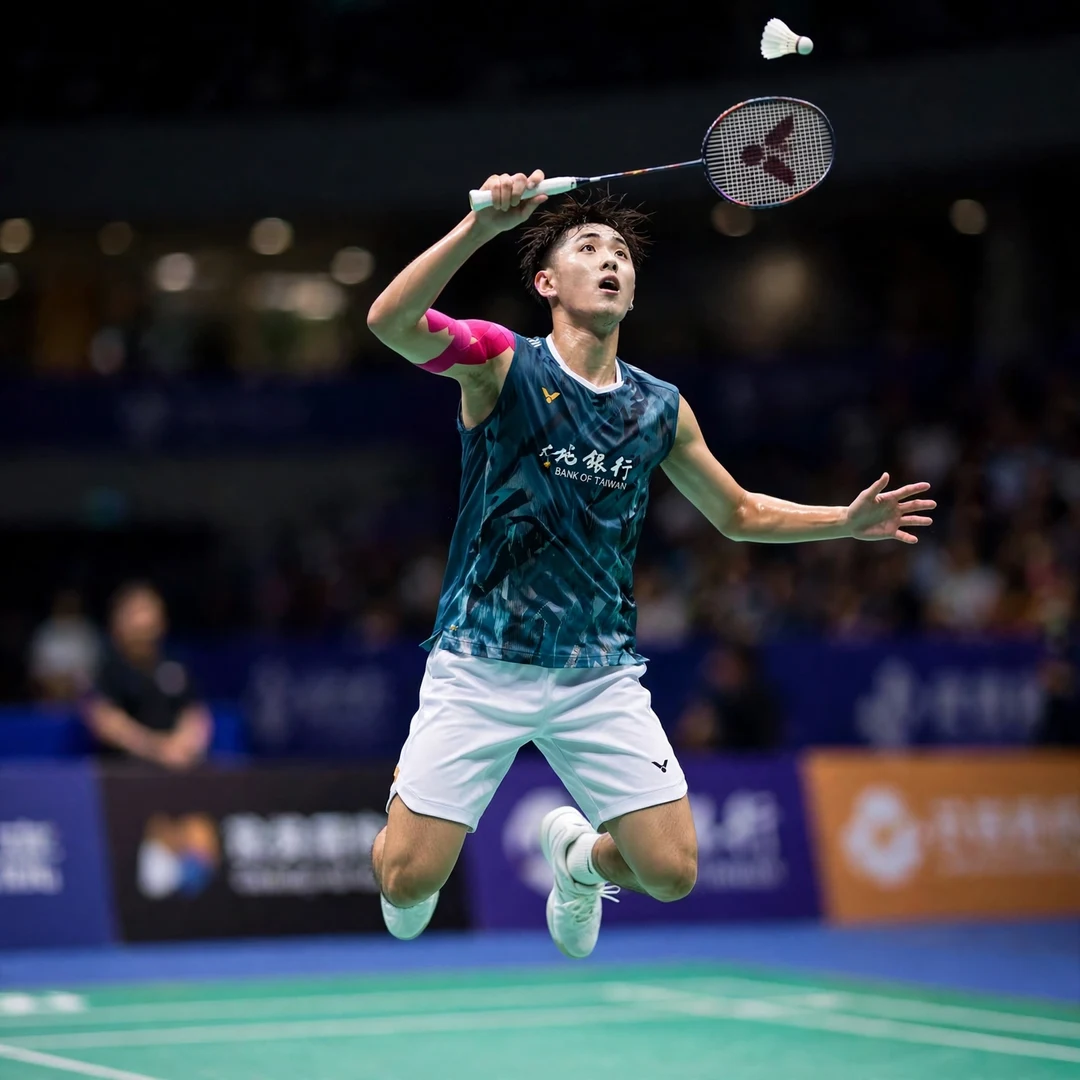
His first international titles came far from home. In 2022, the 20-year-old Wang travelled to Europe’s Future Series circuit — the entry level of international badminton, played in small halls for small prize money — and won the Bulgarian International, beating China’s Huang Yu 21-11, 21-17 in the final. A first international title is a certificate of belonging: proof that a player from a tiny island county can close out a professional final thousands of kilometres from home.
Career Milestone #1
First International Titles in Europe: Bulgaria and Bonn
A year later he did it again, winning the 2023 Bonn International in Germany, defeating compatriot Kuo Kuan-lin 21-15, 21-10 in the final. Around those titles he was reaching the late rounds at higher levels too — the semi-finals of the Vietnam Open, a Super 100 event, and the semi-finals of the Denmark Masters International Challenge in 2023. By April 2024 he had climbed to world No. 71 — inside the world’s top hundred, but still at the foothills of the tour, and about to face the hardest test of his career.
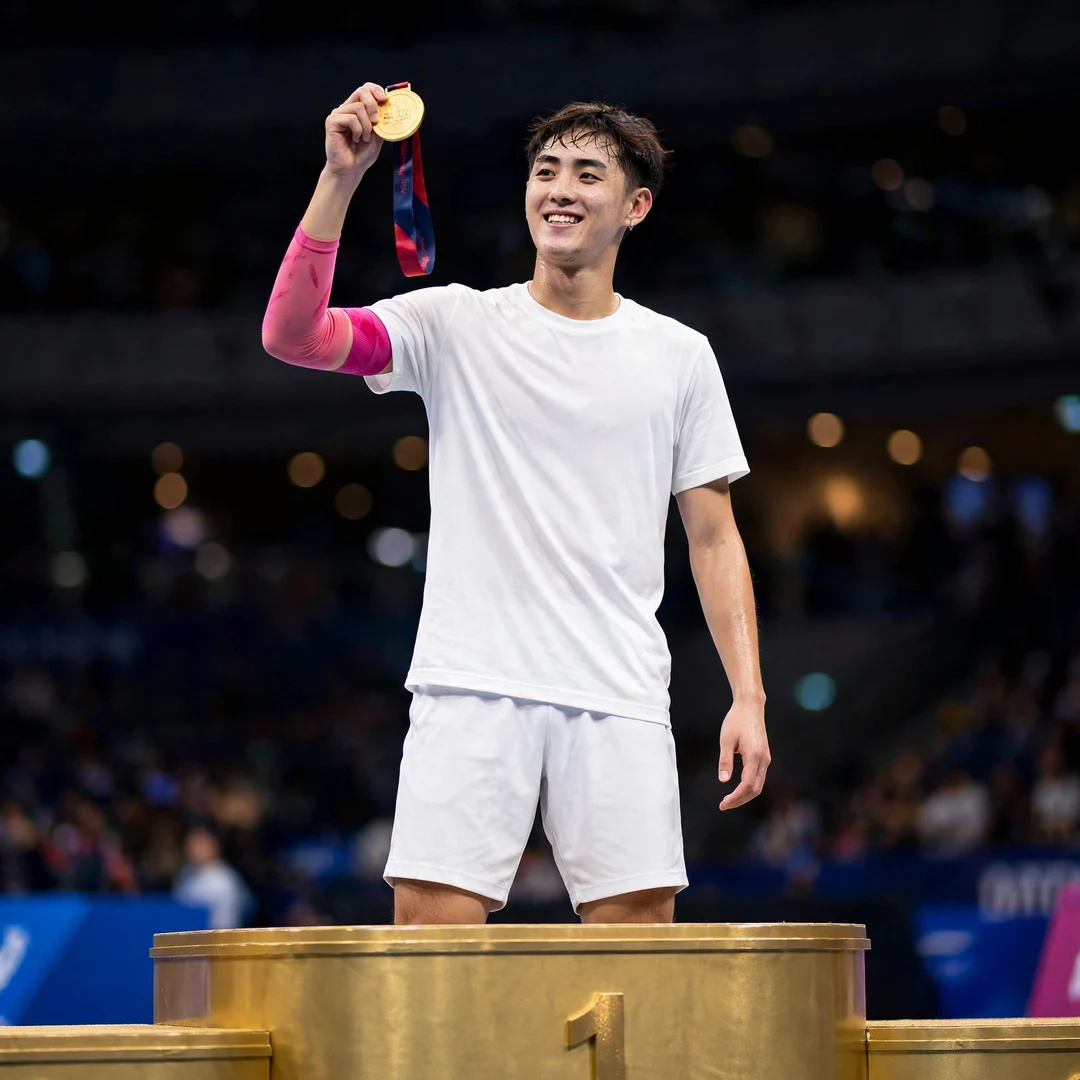
In October 2023, Wang had already written the result Penghu had waited generations for. At the National Games in Tainan — Taiwan’s biggest domestic multi-sport event, where athletes compete for their home counties — he won the men’s singles gold medal for Penghu County, beating Lu Chia-hung in the final. He became the first player in history to win a National Games badminton gold medal for Penghu: a county of fishermen and wind farms suddenly owned a champion, and every young player on the islands had a name to point to.
Career Milestone #2
National Games History for Penghu — and the Injury Layoff
Then the story stopped. Around August and September 2024, at training, Wang tore ligaments in his ankle. The recovery took more than eight months — surgery-grade patience, months of rehabilitation, and the slow, lonely work of rebuilding strength while his ranking slid and his rivals collected the titles he had been chasing. For a 22-year-old whose whole game is built on movement, an ankle injury is the cruellest kind. Many players come back from such a layoff diminished. Wang came back better.
The comeback began in the spring of 2025. In April he won the Phuket International Series in Thailand, beating South Korea’s Cho Geon-yeop 21-19, 21-13 in the final — his first international title since Bonn, and the announcement that the ankle, and the player attached to it, were whole again. In May he added the National University Games men’s singles gold medal. The comeback year was underway, and its biggest chapter was scheduled for September, at home.
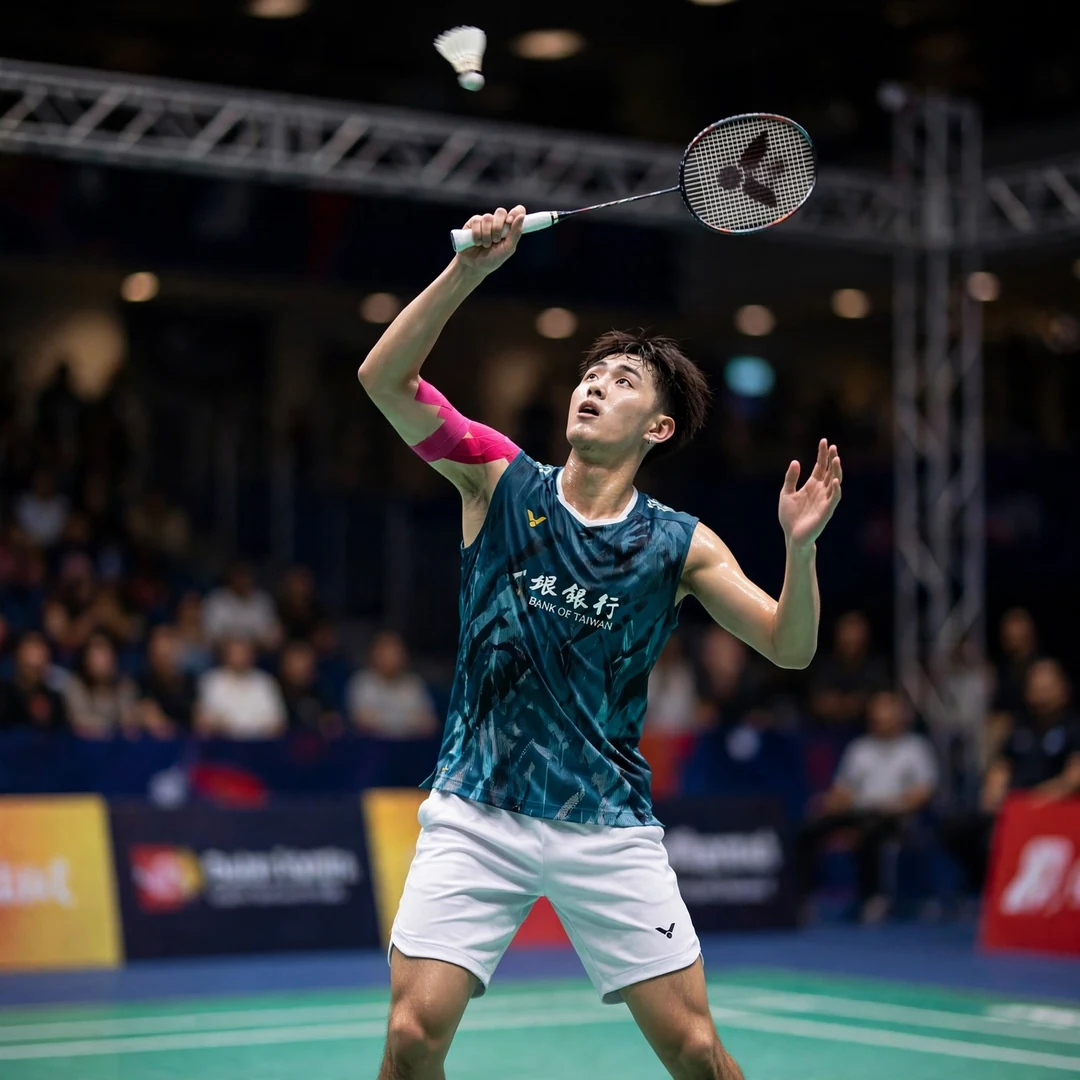
On 28 September 2025, in front of a home crowd at the Kaohsiung Masters, Wang produced the win of his life. The Super 100 final pitted the sixth seed against the top seed, Thailand’s Panitchaphon Teeraratsakul — and the first game suggested the seeding was honest: Wang lost it 12-21. Then the comeback specialist went to work. Longer rallies, tighter net play, a calmer head: he took the second game 21-18 and ran away with the decider 21-12. A first BWF World Tour title, won at home, from a game down, against the top seed. Kaohsiung — the city that had taken in a Penghu schoolboy — watched him lift the trophy as one of its own.
Career Milestone #3
The Comeback Year: Phuket, Kaohsiung and Auckland
The autumn of 2025 kept giving. In Auckland he won the North Harbour International, an International Challenge event, beating Ting Yen-Chen in another three-game comeback final — 20-22, 21-18, 21-19 — after dropping the first game by the narrowest margin. Days later, back home, he defended his island’s honour at the National Games in Yunlin, winning a second consecutive men’s singles gold medal for Penghu, again beating Lu Chia-hung in the final. Five titles in one comeback year: Phuket, the university gold, Kaohsiung, North Harbour and the National Games. The injured player of 2024 had become the most decorated Taiwanese player of 2025’s second half.
Seen whole, the comeback was not a hot streak — it was a corrected trajectory. Before the injury Wang had reached No. 71 and owned two Future Series titles. The layoff forced a rebuild of everything: the ankle, the movement patterns, the patience. What returned in 2025 was the same right-handed all-court player with an extra layer of match hardness, and a ranking climbing through the top fifty towards the top forty. In September 2026, Taiwan celebrated the Land Bank team’s 50th anniversary with an exhibition of its star players’ trophies — and Wang Po-Wei’s silverware took its place among the fourteen featured players, alongside Olympic champions. The standard-bearer from Penghu had arrived.
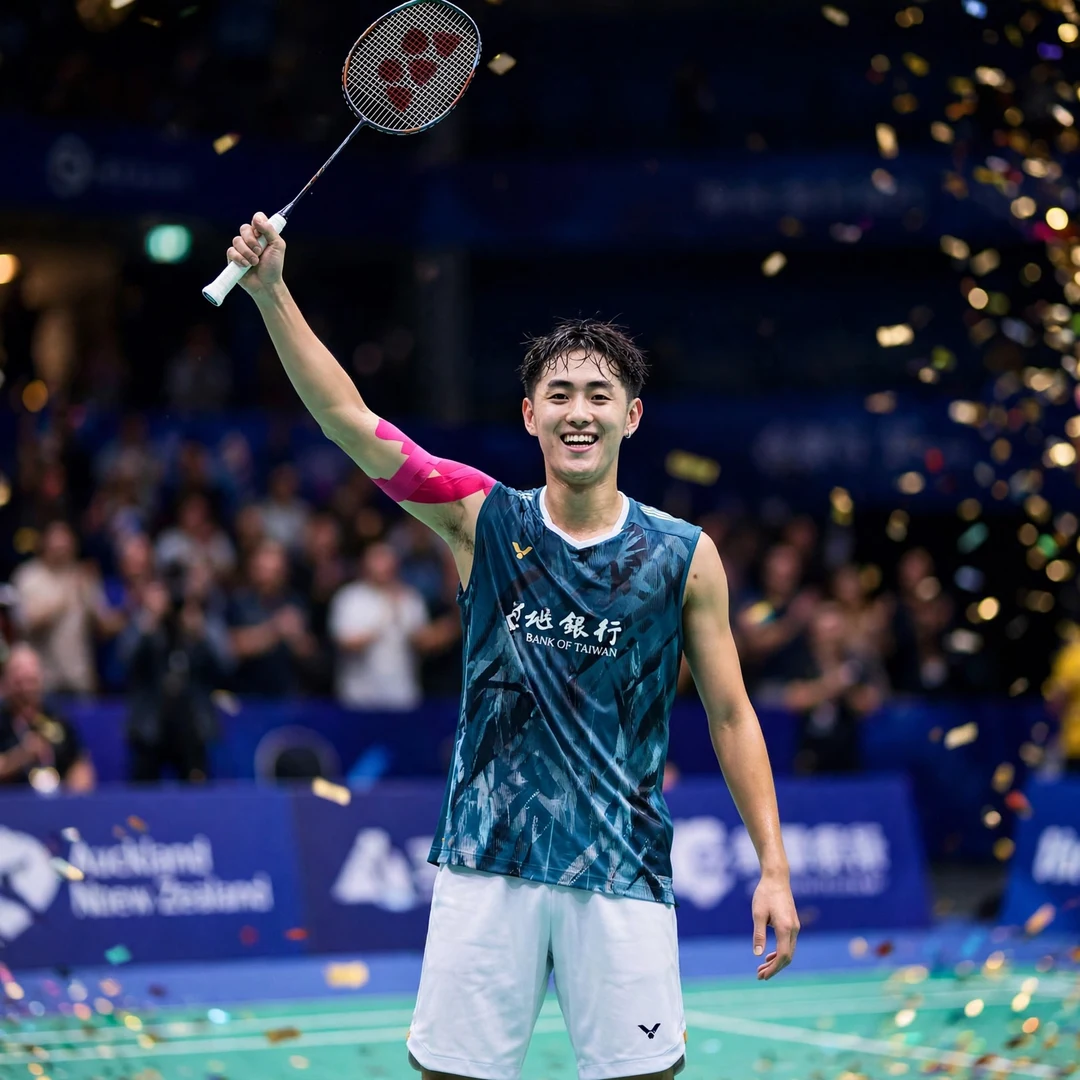
In September 2026 he proved Kaohsiung was no one-off. At the Indonesia Masters Super 100 in Pontianak, Wang won his second BWF World Tour title, beating China’s Sun Chao 21-13, 21-19 in the final — this time in straight games, the front-runner rather than the comeback kid. Two days after the final, on 8 September 2026, the BWF rankings placed him at a career-high world No. 37. From an ankle brace in 2024 to the world’s top forty in 2026: the two years in between are the whole story of this player in miniature.
Career Milestone #4
A Second Super 100 Crown, Career-High No. 37 and World No. 45
There have been narrow misses to go with the titles — the mark of a player now living permanently at the business end of tournaments. At the 2026 North Harbour International he reached the final again in Auckland before losing to Japan’s Rei Miyashita by the tightest of margins, 20-22, 19-21. In the Week 43 rankings of 20 October 2026 he stands at world No. 45 with 34,270 points, established inside the top fifty and fighting each week for main-draw places at the tour’s bigger events. The next staircase is clear: Super 300 and Super 500 draws, where the seeds wait in the first round.
What makes Wang worth studying is that nothing in his story is a shortcut. An island with no badminton tradition produced him; a school move made him; the corporate teams forged him; injury stopped him; and his own stubbornness restarted him at a higher level than before. At 24, with two World Tour titles, six international titles, two National Games gold medals and a career-high inside the top forty, he is still climbing. Players from small places everywhere should know his name: Wang Po-Wei is what the long way round looks like when it works.
Playing Style
The Comeback Specialist: Never Out of a Match
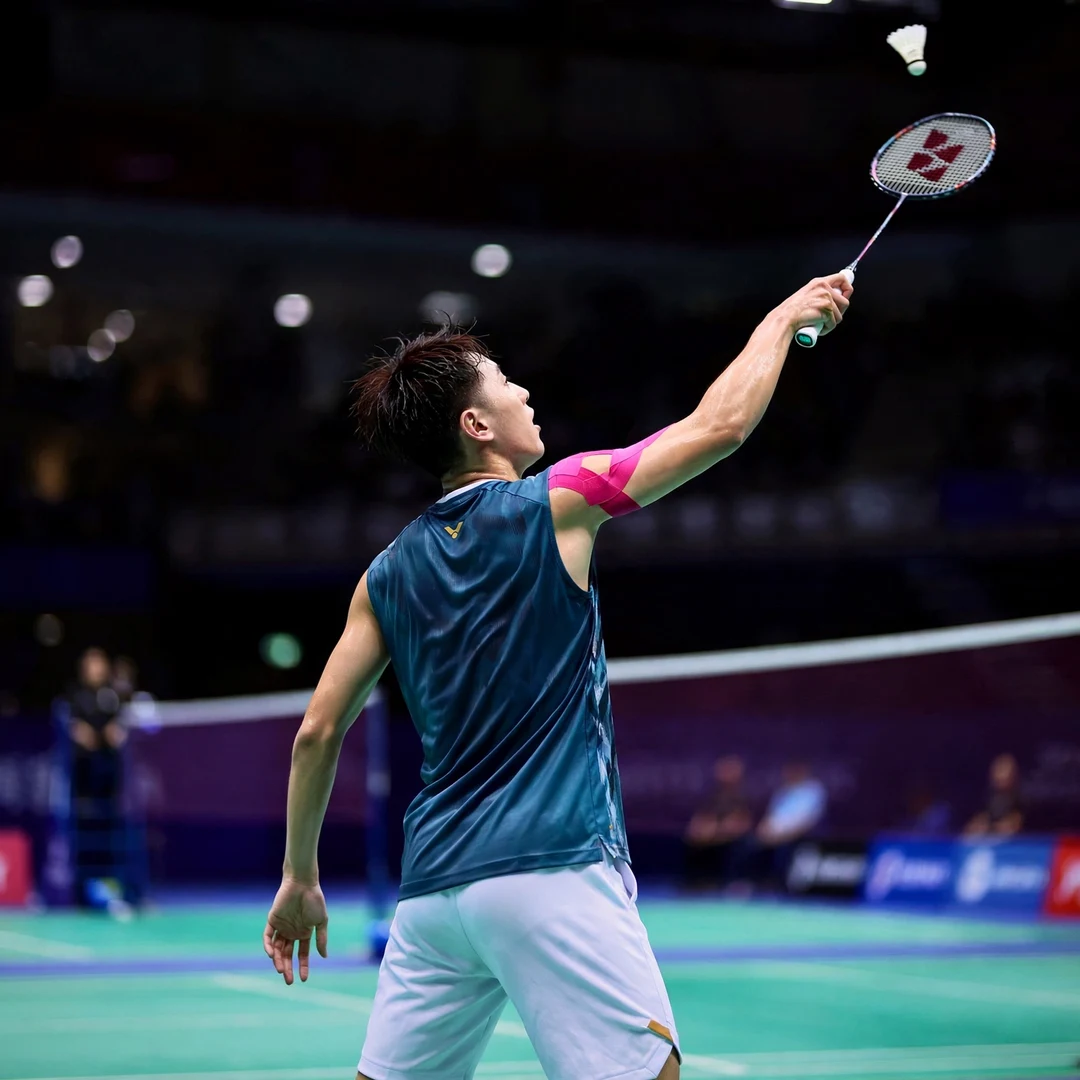
Wang’s game is easy to describe and hard to beat. He is a right-handed all-court player whose first weapon is stamina: he is comfortable extending rallies deep into third games, and his retrieving keeps him in points that look finished. The pink tape on his right shoulder is his visual signature, but opponents talk about something else — the way the second and third games against him feel heavier than the first, as his length improves, his errors dry up and his attacks start arriving exactly when rallies stretch longest.
The clearest evidence is his finals record. At the Kaohsiung Masters he lost the first game 12-21 and won the match. At the North Harbour International he lost the first game 20-22 and won the match. Two finals, two lost openers, two trophies. That is not luck; it is a repeatable skill — reading an opponent’s patterns for twenty minutes, adjusting the game plan between games, and trusting his legs and his patience to outlast the adjustment battle. Coaches call it playing the long match: he treats a badminton match as a problem to be solved, not a verdict to be accepted at 0-1 down.
Young players should notice how his weapons were built, level by level. The Future Series years taught him to win finals against unfamiliar European opponents. The Super 100 semi-finals taught him the last-four-points pressure of bigger events. The National Games taught him to carry a whole county’s hopes. Nothing about his current game is a trick — it is the visible end of a training structure, taped shoulder and all, assembled one level at a time.
Mental Strength
Lose the First Game, Win the Match: The Wang Po-Wei Lesson
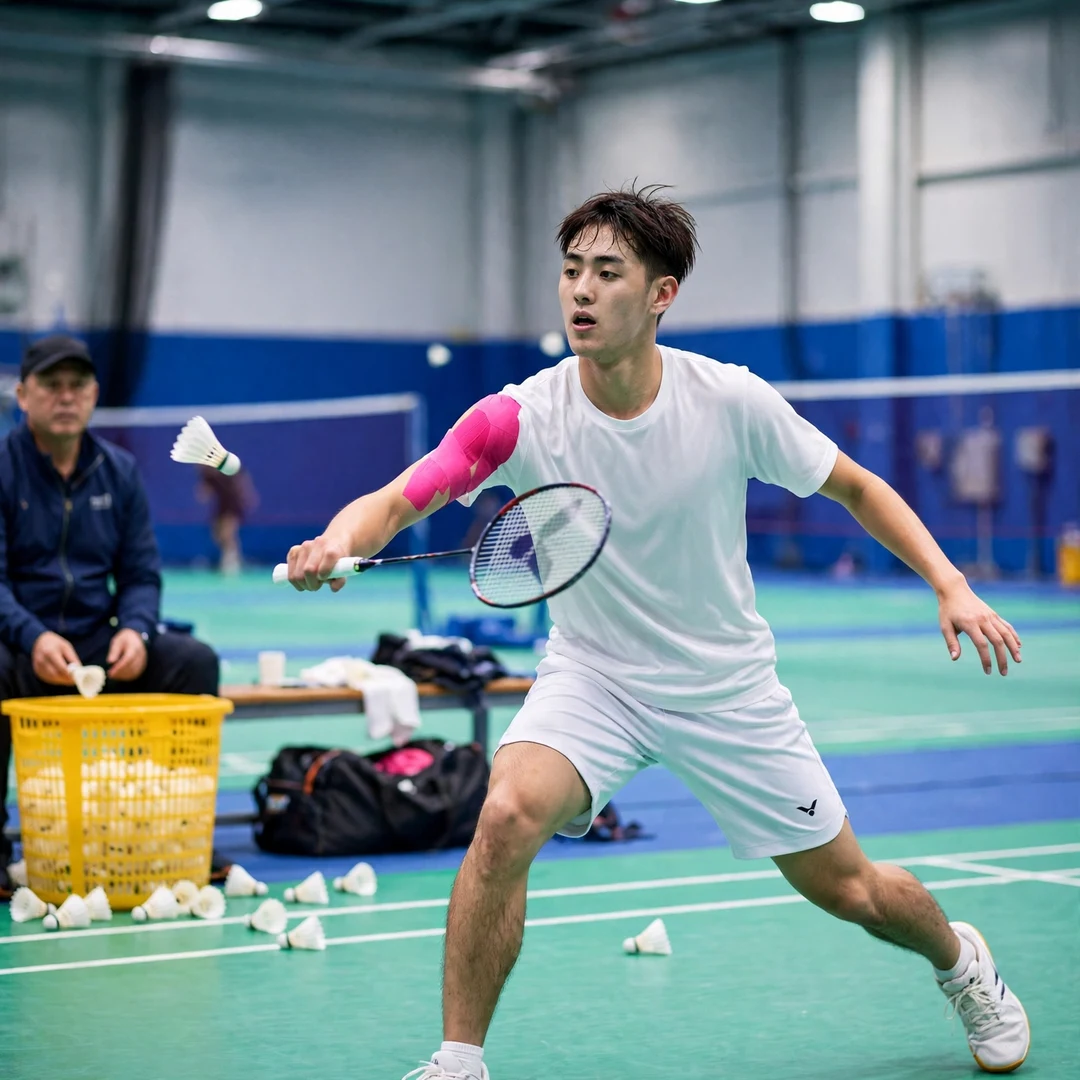
Wang’s first career lesson is that a match is not over at one game down. Twice in his biggest 2025 finals he lost the opener — once heavily, 12-21, once by two points, 20-22 — and twice he walked back on court with a better plan than the player who had just beaten him. In junior badminton, the first game often feels like a verdict. Wang treats it as information: twenty minutes of evidence about what the opponent likes, dislikes and cannot sustain.
His second lesson is how to use an injury layoff. Eight months away from competition could have ended his climb at No. 71. Instead, the rehabilitation months rebuilt his movement and his patience, and the player who returned won five titles in a year. A junior facing months out is not watching their career end — handled professionally, with full commitment to the boring daily work, the layoff becomes the foundation of the next level.
For our students, the practical lessons from Wang Po-Wei are clear: train for three games, not one; keep a notebook on opponents and on yourself, so a lost first game becomes a solvable problem; treat rehabilitation and conditioning as training, never as waiting; and remember that a player from a small island county reached the world’s top forty by exactly this route — so the route is open to anyone willing to walk it.
Learning Reference
ST Badminton Academy Connection
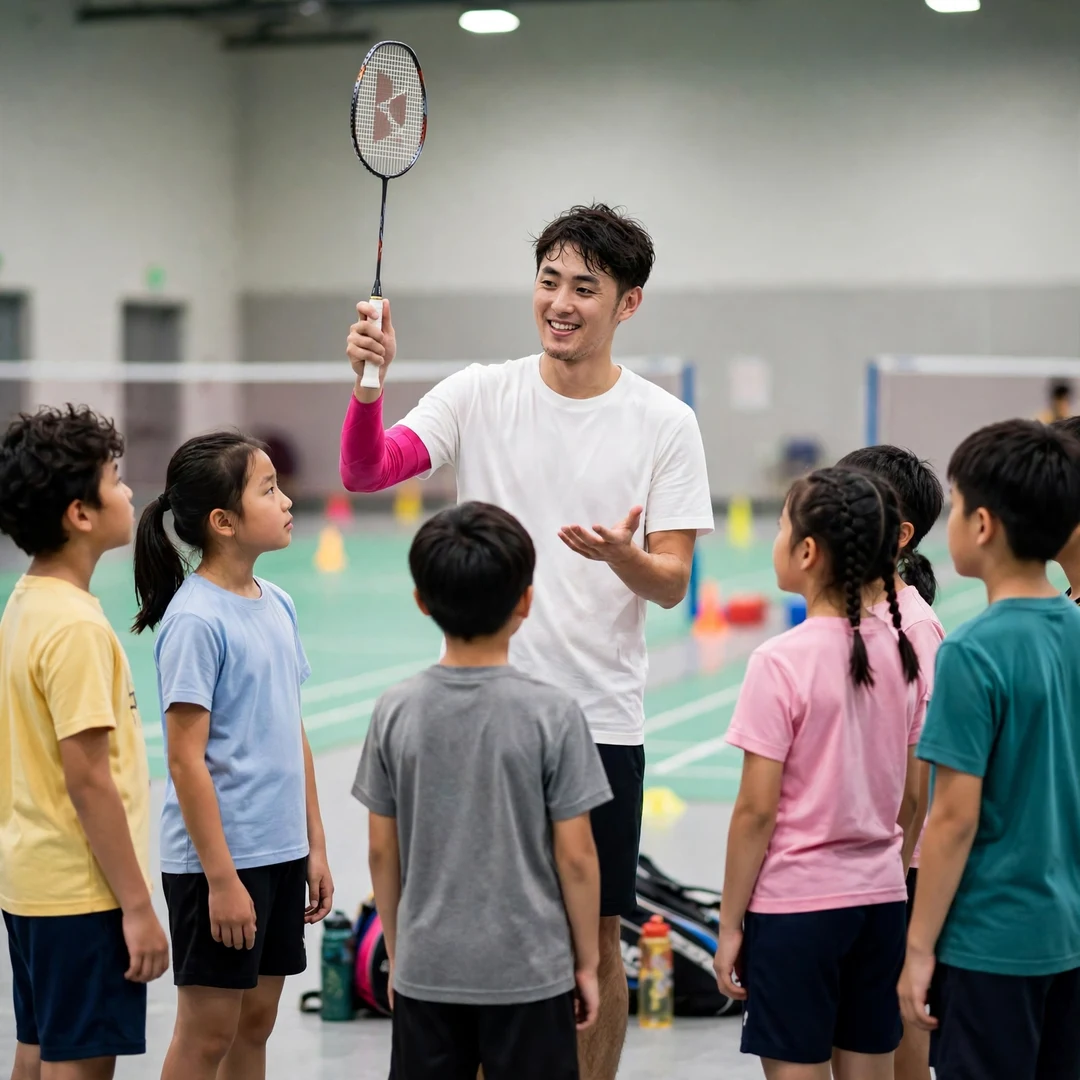
ST Badminton Academy has no official partnership or endorsement arrangement with Wang Po-Wei, the Land Bank badminton team or the Chinese Taipei Badminton Association. This page is an educational profile created so Malaysian juniors and parents can learn from his career, his playing style and his remarkable comeback.
Our students study two Wang finals above all. The 2025 Kaohsiung Masters final teaches in-match adjustment: watch the first game honestly, see what the top seed is doing, then watch how the rally lengths, the net play and the score change across the second and third games. The 2025 North Harbour final teaches composure at the death: a first game lost 20-22, a decider taken 21-19 — the margins where junior matches are so often decided by panic rather than skill.
We encourage our players to watch Wang the way we encourage them to train: completely. Notice the patience that sets up his attacks, the fitness that keeps his third games as clean as his first, and the calm face when he walks back on court a game down. Copy the structure underneath the comeback, and the comebacks start to follow.
FAQs: Wang Po-Wei Chinese Taipei Badminton Player
Here are the questions Malaysian parents and junior players ask most often about Wang Po-Wei, answered with the key facts from his career.
Who is Wang Po-Wei and which country does he represent in badminton?
Wang Po-Wei is a Chinese Taipei men’s singles badminton player. He was born in Magong, Penghu on 12 February 2002, plays right-handed for the Land Bank team, and represents Chinese Taipei in BWF World Tour events. In the Week 43 rankings of 20 October 2026 he stands at world No. 45 with 34,270 points, and he is a two-time BWF World Tour Super 100 champion.
What are Wang Po-Wei’s biggest badminton achievements?
His biggest achievements are his two BWF World Tour titles — the 2025 Kaohsiung Masters and the 2026 Indonesia Masters Super 100 in Pontianak — a career-high world ranking of No. 37 in September 2026, two National Games gold medals for Penghu (2023 and 2025), and further international titles in Bulgaria, Bonn, Phuket and Auckland, six international titles in all.
What is Wang Po-Wei’s playing style?
Wang plays a right-handed all-court game built on stamina, retrieving and relentless rally pressure. His trademark is the comeback: he lost the first game of both his big 2025 finals — 12-21 at Kaohsiung and 20-22 at North Harbour — and won both matches, adjusting his tactics between games and outlasting opponents in long third games.
How did Wang Po-Wei win the 2025 Kaohsiung Masters?
By refusing to panic. In the September 2025 final, sixth seed Wang lost the first game 12-21 to top seed Panitchaphon Teeraratsakul of Thailand, then lengthened the rallies, tightened his net play and took the next two games 21-18 and 21-12. It was his first BWF World Tour title, won at home in Kaohsiung, the city where he had moved as a schoolboy to train.
How can my child learn from Wang Po-Wei’s training approach?
Children can learn from Wang’s whole pathway: island beginnings in Penghu, a move to Kaohsiung for serious training, corporate-team development, and the discipline to rebuild after a serious ankle injury. At ST Badminton Academy we teach the same order — movement, rally skills and match craft first — and we train the between-games skill Wang is famous for: reading a match and changing it.
How many National Games gold medals has Wang Po-Wei won?
Two. Wang won the National Games men’s singles gold medal for Penghu County in Tainan in 2023 — the first National Games badminton gold in Penghu’s history — and won it again in Yunlin in 2025, beating Lu Chia-hung in both finals. For an island county of his size, producing a two-time champion has transformed what young Penghu players believe is possible.
How many international titles has Wang Po-Wei won?
Wang has won six international titles: two BWF World Tour Super 100 titles (the 2025 Kaohsiung Masters and the 2026 Indonesia Masters Super 100), plus the 2022 Bulgarian International, the 2023 Bonn International, the 2025 Phuket International Series and the 2025 North Harbour International. He also reached the North Harbour final again in 2026.
What playing style should young players learn from Wang Po-Wei?
Young players should learn Wang’s complete package: the stamina to play the long match, the honesty to adjust after a lost game, and the discipline to treat injury rehabilitation as serious training. Above all, copy his refusal to accept a match as decided — at 0-1 down in finals, Wang Po-Wei is historically at his most dangerous.
Does ST Badminton Academy have any connection with Wang Po-Wei?
No. ST Badminton Academy has no official connection, partnership or endorsement with Wang Po-Wei. This profile is published for education only, so our students and parents in Malaysia can study his career achievements, playing style and journey.
Wang Po-Wei Career Highlights
Career Statistics and Rankings
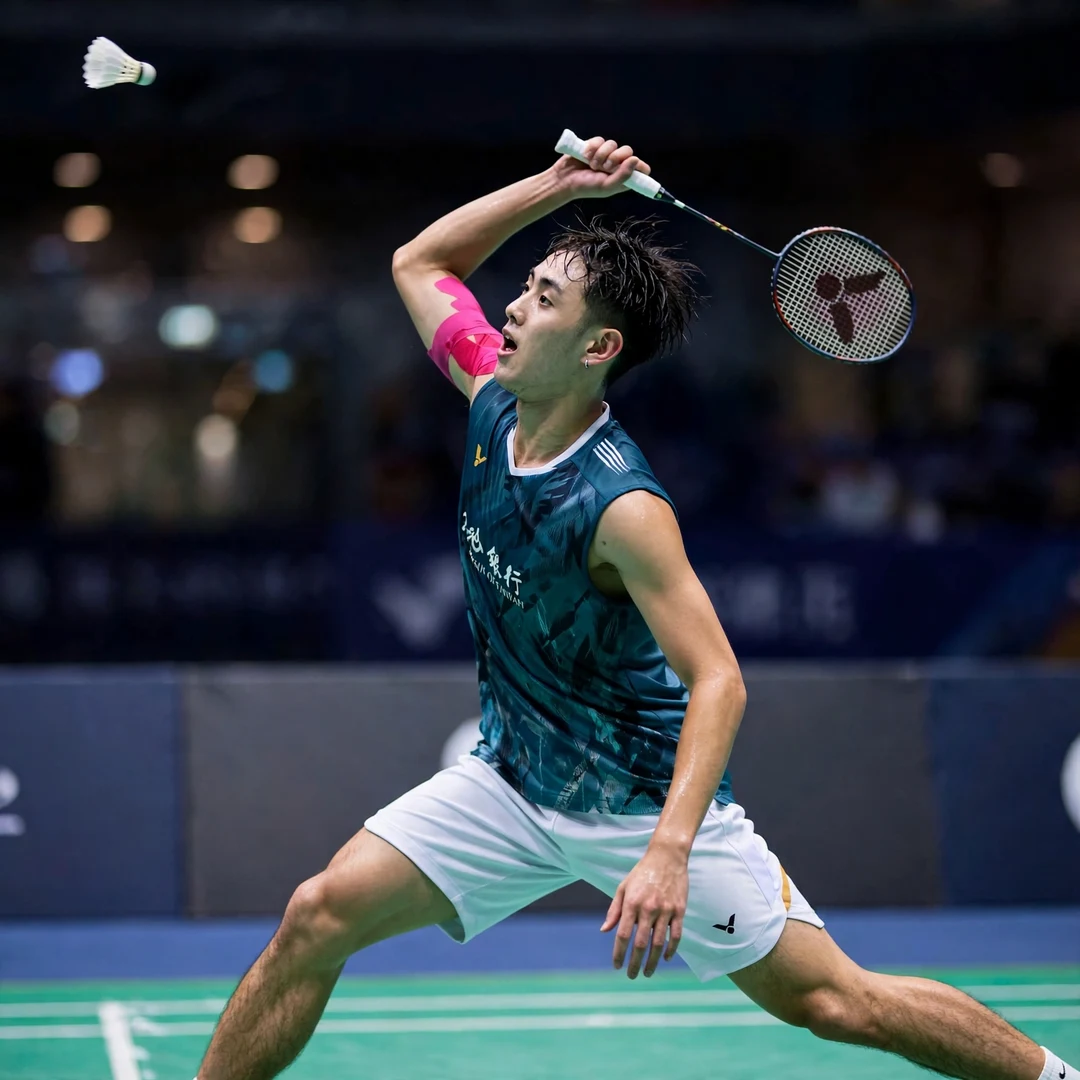
Wang Po-Wei's career is a masterclass in refusing to be finished. An island schoolboy who left home to train, a Future Series champion in Europe, a history-maker for Penghu, an injured player watching from the sidelines for eight months — and then the author of a five-title comeback year and a two-time Super 100 champion with a career-high inside the world's top forty.
| Development Area | Common Misconception | What Wang Po-Wei's Career Shows REALITY |
|---|---|---|
| Junior Foundation | Talent alone decides who becomes a champion. | Wang comes from Penghu, an island county off Taiwan's west coast, where no badminton player had ever won a National Games gold medal. He had to leave home for Kaohsiung to find elite training — and then he carried Penghu's name onto podiums at home and abroad. Background is a starting point, never a ceiling. |
| Playing Style Priority | Kids should copy the flashiest attacking shots. | Everyone notices the pink tape on his right shoulder; what wins his matches is what happens between games. In both his big 2025 finals — Kaohsiung and Auckland — he lost the first game and then changed the match: calmer shot selection, longer rallies, and a level of patience his opponents could not match for three games. |
| Fitness Importance | Juniors can out-train everyone without rest. | An ankle ligament tear in the autumn of 2024 cost him more than eight months of competition. He returned in 2025 and won five titles in a single year — Phuket, a university gold, Kaohsiung, North Harbour and a second National Games gold. Rehabilitation done properly is not lost time; it is a different kind of training block. |
| Mental Approach | Top players never get nervous or upset. | In Tainan in 2023 he became the first player from Penghu ever to win National Games badminton gold, beating Lu Chia-hung in the final. Two years later in Yunlin he did it again, against the same opponent. Standards back home are measured against him now — that is what a standard-bearer looks like. |
| Attacking Training | Smashing harder is always the answer. | His signature win came at home in September 2025: sixth seed at the Kaohsiung Masters, he lost the first game of the final 12-21 to top seed Panitchaphon Teeraratsakul of Thailand — then took the next two 21-18, 21-12 for his first BWF World Tour title, in front of a home crowd. |
| National Milestones | Only world titles matter. | Twelve months later he added a second Super 100 crown in Pontianak, beating China's Sun Chao 21-13, 21-19, and two days after that final he stood at a career-high world No. 37 (8 September 2026). In the Week 43 rankings of 20 October 2026 he is No. 45 with 34,270 points. |
| Career Timeline | Champions peak once and fade fast. | His rise is a staircase with every step climbed in public: Future Series titles in Bulgaria and Bonn in 2022 and 2023, an injury layoff, International Series and Challenge titles in 2025, then two Super 100 titles. No level was skipped — and the level he is fighting for next is the Super 300 and Super 500 main draws. |
Study Wang Po-Wei's Resilience and Fighting Spirit
For Malaysian juniors, his message is simple: your starting point is not your ceiling, and a lost first game — or a lost season — is information, not a verdict. Build the complete game, do the boring work properly, keep adjusting — and one day the final everyone expects you to lose becomes the one you are famous for winning.