The Benefits Of Playing Badminton For Mental Health: Reducing Stress And Anxiety (Mental Health Guide)
Stress and anxiety are part of modern life, and badminton is not a cure for either. Let us say that plainly at the start, because this guide will not dress a game up as therapy. What badminton can honestly offer is simpler and still valuable: an hour where a fast shuttle holds your attention, a body that moves until it is pleasantly tired, friends who expect you, and a head that often feels clearer at the end than it did at the start. For many people, that hour is one of the kindest parts of the week.
Mind Check #1
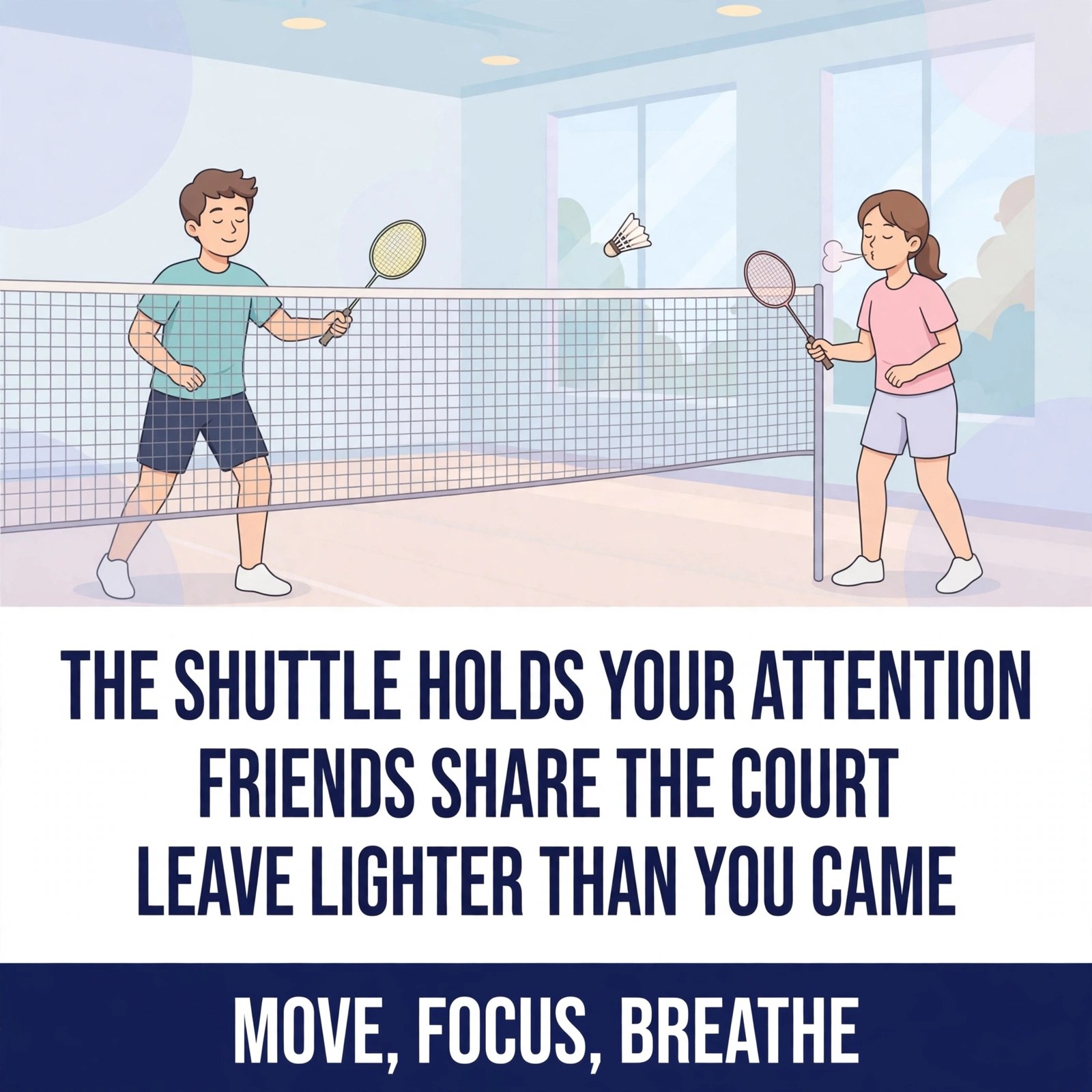
A Busy Mind Meets a Fast Shuttle: Focus That Crowds Out Worry
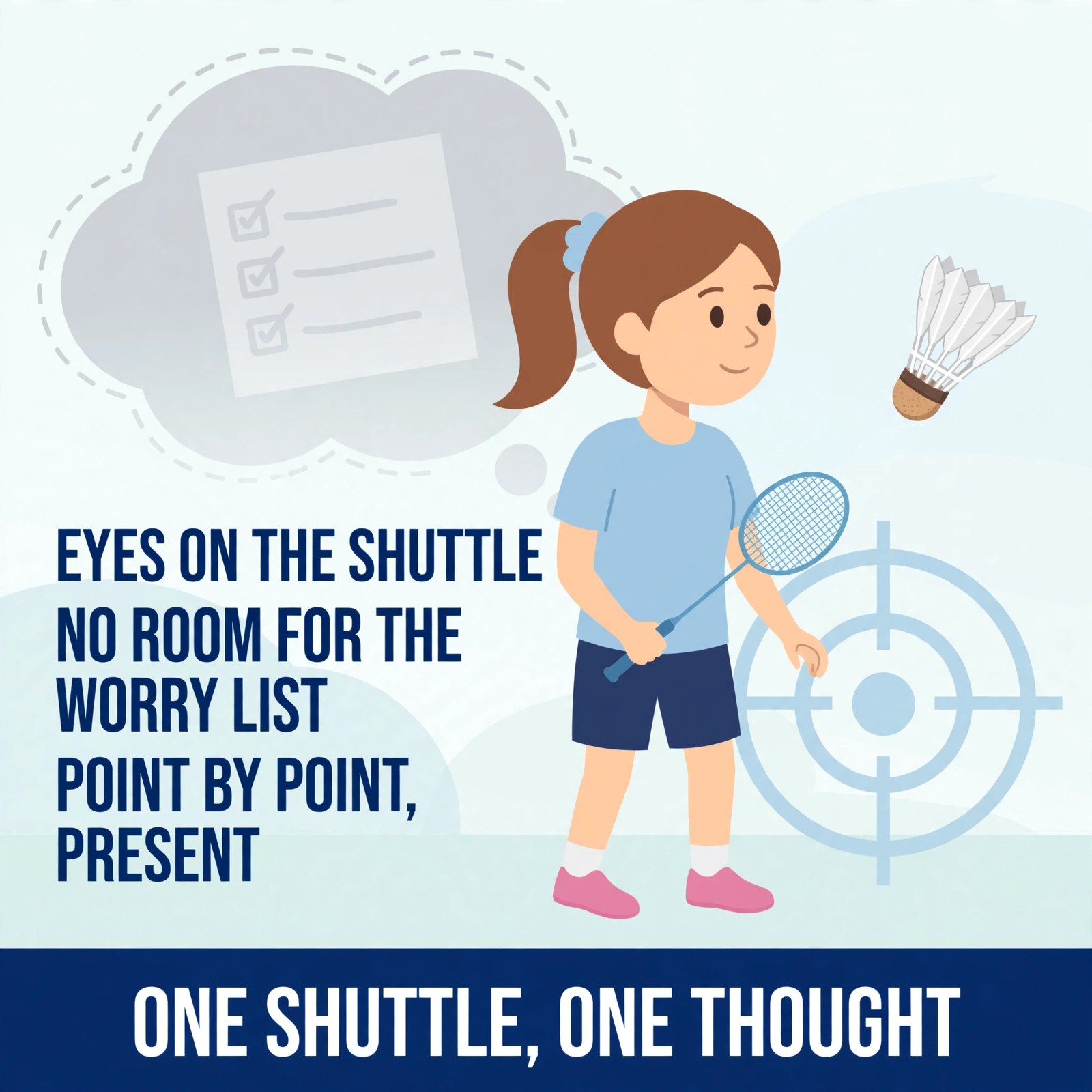
A rally is a demanding little present. The shuttle crosses the net in about a second, and following it takes your whole attention: where it is going, where your feet should be, which shot comes next. While attention is busy with that, there is less of it left for the worry list, the unfinished email and the argument from this morning. Players describe it the same way again and again: for the length of a game, the noise in the head turns down. Not off, and not forever. Down.
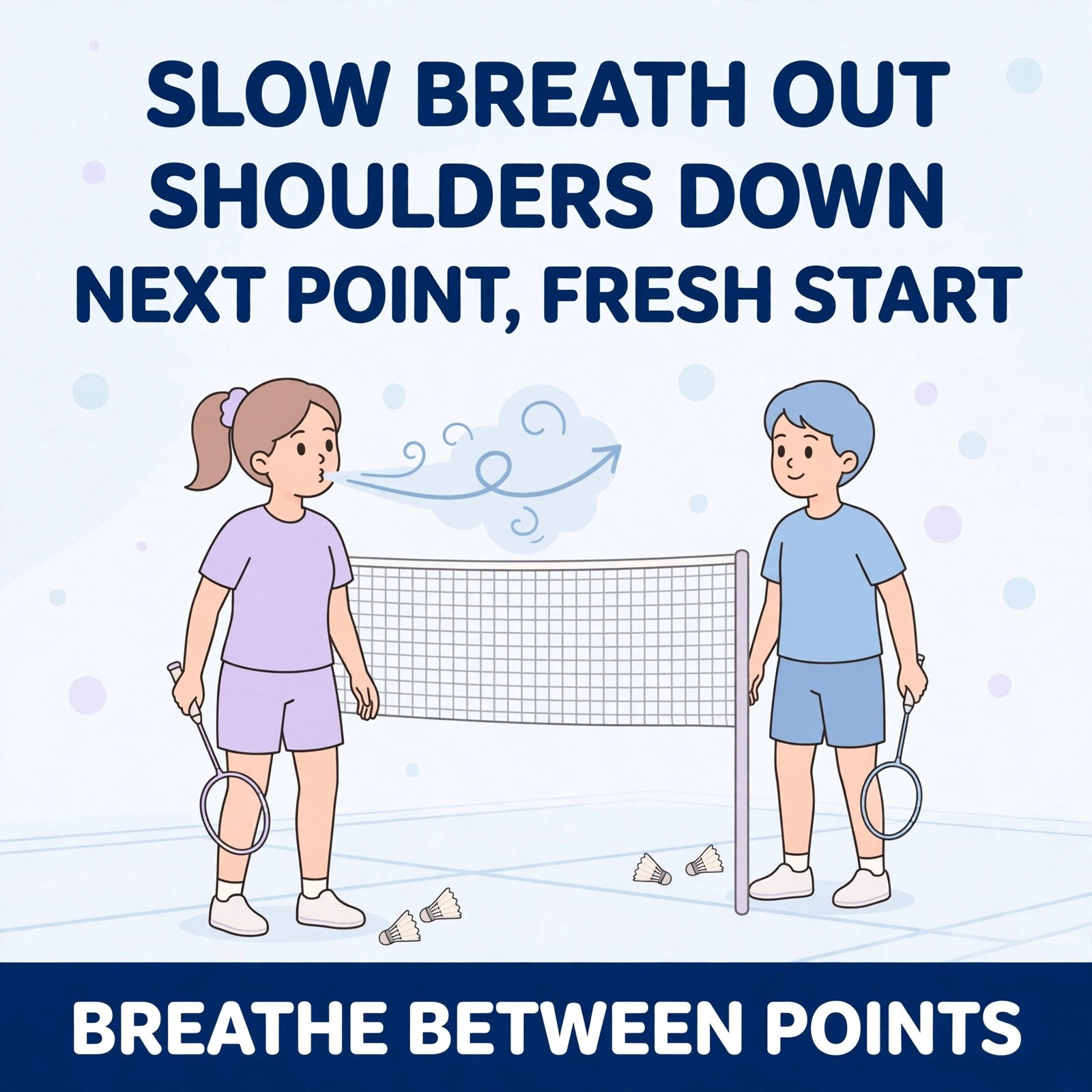
That break matters because a stressed mind rarely rests by being told to rest. Sitting still with a busy head often means rehearsing the same worries in higher quality. A game gives the mind a job it can actually finish: this rally, this point, this breath. Each point also ends cleanly, which daily stress rarely does. Win it or lose it, the point closes, and a fresh one starts. An hour of small, closed efforts can leave a person calmer than an hour of open ended fretting on the sofa.
Mind Check #2
Moving Lifts the Mood: Energy, Sleep and a Clearer Head
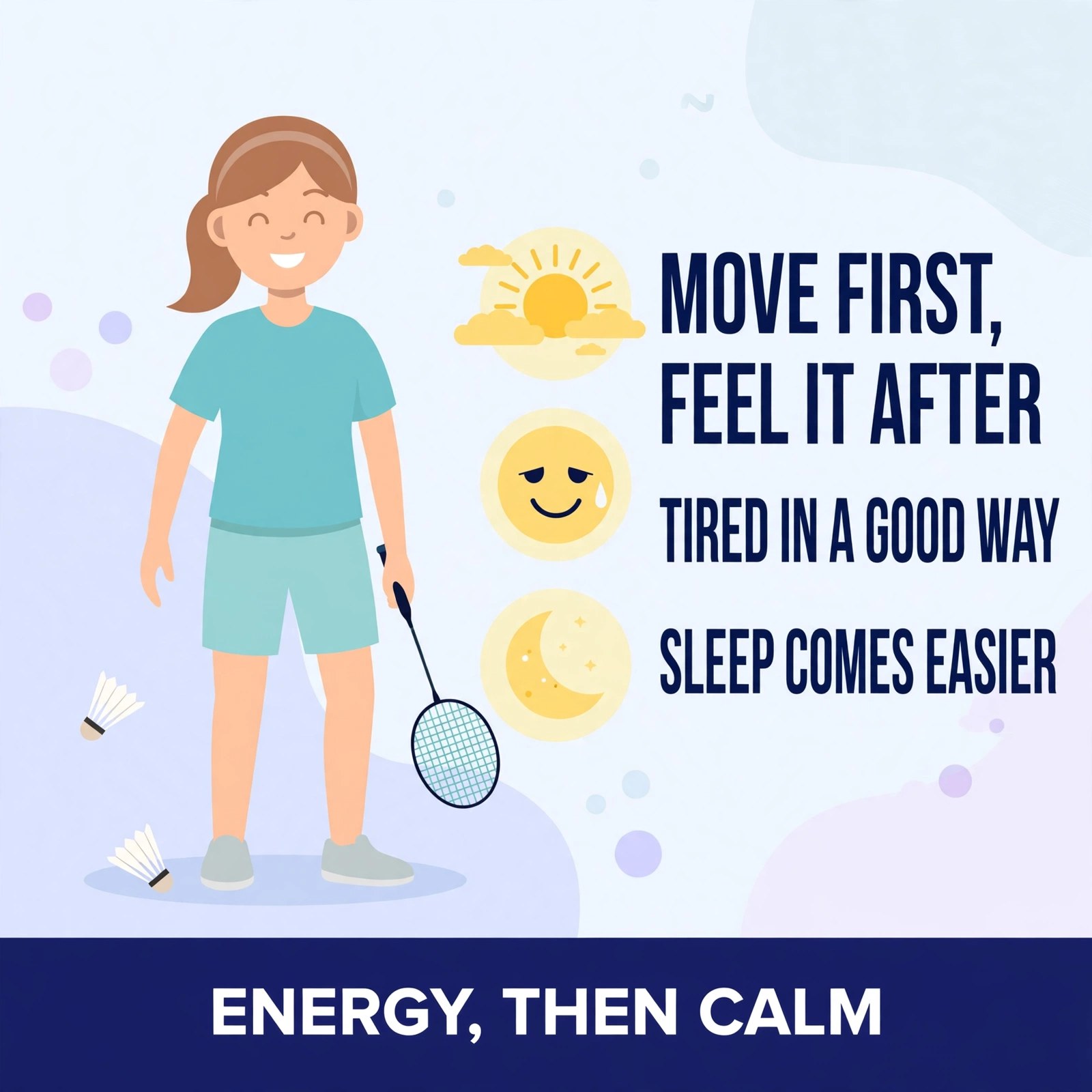
Moving the body changes the rest of the day. A session spends the restless energy that stress leaves behind, the fidgety, tight shouldered feeling that makes evenings hard. Players commonly leave a hall feeling looser and lighter, and many find their mood lifts for hours after play. This guide will not name chemicals or promise percentages, because honest players do not need them. The plain version is enough: regular, enjoyable movement helps most people feel better in themselves, and badminton is movement most people actually enjoy.
Energy and sleep follow the same pattern. An active day tends to end in easier sleep than a day spent sitting and worrying, and a calmer evening routine helps the head switch off. Badminton played at an easy to moderate pace, finished before you are worn out, fits that pattern well. Play too hard, too late and too competitively, and the same game can wire you up instead. The dose makes the difference: gentle, regular sessions for a calmer head; exhausting battles when you want a sporting test, not a wellbeing tool.
Confidence grows quietly in the background. A beginner who could not rally in week one is keeping ten shots going by the second month. A shy player who served into the net learns to start every point calmly. These are small wins, but a stressed or low mind collects small evidence, and evidence that effort changes things is worth having. Nobody needs to become a champion. Becoming slightly better at a hard game, in public, among friends, is a steady drip of proof that you can still learn, improve and belong.
Mind Check #3
People Help Too: Friends, Laughter and Belonging
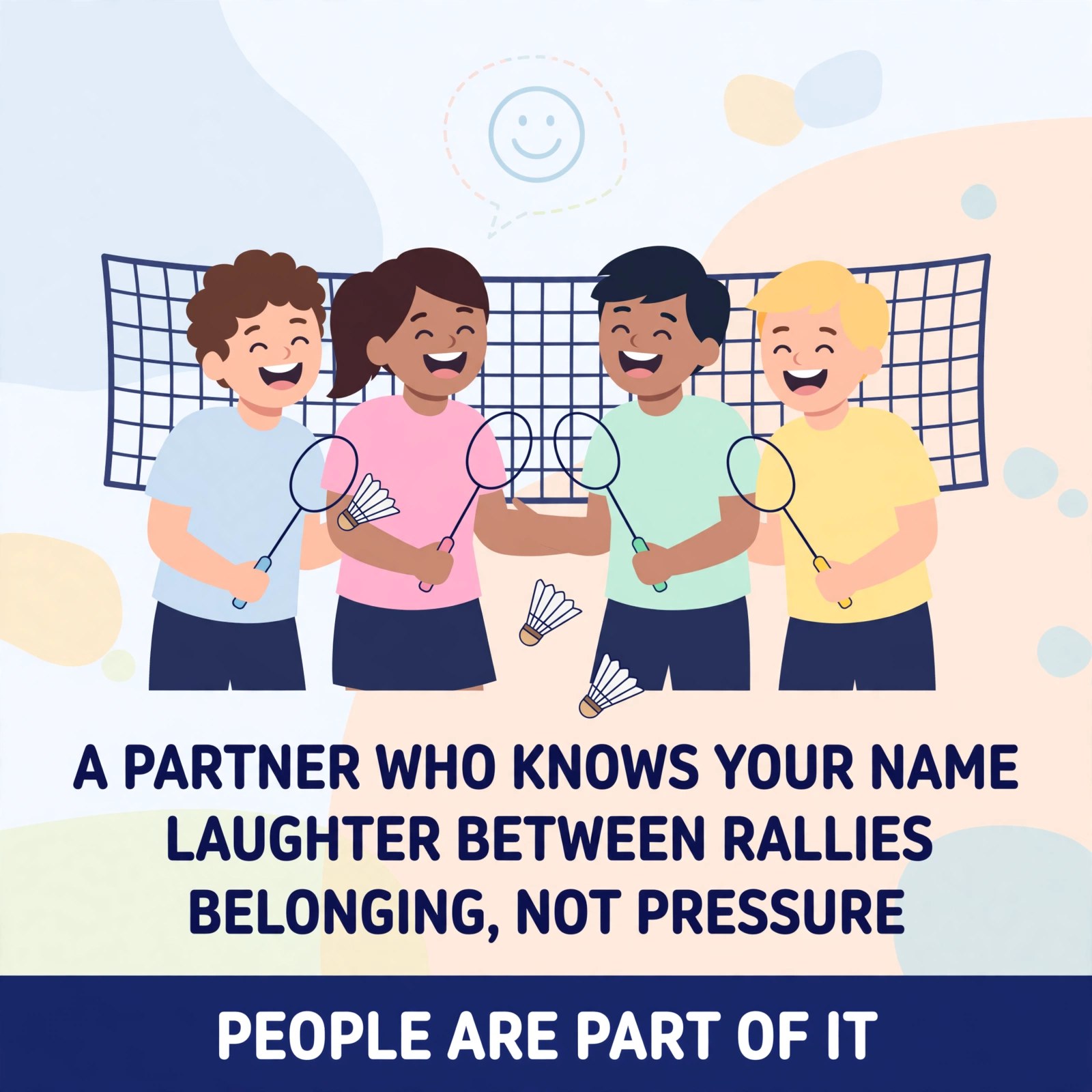
It is easy to underrate the people. Stress grows fastest in lonely soil, and a weekly game is a standing arrangement with other humans: a partner who knows your name, regulars who notice when you are missing, laughter when a smash hits the frame and flies sideways. None of that requires deep conversation. Belonging often starts as simply being expected somewhere. For players who work alone, care for family all day, or have moved to a new city, the social hour around the rallies can matter as much as the rallies.
Doubles is the kindest format for this. You share the court, the mistakes and the jokes. A partner covers the shots you cannot reach, and forgives the ones you miss, because next rally the favour returns. Teams also soften the spotlight: a nervous player is one of four on court, not a solo performer. Many of our students say the friendships outlast any single season: group chats, shared lifts, tea after the session. A game that comes with people attached is easier to keep, and easier on the mind.
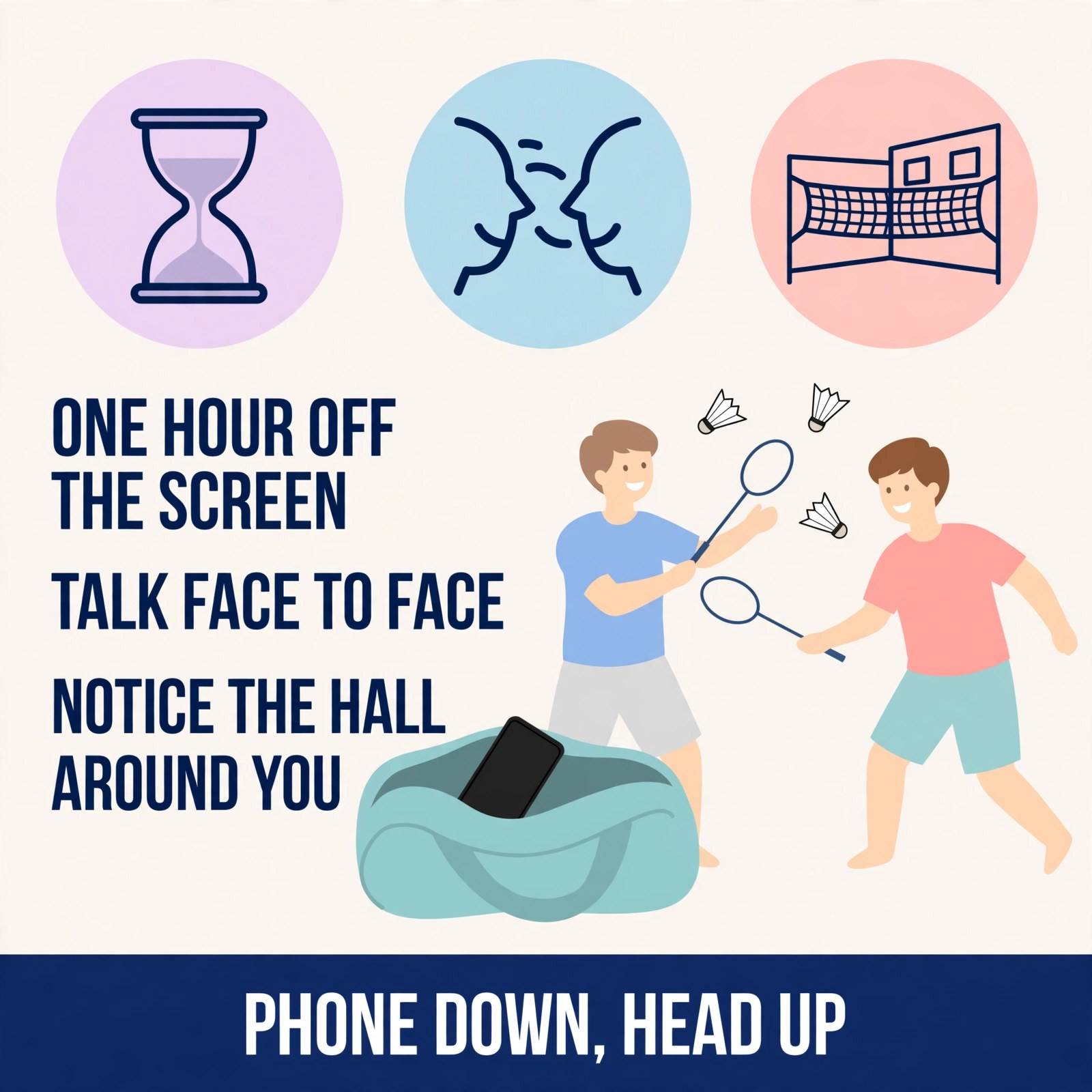
There is also honest relief in being somewhere phones cannot follow. On court, the phone stays in the bag. No messages land mid rally. For an hour, nobody can reach you and nothing needs answering, and that small freedom is rarer than it used to be. Players who live inside their notifications often name this as the game’s best mental gift: not escape from life, but a scheduled pause from its noise, in company, doing something with their hands and feet.
Mind Check #4
Honest Limits: What a Game Can and Cannot Do
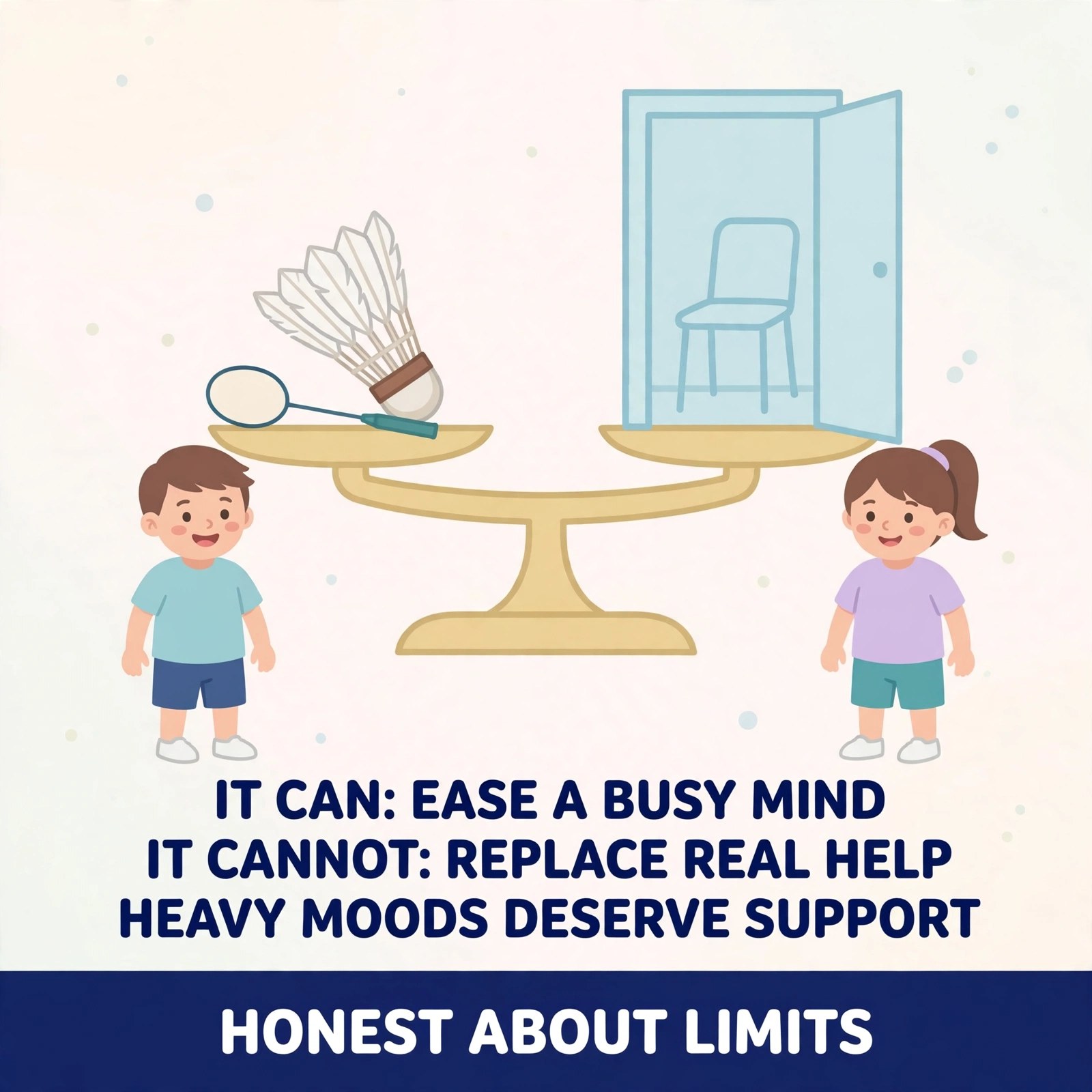
Now the part many guides skip. Badminton can ease a busy mind and lift a flat day. It cannot treat anxiety, depression or any other condition, and it is not a substitute for a doctor, a counsellor or medicine that has been prescribed. If low mood is heavy, lasts for weeks, steals sleep and appetite, or comes with hopeless thoughts, that deserves proper support from a medical professional, and getting it is a strength, not a failure. Play can sit alongside that support. It should never be asked to replace it.
The game can also be played in ways that feed stress instead of easing it. Chasing rankings every session, training furious and exhausted, or treating every friendly game as a verdict on your worth will load the mind, not lighten it. Watch for the signs: dreading sessions you used to enjoy, anger that spoils the evening, exercise that feels like punishment. Scale back to easy games with kind people, or rest entirely for a while. A wellbeing tool that starts hurting has stopped being one.
One more limit deserves plain words: movement helps many people, not all people, and not on every day. Some evenings the hall will not fix anything, and that is normal, not a personal failure. On those days the win is smaller: you showed up, you moved a little, you were among people for an hour. Let that be enough. If bad days gather into weeks, reread the first part of this section and talk to someone qualified. Caring for your mind is a bigger job than any single hobby.
Mind Check #5
Making It a Habit: Small Sessions, Kept Gently
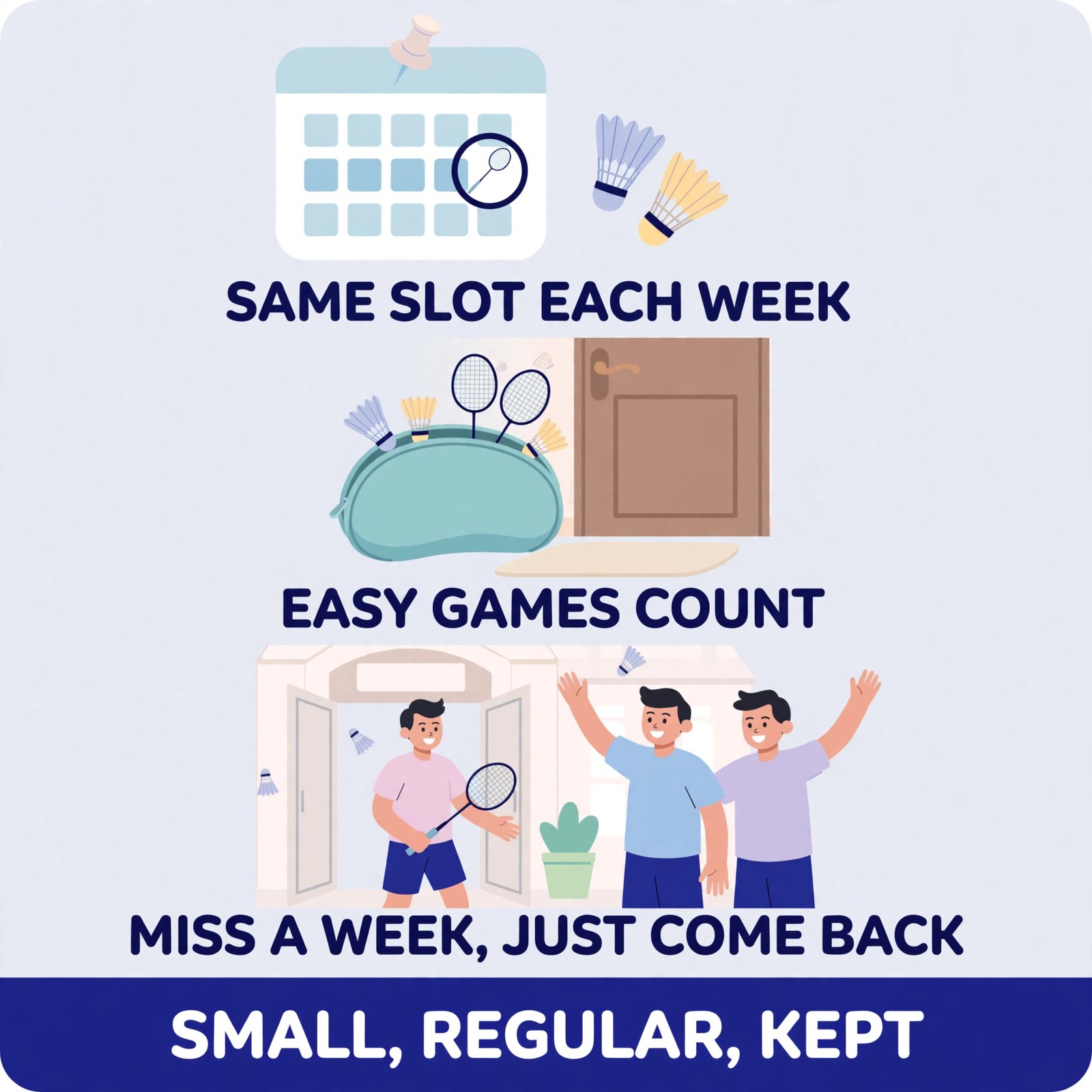
The players who get the most from badminton for their mood are not the hardest trainers. They are the regulars. A fixed weekly slot, booked like an appointment, removes the weekly debate about whether to go, and motivation stops being the gatekeeper. The session itself can be modest: some easy rallies, a few games among friends, home before you are drained. Kept gently and kept often, that modest dose does more for a mind than one heroic session followed by a month of nothing.
Protect the habit by making it easy to keep. Play with people who are glad you came. Keep a spare shirt and shoes ready so leaving the house is simple. Agree with yourself that turning up counts, even on a day when you play badly or sit out half the games. Missing a week is not a broken promise either; the game will be there next week, and the friends will wave you back in. Habits survive on forgiveness, not on guilt.
Expect the benefit to show up as a pattern, not a lightning strike. After a few weeks of regular play, many people notice they are sleeping a little better, snapping a little less, and carrying the working week a little lighter. Keep a few honest notes if it helps: how you arrived, how you left. The pattern in those notes is the real evidence, better than any claim in a guide. And if the pattern ever turns the other way, that is information too, worth sharing with a coach or a doctor.
Myth vs Reality
Myths About Badminton and Mental Health
Myth one: one great game fixes stress. A single session can lift an evening, and that lift is real, but stress lives in a whole life: work, money, family, sleep. No hobby reaches all of that. What regular play offers is a repeating break and a steadier baseline, week after week. Players who expect a cure are disappointed and quit. Players who expect a kind hour tend to keep coming, and the kind hours add up to something solid.
Myth two: harder training means a calmer mind. Effort and benefit are not the same line. For a stressed player, a brutal session often adds a second problem, exhaustion, to the first one. Easy to moderate play, ending with energy left, is the dose that settles most people. Save the hard battles for days when you want a sporting challenge and your head is already steady. On heavy weeks, the gentlest game on the calendar may be the most valuable one.
Myth three: strong people do not struggle. Everyone in the hall has carried something onto the court: grief, debt, a sick parent, a job they dread. Playing well beside those things is not proof they are gone, and struggling is not weakness or failure. Strong people, in our experience, are the ones who keep kind routines, accept help early, and talk to a professional when a mood will not lift. A racket is a fine companion. It was never meant to be the whole support team.

Why Choose Us
Why Players Choose ST Badminton Academy
At ST Badminton Academy, we take the mental side of the game seriously and talk about it honestly. Coaches will never call badminton therapy or promise it fixes stress. What they build is an environment where the honest benefits can happen: small groups of no more than four students, low pressure sessions, kind partners, and coaches who notice when a regular arrives looking flat. Nobody is ranked, mocked or pushed past the pace they brought through the door that day.
The session design helps. Warm ups are unhurried, drills come in short sets with rests, and games are arranged so beginners are not fed to the strongest players for an hour. Students choose how hard to play, and sitting out a game to breathe is treated as normal, never as quitting. Over fifteen years of coaching in Kuala Lumpur and Singapore, we have learned that the students who stay for years are the ones who leave each session glad they came.
Coaches also know the boundary of their job. If a student seems to be carrying more than a bad week, a coach will say so gently, in private, and suggest talking to a doctor or counsellor. That conversation is part of honest coaching, not an extra. Inside the hall, the work is the same as always: clear instruction, patient correction, and a game arranged so a busy mind gets its hour of rallies, laughter and quiet. Small groups make that possible. Shouting never could.
FAQs: Badminton, Mood and Everyday Mental Health in Malaysia (KL)
Players ask about badminton and the mind with good reason, so the answers below cover whether it can ease a stressed mind, what a relaxed session looks like, how often to play, the honest treatment question, what to check before joining a group, low pressure sessions, shy beginners, session length, and how Mr Eric Chuar coaches players carrying stress in Kuala Lumpur and Singapore.
Can playing badminton help a busy, stressed mind if I live in Setapak or Gombak?
For many people, yes. A rally fills your attention, so the worry list gets an hour off, and playing with friendly people adds company to the movement. It will not fix the causes of stress, and it is not treatment. Think of it as a kind, regular break that helps you cope.
What does a relaxed badminton session for mood and focus look like in KL?
It looks like easy rallies, kind partners and no scoreboard pressure. Warm up slowly, play games at a pace where talking is easy, rest whenever you like, and finish while you still feel good. In our small group classes, coaches arrange matches so nobody is out of their depth for long.
How often should I play each week to feel calmer at a steady, comfortable level?
Once a week is enough to start feeling the pattern, and many regulars settle at twice a week. Regular matters more than often: the same slot, kept week after week, gives the mind something to look forward to. If a week is missed, simply come back the next week.
Is badminton a treatment for anxiety or low mood, honestly?
No, honestly, it is not. Badminton can ease a busy mind for an evening and support a calmer routine, but anxiety and lasting low mood deserve proper help from a doctor or counsellor. Play alongside that help if you enjoy it. Never let a hobby carry a job it cannot do.
What should I check before joining a badminton group for my mental health?
Check the feel of the group first: are beginners welcomed, is the pace gentle, can you rest without comment? Check the practical side too: a time you can keep weekly, a hall you can reach easily, and a coach who answers questions kindly. The right group should lower pressure, not add it.
Do you run friendly, low pressure badminton sessions near Wangsa Maju?
Yes. Our small group classes are built to be low pressure: no more than four students, games arranged by the coach, and nobody forced into hard matches. Many students join partly for their headspace and say so openly. Book a trial, tell the coach what you need, and we will pace it.
Does your academy welcome shy or anxious beginners in Malaysia?
Yes, and many of our beginners arrive shy. Small groups help: you are one of a few students, not a face in a crowd, and the coach introduces you to partners kindly. You can watch first, join easy rallies, and build up at your own speed. Nobody is put on show.
How long should a session be to clear my head without wearing me out?
For most people, the playing inside a normal class session is plenty, taken at an easy pace with rests. You do not need to play every minute: sit out a game, drink some water, watch a rally. The right length is the one that sends you home lighter, not drained.
What makes Mr Eric Chuar a calm coach for players carrying stress in badminton?
Eric Chuar has coached for over fifteen years in Kuala Lumpur and Singapore, and students describe his classes as calm because he never shouts, never shames a miss, and reads the room. He will slow a session down on a heavy day and say so. Calm is his coaching method.
Badminton, Mood and Mental Health in Action


One Standard for Every Mood and Every Session
One standard runs through every class at ST Badminton Academy: badminton is a game, and we talk about it as one. Coaches promise better shots, steadier feet and a kinder hour, never cures. In groups of no more than four students, sessions stay low pressure, rests are normal, and any student carrying a heavy mood is pointed, gently and privately, toward proper professional support. Honest words, honest coaching, and a hall where people leave lighter than they arrived, in Kuala Lumpur and Singapore.
| Factor | Playing With People | Alone With a Phone MIND |
|---|---|---|
| Frequency | 1 or 2 times a week. Mostly for fun and sweat. | Another evening on the sofa, phone in hand, worries running in circles. |
| Drills Focus | Basic static feeding. Minimal footwork pressure. | An hour of rallies where the shuttle holds your attention and friends hold your mood. |
| Physical Conditioning | Rarely included. Just playing games on court. | Core, agility, and speed training included in every session to prevent injury and build stamina. |
| Tactical Awareness | "Just hit it over." No real game plan. | Video analysis, point construction, and learning to read the opponent's game. |
| Coach Ratio | Large groups (8-10 kids). Coach barely watches you. | Max 4 students. Mr Eric Chuar personally corrects every stroke and movement detail. |
| Goal Setting | Fun and exercise. | A head still buzzing at midnight after a day of sitting and screens. |
| Long Term Result | Good recreational player. | A player who sleeps easier, snaps less and looks forward to the weekly game. |
Friendly Badminton Coaching and Calmer Minds in Kuala Lumpur
A calmer mind is not built in a day, and no single hobby builds it. But a weekly game that fills your attention, tires your body kindly and surrounds you with people who expect you is a strong brick in that wall. If that sounds like something your week is missing, book a trial class with us. Come as you are, tired head and all. We will keep the rallies kind, the pressure low, and the kettle on for after.




