How To Develop A Winning Badminton Attitude: Positive Thinking And Mindset (Attitude Guide)
Attitude is the part of badminton you carry into every rally, including the ones where your shots let you down. It is not a poster on the wall and it is not pretending everything is fine. Attitude is what your self talk sounds like after an error, how you treat a struggling partner, and what you do with a bad day. The good news is that it trains like a shot: in small, repeated choices. This guide works through those choices one by one, honestly.
Attitude Check #1
Self Talk: The Voice You Train With
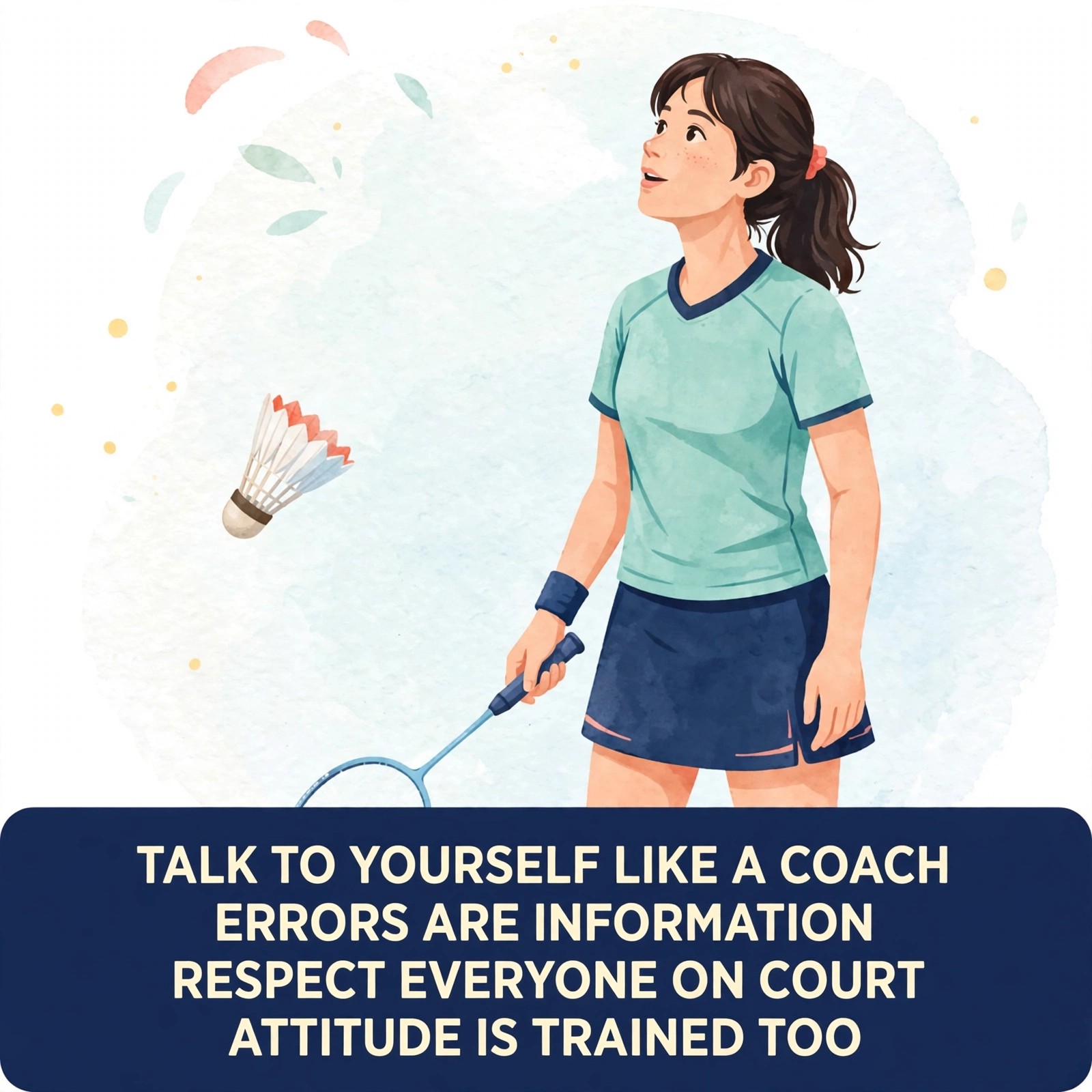
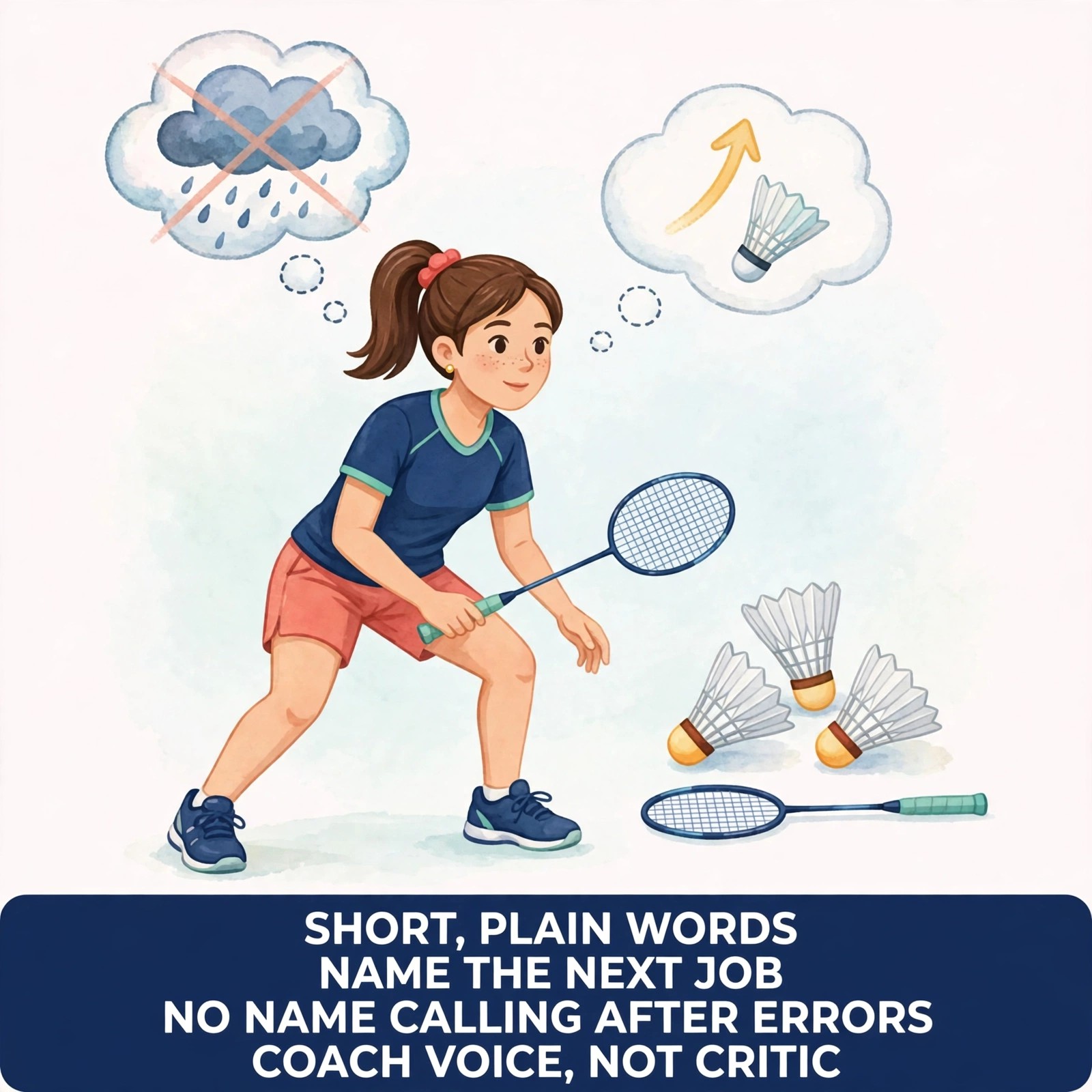
You talk to yourself through every match. The only question is whether that voice coaches you or criticises you. A critic voice is loud, personal and late: it reviews the last error while the next rally is already starting. A coach voice is short and practical. It names the next job in plain words: feet first, watch the racket, lift it higher. Same player, same error, two very different next rallies.
Good self talk is trained the way a serve is trained: decide the words before you need them. Pick two or three short lines that tell you what to do, not what to feel. Say them in training after real errors, out loud if the hall allows it, until they arrive on their own in matches. Lines about the next action work. Lines about being a winner do not, because there is nothing in them your feet can do.
Attitude Check #2
Errors Are Information: Reset, Do Not Sulk
An error is information before it is anything else. The shuttle hit the net because it was taken late, or the clear fell short because the turn never happened. That is useful news, delivered fast. Players with a sound attitude read the message once, then put it down. Players without one carry the error into the next three rallies, where it causes fresh errors that have nothing to do with skill.
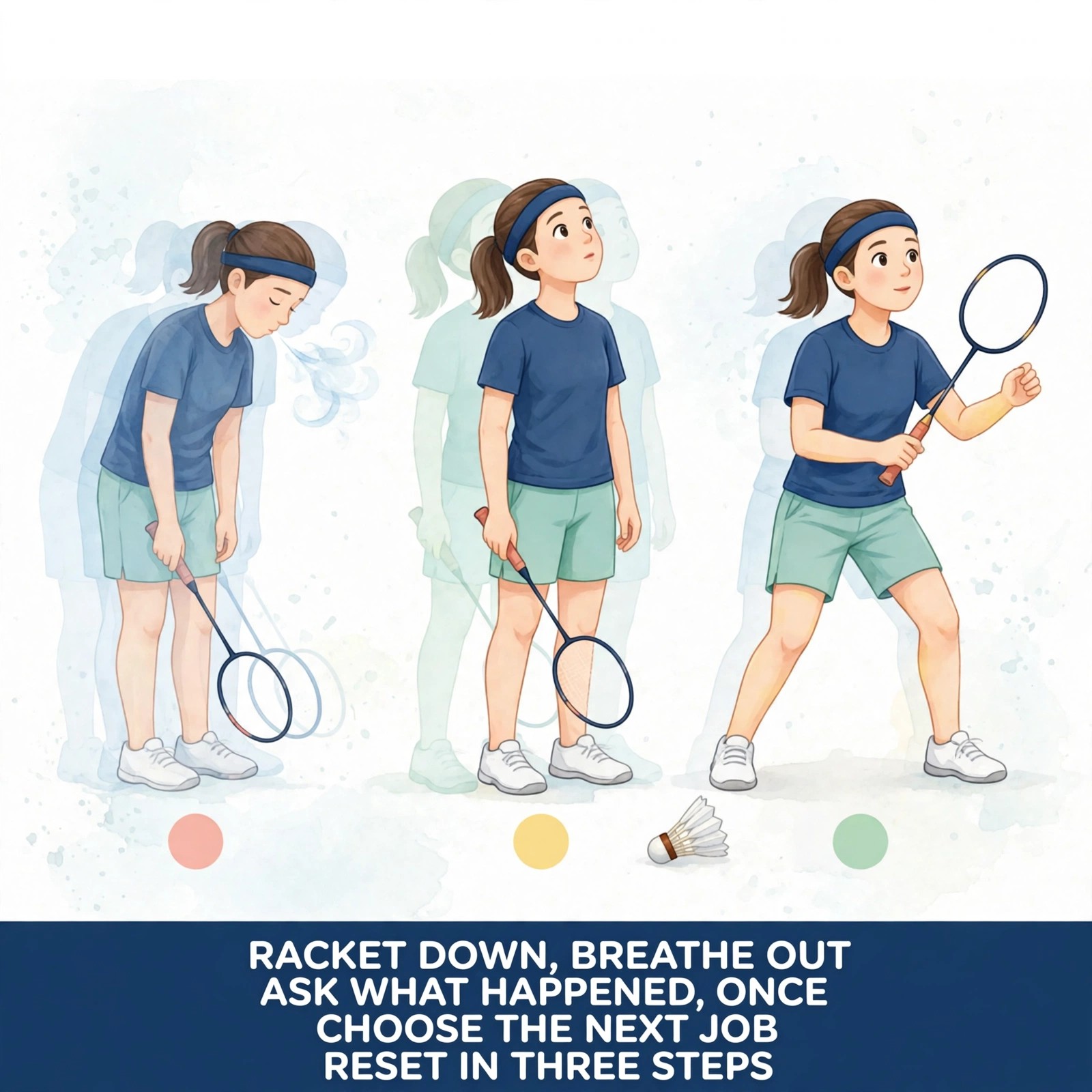
The reset is the routine that puts the error down. It takes about three seconds: racket drops, shoulders drop, one slow breath out. Then one question, asked once: what happened? Then the answer becomes the next job, and your eyes go back to the server. A reset is not positive thinking. It is tidying up. The rally that just ended is over either way; the routine simply stops it renting space in the next one.
Notice that none of this asks you to feel good about the error. Feeling annoyed for two seconds is normal and honest. What matters is the length of the sulk. Thirty seconds of replay in your head is three rallies played at half attention. Train the reset in practice games where errors are expected and frequent, so the routine is grooved before a match asks for it under real pressure.
Attitude Check #3
Partners and Opponents: Respect on Court
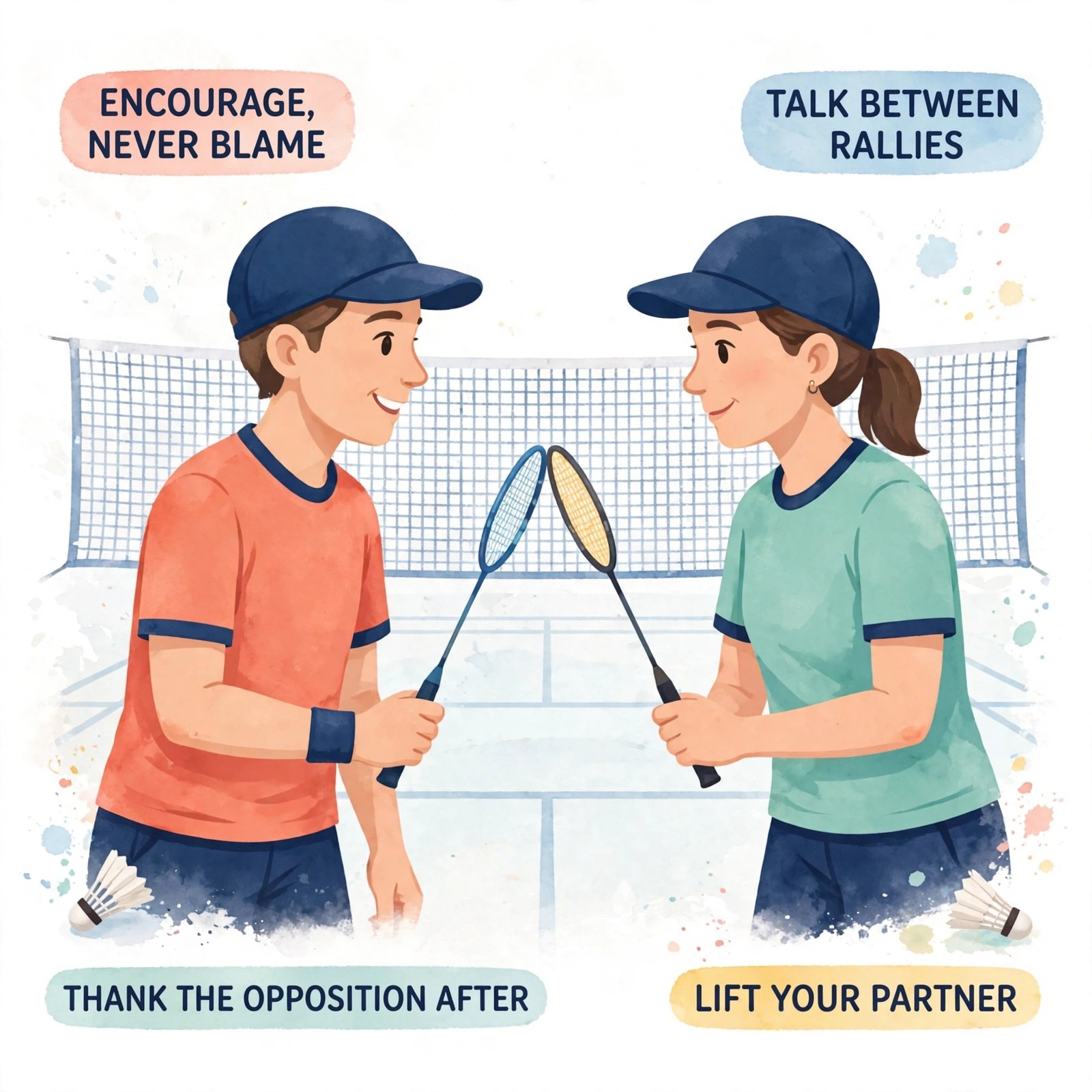
Attitude is easiest to see in how a player treats the people around them. In doubles, your partner will miss shots, sometimes easy ones, sometimes three in a row. Blame feels satisfying for one second and costs you the pair for the rest of the match. A partner who expects a sigh stops calling, stops moving early, and starts playing safe. Encouragement is not softness. It is keeping your best team mate switched on.
Talking between rallies is a skill with simple rules: short, early and about the plan. Call your shots loudly in play, own your mistakes in one word, and offer your partner one useful line, not a lecture. After the match, thank your opponents and the umpire, even after a loss that stings. That habit is not about being nice for show. It keeps your head clear about what actually decided the match.
Training partners deserve the same attitude. Feed properly when it is your turn to feed. Chase the shuttles. Take your rotation in drills without bargaining. Players notice who makes a session better, and coaches do too. The player everyone wants to train with gets more games, better partners and more honest feedback, which quietly speeds up their improvement more than any single drill.
Attitude Check #4
Losing Well: What a Bad Day Teaches
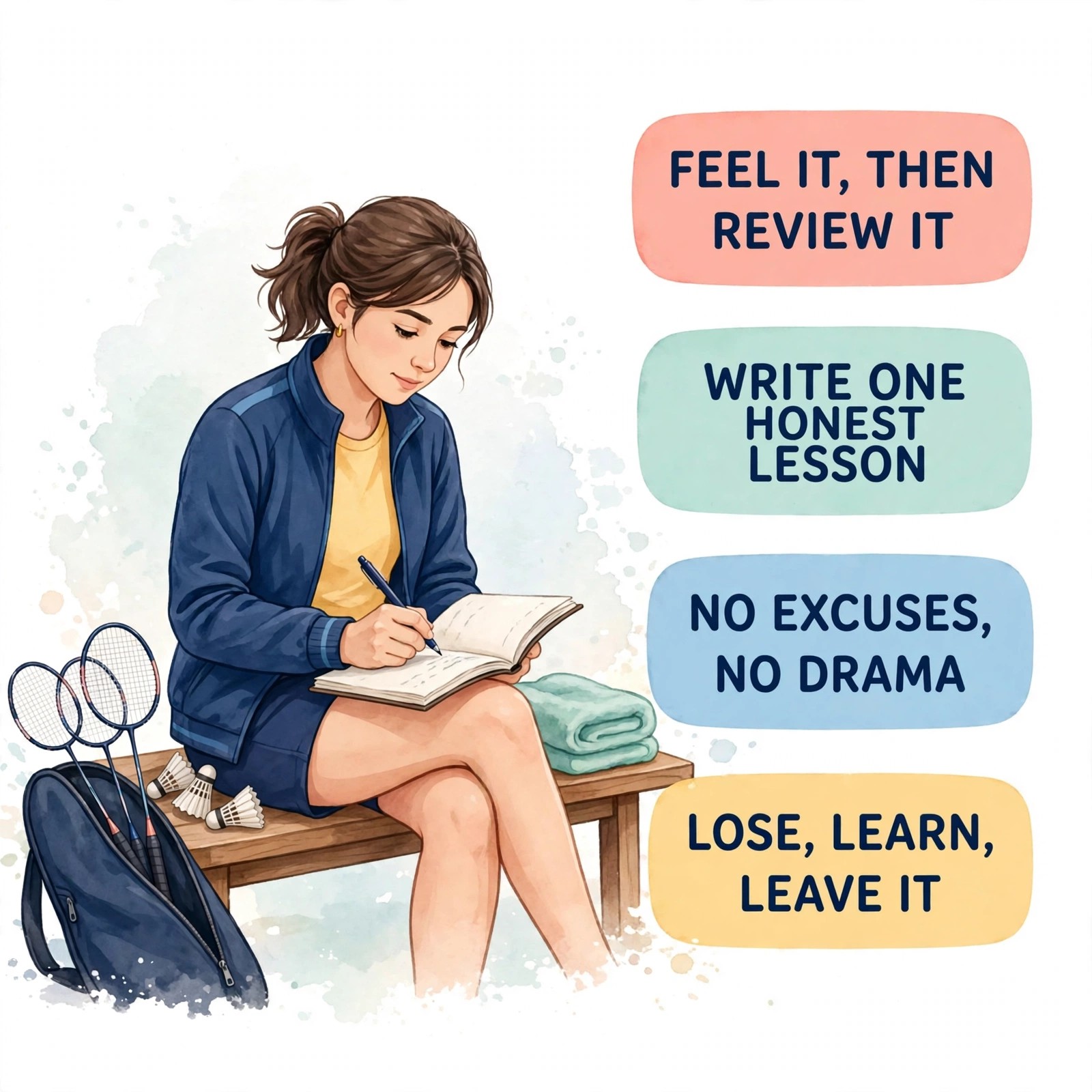
Losing is part of the sport’s design: in every draw, all but one player or pair goes home having lost. A sound attitude does not remove the sting, and it should not. The sting is the review making itself felt. What attitude changes is the order of events: feel it first, briefly, then review it on paper while the match is still fresh in your mind.
The review has one rule: honest and short. Write down what actually happened, not the story that protects your pride. The serves were rushed. The backhand corner leaked in the second game. One lesson is enough, the most useful one, and it becomes next week’s training target. Excuses feel protective but they block the lesson, and the same loss then has to be repeated until the lesson is taken.
Some days are heavier than a lost match. If low mood, flat motivation or dread of training hangs around for weeks rather than days, that is worth proper support, not tougher self talk: talk to someone you trust, a family member, a counsellor or a doctor. Looking after the person is part of looking after the player. No training plan is worth more than that, and any good coach will say the same.
Attitude Check #5
Daily Habits: Small Choices That Build Attitude
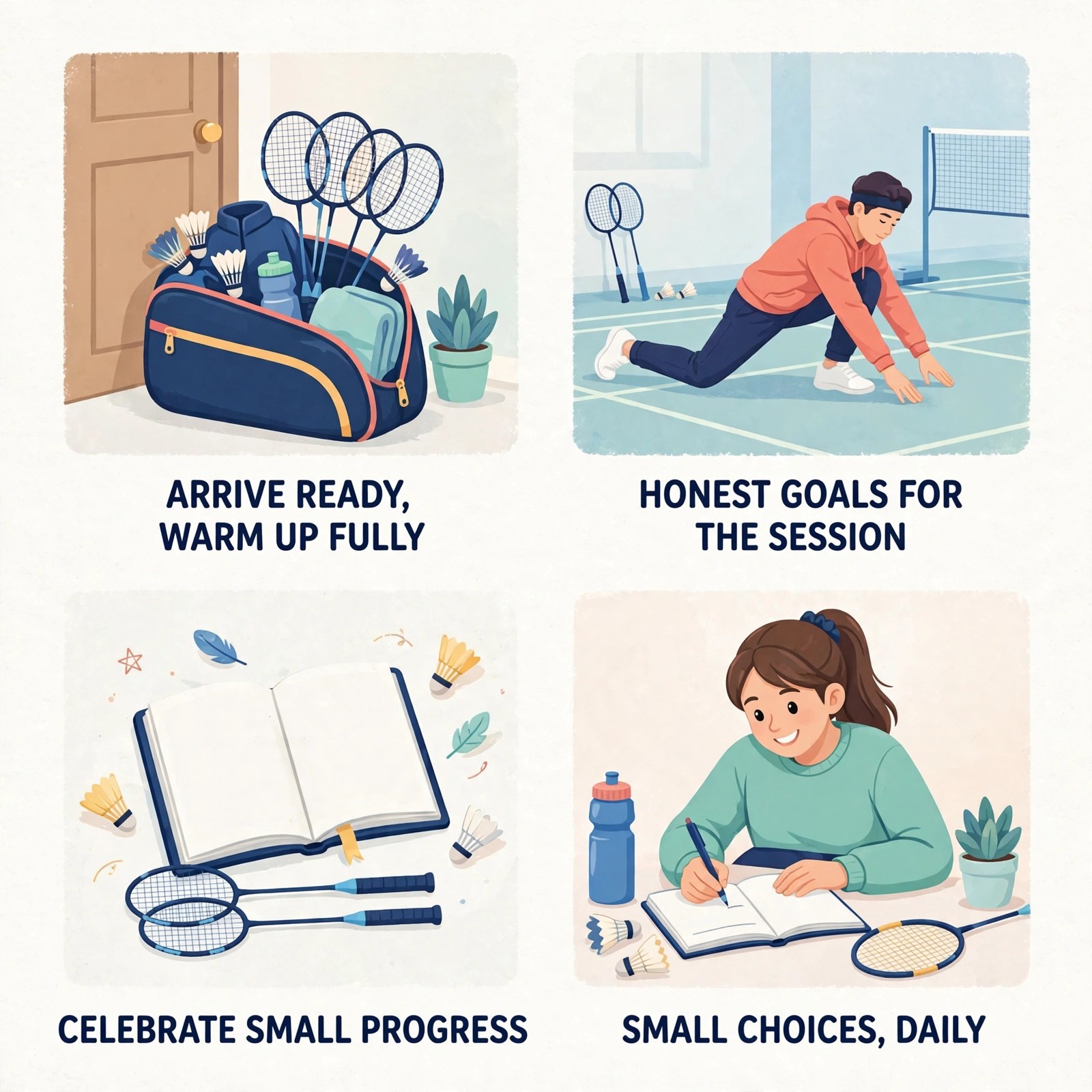
Attitude is built on ordinary days, in choices too small to feel like mental training. Arriving with your kit ready instead of borrowed and rushed. Warming up fully when nobody is watching. Writing one honest goal for the session, small enough to keep. Each choice is a vote for the player you are becoming, and the votes add up quietly over a season.
Small progress deserves noticing, because the brain believes what it records. The backhand that reached the back line twice today. The reset that worked in the third game. Write them down in a training log, one line each, next to the errors. Players who only record mistakes end up with an unfair picture of themselves, and unfair pictures are where self doubt grows best.
Bad days at training are part of the same system. You will have sessions where the timing is off, the legs are heavy and nothing lands. The attitude move is boring and reliable: shrink the goal, finish the session properly, eat, sleep, and come back. One bad session is weather. It only becomes a problem when it is treated as a verdict on you as a player.
Myth vs Reality
Attitude Myths That Sound Tough
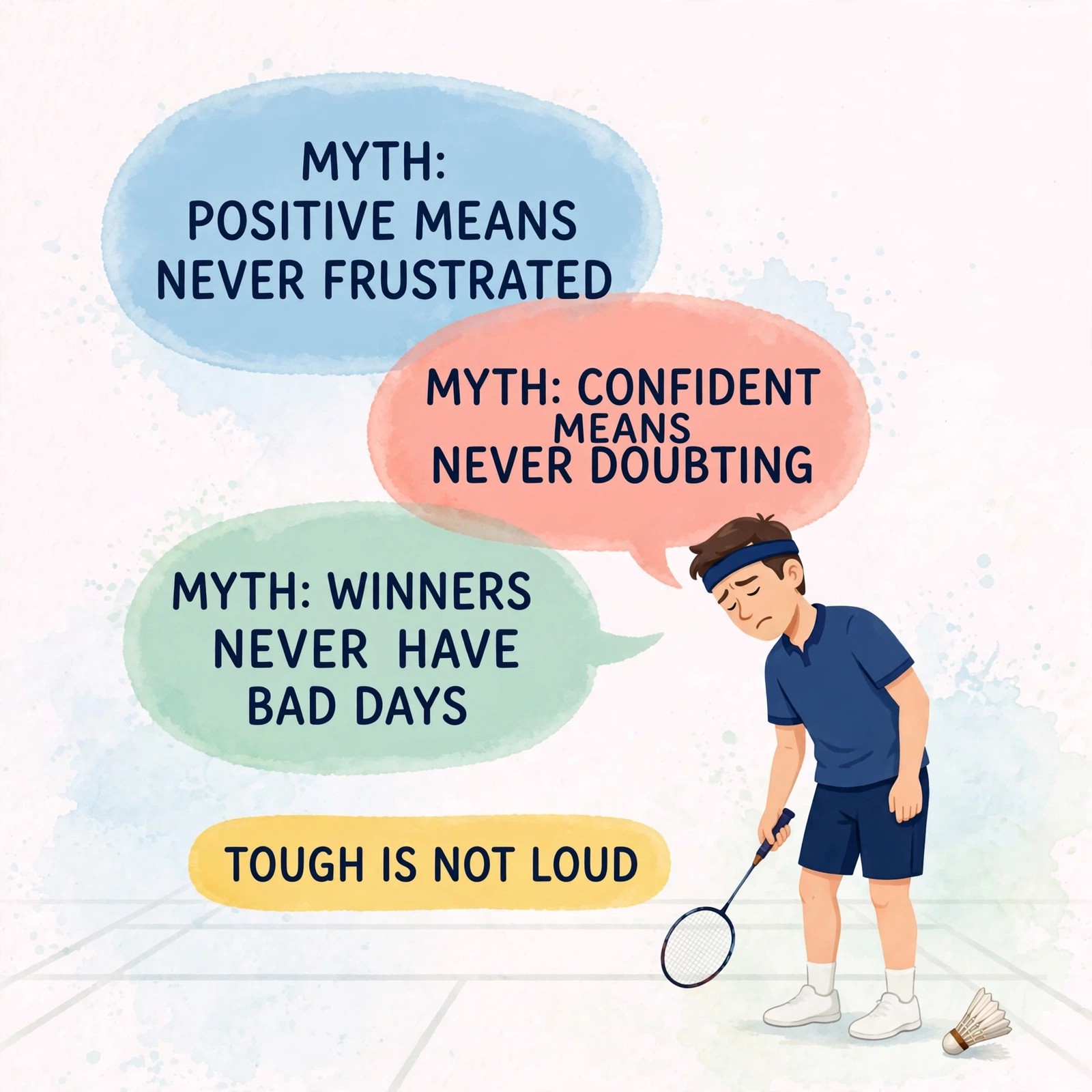
The first myth says a positive player is never frustrated. That is acting, not attitude. Frustration is a normal signal that something matters to you and something went wrong. The trained response is not to ban the feeling but to shorten its stay: feel it, reset, next job. Players who demand constant good feelings end up fighting two opponents, the one across the net and their own mood.
The second myth says real confidence means never doubting yourself. Doubt visits every player, usually right before the matches that matter. Confidence that lasts is not the absence of doubt; it is evidence. It comes from training you actually did, shots you have grooved, matches you have reviewed. When doubt shows up, the honest answer is your log book: here is the work, here is what it fixed.
The third myth says winners do not have bad days. They do, regularly, including the players on television, whose bad days are simply filmed. What looks different is the recovery: a routine that tidies the error, a review that takes the lesson, and a next session that starts on time. Toughness is not a personality you are born with. It is a set of small habits, and habits can be trained.
Why Choose Us
Why Players Choose ST Badminton Academy
Players choose ST Badminton Academy because the groups stay small: a maximum of four students per group, so the coach hears your self talk, sees your reaction to errors, and works on attitude in real rallies, not in a lecture. Mental habits are personal. They can only be coached by someone close enough to notice them, session after session.
Our feedback rule is plain and honest: we praise the process when it is right and name the problem when it is not. No shouting, no empty hype, and no pretending a bad attitude day did not happen. Players learn quickly that effort and honesty are what get recognised here, which makes it easier for them to be honest with themselves.
Training runs in Kuala Lumpur with our original base in Setapak, and the same attitude standards apply wherever we coach: arrive ready, treat partners well, review honestly. Players bring these habits from home, school and work, and they take them back there too. Attitude trained on court tends to travel, which is one reason parents like the programme.
FAQs: Badminton Attitude, Self Talk and Mindset in Malaysia (KL)
Short answers to the attitude questions players and parents ask us most: self talk, errors, partners, losing and how coaching here handles the head side of the game. For anything longer, come and try a session and see the standards in a real training hall.
Can a beginner learn a good attitude early in Setapak or Gombak?
Yes, and it is one of the best times to learn it. A beginner has no years of self talk habits to undo, so the reset routine and the short coach voice can be built alongside the first grips and footwork. We coach attitude as part of technique from the first session, like how you hold the racket.
What is the first attitude habit a new player should build in KL?
Start with your reset. Choose one short line that names your next job, like feet first or watch the racket, and say it after every error in training, out loud if you can. Add the physical routine: racket down, breath out, eyes up. After a few weeks of practice games, the words start arriving on their own in matches.
Why do I fall apart after one bad error at club level?
Mostly because of what happens after the first error, not the error itself. One miss becomes a review, the review becomes tension, and tension rushes the next two shots. Watch for the pattern in your own games: the points are usually lost in small runs. The reset routine exists to break the run after the first point, not the third.
I play well in training but fall apart in matches. Is it my shots or my head?
Feel it first, briefly, then get it on paper. Arguing with the result or blaming the draw changes nothing and keeps the lesson locked. Write one honest line about what decided the match, turn it into next week’s training target, and let the rest go. If heavy low mood lasts for weeks, talk to someone you trust or a counsellor.
How can I practise my attitude at home during the week?
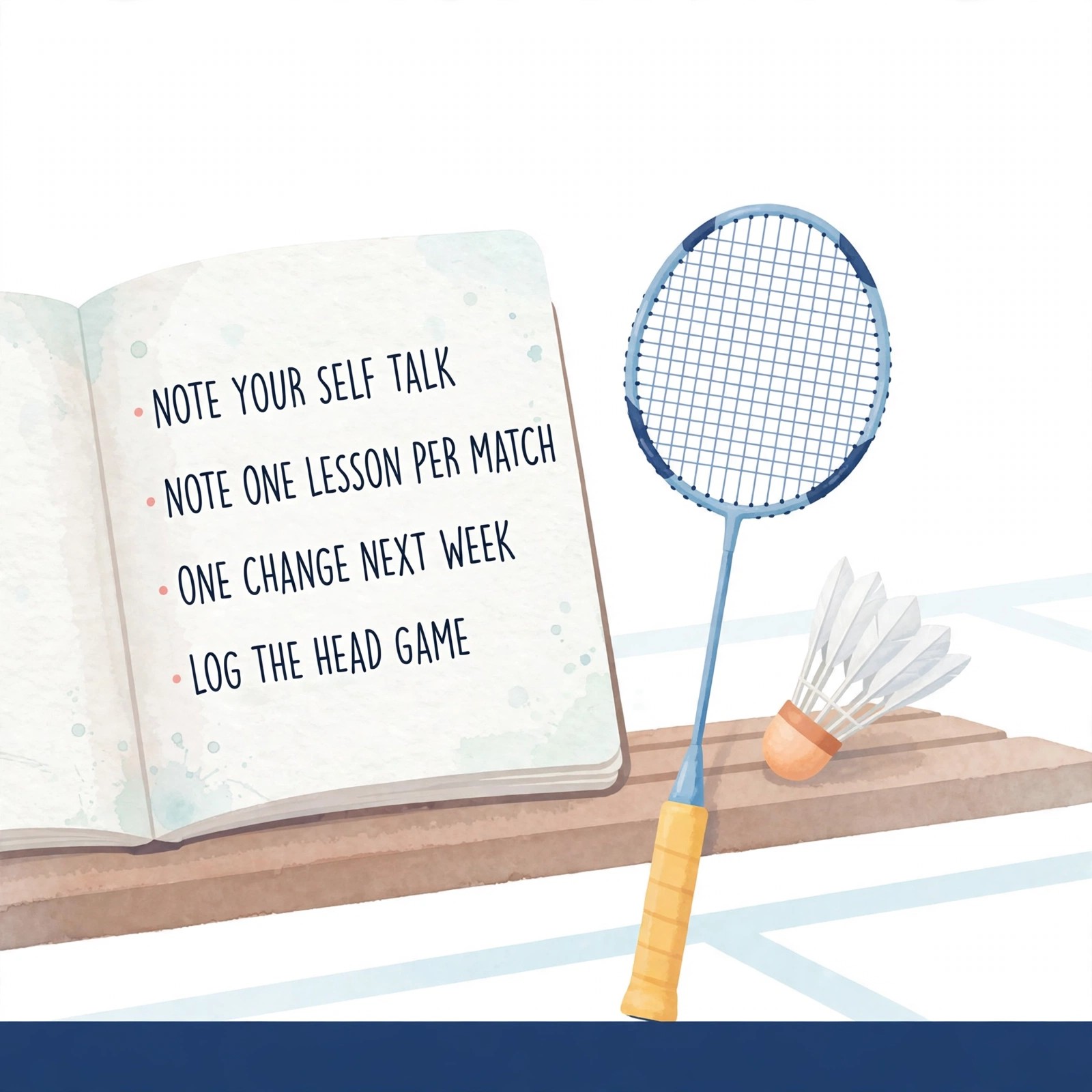
Use a training log and ten quiet minutes. After each session write three short lines: one thing that improved, one error pattern, one job for next time. Before sleep before a match, run your best rallies in your head once, slowly. That small routine, repeated weekly, does more for attitude than any single motivational talk.
Do you coach attitude and mindset near Wangsa Maju?
Yes. Attitude is coached inside our regular small group sessions around Setapak and Wangsa Maju, in real rallies where errors, partners and pressure actually happen. Your coach listens to your self talk, watches your reset, and corrects the head side of your game with the same plain feedback used for grips and footwork.
Where does ST Badminton Academy coach attitude in Malaysia?
Our home base is in Setapak, Kuala Lumpur, where the academy started, and sessions run for players across the Klang Valley. Attitude coaching is part of the small group programme there: a maximum of four students per group, honest feedback, and training partners held to the same standards of effort and respect on court.
How do I book a trial session to work on my attitude before my next match?
Send us a message and we will arrange a trial session at a time that suits you. In that first session you train in a real small group, your coach watches both your shots and your reactions to them, and you leave with one attitude habit to start with. There is no pressure to sign up on the spot.
What makes Mr Eric Chuar a suitable coach for attitude coaching in badminton?
Coach Eric Chuar has spent more than fifteen years teaching badminton in Kuala Lumpur, and attitude is coached the same way as technique at his academy: small groups, plain words, counted habits. He will notice your self talk, teach you a reset, and tell you honestly when your head, not your racket, is what lost the rally.
Badminton Attitude Training in Action



One Standard for Every Session and Every Player
One standard covers attitude at the academy: errors are information, partners are lifted not blamed, losses are reviewed on paper, and effort is recognised over results. If a player's head drops, we coach the reset the same way we coach a grip, patiently and in the open.
| Factor | Blaming and Sulking | Owning and Resetting ATTITUDE |
|---|---|---|
| Frequency | 1 or 2 times a week. Mostly for fun and sweat. | Errors are read once as information, the reset runs, and the next rally gets full attention. |
| Drills Focus | Basic static feeding. Minimal footwork pressure. | Self talk is short and practical: plain words that name the next job, grooved in training first. |
| Physical Conditioning | Rarely included. Just playing games on court. | Core, agility, and speed training included in every session to prevent injury and build stamina. |
| Tactical Awareness | "Just hit it over." No real game plan. | Video analysis, point construction, and learning to read the opponent's game. |
| Coach Ratio | Large groups (8-10 kids). Coach barely watches you. | Max 4 students. Mr Eric Chuar personally corrects every stroke and movement detail. |
| Goal Setting | Fun and exercise. | Partners are encouraged and plans are shared, so the pair stays switched on after lost points. |
| Long Term Result | Good recreational player. | A trained attitude: bad moments stay short, lessons get written down, and the next session starts on time. |
Badminton Attitude Coaching in Kuala Lumpur
Your attitude is already deciding rallies; the only choice is whether it gets trained. Start small: one reset routine, one honest log, one way of treating partners that you would want aimed at you. Book a trial session with ST Badminton Academy in Kuala Lumpur, train in a real small group, and let a coach hear the voice you play with. Bring it into the open, and it can be coached like anything else.


