How To Develop A Winning Badminton Backhand: Techniques And Drills (Backhand Build Guide)
Most players treat the backhand as an emergency shot, something to survive until the forehand comes back. That thinking is exactly why opponents keep feeding that corner. A backhand is built, not found: the grip, the turn, the swing shape and the shot family are all trainable pieces, and each one has drills that install it. This guide treats the backhand as a project with stages. Work through them in order, count what improves, and the corner that used to cost you points becomes an ordinary part of your game.
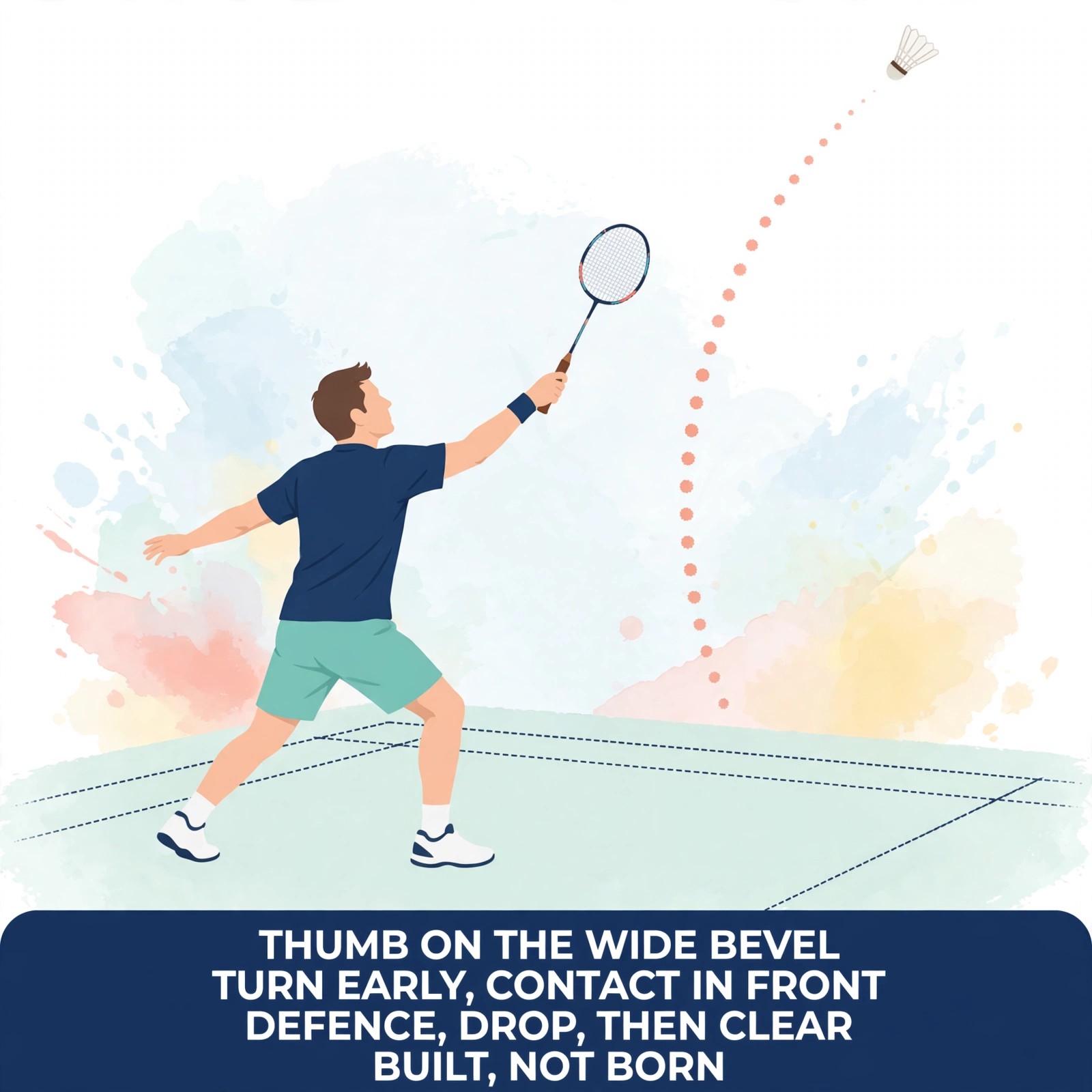
Backhand Check #1
Start With the Grip: Thumb on the Wide Bevel
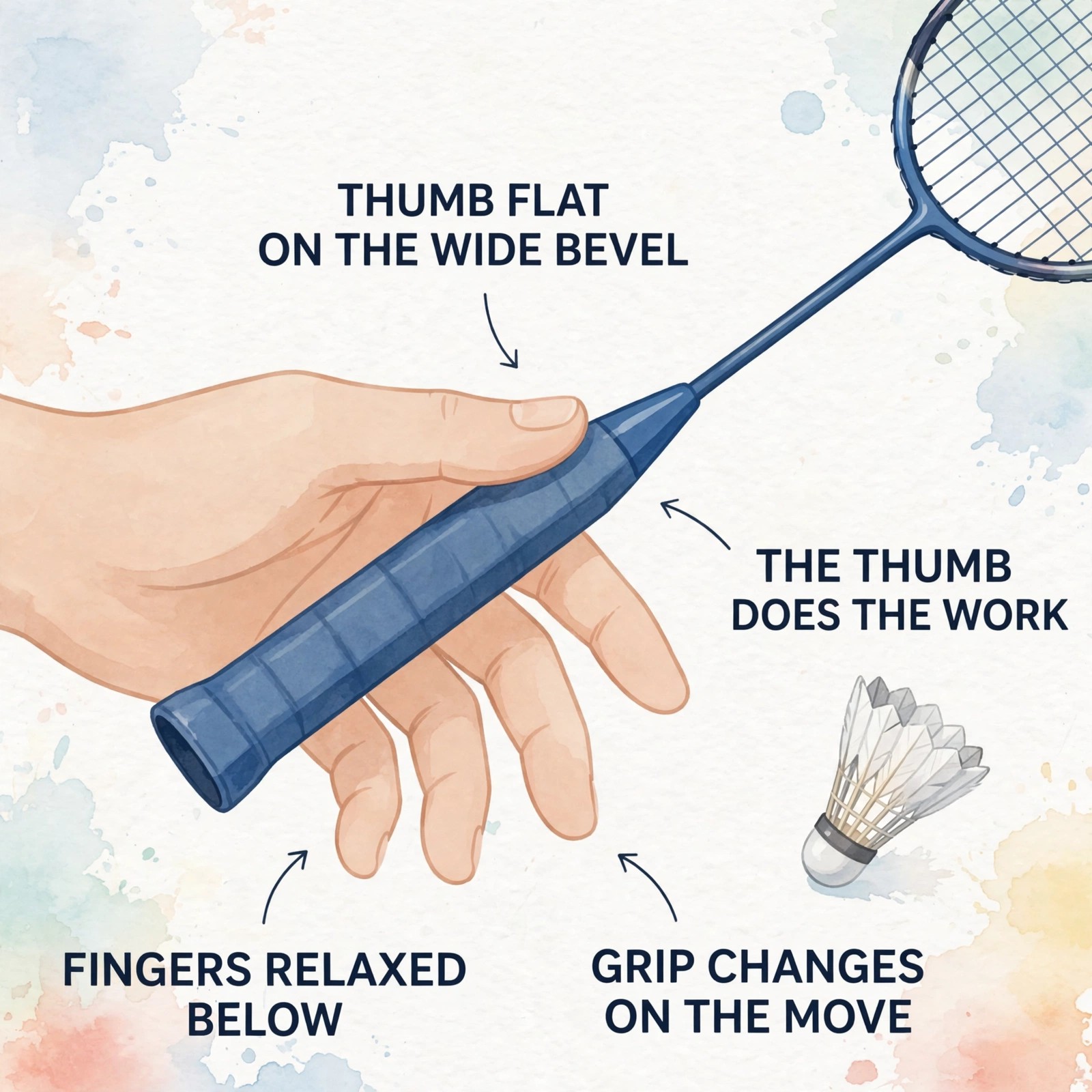
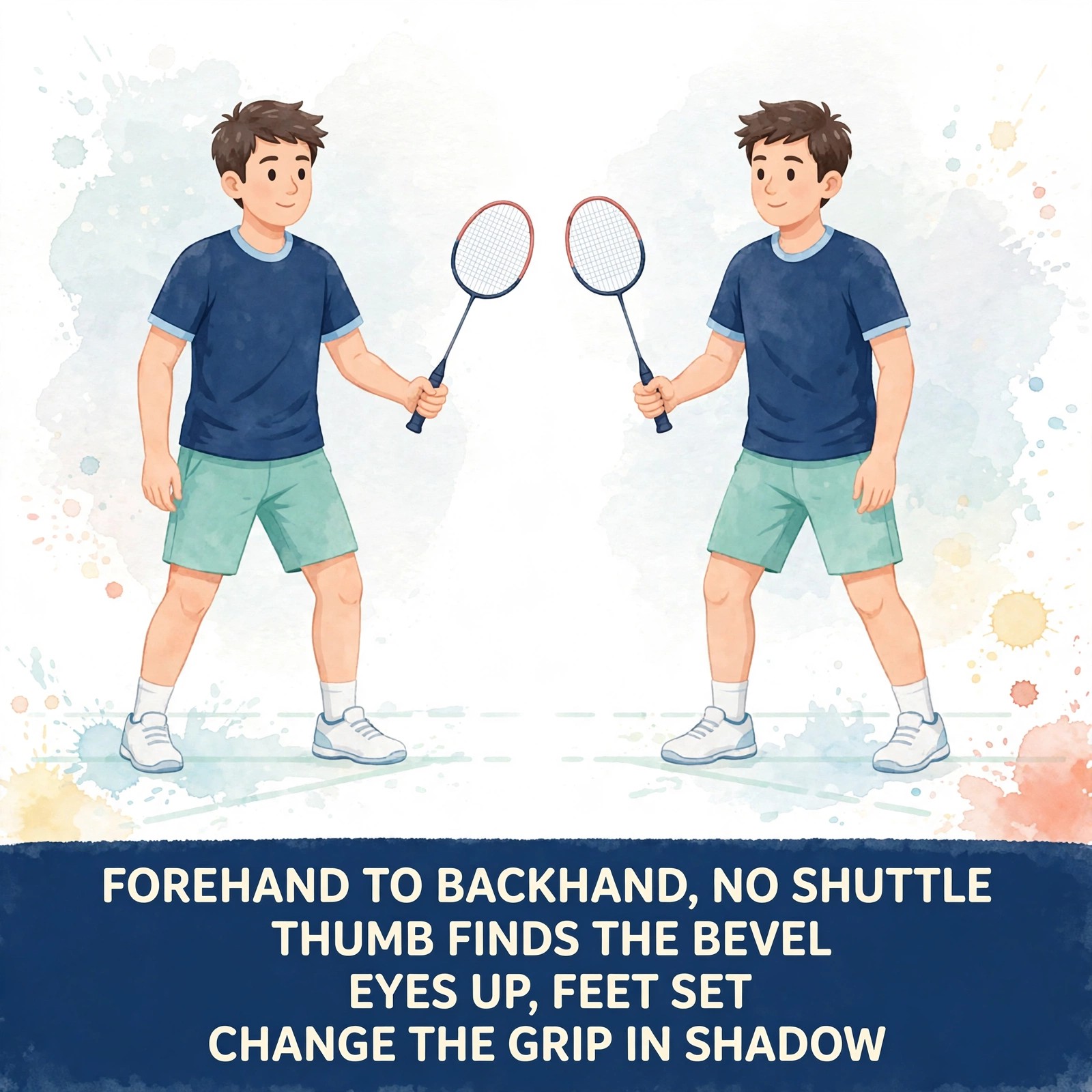
Every backhand starts in the hand. For shots played in front of the body on the backhand side, the thumb grip does the work: the thumb lies flat along the wide bevel of the handle, pushing behind the racket so the face stays firm without a tight fist. The fingers wrap softly underneath, relaxed enough to change grip on the move. Players who keep a forehand grip for backhands end up bending the wrist and scooping, and the shuttle floats short.
The grip is not one fixed hold for the whole rally. Overhead backhands and round the head shots use the basic grip, while underarm defence, net replies and drives in front of the body use the thumb grip. Good players change between them during a rally without looking down. That change is a skill by itself, and it is trained standing still long before it is asked to survive at full speed in a match.
Backhand Check #2
Feet and Turn: Get Side On Before You Swing
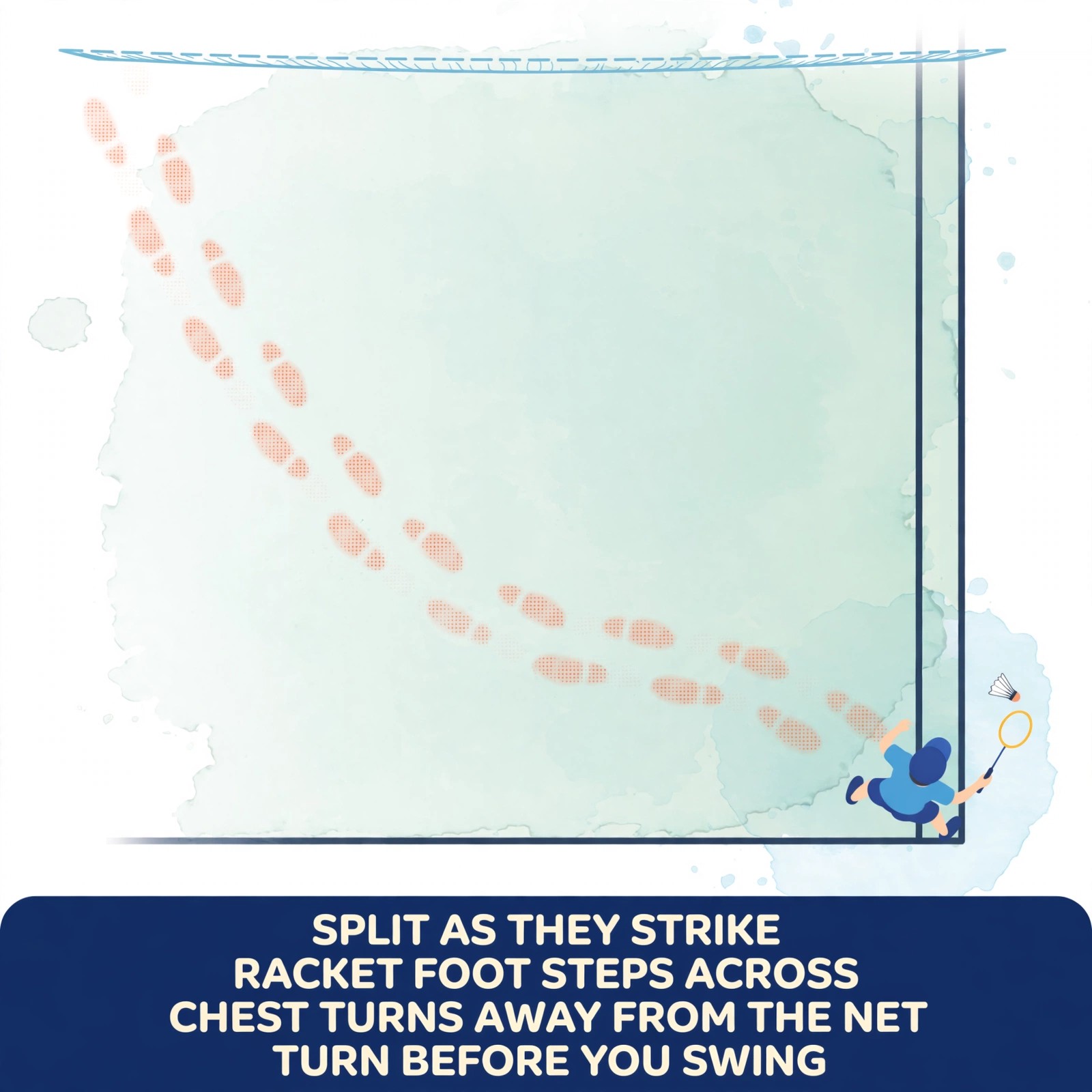
A weak backhand is often a late backhand. The shot breaks down because the player arrives square to the net, reaching across the body with no room to swing. The fix is the turn: as the shuttle travels to the backhand corner, the racket foot steps across and the chest turns away from the net, so the shoulder points toward the back corner and the racket side opens up behind you.
The split step sets the whole move off. Land it as your opponent strikes the shuttle, then push hard toward the corner so you arrive early and balanced, not stretched at full reach. Arriving early matters more than arriving fast: a player who is there in time can choose the drop, the drive or the clear, while a late player can only poke the shuttle back and hope.
Recovery is part of the same piece. After the backhand, the racket foot pushes back toward base and the chest opens to the net again. Players who admire their shot stay turned and lose the next rally at the front. In training we count recoveries as part of the rep, not an extra: a backhand only counts when you are back in position, ready for the reply.
Backhand Check #3
The Swing Shape: Relaxed Arm, Finger Finish
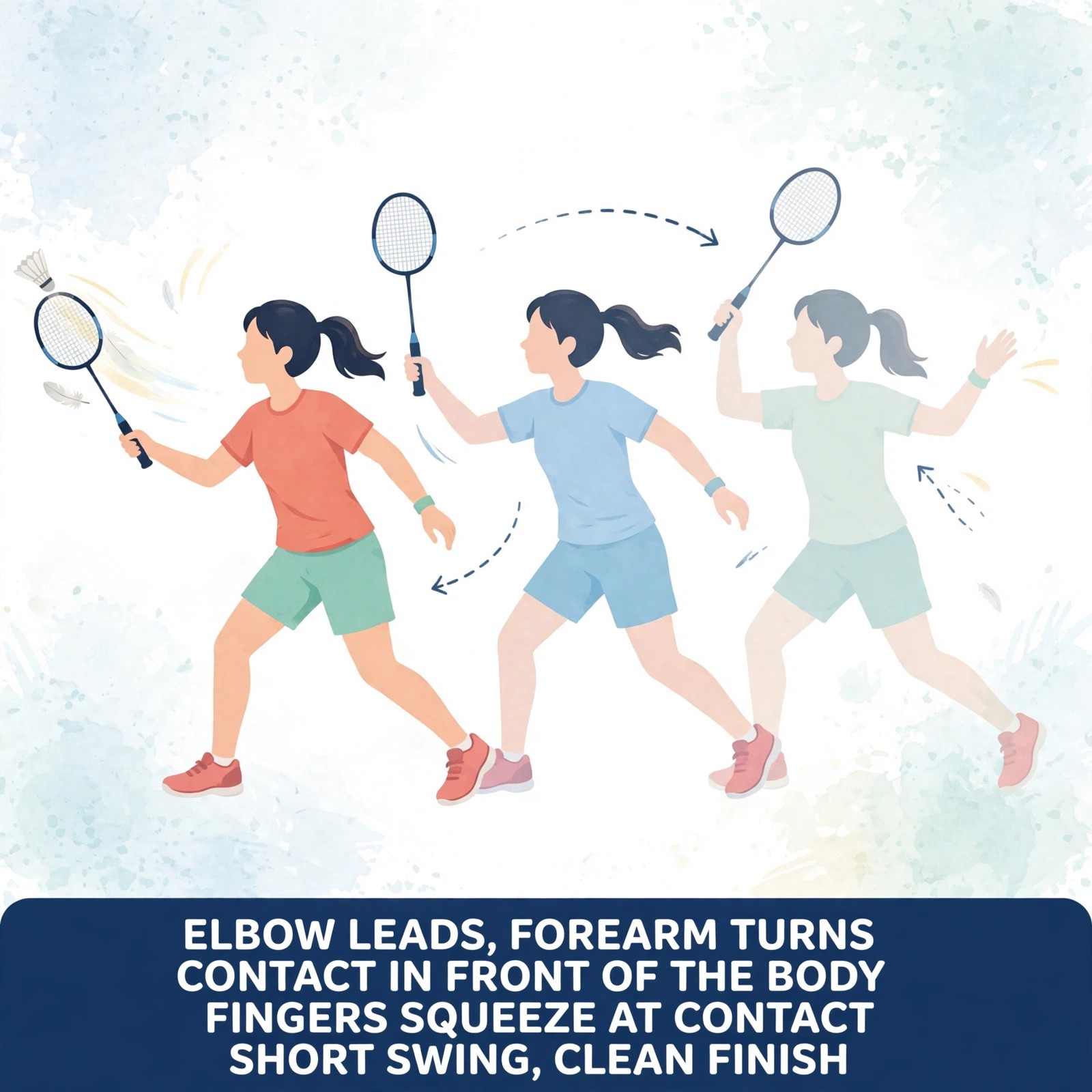
The backhand swing is shorter than most players expect. The elbow leads toward the shuttle, the forearm turns as the racket comes through, and the fingers squeeze at contact to add the final snap. The arm stays relaxed until that moment. A big wind up from the shoulder feels powerful but arrives late, and late contact is the real reason backhands land in the middle of the court.
Contact point decides what the shot can do. For defence, drops and drives, the shuttle is met in front of the body where you can see it and steer it. For the clear from the deep corner, contact is higher and further back, with the body turned and the racket travelling up and through. Same grip, same preparation, two contact points: that is what keeps opponents guessing instead of reading you early.
Finger power is the last piece of the swing, and it only works on a relaxed hand. Through the swing the fingers stay soft; at contact they close, and the racket head speeds up in the final part of the stroke. Players who squeeze from the start of the swing have nothing left at contact. Shadow swings with a freeze at the contact point teach the timing better than any long explanation.
Backhand Check #4
The Shot Family: Defence, Drop and Clear in Training Order
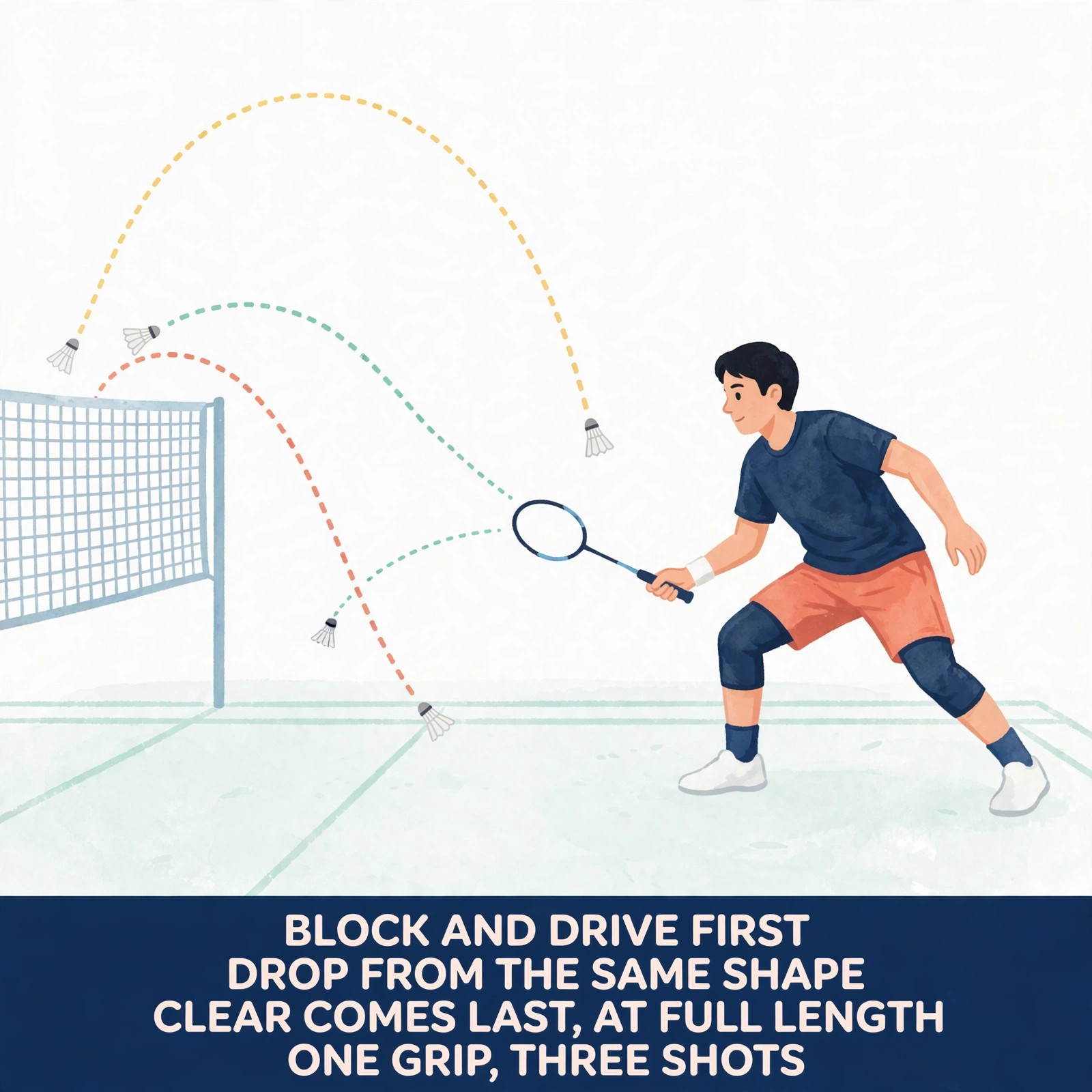
A backhand is not one shot, it is a family, and the family is built in a sensible order. Defence comes first: blocks and drives from a set stance, because they use the smallest swing and teach the contact point in front. A player whose defence holds stops fearing the corner, and that calm alone improves everything played from it later in the rally.
The drop comes next, played from the same shape as the defence, with the shuttle guided softly over the tape. Then the clear, which asks the most of the build: full turn, high contact and the whole swing working together to send the shuttle to the back line. Trying the clear first, before the base exists, is why so many players strain, scoop and give up on the shot.
Each family member gets its own training block, and blocks only move on when the counting says so: blocks landing inside the service box, drops dying close to the net, clears reaching the back tramlines. Numbers keep the build honest. When a stage wobbles under faster feeding, the answer is to drop back one stage for a session, not to push on and groove the mistake.
Backhand Check #5
Drill Progressions: Shadow, Wall, Feeding and Games
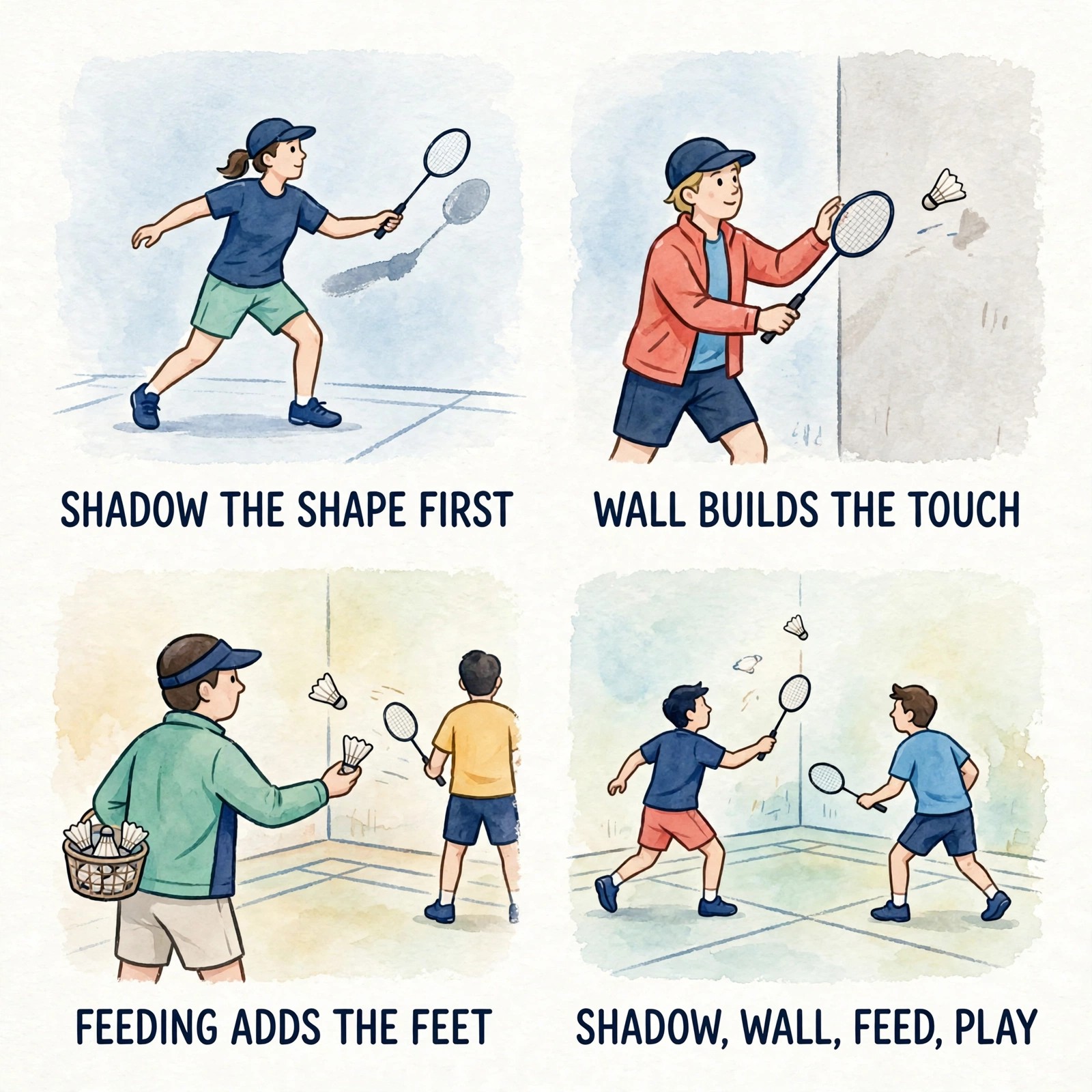
Drills install the pieces in the same order the game needs them. Shadow work comes first: grip changes and swing shapes with no shuttle, so the body learns the movement without chasing anything. It feels easy, and that is the point. Ten quiet minutes of correct shapes beat an hour of rushed hitting where the old habits do all the work.
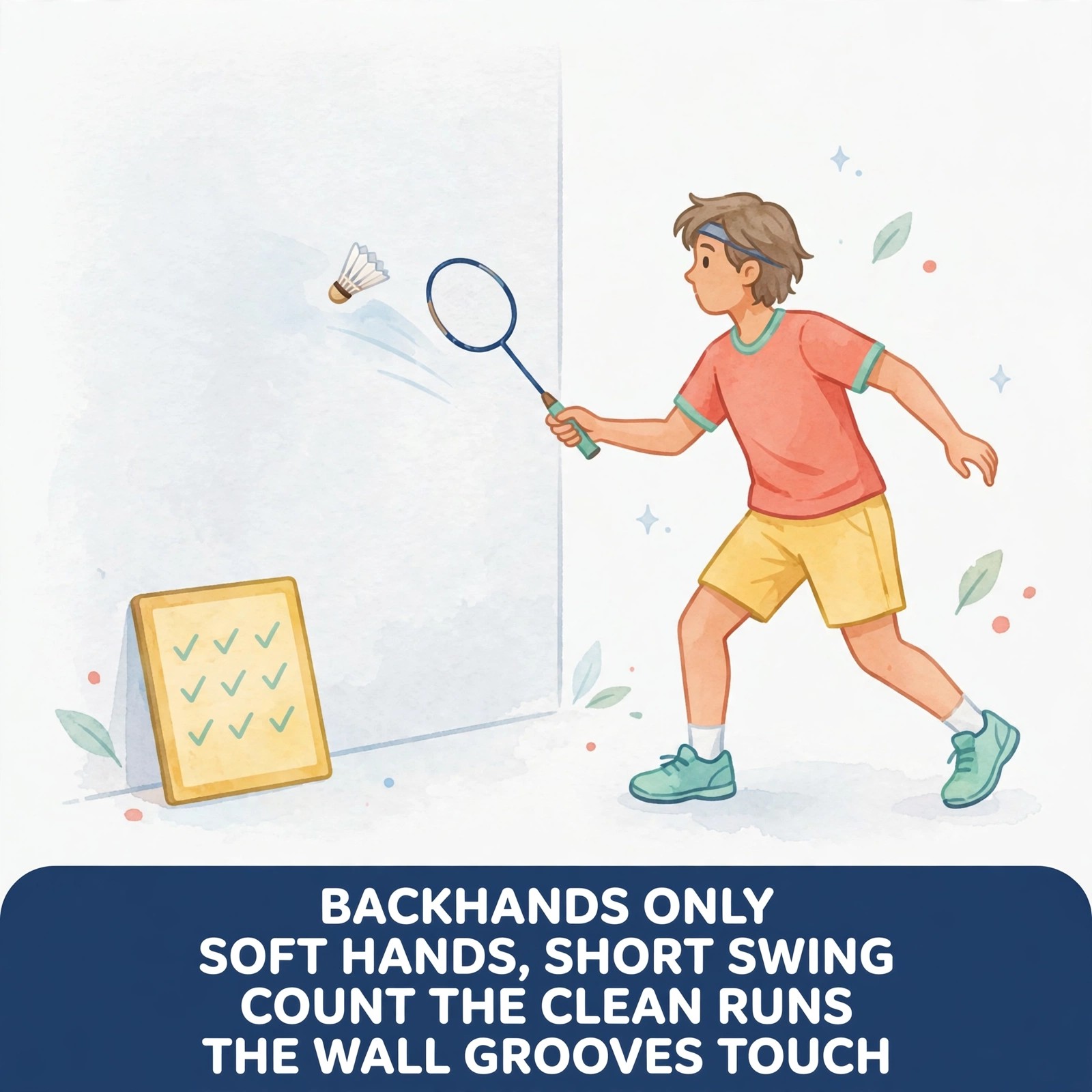
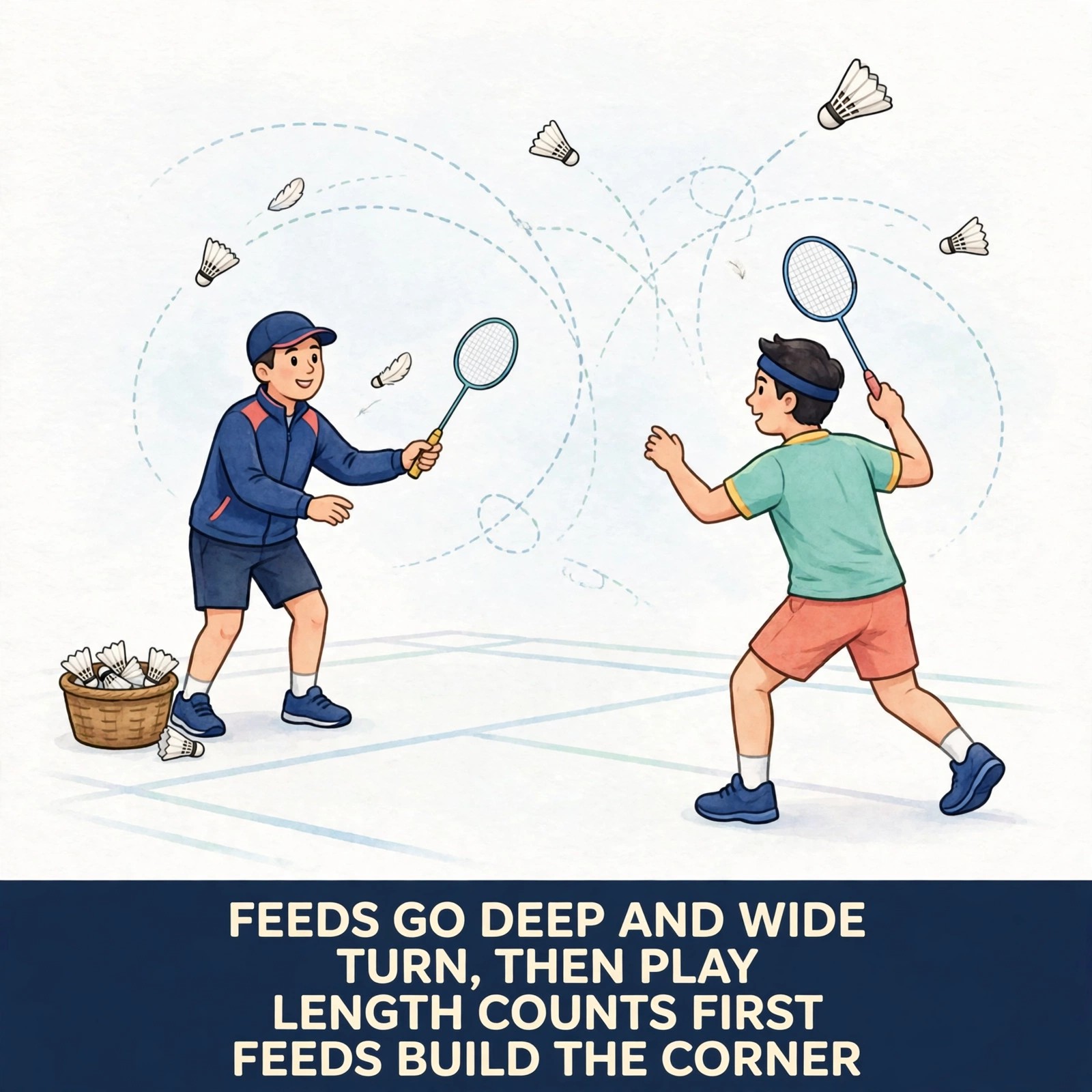
The wall is the second stage. A feather shuttle against a plain wall returns fast and honest, grooving backhand touch, quick grip changes and short swings in counted runs. After that comes feeding: a coach sends shuttles deep and wide to the corner, slowly at first, then at match speed, so the feet, the turn and the shot are practised as one piece instead of three.
The last stage puts the build under pressure: conditioned games where points only count when rallies pass through the backhand corner, and partners are told to test it. This is where players find out what holds. Whatever breaks goes back one stage for a week. That up and down movement between stages is not failure, it is exactly how a reliable backhand gets built.
Myth vs Reality
Backhand Myths That Slow the Build
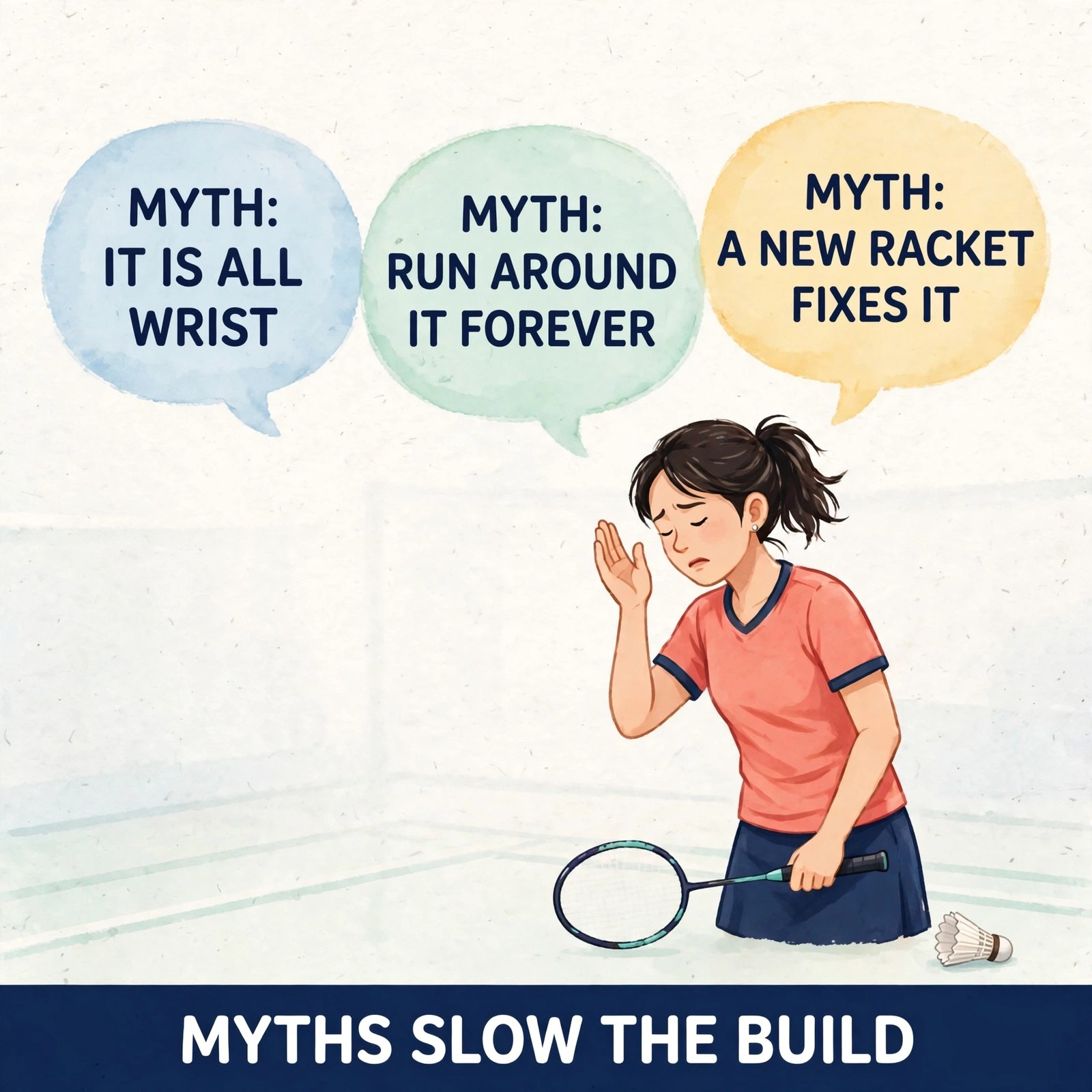
The first myth says the backhand is all wrist. Players who believe it flick from the wrist alone, get a sore forearm and a shuttle that dies at mid court. Real backhand power comes from the turn, the forearm rotation and the finger finish working together, with the wrist staying firm rather than flapping. The wrist is the last link in the chain, not the engine.
The second myth says running around the backhand is a fine long term plan. It works at low levels, and then it stops: the forehand side is left wide open, the movement costs double, and better opponents simply play behind you. Running around is a choice for one rally, not a system. Building the backhand removes the problem instead of driving around it every single point.
The third myth blames the racket. A lighter racket or fresh strings will not fix a grip that never changes or feet that arrive late. Gear matters at the margins, once the shape is right. Money is better spent on court time and honest drilling first. When the technique holds, the right racket then helps it along, instead of being asked to do the job alone.
Why Choose Us
Why Players Choose ST Badminton Academy
Players choose ST Badminton Academy because the groups stay small: a maximum of four students per group, so a coach actually sees your grip change, your turn and your contact point, rally after rally. Backhand faults hide easily in big groups. In a small group there is nowhere for them to hide, and no session passes without your weakest shot getting direct attention.
The coaching is honest about stages. We will tell you when your defence is ready for feeding speed and when it is not, and we count clean contacts instead of handing out easy praise. Players improve faster when the feedback is plain: this part holds, this part breaks, this is the next drill. That is the standard every backhand build here is measured against.
Training runs in Kuala Lumpur with our original base in Setapak, and players come in from around the Klang Valley. Wherever you join, the format is the same: small groups, a clear stage plan for your backhand, and drills matched to the stage you are on. Bring the backhand you have now. The build starts from there, not from where you wish it was.
FAQs: Badminton Backhand Technique, Grips and Drills in Malaysia (KL)
Short answers to the backhand questions players ask us most: grips, feet, power, practice and how training here works. For anything longer, the honest way is to come and try a session and let a coach watch your backhand live.
Can a beginner build a backhand from zero in Setapak or Gombak?
Yes. Beginners are usually the easiest backhand students because there are no old habits to undo. You start with the thumb grip and the turn, play defence and drops in front of the body, and leave the deep clear until the base holds. Most beginners are returning backhands inside the court within their first block of sessions.
What is the first backhand habit to build in KL?
Start with the grip change. Learn to find the thumb grip without looking down: thumb flat on the wide bevel, fingers soft underneath. Practise the change standing still, then in shadow swings, then against a wall. Every other backhand piece, the turn, the swing and the family of shots, works better once the hand is right.
Why do my backhands keep landing short at club level?
Short backhands usually come from contact, not strength. If the shuttle is met beside or behind the body, the swing has no room and the shot dies. Arrive earlier, turn side on, and meet the shuttle in front with the fingers finishing the stroke. When lifts still land short, the fix is the shape, not a harder swing.
My backhand clear will not reach the back line. Should I swing harder or fix the shape first?
Fix the shape first, every time. A harder swing on a late, square position just sends a faster mistake into the net or the middle. Groove the turn and the contact point at slow feeding speed, count clears that reach the back line, and add pace only when eight of ten are landing deep and clean.
How can I practise backhand drills alone at home during the week?
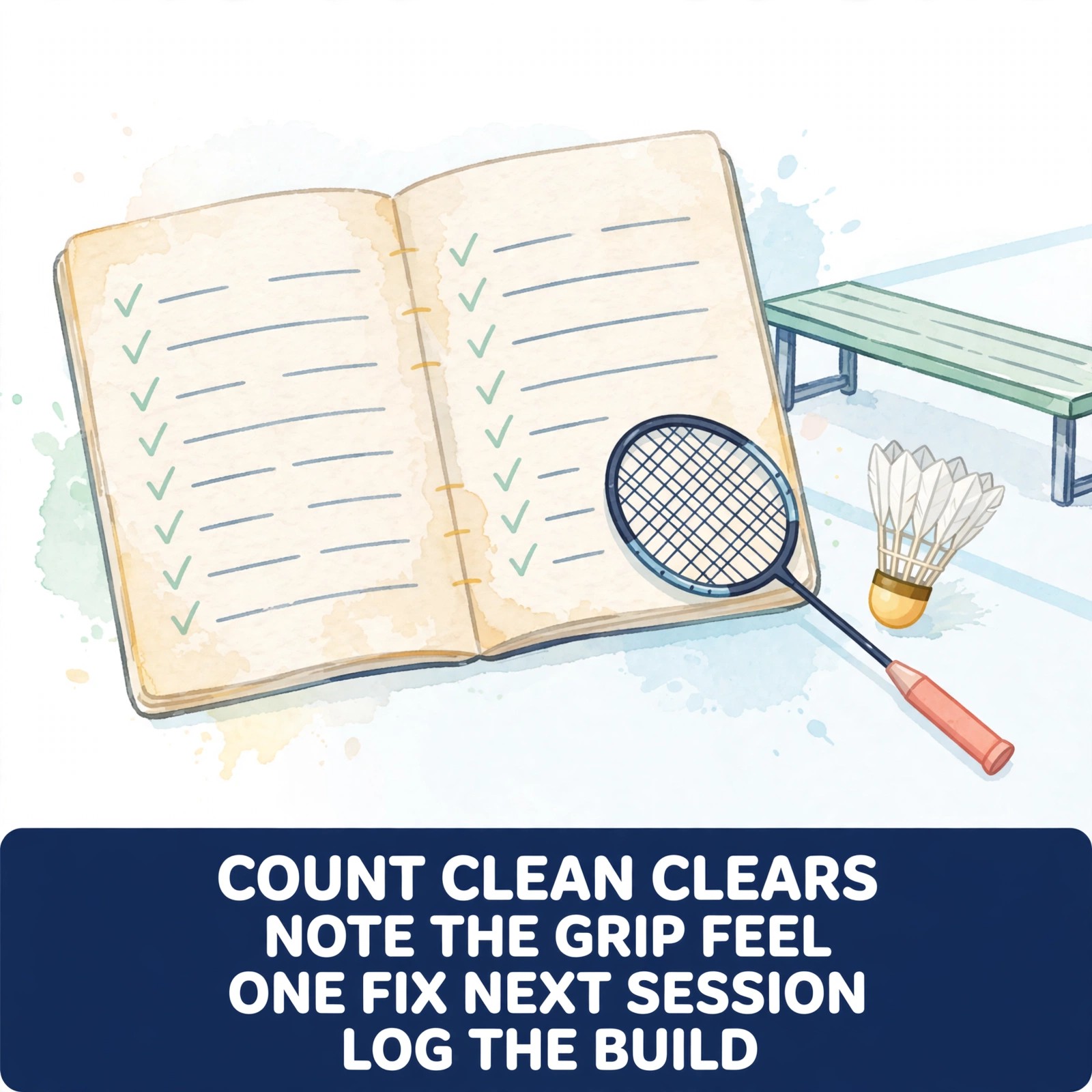
Shadow work and wall rallies are your two best home tools. Ten minutes of grip changes and swing shapes keeps the pattern fresh, and a wall gives you honest backhand touches in a small space. Count clean runs instead of minutes, stop while the shape is still good, and bring one question from home practice to your next coached session.
Do you coach backhand skills near Wangsa Maju?
Yes, backhand work is a normal part of our small group coaching around Setapak and Wangsa Maju. The corner gets tested in almost every rally at club level, so we build it inside regular sessions rather than treating it as a special topic. Your coach watches the grip and the turn live and corrects them as you play.
Where does ST Badminton Academy coach backhand training in Malaysia?
Our home base is in Setapak, Kuala Lumpur, where the academy started, and sessions run for players across the Klang Valley. Backhand building is coached inside the small group programme there: a maximum of four students per group, honest stage checks, and drills matched to each player, from first grip change to full court clearance work.
How do I book a trial session to build my backhand before joining training?
Send us a message and we will arrange a trial session at a time that suits you. In that first session a coach watches your backhand under normal feeding, checks the grip, the turn and the contact point, and tells you honestly which stage your build should start from. There is no pressure to sign up on the spot.
What makes Mr Eric Chuar a suitable coach for backhand coaching in badminton?
Coach Eric Chuar has spent more than fifteen years teaching badminton in Kuala Lumpur, and his backhand coaching follows the same rule as everything at the academy: small groups, plain feedback and counted progress. He builds the shot in stages, defence before length, and will tell you honestly when a stage is not ready to move on.
Badminton Backhand Training in Action
One Standard for Every Session and Every Player
One standard covers every backhand build at the academy: the grip is checked, the turn is grooved, the family is built in order, and progress is counted in clean contacts and landing zones, never in compliments. If a stage does not hold under feeding, we say so and rebuild it.
| Factor | Running Around It | Building It BACKHAND |
|---|---|---|
| Frequency | 1 or 2 times a week. Mostly for fun and sweat. | The grip changes are grooved first: thumb on the wide bevel for shots in front, found without looking down. |
| Drills Focus | Basic static feeding. Minimal footwork pressure. | Feet and turn are trained as part of the shot, so contact happens in front, on time and balanced. |
| Physical Conditioning | Rarely included. Just playing games on court. | Core, agility, and speed training included in every session to prevent injury and build stamina. |
| Tactical Awareness | "Just hit it over." No real game plan. | Video analysis, point construction, and learning to read the opponent's game. |
| Coach Ratio | Large groups (8-10 kids). Coach barely watches you. | Max 4 students. Mr Eric Chuar personally corrects every stroke and movement detail. |
| Goal Setting | Fun and exercise. | The family is built in order: defence, then the drop, then the clear at full length, each counted before moving on. |
| Long Term Result | Good recreational player. | A built backhand: the corner stops being a target, and opponents have to find a new plan. |
Badminton Backhand Coaching in Kuala Lumpur
Your backhand will keep being tested whether you build it or not. Start the build properly: grip first, feet second, the family in order, and drills that count what they fix. Book a trial session with ST Badminton Academy in Kuala Lumpur, let a coach watch the corner as it is today, and leave with a clear first stage to work on. The corner can become ordinary. It starts with one honest session.




