
 All languages
 Chinese (Simplified)
 Chinese (Traditional)
 English
 Indonesian
 Japanese
 Korean
 Malay
 Thai
 Vietnamese


How Can You Use Badminton Training Drills To Enhance Your Game Tactics (Game Tactics Guide)
Every club has a player who hits beautifully in drills and plays without a plan in matches, and another with ordinary shots who somehow keeps winning the rallies that matter. The difference is rarely technique. It is tactics: choosing shots for reasons, building rallies in patterns, and adjusting when the first plan stops working. The good news is that tactics are not a match day mystery. They are built in training, inside drills that carry decisions. This page shows how drills become tactics: patterns rehearsed, reads trained, pressure visited, and reviews that turn last week’s match into next week’s plan. None of this needs a new racket, a new grip or a hero shot; it needs drills that ask questions and reviews that answer them.

Tactics Check #1
Drills Are Tactics Rehearsed: Why Reps Become Decisions
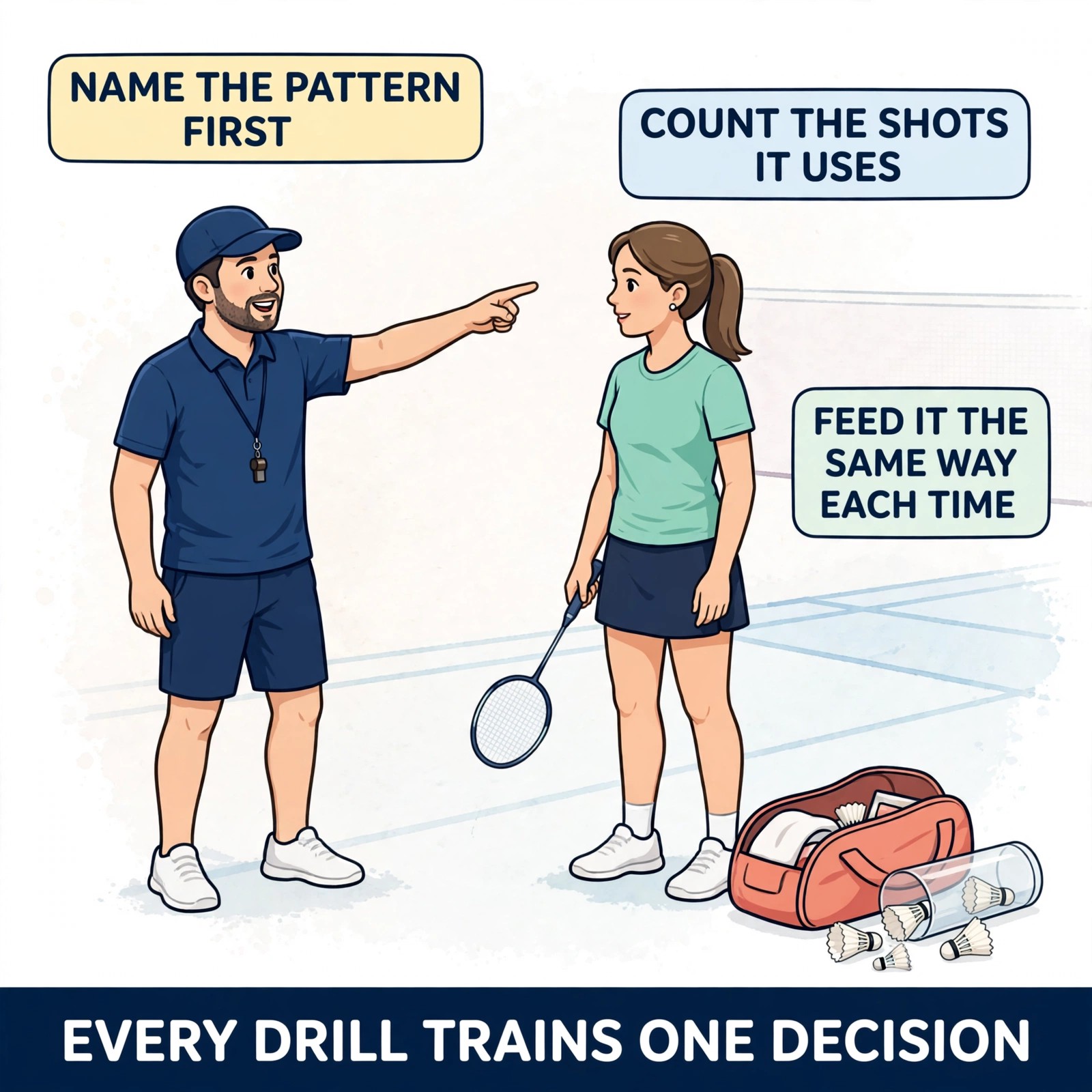
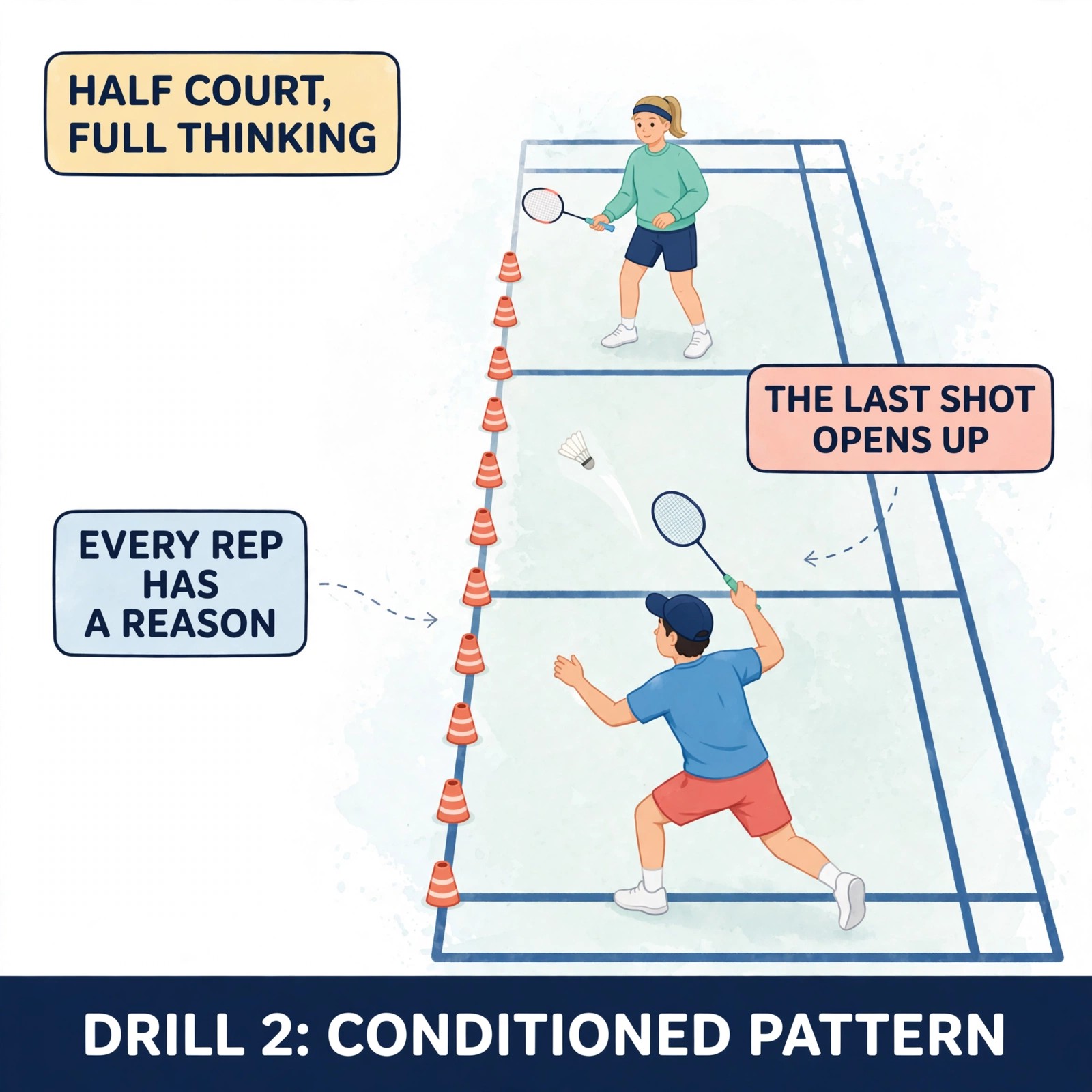
A drill improves tactics only when it asks a question. Hitting fifty clears at a wall of feeds asks nothing except whether your arm is tired. The same clears, played to alternate corners while a partner calls which corner is closed, ask a tactical question on every rep: where is the space, and what shot finds it? Tactical drills carry decisions, scores or limits, because matches are made of decisions, scores and limits. When a drill has none of the three, it is fitness or technique practice wearing a tactics costume, and the transfer to matches stays small. The question can be as small as one closed corner or as broad as a full scored game; what matters is that every rep carries one.
This is why two players can do the same drills for a year and leave with different tactics. One treats each repetition as a small rally with a reason: this shot moves him, this one buys time, this one finishes. The other treats each repetition as a swing to complete. The swings look identical from the balcony. The learning is not. In our sessions, drills are explained by their decision first and their technique second, so players always know what question the drill is asking before the first shuttle is fed. Ask any player in our sessions what a drill is for and they can name the decision it trains before they can describe the footwork.
Tactics Check #2
Build Your Patterns: Two And Three Shot Plans
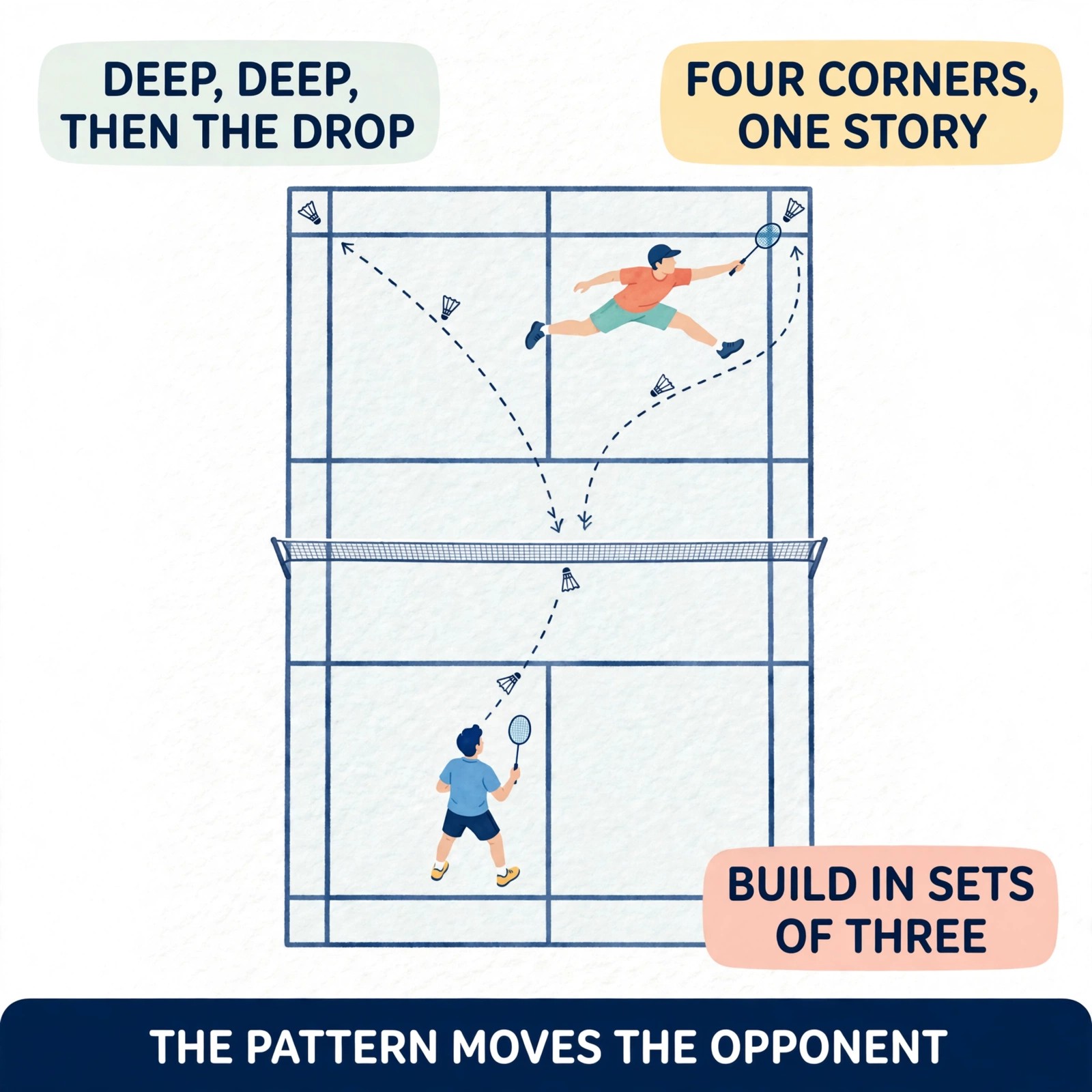
Patterns are tactics in their simplest form: two or three shots planned as a group. A low serve pushed wide, a reply expected at the net, a lift invited and answered. Or a clear to the backhand corner, a weak drop answered with a net shot, a cross court reply read early. Patterns work because rallies are too fast for fresh invention on every shot. The player with a pattern spends the rally executing; the player without one spends it deciding, and deciding is slower. Build one pattern you trust before you build five you half remember. Write your first pattern down in one line, serve wide, expect the straight reply, take the net early, and keep it somewhere you will see it before matches.
Patterns also give you something to adjust. When a rally pattern fails three times the same way, the failure is information: the opponent has read it, or the first shot is not good enough to start it. Either way, you change one element, the serve placement, the second shot, the pace, and test the change for a few rallies. Players without patterns cannot adjust, because there is nothing definite to change; they just play differently and hope. Hope is not a tactic, and it evaporates exactly when the score gets tight and a plan is needed most. Keep the test honest: three rallies is a sample, not a coincidence, and one rally proves nothing except that shuttles sometimes land kindly.
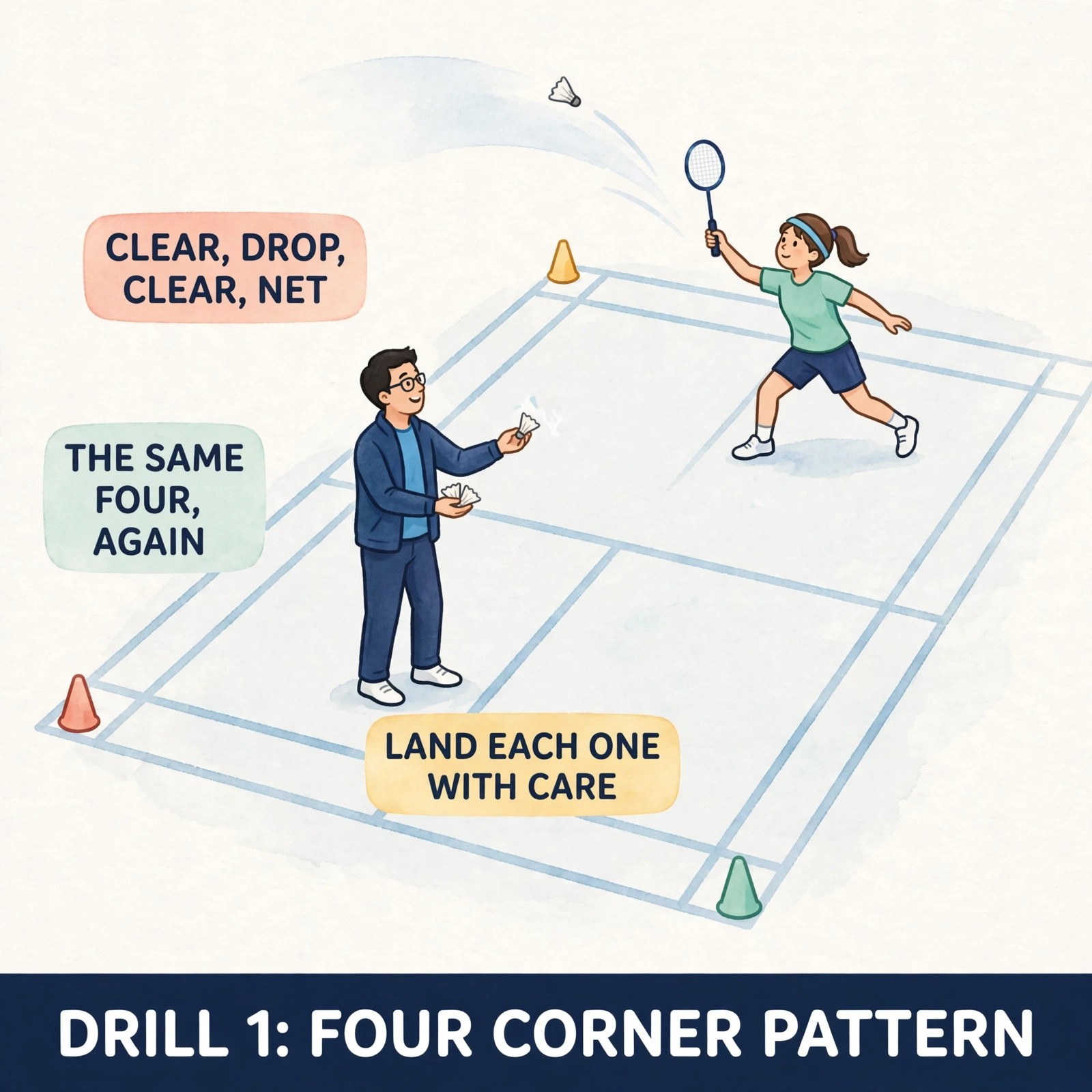
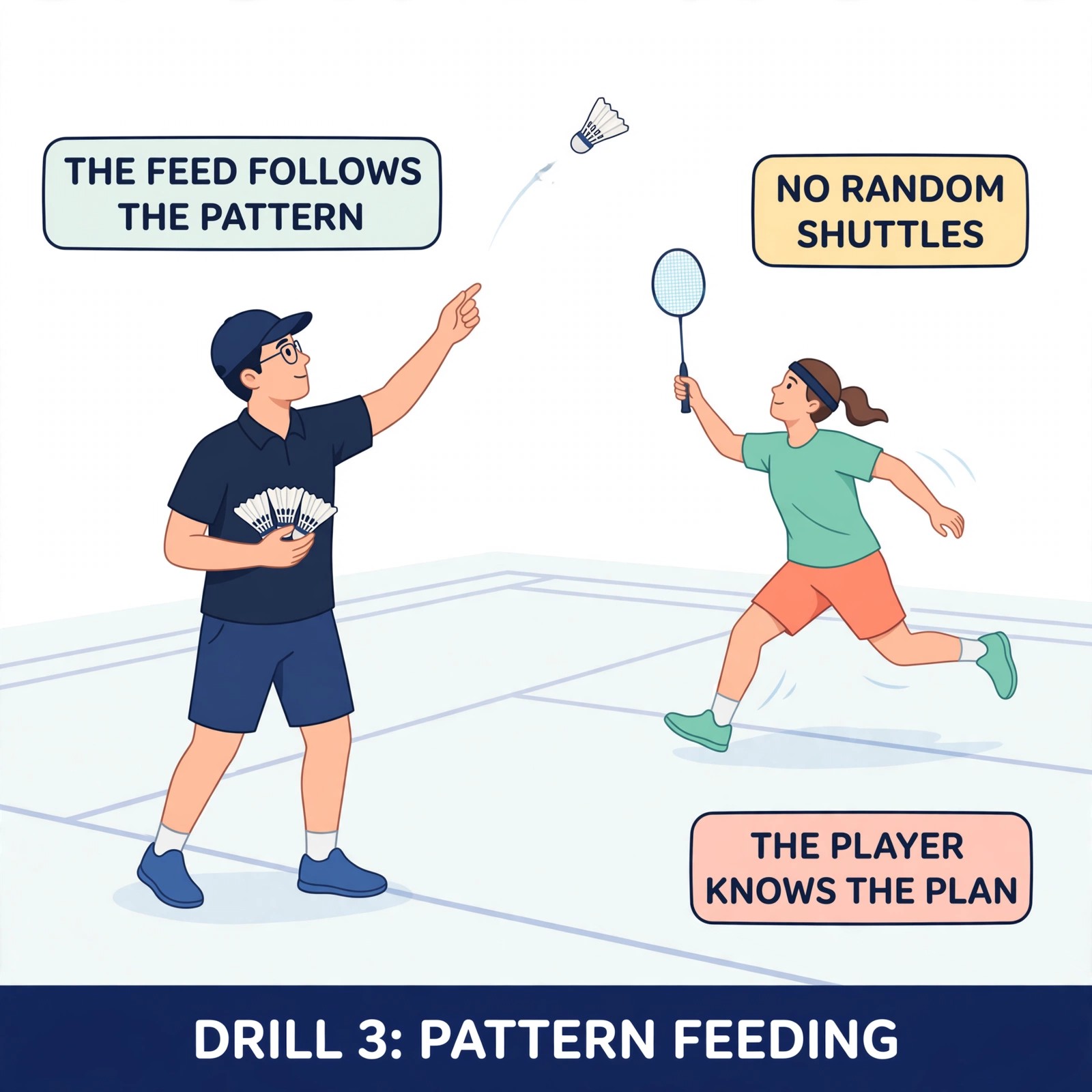
In drills, patterns are rehearsed as units. Serve and third shot are practised together until the pair feels automatic. A clear and its likely replies are fed in sequence, so the player learns not just the shot but the shape of the rally it creates. When you watch strong players, their patterns look improvised because each link has been rehearsed so often that the joins disappear. Underneath, it is the same two and three shot plans, executed at speed, chosen early and changed calmly when the opponent solves them. This is also why patterns are taught before opponents are studied: your own shapes must exist before anyone else’s habits become worth reading.
Tactics Check #3
Train The Reads: What The Opponent Is Telling You
Tactics need information, and reads supply it. Every opponent broadcasts habits: a favourite corner under pressure, a backhand side defended late, a net game that rushes or waits. Drills train reading by feeding variety with meaning. A coach varies feeds between clear, drop and drive from one shape, and the player must name the shot early before moving. A partner plays conditioned games where one corner is favoured, and you must notice before the third rally, not after the match. Reads are a trainable attention habit, not a talent for mind reading. Reading drills work best at honest pace; a feed slow enough to admire teaches admiration, not reading, so the pace rises as the naming gets earlier.
The honest read starts with your own side of the net. Players often study opponents while ignoring the information their own game is sending: the serve that keeps getting attacked, the corner their clear never reaches, the shot they avoid until it is forced. Tactical drills count these too. In review sets we ask players to name the opponent’s best pattern and their own biggest leak in the same breath. A tactic built on only half the information usually fails against the first opponent who has done the full reading. A coach counting from the side often hears the real story first: the same corner leaking in three different drills wearing three different costumes.
Reads also decide pace. Some opponents must be hurried before they settle; others only become dangerous when rushed, and must be moved patiently until the court opens. Neither answer comes from a poster. It comes from watching what an opponent does with time and without it, then choosing. Drills that vary rally pace on purpose, slow lifts one game, flat drives the next, teach your hands both gears and teach your eyes what each gear does to the player across the net. Choosing pace is itself a tactic, and like every tactic it belongs in drills long before it is trusted in a match.

Tactics Check #4
Pressure Drills: Tactics That Survive Tight Scores
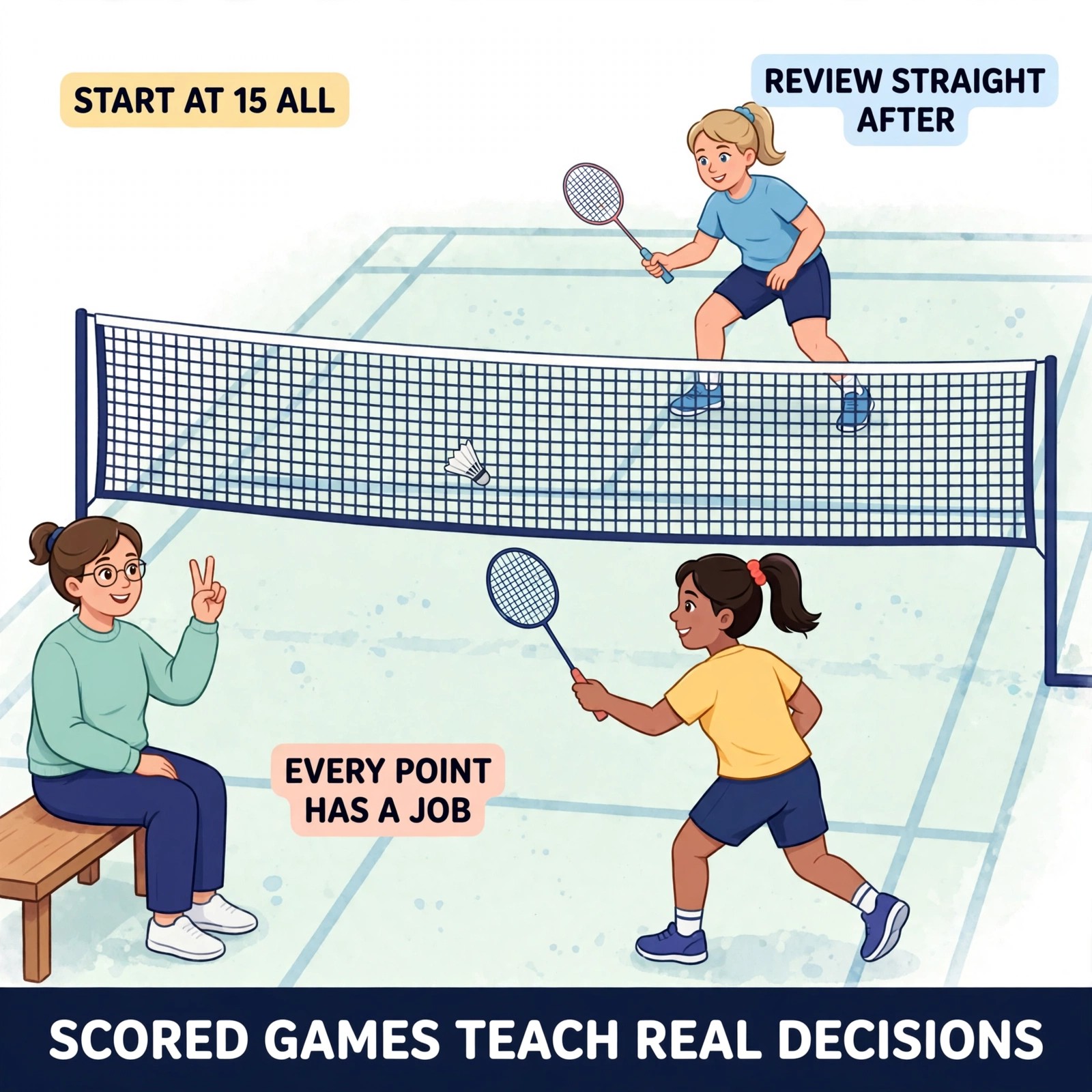
Tactics that only work at five all are decorations. Matches are decided at the tight end, where hands shake and simple plans feel hard to remember. Pressure drills visit that end on purpose: games starting at 15 all or 18 all, serves played under an announced tight score, patterns that must be executed while tired in the last ten minutes of a session. The point is not suffering. The point is familiarity. A plan you have executed at 18 all forty times in training has a chance of appearing in a real match. A plan tried only when fresh usually stays in the changing room. Start scores are chosen to test, not to crush; the aim is a heartbeat you recognise, at a level you can still think through.
Pressure also exposes which parts of a tactic are real. Under a tight score, complicated patterns collapse to their first shot, fancy choices vanish, and only the rehearsed links survive. Coaches watch that collapse with interest, because it shows the player exactly what to simplify. Most players leave pressure sessions with shorter plans and better results, which feels backwards until you have lived it. In matches, the plan that survives is the one you can still remember while your heart is loud, so build plans at a length your nerves can carry. Simplification is a coaching decision, not a surrender: a two shot plan executed calmly beats a five shot plan remembered in pieces.
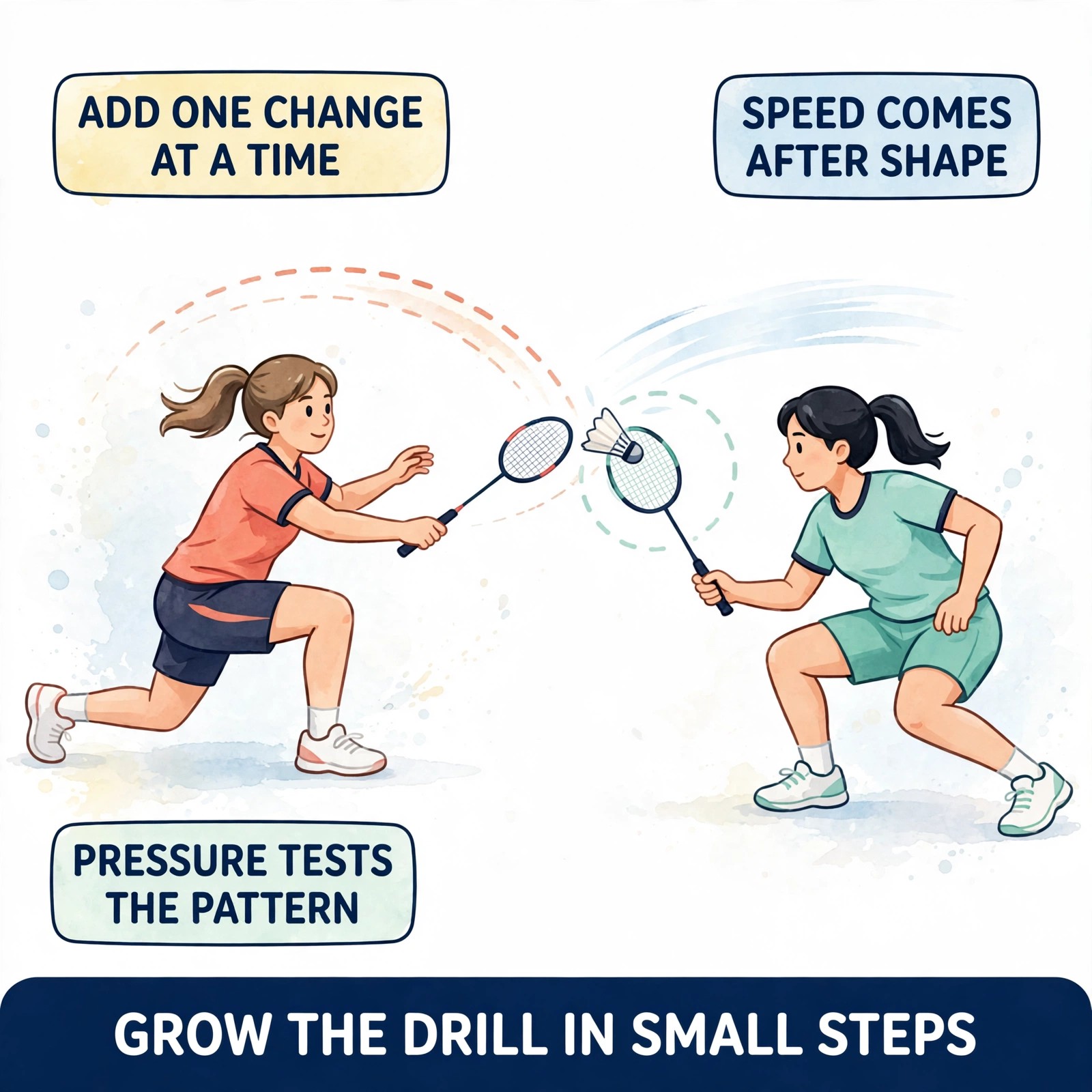
There is a discipline inside pressure work: change one thing, then judge. A player who changes serve, pattern and pace in the same rally can never learn which change worked. In our scored games, adjustments are announced before the rally and reviewed after three rallies, so cause and effect stay connected. That habit, more than any single pattern, is what experienced players mean by match craft. It turns a match from weather you endure into a problem you are solving, one measured change at a time. Judge the change fairly too: a change that fails against a stronger opponent may still be right, so judge it against similar rallies, not single outcomes.
Tactics Check #5
Review And Adjust: Turning Drills Into Match Plans
Drills become tactics only when matches talk back. After a scored game, write three lines: the pattern that scored, the pattern that leaked, and one fix to train next week. The lines must be short enough to write while tired and honest enough to sting slightly. Over a month, the lines start naming the same fix from different matches, and that repeated line is your real tactical weakness, identified by your own evidence rather than by a coach’s opinion or a bad evening’s mood. Three lines fit on a phone note, a racket bag tag or the back of a score sheet; the medium does not matter, the honesty does.
Then the next week’s drills aim at the fix. If the leak is replies to your serve being rushed, the serve and third shot pattern gets the reps. If your clear stops reaching the back line late in games, stamina and clear quality share the session. This loop, match, review, targeted drill, match again, is the whole engine of tactical growth. Players who skip the review drill randomly and improve randomly. Players who close the loop improve on purpose, and can usually point to the month each weakness left. The loop also protects motivation: a player who can see last month’s leak closing has evidence that the work works, written in their own hand.
Expect tactics to grow in layers, not leaps. First your serve starts rallies with a purpose. Then one pattern becomes reliable. Then your reads arrive a rally earlier. Then tight scores stop erasing your plans. Each layer is unspectacular and each one wins rallies the old you donated. Measure the growth in review lines and rally shapes, not in single results, because single results lie in both directions. The player who keeps the loop running for a season becomes the player others describe as hard to play against.

Myth vs Reality
Myths About Drills And Tactics
The first myth says tactics are trick shots and secret plays saved for big points. Trick shots are decorations; they appear in highlights because they are rare. The rallies that decide matches are built from serves placed with intent, patterns repeated with small changes, and replies chosen early. A player waiting for the magical play usually donates the ordinary points that make the magical one necessary. Tactics are mostly the art of doing simple things on purpose, in the right order, for longer than the opponent can. Count the shots in a long rally and most of them are plain: clears that hold depth, drops that hold the tape, drives that stay flat.
The second myth says plans die on first contact, so planning is pointless. Half of that is true: no plan survives unchanged. But a player with a simple plan adjusts it; a player with no plan has nothing to adjust, only impulses to follow. The pattern that gets read can be varied; the serve that gets attacked can be moved. Planning is not a promise that the rally will obey you. It is a starting shape that gives your adjustments somewhere to start from, and that is worth a great deal at 18 all.
The last myth says tactical players are born thinkers and the rest of us just hit. Thinking on court is a trained habit like any other: patterns rehearsed until they are automatic, reads practised against varied feeds, reviews written until they are routine. The calm thinker across the net was once a guesser too; the difference is a few seasons of drills that carried decisions and reviews that closed the loop. Nobody is born with a pattern library. Libraries are built, one rehearsed pattern at a time.

Why Choose Us
Why Players Choose ST Badminton Academy
Players choose our tactics coaching because drills here carry decisions from the first session. In Setapak, in groups of no more than four students, patterns are built around your actual game: your serve, your strongest reply, the corner you defend late. You will not be handed a champion’s playbook. You will build two or three patterns that fit your shots, test them in scored games, and adjust them from evidence, which is how tactics survive contact with real opponents. That fit matters more than fashion: a pattern built on a reliable clear and an honest net game will outscore a copied pattern built on a smash landed twice a session.
The second reason is the review loop is enforced kindly. After scored games, three lines get written before the next drill starts: what scored, what leaked, one fix. The coach chairs the loop until it becomes your habit, then checks it monthly. Players tell us the surprise is how small the fixes are: a serve moved one step wider, a second shot changed, a read named. Small fixes, trained for a week each, are what a season of tactical growth actually looks like. The loop takes five minutes. It is the cheapest coaching on this page, and the part players resist longest, because writing honestly is harder than hitting honestly.
The third reason is pressure on the timetable. Tight starts, announced scores and conditioned games appear every week, so your tactics are stress tested before a real opponent does it for free. Plans that collapse get simplified in training, where collapse is cheap. If your drills feel good but your matches feel planless, the missing piece is rarely more technique. It is drills that ask questions and reviews that answer them, and both are trainable here. Bring one match you keep losing the same way, and the first session starts from its rallies rather than from a drill catalogue.
FAQs: Training Drills And Game Tactics in Malaysia (KL)
Questions about tactics usually come from players whose shots are fine and whose results confuse them: rallies feel even, then the same few points decide every game. Here are the answers we give most often, in plain words: tactics are patterns, reads and adjustments, and all three are built inside ordinary drills done on purpose.
Can a beginner use training drills to build game tactics in Setapak or Gombak?
Yes. Beginners at our Setapak sessions start tactical work in their first weeks, with one simple pattern built around the shots they already own: a placed serve, an expected reply, a reply to that. Groups stay at no more than four students, so the coach builds your patterns around your real game.
What is the first tactical habit a new player should build in KL?
Give your serve a job. Before patterns or trick shots, decide where each serve is going and what reply you hope it invites. That one decision turns your first shot from a rally starter into a tactic, and it teaches you to think in sequences instead of single shots from your very next session.
Why do my tactics fall apart late in matches at a serious level?
Because pressure audits your preparation. Fresh, your patterns feel available; tired and tight, only the rehearsed links survive, and unrehearsed intentions quietly vanish. The fix is pressure inside training: tight starts, announced scores, and patterns executed in the last ten minutes, so late match conditions feel like a visited place.
I drill well all week but play without a plan in matches. Should I add more drills or add reviews first?
Add reviews first. More drills without feedback usually install the same habits faster. Three honest lines after a match, naming what scored, what leaked and one fix, aim your existing drills at something real. Once the loop is running for a month, added drills start paying, because each one has an assignment.
How can I train game tactics when I practise on my own in between classes?
Rehearse patterns, not just shots. Shadow your serve and third shot as one unit, practise your clear with its likely replies in sequence, and write three lines after every game you play anywhere. Solo time can install patterns and reviews completely; it only cannot test them, so bring the results to your next session.
Do you use drills to coach game tactics in badminton training near Wangsa Maju?
Yes. Our academy is based in Setapak, a short drive from Wangsa Maju, and tactical drills run inside regular sessions there: patterns built around your game, conditioned games, and reviews after scored sets. Groups stay at no more than four students, so your tactics are coached against your actual leaks, not a generic list.
Where does ST Badminton Academy teach game tactics in Malaysia?
We coach in Setapak, Kuala Lumpur, and players join us from across the Klang Valley. Game tactics sit inside normal sessions in groups of no more than four: decisions inside drills, patterns kept short, pressure visited weekly, and a three line review that aims the next week’s work.
How do I book a trial session to work on my game tactics?
Book a trial session with us in Setapak and bring your racket, court shoes and one match you keep losing the same way. The coach will watch your game, name the first pattern that fits your shots, and set the drills that install it, with a score attached from day one.
What makes Mr Eric Chuar a suitable coach for game tactics and badminton?
Mr Eric Chuar coaches the academy sessions himself, with more than 15 years of coaching in Malaysia and Singapore. He teaches tactics the way this page describes: drills that carry decisions, patterns short enough to survive nerves, pressure on the timetable, and reviews that say what scored and what leaked in plain words.
Game Tactics Training in Action
We benchmark our tactics coaching against World Badminton (BWF) coaching standards and our own academy values: before any player trusts a training plan, they deserve honest checks. You can verify our coaches' credentials through the Badminton Association of Malaysia (BAM) coach education pathway.
Our tactics standards are plain. Every drill carries a decision, a score or a limit. Patterns stay short enough to survive nerves. One change at a time, judged over three rallies. Reviews in three lines, written the same day. Any session that leaves you with more shots but no plan has missed the point.
| Factor | Players Who Just Hit | Players Who Drill With A Plan TACTICS |
|---|---|---|
| Frequency | 1 or 2 times a week. Mostly for fun and sweat. | A tactical player rehearses two and three shot patterns, so rallies have a shape before they start. |
| Drills Focus | Basic static feeding. Minimal footwork pressure. | Reads are trained against varied feeds, so opponent cues get noticed early. |
| Physical Conditioning | Rarely included. Just playing games on court. | Core, agility, and speed training included in every session to prevent injury and build stamina. |
| Tactical Awareness | "Just hit it over." No real game plan. | Video analysis, point construction, and learning to read the opponent's game. |
| Coach Ratio | Large groups (8-10 kids). Coach barely watches you. | Max 4 students. Mr Eric Chuar personally corrects every stroke and movement detail. |
| Goal Setting | Fun and exercise. | Reviews after scored games name one fix, so next week's drills aim at something real. |
| Long Term Result | Good recreational player. | A tactical player: builds patterns, reads early, and adjusts one thing at a time. |
Badminton Training Drills For Game Tactics in Kuala Lumpur
Start with one pattern. Book a trial session in Setapak, train in a group of no more than four, and the coach will watch your game, name the pattern that fits your shots first, and set the drills that install it. Bring your racket, your court shoes, and one match you keep losing the same way.


