
 All languages
 Chinese (Simplified)
 Chinese (Traditional)
 English
 Indonesian
 Japanese
 Korean
 Malay
 Thai
 Vietnamese


How Can You Stay Engaged And Focused During Badminton Training Sessions (Focus Guide)
Every player knows the two versions of a training session. In one, the two hours fly: every drill has a point, the rallies feel sharp, and you walk off court knowing exactly what improved. In the other, the same two hours drag. Your body is on court but your head is somewhere else, thinking about work, school, your phone, or the mistake from three rallies ago, and the session ends with nothing really trained. The difference is rarely effort. It is attention. Focus is not a mood you wait for before training; it is a skill you steer during training, with small habits that give your mind one clear job at a time. This page builds those habits in order: goals that aim the session, drills broken into pieces, feedback you can count, variety that keeps the brain awake, and resets for the moments focus slips.
Focus Check #1
One Theme Per Session: Goals That Aim Attention
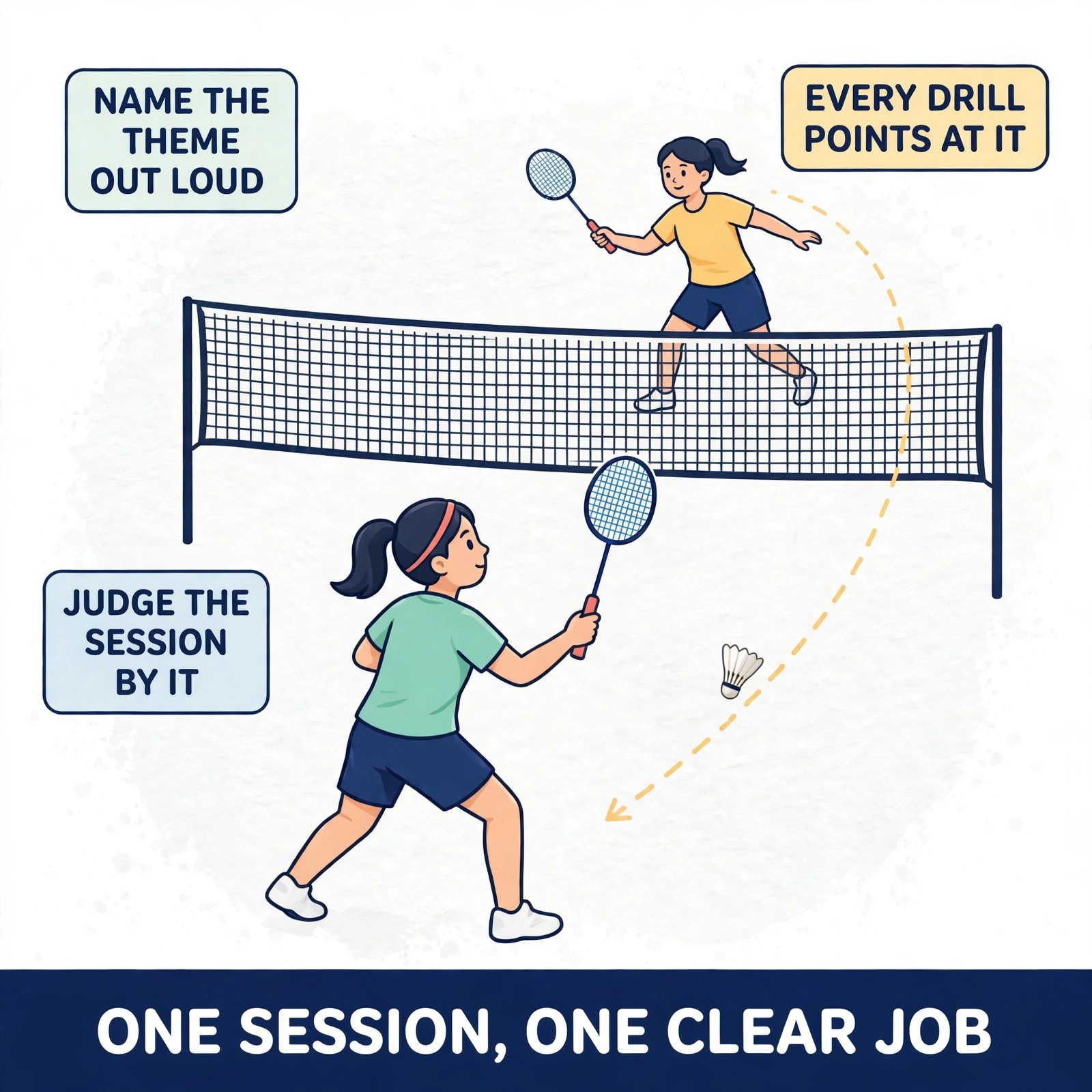
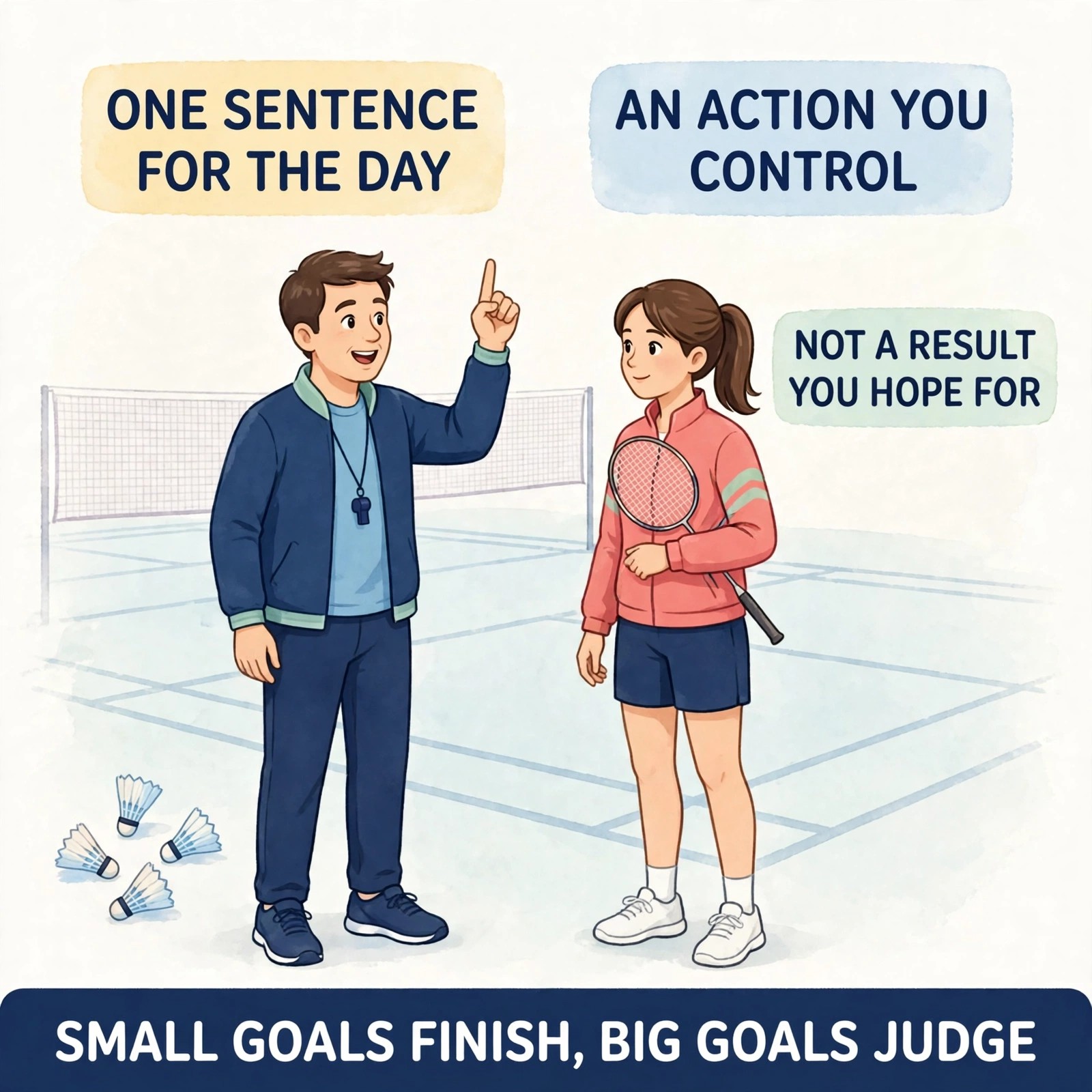
A focused session starts before the first shuttle is fed. Decide what the session is for, in one sentence you could say out loud: today is net control, today is back court defence, today is serve and third shot. That sentence does quiet work all session long. When a rally drifts, it tells you what to return to. When a drill gets hard, it tells you why you are doing it. Players who skip this step train everything a little and focus on nothing for long, because every drill looks equally important and equally optional. In our Setapak sessions the theme is named at the start, out loud, and the drills that follow all point at it, so nobody spends the evening guessing what the session wants from them.
Keep the goal smaller than your ambition. A session goal like fix my whole backhand invites your mind to judge every shot against everything, and judgement is where attention goes to die. A goal like keep the racket up after every backhand clear gives the mind one thing to watch, and one thing is exactly what attention handles well. Small goals also finish. You can leave the hall knowing the job got done, and that finished feeling is what makes the next session easier to start. Coaches call this a process goal: it names an action you control, not a result you hope for, and actions are where focus lives.
Focus Check #2
Short Blocks, One Cue: Drill Design For Focused Reps
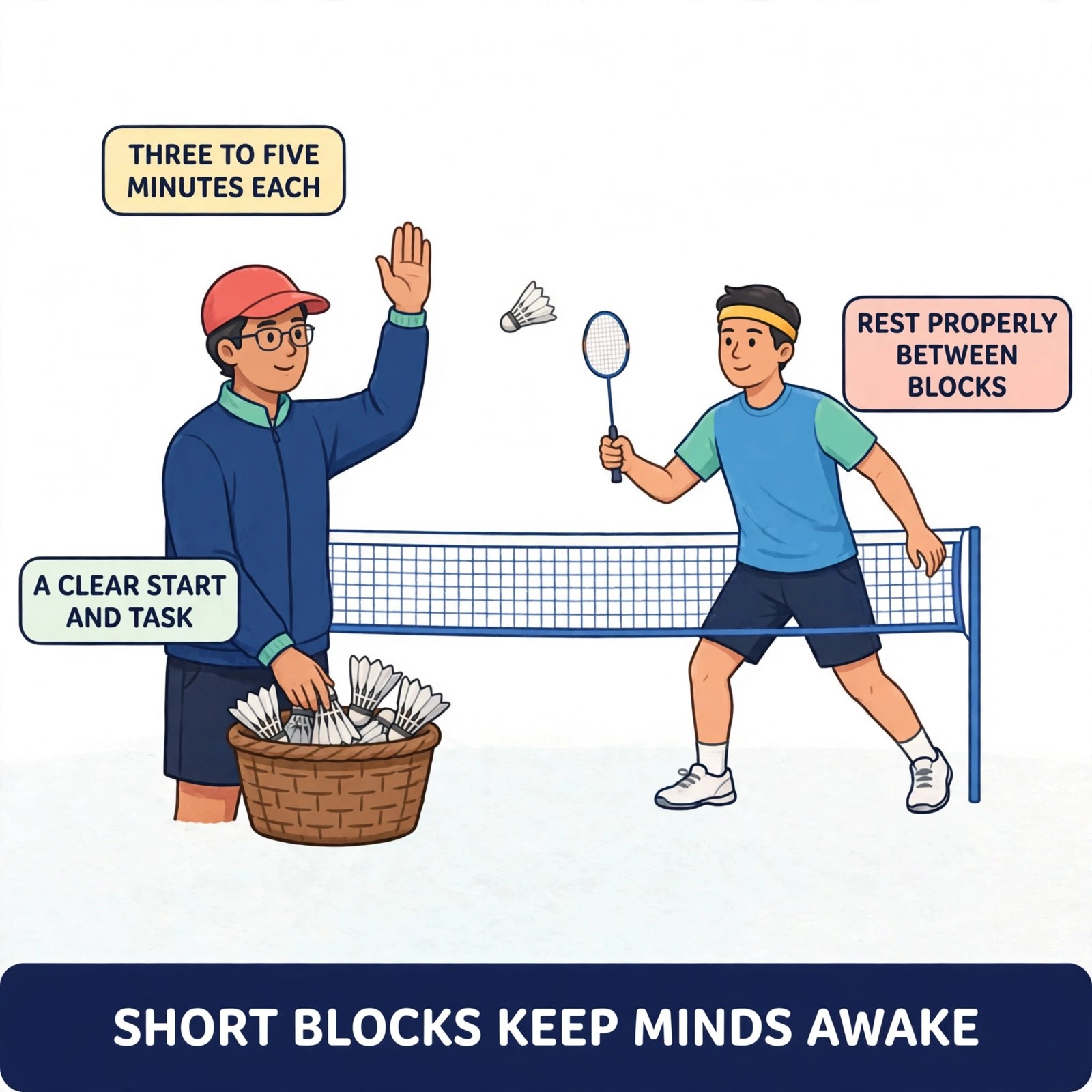
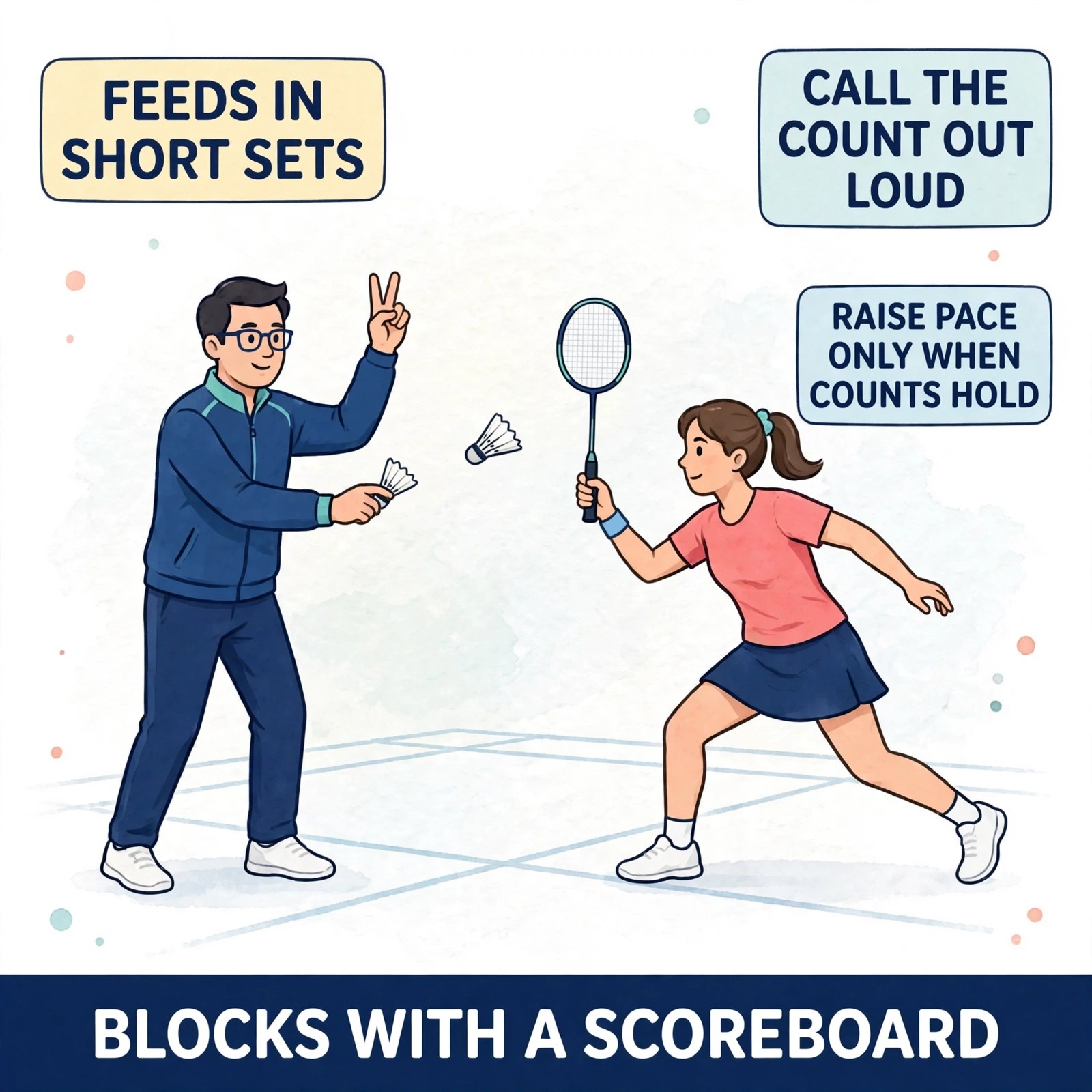
Long drills are where focus goes to sleep. A twenty minute feeding block asks for twenty minutes of steady attention, and most minds, adult or junior, will wander somewhere in the middle and start playing on autopilot. Break the same work into short blocks of three to five minutes, with a clear start, a clear task and a short rest between blocks, and attention stays awake because the finish line is always close. Short blocks also make quality visible: you can feel the difference between a sharp block and a sloppy one, and so can your coach. In a group of no more than four, blocks can be sized to each player, so nobody is left drilling on empty while the others rest.
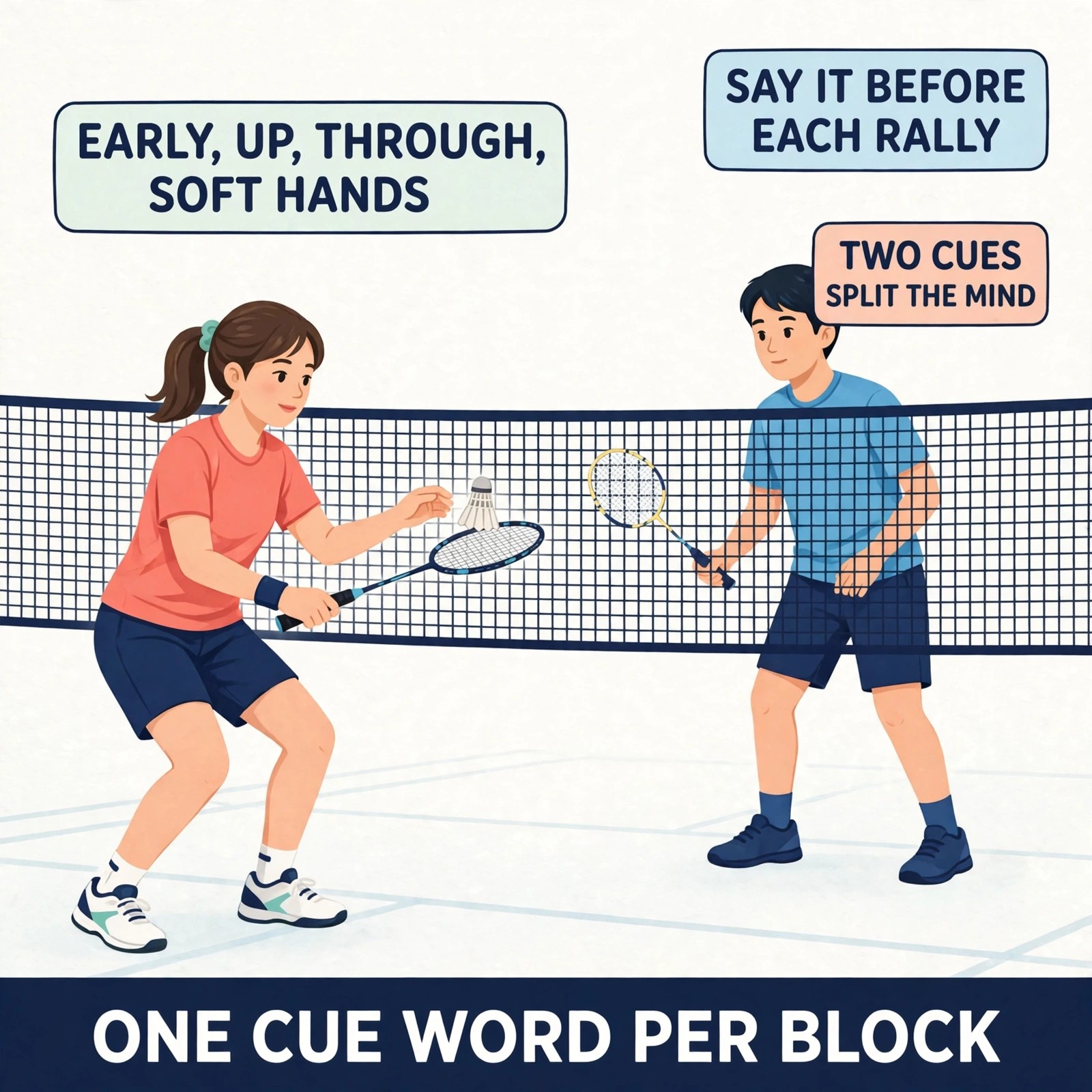
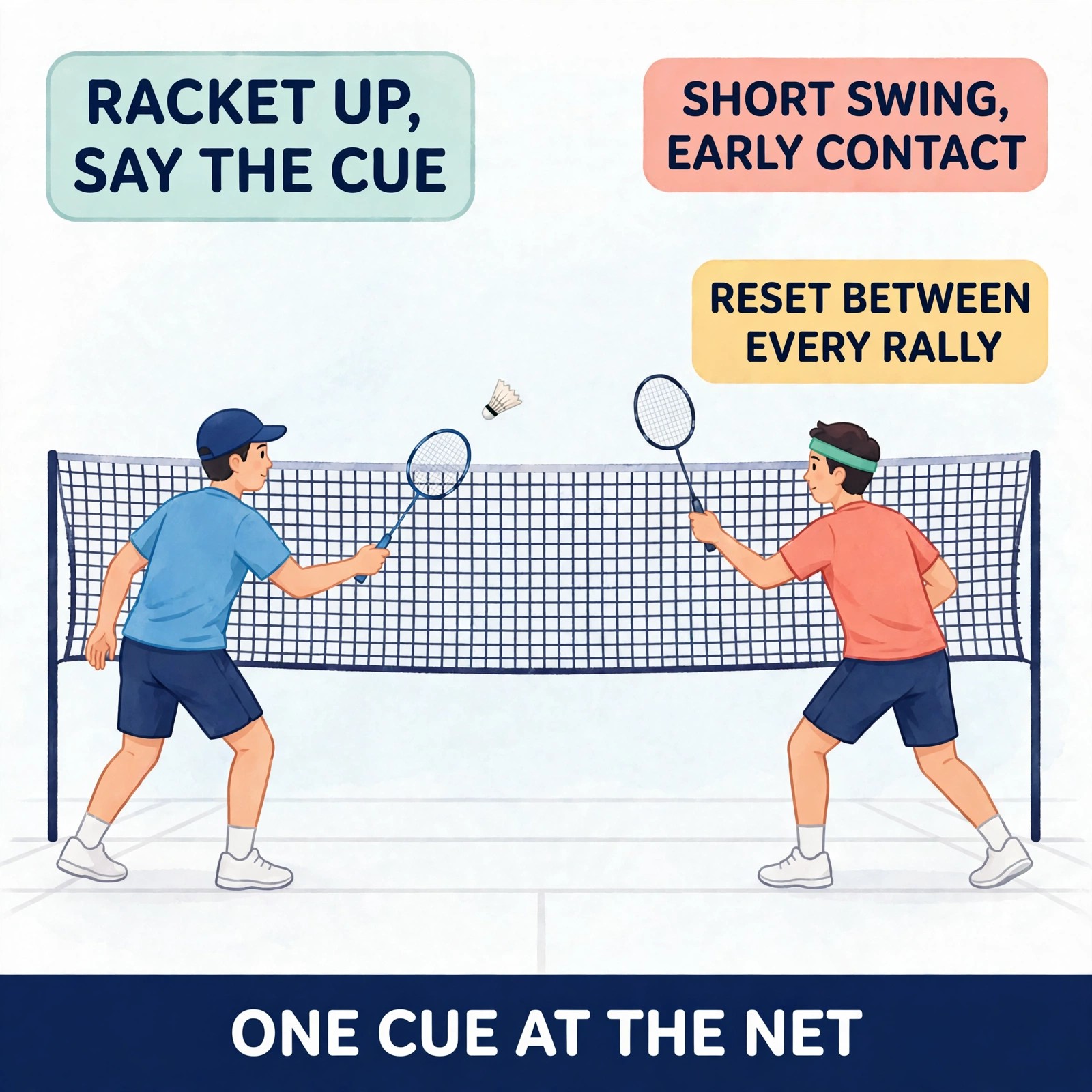
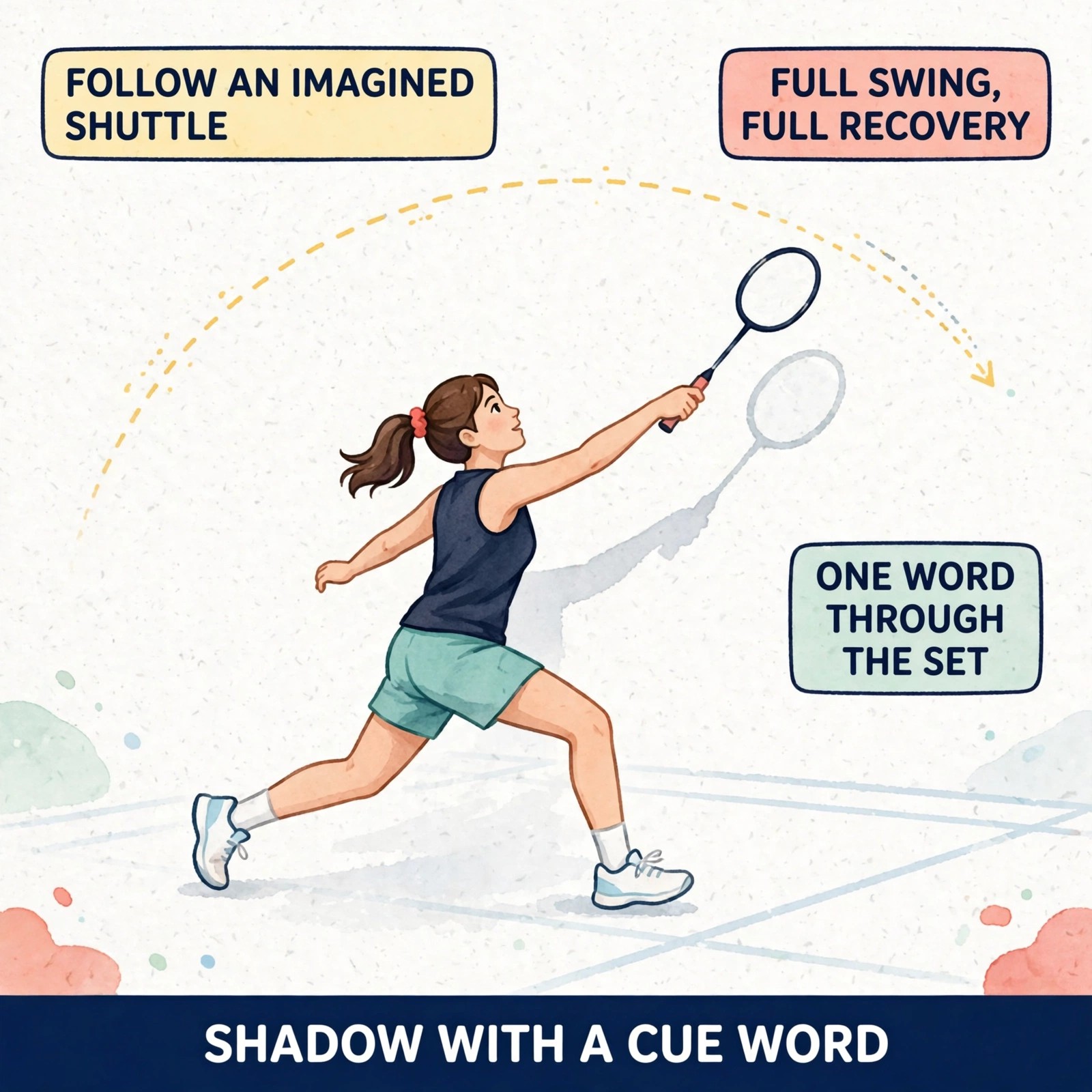
Inside each block, give the mind one cue word. A cue is a single short instruction you repeat to yourself: early, up, through, soft hands. One cue per block is plenty. Two cues split the mind, and three cues are a lecture your brain holds while the rally happens without it. Pick the cue from the last mistake you made or the next shot you want, say it quietly before each feed or rally, and let everything else go for those few minutes. Players are often surprised how much calmer a hard drill feels when the mind has one word to hold instead of a commentary to run.
Break the drill itself down too. A full skill like the overhead clear has pieces: the turn, the reach, the contact, the recovery. Training one piece at a time gives your attention a small, clear target and gives your body clean repetitions of the part that actually breaks. Master the pieces in order, then join them back into the whole shot. This is slower in the first session and much faster across a month, because you stop rehearsing the same hidden error inside a full speed skill. It also protects confidence: a piece can be fixed today, while a whole shot can feel broken for weeks.
Focus Check #3
Feedback And Partners: Counts That Keep Minds On Task
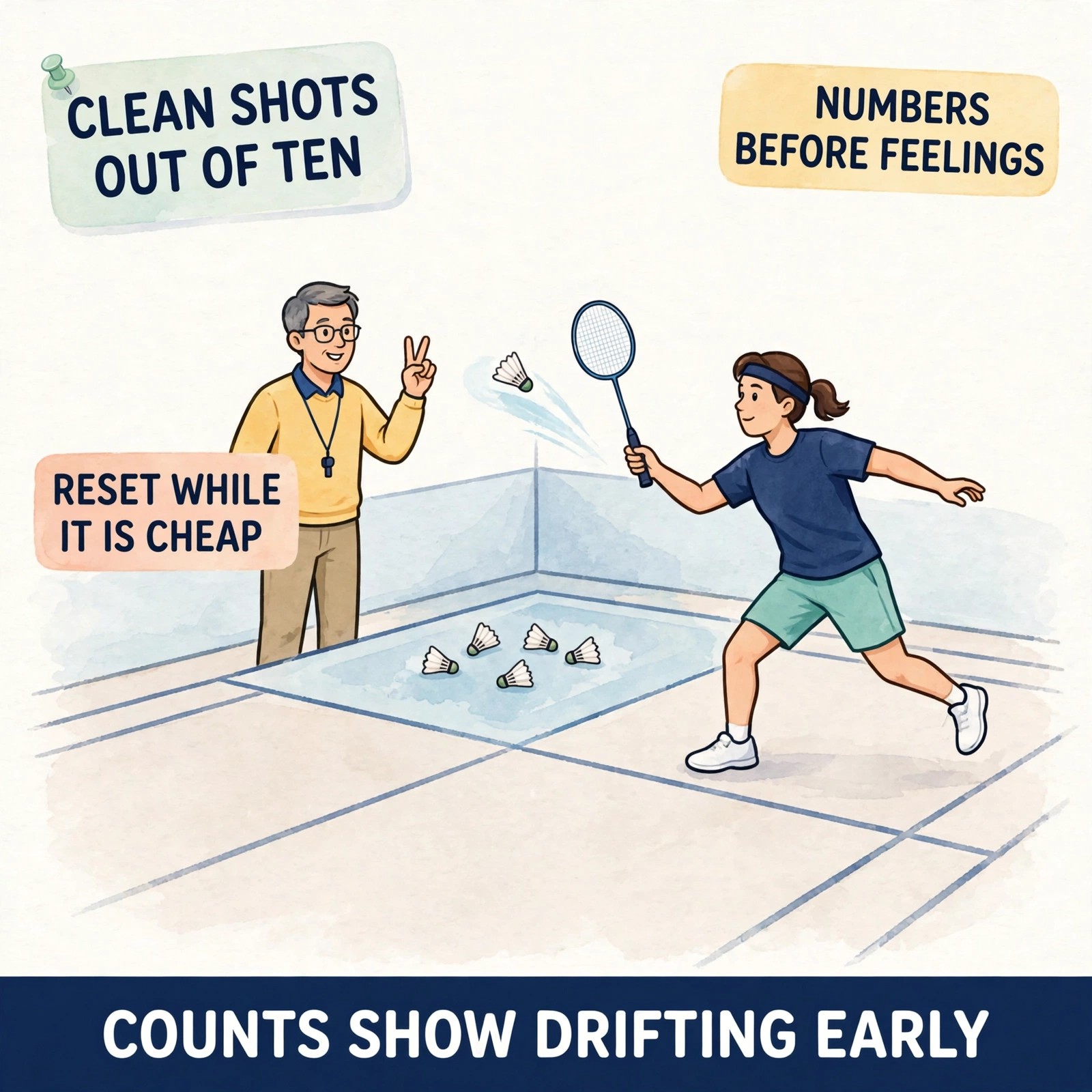
Focus sharpens when it gets feedback. Counting is the simplest feedback there is: clean net shots out of ten, serves into the target zone out of twenty, rallies kept alive past six shots. A count gives the mind a scoreboard to attend to, and attention follows scores the way eyes follow a moving shuttle. Counts also tell the truth kindly. A drifting mind shows up in the numbers before it shows up in your feelings, so you can reset early instead of discovering at the end of the session that the last half hour was played in a fog.
Feedback works best when it is quick and plain. After a block, one sentence: what worked, what leaked, what changes next block. Long speeches between drills cool the body and overload the mind, and a mind carrying ten corrections plays the next block thinking about all ten and executing none. In our sessions the coach keeps feedback to the one fix that matters most right now, and players learn to give themselves the same short version. Short feedback loops keep the session moving and keep attention where it belongs: on the next repetition, not on a review of the last twenty.
Your training partners are part of your focus system. A partner who feeds honestly, counts out loud and calls the score keeps your mind on the work without any willpower from you. A partner who chats between every rally, checks a phone at the side of the court, or feeds lazily will pull your attention away no matter how determined you feel. Choose partners and groups the way you choose drills: the people around you are either holding your focus up or quietly spending it. This is one reason our groups stay small and structured; the room itself is set up so attention has fewer places to leak.
Focus Check #4
Variety On A Stable Core: Beating Boredom Honestly
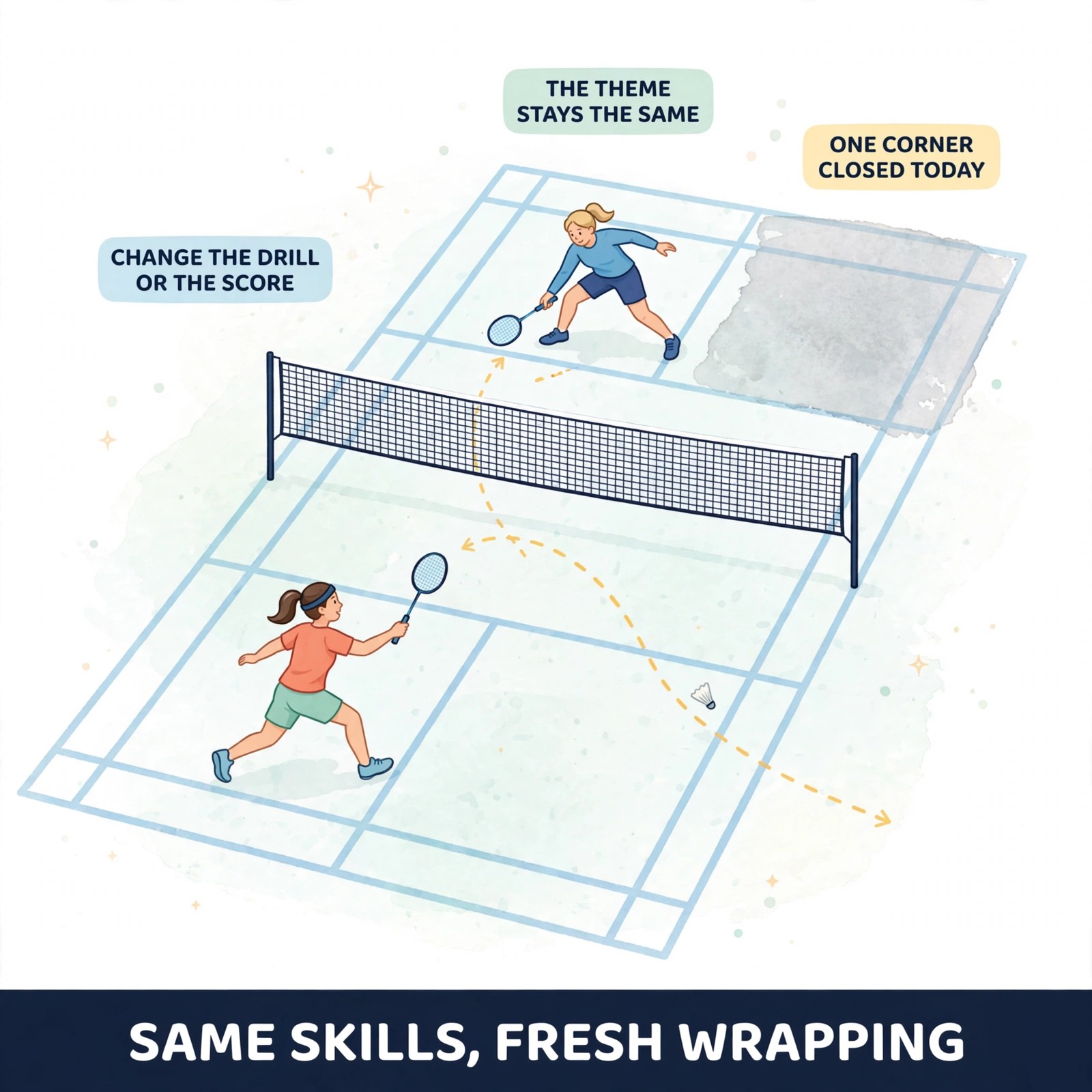
Boredom in training is usually a design problem, not a character problem. The same drill, at the same pace, in the same order, week after week, teaches the brain that nothing new is coming, and a brain expecting nothing new stops paying close attention. Variety wakes it up: change the drill, change the scoring, change the partner, change the order of the session. Even small changes work. Move footwork before feeding instead of after. Play the last game with one corner closed. Let a different player choose the final drill. The skills being trained stay the same; only the wrapping changes, and the wrapping is what your attention notices.
Novelty has a limit, though. Change everything every week and nothing gets enough repetitions to settle, and focus scatters across ten half learned tasks. The balance we coach is a stable core with fresh edges: the session theme and main drills stay familiar for a few weeks, while one element rotates to keep the mind curious. Think of it as the same meal with a different side dish. Your body gets the repetitions it needs to groove a skill, and your brain gets just enough surprise to stay at the table.
Games are variety with a scoreboard attached. Short conditioned games at the end of a session, one area closed, winners staying on, first to seven, pull the day’s theme into rally pressure while the legs are tired and the mind would rather switch off. That is exactly when focus practice counts most, because matches are lost in the same tired minutes. Keep the games short, keep the scores real, and let the theme decide the condition, so the fun still points at the session’s one job.
Focus Check #5
When Focus Slips: Resets, Rest And One Line Logs
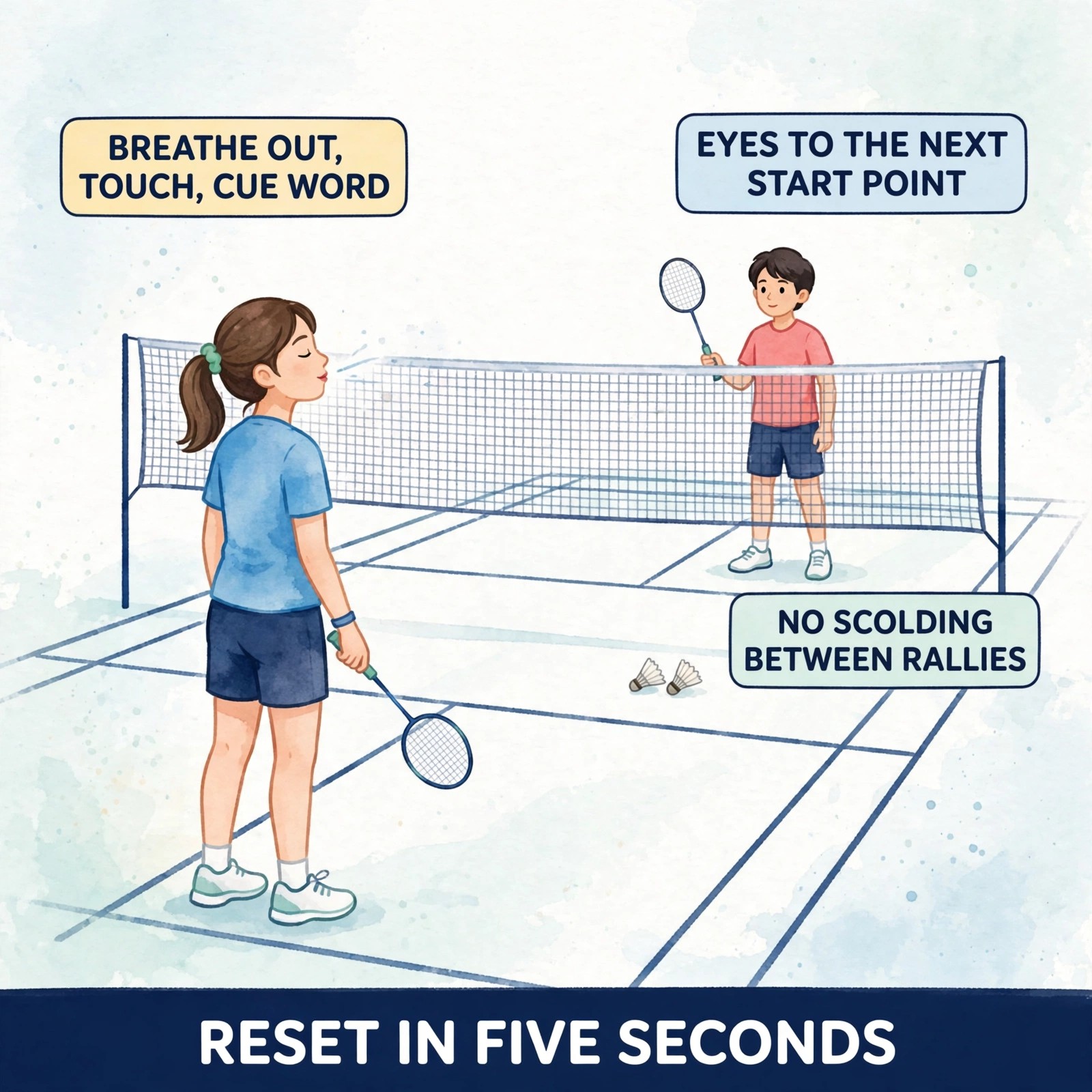
Even with every habit in place, focus will slip mid session. A bad miss, a comment from the next court, a thought about tomorrow: attention goes, and the next two rallies are played by your body alone. The skill is not never slipping. The skill is noticing quickly and resetting on purpose. Build a reset routine you can run in the seconds between rallies: breathe out slowly, bounce the shuttle on your strings or touch the floor with your racket, say your cue word, and look at the spot where your next shot will start. A rehearsed reset takes five seconds and returns the whole mind, while an unplanned scolding takes two rallies and returns nothing.
Between sessions, protect the mind you bring to the hall. Sleep is the biggest legal focus aid there is: a short night shows up as a wandering mind long before it shows up as tired legs. Food and water matter in ordinary ways; a session trained hungry and thirsty is a session spent thinking about dinner. And keep the phone out of the training bag routine: leave it in the bag, on silent, for the whole session. Most players do not have a focus problem on court. They have a phone glow problem at every break, and the glow follows them back into the next drill. Lasting trouble concentrating, low mood that does not lift, or exhaustion that rest does not fix are not coaching matters; they deserve proper support from a doctor or counsellor, and asking for that support is a strong decision, not a weak one.
Finish each session by writing one line: what the session trained, and the count or moment that proved it. One line takes a minute and does two jobs. It closes the session in your mind, so training stops replaying during dinner, and it opens the next session, because you arrive knowing where you left off. Focus across a season is built from these small closed loops: a named theme, short blocks, honest counts, a reset when you slip, and one line when you finish. None of it is dramatic. All of it is trainable, exactly like a clear or a net shot.
Myth vs Reality
Myths About Focus And Discipline
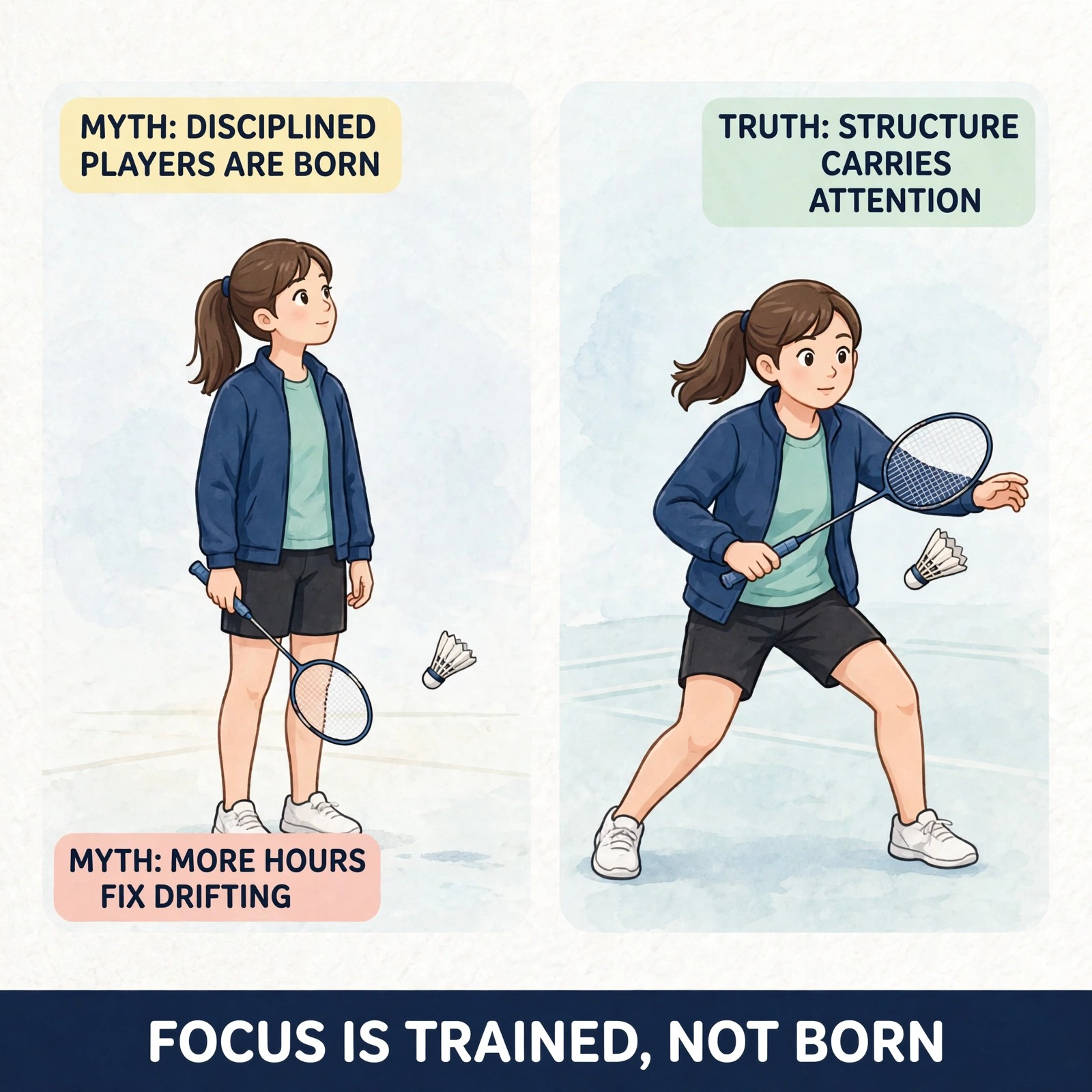
The first myth says focused players are simply born disciplined, and the rest of us just have distractible minds. Watch a so called disciplined player train and you will see systems, not willpower: a named theme, blocks with timers, a cue word, a partner counting out loud. Their attention looks natural because the habits carrying it have gone quiet with practice. Attention behaves like fitness: it responds to training, it fades without it, and it differs by design far more than by birth. Nobody in our hall is asked to become a different person. They are asked to run a better session structure, and the focus follows the structure.
The second myth says more hours automatically means more improvement, so unfocused players just need longer sessions. Hours played on autopilot mostly rehearse autopilot. Two hours with a theme, blocks and counts will out train four hours of drifting for almost every club player, and the shorter sharper session is also the one a busy school or work week can actually hold. If your training time is limited, that is good news: the fix for a wandering mind is rarely more time. It is better use of the time already on the calendar.
The last myth says focus means shutting out everything and feeling intense for two hours. Real focus is lighter than that. It is attention placed on one job, wandering sometimes, and returning without drama when it does. Players who demand total intensity burn out by the third week and start dreading sessions, which is the opposite of engagement. The players who stay engaged for years treat focus as a rhythm: lean in for a block, rest properly between blocks, reset when you slip, and enjoy the games at the end. Engagement is a pace you can keep, not a fire you must hold.
Why Choose Us
Why Players Choose ST Badminton Academy
Players choose our sessions because the structure holds their focus for them. In Setapak, in groups of no more than four students, every session opens with a named theme, runs in short blocks with one cue at a time, and keeps counts that the players can see. Nobody has to generate motivation or discipline out of thin air; the session design carries the attention, and the player just does the next rep. That is a kinder and more reliable way to train, and it works for busy adults and school juniors alike.
The second reason is the feedback speed. In a small group the coach sees a drifting mind in the counts before the player feels it, names the one fix that matters, and resets the block on the spot. Players are not left to wonder whether the session did anything; they leave with a number and a next step. Over a month those numbers tell a story that feelings alone never could: the clean contacts rise, the resets get faster, and the player starts trusting their own attention.
The third reason is variety with a spine. Our sessions rotate drills, partners and games around a stable theme, so the mind stays curious without the training scattering. Flat weeks are treated as information, not failure: the theme or the load changes, and training moves on. If your sessions have started to feel like time served instead of skills built, the answer is usually structure, not more hours, and we would like to show you the difference in one session. Bring the drill you find dullest, and we will rebuild it with a score attached.
FAQs: Staying Focused And Engaged In Badminton Training in Malaysia (KL)
Questions about staying focused usually arrive after a flat month: the sessions happened, the hours were spent, and nothing feels sharper. Here are the answers we give most often, in plain words: name the theme, shorten the blocks, count something, and reset kindly when your mind slips.
Can a beginner learn to stay focused in badminton training in Setapak or Gombak?
Yes. Beginners focus best with a named theme from their very first session: one thing to watch, like keeping the racket up after each shot. In our Setapak sessions the theme is set out loud, blocks stay short, and groups stay at no more than four students, so your attention gets coached directly.
What is the first focus habit a new player should build in KL?
Name one theme before you train. Before variety, before video, give the session a single sentence job, like net control today, and let every drill point at it. That one habit gives a wandering mind a home to return to, and it makes the end of the session easy to judge honestly.
Why does attention drift late in matches at a serious level?
Because casual play rarely punishes drifting. At a serious level the pace rises, the patterns repeat, and a mind that leaves for two rallies returns to a lost point. The fix is trained attention: short blocks, one cue word per block, and counts that show drifting early so you can reset before it costs games.
I start sessions well but drift badly by the end. Should I lengthen my sessions or shorten my blocks first?
Reset, do not scold. Drop the last rally, breathe out slowly, say your cue word, and look at where the next rally starts. If drifts keep repeating across weeks, shorten your blocks and check your sleep first. Trouble concentrating that lasts for weeks deserves proper support from a doctor or counsellor.
How can I keep my focus sharp when I train on my own in between classes?
Keep one job and one cue. Shadow your footwork while repeating a single cue word, play controlled shots against a wall in short blocks, and count your clean contacts out of twenty. Rest between blocks properly, write the count down after each session, and let the number, not your mood, judge the work.
Do you coach focused training in badminton near Wangsa Maju?
Yes. Our academy is based in Setapak, a short drive from Wangsa Maju, and focused session structure runs inside regular sessions there: named themes, short blocks, counted drills and rehearsed resets. Groups stay at no more than four students, so your attention is coached personally rather than left to chance.
Where does ST Badminton Academy teach focused badminton training in Malaysia?
We teach in Setapak, Kuala Lumpur, and students join us from across the Klang Valley. Focus sits inside normal sessions in groups of no more than four: one theme per session, blocks of a few minutes, quick plain feedback, and phones kept in bags so attention stays on court.
How do I book a trial session to work on staying focused?
Book a trial session with us in Setapak and bring your racket and court shoes. The coach will set your first session theme with you, give you a cue word to hold, and count your clean contacts in a few simple drills so you can feel the structure working in one visit.
What makes Mr Eric Chuar a suitable coach for focus and attention in badminton?
Mr Eric Chuar coaches the academy sessions himself, with more than 15 years of coaching in Malaysia and Singapore. He teaches focus the way this page describes: themes named out loud, one cue at a time, feedback short and plain, resets rehearsed, and no promise that attention will never wander, only that it can be trained to return.
Focused Badminton Training in Action
We benchmark our focus coaching against World Badminton (BWF) coaching standards and our own academy values: before any player trusts a training plan, they deserve honest checks. You can verify our coaches' credentials through the Badminton Association of Malaysia (BAM) coach education pathway.
Our focus standards are plain. Every session has one named theme. Blocks stay short, cues stay single, and counts stay honest. Phones stay in bags. Resets are rehearsed, not improvised in anger. Any session that leaves you more scattered than you arrived has missed the point, whatever the rally scores said that day.
| Factor | Players Who Just Show Up | Players Who Train With A Theme FOCUS |
|---|---|---|
| Frequency | 1 or 2 times a week. Mostly for fun and sweat. | A focused player names one theme for the session, so every drill points at the same job. |
| Drills Focus | Basic static feeding. Minimal footwork pressure. | Blocks run short with one cue each, so quality stays visible and drifting gets caught early. |
| Physical Conditioning | Rarely included. Just playing games on court. | Core, agility, and speed training included in every session to prevent injury and build stamina. |
| Tactical Awareness | "Just hit it over." No real game plan. | Video analysis, point construction, and learning to read the opponent's game. |
| Coach Ratio | Large groups (8-10 kids). Coach barely watches you. | Max 4 students. Mr Eric Chuar personally corrects every stroke and movement detail. |
| Goal Setting | Fun and exercise. | Counts and quick feedback keep the mind on the work, so autopilot never gets a long run. |
| Long Term Result | Good recreational player. | A focused player: aims the session, works in blocks, counts honestly, and resets without drama. |
Badminton Training For Staying Focused in Kuala Lumpur
Start with one themed session. Book a trial in Setapak, train in a group of no more than four, and the coach will set your first theme, your first cue word and your first count with you. Bring your racket, your court shoes, and the session habit you most want to fix.


