Eric Chuar Kids Badminton Coach (Patient Teaching That Builds Good Habits)
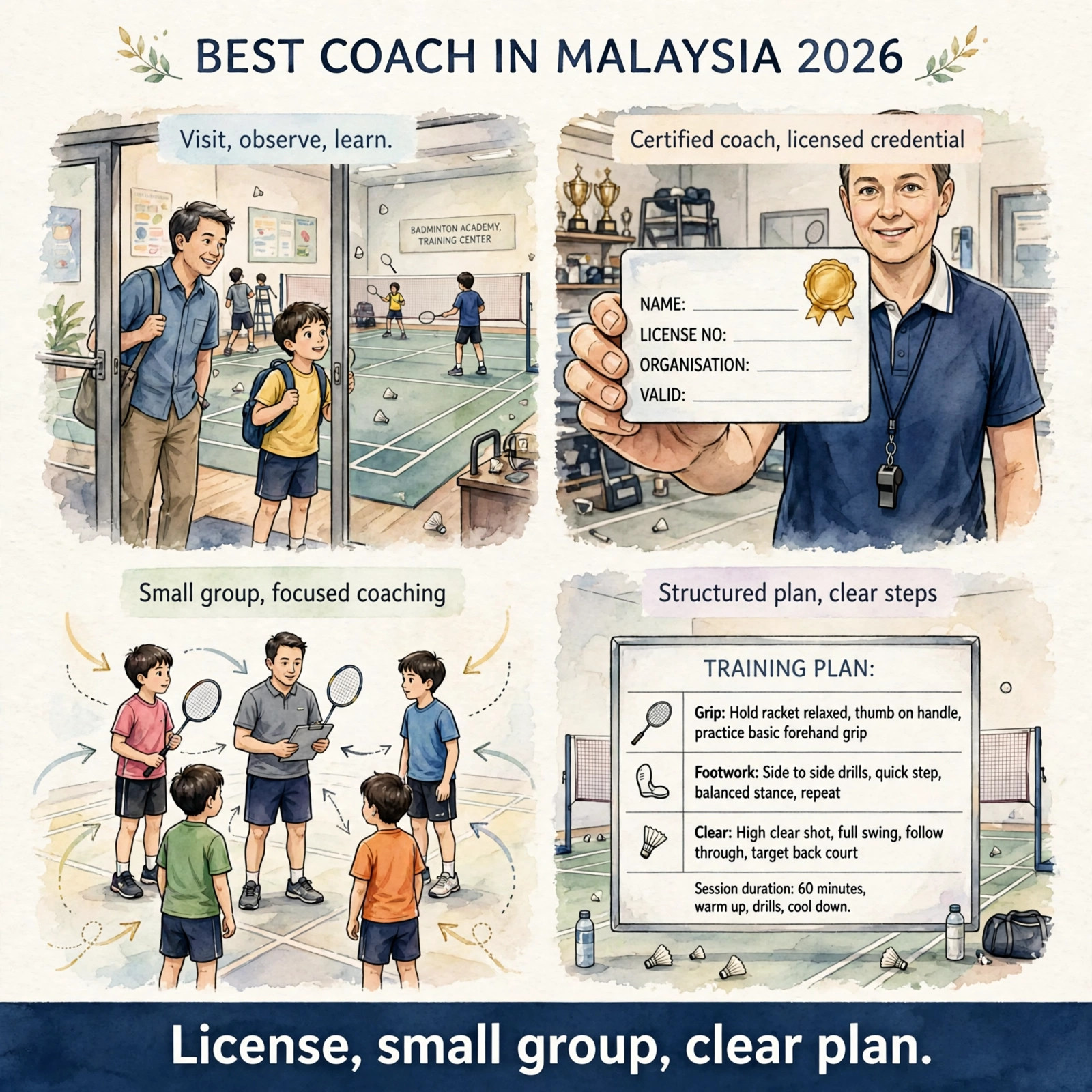
Parents looking for a kids badminton coach in Kuala Lumpur want one thing above all: a coach who teaches their child properly, with patience, and without bad habits that take years to fix. Eric Chuar, founder and head coach of ST Badminton Academy in Setapak, is that kind of coach. He has coached children for more than fifteen years in Singapore and Malaysia, and he holds a valid National Coaching License, Lesen C (SLKK Tahap I), issued by the National Coaching Academy (AKK), plus a National Level One Badminton Coaching Certificate under SPKK, a Sport Science Level One qualification, and a BAM entry level coaching qualification. He teaches children himself, in small groups of four at most, with grip and footwork before anything flashy. This guide explains how he teaches children, what parents should watch for, and how to tell good kids coaching from bad coaching in a single visit.

How He Teaches Children
How Eric Chuar Teaches Children: Patience, Structure, and Basics
Teaching children is a different skill from teaching adults, and Eric Chuar has spent more than fifteen years learning it in Singapore and Malaysia. A child who has never held a racket needs simple words, short drills, and plenty of movement. The coach has to keep the child engaged without turning the lesson into playtime with no learning. At ST Badminton Academy in Setapak, children learn in small groups of four at most, and the head coach teaches them himself. He knows every child’s name, every child’s weak shot, and every child’s mood that day, and he adjusts the lesson to fit.
The teaching follows a set order, and the order never changes for children. Grip comes first, footwork comes second, the clear comes third, and the smash comes later, once the basics hold up. That order protects children from the most common damage in kids coaching: bad habits taught early that take years to fix. A child who learns a wrong grip at the start will spend far longer unlearning it than learning it right the first time. Parents who watch a session can see the order working within minutes, and that is the point: good kids coaching is visible, not a secret.
Patience First
Patience First: Why Calm Coaching Works for Children
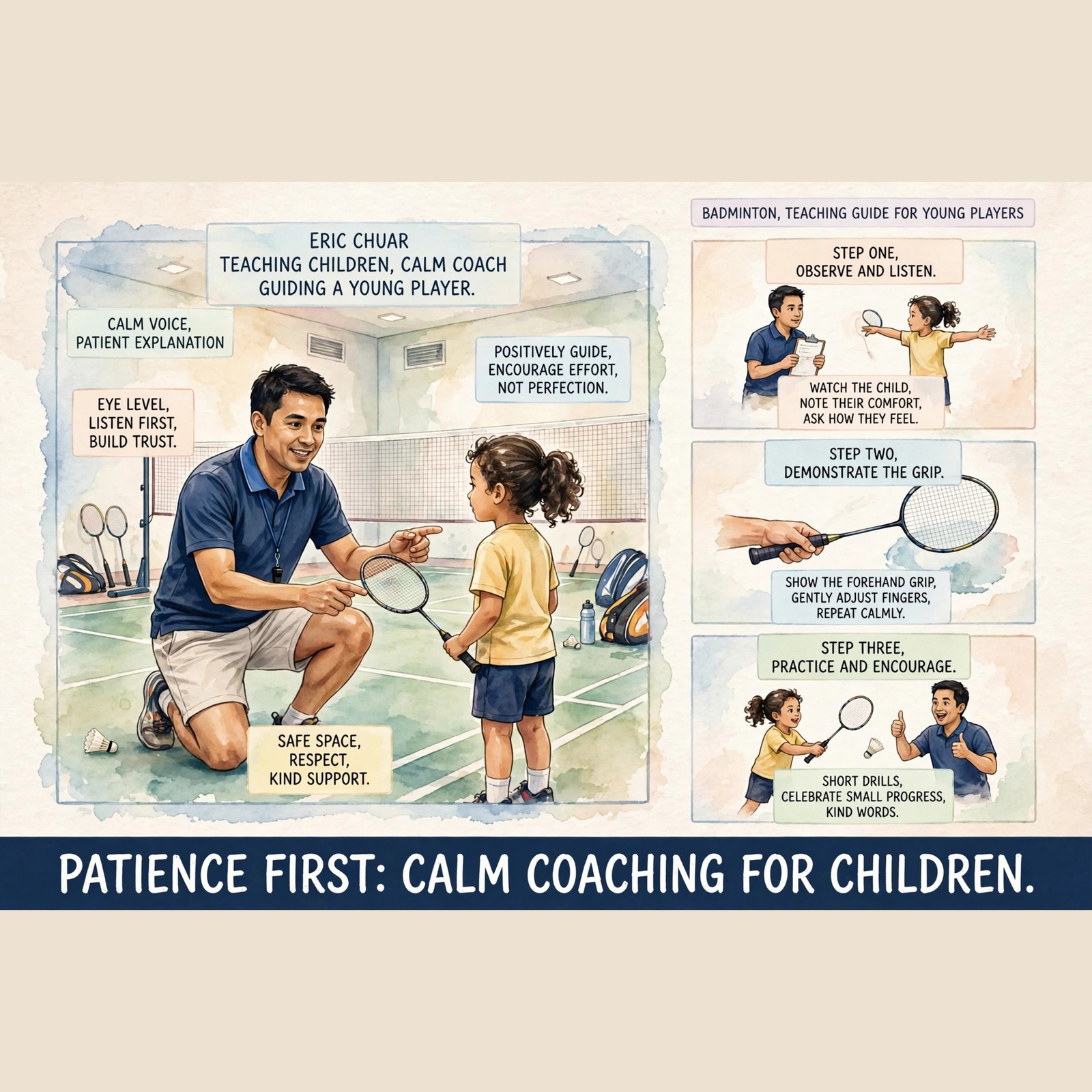
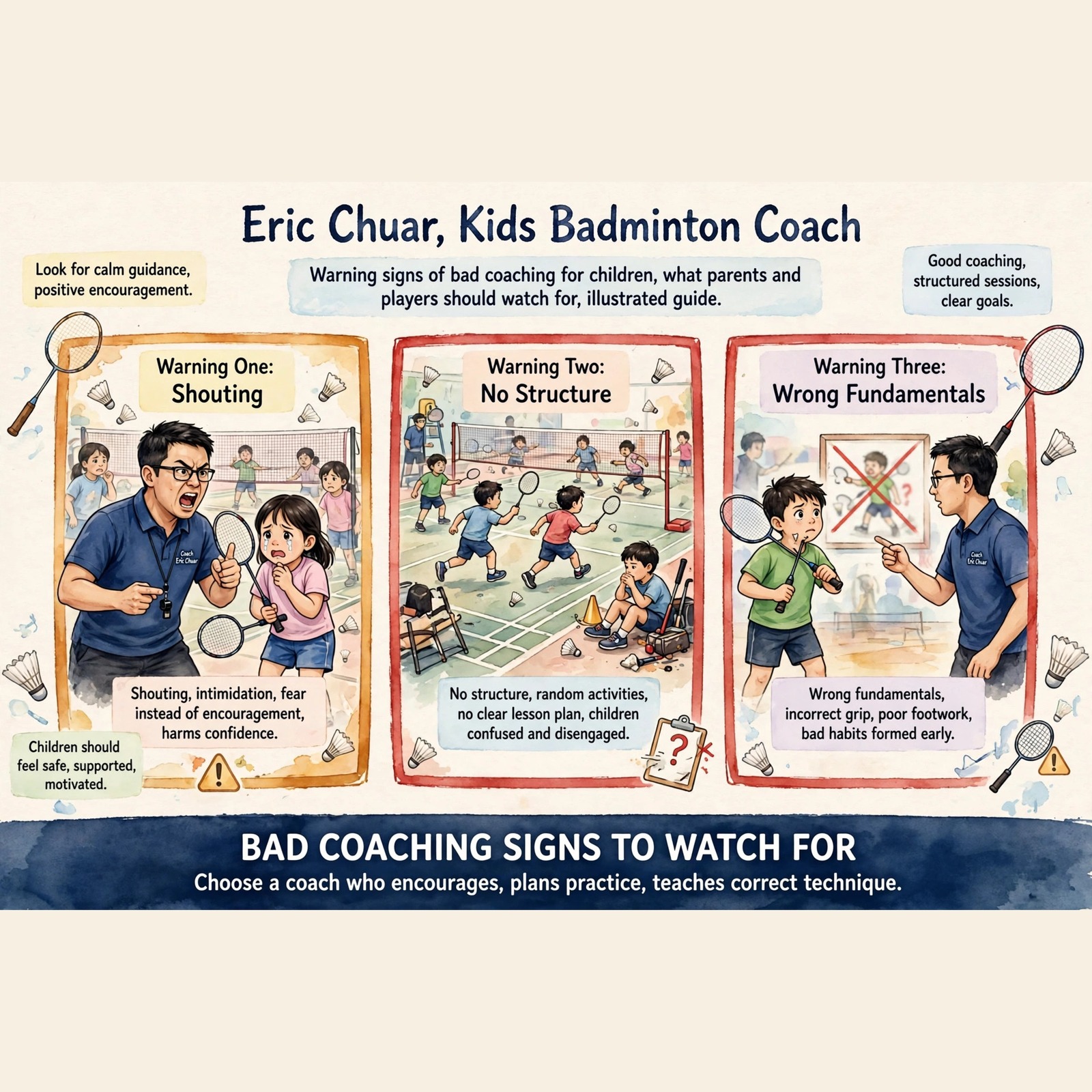
Children learn best from a coach who stays calm. Shouting is not coaching, and fear is not motivation. A child who is shouted at stops trying new things, stops asking questions, and starts dreading the lesson. A child who is corrected gently, in short plain sentences, keeps trying, keeps asking, and keeps improving. Eric Chuar corrects children the way he corrects adults: he spots the fault, explains it in one or two sentences, shows the fix, and checks the next rally. The only difference is the patience: a child may need the same fix shown three times before it holds, and a good kids coach shows it three times without a sigh.
Patience also means waiting for the right moment to correct. A child in the middle of a rally does not need a lecture. The coach waits, watches, and speaks between rallies, in words the child can follow. That timing is a skill, and it comes from years of teaching children. Parents should watch for it on their visit: does the coach speak to the children kindly, does the coach listen when a child asks a question, and does the coach keep every child moving? A coach who is patient with children is a coach who respects them, and children can tell the difference at once.
Patience also means waiting for the right moment to correct. A child in the middle of a rally does not need a lecture. The coach waits, watches, and speaks between rallies, in words the child can follow. That timing is a skill, and it comes from years of teaching children. Parents should watch for it on their visit: does the coach speak to the children kindly, does the coach listen when a child asks a question, and does the coach keep every child moving? A coach who is patient with children is a coach who respects them, and children can tell the difference at once.

Grip and Footwork
Grip and Footwork Before Anything Flashy
The first thing Eric Chuar teaches a child is the grip, because a wrong grip limits every shot that follows. Many children hold the racket like a hammer, or with two hands, because no one corrected them on day one. The coach checks the grip first in every assessment, and he keeps checking it in every session, because grips drift under pressure and need steady correction. Teaching the grip to a child is not a lecture. The coach shows the grip, places the child’s hand on the handle, and checks the result in the next rally. The child should feel the difference at once.
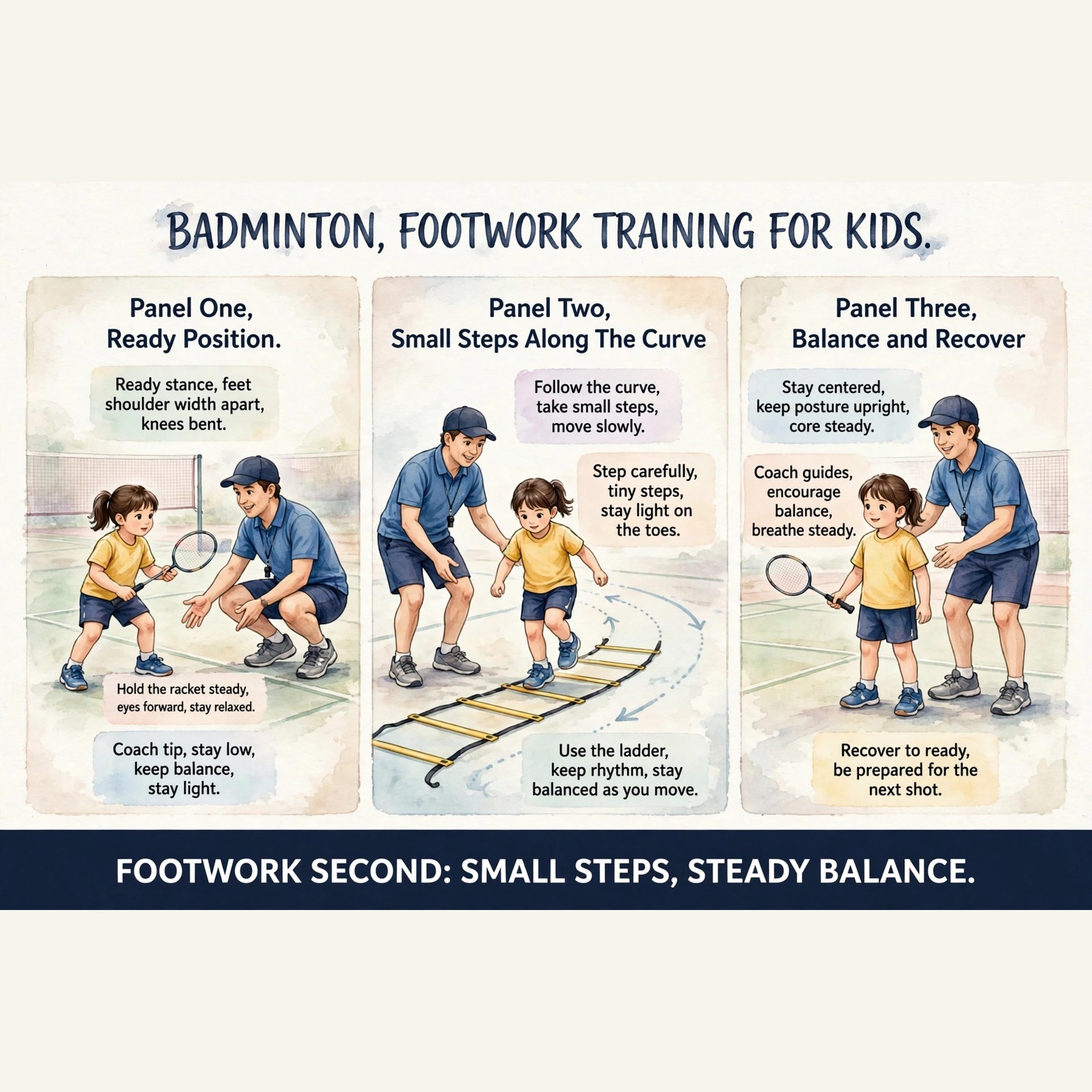
Footwork comes second, because a child who cannot reach the shuttle on balance cannot play a clean shot. Badminton is a game of short, sharp movements: split step, push off, reach, recover to base. Eric Chuar teaches footwork as patterns, not as running, and the patterns are drilled slowly first, then at rally speed. The smash comes later, once the basics hold up. A coach who drills smashes in the first week is teaching the child to practise a fault, and the child feels like a star for a few weeks before hitting a wall. The best kids coaches prevent that by teaching the plain parts first.
Footwork comes second, because a child who cannot reach the shuttle on balance cannot play a clean shot. Badminton is a game of short, sharp movements: split step, push off, reach, recover to base. Eric Chuar teaches footwork as patterns, not as running, and the patterns are drilled slowly first, then at rally speed. The smash comes later, once the basics hold up. A coach who drills smashes in the first week is teaching the child to practise a fault, and the child feels like a star for a few weeks before hitting a wall. The best kids coaches prevent that by teaching the plain parts first.
Small Groups
Four Children, One Coach: Why Small Groups Matter for Kids
Group size decides how much coaching a child actually gets. In a group of many children, a coach can watch each child for a few seconds per drill. In a group of four, the coach can watch every stroke, fix the grip, adjust the feet, and check the result. At ST Badminton Academy, the maximum is four students per coach, and that number does not change when the class is busy. Eric Chuar teaches the groups himself, so the correction comes from the coach you met, not from a helper who happened to be free. When you compare kids coaches, group size is one of the few checks you can measure with a single number, so ask for the real maximum.
Small groups also change the feel of the lesson for a child. Children get more turns, more rallies, and more chances to ask questions. They learn to watch each other and to wait their turn without losing focus. Parents can see the difference in one visit: in a small group, the coach knows every child’s name and every child’s weak shot. In a big group, the coach knows the loudest child. Watch one session and count how many times the coach corrects each child. That count is the real measure of the group size, and it tells you more than any brochure.
Small groups also change the feel of the lesson for a child. Children get more turns, more rallies, and more chances to ask questions. They learn to watch each other and to wait their turn without losing focus. Parents can see the difference in one visit: in a small group, the coach knows every child’s name and every child’s weak shot. In a big group, the coach knows the loudest child. Watch one session and count how many times the coach corrects each child. That count is the real measure of the group size, and it tells you more than any brochure.

Fun With Structure
Fun With Structure: Games That Teach, Not Games That Waste Time
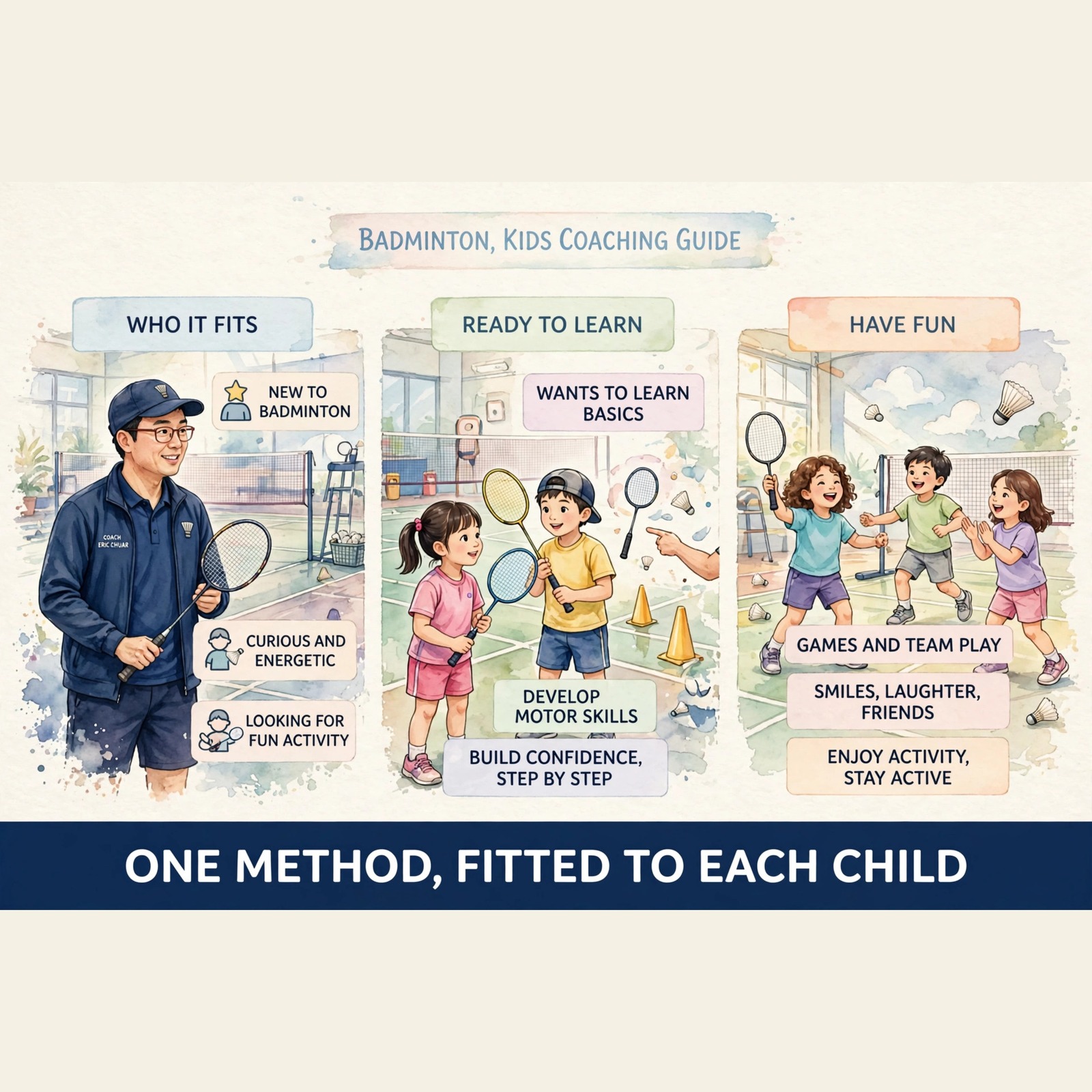
Children need fun, but fun without structure teaches nothing. A good kids lesson has games in it, and every game has a purpose: a rally game that practises the clear, a movement game that practises footwork, a target game that practises control. The child enjoys the game and learns the skill at the same time. A poor lesson has games with no purpose, and the children run around happily for an hour and learn nothing. Eric Chuar builds his lessons around drills with clear aims, and the games sit inside the structure, not instead of it. Parents who watch a session should ask what each game is teaching, and the coach should be able to answer in one sentence.
Structure also means the child knows what comes next. The lesson has a shape: warm up, drills, rallies, cool down. The child knows the shape, the coach keeps the pace, and no one stands still for long. A child who knows the shape feels safe, and a child who feels safe tries harder. That is why the first month at ST Badminton Academy has a shape parents can follow: grip and basic movement first, then the clear and simple rallies, then footwork patterns and recovery to base, then short rallies and simple games. Each step rests on the one before it, and the child can feel the progress.
Structure also means the child knows what comes next. The lesson has a shape: warm up, drills, rallies, cool down. The child knows the shape, the coach keeps the pace, and no one stands still for long. A child who knows the shape feels safe, and a child who feels safe tries harder. That is why the first month at ST Badminton Academy has a shape parents can follow: grip and basic movement first, then the clear and simple rallies, then footwork patterns and recovery to base, then short rallies and simple games. Each step rests on the one before it, and the child can feel the progress.
What Parents Should Watch
What Parents Should Watch in One Session
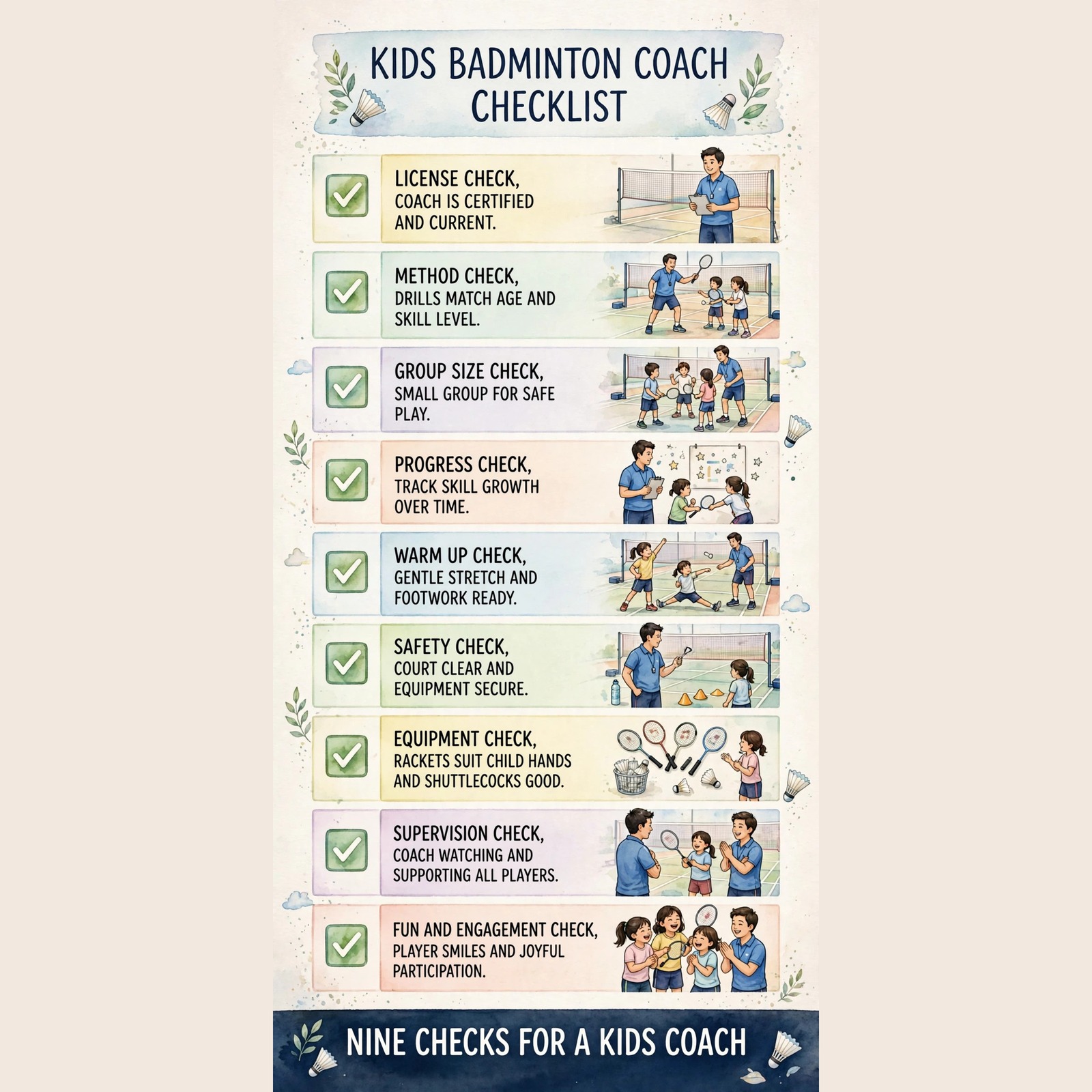
Parents do not need to know badminton to judge a kids coach. Watch one session and look for five things. First, does the coach speak kindly to the children, and listen when they ask questions? Second, does the coach correct small faults gently and right away, or let them settle in? Third, is the group small enough for the coach to know every child? Fourth, does the lesson have a shape, with drills and rallies and a clear aim? Fifth, do the children look engaged, or bored and confused? Those five checks tell you more about a kids coach than any website.
Also watch for the warning signs. A coach who shouts at children, who drills smashes in the first week, who lets children hold the racket with two hands, or who keeps the group so big that no one gets attention, is a coach to avoid. A coach who cannot explain, cannot correct, or will not answer your questions is a coach to avoid. There are many good kids coaches in Malaysia. The right one will welcome your questions, show you a plan, and let the coaching speak for itself. Ask to see the license too: a valid National Coaching License, Lesen C, confirms the coach is legally allowed to coach in Malaysia, and you can check it on the Malaysia Sports Coach Registry.
Also watch for the warning signs. A coach who shouts at children, who drills smashes in the first week, who lets children hold the racket with two hands, or who keeps the group so big that no one gets attention, is a coach to avoid. A coach who cannot explain, cannot correct, or will not answer your questions is a coach to avoid. There are many good kids coaches in Malaysia. The right one will welcome your questions, show you a plan, and let the coaching speak for itself. Ask to see the license too: a valid National Coaching License, Lesen C, confirms the coach is legally allowed to coach in Malaysia.
Progress You Can See
How Progress Shows in Children: Small Gains, Week After Week
Progress in children is easy to feel and hard to measure without a record. A good coach keeps one. It can be as simple as a note after each block of sessions: grip fixed, footwork steadier, clear reaching the back line, rally length up. These small notes add up to a picture you can trust. Without them, every week feels the same, and parents have no way to know if the time and effort are working. Ask the coach how progress is tracked before you commit, and ask to see an example of what a progress note looks like. At ST Badminton Academy, feedback is regular, specific, and honest, and video feedback stays private.
Look for small, visible changes in the first month. The grip should look cleaner, the feet should recover to base after each shot, and the clear should reach the back line more often. Rallies should last longer. Your child should enjoy the sessions and understand what to practise. The coach should be able to tell you what improved and what is next, without vague praise. No good coach promises a fixed timeline, because every child improves at a different pace. Steady small gains are the honest sign, and a child who gains steadily is a child who will keep playing.
Look for small, visible changes in the first month. The grip should look cleaner, the feet should recover to base after each shot, and the clear should reach the back line more often. Rallies should last longer. Your child should enjoy the sessions and understand what to practise. The coach should be able to tell you what improved and what is next, without vague praise. No good coach promises a fixed timeline, because every child improves at a different pace. Steady small gains are the honest sign, and a child who gains steadily is a child who will keep playing.
FAQs: Eric Chuar Kids Badminton Coach
Here are answers to common questions from parents about Eric Chuar as a kids badminton coach at ST Badminton Academy in Setapak.
Does Eric Chuar teach children?
Yes. He teaches children with patience and structure: grip and footwork before anything flashy, gentle correction right away, and small groups so every child gets attention. He has coached children for more than fifteen years in Singapore and Malaysia, and he teaches the groups himself at ST Badminton Academy in Setapak.
What should I look for in a good kids badminton coach?
Look for patience and basics first. A good kids coach teaches grip and footwork before anything flashy, corrects small faults gently and right away, and keeps the group small so every child gets attention. Watch out for coaches who shout, who drill smashes in the first week, or who let children hold the racket with two hands. Those habits feel fun for a few weeks and cost months to fix later.
What license does Eric Chuar hold?
Eric Chuar holds a valid National Coaching License, Lesen C (SLKK Tahap I), issued by the National Coaching Academy (AKK), which confirms legal coaching status and can be checked on the Malaysia Sports Coach Registry. He also holds a National Level One Badminton Coaching Certificate under SPKK, a Sport Science Level One qualification, and a BAM entry level coaching qualification. Ask for the license first, and treat the BAM level as a guide to training scope, not as the check itself.
How big are the kids groups?
The maximum is four students per coach, and that number does not change when the class is busy. In a group of four, the coach can watch every stroke, fix the grip, adjust the feet, and check the result. In a large group, a coach can watch each child for a few seconds per drill. Group size is one of the few checks you can measure with a single number, so ask for the real maximum before you commit.
What does a first lesson for a child look like?
Every new student starts with a paid Initial Assessment instead of a free trial. The coach watches how the child moves, how the child holds the racket, and where the basics stand, then tells the parent plainly what to work on first. It is real coaching time, not a sales session. Parents are welcome to watch.
What will my child learn in the first month?
The first month usually runs like this: grip and basic movement first, then the clear and simple rallies, then footwork patterns and recovery to base, then short rallies and simple games. Each step rests on the one before it. A coach with no plan for the first month is guessing, and your child pays for the guess.
How do I know if my child is progressing?
Look for small, visible changes. The grip should look cleaner, the feet should recover to base after each shot, and the clear should reach the back line more often. Rallies should last longer. Your child should enjoy the sessions and understand what to practise. The coach should be able to tell you what improved and what is next, without vague praise.
What are the warning signs in kids coaching?
Watch for a coach who shouts at children, who drills smashes in the first week, who lets children hold the racket with two hands, or who keeps the group so big that no one gets attention. Watch for a coach who cannot explain, cannot correct, or will not answer your questions. If you see those signs, walk away. There are many good kids coaches in Malaysia.
How do I start my child with Eric Chuar?
Start by visiting ST Badminton Academy in Setapak and watching a session. Ask to see the license, ask about the group size, and ask the coach to walk you through the first month. Then book a paid Initial Assessment, so the coach can see your child’s basics and place your child in the right group. There is no free trial, because the assessment itself is real coaching time.
Kids Coaching with Eric Chuar in Action


What Kids Coaching Looks Like at ST Badminton Academy
The best kids coaching is easy to recognise once you know what to look for. These are the standards Eric Chuar holds himself to in every children's session at ST Badminton Academy in Setapak.
| Factor | Ordinary Kids Coaching | Coaching with Eric Chuar STBA |
|---|---|---|
| Coach Background | Whoever is free that day. No clear qualification or plan. | A licensed coach, Lesen C, with more than fifteen years teaching in Singapore and Malaysia. |
| First Lesson | Turn up and play games. No assessment, no plan. | A paid Initial Assessment first, then grip, footwork, and clear in a set order. |
| Group Size | Large groups. The coach barely watches each child. | Four students at most. Coach Eric Chuar personally corrects every stroke. |
| Teaching Order | Smashes in week one, footwork skipped, faults drilled in. | Grip first, footwork second, clear third. Bad habits fixed early, not a year later. |
| Correction Style | Shouting, or no correction at all. | Gentle correction right away, in short plain words, checked in the next rally. |
| Progress Tracking | No record. You are told the child is doing fine every week. | Regular feedback and a clear record of what improved and what to work on next. |
| Long Term Result | A child who plays the same way year after year, then quits. | A child with clean basics, a clear next step, and steady gains over time. |
Watch a Session, Then Decide
Before you commit, run three last checks. First, does the location and schedule fit your week without long travel or late nights? Second, can the coach explain things in words your child understands? Third, are the terms clear, with no pressure to pay for a long term before you have seen a single session? If a coach passes all the checks in this guide, you have found someone worth training with. ST Badminton Academy in Setapak welcomes parents who want to see good kids coaching before they commit.