
 All languages
 Chinese (Simplified)
 Chinese (Traditional)
 English
 Indonesian
 Japanese
 Korean
 Malay
 Thai
 Vietnamese


Best Holiday Camp in KL: When Your Child Is Unsure About Joining (Unsure Guide)
It often happens in the car, or at the kitchen table the night the form comes out: a parent says the word camp with cheerful care, and a small person goes quiet, or says the sentence directly. I am not sure. I do not want to. Every parent of a young child knows the fork in the road that sentence builds. Persuade, and risk pushing a child through a door they fear. Protect, and risk teaching them that every new thing can be escaped by refusing it. This guide walks the kinder middle road: listening first, shrinking the step, and letting the child’s answer, whichever way it settles, be a real one.
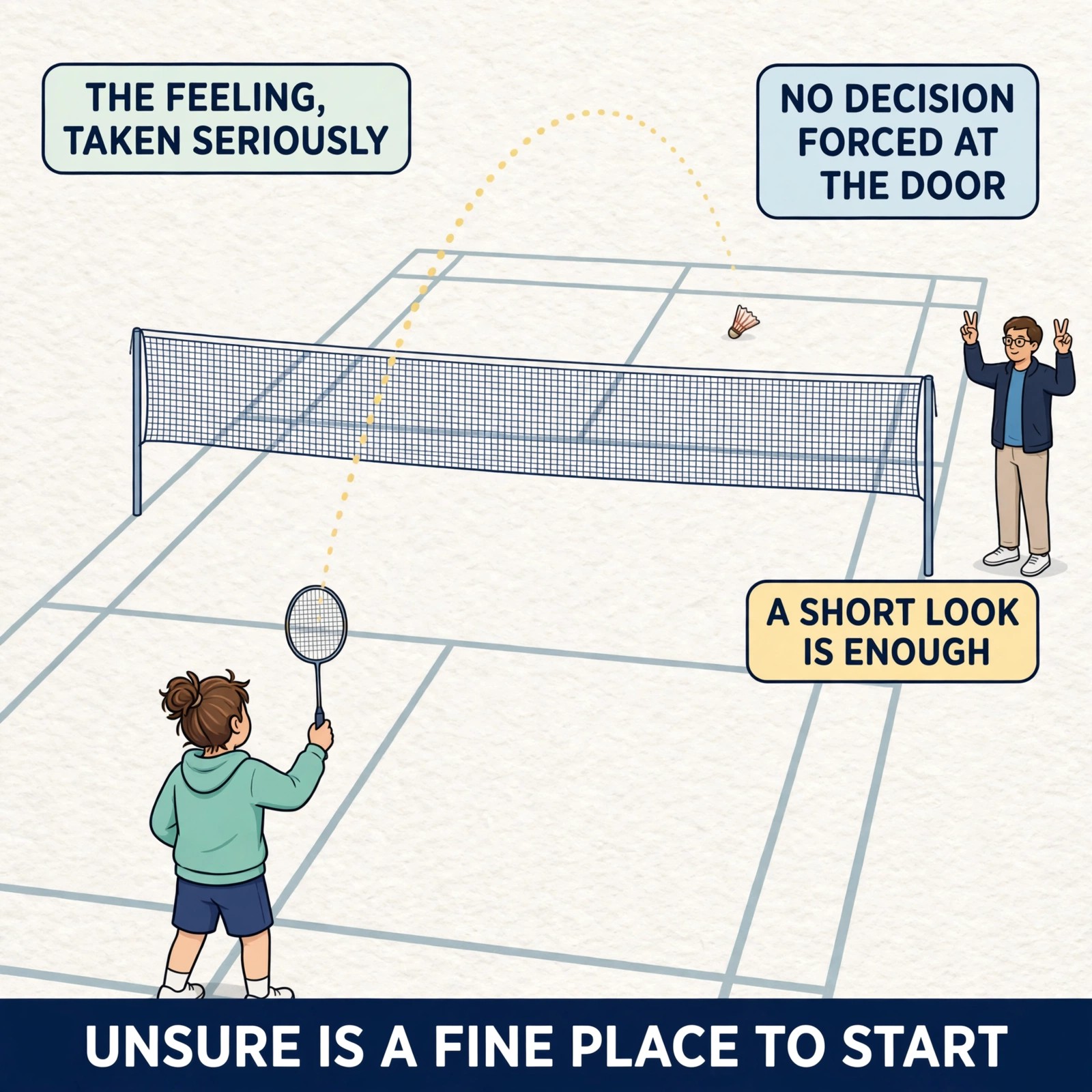
Unsure Check #1
What Being Unsure Really Means
Being unsure about joining is rarely a verdict on badminton. When a reluctant child is listened to properly, the feeling usually unpacks into small, nameable unknowns: a room they cannot picture, children they do not know, the fear of being the worst one there, the length of a day away from home, a coach whose face is still a stranger’s. None of those is an argument against the camp itself; each is a gap in the picture the child is being asked to leap across. That is good news. Unknowns can be answered, shrunk or simply visited, in a way a flat refusal, treated as a wall, never can.
It helps to say what unsure is not. It is not defiance, and it is not a character report on a child who will supposedly never try anything. It is not unsuitability either: a child does not need to arrive keen for a camp to fit them, any more than they need to arrive able. And it is not a decision that must be settled for good at the kitchen table tonight. A child can be unsure on Monday, curious by the weekend after a short look, and fairly decided either way by the week after, and every stage of that is ordinary. Feelings about new rooms move at their own speed, and they move fastest when nobody is dragging them.
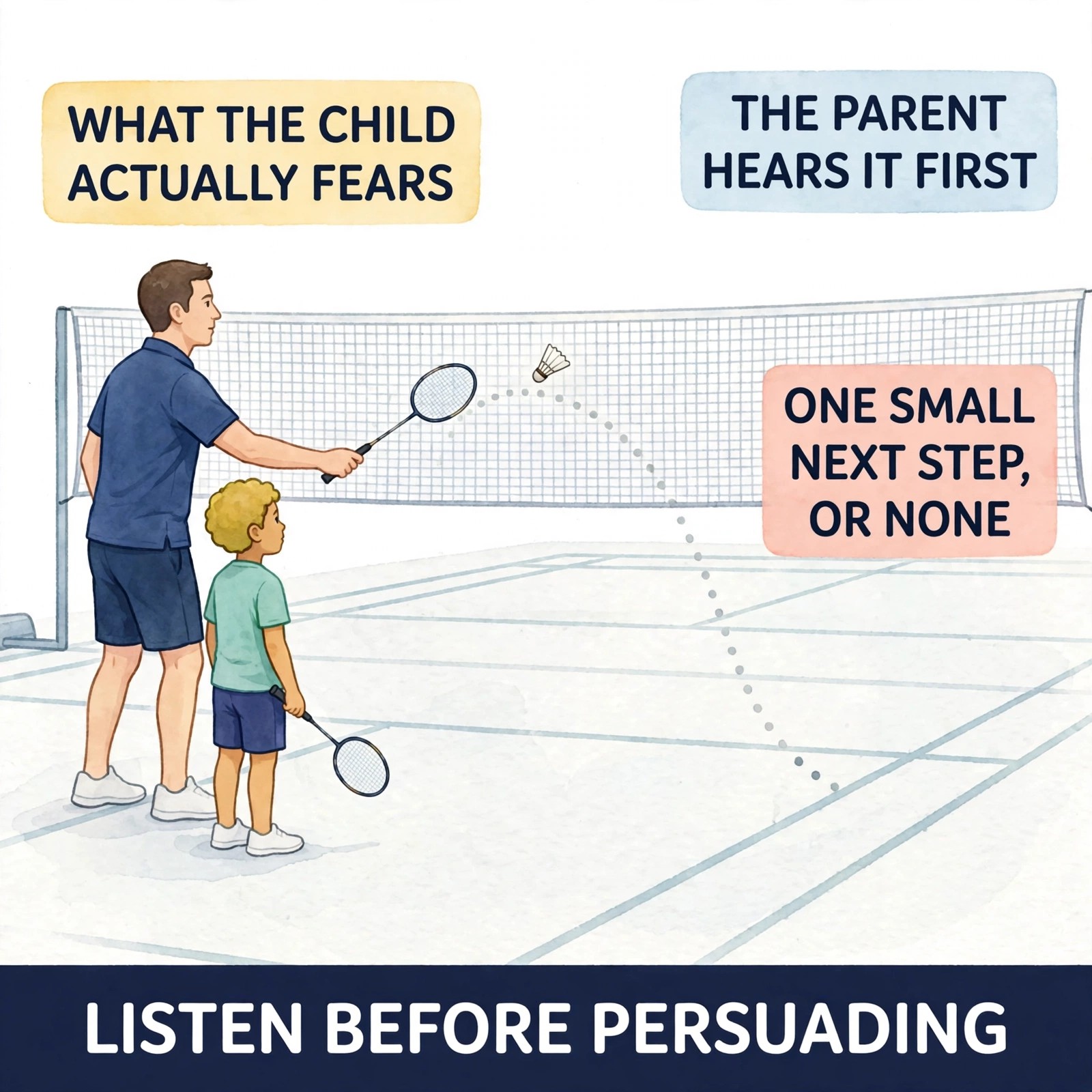
Unsure Check #2
Inside The Feeling: The Room, The Children, The Unknown
Start by listening, properly, before any persuading is attempted. Ask what part of the idea feels hard, and then be quiet long enough for the true answer to arrive; children often test the water with the easiest fear first. What comes back is the raw material of every good next step. A child afraid of unknown children needs names and faces, not a lecture on confidence. A child afraid of being worst needs the truth about beginners, that half the room is one. A child who simply does not want to be away all day needs the shape of the day itself. Hear the actual fear, and the response can finally fit it.
Next, shrink the step until it is small enough to be boring. Not a week committed, not a form signed tonight, but a short look: standing at the door of a session for a while, watching children their own size do ordinary drills, meeting the coach’s face while nothing is being asked of them. A visit with permission to leave early agreed beforehand, in words the child has heard, changes the whole offer. The child is no longer being asked to leap. They are being invited to look, and looking is something even a very unsure child can usually do, because it costs them nothing and commits them to nothing.
Finish by letting the answer stay the child’s. This is the part adults find hardest, because it means a no, given after listening and looking, is allowed to stand for now. It should. A child whose no is respected this term has learned that new things can be approached at their pace, and that child commonly walks in next term of their own accord, carrying trust instead of a grievance. The reverse is just as reliable: a yes extracted by pressure, rewards or exhaustion is a debt the camp week must somehow repay, and it rarely can. Respect is not the obstacle to joining. It is the road.
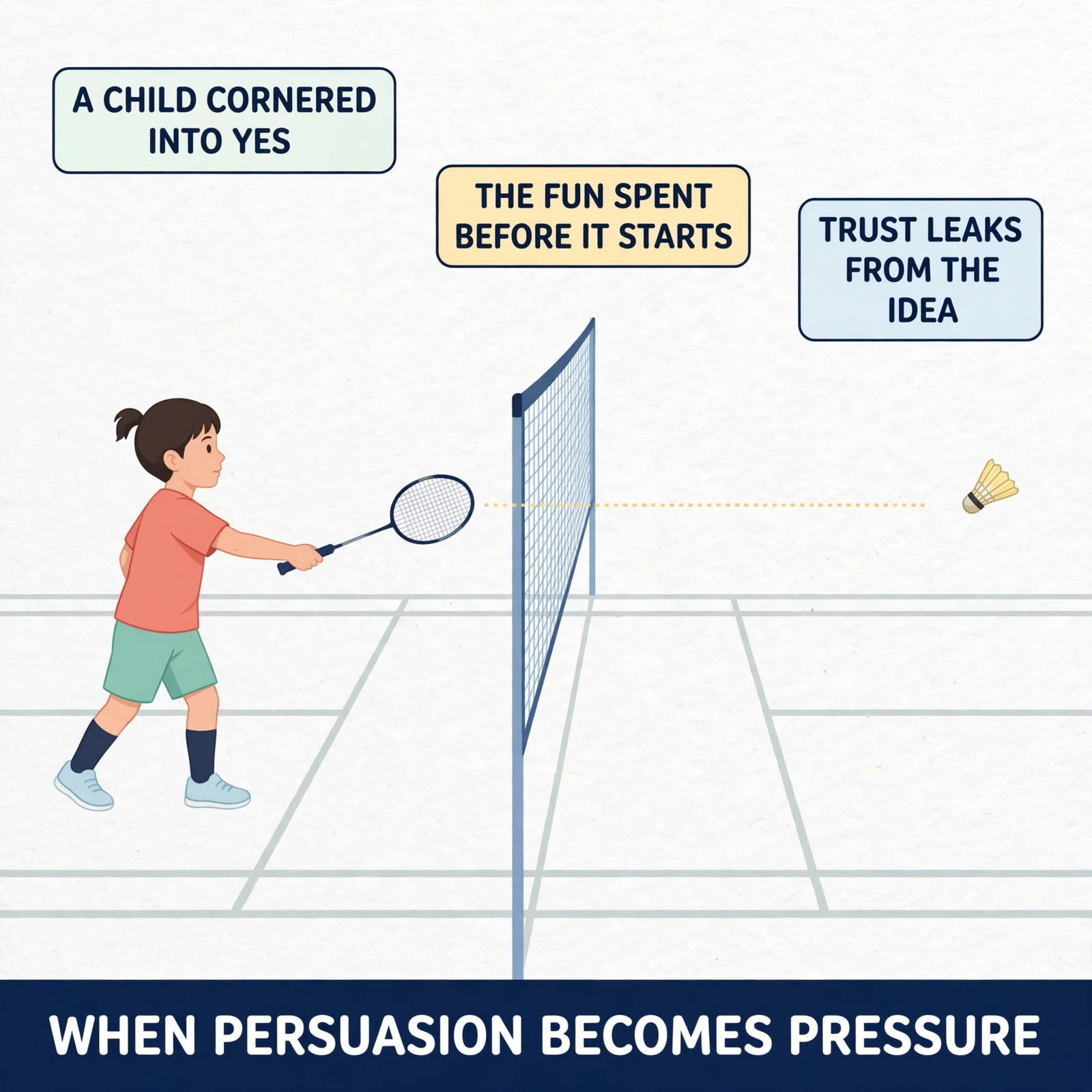
Unsure Check #3
The Honest Cost: When Persuasion Becomes Pressure
The honest cost of persuasion that becomes pressure lands before the camp starts. A child talked round at the table has usually not been convinced; they have been cornered, and children know the difference even when they cannot name it. They arrive at the hall already spending the fun the week was supposed to hold, watching for the moment the promised enjoyment fails to appear, because the whole outing now carries the memory of being overruled. Parents pay alongside, in a brittle arrangement nobody can relax inside: one bad morning threatens to prove the child right, and every adult present starts managing evidence instead of a holiday.
There is a second cost when the persuading is done with promises. You will love it. You will be the best there. Everyone will want to be your friend. Each promise is a loan taken out against a real week of ordinary children and ordinary weather, and a camp day, however well run, cannot guarantee a single one of them. When the promises wobble, as they must, the child does not blame the document or the day. They conclude that adults oversell, and the next honest invitation, to anything, gets discounted before it is heard. A short look needs no promises at all, which is precisely its strength.
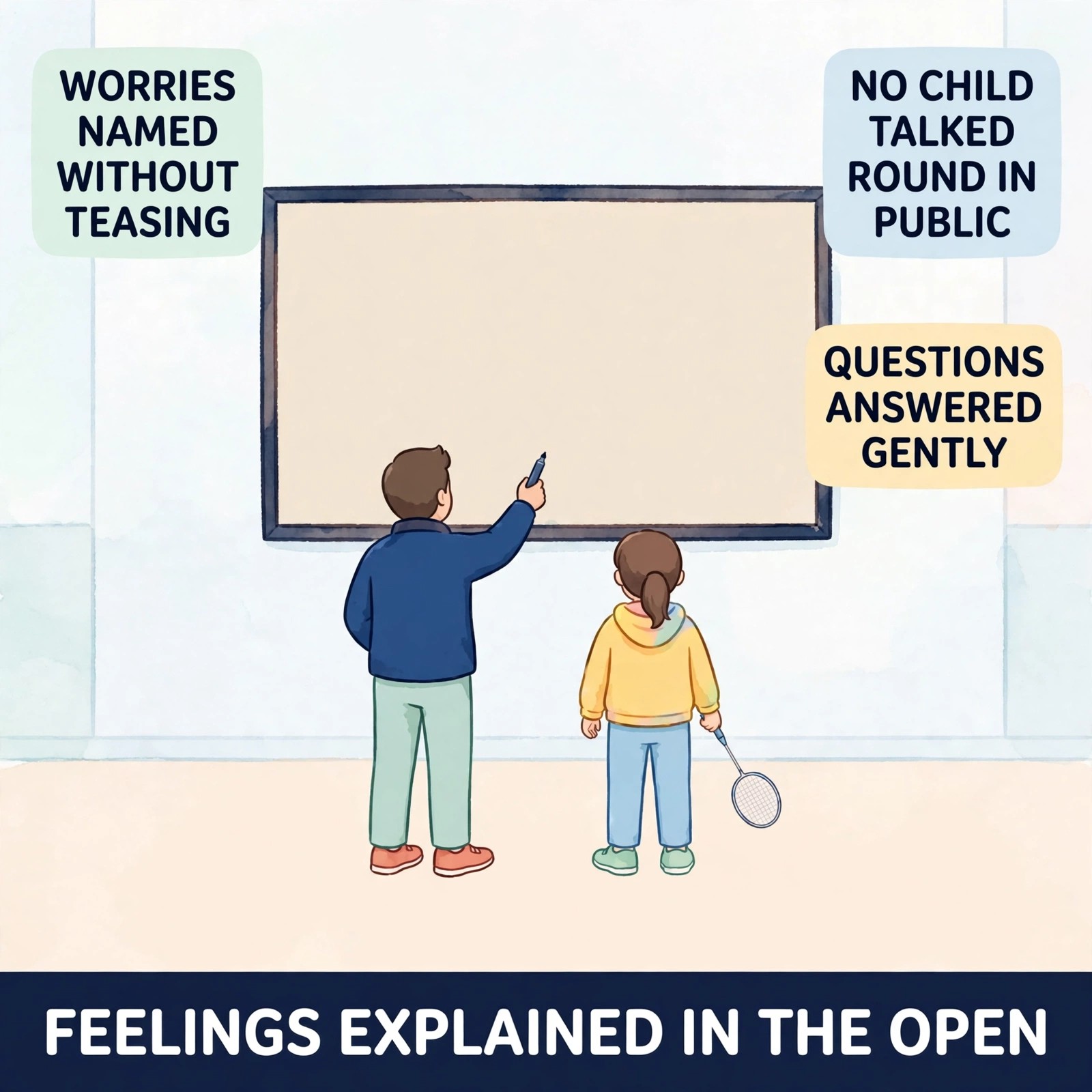
The third cost is quieter: the talking round done in public. Reluctance discussed over the child’s head at the gate, with relatives, other parents or the coach conscripted as character witnesses, teaches a child that their feelings are a problem the adults are solving together. Even kindness, performed that way, stings. The child who most needs to believe their words will be heard learns the opposite in the exact doorway where it matters. These conversations belong in private, at the child’s own height, with the child addressed first and most. What a camp sees of an unsure child should be a person being respected, not a case being presented.
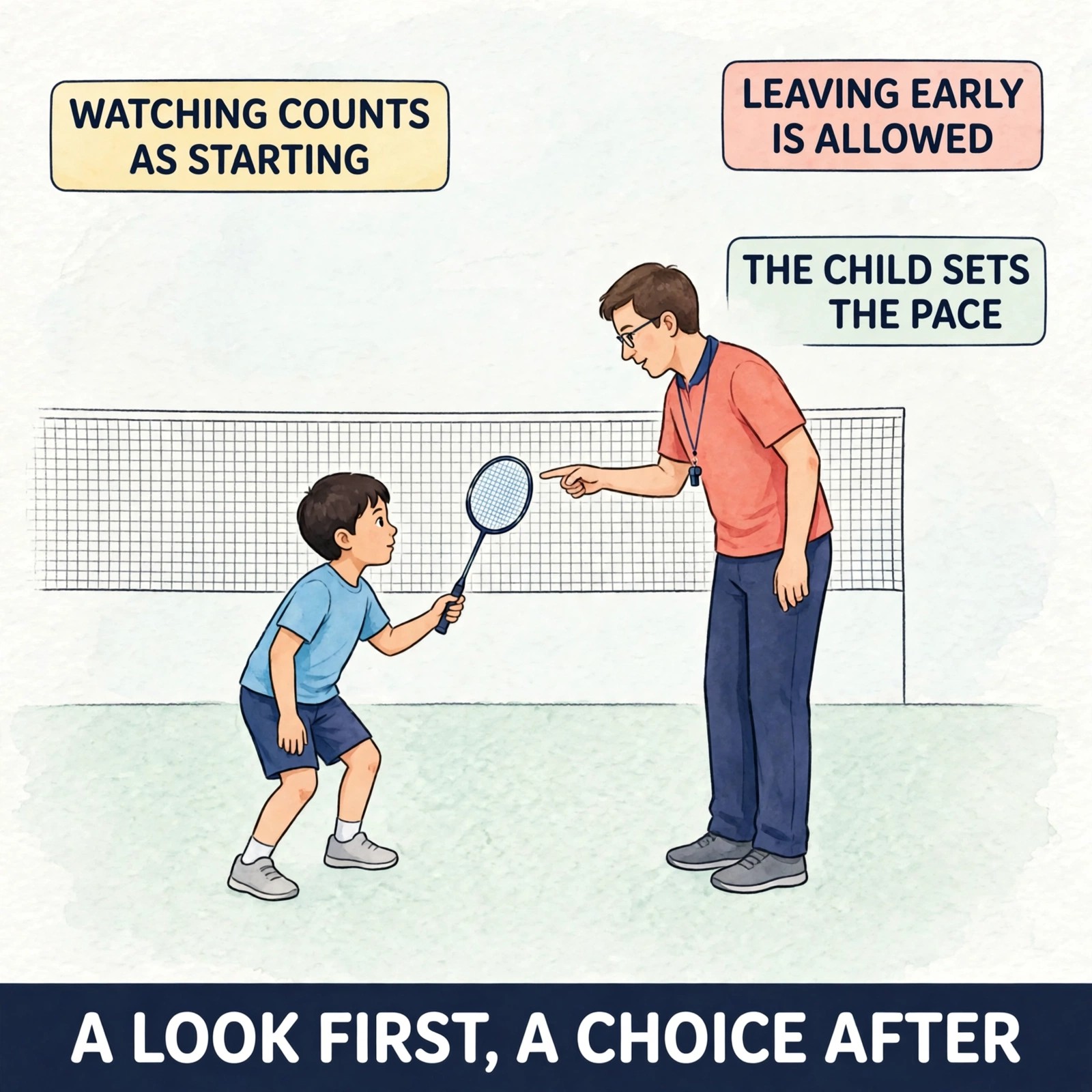
Unsure Check #4
Choosing Lightly: Small Steps, Honestly Offered
So what should a parent actually do with an unsure child? Listen first, and hear the specific fear. Offer the smallest true step: a short look, a meeting, watching one session with leaving early agreed in the open. Ask the provider your own questions directly, about how beginners and watchers are received, and ask for the current arrangements and practical details in confirmed form, so the picture you paint at home is a truthful one. And agree with your child, beforehand, how the looking visit ends: when they say they have seen enough, the visit is over, praised and complete.
Judge the settling across a fair stretch, not by one conversation. The signs are quiet ones: the fear shrinking from everything to one nameable thing, questions starting to arrive from the child rather than only defences, a willingness to look a second time. Some children settle in days; some take a season, and both are within the ordinary range, because children develop at different rates in courage exactly as in clear shots. If a full refusal holds after listening and looking, let it hold without a shadow over it. A door left open kindly gets walked through far more often than one a child was pushed through.
A gentle word for the parent caught between the two accusations they level at themselves: push, and I am the parent who forced it; protect, and I am the parent who let them shrink from everything. Underneath the swing there is usually a wish to hand the child a brave life without spending their trust to buy it. That wish is exactly right, and it is achievable: listen, shrink the step, respect the answer, and keep the invitation warm rather than loud. And if the worry keeps circling beyond anything the days show, it deserves a kind conversation of its own, with someone you trust.
Unsure Check #5
Gentle Habits That Keep The Door Open
The gentle habits in this guide are small enough to keep. First, listening before persuading, always, so the child’s real fear gets answered instead of their easiest one. Second, steps sized to a look rather than a leap, with leaving early agreed beforehand and honoured without a sigh. Third, no promises about the day that the day cannot keep: no guaranteed friends, triumphs or love at first sight, only the truthful map, tasks shown first, help for the asking, other children at other stages. A family running those three habits will find that most unsure children settle their own question, in their own time, in whichever direction is honest.
Notice what these habits are quietly teaching beyond the camp gate. A child whose feelings are heard before decisions are made learns the deepest form of safety a new room can offer: my words work here. That child grows into the beginner who can tell a coach a task feels too hard, the student who can ask the question the whole class is holding, the person who can enter new places without either bravado or dread. Badminton camp is just an early, kind place to practise it. Parents tell us the change they noticed first was not enthusiasm. It was their child describing a worry in full sentences, trusting it would be heard out.
There is a moment in most seasons when the gentle way proves itself: the child who watched from the door twice, racket untouched, announces at breakfast that they would like to try the morning, just the morning. Nothing forced it. The room became familiar at the child’s own pace, the coach became a face with a name, and the unknowns quietly emptied. That is the whole ambition of this guide, stated plainly. Not a child persuaded, but a child informed, respected and free to choose, because children who choose a thing bring a whole different person to it than children who were carried.

Myth vs Reality
Myths About Unsure Children
The myths around reluctant children are brisk and usually borrowed from other people’s certainty. The first says a reluctant child is a difficult child, as if hesitation at a doorway were a trait rather than a response to an unpictured week. In truth, reluctance is information, and the children who voice it early are often the easiest to settle once their specific fear is met. The second myth says a firm push is later thanked for, and quotes the grown child who loved the thing they were made to start. For every such story there are quieter ones of doors that closed for years; gratitude is a lottery ticket, not a method.
A third myth claims that if a child is allowed to choose, they will choose nothing, ever, and must therefore be chosen for. Children who are listened to and offered small true steps do not drift into permanent refusal; they learn that trying things is survivable and that their judgement is developing an honourable record. The child at real risk of choosing nothing is the one whose choices were repeatedly overruled, who stops offering an opinion because opinions change nothing. Choice practised on small things, with exits honoured, is how the appetite for bigger things is built, not how it is lost.
The truth underneath the myths is modest. Unsure is a normal starting feeling, it unpacks into nameable unknowns, and it settles fastest under listening, small steps and respected answers. Here, the promise is checkable. A child may come and simply watch first, meet the coach with nothing asked of them, and leave early with the visit counted a success; no one will talk them round in public, promise them a triumph, or treat their hesitation as a problem to be managed. Judge any camp, including this one, by how it treats the child who has not yet said yes. That is where its character shows earliest.

Why Choose Us
Why Players Choose ST Badminton Academy
Families choose this academy for the teaching first, and for unsure children the teaching begins before any shuttle: watching is treated as a legitimate way to start, the coach greets a watcher by name and lets them be, and no visitor is gathered into a drill before they have asked with their own feet by stepping in. For a reluctant child, that restraint is the whole ballgame. The room proves, in the first ten minutes, that the adults in it can be trusted with a not yet, and a child who believes that is a child who starts furnishing the room with curiosity.
Parents also choose how hesitation is spoken about here. A child’s reluctance is discussed with the child, privately and at their height, never debated over their head at the gate or retold as an amusing story. Nobody will promise your child they will love it, nobody will set them a public test to prove their feelings wrong, and nobody will recruit the group to persuade them. The agreement runs both ways: families tell us honestly where the child stands, and the academy responds at exactly that standing, with a look first and pressure nowhere in the building.
There is a final reason that grows on families over a season. Children develop at different rates in confidence as in everything else, and the teaching says so openly: one child walks in on the first morning, another watches twice and joins on the third visit, and both are treated as ordinary beginnings rather than as a race with a straggler. Parents tell us the relief they felt first was hearing their child’s pace described without apology, as information the plan could use. A child who is never shamed for their speed through the door tends, in the end, to come through more doors.
FAQs: Unsure Children and Joining a Camp in Malaysia (KL)
These are the questions parents ask us most when a child is unsure about joining, before they apply and while a gentle start is being arranged. The short version runs through all of them: listen first, shrink the step to a look, and let the answer stay the child’s. The longer answers follow, including how watching visits work here, and how to ask us about current arrangements.
Can an unsure child settle into a holiday camp in Setapak or Gombak?
Many do, once the unknowns are answered. An unsure child may watch first here, meet the coach with nothing asked of them, and leave early with the visit counted a success. Settle it by listening and looking, not by persuading, and ask us for the current arrangements in confirmed form.
What should a parent ask first when a child is unsure in KL?
Ask the child first: what part of the idea feels hard. Then ask us how watching visits work and how beginners are received. The child’s specific fear, room, children, being worst, or the day away, decides which answer helps. A general pep talk helps none of them.
Why does joining a camp worry parents at a junior level?
Because both choices feel like a risk: push, and you may spend the child’s trust; protect, and you may fear teaching them to refuse everything new. The worry is love doing arithmetic it cannot finish. The middle road, listen, shrink the step, respect the answer, answers both sides of the fear.
My child says they do not want to join the camp. Should we persuade them, or let the answer stand for now?
Let the answer stand for now, after listening properly and offering one small look. A no respected this season often becomes a yes next season, offered by the child. A yes extracted by pressure arrives at the hall as a debt, and the week rarely repays it. Keep the invitation warm, not loud.
How can parents talk about joining at home in between classes?
Keep it light, private and short. Describe the day truthfully in a sentence or two, tasks shown first, help for the asking, and leave the matter alone afterwards. Never debate a child’s reluctance over their head or in company, and never recruit relatives to the persuading. Feelings heard at home get carried honestly to us.
Do you welcome watching visits beside badminton training near Wangsa Maju?
Yes, gladly, and they are the recommended start for an unsure child. Your child may watch a session, meet the coach with nothing asked of them, and leave early with the visit counted complete. Nobody will talk them round in public or recruit the group to persuade them.
Where does ST Badminton Academy teach badminton training in Malaysia?
Our academy base is in Setapak, with classes in the Setapak and Wangsa Maju area and in Singapore. Mr Eric Chuar coaches the academy sessions himself, with more than fifteen years of coaching in Malaysia and Singapore, and he greets watchers by name and lets them watch in peace.
How do I book a trial session to test my child’s feelings about starting?
Message us and tell us honestly where your child stands, keen, unsure or flatly refusing for now. We will arrange a watching visit or a first session at your child’s pace, confirm the current arrangements and practical details directly, and leave the deciding to your child afterwards.
What makes Mr Eric Chuar a suitable coach for unsure children in badminton?
He coaches the academy sessions himself and meets unsure children every season, in all their weather. He greets a watcher without gathering them in, answers a child’s questions at their height and in private, never promises them a triumph, and treats a not yet as information rather than a problem.
Gentle Start Coaching in Action

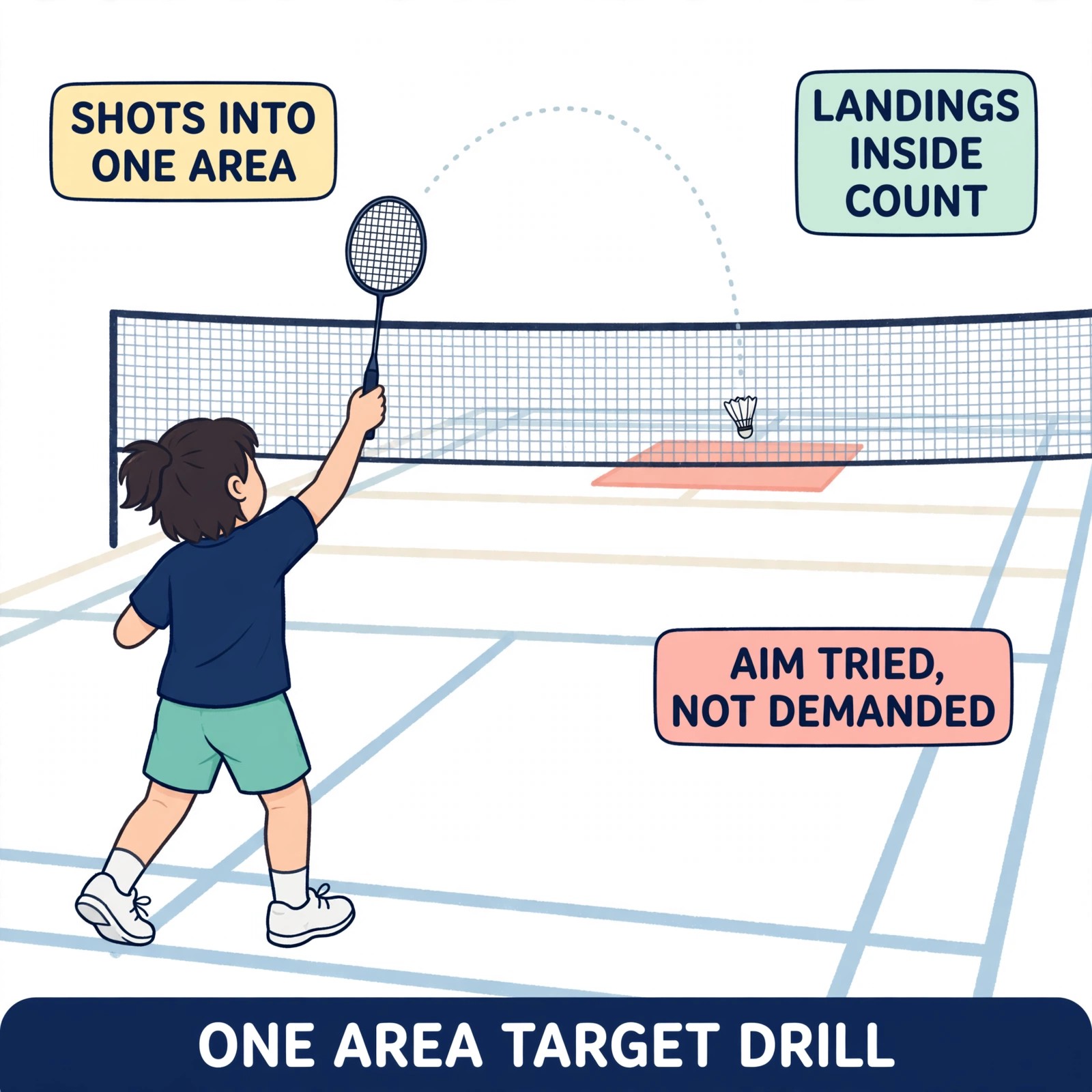
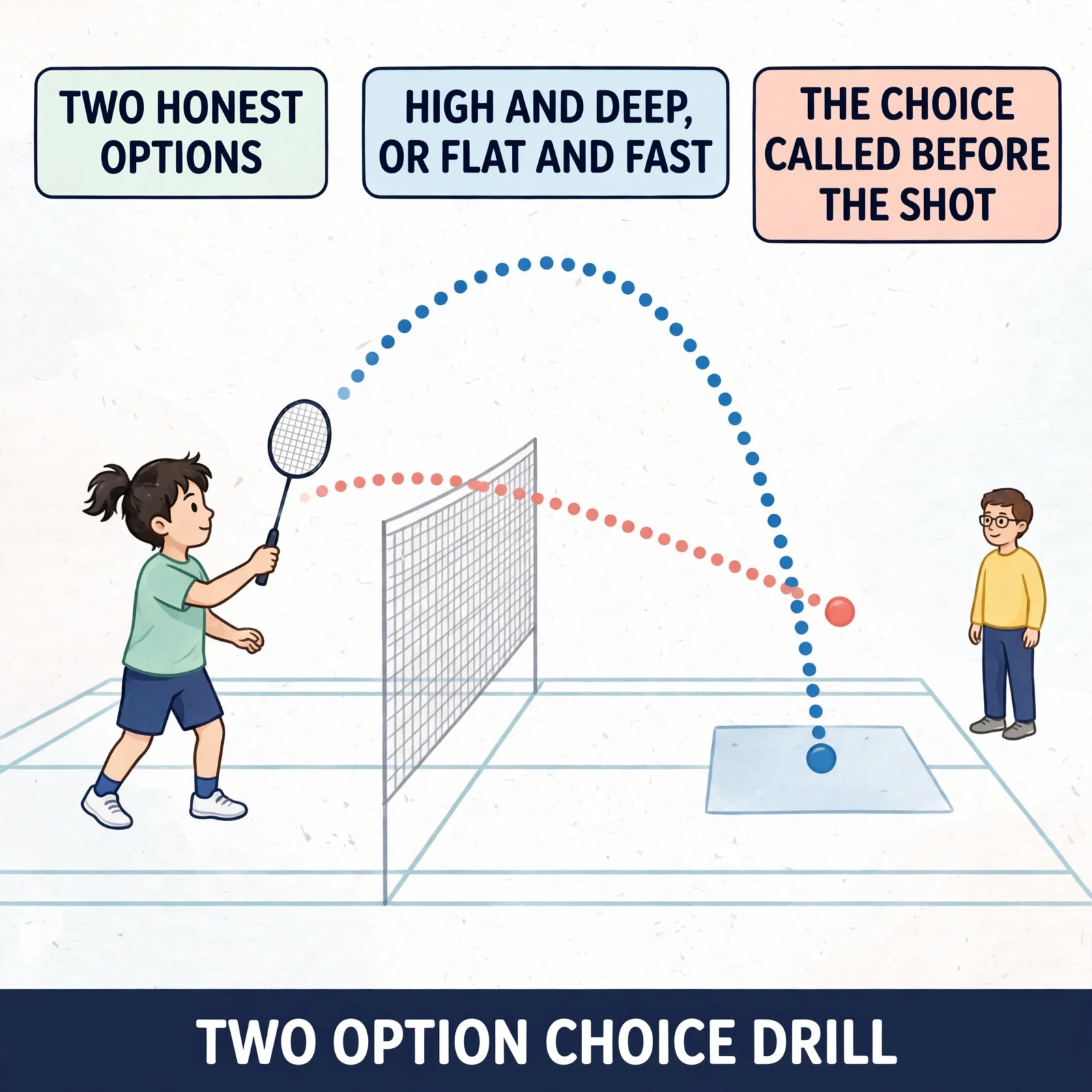

We benchmark our gentle start coaching against World Badminton (BWF) coaching standards and our own academy values: before any player trusts a training plan, they deserve honest checks. You can verify our coaches' credentials through the Badminton Association of Malaysia (BAM) coach education pathway.
One standard governs unsure children here: no child is pressured, persuaded in public, or promised an outcome to get them through the door. Watching counts as starting, leaving early is honoured when it was agreed, and a no that stands is recorded without a shadow. We also hold an honesty rule about what gentleness can do. Listening and small steps can settle most hesitation; they cannot promise a child will love badminton, settle on any named day, or want what a parent hopes they will want, and a camp that implies otherwise is selling something other than teaching.
| Factor | The Listening Hall | The Persuasion Hall UNSURE |
|---|---|---|
| Frequency | 1 or 2 times a week. Mostly for fun and sweat. | The persuasion hall treats reluctance as a problem to be argued away: promises are made the week cannot keep, relatives are recruited, and the child's yes is collected at the table like a signature. The child arrives already spending the fun, and one ordinary bad morning threatens to prove them right. |
| Drills Focus | Basic static feeding. Minimal footwork pressure. | The listening hall hears the specific fear first, then shrinks the step to a look: watch a session, meet the coach, leave early if that was agreed. No promises are made about the day, and a no that stands is recorded without a shadow, so the child's word visibly works in the building. |
| Physical Conditioning | Rarely included. Just playing games on court. | Core, agility, and speed training included in every session to prevent injury and build stamina. |
| Tactical Awareness | "Just hit it over." No real game plan. | Video analysis, point construction, and learning to read the opponent's game. |
| Coach Ratio | Large groups (8-10 kids). Coach barely watches you. | Max 4 students. Mr Eric Chuar personally corrects every stroke and movement detail. |
| Goal Setting | Fun and exercise. | Because the count is fears named and answered, visits completed as agreed and children who return by their own choice, real settling shows up as numbers rather than as pressure. The coach sees whether the listening, the step size or the map was off, and one part of the welcome is repaired instead of a child being labelled difficult. |
| Long Term Result | Good recreational player. | The high-performance version produces a child who enters new rooms believing their words will be heard. The casual version spends the season arguing; the listening version removes the guesswork in a fixed order and counts what each small step actually settled. |
Gentle Start Coaching in Kuala Lumpur
Your start can be one short look. Message us, tell us honestly where your child stands, and we will arrange for them to watch a session with leaving early agreed in the open, meet the coach with nothing asked of them, and decide afterwards in their own time. Ask us for the current arrangements and practical details in confirmed form, so what you describe at home is the truth. Bring no promises and no pressure, from us or from you. The invitation will stay warm for as long as it takes.


