Japanese Men’s Singles Badminton Star
Koo Takahashi

Japan
Player Event: Men’s singles
Date of Birth: 20 September 2001, Fukuoka, Japan
Playing Style: Right-handed all-court player whose game is built on speed, fast footwork and long, patient rallies
Known For: Reaching the Super 300 Orléans Masters final in 2024 and the German Open semi-final in 2025, winning his first international title at the Indonesia International Challenge in Surabaya, and climbing to a career-high world No. 40 in March 2025
Journey: Fukuoka courts · Tonami Transportation works team · Japan national team squad · first international final in Santo Domingo 2022 · Orléans Masters finalist 2024 · career-high world No. 40 · world No. 134
Understanding Koo Takahashi (Japanese Badminton Player)
Koo Takahashi is a Japanese men’s singles badminton player who stands at world No. 134 in the BWF rankings (Week 43, 20 October 2026) with 14,530 points. Born on 20 September 2001 in Fukuoka, the right-hander plays for the Tonami Transportation works team and is a former member of Japan’s national team. He reached the final of the Super 300 Orléans Masters in 2024, the semi-finals of the German Open in 2025 — beating fourth seed Christo Popov on the way — climbed to a career-high world ranking of No. 40 in March 2025, and won his first senior international title at the Indonesia International Challenge in Surabaya in October 2024.
Early Life in Fukuoka and the Junior Years
Japanese men’s singles is one of the hardest national fields in world badminton. In the decade since Kento Momota’s reign, the queue behind Kodai Naraoka and Kenta Nishimoto has been stacked with works-team professionals — players employed by companies such as Tonami Transportation, NTT East and JTEKT, who train full-time and fight for a handful of national-team places and World Tour entries. Koo Takahashi’s career is the story of that second tier at its best: a Fukuoka player who reached world No. 40 without ever being Japan’s headline name, and whose results — a Super 300 final, a Super 300 semi-final and an international title — mark him as one of the strongest players in the world outside the seeded elite.
Fukuoka Roots
Takahashi was born on 20 September 2001 in Fukuoka, the largest city on Japan’s southern island of Kyushu, a prefecture with a strong school badminton culture. Like most Japanese professionals he came through the school and junior club system, where the national junior circuit runs in school colours long before it runs in sponsors’ shirts. At 1.69 metres he was never going to win matches with reach and raw power; the player he became — fast across the court, patient in the rally, hard to break down — was shaped early by the need to win points with his legs and his consistency instead.
Joining Tonami Transportation
His professional home since 1 April 2020 has been the Tonami Transportation badminton team — one of Japan’s leading corporate works teams, whose players are company employees who train and compete full-time. The works-team system is the engine of Japanese badminton: it gives a player a salary, a hall, coaches and a squad of elite training partners without the insecurity of the freelance circuit. For an 18-year-old leaving school in Fukuoka, it was the structure that turned a promising junior into a full-time professional.
Japan Colours and a First Final
That structure carried him into the national shirt. Takahashi earned a place in Japan’s national team squad, and in February 2022 he represented Japan at the Badminton Asia Team Championships in Malaysia. Japan finished fifth — a 3-2 group-stage defeat to Singapore ended their run before the medal rounds — but the 20-year-old had worn his country’s colours at a continental championship, the first of the milestones that separate a works-team player from an international one.
Career Milestone #1
A First World Tour Final in Indonesia
His individual breakthrough abroad came four months later in the Caribbean. At the Santo Domingo Open in the Dominican Republic, an International Series event, Takahashi reached the first international final of his career, losing the title match to Israel’s experienced Misha Zilberman 16-21, 15-21. A runner-up finish at a small event on the other side of the world does not transform a ranking overnight, but it changes a player: he came home knowing his game travelled — that the footwork and rally discipline built in Japanese halls could win rounds anywhere on the circuit.
The 2023 season turned finals into a habit at bigger and bigger levels. In the summer he reached the quarter-finals of the U.S. Open, a Super 300 World Tour event, and in the autumn he reached the last eight of the Vietnam Open. The landmark came in Indonesia in September 2023: at the Indonesia Masters in Medan, a Super 100 World Tour tournament, Takahashi strung together the best week of his career to reach his first BWF World Tour final. India’s Kiran George edged the final 21-19, 22-20 — two games decided by a handful of rallies — and Takahashi left with a silver medal and the knowledge that he had been two or three points from a World Tour title.
Career Milestone #2
The Orléans Masters Final and a First Title
He finished 2023 at world No. 65 in the year-end rankings, inside the band where Super 300 main draws open up without qualifying. For a works-team player from Fukuoka, that number mattered: it meant direct entries, better draws, and a 2024 season that could be planned around the World Tour rather than the smaller International Challenge circuit. The question every player ranked between 50 and 70 faces is whether they can convert that access into one deep run a season. Takahashi answered it within three months.
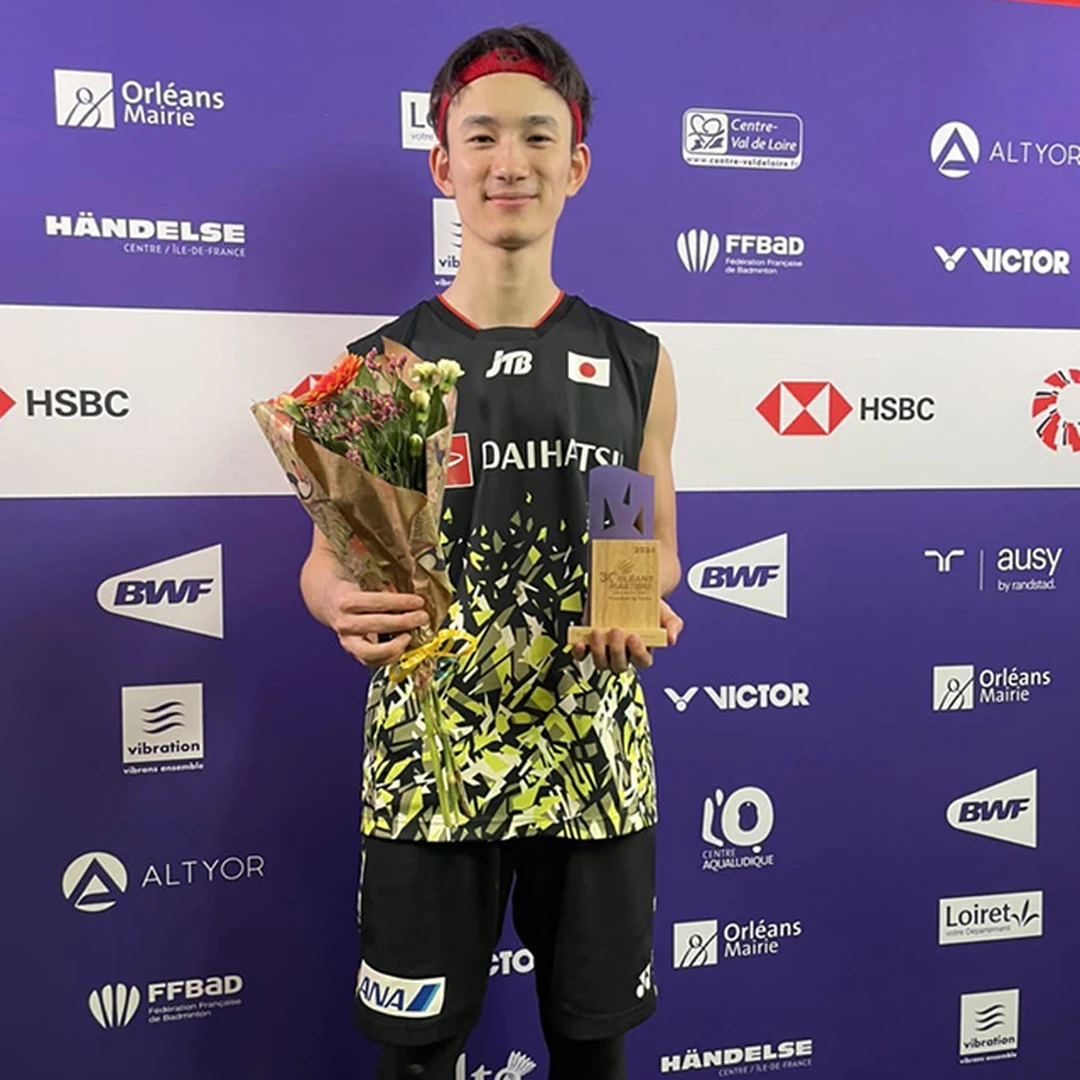
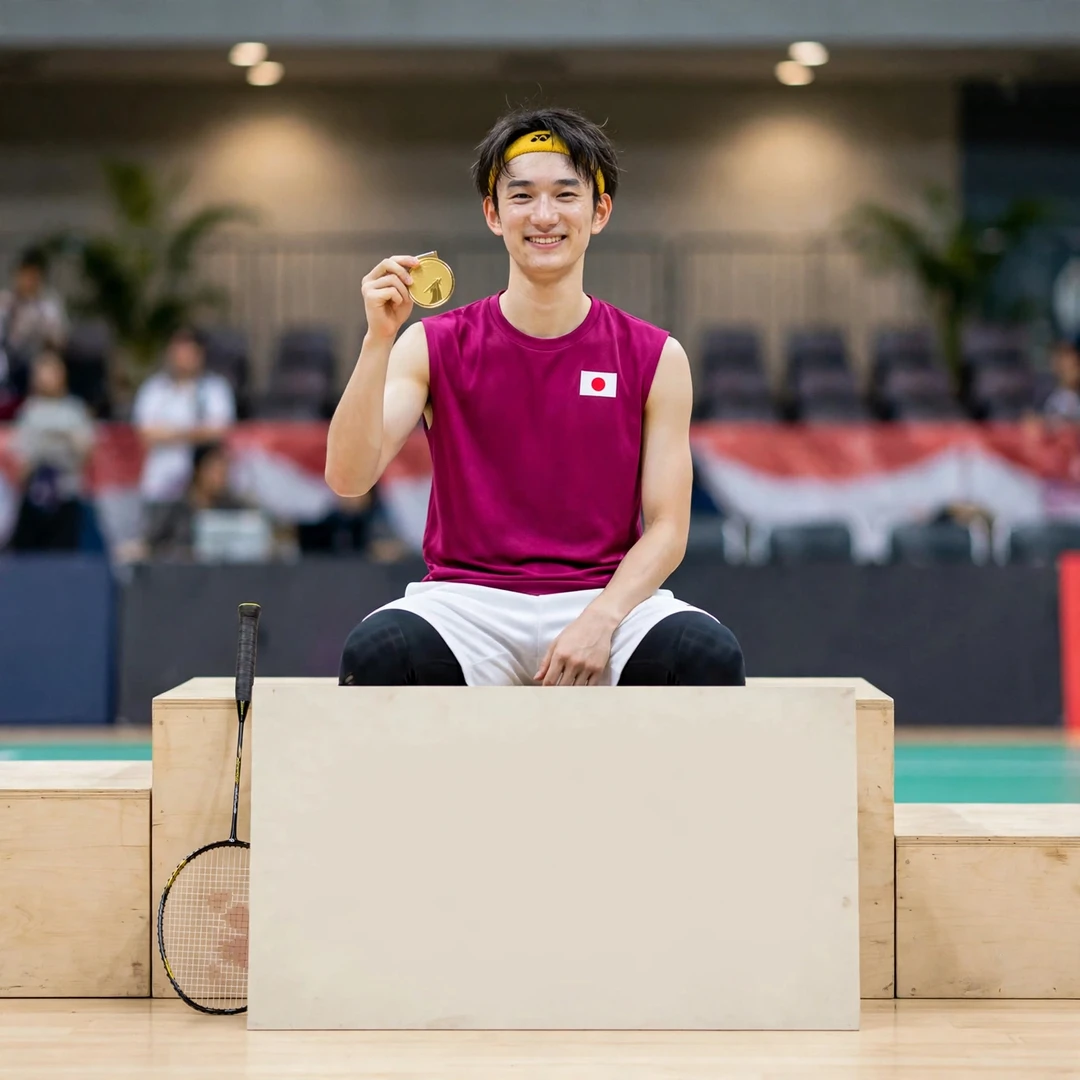
The deep run came at the Orléans Masters in March 2024, a Super 300 event in France. Unseeded, Takahashi beat Daniil Dubovenko in three games, Denmark’s Mads Christophersen 22-20, 21-14, Malaysia’s Cheam June Wei 21-13, 21-8 in the quarter-finals and Chinese Taipei’s Chi Yu-jen 21-19, 21-12 in the semi-finals. The final paired him with his compatriot Yushi Tanaka, who won 21-18, 21-10 — but a Super 300 final, the biggest of his career, had carried him into a new bracket. The podium photograph from that week in Orléans — Takahashi in Japan colours, holding his runner-up trophy — is the portrait at the top of this page.
Seven months later he finished the job in a final. At the Indonesia International Challenge in Surabaya in October 2024, Takahashi went one better than Medan: he beat fellow Japanese Riku Hatano 21-18, 21-11 in the final to win the first international title of his career. Around those peaks, his 2024 season was full of solid World Tour weeks — a quarter-final at the Macau Open and a semi-final at the Malaysia Super 100 among them — and he closed the year at world No. 44, turning himself, one place at a time, from a qualifier into a main-draw regular.

Career Milestone #3
Career-High World No. 40 and the German Open Semi-Final
The best week of his career so far came at the German Open in Mülheim in March 2025. Unseeded again, Takahashi beat France’s Christo Popov — the fourth seed and world No. 23 — in the second round, then China’s Wang Zheng Xing, the world No. 33, in the quarter-finals to reach the last four. Former world champion Loh Kean Yew stopped him there, 21-13, 21-14 in 46 minutes, but the run was worth 4,900 ranking points, and when the new rankings were published on 4 March 2025, Koo Takahashi stood at world No. 40 — the highest ranking of his career.
The rest of 2025 was the other side of a professional’s life: defending points on the road. There were round-of-16 finishes at both Indonesia Masters Super 100 events and at the Arctic Open, and at home in November he came within one match of the main draw at the Kumamoto Masters Japan, a Super 500, losing a three-game qualifying battle to Indonesia’s Moh. Zaki Ubaidillah 21-16, 13-21, 17-21. He ended the year at No. 91 — not because his level had collapsed, but because the 52-week ranking system was about to take back the points that had made him No. 40.
That bill came due in early 2026. When the Orléans final points, and then the German Open semi-final points, passed their 52-week expiry, his ranking slid — No. 91 in February became No. 120 by March — through no loss of form, simply the arithmetic of a ranking built on two very big weeks. Takahashi’s response was to go back to the circuit that built him and win matches. In July 2026, in Saipan, he reached the final of the Northern Marianas Open, an International Challenge event, winning five matches before losing a three-game title match to South Korea’s Park Sang-yong 19-21, 21-19, 15-21.
Career Milestone #4
The 2026 Rebuild: A Final in Saipan
The rest of his 2026 has been the working calendar of a player rebuilding a ranking: a quarter-final at the Singapore International Challenge in August, built on four match wins; a round of 16 at the Ruichang China Masters; and a qualifying battle at the Canada Open in Markham, where he beat Saket Thavanani before losing the qualifying final to Chinese Taipei’s Ting Yen-Chen in three games. The Week 43 rankings of 20 October 2026 place him at No. 134 with 14,530 points — a number that undersells a player who stood at No. 40 nineteen months earlier and has already shown he can win five matches in a week.
His ranking line teaches the lesson every young professional must learn about the 52-week system. Career-high No. 40 in March 2025 was built mainly on two results — Orléans and Mülheim. A ranking counts a player’s ten best tournaments in the last 52 weeks, so a peak built on a few big weeks must be re-earned within a year or it evaporates. Takahashi’s slide from No. 40 to the 130s is the clearest case study on this page: not a collapse, but an expiry — and the reason experienced players talk about defending points the way other athletes talk about defending titles.
Playing Style
The Speed-First All-Court Game
The road back is clearly marked, and he has walked it before. The world’s top 100 begins at roughly 19,900 points, about 5,400 points above his current total: in practical terms, one International Challenge title, or two more weeks like Saipan, inside the next year. He is 25, employed and training full-time in one of the world’s best team systems, with a career record of 87 wins against 50 losses — he wins almost two matches for every one he loses. Nothing in his trajectory says the top 50 is closed to him; the next rung of the ladder is simply the next ten good weeks.
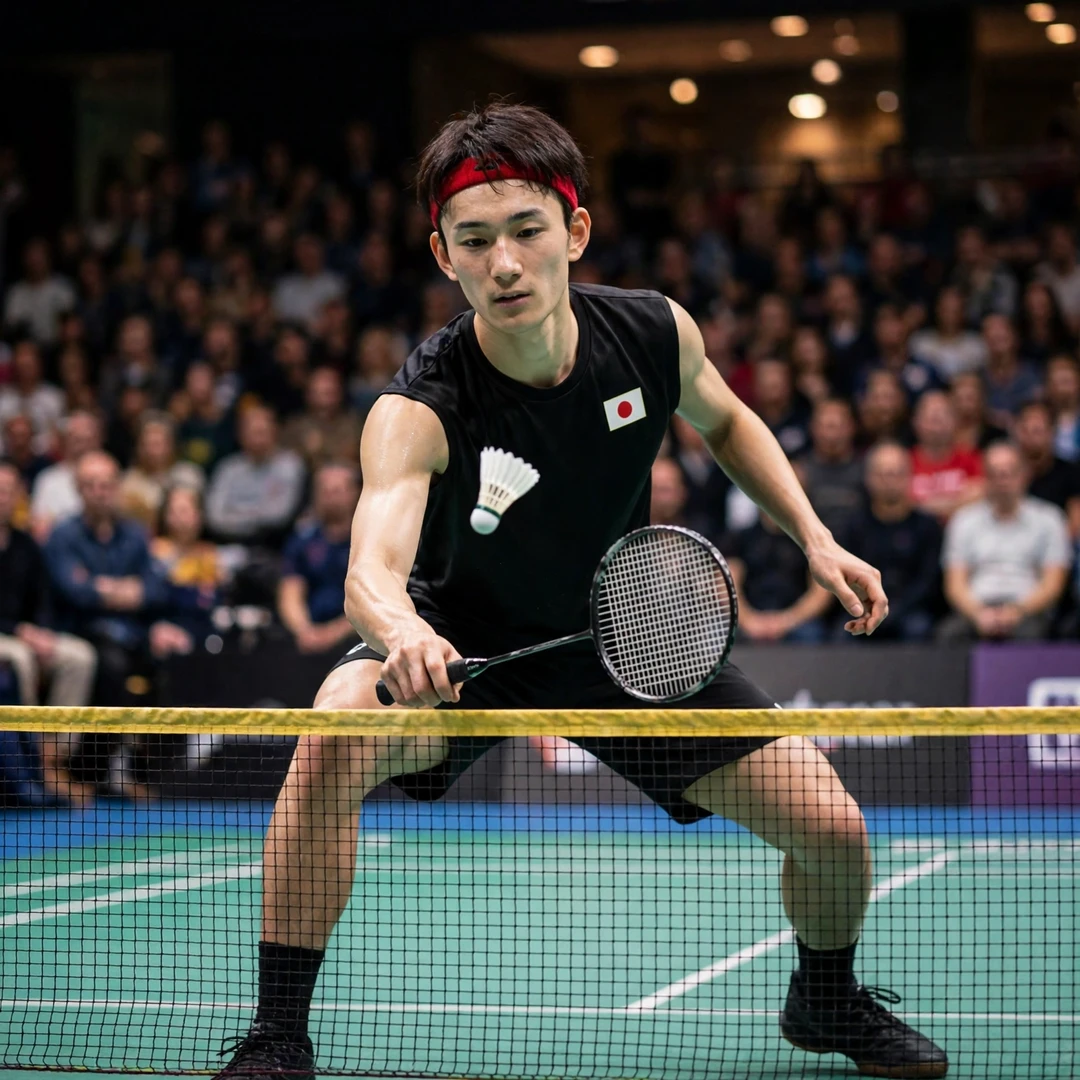
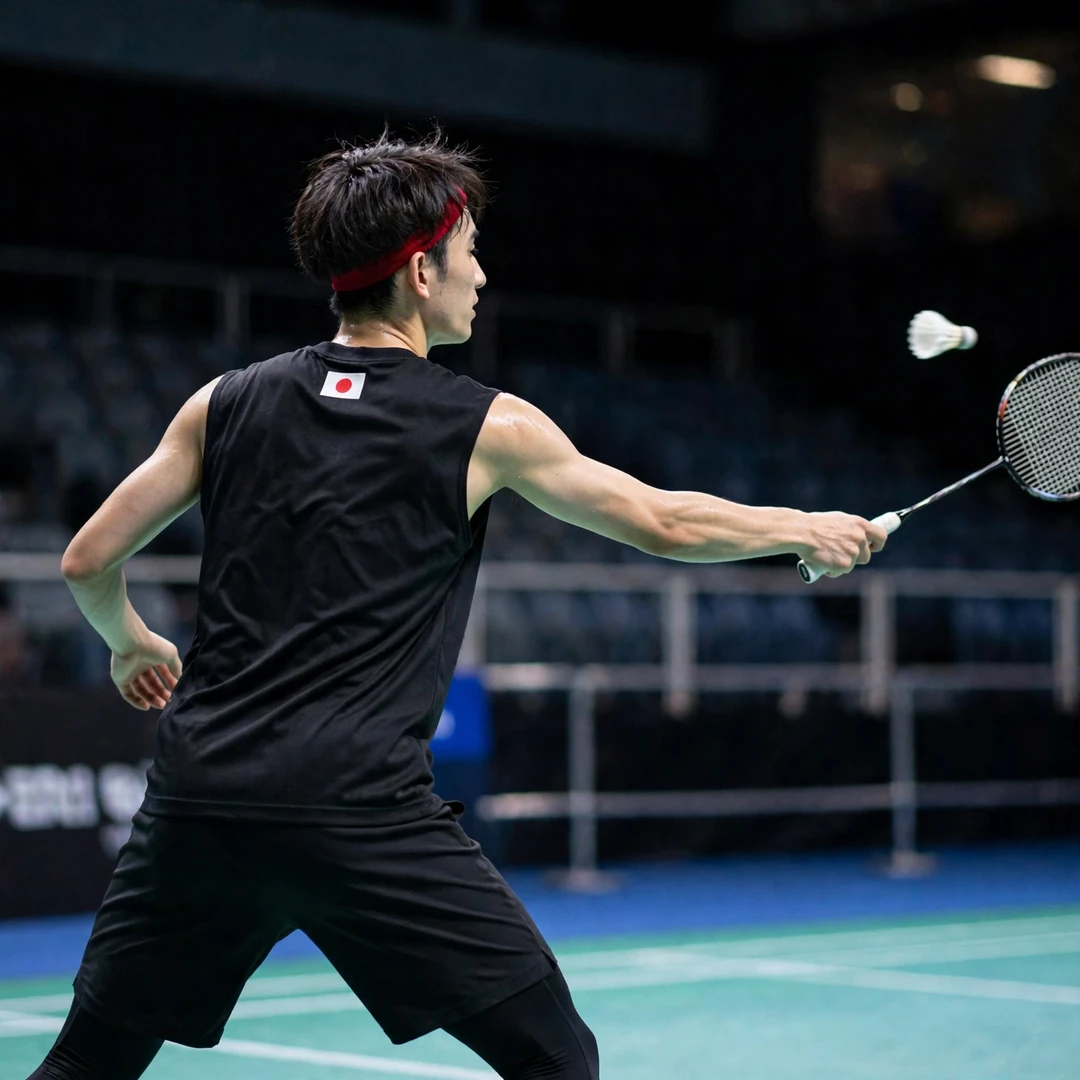
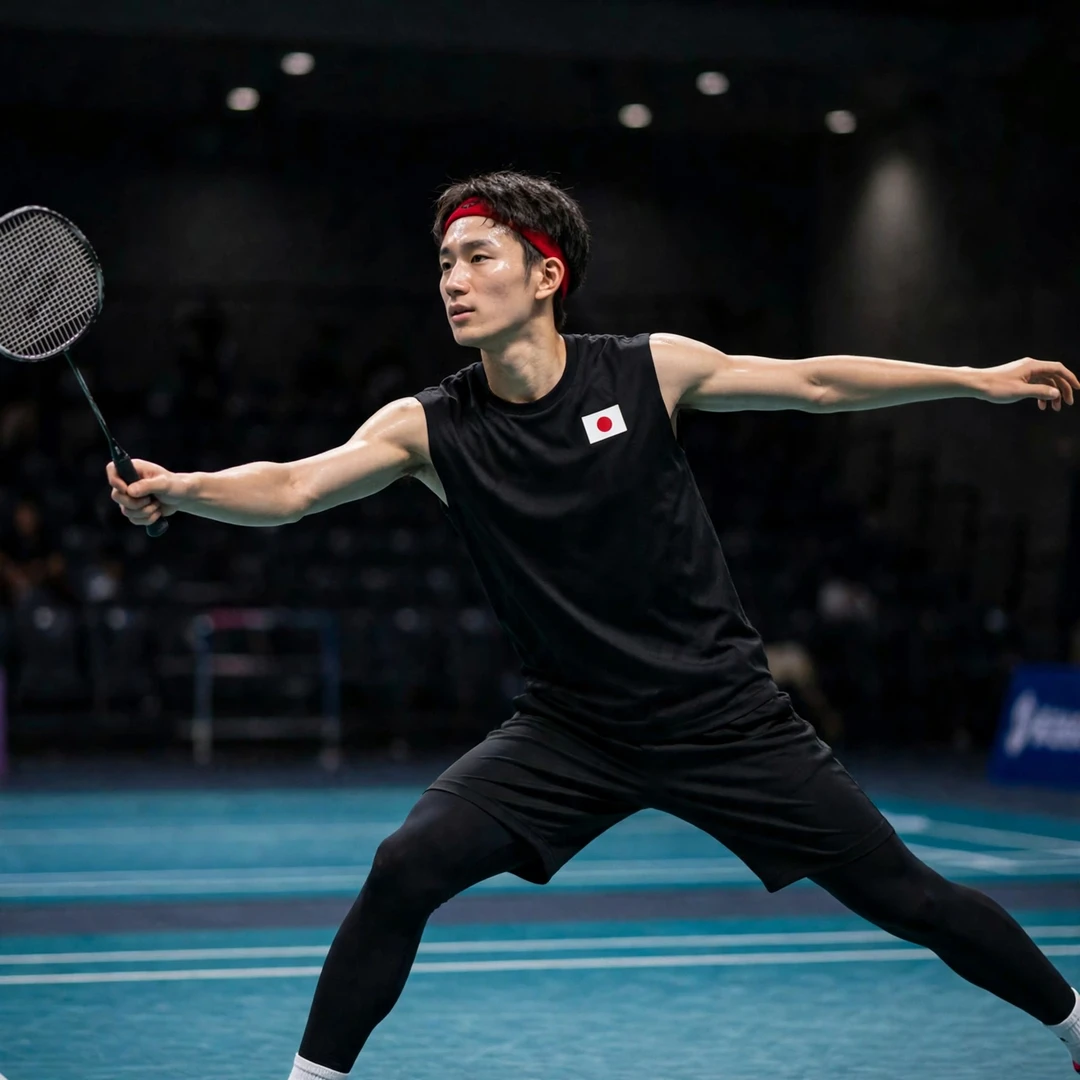
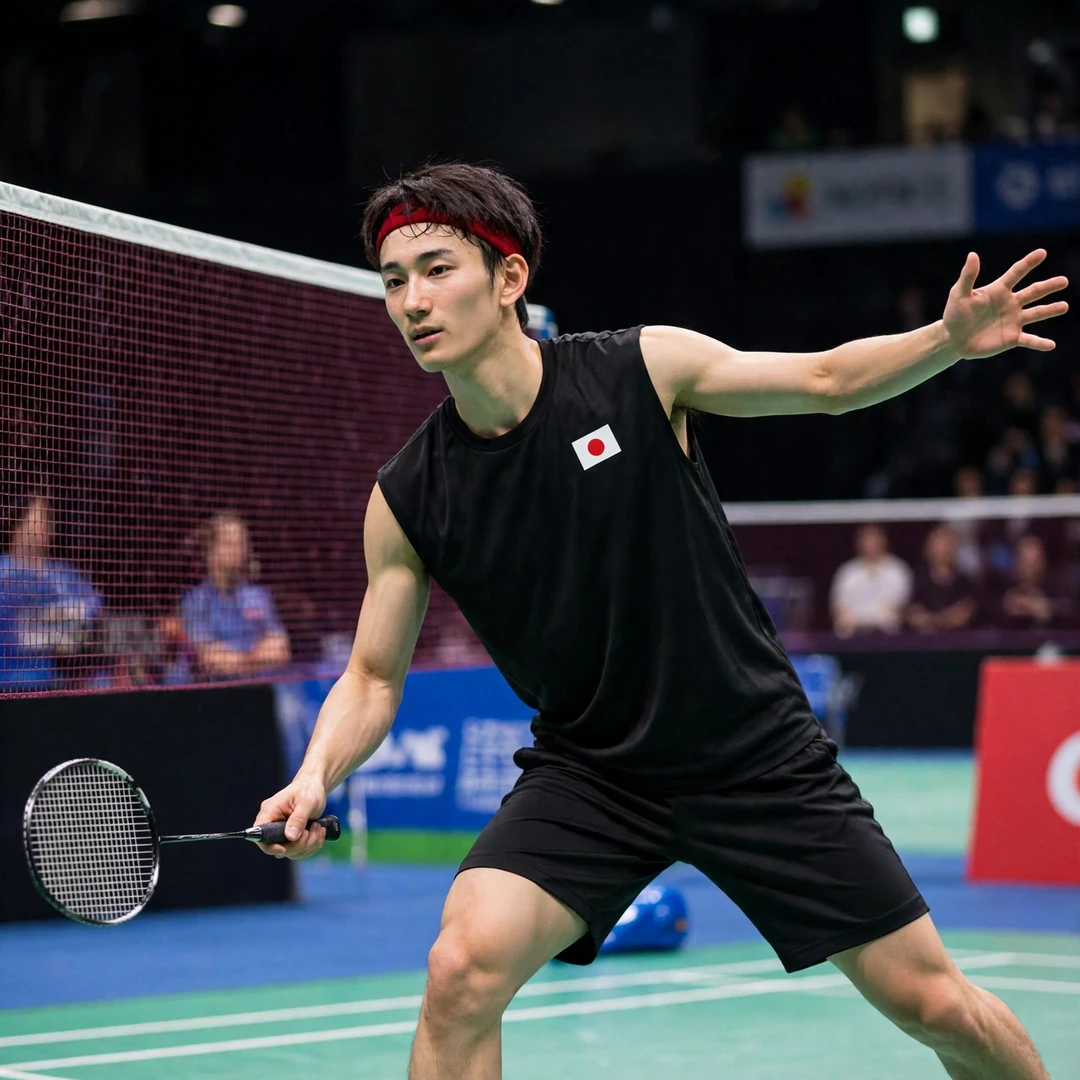
On court, Koo Takahashi is a speed-first all-court player. At 1.69 metres he gives away height and reach to most of the top 100, so his game is built the other way: low, fast footwork that gets him to the shuttle early; a patient rally structure that moves opponents from corner to corner; and counter-attacking winners played off the back of defence rather than raw smash power. His two career-best weeks tell the story of the style — in Orléans he won four matches by outlasting higher-ranked players in long exchanges, and in Mülheim he beat a top-four seed, Christo Popov, whose power game ran into a wall of returns. He plays right-handed, and his racket work — tight spinning net shots and fast, flat drives — does the work that height does for other players.
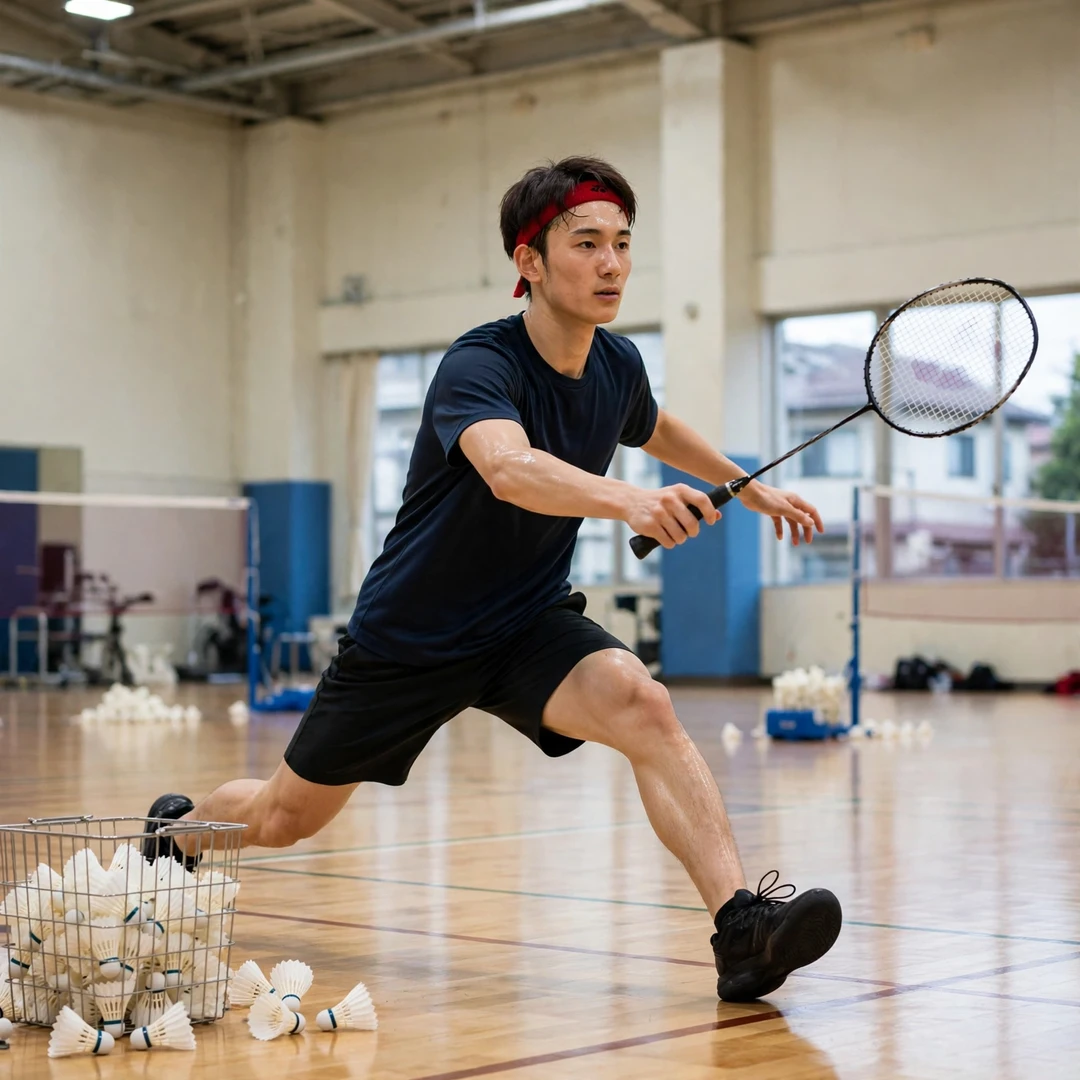
Coaches value this type of player for a simple reason: every part of his game is trainable, and none of it depends on being the tallest or strongest athlete in the hall. Speed can be built. Footwork patterns can be drilled. Rally patience is a habit, not a gift. Takahashi’s career is what those habits look like after years of compounding — a school player from Fukuoka who became, by accumulation, a Super 300 finalist and a world No. 40. When junior coaches look for a model for smaller players, they rarely point to the giants of the game; they point to players like Takahashi, whose whole career is proof that court coverage and consistency are skills — and skills can be taught.
Mental Strength
Speed, Footwork and Rally Craft
His journey carries a lesson about systems. Japanese badminton’s works teams are sometimes dismissed as comfortable — a salary, a company hall, no need to chase sponsorship — but Takahashi’s career shows what the structure is for: it let a school leaver train full-time for six years, inside a squad of elite partners, until his game matured into a world No. 40 ranking. Parents choosing between academies can copy the principle without copying the country: the best environment is the one that gives a young player elite training partners, professional coaching and time — years of it — to develop.
There is a second lesson in his ranking graph. Between March 2025 and March 2026 he fell from No. 40 to around No. 120 without playing badly — the points simply expired. Young players and parents who treat a ranking as a verdict will panic at a slide like that; players who understand it as a 52-week portfolio treat it as a scheduling problem. Takahashi’s answer was not to reinvent his game but to re-enter the events that built the ranking and go deep again — a final in Saipan within months. Resilience in professional badminton is mostly this: showing up at the next tournament with the same game and the same belief.
Practical lessons from his journey include building your game around your physical reality — speed and consistency if you are not tall; choosing a training environment with elite partners and the patience to develop over years, as the Tonami works team gave him; treating national-team selection as a milestone, not a finish line — his Asia Team Championships debut came two years before his first World Tour final; valuing the smaller circuit — his first final came in Santo Domingo and his first title in Surabaya, far from the televised events; and understanding the 52-week ranking cycle before it surprises you.
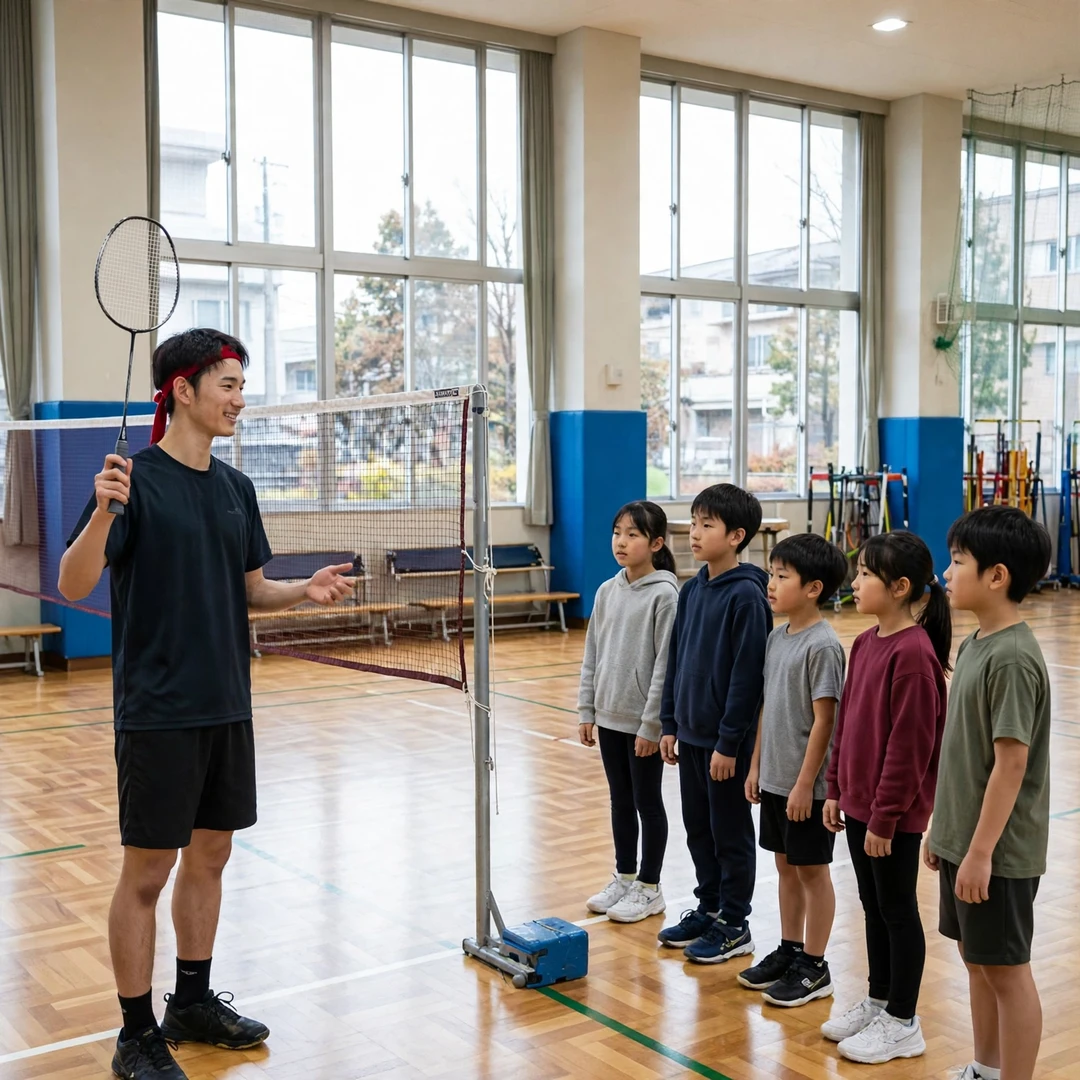
Learning Reference
ST Badminton Academy Connection
ST Badminton Academy has no official partnership or endorsement from Koo Takahashi. He is not connected with our academy, and this profile is published purely as an educational case study for parents and junior players who want to understand how a Japanese works-team player reaches the world’s top 40.
Many of our students in Malaysia study his matches to understand the smaller player’s road: how a 1.69-metre player defends his way through a Super 300 draw in Orléans, how to stay patient through five matches in a week in Saipan, and how a career is rebuilt after a ranking slide that had nothing to do with form. His Orléans final run and his German Open win over Christo Popov are both used in our discussions of court coverage and rally construction.
We encourage our students to observe his first-step speed, his patience in long rallies, and his composure when big results expire from the rankings — and to notice that his career-high of world No. 40 was assembled from a works-team base in Japan, one final in France and dozens of quiet circuit weeks from Santo Domingo to Saipan, not from a single televised miracle. The famous weeks only counted because the quiet weeks surrounded them.
FAQs: Koo Takahashi Japanese Badminton Player
Here are answers to common questions about Koo Takahashi’s career, achievements and what young players can learn from the Japanese all-court player and his climb from Fukuoka to the world top 40.
Who is Koo Takahashi and which country does he represent in badminton?
Koo Takahashi is a Japanese professional badminton player competing in men’s singles. Born on 20 September 2001 in Fukuoka, he plays for the Tonami Transportation works team, is a former member of Japan’s national team, reached a career-high senior world ranking of No. 40 in March 2025, and stands at world No. 134 in the Week 43 rankings of October 2026.
What are Koo Takahashi’s biggest badminton achievements?
His biggest achievements are reaching the final of the Orléans Masters, a Super 300 World Tour event, in 2024; the semi-finals of the German Open Super 300 in 2025, where he beat fourth seed Christo Popov; the final of the Indonesia Masters Super 100 in 2023; winning the Indonesia International Challenge in Surabaya in 2024, his first international title; and reaching a career-high world ranking of No. 40 in March 2025.
What is Koo Takahashi’s playing style?
Koo plays a speed-first, right-handed all-court game. At 1.69 metres he wins with fast, low footwork, patient rally construction and counter-attacking defence rather than power: he moves opponents from corner to corner, returns one more shuttle than they expect, and strikes when the rally opens. His Orléans final run and his German Open win over Christo Popov were both built on outlasting bigger hitters.
How did Koo Takahashi reach the Orléans Masters final?
At the Orléans Masters in March 2024, unseeded Koo Takahashi beat Daniil Dubovenko in three games, Mads Christophersen 22-20, 21-14, Cheam June Wei 21-13, 21-8 in the quarter-finals and Chi Yu-jen 21-19, 21-12 in the semi-finals, before losing the final to his Japanese compatriot Yushi Tanaka 18-21, 10-21. It remains the biggest final of his career — a Super 300 title match reached by beating four higher-profile opponents in five days.
How can my child learn from Koo Takahashi’s training approach?
Young players can study Koo’s approach by copying his foundations: he built a world top-40 game on footwork speed, rally patience and consistency rather than height or power, inside a structured team environment at Tonami Transportation where elite training partners set the standard every day. At ST Badminton Academy we use his Orléans and German Open runs as lessons in court coverage and rally construction, then train the same patterns in footwork and multi-shuttle drills.
When did Koo Takahashi win his first international title?
Koo Takahashi won his first international title at the Indonesia International Challenge in Surabaya in October 2024, beating fellow Japanese player Riku Hatano 21-18, 21-11 in the final. He had twice been a runner-up in finals before — at the Santo Domingo Open in 2022 and the Indonesia Masters Super 100 in 2023 — which made the Surabaya win the payoff for two years of finals experience.
What are Koo Takahashi’s best World Tour results?
His best BWF World Tour results are the runner-up finish at the Orléans Masters Super 300 in 2024; the semi-final at the German Open Super 300 in 2025, where he beat fourth seed Christo Popov and China’s Wang Zheng Xing; the runner-up finish at the Indonesia Masters Super 100 in 2023; a semi-final at the Malaysia Super 100 in 2024; and a quarter-final at the Macau Open in 2024.
What playing style should young players learn from Koo Takahashi?
Young players should study Koo’s complete game rather than one spectacular shot: the low, fast footwork that gets him to the shuttle early, the patience to build rallies until the opening comes, and the defensive consistency that lets a 1.69-metre player beat taller, harder-hitting opponents. His game is built from trainable skills — speed, movement and rally tolerance — which is exactly why coaches love teaching from it.
Does ST Badminton Academy have any connection with Koo Takahashi?
No, Koo Takahashi is not a student, coach or ambassador of ST Badminton Academy. He represents Japan and the Tonami Transportation team, and developed through Japan’s school system and corporate works-team structure. However, coaches at our academy in Kuala Lumpur regularly use his matches as teaching material, because his career shows smaller young players exactly what a speed-and-consistency game can reach — the world’s top 40.
Koo Takahashi Career Highlights

Career Statistics and Rankings
Koo Takahashi, born 20 September 2001 in Fukuoka, Japan, has been climbing toward the top of the game since his teens: a works-team contract with Tonami Transportation at 18, a national-team debut at the 2022 Asia Team Championships, a first international final in Santo Domingo, a Super 300 final in Orléans, a first title in Surabaya, a German Open semi-final and a career-high world No. 40 in 2025 — and, after the ranking points expired, a rebuild already under way with a final in Saipan in 2026.
| Development Area | Common Misconception | What Koo Takahashi's Career Shows REALITY |
|---|---|---|
| Junior Foundation | Talent alone decides who becomes a champion. | Takahashi started in Fukuoka's school badminton system and joined the Tonami Transportation works team at 18 to train full-time — a structured junior base came first. |
| Playing Style Priority | Kids should copy the flashiest attacking shots. | Takahashi built a complete game first; at 1.69 metres his speed, footwork and rally consistency are the foundation, and his counter-attacking winners are the finishing touch on reliable defence and net play. |
| Fitness Importance | Juniors can out-train everyone without rest. | Takahashi's ranking fell from a career-high No. 40 toward the 130s in 2026 as his two big 2024-25 results expired under the 52-week system, so he rebuilt through the International Challenge circuit — his 2026 Saipan final came from smarter scheduling, not more hours. |
| Mental Approach | Top players never get nervous or upset. | Takahashi is a calm, methodical competitor who treats a ranking slide as a scheduling problem rather than a crisis, and simply re-enters the events that built his ranking — mental skills are trained, not inherited. |
| Attacking Training | Smashing harder is always the answer. | His 2025 German Open run — beating fourth seed Christo Popov and China's Wang Zheng Xing before a semi-final against Loh Kean Yew — and his 2024 Orléans Masters final came from controlled rally placement and court coverage, not raw power. |
| National Milestones | Only world titles matter. | Takahashi's first international title in Surabaya in 2024 and his Super 300 final in Orléans made him one of Japan's most watched works-team players — international milestones build a career step by step. |
| Career Timeline | Champions peak once and fade fast. | From a first international final in Santo Domingo in 2022 to world No. 40 in 2025 and a rebuilding final in Saipan in 2026, Takahashi proves sustained development beats a short peak. |
Study Koo Takahashi's Work Ethic and Professional Approach
This profile explains who Koo Takahashi is, his major achievements, and what developing players can learn from his journey. Whether you are a parent in Kuala Lumpur, Cheras or anywhere in Malaysia wondering how a smaller player reaches the world top 40, Koo's story carries the answer: build speed that travels, find a training room that sets a professional standard, and keep showing up — book a trial class with ST Badminton Academy on WhatsApp at +60 17-684 2136 and let your child begin a development journey built to last.