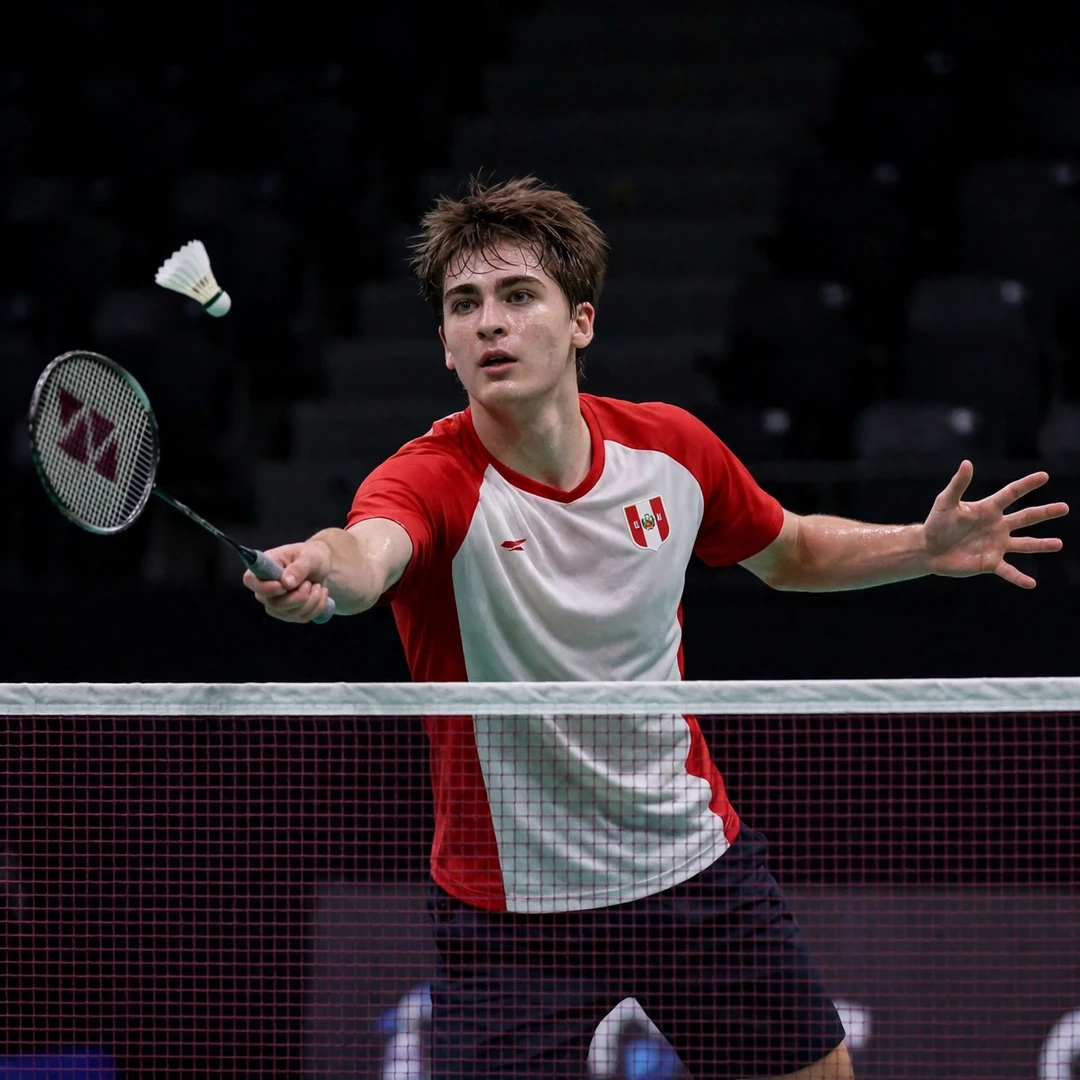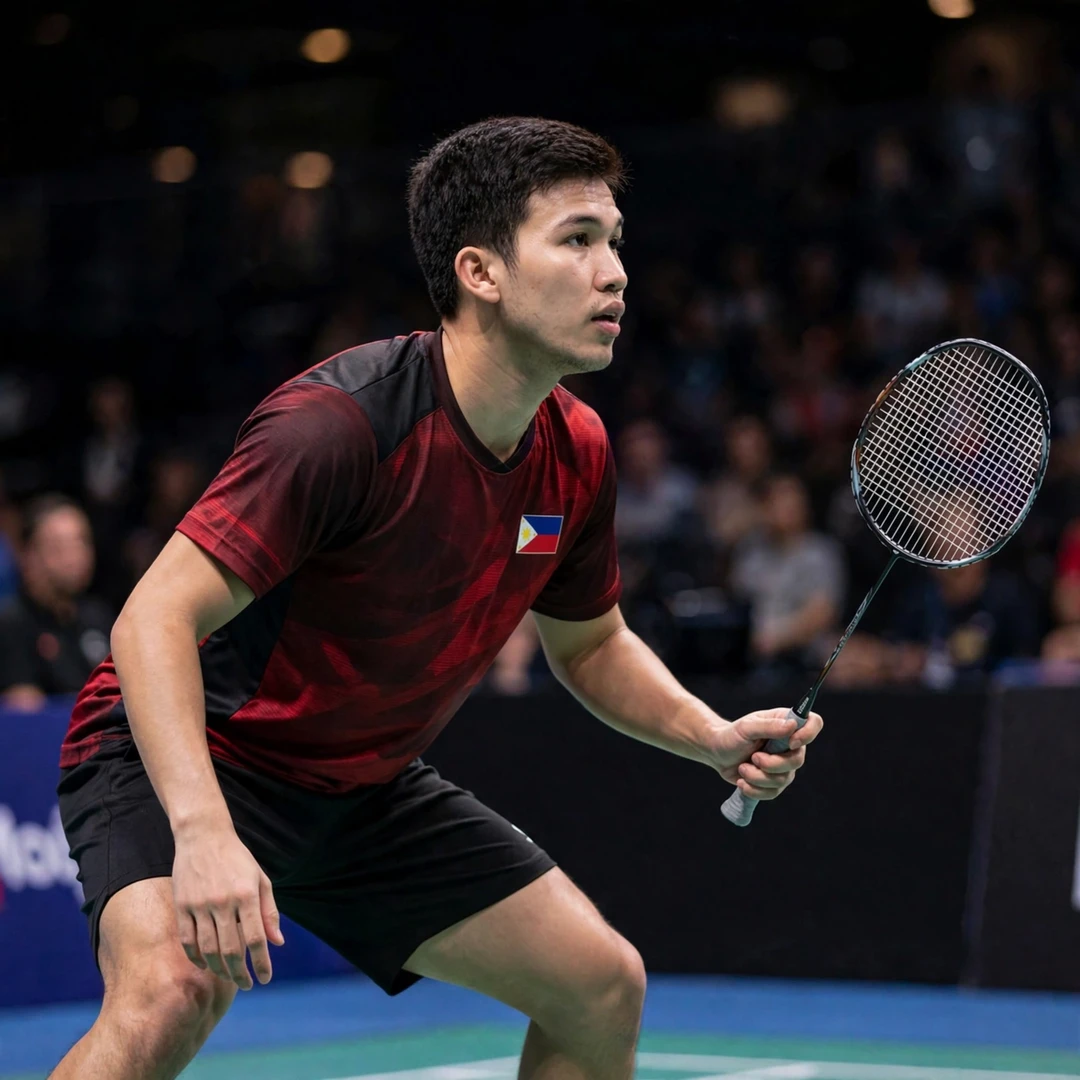
Filipino Men’s Singles Badminton Star
Clarence Villaflor

Philippines
Player Event: Men’s singles
From the Philippines · Born: 26 June 2004 · Left-handed · Smash Pilipinas national team player and National University Bulldog
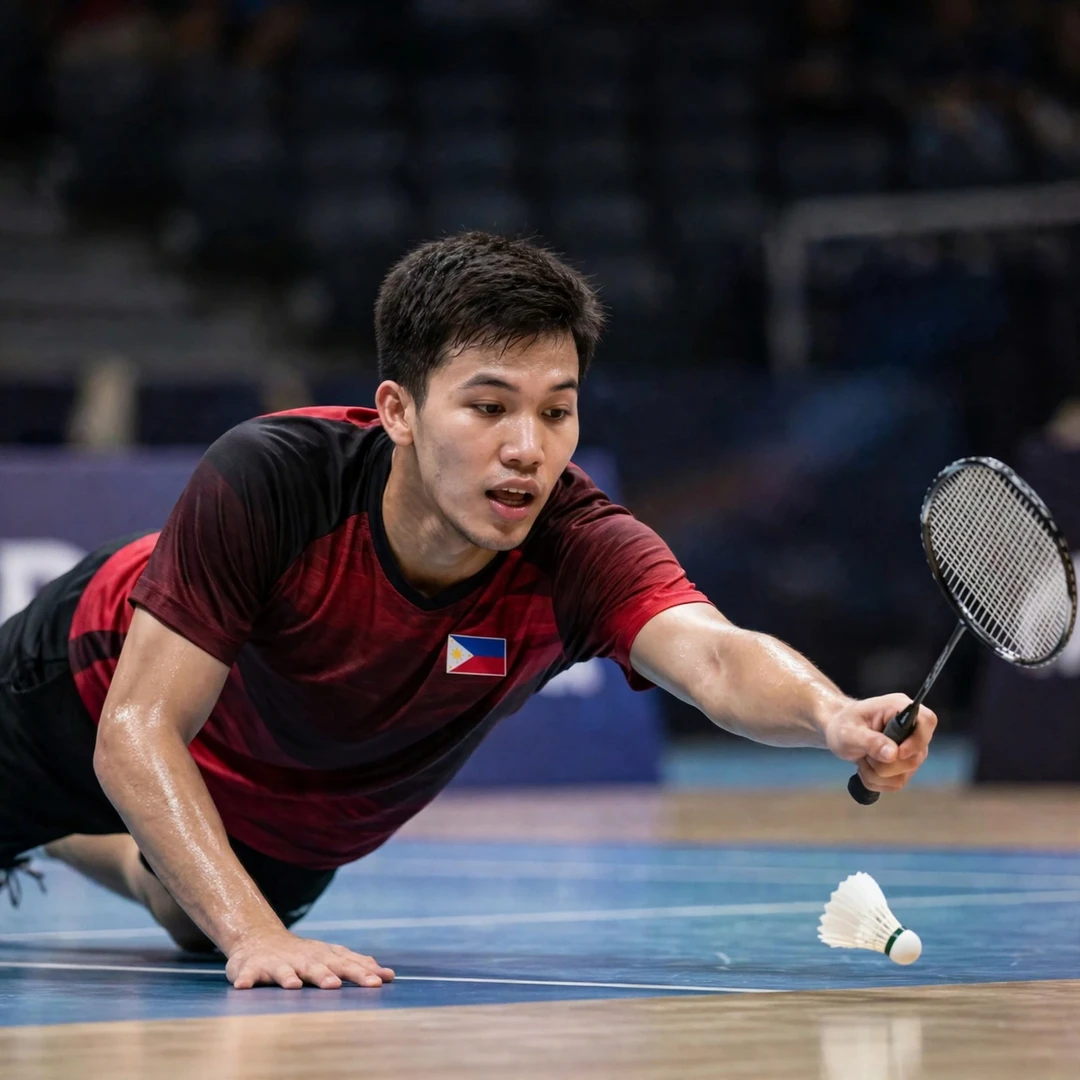
Playing Style: Left-handed speedster who builds rallies patiently, reads the opponent early, then injects pace with fast drives and counter-attacking smashes
Known For: The Azerbaijan International semi-final in Baku, where he took the first game off eventual champion Dominik Kwinta; a home quarter-final at the first Philippine International Challenge; and a climb from world No. 450 to No. 112 in twelve months
Teams: Smash Pilipinas (Philippine national team) · National University (UAAP)
Understanding Clarence Villaflor (Filipino Badminton Star)
Clarence Villaflor is a Filipino men’s singles badminton player who stands at world No. 116 in the BWF rankings for Week 43 (20 October 2026) with 16,300 points from twelve counted tournaments. Twelve months earlier he was world No. 450. The left-hander from the Philippine national team, Smash Pilipinas, has compressed a career’s worth of firsts into a single year: a first international podium in Baku, a first home quarter-final in Manila, a World Championships debut in New Delhi — and, in October 2026, a debut in the UAAP for National University.
A Smash Pilipinas Product: Built by the Philippine System
Clarence Villaflor was born on 26 June 2004 in the Philippines. Unlike many players in this ranking band, he did not arrive through a famous junior academy or a televised junior title: he is a product of the Philippine national system, developed inside the Smash Pilipinas set-up that trains the country’s senior squad. That pathway matters to his story. The Philippines produces passionate badminton players in large numbers but sends few of them around the world full-time, and Villaflor’s rise has been built the hard way — on the circuit, in qualifying draws, one ranking point at a time.
World No. 450: The Climb Begins in 2025
His name first appeared in the BWF world rankings in August 2025, at No. 450 — the foothills of a table that runs past two thousand names. What followed was the steepest part of the climb: by 7 October 2025 he had reached No. 371, by 21 October No. 296, and by late November he was inside the top 250 at No. 249. Those numbers were not won at glamorous events. They were assembled match by match at Challenger and Series level, the circuit’s engine room, where a young Filipino with no seeding has to win his place in every single draw.
Baku Breakthrough: Six Wins to a First Semi-Final
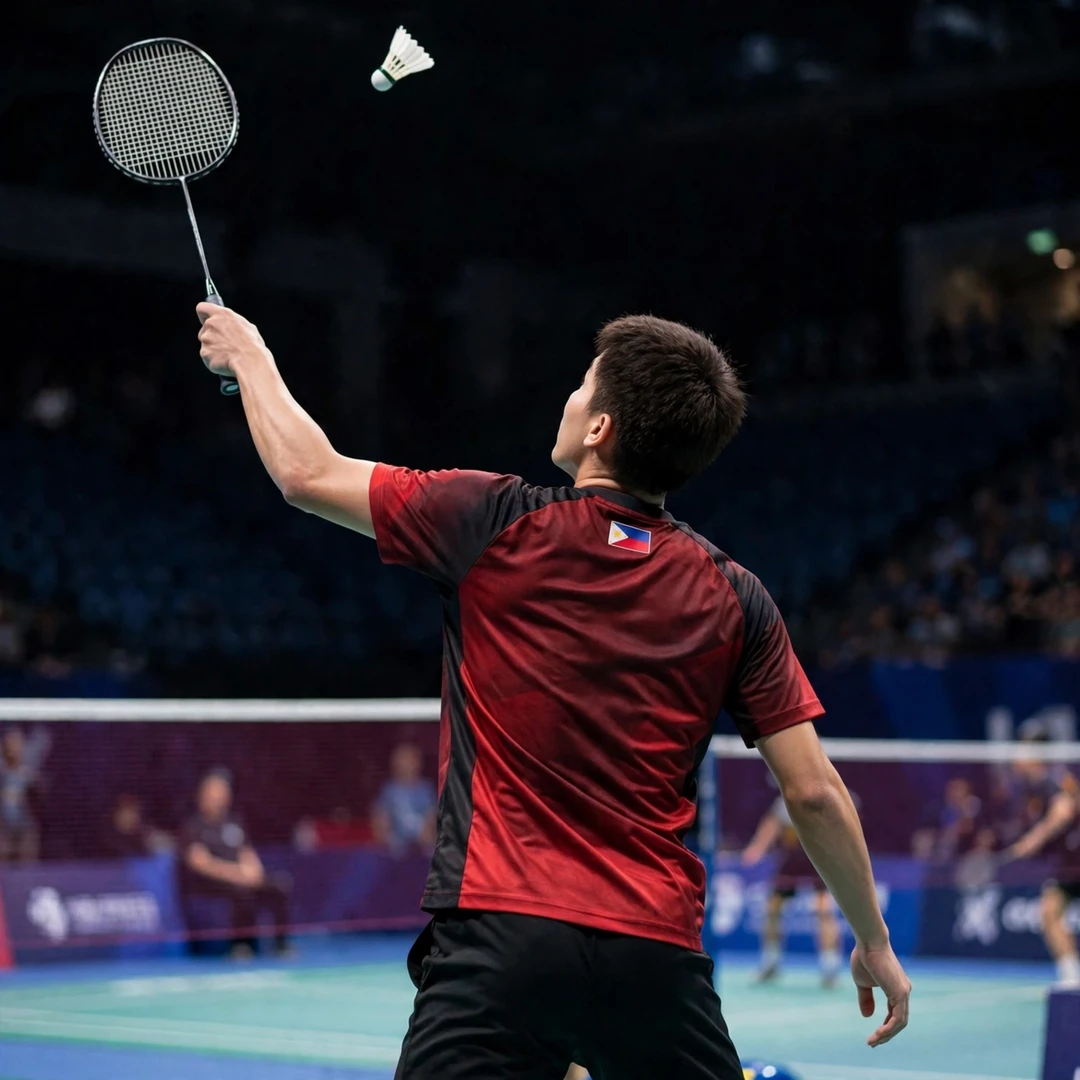
The breakthrough came in Baku. At the Azerbaijan International in February 2026 — an International Challenge event that drew a strong European and Asian field to the Azerbaijani capital — Villaflor strung together six match wins to reach the semi-finals, his first podium at this level. Philippine media would describe him by that result for the rest of the year: the 2026 Azerbaijan International Challenge bronze medallist. For a player who had been ranked 450th six months earlier, a Challenge-level semi-final was not an incremental step. It was a change of category.
One Game From the Final: The Night Baku Believed
The semi-final itself became the signature match of his young career. Across the net stood Dominik Kwinta of Poland, who would lift the title the next day. Villaflor took the first game 21-13, lost the second 15-21, and was still fighting deep into the decider when injury stopped him at 11-14 — a retirement that left him with bronze instead of a first final. Coaches call matches like that proof of level: he had not been outclassed by the eventual champion; he had been level with him for two and a half games.
Career Milestone #1
Singapore Weeks and a First Asia Championships
Baku was followed by a working tour of Singapore. At the Singapore International Challenge in late February he won four matches across the week, then backed it up with a round-of-16 finish at the Singapore International Series in March. Neither week made headlines at home, but both did exactly what his ranking needed: they turned the Baku spike into a trend, adding the steady points that keep a rising player within reach of seeding at the next tier of draws.
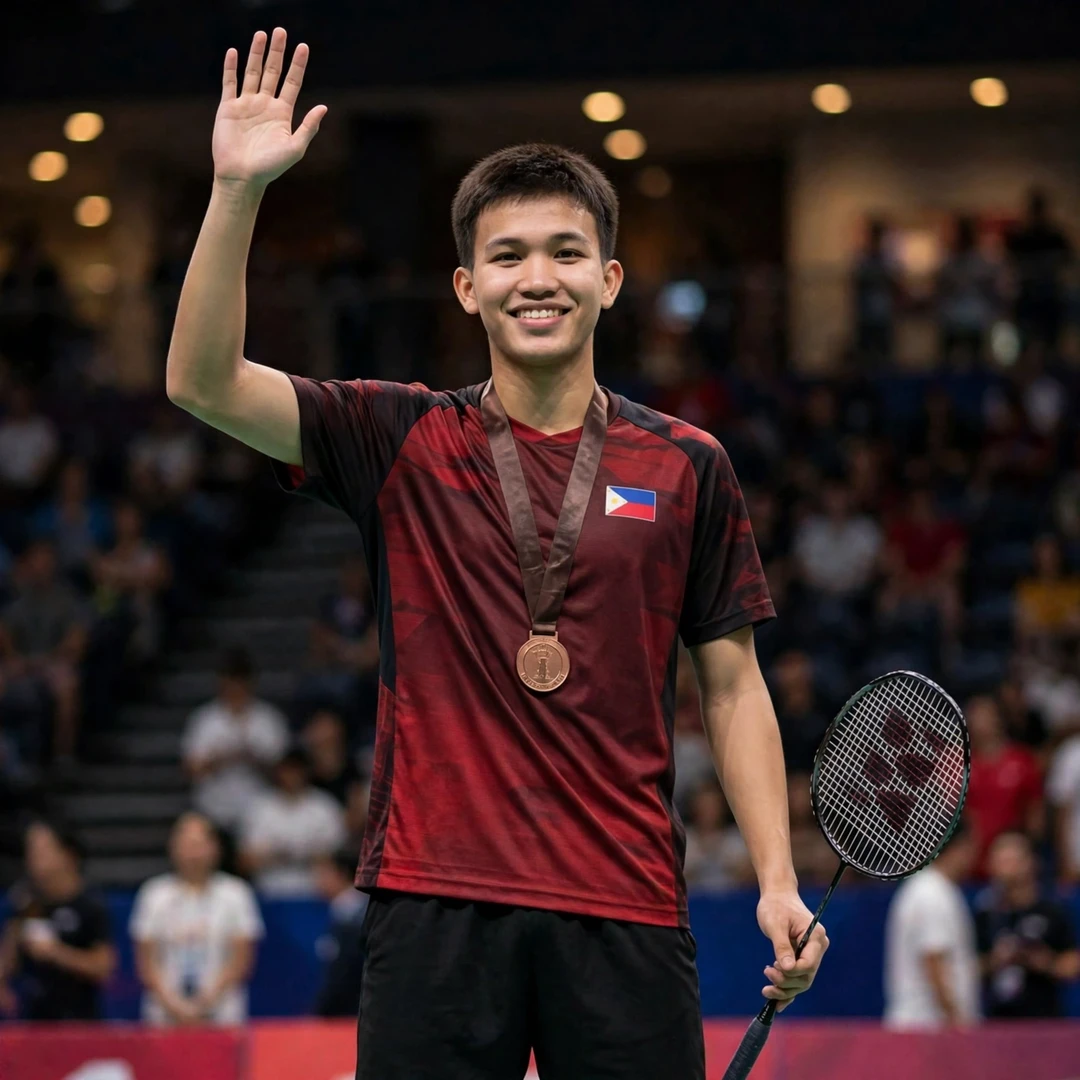
April brought the biggest stage of his career to that point: the Badminton Asia Championships in Ningbo, China, the continental championship where Asia’s very best fill the draw. Villaflor came through qualifying, beating Hong Kong China’s Kah Kit Kan 21-9, 21-8, and in the main draw’s round of 32 he faced Japan’s Kodai Naraoka — one of the most relentless retrievers in the modern game. He lost in straight games, but a qualifying survivor measuring himself against Naraoka is precisely how a player learns the distance to the top.
Career Milestone #2
The European Summer: Bonn, Riga and Valence
The European summer swing began in Germany at the Bonn International, where he lost a three-game round-of-32 match to Chinese Taipei’s Yu-Jui Lee. In Riga, at the Latvia International, he beat Brunei’s Jamal Rahmat Pandi 21-12, 21-10 before losing in the round of 16 to Poland’s Mateusz Golas. These are the unglamorous weeks that decide whether a breakthrough holds: long halls, small crowds, no television cameras — and a ranking that only moves if you keep winning matches in them.
The swing finished in France, at the Valence Alpes International, and it finished with a win worth remembering: a three-game defeat of Italy’s Giovanni Toti, 19-21, 21-13, 21-16 — Villaflor dropping the first game, recalibrating, and closing the match with the patience-then-pace pattern that defines his identity. He lost his next match to Israel’s Daniil Dubovenko, but he flew home with another round-of-16 finish and a ranking still moving in the right direction.
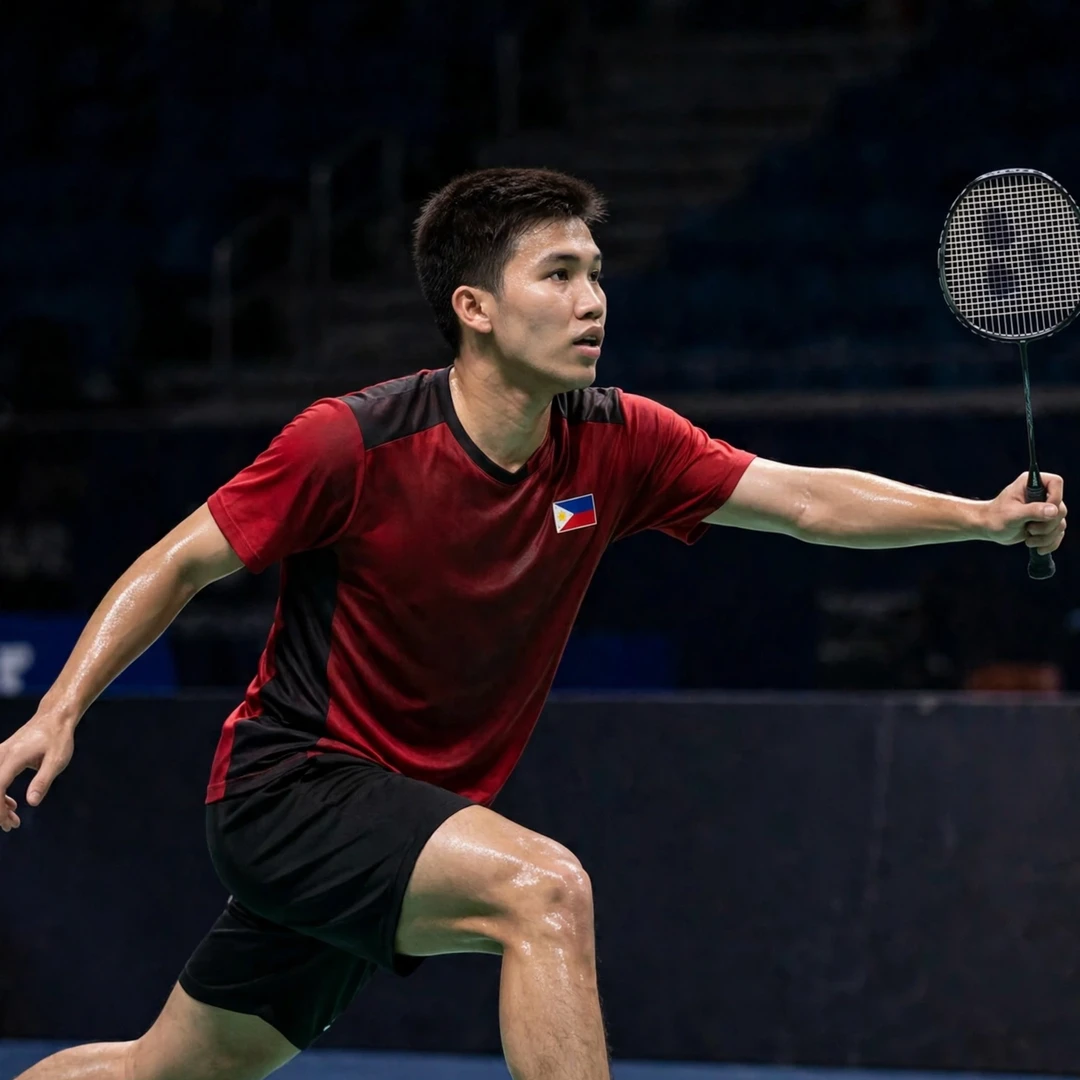
Then came the week Philippine badminton had been waiting for: the Philippine International Challenge of late July and early August 2026, the first BWF International Challenge the country had ever hosted, staged at Gameville Central Park in Mandaluyong. Villaflor, then world No. 122, was the home crowd’s singles standard-bearer. He beat India’s Harsheel Dani 21-16, 21-12 in just thirty-two minutes — the match report noted how he used his speed to neutralise the taller Indian’s reach — and became the last Filipino standing in the men’s singles draw.
Career Milestone #3
Home Hero: Last Filipino Standing in Manila
In the round of 16 he faced Thailand’s Tanawat Yimjit and produced the comeback of his tournament: down 16-18 in the first game, he reeled off five straight points, took the game 21-18, and ran away with the second 21-13. The quarter-final ended the run — fourth seed Alap Mishra of India won 21-16, 21-14 — but Villaflor walked off as the story of the home event. His own summary was simple: the crowd’s support, he said, was a real factor in his performance; he could hear every cheer. Weeks later, on 25 August 2026, his ranking peaked at a career-high world No. 112.
August stacked the calendar: a round-of-16 finish at the Malaysia International Challenge, with two more match wins, and then the summit of the season — the BWF World Championships in New Delhi, where his ranking carried him into the draw. His debut World Championships match, in the round of 64, was against Chou Tien Chen of Chinese Taipei, a former world No. 2 and one of the most durable competitors of his era. Villaflor lost in straight games, but he had stood on the sport’s biggest annual stage at twenty-two, in his first full year on the rankings.
September took him back to Super 100 level at the Vietnam Open in Ho Chi Minh City, where he lost his opening match to India’s Sanskar Saraswat. It was a reminder of the next gap to close: he now reaches these draws regularly, but main-draw wins at Super 100 level are the currency that buys a top-100 ranking. The Week 43 list catches him at world No. 116 with 16,300 points — close enough to his No. 112 peak that a single strong week moves him straight back above it.

Career Milestone #4
World Championships Debut and the UAAP Double Life
Most players in this ranking band guard their schedules jealously. Villaflor added a second life: university badminton. In October 2026 he made his UAAP debut for National University in Season 89, and set the tone for a 5-0 sweep of De La Salle University by winning the opening singles against Huego Queddeng, 21-9, 21-5. It was, he said afterwards, a dream he had always carried — to play in the UAAP and carry his school’s flag — and his instruction to himself was a professional’s one: one game at a time, one point at a time.
What remains is conversion. At twenty-two, left-handed, with a Challenge-level podium, a home quarter-final and a World Championships appearance already banked, Villaflor’s targets write themselves: a first senior international title, a return past his No. 112 peak and into the top 100, and regular main-draw wins at Super 100 level. The Baku retirement is the caution in the file — his body must be built to finish the matches his game is now good enough to reach. If it holds, the Philippines may have its next long-term fixture inside the world’s top hundred.
Playing Style
The Left-Handed Speed Game: Patience, Then Pace
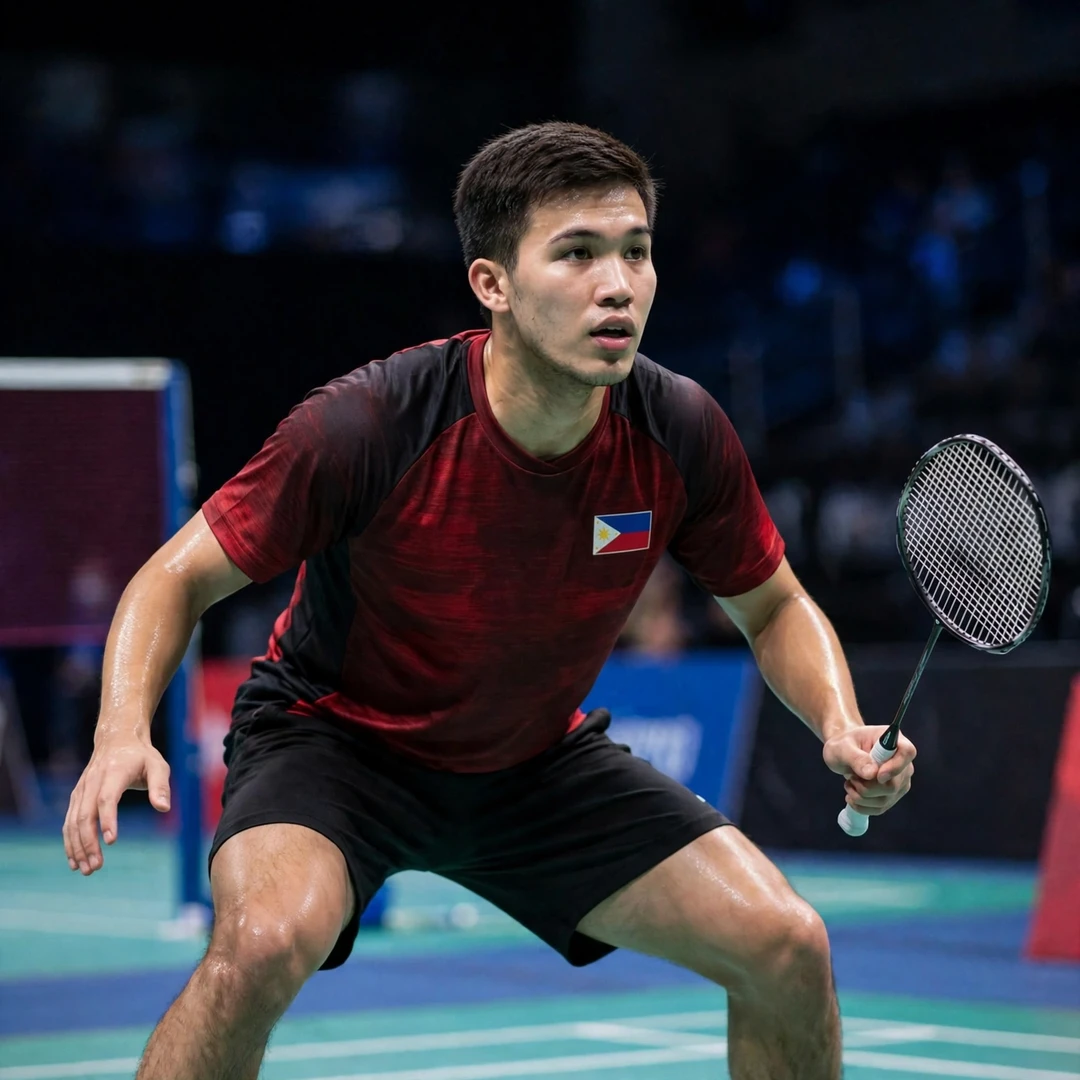
Start with the hand. Left-handers are a minority on the circuit, and every pattern an opponent has grooved against right-handers arrives reversed against Villaflor: the cross-court forehand comes off the other shoulder, the around-the-head side becomes the backhand corner, and the angles off his racket open the court differently. Coaches analysing his game add the second ingredient — speed. Against Harsheel Dani in Manila, a taller opponent with a longer reach, it was Villaflor’s foot speed that decided the rallies, letting him take the shuttle early and deny the Indian the time his reach needed.
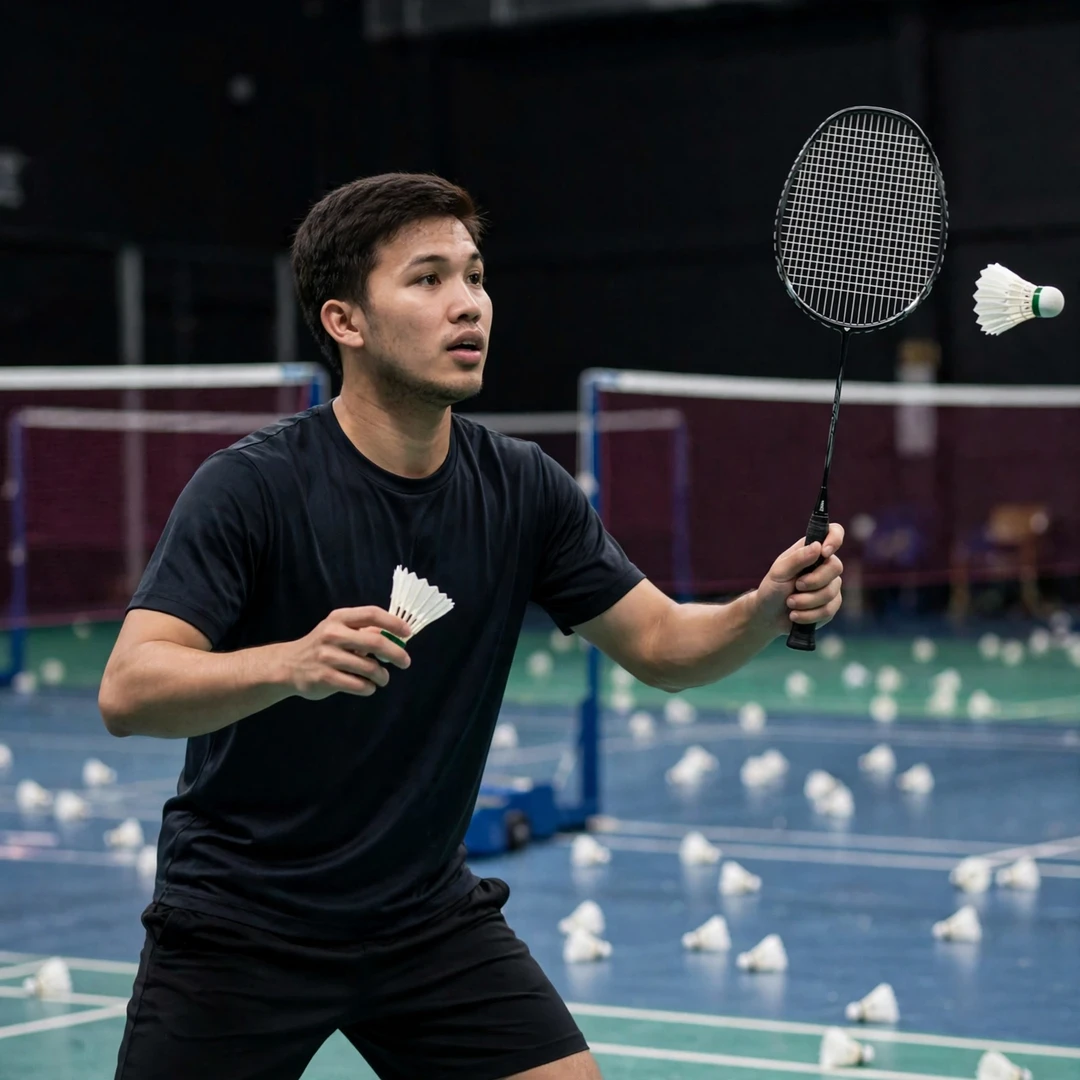
His rally philosophy, in his own words after the Yimjit match, is a sequence: first, just get the shuttle in; read what the opponent is doing; build the rally’s momentum; and only then play the fast ball. It sounds simple, and it is the opposite of how most young attackers play. Villaflor treats the first phase of a rally as information-gathering — probing, moving the opponent, watching the replies — and his acceleration, when it comes, arrives against a defence he has already mapped. The five straight points that turned the Yimjit match from 16-18 down were that philosophy working at full speed.
The frontier is physical. The Baku semi-final was lost to his own body, not to Kwinta’s racket — a retirement at 11-14 in a deciding game he was still contesting. His 2026 calendar has been relentless: eleven BWF events from Baku to Ho Chi Minh City, qualifying draws on top, and then a UAAP season for National University. Building the durability to finish third games against top-100 opposition, week after week, is the strength-and-conditioning project that will decide whether No. 112 becomes a peak or simply a milestone on the way toward the top fifty.
Mental Strength
Climbing Lessons: What a 338-Place Rise Teaches
The first lesson of Villaflor’s career is that the ranking is a ladder with no lift. Twelve months from No. 450 to No. 112 sounds like a leap; up close it was a staircase of a hundred small results — qualifying wins in Ningbo, round-of-16 finishes in Riga and Singapore, a quarter-final at home. Developing players who study him should notice what is missing from his story: there is no single match that made him. There is a calendar, filled deliberately, at the level he could win at, week after week.
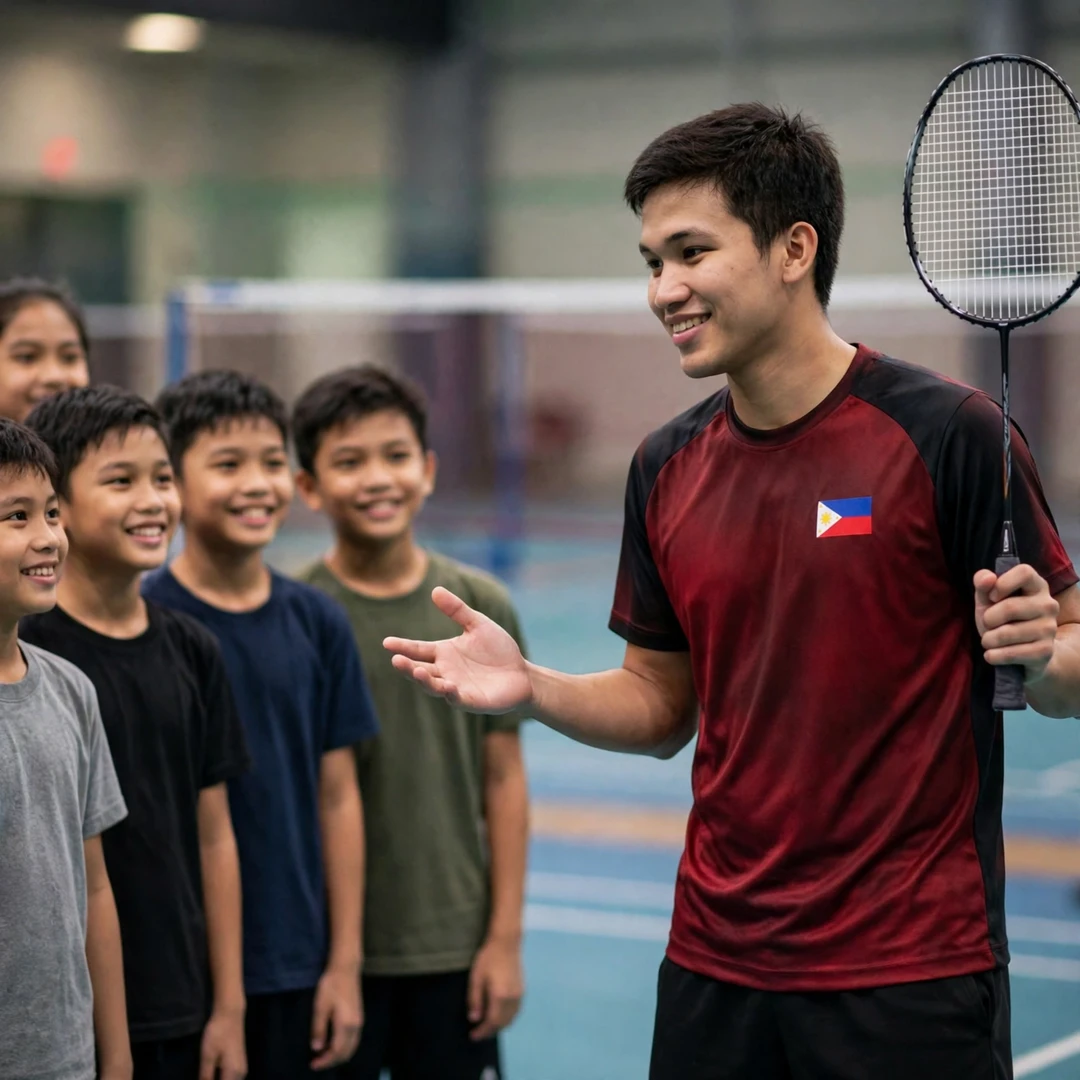
The second lesson is about identity and support. Villaflor plays for Smash Pilipinas, studies and plays for National University, and said plainly after his Manila quarter-final run that the home crowd’s noise was a factor in his performance. Young players often treat support as decoration; professionals treat it as fuel — something to be grateful for, to draw on in a third game, and to repay with effort. His manner in interviews is the same at a UAAP tie as at a World Championships: one game at a time, one point at a time.
Practical lessons from his journey include building your game around your natural gifts — in his case left-handed angles and foot speed; treating qualifying draws as opportunities rather than insults, the way he did in Ningbo; using matches against elite opponents such as Kodai Naraoka and Chou Tien Chen as free education; sequencing a season so Challenge-level events build the points that unlock bigger draws; and protecting the body across back-to-back weeks, the lesson Baku taught him the hard way. None of it requires fame or funding first — it requires a plan and the patience to climb.
Learning Reference
ST Badminton Academy Connection
ST Badminton Academy has no official partnership or endorsement from Clarence Villaflor. He is not connected with our academy, and this profile is published purely as an educational case study for parents and junior players who want to understand how a Filipino national-team player climbed from world No. 450 to the World Championships in a single year — and what his rise teaches about development that lasts.
Many of our students from Malaysia and visiting learners from Singapore study his matches to understand left-handed badminton: how the reversed angles change an opponent’s habits, how his speed lets him take the shuttle early against taller players, and how his Philippine International Challenge matches against Harsheel Dani, Tanawat Yimjit and Alap Mishra were constructed rally by rally. His Baku semi-final against Dominik Kwinta is used in our discussions of competing with an eventual champion — and of listening to your body.
We encourage our students to observe his patience in the first phase of rallies, the way his pace arrives only after he has read the opponent, and his refusal to let an injury retirement in Baku — or a straight-games defeat at the World Championships — define the ceiling of his career, and to notice that his rise ran through qualifying draws and small halls in Baku, Riga and Valence, not through a single televised breakthrough. Sometimes a career is built one ranking point, one tournament, one country at a time.
FAQs: Clarence Villaflor Filipino Badminton Player
Here are answers to common questions about Clarence Villaflor’s career, achievements and what young players in Malaysia can learn from the Filipino left-hander’s rise from world No. 450 to the BWF World Championships.
Who is Clarence Villaflor and which country does he represent in badminton?
Clarence Villaflor is a Filipino professional badminton player competing in men’s singles. Born on 26 June 2004, he is a left-hander who plays for the Philippine national team, Smash Pilipinas, and for National University in the UAAP. He stands at world No. 116 in the BWF Week 43 rankings of 20 October 2026 with 16,300 points, having peaked at a career-high No. 112 in August 2026 — twelve months after first appearing in the rankings at No. 450.
What are Clarence Villaflor’s biggest badminton achievements?
Villaflor’s biggest achievements are his semi-final — a bronze medal — at the Azerbaijan International Challenge in Baku in February 2026, where he won six matches and took the first game off eventual champion Dominik Kwinta; his quarter-final run at the first Philippine International Challenge in 2026, as the last Filipino standing in the men’s singles; his debut at the BWF World Championships in New Delhi in 2026; and reaching the main draw of the Badminton Asia Championships 2026 through qualifying.
What is Clarence Villaflor’s playing style?
Villaflor is a left-handed speed player. He builds rallies patiently — getting the shuttle in, reading the opponent, gathering momentum — and then injects pace with fast, flat exchanges and counter-attacking smashes. His foot speed lets him take the shuttle early against taller, longer-reaching opponents, and his left-handed patterns reverse the angles most players are grooved against. Philippine match reports of his home win over Harsheel Dani singled out exactly that speed as the deciding factor.
How did Clarence Villaflor perform at the 2026 World Championships?
Villaflor made his World Championships debut at the 2026 edition in New Delhi, qualifying through his world ranking. In the round of 64 he faced Chou Tien Chen of Chinese Taipei, one of the most experienced players in the draw and a former world No. 2, and lost in straight games. The result mattered less than the arrival: a player who had been ranked No. 450 a year earlier had earned his place in the sport’s biggest annual championship.
How can my child learn from Clarence Villaflor’s training approach?
Young players can study Villaflor’s approach by copying its sequence: build fundamentals and foot speed first, compete constantly at the level you can win at, and treat every draw — including qualifying — as a chance to climb. At ST Badminton Academy we use his Manila matches and his Baku semi-final as video lessons in patience-then-pace rally construction, left-handed angles and match management, then train the same patterns in footwork, rally-building and counter-attack drills.
Did Clarence Villaflor win any junior titles?
No international junior titles are documented for Villaflor — and that is part of his story’s value. He did not come through a celebrated junior career; he entered the BWF senior rankings only in August 2025, at No. 450, and climbed to No. 112 within a year through senior circuit results: a Challenge-level semi-final in Baku, a home quarter-final in Manila and a World Championships debut. His record is a senior breakthrough built match by match.
What are Clarence Villaflor’s best senior international results?
Villaflor’s best senior results are the Azerbaijan International semi-final in Baku in February 2026 (six match wins; the semi-final against eventual champion Dominik Kwinta finished 21-13, 15-21, 11-14 retired); the Philippine International Challenge quarter-final in 2026 (wins over Harsheel Dani 21-16, 21-12 and Tanawat Yimjit 21-18, 21-13, then a 16-21, 14-21 quarter-final loss to Alap Mishra); a Badminton Asia Championships main-draw place earned through qualifying; a three-game Valence win over Giovanni Toti; and round-of-16 finishes in Malaysia, Latvia and Singapore.
What playing style should young players learn from Clarence Villaflor?
Young players should study how Villaflor wins without the biggest smash on court: left-handed angles that reverse an opponent’s habits, foot speed that takes the shuttle early, and a rally sequence — patience first, pace second — that turns defence into counter-attack. Just as important is the mindset: a player who climbed 338 ranking places in a year by treating every small tournament as a step, and who describes his method, at a World Championships and at a university match alike, as one game at a time, one point at a time.
Does ST Badminton Academy have any connection with Clarence Villaflor?
No, Clarence Villaflor is not a student, coach or ambassador of ST Badminton Academy. He represents the Philippines with Smash Pilipinas and plays university badminton for National University in Manila. However, coaches at our academy in Kuala Lumpur regularly use his matches as teaching material, because his journey — a ranking climb from No. 450 to the World Championships in twelve months — shows what constant competition, sequenced development and patience can achieve.
Clarence Villaflor Career Highlights

Career Statistics and Rankings
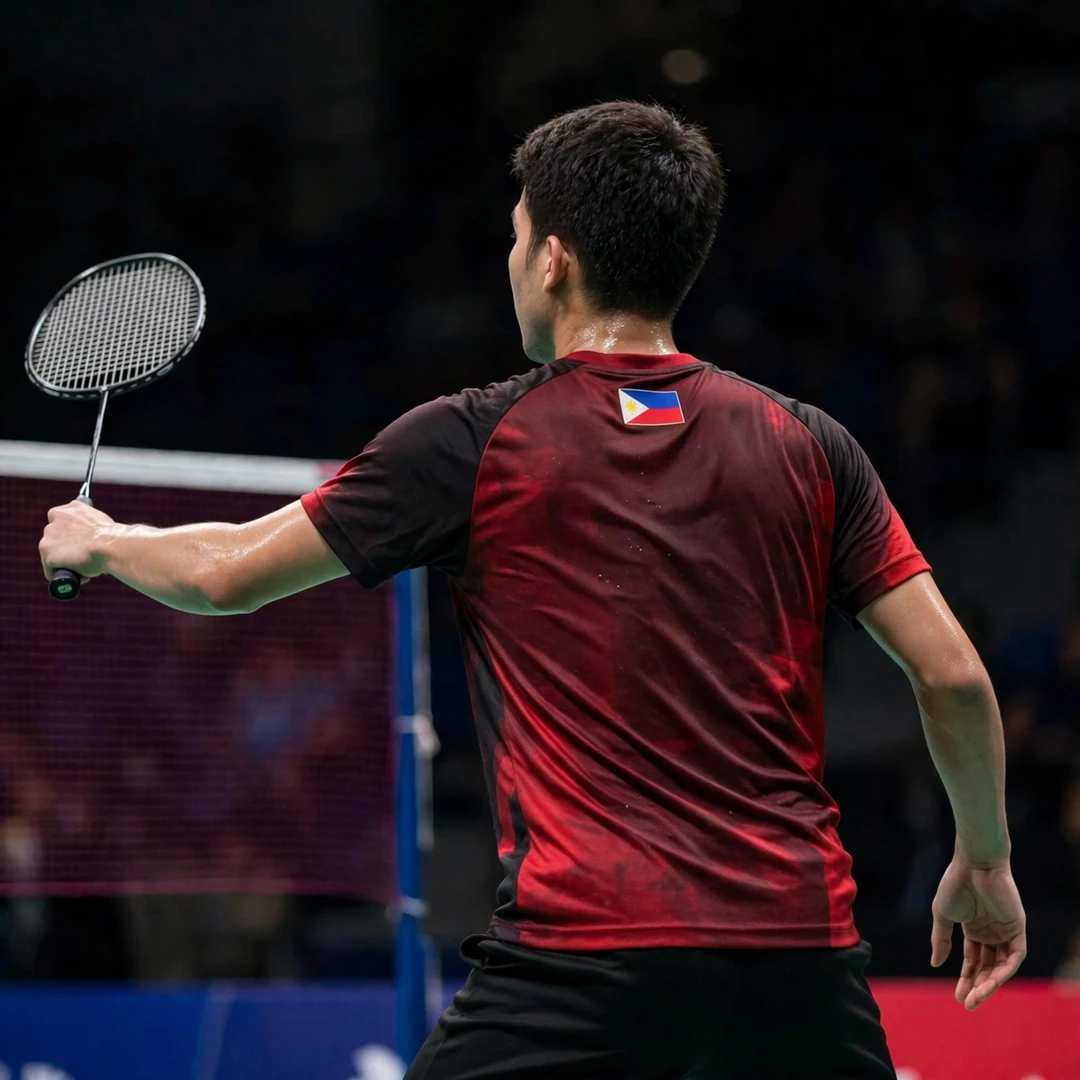
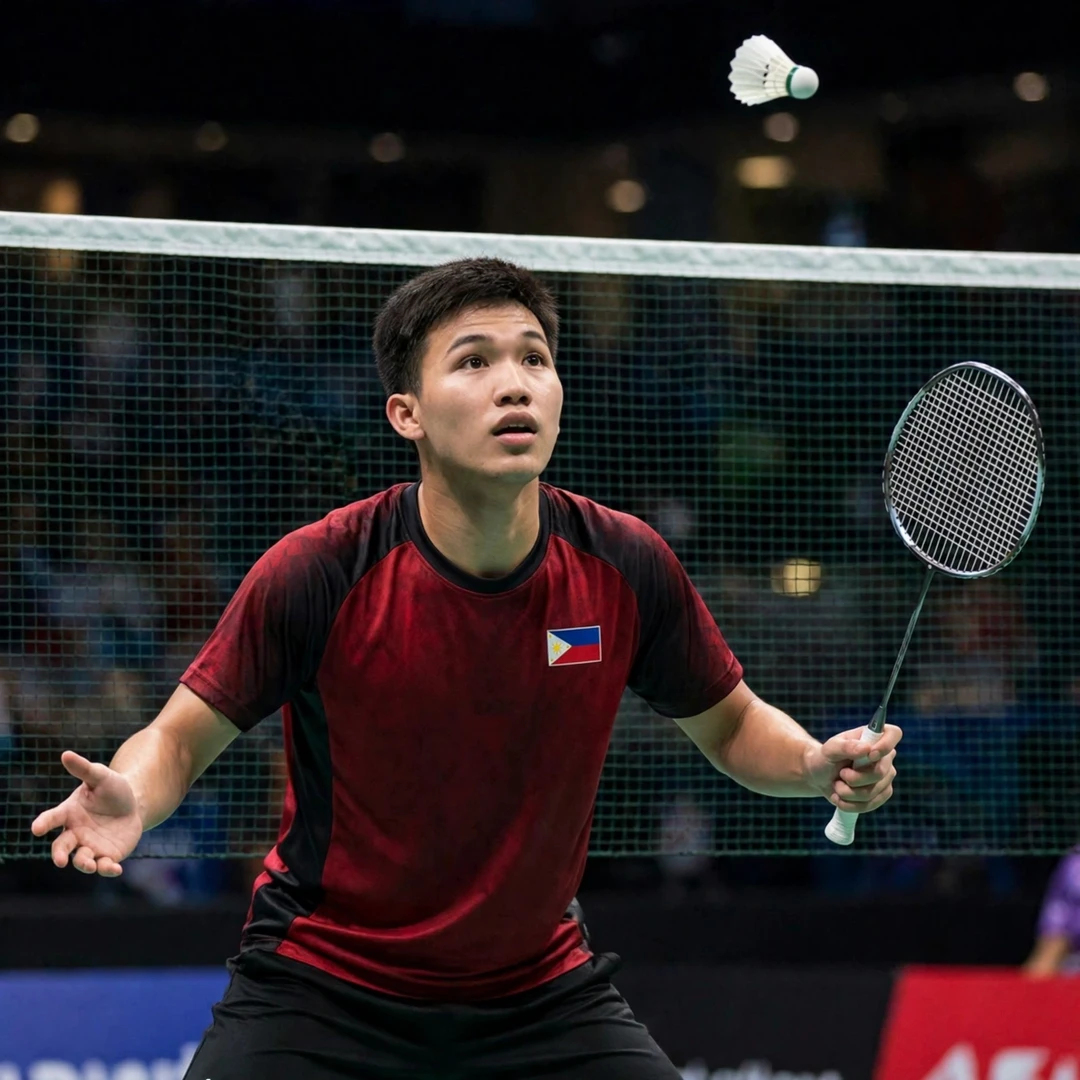
Clarence Villaflor, born 26 June 2004, is the Philippines' fastest-rising men's singles player: ranked No. 450 in August 2025, a bronze medallist in Baku, the home hero of Manila's first International Challenge, a World Championships debutant and a UAAP rookie — all by the age of twenty-two, and still climbing at world No. 116.
| Development Area | Common Misconception | What Clarence Villaflor's Career Shows REALITY |
|---|---|---|
| Junior Foundation | Talent alone decides who becomes a champion. | Villaflor entered the BWF world rankings at No. 450 in August 2025 with no junior spotlight behind him — a structured senior base built inside the Philippine national team came first. |
| Playing Style Priority | Kids should copy the flashiest attacking shots. | Villaflor built a complete rally game first; his left-handed speed and counter-attacking smashes are the finishing touch on patient construction and quick feet. |
| Fitness Importance | Juniors can out-train everyone without rest. | Villaflor retired hurt at 11-14 in the deciding game of the Baku semi-final, then rebuilt his schedule — his home quarter-final in Manila and his World Championships debut came from smarter sequencing, not more hours. |
| Mental Approach | Top players never get nervous or upset. | Villaflor plays in front of some of the most emotional crowds in world badminton, at home in Manila, yet he keeps returning for the next round — mental skills are trained, not inherited. |
| Attacking Training | Smashing harder is always the answer. | His Baku semi-final run and his Philippine International Challenge wins over Harsheel Dani and Tanawat Yimjit came from speed and controlled placement, not raw power. |
| National Milestones | Only world titles matter. | Villaflor's Azerbaijan bronze and his World Championships debut for the Philippines made him a standard-bearer for Smash Pilipinas — milestones build a career step by step. |
| Career Timeline | Champions peak once and fade fast. | From world No. 450 in August 2025 to a career-high No. 112 twelve months later, Villaflor proves sustained development beats a short peak. |
Study Clarence Villaflor's Work Ethic and Professional Approach
This profile explains who Clarence Villaflor is, his major achievements, and what developing players can learn from his journey. Whether you are a parent in Kuala Lumpur, Cheras or anywhere in Malaysia wondering whether your child has started too late to reach the world level, Villaflor's story carries the answer: a world-class climb can begin at twenty-one with nothing but a plan and a full calendar — book a trial class with ST Badminton Academy on WhatsApp at +60 17-684 2136 and let your child begin building fundamentals that will hold up anywhere.