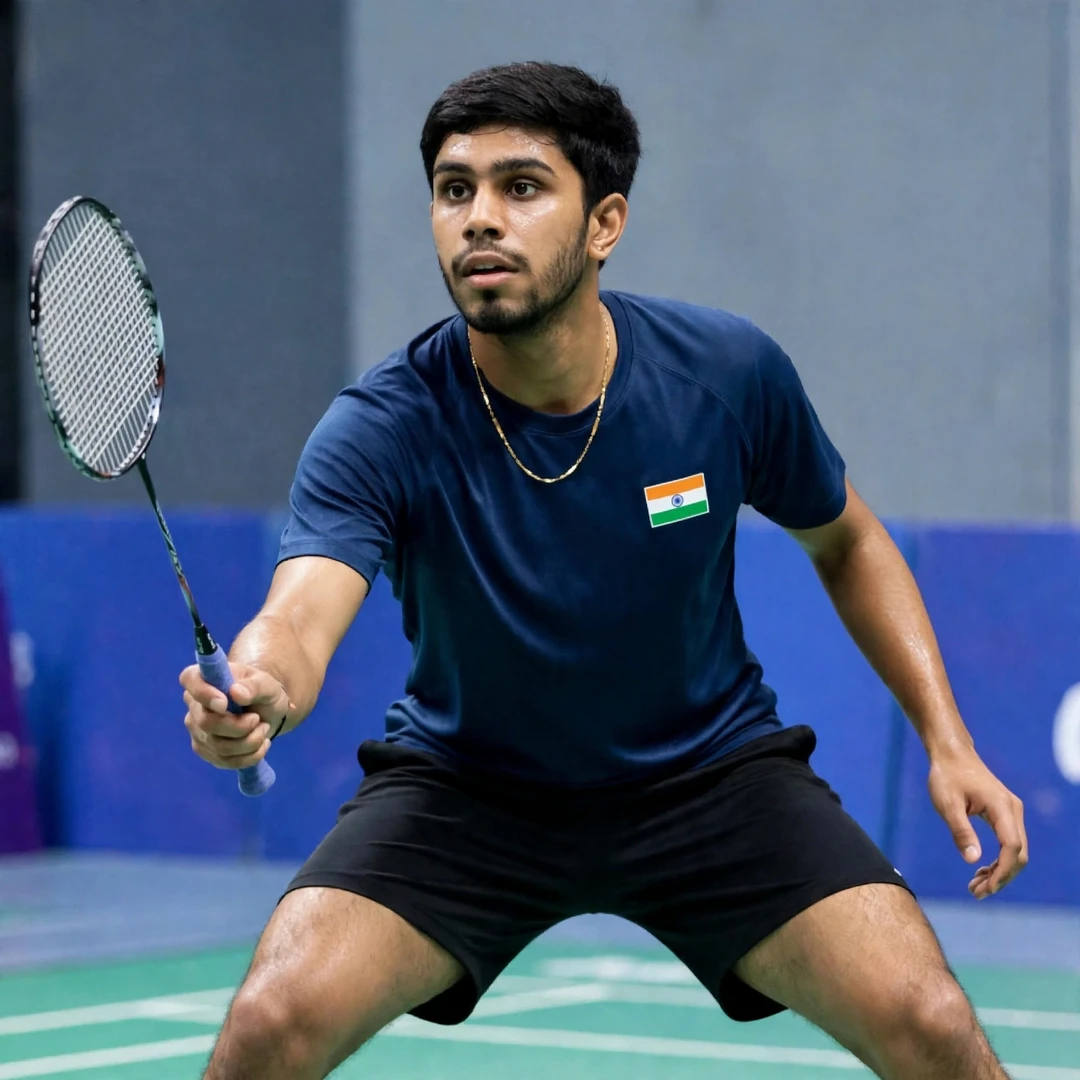
Indian Men’s Singles Badminton Star
Sanskar Saraswat

India
Player Event: Men’s singles
Date of Birth: 5 January 2006, Jodhpur, India
Playing Style: Right-handed attacking player whose steep smashes from a tall 6 ft 3 in frame headline an increasingly patient all-court game
Known For: Winning the Guwahati Masters Super 100 title from the qualifying rounds in December 2025 — the first senior international title ever won by a badminton player from Rajasthan
Career Journey: Jodhpur cement courts · Drona Sports Academy · India Under-19 No. 1 · Senior National doubles champion 2024 · Guwahati Masters Super 100 champion 2025 · Vietnam Open quarter-finalist 2026 · world No. 139
Understanding Sanskar Saraswat (Indian Badminton Player)
Sanskar Saraswat is an Indian men’s singles badminton player from Jodhpur, Rajasthan, who in December 2025 produced one of the great underdog runs in Indian badminton: ranked world No. 384 and playing with a heavily taped right leg, he came through the qualifying rounds of the Guwahati Masters and won the Super 100 title, beating a top-50 player and a former national champion along the way. A right-handed attacking player standing 6 ft 3 in, he trains at the Badminton Association of India’s National Centre of Excellence in Guwahati. In the BWF world rankings of 20 October 2026 (Week 43) he stands at world No. 139 with 14,180 points — the highest ranking of his career so far, and the latest step of a climb from No. 384 in under a year. For fans and parents researching how Indian players develop, his story is a lesson in patience: junior titles, a doubles detour, injuries, and then a breakthrough built point by point.
Early Life in Jodhpur and Junior Career
Sanskar Saraswat was born on 5 January 2006 in Jodhpur, Rajasthan — a desert city with no real tradition of producing elite shuttlers. Badminton came to him at home. His father, Raj Saraswat, had played cricket first and then badminton seriously, progressing through university and North Zone ranks to become a many-time state champion and a former national-level singles and doubles player before qualifying as a coach. The family played for hours on the cement courts of Jodhpur’s Old Bijlighar, and from the age of seven Sanskar was absorbing strokes, tactics and habits in that relaxed but sports-mad atmosphere — the same courts where his father had wrecked both his knees. It was an education money cannot buy: a first coach who was also his father, and a game learned as a way of life before it became a profession.
A Father’s Cement-Court School in Jodhpur
His formal training began at the Drona Sports Academy in Jodhpur, still under his father’s eye, and the junior results arrived quickly in doubles: a national Under-13 doubles title partnering Tushar Suveer, and an Under-15 national doubles crown with Bhuvan Singh in Bhubaneswar in 2019. Those early titles matter here for one reason: they show the foundation was broad. Saraswat was not a one-shot junior who smashed his way past smaller children; he was learning rally craft, rotation and defence in doubles while his singles game matured — skills that would later let him survive three-game battles against seasoned senior opponents.
Junior National Success
By 2024 he stood at the top of Indian junior badminton. At the Krishna Khaitan All India Junior Ranking Tournament in Panchkula in September 2024 he won the Under-19 boys’ singles title and, with Arsh Mohammad, finished runner-up in the Under-19 doubles. Weeks later the Badminton Association of India’s junior rankings placed him at No. 1 in Under-19 boys’ singles, ahead of every other junior in the country. He represented the Indian junior team, and at the Senior All India Ranking Tournament in Lucknow he collected twin bronze medals — one in singles, one in doubles with Arsh — proof that his game already troubled senior players while he was still a junior.
India’s Under-19 No. 1
His senior breakthrough, fittingly, came at the same Guwahati centre where he now trains. First, in December 2024 in Bengaluru, he won his maiden senior national title — the men’s doubles crown at the Senior National Championships, partnering Arsh Mohammad. A year later, at the Senior Nationals in Vijayawada, he added a singles bronze medal. Between those two podiums he took the decision that shapes his career today: after years of playing both formats, he committed to singles as his main event, the discipline where a 6 ft 3 in attacker with his reach and patience could go furthest.

Career Milestone #1
Senior Breakthrough: the Guwahati Masters Title
Then came the week that changed everything. Saraswat arrived at the Guwahati Masters in December 2025 ranked world No. 384, an employee of South Eastern Railways who had battled back and shin injuries for months and had managed only about three weeks of full training. He had to win qualifying matches simply to reach the main draw of the Super 100. Once there, he beat Hong Kong’s Jason Gunawan — a top-50 player and Syed Modi champion — and kept winning, in front of the home crowd of the National Centre of Excellence where he trains every day. A qualifier reaching the semi-finals of a World Tour event is rare; what he did next was rarer still.
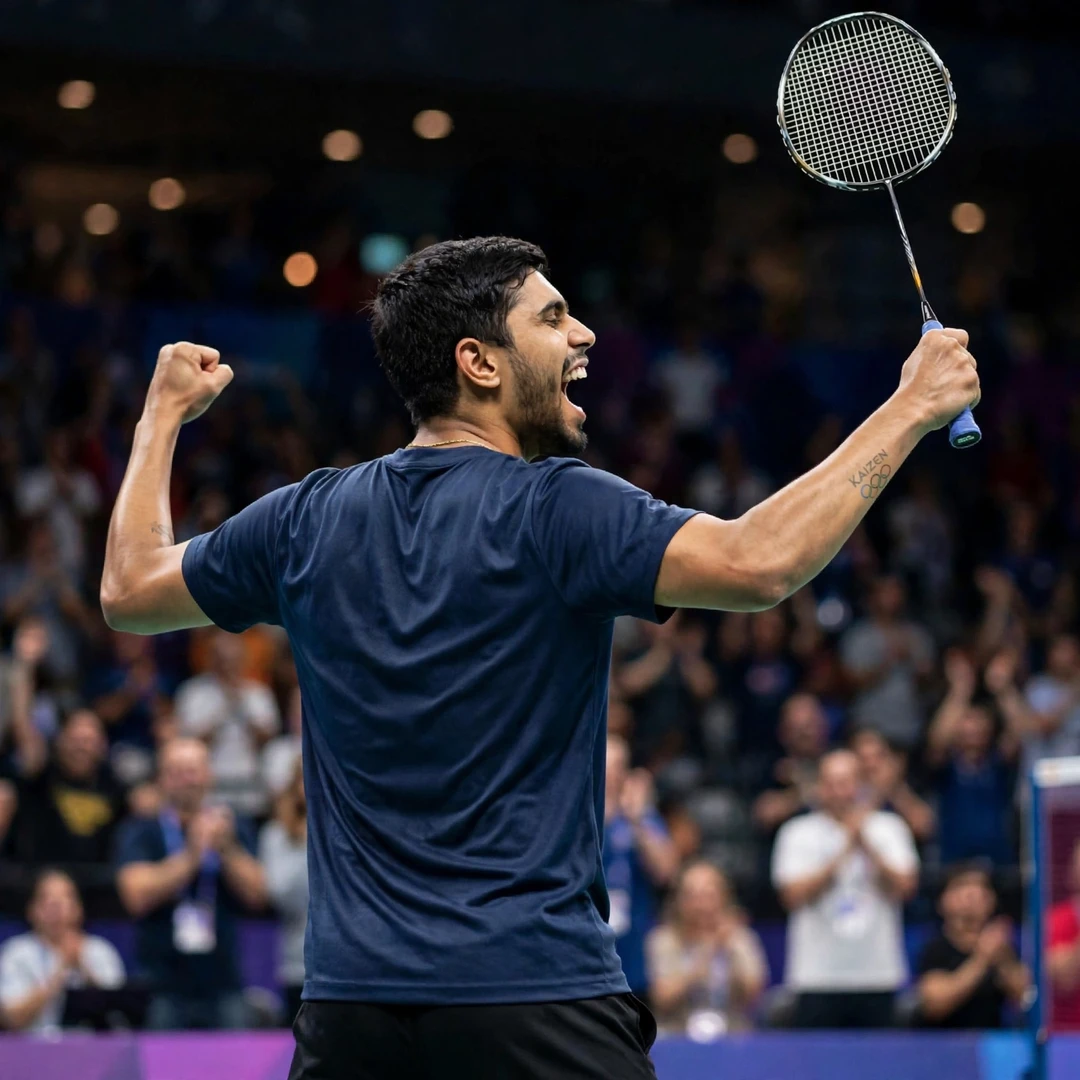
In the semi-final he faced Indonesia’s Dendi Triansyah, a far more experienced international. Trailing 15-18 in the opening game, Saraswat reeled off six straight points to steal it 21-19, then closed the second game by the same score. The final, on 7 December 2025, was an all-Indian affair against Mithun Manjunath — a former national champion then ranked world No. 63. With his right leg heavily taped, Saraswat stormed the first game 21-11, saw Manjunath fight back to take the second 17-21 after leading 8-2 himself, then reset completely: he won the first six points of the decider, led 11-5 at the interval, stretched the gap to 14-6, and converted his second match point with a deep push that landed just inside the baseline. Fifty minutes, 21-11, 17-21, 21-13 — a maiden BWF World Tour title, won from the qualifying rounds.

Career Milestone #2
From Qualifier to Super 100 Champion
The title made history beyond his own career: Saraswat became the first badminton player from Rajasthan ever to win a senior international title, and his was India’s only title at that edition of the Guwahati Masters. The 5,500 ranking points carried him from No. 384 to a career-best world No. 206 — a jump of 178 places in a fortnight, the biggest by any Indian men’s singles player that month. The following week he was back in qualifying at the Odisha Masters, reached the main draw, and lost a three-game battle to Rounak Chouhan, who went on to the semi-finals. The ranking, though, had a new floor — and he has defended and improved it ever since.
The reaction back home said everything about what the title meant. “There is nothing like home advantage,” Saraswat said of winning at his own training base, crediting the crowd for pushing him through the tough moments and promising the experience would motivate him to do better. His father Raj — the man who had taught him the game on cement courts and lost his own playing career to those same courts — watched his son validate two decades of family belief. For Rajasthan, a state better known for cricket and shooting, a BWF World Tour champion was something entirely new, and the state’s badminton community celebrated a pioneer.
His 2026 season has been the unglamorous reality of the world circuit: thirteen counting tournaments across Asia and Europe. He won qualifying matches in Baku at the Azerbaijan International and strung together three wins at the Uganda International Challenge in Kampala in February. In Hanoi in March he beat Chinese Taipei’s Lei Ci Fu before bowing out, and through the European spring he took a first-round loss in Graz at the Austrian Open and two qualifying wins at the Denmark Challenge in Brøndby, where Germany’s Luis Pongratz stopped him. A win at the Phuket International Challenge in June kept the points ticking over before the Asian autumn brought his best result of the year.
Career Milestone #3
The Long 2026 World Circuit
That result came at the Vietnam Open in Ho Chi Minh City in September 2026. Saraswat beat Clarence Villaflor of the Philippines and Korea’s Hae Deun Kim, then produced the upset of his season: facing sixth seed Kiran George — a senior compatriot ranked world No. 51 — he took the first game 21-12, dropped the second 10-21, and trailed 14-16 in the decider before his new patience took over. He won the match 21-12, 10-21, 21-18, waiting for his chances instead of rushing them, exactly as his coaches had drilled. In the quarter-final he lost to India’s H. S. Prannoy, but the week showed the Guwahati title was no fluke: this was a player now beating top-50 opposition on the road.
The autumn swing kept him moving. After Vietnam he reached the round of 16 at the Surabaya International Challenge in Indonesia, winning two matches, and at the Malaysia Super 100 in Iskandar Puteri in October he beat compatriot Dhruv Negi 23-21, 21-14 in qualifying before losing his main-draw opener to Indonesia’s Richie Duta Richardo, 14-21, 11-21. None of it was spectacular, and all of it mattered: at his ranking, every main-draw win protects the points base that Guwahati built, and every week inside the world’s top 150 keeps him in the main draws of Super 100 events rather than their qualifying rounds.
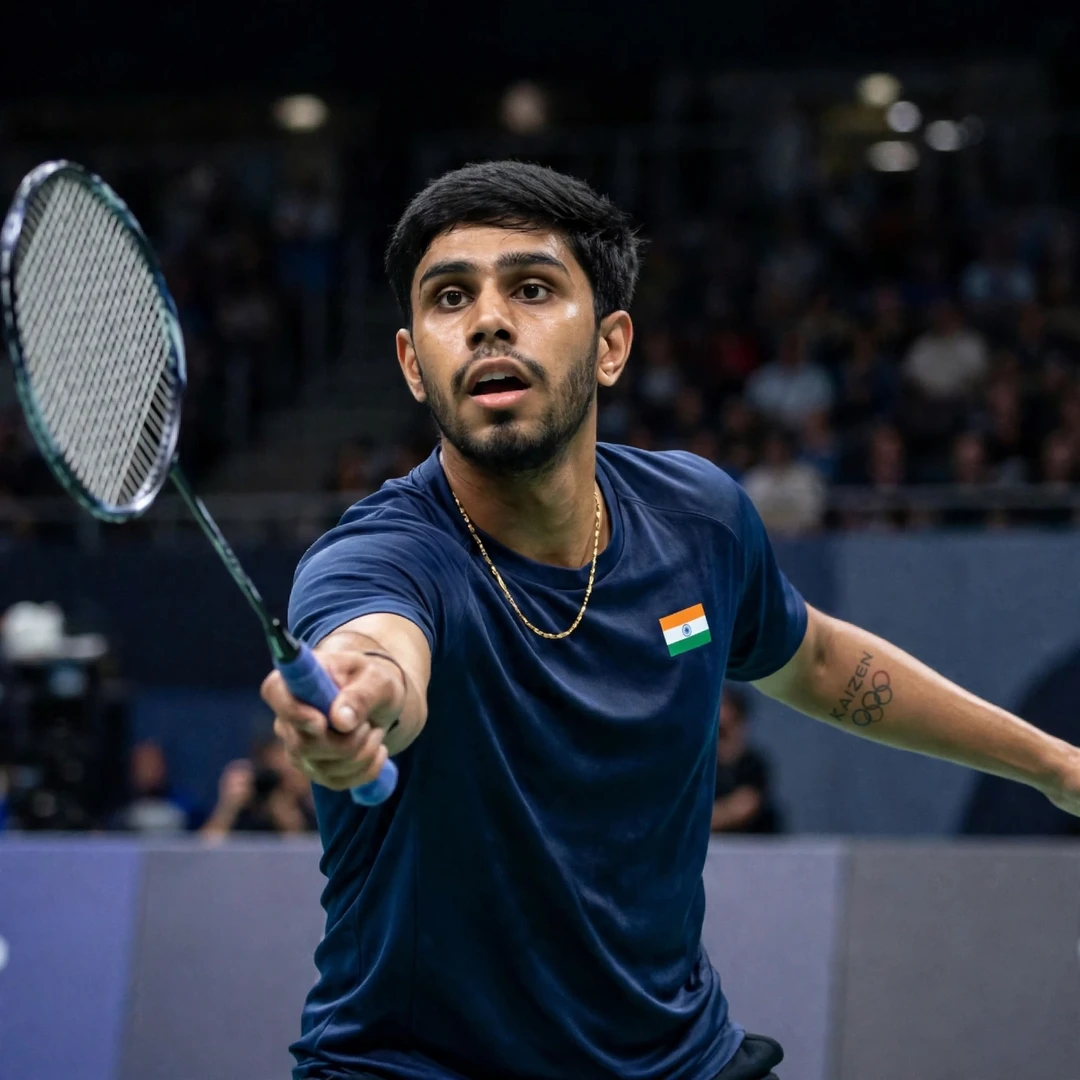
The Week 43 rankings of 20 October 2026 place Sanskar Saraswat at world No. 139 with 14,180 points, up from No. 141 the previous week — and every published milestone of his climb says the same thing: 384 in December 2025, a career-best 206 after Guwahati, 188 by the Vietnam Open in September 2026, and now 139. No. 139 is the highest standing of his career so far. The next test is a home one: he is entered for the India International Challenge in Bengaluru from 27 October to 1 November 2026, in the city where he won his senior national doubles title, in front of the crowd that knows his story best.
Career Milestone #4
World No. 139 and Climbing
Rankings at this level are arithmetic as much as form. His 14,180 points come from thirteen tournaments, and the Guwahati winner’s cheque of points — 5,500 of them — stays on his record until December 2026. Defending those points means producing another big week before they expire, or assembling enough quarter-finals and semi-finals at Super 100 and International Challenge level to cover them. His own stated target for 2026 was the world’s top 80; at No. 139 and rising, with a full autumn calendar, that goal is ambitious but no longer fanciful — and the shape of his season, grinding through Baku, Kampala, Brøndby and Phuket to earn the right to peak in Asia, is exactly how such climbs are made.
The people behind the rise deserve their place in the story. At the National Centre of Excellence, technical coach Tan and fitness coach Shankar — named by his father — have rebuilt his body and his rally craft since his injury-hit 2025, and Korean coach Park Tae Sang is part of the Guwahati coaching team he works with. Raj Saraswat’s philosophy, formed on those Jodhpur courts, still frames it all: talent alone is not enough, and a champion is made by practice, dedication, discipline, hard work and self-belief. His son’s career — junior champion, national champion, Super 100 champion — is that sentence, lived.

Playing Style
The Tall Attacking Style
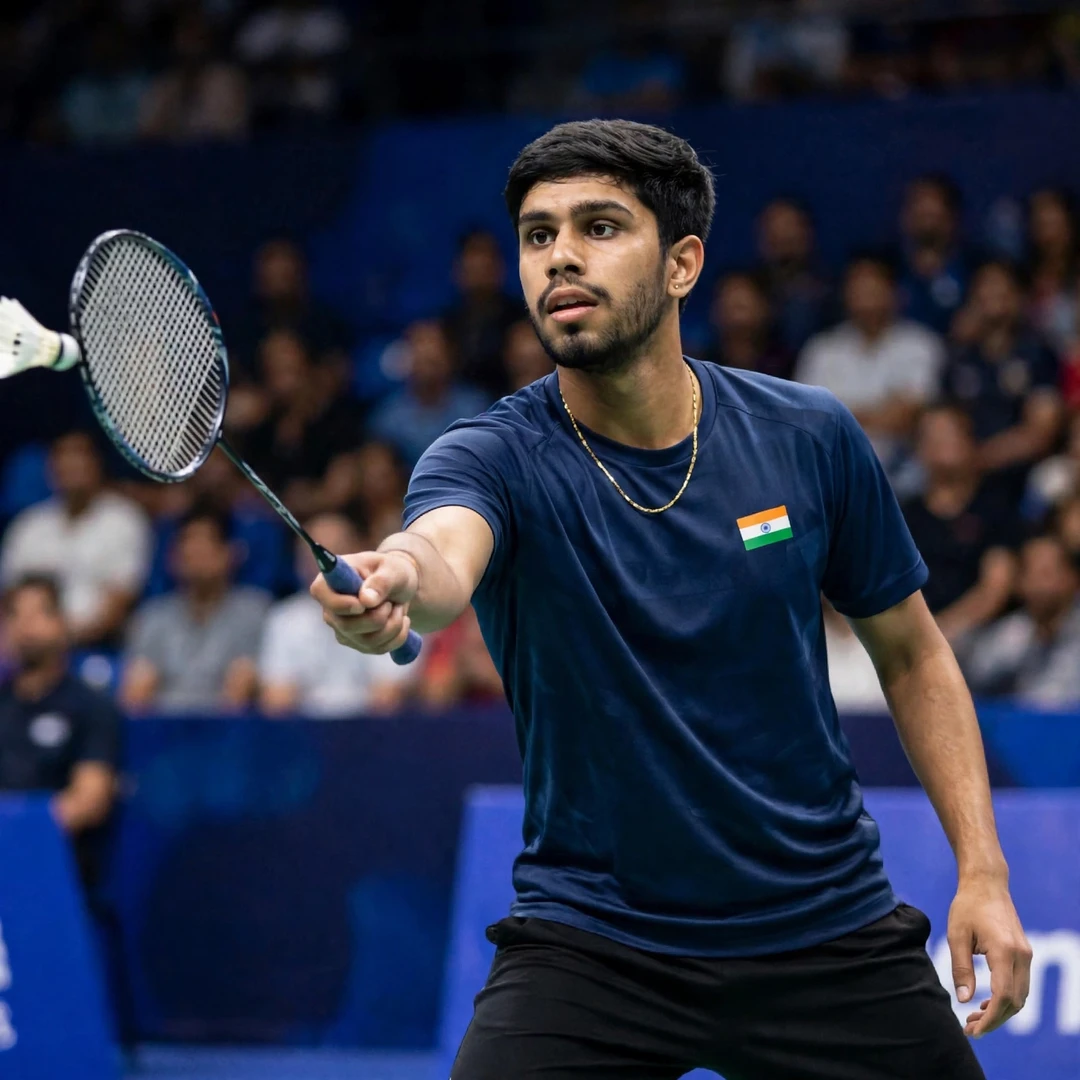
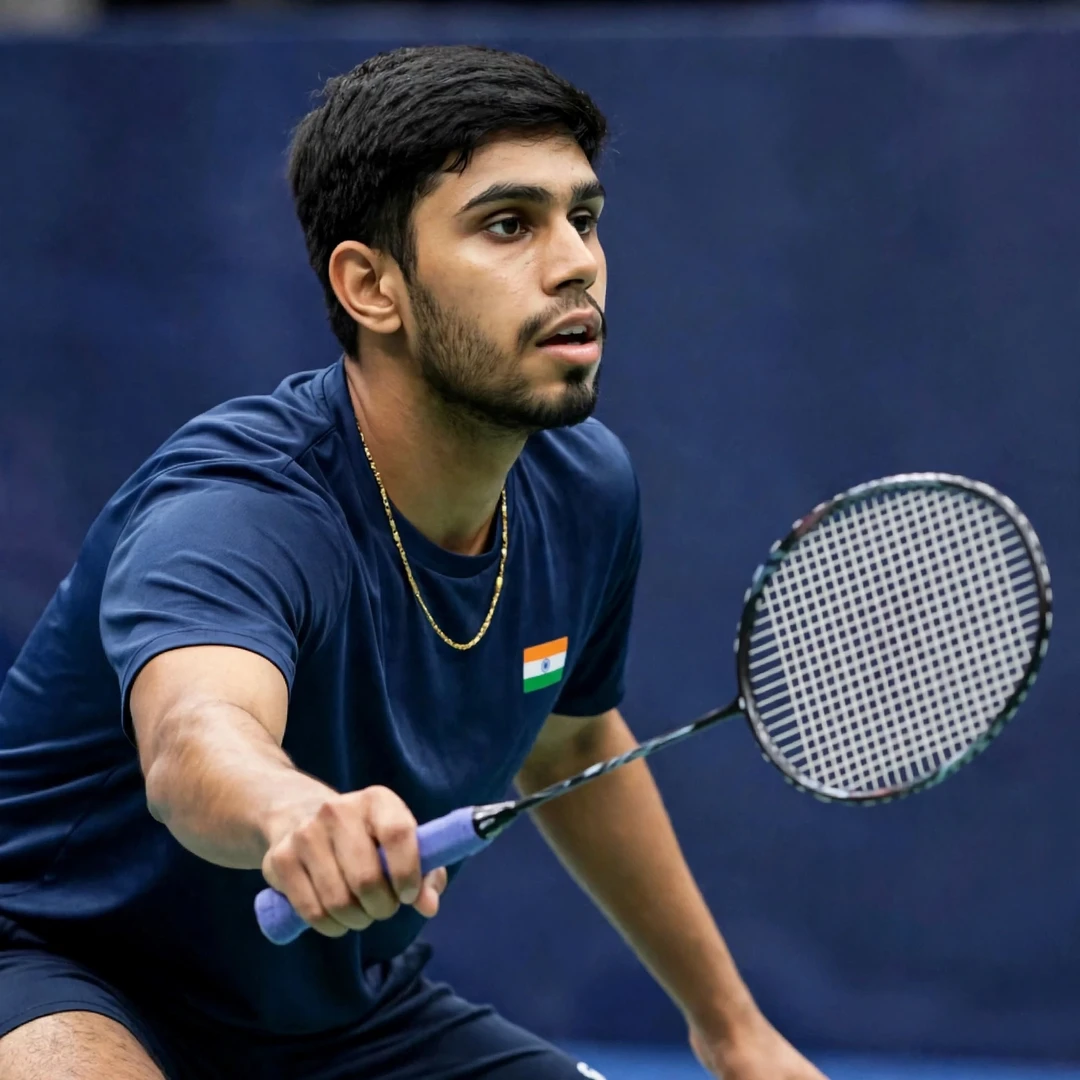
Sanskar Saraswat describes himself simply: “I am an attacking player, and powerful smashes are my forte.” At 6 ft 3 in he owns the steepest natural smash angle in Indian men’s singles — the shuttle leaves his racket from a height most opponents cannot replicate, which is why Manjunath struggled to read his cross-court and down-the-line smashes in the Guwahati final. His height also gives him a long reach in defence and at the net, and a stride that covers the court in fewer steps. The raw materials are obvious; what has changed recently is how he uses them, picking his attacking moments rather than forcing them.
The second half of his game is the patience he has built at the National Centre of Excellence in Guwahati, where he trains under coaches including Malaysia’s Shankar and Korea’s Park Tae Sang. The Indian Express noted how intense strength training has made his jump smash and landing sturdier, and his father and first coach points to the real shift: psychologically dealing with every point, waiting for his chances and not rushing. The Kiran George win in Vietnam — from 14-16 down in the third game against a world No. 51 — is the evidence. A younger Saraswat tried to blast his way out of trouble; the 2026 version defends, resets, and strikes when the rally tilts.
Young players studying his matches can observe how a tall attacker actually builds a point: serve and return with discipline, work the opponent to the rear corners with lifts and clears, and only unleash the jump smash when the return is short or the opponent is off balance. His Guwahati final is the model — the decider was not won by smashing harder, but by winning the first six points through placement and error-free rallying, then letting the smash finish what the rally had built. Height is his gift; shot selection is his skill.

Mental Strength
Discipline, Patience and Comeback Ability
Resilience is the thread that runs through his career. Back and shin injuries stole most of his 2025 season; he arrived at his breakthrough tournament with three weeks of proper training and a taped right leg, and won it anyway. When results dipped again in early 2026 — six or seven months, in his father’s words, without the results he wanted — the response was not panic but process: focus on the game, take it one match at a time, keep the gym work going. His family motto could be his own quoted line: “Progress, even in small steps, is still progress.”
His comeback ability shows in the scorelines. In Guwahati he trailed 15-18 in the semi-final’s first game and won it; he led the final’s second game 8-2, lost it, and still dominated the decider. In Vietnam he trailed 14-16 in the third game against a player ranked 88 places above him and won five of the last points that mattered. Comebacks like these are not luck — they are what happens when a player trusts his fitness, his defence and his plan more than the scoreboard. For young players it is the most transferable lesson in his story: the match is not lost when the run goes against you, if your habits hold.
Practical lessons from his journey include starting with whatever courts you have — his were cement, in Jodhpur — building a complete game before specialising, using doubles to learn net play and defence while young, treating injuries as a training problem to solve rather than a verdict, and planning a calendar of many small events instead of waiting for one big invitation. His path — Drona Sports Academy, national junior titles, a senior national doubles crown, then a Super 100 singles title at the centre where he trains — shows developing players that the route to the world top 150 can start in a city with no badminton tradition at all.

Learning Reference
ST Badminton Academy Connection
ST Badminton Academy has no official partnership or endorsement from Sanskar Saraswat. He is not a student, coach or ambassador of our academy. This profile is published for educational purposes, so that young players in Malaysia and Singapore can study how India’s most improved men’s singles player of the past year built his breakthrough — and what his Guwahati Masters title, his Vietnam Open upset and his father’s cement-court schooling teach developing juniors.
Many of our students from Malaysia and visiting learners from Singapore study his matches to understand how a tall attacking player wins at Super 100 level: how the steep smash is set up by rally patience, how a deciding game is controlled from its first points, and how a player ranked 384th in the world can beat the world No. 63 in a final. His Guwahati run — qualifier to champion in one week — is one of the academy’s favourite case studies in what preparation meeting opportunity actually looks like.
We encourage our students to observe his attacking placement, his patience in long rallies and his refusal to let injuries or a low ranking define his ceiling, and to notice that his breakthrough was assembled from ordinary foundations: a father’s coaching in Jodhpur, junior national titles, national-centre training in Guwahati, and dozens of small tournaments on three continents. The famous week only counted because the unglamorous years surrounded it.
FAQs: Sanskar Saraswat Indian Badminton Player
Here are answers to common questions about Sanskar Saraswat’s career, achievements and what young badminton players can learn from his journey from Jodhpur’s cement courts to a Super 100 title and the world top 140.
Who is Sanskar Saraswat and which country does he represent in badminton?
Sanskar Saraswat is an Indian professional badminton player competing in men’s singles. Born on 5 January 2006 in Jodhpur, Rajasthan, he is a right-handed attacking player who trains at the National Centre of Excellence in Guwahati. In December 2025 he won the Guwahati Masters Super 100 title from the qualifying rounds — the first senior international title won by a player from Rajasthan — and in the BWF world rankings of 20 October 2026 he stands at world No. 139 with 14,180 points.
What are Sanskar Saraswat’s biggest badminton achievements?
Sanskar Saraswat’s major achievements are headlined by the Guwahati Masters 2025 Super 100 title, where he beat former national champion Mithun Manjunath in the final after coming through qualifying as the world No. 384. He also won the senior national men’s doubles title with Arsh Mohammad in 2024, took a senior nationals singles bronze medal in Vijayawada, was India’s Under-19 No. 1 as a junior, and reached the Vietnam Open Super 100 quarter-finals in 2026, upsetting world No. 51 Kiran George on the way.
What is Sanskar Saraswat’s playing style?
Sanskar Saraswat plays a right-handed attacking game built around a steep, powerful jump smash — a natural weapon for a player standing 6 ft 3 in — supported by long reach in defence and at the net. In 2026 he has added a layer of patience to the power: longer rally construction, better shot selection and the composure to win deciding games from behind, as he showed against Kiran George in Vietnam and Mithun Manjunath in the Guwahati final.
How did Sanskar Saraswat win the Guwahati Masters 2025?
Sanskar Saraswat won the Guwahati Masters 2025 by surviving the entire draw the hard way. Ranked world No. 384, he came through the qualifying rounds, beat Hong Kong’s top-50 player Jason Gunawan, then defeated Indonesia’s Dendi Triansyah 21-19, 21-19 in the semi-final after trailing 15-18 in the first game. In the final on 7 December 2025 he beat former national champion Mithun Manjunath 21-11, 17-21, 21-13 in 50 minutes, playing with his right leg heavily taped and sealing the title on his second match point.
How can my child learn from Sanskar Saraswat’s training approach?
Young players can study Sanskar Saraswat’s approach by watching how he sets up his smash with patient rallying instead of forcing attacks, how his daily training at a national centre mixes technical work with serious strength training, and how he treats setbacks — injuries, low rankings, lost finals — as information rather than verdicts. At ST Badminton Academy we teach the same foundations — footwork patterns, attacking placement and defensive technique — through progressive drills matched to each child’s level, the same order in which his own game was built in Jodhpur and Guwahati.
Did Sanskar Saraswat win any junior titles?
Yes. Sanskar Saraswat won national junior doubles titles at Under-13 (with Tushar Suveer) and Under-15 (with Bhuvan Singh, in Bhubaneswar in 2019). As an Under-19 player he won the boys’ singles title at the Krishna Khaitan All India Junior Ranking Tournament in Panchkula in 2024 and finished runner-up in the Under-19 doubles with Arsh Mohammad, and he climbed to No. 1 in the Badminton Association of India’s Under-19 boys’ singles rankings — the top junior in the country.
What are Sanskar Saraswat’s best senior results?
Sanskar Saraswat’s best senior results are the Guwahati Masters Super 100 title of December 2025 — his maiden BWF World Tour crown — and the quarter-final at the Vietnam Open Super 100 in September 2026, where he upset sixth seed and world No. 51 Kiran George 21-12, 10-21, 21-18. He also holds a senior national doubles title (2024, with Arsh Mohammad) and a senior nationals singles bronze medal from Vijayawada, and in 2026 he has collected wins at International Challenge events in Uganda, Azerbaijan, Vietnam and Thailand.
What playing style should young players learn from Sanskar Saraswat?
Young players should study Sanskar Saraswat’s complete game rather than just the highlight smashes: the rally patience that earns the attacking chance, the defensive reach that keeps him in points, and the calm decision-making in deciding games. A tall junior can copy his steep smash angles, but the transferable skills are universal — placement before power, fitness that survives three games, and the discipline to wait for the right shuttle. It is the combination that carried him from Jodhpur’s cement courts to a Super 100 title.
Does ST Badminton Academy have any connection with Sanskar Saraswat?
No, Sanskar Saraswat is not a student, coach or ambassador of ST Badminton Academy. He represents India and built his career through the Drona Sports Academy in Jodhpur and the Badminton Association of India’s National Centre of Excellence in Guwahati. This profile is an educational resource for our students and readers who want to understand how a player from a non-traditional badminton state reached the world top 140.
Sanskar Saraswat Career Highlights


Career Statistics and Rankings
Sanskar Saraswat, born 5 January 2006 in Jodhpur, Rajasthan, is a right-handed Indian men's singles player who learned the game from his father on cement courts and rose through national junior titles to become India's Under-19 No. 1. A senior national doubles champion in 2024, he broke through in December 2025 by winning the Guwahati Masters Super 100 from the qualifying rounds — Rajasthan's first senior international title — and after upsetting world No. 51 Kiran George at the 2026 Vietnam Open he stands at a career-high world No. 139 with 14,180 points, playing a tall man's attacking game with a new layer of patience.
| Development Area | Common Misconception | What Sanskar Saraswat's Career Shows REALITY |
|---|---|---|
| Junior Foundation | Talent alone decides who becomes a champion. | Saraswat started at age 7 on Jodhpur's cement courts under his father Raj, won national Under-13 and Under-15 doubles titles and became India's Under-19 No. 1 — the structured junior base came first. |
| Playing Style Priority | Kids should copy the flashiest attacking shots. | Saraswat built a complete game before specialising; his famous steep smashes from a 6 ft 3 in frame are the finishing touch on reliable footwork, defence and net play. |
| Fitness Importance | Juniors can out-train everyone without rest. | Saraswat battled back and shin injuries through 2025 and managed only three weeks of full training before Guwahati — his Super 100 title came from smarter preparation, not more hours. |
| Mental Approach | Top players never get nervous or upset. | Saraswat trailed 15-18 in the Guwahati semi-final and 14-16 in the deciding game against Kiran George in Vietnam, and won both — mental skills are trained, not inherited. |
| Attacking Training | Smashing harder is always the answer. | His Guwahati final win over Mithun Manjunath (21-11, 17-21, 21-13) and his Vietnam upset of world No. 51 Kiran George came from steep, placed smashes and rally patience, not raw power alone. |
| National Milestones | Only world titles matter. | Saraswat's senior national doubles title in 2024, his senior nationals singles bronze in Vijayawada and his Guwahati crown — the first senior international title from Rajasthan — made him a state pioneer: milestones build a career step by step. |
| Career Timeline | Champions peak once and fade fast. | From world No. 384 in December 2025 to world No. 139 in October 2026, Sanskar Saraswat proves sustained development beats a short peak then fading. |
Study Sanskar Saraswat's Work Ethic and Professional Approach
This profile explains who Sanskar Saraswat is, his major achievements, and what developing players can learn from his career. If you are inspired by his attacking style and his rise from a badminton backwater, ST Badminton Academy in Setapak, Kuala Lumpur welcomes junior players who want structured coaching and a clear development pathway. Contact us on WhatsApp at +60 17-684 2136 or visit our academy to book a trial session and begin your own badminton journey.