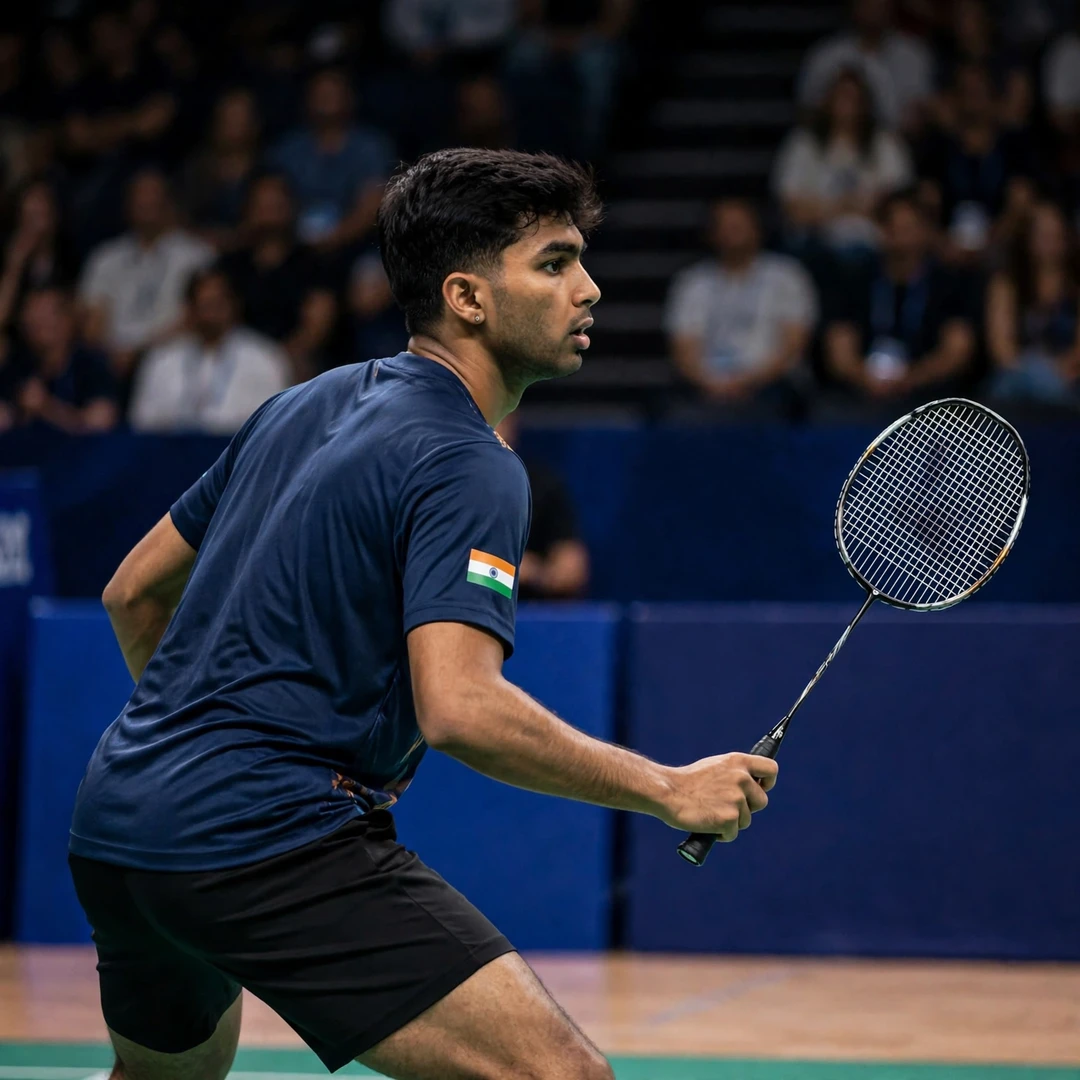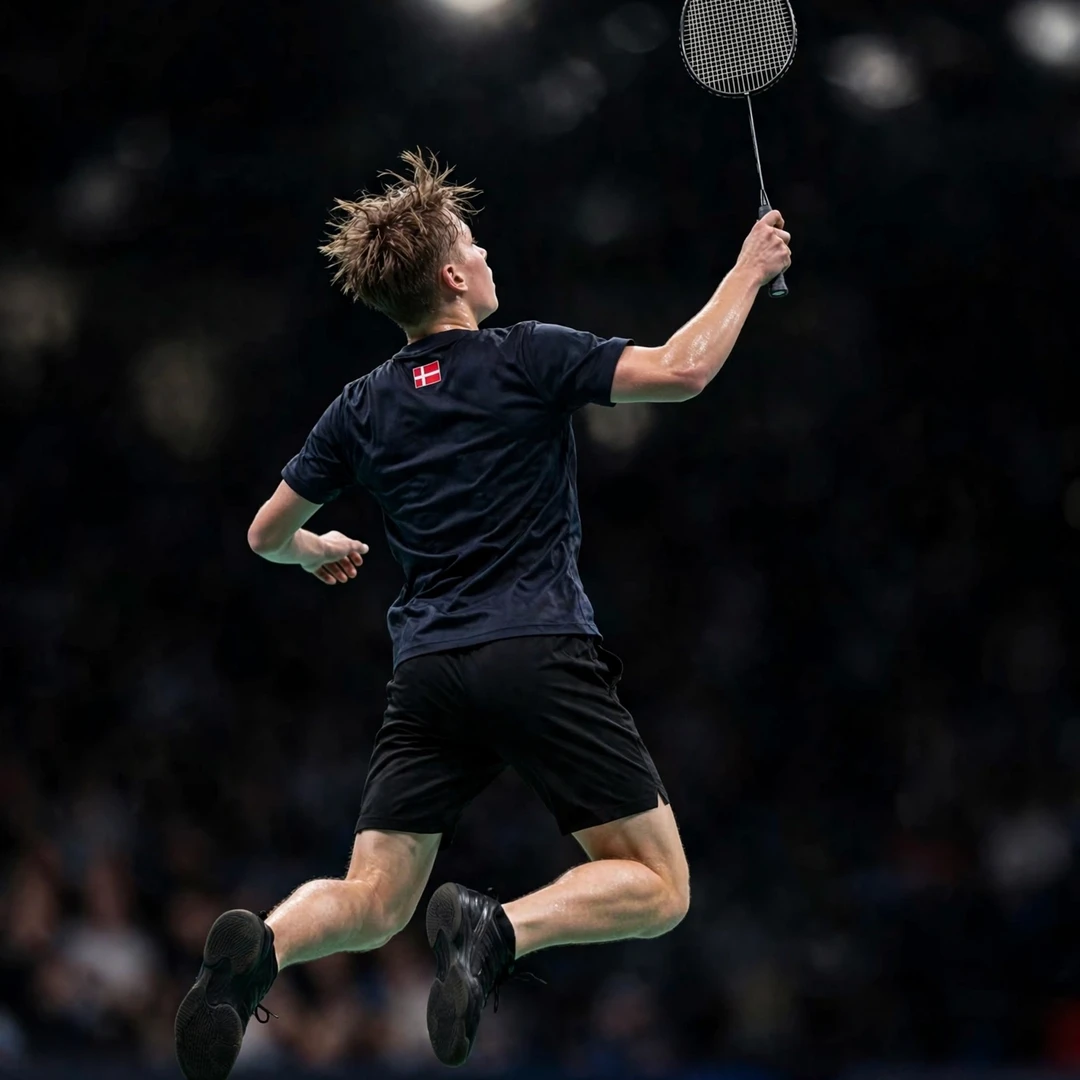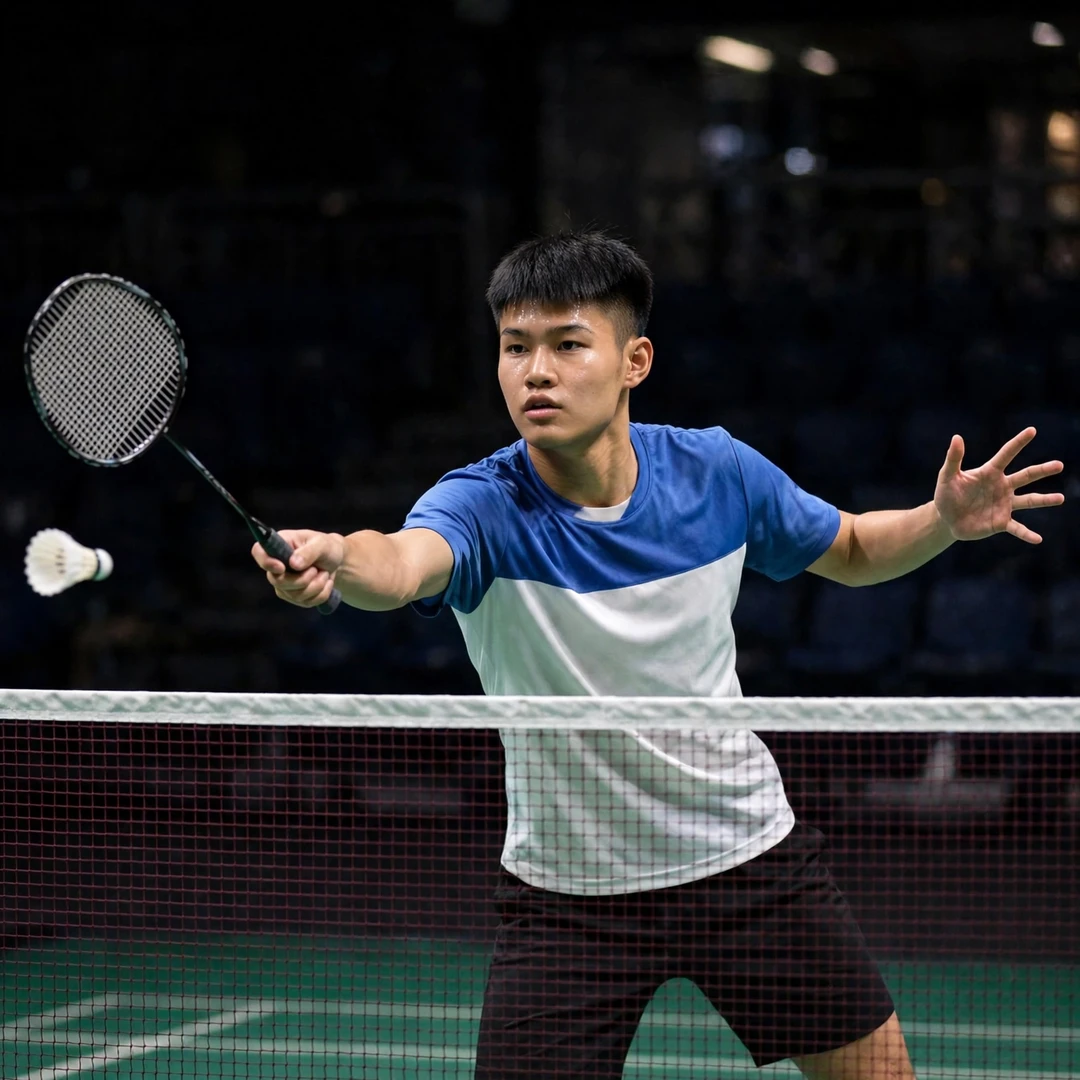
Chinese Taipei Men’s Singles Badminton Star
Chiang Tzu Chieh

Chinese Taipei
Player Event: Men’s singles
From Chinese Taipei · Born: 27 September 2006 · Right-handed
Playing Style: Right-handed all-court player who builds rallies with pace and accuracy, controls the net and finishes with steep, well-placed attacks
Known For: Winning his first senior title at 19 in Norway, beating the top seed in Sydney, and climbing from world No. 576 to a career-high No. 108 in sixteen months
Journey: India Junior International champion 2024 · Norwegian International champion 2025 · Four senior semi-finals in 2026 · World No. 108
Understanding Chiang Tzu Chieh (Chinese Taipei Badminton Rising Star)
Chiang Tzu Chieh is a Chinese Taipei men’s singles badminton player who stands at world No. 108 in the BWF rankings (Week 43, 20 October 2026) with 17,930 points — and No. 108 is also his career-high. What makes that number remarkable is where he started: Chiang did not appear in the world rankings at all until June 2025, when he entered at No. 576. Sixteen months later, the 20-year-old has a senior international title in Norway, a junior title in India, four senior semi-finals in a single season and a straight-games win over a top seed to his name. His is the story of a player built the patient way — junior circuits, Future Series halls and qualifying rounds — suddenly arriving all at once.
Early Life and the Chinese Taipei Junior Pathway
Chiang Tzu Chieh was born on 27 September 2006 and represents Chinese Taipei, one of the strongest badminton nations on earth. This is the system that produced Olympic champions, a former world No. 1 in Tai Tzu-ying and a long line of elite men’s singles players such as Chou Tien-chen and Wang Tzu Wei. Growing up inside that system means world-class training partners and coaches from a young age — but also fierce internal competition, where a talented teenager must fight simply to be selected for international trips.
A Junior Title in India at Seventeen
Chiang came through the junior ranks the traditional way: age-group events in Asia against the best teenagers in the world. At the Korea Junior Open in Miryang — one of the toughest junior tournaments anywhere — he was already testing himself in the under-17 event in 2022, beating Korea’s Jung Jae Hoon, and by 2023 he had stepped up to the under-19 draw, where he fell in the round of 16 to China’s Zhang Zhi Jie, one of the most gifted juniors of his generation. These were not headline results, but they were an education no training hall can fully provide.
World Juniors and a Senior Debut at No. 576
His junior breakthrough arrived in India in September 2024. At the India Junior International Grand Prix in Pune — a tournament played in memory of the late Sushant Chipalkatt — the 17-year-old Chiang, seeded sixth, fought through the draw to win the boys’ singles title, beating India’s Suryaksh Rawat in a see-saw final 16-21, 21-7, 21-18. Winning a junior Grand Prix abroad, in three games, against a home hope riding the crowd, announced that the teenager from Chinese Taipei could close out big matches away from home.
A First Senior Final in Latvia
Weeks later he wore the Chinese Taipei colours at the 2024 World Junior Championships in Nanchang, China, playing in the mixed team championship — the biggest stage in junior badminton. The following summer came the real leap: in June 2025, at 18, Chiang began his senior career and entered the BWF world rankings for the first time at No. 576. No wildcards, no shortcuts — from that number, every place would have to be earned in senior draws against grown men.

Career Milestone #1
Norwegian Champion: A First Senior Title at Nineteen
The education came quickly. In the summer of 2025 Chiang reached his first senior final at the Latvia International, a Future Series event in Riga. He beat compatriot Yang Chieh Dan in the semi-finals, then won the first game of the final against Malaysia’s Lee Shun Yang — before losing a classic, 21-18, 16-21, 20-22, the decider slipping away 22-20. A first final, lost by two points in the third game: it hurt, and it taught him exactly what finishing a senior final demands.
Weeks later, he finished the job. At the FZ FORZA Norwegian International 2025 in Sandefjord, an International Series event, Chiang won his first senior title at the age of 19. His semi-final was a thriller — 26-24, 21-18 against India’s Karan Rajan Rajarajan — and in the final he beat compatriot Chen Chi-ting 21-18, 21-17, converting the lessons of Riga into a trophy. A first senior title before his twentieth birthday put him firmly on the list of Chinese Taipei’s next wave.

Career Milestone #2
The Relentless 2026 Season: Semi-Finals on Three Continents
The rest of 2025 was spent the way rising players spend it: everywhere. Chiang reached the round of 16 at the Hungarian International, contested qualifying at his home Kaohsiung Masters — a Super 100 event on Chinese Taipei soil — and played the Czech Open Future Series in Europe, and by the end of the year he had climbed from No. 576 into the world’s top 280. Just as importantly, he had a full season of senior match-craft in his legs: the pace, the patience and the score management that junior badminton never quite teaches.
If 2025 was his apprenticeship, 2026 has been his arrival. Chiang’s season found its first peak on the Singapore circuit, where in March he reached the semi-finals of the Singapore International Series — his first senior semi-final of the year. Around it came the hard yards every riser knows: a qualifying exit at the Singapore International Challenge, a first-round match at the Ruichang China Masters Super 100, and a round-of-32 finish at the Vietnam International Challenge in Hanoi. Small results, steady points, no weeks wasted.
His European spring showed a player learning to win on the road. At the Slovenia Open International Series in Maribor he reached another semi-final, and at the Austrian Open in Graz he went to the quarter-finals — beating Italy’s Giovanni Toti along the way before losing to Denmark’s Christopher Vittoriani, in a tournament eventually won by his compatriot Yang Chieh Dan. Week after week of small halls, long rallies and unfamiliar food was quietly moving his ranking toward the top 150.

Career Milestone #3
Super 100 Steps and an Auckland Quarter-Final
The World Tour step-up came in the autumn. At the Vietnam Open, a Super 100 event, Chiang fought through the qualifying rounds into the main draw and reached the round of 16, where he took a game off Thailand’s Wongsup Wongsup-In before losing in three. For a player who had been unranked fifteen months earlier, winning qualifying matches and main-draw rounds at Super 100 level — the doorway to the World Tour — was another important line crossed.
Then came the Oceania swing, the making of his season. At the North Harbour International in Auckland, an International Challenge event, Chiang produced the longest match of the opening day — a 63-minute, three-game defeat of Australia’s Shrey Dhand, the reigning Oceania champion, 16-21, 21-14, 21-11 — and went on to reach the quarter-finals. Beating a continental champion in his own part of the world, from a game down, showed how far his rally tolerance and composure had come in a year.
A week later in Bendigo, Australia, he went one round further. Chiang reached the semi-finals of the Bendigo International before falling 17-21, 14-21 to compatriot Liao Jhuo-Fu, the second seed who went on to reach the final. Losing to a higher-ranked teammate is no disgrace — and with the semi-final points banked, his ranking jumped again, to the edge of the top 120. The top 100 was suddenly a conversation, not a dream.

Career Milestone #4
Career-High World No. 108: The Sydney Breakthrough
Sydney completed the breakthrough. At the Sydney International, Chiang played the tournament of his young life: in the quarter-finals he stunned the top seed, compatriot Wang Po-Wei — a player ranked more than sixty places above him — 21-5, 21-19, a first game of near-perfect badminton. His semi-final against Huang Yu went the distance, 20-22, 21-8, 13-21, before the run ended. The reward arrived in the Week 43 rankings of 20 October 2026: world No. 108, a career-high, with 17,930 points — 468 places higher than where he had started sixteen months earlier.
Chiang’s schedule is itself a lesson for young players. Thirteen BWF events in 2026 alone, across Asia, Europe and Oceania, with qualifying rounds, three-game marathons and long-haul travel between them — that volume builds a ranking, but only if it is managed. The 52-week ranking window rewards players who keep showing up and keep winning rounds, and punishes those who break down. Recovery, honest conversations with coaches about fatigue, and choosing which events to peak for are professional skills — and Chiang’s team is clearly learning them fast.
Playing Style
Building Rallies, Then Striking: The Chiang Tzu Chieh Style
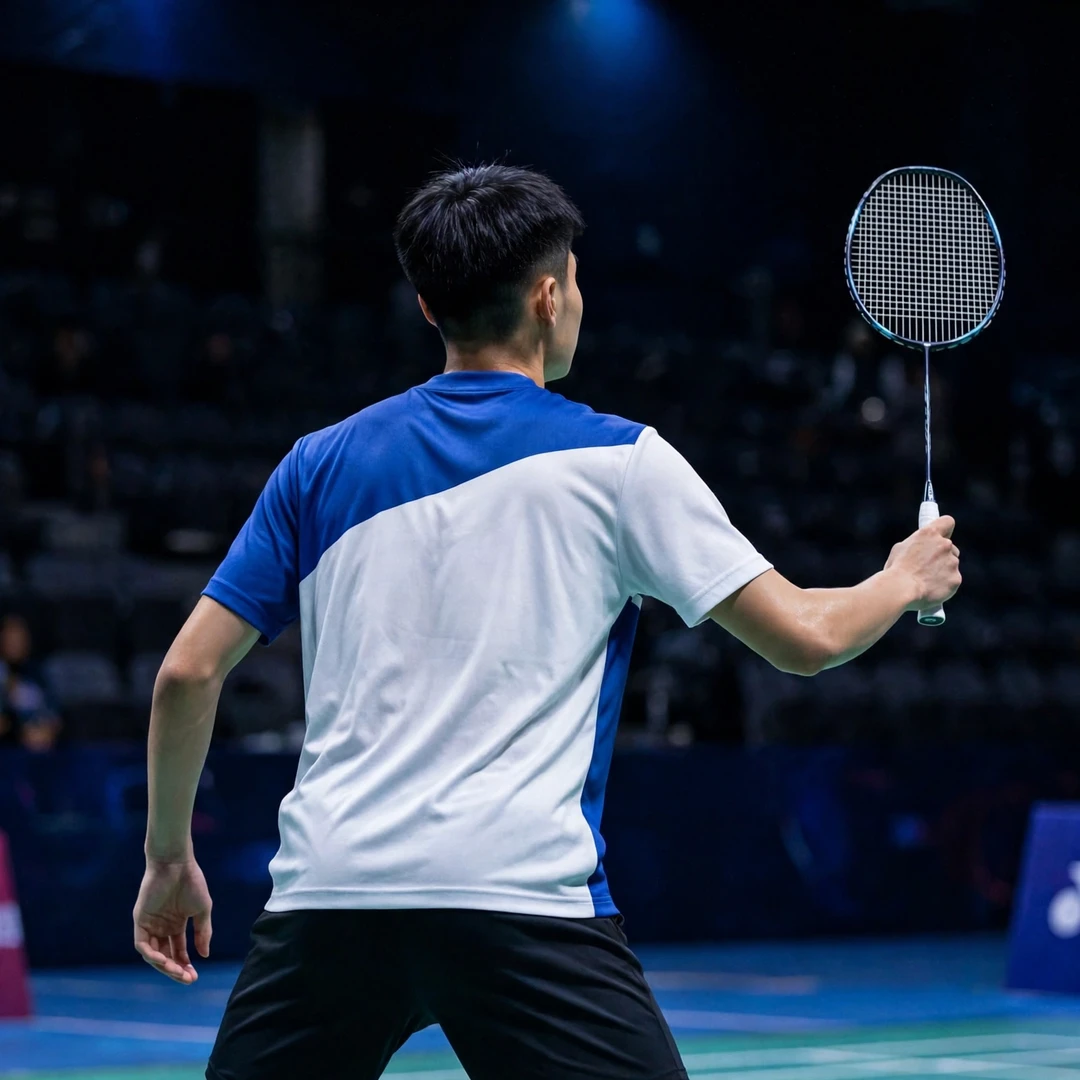
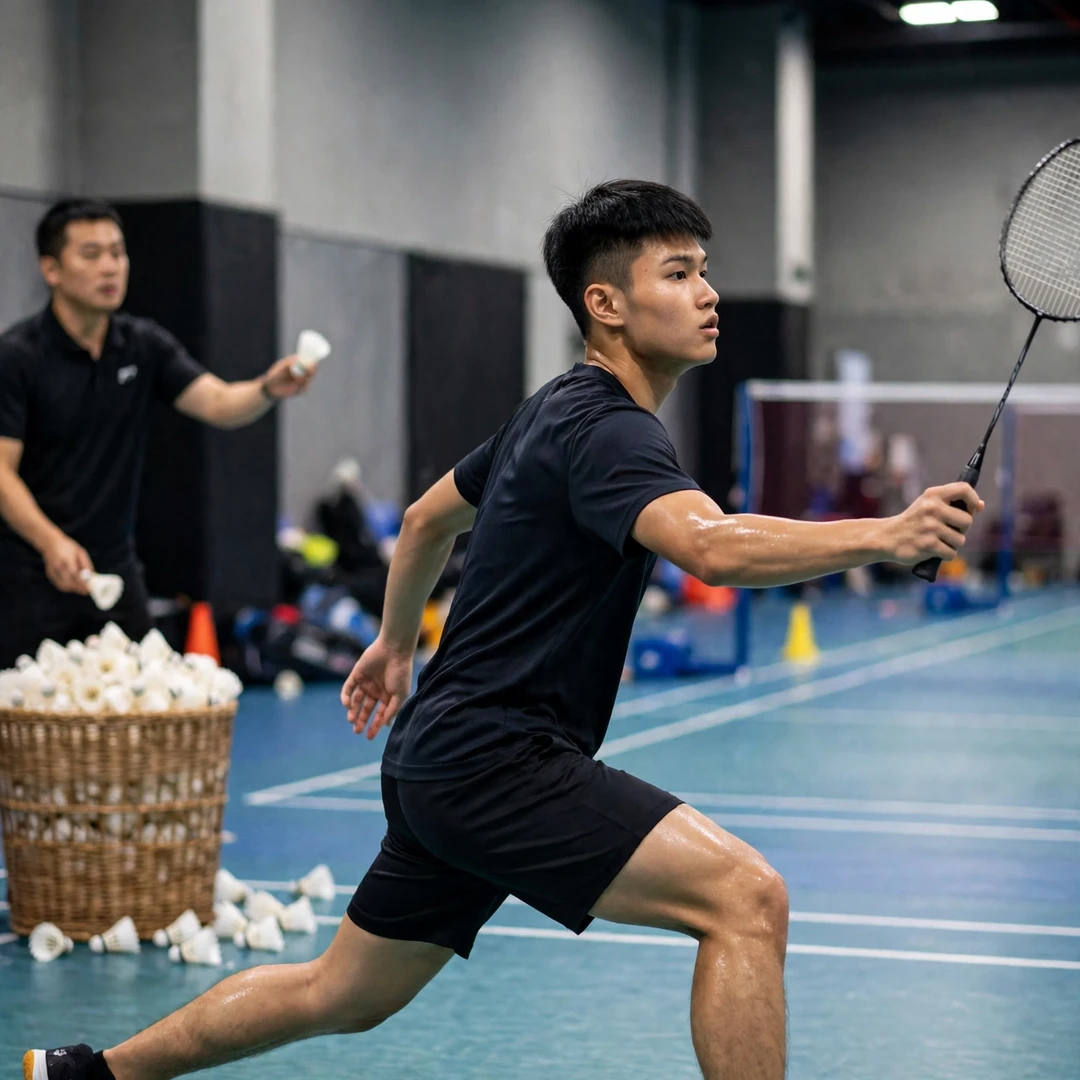
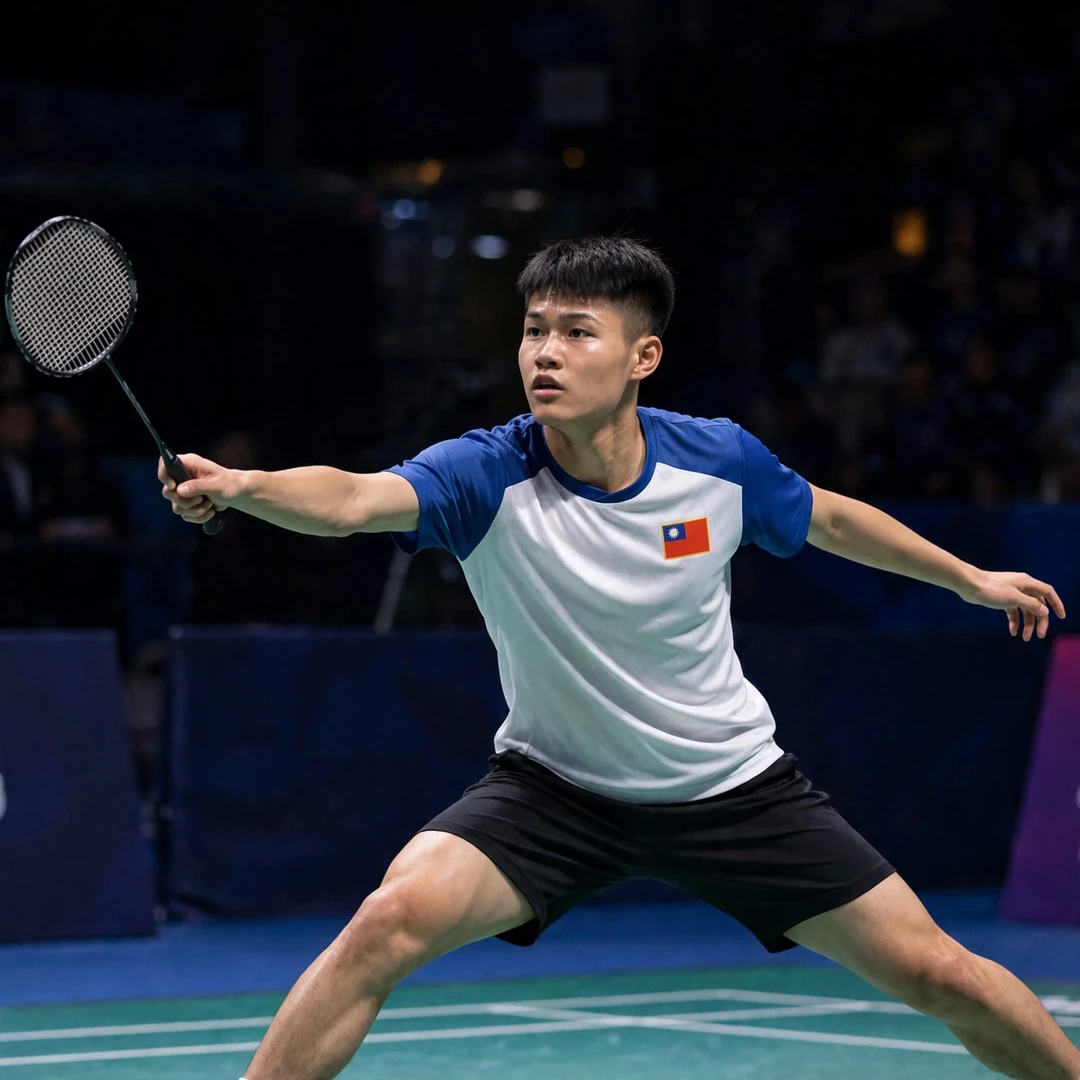
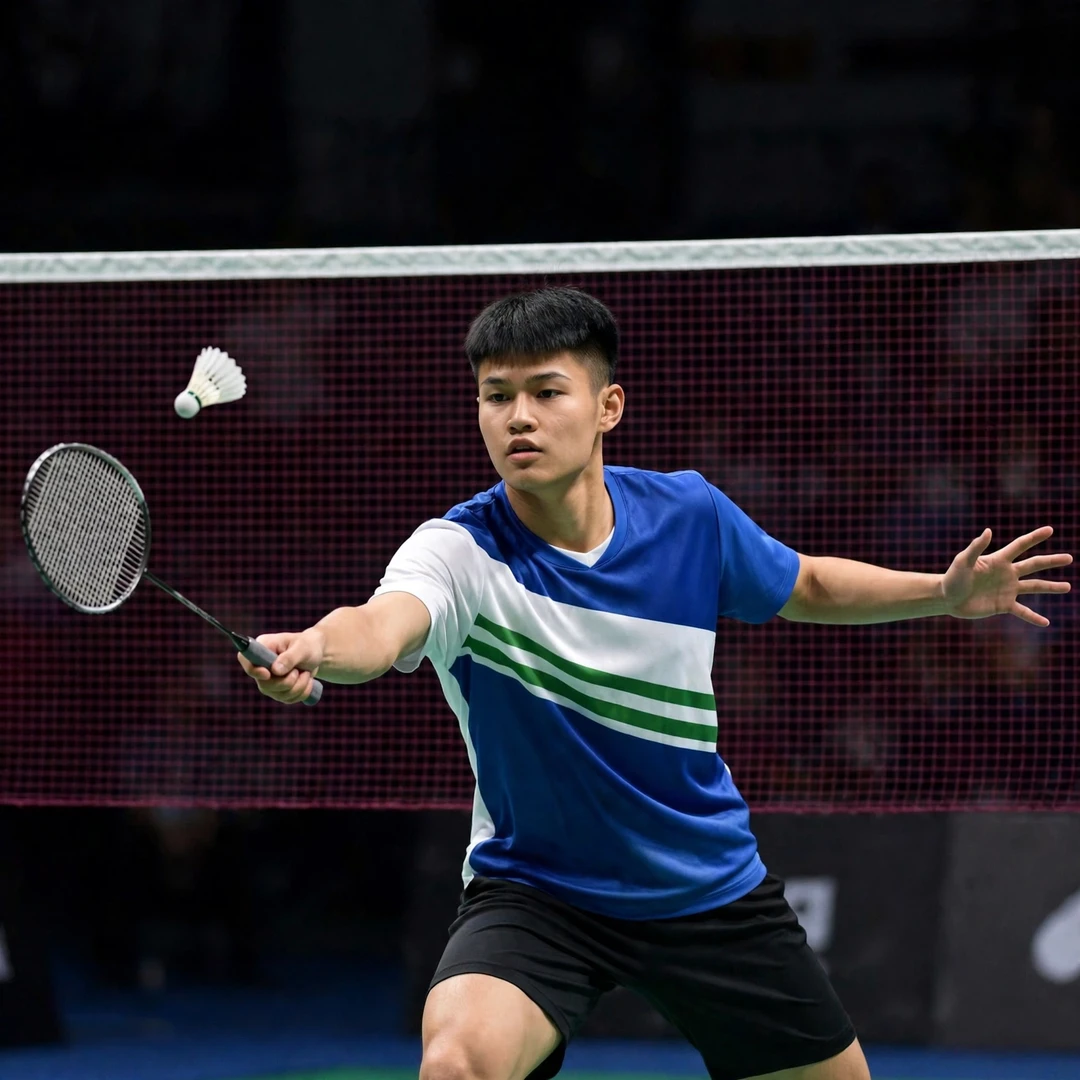
Chiang plays the modern Chinese Taipei way: right-handed, fast across the court, and built on rally quality rather than one huge weapon. He constructs points patiently — tight spinning net shots to draw the lift, accurate clears and drops that keep opponents moving, then a steep, well-timed attack when the rally tilts his way. It is a game of percentages played at high speed, and it travels well: the same patterns have won him matches in Riga, Maribor, Graz, Auckland and Sydney.
His composure under score pressure is already a trademark. In the India junior final he lost the first game and won the title. In Latvia he lost a senior final 22-20 in the third game — and answered by winning Norway weeks later. In Sydney he raced through a 21-5 first game against the top seed, absorbed the pressure when Wang Po-Wei pushed back in the second, and closed the match in straight games. Coaches call this reset ability: play the next rally, not the last one. Chiang, at 20, already does it like a veteran.
Young players studying Chiang should watch his movement first. His split-step timing, his recovery to base after deep lunges and the way his defence turns into neutral rallies — instead of desperate lifts — are the foundations everything else stands on. Notice, too, how rarely he donates free points: his clears find the back tramlines, his net shots stay tight, and his errors come in short clusters he quickly corrects. None of that needs rare talent; it needs thousands of rehearsed repetitions.
Mental Strength
Composure, Belief and Learning to Finish
Chiang demonstrates what belief looks like without a reputation. The players he now beats grew up with junior medals, federation spotlights and seedings; he had none of that when he entered the rankings at No. 576 in June 2025 — just a place in Chinese Taipei’s deep training system, one junior title won in India, and a willingness to start at the bottom of senior draws and climb. Sixteen months later, that belief is worth a career-high world ranking of No. 108.
His response to defeats is becoming a pattern worth copying. Lose the Latvia final by two points in the decider? Win Norway. Lose the Bendigo semi-final to a compatriot? Beat the top seed in Sydney a week later. Lose the first game of the longest match of the day in Auckland? Win it in three. For young players the lesson is not that losing does not hurt — it is that a loss, studied honestly, is a scouting report for the next tournament, and Chiang keeps cashing his in.
Practical lessons from his journey include entering the tournaments you can actually reach instead of waiting to feel ready, treating qualifying rounds as free match practice against senior opponents, building a game that does not leak errors before chasing spectacular winners, and measuring progress across a season rather than a single weekend. None of these lessons requires fame or money; they require patience, honesty and a training plan — exactly the foundations a good academy provides.

Learning Reference
ST Badminton Academy Connection
ST Badminton Academy has no official partnership or endorsement from Chiang Tzu Chieh. He is not connected with our academy, and this profile is published purely as an educational case study for parents and junior players who want to understand how a young player climbs from world No. 576 to the brink of the top 100.
Many of our students from Malaysia and visiting learners from Singapore study his matches to understand the power of the long climb: how a player with one junior title and no senior ranking reached four senior semi-finals in a single season, how rally quality upset a top seed in Sydney, and how a 63-minute comeback in Auckland showed fitness as a weapon. His 2026 season is required viewing in our discussions of players on the rise.
We encourage our students to observe his footwork speed, his tight net control and his calm resets after losing games — and to notice that his rise was built in qualifying halls in Singapore, Future Series gyms in Europe and International Challenge courts in New Zealand and Australia, not under television lights. The top 100 is not inherited; it is accumulated, one round at a time.
FAQs: Chiang Tzu Chieh Chinese Taipei Badminton Player
Here are answers to common questions about Chiang Tzu Chieh’s career, achievements and what young players in Malaysia can learn from the Chinese Taipei riser’s remarkable climb.
Who is Chiang Tzu Chieh and which country does he represent in badminton?
Chiang Tzu Chieh is a Chinese Taipei professional badminton player competing in men’s singles. Born on 27 September 2006, he came through Chinese Taipei’s junior system, won a junior international title in India in 2024, and by October 2026 had climbed to a career-high world No. 108 with his first senior title already won.
What are Chiang Tzu Chieh’s biggest badminton achievements?
Chiang’s major achievements are his first senior title at the Norwegian International 2025, a runner-up finish at the Latvia International 2025, the boys’ singles title at the India Junior International Grand Prix 2024, four senior semi-finals in 2026 — in Singapore, Slovenia, Bendigo and Sydney — and a career-high BWF world ranking of No. 108, reached in the Week 43 rankings of 20 October 2026.
What is Chiang Tzu Chieh’s playing style?
Chiang plays a right-handed, all-court game built on speed, rally construction and control: tight net play to earn lifts, accurate clears and drops to move opponents, stubborn defence that turns pressure into neutral rallies, and steep, well-placed attacks when the opening comes. He wins with shot quality and patience first, and power second.
How did Chiang Tzu Chieh perform at the World Junior Championships?
Chiang represented Chinese Taipei at the 2024 World Junior Championships in Nanchang, China, playing in the mixed team championship as an 18-year-old. He did not win an individual junior world medal — his junior honours are headed by the India Junior International Grand Prix singles title — but the team-event experience against the world’s best juniors prepared him for his senior breakthrough the following year.
How can my child learn from Chiang Tzu Chieh’s training approach?
Young players can study Chiang’s approach by copying the habits behind his rise: compete constantly at the level you can reach, build rally tolerance and defence before highlight-reel smashes, and review every defeat for one clear lesson before the next event. At ST Badminton Academy we use his Sydney win over Wang Po-Wei as a video lesson in rally construction and composure, then train the same patterns in multi-shuttle and rally-building drills.
Did Chiang Tzu Chieh win any junior titles?
Yes. Chiang won the boys’ singles title at the India Junior International Grand Prix in Pune in September 2024, beating India’s Suryaksh Rawat 16-21, 21-7, 21-18 in the final at the age of 17. He also played for Chinese Taipei at the 2024 World Junior Championships and reached the under-19 round of 16 at the 2023 Korea Junior Open.
What are Chiang Tzu Chieh’s best senior tournament results?
Chiang’s best senior results are his title at the Norwegian International 2025 (International Series), the final of the Latvia International 2025 (Future Series), semi-finals at the Singapore International Series, the Slovenia Open, the Bendigo International and the Sydney International in 2026, quarter-finals at the North Harbour International and the Austrian Open, and a round-of-16 finish at the Vietnam Open Super 100.
What playing style should young players learn from Chiang Tzu Chieh?
Young players should study Chiang’s complete game rather than one spectacular shot: the footwork that gets him to the shuttle early, the tight spinning net play, the defence that refuses to leak errors, and the patience to build a rally until the attack is truly on. His game is built from trainable skills, which is why coaches love teaching from it.
Does ST Badminton Academy have any connection with Chiang Tzu Chieh?
No, Chiang Tzu Chieh is not a student, coach or ambassador of ST Badminton Academy. He represents Chinese Taipei and developed within its national junior and senior system. However, coaches at our academy in Kuala Lumpur regularly use his matches as teaching material, because his climb from No. 576 to No. 108 shows what structured coaching, competitive volume and patience can achieve.
Chiang Tzu Chieh Career Highlights


Career Statistics and Rankings
Chiang Tzu Chieh, born on 27 September 2006 and representing Chinese Taipei, has produced one of the fastest climbs in the modern game: unranked until June 2025, a junior champion in India, a senior champion in Norway at 19, a four-time senior semi-finalist in 2026, and a career-high world No. 108 by the age of 20.
| Development Area | Common Misconception | What Chiang Tzu Chieh's Career Shows REALITY |
|---|---|---|
| Junior Foundation | Talent alone decides who becomes a champion. | Chiang had no world ranking at all in June 2025 — he entered at No. 576 and reached world No. 108 sixteen months later: a structured junior base plus relentless senior volume works. |
| Playing Style Priority | Kids should copy the flashiest attacking shots. | Chiang built a complete all-court game first; his smashes are the finishing touch on the footwork, defence and net control that construct his rallies. |
| Fitness Importance | Juniors can out-train everyone without rest. | Chiang played thirteen BWF events in 2026 across Asia, Europe and Oceania — managing travel, qualifying rounds and recovery honestly is what keeps a rising player healthy. |
| Mental Approach | Top players never get nervous or upset. | Chiang lost the Latvia final 20-22 in the deciding game, then won his first senior title in Norway weeks later — mental skills are trained, not inherited. |
| Attacking Training | Smashing harder is always the answer. | His Sydney quarter-final win over top seed Wang Po-Wei (21-5, 21-19) and his Norwegian International title came from rally control and placement, not raw power. |
| National Milestones | Only world titles matter. | Chiang's Norwegian International title, his Latvia International final and his India Junior Grand Prix crown show how continental milestones build a career step by step. |
| Career Timeline | Champions peak once and fade fast. | From world No. 576 in June 2025 to a career-high No. 108 in October 2026, Chiang proves steady development across many small tournaments beats one short peak. |
Study Chiang Tzu Chieh's Work Ethic and Professional Approach
This profile explains who Chiang Tzu Chieh is, his major achievements, and what developing players can learn from his journey. Whether you are a parent in Kuala Lumpur, Cheras or anywhere in Malaysia wondering how a teenager climbs from no ranking to the edge of the top 100, Chiang's story carries the answer: with the right coaching, patience and enough tournaments, the climb is possible — book a trial class with ST Badminton Academy on WhatsApp at +60 17-684 2136 and let your child begin a development journey built to last.