Chinese Taipei Men’s Singles Badminton Star
Wang Tzu Wei

Chinese Taipei
Player Event: Men’s singles
Born 27 February 1995, Taipei
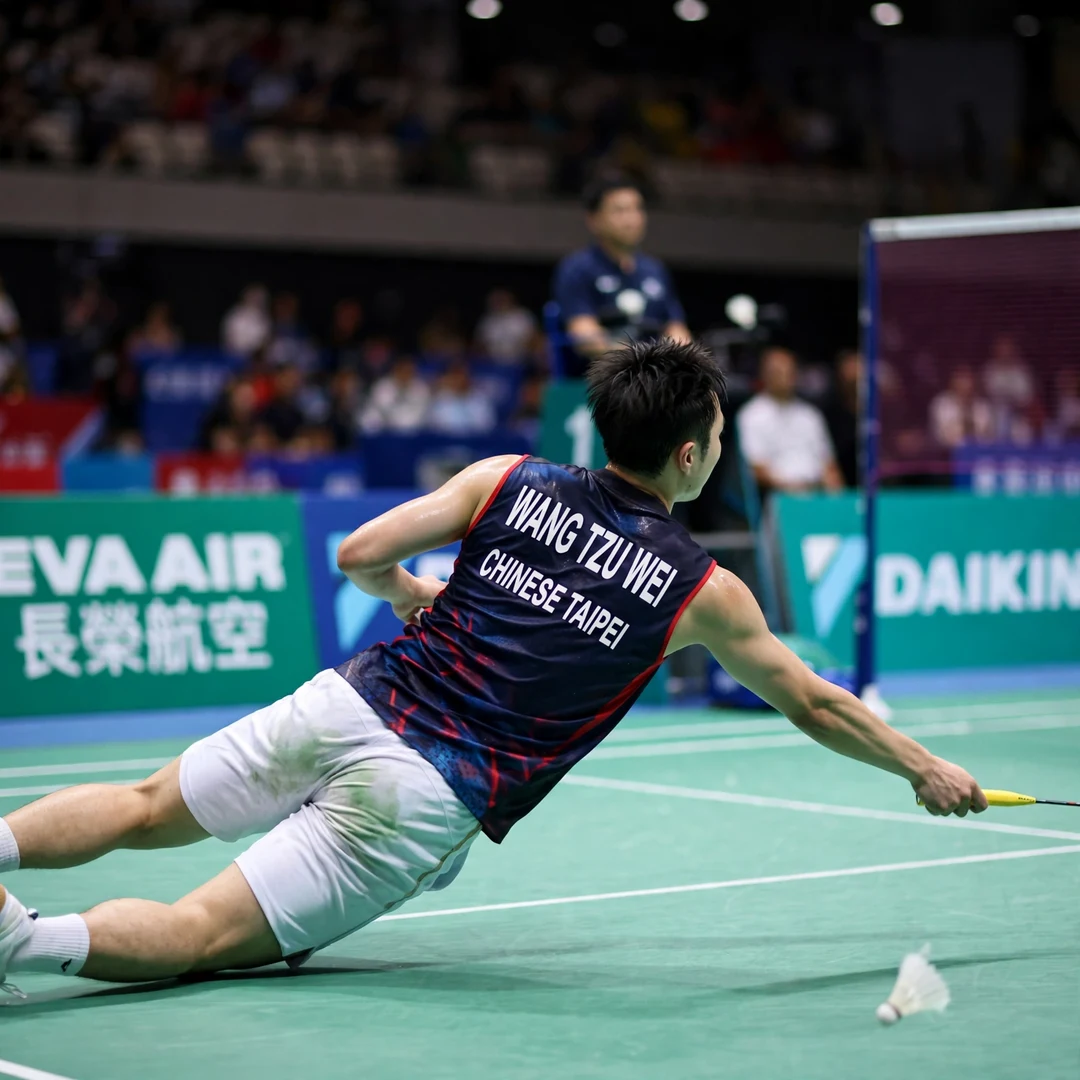
Playing Style: Right-handed attacker, known for his rapid court coverage, powerful jump smash and the tactical patience he added to his game after injury
Understanding Wang Tzu Wei (Chinese Taipei Badminton Star)
Wang Tzu Wei is a Chinese Taipei men’s singles badminton player who has spent more than a decade at the top level of the sport. Born on 27 February 1995 in Taipei, he is 1.78 metres tall and holds the racket in his right hand. Taiwanese fans know him as the Badminton Prince – a nickname drawn from his name, Wang Ziwei. He won double gold at his home Summer Universiade in 2017, lifted a BWF World Tour title in 2019, reached a career-high world No. 9 in February 2021, and in 2024 beat world No. 1 Viktor Axelsen for the first time. In the Week 43 BWF world rankings of 20 October 2026 he stands at No. 41 with 35,729 points – still winning matches on the World Tour at 31 years old.
Early Life in Taipei and the Road to the National Team
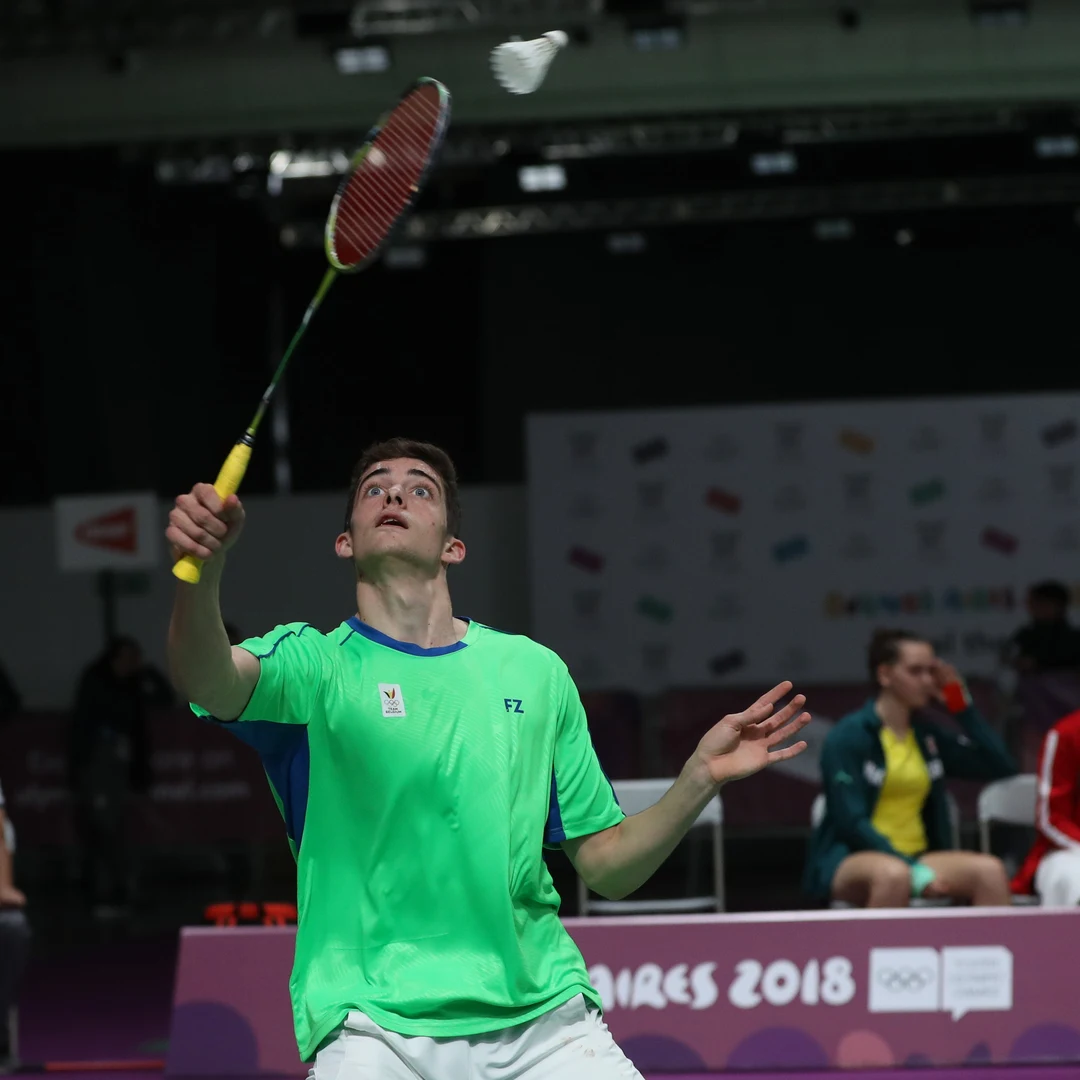
Wang Tzu Wei was born in Taipei and came through Chinese Taipei’s strong school and national junior system, one of the most productive badminton pipelines in Asia. His talent showed early on the international stage: in 2011, at 16, he was part of the Chinese Taipei squad that won the mixed team bronze medal at the World Junior Championships on home soil in Taipei. Two years later he was the team’s singles leader, and the junior results that followed marked him out as one of the most promising players of his generation in Asia.
First Senior Title at 19
His junior career peaked in 2013, a year that announced him to the badminton world. At the Asian Junior Championships in Kota Kinabalu, Malaysia, he took the boys’ singles bronze medal, losing a tight semi-final 20-22, 18-21 to South Korea’s Jeon Hyeok-jin. At the World Junior Championships in Bangkok he went one step further, reaching the final before falling 11-21, 12-21 to another Korean, Heo Kwang-hee – a silver medal that confirmed his place among the world’s best juniors. The same year he helped Chinese Taipei to the men’s team bronze at the East Asian Games in Tianjin and reached his first senior final, at the Polish International.
Double Gold at His Home Universiade
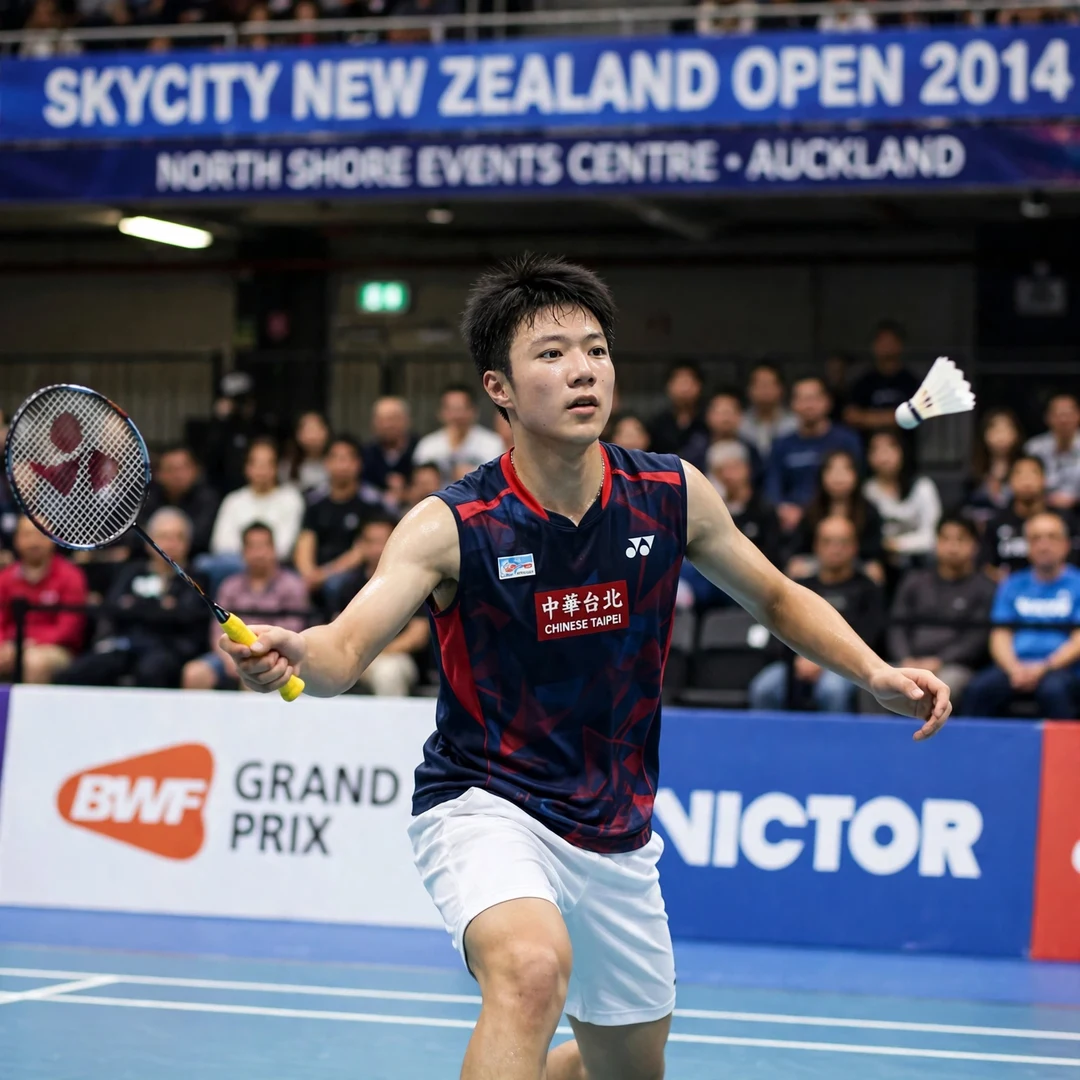
The step up to senior badminton brought his first title almost immediately. In April 2014, at 19 years old, Wang won the New Zealand Open, a BWF Grand Prix event in Auckland, beating his compatriot Hsu Jen-hao 21-9, 21-13 in the final – his first senior international title. The rest of 2014 taught him the other side of finals: he finished runner-up at the Scottish Open, losing a three-game final to Finland’s Ville Lang, and at the Irish Open, where he lost to Hong Kong’s Ng Ka Long. In 2015 he reached another home final, at the Chinese Taipei Masters, losing to Indonesian veteran Sony Dwi Kuncoro.
Olympic Group Winner in Tokyo
In 2016 the titles started to come in bunches. Wang won the Dutch Open in Almere, beating India’s Ajay Jayaram 21-10, 17-21, 21-18 in the final for his second Grand Prix title. As a student-athlete he also struck gold at the World University Championships in Ramenskoe, Russia, defeating Malaysia’s Zulfadli Zulkiffli 21-6, 21-13 – a first taste of winning a major student title, a year before the biggest one of all. He finished runner-up at the Vietnam International, losing the final to home favourite Nguyen Tien Minh.
Career Milestone #1
Junior World Silver and a First Senior Title at 19
The first half of 2017 looked like a story of near misses. Wang reached three Grand Prix finals and lost all three: the German Open and his home Chinese Taipei Open, both to his great compatriot rival Chou Tien-chen, and the New Zealand Open, where he lost 21-15, 15-21, 20-22 to Lee Cheuk Yiu of Hong Kong in a final that slipped away at the very end. Three finals, three defeats – the kind of run that breaks some players. For Wang, it set up the defining week of his career.
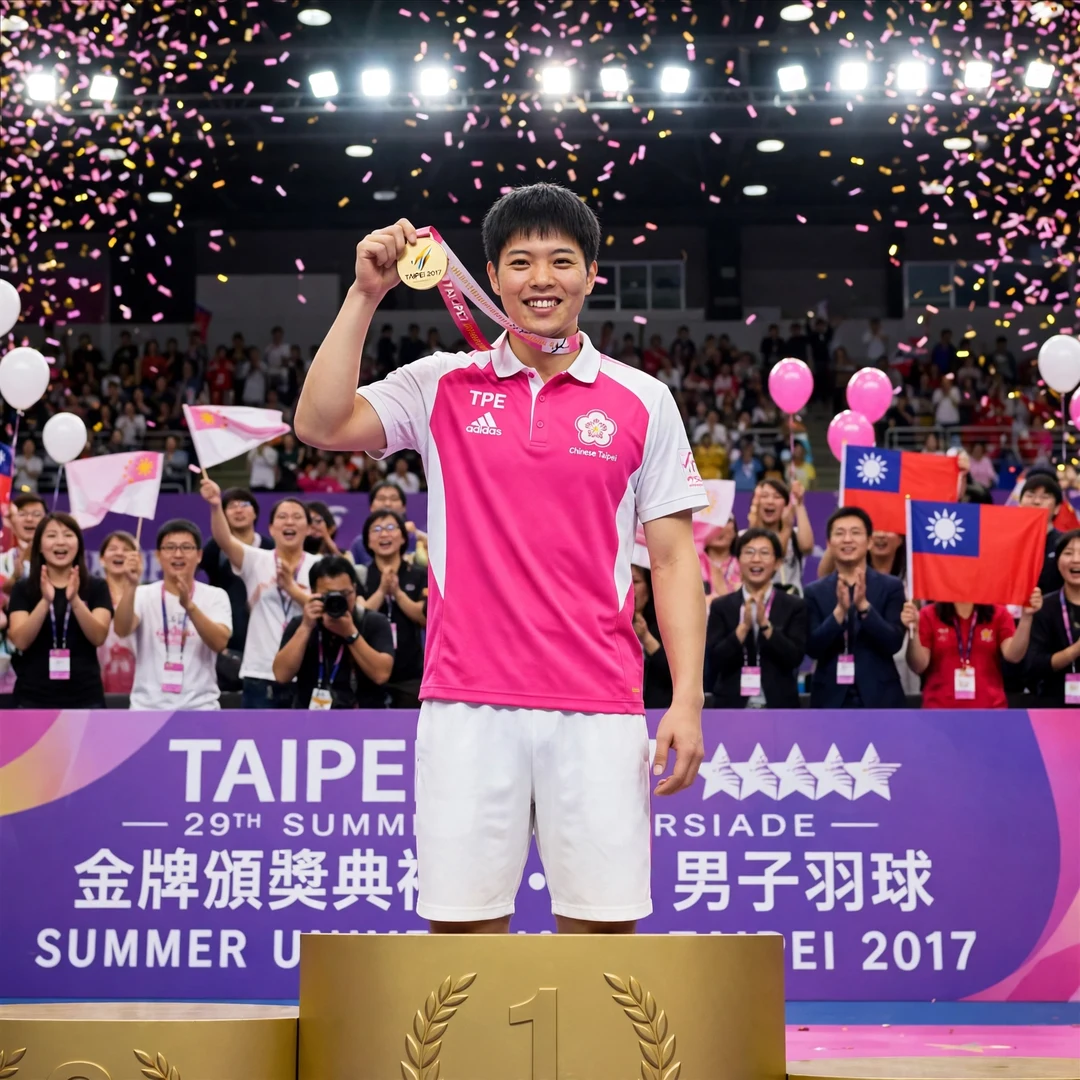
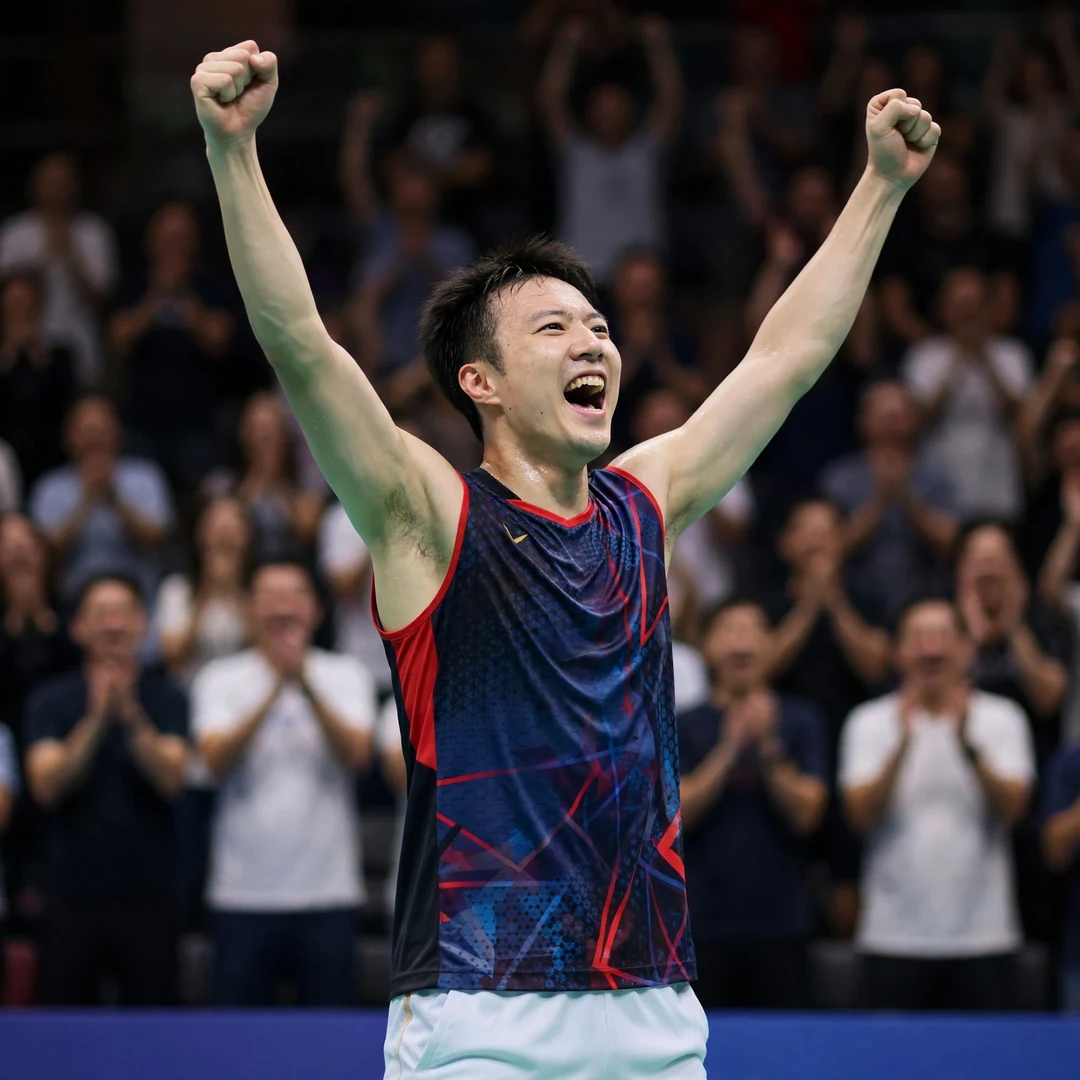
In August 2017 the Summer Universiade – the World University Games – came to Taipei, and Wang Tzu Wei became the face of the home Games. In the men’s singles final at a packed Taipei Gymnasium he beat Japan’s Kenta Nishimoto 21-16, 21-15 to win the gold medal, and he added a second gold with Chinese Taipei in the mixed team event. Double gold, at home, in front of his own crowd: after the three lost finals of the spring, the ‘Badminton Prince’ had his coronation. It remains one of the most famous weeks in Taiwanese badminton history.
Career Milestone #2
Grand Prix Titles and the Golden Home Summer of 2017
Team medals kept coming. At the 2018 Asian Games in Jakarta-Palembang, Wang helped Chinese Taipei to the bronze medal in the men’s team event. Around that period a waist injury interrupted his rise, and his response shaped the second half of his career: working with coach Luan Jin, he rebuilt his game, adding tactical patience, better positioning and pace variation to the speed and attacking power that had carried his junior years. The player who returned was less frantic and far harder to beat.
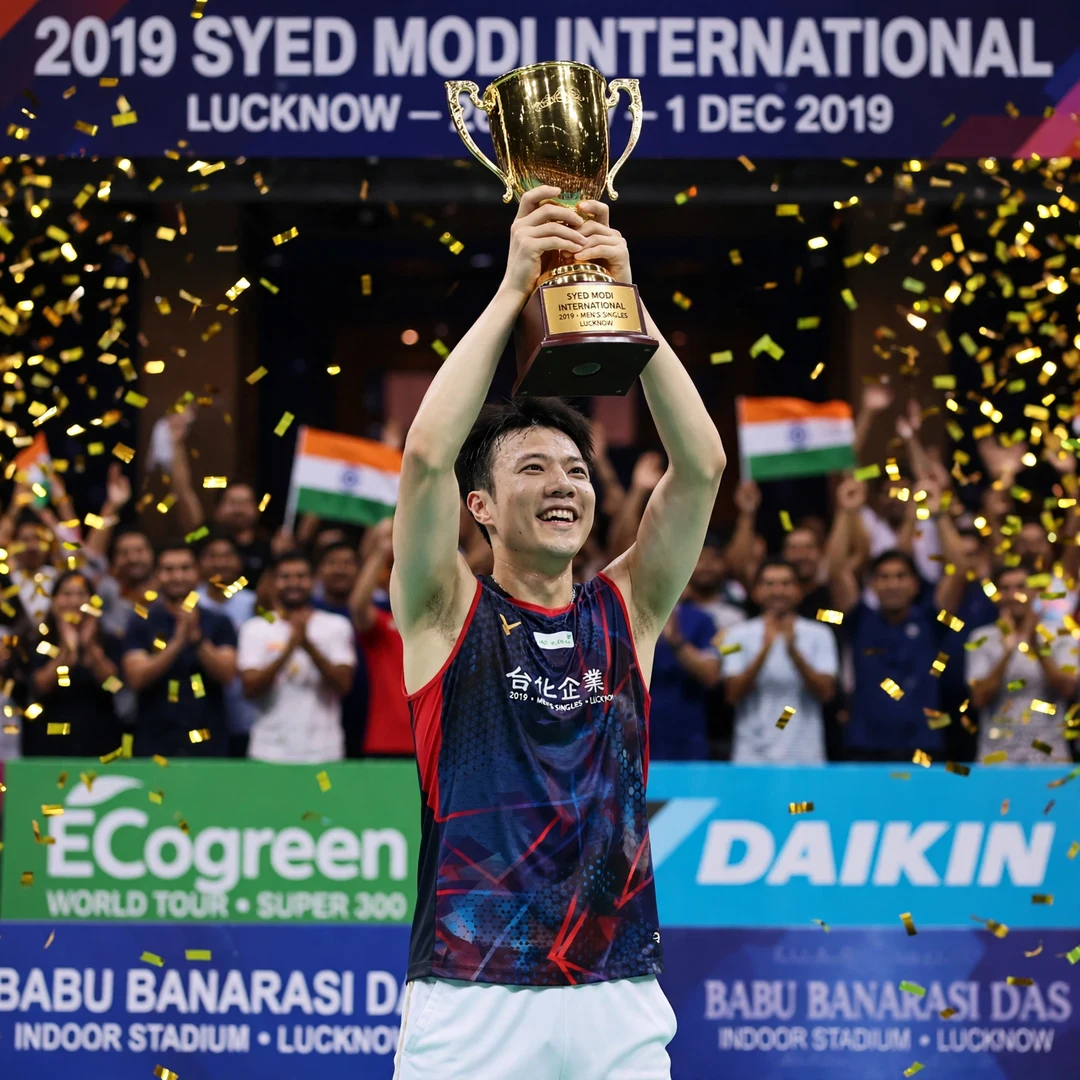
The rebuilt Wang collected his biggest tour title in 2019. At the Syed Modi International in Lucknow, India – a Super 300 event on the BWF World Tour – he beat home player Sourabh Verma 21-15, 21-17 in the final. It was his first, and so far only, BWF World Tour title, and it confirmed what the Universiade gold had promised: when a final came down to nerve and control, the older Wang Tzu Wei could close it out.
His peak years brought two of the most remarkable results of his career. At the BWF World Tour Finals in Bangkok in January 2021 – the season-ending event for the world’s top eight – Wang beat India’s Kidambi Srikanth in three games and then defeated Denmark’s Anders Antonsen, the eventual champion, in straight games in the group stage, before losing a close semi-final rematch to Antonsen. On 2 February 2021 he reached his career-high world ranking of No. 9, inside the top ten in the world.
Career Milestone #3
World Tour Champion and a World Top-10 Player
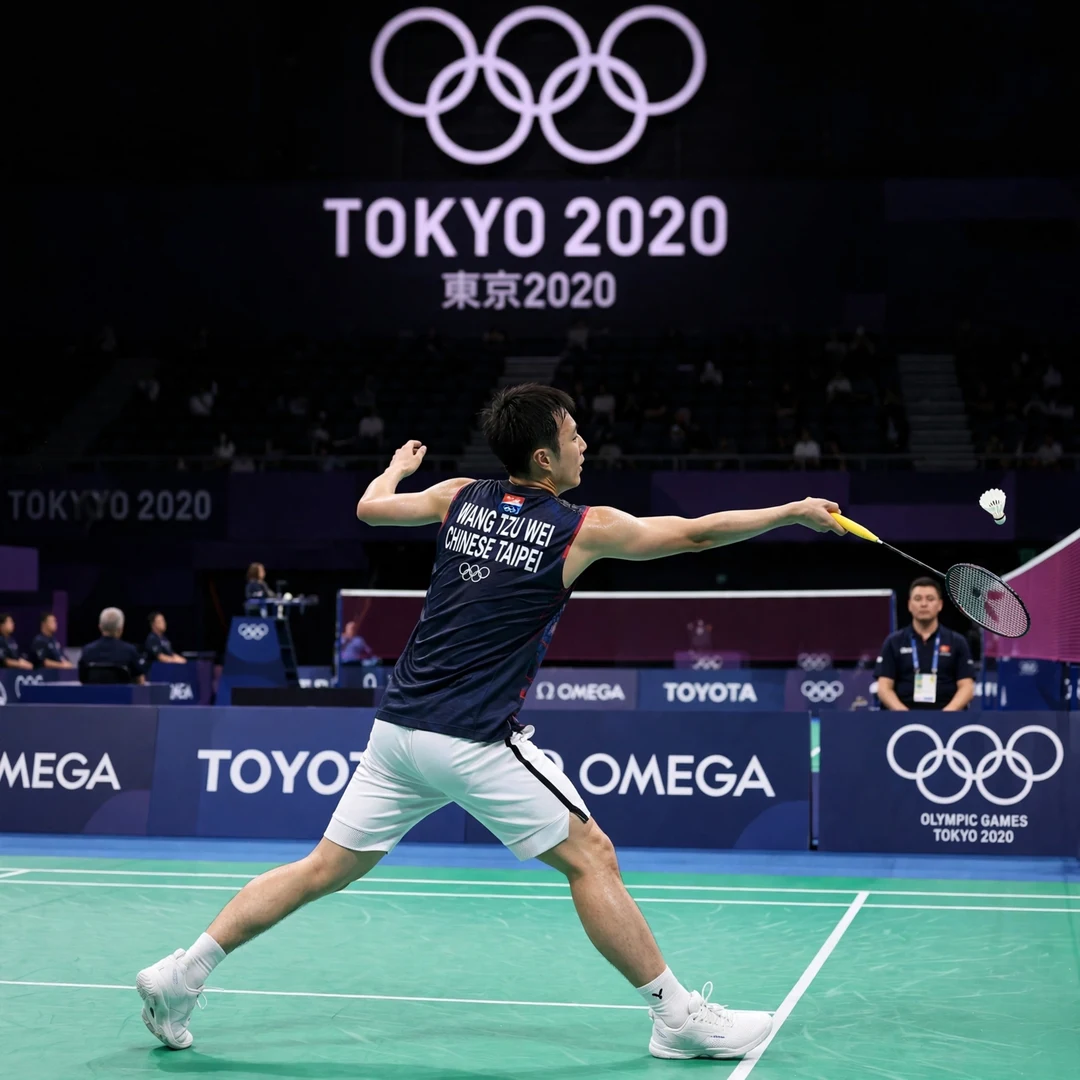
Later in 2021 came his Olympic debut at the Tokyo 2020 Games. Wang won Group F in style, beating Sri Lanka’s Niluka Karunaratne 21-12, 21-15 and then Ireland’s Nhat Nguyen 21-12, 18-21, 21-12 in a deciding match he controlled from the front. In the round of 16 he faced the eventual gold medallist, Viktor Axelsen of Denmark, and lost 16-21, 14-21 – no disgrace against the man who would dominate the tournament. An Olympic knockout-round appearance, a World Tour Finals semi-final and a top-10 ranking: by the end of 2021 Wang had proved he belonged with the elite.
The veteran years have produced his most famous single victory. First, though, came a deep run at the 2023 World Championships in Copenhagen, where he beat Italy’s Giovanni Toti, China’s Lu Guangzu in three games and China’s Li Shi Feng 21-15, 21-14 to reach the quarter-finals – a tournament in which his smash was clocked at 483 km/h, among the fastest ever recorded in competition. The same season he reached the semi-finals of the Taipei Open and the Korea Masters, proof that at 28 his level remained a threat to anyone in the draw.
Then, in March 2024, came Paris. At the French Open, a Super 750 event, the 29-year-old Wang faced world No. 1 Viktor Axelsen, a player who had beaten him in all six of their previous meetings. Wang started like a man with nothing to lose, racing to a 10-1 lead in the first game and taking it; when Axelsen levelled the second game at 12-12, Wang won seven of the next eight points and closed out a famous straight-games win. ‘He’s world No. 1, he’s really strong and I’ve never beaten him before,’ Wang said. ‘I was relaxed and tried to do my best. I didn’t let him feel comfortable at all.’ Axelsen conceded: ‘He deserved the win.’ Wang’s run carried him to the quarter-finals, where he faced Thailand’s Kunlavut Vitidsarn.
Career Milestone #4
Stunning the World No. 1 and Still Winning at 31
Two months later Wang was part of history again. At the 2024 Thomas Cup in Chengdu, China, Chinese Taipei reached the semi-finals and took the bronze medal – the first Thomas Cup medal in the nation’s badminton history. For a player who had been winning team medals since he was a 16-year-old junior in 2011, it was the perfect reward for thirteen years of showing up for his team: East Asian Games bronze, Asian Games bronze, Universiade team gold, and now a Thomas Cup medal. A ranking built over thirteen years rather than one good week: in the Week 43 rankings of October 2026 he stands at No. 41 in the world with 35,729 points.
Managing a full season at the top level into his thirties has become one of Wang’s skills in itself. A waist injury taught him that a career is protected by intelligent scheduling: choosing the right tournaments, peaking for the big weeks, and accepting that not every event needs his best badminton. The results keep coming. In 2025, at 30 years old, Wang reached the semi-finals of the Indonesia Masters and his home Taipei Open, and the quarter-finals of the All England Open and the Japan Open. In October 2026 he was at it again at the Malaysia Super 100 in Johor Bahru, beating Indonesia’s Chico Aura Dwi Wardoyo and South Korea’s Sang Yong Park before losing a three-game quarter-final to Jeon Hyeok-jin – still dangerous, still winning, at 31.
Playing Style
The Fast, Fearless Attacking Style
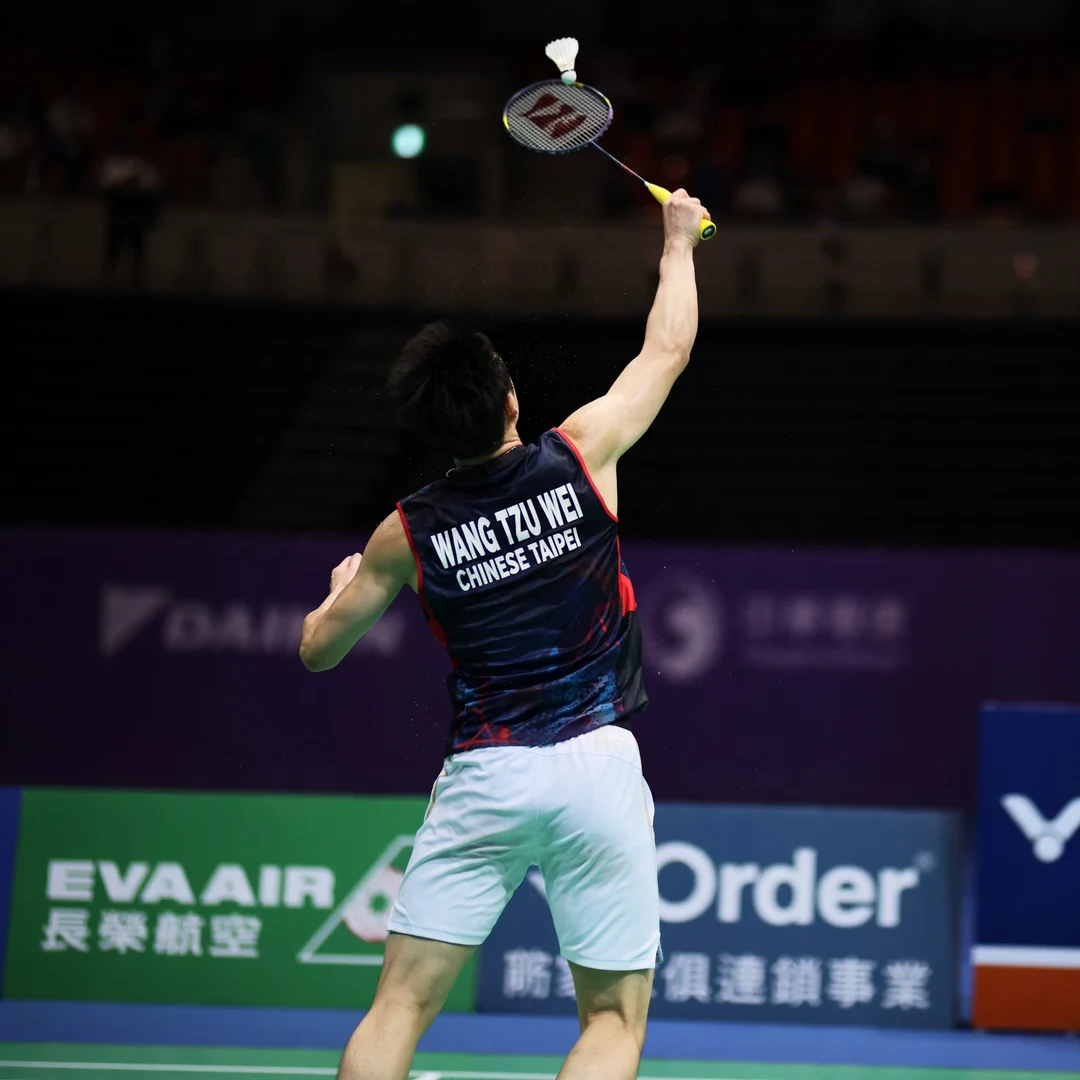
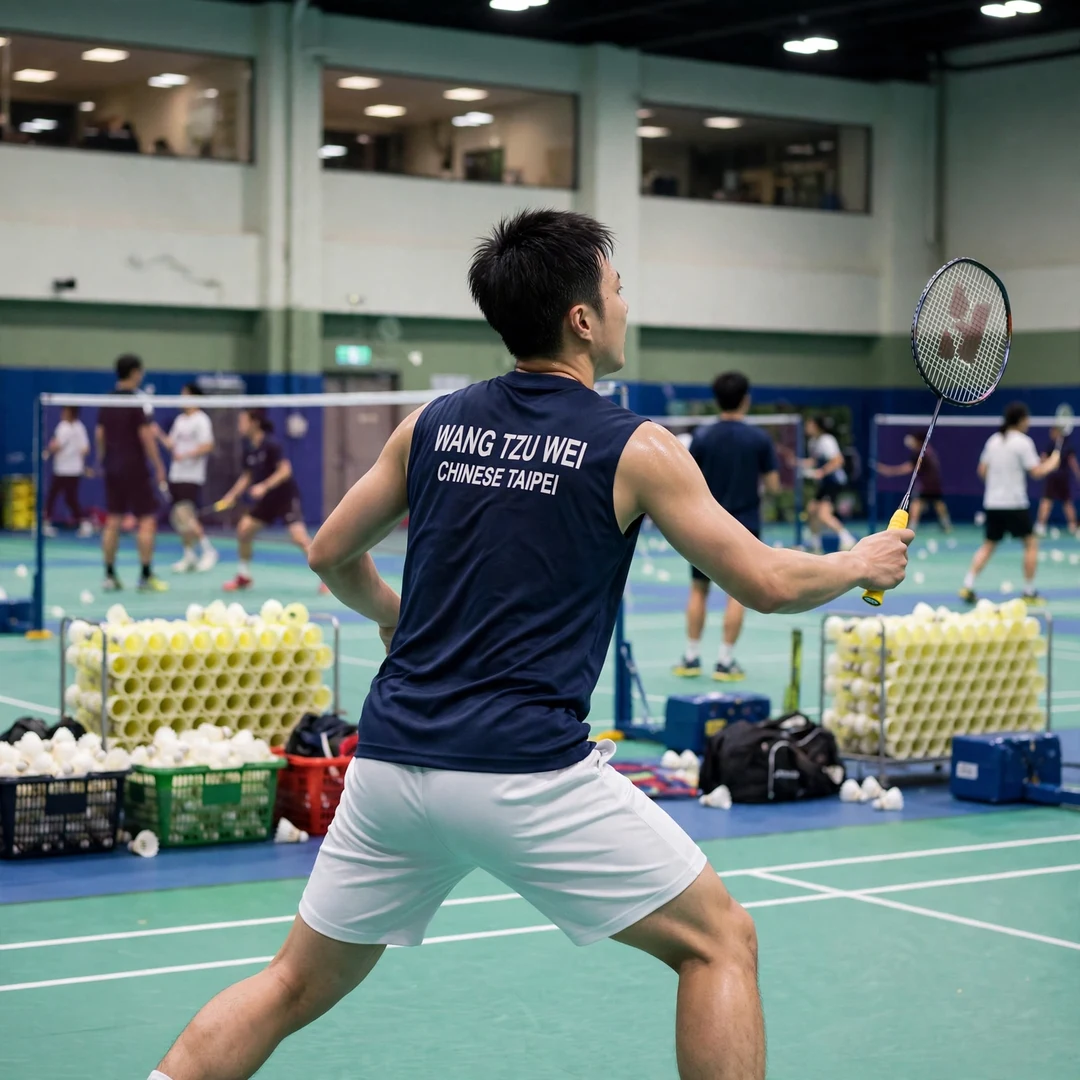
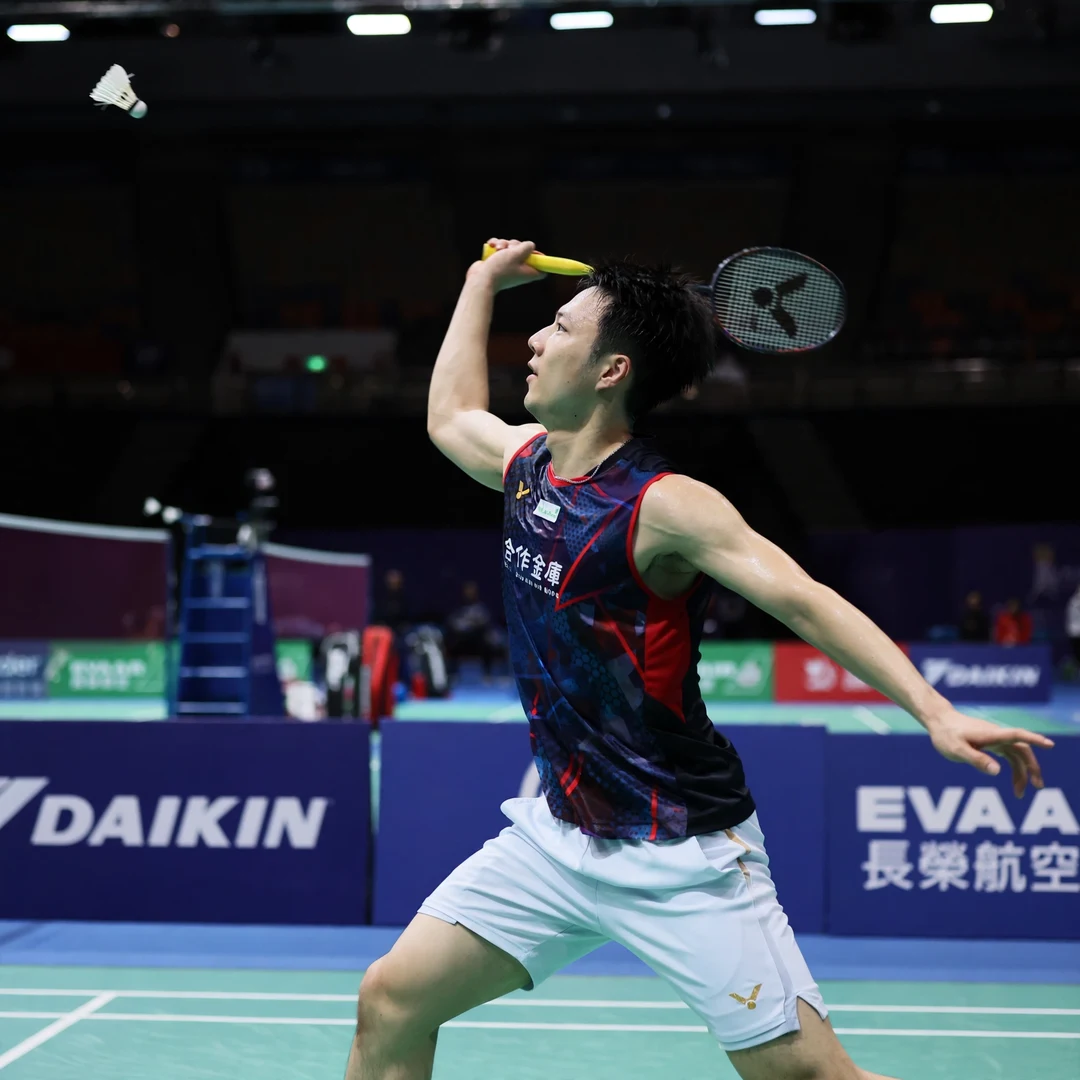
Wang Tzu Wei plays an attacking game built on speed. His court coverage is rapid and low, he takes the shuttle early, and his jump smash is a genuine weapon – few players in history have been clocked faster than the 483 km/h he produced at the 2023 World Championships. At his best he does not wait for errors: he presses forward, varies the angle of attack and forces opponents onto the back foot from the first exchanges of the rally.
What makes the modern Wang hard to beat is what sits underneath the attack: reliable footwork that gets him behind the shuttle early, a dependable defence that buys him time in long rallies, and the tactical patience he built with coach Luan Jin after injury. He still attacks – but now he chooses his moments, changes the pace deliberately, and saves his top speed for the rallies that decide games. Opponents who expect the frantic young attacker of 2017 meet a much colder problem-solver.
Young players who study Wang learn two lessons at once. From the young Wang: attack with courage, take the shuttle early and back your smash. From the mature Wang: build the rally first, defend one more shot, and let the opening come to you. His career shows that a playing style is not a label you are given at 18 – it is something you keep rebuilding for as long as you keep playing.
Mental Strength
Losing Finals, Winning Patience: The Lesson from Wang Tzu Wei
Wang’s career is a study in what resilience actually looks like over thirteen years. In 2017 he lost three finals in a single spring – two of them to the same compatriot, Chou Tien-chen – and answered with double gold at his home Universiade a few weeks later. A waist injury then cost him momentum at the exact moment he was climbing towards the top ten, and instead of fading, he rebuilt his technique and reached No. 9 in the world.
His own explanation of the Axelsen win shows the mindset behind the comebacks: ‘I was relaxed and tried to do my best on court. He made some mistakes and I seized my chance.’ No anger at the six previous defeats, no fear of the world No. 1 – just a clear-eyed plan and the patience to wait for the moment. Seven meetings, six defeats, and he still walked on court in Paris believing the seventh could be his. That is the belief structure young players should copy.
For our students, the practical lessons from Wang are clear: a run of lost finals is a phase, not an identity; when injury or form forces a rebuild, change the real weakness instead of just training harder; respect every opponent but fear none of them, whatever the head-to-head record says; and look after your body and your schedule, because the players still winning at 31 are the ones who planned to still be playing at 31.
Learning Reference
ST Badminton Academy Connection
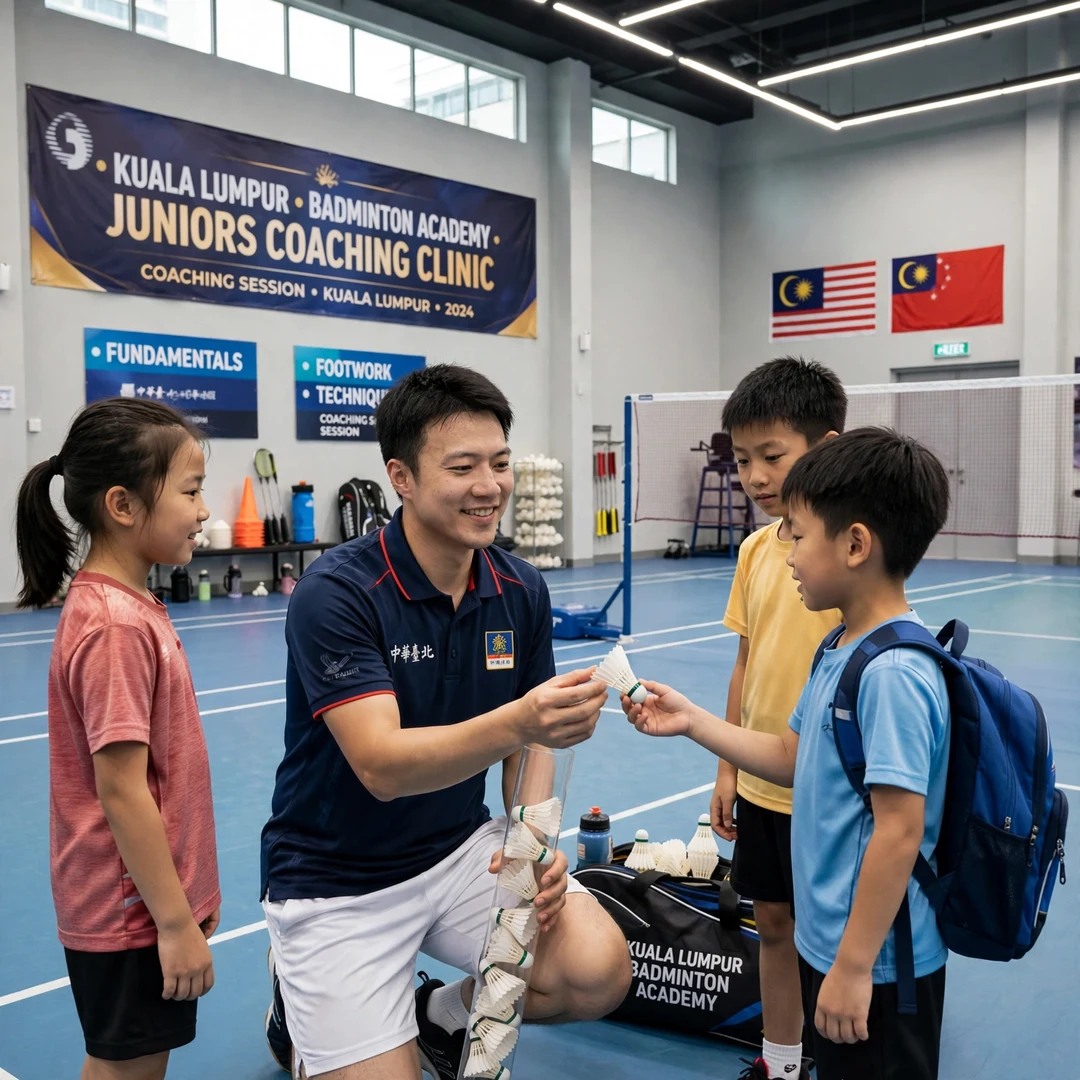
ST Badminton Academy has no official partnership or endorsement arrangement with Wang Tzu Wei or the Chinese Taipei Badminton Association. This page is an educational profile created so Malaysian juniors and parents can learn from his career, his playing style and his journey.
Our students study two Wang Tzu Wei matches above all: the 2017 Universiade final, where he turned three lost finals into home gold, and the 2024 French Open win over Viktor Axelsen, a masterclass in playing a feared opponent with a clear plan and no fear. His path also shows families a realistic Taiwanese development route – junior world medals at 18, senior titles as a teenager, student Games gold, a World Tour title, the top 10, and a second decade at the top built on reinvention.
We encourage our players to watch Wang the way he learned to play: with patience and with courage in the same rally. Copy his early timing and his smash, but also copy the calm that let him beat the world No. 1 at the seventh attempt – because in badminton, as his career proves, the story is never finished until you stop showing up.
FAQs: Wang Tzu Wei Chinese Taipei Badminton Player
Here are the questions Malaysian parents and junior players ask most often about Wang Tzu Wei, answered with the key facts from his career.
Who is Wang Tzu Wei and which country does he represent in badminton?
Wang Tzu Wei is a Chinese Taipei men’s singles badminton player, born on 27 February 1995 in Taipei. He is 1.78 metres tall, plays right-handed, and is known in Taiwan as the ‘Badminton Prince’. He reached a career-high world No. 9 in February 2021, won double gold at the 2017 Summer Universiade in Taipei, and won his first BWF World Tour title at the Syed Modi International in 2019.
What are Wang Tzu Wei’s biggest badminton achievements?
His biggest achievements are the men’s singles and mixed team gold medals at the 2017 Summer Universiade in Taipei; the Syed Modi International title in 2019, his first BWF World Tour crown; a semi-final at the 2020 BWF World Tour Finals, where he beat eventual champion Anders Antonsen in the group stage; the silver medal at the 2013 World Junior Championships; the bronze medal with Chinese Taipei at the 2024 Thomas Cup; and his straight-games win over world No. 1 Viktor Axelsen at the 2024 French Open.
What is Wang Tzu Wei’s playing style?
Wang plays a right-handed attacking style built on rapid court coverage, early timing and a powerful jump smash – clocked at 483 km/h at the 2023 World Championships. After a waist injury he rebuilt his game under coach Luan Jin, adding tactical patience and pace variation, so the modern Wang attacks in chosen moments rather than in every rally.
How did Wang Tzu Wei beat Viktor Axelsen at the French Open?
At the 2024 French Open in Paris, Wang beat Viktor Axelsen in straight games – his first win over the Dane in seven meetings. He attacked from the start, racing to a 10-1 lead in the first game, and when Axelsen levelled the second game at 12-12, Wang won seven of the next eight points to close the match. ‘I didn’t let him feel comfortable at all,’ Wang said afterwards.
How can my child learn from Wang Tzu Wei’s training approach?
Children can learn from Wang’s pathway: junior world medals at 18, a first senior title at 19, student Games gold at home, and then a second reinvention after injury that carried him into the world top 10. At ST Badminton Academy we use the same structure he followed: speed and attacking fundamentals first, then the tactical patience that lets a fast junior become a complete senior player.
Did Wang Tzu Wei win any junior titles or medals?
Yes. Wang won the boys’ singles silver medal at the 2013 World Junior Championships in Bangkok, losing the final to Heo Kwang-hee, and the bronze medal at the 2013 Asian Junior Championships in Kota Kinabalu. He was also part of the Chinese Taipei mixed team that won bronze at the 2011 World Junior Championships in Taipei.
How many BWF World Tour titles has Wang Tzu Wei won?
Wang has won one BWF World Tour title: the Syed Modi International (Super 300) in 2019, beating Sourabh Verma in the final. Before the World Tour era he also won two BWF Grand Prix titles – the New Zealand Open in 2014 and the Dutch Open in 2016 – and the World University Championships gold medal in 2016.
What playing style should young players learn from Wang Tzu Wei?
Young players should learn Wang’s complete package: the early timing and attacking courage of his junior years, combined with the patience and pace control he added later. The rushed version of Wang lost three finals in one spring of 2017; the complete version won home gold weeks later, beat the world No. 1 at 29, and is still winning World Tour matches at 31.
Does ST Badminton Academy have any connection with Wang Tzu Wei?
No. ST Badminton Academy has no official connection, partnership or endorsement with Wang Tzu Wei. This profile is published for education only, so our students and parents in Malaysia can study his career achievements, playing style and journey.
Wang Tzu Wei Career Highlights
Career Statistics and Rankings
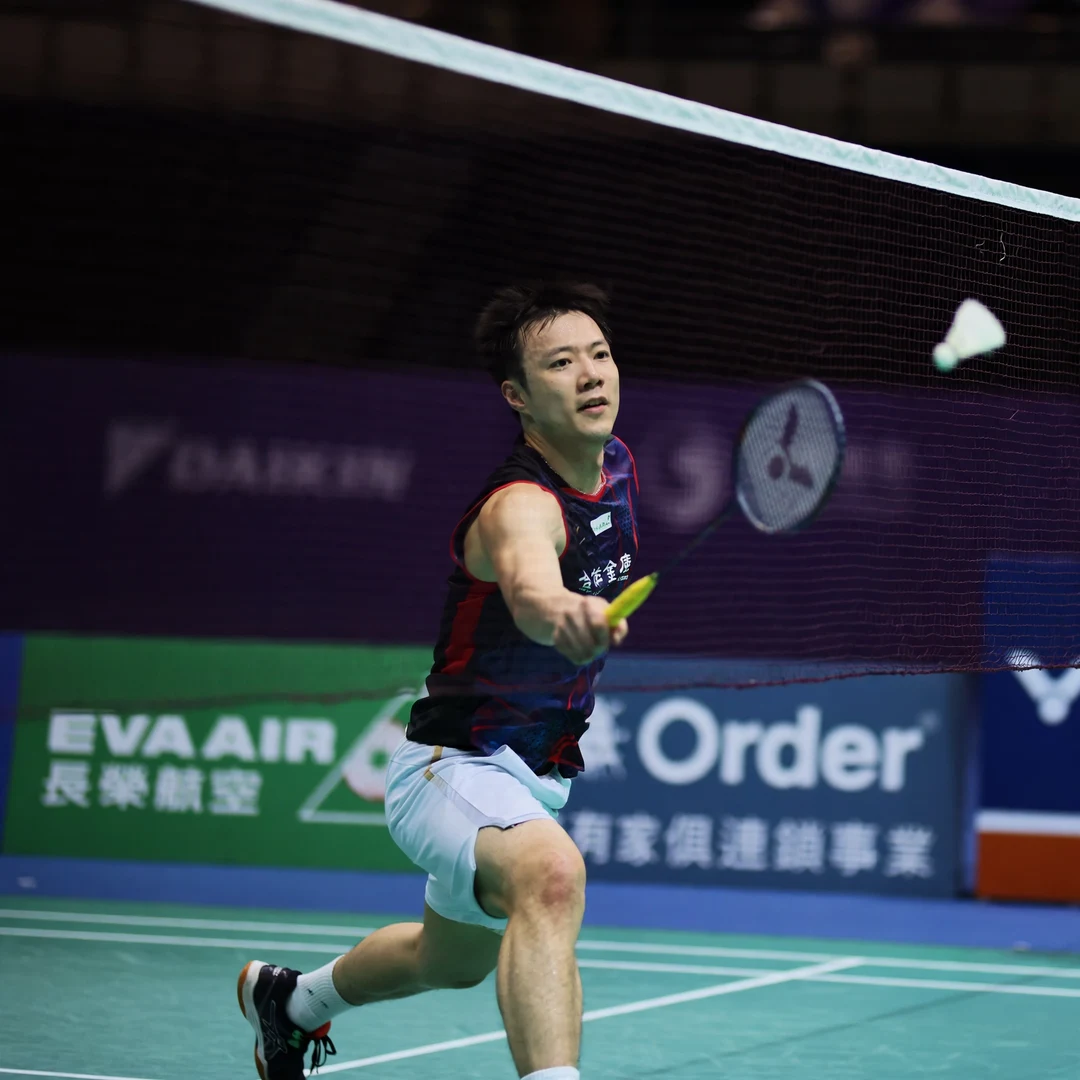
Wang Tzu Wei's career is a masterclass in staying power. From a World Junior Championships silver medal at 18 and a first senior title at 19, through the heartbreak of three lost finals in one spring and the glory of double gold at his home Universiade, to a World Tour title, the world top 10, a Thomas Cup medal and a famous win over the world No. 1 - every chapter was built on refusing to let the previous one be the last.
| Development Area | Common Misconception | What Wang Tzu Wei's Career Shows REALITY |
|---|---|---|
| Junior Foundation | Talent alone decides who becomes a champion. | Wang lost three Grand Prix finals in the first half of 2017 - then won double gold at his home Universiade in Taipei a few weeks later. A lost final in March says nothing about August: form is built, not fated. |
| Playing Style Priority | Kids should copy the flashiest attacking shots. | His game was built in layers: junior world silver at 18, a first senior title at 19, Grand Prix titles at 21, a World Tour title at 24, the world top 10 at 25. Each level took years of work - there were no shortcuts at any step. |
| Fitness Importance | Juniors can out-train everyone without rest. | After a waist injury, Wang did not just train harder - he rebuilt his game under coach Luan Jin, adding tactical patience and pace variation to his natural speed. Fixing the problem honestly beats repeating the same training louder. |
| Mental Approach | Top players never get nervous or upset. | At the 2020 World Tour Finals he beat the eventual champion Anders Antonsen in the group stage - proof that on any given day, preparation and belief can beat the draw. Big names are opponents, not verdicts. |
| Attacking Training | Smashing harder is always the answer. | In 2024, at 29, he beat world No. 1 Viktor Axelsen for the first time - after losing to him six times in a row. A head-to-head record is history, not destiny, for a player who keeps studying the problem. |
| National Milestones | Only world titles matter. | Wang won the first Thomas Cup medal in Chinese Taipei history in 2024, at 29 years old, in a team built over a decade. Team medals reward the players who keep showing up for their country year after year. |
| Career Timeline | Champions peak once and fade fast. | At 31, ranked No. 41, he is still reaching World Tour quarter-finals and beating top-30 players. Longevity at the top level is a skill in itself: manage the schedule, protect the body, and keep the game evolving. |
Study Wang Tzu Wei's Work Ethic and Professional Approach
For Malaysian juniors, his message is the one every developing player needs to hear: your head-to-head record, your injury history and your lost finals are information, not destiny. Keep rebuilding your game, keep showing up, and one day - like Wang Tzu Wei in Paris, at the seventh attempt - the match you were never supposed to win becomes the one everybody remembers.