Can Practising Badminton at Home Undo What My Child Learns in Class?
You want to help between badminton lessons. You watch a few videos, feed some shuttles and remind your child to swing the way you saw online. In the next class, the coach asks them to stop doing something you encouraged. Home practice does not have to become another source of confusion.
Discuss your child’s training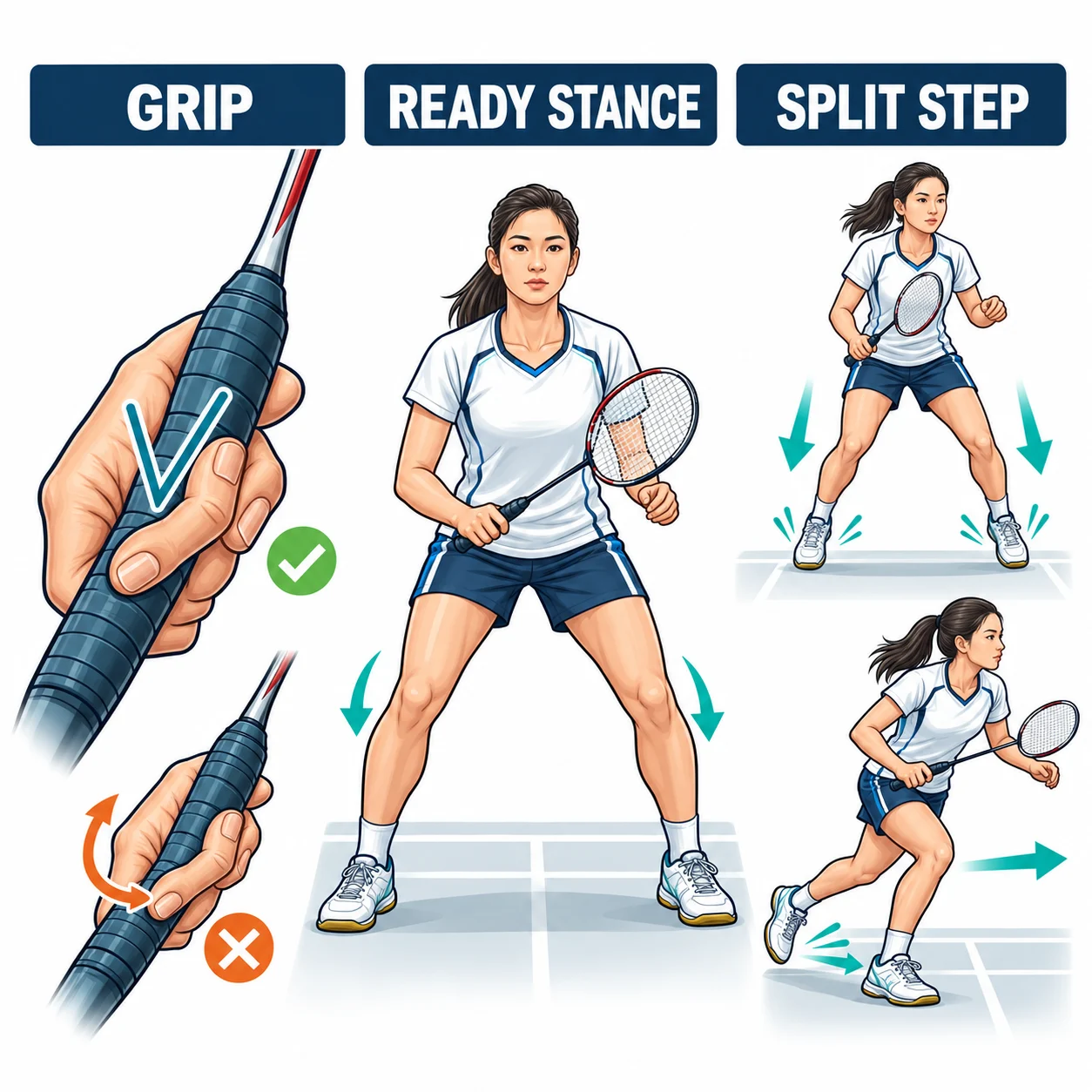
Start with the lesson’s task, not a new collection of tips
Ask whether the coach wants any home practice, and if so, which task. Some activities need a court, suitable feeding or direct observation; others may be manageable in a different setting. Do not assume every class exercise should be repeated in the living room.
A useful instruction explains what the child is practising, the cue they should use and when to stop or ask for help. You should be able to see a demonstration and explain the task back. If the homework is simply “practise more”, ask for something clearer.
Your role can be support rather than technical correction
You can help arrange a suitable time, remember the agreed cue and notice when your child becomes confused. You do not need to correct every swing or supply a new explanation for each missed shuttle.
Ask your child what they are trying, rather than immediately saying their movement is wrong. If their answer differs from what you understood, note the difference for the coach. This avoids turning practice into a debate between parent and child.
A simple checklist for your next conversation
| A home-practice situation | A clearer next step |
|---|---|
| The instruction is only “practise more” | Ask for a demonstrated task and one cue. |
| Your child says the coach taught it differently | Record the question and clarify it with the coach. |
| A video offers another swing or grip tip | Ask whether it applies to the current shot and learning task. |
| The home space does not fit the activity | Describe the space and request a suitable alternative. |
Do not combine several versions of the same technique
A video may show a different shot, learning stage or practice purpose from the child’s current task. Copying a professional player’s full movement does not settle what a beginner should be doing in a simplified exercise.
If a video raises a useful question, bring it to the coach. Ask whether it applies and how it connects to the agreed task. Until that is clear, resist adding its cue to the child’s homework or changing the racket position yourself.
Check the setting before trying to copy a court activity
Tell the coach what space and equipment you actually have. A small home area cannot reproduce every movement or feed used on court. Clear the practice space and follow the coach’s instructions for an activity suitable to that setting.
You do not need a long, ambitious schedule to prove commitment. Agree on something the family can realistically manage around school, work and travel. If you cannot do the proposed activity, ask for an alternative rather than improvising a harder version.
Use the next lesson to close the loop
Report what you tried, what the child understood and where the task became unclear. With permission, a short clip of the agreed activity can help the coach identify what happened. Do not record other children or share a child’s errors publicly as a lesson for strangers.
The coach can then continue, simplify or replace the task. Home practice becomes useful support when it connects back to the actual lesson. If it repeatedly leads to conflict or contradictory instructions, pause the technical changes and review the plan together.
Sport Singapore publishes Active Parents resources for families supporting children through sport. These general resources can sit alongside the task agreed with your coach; they do not assess your child’s badminton technique.
Questions parents ask
Must parents be good badminton players to help?
No. Organisation, encouragement and keeping the agreed task clear can be useful without providing technical corrections.
Should we practise every day?
Discuss the task and a realistic routine with the coach. Do not invent a daily target simply to increase the amount of practice.
Can we use online videos?
They can prompt questions, but check the relevance before using them to change the child’s current instruction.
What if practice becomes an argument?
Pause the disputed technical correction. Ask the coach to clarify the task and the parent’s role before repeating it.
A practical next step
Tell the coach what home space, time and equipment are available. Agree on a simple task, or leave the technical work for lessons when that is more suitable.
Compare badminton training options and children’s private badminton training. Confirm the suitable group, venue, times and fees directly before enrolling.
For the wider picture, read the slow-progress review, the guide to changing established habits, or return to badminton learning problems.


