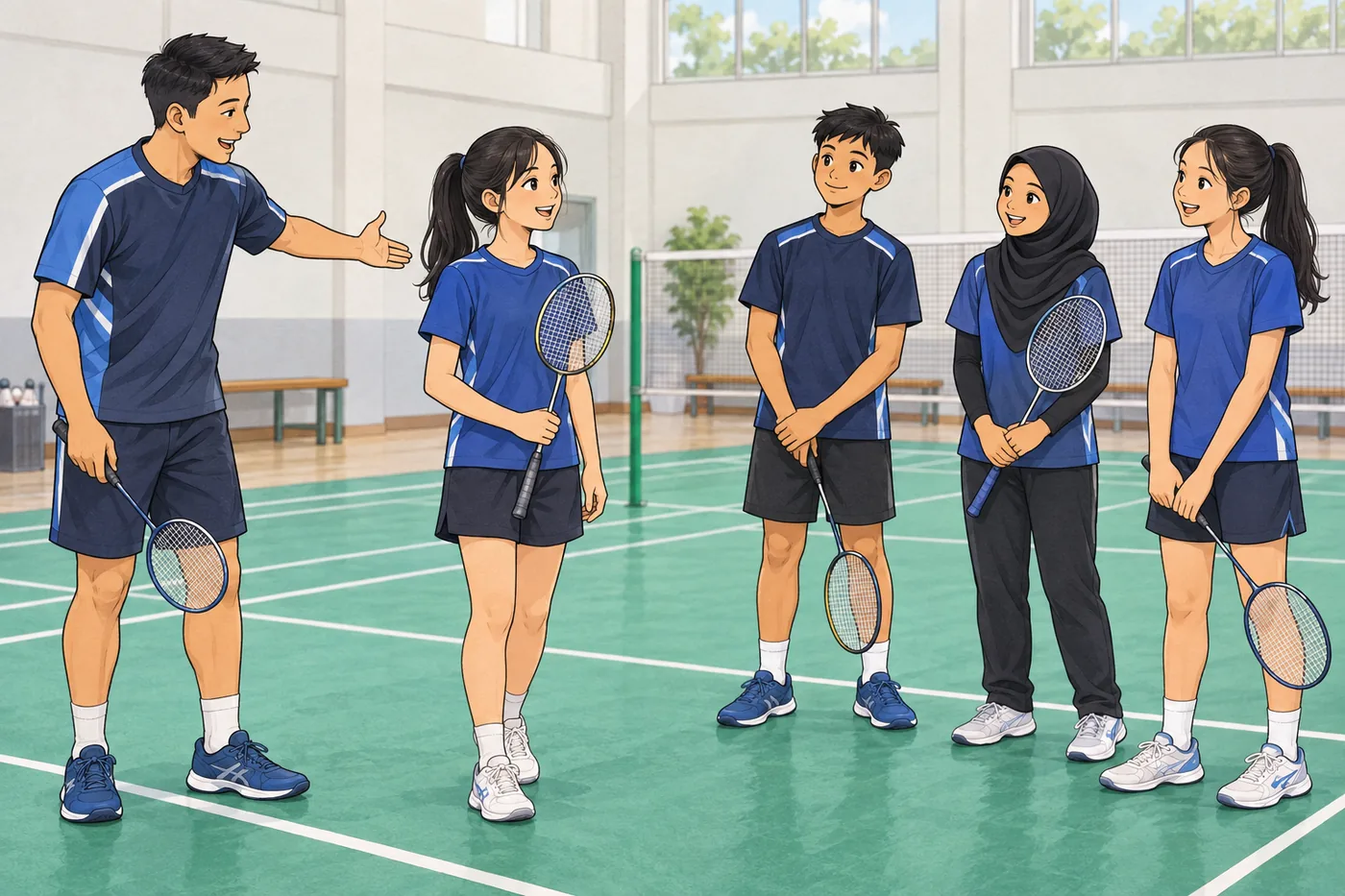
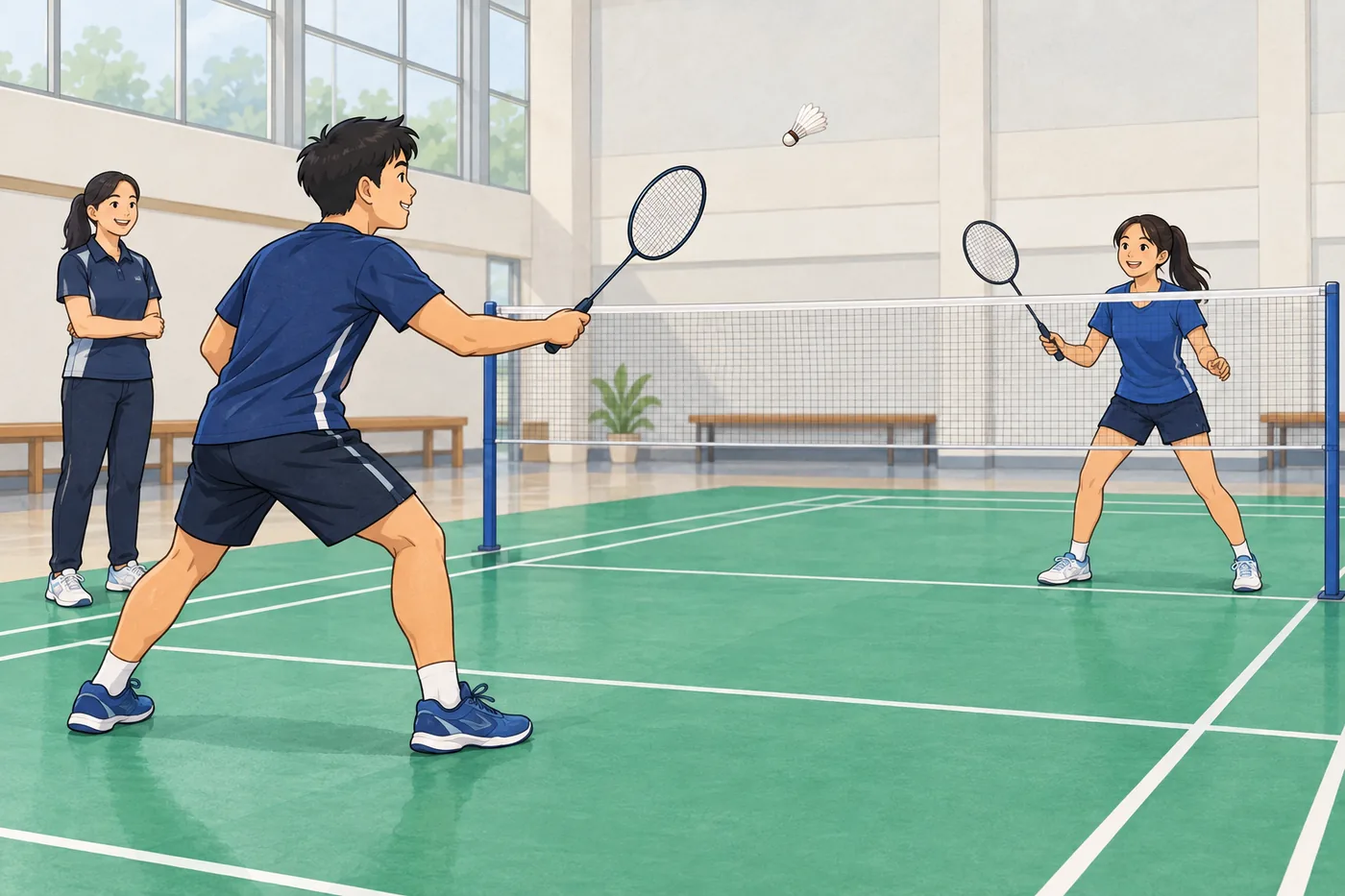
Badminton learning in Kuala Lumpur
Changing Badminton Coaches: A Practical Handover Checklist
A change of coach is easier to discuss when you can explain your current training, what you want to improve and what a workable class needs to look like.

When changing badminton coaches, bring a short account of what you have been practising, what you can currently do and why you want a different arrangement. You do not need to defend your previous coach or arrive with a verdict on every technique. A useful handover helps the new coach observe you with context while still making an independent assessment.
People change classes for many reasons: a different school timetable, a longer journey, changing goals or a learning approach that no longer fits. The practical task is to carry useful information forward and agree on what the next stage of badminton training should address.

Separate the reason for moving from the skill you want to improve
A scheduling problem and a coaching problem need different solutions. If you like the teaching but cannot reach class reliably after work, say so. If the class pace leaves you confused, describe what happens: perhaps the explanation ends before you understand the exercise, or you spend much of the session practising a task that is already comfortable.
Turn broad dissatisfaction into observable needs. ‘I want a better coach’ is difficult to act on. ‘I need someone to explain my overhead preparation and check whether I can repeat it during a rally’ gives the next conversation a direction.
For a child, include their view in age-appropriate language. A parent might be concerned about progress while the child is worried about joining an unfamiliar group. Both issues matter, but they should not be treated as the same issue.
Prepare a one-page training handover
Keep the handover brief enough for a coach to use before the assessment. An honest approximate description is better than a long document full of labels such as intermediate or advanced.
| Include | A useful example |
|---|---|
| Recent training pattern | A weekly group class, with occasional family games |
| Current technical focus | Preparing earlier for the overhead shot and recovering after a net reply |
| What feels comfortable | Keeping a controlled rally when the feed is predictable |
| What breaks down | Choosing a reply when the shuttle arrives near the body |
| Playing experience | Casual doubles, school practice or competition experience, described accurately |
| Practical constraints | Days you can attend and the journey you can manage |
| Current goal | Joining family games confidently or preparing for a stated playing opportunity |
Share only information relevant to coaching and safe participation. You do not need to forward private messages, another child’s videos or an entire conversation history from the previous class.

Explain the words your previous coach used
Coaches sometimes use different words for similar ideas. A short cue that made sense in one class can be confusing when removed from its original exercise. Explain the cue alongside the movement you understood it to mean.
For example, rather than saying ‘I was told to get ready earlier’, describe when you began preparing and what the coach wanted you to watch. If you are uncertain, say that too. The new coach can observe the movement instead of interpreting an isolated phrase.
A difference in wording does not automatically mean one coach was wrong. A genuine technical disagreement may also exist, but it should be examined through an explanation and observation rather than guessed from a slogan.
If you have a relevant video recorded with permission, a short ordinary practice sequence may help. Ask whether the coach wants to see it; the assessment should still reflect how you move and play now.

Let the assessment establish a fresh starting point
A new coach may begin with tasks that look simpler than your previous class. That can be a way to see your control, preparation and response to instructions before adding more demands. Ask what the task is meant to reveal instead of assuming a simpler exercise means you have been moved backwards.
At the same time, it is reasonable to expect an explanation that connects the observation to your goal. If you want to become more comfortable in doubles, how does the proposed work relate to positioning, shot selection or responding to a partner?
A useful first assessment may identify several issues, but the immediate practice focus should be understandable. Ask: what should I pay attention to first, what does a better attempt look like and how will we revisit it? Browse the ST Badminton Academy coach information before the discussion so you can ask about the coaching approach as well as availability.


Handle conflicting advice without rebuilding everything at once
If the new coach recommends a change, ask for the reason in the situation where it applies. You need enough understanding to practise deliberately, rather than trying to obey two instructions that sound incompatible.
Three questions are especially useful:
- What are you observing in my current movement?
- What would this change help me do in that situation?
- Which part should I keep consistent while I work on it?
A player who tries to alter grip, preparation, footwork and every tactical choice during the same rally can struggle to identify what helped. Agree on a manageable focus and tell the coach if you cannot connect the instruction to the movement.
If you are continuing lessons with more than one coach, be transparent about that arrangement. Ask how to keep the current objectives coherent. Do not assume the coaches share notes or have agreed on the same progression.
Check the class fit before focusing only on reputation
A well-known badminton academy still needs to offer a class arrangement that suits the player. Ask how placement is decided, what happens when players learn at different speeds and how you can raise a question after the session.
Describe your actual availability. A class that looks ideal but regularly clashes with work or school may make consistent attendance difficult. Travel is part of the decision too: consider the journey at the time you would really attend, not just the distance on a map.
For children, ask how parents receive practical updates and how the coach communicates with the child during an exercise. For adults, ask whether the group is working on foundations, match situations or a mixture. The badminton training information provides a starting point, but placement and current availability still need confirmation.
Agree on evidence of progress that you can both understand
Changing coaches can create an expectation that improvement should be immediately obvious. Instead of setting a guaranteed timeline, agree on a small number of things to review in comparable practice situations.
For example, you might observe whether you recognise the next destination earlier, keep a controlled rally going under the same task conditions or explain why you chose a safer reply. These are more specific than asking whether you now look advanced.
Keep the conditions visible. A movement may look more reliable with a steady feed than with a changing one. That is useful information about the next training step, not a reason to hide the harder attempts.
At an agreed review point, discuss what has changed, what remains difficult and whether the class still fits your needs. The answer may be to continue the focus, adjust the task or reconsider placement.
Keep the transition respectful and practical
Before ending an existing arrangement, check the notice, payment and cancellation terms you actually agreed to. Do not assume that a new academy can settle commitments made elsewhere.
A brief, factual message to the previous coach is usually enough to explain a schedule change or a decision to try another arrangement. If you want to discuss a concern, use specific examples and keep the child’s confidence or the player’s learning needs central. The new coaching relationship does not need to begin with criticism of the old one.
Questions about this badminton training topic
Do I need a written report from my previous badminton coach?
Not necessarily. A concise account of your training and goals can be enough to begin. If a relevant report already exists and you are entitled to share it, ask whether the new coach would find it useful.
Will changing coaches mean starting from the beginning?
Not automatically. The new coach should assess your current skills. Revisiting a basic task can help establish what is reliable and where further work is needed.
Should I hide that I still attend another badminton class?
No. Knowing your other training commitments helps the coach understand your practice load, instructions and goals. Ask how to manage potentially conflicting objectives.
What if my child wants to stay with friends in the old class?
Discuss that concern alongside the reason for moving. Friendships, comfort, class suitability and attendance all affect the decision; a technical goal alone does not describe the whole situation.
How quickly should I expect results after changing coaches?
There is no dependable timeline that fits every player. Agree on observable practice goals and a review point, then evaluate the work in comparable conditions.
Discuss your training
Considering a move to ST Badminton Academy in Kuala Lumpur? Send an enquiry with the player’s experience, current focus and available days. A clear handover helps make the first conversation useful without presuming that a particular group or approach is suitable before assessment.