The Best Badminton Shoulder Supports For Pain Relief And Stability Malaysia
For badminton families in Kuala Lumpur, from condos near LRT Maluri to courts in Setapak and Ampang, shoulder soreness is a common worry after a tough training session. At ST Badminton Academy Malaysia, we see teen and adult players dealing with this, so we’ve put together this non medical guide to help you understand your options. Shoulder pain is frequent in badminton due to the high speed, repetitive overhead movements of smashes and clears.

Understanding Badminton Shoulder Issues
Why Overhead Movements Can Cause Strain
Shoulder pain in badminton is almost unavoidable at some point, whether you’re playing after work games in Cheras or training for a school team in Wangsa Maju. The primary cause is the repetitive, high velocity overhead motion required for smashes, clears, and drop shots. These actions place significant stress on the rotator cuff muscles, tendons, and the shoulder joint itself. Without proper warm ups, good technique, and adequate rest, this can lead to general soreness, tightness, or a feeling of instability during play. This guide focuses on managing these milder symptoms with supportive aids.
It is crucial to distinguish between normal muscle fatigue and a potential injury. General soreness that fades within a day or two is common. However, you must seek professional medical advice from a sports doctor or physiotherapist if you experience sharp, stabbing pain, pain that wakes you up at night, visible swelling, or any weakness or numbness in your arm. A shoulder brace is a tool for support and stability; it cannot fix a serious injury like a muscle or tendon tear. Ignoring warning signs can lead to much bigger problems down the road.
Sudden increases in playing time or intensity are a major factor in badminton shoulder pain. For example, a student player ramping up their training for a tournament at Stadium Juara Bukit Kiara might double their smashing drills, overloading the shoulder muscles without giving them time to adapt. A good training plan involves gradual progression. At ST Badminton Academy Malaysia, we teach players to listen to their bodies and build strength steadily, which is the best long term strategy for injury prevention.

Types of Shoulder Supports
Compression Sleeve vs. Adjustable Brace
When looking for a badminton shoulder support, you’ll mainly find two types: compression sleeves and adjustable braces. A compression sleeve is the simplest option. It’s a tight fitting fabric sleeve that slides over the shoulder and arm. Its main job is to provide warmth to the muscles and gentle compression. This can help improve blood flow and give you a better sense of your shoulder’s position (proprioception), which can be reassuring if you’re feeling a bit sore or unstable. It offers minimal structural support but is great for managing general muscle aches.
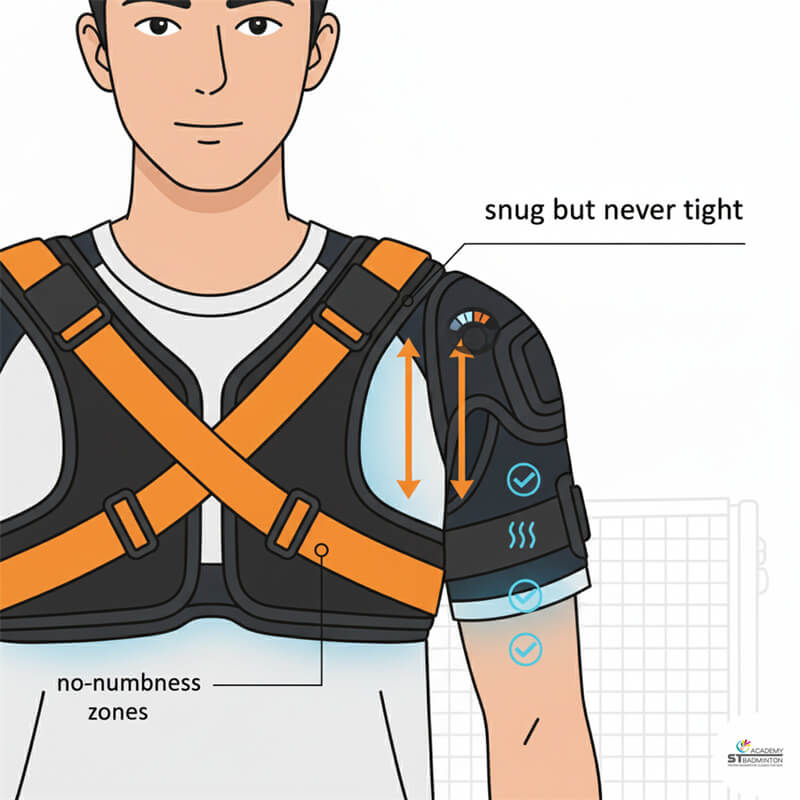
For more significant stability, an adjustable shoulder brace with straps is the next step up. These braces typically wrap around the shoulder and chest, with several straps that you can tighten for a customised fit. Their purpose is to provide more rigid support around the rotator cuff area and gently limit the shoulder’s range of motion, helping to prevent movements that might cause pain. A common mistake is overtightening the straps, which can restrict blood circulation and cause numbness. The fit should be snug and secure, not painfully tight.
Choosing between a sleeve and a brace depends on your needs during badminton training. For a player with mild, post game soreness after a session at courts near Setapak Central Mall, a compression sleeve might be enough to provide comfort. However, a player who feels a slight instability during powerful smashes might benefit more from an adjustable brace. It’s a tool to get you through a tough session safely, not a license to play through sharp pain.
Other Support Options
Posture Braces and Kinesiology Tape
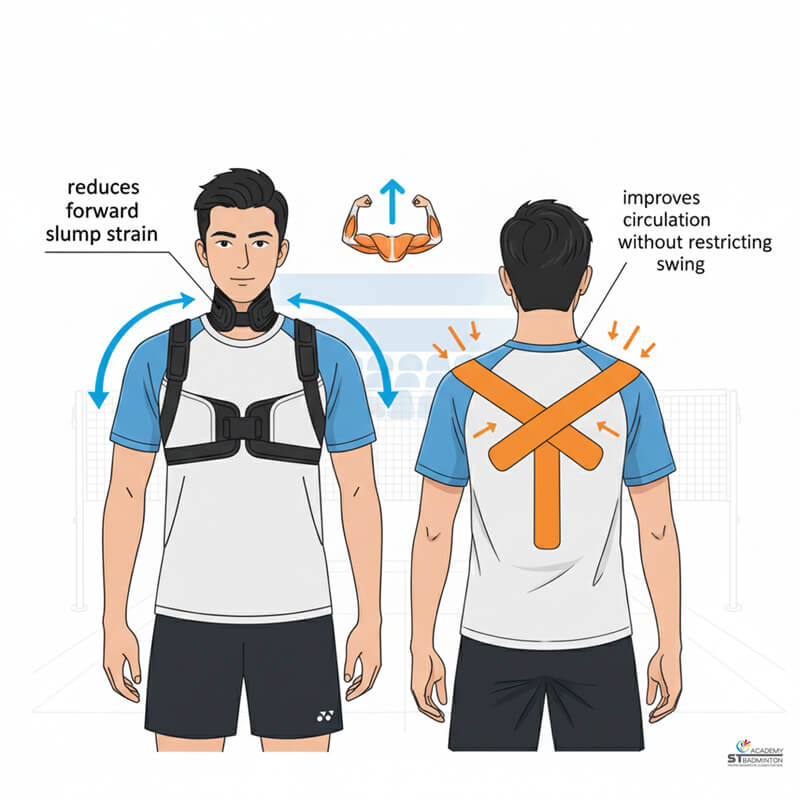
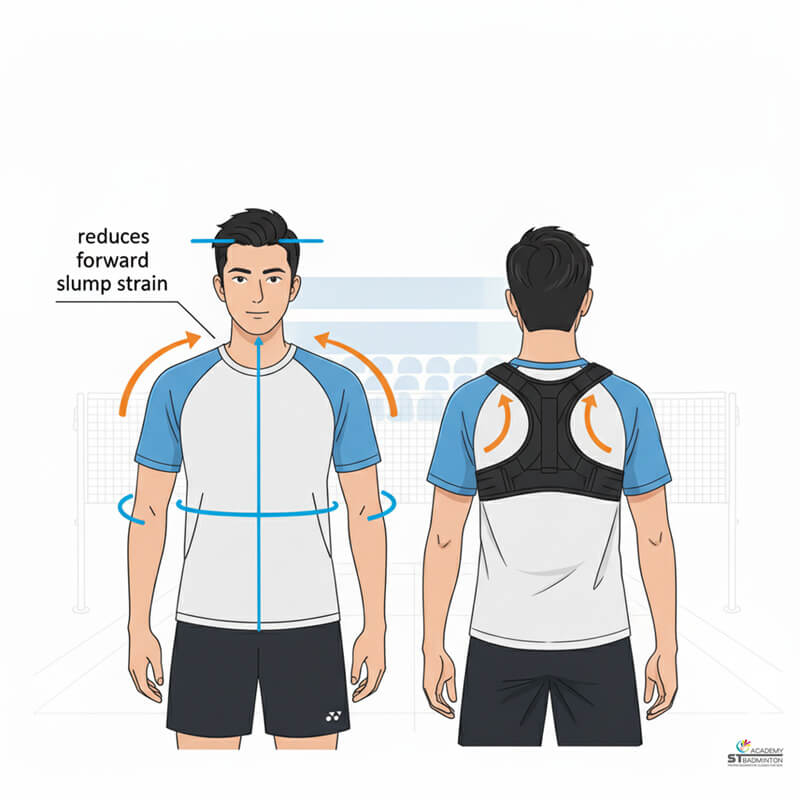
Beyond direct shoulder supports, other tools can help address underlying issues. A posture support brace is one such tool. It doesn’t immobilise the shoulder joint itself but works by gently pulling the shoulders back and encouraging a more upright upper back posture. For badminton players who tend to slump or round their shoulders forward—a common habit—this can help reduce strain on the front of the shoulder capsule and rotator cuff tendons. It serves as a physical reminder to maintain better alignment during play.
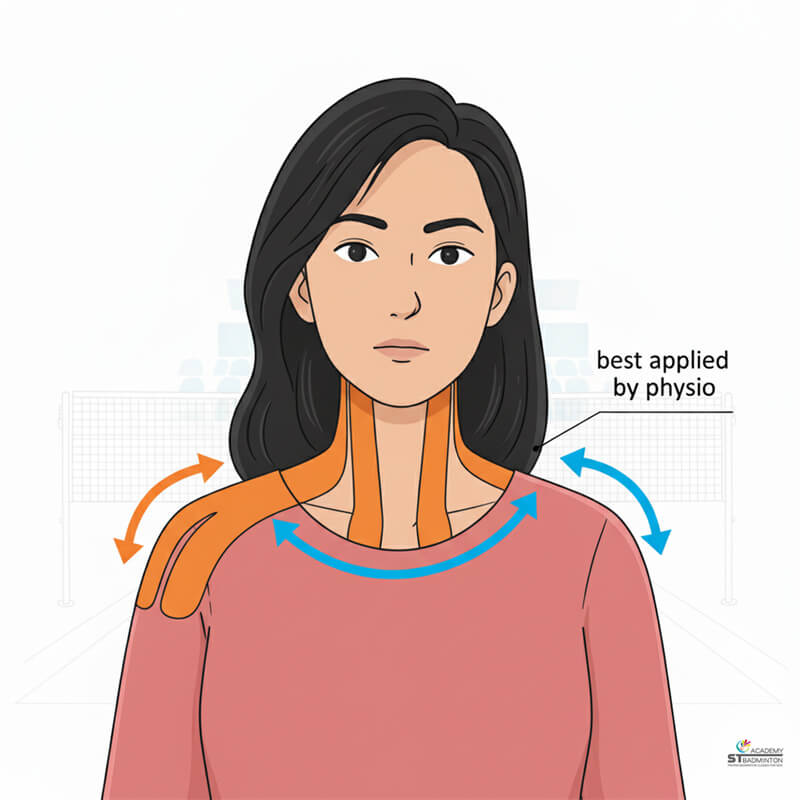
Another option you may see is kinesiology tape. This is a flexible, elastic tape that is applied directly to the skin. Unlike a rigid brace, it moves with your body. When applied correctly, it can help by subtly lifting the skin to improve circulation, provide sensory feedback to the muscles, and offer very light support without restricting movement. However, its effectiveness is highly dependent on proper application. Simply sticking it on without understanding the technique will provide little benefit, so it is best applied by a trained physiotherapist.
It’s important to see these options as part of a bigger picture. A posture brace is a great training aid, but it doesn’t replace the need for specific strengthening exercises for the back and scapular muscles. Similarly, kinesiology tape can be helpful, but it’s not a standalone cure. For players having lessons near Taman Maluri or Ampang, combining these tools with good coaching on technique and conditioning is the most effective approach to long-term shoulder health and badminton injury prevention.
Making an Informed Choice
Marketing vs. Real World Use in Malaysia
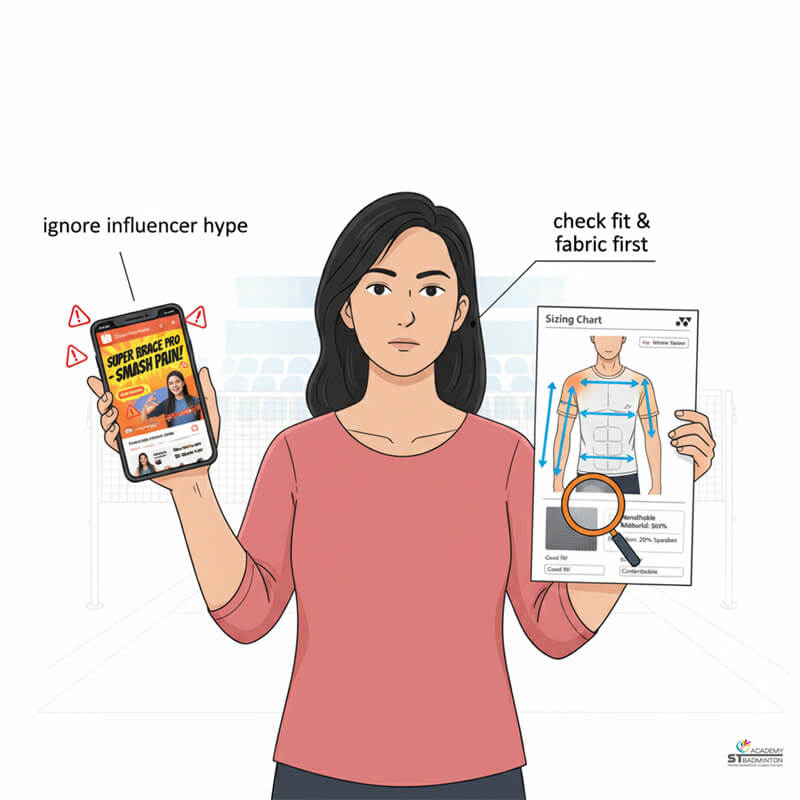
Choosing the right support starts with getting the right fit. A shoulder brace that is too loose will offer no stability, while one that is too tight can restrict movement and blood flow, causing more harm than good. Always follow the manufacturer’s sizing guide, which usually requires measuring the circumference of your chest and upper arm. If you’re in between sizes, it’s often better to check the return policy or seek advice from a pharmacist or physiotherapist.
In Malaysia, parents and players are constantly exposed to strong online marketing for shoulder braces on platforms like Facebook, Instagram, Shopee, and Lazada. Many advertisements feature influencers or promise “professional grade” results. It’s important to look past this hype. A fancy brand name does not guarantee a better outcome. Instead, focus on practical factors: Is the material breathable? Does the sizing chart seem clear and accurate? Do real user reviews mention comfort and durability during actual sports, not just while sitting still?
Before wearing a new shoulder support for a full, intense training session at courts in Petaling Jaya or Wangsa Maju, it’s wise to test it out at home or during a light warm up. Check your full range of motion for a badminton swing. Does it chafe your skin? Does it stay in place? What works for one player training near Sunway Velocity might not be suitable for another. The goal is to find a support that helps you train more safely and confidently, not just to buy the product with the best advertisement.
Safe Usage in Training
A Support is Not a Shortcut
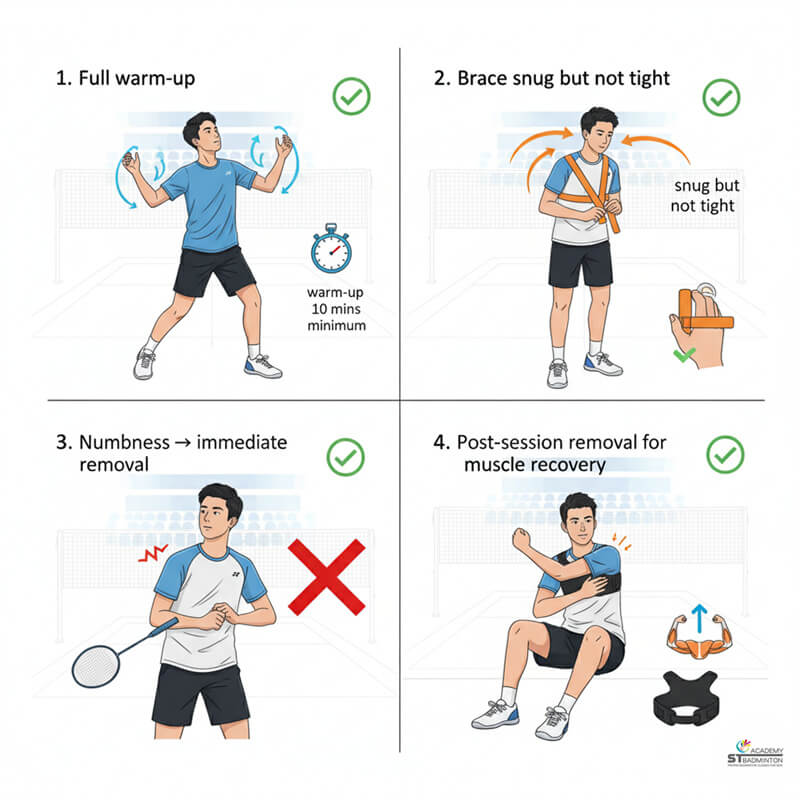
The most important rule is that a shoulder brace is not a magic cure or a shortcut to skip proper conditioning. It’s a supportive tool, not a replacement for good habits. Any player using a shoulder support must still perform a thorough warm up before playing and gentle stretching afterwards. It cannot protect you from injury if you jump into high intensity smashes with cold muscles. The brace is there to assist, not to make you invincible.
There are simple safety rules for using a support during badminton training. Before each session, check that all straps are secure but not cutting off circulation. During play, be aware of how it feels. If you experience any numbness, tingling, or skin irritation, you must remove the brace immediately. A support should feel comfortably snug, providing a sense of stability without causing distraction or discomfort. It should not be worn 24/7 unless specifically instructed by a doctor, as your muscles need time to function without it to maintain their strength.
At ST Badminton Academy Malaysia, our head coach personally observes students who use supports during training. This is not a medical assessment, but a coaching observation to see if the brace affects their swing mechanics or movement. The goal is to ensure the support helps rather than hinders their development. Better shoulder stability through a combination of strengthening, technique, and proper support usage can help players train more consistently and safely as they work towards their goals, such as making the school team (CCA).
The Role of Coaching
Guidance Beyond the Brace Itself
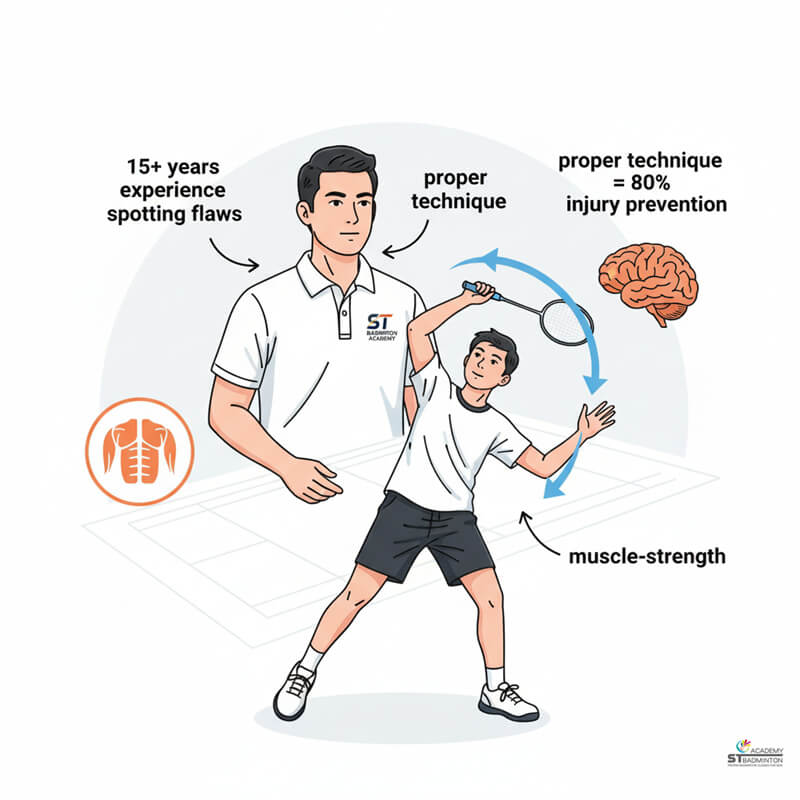
While a shoulder support can be a useful tool, the best way to manage shoulder health is to prevent problems before they start. A knowledgeable coach plays a crucial role by managing training load, teaching proper swing mechanics, and ensuring players build the physical strength needed to handle the demands of badminton. An experienced coach can spot and correct a flawed technique that puts unnecessary stress on the shoulder joint, which is far more valuable than any brace.
With over 15+ years of coaching experience, ST Badminton Academy Malaysia prioritises fundamental skills and physical conditioning as the primary pillars of injury prevention. The head coach personally observes every student’s movements and habits, reminding them not to ignore pain and to focus on safe, steady practice. We make it clear to parents and players that we are a coaching academy, not a medical clinic, and we always encourage them to seek professional medical diagnosis from a doctor or physiotherapist in Kuala Lumpur for any serious pain.
Final Considerations
A Holistic Approach to Shoulder Health
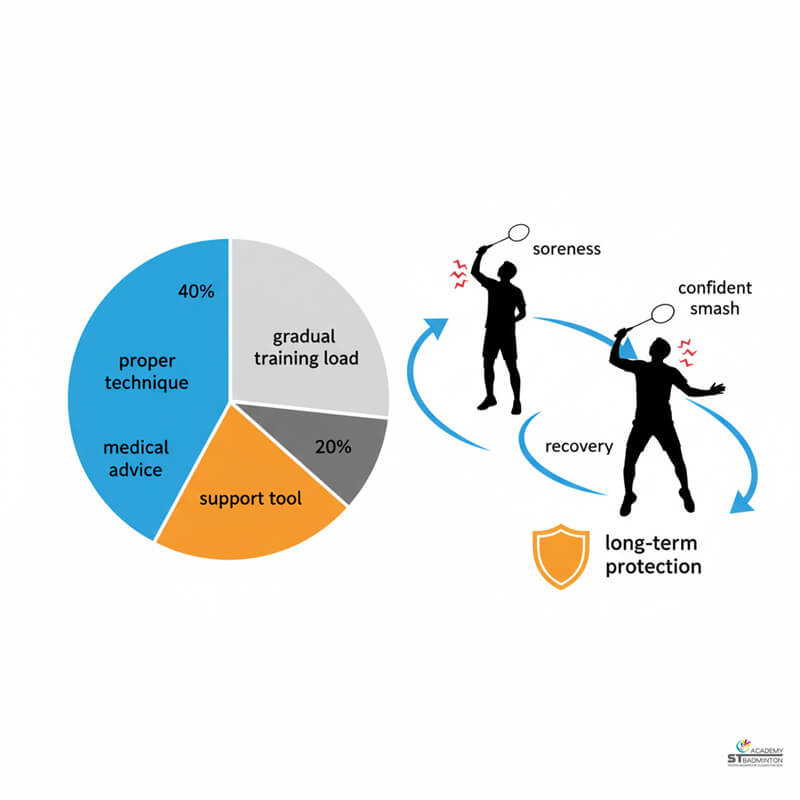
Ultimately, a shoulder support is just one piece of the puzzle for managing badminton shoulder pain. The most effective strategy combines its use with smart training, proper technique, and a commitment to overall physical conditioning. Listening to your body, warming up correctly, and seeking professional advice when needed are essential habits for every player.
This educational guide is designed to help players and parents in Kuala Lumpur make more informed choices. By understanding the different types of supports and how to use them safely, you can better protect your shoulders and continue to enjoy the sport you love. Remember, the goal is always to address the root cause of the pain, not just to cover it up with a brace.
Parent Questions About Badminton Shoulder Supports
Common questions from parents in Kuala Lumpur about choosing and using shoulder supports for their teen badminton players.
Is a shoulder brace safe for my teen badminton player in KL?
Yes, for mild soreness or feelings of instability, a brace can be safe and helpful. However, it is not a substitute for a medical diagnosis. For any sharp or persistent pain, the first step should always be a visit to a sports doctor or physiotherapist. A well fitted brace can provide confidence during training at courts near Titiwangsa Lake Gardens, but it must never cause numbness or restrict circulation. Monitor its use carefully.
How do we know when shoulder pain is serious enough to stop playing?
You should stop playing immediately if there is sharp pain, a popping sound, or a sudden feeling of weakness when lifting the arm. General muscle soreness after a long session is normal, but pain that gets progressively worse, occurs at night, or doesn’t improve with rest needs a professional check up. Never encourage a player, especially a teen training for their school CCA, to “play through” sharp pain. It’s a signal to stop and get assessed.
Can a shoulder support help my child get into the school team?
A support can help a player train more consistently by managing minor discomfort, which aids their overall progress. However, it is not a direct ticket to the school team. Selection for a team in areas like Cheras or Setapak depends on skill, fitness, and solid technique. A brace is a tool, but the real keys are quality coaching and dedicated practice, which are the main focus at ST Badminton Academy Malaysia.
My teen saw a ‘pro’ brace on Instagram. Should we buy it?
Be very cautious with social media marketing. A brace’s effectiveness depends on the individual’s specific issue and, most importantly, the fit—not on who promotes it. It is far better to understand the *type* of support needed (e.g., light compression vs. stability) and consult a professional if unsure. Buying an expensive, ill fitting brace based on hype is often a waste of money and can provide a false sense of security during overhead sports.
What’s the biggest mistake players make with shoulder supports?
The biggest mistake is treating the brace as a cure and ignoring the root cause of the pain. Players often use it as an excuse to skip warm ups or continue using poor smashing technique, thinking the brace alone will protect them. Supports are tools to assist recovery and provide stability during training. They are not a replacement for proper conditioning, technique work, or seeking medical advice for an underlying badminton shoulder pain issue.
What about younger kids with shoulder pain?
For any child under their teen years, especially those age 4 and above, any persistent joint pain requires a professional diagnosis. You should consult a paediatric doctor or a sports specialist. Do not self diagnose or simply put a brace on a young child without understanding the underlying issue. Their joints are still developing, and ensuring they receive the correct care and guidance is extremely important for their long term health and athletic development.
Understanding Different Support Types
Smart Support for Safer Badminton Training
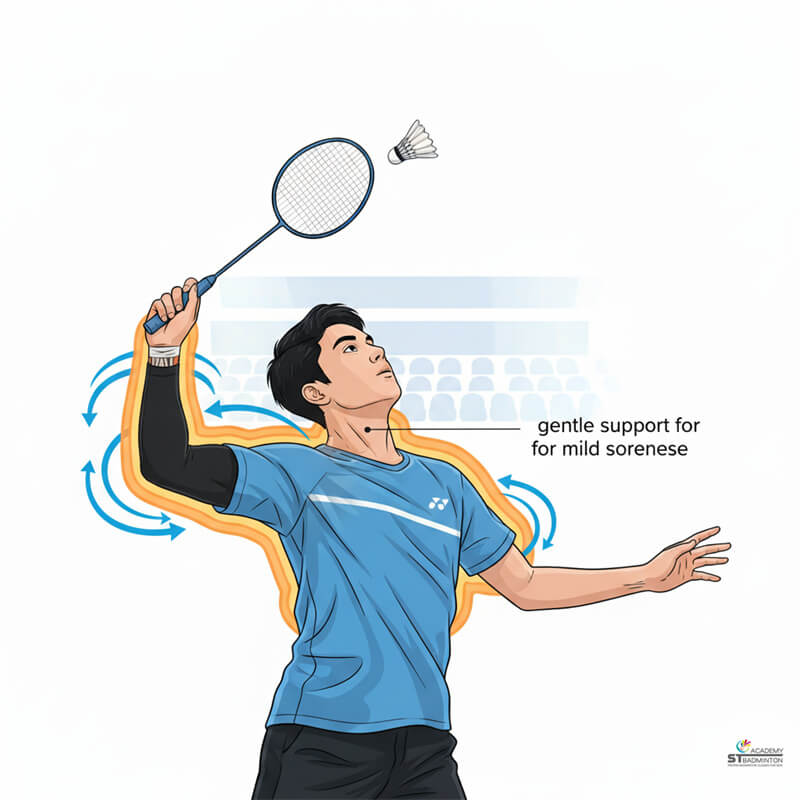
Using the right shoulder support correctly, combined with good coaching, gives players a significant advantage in injury prevention, confidence, and training consistency. Our approach ensures players build safe habits for a lifelong love of badminton.
| Factor | Common Mistake | Smarter Approach RECOMMENDED |
|---|---|---|
| When to Use It | Wearing it for sharp pain, thinking it will fix the injury. | Using it for mild soreness or instability after a doctor has cleared you of serious injury. |
| Getting the Right Fit | Buying online from social media ads without measuring. | Carefully measuring chest/arm and choosing a snug but comfortable fit that doesn't pinch. |
| Before Playing | Skipping the warm-up because the brace feels secure. | Completing a full warm-up, as the brace supports muscles but doesn't prepare them. |
| During the Game | Ignoring numbness or chafing and just playing through it. | Immediately stopping and removing the brace if it causes pins-and-needles or skin irritation. |
| After the Game | Keeping it on for hours, thinking more is better. | Removing it after the session to allow muscles to recover and function normally. |
| Long-Term Goal | Relying on the brace forever without addressing the root cause. | Using it as a temporary tool while focusing on strengthening and technique improvements. |
| Consultation | Trusting online reviews over professional medical advice. | Consulting a physiotherapist or doctor for persistent pain to get a proper diagnosis. |
Learn Safer Training Habits in Kuala Lumpur
This guide is a starting point for understanding shoulder supports. To learn how to integrate them into a safe and effective training plan, professional coaching is key. ST Badminton Academy Malaysia does not sell or prescribe medical devices. We provide in person coaching in Kuala Lumpur focused on technique and injury prevention. Contact us to ask about safer shoulder habits and our class schedules for teens and adults in Setapak, Wangsa Maju, and Cheras.