All languages
 Chinese (Simplified)
 Chinese (Traditional)
 English
 Indonesian
 Japanese
 Korean
 Malay
 Thai
 Vietnamese


How To Develop A Winning Badminton Serve: Techniques And Strategies (Serve Strategy Guide)
The serve is the one moment in a badminton rally where nothing has happened yet, and that makes it pure strategy. You choose where the shuttle goes, how fast it travels and what the receiver has to solve first. Most players waste that choice, serving the same serve to every opponent and hoping for the best. This guide builds the decision side of serving: reading the receiver, running a low serve plan, timing the flick, adjusting between singles and doubles, and changing the pattern before the receiver settles into it.
Strategy Check #1
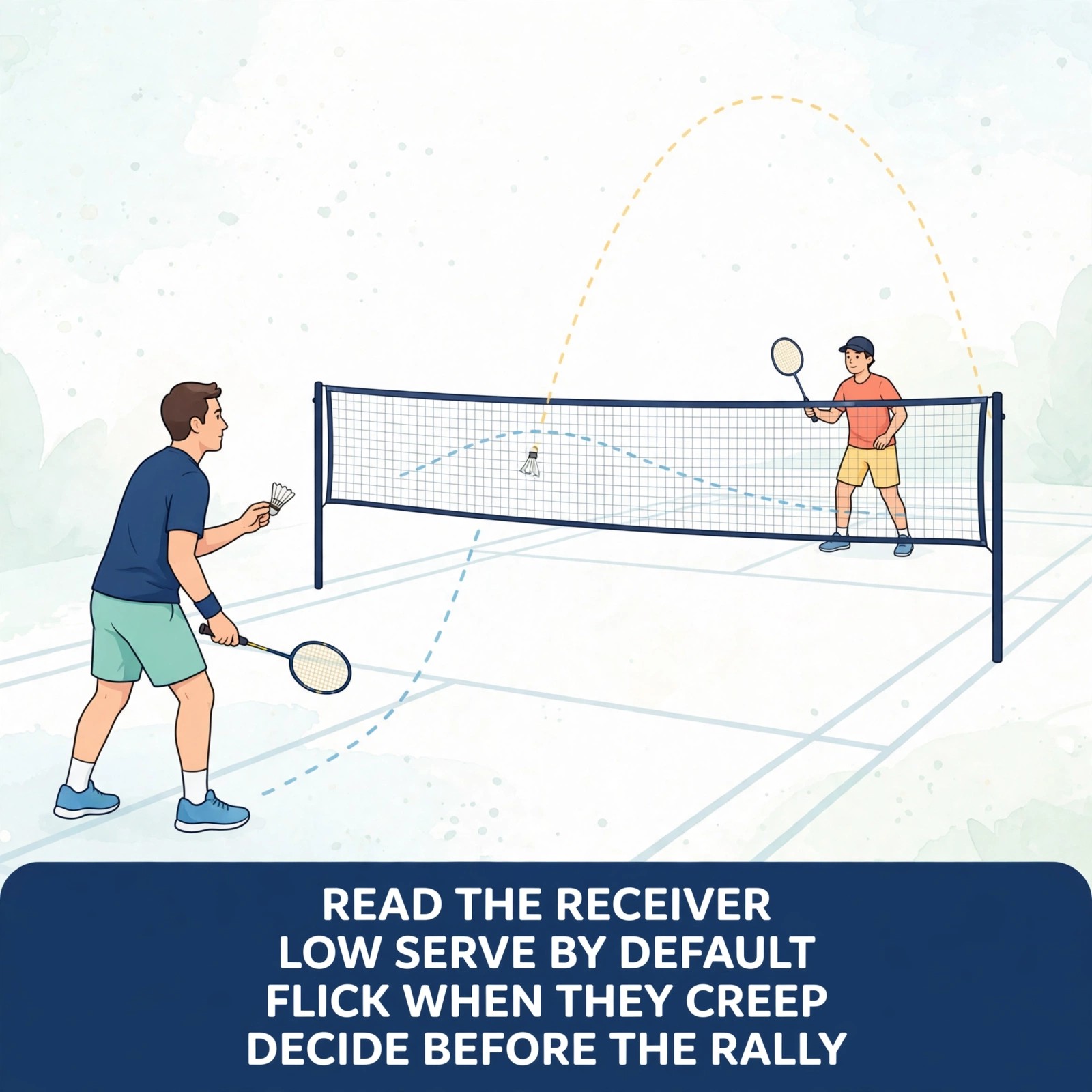
Read the Receiver Before You Serve
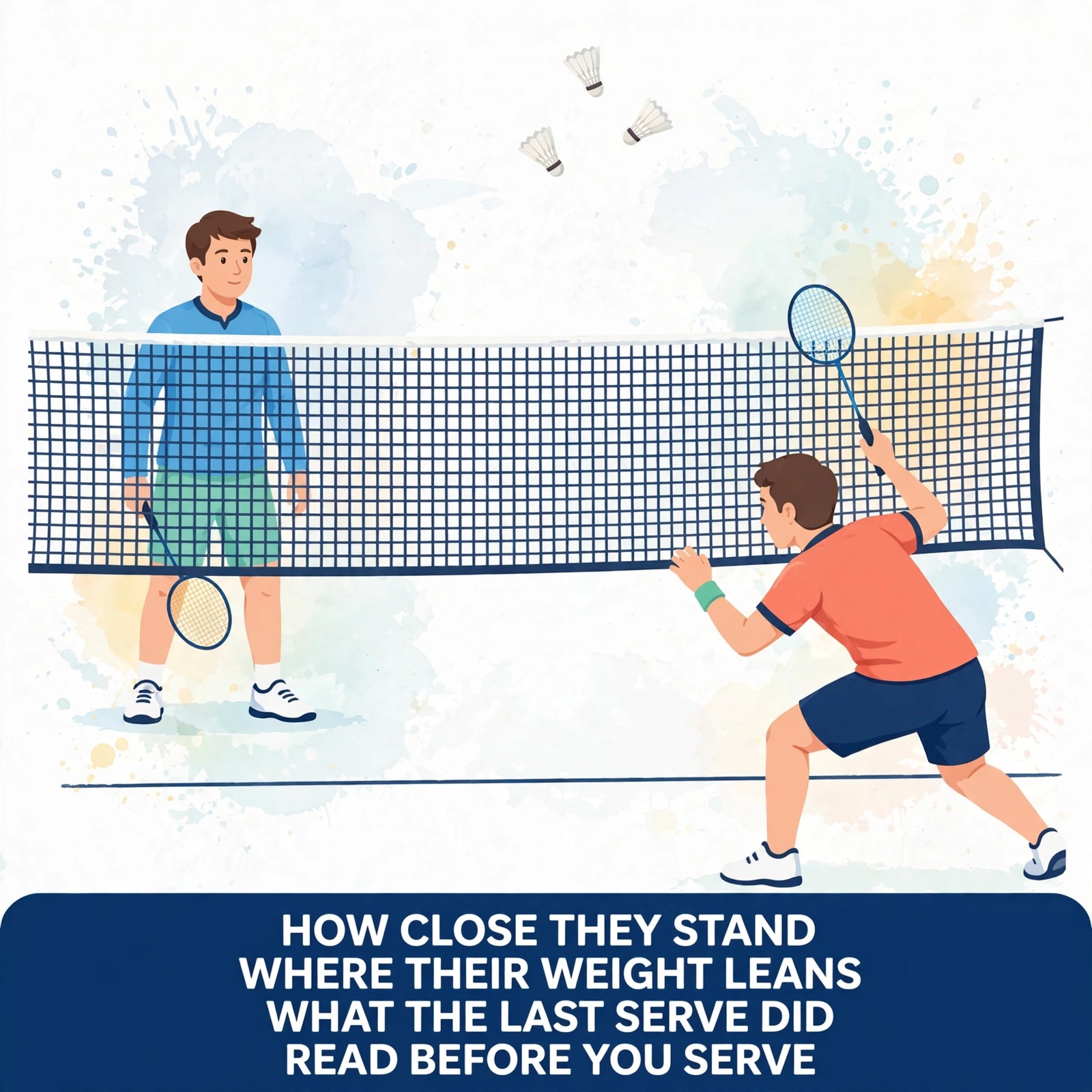
Strategy starts before the routine, with your eyes. Watch where the receiver stands: how close to the short service line, how far to one side, and whether their weight leans forward, hungry to rush, or sits back, waiting to be fed. A receiver standing tall and close is telling you the flick will hurt them. A receiver crouched far back is begging for a tight low serve. Their stance is free information, offered before every single rally, and most servers never collect it.
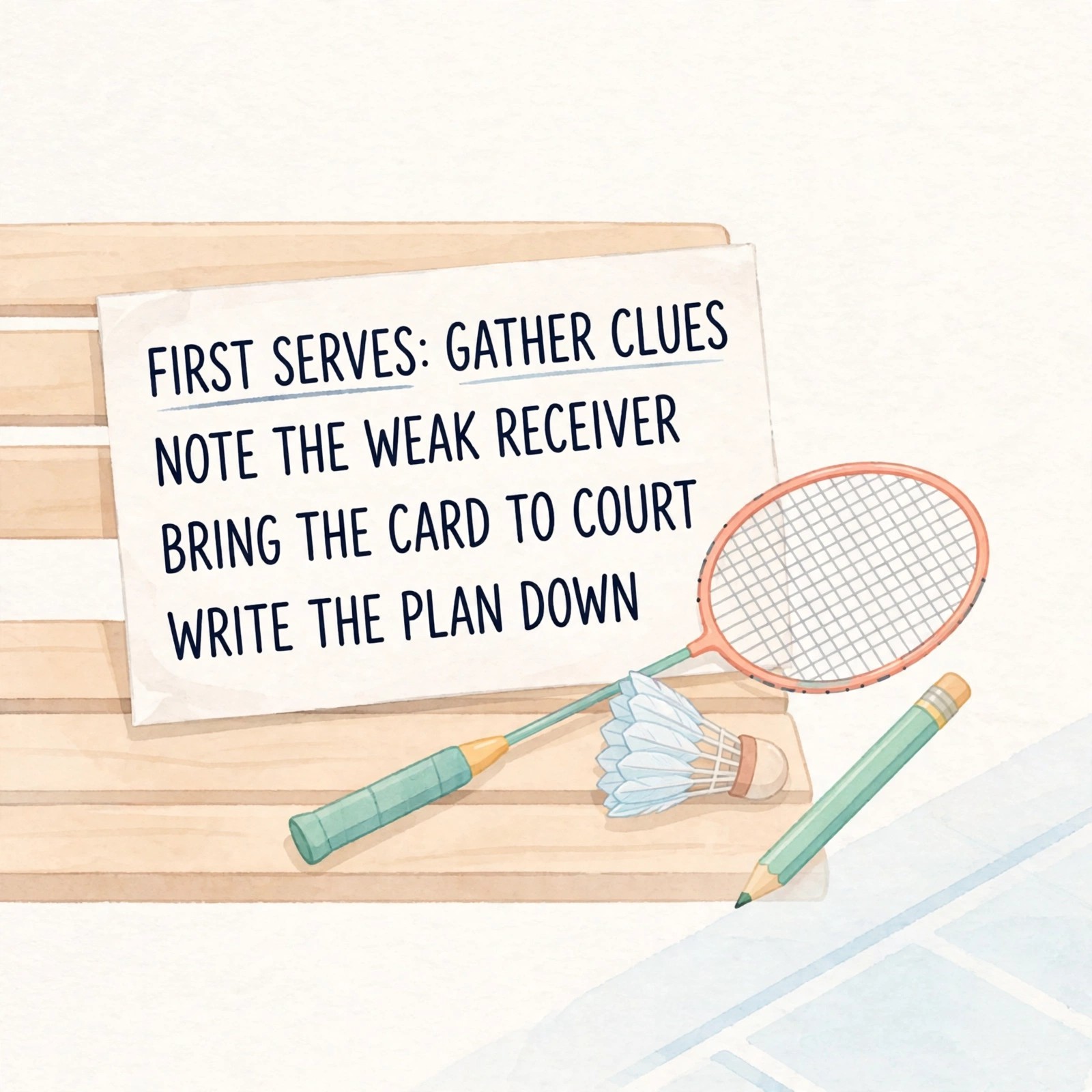
Keep reading as the match grows. Your first few serves are scouting serves: note what the receiver did with each one, where their returns landed, and which serve made them late. Notice the rescue habits too, the rushed net shot they always play, the backhand they protect. None of this needs a notebook in your hand; two or three clear observations are enough. What matters is that your serve choices later in the match are answers to evidence, not guesses repeated out of habit.
Strategy Check #2
The Low Serve Plan: Your Match Default
The low serve is the default serve of your plan, in doubles above all. Played well, it skims the tape, drops into the front box and gives the receiver nothing to attack: they must lift or play a careful net reply, and your side takes the first say in the rally. A plan needs a default this safe, because strategy is mostly the art of starting rallies on your terms and saving the surprises for the moments they will actually land.
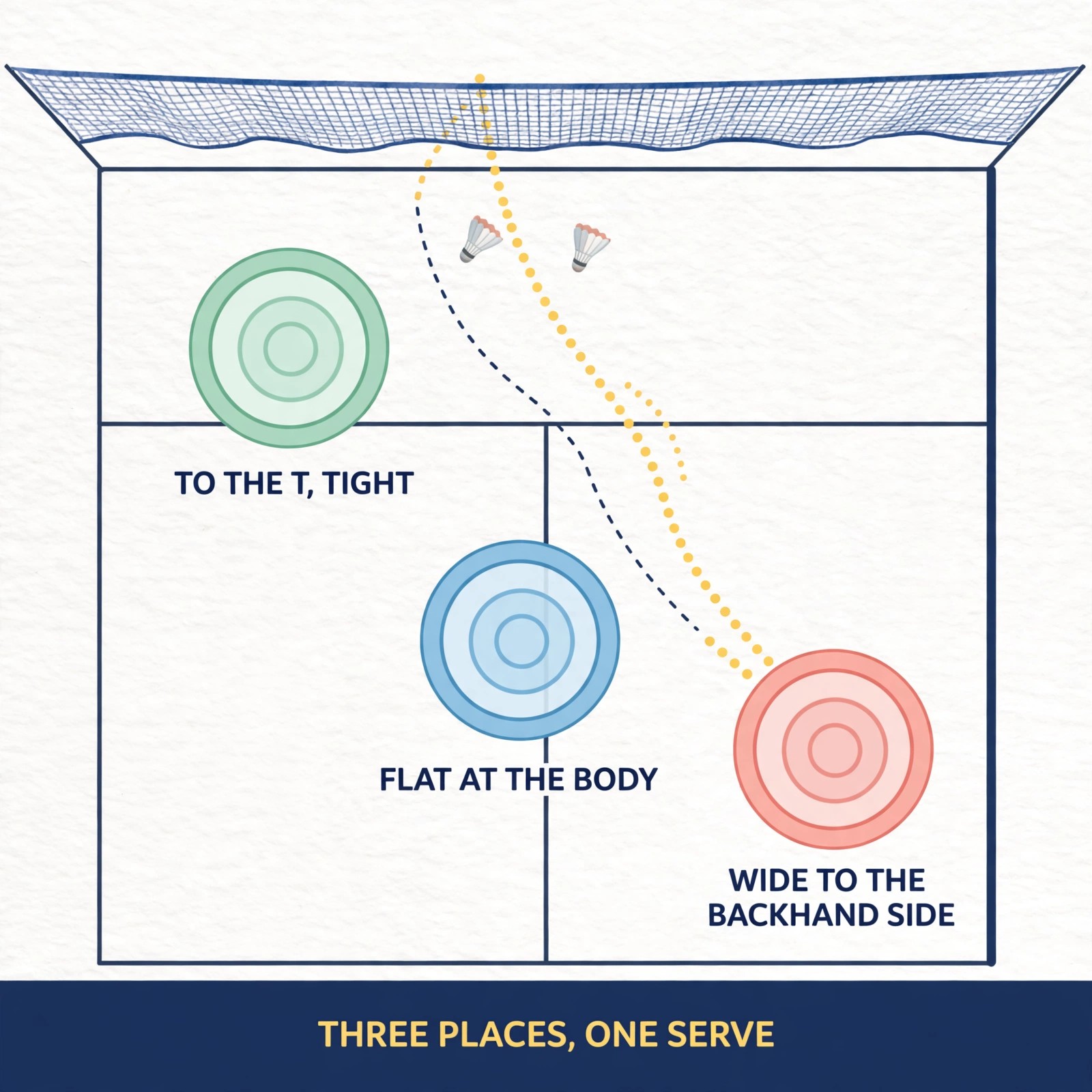
One serve still gives you three plans, because placement is a choice. Serve tight to the T to close the angles and rush the receiver decision. Serve wide to pull a receiver out of the middle and open the court behind them. Serve flat at the body to jam the swing of a receiver who loves a big wind up. Same action, same routine, three different problems. A receiver who must solve placement as well as height has far less spare attention for rushing you.
Protect the default. If a receiver starts rushing your low serve and winning, the plan is not broken, it is being read, and the answers come in order. First change the placement, so the rush has to start from a new spot. Then shorten or steady your routine so the timing gives nothing away. Only then bring in the flick. Players who flick at the first sign of trouble teach receivers to wait for it, and a flick that gets waited for is a shuttle served straight onto a smash.
Strategy Check #3
The Flick Serve: Timing the Change
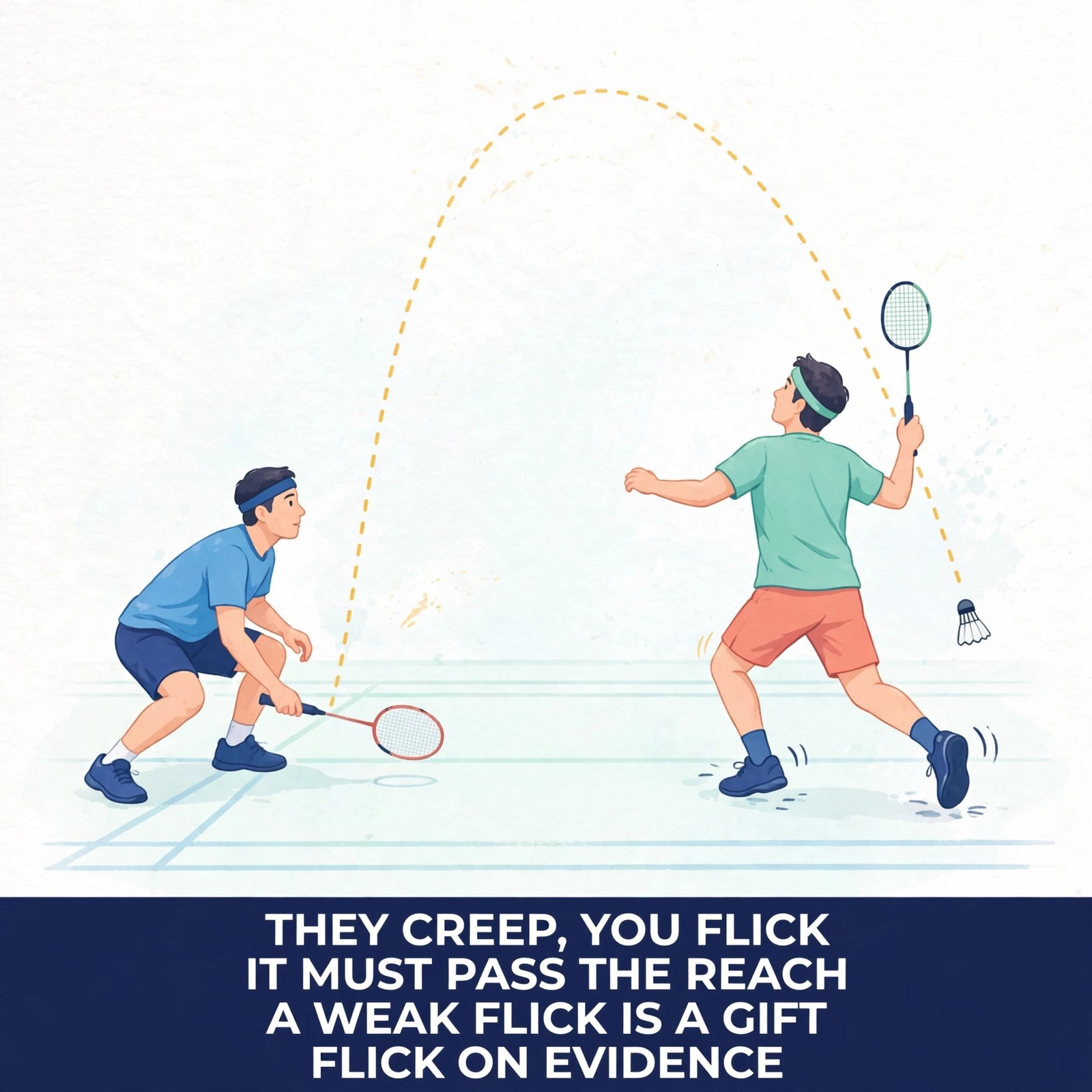
The flick serve is your timing weapon, and timing is the whole skill. Flick when the evidence says the receiver has committed forward: standing close to the line, leaning in, rushing early, or having just nailed two low serves in a row. The flick played on evidence catches them moving the wrong way, backpedalling with their weight forward, and even a mid pace flick wins that race. The flick played on a whim, against a balanced receiver, just donates height and time.
A strategic flick still has to be a good flick. It must climb fast enough to pass the receiver reach, and it must drop inside the back of the service court: the doubles back service line in doubles, the back tramlines in singles. A flick that floats short is the worst serve in badminton, an engraved invitation to smash. If your flick cannot clear that bar in practice, your strategy is simple: do not flick in matches until it can.
Respect the pattern. The flick works because the low serve is feared, so its value falls every time you spend it. As a rough rhythm, the low serve does the daily work and the flick appears just often enough to keep the receiver honest, a few times a game rather than a few times a rally. Count their reads, not your hopes: if the receiver has stopped leaning after two flicks, the message has landed and you can go back to collecting points with the default.
Strategy Check #4
Singles and Doubles: Two Serve Games
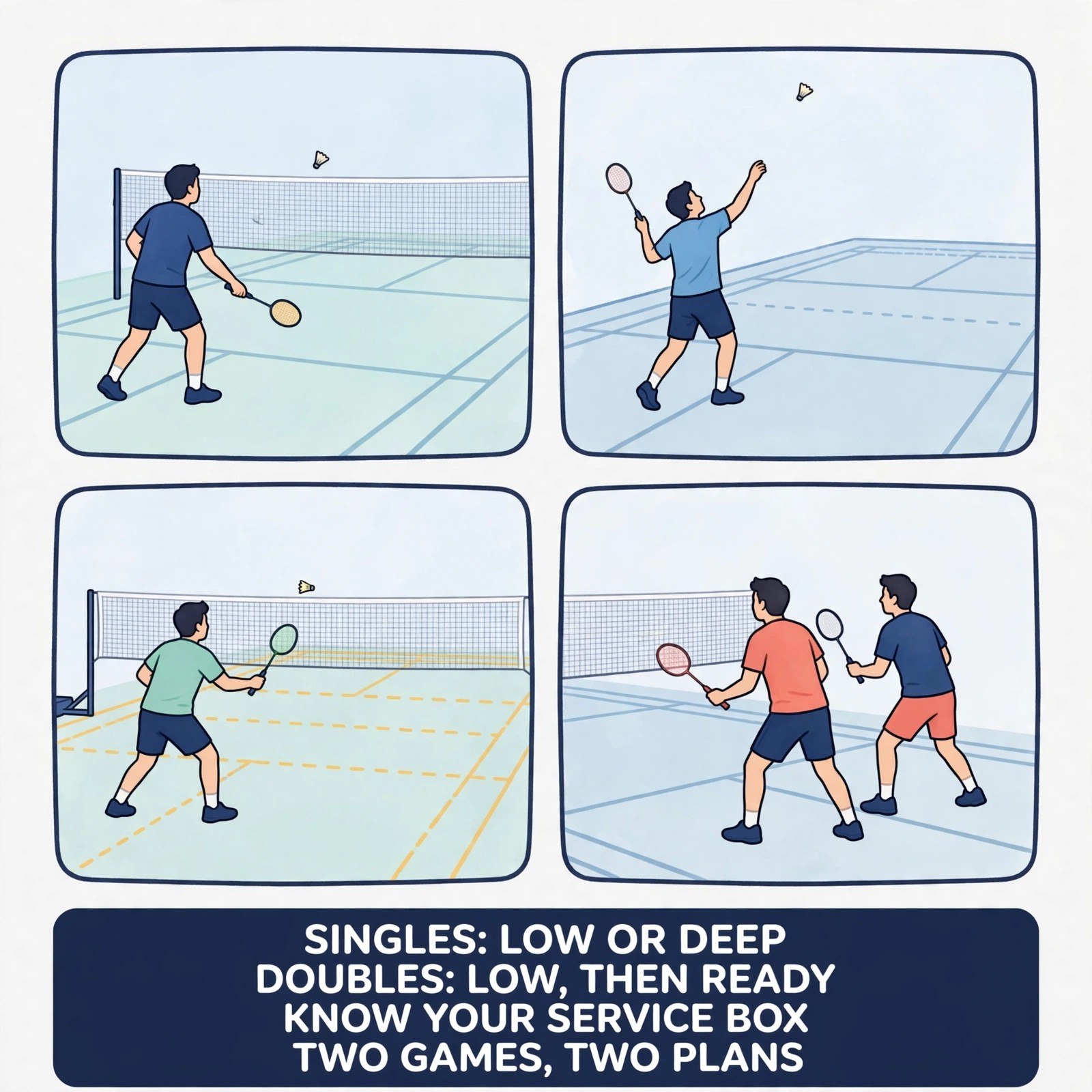
Singles changes the serve menu. The low serve still matters, but the high deep serve is a real option: lifted to the back tramlines, it pushes the receiver to the far corner and starts the rally with them travelling, which suits a singles player who wants long, patient rallies. Receivers also stand further back in singles, so the flick becomes a rarer change. Choose the menu by the rally you want: low and tight to build pressure, deep and high to buy distance and time.
Doubles serving is a team plan, not a solo trick. The low serve dominates because it protects your partner from a flat, attacking return, and the serve is only finished when the third shot is ready: server low and balanced, partner set behind, both expecting the net reply. The flick in doubles must land before the doubles back service line, a shorter court than singles, so it has to be flatter and braver. Talk the plan with your partner before the match, not after the third rushed return.
Aim the plan at a person, not a court. In doubles, serve more to the weaker receiver, to the backhand side, and to the partner who has just made two errors and is thinking about them. In singles, serve to make the receiver start the rally moving the way they like least. None of this requires trickery; it requires noticing who is across the net and letting that, rather than habit, address your serves. The same shuttle, sent to a different person, is a different strategy.
Strategy Check #5
Vary the Pattern Before They Settle
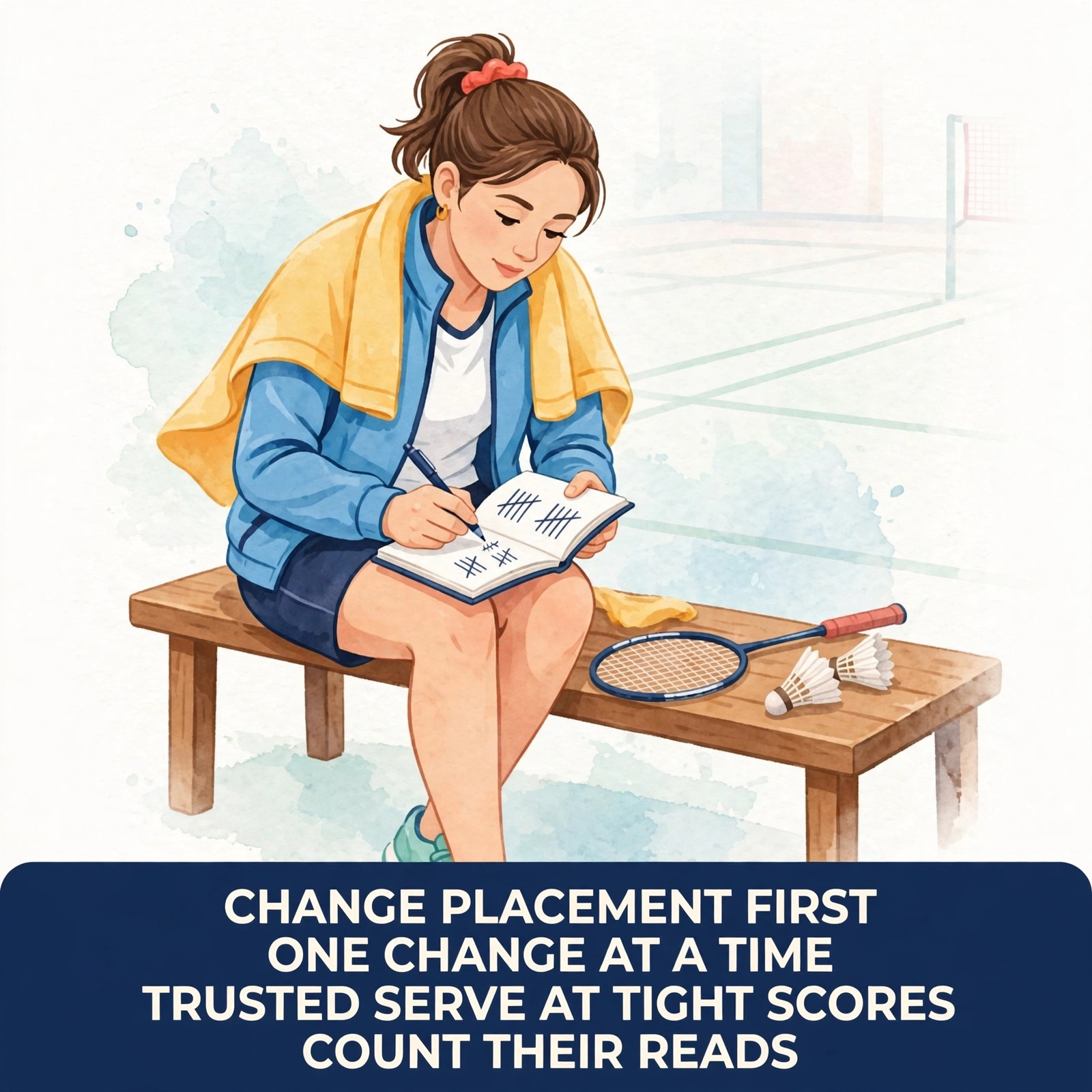
Good strategy changes early and changes small. Receivers settle fast: after a handful of identical serves they stop deciding and start grooving, and a grooved receiver is hard to move. Change the pattern before they settle, and change placement before you change the serve itself, because a new spot restarts their reading while your action stays hidden. One change at a time is enough. Players who change everything after one lost rally stop knowing which change worked.
Tight scores shrink the menu, and that is correct. At the sharp end of a game, serve your most trusted serve, the one your counts say lands, with the full routine and no new ideas. Strategy at match point is not invention; it is discipline. The exotic flick you have not tried all match belongs to training, not to the rally that decides the evening. Your plan should make the pressure points feel more ordinary, not less.
Review the serving after the match, briefly and honestly. Which serve earned cheap points, which one got read, and when did the receiver change their stance? Two lines in a notebook turn one match of serving into the first page of the next plan. Serve strategy compounds that way: every opponent you have read once is an opponent you start ahead of next time, and every pattern you noticed is a pattern you can break earlier.
Myth vs Reality
Myths About Serve Strategy
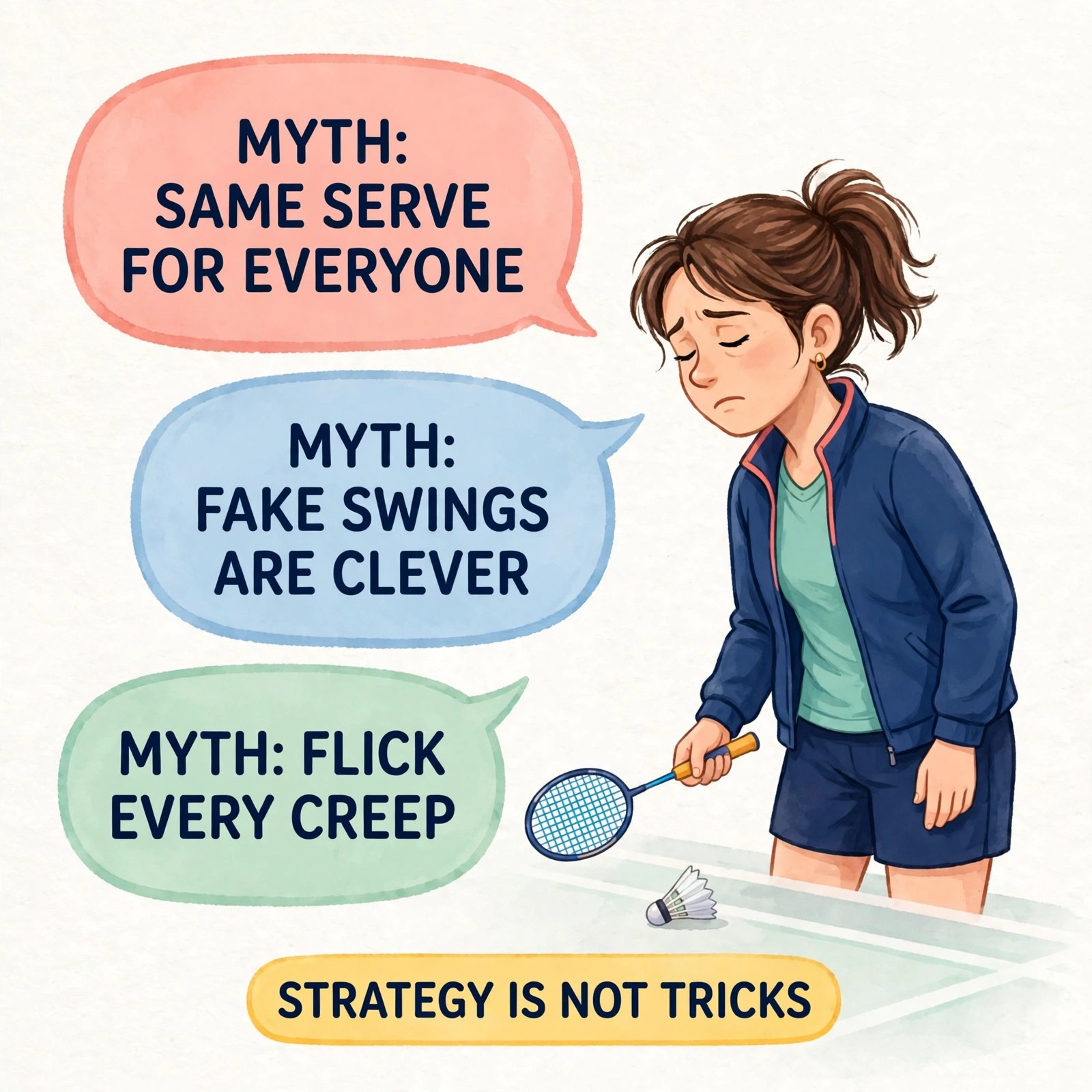
Myth: a fair player serves the same serve to everyone. Reality: serving is the one shot addressed to a specific opponent, and tailoring it to their stance, side and habits is the whole game. The laws treat everyone equally; strategy does not have to. The receiver who rushes and the receiver who camps should never be fed the same menu.
Myth: clever fakes and delays are good serve strategy. Reality: a serve that stops, fakes or delays after the forward motion starts is a fault, and umpires only need to see it once before they watch you all match. Real serve strategy lives inside the laws: placement, timing and disguise from one honest start. Tricks that need a fault are not a plan, they are a penalty waiting.
Myth: once a receiver creeps forward, flick every serve until they stop. Reality: a repeated flick becomes the new pattern, and receivers simply step back and wait for it, racket ready. The flick buys respect in small doses. Spend it, watch the stance soften, then go back to the low serve and collect the space the flick just bought you.
Why Choose Us
Why Players Choose ST Badminton Academy
We do not just feed shuttles; we build players. ST Badminton Academy Malaysia is different because our head coach, Mr Eric Chuar, has over 15 years of coaching experience in Singapore and Malaysia, and he corrects technique personally in small groups. Serve strategy is a thinking skill, and thinking skills need discussion: what did you see, why did you flick then, what will you change? In a small group, those questions get asked about your real matches.
Our small group policy, with a maximum of 4 students, means strategy work is personal. Players bring their recent opponents and serving problems into the session: the rusher they could not stop, the receiver who read every flick. We rebuild the plan in order: read, default, flick timing, then pressure games where the plan gets tested against live receivers who are allowed to adapt.
We focus on long term player development. A player with a serve plan walks to the line already ahead: receivers are studied, the default is trusted, and tight scores stop feeling like coin flips. That is built with honest review, small adjustments and steady correction, rather than a pocketful of trick serves that work once and fault forever after.
FAQs: Badminton Serve Strategy and Match Serving in Malaysia (KL)
Here are answers to common questions from players in Kuala Lumpur about badminton serve strategy, reading receivers and planning serves, and how coaching at ST Badminton Academy works.
Can a club player really use serve strategy in Setapak or Gombak?
Yes. Serve strategy is mostly observation, and beginners often read receivers well because they have no habits to unlearn. Start with one default low serve, watch where the receiver stands, and add the flick when you see creeping. A simple plan followed calmly beats a clever plan you cannot remember at match point.
What should a serve plan be built on in KL?
Evidence. A serve plan should grow out of what you have seen: the receiver stance, which returns hurt you, and your own practice counts for each serve. Guessing produces random serves; evidence produces choices. Build the plan from two or three honest observations, keep it short, and let the match update it rally by rally.
How do I know if a receiver is about to rush my serve at club level?
Watch the feet and the lean. A receiver who stands close to the short service line, weight forward, racket high and still, is set to rush anything that floats. Give them the tightest low serve or make them respect the flick. A receiver standing deep and relaxed is no rush threat yet, so serve the plan, not the fear.
The receiver keeps smashing my flick serve. Should I stop flicking or change when I use it?
Change when you use it before you change the flick itself. If receivers wait for it, you are flicking on a pattern they have timed, often after the same score or the same rally. Vary the trigger, serve two more low ones first, and check the flick height honestly in practice. A rare flick on fresh evidence lands.
How can I practise reading receivers during training?
Play reading games in practice. Your partner receives with a different stance each set, close, deep, leaning, relaxed, and you call the read out loud before serving, then serve what the read suggests. Score the calls, not just the serves. Add a rushing set at the end so the plan gets tested, not just described.
Do you coach serve strategy near Wangsa Maju?
Yes. ST Badminton Academy is based in Setapak, a short drive from Wangsa Maju, Melati Utama and Danau Kota. Serve strategy is coached in small groups of no more than four students, so your reading, your default serve and your flick timing are reviewed and corrected personally by the coach in every session.
Where does ST Badminton Academy coach match serving in Malaysia?
We coach in Setapak, Kuala Lumpur, and the thinking travels well: read the receiver, trust a default, time the flick, adjust in small steps. Players from Gombak, Sentul, Ampang and nearby areas train with us each week in small, focused groups where match serving is planned and reviewed, not left to chance.
How do I book a trial session to plan my serving before training?
Message us on WhatsApp and tell us serve strategy is your project. We will place you in a small group session where the coach can watch you serve against live receivers, check your reading and defaults, and show you the planning order we would follow. One session is enough to leave with a plan you can use.
What makes Mr Eric Chuar a suitable coach for serve strategy in badminton?
Mr Eric Chuar has coached in Singapore and Malaysia for over 15 years and teaches serve strategy the way it holds up in matches: read first, default trusted, flick on evidence. Because he coaches small groups personally, your decisions are reviewed in the session, with your real opponents in mind, not weeks later.
Badminton Serve Strategy Training in Action


One Standard for Every Session and Every Player
Serve strategy at ST Badminton Academy KL follows one standard: read the receiver, trust the default and change one thing at a time. Every session works at the step you are actually on, with a maximum of 4 students per group, so decisions are corrected while they are being built, not after bad habits settle.
| Factor | Same Serve for Everyone | Read and Decide SERVE PLAN |
|---|---|---|
| Frequency | 1 or 2 times a week. Mostly for fun and sweat. | The receiver is read before the routine starts: stance, lean and habits decide where the first serves go. |
| Drills Focus | Basic static feeding. Minimal footwork pressure. | A trusted low serve runs as the default, with three placements, so most rallies start on the server terms. |
| Physical Conditioning | Rarely included. Just playing games on court. | Core, agility, and speed training included in every session to prevent injury and build stamina. |
| Tactical Awareness | "Just hit it over." No real game plan. | Video analysis, point construction, and learning to read the opponent's game. |
| Coach Ratio | Large groups (8-10 kids). Coach barely watches you. | Max 4 students. Mr Eric Chuar personally corrects every stroke and movement detail. |
| Goal Setting | Fun and exercise. | The flick is timed on evidence and changed early, one adjustment at a time, before the receiver settles into a groove. |
| Long Term Result | Good recreational player. | A server with a plan: receivers are studied, defaults are trusted, and tight scores are served with discipline, not invention. |
Badminton Serve Strategy Coaching in Kuala Lumpur
This guide gives you the full strategy: read the receiver before you serve, run a low serve default with three placements, time the flick on evidence, adjust the menu for singles and doubles, and change the pattern before they settle. If your serving needs that thinking, ST Badminton Academy in Setapak can coach you through it in a small group. Message us to book a trial session.