
 All languages
 Chinese (Simplified)
 Chinese (Traditional)
 English
 Indonesian
 Japanese
 Korean
 Malay
 Thai
 Vietnamese


How Can You Develop Consistency In Your Badminton Training Routine (Consistency Guide)
Consistency is usually talked about as character: some players are dedicated, most are not, and the training diary reveals which kind you are. That talk is comfortable and mostly useless, because it gives a player nothing to build on Monday. The trained view is plainer and kinder. What looks like dedication from the outside is a routine system that can be built like footwork: a fixed week that real life can hold, one named job per session, core work that is counted rather than remembered, an honest log, and a plain restart after a missed day instead of a heroic rescue. Consistency is not a mood you wait for. It is a week you repeat.
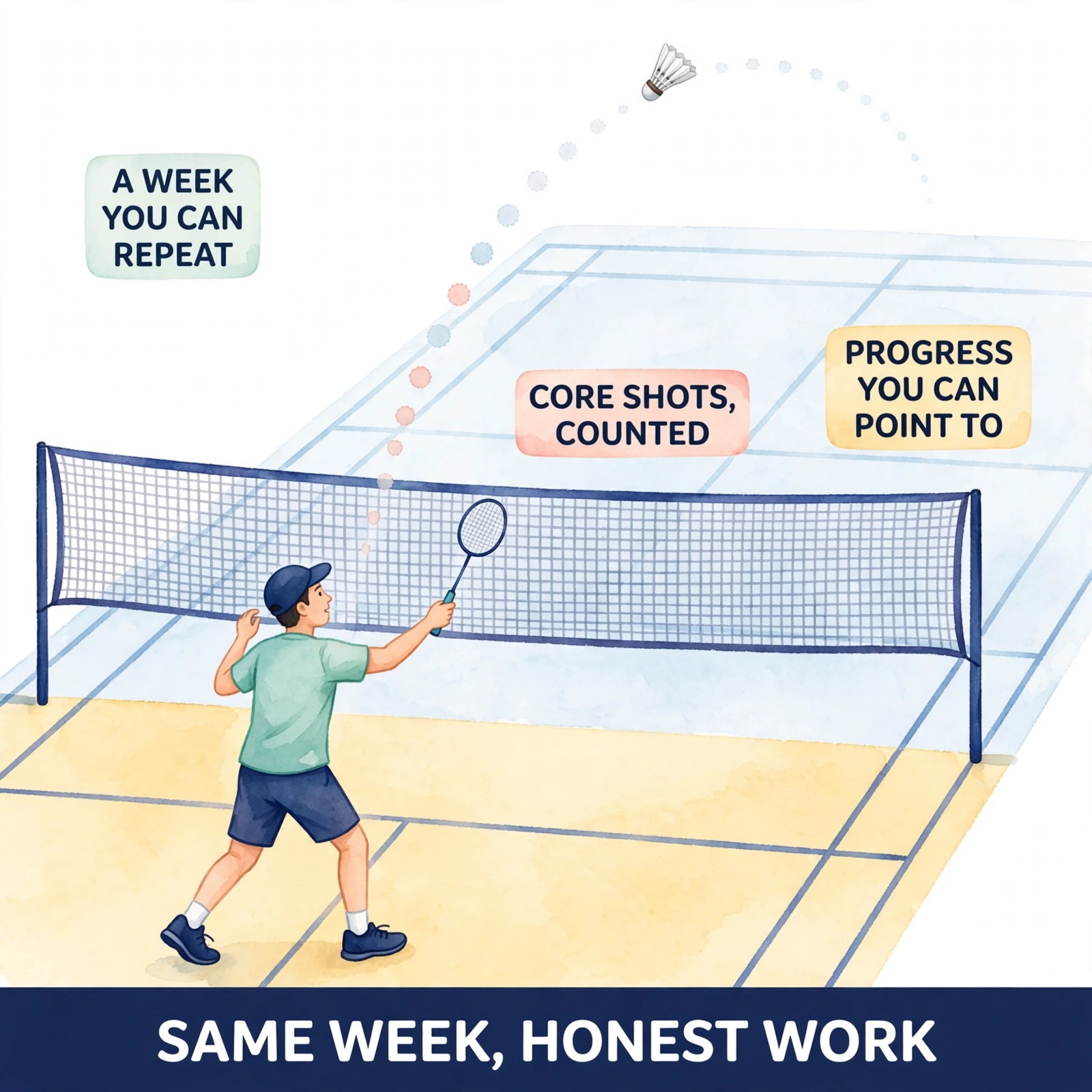
Routine Check #1
What Training Consistency Really Is
Consistency in a training routine, in the way this page uses the term, is the repeatable structure around the training itself: planned sessions on days that survive contact with work, school and family, the same start habits at each session, a main block of counted work on the shots that matter, games to test it, and a short log written while the session is still fresh. It covers how missed days are handled and how the plan bends in a busy week without breaking. It is graded by two plain numbers: sessions kept out of sessions planned, and the counted scores inside those sessions, never by how busy the week felt.
The cost of an inconsistent routine is paid in restarts. Training arrives in heroic bursts: a huge week after a bad match, then nothing for ten days, then another burst that starts from further back than the last one ended. Nothing is counted, so progress is argued from memory, and memory edits generously. The shots themselves never get the repeated, spaced practice that turns them into habits, because the gaps keep resetting them. And each restart costs motivation as well as fitness, since starting again feels like failure in a way that simply continuing never does. An inconsistent player does not train less than a consistent one over a year. She just spends her hours re-buying the same ground.
Routine Check #2
The Fixed Week: Base Of The Routine
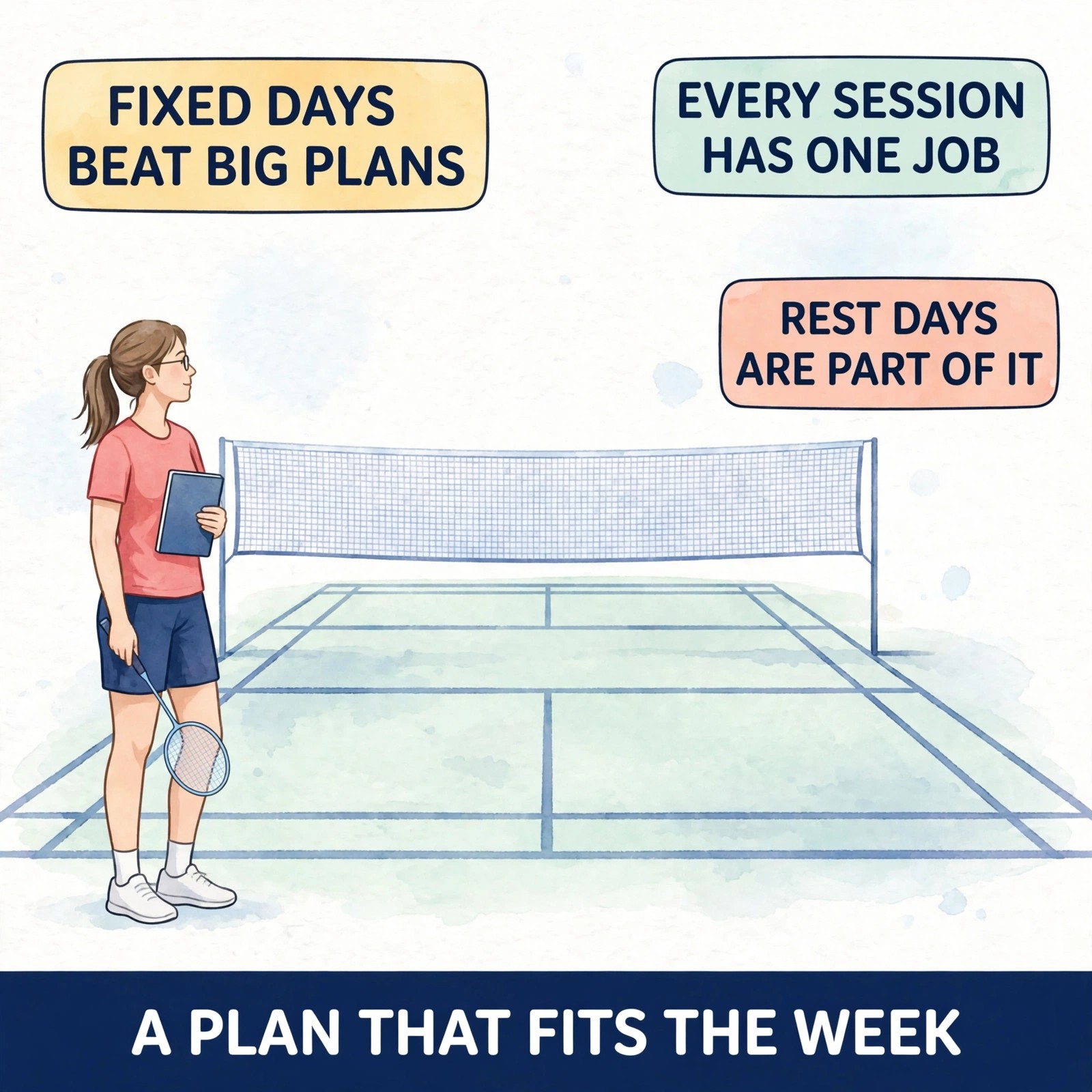
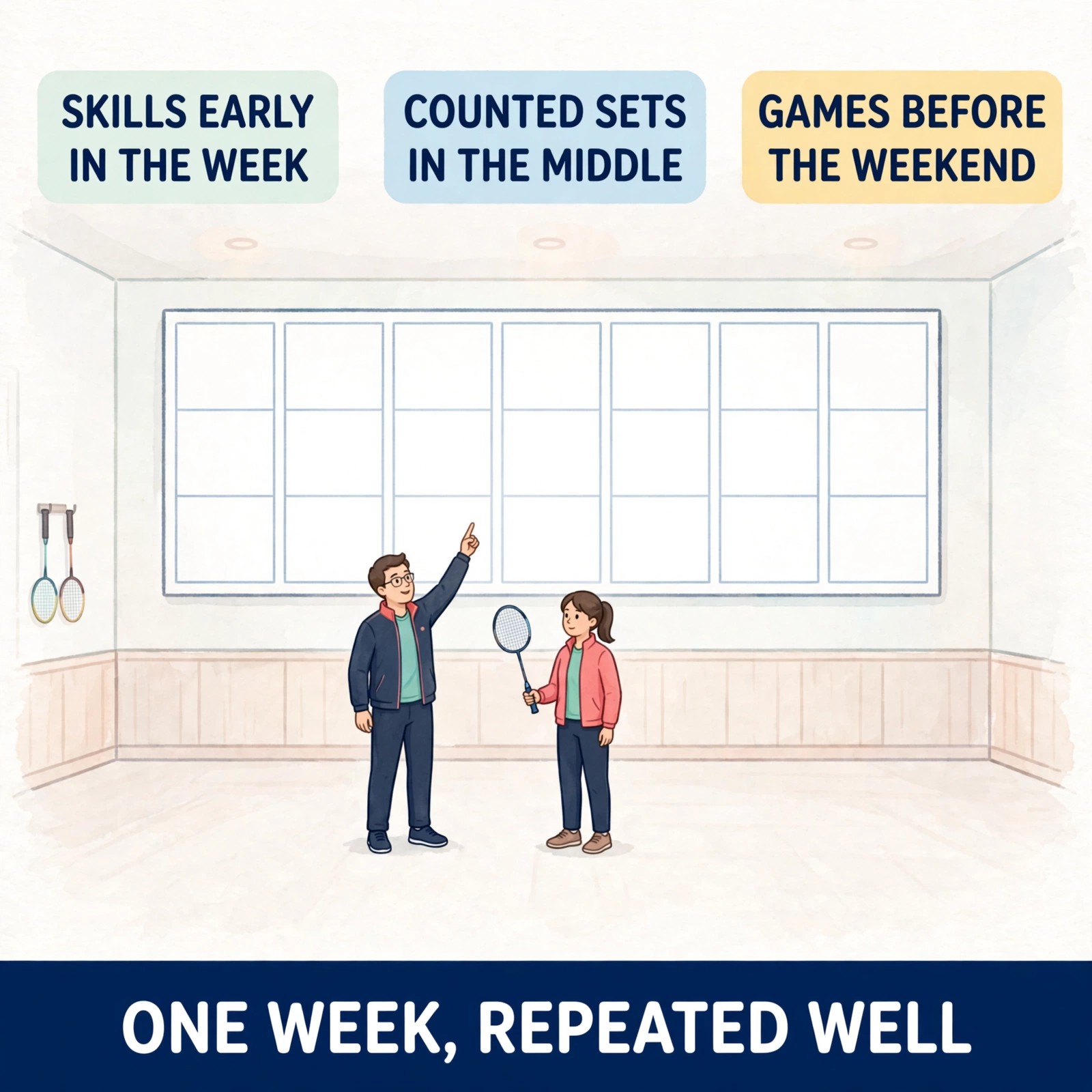
The base of the routine is the fixed week, and the first rule is smallness. Choose the days and times that your actual life can hold in an ordinary week, not the week you wish you had: for most players that is two or three sessions with clear start times, protected the way an appointment is protected. A week small enough to survive a busy spell will still be running in six months. A grand week that collapses every fortnight teaches the player that her plans are fiction, and she starts believing it. We build the fixed week from the player’s real calendar first, and only then talk about what goes inside the sessions.
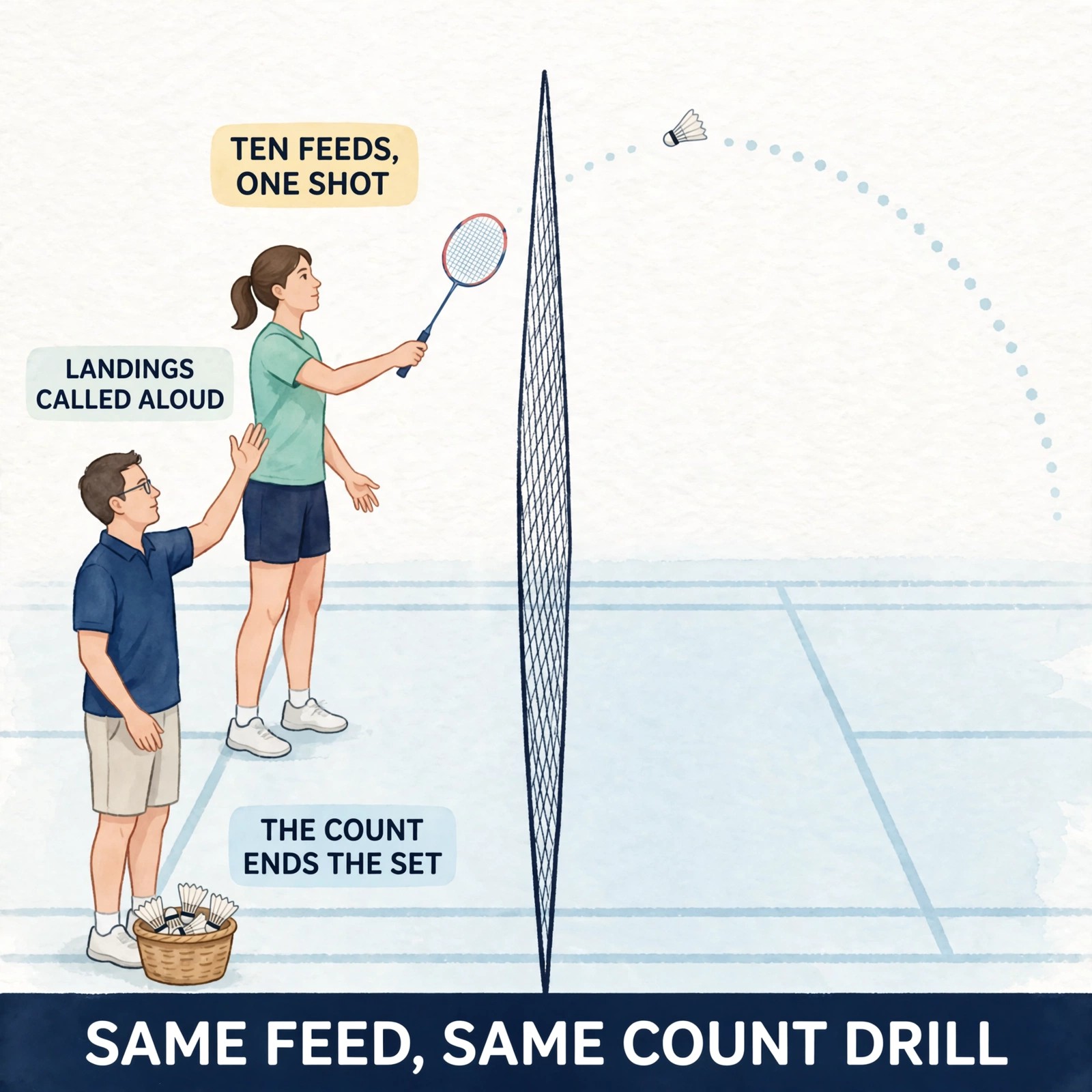
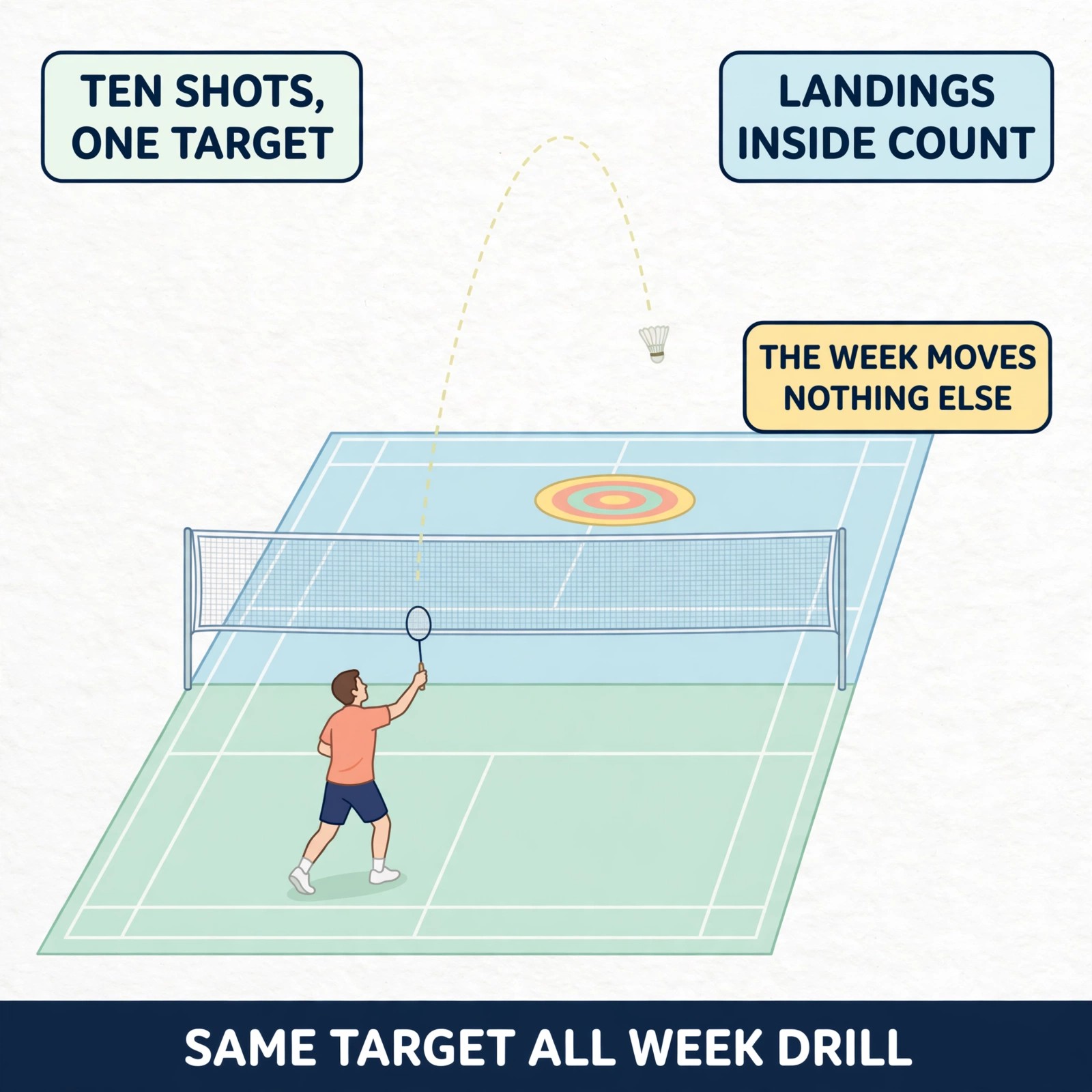
Inside the fixed week, every session has the same shape. It starts the same way, with the same warm up and the same first drill, so that starting never has to be invented on the day. It has one named job: one shot family, one pattern, one fault under repair, written down before the session begins. Its main block is counted work, landings and errors recorded as numbers while they happen, because a session that is not counted is a session that will be remembered wrong. And it ends with games and a short log, two or three lines written before the shoes come off. The shape is deliberately boring. Boring is what repeats.
Routine faults repeat on a short list. The first is the heroic Monday: a giant session after a missed week that leaves the player sore, tired and quietly dreading the next one. The second is the double up, missed sessions added to the next week until the plan is impossible and gets dropped whole. The third is the weekly redesign, a new programme every Monday, so nothing is ever practised twice the same way. The fourth is counting hours instead of shots, which rewards long slow sessions over short counted ones. And the fifth is the missing log, the record kept in the head, where good weeks grow and bad weeks shrink. Each fault maps to a repair in this page’s order: week first, session shape second, counts third, restarts last.
Routine Check #3
Reading And Targets: Counts Over Feelings
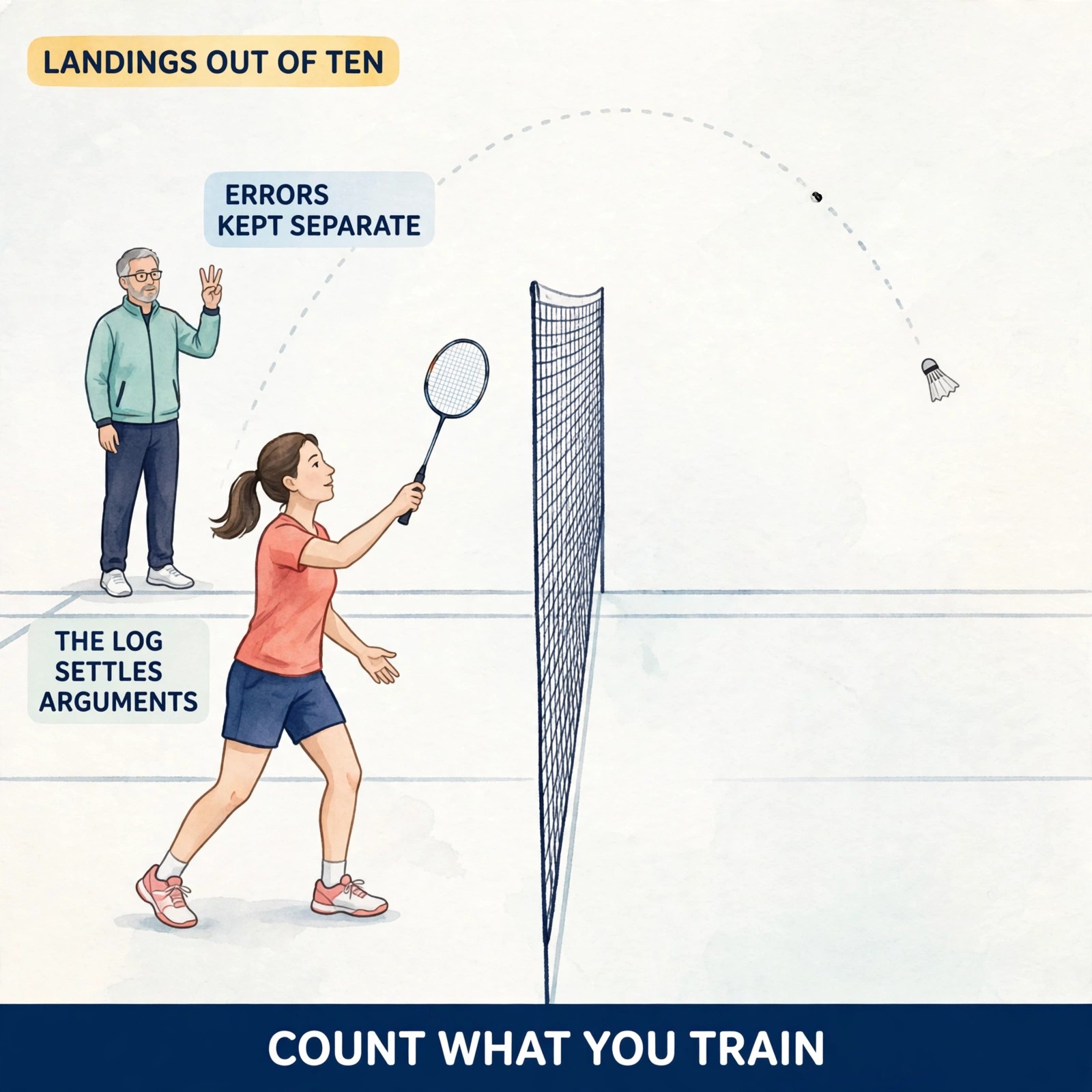
Reading a routine well is a skill, because it gives the player evidence instead of volume. The log is read by its counts: sessions kept out of sessions planned, landings inside the area out of ten on the core shots, errors kept as their own small numbers. A player reading counts can be in a flat month with a clear picture of what is actually slipping, which is a calm place to stand. Feelings about training are unreliable in both directions: a week that felt heroic often shows thin counts, and a plain week quietly shows the best landings of the month. The routine is judged by the numbers it produces, and the numbers are written down precisely so that the judging is fair.
An honest routine sets targets a player can hold in an ordinary week, and the honest targets are process targets. Sessions kept out of sessions planned is the headline one. Inside the sessions, one counted score per core shot: landings out of ten, errors split by kind. Score targets for the routine itself, train more hours, never miss, point at outcomes that a busy month will break, and a broken target teaches the player to stop setting them. Process targets point at actions inside the player’s control, which is the only ground a routine can honestly stand on. In training we review them monthly, the way we review landings, because a target you cannot count is a target you are guessing about.
A routine also has to know when to bend. There are weeks when work, exams or family take the hours the plan wanted, and the trained answer is to shrink the session, not to cancel the week: a shorter counted session on the same day keeps the chain intact, and the chain is the asset. There are days when the body argues, soreness that lingers or a flat, heavy feeling that warm up does not clear, and the trained answer is an easy session or a rest day taken without guilt, because rest is written into the plan rather than stolen from it. A routine that can bend survives the year. A routine that can only be perfect gets abandoned by February.
Routine Check #4
Holding The Routine: Busy Weeks, Missed Days
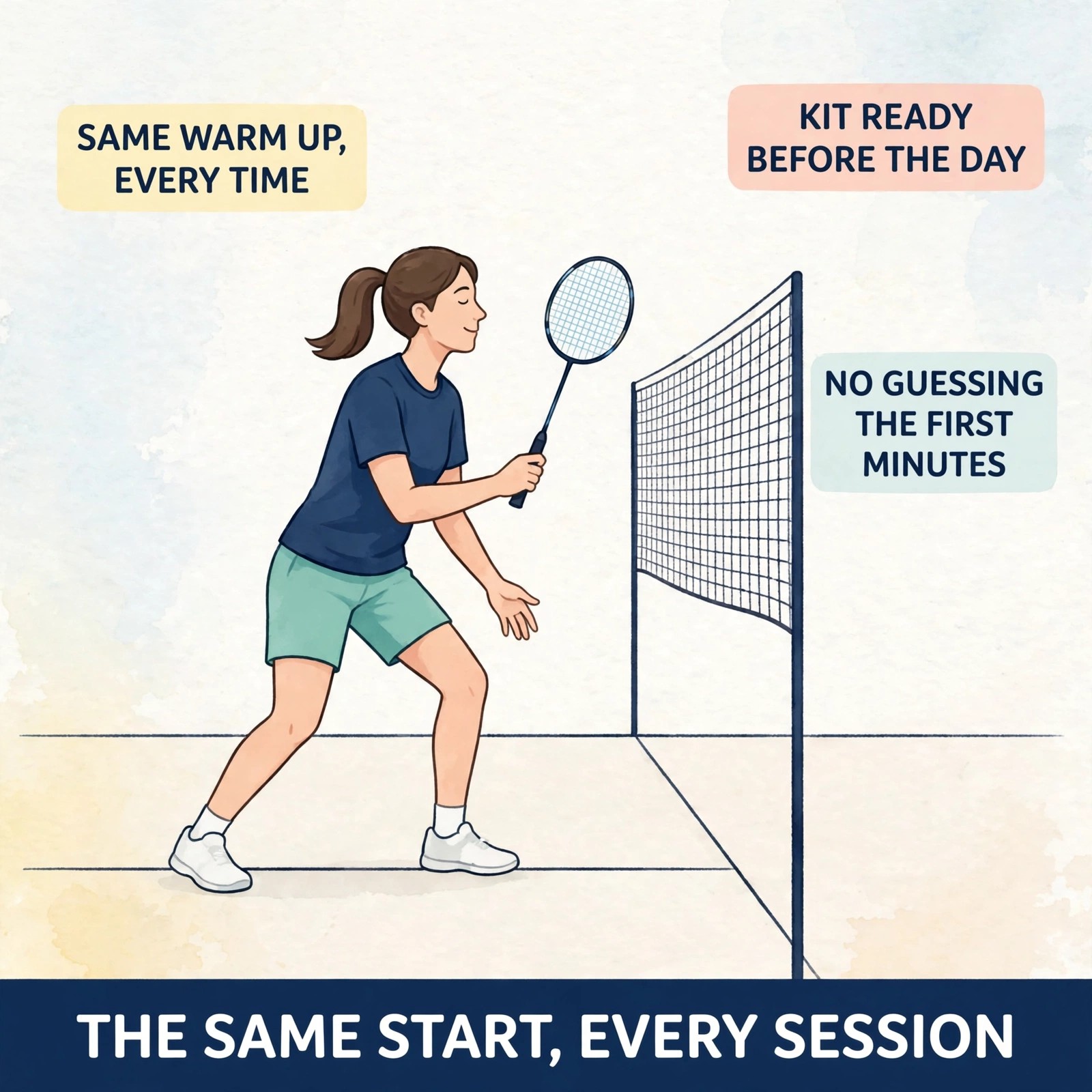
Starting is a skill inside the routine, and it is trained like one. The kit is ready before the day: bag packed, racket and shoes in their place, so the session does not depend on a search. The first ten minutes are fixed, the same warm up and the same opening drill, so the player never stands on court deciding how to begin. Most abandoned sessions are not abandoned at the hall. They are abandoned in the half hour before, in the small friction of getting started. The routine removes the friction in advance, the way a good split step removes the decision about which way to move. Starting well is not enthusiasm. It is preparation that was done yesterday.
Recovery is part of the routine, not a break from it. Rest days sit inside the fixed week on purpose, because the body rebuilds between sessions and the head needs days when training is not owed. Easy weeks follow hard blocks the same way easy rallies follow smashes in a well built rally: on purpose, and without apology. A player who treats rest as a failure of the routine will quietly train through tiredness until the counts fall and the plan gets blamed. The counts protect against this too: when landings fall across a whole week while effort rises, the log is usually describing a tired player, and the repair is rest, not more work.
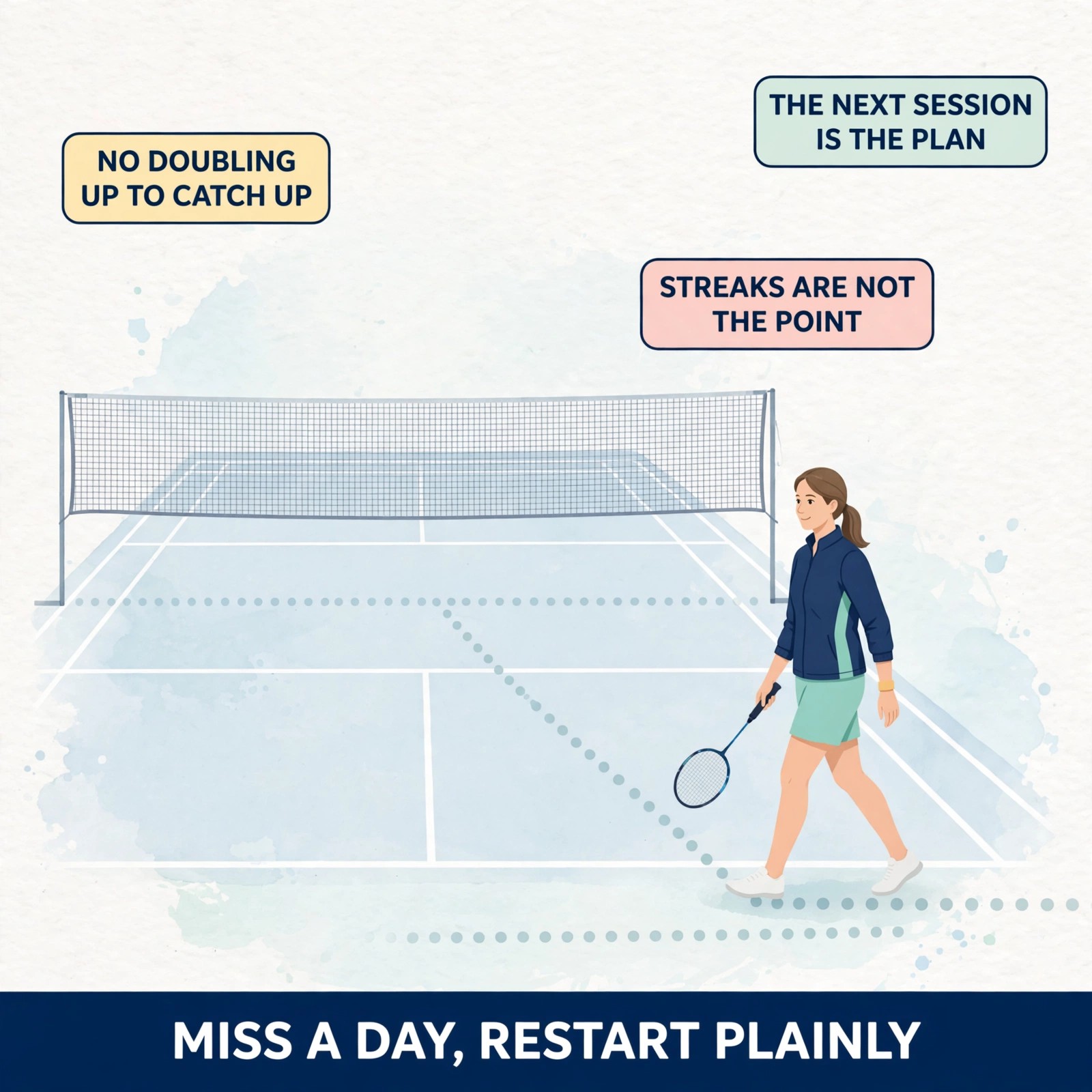
Under pressure the routine fails in two honest ways. The first is the collapse after a miss: one session skipped for a good reason, then the week feels spoiled, and the spoiled feeling cancels the remaining sessions more thoroughly than the original reason did. The second is the rescue fantasy: the missed week will be repaid with doubles, which makes the return session so heavy that it gets postponed again. Both are repaired the same way, by the restart rule this page trains: the next planned session happens at its normal size, nothing is added, nothing is apologised for, and the chain resumes from there. A routine is not judged by whether it ever breaks. Every routine breaks. It is judged by how plainly it restarts.
Routine Check #5
Consistency Habits That Groove The Week
We build a routine in an order that protects the chain. First, the audit: the last month counted honestly, sessions planned against sessions kept, so the new week is built from evidence rather than hope. Second, the fixed week: days and times chosen small enough to survive an ordinary busy spell. Third, the session shape: same start, one named job, counted main block, games, log. Fourth, the restart rule agreed in advance, while everyone is calm, so a missed day has a boring answer ready. Last, the monthly review: counts read together, one thing adjusted, the rest left alone. Each stage removes a hiding place the stage before left standing, and the order matters, because counts inside a week that keeps collapsing only measure the collapsing.
Progress is counted in kept sessions and landings, not in how disciplined the month felt. Sessions kept out of sessions planned is the headline figure every routine owner should know about herself, read over a month rather than a week, because single weeks lie in both directions. Landings inside the area out of ten on the core shots are the second number, the proof that the kept sessions are doing work. And the restart count: how many planned sessions it took to return after a miss, graded honestly, because that number is where routines actually live or die. When kept sessions rise, restarts shorten and landings climb slowly behind them, the routine is genuinely working, whatever any single week felt like.
The signs a routine has taken hold are mostly quiet. The plan survives a bad week: a shrunken session happens instead of a cancelled one, and nobody makes a speech about it. Missed days stop being events; the next session simply happens at its normal size. Training talk changes shape: errors are discussed as numbers with repairs attached rather than as stories about character, and the log gets opened before opinions get offered. And the shots start compounding, because the same core work has now been counted forty times instead of four, which is the whole arithmetic of getting better at anything. That is when the work widens, to harder counted blocks inside the same week, each added the same way, small enough to keep.
Myth vs Reality
Myths About Training Consistency
Myth: consistency means training every day, so a player with three free evenings can never have a real routine. Reality: consistency means a week that repeats, and three sessions kept for six months will outbuild six sessions kept for three weeks in every counted measure we keep. Rest days are not gaps in the routine; they are part of its design, the days the body rebuilds and the plan stays believable. The players with the strongest routines we coach are not the ones with the most free time. They are the ones whose week was built small enough to survive their actual lives, and then simply never redesigned in a panic.
Myth: motivation comes first, so a player should wait until she feels driven before committing to a routine. Reality: the order runs the other way. A small kept week produces counted evidence, the evidence produces the feeling of getting somewhere, and the feeling makes the next week easier to keep. Waiting for motivation first means the start date depends on the weather inside your head, which is the least reliable fixture in sport. The trained view treats motivation as a result to be harvested, not a resource to be spent: fix the days, shrink the sessions until they are keepable, count the work, and let the feelings arrive in their own time, as they usually do.
Myth: a missed week ruins everything, so the only honest response is to double up until the debt is paid. Reality: fitness and skill fade far more slowly than guilt says they do, and a week away costs a player a little sharpness, not her foundation. The double up, by contrast, costs her the return itself: the giant comeback session leaves her sore and behind on everything else, and the plan quietly dies of its own rescue attempt. The trained restart is almost offensively plain: the next planned session, at its normal size, with the counts resumed. Over a year, the players who restart plainly train far more than the players who repay debts.

Why Choose Us
Why Players Choose ST Badminton Academy
Players choose ST Badminton Academy for routine work because we coach the week, not just the session. Your last month is audited honestly before your new week is admired, your fixed days are chosen small enough to survive your real calendar, and your sessions kept, landings and restart counts are kept as your own numbers, reviewed monthly with one adjustment at a time. In a group of no more than four students, there is time to stand at the side and read your log with you and call the fault the counts point at. Many sessions sell motivation. We also count kept sessions, because the player whose numbers are honest knows exactly what to fix next, and it is usually smaller than she feared.
The sessions run the way this page describes. Routine work sits inside regular training: the session shape is the same each time, warm up, one named job, a counted main block with landings and errors written down as they happen, games to test the work, and the log finished before the shoes come off. Coaches watch the shape of the week as well as the shape of the shots, since a routine fails at the calendar before it fails on the court, and the monthly review reads sessions kept, landings and restarts together. A student can point to the month her kept sessions doubled, and to the change that did it, and that traceability keeps the work honest when a flat week argues otherwise.
We are based in Setapak, Kuala Lumpur, and students join us from across the Klang Valley, some travelling in from Wangsa Maju, Gombak and Setiawangsa for evening sessions. Routine coaching sits inside regular badminton sessions, not in a separate consistency clinic: your week, your session shape and your restarts are built in the same hour as your shots, your defence and your games, because that is where the routine has to hold, against a calendar that does not care about your intentions. A routine grooved only in a quiet month is a rumour about yourself. The busy weeks in the same season settle whether it is true.
FAQs: Training Consistency And Badminton Training in Malaysia (KL)
These are the questions players ask us most about developing consistency in a training routine, before they book and during their first weeks of building one. The short version runs through all of them: fix a small week, give every session one job and a count, write the log, and restart plainly after misses. The longer answers follow, including the ones about routines collapsing after two good weeks, keeping a routine when training mostly alone, and how a first session with us actually works.
Can a beginner build a consistent training routine in Setapak or Gombak?
Yes, because consistency is a structure, not a personality. Beginners start by fixing two or three weekly sessions their real life can hold in our Setapak sessions, in groups of no more than four students, and count sessions kept and landings from the first weeks, so progress is visible early.
What is the first consistency habit a new player should build in KL?
The first habit is the fixed start: the same days, the same warm up, the same opening drill, so beginning never has to be invented on the day. Around it sits one named job per session and a short log written before the shoes come off. Sameness at the edges is what lets the middle improve.
Why does my routine keep breaking down at a serious level?
At a serious level the collapse is rarely about effort: a missed session makes the week feel spoiled, the spoiled feeling cancels the rest, and the rescue plan of doubling up makes the return too heavy to start. The audit tells the story plainly: sessions planned against sessions kept, month by month.
My routine works for two weeks then collapses. Should I add more sessions or rebuild the week smaller first?
Rebuild the week smaller first. Adding sessions to a collapsing week only makes the collapse bigger. We audit the last month, choose fixed days an ordinary busy spell can survive, give each session one job and a count, and agree the restart rule in advance: the next planned session, normal size, nothing added.
How can I keep a training routine when I train mostly on my own in between classes?
Partly, and it is worth doing. A fixed week, a session shape and a written log all work without a coach present, and solo counted sets on your core shots keep the chain intact. What solo training cannot supply is a coach reading the log with you and grading the work inside games, which is what sessions add.
Do you coach training routines beside badminton training near Wangsa Maju?
Yes. We coach training routines from our base in Setapak, a short drive from Wangsa Maju, and players from that side train with us every week. The work sits inside regular sessions rather than a separate clinic, so your week, your session shape and your restarts are built beside your shots and games.
Where does ST Badminton Academy teach badminton training in Malaysia?
We teach at our base in Setapak, Kuala Lumpur, and students travel in from across the Klang Valley. Sessions run with no more than four students per group, because routines are learned from logs read together and weeks audited honestly, and that coaching needs a coach close enough to know your real calendar.
How do I book a trial session to test my training routine?
Message us to arrange a trial at a time that suits your week. Bring your racket and court shoes, and an honest count of last month: sessions planned and sessions kept. We will audit the gap with you, set your fixed week, and run your first counted block, so your first repair comes from evidence.
What makes Mr Eric Chuar a suitable coach for training routines in badminton?
Mr Eric Chuar coaches the academy sessions himself, with more than 15 years of coaching in Malaysia and Singapore, so the person auditing your week is the person who built the programme. His consistency coaching is plain spoken: a small week kept, one job per session, counts in the open, and plain restarts after misses.
Badminton Training Consistency Coaching in Action
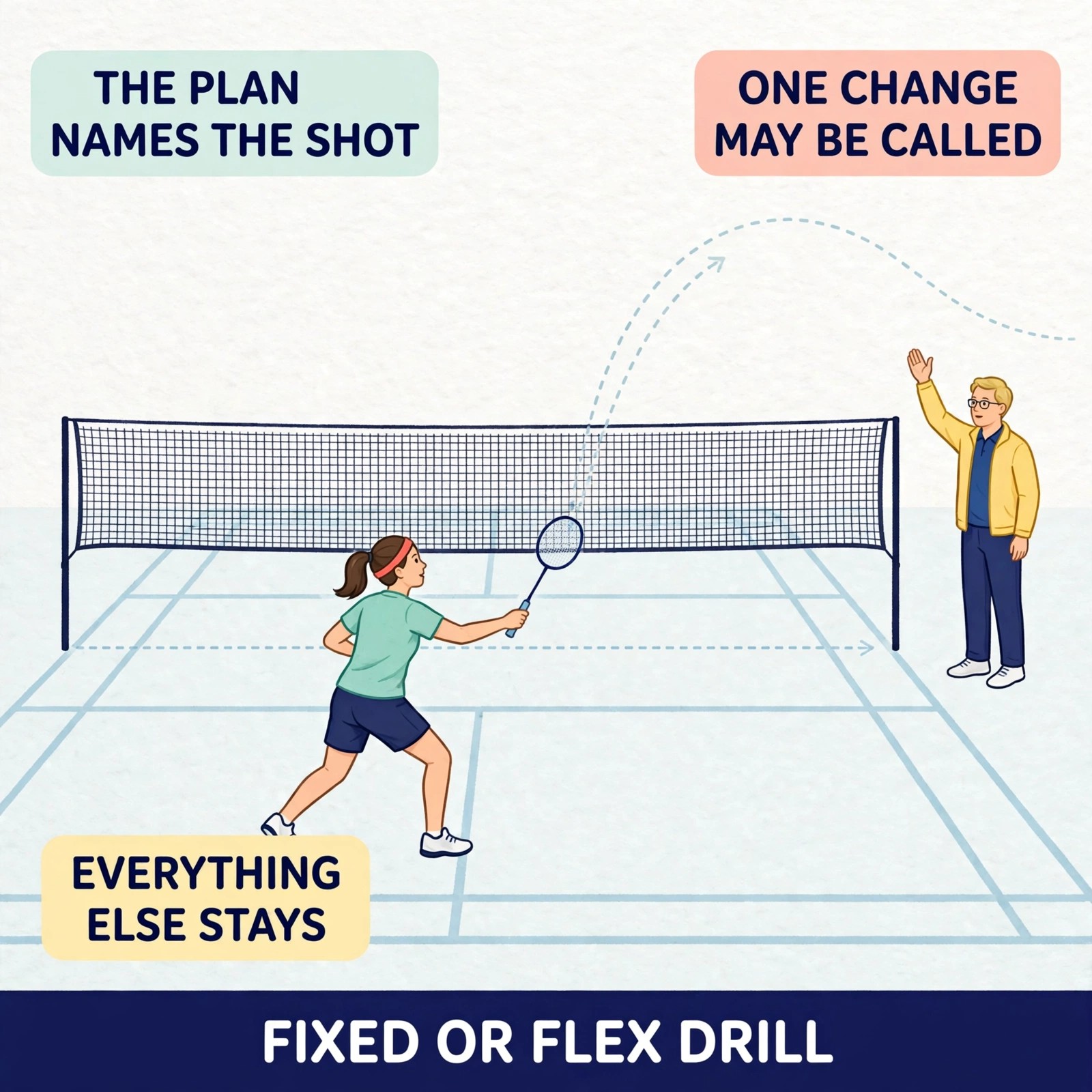
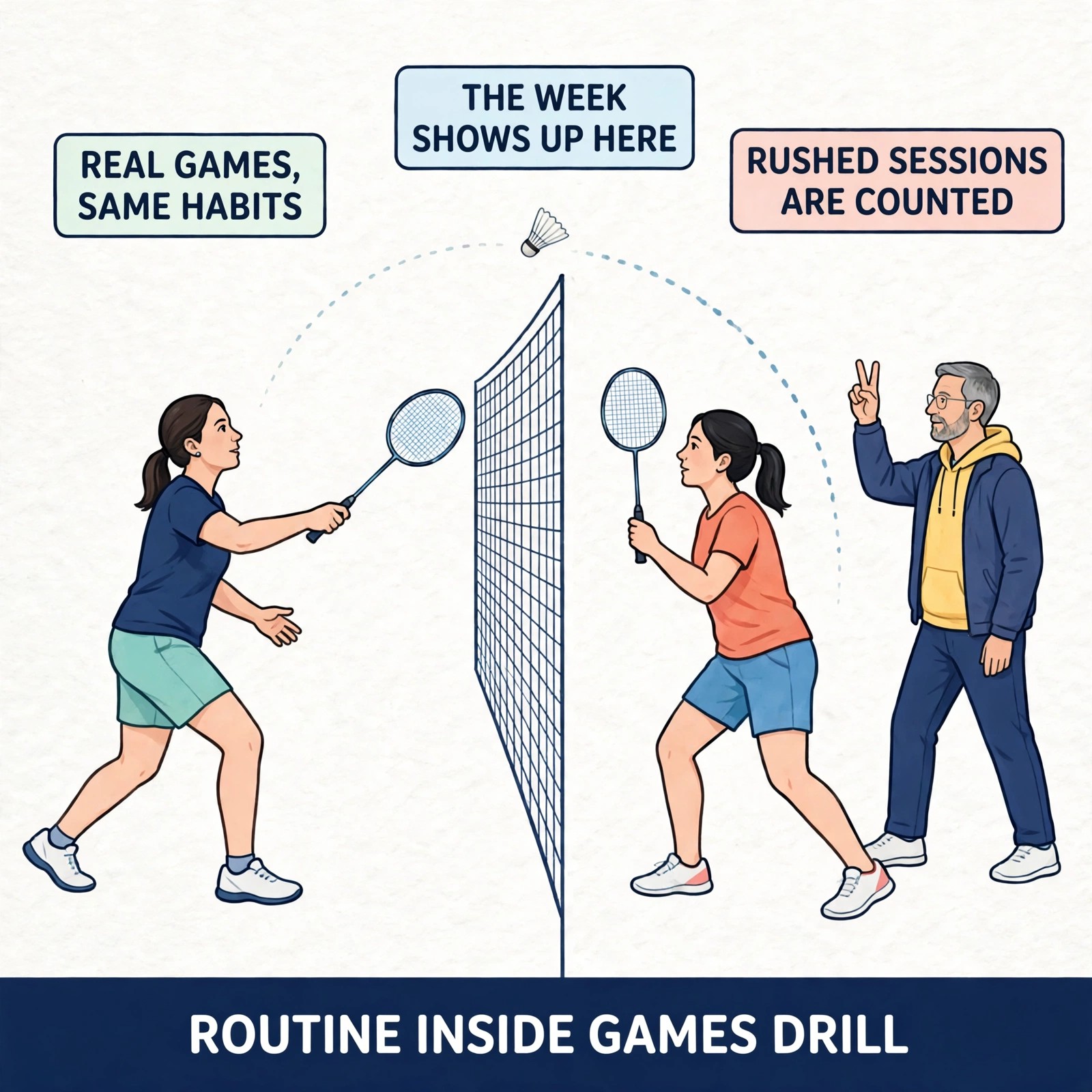
We benchmark our consistency coaching against World Badminton (BWF) coaching standards and our own academy values: before any player trusts a training plan, they deserve honest checks. You can verify our coaches' credentials through the Badminton Association of Malaysia (BAM) coach education pathway.
One standard governs how we coach consistency: the kept week judges the routine first, and the counted landings judge it second. A coach here will ask how many of your planned sessions actually happened last month before asking how hard any of them felt, and will check your calendar before admiring your effort. We also hold an honesty rule about what routine coaching can promise: a kept routine compounds skill steadily and makes progress visible, and it cannot promise a ranking or a trophy, because opponents keep routines too. What coaching promises is a week you can keep, counts kept in the open, and plain restarts. Players deserve progress built on evidence, not on guilt.
| Factor | The Steady Keeper | The Heroic Burster CONSISTENCY |
|---|---|---|
| Frequency | 1 or 2 times a week. Mostly for fun and sweat. | The heroic burster trains in bursts: a giant week after a bad match, ten quiet days, then a comeback session so heavy it gets postponed again. Nothing is counted, so progress is argued from memory, and each restart quietly re-buys the ground the last burst had already paid for. The year ends with effort everywhere and compounding nowhere. |
| Drills Focus | Basic static feeding. Minimal footwork pressure. | The steady keeper approach builds the routine in order: a fixed week small enough to survive an ordinary busy spell, the same start to every session, one named job per session, a counted main block with landings and errors written down, games to test the work, and a short log before the shoes come off. Sessions kept and landings are the two headline numbers. |
| Physical Conditioning | Rarely included. Just playing games on court. | Core, agility, and speed training included in every session to prevent injury and build stamina. |
| Tactical Awareness | "Just hit it over." No real game plan. | Video analysis, point construction, and learning to read the opponent's game. |
| Coach Ratio | Large groups (8-10 kids). Coach barely watches you. | Max 4 students. Mr Eric Chuar personally corrects every stroke and movement detail. |
| Goal Setting | Fun and exercise. | Because the counts separate kept sessions from landings, a flat month shows up as numbers rather than as a story about character. The coach sees whether the week, the session shape or the counts slipped, the player sees the same rows, and the monthly review adjusts one thing instead of redesigning everything in a panic. |
| Long Term Result | Good recreational player. | The high-performance routine owner trains less dramatically and improves more steadily: her week bends in busy spells instead of breaking, her misses restart plainly at the next planned session, and her core shots have been counted so often that progress is a trend, not a hope. The casual version spends the year restarting; the grooved version removes the waste in a fixed order and counts what is left. |
Badminton Training Consistency Coaching in Kuala Lumpur
Your routine starts with one honest count of last month. This week, write down two numbers: how many sessions you planned, and how many actually happened. Then bring those numbers to a session with us and we will audit the gap with you, choose a fixed week small enough to survive your real life, and set the first counted block inside it. No heroic restart first. Just a small week, kept, with the counts resumed where they stopped.


