
 All languages
 Chinese (Simplified)
 Chinese (Traditional)
 English
 Indonesian
 Japanese
 Korean
 Malay
 Thai
 Vietnamese


Fuel Your Performance With Badminton Player Nutrition (Nutrition Guide)
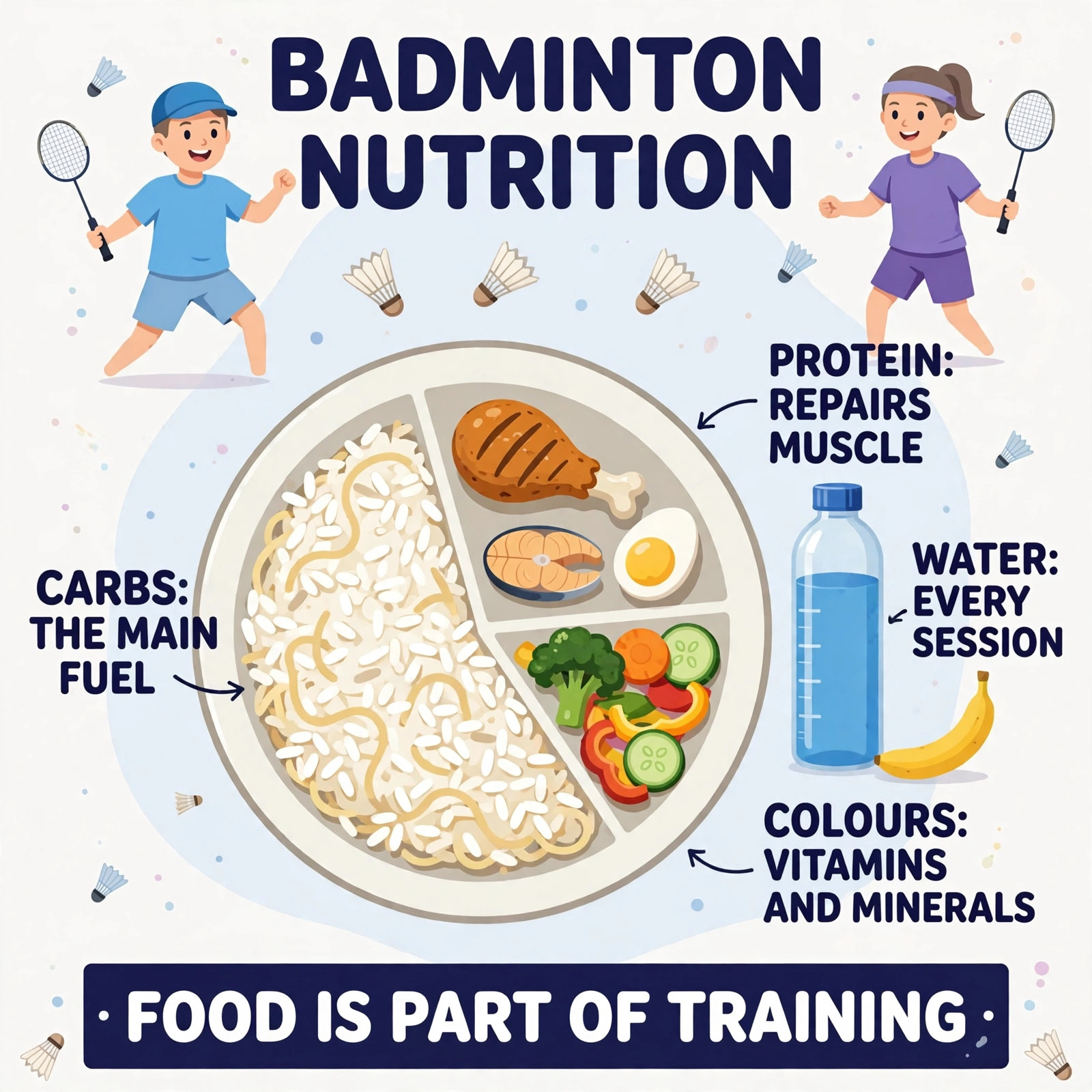
Food is part of training, not a break from it. What a badminton player eats and drinks decides how much energy is left in the third game, how clearly the head works at 19-19, and how fast the legs feel ready again the next day. This guide covers badminton player nutrition in plain terms: why players run out of energy, the three jobs food does on the plate, when to eat around training, how water and electrolytes work in Malaysian heat, and how to eat on match day, the way we coach it at ST Badminton Academy in Setapak, Kuala Lumpur.
Nutrition Check #1
Why Do Players Fade Late in Matches?
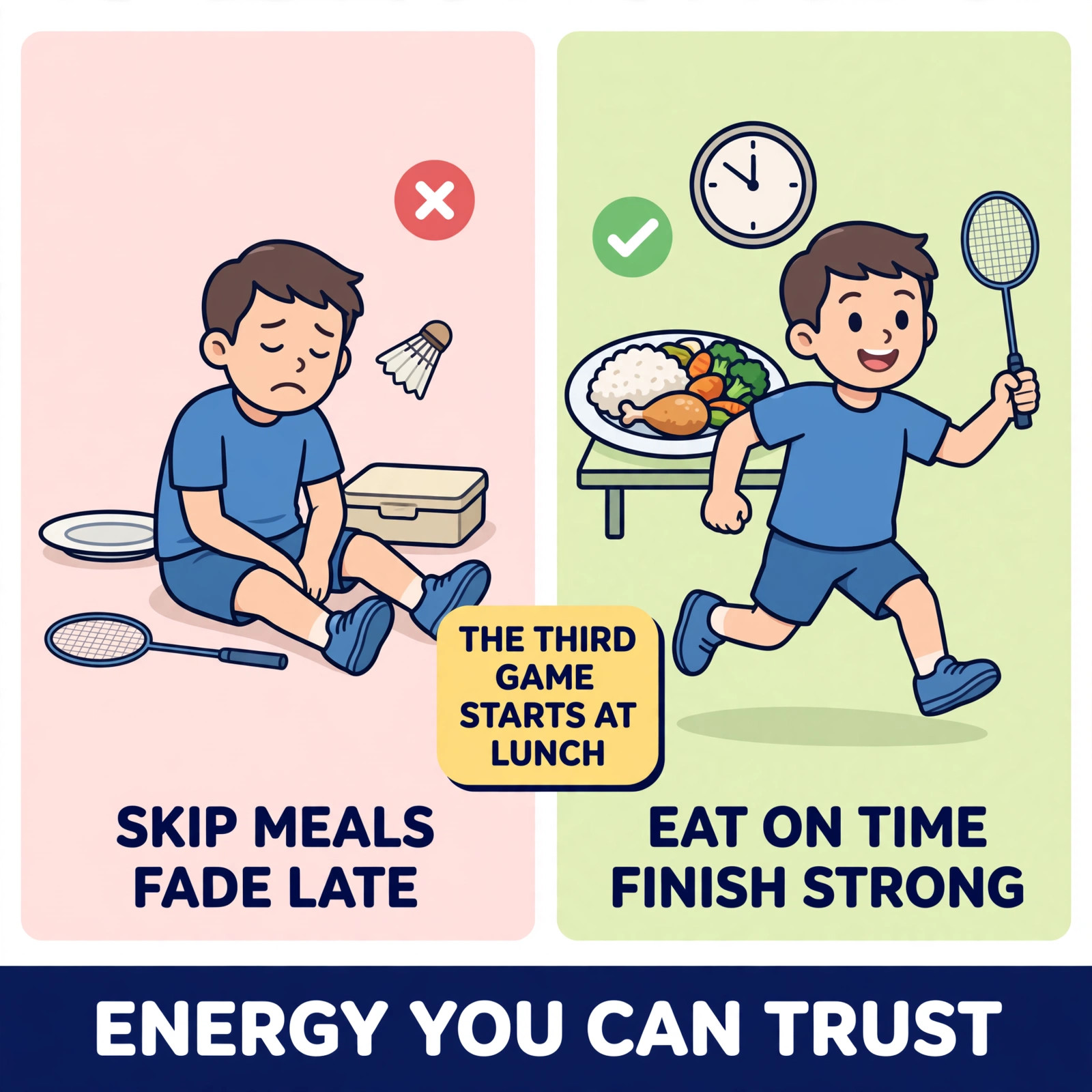
Watch a player fade in the third game and the easy guess is fitness. Often the real cause is simpler: the fuel ran out. Badminton rallies burn through stored carbohydrate fast, and a player who trained on an empty stomach, skipped lunch, or ate only a small snack hours ago starts the match with a half-empty tank. The shots do not change first. The feet slow down, the split step gets skipped, and late errors creep in.
Food timing matters as much as food choice. A heavy, greasy meal eaten right before training sits in the stomach and makes hard footwork miserable. The same meal eaten three hours earlier becomes useful energy. Malaysian players also train in heat and humidity, so eating and drinking habits travel together: a fuelled player with an empty bottle still fades. The good news is that none of this needs special products. Normal food, eaten at the right times, covers almost every player.
Nutrition Check #2
Carbs, Protein and Fats: Three Jobs on One Plate
Carbohydrates are the main fuel for badminton. Rallies are short, sharp and repeated, and the body pays for them from stored carbohydrate. Rice, noodles, bread, oats, potatoes and fruit refill that store. On training days, carbohydrates should take the biggest share of the plate, and players in heavy training blocks often need a carbohydrate snack between meals as well. Skipping them to feel light usually backfires by the second game.
Protein does the repair work. Every hard session leaves small damage in the muscles, and protein from food is the raw material that rebuilds them stronger. Chicken, fish, eggs, tofu, tempeh, beans, lentils, milk and yogurt all do the job well. Spread protein across the day instead of saving it for one huge serving: a palm-sized portion at each meal, plus a protein food in the recovery meal after training, covers most players without any powder or product.
Fats and colours finish the plate. Healthy fats from nuts, seeds, avocado and oily fish give steady energy across a long day and support normal body functions. Then colour does the quiet work: vegetables and fruit of different colours bring the vitamins and minerals players need, including iron for energy, calcium for bones and vitamin D. No single food is magic. A plate that changes colours and sources across the week beats any one famous ingredient eaten daily.

Nutrition Check #3
Eating Around Training: Timing Is Half the Skill
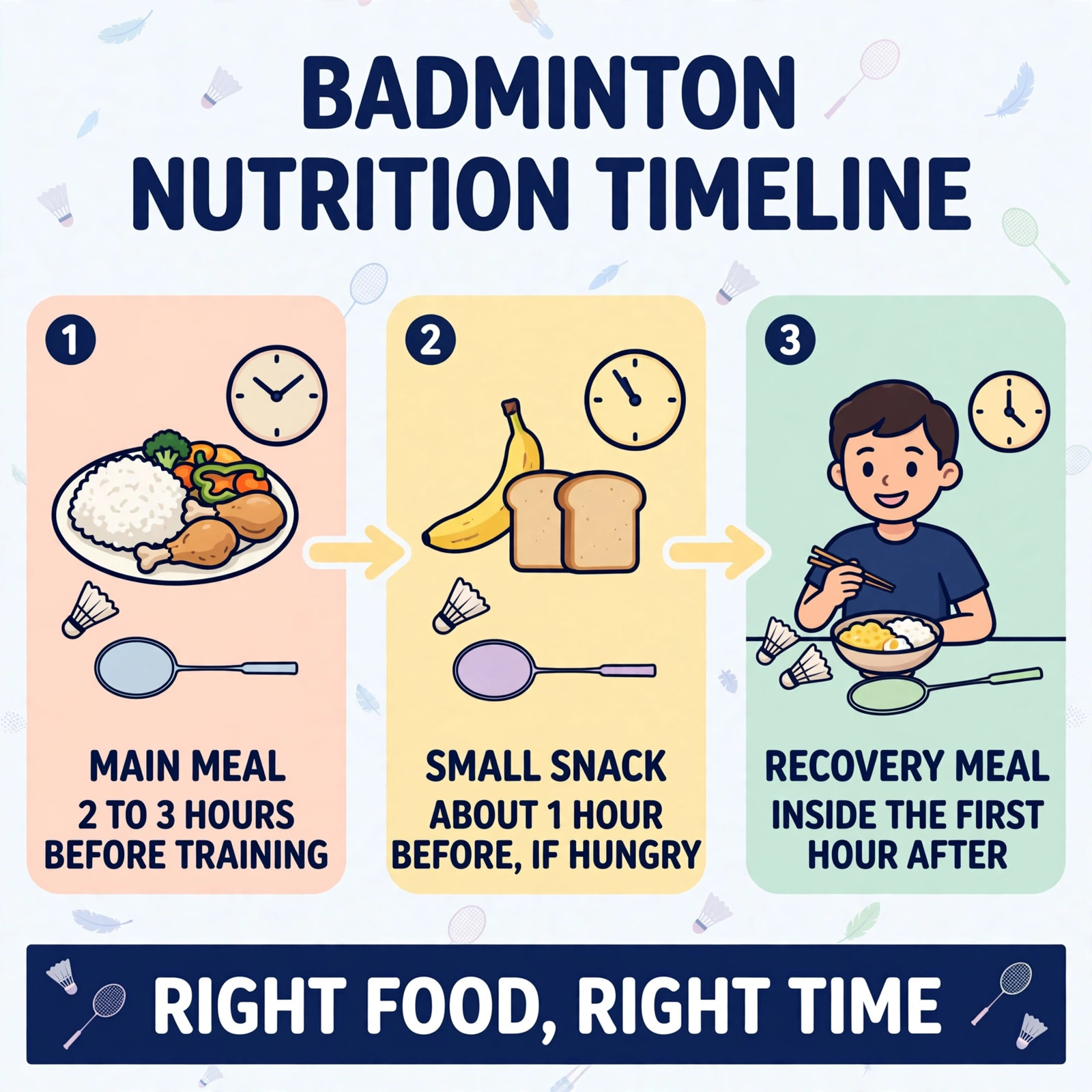
Eat your main meal 2 to 3 hours before training or a match. That gap lets the stomach empty while the fuel stores fill. The meal should look boring and familiar: rice or noodles, a protein, some vegetables, water to drink. Match day is never the day to test a new dish, a very spicy meal, or the richest thing on the menu. New foods are for ordinary days, when a stomach surprise costs nothing.
If you feel hungry in the last hour before playing, take a small snack: a banana, a slice or two of bread, a small yogurt. Keep it small, because its job is to top up, not to fill. During long sessions, sip water at every break instead of drinking a lot at once. After heavy sweating, normal food plus drinks like coconut water help replace the salts that sweat carries away.
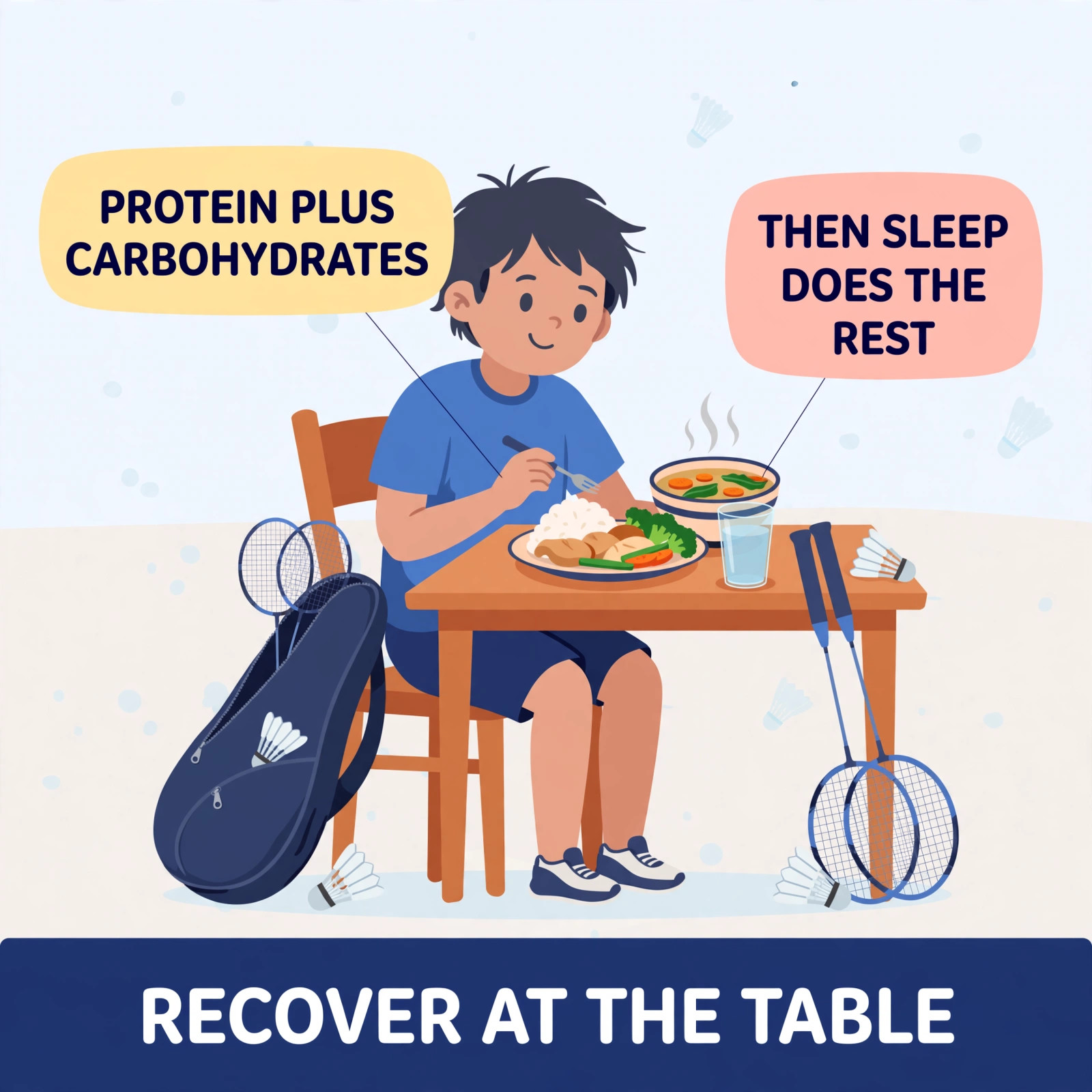
After training, eat again inside the first hour where you can. The recovery meal pairs protein for repair with carbohydrate to refill the tank: rice with chicken and vegetables, eggs on toast, noodles with tofu and greens, or whatever normal meal is waiting at home. Then let sleep finish the job. Players who skip the recovery meal often feel it the next morning: heavy legs, low energy and a session that never gets going.
Nutrition Check #4
Water and Electrolytes: Drink Before You Are Dry
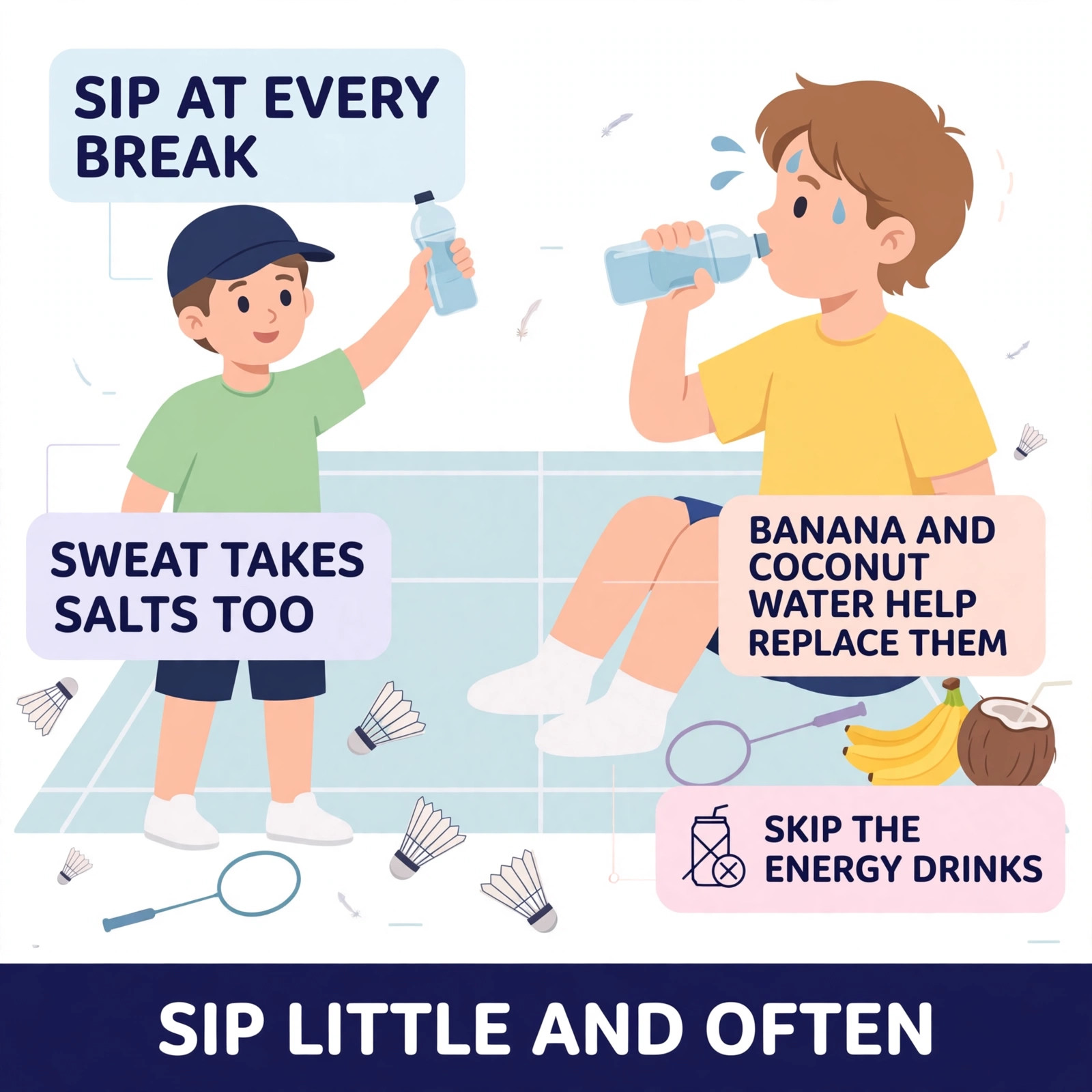
Start the day drinking steadily, not in one huge rush before training. Keep a bottle with you and sip through the morning, so you arrive at the court already hydrated. A simple check is urine colour: pale yellow usually means you are drinking enough, while dark yellow is a sign to drink more before you play. In Malaysian heat, players can lose a lot of water in one session without noticing, because the sweat dries fast indoors and out.
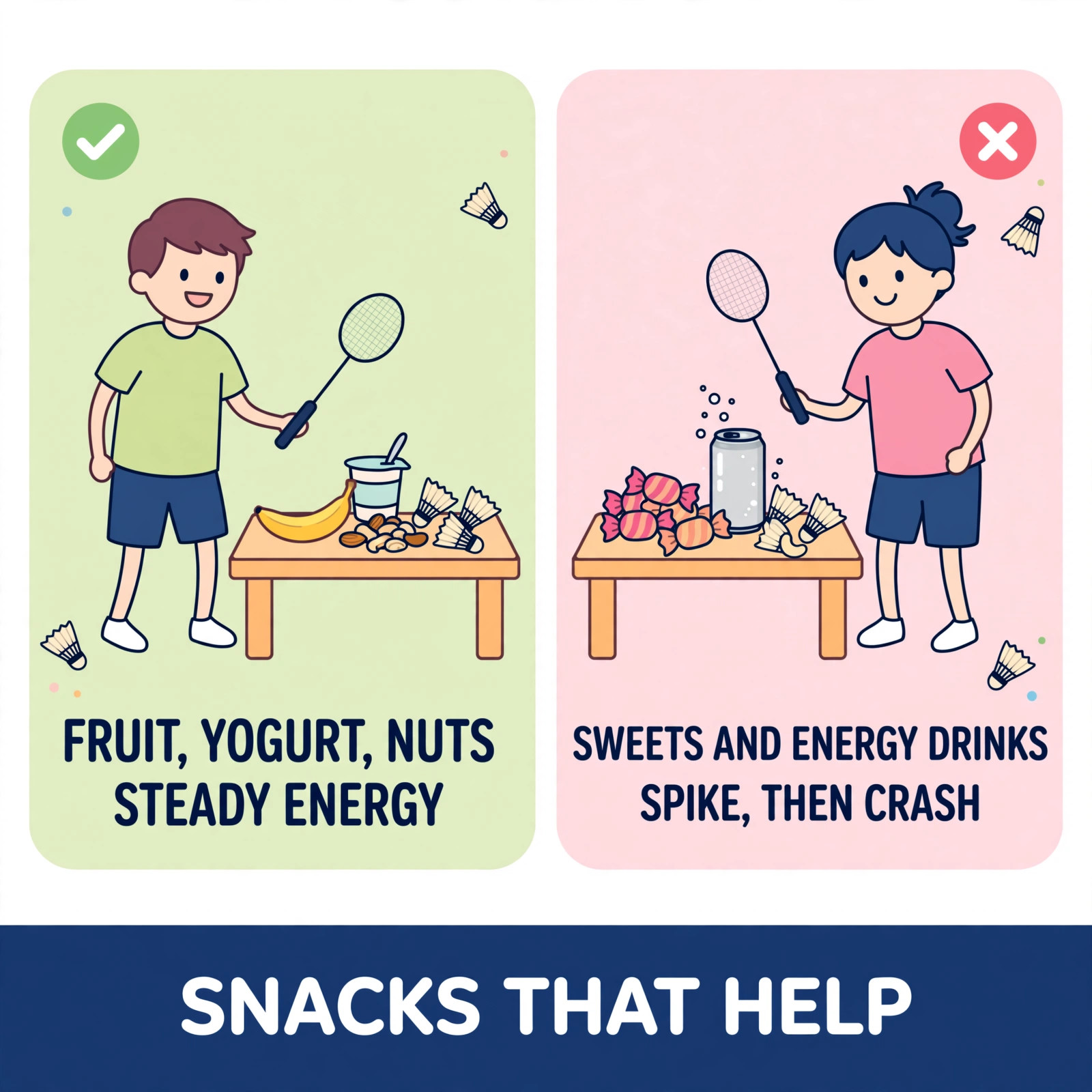
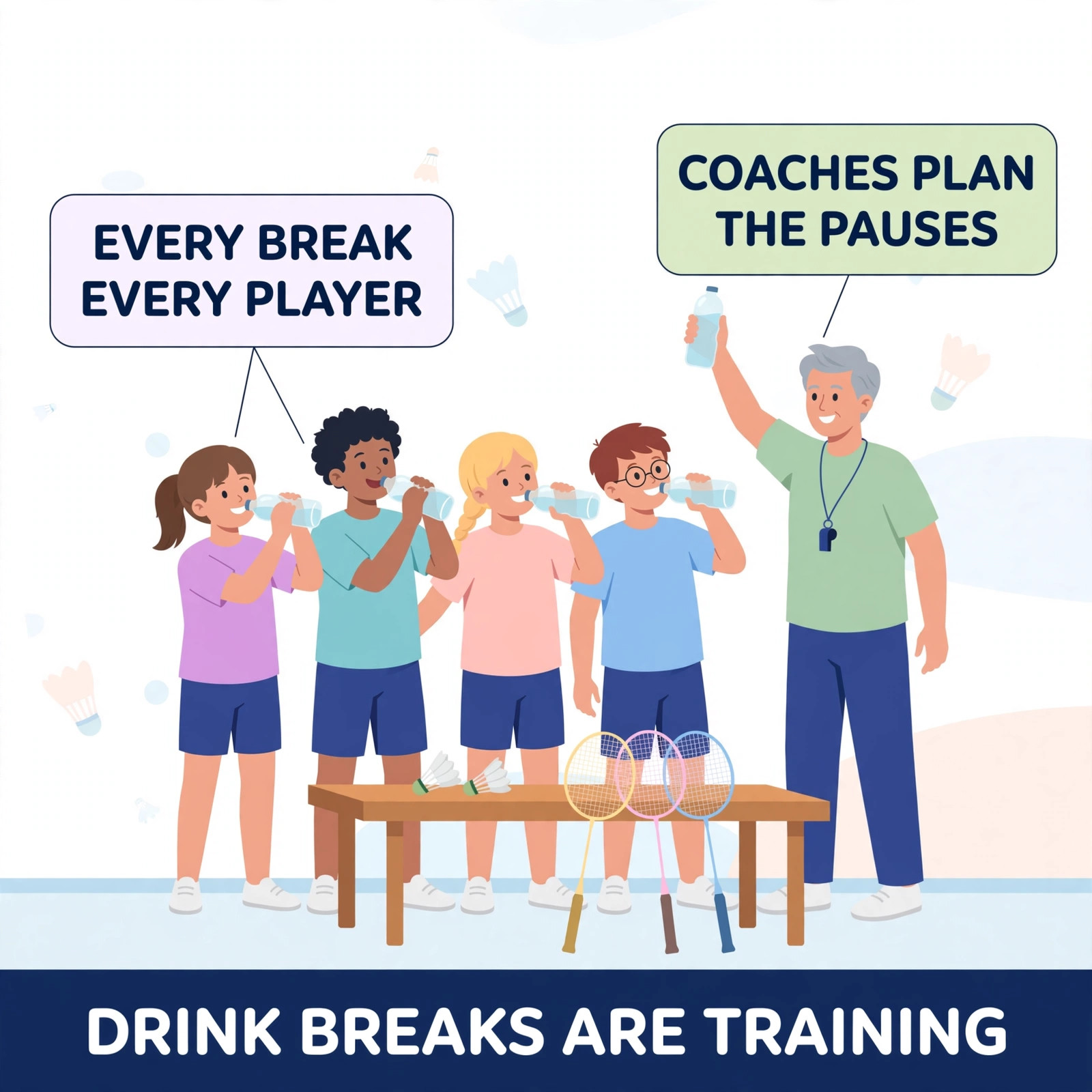
During play, small sips at every break beat big drinks at long breaks. Water covers most sessions. For very long or very sweaty sessions, salts matter too, and they can come from normal food and drink: a banana, a meal after training, or coconut water. Be careful with energy drinks. Their sugar and caffeine give a quick spike, then a crash, and the crash usually lands in the middle of the next game.
Learn the warning signs and respect them: headache, dizziness, cramps or feeling sick during play mean stop, sit down, drink, and tell the coach. Young players forget to drink more than anyone, which is why our coaches build drink breaks into the session instead of waiting for players to ask. A bottle at the side of the court, emptied steadily and refilled, is one of the cheapest performance tools in badminton.
The Tournament Day
Match Day Eating: Before, Between, After
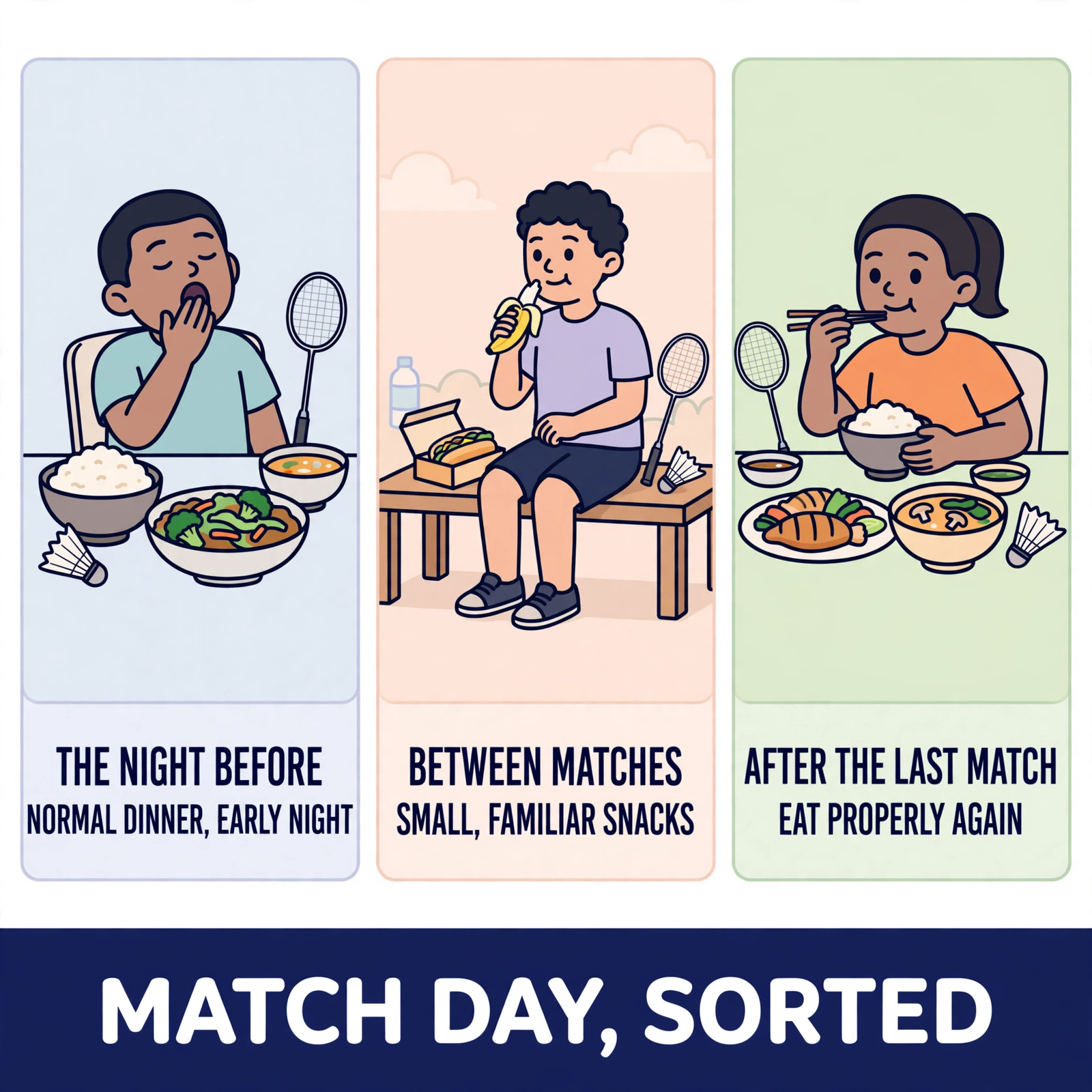
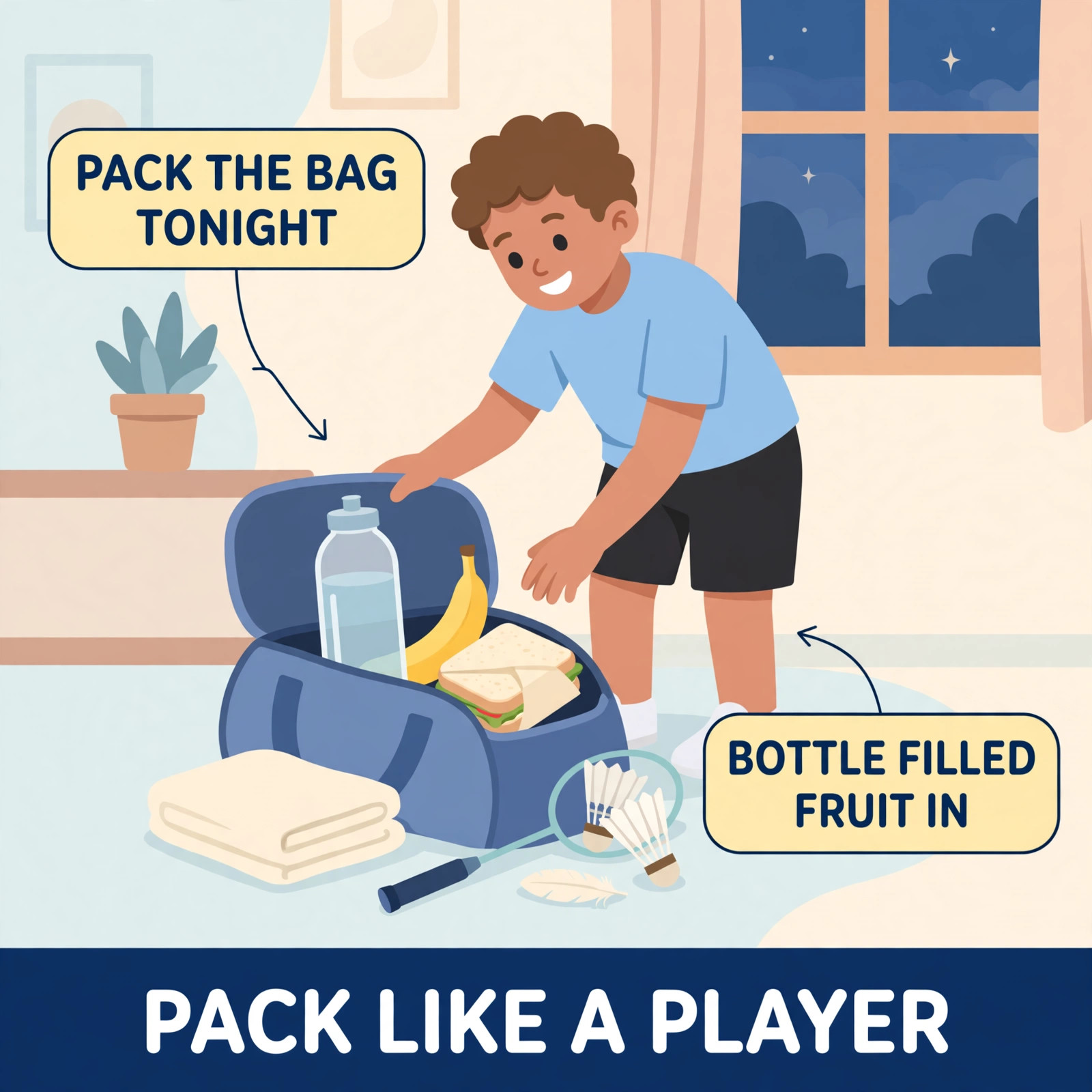
The night before a match, keep everything normal: a regular dinner with a little extra rice or noodles if the next day is long, water through the evening, and an early night. There is no need for a giant special meal. Huge dinners disturb sleep, and sleep is worth more than one extra plate of food. Pack the bag that night too: bottle, fruit, and a change of clothes, so the morning stays calm.
Between matches at a tournament, eat small and familiar, little and often. Bananas, sandwiches, bread, yogurt and simple rice-based snacks keep energy steady without filling the stomach before the next round. Avoid heavy fried food between matches, and avoid anything you have never eaten before. Tournament day is about repeatability: the same small routine before every match, so the body knows what is coming.
Across a normal week, the players who fuel well are the ones who prepare. Bottle filled at home. Fruit in the bag. A recovery meal thought about before the session, not debated after it. None of this is expensive or complicated, but it has to be a habit, not a match-day invention. Treat food preparation the way you treat your racket bag: pack it the night before, and the day takes care of itself.
Myth vs Reality
Myths About Player Nutrition
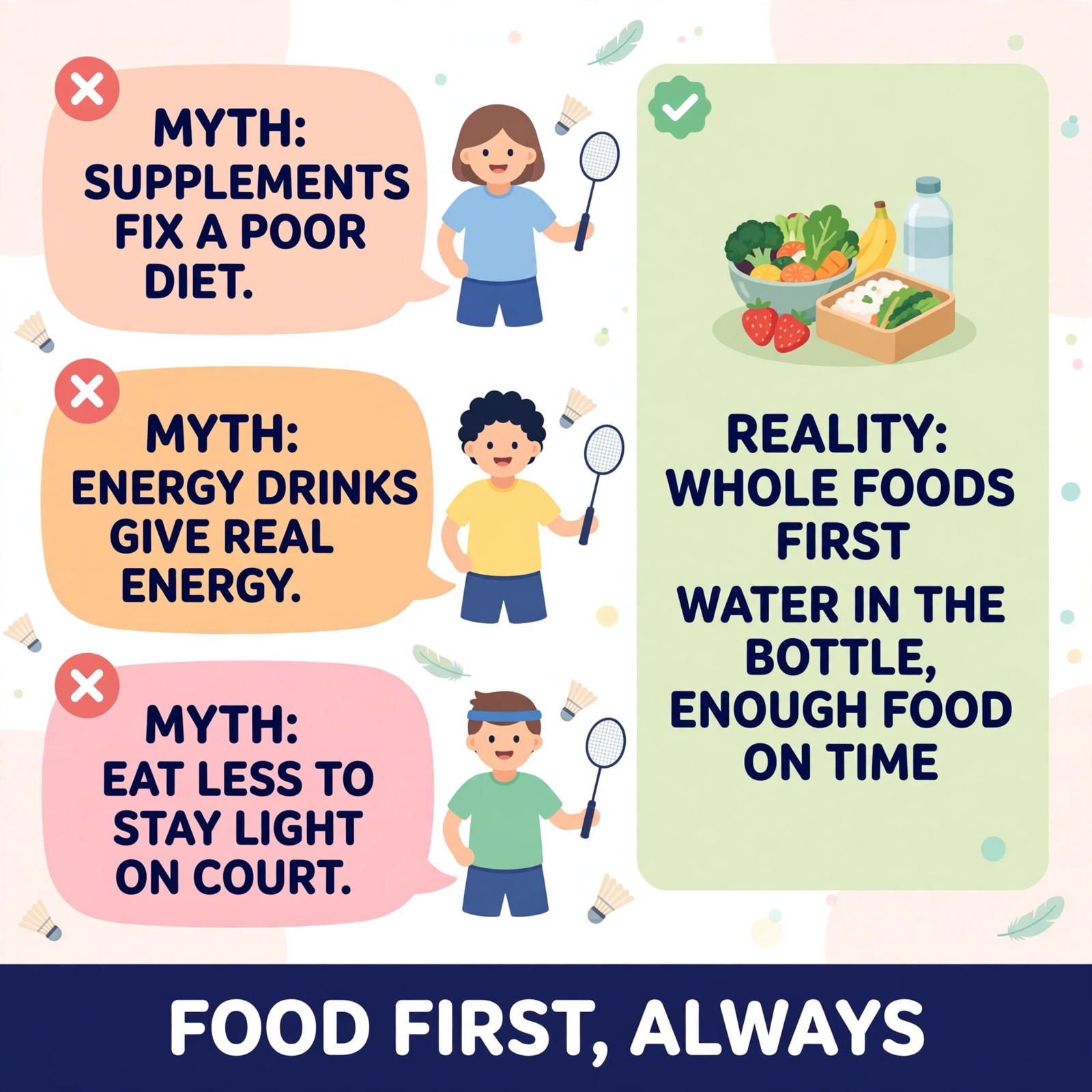
Myth: “Supplements fix a poor diet.” Reality: they cannot. A powder adds a little of one or two nutrients; a real meal brings energy, protein, fluid, vitamins and minerals together. Whole foods come first, always. If a player or parent is considering any supplement, the safe step is to ask a doctor or a dietitian first, because young players do not need products to play good badminton.
Myth: “Energy drinks give real energy.” Reality: the lift is sugar and caffeine, and it fades fast, often in the middle of a match. Myth: “Eat as little as possible to stay light on court.” Reality: light comes from timing, not from skipping. An under-fuelled player slows down, loses focus, and gives away the late points that decide close games.
Myth: “Carb loading means eating everything in sight the night before.” Reality: for school and club level matches, a modest extra portion of rice or noodles at normal meals in the day or two before is plenty. The goal is a full fuel store and a good night of sleep, not a stuffed stomach. Keep the routine normal, and save the experiments for training weeks.
Why Choose Us
Good Nutrition, Coached Like Technique
At ST Badminton Academy KL, eating and drinking habits are coached as part of training, inside small group classes capped at max 4 students. Coaches ask what players ate, plan drink breaks into the session, and notice the player who always fades at the same point in the third game. Small groups make those patterns easy to spot, and easy to fix with simple advice.
Mr Eric Chuar has over 15 years of coaching experience in Singapore and Malaysia. His food rule is simple: check the basics first. Breakfast eaten, bottle filled, main meal timed, recovery meal planned. Only when those four are in place does anything fancier deserve attention, and for most players the basics are the whole answer. He sells no products and recommends no brands, because good fuelling is a habit, not a purchase.
Our academy is based in Setapak, Kuala Lumpur, convenient for players from Wangsa Maju, Melati Utama, Danau Kota and Gombak. If your game keeps fading late, or your child comes home from training too tired to eat, bring your questions to a session. Often the fix is not more training. It is a meal, a bottle and a better-timed snack.
FAQs: Badminton Player Nutrition in Malaysia (KL)
These are the questions players and parents ask us most about eating and drinking for badminton in Malaysia. If your question is not here, message us, tell us your training days and what a normal day of eating looks like, and we will give you a straight answer about what to adjust first.
How should I eat on a training day if I live in Setapak or Gombak?
Eat a normal main meal 2 to 3 hours before the session, then carry a banana or some bread for the hour before if you feel hungry. Plan a proper recovery meal for after. In our Setapak classes, coaches keep drink breaks regular, so players who fuel this way stop fading late.
What matters most in badminton player nutrition in KL?
Timing. Rallies burn through stored carbohydrate, so the fuel has to be in the body before the first game starts: enough carbohydrates on training days, a main meal 2 to 3 hours before, and a recovery meal after. Protein repairs muscle, but it cannot replace fuel that was never eaten.
How often should I eat on training days to improve at a steady level?
Three normal meals, plus one or two planned snacks: something small about an hour before training, and a recovery meal inside the first hour after it. Regular fuelling through the day beats one huge meal, because the body can only store and use so much at one sitting.
Can a young player build good eating habits while still in school?
Yes. School players build the habit with three small routines: breakfast before school, a filled bottle and fruit packed in the bag, and a family dinner treated as the recovery meal on training days. Parents help most by keeping meal times regular, not by buying special products or supplements.
What should I eat between matches at a tournament we enter?
Small, familiar food, little and often: bananas, sandwiches, bread, yogurt or rice-based snacks between matches, with water sipped all day. Avoid heavy fried meals between rounds and anything you have never eaten before. Save the big recovery meal for after your last match of the day.
Do you coach eating habits in classes near Wangsa Maju?
Yes. ST Badminton Academy KL is based in Setapak, a short drive from Wangsa Maju, Melati Utama and Danau Kota. Groups are capped at max 4 students, and eating and drinking habits are coached alongside technique: drink breaks are planned, and coaches notice who arrived fuelled and who did not.
Does your academy teach players what to eat around training in Malaysia?
Yes. Fuelling is part of how ST Badminton Academy teaches badminton in Malaysia: meal timing, hydration and recovery food are covered in plain, simple terms during training blocks. We give general guidance only. Players with medical conditions or special dietary needs should get personal advice from a doctor or dietitian.
Where is ST Badminton Academy KL located for nutrition-minded training?
ST Badminton Academy KL is based in Setapak, Kuala Lumpur, where classes run in small groups of max 4 students. The academy is convenient for players from Gombak, Air Panas, Sentul, Jalan Genting Klang and Ampang. Message us before your first session and we will confirm the venue, and remind you to bring a filled bottle.
What makes Mr Eric Chuar a suitable coach for food and performance badminton?
Mr Eric Chuar has over 15 years of coaching experience in Singapore and Malaysia, and he treats food, sleep and training as one system. His advice stays simple and honest: regular meals, water in the bottle, recovery food after. He sells no products and pushes no supplements, ever.
Badminton Player Nutrition in Action
What It Takes to Eat Like a Player
A player eats to our standard when five habits hold: breakfast is eaten on training days, the main meal is timed 2 to 3 hours before play, the bottle is filled and finished, a recovery meal follows hard sessions, and energy drinks stay out of the bag. Our fuelling standards below are the checkpoints our coaches use.
| Factor | Random Eating | Eating With a Plan PLAN |
|---|---|---|
| Frequency | 1 or 2 times a week. Mostly for fun and sweat. | Three meals plus planned snacks: fuel ready before training, recovery food after it. |
| Drills Focus | Basic static feeding. Minimal footwork pressure. | Every session starts with a filled bottle and a player who ate on time, not on an empty stomach. |
| Physical Conditioning | Rarely included. Just playing games on court. | Core, agility, and speed training included in every session to prevent injury and build stamina. |
| Tactical Awareness | "Just hit it over." No real game plan. | Video analysis, point construction, and learning to read the opponent's game. |
| Coach Ratio | Large groups (8-10 kids). Coach barely watches you. | Max 4 students. Mr Eric Chuar personally corrects every stroke and movement detail. |
| Goal Setting | Fun and exercise. | Simple weekly targets: breakfast on training days, recovery meal after, no energy drinks. |
| Long Term Result | Good recreational player. | A player who still has energy in the third game, because the fuel was planned like the training. |
Badminton Player Nutrition in Kuala Lumpur
This page covered badminton player nutrition: why players run out of energy, the three jobs of carbohydrates, protein and fats, meal timing around training, hydration and electrolytes in Malaysian heat, and match day eating. ST Badminton Academy KL coaches these habits inside small group classes of max 4 students in Setapak. If you are in Wangsa Maju, Gombak, Cheras or nearby, contact us today.


