Badminton and Psychology: Mental Toughness and Winning Strategies
This article introduces the core concepts of badminton psychology, mental toughness and winning strategies. Coach Eric Chuar explains how players from Setapak, Wangsa Maju, Cheras and Petaling Jaya can learn to manage nerves, stay focused under pressure, and perform closer to their true potential in tournaments.
Why Mental Skills Matter
Technique Is Not Enough: The Mental Game
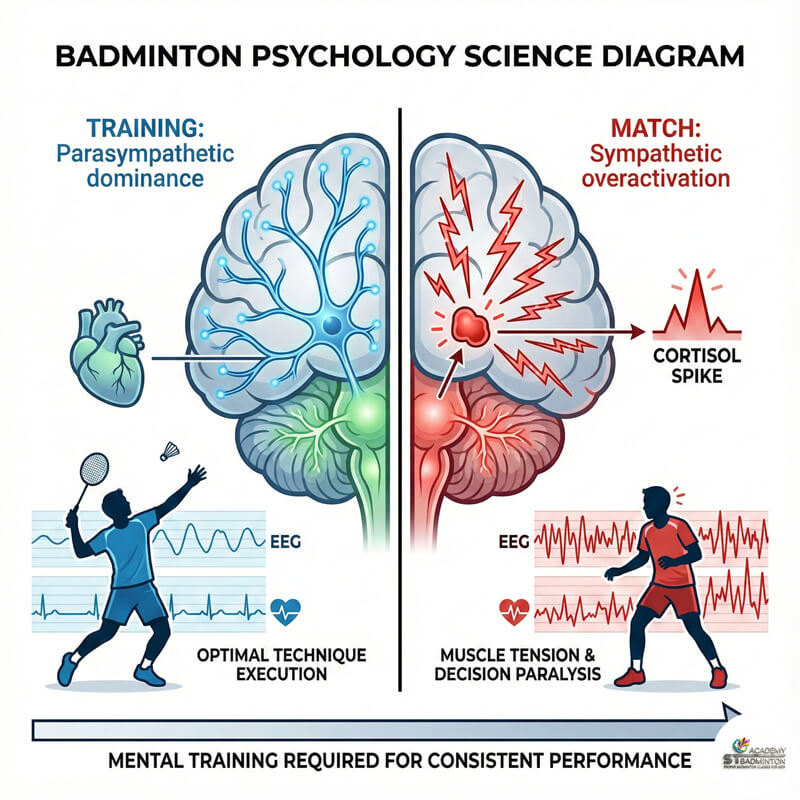
Badminton is an incredibly fast sport involving quick decision making and constant momentum swings. Because of this, players often face nervousness, fear of losing when leading, or frustration after simple mistakes. Even technically strong players from Setapak, Cheras, Kepong and Ampang often lose to “weaker” opponents simply because they cannot manage these internal pressures.
Mental toughness in badminton does not mean shouting or forcing yourself to be brave. It is the ability to stay present in each rally, follow your game plan, and recover quickly from errors. Without these psychological skills, a player’s physical training cannot fully shine on the court.
What Stops You Winning
Common Mental Blocks: Nerves & Fear
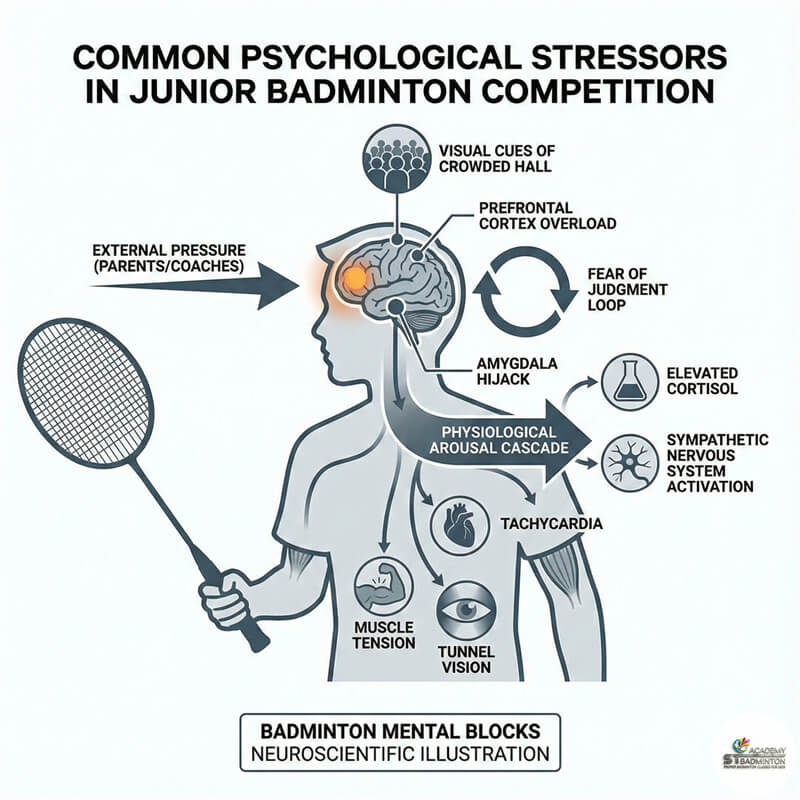
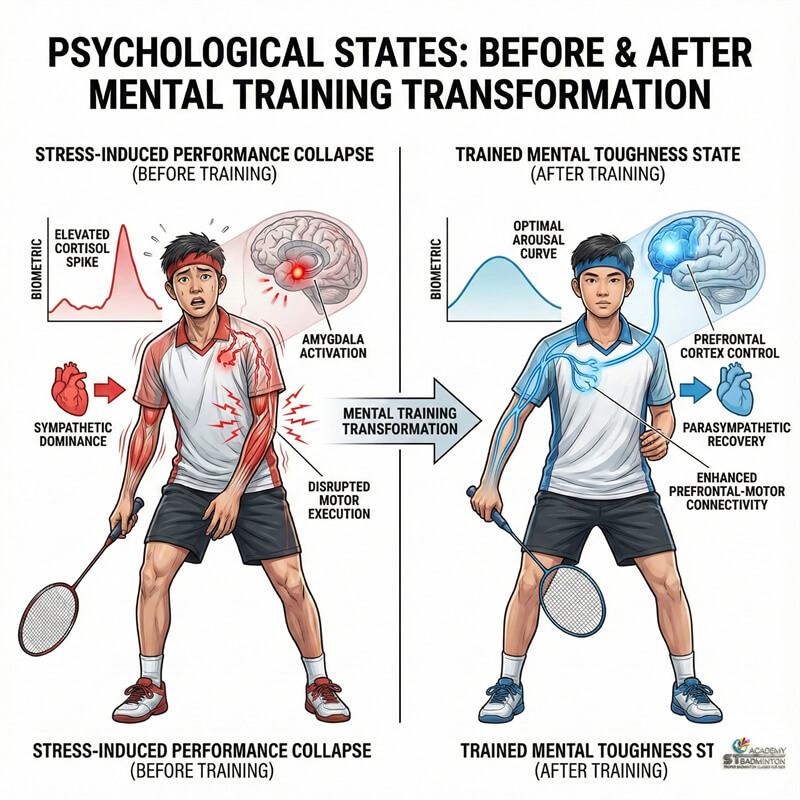
Many players experience “pre-match nerves” where their stomach feels tight and their mind races ahead to the result. This often leads to overthinking, where a player tries to control every muscle movement, resulting in stiffness. Another common issue is the fear of making mistakes, causing players to become too safe and passive when they should be attacking.
External pressure also plays a huge role. Juniors in school teams and MSSM events often worry about what parents or coaches will think if they lose. This “fear of judgment” distracts them from the game itself. At ST Badminton Academy Malaysia, we help students identify these blocks so they can start building winning strategies to overcome them.
For players in Kuala Lumpur, Setapak and Petaling Jaya, understanding these psychological challenges is the first step. Once you know why you feel nervous, you can use specific tools to handle it.
The Mental Framework
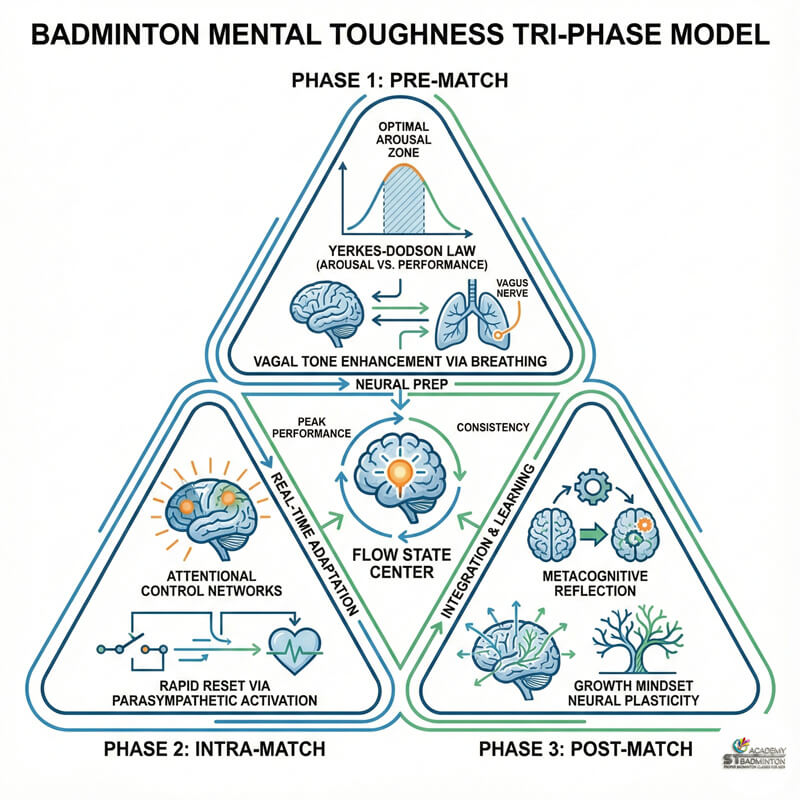
3 Areas of Badminton Psychology
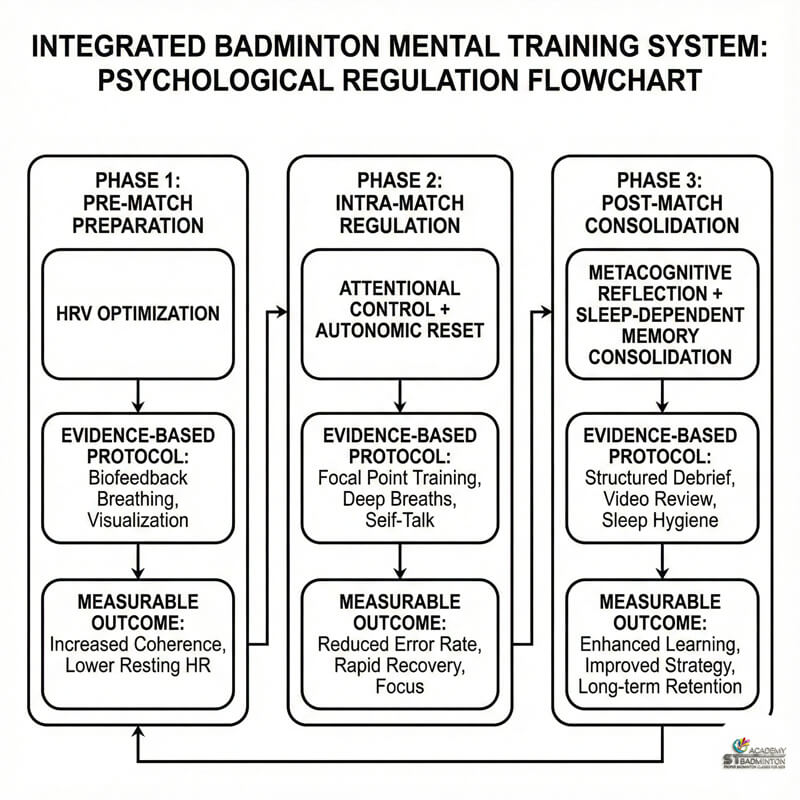
To make mental toughness practical, we break it down into three areas. First is “Before the Match”, which covers preparation and routines. Second is “During the Match”, which focuses on focus, self-talk, and resetting between points. Third is “After the Match”, which involves reflection and learning from the result instead of just being emotional.
Mental toughness is not a magic switch. It is built by repeating small skills in these three areas. Just like footwork drills, players from Setapak, Wangsa Maju and Gombak need to practice their mental routines in training so they work automatically in competition.
This simple framework helps juniors and adults reduce anxiety. Instead of worrying about “winning the whole tournament”, they learn to focus on just the next step: the warm-up, the first rally, or the next serve.

Before The Match
Building a Calm and Clear Start
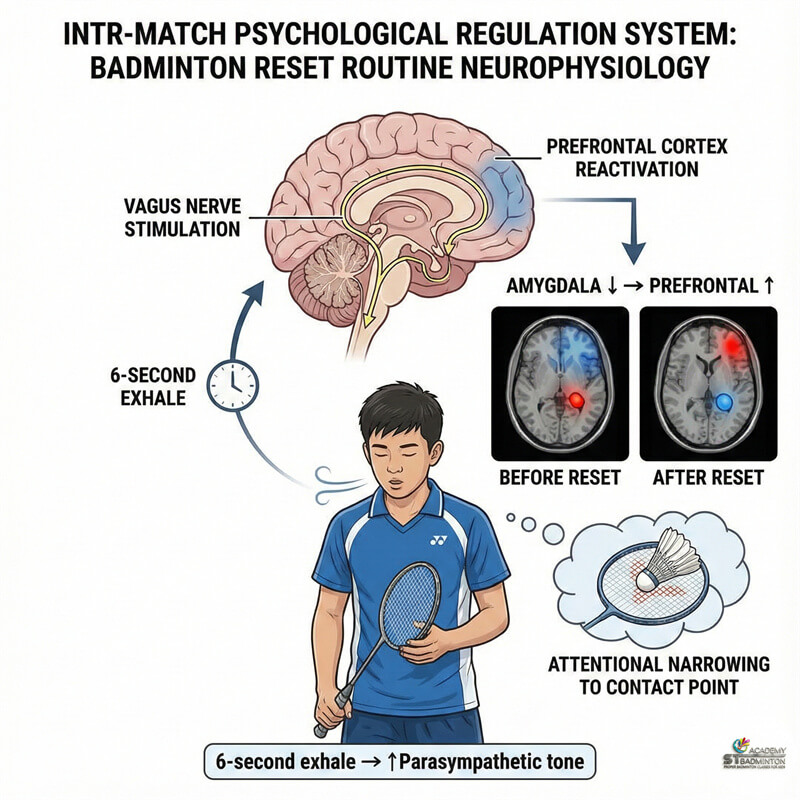
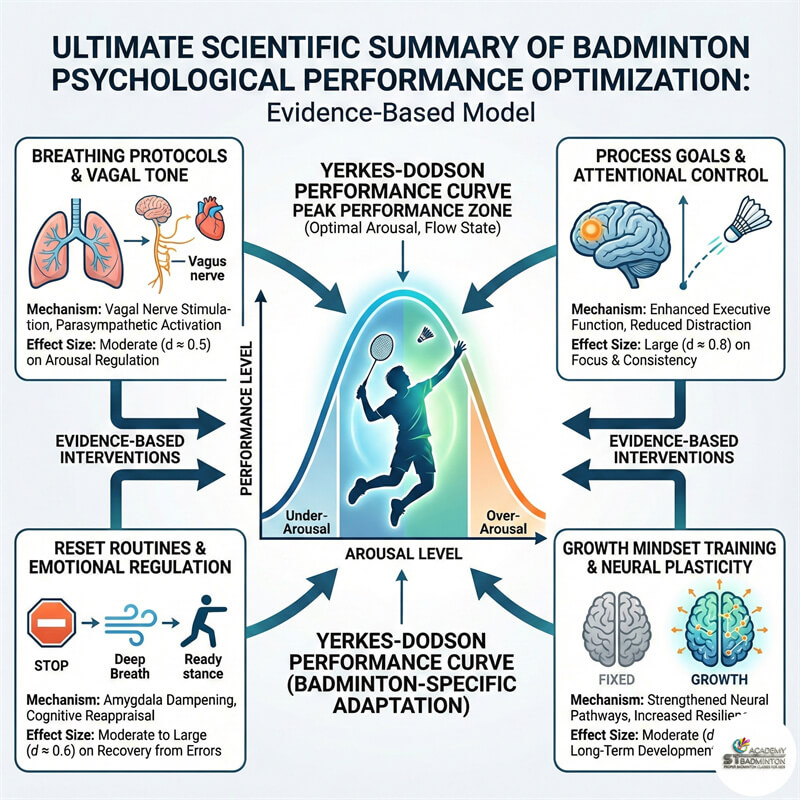
A good performance starts before the first serve. We encourage players to have a consistent pre-match routine: arrive early, do a light physical warm-up, and avoid scrolling social media non-stop to keep the mind focused. Using slow, deep breaths helps calm the nervous system and lower heart rate.
Players should also set 1-2 simple “process goals” for the match, such as “prepare racket early” or “move feet before hitting”. This shifts focus away from “I must win” (which causes pressure) to “I must do this action” (which is controllable). In our academy in Setapak, students practice this mental preparation even during internal sparring sessions.
Standing tall with confident body language also signals to your brain and your opponent that you are ready. This simple psychological trick helps players from Cheras, Kepong and Kuala Lumpur start their matches with better energy and less fear.
During The Match
Reset Routines & Winning Strategies
The most important mental skill is the “reset” between rallies. After a point ends, players should turn away, take a deep breath, and use simple self-talk like “next point” or “small steps”. This prevents dwelling on mistakes. Avoid harsh phrases like “I am useless”; instead, use constructive cues like “watch the shuttle”.
When the score is tight (e.g., 19-19), simple winning strategies become crucial. If you are nervous, simplify your game: play safe clears or comfortable patterns rather than risky smashes. If you are leading, stick to the proper shots that got you there, rather than just pushing the shuttle back safely. This balance of mindset and tactics helps players close out games.
We teach juniors from Wangsa Maju, Melati Utama and Ampang to walk calmly and never throw their racket. Bad body language helps the opponent; calm body language helps you. These small habits build mental toughness more effectively than trying to “suddenly be brave” at match point.

Training At The Academy
How We Train Mental Toughness Daily
At ST Badminton Academy Malaysia, mental skills are not an “extra” subject; they are built into normal training. We use drills with time limits, score targets, and consequences for loss of focus to simulate match pressure. Players are reminded to use breathing and simple self-talk during tough multi-shuttle sets.
Juniors from nearby areas like Setapak, Gombak and Wangsa Maju learn to handle tough rallies without complaining and to accept mistakes quickly. We encourage them to play practice matches with small mental goals, such as “no negative reaction after a mistake” or “focus eyes on shuttle at contact”.
By practising these winning strategies daily in Kuala Lumpur, our players build the habit of staying calm. This way, when they enter a real tournament, the mental toughness is already part of their character.
Learning From Matches
After the Match: Reflection
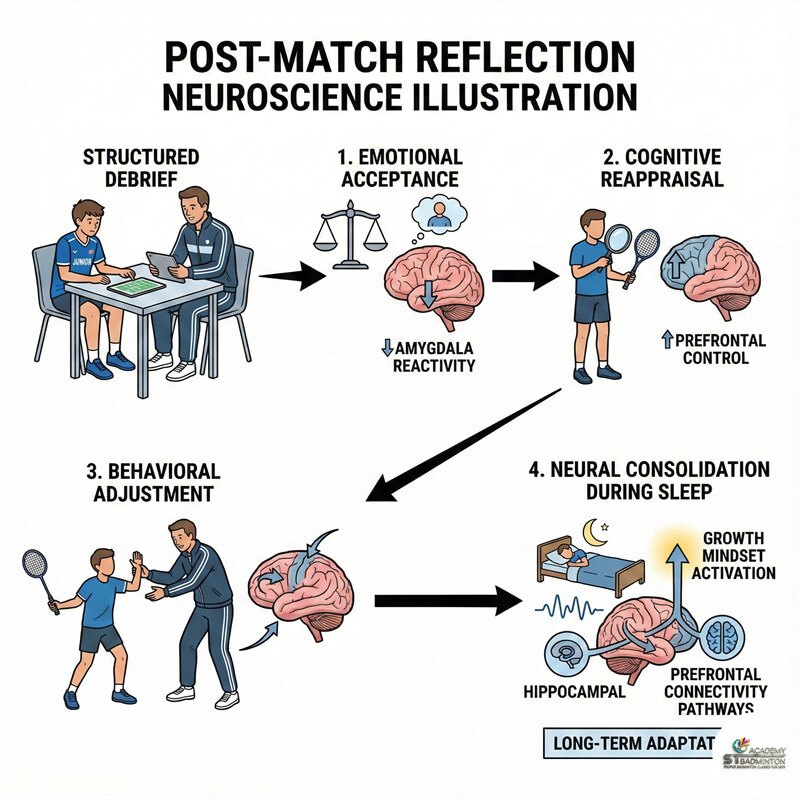
Win or lose, mental toughness also means shaking hands properly and reflecting calmly after some time. We teach players to identify 2-3 things done well and 2-3 things to improve, rather than just feeling happy or sad about the result.
Keeping a simple notebook to record key feelings and what helped focus during the match is a powerful tool. Players from Setapak, Cheras, Kepong and Petaling Jaya who keep this habit develop stronger self-awareness. This “growth mindset” ensures that every tournament, whether a win or a loss, contributes to their long-term development.
ST Badminton Academy supports this by discussing match psychology with students and parents. We believe that building a strong mind is just as important as building a strong smash.
FAQs: Badminton Psychology & Mental Toughness
Here are answers to common questions from parents and players in Kuala Lumpur about mental toughness, handling nerves, and winning strategies in badminton.
How important is mental toughness compared to technique in badminton?
Both are vital, but many players lose matches because their mind collapses under pressure, not because of poor technique. At high levels, mental toughness often decides the winner. Even for juniors in Setapak and Wangsa Maju, simple mental skills like focus and resilience allow them to use their technique properly during competitions instead of freezing up.
My child plays well in training but collapses in tournaments. Is this psychological?
Often, yes. It usually relates to nerves, pressure, and a lack of mental routines. At ST Badminton Academy Malaysia, we help juniors from Cheras and Kepong practise breathing, self-talk, and focus plans during normal training. When these habits become natural, they can bring more of their real level into MSSM, school, and state competitions.
Can mental toughness be trained, or is it just natural character?
Mental skills can absolutely be trained, just like footwork or smashing. While some players are naturally calmer, everyone can learn winning strategies like “resetting” between points and positive self-talk. It requires daily practice, which is why we integrate it into our sessions in Kuala Lumpur. It is not something you fix with just one motivational talk.
Do you teach sports psychology and mental routines at ST Badminton Academy?
Yes, we incorporate practical sports psychology into our daily training. Coach Eric Chuar teaches players from Setapak, Wangsa Maju and Petaling Jaya how to breathe, think, and respond to pressure. However, please note that we are badminton coaches, not clinical psychologists. Serious emotional or mental health issues should always be handled by qualified medical professionals.
What is one simple winning strategy I can use when I feel very nervous?
A simple strategy is to focus on your breathing and body language. Stand tall, shoulders relaxed, and take two slow, deep breaths before serving or receiving. This signals your brain to calm down. Also, focus on a simple process goal like “watch the shuttle” instead of worrying about the score. These small habits help players in KL tournaments regain control.
How can parents help their children with mental toughness in badminton?
Parents play a huge role. Instead of asking “Did you win?”, ask “Did you try your best?” or “What did you learn?”. Praise effort and attitude rather than just the result. This helps children in Setapak and Selayang feel safe to compete without fear of judgment. When the fear of losing is reduced, mental toughness naturally improves.
Is mental training also useful for adult badminton players in KL?
Absolutely. Many adults from Ampang and Petaling Jaya face stress from work and daily life, which affects their game. Learning winning strategies, focus techniques, and how to “reset” can make social games more enjoyable and competitive matches more successful. Mental toughness helps adults play smarter and more consistently.
What are “process goals” in badminton psychology?
Process goals are small, controllable actions you focus on, like “prepare racket early” or “recover to center”. This is different from outcome goals like “win the match”. Focusing on the process helps keep the mind clear and reduces anxiety. We teach this method at ST Badminton Academy Malaysia to help students stay present in the moment.
Does overthinking affect badminton performance?
Yes, overthinking causes “paralysis by analysis”. When a player thinks too much about technique during a match, their movements become stiff and slow. We train players to trust their muscle memory during points and only think about strategy during breaks. This simple shift helps players from Kuala Lumpur perform more freely.
Mental Toughness Training at ST Badminton Academy Malaysia
Benefits of Mental Training for Badminton Players
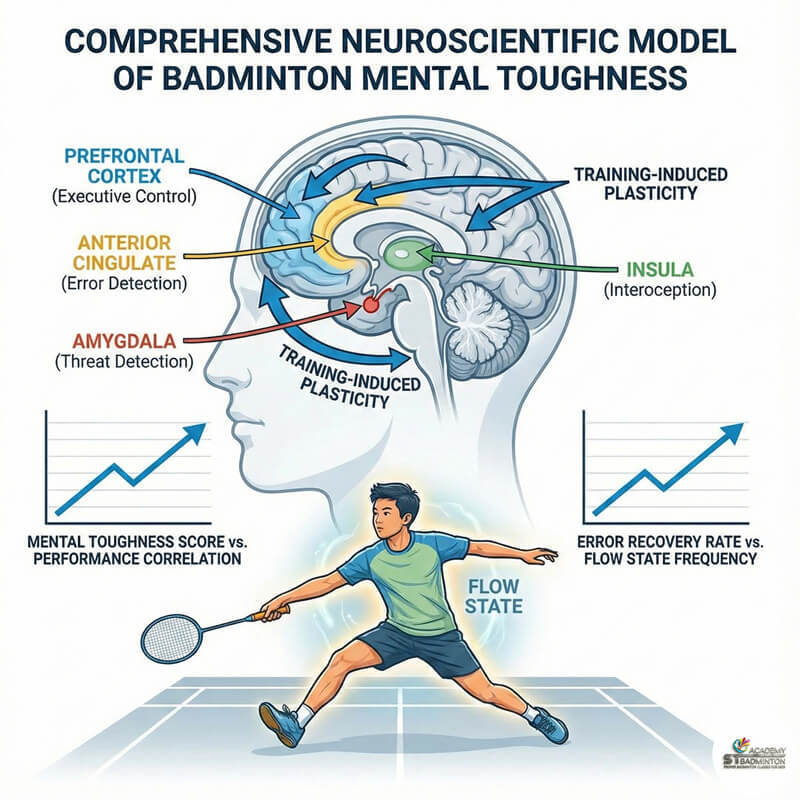
Integrating sports psychology and winning strategies into training gives players a massive advantage. It transforms nervous energy into focus, helps in closing out tight games, and ensures that hard work in training actually pays off in tournaments in Setapak, Cheras, and beyond.
| Mental Situation | Player Without Mental Training | Player With Mental Toughness WINNER |
|---|---|---|
| Reaction to Mistakes | Gets angry, throws racket, dwells on the error for the next 3 points. Loses focus easily. | Accepts mistake immediately, takes a deep breath, resets with "next point" mentality. |
| Leading 19-16 | Becomes scared to win, plays too safely/passively, and lets opponent catch up. | Stays aggressive and follows the game plan. Treats it like any other point (0-0 mindset). |
| Tight Matches | Muscles tighten up, legs feel heavy, mind goes blank due to nervousness. | Uses breathing to relax muscles. Focuses on simple process goals to stay calm and sharp. |
| Body Language | Slumps shoulders, looks at floor, shows frustration to opponent. Signals defeat. | Stands tall, walks calmly, eyes up. Shows confidence and readiness to fight. |
| Focus | Thinking about the trophy, parents, or "what if I lose". Distracted by outcome. | Focuses only on the shuttle and the next action. Present moment awareness. |
| Post-Match | Excuses for losing or only happy if winning. No real learning from the experience. | Reflects calmly on what worked and what didn't. Uses result to improve for next time. |
Master Badminton Psychology and Winning Strategies in Kuala Lumpur
This page explains why mental toughness is just as important as technical skill. At ST Badminton Academy Malaysia, we teach kids aged 4+, juniors, and adults how to stay calm, focused, and resilient under pressure. If you want to learn winning strategies and overcome nerves in Setapak, Wangsa Maju, Selayang, Kepong or surrounding areas of Kuala Lumpur, contact Coach Eric Chuar today.