Badminton And Tai Chi: Exercises For Balance And Coordination (Tai Chi Guide)
Badminton is a game of sudden stops and starts, yet the players who move best look calm doing it. Under every lunge and landing sits balance: the quiet skill of knowing where your weight is and moving it without a wobble. Tai chi trains exactly that. Its slow weight shifting, soft knees and steady breathing can help your balance and body awareness, and those gains travel straight onto the court. None of it asks for talent or special equipment, just a few calm minutes done regularly. It suits players who train hard and recover slowly, and players who simply want to move with more care.
Tai Chi Check #1
Slow Weight Shifting: The Base of Every Court Step
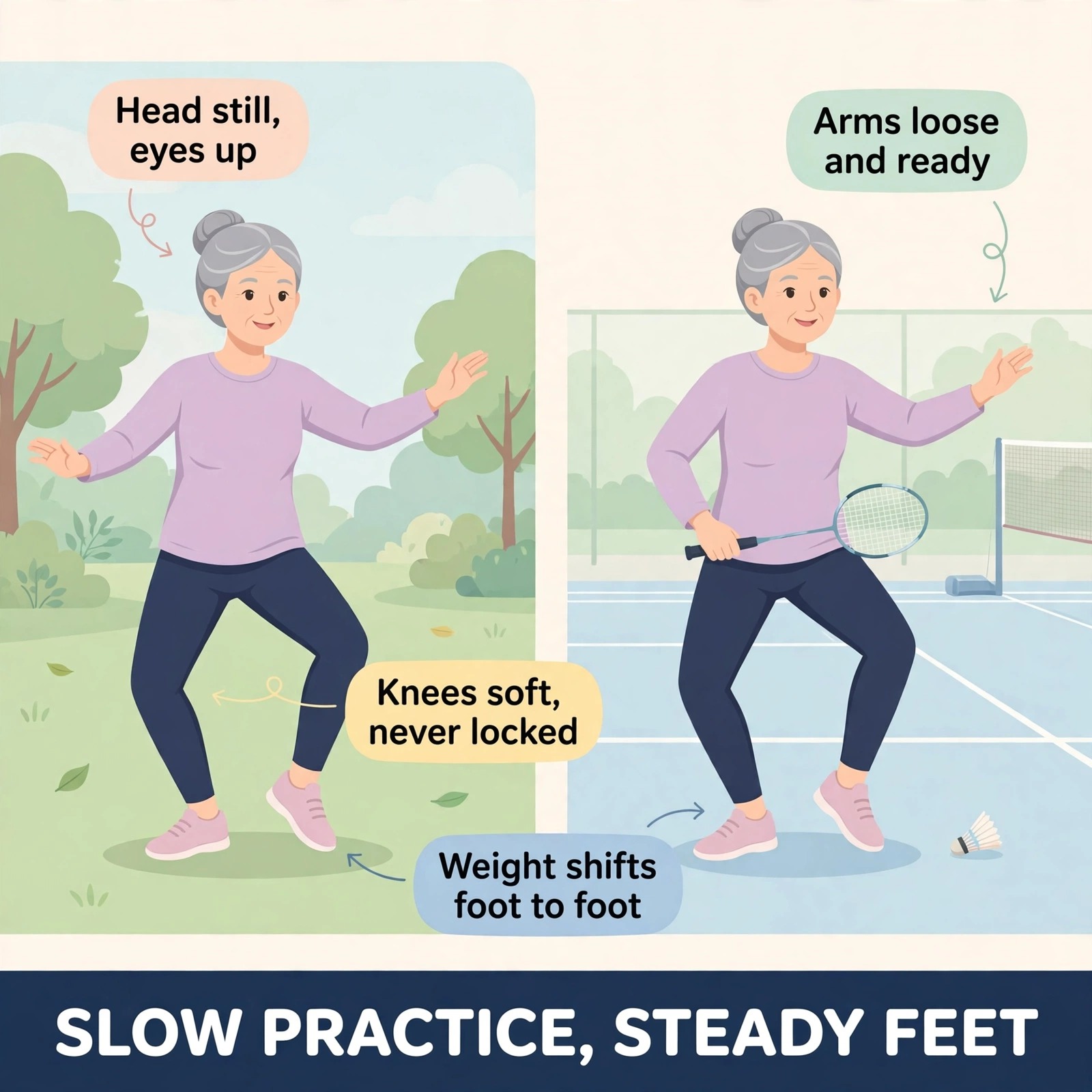
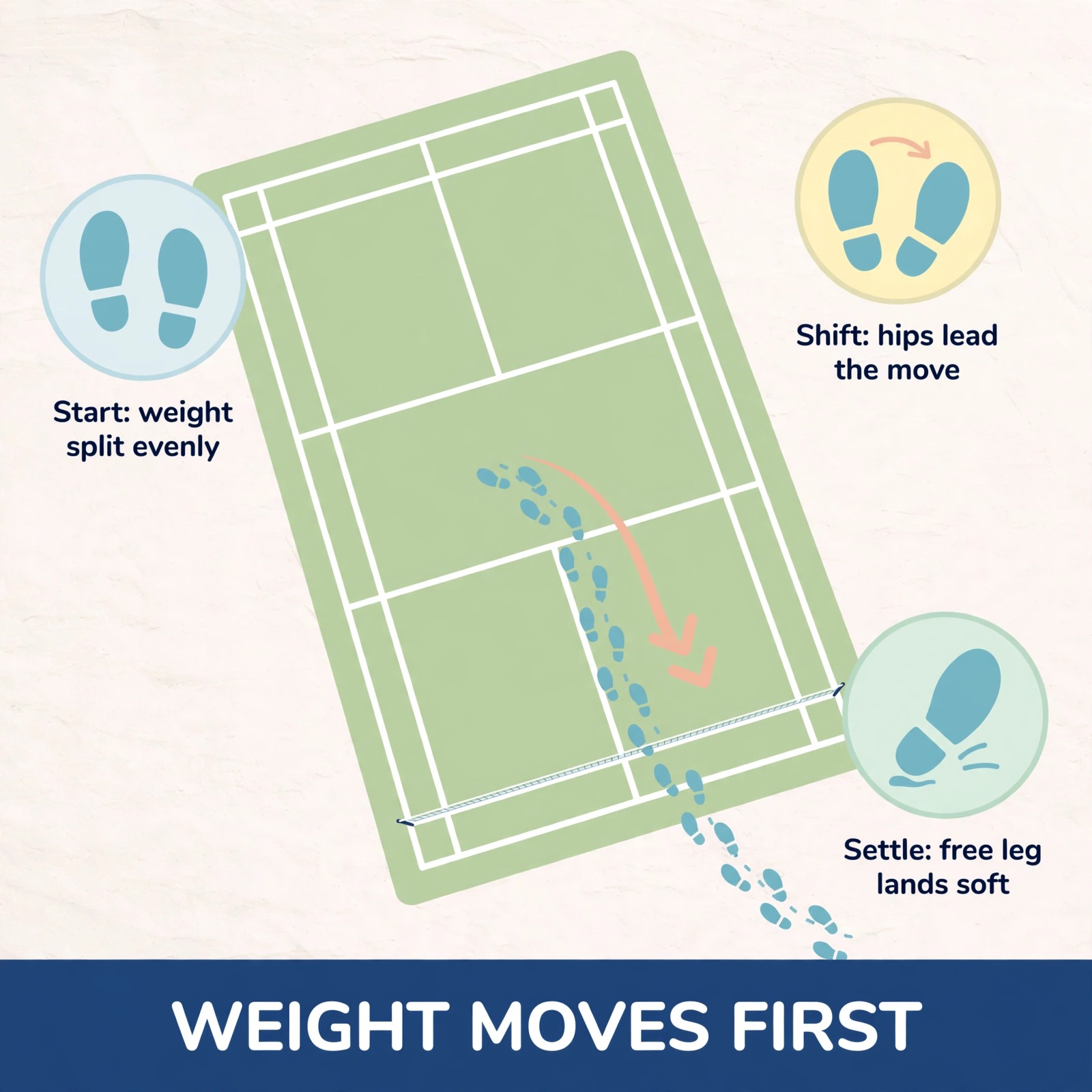
Start with the weight shift, the heart of tai chi. Standing with feet planted, the player lets the weight flow slowly from one foot to the other, feeling the pressure change across the sole. Nothing is rushed and nothing is forced. Done well, the hips stay level, the knees stay soft, and the whole body moves as one piece instead of tipping from the waist. Try it standing still first: rock gently from heel to toe and feel the exact moment your weight changes sides. Once the shift feels natural standing still, try it walking slowly across the room before you ever try it at speed.
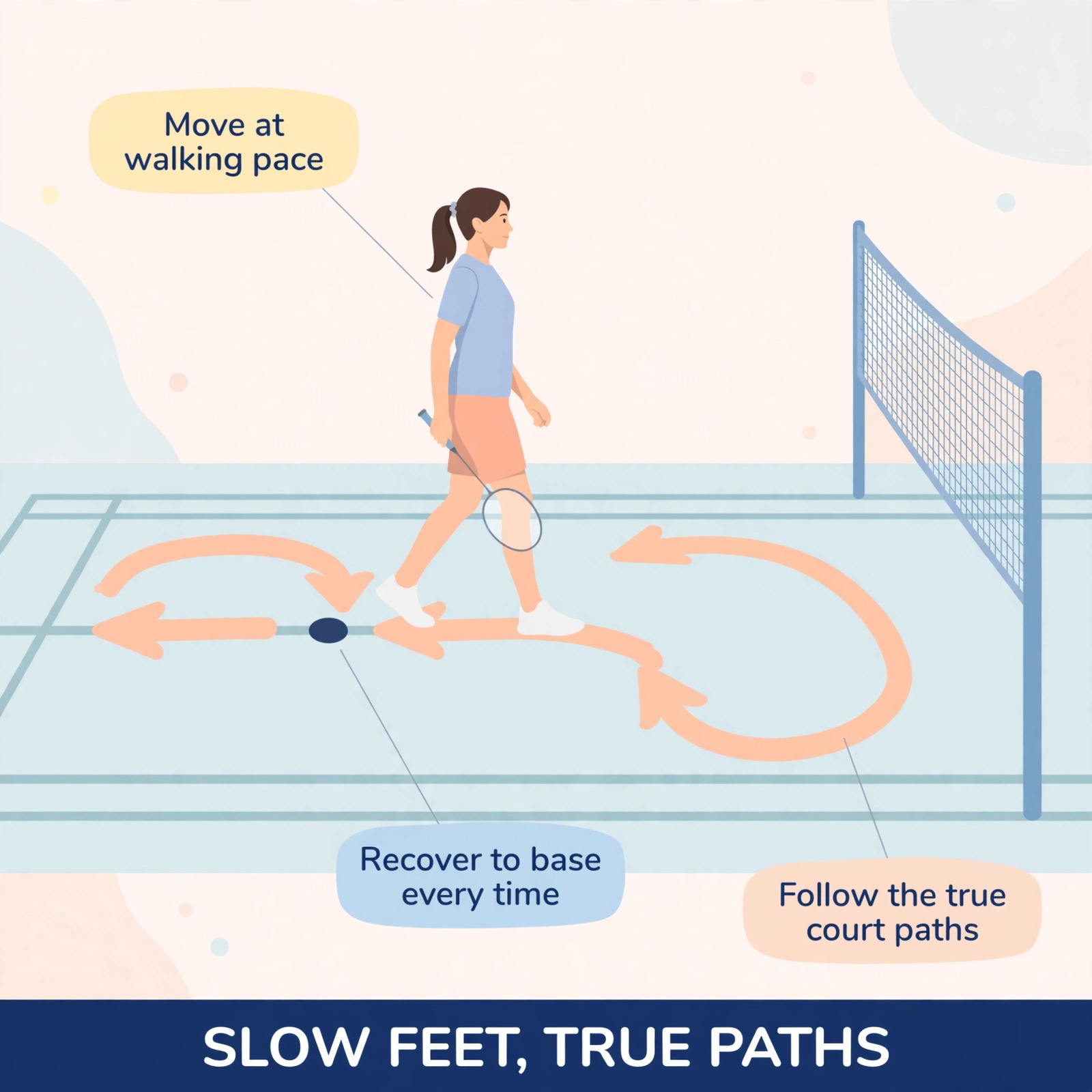
Badminton footwork is weight shifting at speed. The split step, the lunge and the recovery step all ask the same question: can you move your weight where you want it, exactly when you want it? Practising the shift slowly teaches the body the path. When the rally speeds up, the feet already know the road, and the movement stays smooth instead of scrambling. A small daily habit beats a long monthly session, because balance is a skill the body keeps through practice, not storage.
Tai Chi Check #2
Balance on One Leg: Steadier Lunges and Landings
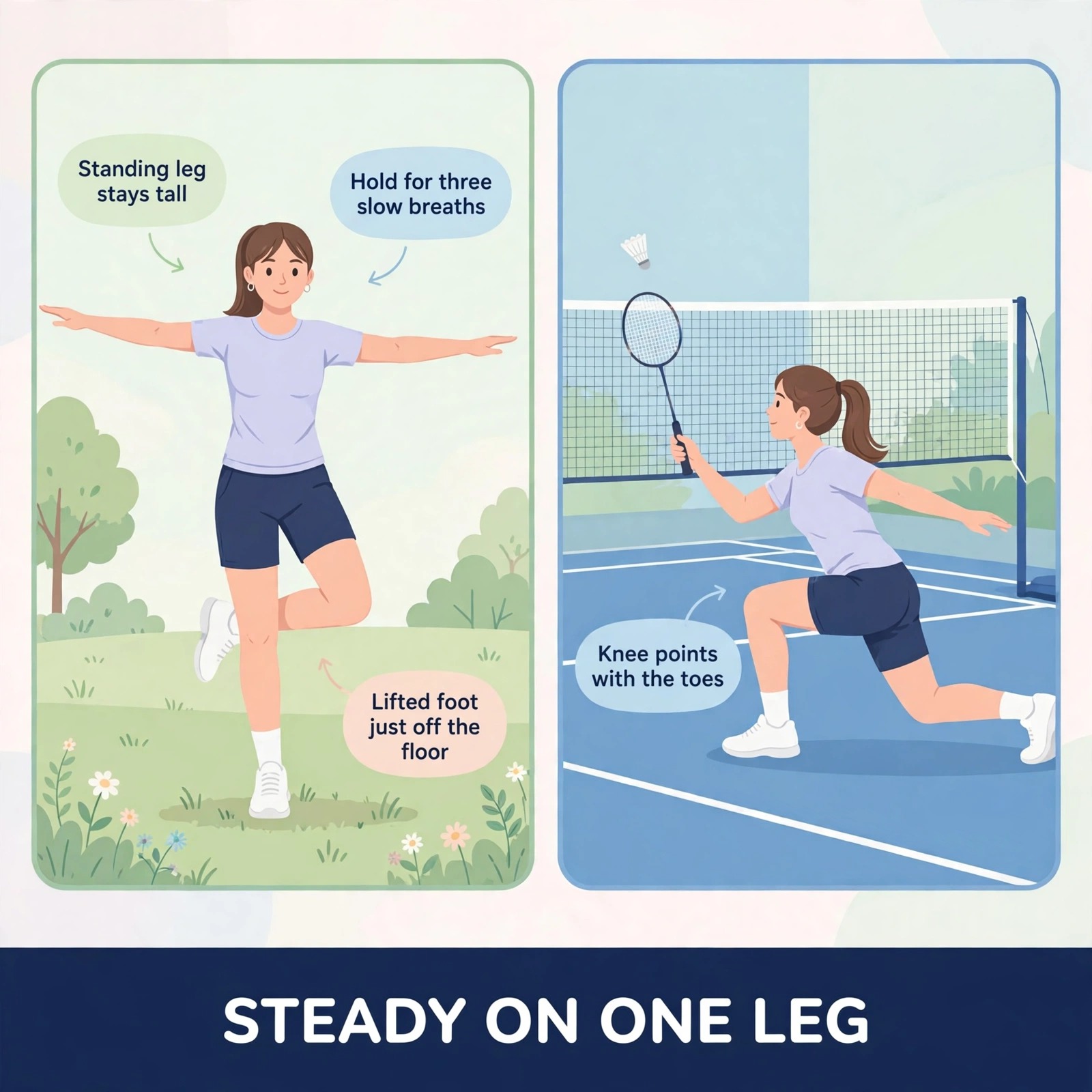
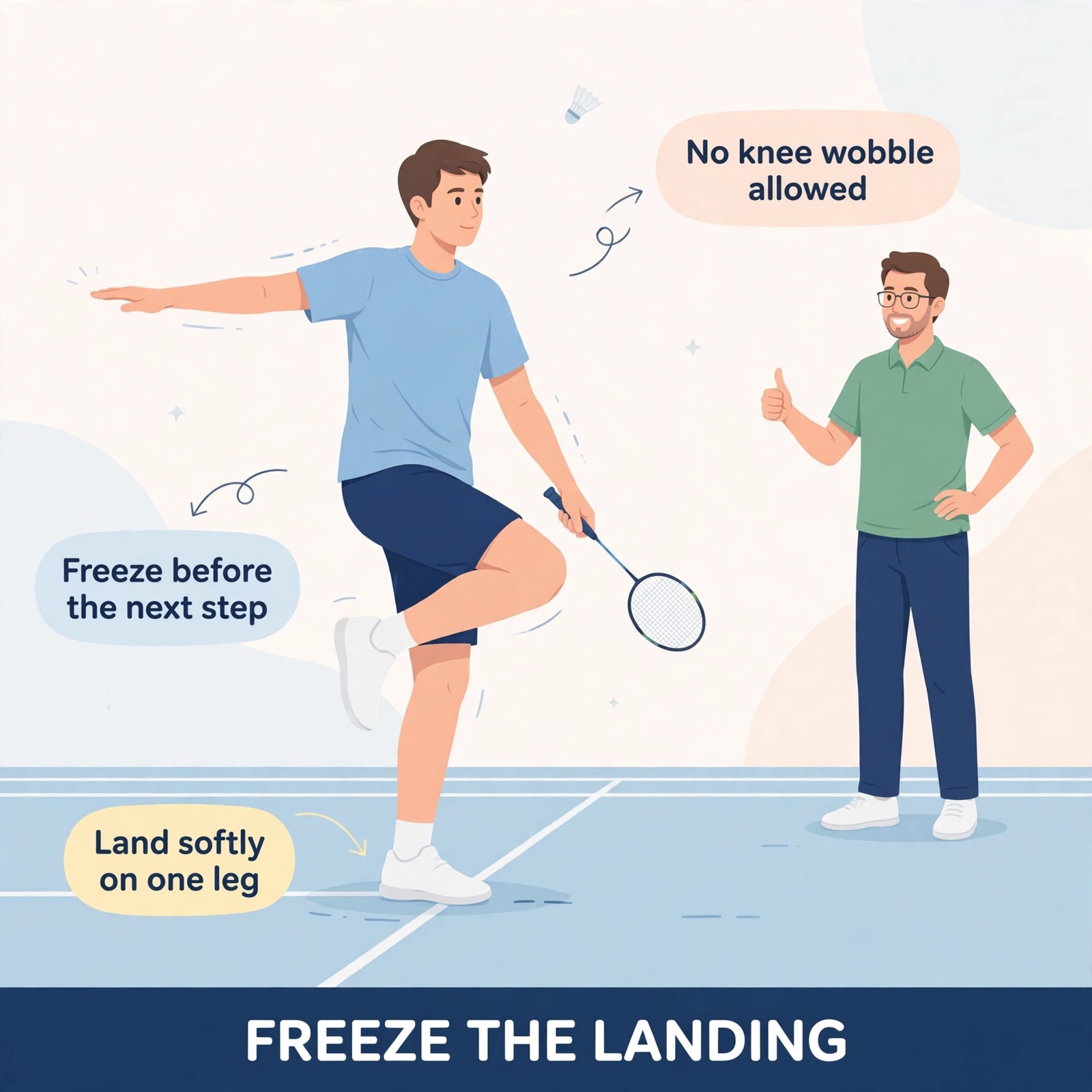
So much of badminton is played standing mainly on one leg. The net lunge lands on one leg, the overhead shot pushes off one leg, and landings often settle on one leg first. Tai chi balance practice, standing calmly on one foot with the other knee lifted softly, trains the small corrections your ankle and hip make to keep you steady. Watch the landing knee as you practise: it should point the same way as your toes, never caving inward. Practise the same hold after front court steps too, because the net lunge ends on one leg every single time.
Expect to wobble. A wobble is not failure; it is the body gathering information and correcting. The tai chi way is to let the wobble happen, breathe, and settle, rather than stiffening up and gripping the floor with your toes. Stiffness feels safer, but it makes the next correction slower, on the mat and on the court alike. Start beside a wall or a chair if you need it, and let the support fade as the weeks pass.
Build the balance slowly. Start near a wall or a chair back you can touch if needed, and hold each side for a few calm breaths. Over weeks the holds get steadier and the arms can join in with soft rounded shapes. The aim is not a statue pose; it is a body that stays organised while everything moves around it. A training partner can call random corners while you hold your shape, which turns a calm drill into a court test.
Tai Chi Check #3
Relaxed Posture: Loose Shoulders, Honest Power
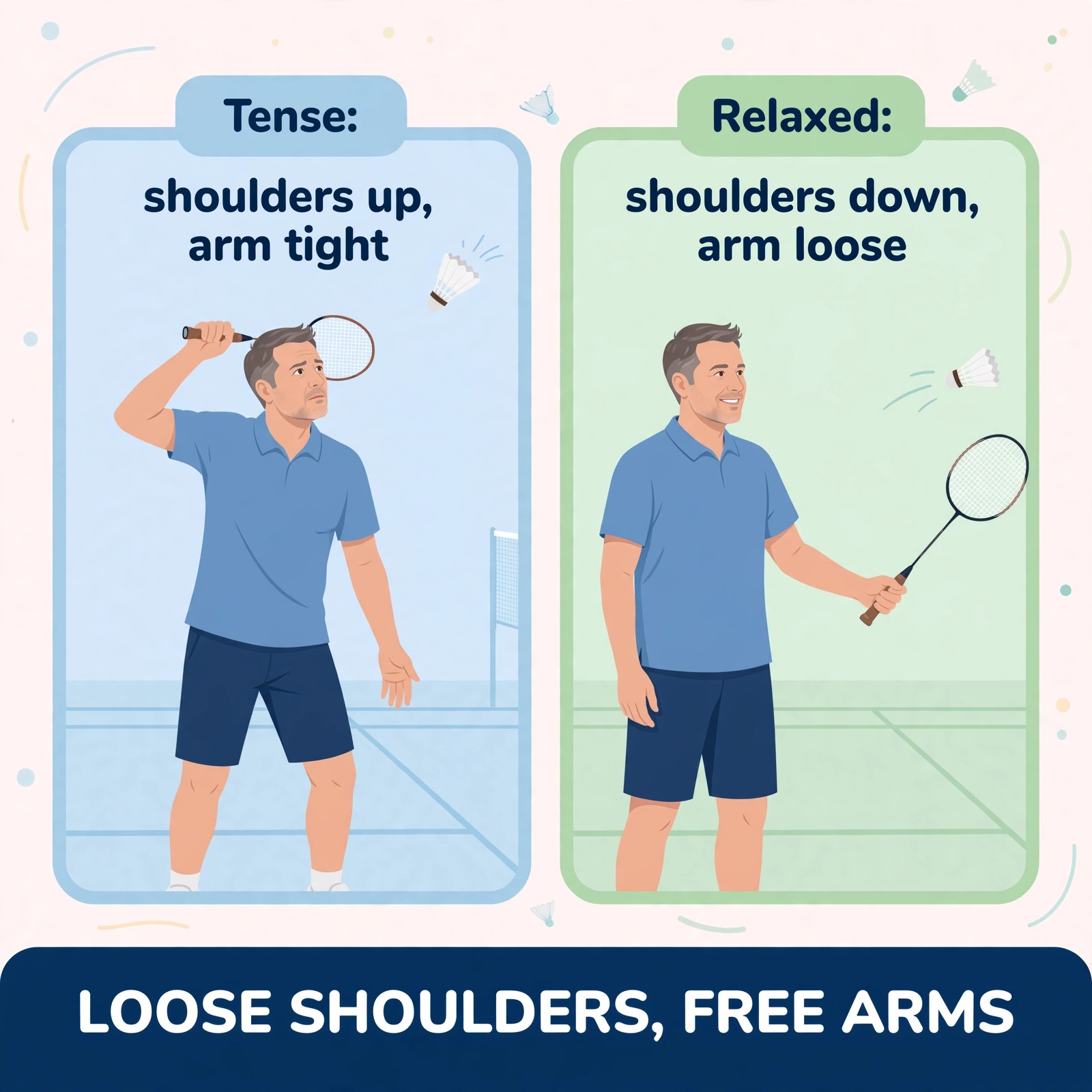
Watch a tense player and you will see the shoulders first: up near the ears, arms stiff, grip squeezed white. Tension feels like effort, but it slows the swing and tires the arm. Tai chi posture works the other way. The head sits tall, the chin softens, the shoulders drop, and the arms hang heavy and round, ready without being rigid. The neck matters too: keep the chin level and the gaze soft, looking at the court rather than staring at the floor. Check yourself in a mirror once: most players are shocked how high their shoulders sit when they think they are relaxed.
Loose shoulders are honest power. A clear or a smash travels through a relaxed arm far better than through a squeezed one, because the racket can whip at the end of the swing instead of being muscled the whole way. Players are often surprised: when the shoulders drop, the overhead shots feel easier and the arm lasts longer into the third game. Players often notice the change first in defence, where a loose upper body turns blocked shots into calm, controlled returns.
Practise the posture standing still before you ask it to move. Let the arms form a soft circle in front of the chest, as if holding a large beach ball gently, and breathe until the shoulders sink. Then shadow a few slow overhead swings and feel for the same loose shape. That feeling, carried into a rally, is worth more than any squeeze. Wear court shoes or go barefoot on a safe floor, so your feet can feel the ground instead of guessing through thick soles.
Tai Chi Check #4
Calm Breathing: Settling Yourself Between Rallies
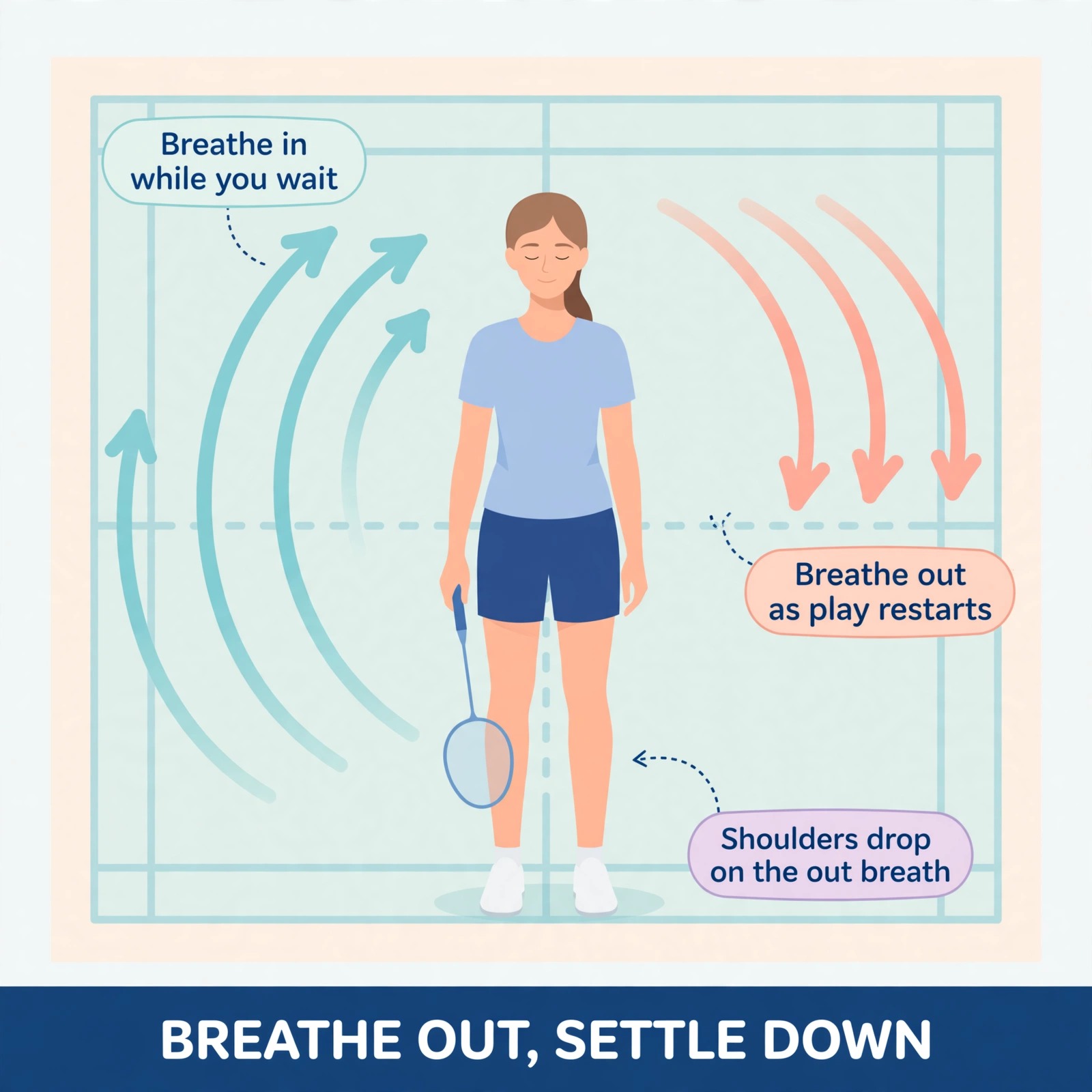
Breathing is the metronome of tai chi, and it is just as useful on court. Slow breathing with a longer out breath tells the body to settle: the heart rate eases, the shoulders drop, the head clears. Between rallies you have a few seconds only, but a few seconds is enough for one slow breath that resets you for the next point. If your mind races after an error, name the next job in one word, feet, watch, ready, and let the breath carry you there. Coaches notice calmer players make better choices at 18 all, because the head stays clear when the legs are tired.
Use the breath at the two moments matches turn on. Before you serve, take one slow breath while you look at your target; the routine calms the hand and steadies the low serve. After a long rally, breathe out fully as you walk back to base, letting the last point go instead of carrying it into the next one. Even one minute of slow breathing before you walk on court can change how the first five rallies feel.
None of this needs a special setting. The same slow breathing works in the warm up, in the queue for the court, and in the car park before a league night. Players who build the habit find their between point routine gets shorter and calmer, and partners notice a steadier player beside them in the tight games. Older players often value this work most, because steady feet protect confidence long after raw speed has faded.
Tai Chi Check #5
A Short Tai Chi Routine That Fits Around Training
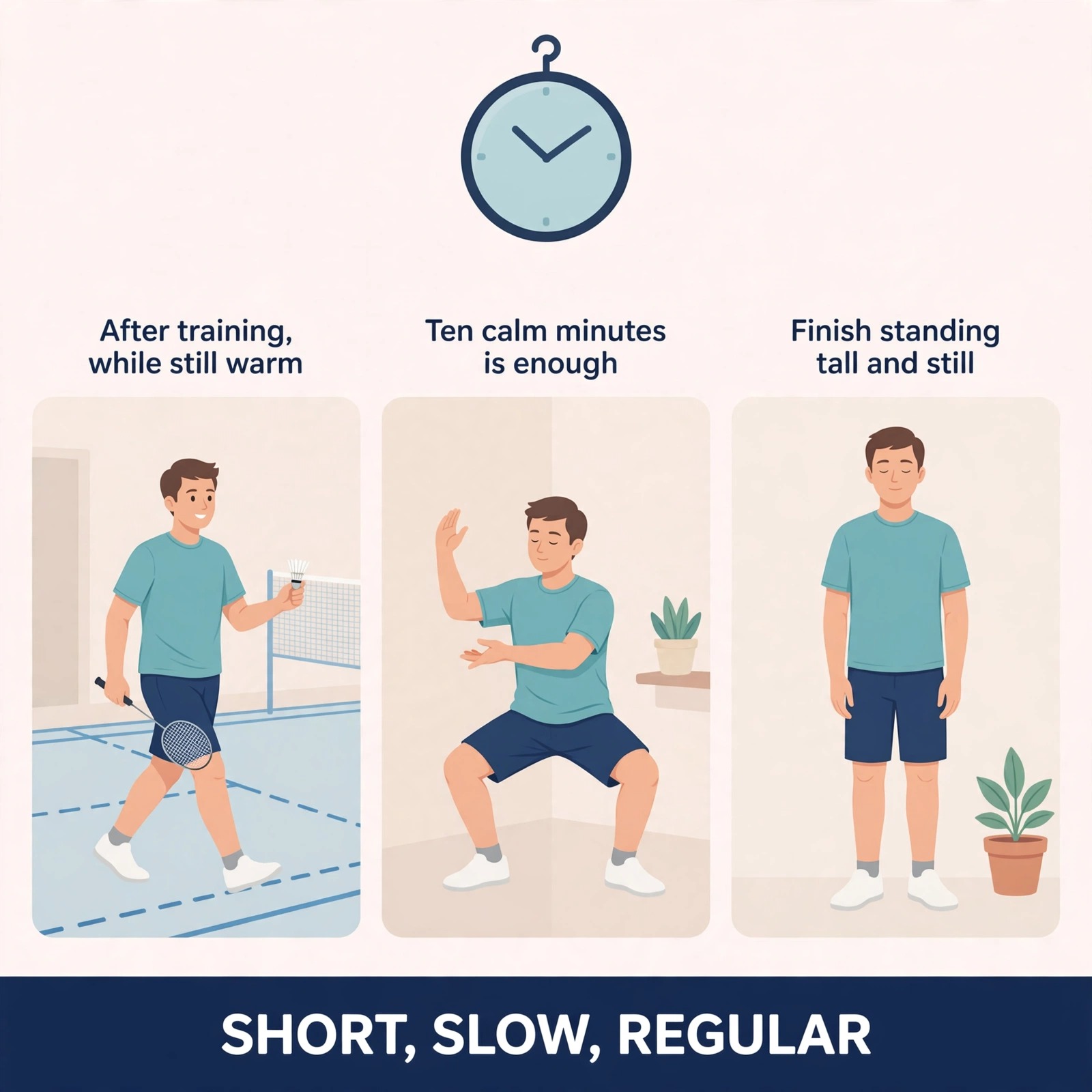
A tai chi routine for a badminton player should be short enough to survive a busy week. A few quiet minutes after a session, while you are warm, is the easiest slot: start with slow weight shifting, add a one leg balance on each side, finish standing still with soft arms and slow breaths. Short and regular beats long and rare. Finish the routine standing still for three slow breaths, and notice how steady the floor feels under both feet. Keep the routine at the same time of day when you can; habits tied to a clock survive busy weeks.
Keep the order gentle. Move slowly between shapes, and skip anything that produces sharp pain; a mild stretch feeling is fine, pain is a stop signal. If a joint keeps troubling you, get it checked by a doctor or physiotherapist rather than pushing through gentle exercise and hoping. Tai chi is support work, and support work should never add problems. Write two lines in your training log after each routine: what felt steadier, and what still wobbles.
Track it simply. Note which side wobbled more, whether your lunges felt steadier in the next session, and how quickly you settled after long rallies. Over a month, those small notes show whether the calm work is travelling onto the court. Most players notice the change first in their landings and in how fast they relax after an error. The same slow moves can open a warm up once a week, reminding the body how calm movement feels before speed arrives.
Myth vs Reality
Tai Chi Myths That Hold Players Back
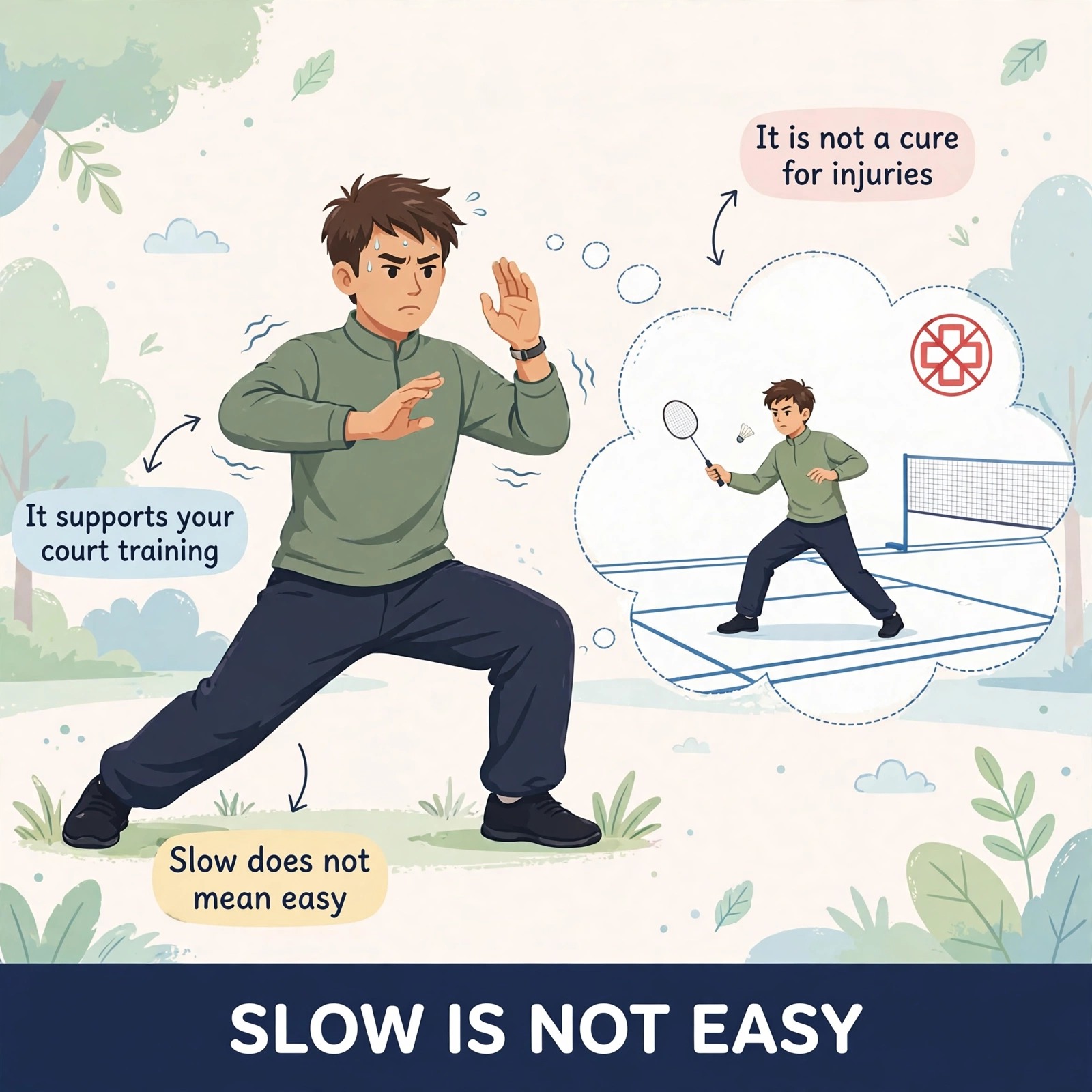
Myth: tai chi is just stretching in slow motion. Reality: the slow weight shifts and one leg holds load the legs and train balance the whole time. Players who try a proper session are often surprised how hard their legs work, and how much concentration a simple shift demands when it is done with full attention. The honest test is simple: if a session leaves you calmer and steadier than it found you, it did its job. Slow work also protects training itself: a calm, warmed body starts sessions looser and finishes them with fewer aches.
Myth: slow practice cannot help a fast game. Reality: slow practice is where clean movement paths are built. A lunge grooved slowly, with the knee tracking straight and the weight settled, is the same lunge that survives at match speed. Speed added to a messy shape just makes a faster mess, in tai chi and badminton alike. Treat the wobble as a teacher with a sense of humour: it shows you exactly where the work is, without charging extra.
Myth: tai chi can replace court training. Reality: tai chi supports your badminton; it does not substitute for it. Footwork timing, shot skill and match craft only come from playing and coaching. What tai chi adds is the balance, posture and calm that let the court work land properly, which is a support role, not a shortcut. Give slow practice a month of honest tries before you judge it; balance changes quietly and then all at once.
Why Choose Us
Why Players Choose ST Badminton Academy
We build balance work into coaching because unsteady players plateau early. At ST Badminton Academy, warm ups and cool downs include the slow shifts and single leg holds this guide describes, and players are shown how the same shapes appear inside their lunges, landings and recovery steps on court. Players who add this work usually report the same thing first: the court feels slightly bigger, because their feet arrive in time. You do not need to believe in anything mystical to use it; you only need ten quiet minutes and a floor.
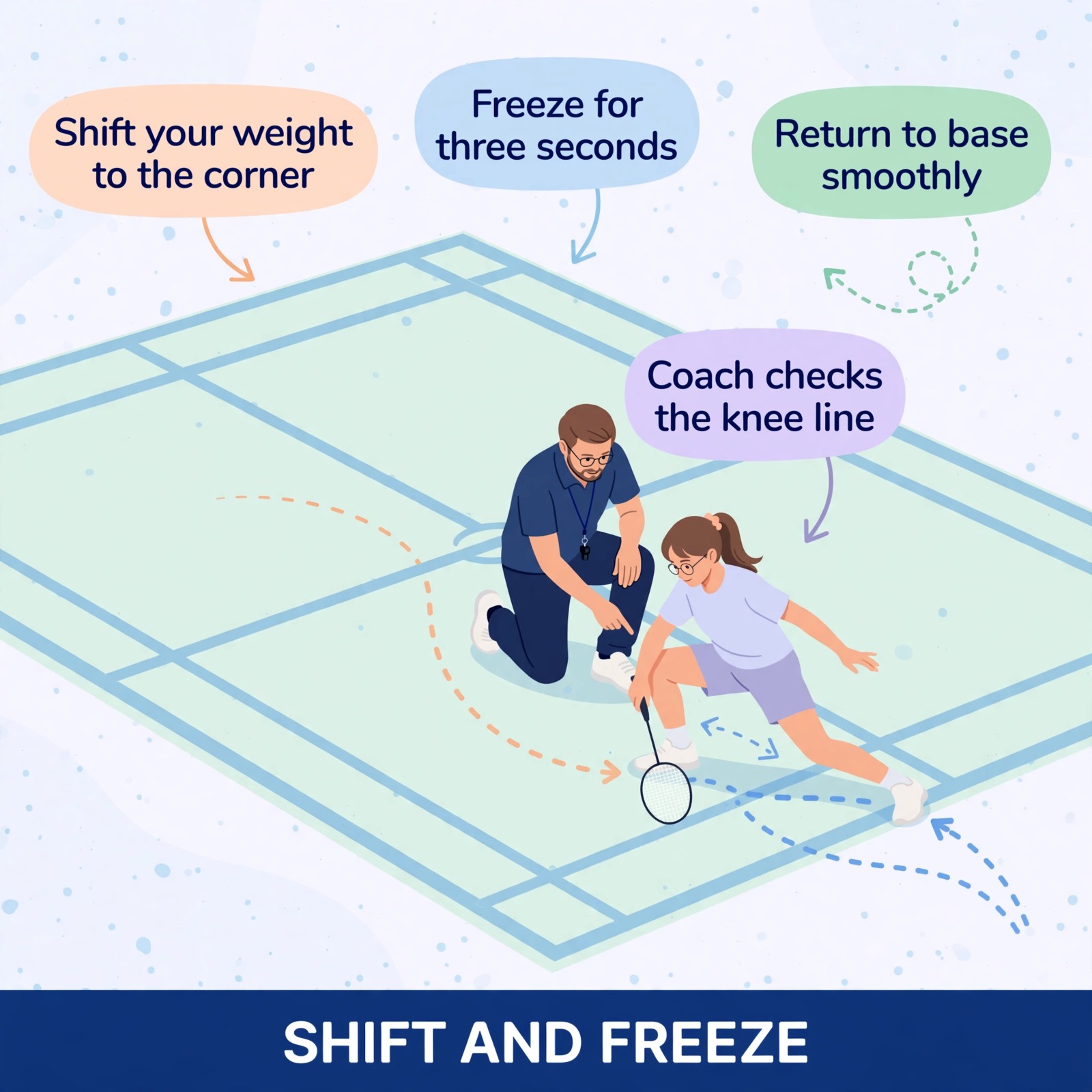
Our small group policy, with a maximum of four students, means the coach actually sees your weight shift, your balance side and your posture in real rallies. If one side wobbles more, it gets spotted and trained, instead of hiding inside a big group where nobody watches your feet closely. The coach checks your weight shift and your landing line the same way we check a grip: early, kindly and often.
We keep the claims honest. Tai chi style practice can help your balance, body awareness and calm, and we will show you how to do it safely, but it is support for your training, not a cure for joint problems or a replacement for medical advice when something hurts. If balance is your weak point, bring it to a trial session and we will show you exactly where the wobble starts.
FAQs: Tai Chi for Badminton, Balance and Coordination in Malaysia (KL)
Here are the questions players ask us most about tai chi, balance and coordination for badminton. If your question is not covered here, ask us directly and we will answer plainly.
Can a complete beginner start tai chi for balance in Setapak or Gombak?
Yes. Slow weight shifting and one leg holds are gentle ways to start, because you work inside the range and balance you already have. At the academy, balance work is built into warm ups and cool downs, with a wall or a partner nearby until you feel steady on both sides.
What should I work on first for balance and coordination in KL?
Start with the weight shift. Feeling your weight move cleanly from foot to foot, with soft knees and level hips, underpins the split step, the lunge and the recovery step. A few calm minutes after sessions builds the base; balance holds and posture work layer on top once the shift feels natural.
Why do I wobble and lose balance at the net at club level?
Usually the weight arrives late and all at once, so the lunge lands heavy and the body tips forward past the knee. Slow one leg balance work and honest weight shifting teach the weight to travel earlier and settle softer. Your coach can watch your landings and tell you which side needs the work.
I feel stiff and tense when I play. Should I stretch harder or learn to relax first?
Learn to relax first. Tension through the shoulders and grip slows the swing and tires the arm, and stretching harder rarely fixes that. Tai chi posture, with dropped shoulders and heavy round arms, teaches the loose shape that overhead shots need. Shadow a few slow swings after posture practice and feel the difference.
How can I practise tai chi at home between sessions in Kuala Lumpur?
Yes, a small clear space is enough. Run the short routine from this guide: slow weight shifts, one leg holds on each side, then a minute standing still with soft arms and slow breaths. A few minutes on the days between sessions keeps the feeling fresh without needing any special equipment at home.
Do you include balance work in coaching near Wangsa Maju?
Yes. The academy runs coaching across Kuala Lumpur, with our original base in Setapak and sessions serving players from Wangsa Maju and the wider Klang Valley. Balance and coordination work is built into warm ups and cool downs, and your coach will show you which slow shapes support your own game.
Where does ST Badminton Academy coach badminton in Malaysia?
The academy coaches in Kuala Lumpur, with our original base in Setapak and players joining from across the Klang Valley. Sessions run for kids, teens and adults in groups capped at four students, and balance work is woven into regular training rather than sold as a separate extra.
How do I book a trial session to check my balance in Kuala Lumpur?
Send us a message and tell us where you feel unsteady when you play: lunges, landings or turning at the back. We will arrange a trial in a group of no more than four students, and a coach will watch your balance on both sides before suggesting what to train.
What makes Mr Eric Chuar a suitable coach for balance and coordination in badminton?
Mr Eric Chuar coaches the academy sessions himself and teaches balance work the way this guide sets out: slow shapes, honest claims and steady progress. He works with players across Kuala Lumpur and builds the calm off court habits that help ordinary club players move better and stay relaxed in rallies.
Badminton Balance and Coordination in Action

One Standard for Every Session and Every Player
These standards hold for every session and every player: honest claims about what slow practice can do, safe ranges respected, pain treated as a stop signal, and coaching in groups of no more than four students. You will never be rushed, laughed at for wobbling, or promised results that honest practice cannot deliver. Balance work is offered to every player who wants it, from first timers to league regulars, with no pressure attached.
| Factor | All Court | Court Plus Tai Chi TAI CHI |
|---|---|---|
| Frequency | 1 or 2 times a week. Mostly for fun and sweat. | A few slow minutes sit around training: weight shifts, one leg holds and calm breathing after sessions. |
| Drills Focus | Basic static feeding. Minimal footwork pressure. | Balance is trained on purpose, so lunges land softer and landings settle instead of staggering. |
| Physical Conditioning | Rarely included. Just playing games on court. | Core, agility, and speed training included in every session to prevent injury and build stamina. |
| Tactical Awareness | "Just hit it over." No real game plan. | Video analysis, point construction, and learning to read the opponent's game. |
| Coach Ratio | Large groups (8-10 kids). Coach barely watches you. | Max 4 students. Mr Eric Chuar personally corrects every stroke and movement detail. |
| Goal Setting | Fun and exercise. | Posture stays loose under pressure, with dropped shoulders keeping the arm fresh into the third game. |
| Long Term Result | Good recreational player. | A balanced player: steady feet, quiet shoulders and a clear head when the rallies get long. |
Badminton Balance Coaching in Kuala Lumpur
This guide gives your game the quiet base it has been missing: weight that shifts cleanly, landings that settle, shoulders that stay loose and a breath that calms you between rallies. Add a few slow minutes around your sessions, keep the claims honest, and let your feet get steadier week by week. Bring that steadiness to your next match and notice the difference in the rallies you used to lose. Steady feet and a quiet head will not win matches alone, but they give every other skill a fair chance to work.


