
 All languages
 Chinese (Simplified)
 Chinese (Traditional)
 English
 Indonesian
 Japanese
 Korean
 Malay
 Thai
 Vietnamese


What Are The Best Strategies For Overcoming Nerves In Badminton Training (Nerves Guide)
Nearly every badminton player knows the feeling: a fast heart in the warm up, hands that will not sit still, a serve that suddenly feels like a public performance. Nerves are not a junior problem or a beginner problem. They visit league players and finalists too. This page works through what nerves actually are, how breathing and routine settle the body, how to shrink a match down to one rally, how to practise pressure in small doses, and how to review a nervy day kindly instead of at midnight. None of it asks you to become a different person. It asks for a few small habits, practised until they are boring, and boring is exactly what you want at match point.
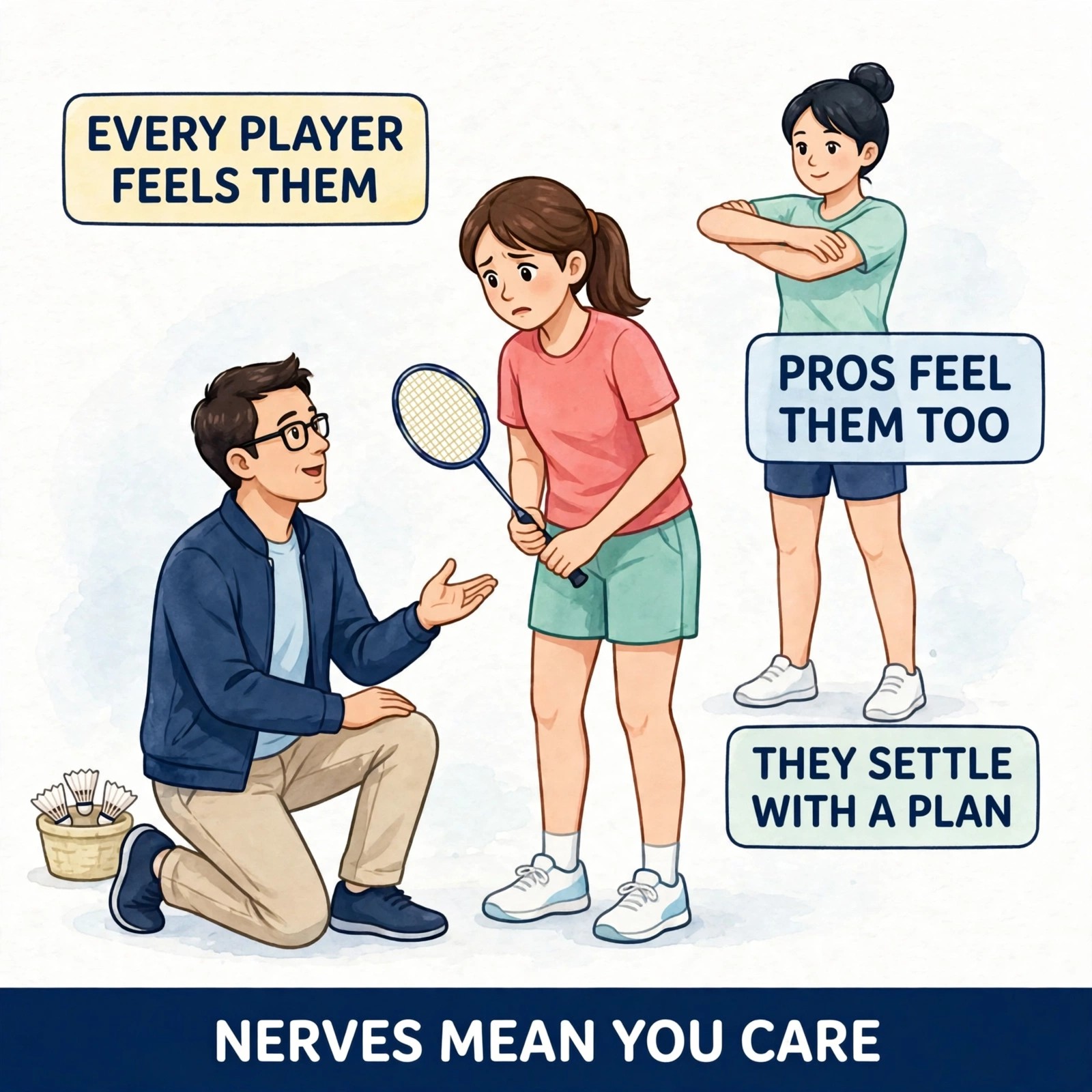
Nerves Check #1
Nerves Are Normal: What Your Body Is Doing
Start with what is happening in the body, because nerves feel personal and are mostly plumbing. Before a match or a hard session, the body prepares to perform: heart rate climbs, breathing gets shallow, shoulders rise toward the ears, and blood leaves the hands, which is why fingers can feel cold, sweaty or shaky at the net. This is adrenaline doing an old job, sharpening you for effort. It is the same machinery in a club player before a league night and in a professional before a final. The feeling is not evidence about your ability. It is evidence that your body has noticed something matters.
Training can spike nerves as much as matches do, because training is where you are watched while you are unfinished. A coach is counting your footwork, friends are on the next court, and the new drill exposes exactly the shot you are worst at. That exposure is the point of training, but the body reads it as judgement. Naming the feeling helps more than fighting it: my hands are shaky, my shoulders are up. A named feeling is information. It tells you what you care about, and it usually loses some of its size once it has been said plainly, even only to yourself. Coaches see it in the small signs: the serve that speeds up, the warm up that gets skipped, the player suddenly very interested in their shoelaces.

Nerves Check #2
Breathe Slow, Settle First: Calming The Body Before Play
The oldest settling tool is also the plainest: slow breathing, with the out breath longer than the in breath. A long, slow exhale is the body’s own signal that the danger has passed, and the heart follows it down. Sit on the bench before you play, breathe in gently through the nose, then let the breath out slowly, a little longer than it came in, for a minute or two. There is no app to buy and no special count to defend. The aim is not to empty yourself of nerves. It is to take the top edge off them, so your hands are steady enough to hold a shuttle and your first rally can be played at your pace.
Arriving in a rush is a nerve multiplier, so protect the minutes before you play. Come early enough to change without hurrying, and run the same warm up order every time: the same easy movement, the same shadow swings, the same first feeds. Familiar steps tell the mind that this day is like other days you have handled. Players who sprint through the door, lace their shoes at the net post and start at full pace are asking their bodies to settle and perform at the same time. Give the settling its own few minutes and the performing gets easier all evening. The routine does not need to be long. It needs to be yours, and it needs to be the same, so your body learns the shape of a day it can handle.
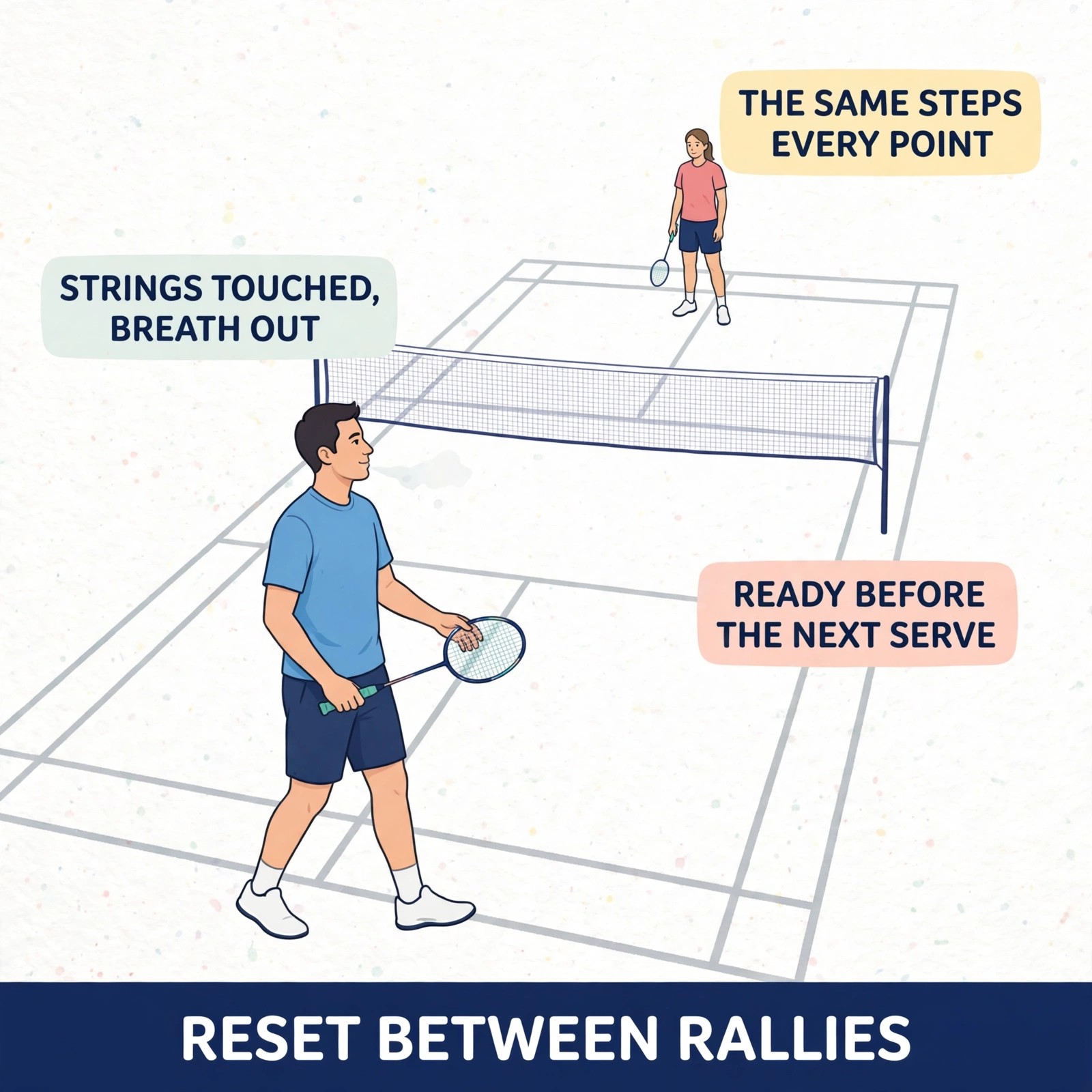
Build one small routine for the moments that shake you most, and use it every time, not only when you feel nervous. For a serve it might be: stand in the box, shuttle held by the feathers, one slow breath out, eyes on the front corner, then serve. Between rallies it might be a touch of the strings and a walk back to base. A routine gives a busy mind one plain job at a time, and jobs are calming. Keep it short enough to survive a real match, and boring enough that nobody watching would notice it. That is the point.
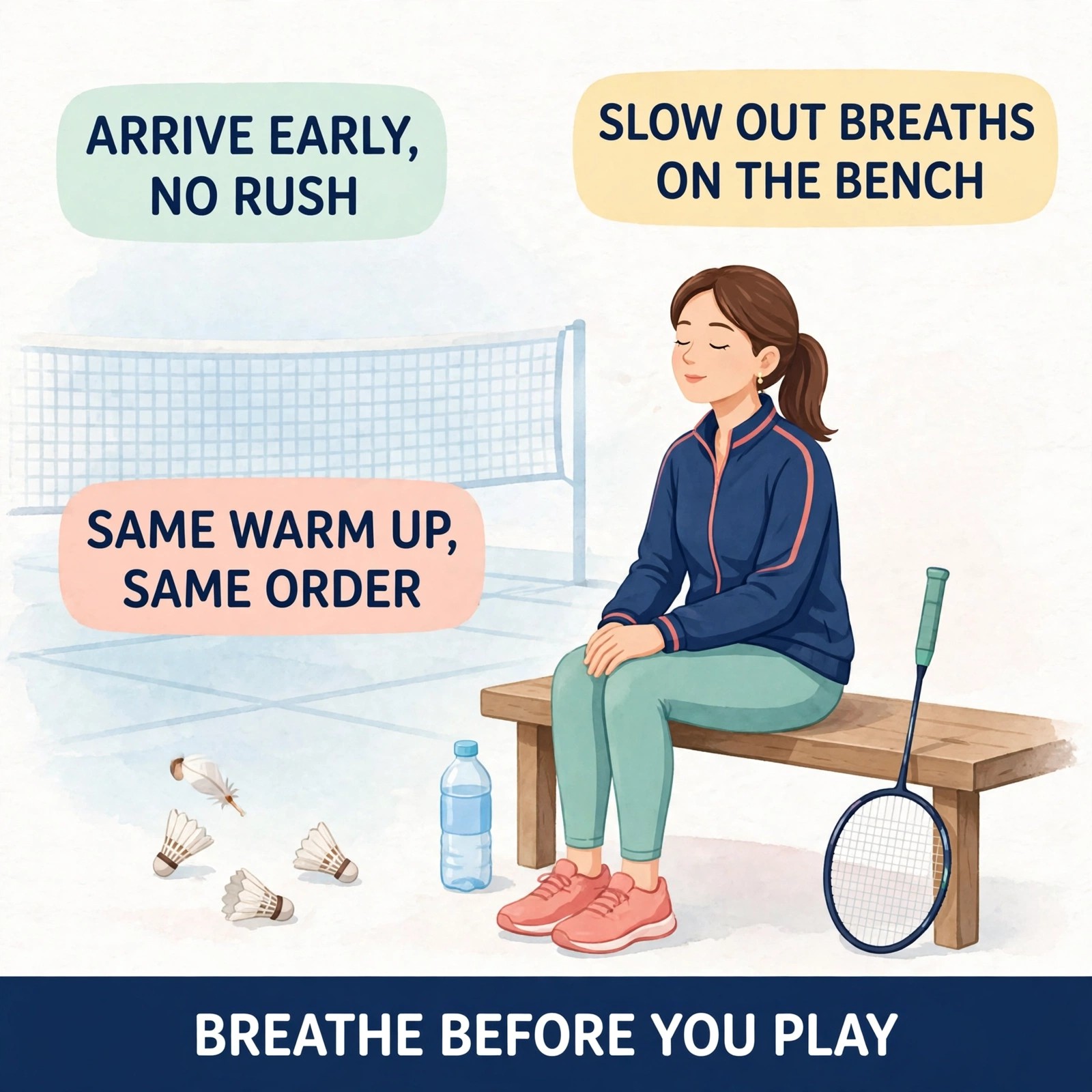
Nerves Check #3
Shrink The Moment: One Rally, One Shot At A Time
A whole match is too big a thing to hold in your head, and nerves grow in the space a big picture leaves. Shrink the moment. The only rally that exists is this one, and inside this rally, the only job is the next shuttle: watch it onto your strings, move your feet first, play the shot in front of you. The score, the draw, the people watching, the game you lost last week: none of those can be played. This shuttle can. Players are often surprised how much quieter a match feels when the mind is only ever asked to hold one rally at a time.
Scoreboard thinking is the enemy here. A mind replaying the last error or rehearsing the trophy speech has left the rally it is standing in. Both trips cost the same thing: the first step toward the next shuttle. The reset step between rallies is where you come back. Touch the strings, breathe out, walk to base, look at the shuttle. It takes two seconds and it is a full stop at the end of the last point. What is already scored cannot be changed by worrying at it. What comes next can still be played well, and playing it well is a much smaller ask than winning. Watch any experienced player between rallies and you will see some version of this: a breath, a touch of the strings, a slow walk. It is not superstition. It is a door closing.
Give the mind a small target inside the game, something you control completely. This game, I count my recoveries back to base. This drill, I watch the shuttle all the way onto my strings. This set of serves, I follow my routine on every single one, whatever the score. Small targets like these are process goals: they do not depend on the opponent, the draw or the umpire. They give nerves somewhere useful to sit, because a mind busy counting recoveries has less room to count consequences. Afterwards, judge the session by the target first. That judgement is fair, and it is kind.
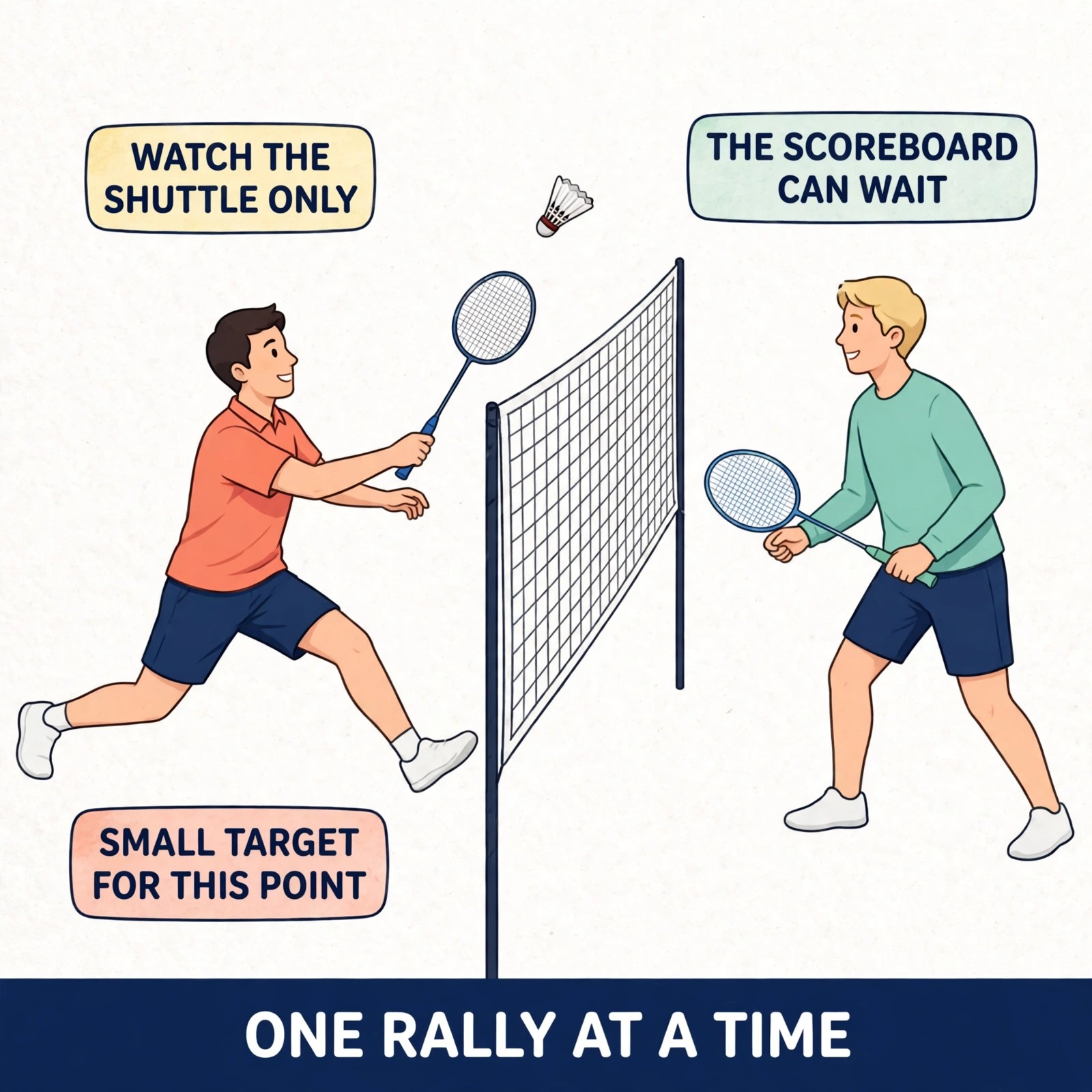
Nerves Check #4
Practise The Pressure: Small Doses In Training
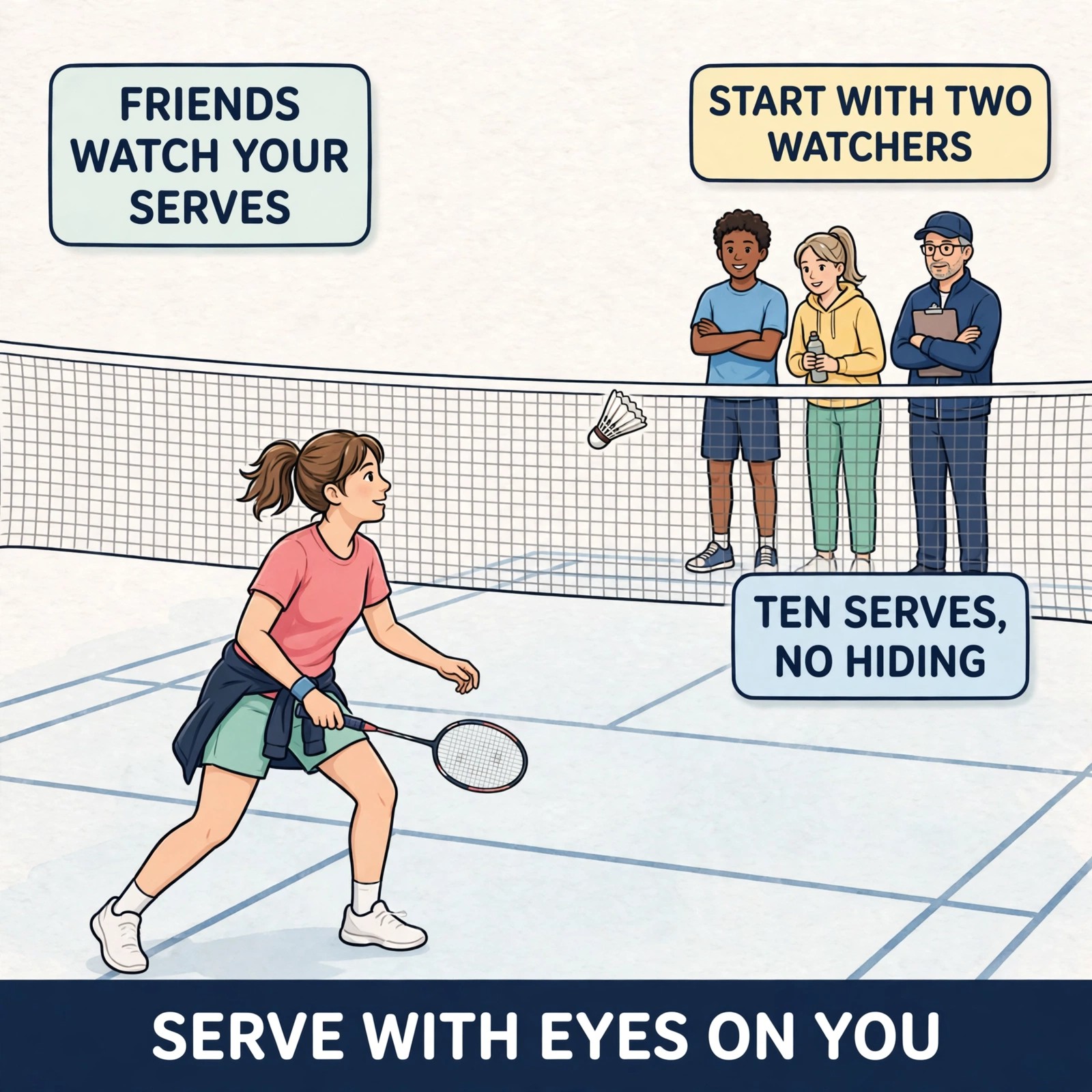
Pressure is a skill setting, not a personality trait, and like every setting it can be practised in doses. Start with the smallest version that stirs you at all: a friend watching your ten counted serves. When that feels ordinary, add a scored practice game to eleven. Later, a coach calling the score out loud, or a small stake the group agrees is fun, like the losing pair packing away the shuttles. Each step is a rung. You stand on one until it feels flat, then climb. Players who train this way meet match pressure as an old acquaintance rather than a stranger at the door.
Two training shapes carry most of the load. The first is the watched serve: serves played while teammates stand where a crowd would stand, because serving is where nerves show first and where a routine pays fastest. The second is the short start: games that begin at eighteen all, so the tight end of a game arrives quickly and often, and the group gets many rehearsals at closing a match instead of one. Neither shape needs punishment to work. The score, the watchers and the clock supply the pressure. The coach supplies the kindness, and the repetition does the teaching. Keep the group in on the secret, too. Watched serves work best when the watchers are friendly, because the pressure being practised is attention, not judgement.
Dose honestly, though, because flooding teaches fear instead of coping. A shy junior marched into a trial and told it is the biggest day of the year, or a club player entered in a grade far above their game as a character test: these do not build steady players, they build players who dread the hall. Tell your coach where your level sits. A good coach would rather raise the dose slowly across a season than spend that season repairing one overwhelming week. Nerves handled this way do not vanish. They become familiar, and familiar feelings are workable feelings.
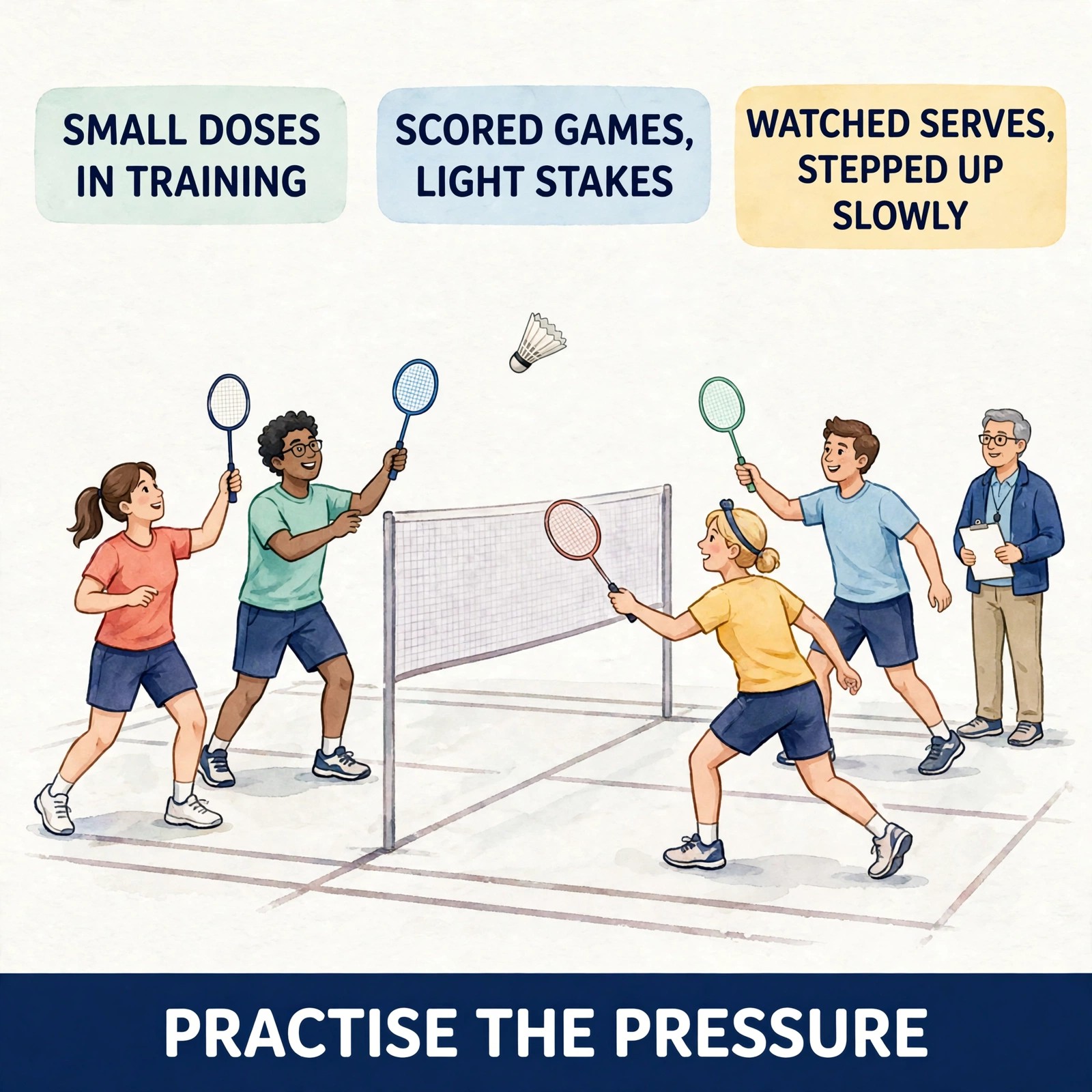
Nerves Check #5
Review Kindly: After A Nervy Session Ends
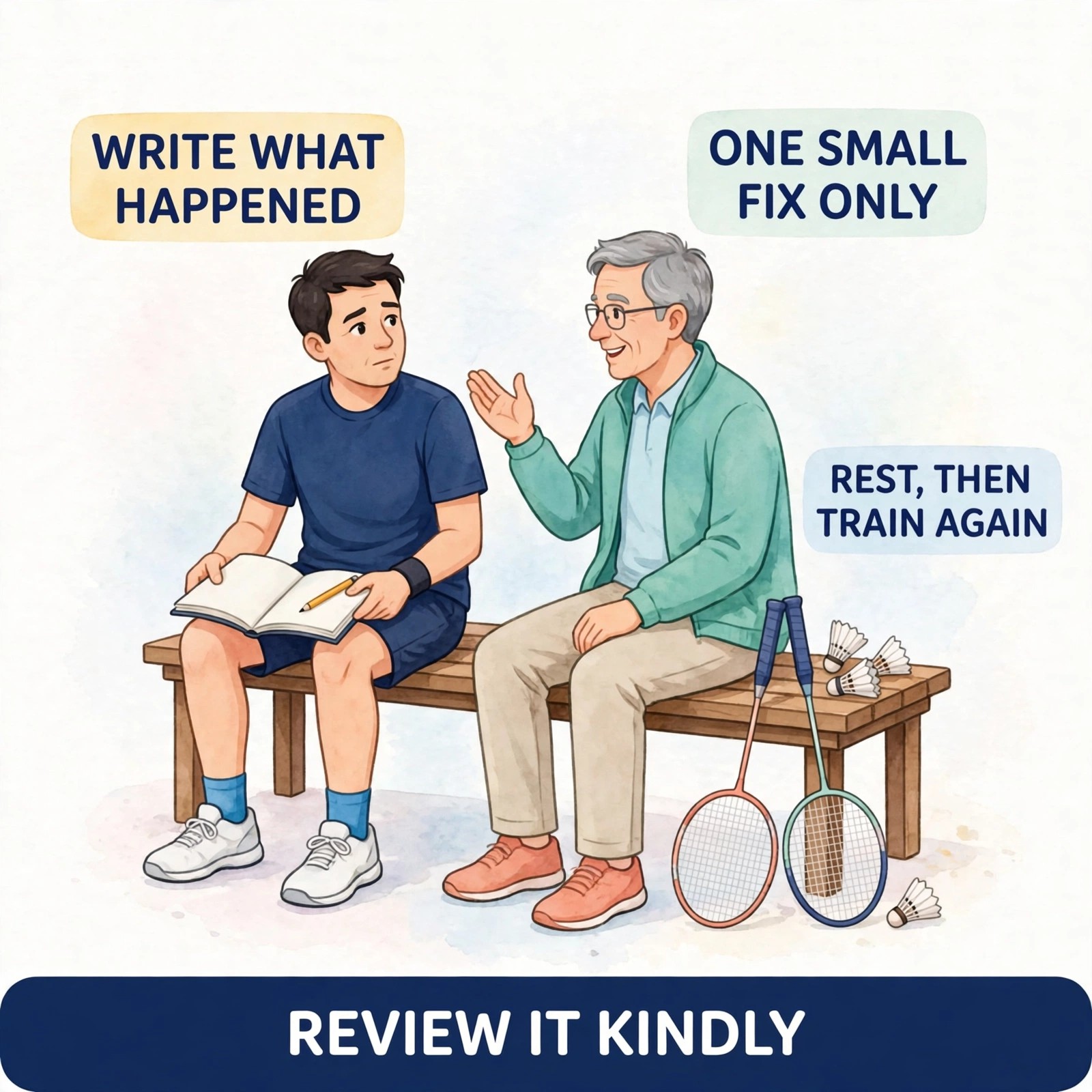
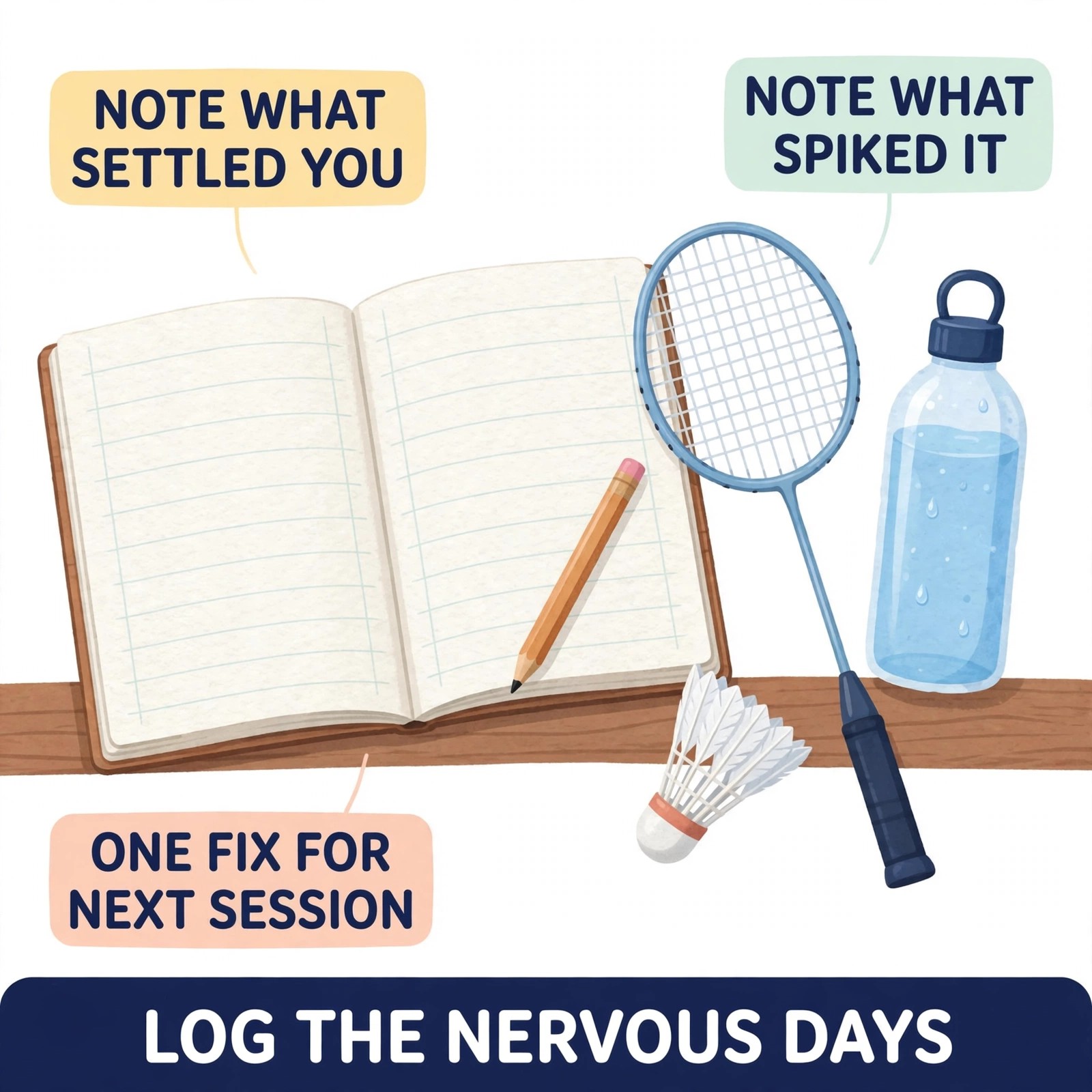
After a nervy session or match, review it briefly, kindly, and on paper if you can. Three short lines are enough: what happened, what settled me, and one fix for next time. Then close the notebook and let the day end. The review is a training tool, meant to take minutes. What happens at midnight, replaying the missed net shot while the house sleeps, is not review. It is rumination, and it teaches the body that matches are followed by punishment. A player who reviews kindly can look forward to the next session. A player who replays cruelly starts dreading it by Wednesday.
The plain physical basics carry more of the load than players expect. A tired player feels everything louder: the heart pounds sooner, the hands shake more, the temper sits closer to the surface. A hungry or thirsty one is the same. Keep match days ordinary. Sleep the night before like it matters, because it does. Eat your normal meals, drink your normal water, and make no heroic changes on the day itself. None of this is glamorous, and none of it needs a lecture. It is simply much easier to be brave on a rested body than on an empty one. Players sometimes hunt for a special drink or a lucky meal instead. Ordinary food, ordinary sleep, ordinary water: the boring basics are the ones that carry a nervy player through a long day.
One honest line belongs on this page, and a good coach will say it out loud. Nerves before playing are normal, and this page is about those nerves. But if anxiety or low mood hangs over most of your days, on court and off it, or if the thought of training has become something you cannot face at all, that deserves proper support, not a tougher training plan. Talk to a doctor or a counsellor. That is not a failure of character or of sport. It is the same good sense as seeing a physio for a knee, and the people who coach you well will back you in it.
Myth vs Reality
Myths About Match Nerves
The first myth says good players feel nothing, that the calm face of a champion is an empty mind. Watch closely instead: the routines are the tell. The same steps before every serve, the same pause, the same breath. Experienced players feel plenty. They have simply built furniture for the feeling to sit on while they play. Calm is not the entry fee for good badminton. Plenty of fine rallies have been played with a racing heart, by players who stopped waiting to feel nothing before they began.
The second myth says you must calm down completely before you can play well, which sets an impossible test at the worst moment: now you are nervous about being nervous. A working level of nerves is enough. Heart up a little, hands warm, mind on the shuttle: that state has won a great many matches. The goal of everything on this page is not zero feeling. It is feeling at a level where your feet still move first and your routine still runs. Chasing zero is what turns an ordinary flutter into a full spiral. Coaches phrase it to players this way: you do not need to be calm, you need to be ready. Ready is a much kinder target, and it is reachable on almost any day.
The third myth is the cruel one: that nerves mean you are not cut out for the sport. It has the logic exactly backwards. Players feel nerves because the sport matters to them; the player who feels nothing usually cares about nothing. Handling nerves is a trainable skill, built the same way footwork is built, in small honest steps repeated over a season. Some players need more steps than others, the way some need more lunge work. That is a training fact, not a verdict on anyone’s character or future in the game.

Why Choose Us
Why Players Choose ST Badminton Academy
At ST Badminton Academy, nerves are treated as part of coaching, not as a secret a player should hide. Groups are capped at four students, so the coach sees the shaky hands and the rushed warm up, not just the shots. Serve routines and between rally resets are built into ordinary sessions from the first month, and pressure arrives the way this page describes: watched serves first, scored games after, stakes kept light and kind. A player having a nervy week gets the dose lowered, not a speech about toughness.
We also talk about the feeling openly, because naming it in a group takes away its private shame. Players set one process target per session, something inside their own control, and judge the day by that target first. Reviews are short and written, three lines and done, so the habit of closing a day kindly is learned young. Parents hear the same message: a child who cares enough to be nervous is a child who cares. The work is furniture for the feeling, never mockery of it.
The academy is honest about the limit of coaching, too. We can build routines, breathing habits and a season of small pressure doses, and for ordinary match nerves that is real, lasting help. We are not therapists, and when a player’s feelings run deeper than sport, we will say so kindly and early, and point the family toward a doctor or counsellor. A coaching hall should know what it is for. Ours is for badminton, taught patiently, to players whose nerves are welcome in the room.
FAQs: Overcoming Badminton Nerves, Routines and Pressure in Malaysia (KL)
Nerves questions usually arrive quietly, after a session, one to one. Here are the answers we give on the bench.
Can a beginner learn to handle nerves in badminton in Setapak or Gombak?
Yes, and nerves are one of the kindest things to coach early, because routines are learned at walking pace. In our Setapak groups of no more than four, beginners build a breathing step and a serve routine inside ordinary sessions, so the first habit formed is a calm one, long before big matches arrive.
What is the first nerves habit a new player should build in KL?
A routine. One short set of steps you follow before every serve and between rallies: strings touched, breath out, eyes on the shuttle. It gives a busy mind one plain job at a time. Players in KL who build the routine first find the feeling itself gets easier to carry within a few weeks.
Why do my hands shake before matches at club level?
Because your body is preparing to perform: heart up, breathing shallow, blood leaving the hands. It is the same machinery in professionals before finals, and it is not a verdict on your game. Slow out breaths, a warmed up body and a fixed routine steady most hands. If shaking comes with lasting anxiety, talk to a doctor.
I feel sick with nerves before tournaments. Should I breathe through it or pull out?
Breathe through it, and play, but tell someone first. A coach who knows can lower the dose: smaller events, a familiar partner, your routine practised until it runs by itself. Pulling out teaches the fear it was right. Stepping in at a size you can handle teaches the opposite, one honest event at a time.
How can I practise handling nerves in training?
Practise the feeling, not just the shots. Ten serves while friends watch, games that start at eighteen all so tight endings come often, a coach calling the score out loud. In training with us, pressure arrives in small doses inside normal sessions, so match day feels familiar rather than brand new and frightening.
Do you help with match nerves in coaching near Wangsa Maju?
Yes. Our academy is based in Setapak, a short drive from Wangsa Maju, and nerves are coached inside normal sessions there: breathing, serve routines, reset steps and small doses of scored pressure. Groups stay at no more than four students, so the coach sees the shaky hands, not only the finished shots.
Where does ST Badminton Academy teach badminton with mindset coaching in Malaysia?
We teach in Setapak, Kuala Lumpur, and mindset work is woven into ordinary sessions rather than sold as an extra: routines from the first month, pressure in small steps, short kind reviews after matches. Students join us from across the Klang Valley, from first year juniors to league adults who still feel the flutter.
How do I book a trial session to work on my nerves?
Book a trial session with us in Setapak and bring your playing racket. Train in a group of no more than four, play a scored game at the end, and the coach will build your first routine with you: a breathing step, a reset, and one process target you control completely.
What makes Mr Eric Chuar a suitable coach for nerves and badminton?
Mr Eric Chuar coaches the academy sessions himself, with more than 15 years of coaching in Malaysia and Singapore. He teaches nerves as a trainable skill: routines, small doses, kind reviews, and no mockery of a nervy player. He is also honest about the limit, and points lasting anxiety toward proper support early.
Badminton Mindset Training in Action

We benchmark our mindset coaching against World Badminton (BWF) coaching standards and our own academy values: before any player trusts a training plan, they deserve honest checks. You can verify our coaches' credentials through the Badminton Association of Malaysia (BAM) coach education pathway.
Our mindset standards are plain. We teach breathing, routines and process goals as ordinary training skills, we grow pressure in small doses, and we never mock or punish a nervy player. We claim for coaching only what coaching can honestly do, and when anxiety or low mood lasts beyond the hall, we point players toward a doctor or a counsellor, kindly and early.
| Factor | Tight And Frozen | Settled And Ready NERVES |
|---|---|---|
| Frequency | 1 or 2 times a week. Mostly for fun and sweat. | Breathing is slow and the warm up runs in its usual order, so the body settles before the first rally. |
| Drills Focus | Basic static feeding. Minimal footwork pressure. | Focus sits on one rally and one small target, not on the score or the watchers. |
| Physical Conditioning | Rarely included. Just playing games on court. | Core, agility, and speed training included in every session to prevent injury and build stamina. |
| Tactical Awareness | "Just hit it over." No real game plan. | Video analysis, point construction, and learning to read the opponent's game. |
| Coach Ratio | Large groups (8-10 kids). Coach barely watches you. | Max 4 students. Mr Eric Chuar personally corrects every stroke and movement detail. |
| Goal Setting | Fun and exercise. | Pressure is rehearsed in training in small doses, so match day feels familiar. |
| Long Term Result | Good recreational player. | A steady player: nerves present, routines ready, and one rally at a time. |
Badminton Training With Mindset Coaching in Kuala Lumpur
Come and train where nerves are normal. Book a trial session in Kuala Lumpur, train in a group of no more than four, and leave with a breathing step, a reset routine and one process target of your own. Bring your nerves exactly as they are. Every player in the hall has felt them, and the coach has a plan for them.


