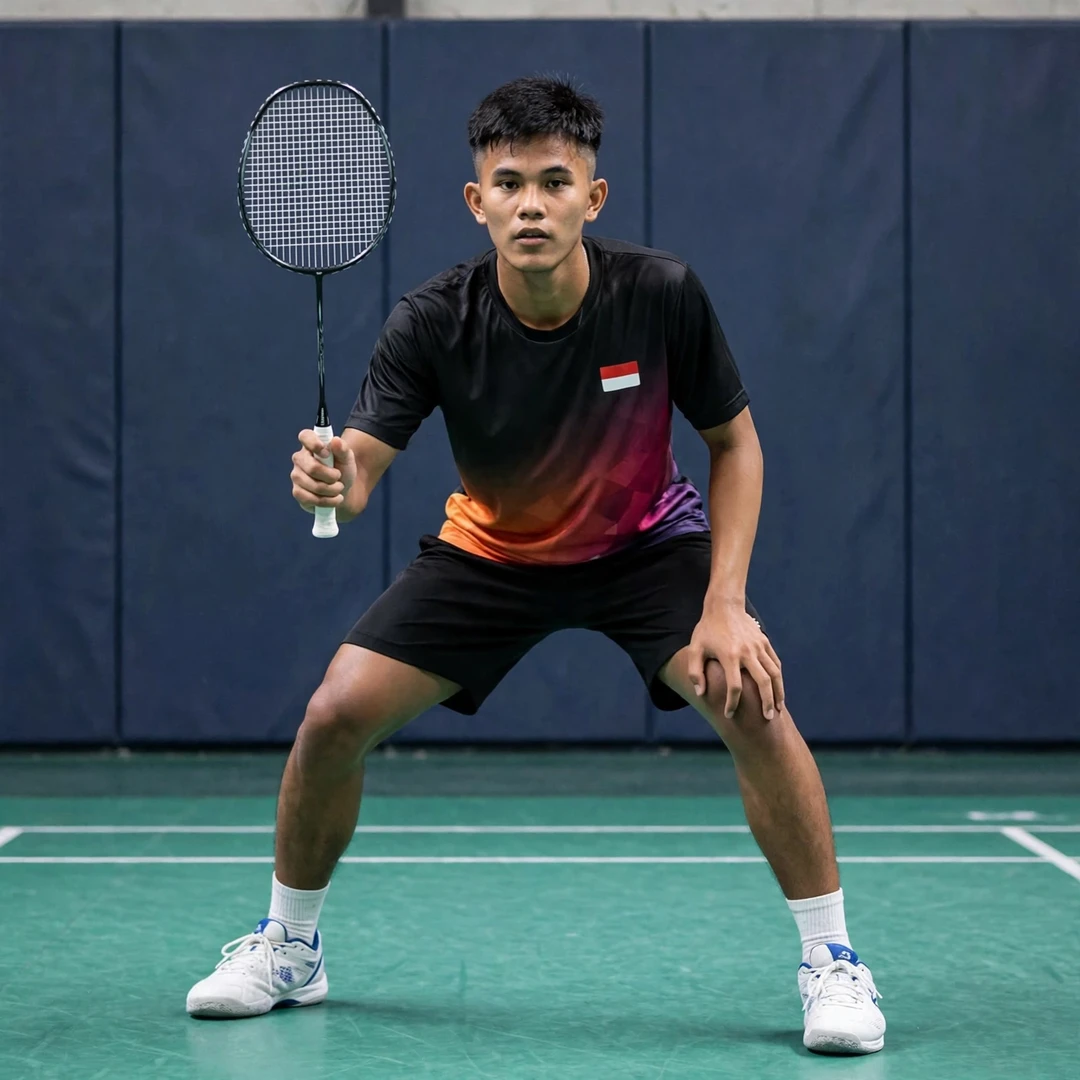
Indonesian Men’s Singles Badminton Star
Muhamad Yusuf

Indonesia
Player Event: Men’s singles
From Padang, West Sumatra, Indonesia · Height: 1.76 m (5 ft 9 in) · Right-handed
Playing Style: Right-handed rallying all-rounder who controls the tempo, defends patiently and outlasts opponents in long rallies
Known For: Climbing from unranked in July 2025 to the world top 50 in eight months, two International Challenge titles, a Macau Open semi-final and Asian Games team gold
Journey: PB AIC Bekasi · PBSI national training centre · Czech Open champion 2025 · Asian Games team gold medallist 2026
Understanding Muhamad Yusuf (Indonesian Badminton Star)
Muhamad Yusuf is an Indonesian men’s singles badminton player who stands at world No. 61 in the BWF rankings (Week 43, 20 October 2026) with 28,990 points — but his ranking only hints at the strangest rise in modern badminton. In July 2025, Yusuf did not have a world ranking at all. Fourteen months later he was an Asian Games gold medallist with Indonesia’s men’s team, a two-time International Challenge champion and a World Tour semi-finalist who had beaten a top seed at the Macau Open. His story has no junior titles and no teenage hype: just a 19-year-old from Padang who entered the senior circuit, refused to lose early, and climbed more than 500 ranking places in a single season.
Early Life in Padang and the Road to Jakarta
Muhamad Yusuf was born on 19 February 2006 in Padang, the capital of West Sumatra, Indonesia — a coastal city better known for its spicy food than for badminton champions. In a country where most top singles players come from Java’s famous club system, a boy from Sumatra starts with fewer spotlights and fewer shortcuts. Yusuf’s route into the elite game ran through hard work far from home: he left Padang to develop inside Indonesia’s club and national structure, the pathway that has produced generations of Indonesian champions.
No Ranking at Nineteen: An Unusual Beginning
Yusuf is affiliated with PB AIC in Bekasi and was selected into the PBSI national training centre’s men’s singles Pratama (development) squad, training in Jakarta under coach Wiempie Mahardi. The Indonesian system is demanding: young players live, eat and train together, spar daily against senior internationals, and earn their tournament trips through results. For a late developer like Yusuf, that environment was the accelerator — every training day put him across the net from players already ranked inside the world’s top 100.
First Final, First Title: The European Autumn of 2025
Here is the fact that makes Yusuf’s career unique among today’s top-100 players: he had no junior international career to speak of, and when the BWF rankings were published in July 2025 he was not on them at all. At 19 years old — an age when many rivals already owned World Junior medals — he was effectively starting from zero, with no ranking points, no seeding and no reputation. Everything on this page was built from that standing start, in senior tournaments, against adults.
The Quarter-Final Machine
His first steps came in Africa in August 2025. At the Ghana International, Yusuf reached the semi-finals, earning his first ranking points and entering the world rankings at No. 529. Quarter-finals followed at the Cameroon International and the Lagos International Classics in Nigeria. The results were small in prize money but huge in meaning: three tournaments, three times into the second week, and a young Indonesian quietly proving he belonged on the circuit.
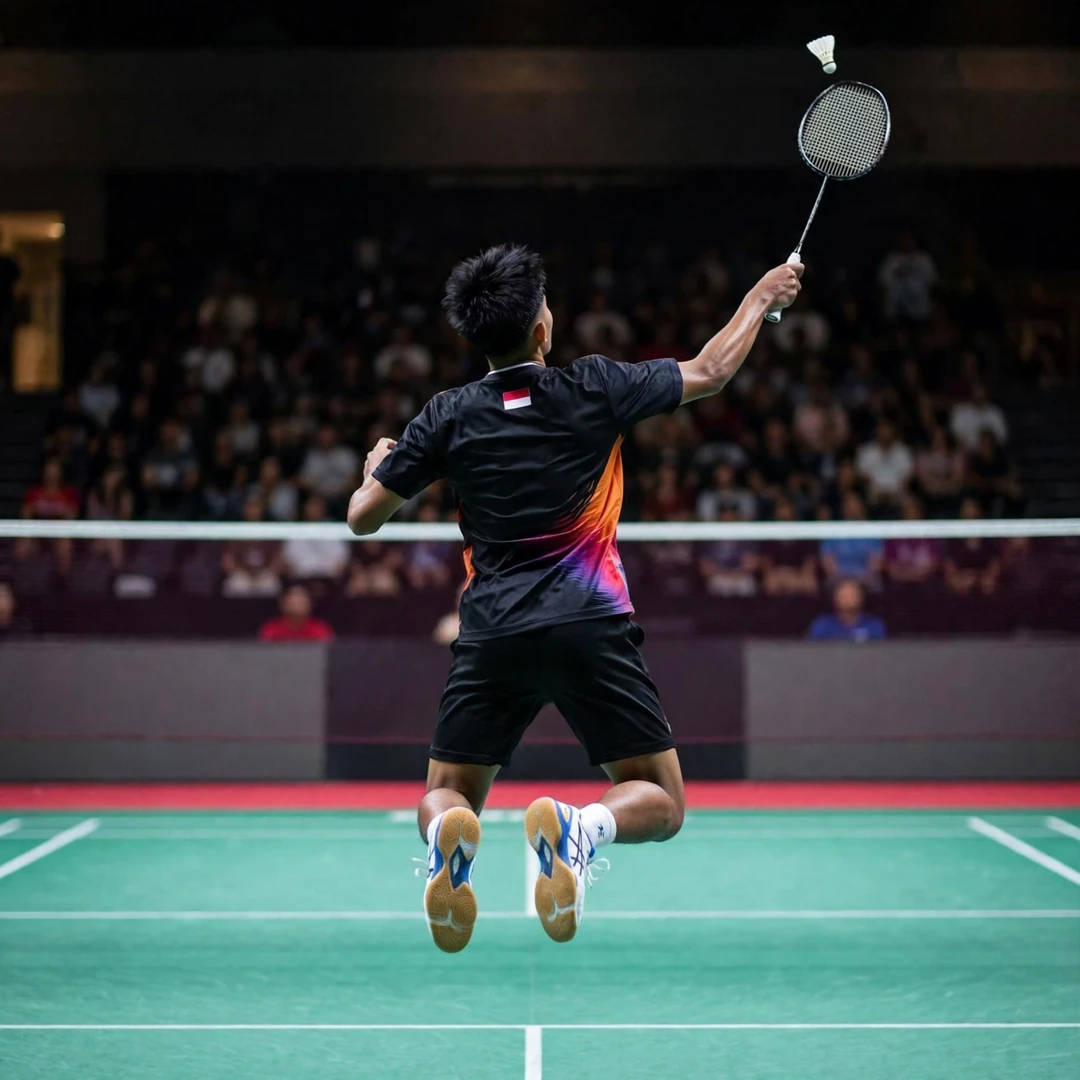
Career Milestone #1
December Double: A World Tour Final and a Second Title
The real breakthrough came on the European autumn swing. At the Turkiye International Challenge in October 2025, Yusuf fought into his first international final, losing a tight three-game title match to England’s Harry Huang 19-21, 21-11, 16-21. A first final at 19 — and a lesson in how close, and how far, a title can be. He had found his level; now he had to finish the job.
One week later, at the Czech Open in Prague, he did exactly that. Yusuf beat the same Harry Huang 21-14, 21-12 in the final to win his first international title. Losing a final and then beating the same opponent in straight games seven days later is a small story that tells coaches a lot: this is a player who studies a defeat, adjusts, and comes back better. His first title was also a promise — the climb had only just started.
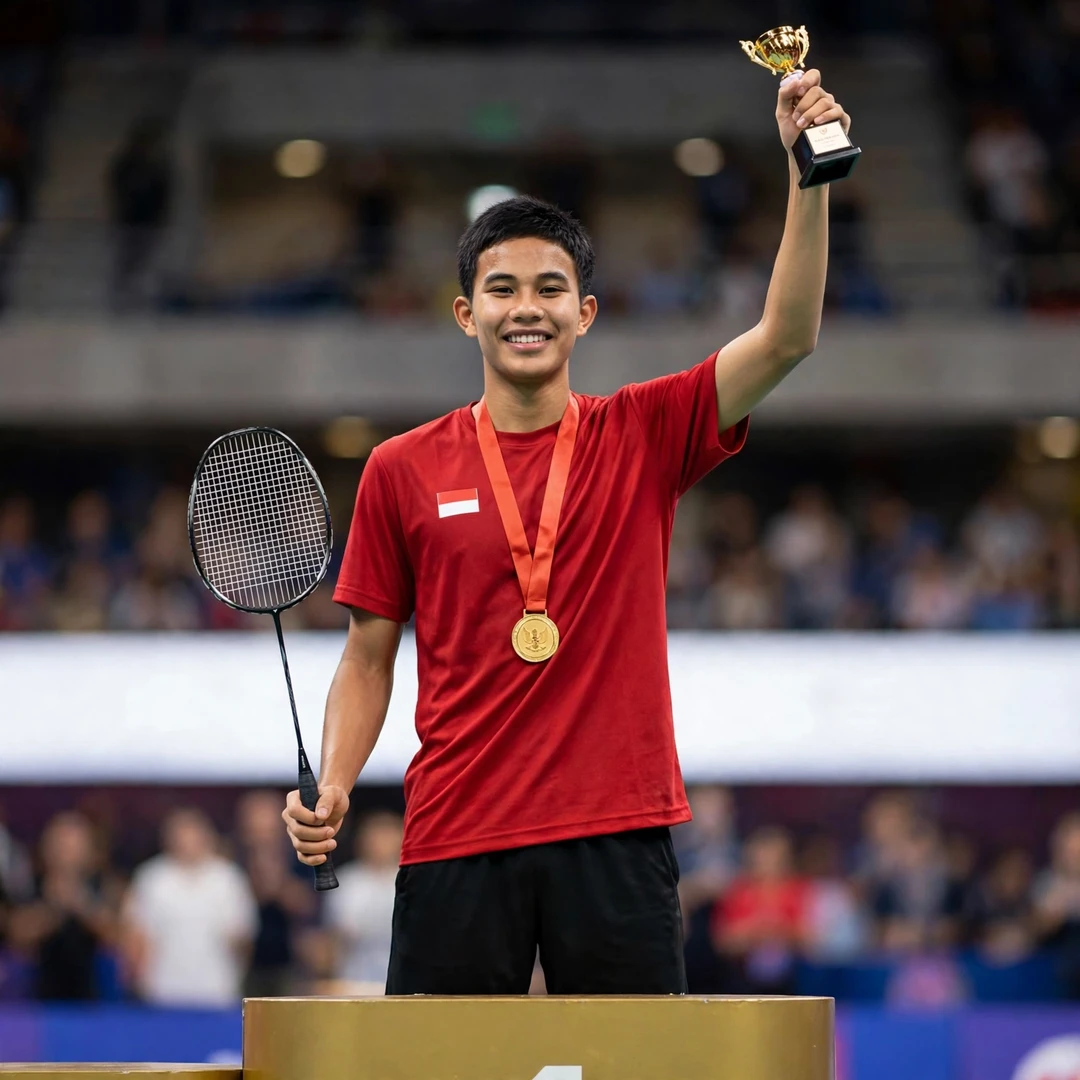
Career Milestone #2
Into the Top 50 and Onto the World Tour
Through the autumn of 2025 Yusuf became what coaches call a quarter-final machine. The Dutch Open, the Indonesia International Challenge in Surabaya, the Scottish Open and the Guwahati Masters all ended at the quarter-final stage or better. Across his first twelve Super 100, International Challenge and International Series events, he never lost before the quarter-finals — a streak tracked by Indonesian badminton statisticians and almost unheard of for a player in his first senior season. Consistency, not one hot week, was carrying him up the rankings.
December 2025 brought his first World Tour final. At the Odisha Masters, a Super 100 event in India, Yusuf battled into the title match before losing to India’s Kiran George 14-21, 21-13, 16-21. A runner-up finish at World Tour level, in his fifth month on the circuit, lifted him into another ranking bracket — and showed that his patient rallying game could trouble established World Tour players, not just the continental circuit.
Days later he finished the year with a second title, winning the Astana International Challenge in Kazakhstan by beating his Indonesian compatriot Prahdiska Bagas Shujiwo 21-19, 18-21, 21-16 in an all-Indonesian final. His ranking told the story of the month: from No. 96 at the start of December to No. 52 by Christmas, with 30,110 points. Five months after having no ranking at all, the 19-year-old from Padang stood on the edge of the world’s top 50.
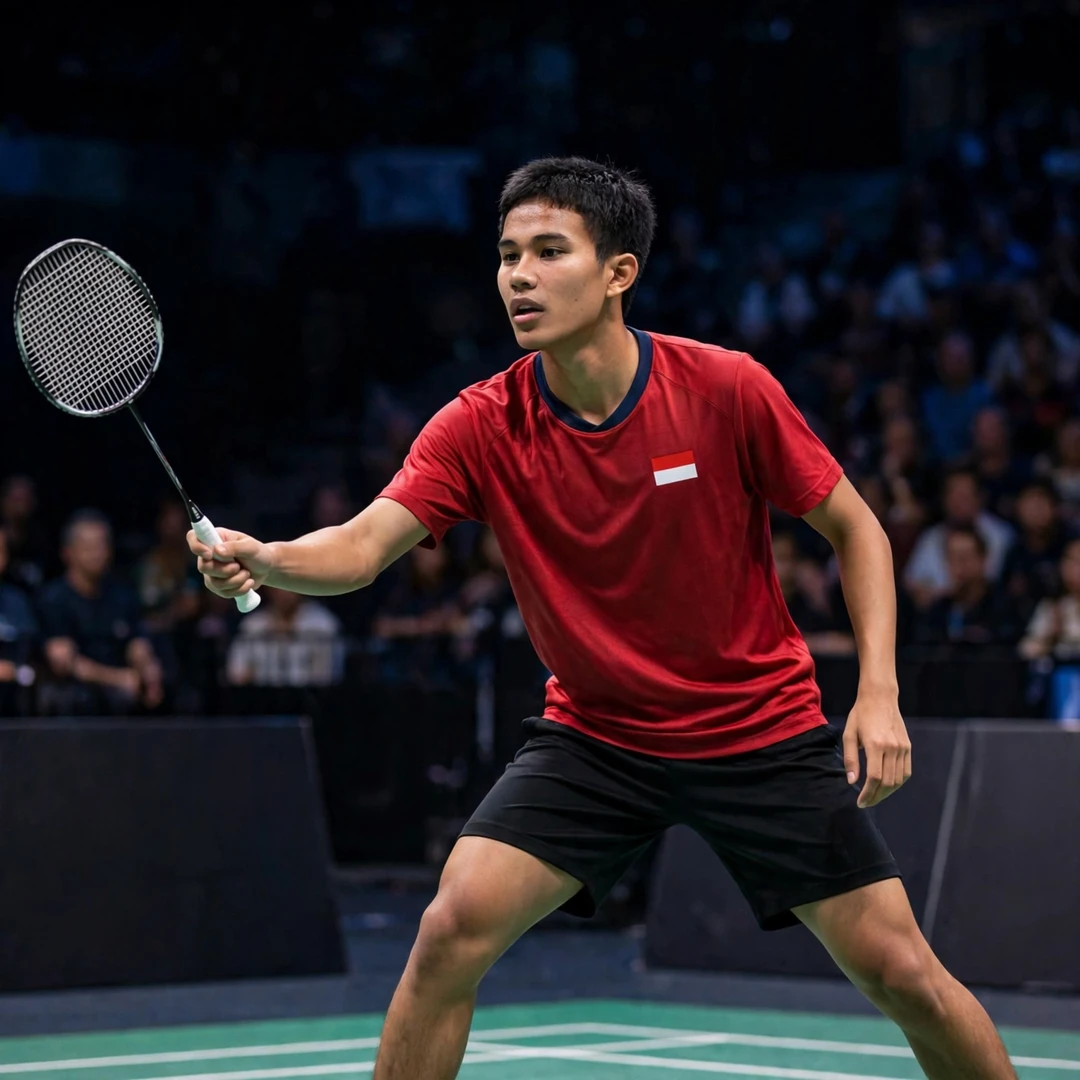
Career Milestone #3
Macau Breakthrough: Beating the Top Seed
In March 2026 he crossed that line. A quarter-final run at the Ruichang China Masters — where, as third seed, he pushed defending champion Sun Chao all the way in a 19-21, 19-21 defeat after beating Taiwan’s Cheng-Han Tsai 21-8, 21-11 — kept his rise going, and he broke into the top 50. The same season he stepped onto the World Tour proper, reaching the round of 32 at the Indonesia Masters, a Super 500 event in Jakarta, and at the Thailand Masters Super 300 — early exits, but priceless experience against the elite.
His World Tour breakthrough arrived in June 2026 at the Macau Open. Yusuf swept past Kuo Kuan Lin and Zhu Xuan Chen, then produced the win of his young career: a 22-24, 21-16, 21-15 quarter-final upset of top seed and former top-10 star Ng Ka Long Angus of Hong Kong — after trailing 0-5 in the first game and losing it in setting. His first World Tour semi-final ended against Thailand’s Kantaphon Wangcharoen, but the message was sent, and his ranking climbed to No. 47. ‘My coach reminded me to play more patiently, and to be ready to get tired,’ he said after the Ng Ka Long win. ‘I tried not to rush to finish the rally.’
The summer of 2026 kept the momentum: at the Chinese Taipei Open he beat home favourite Wang Tzu Wei 21-15, 21-18 before losing to Japan’s Yudai Okimoto in the round of 16, and on 1 September 2026 he reached his career-high ranking of world No. 45. A modest early exit at the Pontianak Indonesia Masters followed — but that week was really preparation for the biggest assignment of his life, wearing the red and white of Indonesia at the Asian Games.
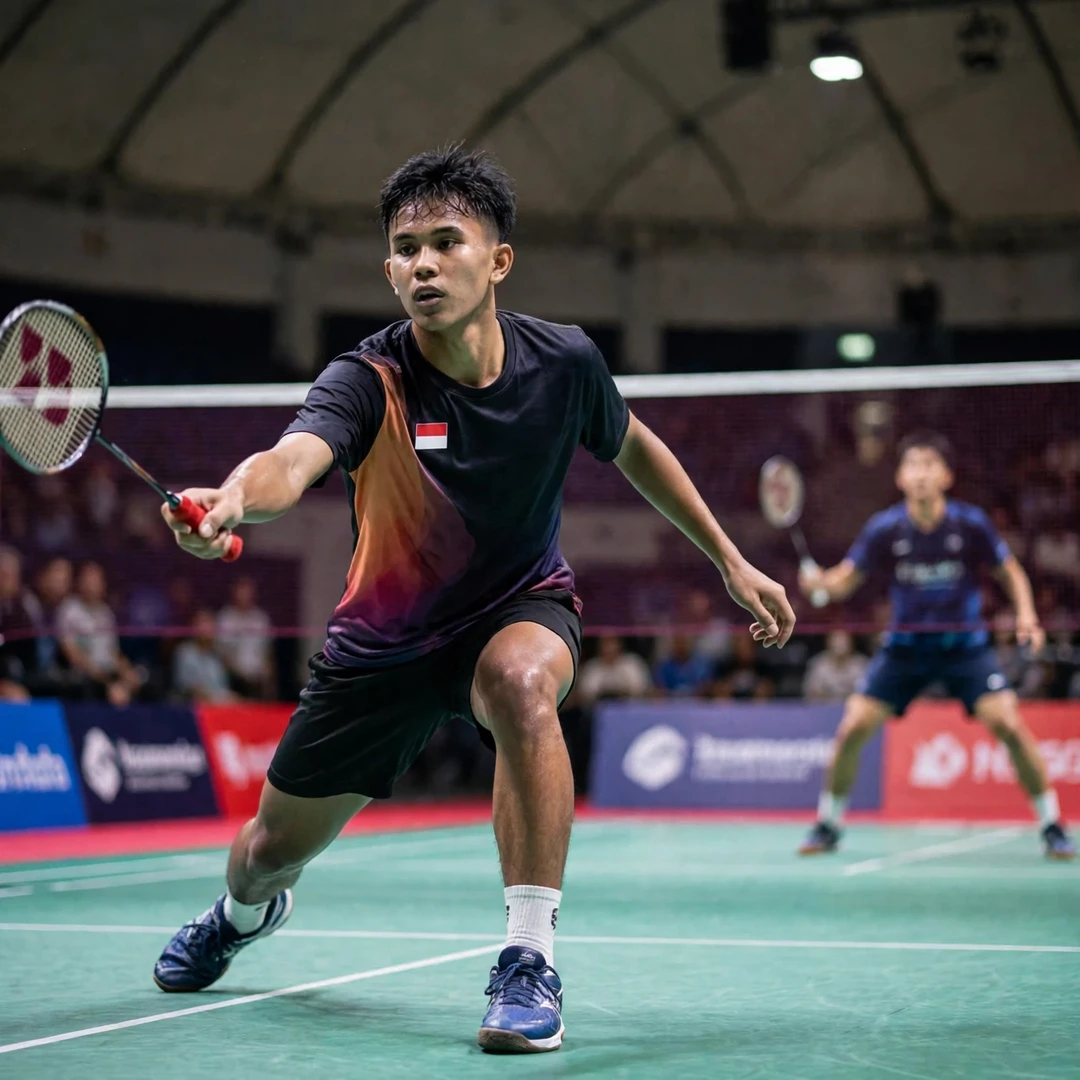
Career Milestone #4
Asian Games Gold with Indonesia
At the Aichi-Nagoya 2026 Asian Games, Yusuf made his major-games debut as part of Indonesia’s men’s team squad — and left with a gold medal. Indonesia beat defending champions China 3-2 in a famous final on 24 September 2026, coming back from 0-2 down to win the men’s team title for the first time since 1998. Yusuf admitted he was nervous at first; his senior teammates told him to treat it like an individual tournament — stay focused, keep the energy up, remain calm. At 20, the boy who had no ranking fourteen months earlier stood on top of an Asian Games podium. In the Week 43 rankings he sits at No. 61 with 28,990 points, as his earliest results rotate out of the 52-week window — and in October he was still testing himself at Super 100 level, losing a Malaysia Super 100 round-of-32 match to Korea’s experienced Jeon Hyeok Jin.
Yusuf’s schedule is itself a lesson for young players. In fourteen months he has raced across Africa, Europe and Asia, playing week after week on three continents while climbing from no ranking into the top 50. That volume builds toughness, but it must be managed: travel, recovery and honest communication with his coach about fatigue are what allow a player to keep his quarter-final streak alive without breaking down. The professionals who last are the ones who plan their seasons, not just their matches.
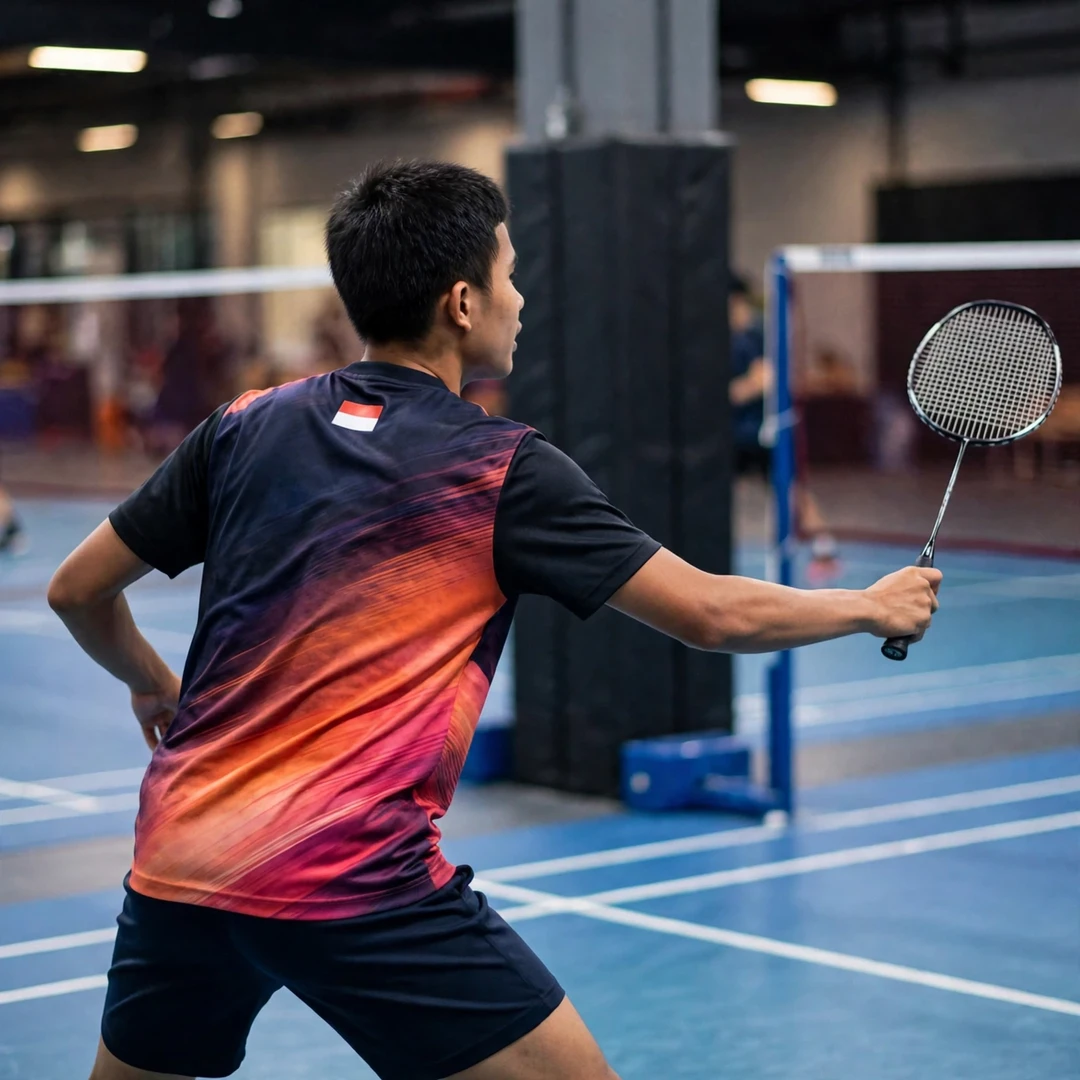
Playing Style
The Patient Rallying Style: Tempo, Defence and Endurance
Yusuf plays a patient, rallying style built on tempo control — and it is tailor-made for an academy case study because none of it depends on being the biggest or the most powerful player on court. Right-handed, at 1.76 m, he wins by constructing rallies: solid defence, accurate clears and drops that keep opponents moving, and the discipline to wait for the right ball before attacking. His own description of his Macau win is the perfect summary: do not rush to kill the rally, dare to trade shots, and be ready to be tired.
His superpower is composure under score pressure. Against Ng Ka Long Angus he trailed 0-5, watched a 17-10 lead vanish, and lost the first game 22-24 — then calmly rebuilt, taking the next two games by controlling the tempo and lengthening the rallies until the favourite’s errors came. Coaches call this emotional reset ability, and it cannot be faked: it is trained in practice matches where juniors learn to play the next rally, not the last one.
Young players studying Yusuf should watch how rarely he gives away free points. His clears reach the back tramlines, his net shots stay tight, and his defence turns defence into neutral rallies instead of desperate lifts. When the opening finally comes, his attack is accurate rather than spectacular — placement first, power second. It is a style any junior can begin copying today, because its foundations are footwork patterns, shot quality and patience, not rare physical gifts.
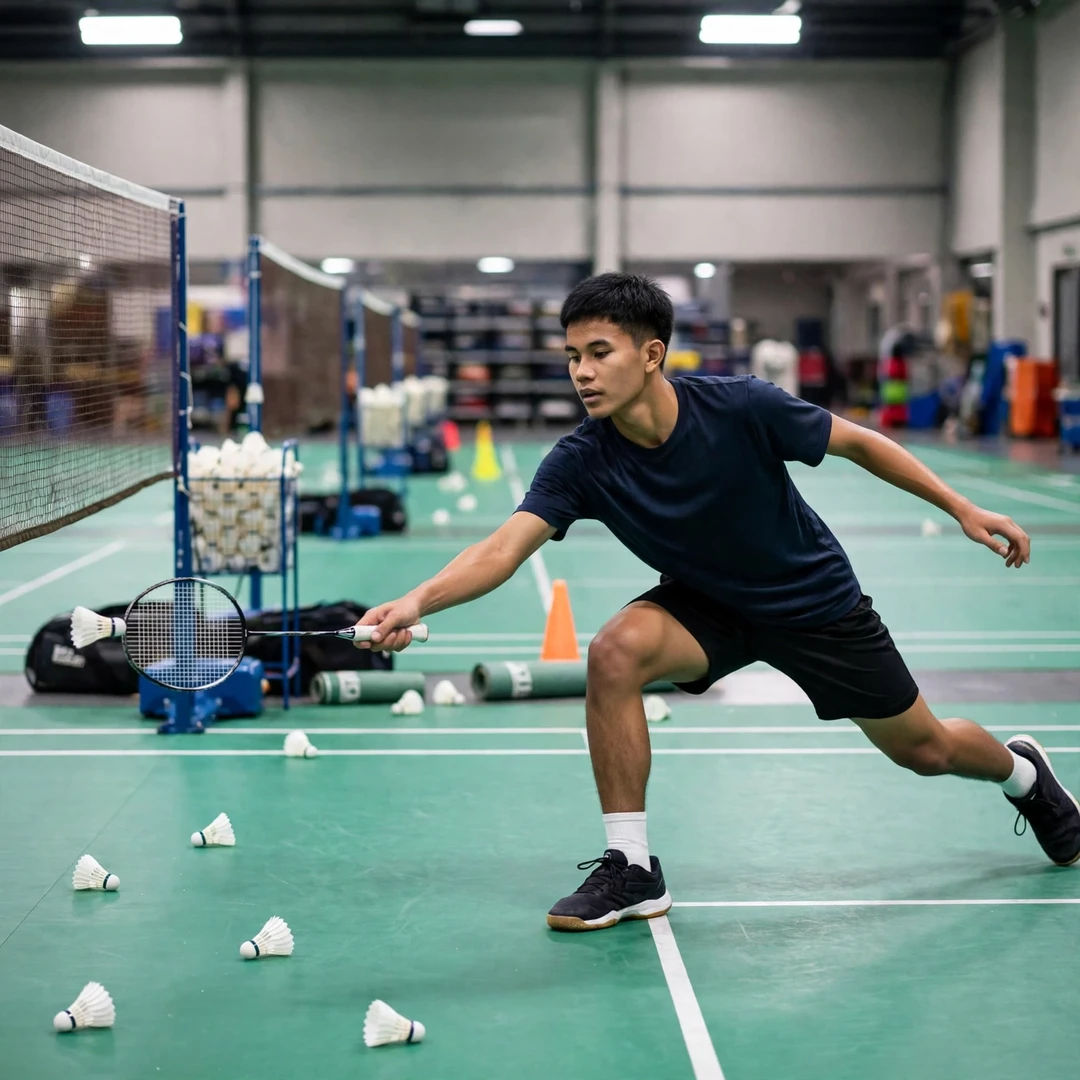
Mental Strength
Patience, Belief and the Late Starter Mindset
Yusuf demonstrates what belief looks like without a head start. Most of the players he now beats had junior titles, sponsors and rankings years before him; he had none of that in July 2025 — just a place in Indonesia’s development squad and a willingness to enter tournament after tournament on the sport’s smallest stages, in Ghana, Cameroon and Kazakhstan, and treat every one of them like a final.
His ability to respond to defeats is already a trademark. He lost the Turkiye final to Harry Huang and beat him a week later. He lost the first game against Ng Ka Long after leading 17-10, and won the match. He lost the Odisha final and won Astana days later. For young players, the pattern matters more than any single result: a loss, studied honestly, is information — and Yusuf keeps proving that the next tournament is a new chance to use it.
Practical lessons from his journey include entering the tournaments you can reach instead of waiting to feel ready, building a game that does not leak errors before chasing spectacular winners, treating fitness as a weapon — his coach’s instruction was simply to be ready to be tired — and using every defeat as a scouting report for the rematch. None of these lessons requires fame or money; they require patience, honesty and a training plan.

Learning Reference
ST Badminton Academy Connection
ST Badminton Academy has no official partnership or endorsement from Muhamad Yusuf. He is not connected with our academy, and this profile is published purely as an educational case study for parents and junior players who want to understand how a player can rise from unranked to an Asian Games gold medal in fourteen months.
Many of our students from Malaysia and visiting learners from Singapore study his matches to understand the power of consistency: how a player with no junior reputation reached at least the quarter-finals of his first twelve lower-tier events, how tempo control beat a top seed in Macau, and how a development-squad player earned an Asian Games gold medal. His 2025 season is required viewing in our discussions of late starters.
We encourage our students to observe his rally construction, his error-free defence and his calm resets after losing games — and to notice that his rise began in small halls in Accra, Prague and Astana, not under television lights. Champions are not only discovered at 12; sometimes they are built at 19, one quarter-final at a time.
FAQs: Muhamad Yusuf Indonesian Badminton Player
Here are answers to common questions about Muhamad Yusuf’s career, achievements and what young players in Malaysia can learn from the Indonesian newcomer’s remarkable rise.
Who is Muhamad Yusuf and which country does he represent in badminton?
Muhamad Yusuf is an Indonesian professional badminton player competing in men’s singles. Born on 19 February 2006 in Padang, West Sumatra, he developed through PB AIC Bekasi and the PBSI national training centre in Jakarta, and in just over a year he rose from having no world ranking to the top 50, winning two International Challenge titles and an Asian Games team gold medal.
What are Muhamad Yusuf’s biggest badminton achievements?
Yusuf’s major achievements are the Asian Games men’s team gold medal at Aichi-Nagoya 2026 with Indonesia, two International Challenge titles — the Czech Open 2025 and the Astana International 2025 — a runner-up finish at the Odisha Masters Super 100 in 2025, and a semi-final at the Macau Open Super 300 in 2026, where he beat top seed Ng Ka Long Angus. He reached his career-high world ranking of No. 45 in September 2026.
What is Muhamad Yusuf’s playing style?
Yusuf plays a patient, right-handed rallying game based on tempo control, tight net play, accurate clears and stubborn defence. He does not rush to finish rallies; instead he extends them, moves opponents around the court, and attacks only when the opening is real. His coach’s advice during his Macau Open breakthrough sums it up: play patiently, and be ready to be tired.
How did Muhamad Yusuf perform at the Asian Games?
Yusuf made his Asian Games debut at Aichi-Nagoya 2026 as part of Indonesia’s men’s team squad, and Indonesia won the gold medal, beating China 3-2 in the final on 24 September 2026 — the country’s first men’s team title at the Asian Games since 1998. For a 20-year-old who had never played a major games before, it was a dream debut: a gold medal at his first attempt.
How can my child learn from Muhamad Yusuf’s training approach?
Young players can study Yusuf’s approach by copying the habits behind his rise: train defence and rally tolerance before highlight-reel smashes, enter every tournament available instead of waiting for perfect preparation, and write down what each defeat taught you before the next event. At ST Badminton Academy we use his Macau Open comeback as a video lesson in tempo control and emotional resets, then train the same patterns in multi-shuttle and rally-building drills.
Did Muhamad Yusuf win any junior titles?
No — and that is exactly what makes his story special. Yusuf won no junior titles and had no world ranking as of July 2025; his career began directly on the senior continental circuit at 19. His first titles were senior International Challenge titles — the Czech Open and the Astana International, both in 2025 — proof that a late start, handled with patience and volume of competition, does not close the door to the top 50.
What are Muhamad Yusuf’s best World Tour results?
Yusuf’s best World Tour results are his semi-final at the Macau Open 2026 (Super 300), where he upset top seed Ng Ka Long Angus, and his runner-up finish at the Odisha Masters 2025 (Super 100). He has also reached the quarter-finals of the Ruichang China Masters Super 100 and the round of 32 at the Indonesia Masters Super 500 and the Thailand Masters Super 300.
What playing style should young players learn from Muhamad Yusuf?
Young players should study Yusuf’s complete game rather than one spectacular shot: the patient rally construction that wears opponents down, the tight spinning net play, the defence that refuses to leak errors, and above all the mindset that treats every tournament — however small — as a step on the ladder. His game is built from trainable skills, which is why coaches love teaching from it.
Does ST Badminton Academy have any connection with Muhamad Yusuf?
No, Muhamad Yusuf is not a student, coach or ambassador of ST Badminton Academy. He represents Indonesia and developed through PB AIC and the Indonesian national team. However, coaches at our academy in Kuala Lumpur regularly use his matches as teaching material, because his rise from unranked to Asian Games champion shows what structured coaching, patience and competitive volume can achieve.
Muhamad Yusuf Career Highlights
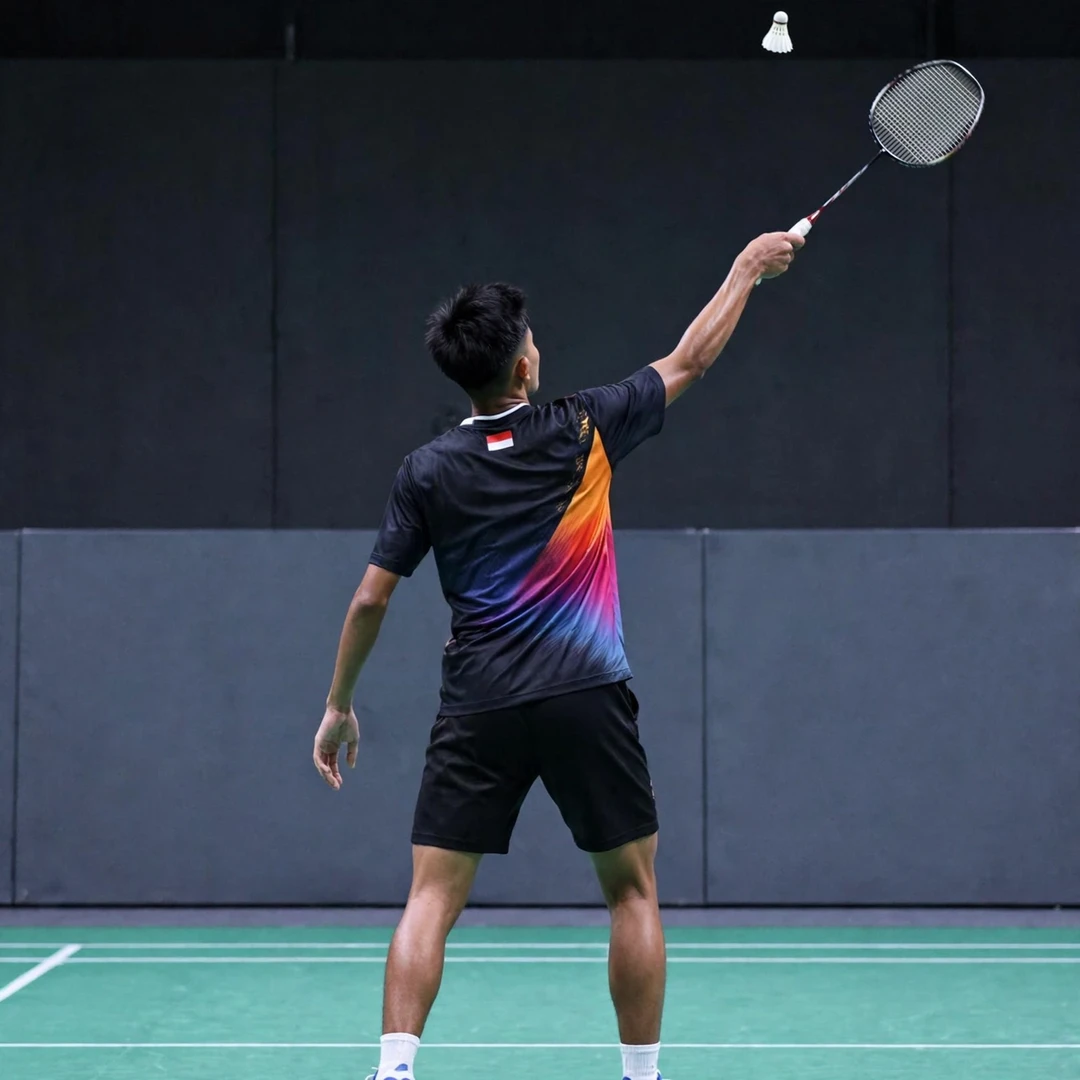
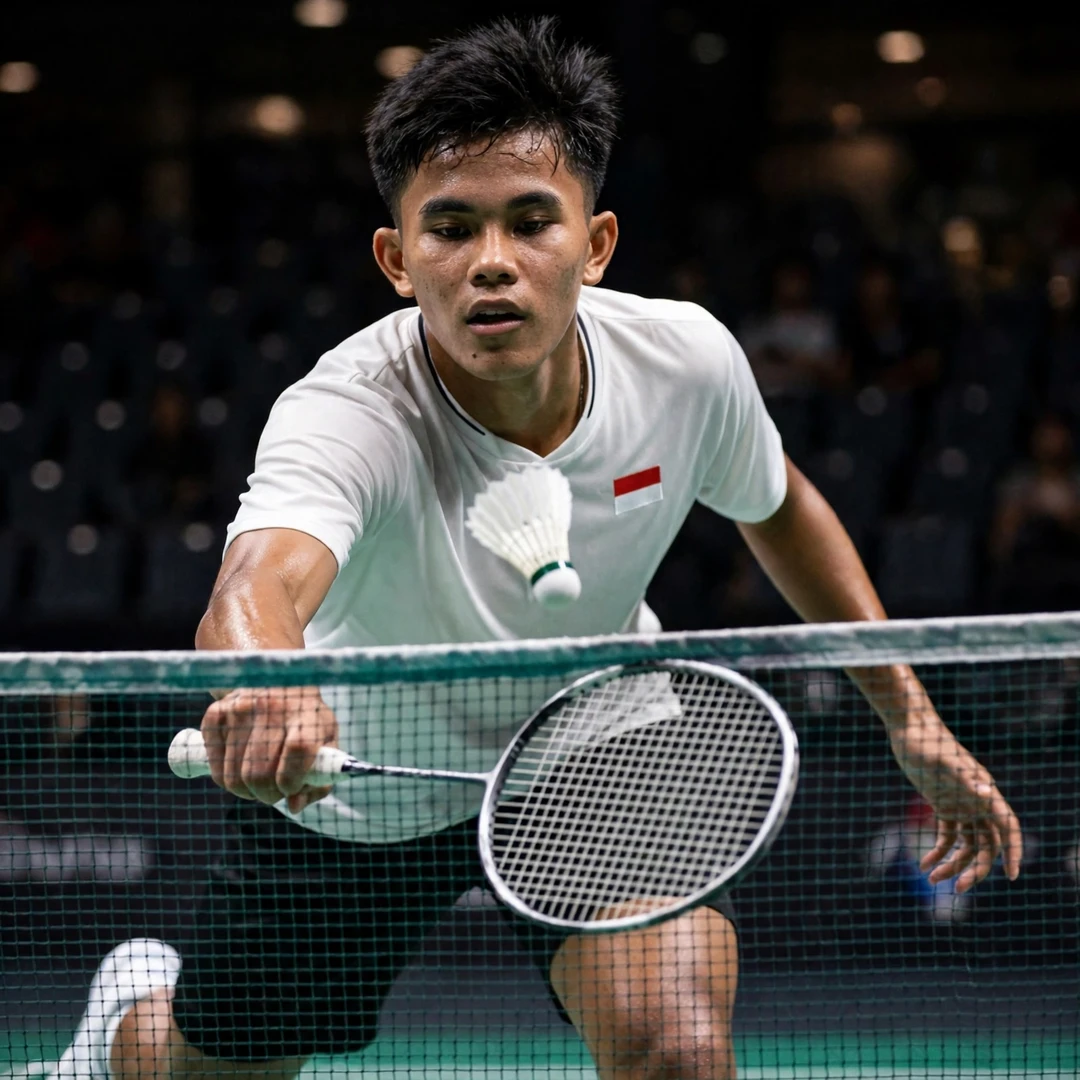
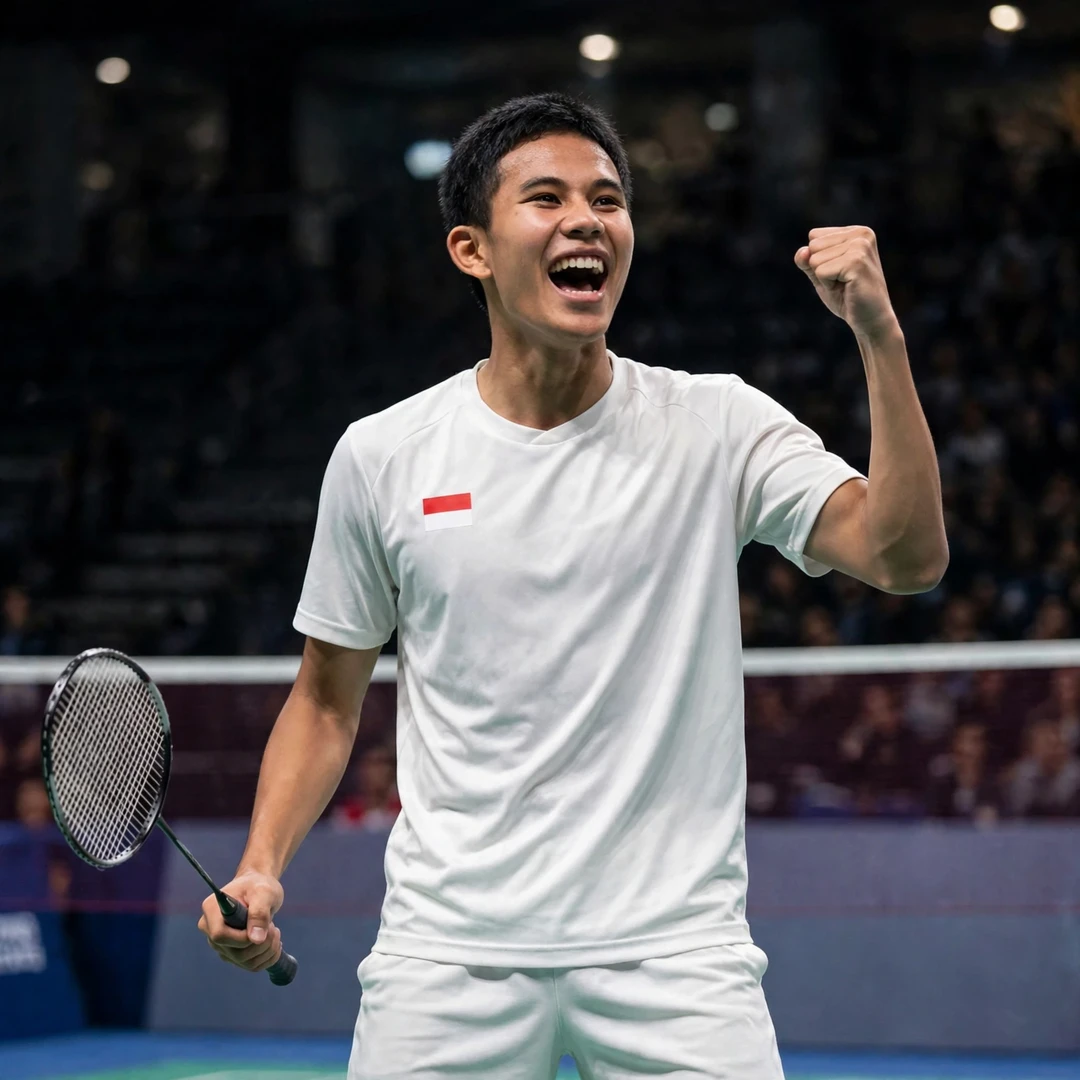
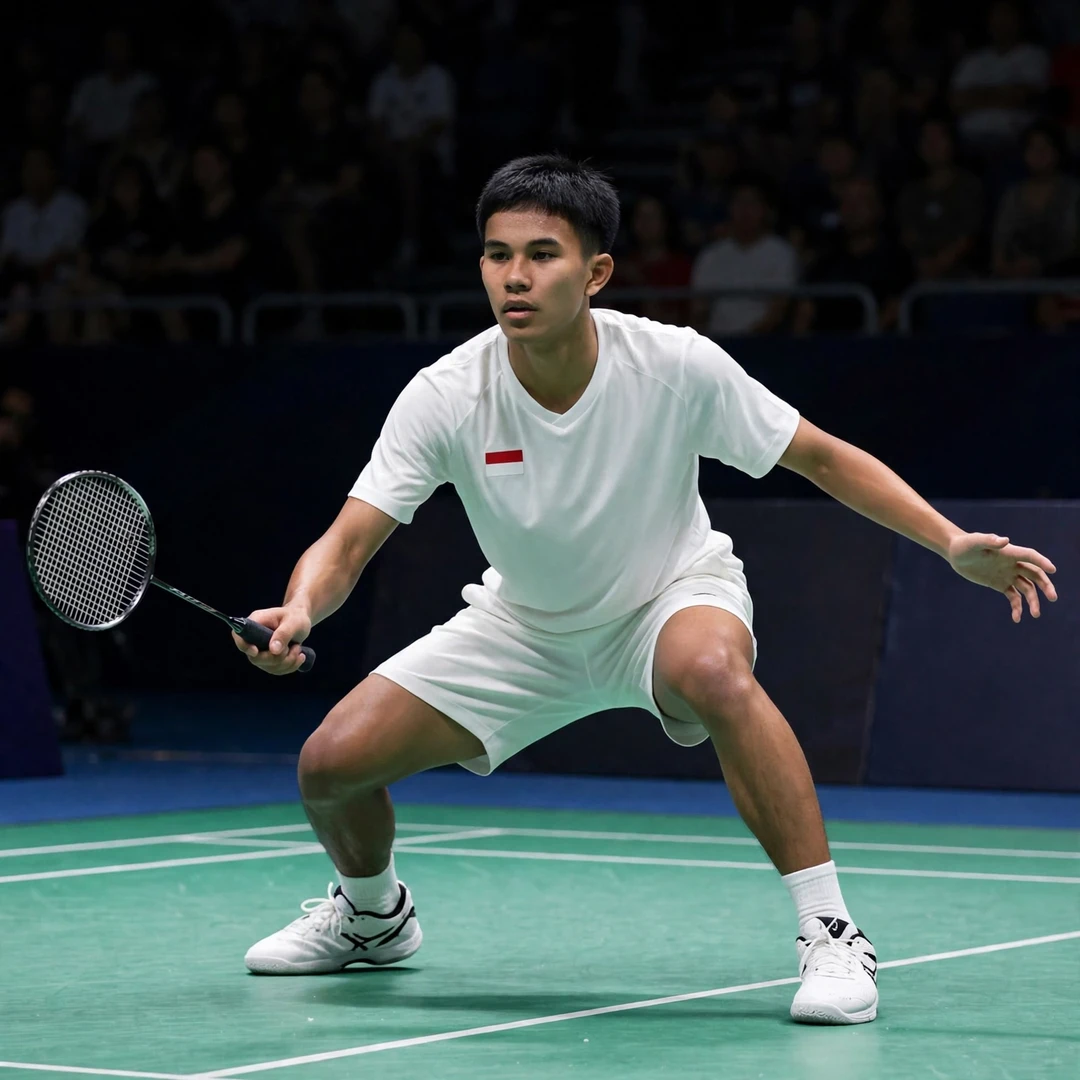
Career Statistics and Rankings
Muhamad Yusuf, born 19 February 2006 in Padang, Indonesia, has produced the fastest rise in recent badminton memory: unranked in July 2025, a first title that October, a top-50 player by March 2026, a World Tour semi-finalist who beat a top seed that June, and an Asian Games gold medallist that September — all by the age of 20.
| Development Area | Common Misconception | What Muhamad Yusuf's Career Shows REALITY |
|---|---|---|
| Junior Foundation | Talent alone decides who becomes a champion. | Yusuf had no world ranking in July 2025 and no junior titles — he started on the senior continental circuit at 19 and let results, not reputation, open the doors. |
| Playing Style Priority | Kids should copy the flashiest attacking shots. | Yusuf built a complete rallying game first; his winners are the finishing touch on patient defence, accurate clears and tempo control drilled in Jakarta. |
| Fitness Importance | Juniors can out-train everyone without rest. | Yusuf played week after week across Africa, Europe and Asia in his first fourteen months — managing travel and fatigue honestly is what keeps a rising player healthy. |
| Mental Approach | Top players never get nervous or upset. | Yusuf lost the first game to Ng Ka Long Angus 22-24 after leading 17-10, then calmly won the match — mental skills are trained, not inherited. |
| Attacking Training | Smashing harder is always the answer. | His Czech Open title, won 21-14, 21-12 over Harry Huang a week after losing a final to the same player, came from rally control and placement, not raw power. |
| National Milestones | Only world titles matter. | Yusuf's Asian Games team gold with Indonesia in 2026, his two International Challenge titles and his Odisha Masters final show how milestones build a career step by step. |
| Career Timeline | Champions peak once and fade fast. | From unranked in July 2025 to world No. 45 and an Asian Games gold medal fourteen months later, Yusuf proves a late start with sustained development can still reach the top. |
Study Muhamad Yusuf's Work Ethic and Professional Approach
This profile explains who Muhamad Yusuf is, his major achievements, and what developing players can learn from his journey. Whether you are a parent in Kuala Lumpur, Cheras or anywhere in Malaysia wondering whether it is too late for your child to start seriously at 15, 16 or even 19, Yusuf's story carries the answer: with the right coaching, patience and enough tournaments, a late start can still reach the top — book a trial class with ST Badminton Academy on WhatsApp at +60 17-684 2136 and let your child begin a development journey built to last.