Chinese Taipei Men’s Singles Badminton Star
Liao Jhuo-Fu

Chinese Taipei
Player Event: Men’s singles
Born 26 July 2002 · From Yunlin County, Chinese Taipei · Right-handed · 185 cm tall
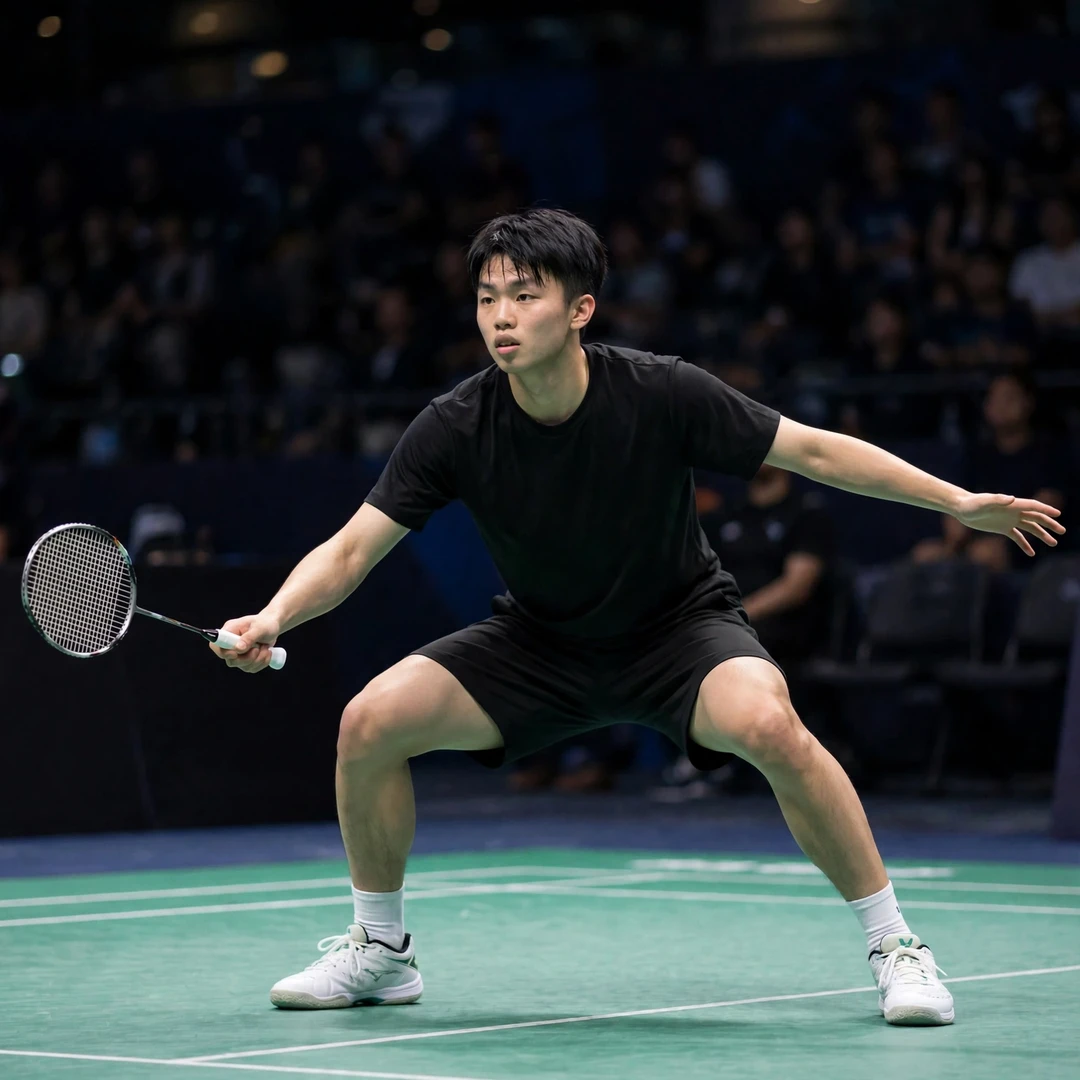
Playing Style: Right-handed attacking all-court player built on reach, flair and fighting spirit
Understanding Liao Jhuo-Fu (Chinese Taipei Badminton Star)
Liao Jhuo-Fu is a professional badminton player from Chinese Taipei and one of the most battle-tested men’s singles players on the BWF international circuit. In the Week 43 world rankings published on 20 October 2026 he stands at world No. 67 with 26,910 points. He is a three-time international singles champion, a World University Games team gold medallist, and a two-time Thomas Cup player for Chinese Taipei — a 185 cm right-hander whose career has been built the hard way: school courts in Yunlin, three lost national finals as a teenager, and years of grinding through early rounds before the titles finally arrived.
Early Life in Yunlin: A Coach’s Son
Liao Jhuo-Fu was born on 26 July 2002 in Yunlin County, on Taiwan’s western coastal plain — farming country, not a famous badminton region. The sport, though, was in the family: his father coached the badminton team at Wenchang Elementary School in Yunlin, and Liao first picked up a racket in kindergarten. By the second grade of elementary school he was a registered player, training under his father’s eye. Children of coaches often read the game early, and Liao’s childhood was spent inside school gyms, learning footwork patterns the way other children learn playground games.
School Badminton, Land Bank and the A Grade
From Wenchang, Liao moved to Xiluo Junior High School and then north to Neng Ren Home Economics and Commercial Vocational High School in New Taipei, one of Taiwan’s established badminton schools, while joining the Land Bank badminton team — one of the island’s great corporate teams. In June 2018, still a schoolboy, he finished third in the B-grade men’s singles at the national ranking tournament and earned promotion to the A grade, Taiwan’s elite domestic level. A year later he played his first national team championships in Land Bank colours, a teenager holding a roster spot among senior internationals.
Beating a Veteran at 17 and Losing Three Finals
His domestic breakthrough came in 2020, at just 17 years old. In the final of the national team championships, Liao played first singles for Land Bank against the Cooperative Bank veteran Hsueh Hsuan-yi — a player 17 years his senior — and won a famous comeback, 18-21, 21-19, 23-21. Beating a seasoned international in a deciding game at 17 marked him as a prospect. Yet the years that followed were not a smooth rise: between 2021 and 2022 he reached three consecutive finals at the national ranking tournament and lost all three, to Lin Chun-yi, Chi Yu-jen and Lu Chia-hung. Three finals, three defeats — and each one taught him something junior badminton never had.
Two Thomas Cups Before His First Title
Those domestic results still earned him the biggest team honour in the sport. With no senior international experience at all, Liao was selected for Chinese Taipei’s Thomas Cup squad for the delayed 2020 edition in Aarhus in October 2021, and won his group match against Algeria’s Adel Hamek, 21-12, 21-19, as Chinese Taipei swept the tie 5-0. In Bangkok in May 2022 he was back: playing third singles against Germany, he beat Kai Schäfer 21-17, 14-21, 21-15 to help Chinese Taipei reach the quarter-finals, where his fifth-singles match against Japan’s Kenta Nishimoto — then a top-20 player — ended in defeat. Two Thomas Cups before his 20th birthday gave him a team-event education most players never receive.
Career Milestone #1
2023: First Title in Saipan and Team Gold in Chengdu
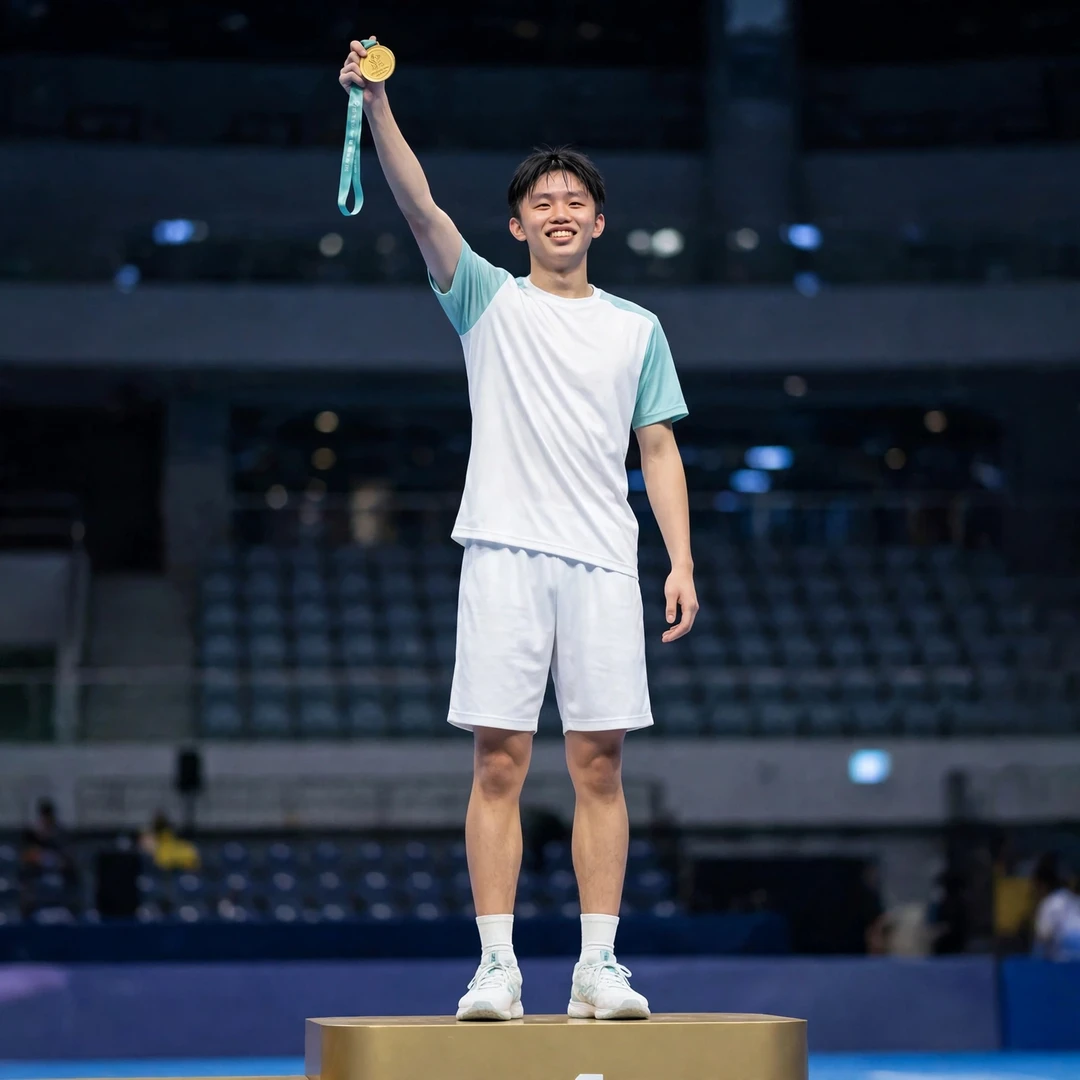
The year 2023 changed everything. In March, Liao reached his first senior international semi-final at the Ruichang China Masters, a Super 100 event, losing in three games to China’s Sun Chao. In June came the title he had been chasing: at the Northern Marianas Open in Saipan, an International Challenge event, he beat South Korea’s Jeon Hyeok-jin 21-15, 21-14 in the final to win his first international singles title. Weeks later he was in Chengdu with the Chinese Taipei student team, and left the World University Games with a gold medal in the mixed team event — an international champion and a team gold medallist in a single summer. By November 2023 he had climbed to a career-high world ranking of No. 65.
If 2023 showed Liao’s ceiling, 2024 showed the sport’s cruelty. At the Portugal International in Caldas da Rainha he fought through the draw to reach the final against Finland’s Joakim Oldorff — and there his body gave out. Trailing 18-21, 6-13, he was forced to retire, and the title went to Oldorff. A runner-up medal earned by a retirement is the hardest kind to accept: he had done the week’s work and could not contest the match that mattered most. Plenty of players let a moment like that define them. Liao treated it as a debt to repay, and rebuilt for the seasons ahead.
Career Milestone #2
The Portugal Final He Could Not Finish
The rebuilding year was quiet and honest. Through 2024 his world ranking slid — by September he stood at No. 85 — as he worked his way back through the International circuit, the domestic ranking tournaments and the National Games, where he took another men’s team bronze medal with Yunlin County. There were no headlines and no shortcuts. What there was, by the end of the year, was a fit player with a full season of matches in his legs and a clearer understanding of what his game needed: patience in the rallies, better management of his schedule, and trust that the finals would come back. They did.
The repayment began in the spring of 2025. In May he reached the Luxembourg Open final, losing to South Korea’s Yoo Tae Bin, and days later the Austrian Open semi-finals in Vienna, where England’s Harry Huang beat him in a three-game battle, 21-16, 21-23, 21-14. Two finals weekends in a month, in two different countries, announced that the player who had retired from the Portugal final a year earlier was now finishing tournaments strongly. The pattern of his season was set: Liao had become a player who is there on finals day, week after week, wherever the circuit takes him.
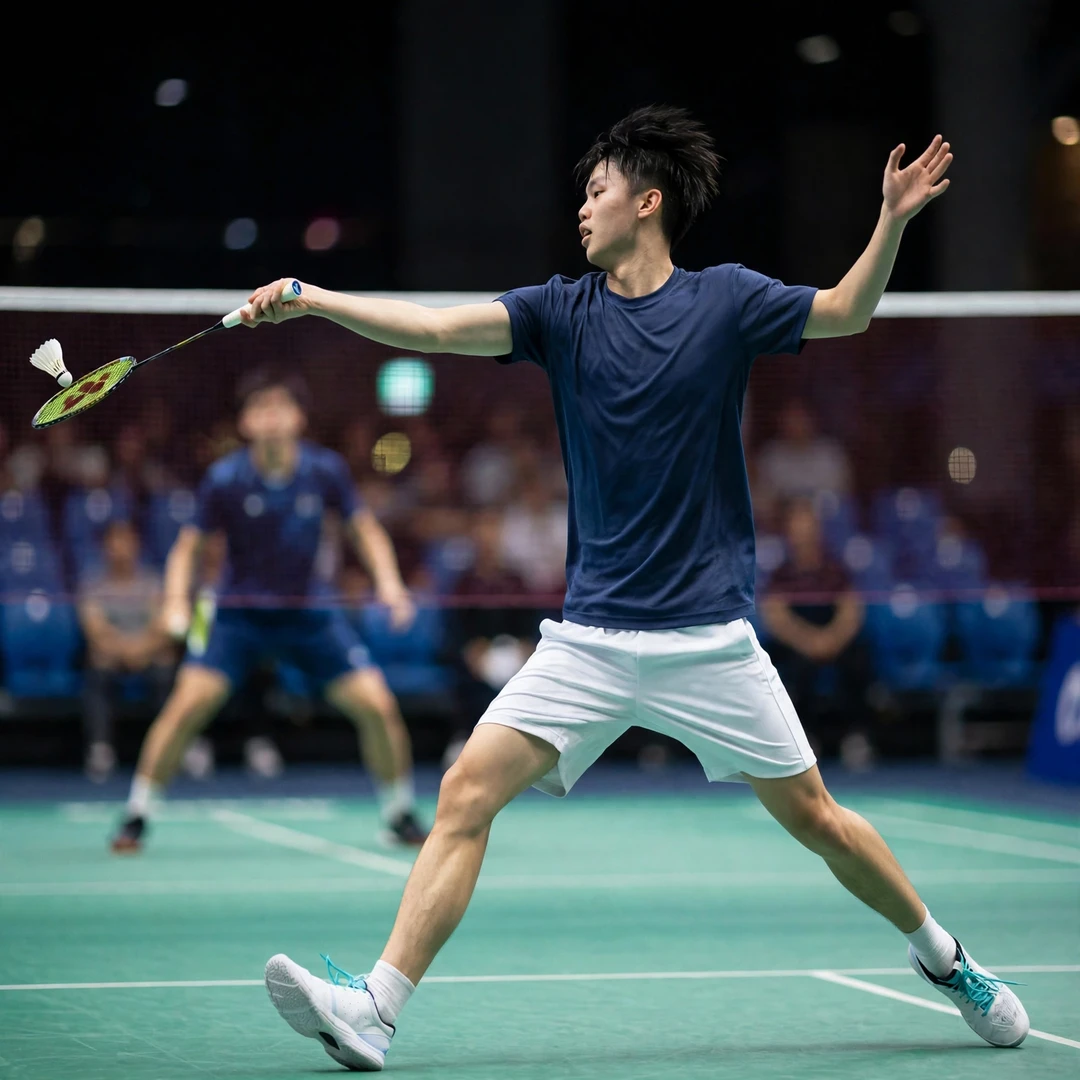
The single biggest week of his 2025 came in June at the US Open in Fullerton, California — a Super 300 event, a full World Tour level above the circuit he usually plays. In the quarter-finals Liao produced the win of his career, beating Japan’s Kenta Nishimoto, the world No. 12 — the same Nishimoto who had beaten him in the Thomas Cup three years earlier. His run ended in the semi-finals against Canada’s Brian Yang, but a Super 300 semi-final, earned by beating a top-12 player, proved his game travels: the attacking flair that wins International Challenge titles also troubles the world’s best on the biggest stages.
Career Milestone #3
Finals Across Three Continents and a Super 300 Semi-final
His autumn of 2025 belonged to the Oceania circuit. In October he was second seed at the Sydney International in Australia, and played like it: he beat Japan’s Toma Noda in the semi-finals, his attacking flair impressing the local reporters all week, before losing an all-Chinese Taipei final to Wang Yu-kai. And before the year closed he had another title — the Indonesia International Challenge II — his second senior international crown. Finals on three continents in a single season is the profile of a player who has stopped hoping to reach finals and started expecting to.
Through 2026, Liao kept taking his game to the World Tour. At the US Open he reached the quarter-finals again, beating Joakim Oldorff — the man who had taken the Portugal title from him in 2024 — in a three-game round-of-16 match before losing to former world No. 1 Kidambi Srikanth. In July he faced Malaysia’s Lee Zii Jia twice in a month: at the Canada Open, and then at his home Taipei Open, where he thrilled the crowd by taking the first game 24-22 before Lee fought back to win in 63 minutes. Matches like these, against former champions, are the measuring stick he now seeks out.
Around those World Tour weeks, the circuit grind continued — and it is the grind that keeps a ranking alive. He reached the semi-finals of the Portugal International in March and of the North Harbour International in New Zealand, took third place at Taiwan’s national ranking tournament in August, pushed India’s HS Prannoy to three games at the Indonesia Masters in Pontianak, and contested the Vietnam Open. None of these weeks made headlines. All of them made points, matches and experience — the currency a player ranked in the 60s spends to stay in World Tour draws.
Career Milestone #4
Bendigo Gold and the Push for the Top 50
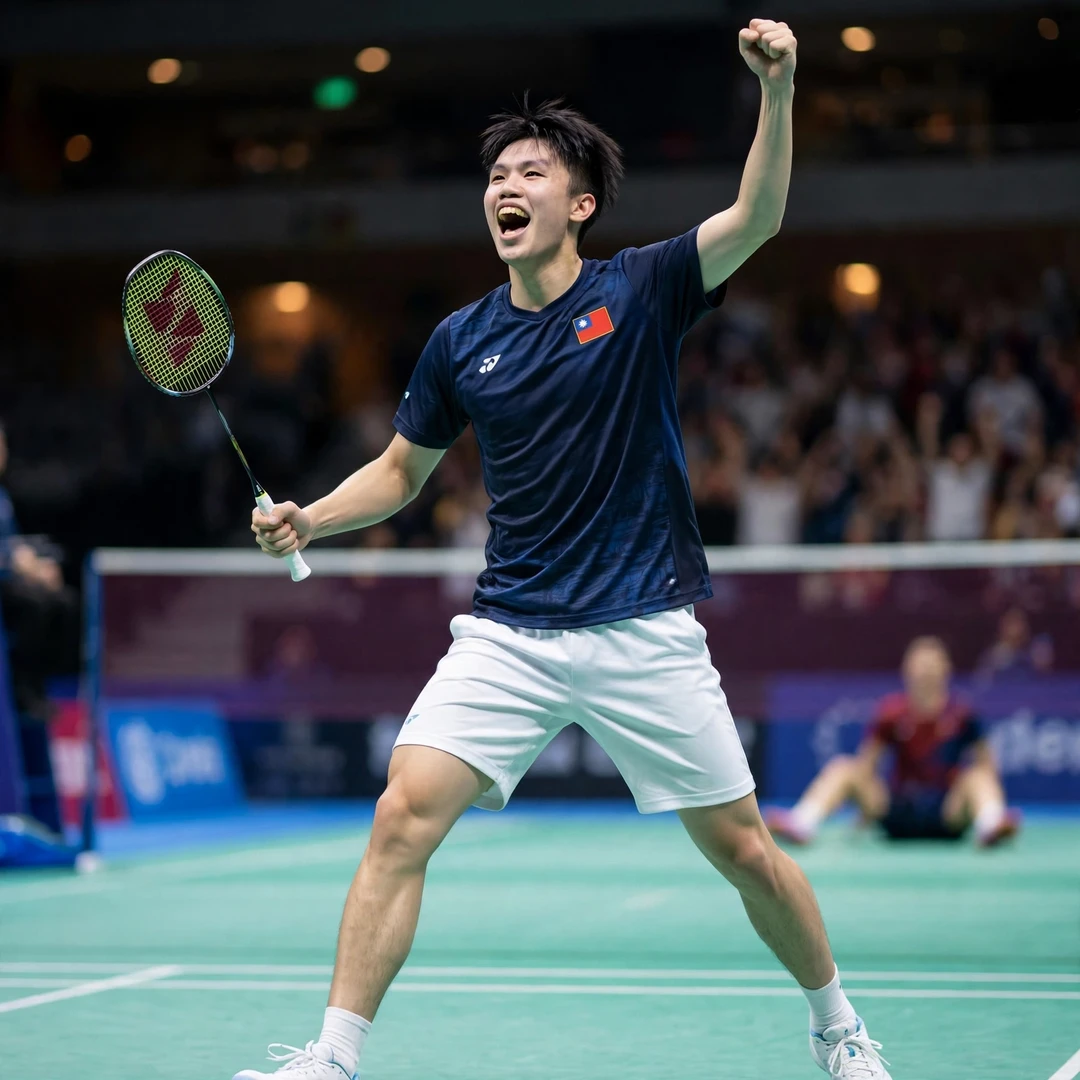
Then, in October 2026, came the perfect week. At the Bendigo International in Australia, Liao was second seed and played with the authority of a man who has lost enough finals. He beat compatriot Chiang Tzu Chieh 21-17, 21-14 in the semi-finals, then met India’s Ansh Negi — who had knocked out top seed Wang Po-Wei — in the final. Negi took the first game 21-12, and Liao’s old story threatened to repeat itself. Instead he turned the match around, winning 12-21, 21-16, 21-14 for his third senior international title. A title won from a game down, days before the Week 43 rankings placed him at No. 67, is exactly the momentum his career has been building toward.
The rankings tell the story of a player hovering at the edge of the next level. His career-high of No. 65 came in November 2023; the Week 43 rankings of 20 October 2026 put him at No. 67 with 26,910 points — close to his best, with the Bendigo title still fresh in the calculation. At this altitude the margins are tiny: one good week at Super 100 or Super 300 level can move a player ten places. What separates Liao from the players ranked far below him is not talent but record: three international titles, finals on three continents, two Thomas Cups and a Super 300 semi-final. The next step — a permanent place inside the top 50 and direct entry into the biggest World Tour draws — is the goal his whole schedule is now built around.
Playing Style
The Tall Attacker Style: Reach, Flair and Fight
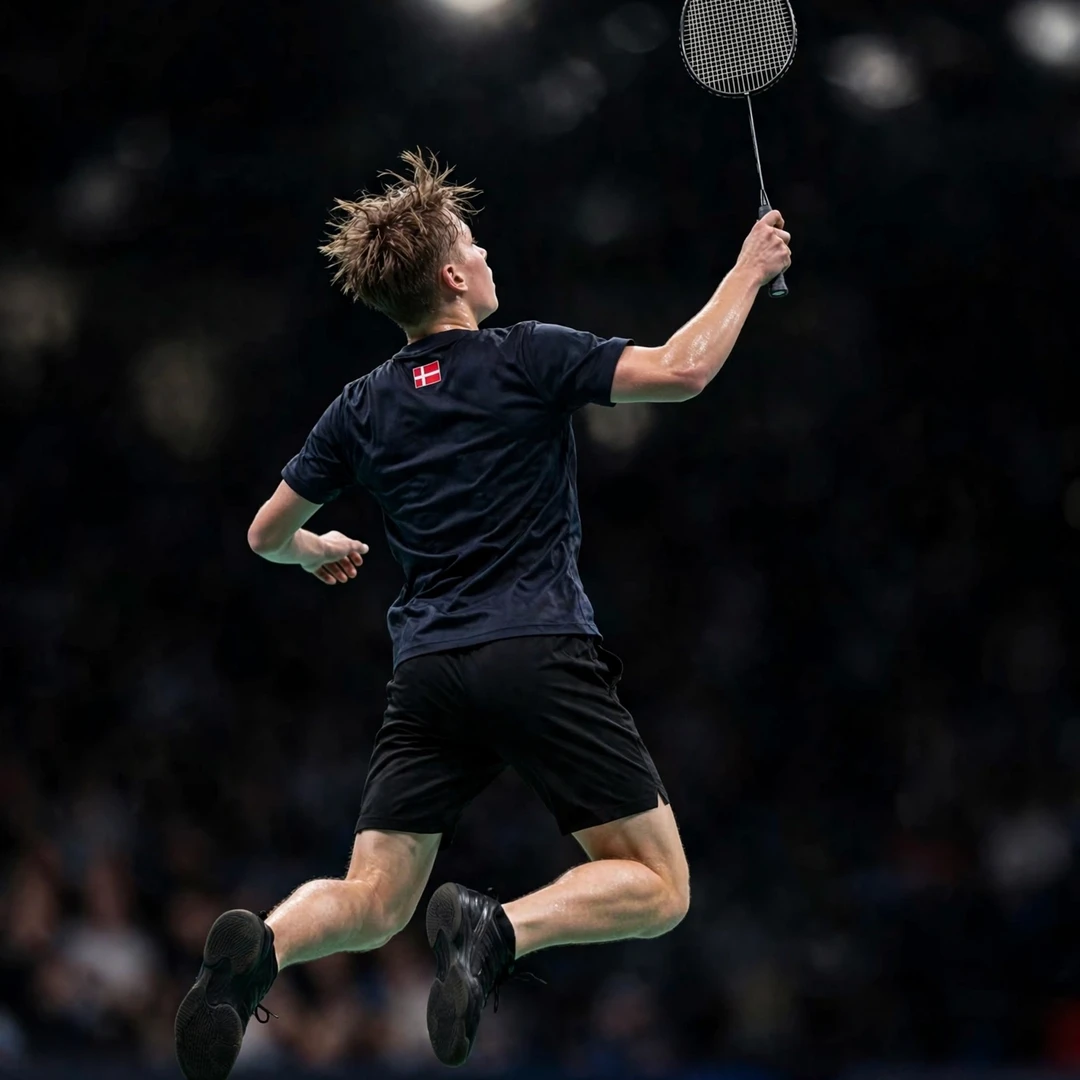
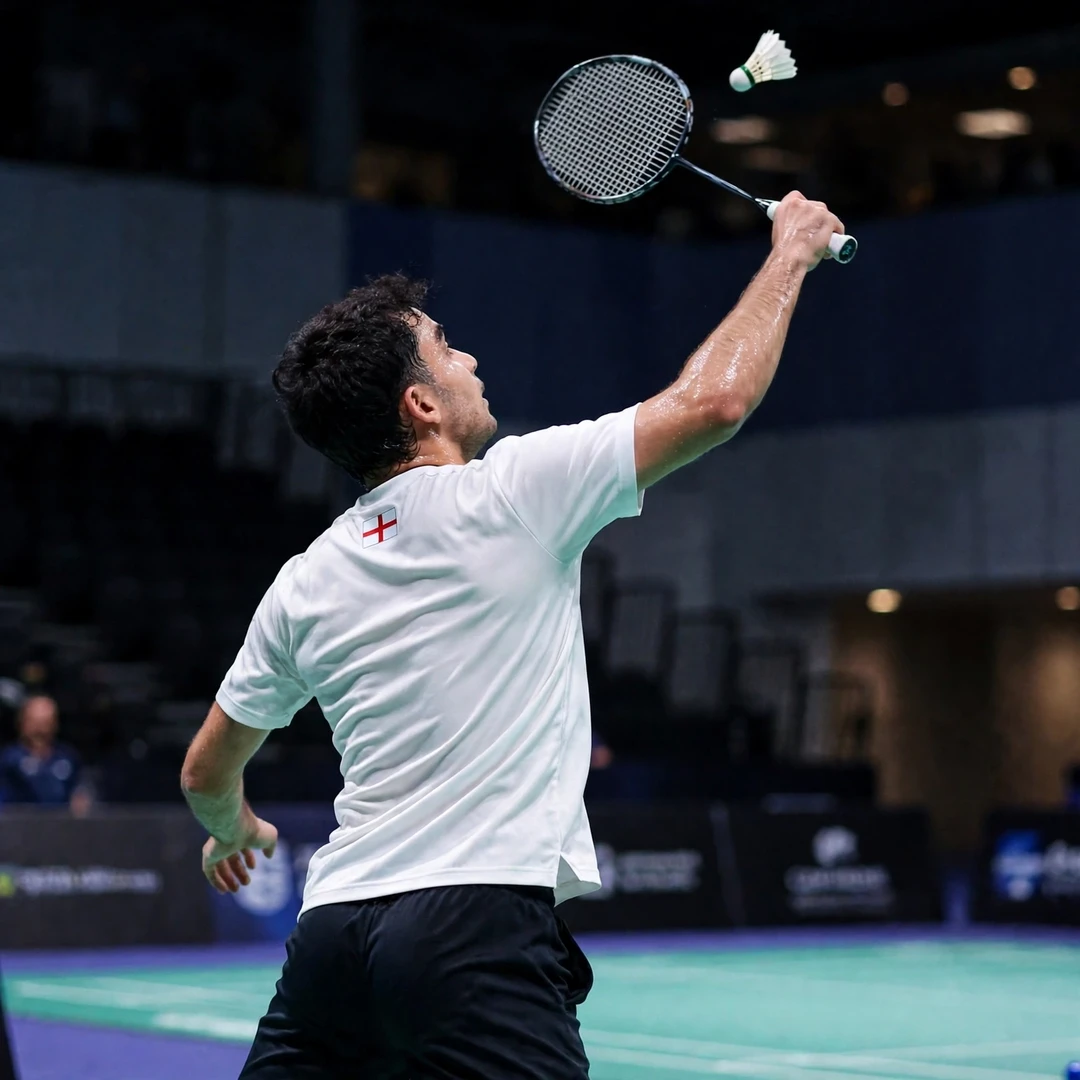
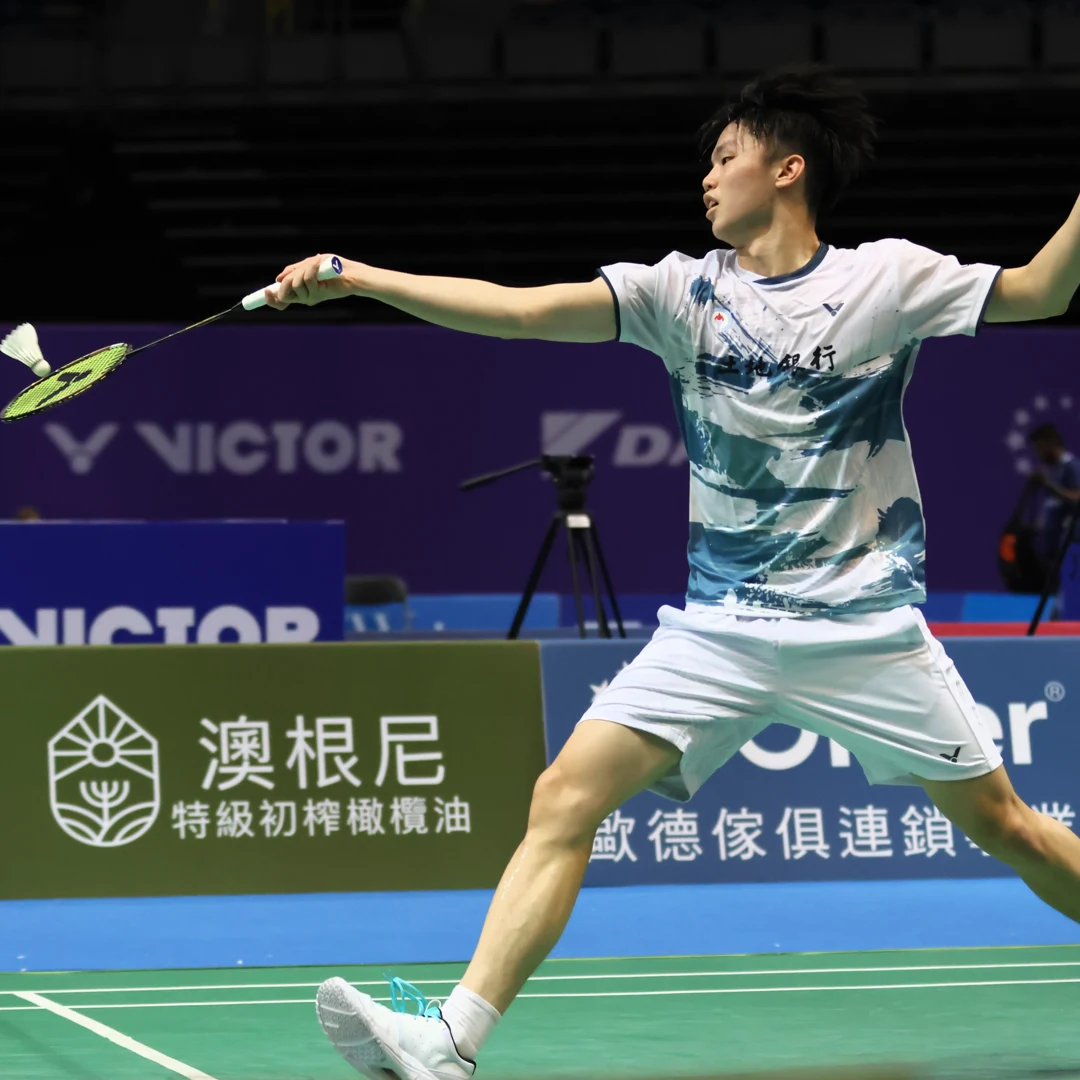
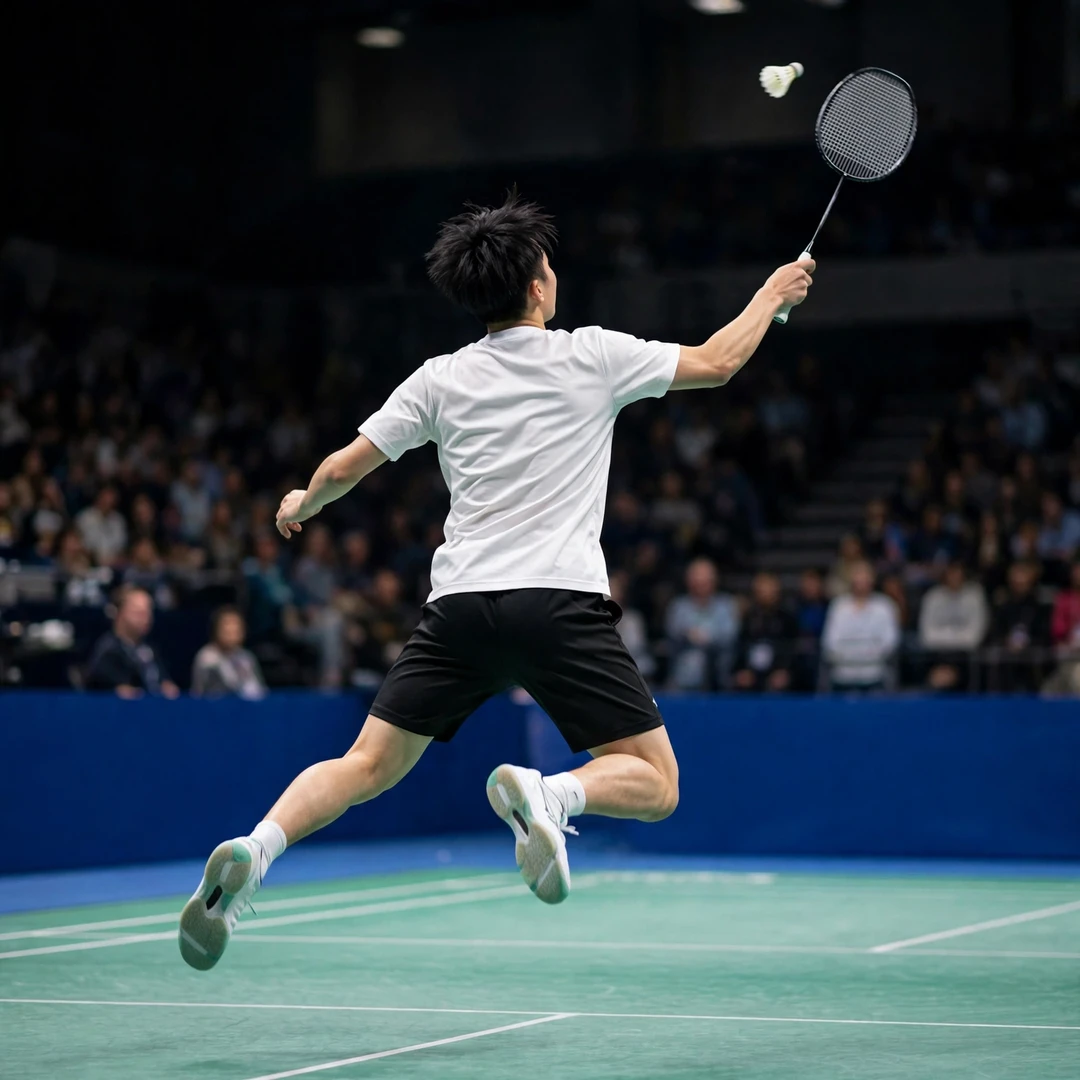
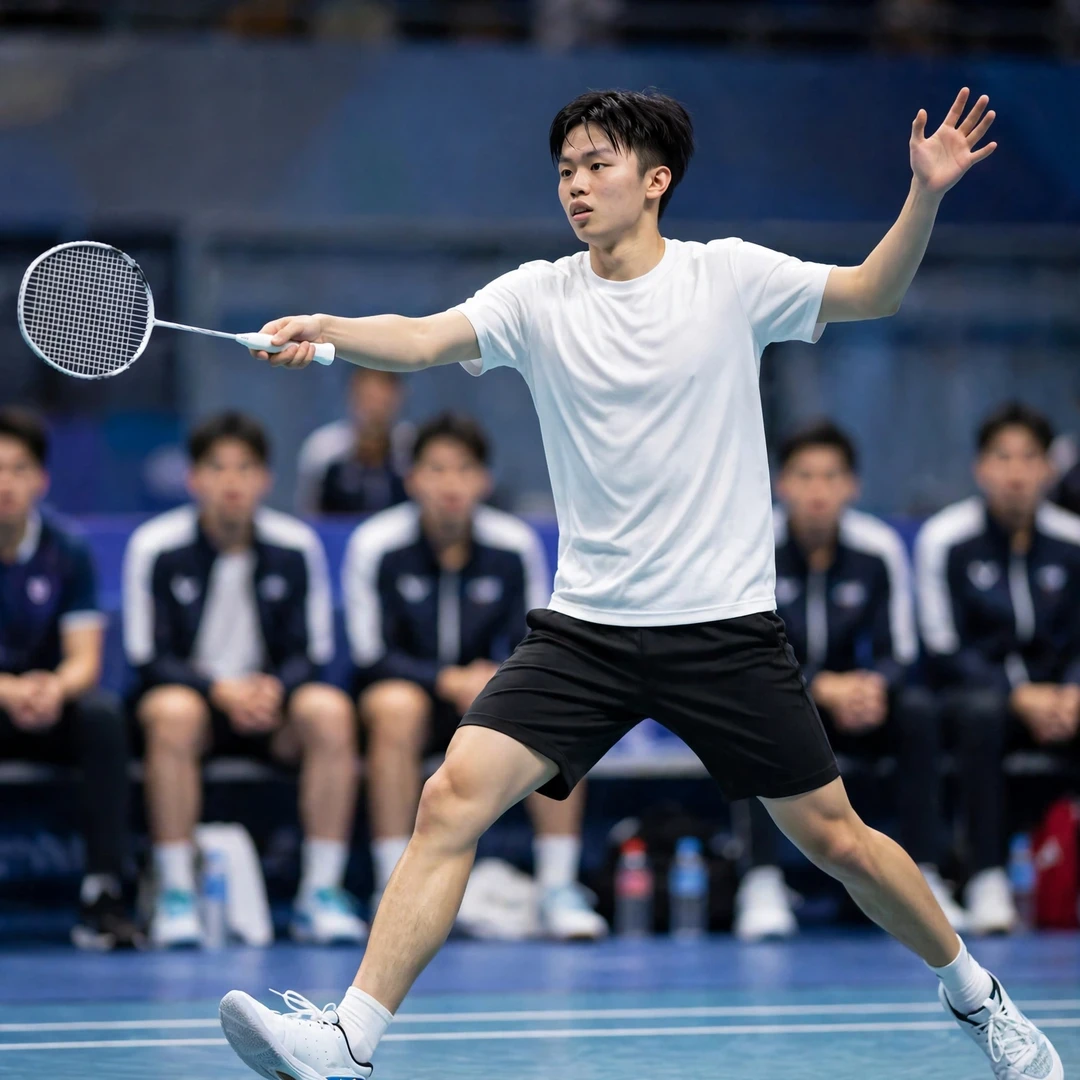
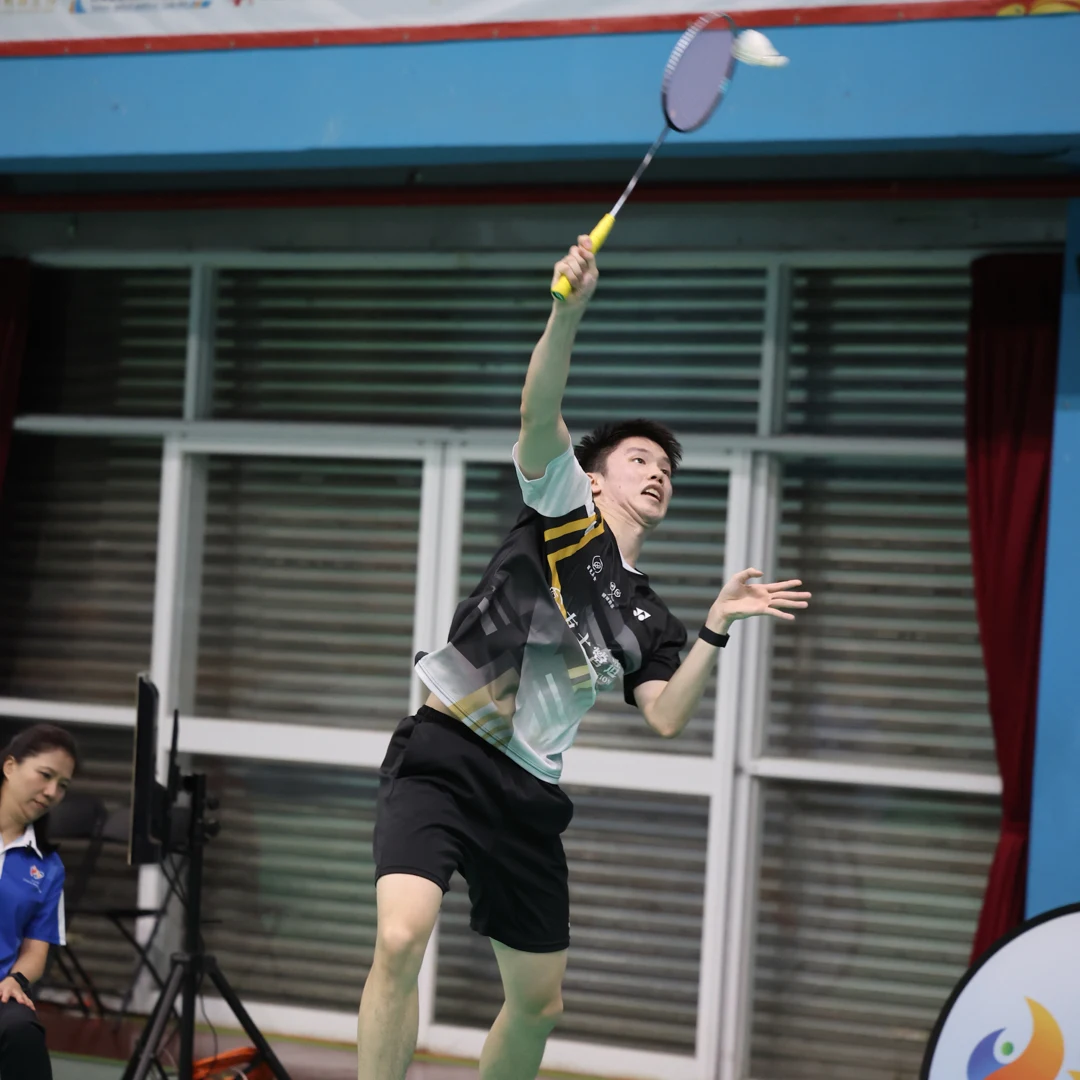
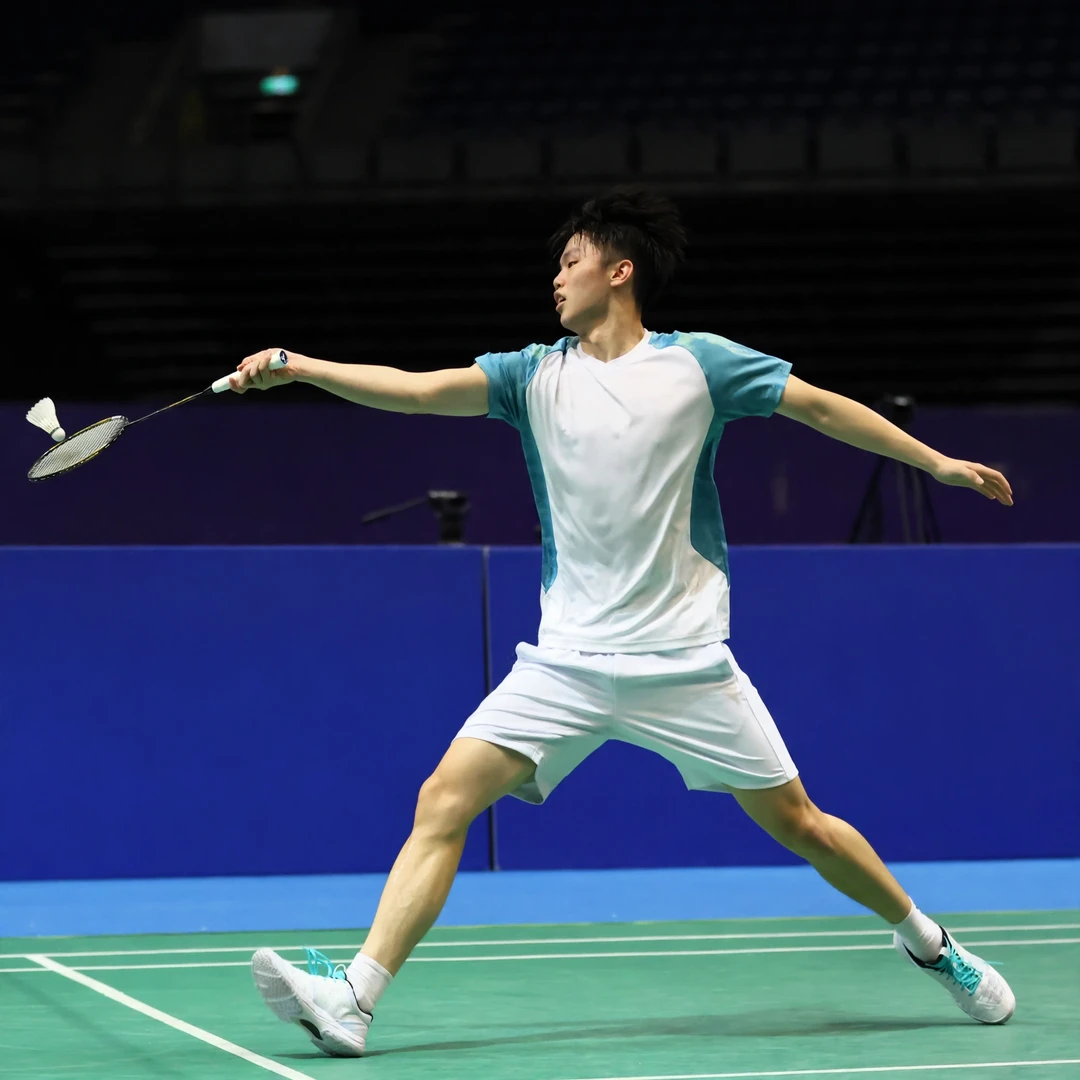
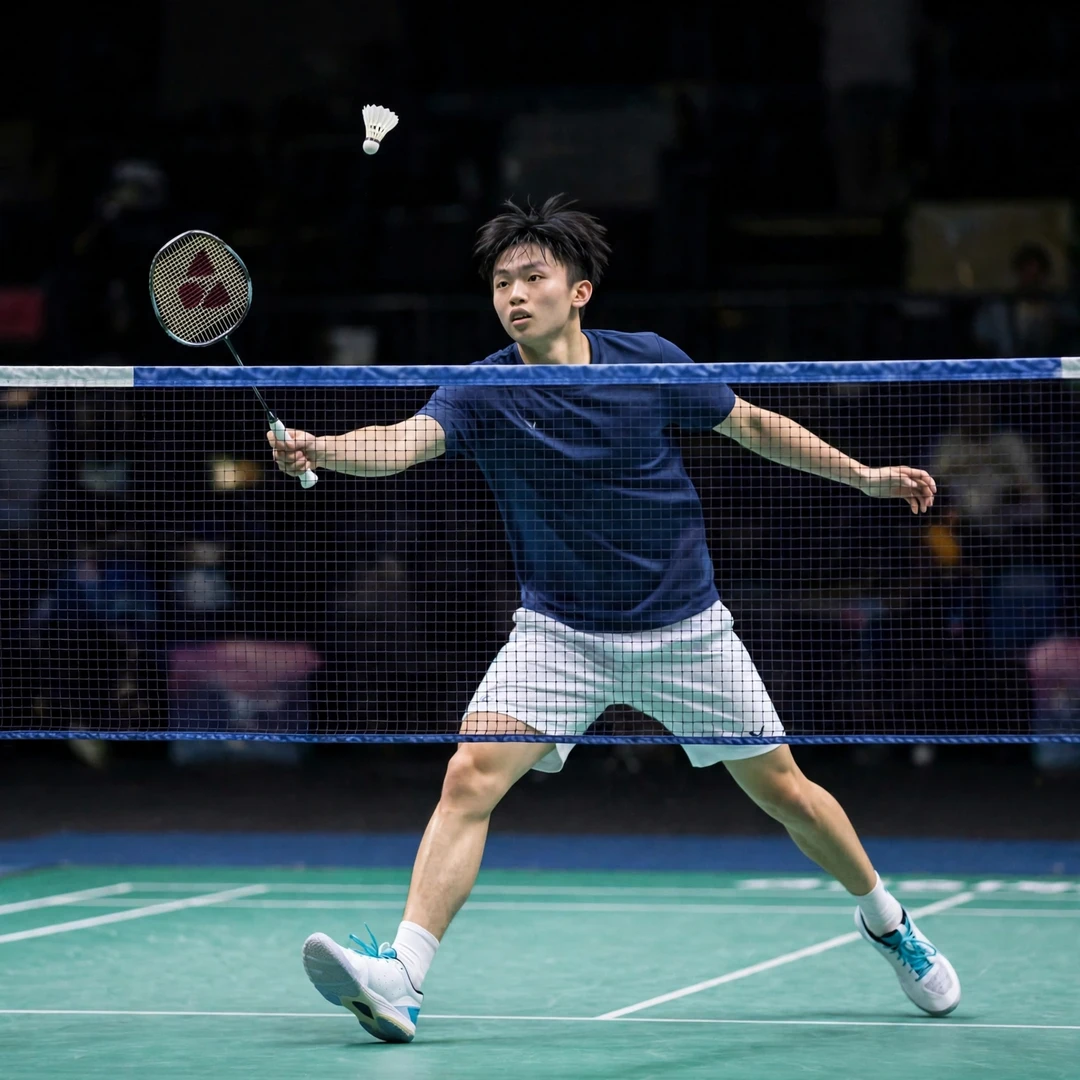
Liao Jhuo-Fu’s game starts with his frame. At 185 cm, with the long levers of a player who has been tall since his school days, he covers the forecourt in two strides and takes the shuttle early at the net. Reporters watching him at the 2025 Sydney International singled out his attacking flair: he is a right-hander who likes to take control of rallies, stepping in behind his serve, driving the shuttle flat and fast through the mid-court, and following his attacks to the net rather than admiring them. His height turns defence into counter-attack — stretched wide, he can still punch the shuttle back with interest.
His signature trait, though, is the fightback. The evidence runs through his whole career: at 17 he beat Hsueh Hsuan-yi from a game down in a national team final; at Bendigo in 2026 he won the title from a game down; at the Taipei Open he took a game off Lee Zii Jia before the former All England champion escaped. Even in defeat in the Sydney final, reporters noted that he mounted a spirited fightback in both games. Opponents know a lead against Liao is never safe, because his intensity does not drop when the score turns against him — if anything, it rises.
Young players should watch three things in Liao’s game. First, how he uses his height: early racket preparation and intercepting at the highest possible point, rather than waiting for the shuttle to drop. Second, his mid-court drives — flat, fast exchanges that stop opponents from setting up their smash, a skill any player can drill. Third, his response to losing runs inside a match: he slows the game down, varies his serve, and rebuilds point by point instead of gambling. None of these are gifts of talent. They are habits, learned in school gyms in Yunlin and on the long road of the international circuit — and habits can be coached.

Mental Strength
Resilience, Patience and the Team Ethic
The first life lesson from Liao Jhuo-Fu’s career is that losing finals is not failure — it is tuition. Three straight national ranking-tournament finals lost as a teenager could have ended his confidence; a retirement in an international final in Portugal could have ended his belief. He answered both the same way: another season, another final, until the titles came. Young players who cry after finals — and parents who worry about those tears — should look at his record. The players who eventually win are usually the ones who reached finals early and refused to be defined by losing them.
The second lesson is about team badminton. Liao was picked for two Thomas Cups before he had won anything as an individual, and he won a World University Games team gold medal before his second individual title. Team events taught him to play for something larger than his own ranking: a fifth-singles match in a group tie matters as much as a final when your teammates are watching. Coaches value that reliability, which is why he keeps being selected. For young players, the message is simple — be the teammate everyone wants in the squad, and opportunities will find you.
Parents can take practical lessons too. Liao’s father was his first coach, but the family never rushed him: kindergarten rallies became elementary-school training, then a badminton high school, then a corporate team place with Land Bank and a university place at the University of Taipei, studied alongside his professional career. Education and elite sport ran together for him, not against each other. And his base stayed close to home — Land Bank colours, national championships, National Games bronze medals with Yunlin County in 2021, 2023 and 2025 — while his ambitions travelled the world. Roots at home, eyes on the world: that balance is worth copying.
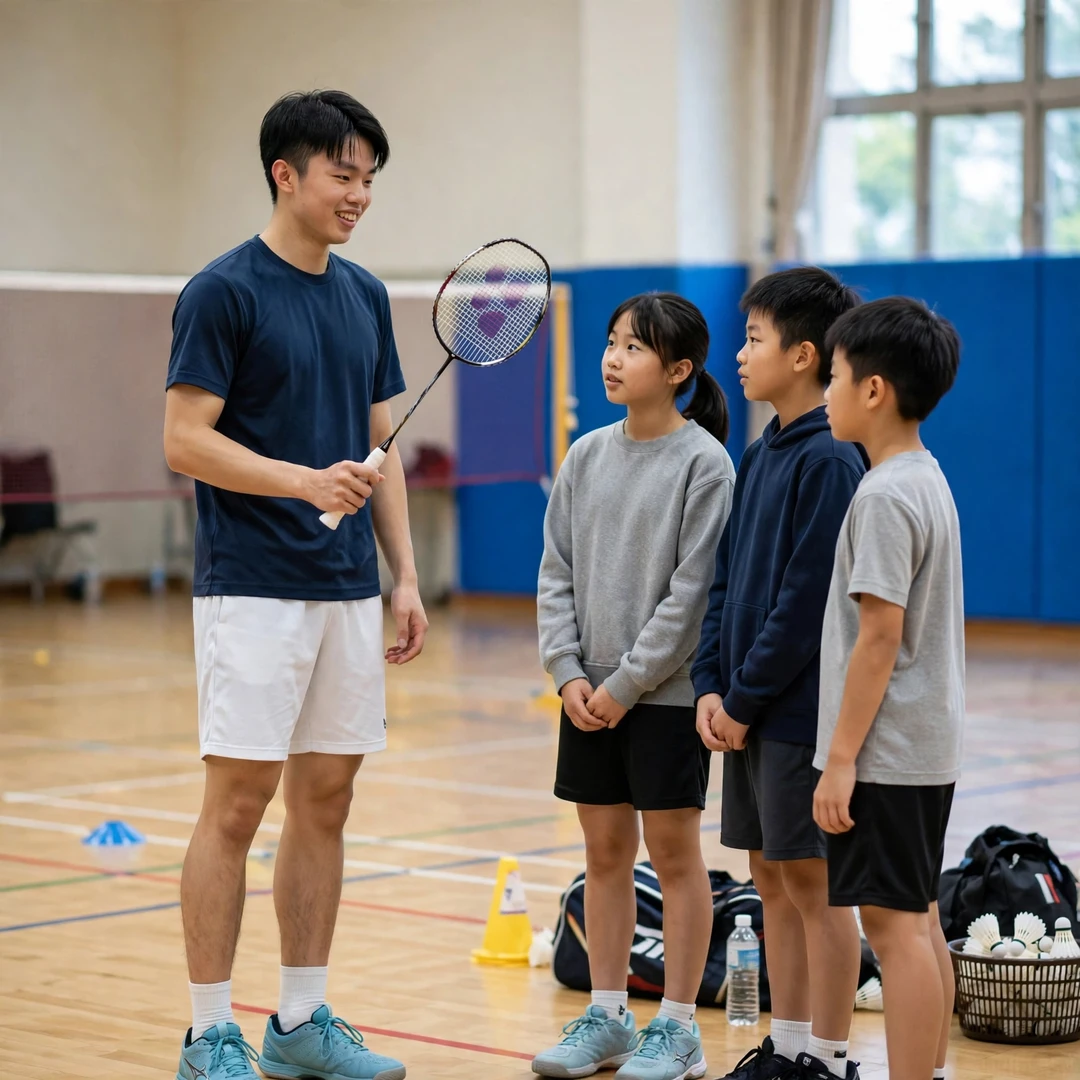
Learning Reference
ST Badminton Academy Connection
ST Badminton Academy has no partnership, sponsorship or endorsement relationship with Liao Jhuo-Fu, the Land Bank badminton team or the Chinese Taipei Badminton Association. This profile is an educational case study for our students and parents, built from public tournament records. We study his career because the habits behind it — persistence after lost finals, team-first reliability and an attacking game built on reach — are the same habits we coach in Kuala Lumpur and Singapore, whatever level a child plays at.
Why do our students study Liao Jhuo-Fu? Because many of them are tall, late-maturing players who lose to smaller, faster juniors and wonder if the game suits them. Liao shows what a tall player’s game looks like when it is finished: early interceptions, flat drives, net control and attacks that arrive from a great height. He also proves that a player from a small county, whose first coach was his own father at an elementary school, can reach the world’s top 70 — famous academies and big cities are advantages, but they are not requirements.
If your child dreams of playing professionally, Liao Jhuo-Fu’s career offers honest encouragement: the road runs through lost finals and long circuit weeks, and that is normal. He lost three national finals before he won an international title; he retired from a final before he won two more. Start with sound coaching, build the basics, compete regularly — including in team events, where character is forged — and let development take the time it takes. The players who last are rarely the ones who never lost.
FAQs: Liao Jhuo-Fu Chinese Taipei Badminton Player
In this FAQ section, we answer the questions parents and young players ask most often about Liao Jhuo-Fu: his background, his titles, his playing style, his Thomas Cup career for Chinese Taipei, and how Malaysian juniors can learn from his journey.
Who is Liao Jhuo-Fu and which country does he represent in badminton?
Liao Jhuo-Fu is a professional badminton player from Chinese Taipei. He was born on 26 July 2002 in Yunlin County, plays for the Land Bank badminton team, studies at the University of Taipei, and plays right-handed. In the Week 43 BWF world rankings of 20 October 2026 he stands at world No. 67 with 26,910 points, close to his career-high of No. 65.
What are Liao Jhuo-Fu’s biggest badminton achievements?
Liao Jhuo-Fu’s biggest achievements are his three senior international singles titles — the Northern Marianas Open in 2023, the Indonesia International Challenge II in 2025 and the Bendigo International in 2026 — plus a World University Games mixed team gold medal at Chengdu in 2023. He also reached a Super 300 semi-final at the 2025 US Open, where he beat world No. 12 Kenta Nishimoto, and played at two Thomas Cups for Chinese Taipei.
What is Liao Jhuo-Fu’s playing style?
Liao Jhuo-Fu is a right-handed attacking all-court player. At 185 cm he uses his reach to intercept early and control the net, plays flat, fast drives through the mid-court, and follows his attacks forward. Reporters have praised his attacking flair, and his trademark is the fightback: he has won finals from a game down and keeps raising his intensity when matches turn against him.
How has Liao Jhuo-Fu performed for Chinese Taipei in team events?
Liao Jhuo-Fu has been a Chinese Taipei team player since he was 19. He played at the Thomas Cup in Aarhus in 2021, winning his singles match against Algeria, and again in Bangkok in 2022, where his win over Germany’s Kai Schäfer helped Chinese Taipei reach the quarter-finals. In 2023 he won mixed team gold at the World University Games in Chengdu, and he has won National Games men’s team bronze medals with Yunlin County in 2021, 2023 and 2025.
How can my child learn from Liao Jhuo-Fu’s training approach?
Children can copy Liao Jhuo-Fu’s approach in three ways. Use your reach: tall juniors should practise taking the shuttle early and high, at the net and in defence. Practise flat mid-court drives, the shots that stop opponents setting up their smash. And train the reset: after losing two or three points, slow down, vary the serve and rebuild — exactly how he turns matches around. An academy coach can turn each of these into weekly drills.
Did Liao Jhuo-Fu win any junior titles?
Liao Jhuo-Fu’s junior years were promising rather than decorated. He earned A-grade status in Taiwan’s national ranking system as a schoolboy in 2018, played national team championships for Land Bank at 17, and beat veteran international Hsueh Hsuan-yi in a national final at the same age. His three consecutive finals at the national ranking tournament in 2021 and 2022 all ended in defeat — the making of him, as his later senior titles showed. His story proves that a junior record without gold medals can still lead to a professional career.
What are Liao Jhuo-Fu’s best World Tour and championship results?
On the World Tour, Liao Jhuo-Fu’s best result is the semi-final of the 2025 US Open, a Super 300 event, where he beat world No. 12 Kenta Nishimoto in the quarter-finals before losing to Brian Yang. His first senior semi-final came at Super 100 level, at the 2023 Ruichang China Masters, and he reached the US Open quarter-finals again in 2026 and the Thomas Cup quarter-finals with Chinese Taipei in 2022.
What playing style should young players learn from Liao Jhuo-Fu?
Young players should learn Liao Jhuo-Fu’s reach-based attacking style, because its parts are trainable: early racket preparation, interceptions at full stretch, flat drives through the mid-court and following attacks into the net. They should also copy his in-match resets — slowing the game down and varying serves when a match turns. It is a style that rewards patience and coaching over raw talent, ideal for tall juniors who are still growing into their movement.
Does ST Badminton Academy have any connection with Liao Jhuo-Fu?
No — ST Badminton Academy has no official connection, partnership or endorsement relationship with Liao Jhuo-Fu or the Land Bank badminton team. This profile is purely an educational case study for our students. If you would like your child to train the habits his career demonstrates — persistence, team reliability and attacking reach — you are welcome to book a trial class with our coaching team.
Liao Jhuo-Fu Career Highlights
Career Statistics and Rankings
Liao Jhuo-Fu, born 26 July 2002 in Yunlin County, has built his career the persistent way: a coach's son from Yunlin, three lost national finals, two Thomas Cups, a first international title in Saipan, a World University Games team gold, a Super 300 semi-final in the United States, and a third international title at Bendigo in October 2026. Standing at No. 67 in the Week 43 rankings with 26,910 points, close to his career-high No. 65, he remains one of the most instructive players in world badminton for any young player learning that finals are won by those who keep reaching them.
| Development Area | Common Misconception | What Liao Jhuo-Fu's Career Shows REALITY |
|---|---|---|
| Junior Foundation | Talent alone decides who becomes a champion. | Liao started in kindergarten in Yunlin, coached by his own father on an elementary-school team — a family and school base came first. |
| Playing Style Priority | Kids should copy the flashiest attacking shots. | Liao built a complete game first; his attacking flair is the finishing touch on reliable footwork, defence and net play. |
| Fitness Importance | Juniors can out-train everyone without rest. | Liao had to retire from the 2024 Portugal International final, then rebuilt his season — his finals across three continents in 2025 came from smarter scheduling, not more hours. |
| Mental Approach | Top players never get nervous or upset. | Liao lost three straight national ranking-tournament finals as a teenager, yet he keeps returning to finals — mental skills are trained, not inherited. |
| Attacking Training | Smashing harder is always the answer. | His 2026 Bendigo International final win over Ansh Negi (12-21, 21-16, 21-14) and his first-game win over Lee Zii Jia at the 2026 Taipei Open came from controlled attack placement, not raw power. |
| National Milestones | Only world titles matter. | Liao's World University Games mixed team gold in Chengdu and his two Thomas Cup campaigns made him a trusted Chinese Taipei team player — team milestones build a career step by step. |
| Career Timeline | Champions peak once and fade fast. | From three lost national finals as a teenager to a Super 300 semi-final and three international titles, Liao proves sustained development beats a short peak. |
Study Liao Jhuo-Fu's Work Ethic and Professional Approach
Would your child like to train like a professional? Book a badminton trial class at ST Badminton Academy in Kuala Lumpur or Singapore on WhatsApp +60 17-684 2136. Our coaches build the same foundations Liao Jhuo-Fu's career is built on — footwork, reach, attacking habits and match resilience — for children from beginner level to competitive squads.