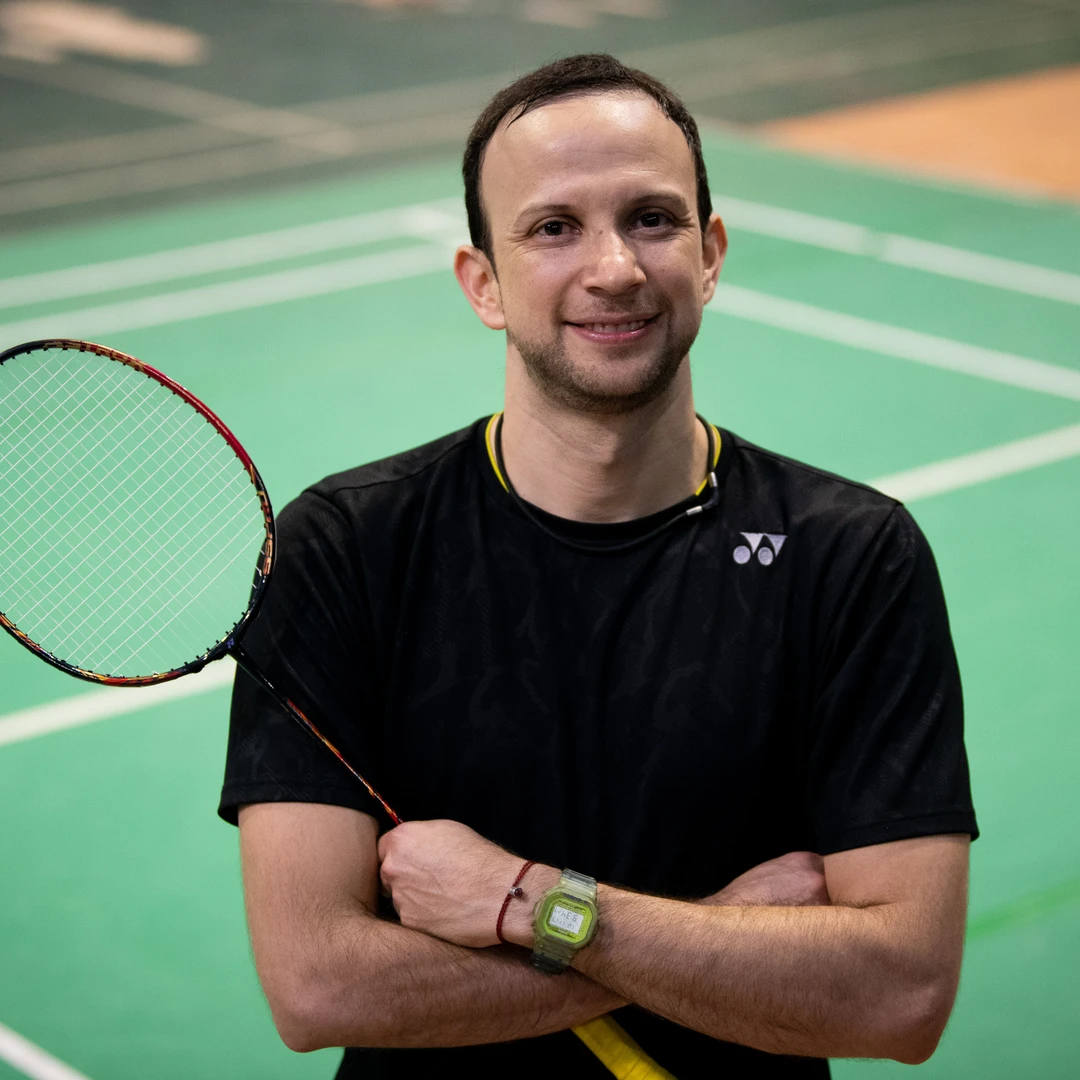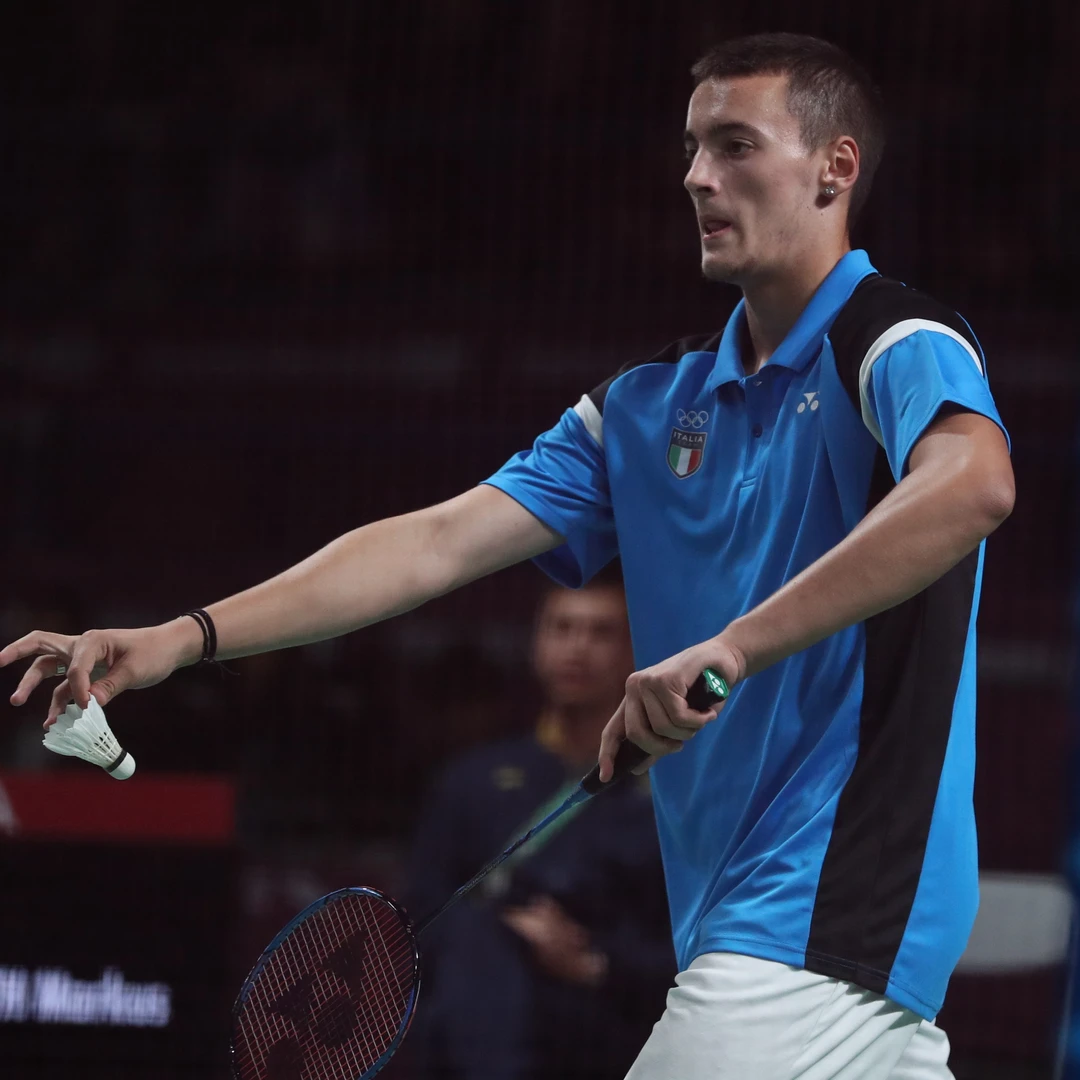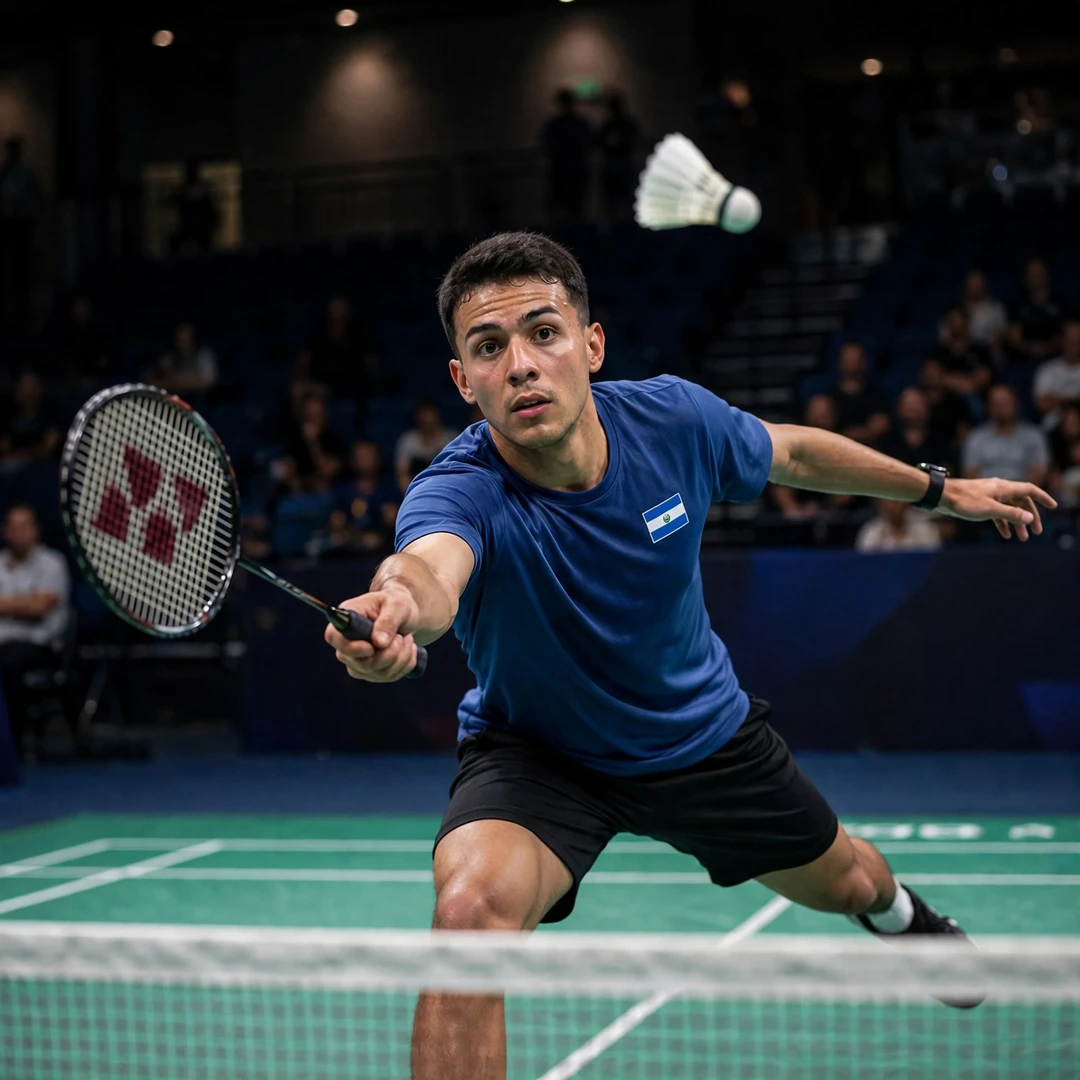
Salvadoran Men’s Singles Badminton Star
Uriel Francisco Canjura

El Salvador
Player Event: Men’s singles
From Suchitoto, El Salvador · Height: 1.65 m (5 ft 5 in) · Right-handed
Playing Style: Right-handed counter-puncher with lightning footwork, stubborn defence and sharp counter-attacks built on speed rather than size
Known For: Becoming El Salvador’s first Olympic badminton player at Paris 2024, a Pan American Games bronze medal, three Pan Am Championships silver medals and seven international singles titles
Journey: Backyard mud court in Suchitoto · National Institute of Sports, San Salvador · Youth Olympian 2018 · Pan Am Games bronze 2023 · Paris 2024 Olympian
Understanding Uriel Francisco Canjura (Salvadoran Badminton Star)
Uriel Francisco Canjura is a Salvadoran men’s singles badminton player who stands at world No. 91 in the BWF rankings (Week 43, 20 October 2026) with 21,146 points. His numbers, though, are the least remarkable thing about him. Canjura learned the game barefoot on a dirt court behind his mother’s house in Suchitoto, hitting shuttlecocks against a wall when there was no one to play with — and from that backyard he climbed to a career-high world No. 49, won seven international singles titles, collected four Pan Am Championships medals and, at Paris 2024, became the first badminton player ever to represent El Salvador at an Olympic Games, carrying his country’s flag at the opening ceremony.
Early Life in Suchitoto: The Barefoot Boy of the Mud Court
Uriel Francisco Canjura Artiga was born on 12 September 2000 in Suchitoto, a small colonial town in El Salvador’s Cuscatlán department. Football rules Salvadoran sport, and the young Uriel played it too — until he was nine years old, when his stepfather Andrés Ardón, a member of the Salvadoran Badminton Federation, put a racket in his hand and became his first coach. The family’s backyard became a badminton court: a patch of dirt with lines drawn in white ash, which his mother and stepfather got up early to re-mark.
Junior Titles Across Central America
There was no hall and no money for one, so Canjura trained the way the BWF’s Shuttle Time programme teaches children around the world to begin — anywhere. He played barefoot on the mud because it felt natural, ‘like beach football’, and the uneven ground built the strong legs and quick feet that still define his game. When there was no training session, he hit a shuttlecock against the wall of the house every afternoon — until the wall cracked and his mother told him off, and he kept going anyway, because for him it was enough. At 15 he said an emotional goodbye to his mother and moved to the capital, San Salvador, to train full-time at the National Institute of Sports, studying at the Agustina Charvin School and graduating in 2018.
Youth Olympic Flag Bearer in Buenos Aires
The backyard talent soon travelled. In 2016, at just 15 and 16 years old, Canjura won the Guatemala Junior International, beating Andrés Ramírez 21-12, 21-19 in the final, and the Colombia Junior International, where he beat Christopher Martínez 21-17, 21-10 in singles and also won the mixed doubles title with Fátima Centeno. A year later he was in Yogyakarta, Indonesia, playing China’s Gao Zhengze in the qualifying rounds of the World Junior Championships — a boy from Suchitoto testing himself at a world championship.
Double Silver at the Junior Pan American Games
In 2018 he represented El Salvador at the Youth Olympic Games in Buenos Aires — and was chosen as his country’s flag bearer, an honour that told the whole story of his rise. The same year he reached the final of the Mexican Junior International, losing to Brazil’s Fabrício Farias 19-21, 14-21. For a teenager from a country with no badminton tradition, simply standing in these draws was unprecedented; Canjura was already aiming higher.
Career Milestone #1
Senior Breakthrough: Titles at Home and Across the Americas
His junior career closed with two silver medals at the first Junior Pan American Games in Cali, Colombia, in 2021. In the boys’ singles final he lost to Canada’s Brian Yang 8-21, 6-21, and in the mixed doubles final, partnering Fátima Centeno, he lost 13-21, 14-21 to Yang and Rachel Chan. Two finals, two silvers, one recurring opponent — the Cali week was the beginning of a Pan American rivalry that would define his senior career.
Canjura’s first senior title came at home in 2019, when the 18-year-old won the El Salvador International by beating the USA’s Howard Shu 21-11, 11-21, 21-13 in the final. He won his home event again in 2021, defeating Brazil’s Donnians Oliveira 21-14, 21-12 — the first of many meetings between two of the Americas’ most persistent circuit travellers.
Career Milestone #2
Four Pan Am Championships Medals and Counting
The year 2022 made him a continental name. He won the Brazil International, beating Portugal’s Bernardo Atilano 21-17, 21-15, and then produced the win Salvadoran fans still talk about: in the El Salvador International final he beat Kevin Cordón — Guatemala’s Olympic semi-finalist and the region’s greatest player — 21-18, 21-23, 21-18. The same season he took bronze at the Pan Am Championships on home soil in San Salvador, losing an epic semi-final to Cordón 18-21, 21-18, 13-21, and reached further international finals in Guatemala and Peru.
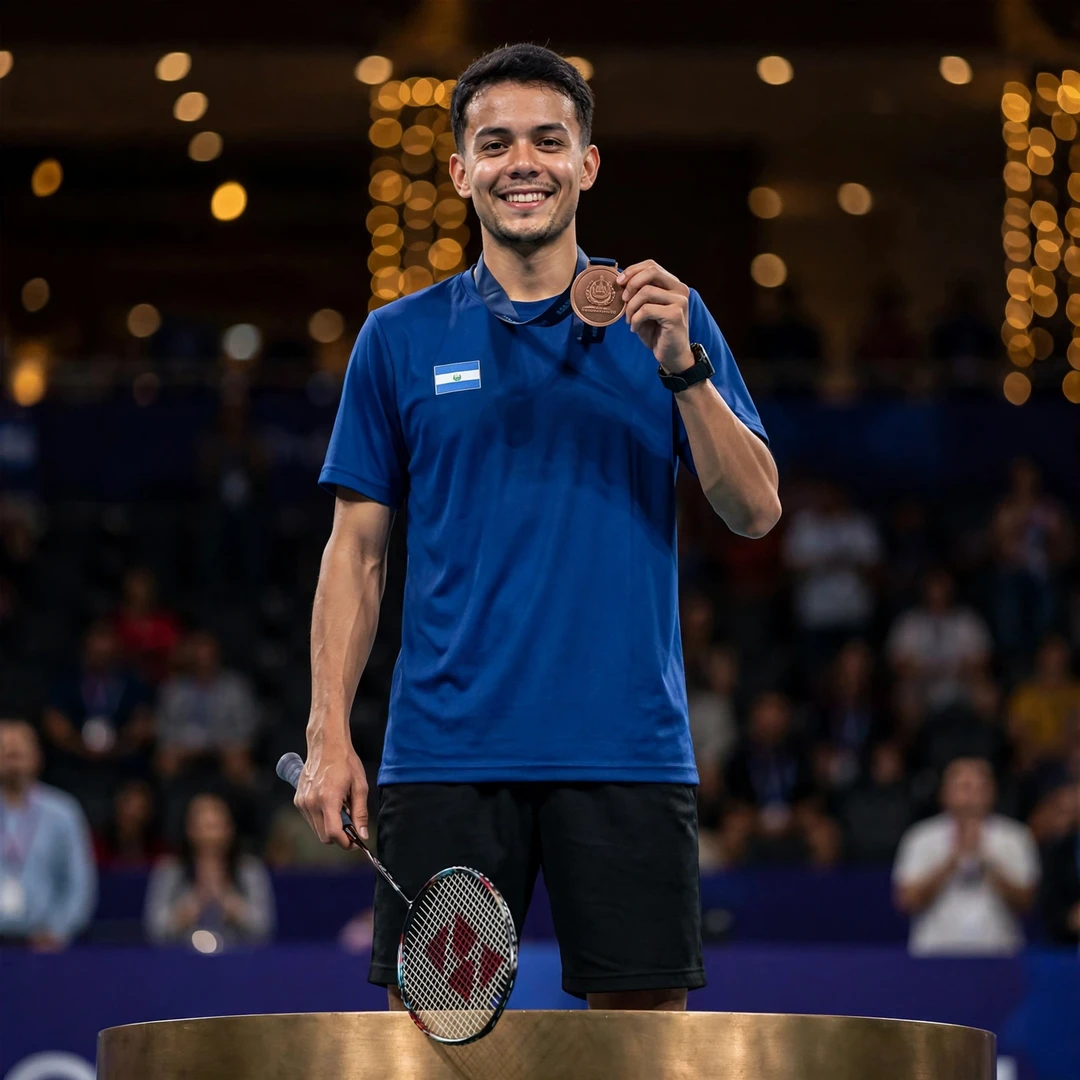
In 2023 the medals reached the very top of the continental game. At the Pan Am Championships in Kingston he reached his first final, losing to Canada’s Brian Yang 10-21, 5-21. At the Pan American Games in Santiago that October he went one unforgettable step further, winning the bronze medal — a breakthrough badminton medal for El Salvador at the Games — before again falling to Yang in the semi-finals, 11-21, 10-21. He closed the year with the Suriname International title, beating Italy’s Giovanni Toti 21-11, 21-12, and on 7 November 2023 he reached his career-high world ranking of No. 49.
A second Pan Am Championships silver followed in Guatemala City in April 2024, where Cordón beat him in another three-game final, 21-14, 17-21, 13-21 — and weeks later his place in history was confirmed: Canjura had qualified for the Paris 2024 Olympic Games. In October he also tested himself on the World Tour at the Hylo Open Super 300 in Germany, taking a game off Giovanni Toti in a 1-2 round-of-32 defeat.
Career Milestone #3
Paris 2024: El Salvador’s First Olympic Badminton Player
Add the Lima 2026 silver — a final lost 11-21, 9-21 to Canada’s world-class Victor Lai — and Canjura owns four Pan Am Championships medals: three silver and one bronze, a record no Salvadoran player had ever approached. He has now lost continental finals to three different champions across four years, and each time he has come back the next season to reach another one. In a region led by Guatemala, Canada, the USA and Brazil, the smallest player from the smallest badminton nation keeps standing on the podium.
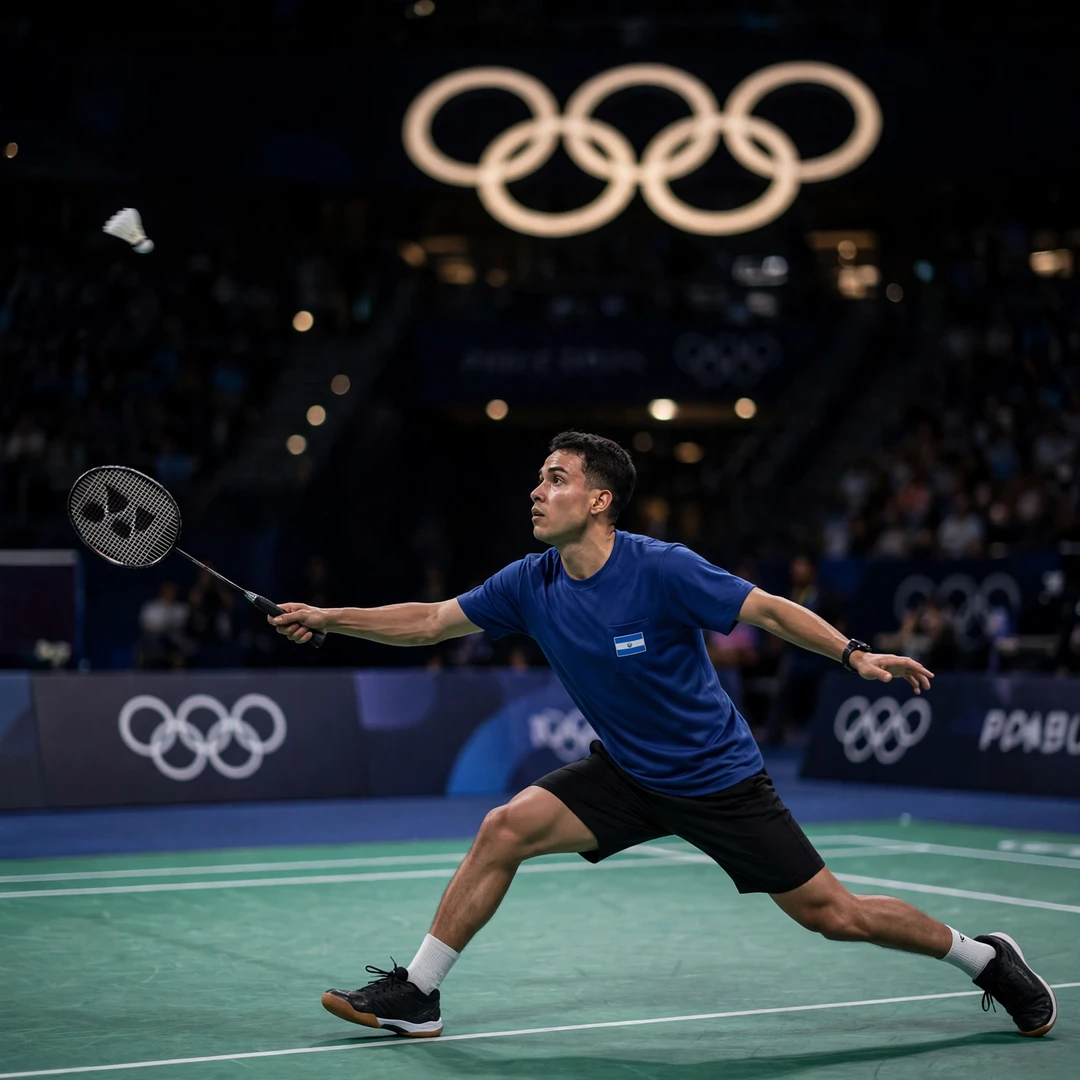
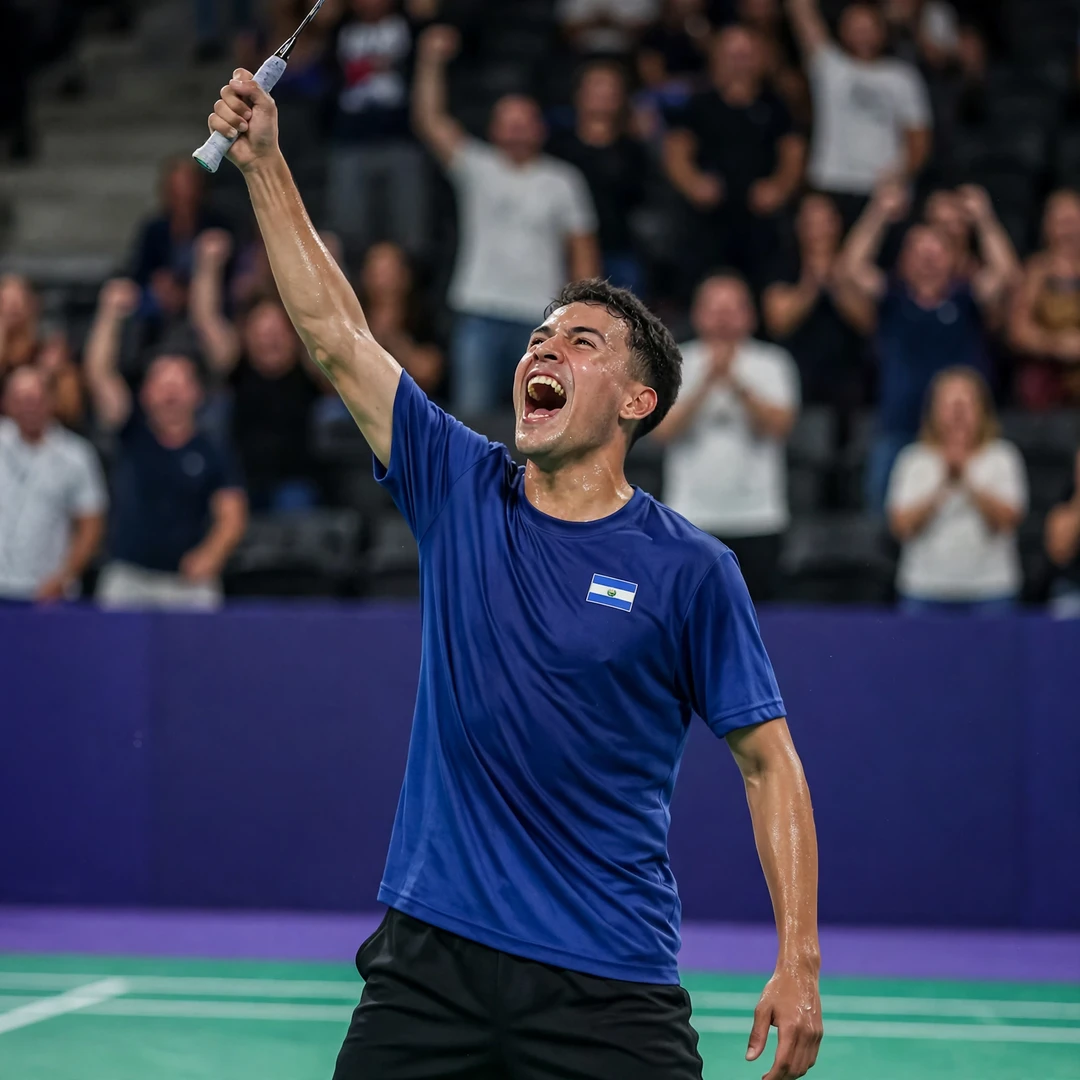
Paris 2024 made him a national story. Canjura carried El Salvador’s flag at the opening ceremony and then walked into the Porte de la Chapelle Arena as his country’s first Olympic badminton player. Drawn in Group M, he lost his opening match to Czechia’s Jan Louda 12-21, 10-21 and his second to Singapore’s former world champion Loh Kean Yew 13-21, 16-21 — respectable scorelines against elite opposition for a player who had learned the game on dirt.
‘I started playing in our backyard when I was nine years old, using heavy rackets,’ Canjura told the BWF in Paris. ‘It was a dirt court with lines painted with white ash. We played without shoes because the court is just dirt and I felt more comfortable, like beach football.’ By the age of 15 the mud court was no longer enough and he had moved to the capital to chase the dream properly. In Paris, in front of the world, the barefoot boy from Suchitoto completed the journey: an Olympian, carrying the hopes of every Salvadoran child who has ever picked up a racket in a backyard.
Career Milestone #4
World No. 91 and Still Flying the Flag
The seasons since Paris have been the honest grind of the Americas circuit. He won in Suriname again in 2025, beating Switzerland’s Julien Scheiwiller 18-21, 21-8, 21-9; at the 2025 World Championships in Paris he drew world No. 1 Kunlavut Vitidsarn in the first round; in 2026 he won the Giraldilla International in Cuba, beating Bruno Carvalho 21-15, 21-12 for his seventh international singles title, added a mixed team bronze with El Salvador at the Central American and Caribbean Games in Santo Domingo, and played another World Championships in New Delhi, losing to England’s Harry Huang. In the Week 43 rankings he stands at No. 91 with 21,146 points — still, at 26, the face of Salvadoran badminton.
Canjura’s career is also a lesson in geography. Based in El Salvador, he has spent a decade criss-crossing the Americas — Kingston, Guatemala City, Santiago, Lima, Paramaribo, Havana — chasing the International Challenge and Series events where a player from a small federation can earn ranking points, with occasional trips to Europe for World Tour and World Championships tests. Every trip is self-funded grit as much as sport: small federations cannot send physios and analysts, so durability, smart planning and hunger become competitive advantages in themselves.
Playing Style
The Counter-Punching Style: Speed, Defence and Belief
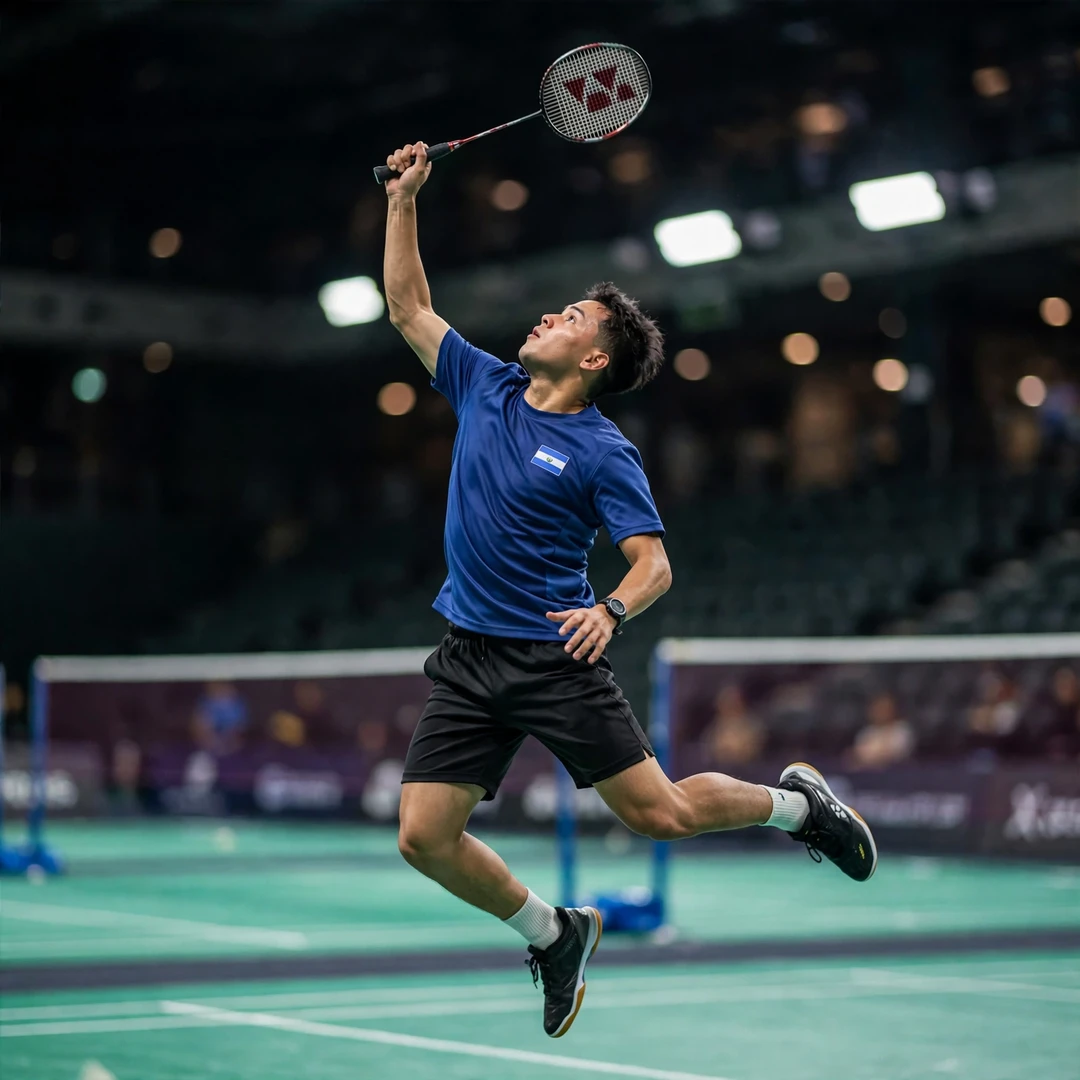
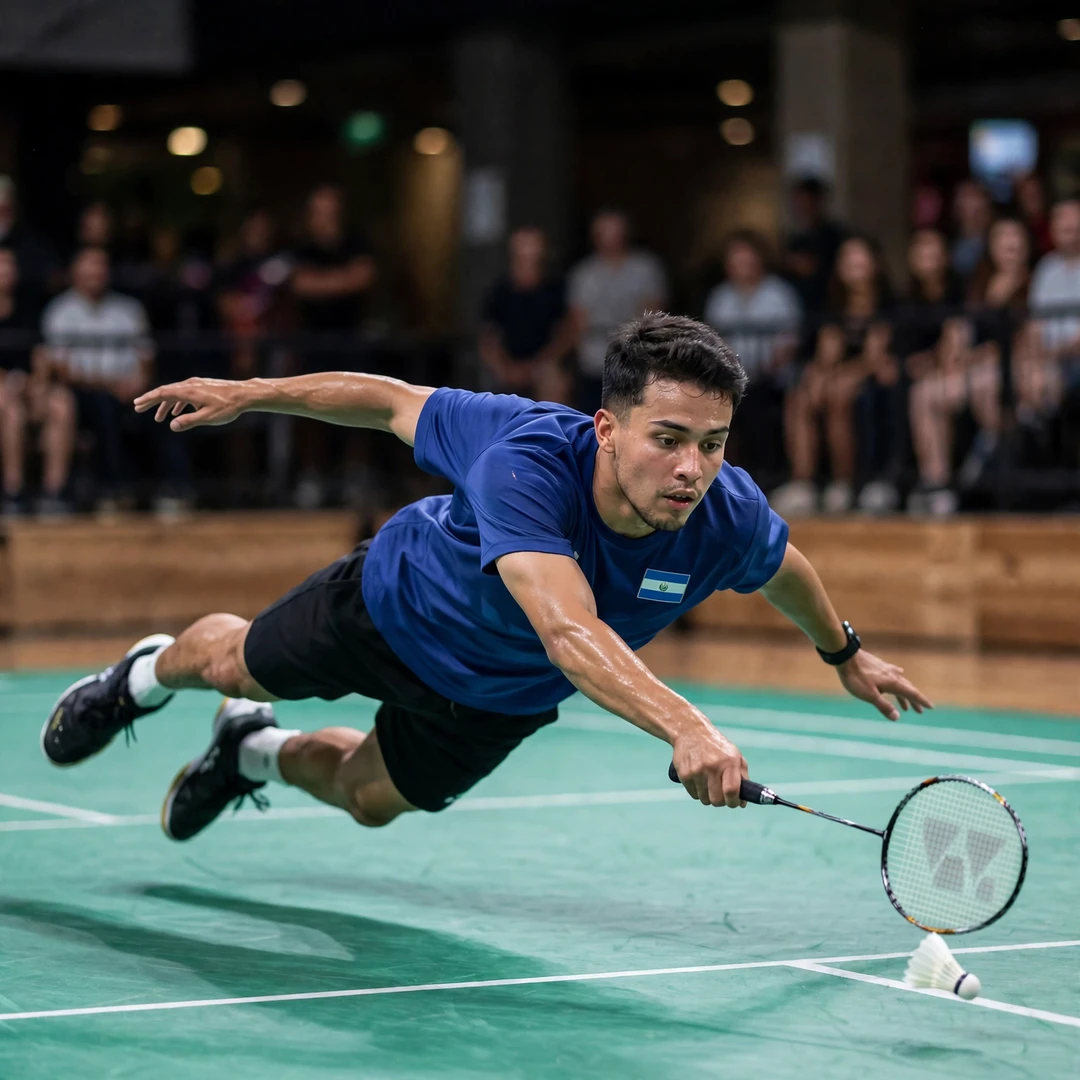
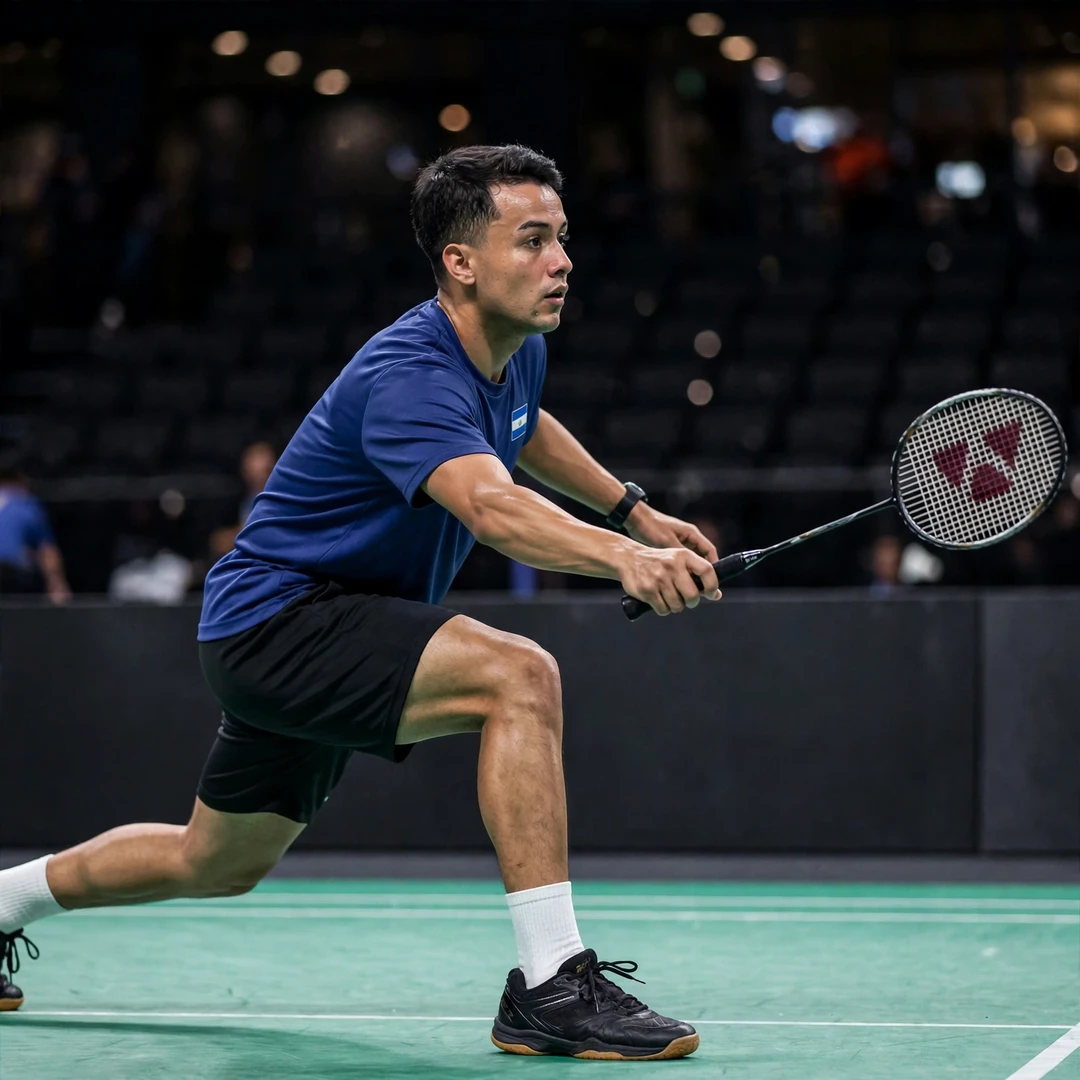
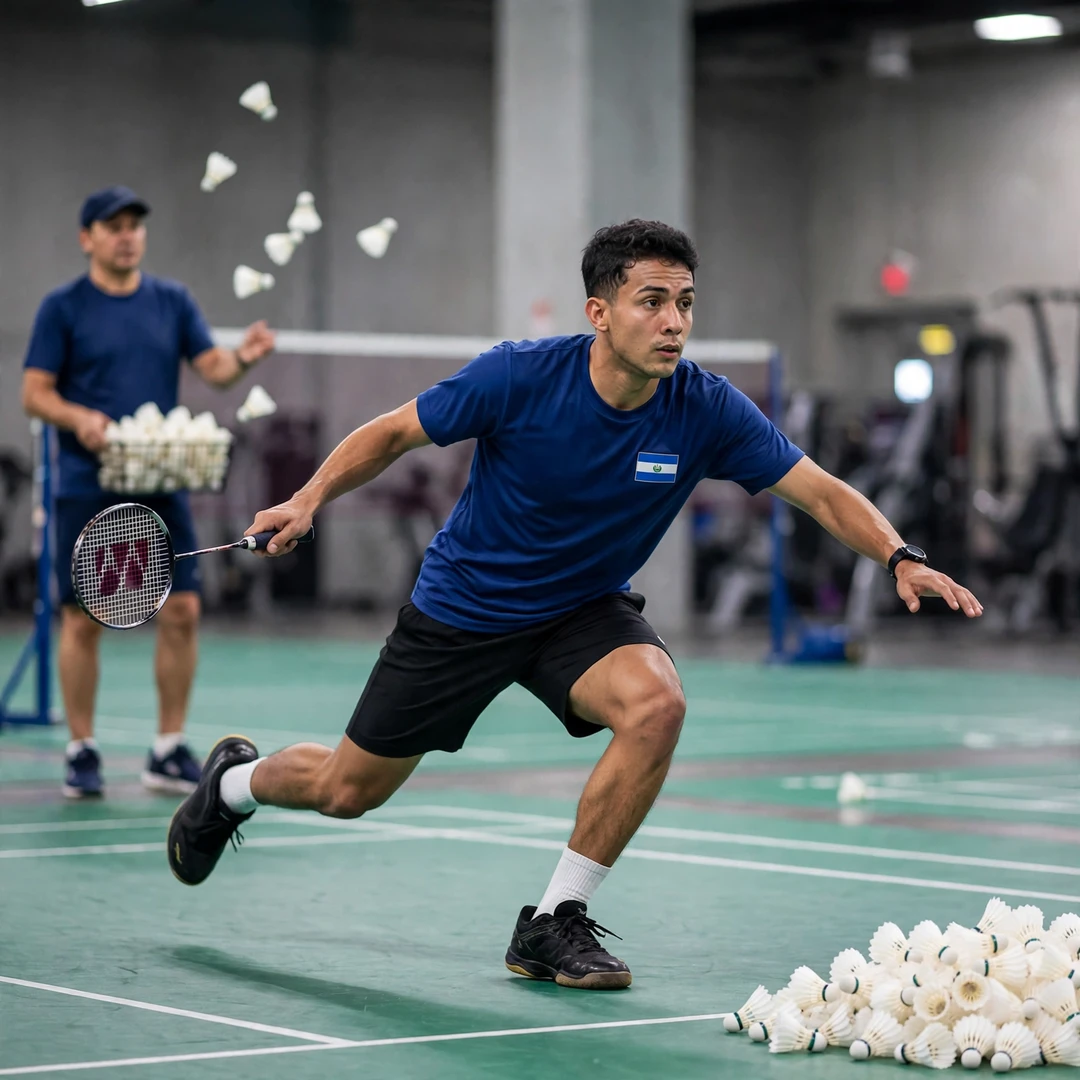
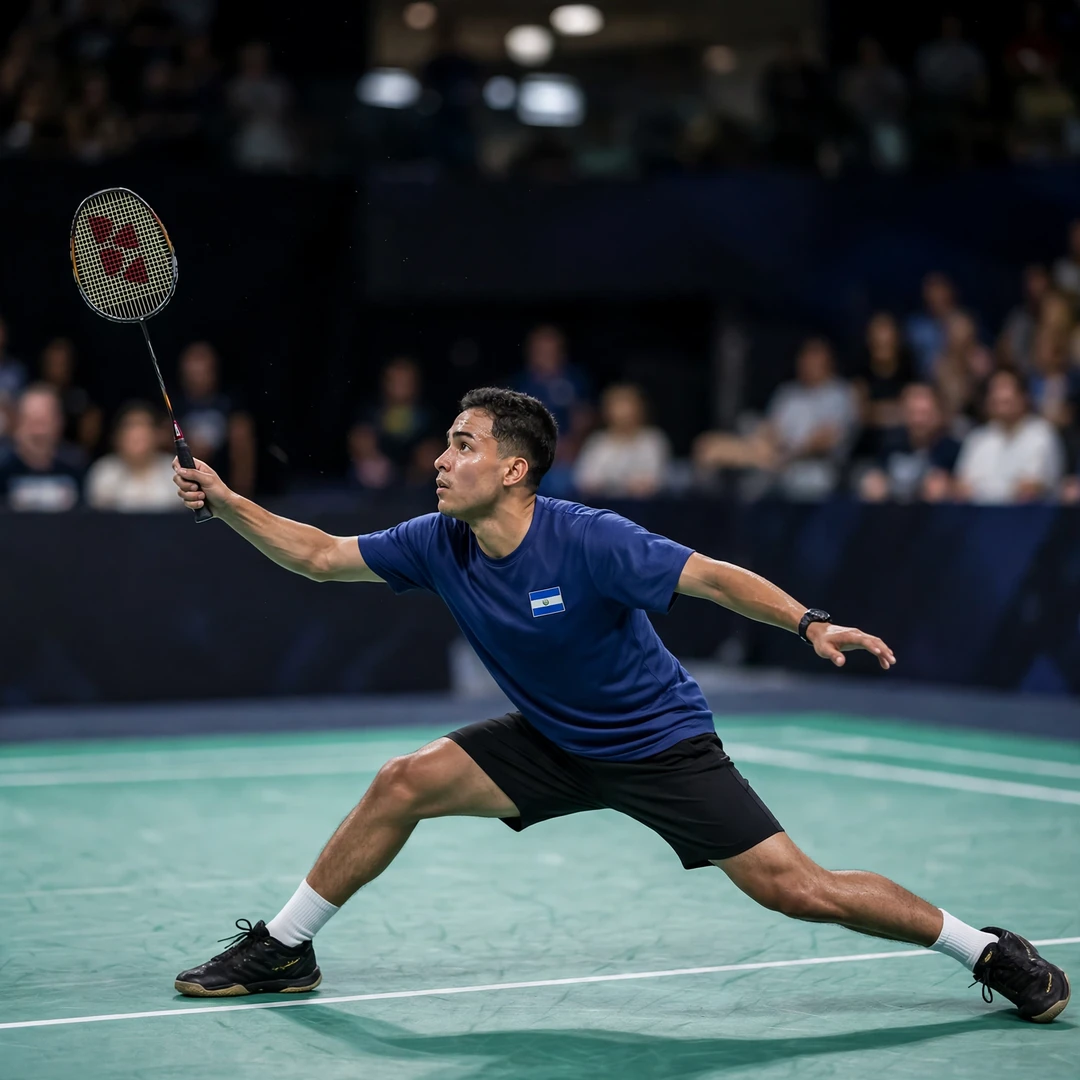
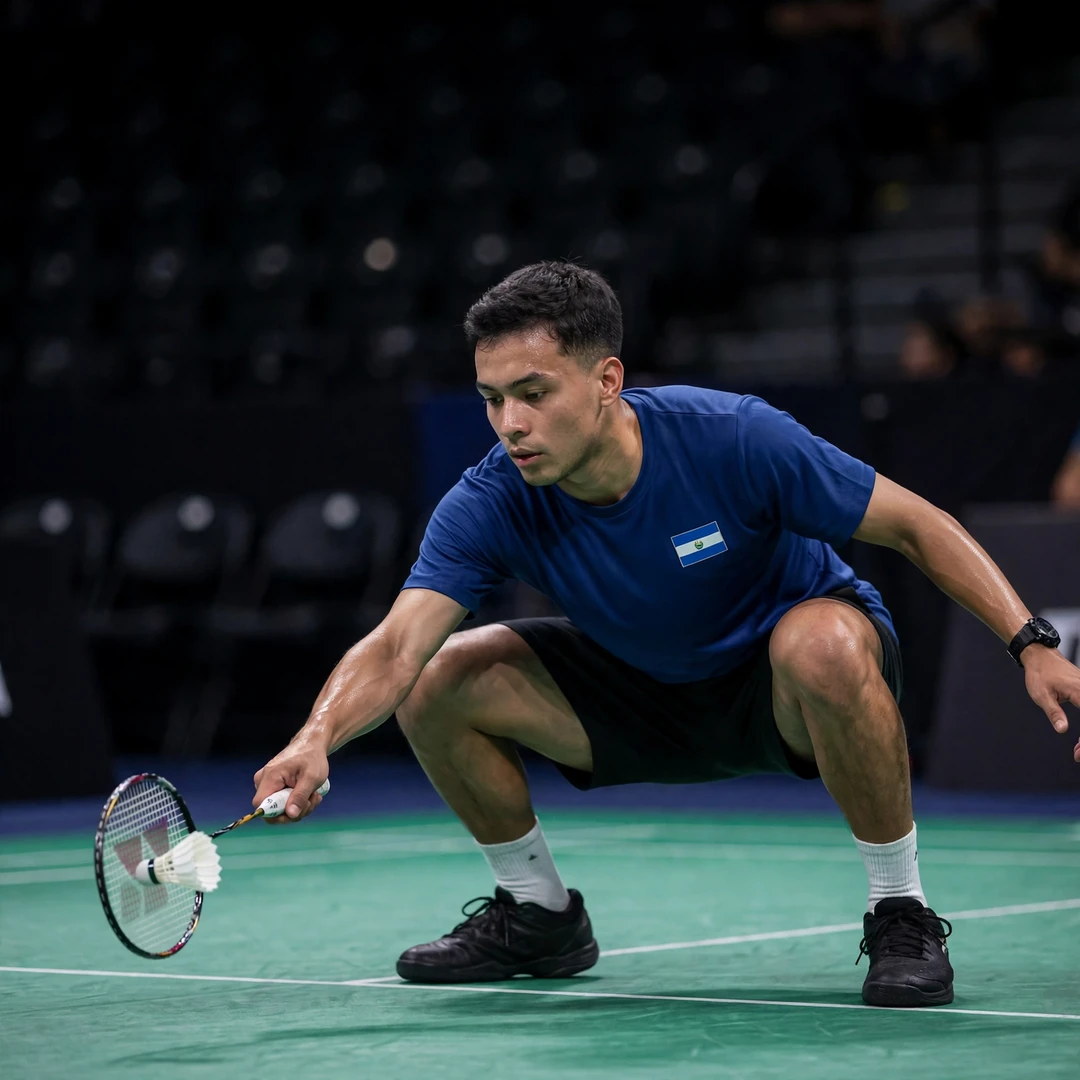
At 1.65 m, Canjura cannot win matches the way the giants do, so he wins them his way: a right-handed counter-punching game built on extraordinary footwork, low defensive crouches that turn smashes into neutral rallies, and the patience to extend exchanges until bigger opponents grow frustrated. His barefoot childhood on an uneven dirt court is visible in every rally — he changes direction without slipping, recovers from lunges quickly, and treats defence not as survival but as an attacking platform.
Coaches studying Canjura point juniors to his retrieving patterns. His clears are high and deep to buy recovery time, his net shots stay tight so opponents cannot drive him backwards, and when the counter-attack comes it is sudden: a wristy cross-court flick or a flat drive into the body. Against Cordón, Yang and Lai — all taller, all more powerful — he has repeatedly taken games and forced deciding sets purely by refusing to give away the rally. Shot quality and court coverage, not height, are the trainable core of his game.
Young players should notice what Canjura does between the spectacular rallies: how he resets his position after every shot, how he serves and receives with the same calm routine whether he is leading or trailing, and how rarely he rushes the next rally. His career is proof that a complete, disciplined game built from basic skills can carry a player from a backyard in Suchitoto to the Olympic Games.
Mental Strength
From a Dirt Court to the Olympics: Lessons in Persistence
Canjura’s mindset was forged by scarcity. A boy who cracked his mother’s wall practising, who left home at 15 because the backyard was no longer enough, and who carried his nation’s flag into an Olympic stadium does not need motivational speeches. His story, told by the BWF as the tale of El Salvador’s ‘barefoot boy wonder’, has become the reference point for every Salvadoran junior who picks up a racket: the pathway exists because he walked it first.
His response to defeat is the other half of the story. He lost the 2023 Pan Am final to Brian Yang and returned to win Pan American Games bronze a few months later. He lost the 2024 final to Kevin Cordón in three games and was standing on an Olympic court three months after that. He lost the 2026 final to Victor Lai and kept his place in the world’s top 100. Three continental finals lost, three times back again — for young players, that pattern of honest rebuilding matters more than any single medal.
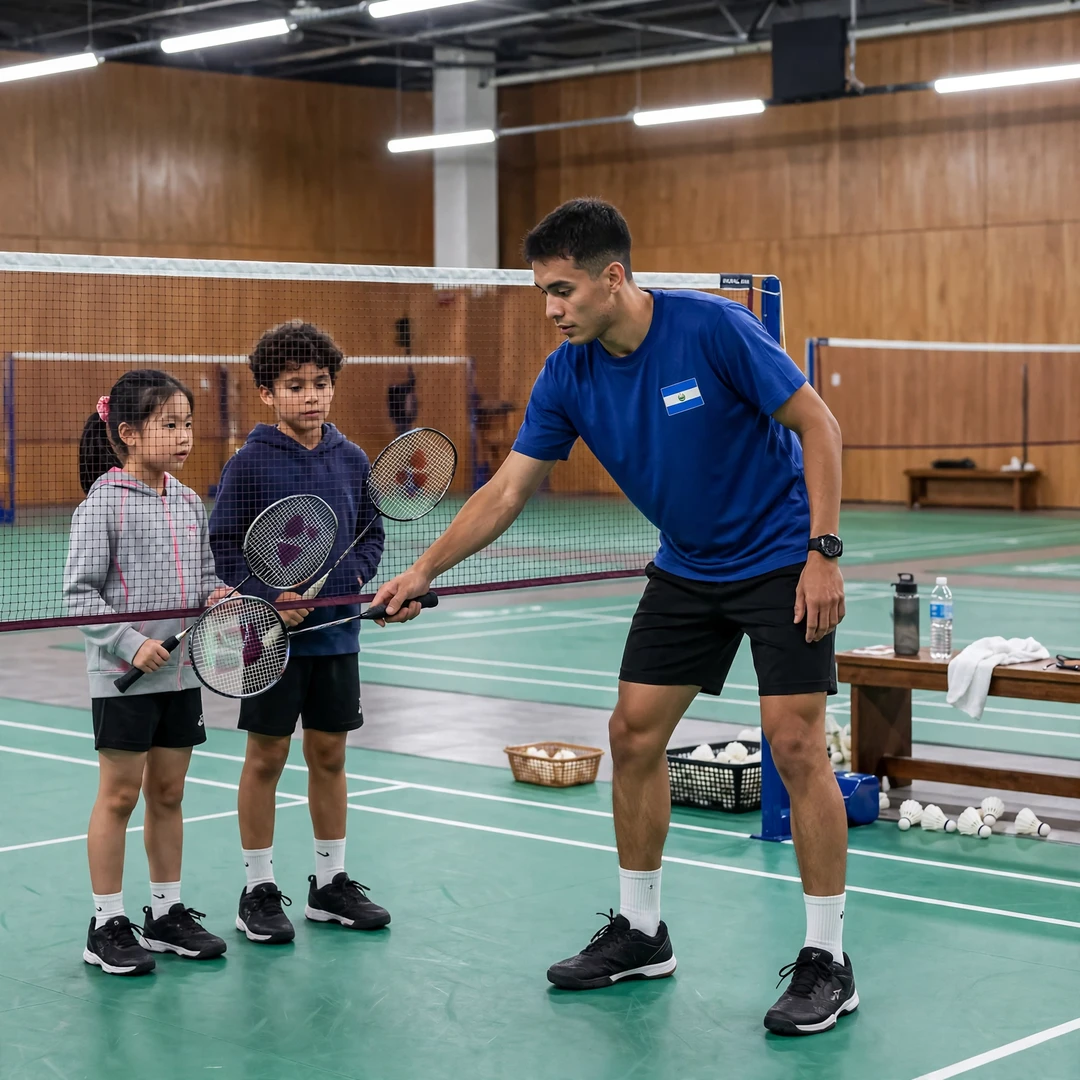
Practical lessons from his journey include starting with whatever court and equipment you have instead of waiting for perfect facilities, building footwork and defence before chasing power, treating every small tournament in your region as a ranking opportunity, and staying in the sport long enough for your consistency to compound — Canjura’s career-high arrived at 23, and his seventh international title at 25. None of it required a famous academy; all of it required years of showing up.
Learning Reference
ST Badminton Academy Connection
ST Badminton Academy has no official partnership or endorsement from Uriel Francisco Canjura. He is not connected with our academy, and this profile is published purely as an educational case study for parents and junior players who want to understand how far fundamentals, footwork and persistence can take a player who starts with almost nothing.
Many of our students from Malaysia and visiting learners from Singapore study his matches to understand the power of defence and movement: how a 1.65 m player survives against the giants of the Pan Am circuit, how he made Loh Kean Yew work for every point at the Olympics, and how he has kept reaching continental finals across four seasons. His Paris 2024 matches are required viewing in our discussions of players who maximise limited resources.
We encourage our students to observe his low defensive stance, his recovery steps after lunging, and his calm routines between rallies — and to remember that his journey began on a dirt court in Suchitoto, not in a professional hall. Champions are not only made in famous academies; sometimes they are made in a backyard, one cracked wall at a time.
FAQs: Uriel Francisco Canjura Salvadoran Badminton Player
Here are answers to common questions about Uriel Francisco Canjura’s career, achievements and what young players in Malaysia can learn from El Salvador’s Olympic trailblazer.
Who is Uriel Francisco Canjura and which country does he represent in badminton?
Uriel Francisco Canjura is a Salvadoran professional badminton player competing in men’s singles. Born on 12 September 2000 in Suchitoto, El Salvador, he learned the game barefoot on a backyard dirt court coached by his stepfather, moved to San Salvador at 15 to train at the National Institute of Sports, and became the first badminton player to represent El Salvador at the Olympic Games, at Paris 2024.
What are Uriel Francisco Canjura’s biggest badminton achievements?
Canjura’s major achievements are a bronze medal at the 2023 Pan American Games in Santiago, three silver medals and one bronze at the Pan Am Championships (2022, 2023, 2024 and 2026), seven international singles titles including three editions of the El Salvador International, and an Olympic debut at Paris 2024, where he was also his country’s opening-ceremony flag bearer. He reached his career-high world ranking of No. 49 in November 2023.
What is Uriel Francisco Canjura’s playing style?
Canjura plays a right-handed counter-punching game built on speed, low defence and relentless retrieving. At 1.65 m he does not overpower opponents; instead he extends rallies with tight net play and deep clears, absorbs their attacks from a low crouch, and counter-attacks suddenly with wristy flicks and flat drives when they over-commit.
How did Uriel Francisco Canjura perform at the Paris 2024 Olympics?
Canjura made history at Paris 2024 as El Salvador’s first Olympic badminton player, and he carried the national flag at the opening ceremony. On court he was drawn in Group M, losing 12-21, 10-21 to Czechia’s Jan Louda and 13-21, 16-21 to Singapore’s Loh Kean Yew, who topped the group. He did not reach the knockout rounds, but his respectable scorelines against elite opposition completed a journey from a dirt backyard court to the Olympic arena.
How can my child learn from Uriel Francisco Canjura’s training approach?
Young players can study Canjura’s approach by copying the habits behind his rise: train footwork and defence until retrieving feels natural, practise against any wall or partner available instead of waiting for perfect facilities, and write down what each defeat taught you before the next tournament. At ST Badminton Academy we use his Paris 2024 matches as a video lesson in movement and composure, then train the same patterns in multi-shuttle and rally-building drills.
Did Uriel Francisco Canjura win any junior titles?
Yes. Canjura won the Guatemala Junior International and the Colombia Junior International boys’ singles titles in 2016 — plus a junior mixed doubles title in Colombia with Fátima Centeno — competed at the 2017 World Junior Championships, and was El Salvador’s flag bearer at the 2018 Youth Olympic Games in Buenos Aires. In 2021 he won two silver medals at the Junior Pan American Games in Cali, in boys’ singles and mixed doubles.
What are Uriel Francisco Canjura’s best World Tour and World Championships results?
Canjura’s game is built on the continental circuit rather than the World Tour, and this profile says so honestly: he has no World Tour titles. His World Tour appearances include the Hylo Open 2024 (Super 300), where he took a game off Giovanni Toti in the round of 32, and US Open campaigns in 2025 and 2026 that both ended in the round of 16. At World Championships level he faced world No. 1 Kunlavut Vitidsarn in the first round in Paris in 2025 and England’s Harry Huang in New Delhi in 2026 — experience that feeds his continental campaigns, where his seven international titles and four Pan Am Championships medals were won.
What playing style should young players learn from Uriel Francisco Canjura?
Young players should study Canjura’s complete defensive game rather than one spectacular shot: the low crouch that turns defence into counter-attack, the recovery footwork that gets him back to base after every lunge, the tight net play, and above all the mindset that treats every rally — however long — as winnable. His game is built from trainable skills, which is why coaches love teaching from it.
Does ST Badminton Academy have any connection with Uriel Francisco Canjura?
No, Uriel Francisco Canjura is not a student, coach or ambassador of ST Badminton Academy. He represents El Salvador and developed through his national federation and the National Institute of Sports in San Salvador. However, coaches at our academy in Kuala Lumpur regularly use his matches as teaching material, because his rise from a backyard dirt court to the Olympic Games shows what structured coaching, footwork and persistence can achieve.
Uriel Francisco Canjura Career Highlights
Career Statistics and Rankings
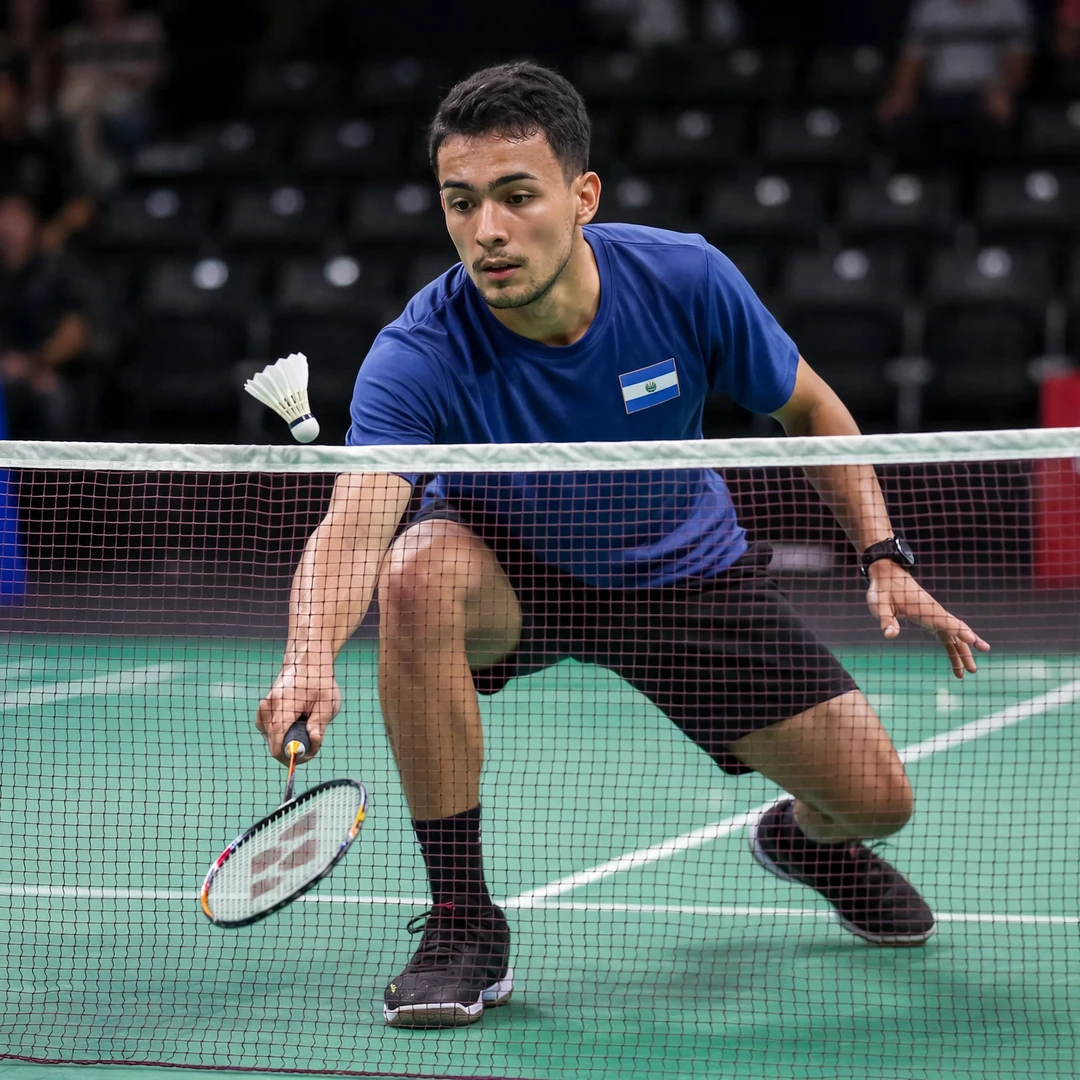
Uriel Francisco Canjura, born 12 September 2000 in Suchitoto, El Salvador, has produced one of badminton's most unlikely careers: barefoot on a mud court at nine, on the national pathway at 15, a Youth Olympian and flag bearer at 17, a Pan American Games medallist and an Olympian in his early twenties — and, with seven international singles titles and four Pan Am Championships medals, the most successful badminton player his country has ever produced.
| Development Area | Common Misconception | What Uriel Francisco Canjura's Career Shows REALITY |
|---|---|---|
| Junior Foundation | Talent alone decides who becomes a champion. | Canjura started at nine on a dirt court in his mother's backyard in Suchitoto, playing barefoot — an elite base can be built anywhere, not only in famous academies. |
| Playing Style Priority | Kids should copy the flashiest attacking shots. | Canjura built a complete counter-punching game first; his winners grow out of speed, defence and rally patience, not raw power. |
| Fitness Importance | Juniors can out-train everyone without rest. | Canjura has travelled the Americas circuit for a decade on a small federation's budget — smart scheduling and durability, not luxury support, keep him in the top 100. |
| Mental Approach | Top players never get nervous or upset. | Canjura lost three Pan Am Championships finals — to Brian Yang, Kevin Cordón and Victor Lai — and kept coming back to reach the next one; mental skills are trained, not inherited. |
| Attacking Training | Smashing harder is always the answer. | His 2025 Indonesia Open final win over Chou Tien-chen (22-20, 21-14) and his 2024 Malaysia Open title came from controlled attack placement, not raw power. |
| National Milestones | Only world titles matter. | Canjura's Pan Am Games bronze in 2023 and his four Pan Am Championships medals made him a national hero in El Salvador — continental milestones build a career step by step. |
| Career Timeline | Champions peak once and fade fast. | From a barefoot boy on a mud court to El Salvador's first Olympic badminton player and a career-high world No. 49, Canjura proves sustained development beats a short peak. |
Study Uriel Francisco Canjura's Work Ethic and Professional Approach
This profile explains who Uriel Francisco Canjura is, his major achievements, and what developing players can learn from his journey. Whether you are a parent in Kuala Lumpur, Cheras or anywhere in Malaysia wondering whether your child needs perfect facilities to succeed, Canjura's story carries the answer: with the right coaching, footwork and enough persistence, a backyard start can still reach the Olympic Games — book a trial class with ST Badminton Academy on WhatsApp at +60 17-684 2136 and let your child begin a development journey built to last.