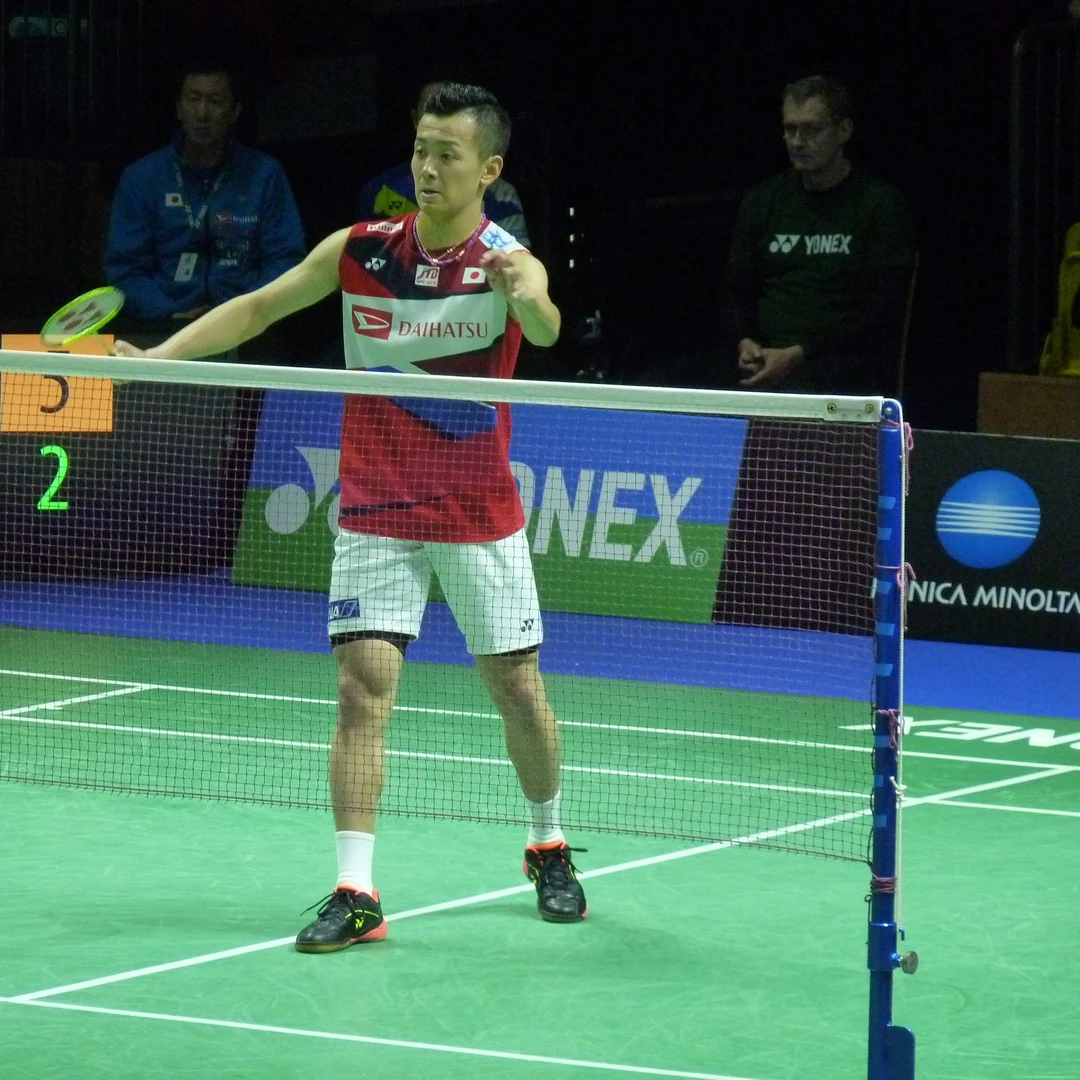
Japanese Men’s Singles Badminton Star
Kenta Nishimoto

Japan
Player Event: Men’s singles
Born 30 August 1994
Playing Style: Right-handed all-court rallying player, known for his relentless defence, stamina and counter-attacking
Understanding Kenta Nishimoto (Japanese Badminton Star)
Kenta Nishimoto is a Japanese men’s singles badminton player from Ise in Mie Prefecture, and one of the most durable competitors of his generation. The right-hander has spent more than a decade in the world’s top group, reached a career-high of world No. 9 in September 2018, and won three BWF World Tour titles — the 2022 Japan Open, the 2023 Spain Masters and the 2025 Canada Open. He plays for the JTEKT Stingers in Japan’s corporate league and is coached by Sho Sasaki. In the Week 43 BWF world rankings of 20 October 2026, Nishimoto stands at No. 29 with 44,829 points, still beating top-five seeds at the age of 32.
Early Life in Ise and Junior Career
Kenta Nishimoto was born on 30 August 1994 in Ise, a city in Mie Prefecture famous for the Ise Grand Shrine. He started badminton in the second grade of elementary school and fell in love with its speed and long, chess-like rallies. His talent took him to Saitama Sakae High School, one of the strongest badminton schools in Japan, where the daily training volume taught him the discipline that still defines his career today.
Ise Beginnings
From Saitama Sakae, Nishimoto moved to Chuo University in Tokyo and became the outstanding university player of his era, winning the All Japan Student Championships singles title three years in a row from 2013 to 2015. With the Japanese junior teams he also collected a mixed team bronze at the 2012 World Junior Championships and a team gold at the 2012 Asian Junior Championships — a school and university pathway that built his rallying base layer by layer.
Chuo University Dominance
Nishimoto’s first senior final came early: at the 2013 Russia Open he reached the title match of a Grand Prix event at only 19 before losing to Vladimir Ivanov. In December 2016 he won his first All Japan Championships singles title, the most prestigious domestic crown in Japanese badminton, and a year later he reached the final of the French Open Superseries, pushing Srikanth Kidambi across three games in Paris.
Japan Open Champion
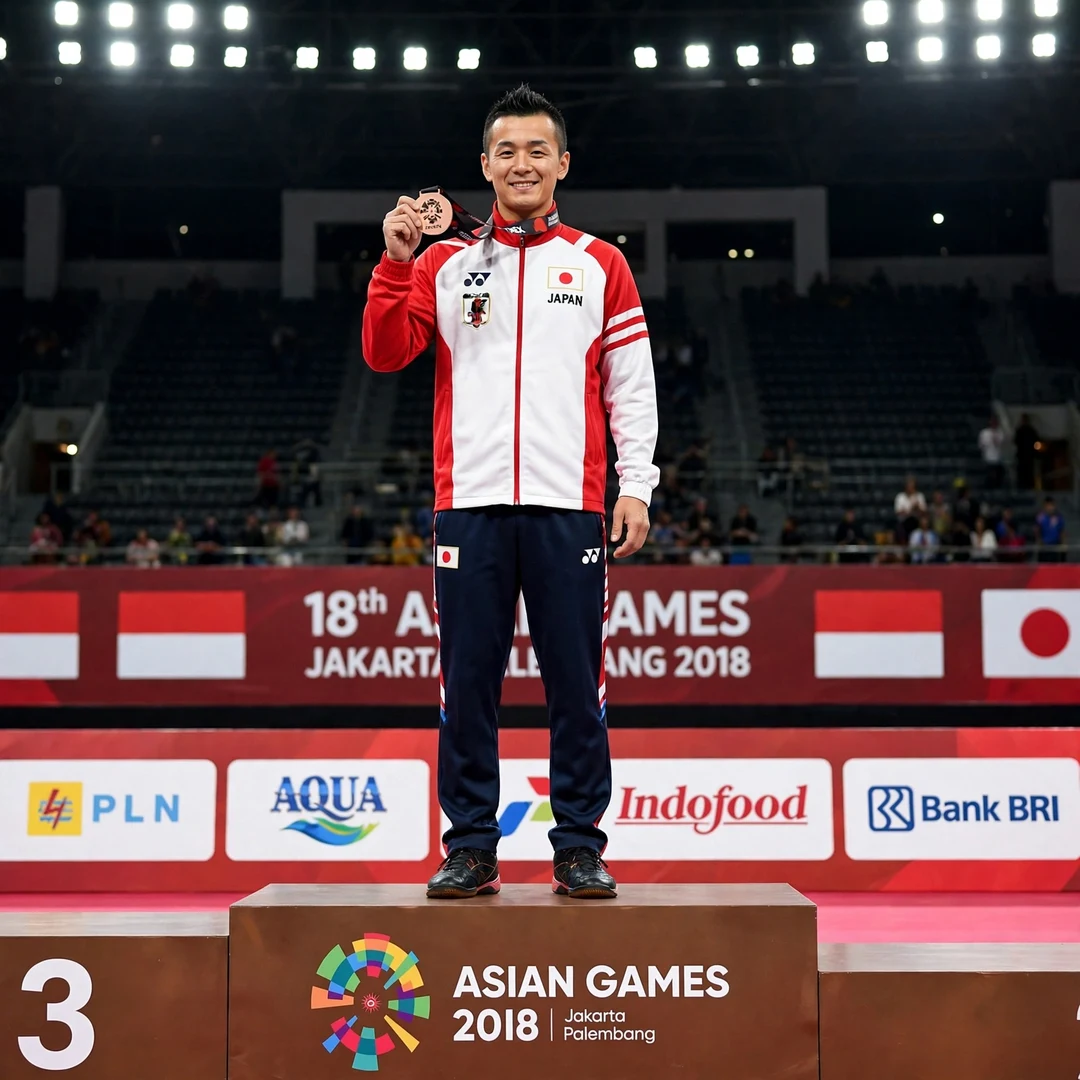
The 2018 season turned Nishimoto into a household name in Japan. In January he reached the Malaysia Masters final, taking Viktor Axelsen to three games, and at the Asian Games in Jakarta he won the men’s singles bronze medal, losing a gripping semi-final to Jonatan Christie 15-21, 21-15, 19-21. Those results carried him to a career-high world No. 9 on 6 September 2018, and he helped Japan take the Thomas Cup silver medal the same year.
Career Milestone #1
2018 Breakthrough: Asian Games Bronze and World No. 9
He closed 2018 with another big final at the Hong Kong Open, where South Korea’s Son Wan-ho edged him out, and in 2019 he finished runner-up to Kento Momota at the German Open and took a Sudirman Cup silver medal with Japan. Season after season, Nishimoto was the player nobody wanted in their draw: too fit to outlast, too patient to out-rally, and always ready to punish one loose lift.
Young players watching Nishimoto in 2018 learned an important lesson: a bronze medal and a top-ten ranking are not accidents. They are what happens when school training, university competition and national-team patience are stacked on top of each other for ten years.
Career Milestone #2
First World Tour Titles at the Japan Open and Spain Masters
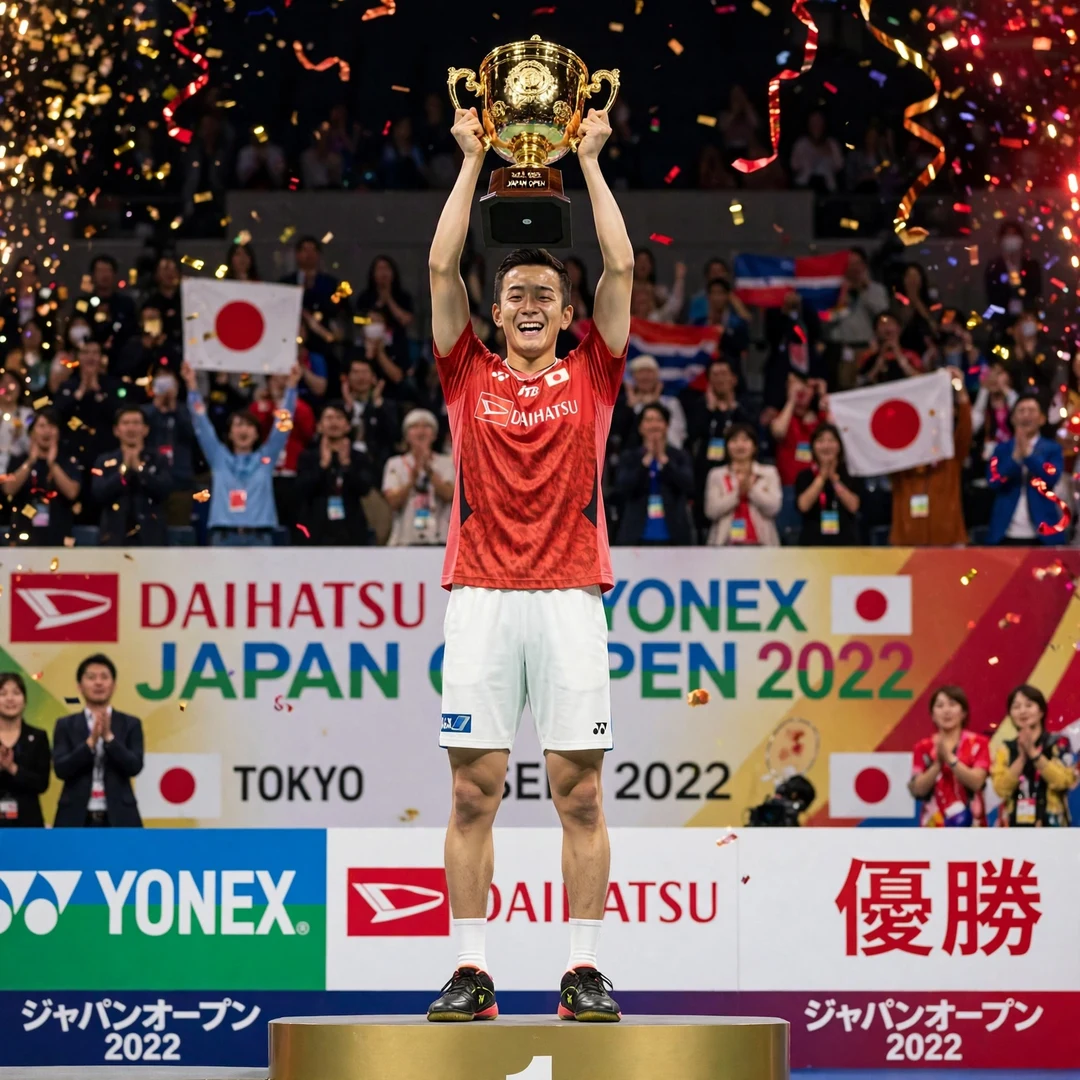
Nishimoto’s finest hour arrived at home. After joining the JTEKT Stingers in 2022, he stormed through the Japan Open in Tokyo — a Super 750 event, one level below the very top tier — and beat Chinese Taipei’s Chou Tien-chen 21-19, 21-23, 21-17 in a classic final. At 28, in front of his home crowd, he finally had the first World Tour title his career deserved.
He proved it was no one-off in March 2023, beating his countryman Kanta Tsuneyama 15-21, 21-18, 21-19 to win the Spain Masters in Madrid. The rest of 2023 showed his remarkable consistency: three more finals at the Hong Kong Open, the China Masters and the Syed Modi International, losing to Jonatan Christie, Kodai Naraoka and Chi Yu-jen. Few players in the world reached finals as often without the biggest trophy.
Across his career Nishimoto has played 11 BWF World Tour finals, winning three and finishing runner-up eight times. For young players, that record is the perfect illustration of elite badminton: you cannot win the finals you do not reach, and reaching them year after year is itself a skill built on fitness, preparation and belief.
Career Milestone #3
Paris 2024 Olympics and a Third World Tour Title
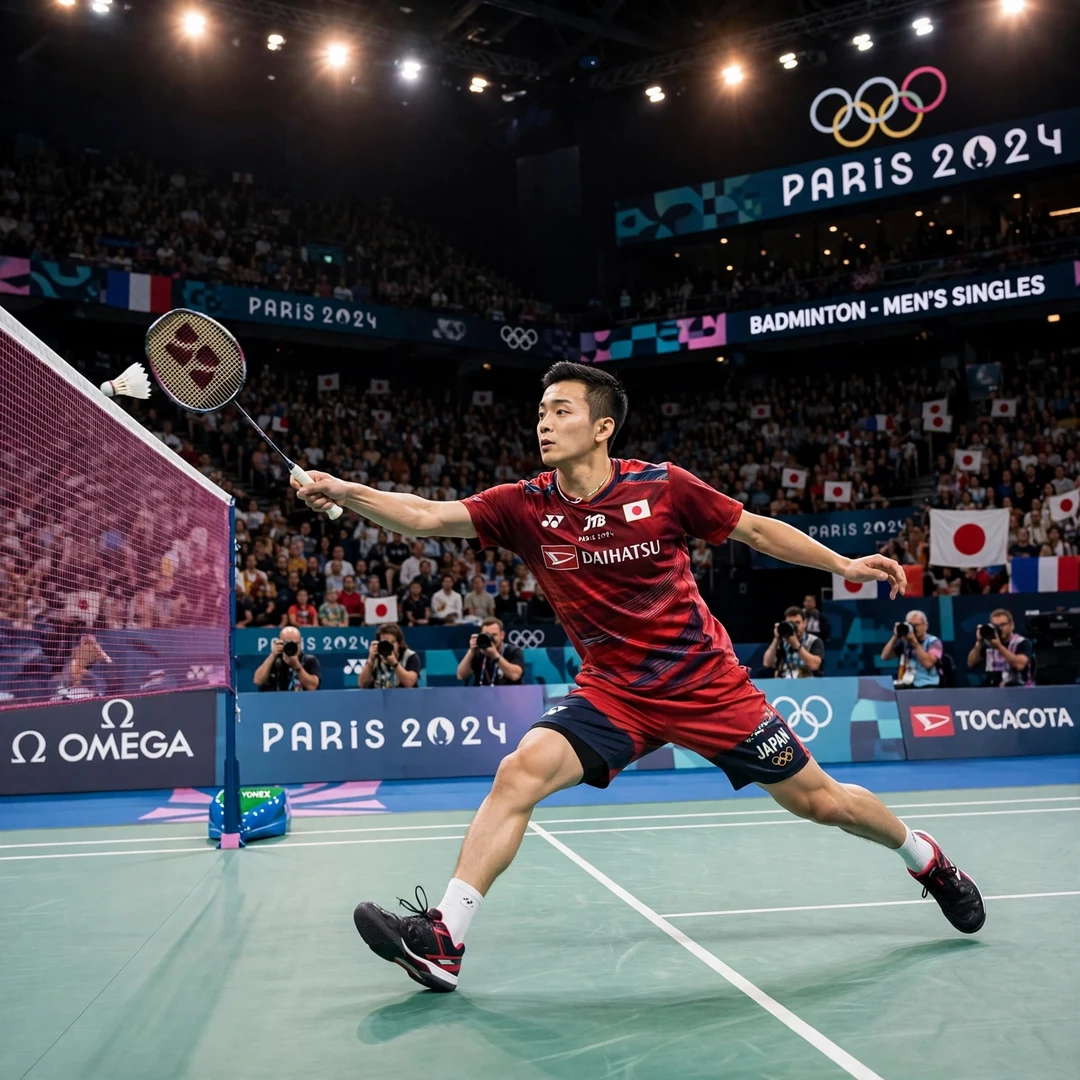
The Olympic dream came true in Paris in 2024. On his Games debut, Nishimoto topped his group in style, beating Kazakhstan’s Dmitriy Panarin 21-5, 21-11 and Canada’s Brian Yang 21-14, 21-18. In the round of 16 he took the first game off Thailand’s Kunlavut Vitidsarn before the eventual silver medallist fought back 16-21, 21-14, 21-12 — a performance that confirmed Nishimoto belonged on the biggest stage of all.
At 180 centimetres tall, Nishimoto is not the biggest or hardest-hitting player on tour. His game is built on movement quality, a rock-solid defensive wall and the patience to play one more shuttle than his opponent. Working daily with coach Sho Sasaki at the JTEKT Stingers, he has turned those qualities into a career that has lasted at the top far longer than most.
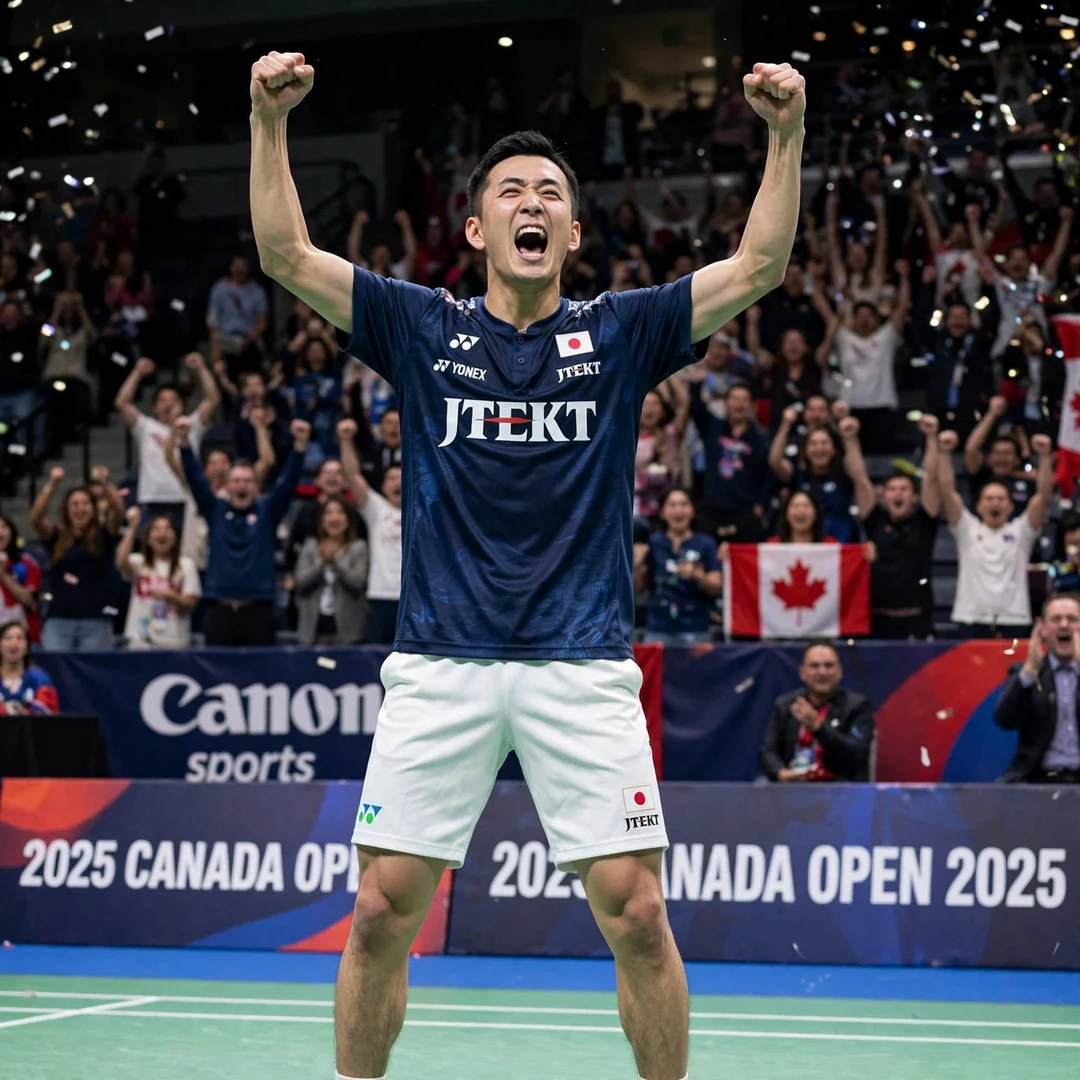
The titles kept coming late in his career. In July 2025 he won the Canada Open, defeating home favourite Victor Lai 21-13, 21-14 in the final for his third World Tour crown, and he reached yet another final at the Japan Masters later that year, where only Kodai Naraoka stopped him. For Japanese fans, Nishimoto and Naraoka — rivals and national teammates — have pushed each other to higher levels for years.
Career Milestone #4
World No. 29 Among Badminton’s Elite
In October 2026, Kenta Nishimoto is ranked world No. 29 with 44,829 points. Earlier this year a shoulder injury suffered at the Swiss Open in March forced him to miss the Asian Championships and the Thomas Cup, yet by August he was back beating fifth seed Christo Popov 21-17, 21-19 at the World Championships in New Delhi before a three-game loss to Ng Ka Long Angus — proof that his level, when fit, still troubles the very best.
Staying in the world top 30 at 32, after injuries and a decade of three-game battles, requires far more than talent. It demands honest self-assessment, careful physical management and the humility to keep rebuilding the basics — exactly the habits Nishimoto has shown since his schooldays in Ise.
Playing Style
The Relentless Rallying Style
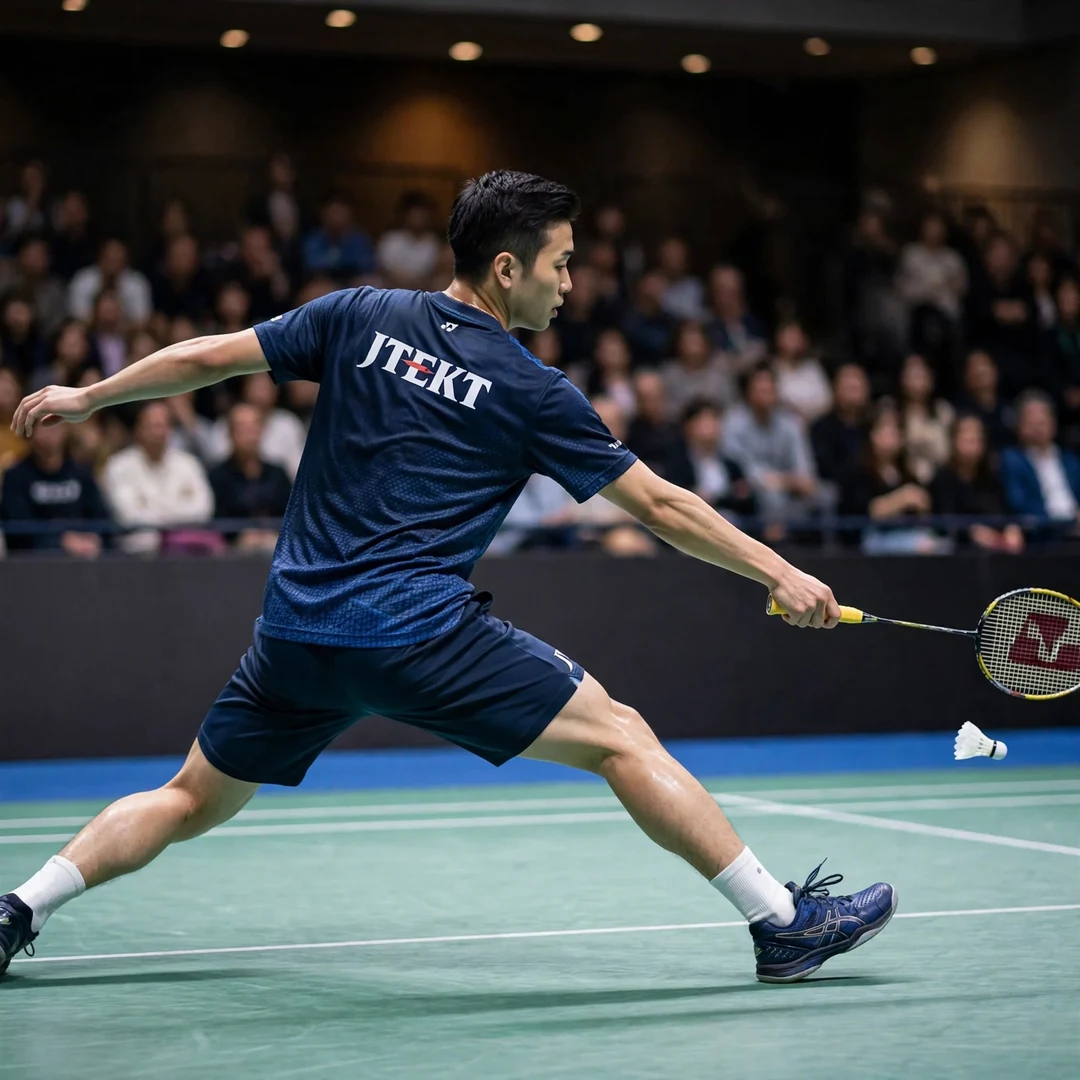
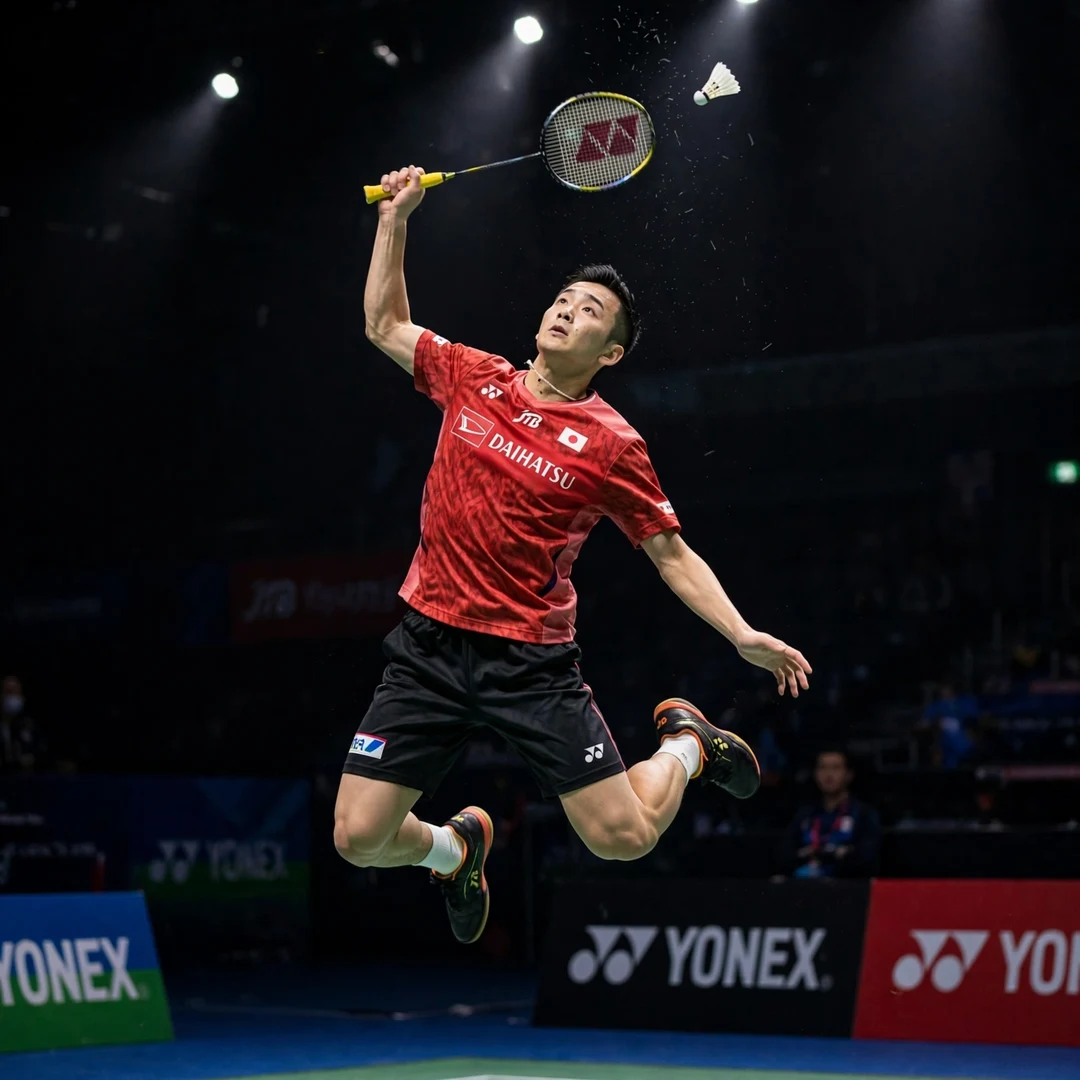
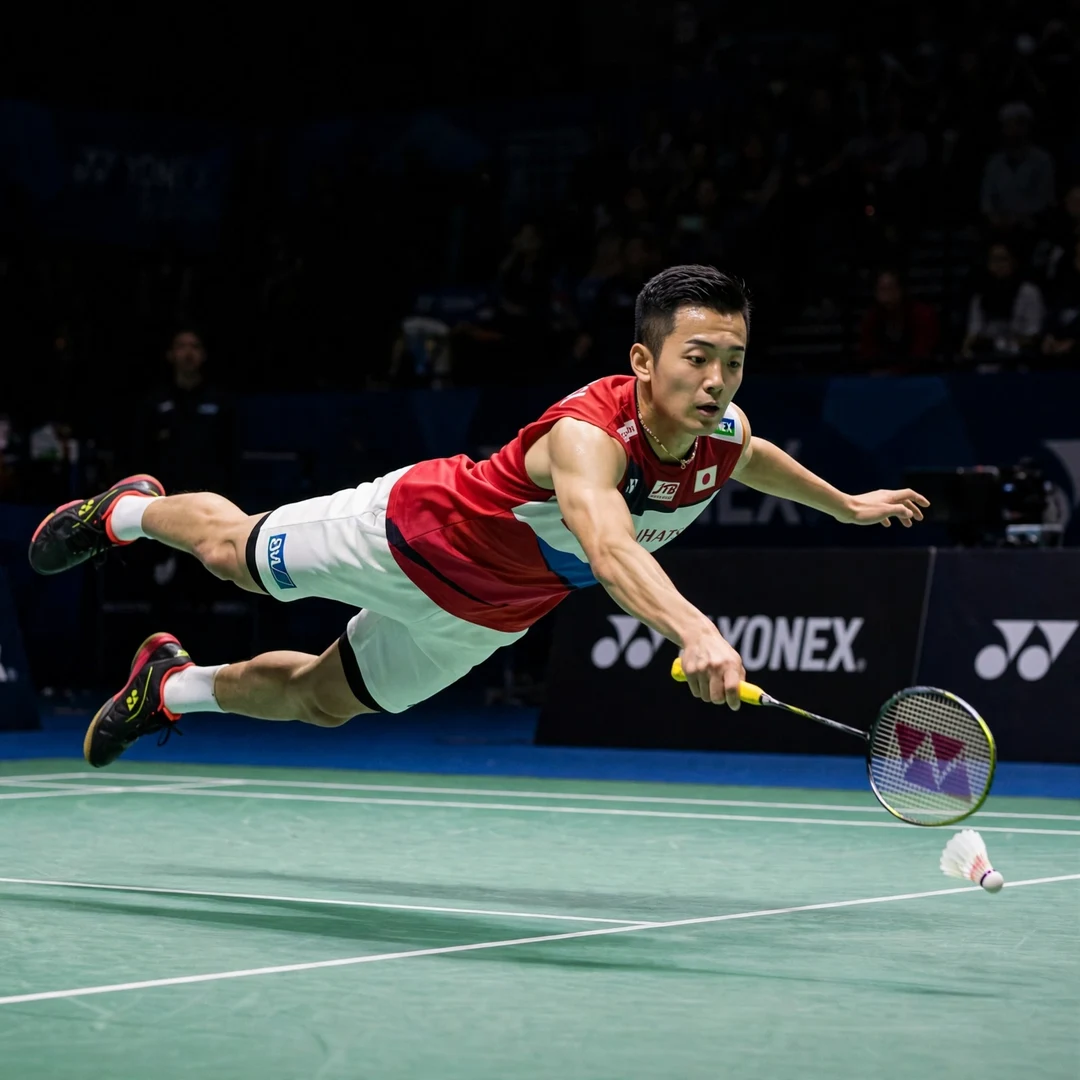
Nishimoto’s style is the rallying game at its most complete. A right-hander, he defends in a low, balanced crouch, turns defence into attack with flat counter-drives, and uses his cross-court backhand clear to escape pressure without giving the shuttle away. His steep smashes finish rallies that his footwork and patience have already won.
Coaches describe his real weapon as error control. Nishimoto rarely donates points: his clears land on the back line, his net shots tumble tightly, and his shot selection stays calm at 19-19 in a deciding game. Against bigger hitters he simply refuses to open the court, extending rallies until the mistake comes from the other side.
Young players who study Nishimoto learn that consistency is a weapon. You do not need the fastest smash in the hall to beat strong opponents — you need reliable technique under fatigue, smart placement, and the fitness to play your best shots in the third game, not just the first.
Mental Strength
Owning Mistakes and the Comeback Habit
Nishimoto’s career also carries its hardest lesson. In 2016 he was removed from the Japan national team after admitting he had visited an illegal casino the previous year, a scandal that could easily have ended his career. He accepted the punishment, apologised, and — while still outside the team — won the All Japan Championships that December. The title, and his honesty, earned him a way back.
By 2017 he was restored to the national A team, winning the Asia Mixed Team Championships with Japan and a silver medal at the Summer Universiade in Taipei. The shoulder injury that interrupted his 2026 season followed the same pattern: no excuses, quiet rehabilitation, and a return strong enough to beat a top-five seed at the World Championships. His story tells young players that a career is defined not by never falling, but by how honestly and patiently you climb back.
For our students, the practical lessons from Nishimoto are clear: build your rally tolerance before your highlight shots, treat mistakes as information rather than shame, and when setbacks come — a lost selection, an injury, a bad season — respond with daily work, not excuses.
Learning Reference
ST Badminton Academy Connection
ST Badminton Academy has no official partnership or endorsement arrangement with Kenta Nishimoto or the JTEKT Stingers. This page is an educational profile created so Malaysian juniors and parents can learn from his career, his playing style and his remarkable resilience.
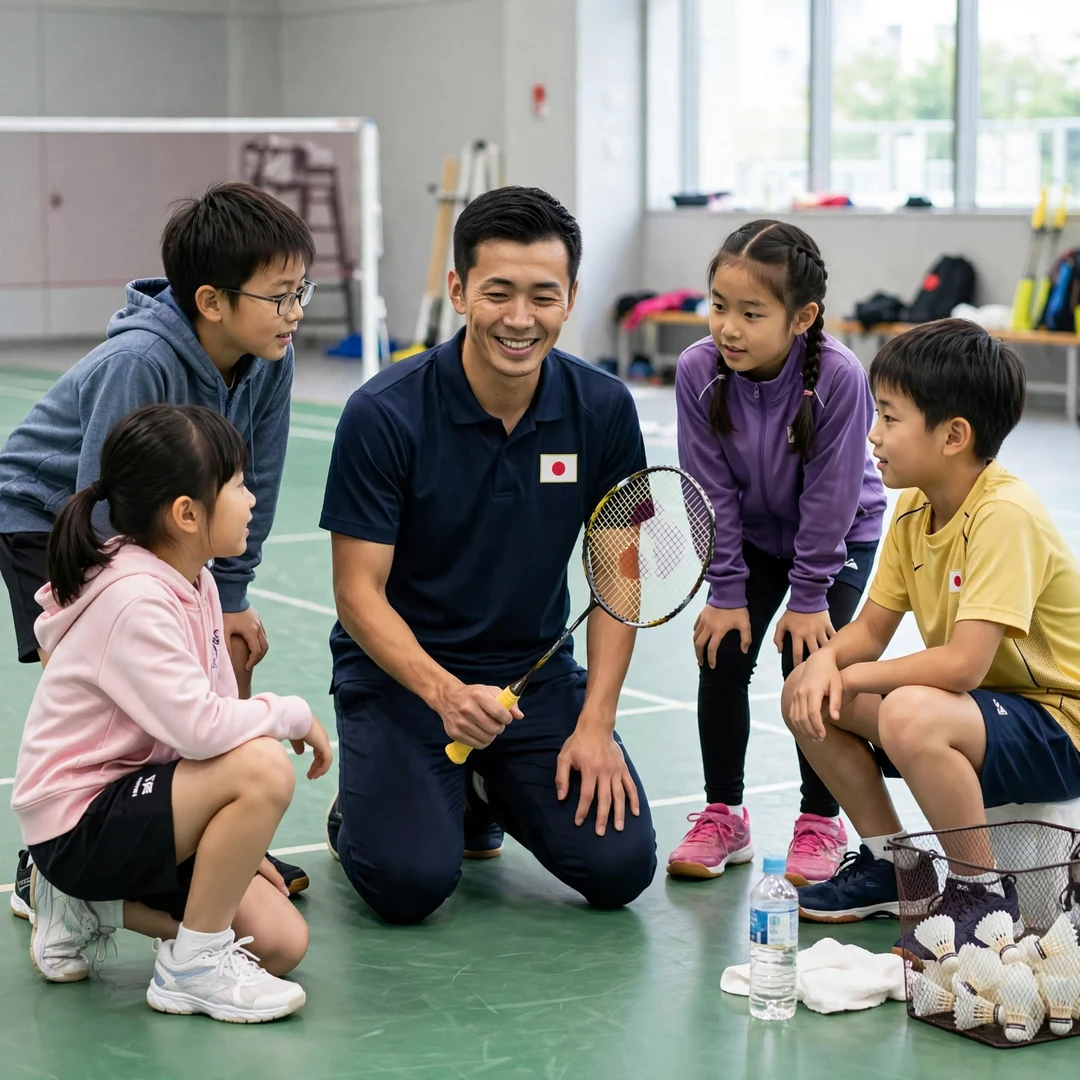
Our students study Nishimoto’s matches to learn rally construction: how he uses deep clears and tight net shots to move opponents, how he defends against taller attackers, and how he stays composed in deciding games. His university pathway is also a powerful example for families who want sport and education to grow together.
We encourage our players to watch Nishimoto the way we encourage them to train: patiently and honestly. Copy his preparation, his error control and his courage to come back from setbacks, and your own game will grow the same way his did — one well-built rally, one honest week of training, at a time.
FAQs: Kenta Nishimoto Japanese Badminton Player
Here are the questions Malaysian parents and junior players ask most often about Kenta Nishimoto, answered with the key facts from his career.
Who is Kenta Nishimoto and which country does he represent in badminton?
Kenta Nishimoto is a Japanese men’s singles badminton player from Ise, Mie Prefecture. He represents Japan in BWF World Tour events and team competitions such as the Thomas Cup and Sudirman Cup, plays for the JTEKT Stingers in Japan’s corporate league, and is coached by Sho Sasaki.
What are Kenta Nishimoto’s biggest badminton achievements?
His biggest achievements are three BWF World Tour titles — the 2022 Japan Open (a Super 750 crown won at home in Tokyo), the 2023 Spain Masters and the 2025 Canada Open — plus a bronze medal at the 2018 Asian Games, 11 World Tour finals in total, and a career-high world ranking of No. 9 reached in September 2018.
What is Kenta Nishimoto’s playing style?
Nishimoto plays a right-handed all-court rallying style built on defence, stamina and counter-attacking. He extends rallies with precise clears and tight net play, turns defence into attack with flat drives and cross-court backhands, and wins by making fewer errors than his opponent in long, physical matches.
How has Kenta Nishimoto performed at the Olympics?
Nishimoto made his Olympic debut at Paris 2024. He won both of his group matches, against Dmitriy Panarin and Brian Yang, to top his group, then lost in the round of 16 to Kunlavut Vitidsarn of Thailand — who went on to win the silver medal — in three games.
How can my child learn from Kenta Nishimoto’s training approach?
Children can learn from Nishimoto’s pathway: strong school and university foundations, rally patience, error control and honest responses to setbacks. At ST Badminton Academy we use structured progressions — footwork efficiency, defensive technique and rally-building drills — so juniors develop the same complete base before adding attacking weapons.
Did Kenta Nishimoto win any junior titles?
Nishimoto was a team player as a junior, winning a mixed team bronze at the 2012 World Junior Championships and a team gold at the 2012 Asian Junior Championships with Japan. His biggest early individual titles came at university, where he won the All Japan Student Championships three years running from 2013 to 2015, followed by the senior All Japan title in 2016.
How many BWF World Tour titles has Kenta Nishimoto won?
Nishimoto has won three BWF World Tour titles: the Japan Open in 2022, the Spain Masters in 2023 and the Canada Open in 2025. He has also been runner-up eight times — including finals against Viktor Axelsen, Kento Momota and Jonatan Christie — giving him 11 World Tour finals in total.
What playing style should young players learn from Kenta Nishimoto?
Young players should learn Nishimoto’s rally-building style: balanced defensive footwork, precise clears to the back line, tight spinning net shots and calm shot selection under pressure. His career shows that patience and consistency, repeated for years, can carry a player into the world top 10 and keep him there.
Does ST Badminton Academy have any connection with Kenta Nishimoto?
No. ST Badminton Academy has no official connection, partnership or endorsement with Kenta Nishimoto. This profile is published for education only, so our students and parents in Malaysia can study his career achievements, playing style and comeback story.
Kenta Nishimoto Career Highlights
Career Statistics and Rankings
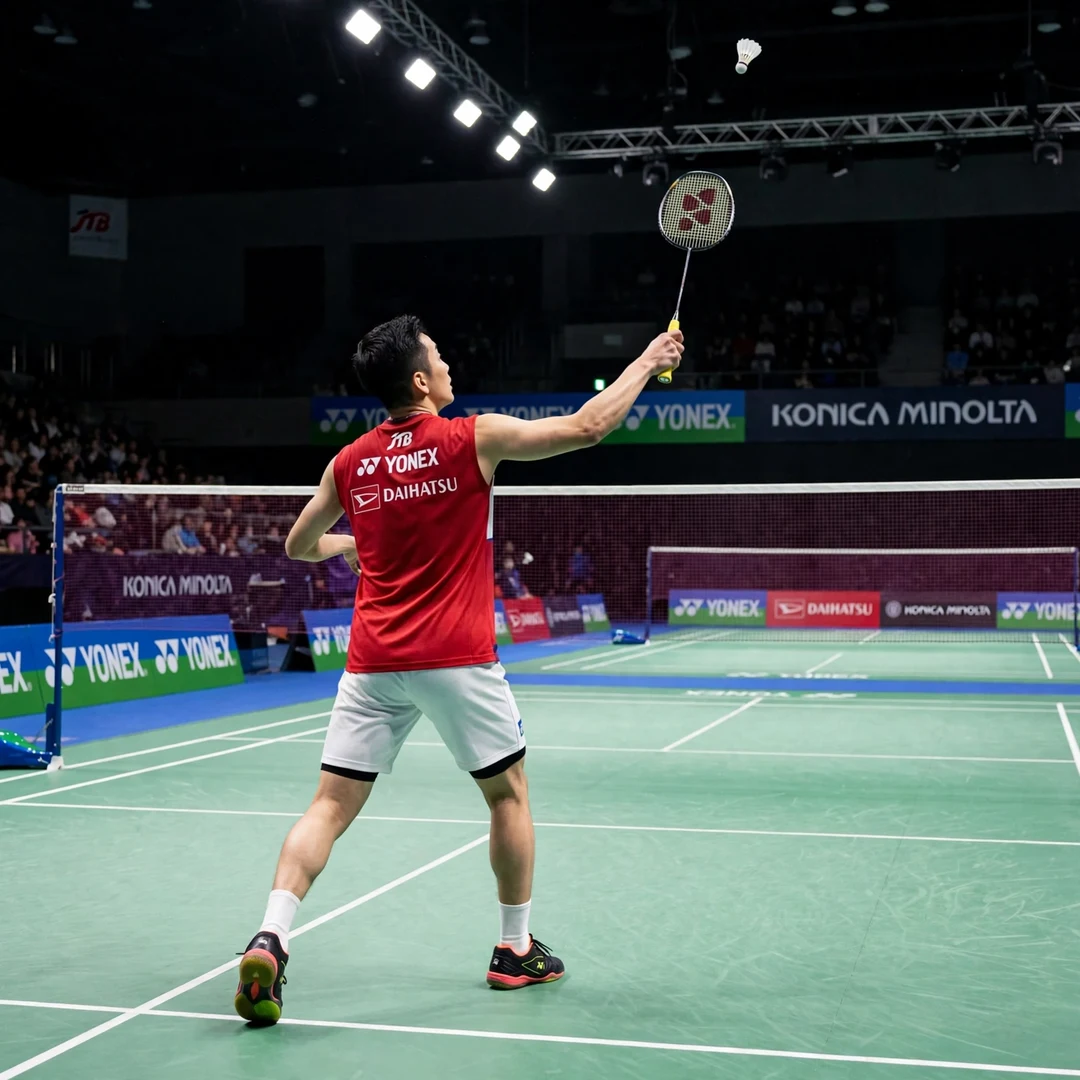
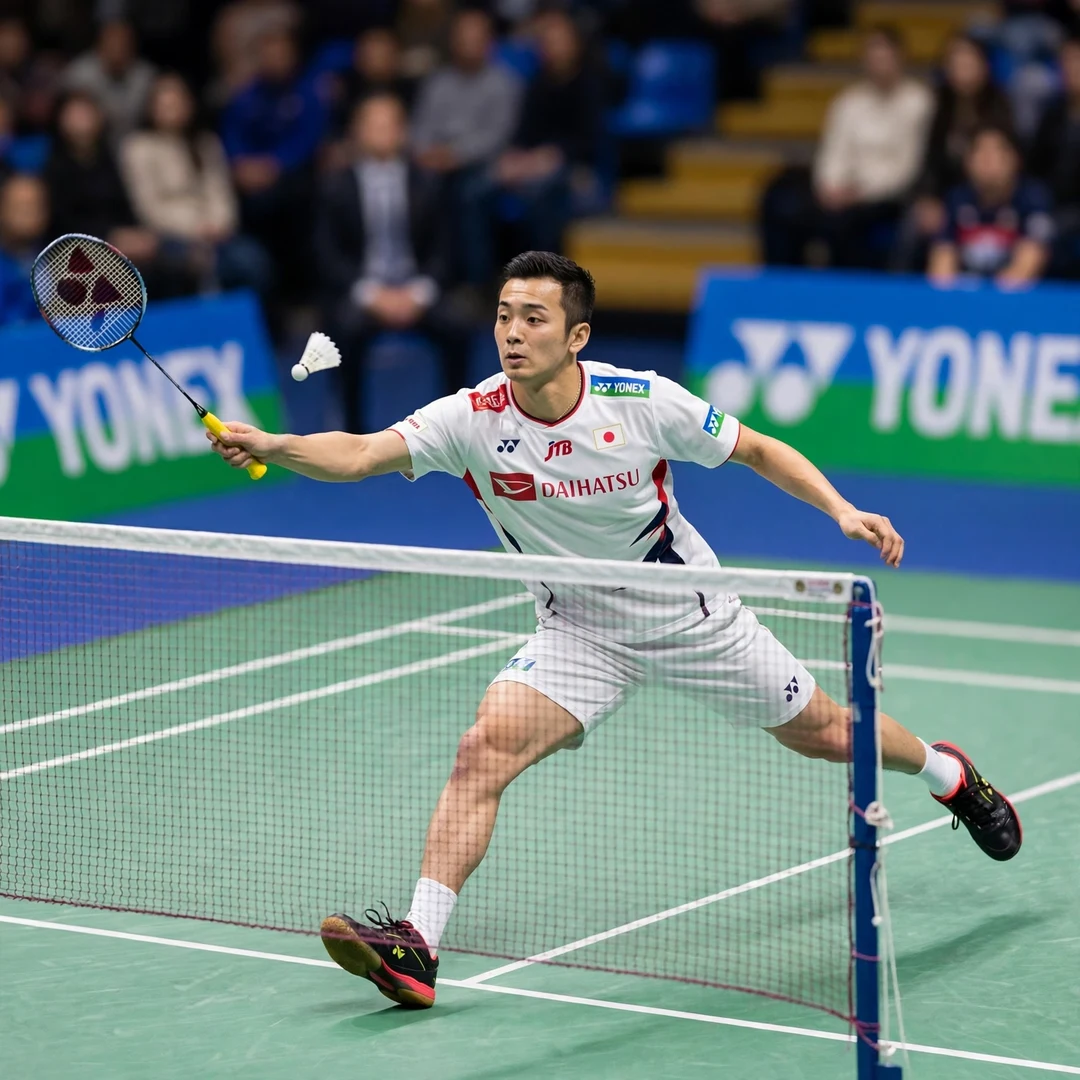
Kenta Nishimoto's career is a masterclass in earning everything the slow way. From a schoolboy in Ise to three straight university titles, an All Japan crown, an Asian Games bronze, a career-high of world No. 9, an Olympic debut and three World Tour titles — every step was built on rally patience, physical honesty and the courage to return from the hardest setback of his career in 2016.
| Development Area | Common Misconception | What Kenta Nishimoto's Career Shows REALITY |
|---|---|---|
| Junior Foundation | Talent alone decides who becomes a champion. | Nishimoto started badminton in the second grade of elementary school in Ise, Mie, and won the All Japan Student singles title three straight years at Chuo University — the patient school and university base came first. |
| Playing Style Priority | Kids should copy the flashiest attacking shots. | Nishimoto built a complete rallying game first; his counter-attacking winners are the finishing touch on elite footwork, defence and stamina, not the whole game. |
| Fitness Importance | Juniors can out-train everyone without rest. | A shoulder injury at the 2026 Swiss Open forced Nishimoto out of the Asian Championships and the Thomas Cup, yet he rebuilt again and beat a top-five seed at the World Championships five months later. |
| Mental Approach | Top players never get nervous or upset. | Nishimoto was removed from the Japan national team in 2016, accepted the setback, won the All Japan title months later and earned his place back — mental skills are trained through honest work. |
| Attacking Training | Smashing harder is always the answer. | His 2022 Japan Open final win over Chou Tien-chen (21-19, 21-23, 21-17) and his 2025 Canada Open title came from rally patience and precision, not raw power. |
| National Milestones | Only world titles matter. | Nishimoto's 2018 Asian Games bronze and his team golds for Japan — the 2017 Asia Mixed Team title and the 2026 Asia Team title — made him a national hero in Japan. Continental success matters. |
| Career Timeline | Champions peak once and fade fast. | From a first senior final in 2013 to a first World Tour title in 2022 and world No. 29 in October 2026 at the age of 32, Nishimoto proves a long career is built step by step. |
Study Kenta Nishimoto's Work Ethic and Professional Approach
For Malaysian juniors, his message is simple and powerful: talent opens the door, but character keeps you in the room. Build your basics, own your mistakes, and never stop coming back — the way Kenta Nishimoto has done for more than a decade at the top of world badminton.