Badminton learning in Kuala Lumpur
One Coaching Cue at a Time: Making Badminton Feedback Useful
Useful feedback gives a player something clear to try next. Here is how to select a priority, check understanding and review the cue without overloading the lesson.
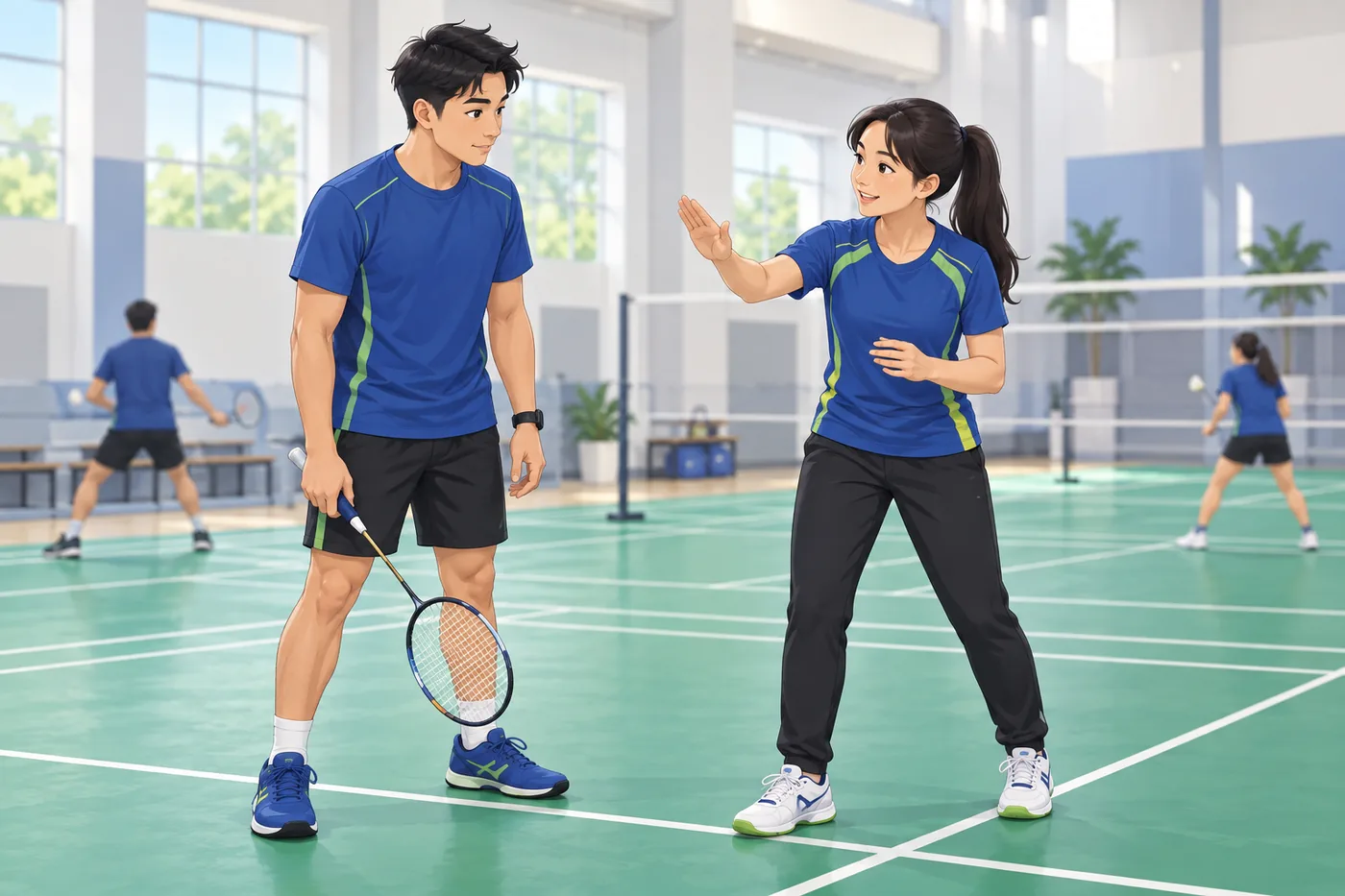
A useful badminton coaching cue tells a player what to try next in the task they are doing. It should be clear enough to act on and relevant enough to check afterwards. “Do everything better” is not a practice instruction; a short cue linked to one agreed action can be.
Working with one priority does not mean a coach ignores every other part of the game. It means the player knows which instruction matters most during this attempt. Other issues can be noted, addressed in a different task or revisited when the current cue is no longer helpful.
This guide is for players and parents who hear plenty of badminton advice but are unsure how to use it. The examples are possible coaching conversations, not universal technical prescriptions. The right cue depends on the player, the task and what the coach actually observes.

A correction and a usable cue are not the same thing
“You were late” describes what the coach noticed. It does not necessarily tell the player what to change. “Your return went too high” identifies an outcome, but several different actions or decisions may have contributed to it.
Ask for the next step: “What should I focus on during the next few attempts?” A coach might simplify the task, demonstrate the intended action or choose a short phrase that refers to something already explained. The phrase is useful because of that shared explanation, not because a particular wording works for everybody.
For instance, “Ready again” could refer to preparing for the next return after a shot. Without a demonstration or context, one player might interpret it as standing still while another starts moving unnecessarily. Ask the coach to show what the cue means in this practice.
Feedback should also distinguish observation from blame. “On that attempt, you watched your shot instead of preparing for the return” gives a player something to discuss. “You never concentrate” turns a specific moment into a personal label.
Choose the priority from the task you are practising
Start with the purpose of the drill or rally. Is the player trying to make a controlled return, recognise the direction of the incoming shuttle or prepare for a partner’s next shot? The cue should support that purpose.
Imagine a beginner is practising a cooperative rally. The player manages the first return but is not ready for the next one. The coach may decide that preparation between shots matters more in this task than adding power. That does not mean power is permanently unimportant; it is simply not today’s priority.
A different player might be unable to begin the activity because the instructions are unclear. In that case, another technical correction may not help. The useful next step could be a demonstration of the sequence and a chance for the player to explain it back.
When discussing badminton training, ask what a cue is meant to achieve. This helps you recognise when the practice has changed and a different priority might now be appropriate.

Turn the cue into an action the player understands
Short is not automatically clear. “Better movement,” “more control” and “be confident” are brief, but they leave a beginner to decide what the words mean. A useful cue refers to an action or decision the player has already been shown.
After a demonstration, the coach can ask, “What will you try on the next shuttle?” The player’s answer does not need to sound technical. It should show that coach and player mean the same thing.
If the player cannot explain or attempt the action, try a different explanation. Repeating the same phrase more loudly does not establish understanding. Nor should a child be expected to pretend they understand to keep the class moving.
- Name the current task in simple words.
- Show the action the cue refers to.
- Let the player describe or demonstrate their interpretation.
- Agree on the short reminder to use during practice.
A parent watching from outside the court can ask the child about the agreed cue later. They do not need to create a second version unless the coach has asked them to help in that way.

Give the player room to try before adding another correction
Once the priority is understood, agree on a short practice block. The exact number of attempts is less important than making the task clear and leaving enough opportunity to try the instruction. This is not a rule that a coach must remain silent regardless of what happens.
A safety concern, a misunderstood activity or a task that is clearly unsuitable should be addressed promptly. Otherwise, constantly introducing a new instruction can leave the player unsure which one is being reviewed.
Suppose a player is using “Ready again” in a predictable partner task. After a few returns, the coach asks what the player noticed. The player says, “I remembered after the first shot but not when I had to reach.” Now there is a specific situation to revisit.
The next step could be making that situation simpler, repeating the demonstration or allowing another attempt with the same cue. There is no need to turn one missed shuttle into a list of every possible technical fault.


Review the cue, not only whether the shuttle landed in
The result of the shot matters, but it is not the whole review. Ask whether the player attempted the agreed action and whether the cue was clear at the moment it was needed. A shuttle can land in even when the intended learning action was absent.
| Review question | What it helps clarify |
|---|---|
| What were you trying? | Whether the player remembered the current priority. |
| When did the cue make sense? | The situation in which the instruction was usable. |
| When did it become difficult? | A particular change in the task, rather than a general label. |
| What shall we try next? | Whether to repeat, simplify, vary or replace the practice. |
Keep the discussion short enough that the player still has time to practise. The aim is not a polished verbal answer. A demonstration, a gesture or a simple “I forgot when it went to that side” may be enough to identify the next task.
Carry the idea into a rally without expecting an instant match result
A cue that works during a predictable drill may be harder to remember when the shuttle goes somewhere unexpected. Treat that as a reason to review the next practice step, not evidence that the player ignored the coaching.
The coach could introduce a small choice: a partner now sends the shuttle to either of two agreed areas, for example. The player still has a defined task, but must notice something before responding. Whether that variation is suitable depends on the player’s present ability and control.
If the activity becomes unmanageable, step back and clarify what has changed. Perhaps the player is not recognising where the shuttle is going. Perhaps they understand the cue but cannot use it while handling the new task. These possibilities need different explanations.
During a game, choose a simple point of attention that the coach considers appropriate. Do not expect a player to recite several technical instructions before every shot. Afterwards, discuss one relevant example rather than reviewing every lost point.
Keep feedback consistent across the coach, player and parent
A player can hear one instruction from the coach, another from a parent and a third from a video. The advice may be intended for different situations, even when each person believes they are helping.
Ask your badminton coach which reminder belongs to the current practice and what support is useful between lessons. If another explanation seems contradictory, bring it to the coach as a question rather than asking the child to choose which adult is right.
For a younger beginner, the parent’s role might simply be to listen to what the child worked on and help them remember a question for the next class. Avoid turning every informal hit into another assessment.
Before leaving the lesson, the player should ideally know one useful answer: “What am I working on next?” It can stay the same as last time. A new cue is not automatically a better cue, and a familiar reminder is worth keeping when it still fits the task.
Questions about this badminton training topic
Does one cue at a time mean the coach should only teach one skill?
No. A lesson can cover different skills and tasks. The idea is to make the immediate priority clear during a particular attempt, rather than asking a player to act on every correction at once.
What if the player does not understand the coaching cue?
Ask for a demonstration or a different explanation. Let the player show what they think the cue means so the coach can check understanding before adding more detail.
Should badminton feedback always be very short?
Not necessarily. An explanation may need time, especially when introducing a task. A short reminder is useful after the player understands the action it refers to.
Can parents use the same cue at home?
Ask the coach whether it applies to the home activity and whether that practice is appropriate. Keep the setting safe and avoid introducing extra technical instructions without clarification.
When should a cue be changed?
Review it when it is unclear, no longer relevant or not helping the player attempt the intended action. The coach may need to adjust the task instead of simply finding a new phrase.
Discuss your training
Looking for a beginner badminton class where you can discuss how feedback is explained? Contact ST Badminton Academy in Kuala Lumpur with your playing background and one example of an instruction you find difficult to use.