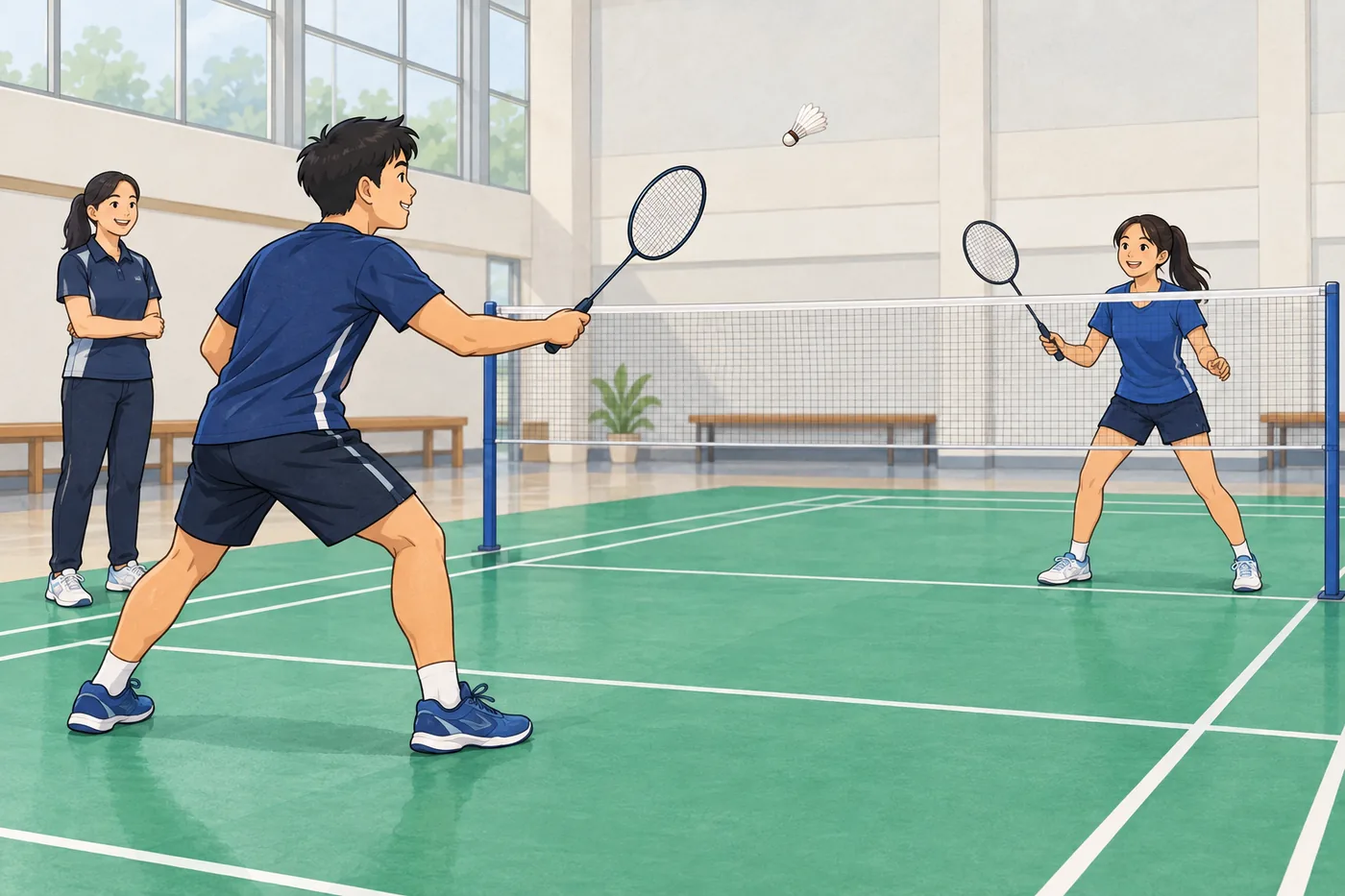
Badminton learning in Kuala Lumpur
What to Tell a Badminton Coach Before Your First Assessment
You do not need to know your badminton level before asking for an assessment. Give the coach useful examples of your experience and what you want to learn.

Before your first badminton assessment, tell the coach who the session is for, how the player currently plays, what they want to improve and when they can realistically attend. You do not need to diagnose your own technique or decide whether you are beginner, intermediate or advanced. The assessment should help clarify those questions.
The most useful preparation is a few accurate examples. A coach can do more with ‘I can rally with one partner but struggle when the direction changes’ than with ‘I am quite good.’ Clear information helps the discussion connect your current game to a suitable next learning task.

Describe your actual badminton experience
Start with the kind of badminton you have played, not only the number of years since you first held a racket. Someone who has played occasional family games for years may have different needs from someone with a shorter period of regular coached practice.
Explain whether you usually play casual doubles, singles with a friend, school activities or organised training. Mention any previous lessons and what you remember working on. If there has been a long break, include that too.
You do not need an impressive sporting history. A complete beginner can simply say they have little or no experience and would like to learn properly. A returning player can explain what used to feel comfortable without claiming that it is still reliable now.
The aim is to give the coach a starting point for observation, not to secure a particular level label before the session begins.
Give one example of what goes well and one that is difficult
A balanced description includes something you can already do. This prevents the conversation from becoming a list of everything you think is wrong.
For the difficult example, describe a sequence. ‘When my opponent sends the shuttle deep after a net exchange, I arrive late and cannot control my reply’ gives more context than ‘My footwork is bad.’ You are reporting what happens, not deciding the cause.
| A broad statement | A more useful description |
|---|---|
| I cannot clear properly | My clear is controlled from a fixed feed, but becomes short when I have to move first |
| I am bad at doubles | My partner and I hesitate when the shuttle comes between us |
| My child does not concentrate | They follow one instruction but become unsure when the exercise adds another step |
| I always lose | I can start rallies comfortably but rush the reply when the pace changes |
The coach may interpret the situation differently after watching. That is part of why an assessment is useful.
Explain what you want badminton to let you do
Goals are easier to discuss when they connect to a real activity. You might want to participate comfortably in a weekly social game, understand basic doubles positioning or help a child learn the foundations before joining school practice.
If your goal is competition-related, explain the opportunity and your current experience without assuming a guaranteed preparation timeline. The coach needs room to assess whether the goal, current level and available practice fit together.
It is also acceptable to have an exploratory goal. You might enjoy badminton but not yet know which part you want to develop. Say that you want a clearer picture of your game and a sensible first focus.
The badminton training programme information can help you think about the discussion, but the name of a programme should not replace describing what you hope to do on court.
Tell the coach how you respond to instructions
You do not need to classify yourself as a particular type of learner. It is more useful to explain a practical preference: you understand an exercise better after seeing a demonstration, you need an unfamiliar term explained or you become confused when several corrections arrive together.
For a child, describe what helps them participate in a new setting. They may need an introduction before joining a group, or they may hesitate to say that they did not understand. Share that as information rather than a fixed label about their ability.
Mention any language preference relevant to understanding the lesson, and ask what communication is available. Do not assume that every session or coach can accommodate every preference.
The coach can then explain how instructions and feedback are handled. During the assessment, it is reasonable to ask for clarification instead of copying a movement you do not understand.

Be specific about the timetable you can manage
Class suitability includes practical attendance. Tell the academy which days and time windows are realistic, where you will be travelling from and whether the session is for an adult or a child who depends on someone for transport.
You do not need to provide a private address just to discuss the journey. An area and realistic travel constraints are usually enough for the initial enquiry. Confirm the actual venue and meeting instructions before attending.
If a schedule changes frequently because of work or school activities, explain that. Ask about the current options and applicable arrangements rather than assuming a group can be moved or a missed session automatically replaced.
For families enquiring for several children, give each child’s experience separately. A convenient shared time does not establish that the same badminton class is the right learning environment for everyone.
Share relevant support needs without oversharing
If you need an adjustment to participate or communicate during the assessment, raise it with the academy before the session and ask whether it can be accommodated. Keep sensitive personal details to the appropriate private conversation rather than placing them in a public comment or group chat.
A coach’s badminton assessment should not be treated as a medical clearance. Questions about health-related readiness belong with an appropriately qualified professional. You can still discuss practical class arrangements without asking the badminton coach to make a judgment outside their role.
For children, parents should explain any agreed collection or communication arrangement the academy needs to know. Confirm how that information should be provided; do not assume a message passed through another parent has reached the coach.

Let the session show your normal starting point
You do not need to rehearse impressive shots to pass a first assessment. Follow the task, ask if the instruction is unclear and let the coach see an ordinary attempt. A missed shuttle can be useful information when the coach understands what you were trying to do.
If you are uncertain about a term, say so before the exercise begins. If you have learnt a movement differently elsewhere, describe it briefly and listen to the instruction for the current task. The coach can discuss the difference after observing you.
Parents can help by allowing the child to answer simple questions where appropriate. Avoid giving competing technical instructions from the side of the court. After the task, ask the coach what was observed and how it informs the recommendation.
The beginner class information may be useful if this is the player’s first coached experience, but assessment arrangements and availability should still be confirmed directly.

Leave with a clear next step, not only a level label
At the end of the discussion, ask the coach to explain the recommended focus and why it suits the observations. A label such as beginner or intermediate is less useful without knowing what you will actually practise.
- What is the first skill or decision you recommend working on?
- What did you see that led to that recommendation?
- Which current class arrangement could support that work?
- How should I raise a question if I do not understand an exercise?
- When and how would we review whether the placement still fits?
Read the coach information and confirm any practical terms before committing. You should understand the proposed next step without needing to accept a promise about rankings, match wins or a fixed speed of improvement.

Questions about this badminton training topic
Must I know my badminton level before booking an assessment?
No. Describe how you currently play and any previous training. Observing your current skills is part of establishing an appropriate starting point.
What should a complete beginner tell the coach?
Say that you are new, explain who the session is for and share your goal and availability. You do not need technical vocabulary or a match history.
Should I send a badminton video before the session?
Ask whether it would be useful first. If requested, share a short relevant clip recorded with the participants’ permission. A video does not replace observing your current play.
Can a parent answer all the assessment questions?
Parents can provide important context, but the child should have room to answer suitable questions about their own experience. This helps the coach understand both perspectives.
Does an assessment guarantee a place in a particular class?
No. Placement depends on suitability and current availability. Confirm the academy’s actual assessment process, class options and terms before making plans.
Discuss your training
To enquire about a first badminton assessment in Kuala Lumpur, contact ST Badminton Academy with the player’s age, experience, main goal and available days. Add one example of a difficult rally situation if you have one. Clear, ordinary information is more helpful than trying to sound advanced before you arrive.