Badminton learning in Kuala Lumpur
Your Child’s Badminton Progress Seems Slow: What to Review
Regular attendance does not always make progress easy to see. Review one skill, the practice task and your child’s experience before changing the whole training plan.
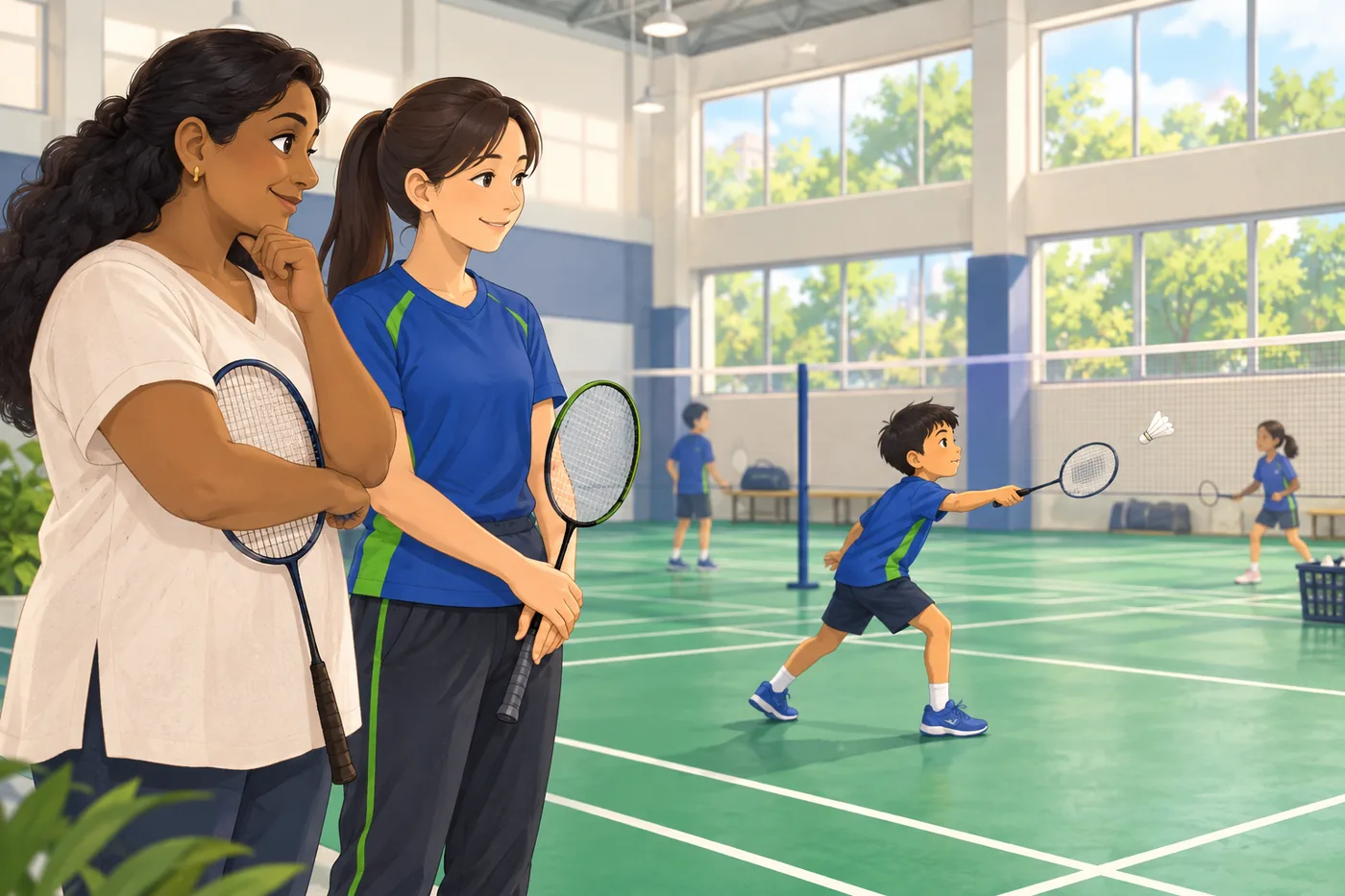
If your child attends badminton training regularly but seems to be improving slowly, start by checking what you are measuring. A child may be learning to prepare earlier or choose a sensible shot without winning more games yet. Equally, regular attendance alone does not tell you whether a particular difficulty is being addressed.
The useful question is not simply, “Is this child talented?” It is, “What are we working on, what can the child do in a comparable situation, and what should happen next?” This gives a badminton coach something specific to discuss and keeps a parent’s concern from becoming a judgement about the child.
Before adding lessons, changing academies or arranging extra drills at home, review the following points with your child and coach. The aim is a clearer training decision, not a promise that every child should follow the same timetable.

First, describe the problem without giving the child a label
“Not improving” can mean several different things. Perhaps your child misses the shuttle when moving backwards, forgets a cue during rallies, avoids asking questions or loses games against classmates who have also improved. Those observations lead to different conversations.
Write down one situation rather than a description of your child’s character. “During a rally, she reaches the shuttle late on the forehand side” is more useful than “She is lazy.” “He can explain the drill but waits for another demonstration before starting” is clearer than “He never listens.”
Keep your note limited to something you actually saw. Watching part of one lesson cannot establish what happens throughout the whole training programme. Ask the coach whether the same pattern appears regularly and whether it is already a current focus.
For example, a parent might say: “I noticed Amir keeps the rally going when the shuttle comes straight to him, but struggles when he has to move. Is movement into the shot the priority now, or are you still working on contact?” This invites an explanation rather than demanding a defence.
Compare like with like, not a drill with a match
A predictable feeding drill and an open rally are different tasks. In the drill, the child may know where the next shuttle will arrive. In a rally, they have to notice its direction, decide what to do and prepare for another shot. A skill that looks comfortable in one setting may still need work in the other.
Ask the coach which setting offers a fair comparison. It might be a short cooperative rally, a controlled two-position practice or a simple game with one agreed objective. Use a similar task when you next discuss progress, rather than comparing a good drill today with a difficult match next month.
Useful observations could include whether the child starts independently, remembers the task, recovers after a shot or recognises when the shuttle has gone somewhere unexpected. Select one or two; a long scorecard can turn an ordinary lesson into an examination.
A child who is winning the same number of points may still be making a better decision before the mistake. Conversely, hitting harder does not automatically show that the current learning objective has been achieved. Ask what the action was meant to accomplish.

Check whether the learning target is clear
Ask your child, at a calm moment, “What is one thing you are practising at the moment?” This is not a test of whether they can repeat the coach’s exact language. Their answer helps you understand what they have taken from the lesson.
“Badminton” is broad. “Getting ready again after I hit” is something a child can look for during practice. If the answer is unclear, ask the coach to describe the current target in everyday words and show how it appears in a drill or rally.
There may be more than one objective across the programme, but a child does not need every correction at every moment. Ask which cue should take priority when the practice becomes difficult. Parents can then avoid adding a competing instruction from the viewing area.
This conversation is especially useful in beginner badminton classes, where new players are learning how to take part in a lesson as well as how to play. Understanding where to stand, when to begin and how to take turns may also need patient explanation.

Review the practice opportunity, not just the attendance record
Attendance is important information, but it does not describe the lesson experience. Ask how the current target is practised, when the coach checks it and whether your child gets a chance to try it with less help.
For example, a child may complete repeated feeds accurately but become unsure when a partner sends the shuttle somewhere different. That does not necessarily mean the feeds were pointless. It raises a practical question about the next practice task and how much variation the child can manage.
Consider the class arrangement too. Is the child clear about what to do while practising with a partner? Can the coach adjust a task that is currently too confusing? Is there a way to ask for help without stopping everyone else?
These are questions about fit and delivery, not a demand for one universal class size. A group class and a private lesson offer different opportunities. Discuss the actual situation before assuming that another format or more weekly sessions is the answer.


Use a short review sheet with the coach
A useful review can fit on one page. Bring a small number of observations and leave room for the coach’s explanation. The following framework keeps the discussion connected to an action.
| Review question | Useful detail to record |
|---|---|
| What are we working on? | One clear skill or decision, described in the child’s language. |
| Where is it working? | A practice situation the child can currently manage. |
| Where does it break down? | A specific change, such as movement or an unpredictable return. |
| What will change in practice? | A task adjustment, demonstration or clearer feedback cue. |
| What will we review next? | A comparable task and a mutually agreed check-in point. |
The next check-in is an opportunity to review evidence, not a deadline for success. If the target changes, note why. A coach may discover that the original explanation was not useful or that a simpler task makes the difficulty easier to identify.
Keep the child involved in an age-appropriate way. Ask whether they know the next step, rather than discussing them as though they are not there.
Listen to the child’s experience of the class
A technical review is incomplete without asking how the lesson feels to your child. Choose an ordinary, unhurried moment. “What part would you like help with?” usually opens a different conversation from “Why did you make so many mistakes?”
Your child might like the training but find one partner activity confusing. They might want more time to try a cue before another is added. Or their interest may be different from the parent’s: enjoying a regular badminton class and preparing for competitive play are not identical goals.
Do not interpret quietness, frustration or an off day as proof of a particular condition or lack of commitment. Ask, listen and share relevant observations with the coach. If the child reports pain or feeling unwell, stop treating that as a progress problem and arrange appropriate support.
Agree on what you will ask after lessons. A simple “What did you work on?” can be enough. The journey home does not have to become a second coaching session.
Decide whether to continue, adjust or reconsider the fit
After the review, choose a proportionate next step. Continuing may make sense when the target is clear, the coach can explain the practice and the child wants to participate. An adjustment may be useful when instructions, partner tasks or the difficulty level are not working well.
Reconsider the arrangement when your questions remain unanswered, your child cannot understand what they are meant to do, or the agreed purpose of training no longer matches what the programme offers. Discuss the issue directly before making assumptions from a single disappointing lesson.
If you explore another badminton coach, take the same specific observations to that conversation. Ask how the coach would assess the current difficulty rather than asking for a guaranteed improvement date. A careful explanation is more useful than a dramatic promise.
Questions about this badminton training topic
Does losing games mean my child is not improving?
Not necessarily. Ask what changed within comparable rallies or practice tasks. Match results are one piece of information, but opponents and the demands of the game also matter.
Should I add another badminton lesson each week?
First review the current target, practice and your child’s willingness to take part. Extra sessions are a scheduling decision, not an automatic solution to an unclear learning problem.
Can I help by correcting my child during class?
Agree on the parent’s role with the coach. Extra instructions from the side can leave a child unsure which cue to follow. Share observations at an appropriate time instead.
How should I ask the coach about slow progress?
Describe one situation you have noticed, ask whether it is a recurring pattern, and request a clear next practice step. Avoid comparing your child’s worth or ability with another child.
How long should we allow before reviewing again?
Agree on a sensible check-in with the coach based on attendance and the practice opportunity. Treat it as a review point, not a promised date by which a skill must be mastered.
Discuss your training
If you are reviewing your child’s badminton training in Kuala Lumpur, bring one clear example and your child’s current goal. Contact ST Badminton Academy to discuss the training arrangement and what information would be useful before a coaching conversation.