ST BADMINTON ACADEMY · KEPONG
Lavana 3 badminton training, taught properly
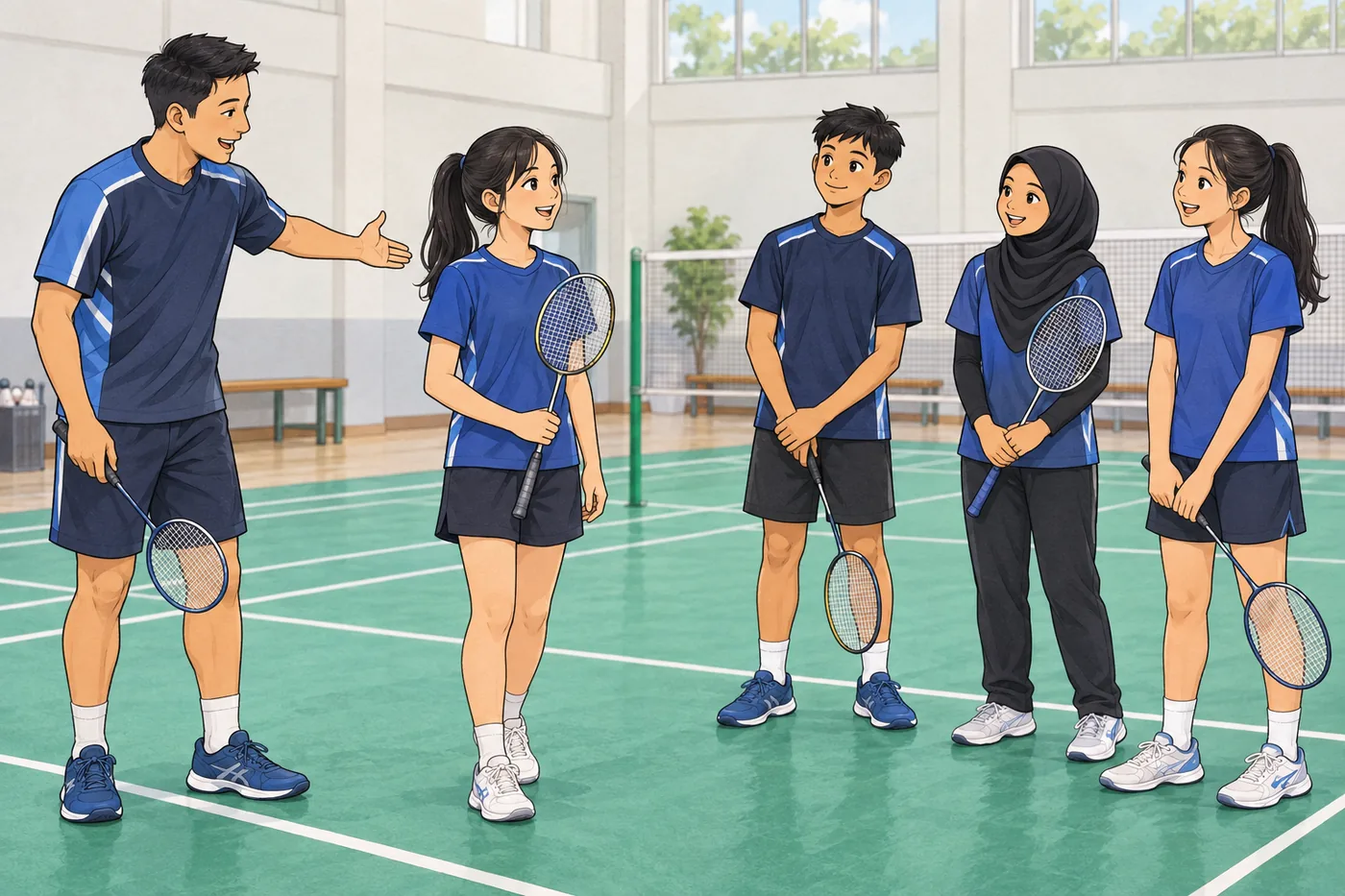
Structured coaching for kids, adults and women who want correct grip, movement and confident badminton foundations.
Kids foundation training
Adult beginner pathway
Women-friendly coaching
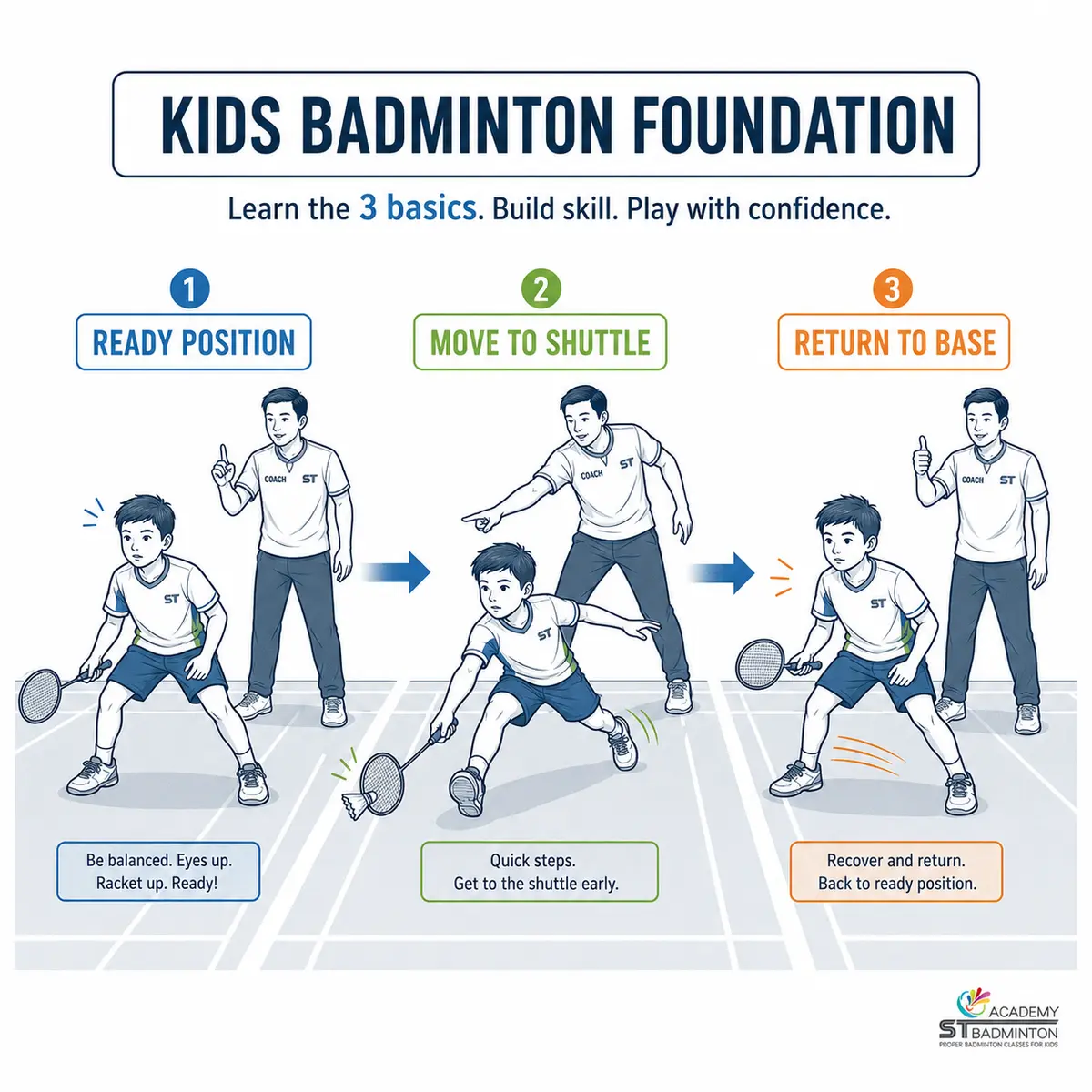
A visual guide to the foundation-first approach used for young beginners at ST Badminton Academy.
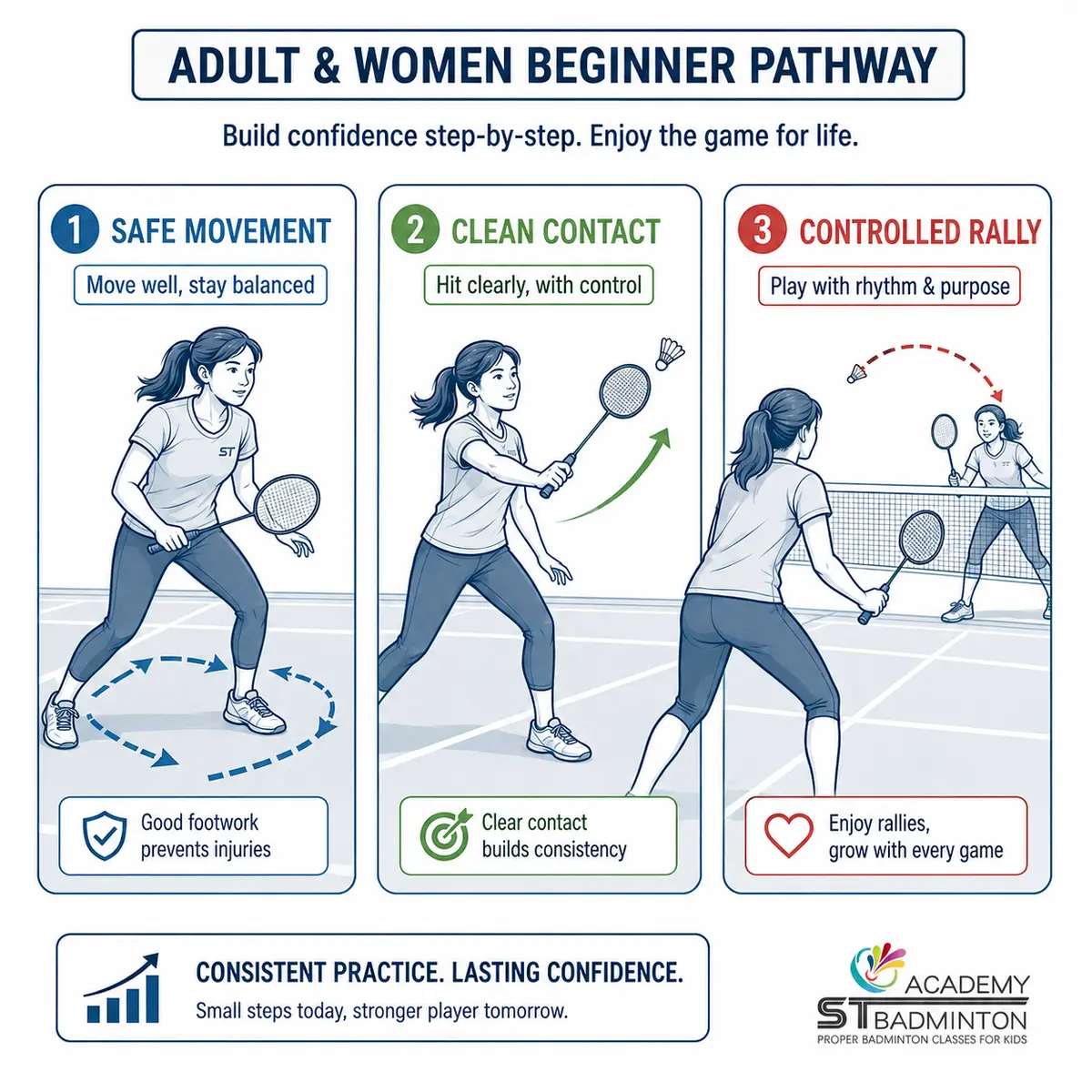
Kids, adult beginners and women follow different starting points while learning the same essential badminton foundations.
CHOOSE THE RIGHT STARTING POINT
One badminton academy, three practical learning pathways
The first question is not whether a learner is talented. It is what the learner can control today. A child may need coordination and listening habits. An adult beginner may understand instructions quickly but carry years of incorrect movement. A woman returning to sport may prefer a more comfortable pace while rebuilding confidence. The badminton coach adjusts the entry point without lowering the technical standard.
For kids badminton training, lessons are broken into short, clear tasks. Students learn how to hold the racket, prepare before the shuttle arrives and return to a balanced base after movement. The aim is not to make children hit harder as soon as possible. It is to give them a foundation that can support better strokes and safer movement later.
Adult badminton training begins with an honest check of grip, contact timing and court movement. Complete beginners can start from zero. Social players can also join when they want to correct habits that limit consistency. Women badminton classes use the same structured coaching principles, with attention to confidence, physical readiness and an appropriate training load.
Kids 5+
Adult beginners
Women learners
Small-group attention
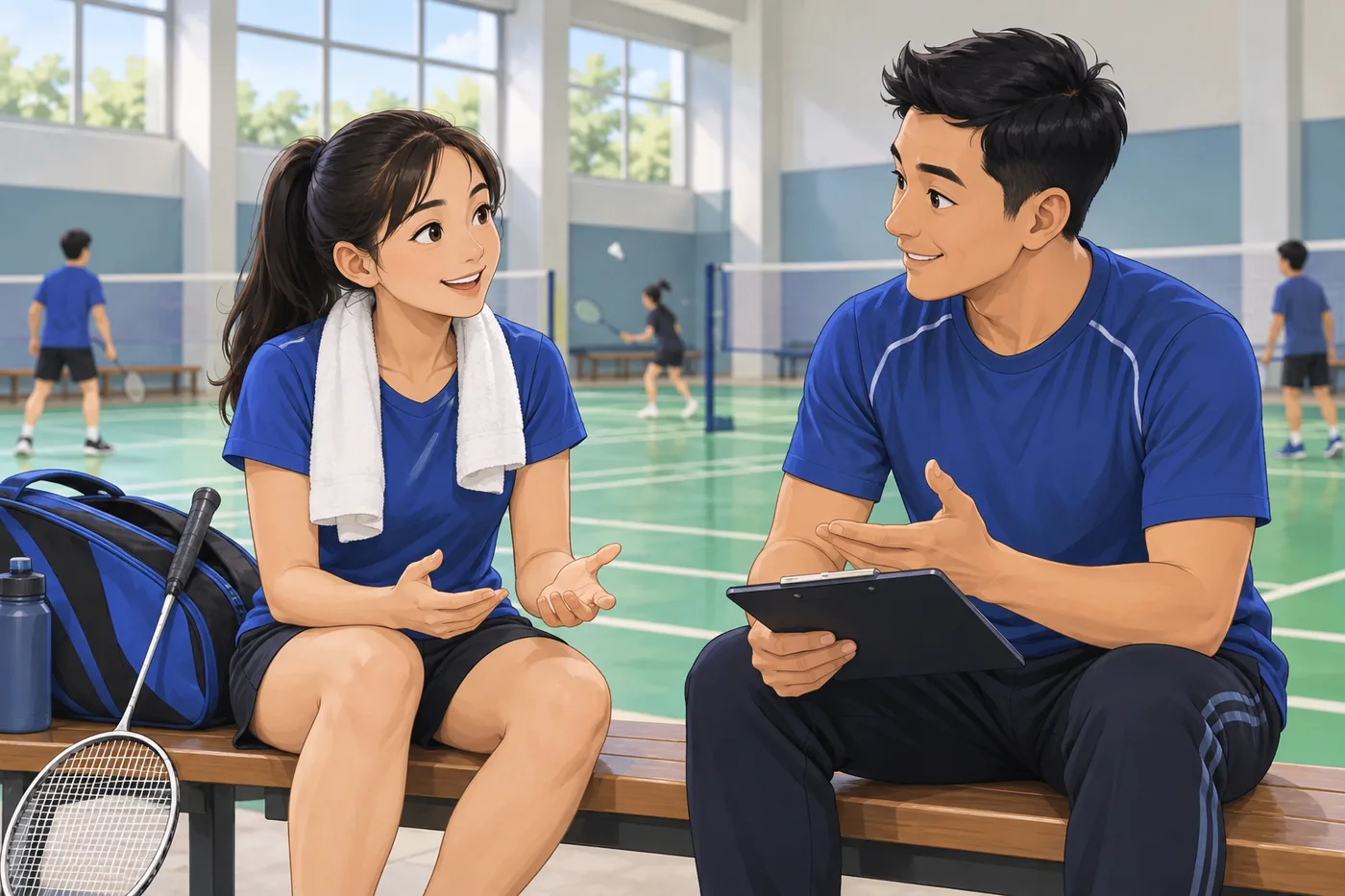
Good coaching starts with observation. The suitable class depends on age, experience, current movement and training goal. Send those details before attending so the academy can recommend the right route.
FOUNDATION LESSON
Ready stance: prepare before you chase the shuttle
Many beginners react only after the shuttle has already crossed the net. A useful ready stance reduces that delay. The learner keeps a stable base, relaxes the shoulders, holds the racket where it can move quickly and places body weight so the first step is available in more than one direction.
During badminton classes for kids, the coach may use simple visual cues and short repetitions. Adults receive the same core idea with more explanation about balance and timing. The objective is not a frozen pose. It is a repeatable preparation position that connects anticipation to movement.
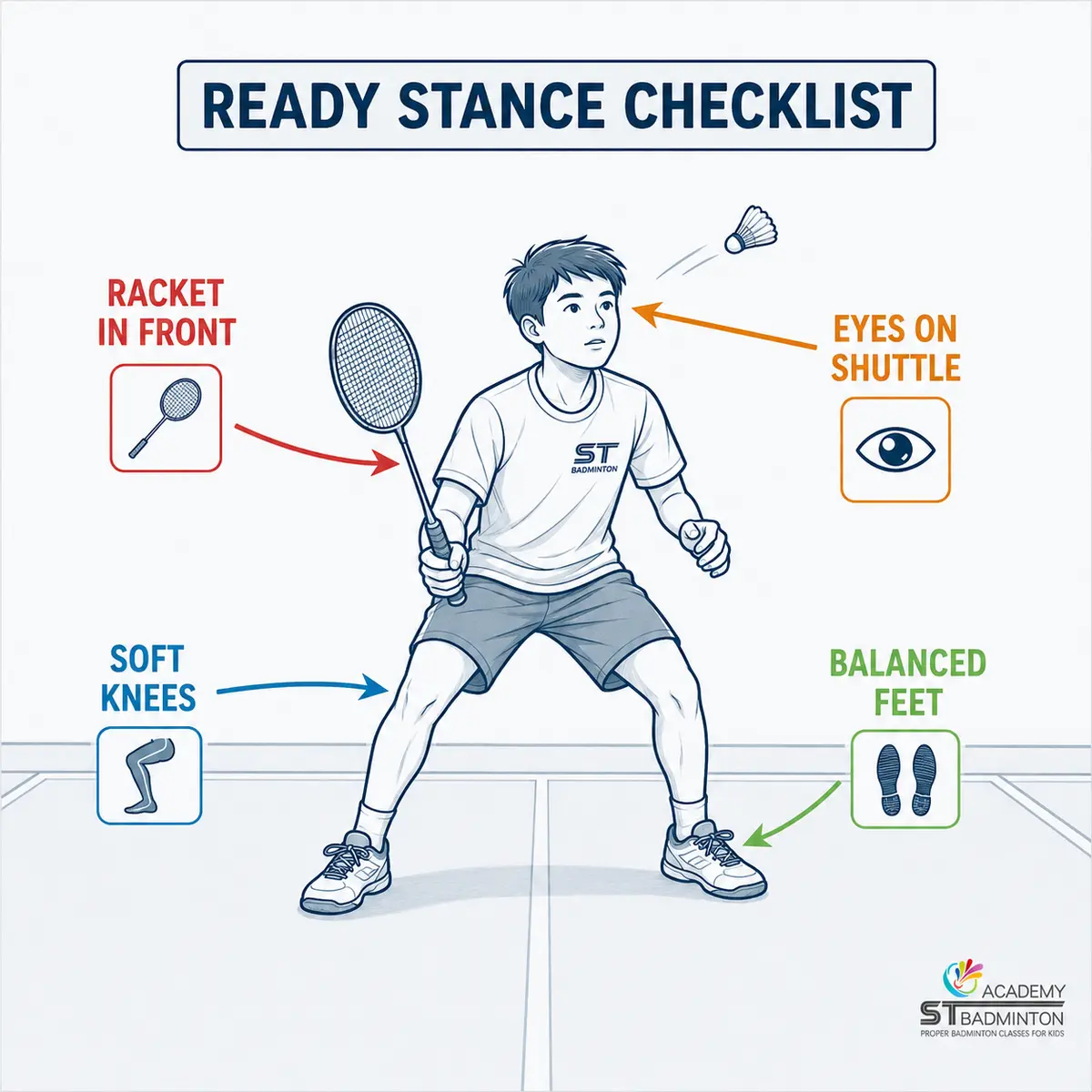
Educational breakdown of a balanced ready stance before the first movement.
Feet ready
A balanced width supports a quick first step without locking the knees.
Racket prepared
The racket stays available in front instead of hanging low beside the body.
Eyes active
Watch the opponent and shuttle early, not only the place where it may land.
Recover after every shot
A good ready stance matters again immediately after contact.
Grip basics: control first, power later
A badminton grip is not one fixed fist. Learners need a relaxed hold that can change between forehand and backhand situations. When the racket is squeezed too tightly, the wrist and fingers cannot contribute naturally. The player often compensates with a large arm swing, then loses timing and direction.
Our badminton coach uses close observation to check how the handle sits in the fingers, where the thumb supports the racket and whether the player can change grip without looking down. Kids learn through short handling drills. Adults often benefit from understanding why a small finger action can create a cleaner response than forcing the whole shoulder.
Grip correction can feel unusual at first, especially for a social player who has repeated one habit for years. That temporary discomfort is normal. The class keeps the task simple enough for the learner to repeat it correctly before adding movement or speed.
What the learner should notice
The racket face becomes easier to control, preparation becomes shorter and contact feels cleaner. Power is developed after the learner can reproduce the shape and timing. This order protects the foundation instead of hiding a weak grip behind effort.
Relaxed fingers
Forehand change
Backhand support
Clean contact
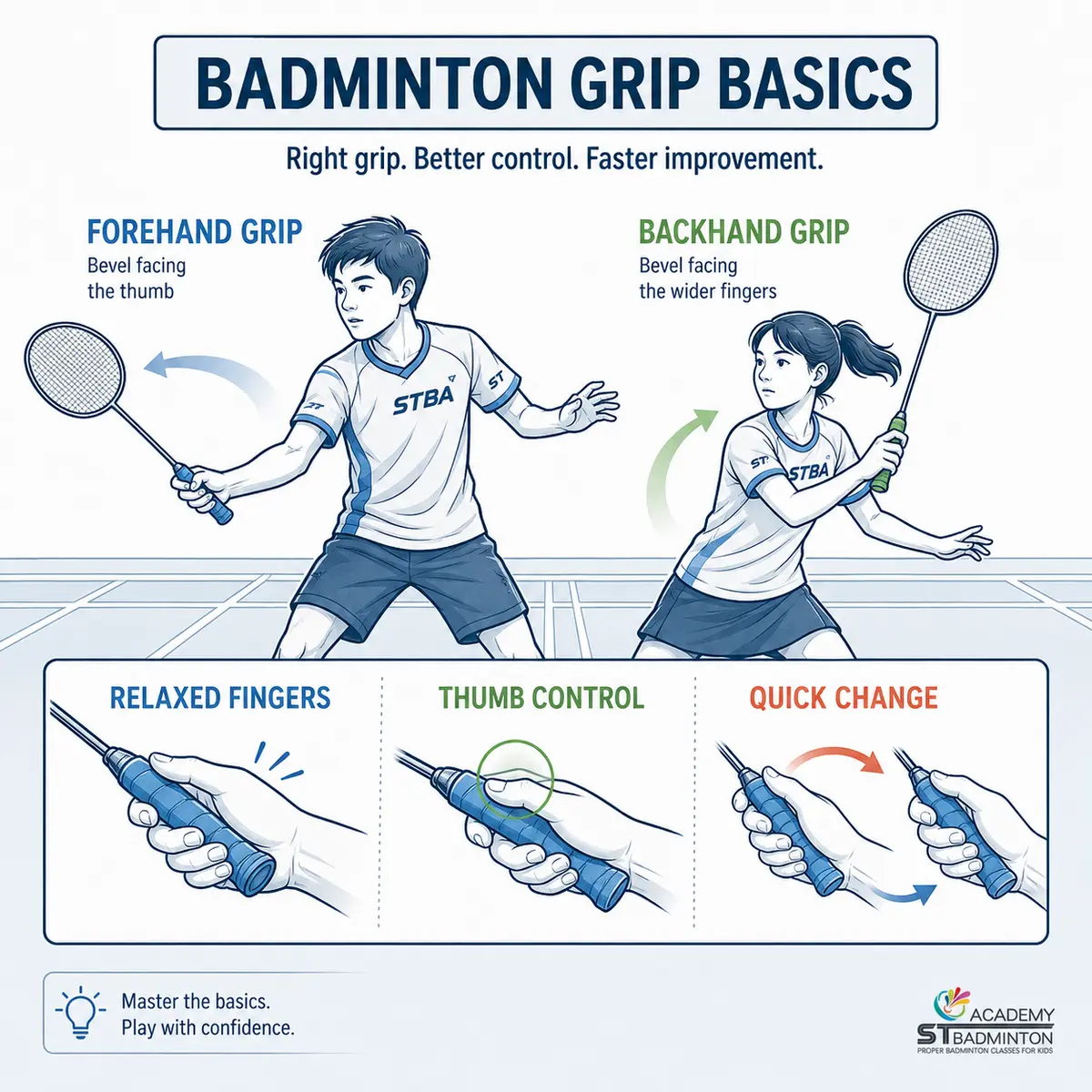
Grip education focuses on finger position, relaxed control and an efficient change between sides.
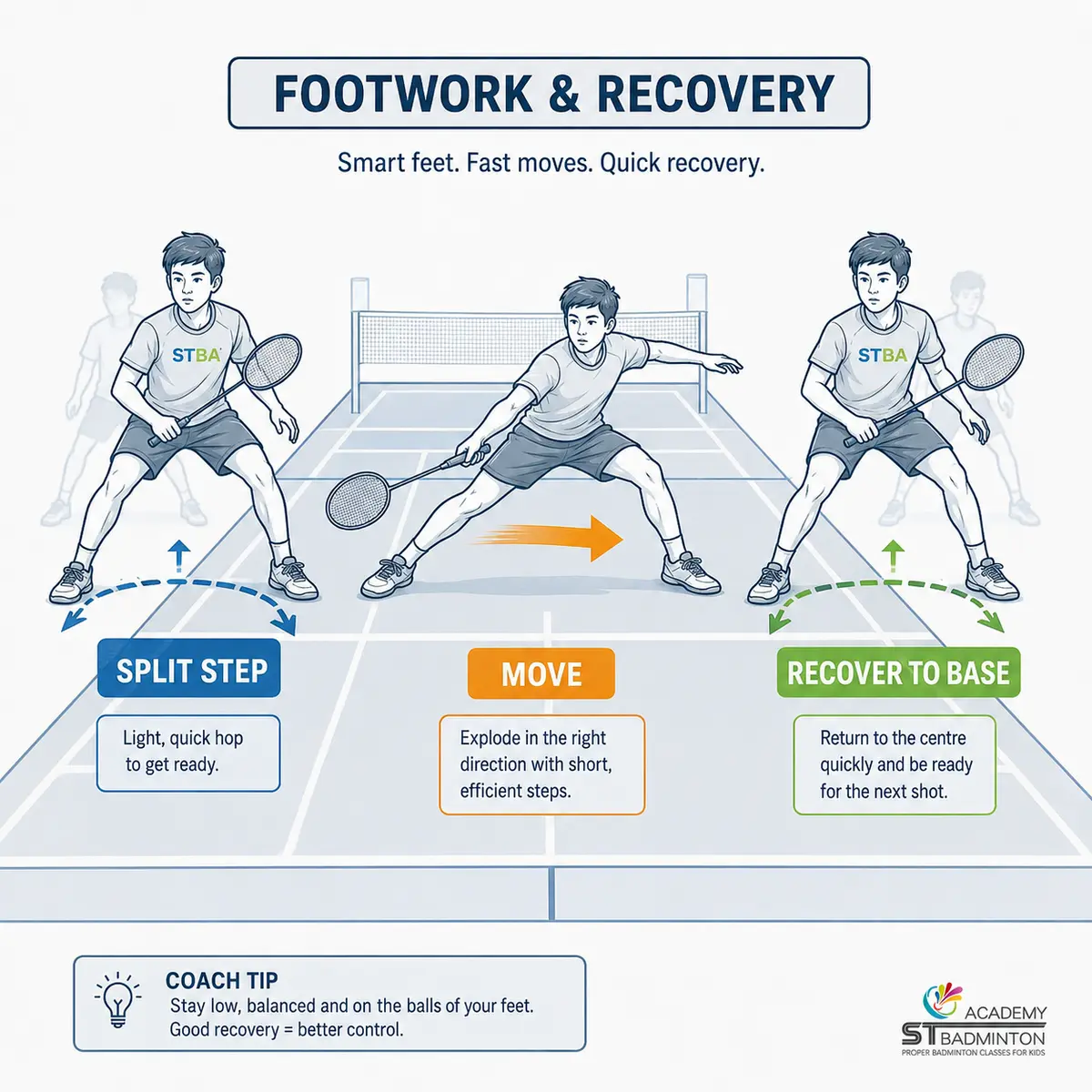
A simple footwork and recovery map showing movement out from base and a controlled return.
MOVEMENT SYSTEM
Footwork is a route out and a route back
Beginners commonly focus only on reaching the shuttle. Proper badminton footwork also explains how to stop, create space for the stroke and recover without crossing the feet carelessly. The movement should help the body arrive balanced enough to hit, then leave the player ready for the next shot.
Kids badminton coaching starts with manageable distances and repeatable patterns. The child learns the difference between running randomly and moving with a purpose. Adult badminton classes may slow the pattern down further so the coach can correct posture, step sequence and recovery. Women learners can build speed progressively without being pushed into intensity before the movement is stable.
A good drill links the feet to the racket. The coach gives a clear starting base, identifies the target corner, controls the number of repetitions and checks whether the learner returns in balance. Only after the pattern is reliable do pace and uncertainty increase.
Prepare. Start balanced and read the shuttle before committing.
Move and hit. Create enough space for a controlled contact point.
Recover. Return efficiently so the next direction remains available.
What a structured badminton class actually looks like
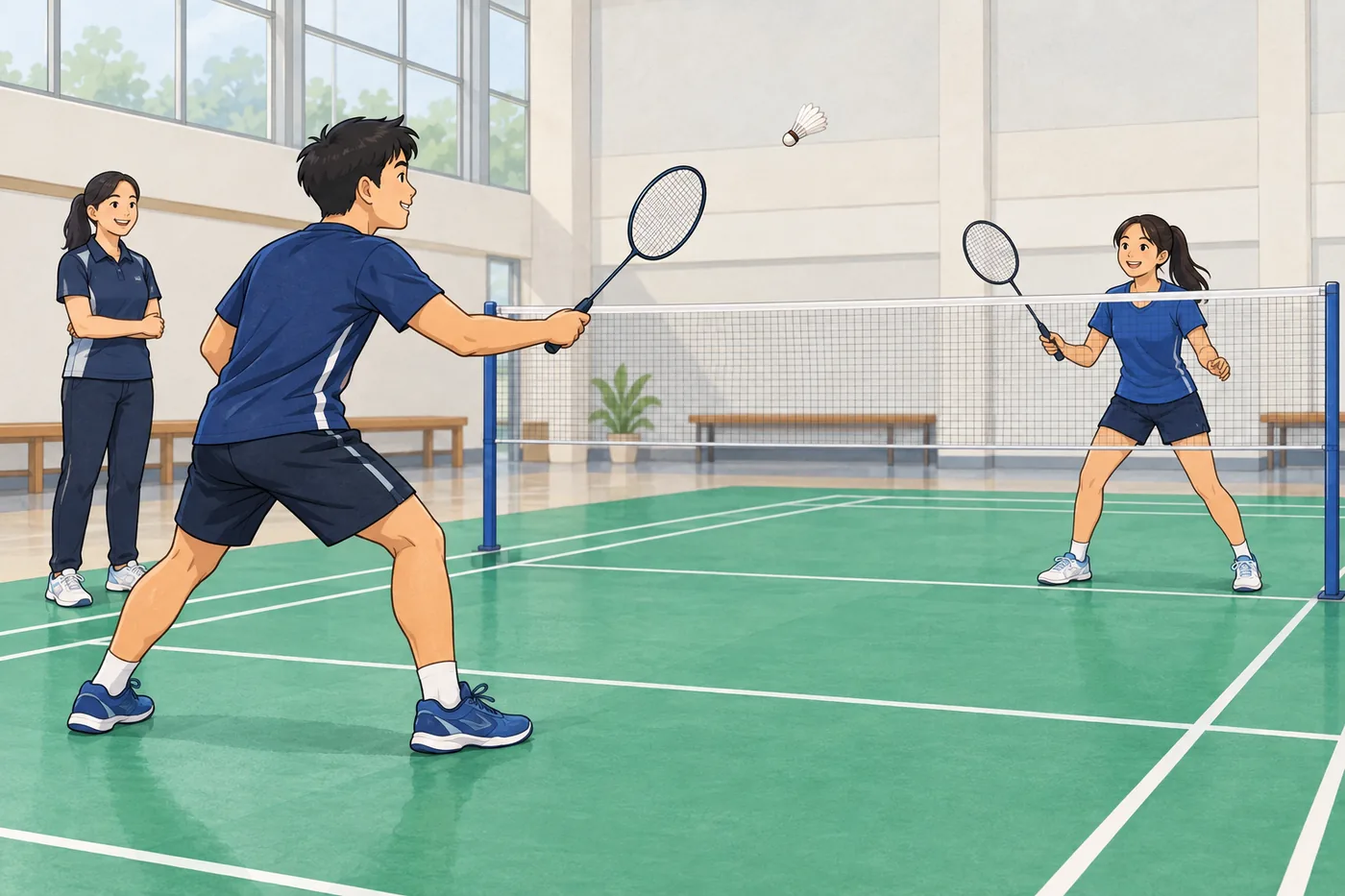
A useful lesson has a sequence. The coach does not simply feed hundreds of shuttles and hope technique improves. Each session connects physical preparation, one clear technical objective, controlled repetition and an application task. The exact balance changes with the learner’s age, experience and attention span.
For a beginner child, a short coordination task may come before grip and movement practice. An adult may spend more time separating an old habit from the new action. A woman returning after a long break may need gradual loading and more recovery between repetitions. The coach still keeps the technical message consistent.
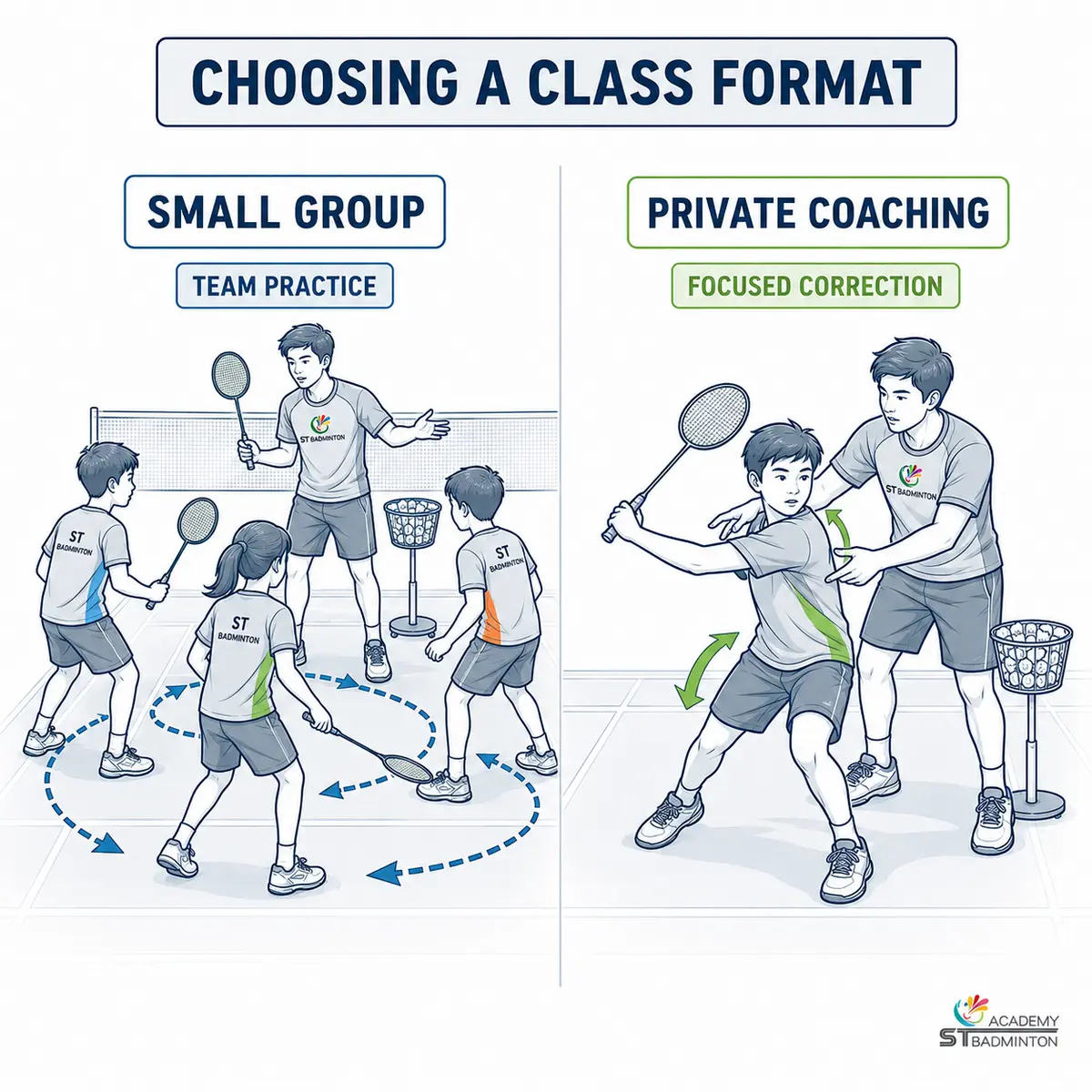
The class format links warm-up, focused skill practice, guided application and review.
1. Prepare
Warm-up and coordination work should match the lesson, not exhaust the learner.
2. Learn one idea
The coach explains and demonstrates a specific foundation point.
3. Repeat with feedback
Corrections are given while the learner can still connect them to the movement.
4. Apply and review
A controlled rally or task checks whether the skill survives outside a fixed drill.
Kids badminton classes
Short instructions, visible targets and frequent feedback help children remain engaged while developing discipline and coordination.
Adult and women classes
Clear explanations, appropriate pace and habit correction help beginners or returning players build confidence without pretending every learner starts the same.
Training at Lavana 3 Badminton Centre @ Kepong
This location page is for learners looking for badminton training around Kepong, including nearby communities such as Bandar Menjalara, Jinjang, Desa ParkCity and surrounding residential areas. The academy uses Lavana 3 Badminton Centre as the training venue described on this page; it is not presented as a separate walk-in retail branch.
Class availability can change, so contact ST Badminton Academy before travelling. Share the learner’s age, playing experience, preferred day and goal. That information is more useful than asking only whether a class is available, because it helps the coach recommend a suitable group or training format.
Before you enquire
Child: include age, school level and whether the learner has attended coaching.
Adult or woman: include beginner, returning or social-player experience.
Goal: foundation, fitness, confidence, school-team preparation or technique correction.
COMMON QUESTIONS
Questions about badminton training in Kepong
These answers explain how the Lavana 3 training pathway works. Exact schedules and placement should be confirmed directly because the right class depends on the learner, not only the location.
Yes. Adult beginners can start without previous coaching. The coach first checks grip, balance, contact and movement, then introduces a manageable foundation sequence. Sharing your age, current activity level and goal helps the academy recommend an appropriate class.
The academy provides a kids foundation pathway for young learners. Placement depends on age, attention, coordination and current experience. The training is structured around grip, ready stance, footwork, control and learning habits rather than unstructured play.
Yes. Women badminton training can be suitable for complete beginners, returning players and social players who want technique correction. The standard remains structured, while pace and physical loading are adjusted to the learner’s readiness.
The coach considers age, experience, movement quality, confidence and goal. Two learners who both call themselves beginners may need different starting tasks. A short description through WhatsApp helps with the initial recommendation.
Controlled games or rallies may be used when they support the lesson. They are not a substitute for foundation work. The coach first teaches the movement or racket skill, then uses an application task to see whether the learner can use it under more realistic conditions.
Start with the right badminton foundation
Tell ST Badminton Academy who the learner is, what experience they have and what they want to improve. The coach can then advise the most suitable next step at Lavana 3, Kepong.