Your Ultimate Guide To Badminton Tournaments And Events (Tournament Guide)
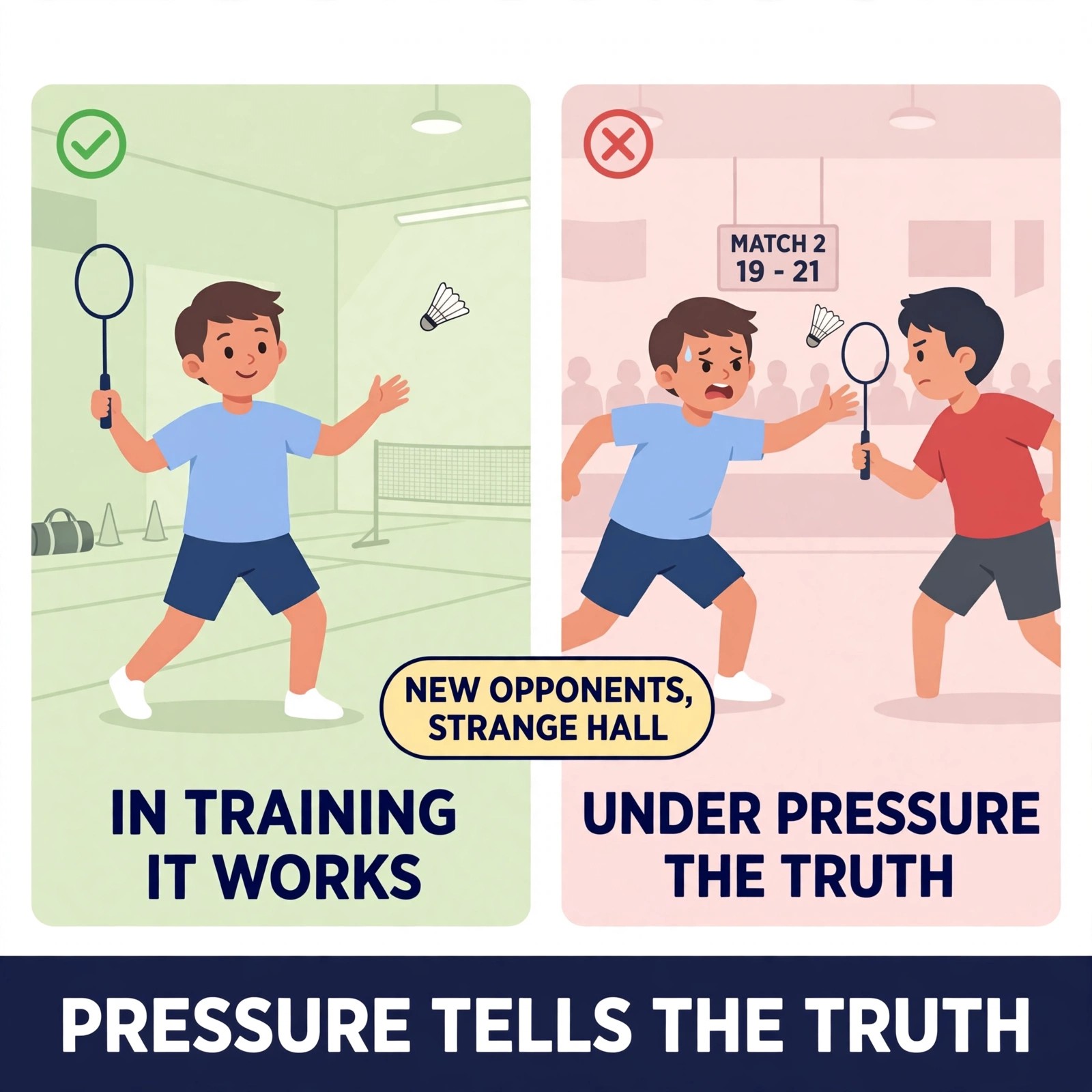
A tournament is the only honest test your badminton ever gets. Training tells you what you can do in your own hall, against players you know, with nothing on the score. A tournament tells you what survives: a strange hall, an opponent you have never seen, a draw that does not care about your feelings, and a score that counts from the first rally. That is why players who compete improve faster. This guide covers badminton tournaments and events the way we prepare players for them at ST Badminton Academy in Setapak, Kuala Lumpur: the levels, the formats, the entry homework, the training block, and the match day itself.

Event Check #1
Why Tournaments Test the Truth
Most of what training gives you is real, but it is tested under kind conditions. Your training partners know your favourite shots. Your hall has the same light, the same shuttle speed, the same floor. You play your best rallies when you are fresh and the score does not matter. A tournament removes every one of those kindnesses at once, and that removal is the point. What is left standing after it is your actual level, and knowing your actual level is the start of training with a purpose.
A tournament also gives training a date, and a date changes everything. Weeks of ordinary practice become a block with a shape: build the fitness and the shots, sharpen the match play, arrive fresh. After the event, win or lose, you own something no coach can give you in a drill: a short, honest list of what decided your matches. Players who compete regularly do not just collect results. They collect these lists, and the lists become their training plans.
Event Check #2
The Ladder: Levels and Formats
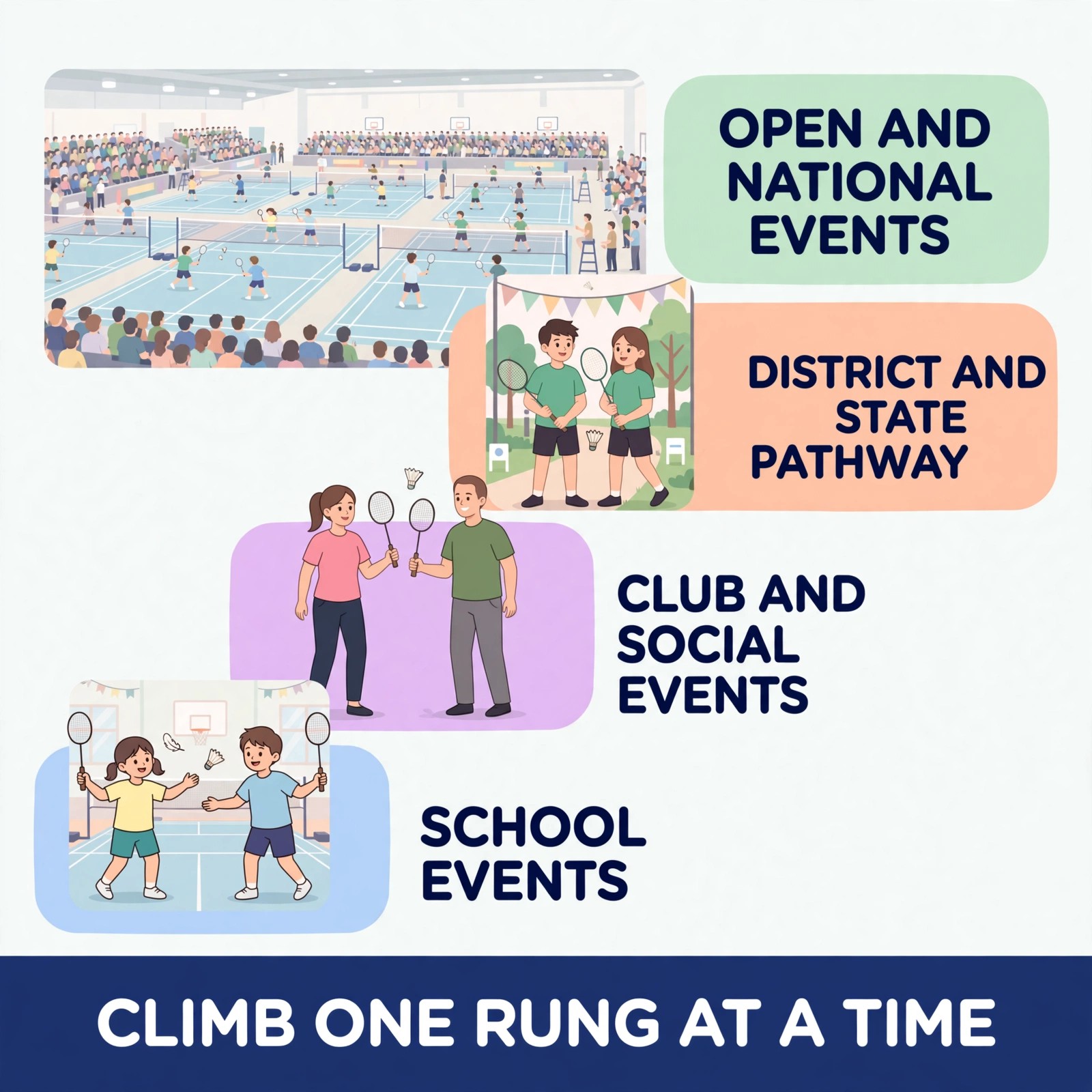
Tournaments in Malaysia come in a ladder, and the skill is choosing the right rung. At the base are school events and friendly club or social competitions, where the draws are kind and a new player can get several matches in a day. Above those sit district and state pathway events, the school sports route many Malaysian juniors follow through their schools, where the standard rises and selection starts to matter. Then come open tournaments, where anyone eligible may enter and the early rounds can be humbling. At the top are national and international events. Enter one rung above your comfort, not five.
Formats decide how forgiving an event is. A straight knockout is the hardest school: one loss and your event is over, so early rounds deserve full respect. A round robin group guarantees matches: everyone plays everyone, and the top players advance, which makes it the friendliest format for a first event. Many events combine the two: groups first, then a knockout draw for those who come through. Read which format you have entered before you arrive. It changes how you pace a long day, and how much a slow start can cost you.
Categories are the other piece of homework. Events divide players by age group and by game: singles, doubles and mixed doubles, and some events grade by level as well. Many organisers limit how many categories one player may enter, and the rules on that differ from event to event. The prospectus, the document the organiser publishes before entries open, holds all of it: eligibility, categories, format, scoring, what shuttles are used, and the closing date. Reading it takes ten minutes and prevents most tournament disappointments.
Event Check #3
Enter Properly: Entries, Rules and Kit
Enter early. Entries for most events close well before the playing date, late entries are rarely accepted, and popular categories fill. Keep your confirmation, note the reporting time and the venue, and check the draw when it is published so you know roughly when your matches fall. None of this is badminton, and all of it decides whether your badminton gets played. Players lose more first rounds to bad mornings, late arrivals and paperwork than to better opponents.
Know the rules that catch visitors out. Rally scoring runs to 21 points, with the score capped at 30 if it reaches 29 all. Matches can be called ahead of the posted time when courts free up, and a player who is not there can be defaulted. Coaching during play is restricted; at most events your coach may only speak to you at the intervals and between games. Some events set a dress code. Line calls, at events without line judges, rest on player honesty on your own side, with the umpire as the final word.
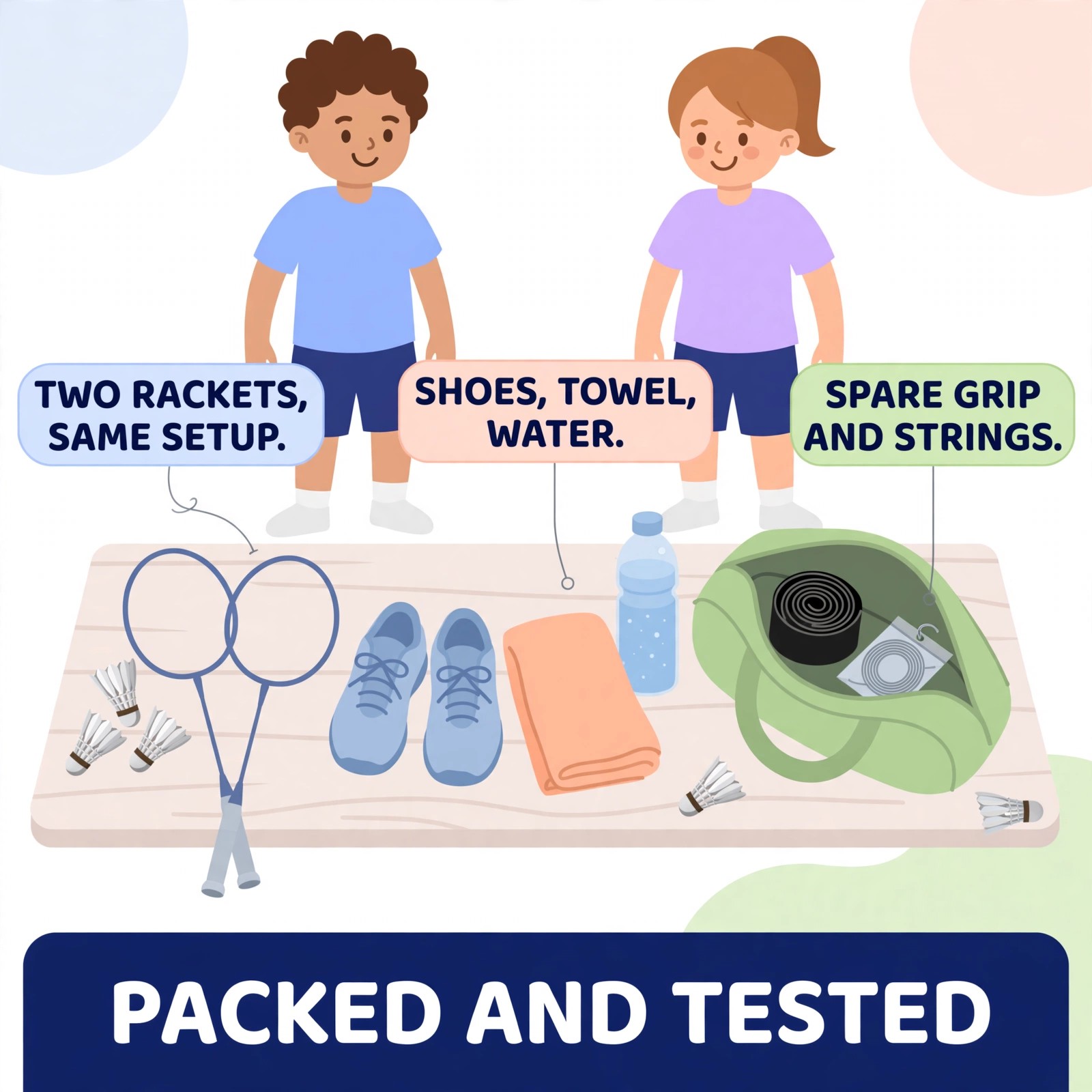
Pack for a long day, not for one match. Two rackets strung the same way, so a broken string changes nothing. Spare grip tape, a towel, court shoes you have already played in, water, and food you can eat in small amounts between matches: bananas, sandwiches, something plain. A spare shirt matters more than it sounds. Halls vary, and shuttle speeds vary with them; feather shuttles come in speed grades, 75 to 78 being the common range, and the organiser’s chosen speed is in the prospectus. Pack the night before, then sleep.

Event Check #4
Build the Block: Training That Peaks on Time
Build toward the date in a block. The early weeks are for capacity: fitness, footwork, and the shots the event will test. The middle weeks turn toward match play: full games to 21 with intervals, conditioned games that punish your known weakness, tight score practice that starts at 17 all. The final days get lighter, not heavier. Short, sharp sessions, plenty of sleep, and no heroic last minute overhauls. You arrive at a tournament with the game you built over the block, freshened, not with the game you tried to rebuild in the last week.
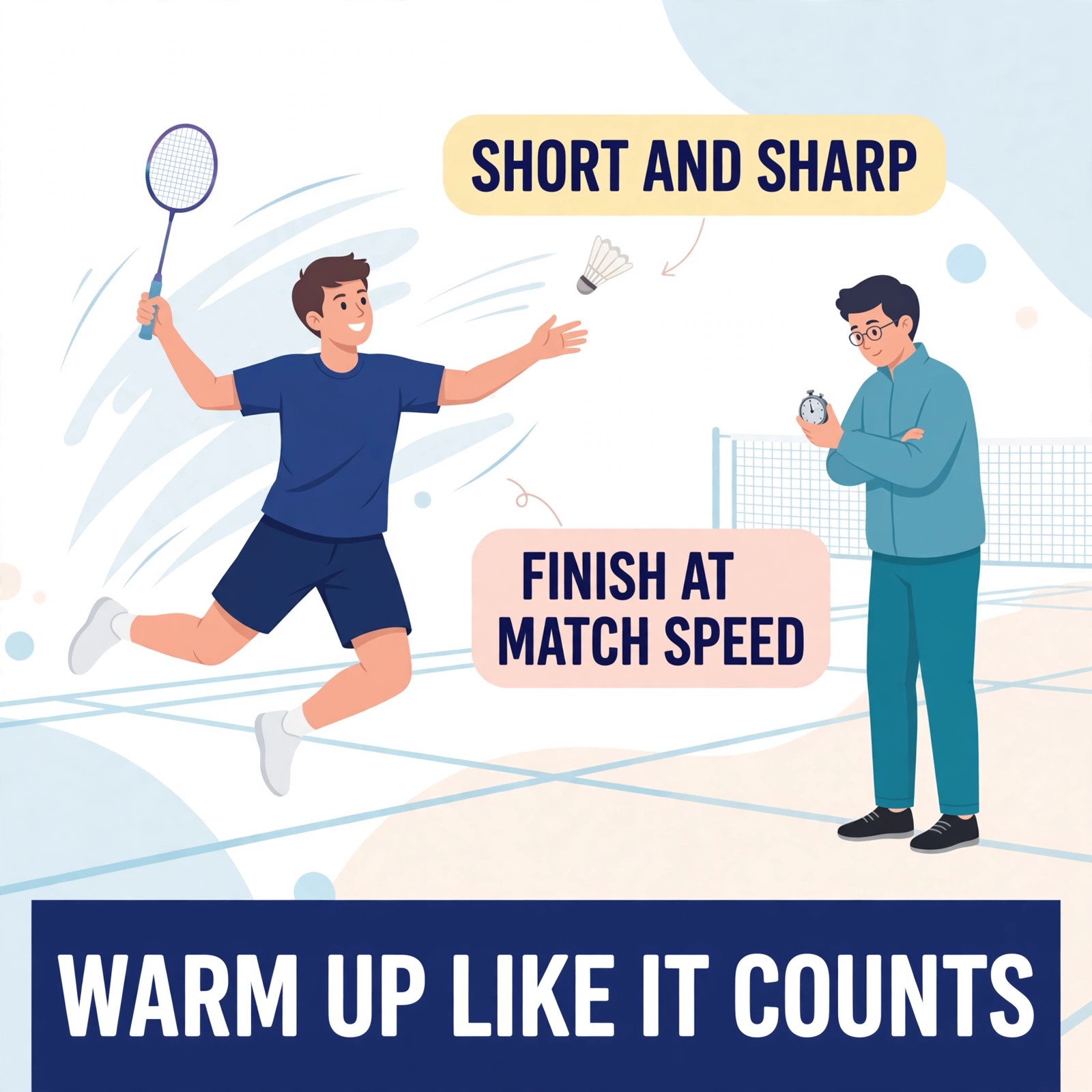
Practise the conditions, not just the shots. Play timed warm-ups that finish at match speed inside ten minutes, because tournament warm-ups are short. Play back to back matches on training days, because events ask for a second and third match on tired legs. Play against opponents you do not know well, in halls with different light when you can. The first tournament should contain no surprises except the opponents. Everything else, the scoring, the waiting, the warm-up, the nerves at 19 all, should feel like a place you have already been.
Match week is for sameness. No new racket, no new string tension, no new shoes, no new miracle drill found on the internet at midnight. Eat the food you normally eat, sleep at your normal times, and plan the travel so you arrive early without rushing. On arrival, walk the hall: find the courts, the warm-up space, the desk where the draw and results are posted, and the toilets, before you need any of them in a hurry. Calm is mostly logistics done early.

The Day Itself
Match Day: From Report-In to Review
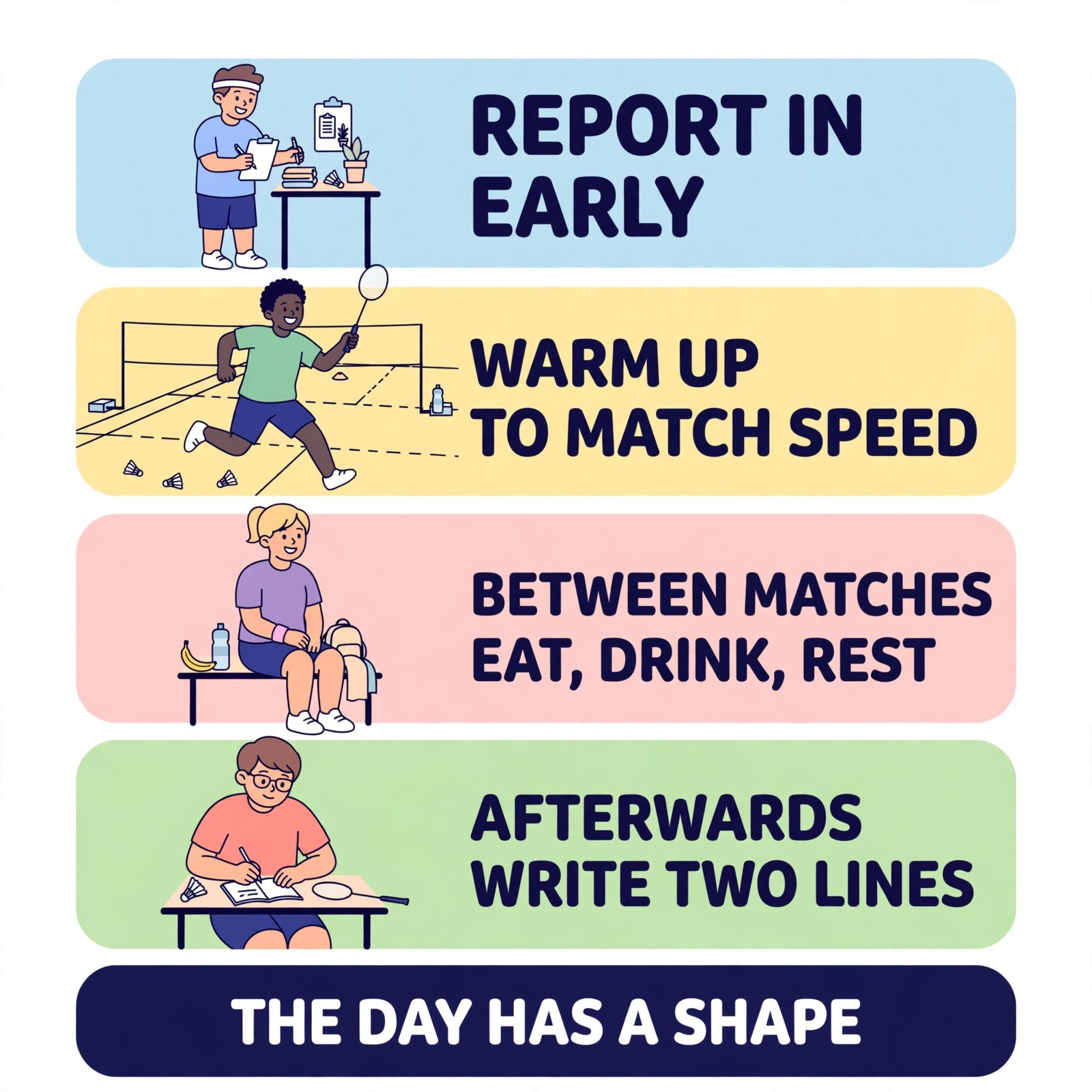
Arrive early and report in. Find your first match on the board and keep watching it, because matches run early as often as they run late. Warm up in layers: raise the pulse, move the feet through the corners, hit through your shots, and finish at genuine match speed for the last minutes. Then stay warm and near the courts. The number of matches lost in the corridor, by a player who was ready an hour ago and cold when called, is one of the quiet facts of tournament badminton.
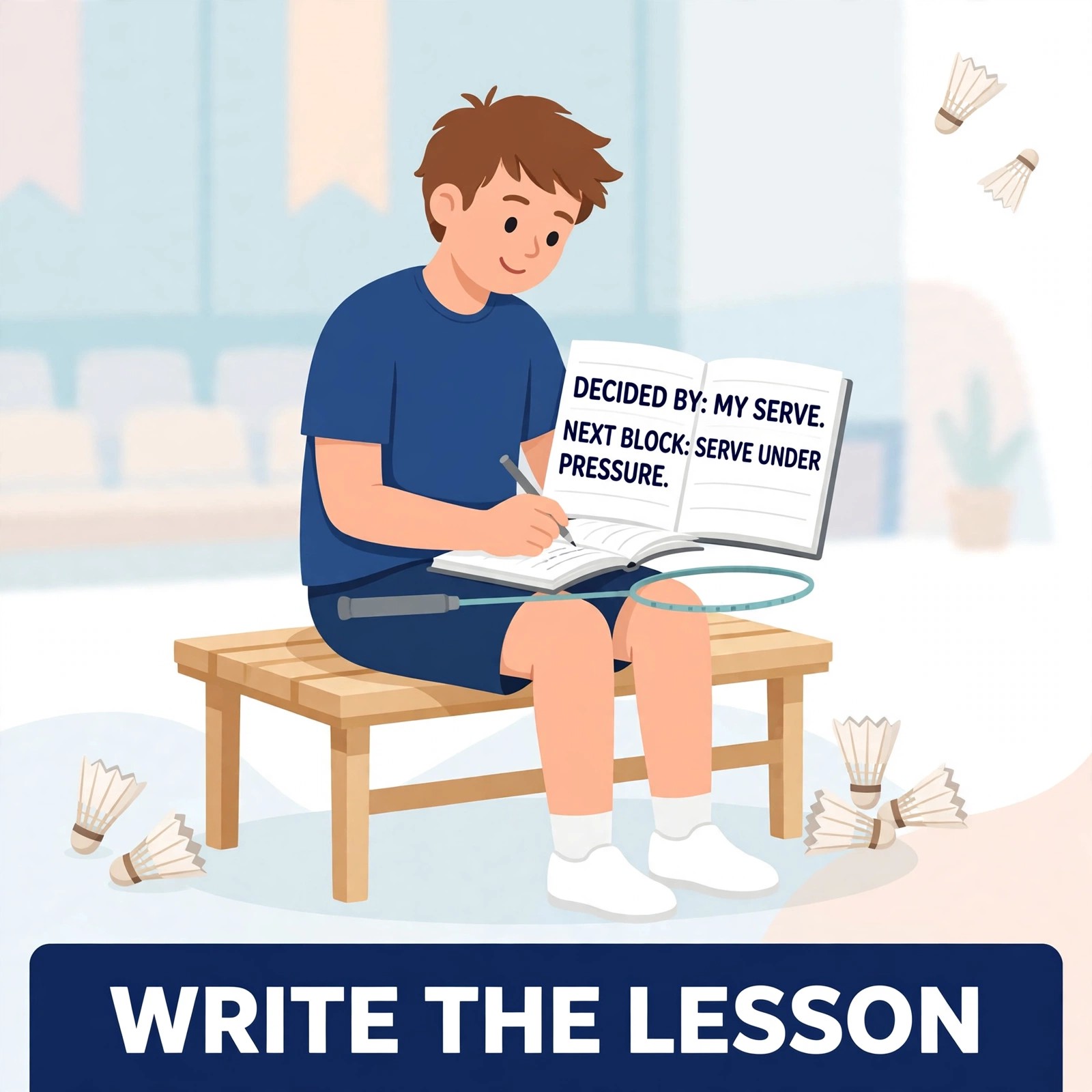
Between matches, be boring on purpose. Eat small and plain, drink steadily, sit down and rest your legs, keep a layer on so the muscles stay warm. Watch your next opponents if the draw gives you the chance, and take two notes only: their favourite shot, and the corner they defend late. After a loss, while it is still fresh, write two lines about what decided the match. Not feelings, facts: the serve that kept failing, the rally pattern that kept losing. Those two lines are the prize you take home.
Etiquette is part of competing. Shake hands before and after. Respect the officials, and let the umpire settle disputes; an argument won about a line call in the second game is often paid for in the third. Call lines honestly on your own side when there are no line judges, because your reputation travels between events faster than your results do. Encourage your doubles partner, thank the desk on the way out, and leave the hall the way you would want it left for you. Players are remembered for conduct long after scores are forgotten.
Myth vs Reality
Myths About Badminton Tournaments
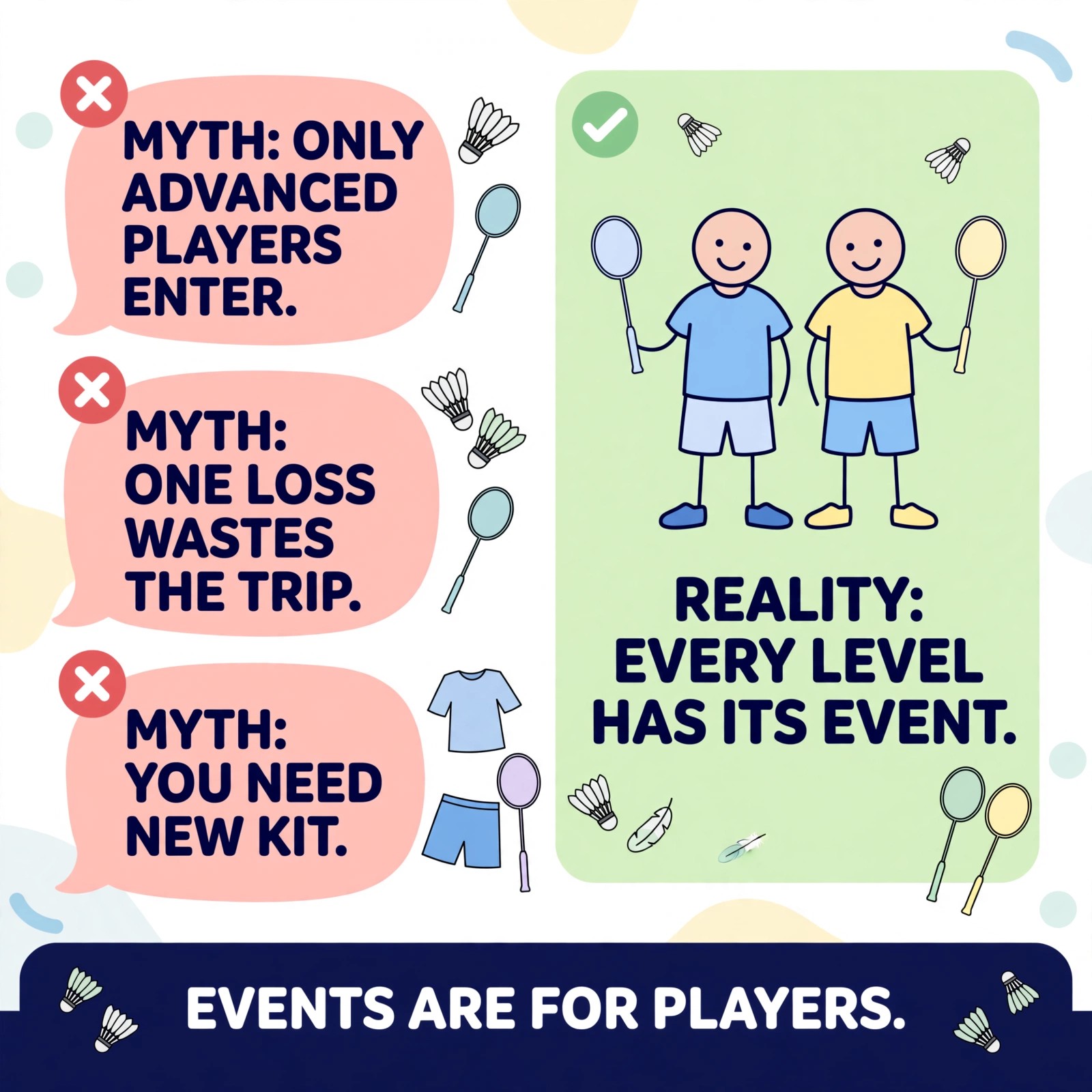
Myth: “Tournaments are only for advanced players.” Reality: there are events at every level, from school and social competitions upward, and the right event for you is the one a single rung above your current level. Waiting until you feel ready usually means waiting forever, because readiness is exactly what competing builds.
Myth: “An early loss means the trip was wasted.” Reality: an early loss, honestly reviewed, is the cheapest coaching you will ever get: it tells you exactly what to train next. Myth: “The best player always wins the event.” Reality: draws, halls and match-ups matter, and over a long day the most consistent player, not the most brilliant one, is usually still standing at the end.
Myth: “You need new or expensive kit to enter.” Reality: you need kit that works and that you trust, tested in training, not bought for the occasion. Myth: “Watching matches from the stands teaches nothing.” Reality: watching your next opponents, and watching how good players manage a day, is part of competing. The stands are a classroom with better seats.
Why Choose Us
Tournament Coaching, Rehearsed Before It Counts
At ST Badminton Academy KL, tournament preparation runs inside small group classes capped at max 4 students. Four students means match play can be rehearsed properly: games to 21 with intervals, tight scores started on purpose, warm-ups timed the way events time them. Your coach watches how you compete, not just how you hit: how you start, how you manage 17 all, and what you do in the ten minutes after a loss.
Mr Eric Chuar has over 15 years of coaching experience in Singapore and Malaysia, including preparing junior players for school pathway events. His order of work for a tournament is plain: read the prospectus, build the block, rehearse the day. He treats a first event as an exam you have already sat in practice, and he reviews every match with the player afterwards, two honest lines at a time.
Our academy is based in Setapak, Kuala Lumpur, convenient for players from Wangsa Maju, Melati Utama, Danau Kota and Gombak. If you have an event coming up, or you keep meaning to enter one and never do, bring the date to a session. We will build the block backwards from it and rehearse the day until it feels ordinary.
FAQs: Badminton Tournaments in Malaysia (KL)
These are the questions players and parents ask us most before tournaments in Malaysia. If your question is not here, message us, tell us the event and your level, and we will give you a straight answer about whether it fits and how to prepare.
How do I find and enter a badminton tournament if I live in Setapak or Gombak?
Start with school, club and social events near home, then step up a level at a time. Entries are usually made through the organiser’s page or form before a closing date, so enter early and keep the confirmation. In our Setapak classes we help players pick the right level.
What should I check before entering a badminton tournament in KL?
Read the prospectus first: the format, your category, the eligibility rules, how many events you may enter, and the closing date. Then check the basics: scoring to 21, shuttles provided or not, and the reporting time. Most disappointment at tournaments is a paperwork problem, not a badminton problem.
How many weeks of training should I plan before an event to reach a good level?
Plan a training block of several weeks aimed at the date: build first, then more match play and conditioned games, and keep the last few days lighter so you arrive fresh. In our classes the block ends with rehearsed warm-ups and tight score practice, so the day holds few surprises.
My first tournament ended after one match. What should I take from it and do differently next time?
Take the information, not just the result. Write down what decided the match while it is fresh: the serve that kept failing, the corner that came late, the score where you rushed. That list becomes your next training block. One match can teach a term’s worth of lessons.
What junior badminton tournaments in Malaysia should my child first enter?
Begin with school and friendly club events where your child will play several matches and finish the day wanting more. The school pathway events come when their basics and warm-up habits are steady. We prepare juniors for these step by step in our Setapak groups and will advise honestly.
Do you prepare players for tournaments in classes near Wangsa Maju?
Yes. Tournament preparation is part of regular group classes at our Setapak base, a short trip from Wangsa Maju. Players rehearse match scoring, timed warm-ups and tight scores in small groups of max 4 students, so the first real event feels like a situation they have already practised.
Does your academy help with school and district tournament preparation in Malaysia?
Yes, with an honest line: we prepare the player, and the school and organisers run the selection. Our juniors train the formats, scoring and match habits those events use, in small groups where their readiness is actually seen. We will tell you plainly when a player is ready to enter.
Where is ST Badminton Academy KL located for tournament training?
We are based in Setapak, Kuala Lumpur, close to Wangsa Maju, Melati Utama, Danau Kota and Gombak. Sessions run in small groups of max 4 students. Message us for the current class schedule and we will place you in a group training at your level for your next event.
What makes Mr Eric Chuar a suitable coach for tournament badminton?
Fifteen years of coaching in Singapore and Malaysia, including preparing juniors for school pathway events. His order of work is simple: format and rules first, then the warm-up, then the score. He rehearses tournament days inside small groups, so players compete the way they trained.
Badminton Tournaments in Action

What It Takes to Compete Calmly
A player meets our tournament standard when five habits hold: the prospectus is read and the format known before entering, the kit is packed and tested the night before, the warm-up routine is owned and timed, the score is played instead of the occasion, and every match is reviewed in two honest lines. When those five hold, an event is a test with a date, not a leap in the dark.
| Factor | Turning Up | Competing EVENT |
|---|---|---|
| Frequency | 1 or 2 times a week. Mostly for fun and sweat. | Before the event, the player has read the prospectus, knows the format and the category rules, and packed and tested the kit the night before. |
| Drills Focus | Basic static feeding. Minimal footwork pressure. | During the event, the player reports early, warms up to match speed, plays the score instead of the occasion, and refuels between matches. |
| Physical Conditioning | Rarely included. Just playing games on court. | Core, agility, and speed training included in every session to prevent injury and build stamina. |
| Tactical Awareness | "Just hit it over." No real game plan. | Video analysis, point construction, and learning to read the opponent's game. |
| Coach Ratio | Large groups (8-10 kids). Coach barely watches you. | Max 4 students. Mr Eric Chuar personally corrects every stroke and movement detail. |
| Goal Setting | Fun and exercise. | After a loss, the player writes down what decided the match while it is fresh, and the next training block starts from those two lines. |
| Long Term Result | Good recreational player. | A player who treats a tournament as a test with a date, and leaves with a clear list of what to train next. |
Badminton Tournament Training in Kuala Lumpur
This page covered badminton tournaments from the outside in: why competing is the honest test, the ladder of levels and the formats that decide how forgiving an event is, the entry homework and the rules that catch visitors out, the training block that peaks on the day, and match day itself, from report-in to the two lines you write afterwards. Bring your next event date to Setapak and let us prepare for it properly.




