The Best Badminton Back Braces For Support And Stability (Malaysia Guide)
Badminton back braces are support tools, like lumbar support belts or posture braces, worn around the lower or mid back. They provide gentle compression and support to the spine, which can help reduce strain, improve your awareness of posture, and make some players feel more stable and comfortable during and after badminton. They are worth considering for players with mild lower back discomfort, those with long training hours, or coaches who do a lot of feeding work. However, remember that badminton back braces are a useful support and stability tool, but they are not a magic cure and do not replace proper strength work, correct technique, or professional medical advice.
A badminton coach in Kuala Lumpur, Malaysia, explains how lumbar support belts can improve stability and support for badminton players.

How They Work
How Back Braces Work For Badminton Players
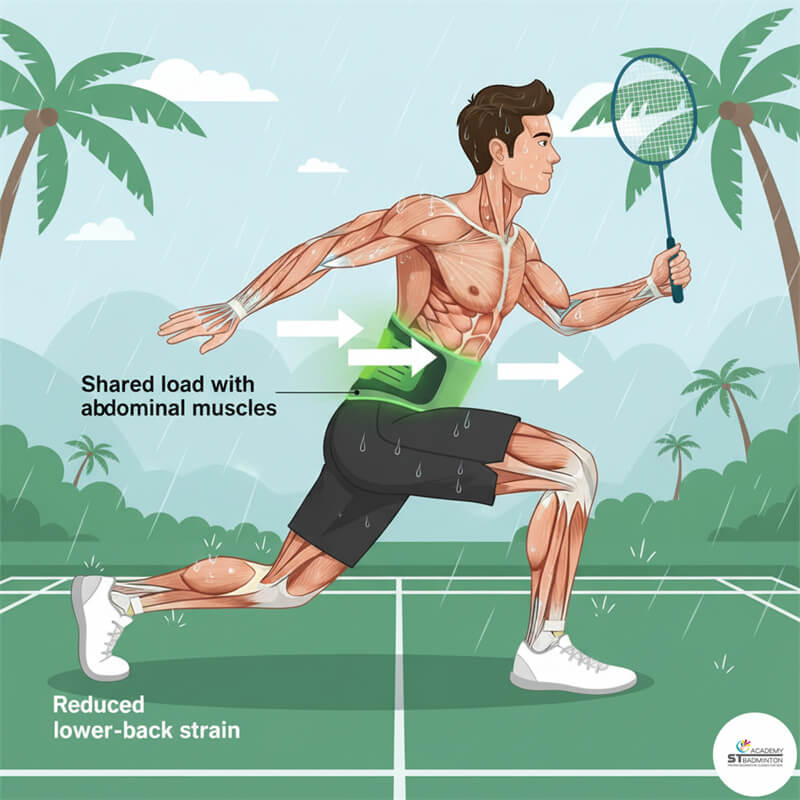
As a coach for players across Kuala Lumpur, I often explain that a back brace for badminton players works in a few simple ways. First is through support and compression; the belt wraps firmly around your lower back and abdomen, helping to reduce strain on tired muscles by sharing some of the load. It can also gently limit extreme twisting or bending, which reminds your body to stay in a safer range of motion.
Secondly, it improves your posture awareness, or ‘proprioception’. You can feel the brace against your skin, which acts as a constant reminder to keep your core engaged and avoid slouching. For some players in places like Air Panas, the warmth from the brace material can also make stiff muscles feel more comfortable. But remember, a back brace is a temporary support tool. Using it too much without doing strengthening exercises can make your core muscles lazy.

The Benefits
Benefits Of Badminton Back Braces For Support And Stability
A good lower back support for badminton can offer several supportive benefits, especially for players with heavy training loads. It provides extra support during long matches or coaching sessions, which is useful for those who stand, twist and bend for hours. Some players also report reduced feelings of pain and fatigue in their lower back, helping them finish a session more comfortably.
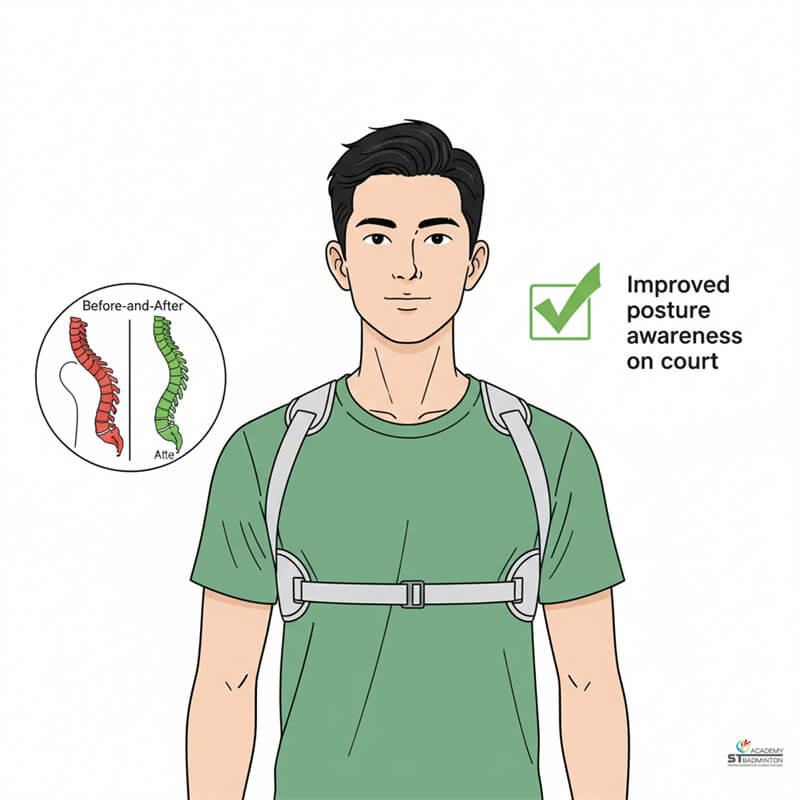
A posture brace for badminton players can also improve posture awareness both on and off the court, gently reminding you to avoid slouching. This can reduce repeated strain that starts from poor habits at work or school. Finally, for players returning from minor back issues under professional guidance, a brace can provide short term confidence while they rebuild their strength. These benefits are supportive, not guaranteed, and must be combined with proper training.
The Options
Types Of Badminton Back Braces Available
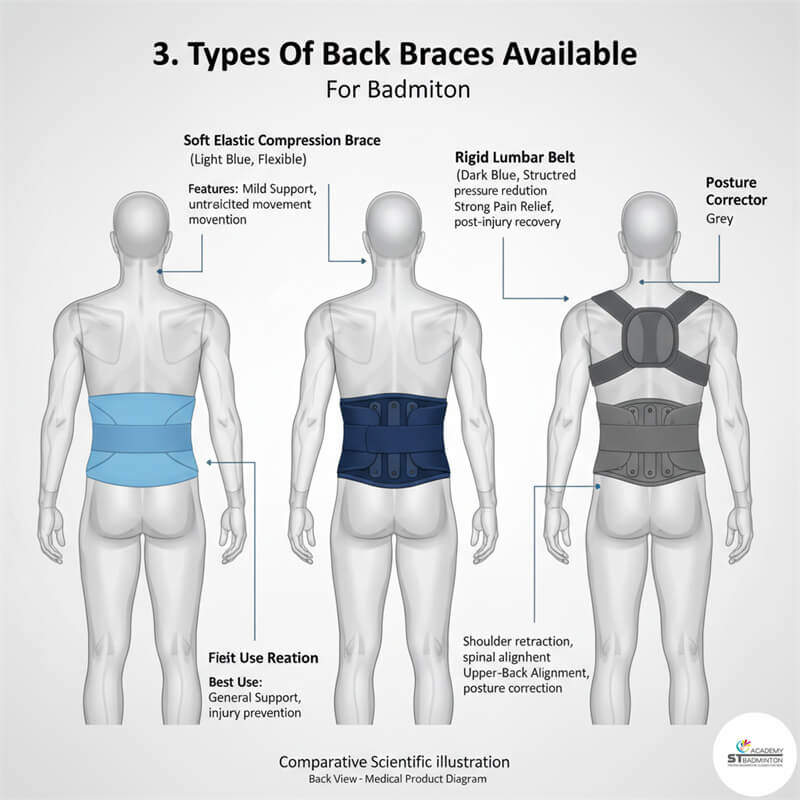
There are a few main types of badminton back braces you will see. The most common are soft elastic back supports. These provide light compression and are very flexible, making them good for general support and improving posture awareness without restricting movement. They suit players who feel mild fatigue after a long session.
Next are lumbar support belts, which often have plastic or metal ‘stays’ and extra adjustable straps. These offer stronger, more rigid support and are typically used for managing existing lower back pain or after a minor strain. Finally, there are posture corrector braces, which focus more on pulling the shoulders back and aligning the upper back.
Some combine this with a lower lumbar strap. Players with serious pain or diagnosed conditions should always follow medical advice when choosing a brace type.
The Buying Guide
How To Choose The Best Badminton Back Brace
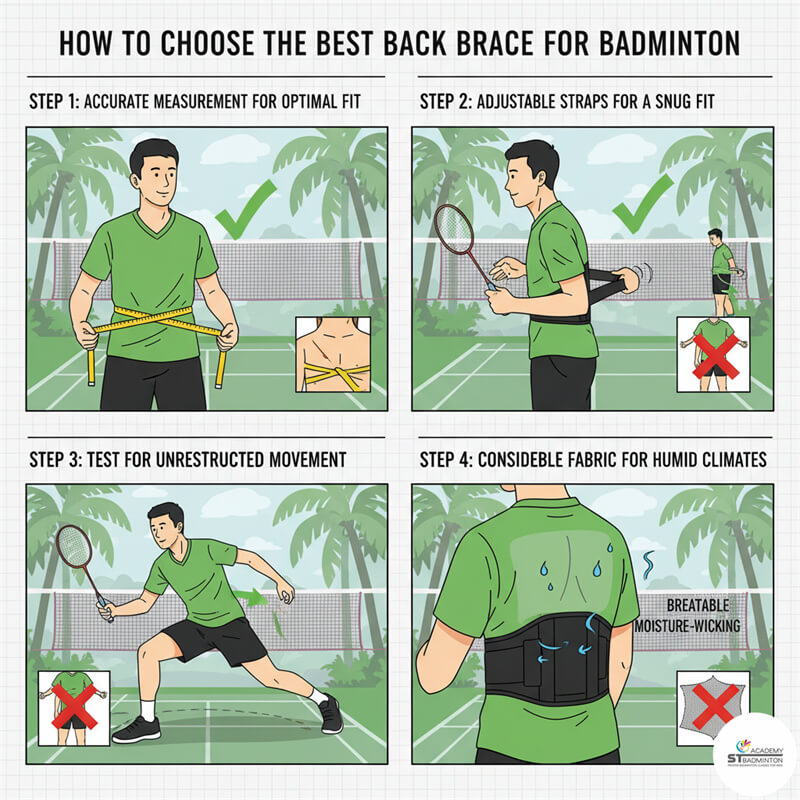
When searching for the best badminton back brace in Malaysia, focus on a few key things. Size and fit are most important; always measure your waist and check the brand’s guide.
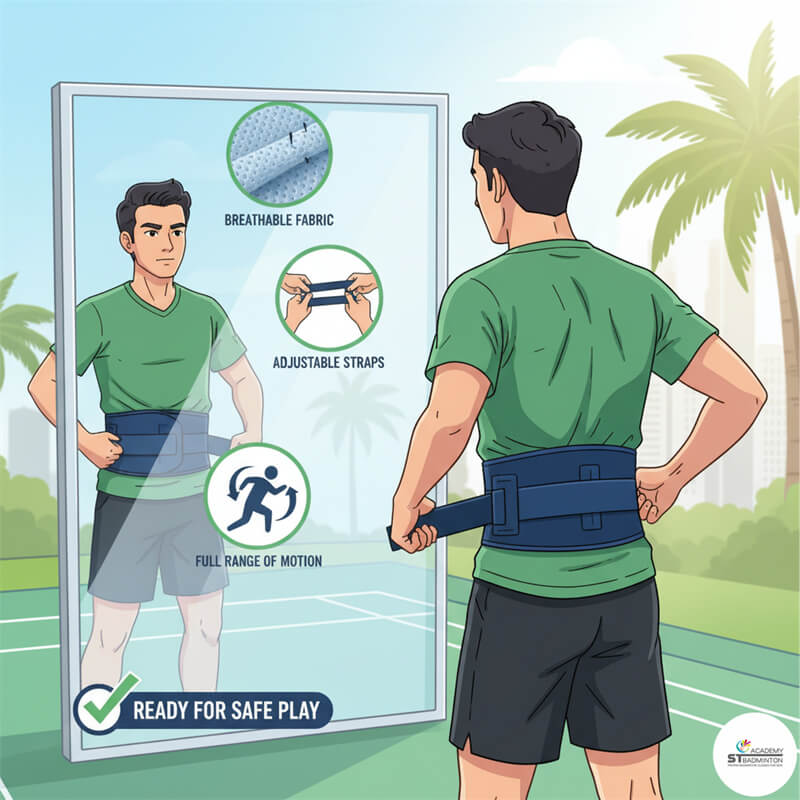
The brace should be snug but not so tight that it restricts breathing. Look for adjustable straps that let you change the compression level. The material should be lightweight and breathable, especially for the hot and humid courts in Kuala Lumpur.
Crucially, a good back brace for badminton players must allow a normal range of motion for lunges and swings. If it blocks your strokes, it’s not suitable. Lighter supports are for mild fatigue, while stronger, reinforced belts are for more significant support, usually with medical guidance.
Finally, make sure it’s easy to put on, take off, and wash, as you’ll need to keep it clean.
Who It’s For
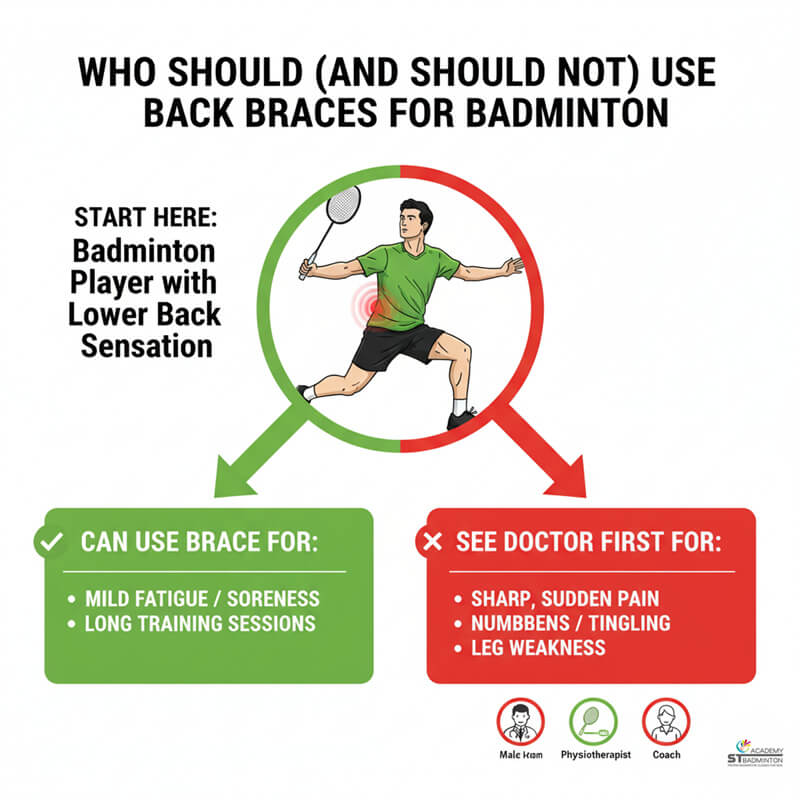
Who Should (And Should Not) Use Back Braces
A badminton back brace might benefit players with mild, recurrent lower back ache or those with heavy coaching loads. Players with long drives from places like Selayang or Kepong to Kuala Lumpur training centres might also find it useful for support after sitting. It can also help those who sit for long hours at work or study before jumping straight into a game.
However, a brace is not a diagnosis or a cure. Players with sharp, sudden back pain, pain that travels down the leg, or any numbness or weakness should see a doctor or physiotherapist immediately.
A badminton back support belt is meant to complement a proper recovery and strengthening plan, not replace it. If you have a serious injury or diagnosed spinal condition, only use a brace if recommended by a medical professional.
Safe Usage
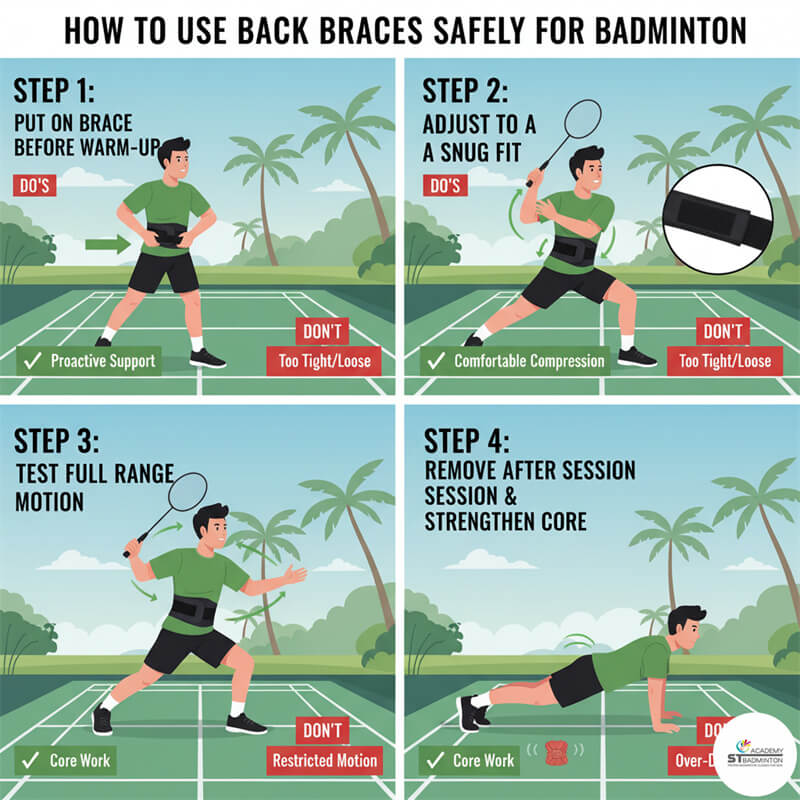
How To Use Back Braces Safely In Badminton
To use a back brace safely, put it on before your warm up and adjust it so it is snug but comfortable. Test your movement with a few lunges and swings. After your session, you can either keep it on for a short while or remove it to let your core muscles work normally. The most important rule is to avoid over dependence. Do not wear a tight back brace all day, every day.
Always combine brace use with core strengthening exercises, hip mobility work, and good posture habits off the court. This ensures your muscles stay strong and do the primary work of supporting your spine.
You must stop using the brace and get professional help if your pain suddenly gets worse, if you experience new symptoms like numbness, or if the brace itself causes skin irritation or breathing difficulty.
Important Considerations
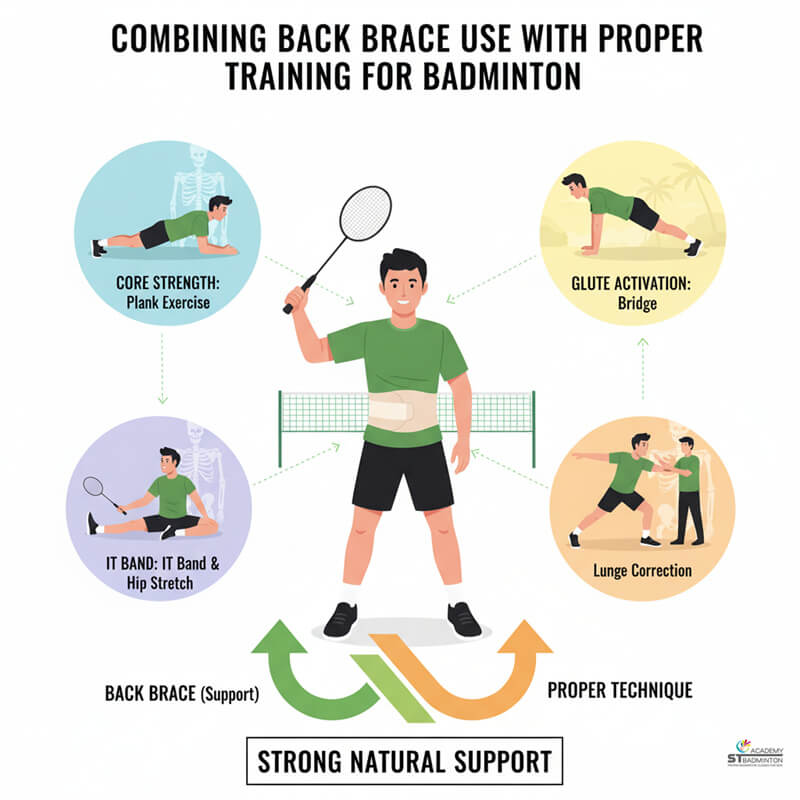
Combining Back Brace Use With Proper Training
Beyond simply wearing a brace, a smart approach integrates it with other key areas.
(1) Core strengthening is essential – exercises like planks and glute bridges build your body’s natural support system, reducing reliance on the brace.
(2) Proper technique is non-negotiable – a coach can help correct movement patterns in your lunges or smashes that may be straining your back.
(3) Good mobility in your hips and spine is crucial for fluid movement. Regular stretching can prevent stiffness that leads to back strain. Finally,
(4) Listening to your body is vital. Players from Kepong to Selayang must learn to distinguish between normal muscle fatigue and pain that signals a problem.
FAQs About Badminton Back Braces For Support and Stability
Common questions from parents and players in Kuala Lumpur about using a lumbar support belt for badminton.
Do back braces really help badminton players with support and stability?
Yes, for some players, badminton back braces can be a useful tool. They provide external support and gentle compression around your lower back, which can increase your awareness of your posture and help you feel more stable during lunges and rotations. This can be especially helpful for players in Kuala Lumpur who face long training hours or have mild back fatigue. However, they don’t make your muscles stronger. The best back brace for badminton players is one that supports them without replacing the need for proper core conditioning.
Can kids or school players in Kuala Lumpur use a back brace safely?
This is a question parents from Selayang, Kepong and Air Panas often ask. Generally, a back brace for a child should only be used after consulting a doctor or a physiotherapist. While a simple, soft support might be okay for short periods under supervision, it’s very important to first find out the real cause of any back discomfort. For young players, the focus must always be on building strong core muscles, good posture, and proper technique, not on relying on external supports.
How tight should a badminton back brace feel during play?
A good back brace for badminton should feel snug and supportive, but not restrictive. You should be able to breathe deeply and comfortably from your abdomen without the brace digging in or causing any numbness. It should provide a feeling of gentle compression, like a firm hug around your waist. Before starting a match, always do a few test lunges and twists to make sure your movement is not blocked. If you can’t move properly, it’s either too tight or not the right type of brace for you.
How long can I wear a lumbar support belt in one day?
It’s best to use a lumbar support belt for badminton only when you need it, such as during training, matches, or long coaching sessions. Avoid wearing it all day long. The risk is that if you wear it for too many hours, your own core muscles might become lazy and weak from the lack of use. Think of it as a temporary tool for activity, not a permanent part of your daily clothing. After your game, it’s a good idea to take it off to let your muscles function normally.
Can a back brace prevent injury, or only reduce pain?
A back brace is not a magic shield against injury. Its main job is to provide support and stability, which can help manage discomfort from minor strains and reduce feelings of fatigue. Some players find that this support gives them the confidence to move better, which might indirectly help reduce strain. But the best way to prevent injuries is through a proper warm up, good technique, and consistent strength and conditioning work. When looking for the best badminton back brace Malaysia has to offer, remember it’s a support tool, not a prevention tool.
How can players balance back brace use with strength training?
This is a great question. For players driving from areas like Selayang or Kepong to training centres in Kuala Lumpur, a brace can be useful during the session. However, it must be combined with a dedicated core strengthening routine. Simple exercises like planks, bird dog, and glute bridges should be done 2 to 3 times a week without the brace. This ensures your own muscles, not the support belt, are providing the primary stability for your spine. The brace helps on court, but the strength work helps you all day.
Badminton Back Braces in Malaysia
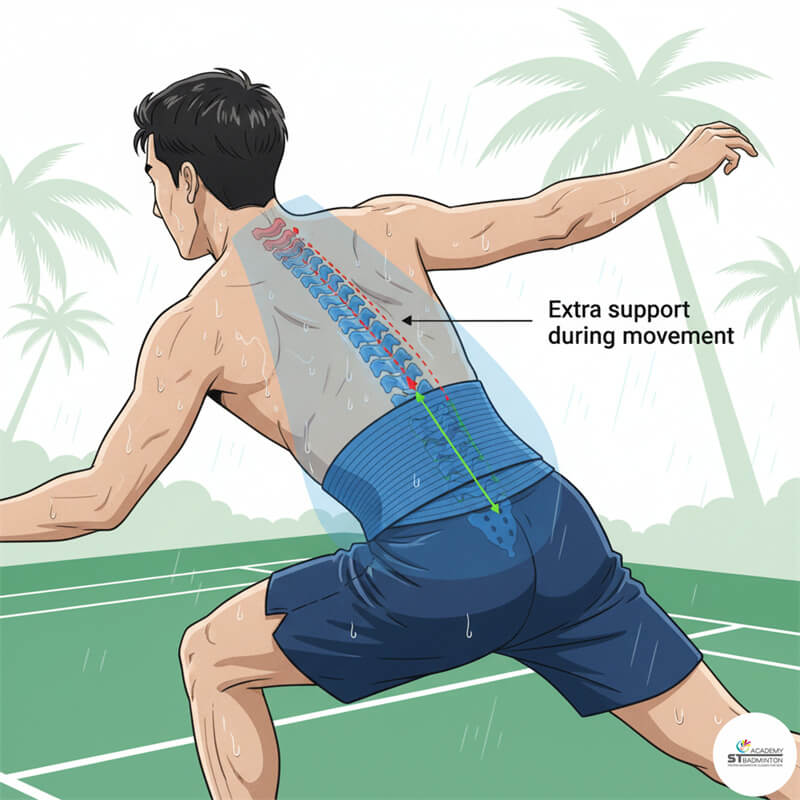
Benefits of Using A Badminton Back Brace
Using a suitable lower back support for badminton can provide a significant advantage in comfort, confidence, and posture awareness, helping players manage the physical demands of the sport more effectively.
| Symptom / Situation | Symptoms that Need Professional Medical Advice | Situations Where a Back Brace Can Help SUPPORT |
|---|---|---|
| Type of Pain | Sharp, sudden, or severe pain. Pain that shoots down your leg (sciatica). | Mild, dull ache or muscle fatigue after playing badminton. General feeling of weakness. |
| Other Symptoms | Numbness, tingling, or weakness in the legs or feet. Loss of bladder or bowel control. | Feeling of instability in the lower back. A need for improved posture awareness. |
| Cause of Pain | Pain from a specific fall, accident, or serious injury. Pain that does not improve with rest. | Discomfort from long hours of standing, feeding shuttles, or playing long matches. |
| Duration | Pain that is constant, getting worse over time, or lasts for more than a few weeks. | Temporary discomfort that usually feels better with rest and gentle movement. |
| Player Age | Any persistent back pain in a child or teenager should be checked by a doctor. | Adults with a history of minor back discomfort looking for extra support during play. |
| Primary Goal | To get an accurate diagnosis and a professional treatment plan for a medical condition. | To provide temporary support and confidence while following a proper exercise plan. |
| Final Verdict | Do not use a brace to mask a serious problem. See a doctor or physio first. | A brace is a useful tool for managing mild symptoms, but it is not a cure. |
Is a Back Brace Right For You? Final Thoughts from a Coach
This guide explains how badminton back braces can be a useful tool for support and stability. But remember, they are not a substitute for medical advice or proper physical conditioning. If you have any serious, sharp, or persistent back pain, your first step should always be to consult a doctor or a physiotherapist in Kuala Lumpur or your local area. They can give you a proper diagnosis and treatment plan. This guide is for educational purposes to help you make an informed decision as a player or parent.