Master Badminton Net Play With Expert Techniques (Net Play Guide)
Every rally has a front door, and the player who owns the net holds the key. A tight net shot forces your opponent to lift, and their lift hands your side the attack. That is why net play decides so many matches before any smash is hit. This guide is about net play in real rallies, the match version of the skill: taking the shuttle early above the tape, spinning shots that tumble, cross-court replies, knowing when to kill and when to hold, and disguising it all, the way we coach it at ST Badminton Academy in Setapak, Kuala Lumpur.
Front Court Check #1
Why the Front Court Decides the Rally?
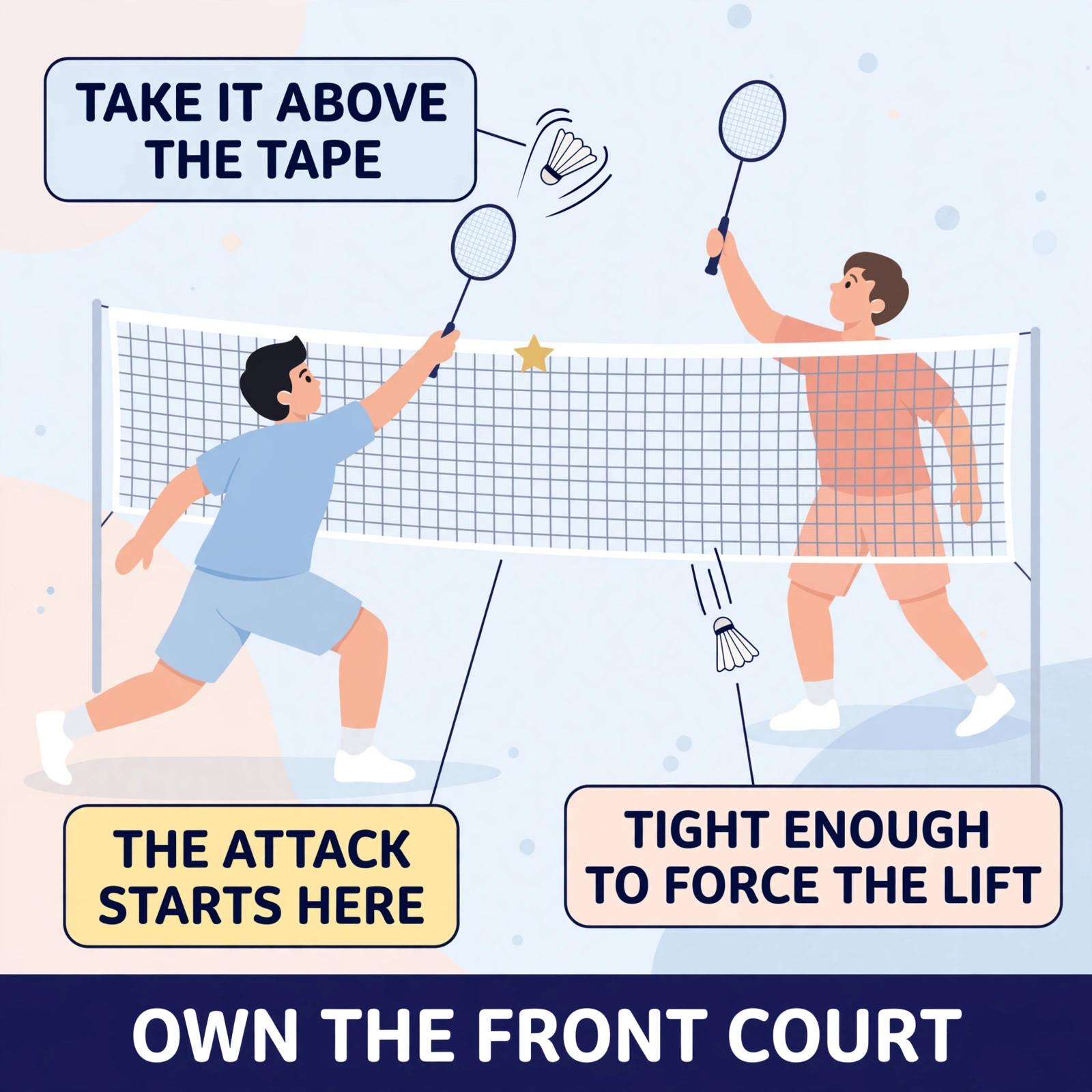
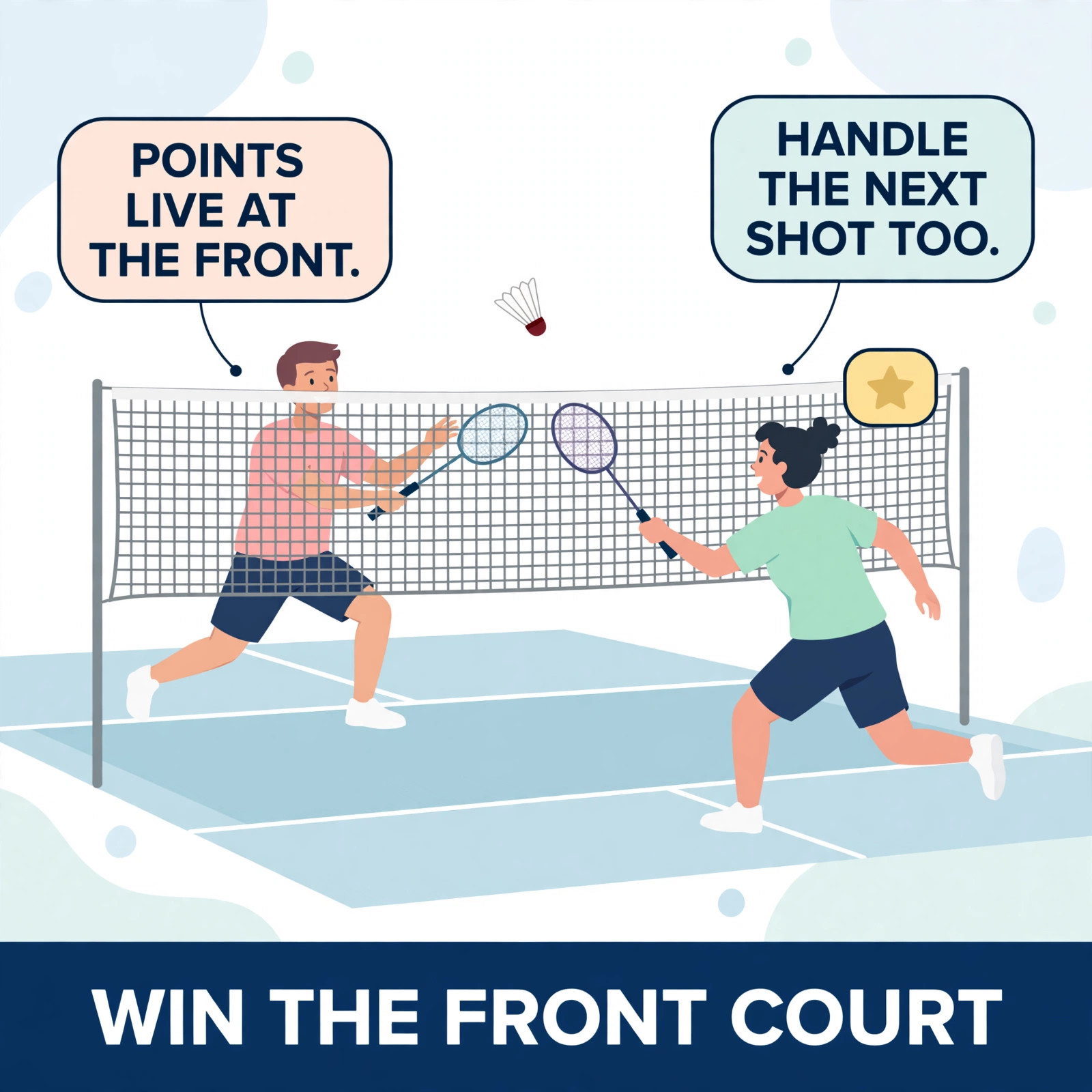
Here is the simple maths of the front court. A net shot played tight, close to the tape, leaves your opponent two honest choices: lift the shuttle and give your side the attack, or play their own net reply and risk the tape. Both choices favour you. That is why strong players fight so hard to play the first good net shot of every exchange. The net is not where rallies end. It is where attacks are born, one tight shot at a time.
Good net players also think one shot further. Your spinning net shot is not really the weapon. The weapon is what it draws: the lift you are already moving back to attack, or the loose reply you are already stepping in to kill. Play net shots with the reply in mind and the front court becomes a trap you set again and again. Play them one at a time, admiring each before you move, and the trap never closes, because the reply finds you standing still.
Front Court Check #2
Take It Early: Contact Above the Tape
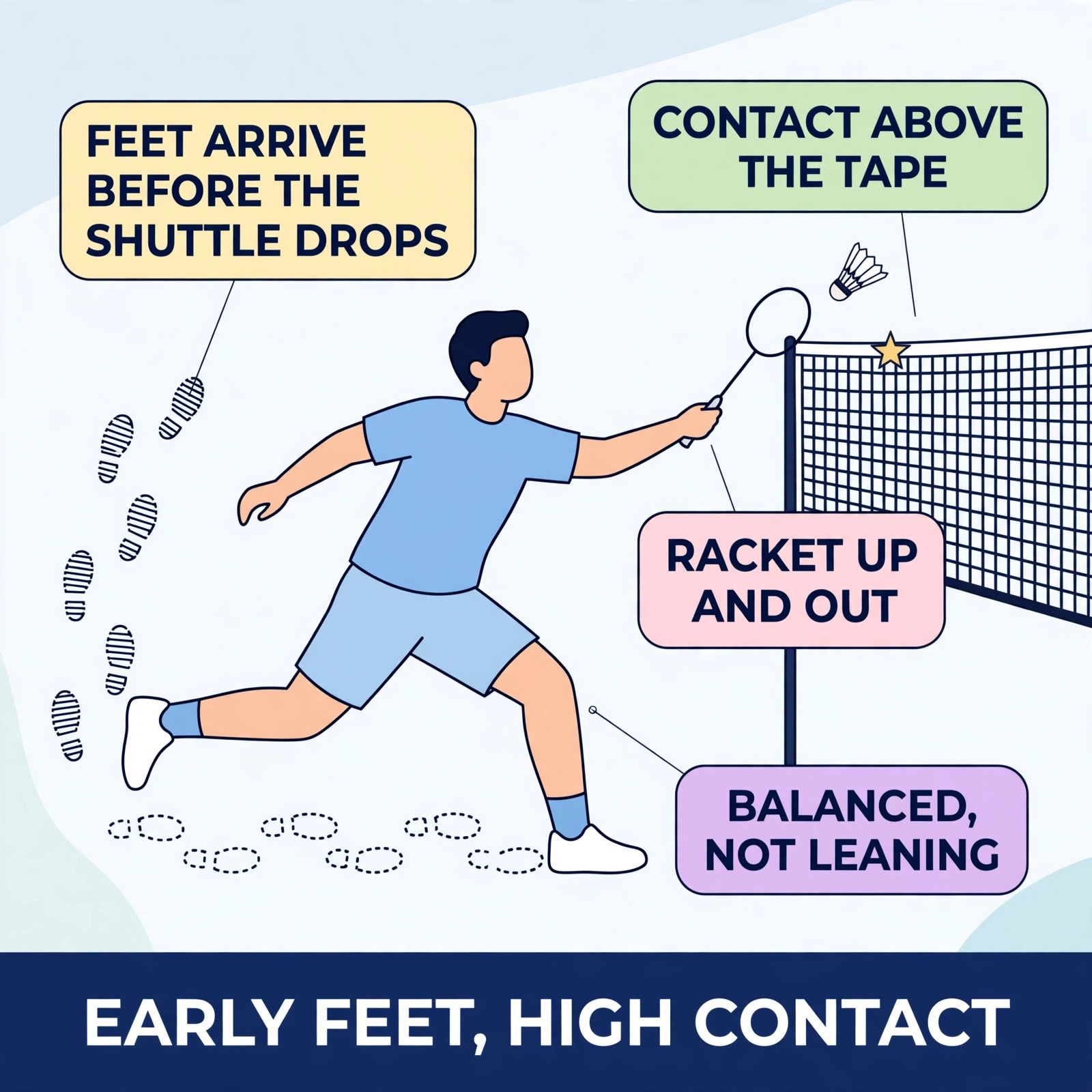
Everything at the net starts with arriving early. The movement is a split step as your opponent strikes, a push off towards the front corner, and a long lunge, heel first, on your racket leg. Done on time, you arrive balanced while the shuttle is still above the tape on your side of the net. Arrive a fraction late and the shuttle has dropped, your options shrink, and the softest hands in the hall cannot give them back. Net touch is famous. Net feet do the real work.
The racket completes the early arrival. Carry it up and out in front of you as you move in, so the head is already where the shuttle will be. Reach with your arm, not by leaning your whole body over your front knee: a leaning player can play one shot, while a balanced player with the racket out can spin, cross, or hold at the last moment. Keep the contact on your own side of the net, as high and as close to the tape as the rally allows.
Why does a few centimetres matter so much? Because height at contact is choice. Taken above the tape, the shuttle can be spun tight, pushed cross court, held and flicked, or left for your partner in doubles. Taken below the tape, the same shuttle can only be lifted or rolled hopefully at the cord. Early contact also hurries your opponent: they must commit while your options are still open. Late contact reverses the pressure, and the net becomes their weapon instead of yours.
Front Court Check #3
The Spinning Net Shot: Tight Over the Tape
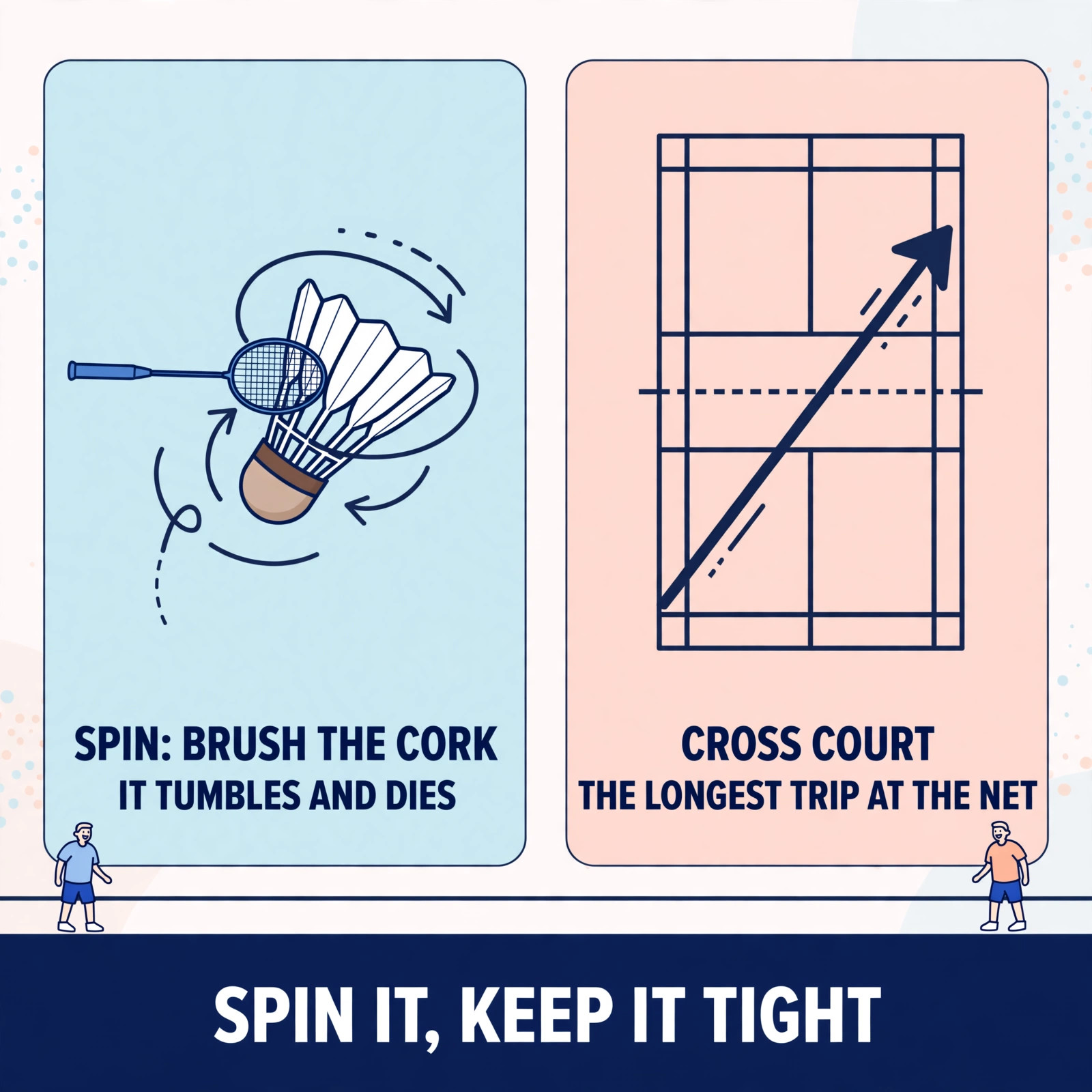
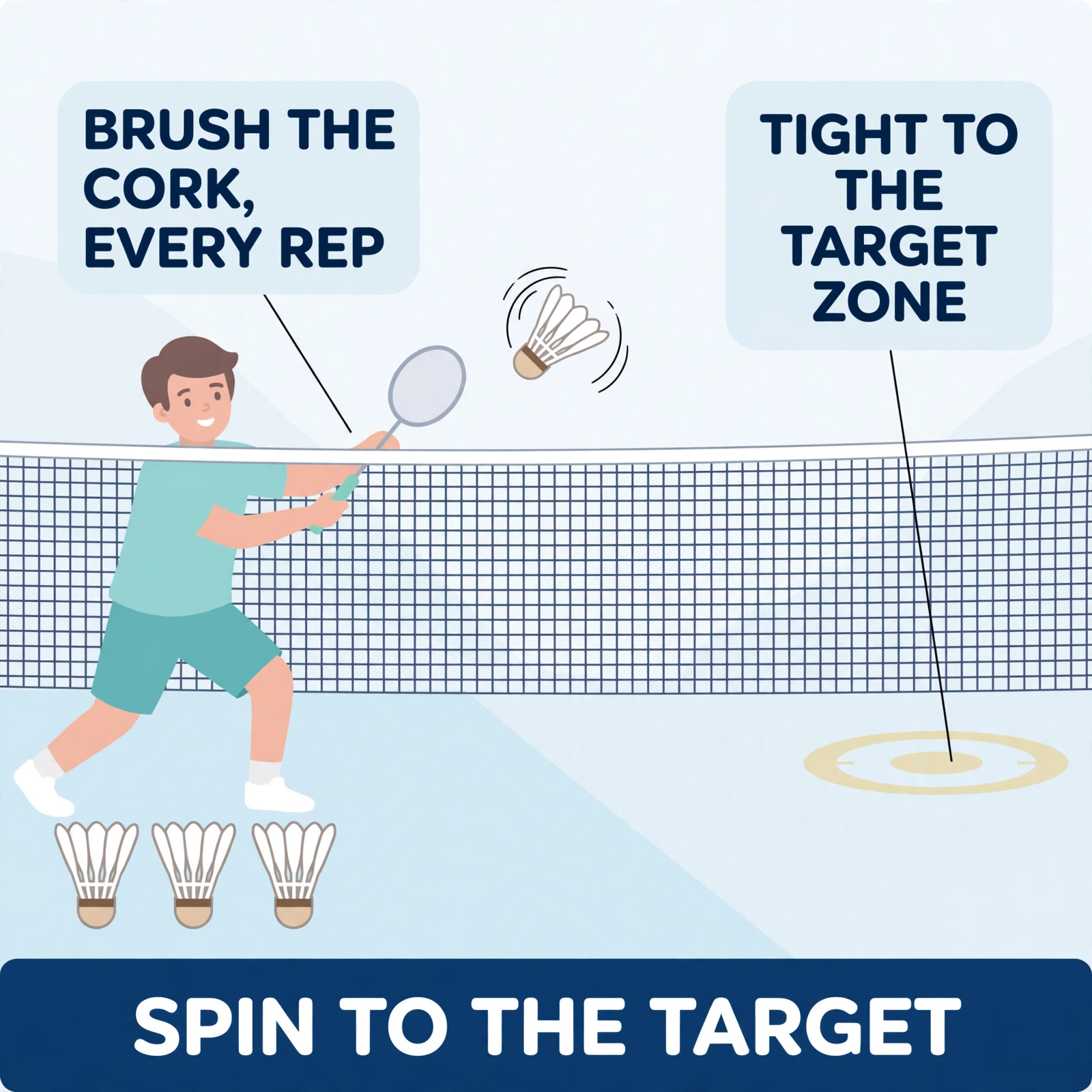
The spinning net shot is the front court’s signature. Brush the racket across the base of the cork as you play it, and the shuttle tumbles end over end as it crosses. A tumbling shuttle is awkward to reply: it will not sit still on the opponent’s strings until it settles, and by then it has dropped below the tape. Played tight, it climbs the tape and falls almost straight down on their side. Spin does not need power. It needs a relaxed hand and contact while the shuttle is still high.
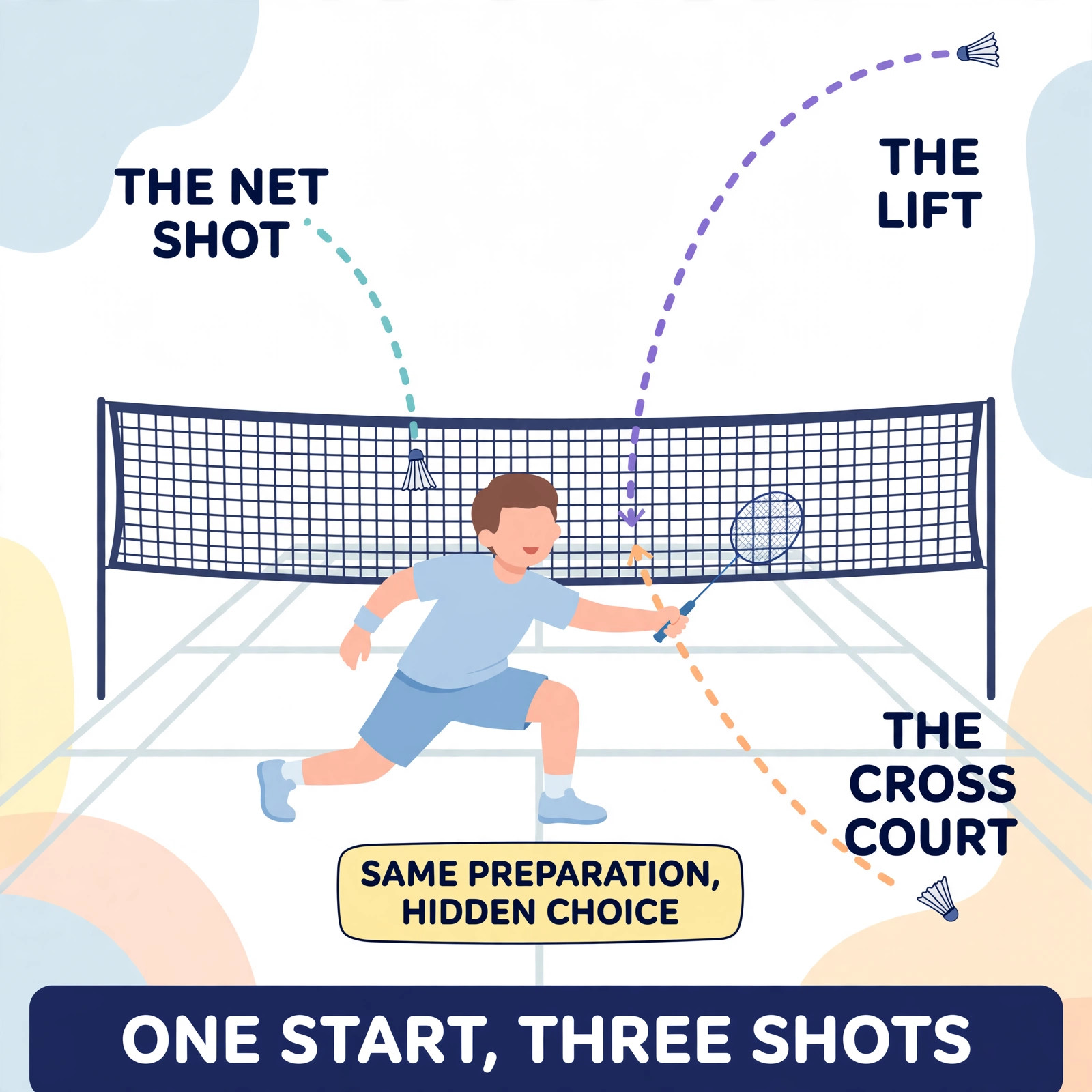
The cross-court net shot is the spinning shot’s partner. Played from close to the net, it sends the shuttle diagonally to the far front corner, the longest trip a front court player can be asked to make. Use it when your opponent has started camping on your straight reply, leaning in to cover it. The cross-court shot needs a finer touch and a calmer body than the straight one, because the shuttle travels further over a lower margin. Learn the straight shot first. Earn the cross with control, then use it to keep them honest.
And respect the simple shot. Not every net reply needs spin. A plain net shot, played early, soft and tight to the tape, wins more front court exchanges than any trick. Spin is a variation that changes the shuttle’s behaviour and your opponent’s timing. If every shot spins, the variation stops varying. The pattern strong players use is plain first, tight always, spin when the moment asks for it: a rushed opponent, a shuttle sitting a little higher, a reply that needs to die quickly.
Front Court Check #4
Kill It or Hold It: the Net Decision
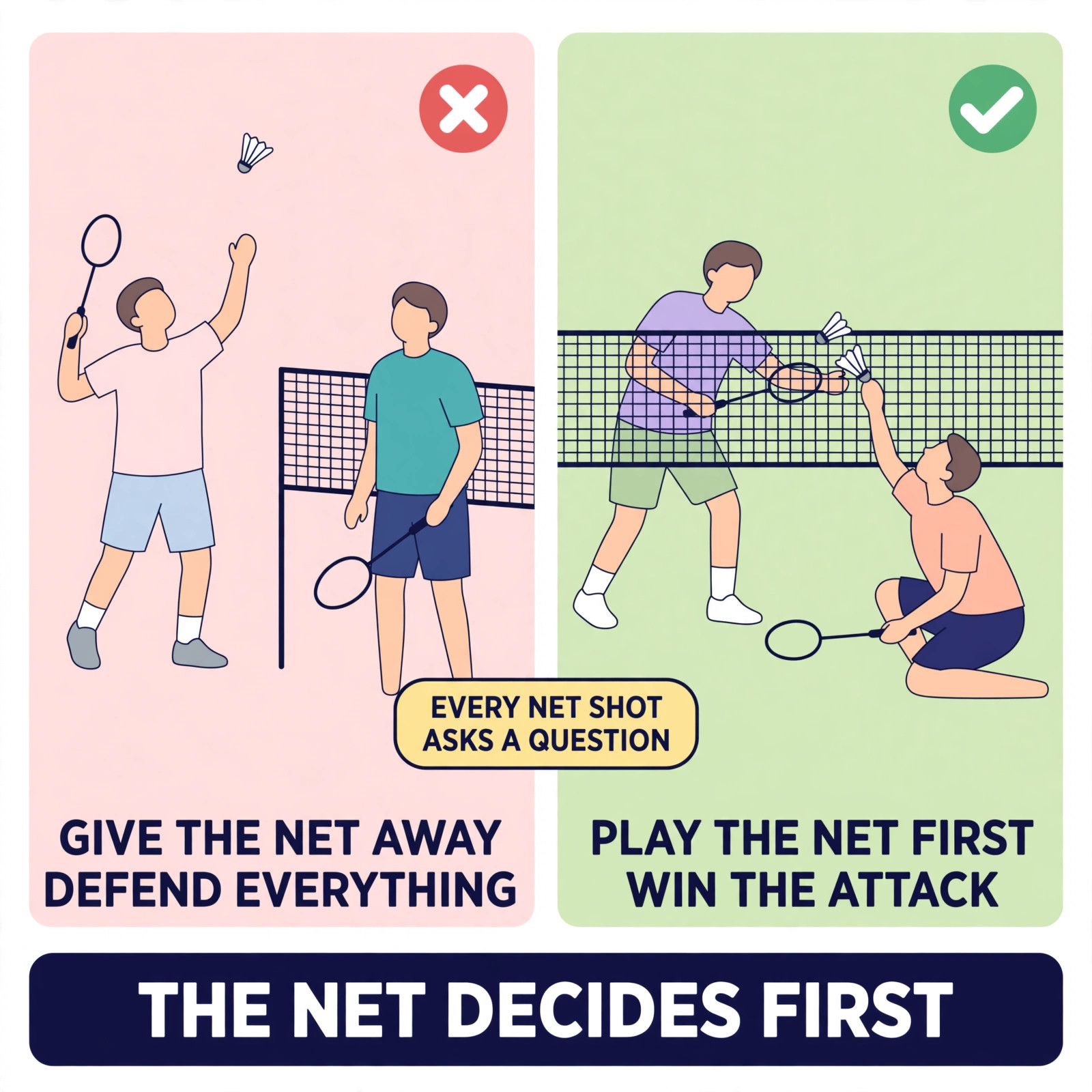
Sooner or later the pressure pays out: a reply floats, above tape height, in front of you. That is the net kill. Step in, meet it high, and angle it down away from their rackets, short and sharp. The kill is not a stroke you practise in isolation. It is the reward for the tight shots that went before it. Players who play good net shots earn kills. Players who wait at the net hoping for kills mostly watch shuttles pass beside them.
The harder skill is knowing when not to kill. If their net shot is tight and still tumbling against the tape, rushing in to attack it donates the point: you will net it or pop it up. Hold instead. Wait half a breath for the shuttle to settle, then play your own tight reply and let them face the same problem. Patience at the net is not passivity. It is how experienced players refuse free points while they wait for the loose shuttle that is actually theirs to finish.
In doubles, this decision game runs at full speed, and it belongs to the front player. Stay light on the balls of your feet, racket up, ready to step across and intercept any loose reply that crosses your zone. Your job is not only your own net shots: it is every shuttle that floats in the front third. Trust your partner to own the back, hold your ground at the front, and the pair becomes very hard to pass. Front players who keep drifting back leave the trapdoor open.
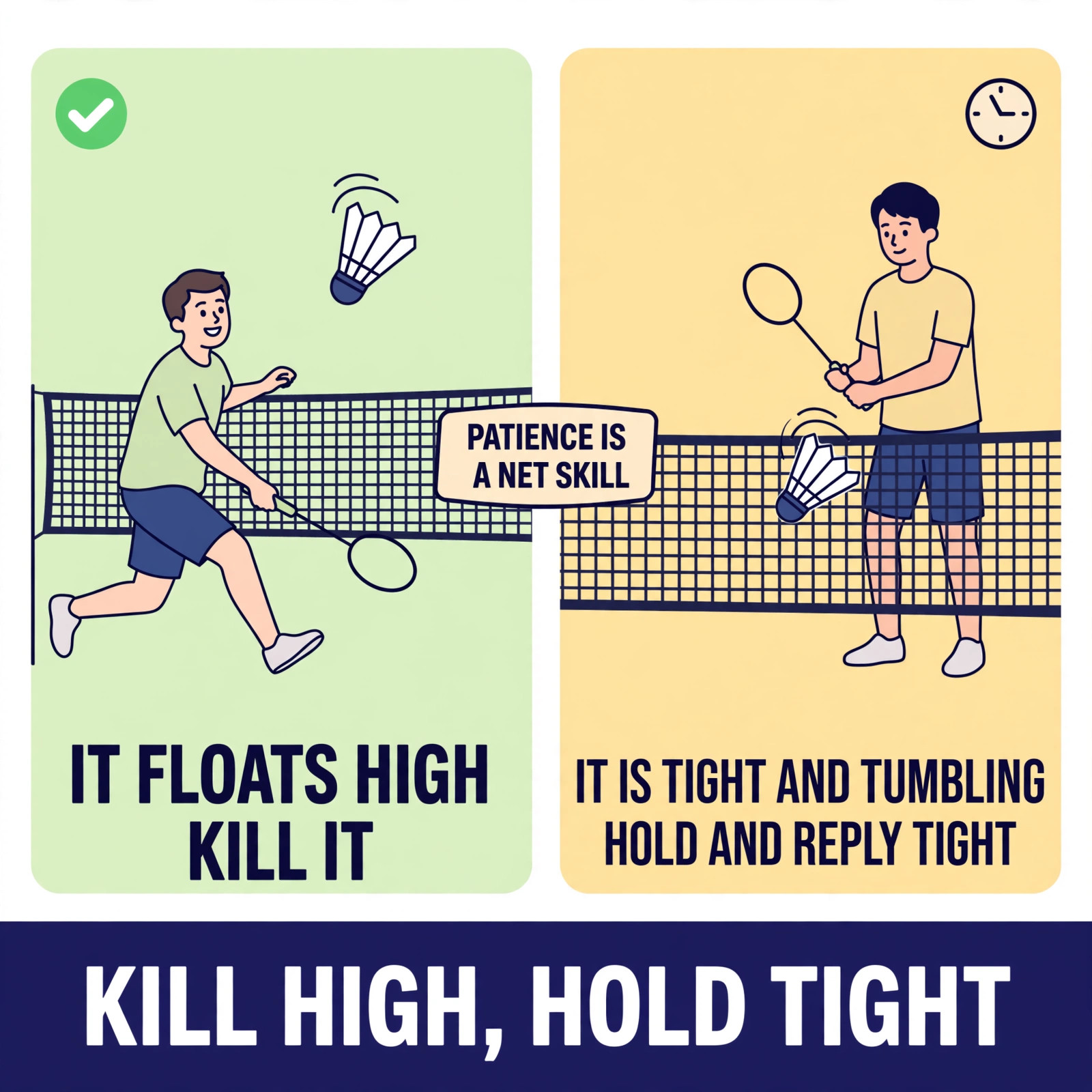
The Front Court
Deception at the Net: One Start, Many Shots
Deception at the net is built on sameness. Your straight net shot, your cross-court shot and your lift should all begin from the same body shape, the same lunge and the same racket position. Your opponent reads your preparation, not your intentions. If the preparation never changes, they cannot move until the shuttle does, and by then your choice is already made. Hold the shuttle a moment longer when you can: the later you show the shot, the less time they have to answer it.
After the shot, the rally continues, and your recovery decides whether your good net shot was worth playing. Push back one step from the lunge into your ready position, racket up, balanced between the net and mid court. Players who camp on the service line after a net shot get flicked past or driven at the body. Players who rush all the way back surrender the net they just won. One step, ready, watching their racket: that is the whole recovery, and it is part of every net shot we coach.
Finally, adjust to the person across the net. Against a strong net player, do not feed their favourite battle: push and drive past them more, make them play from mid court, and take the net battle only when the shuttle is kind. Against a weaker net player, invite the exchange: play your tight shots, let them make the errors, and collect the lifts. Match net play is choosing where the rally is fought, not only how well you fight there.
Myth vs Reality
Myths About Net Play
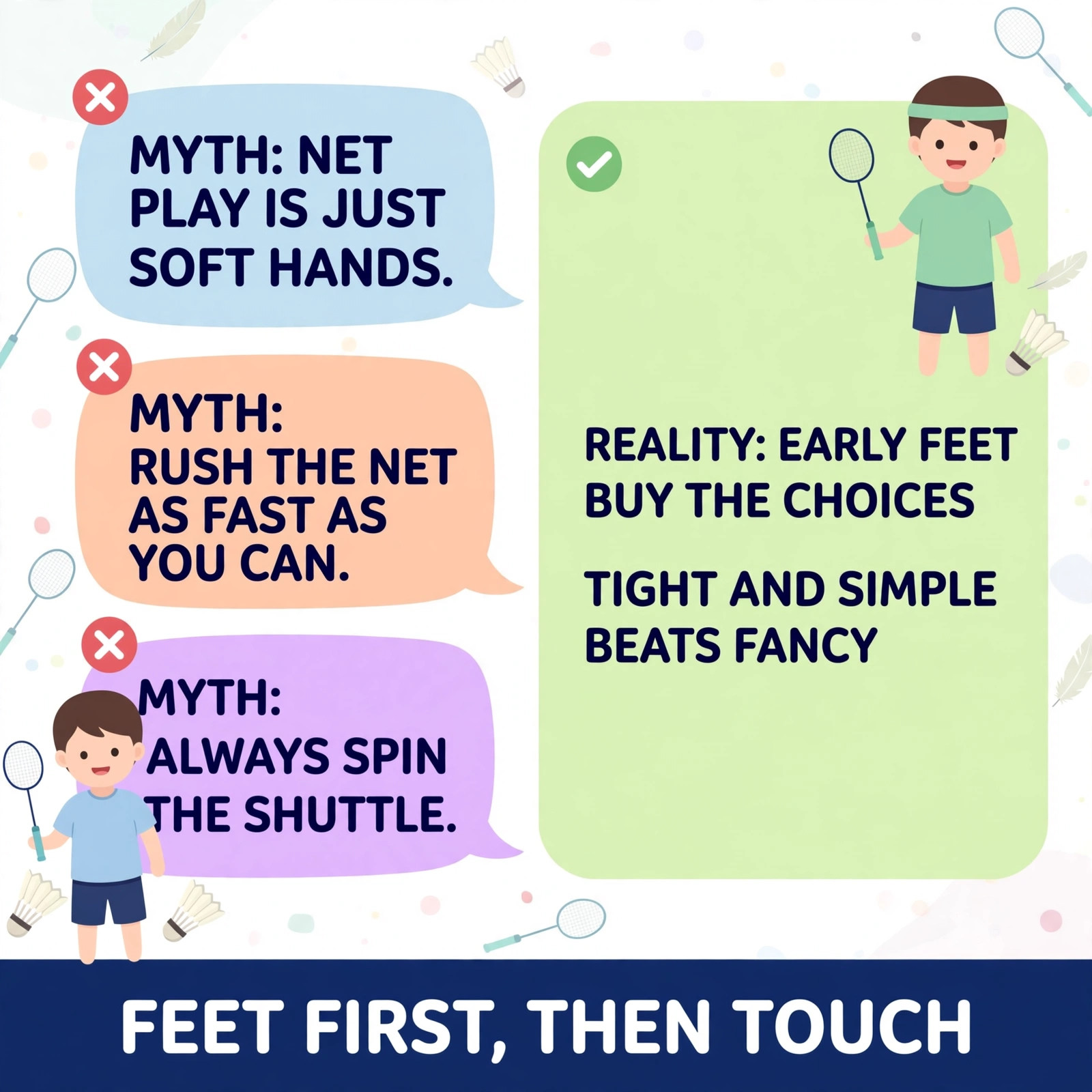
Myth: “Net play is just soft hands.” Reality: soft hands on late feet still lose. The shuttle must be reached while it is high, and reaching it is footwork: split step, push off, lunge, balance. Touch is the finish on top of early feet. Players who train only their hands arrive late with beautiful technique and watch the shuttle drop on their side of the tape.
Myth: “Rush the net as fast as you can.” Reality: arriving early is timing, not sprinting. A player who charges in out of control plays loose shots and cannot recover. Myth: “Always spin the shuttle at the net.” Reality: a simple tight shot played early beats a fancy spinning shot that sits up waiting. Spin is the variation. Tight and early is the rule it varies from.
Myth: “Every loose shuttle at the net should be killed.” Reality: a kill needs height and balance. Rush a kill at a shuttle that is barely above the tape and you will bury it in the net or lift it into a counter. Strong net players kill the shuttles that are truly theirs, hold on the tight ones, and let patience collect the points that greed gives away.
Why Choose Us
Net Play, Coached in Live Rallies
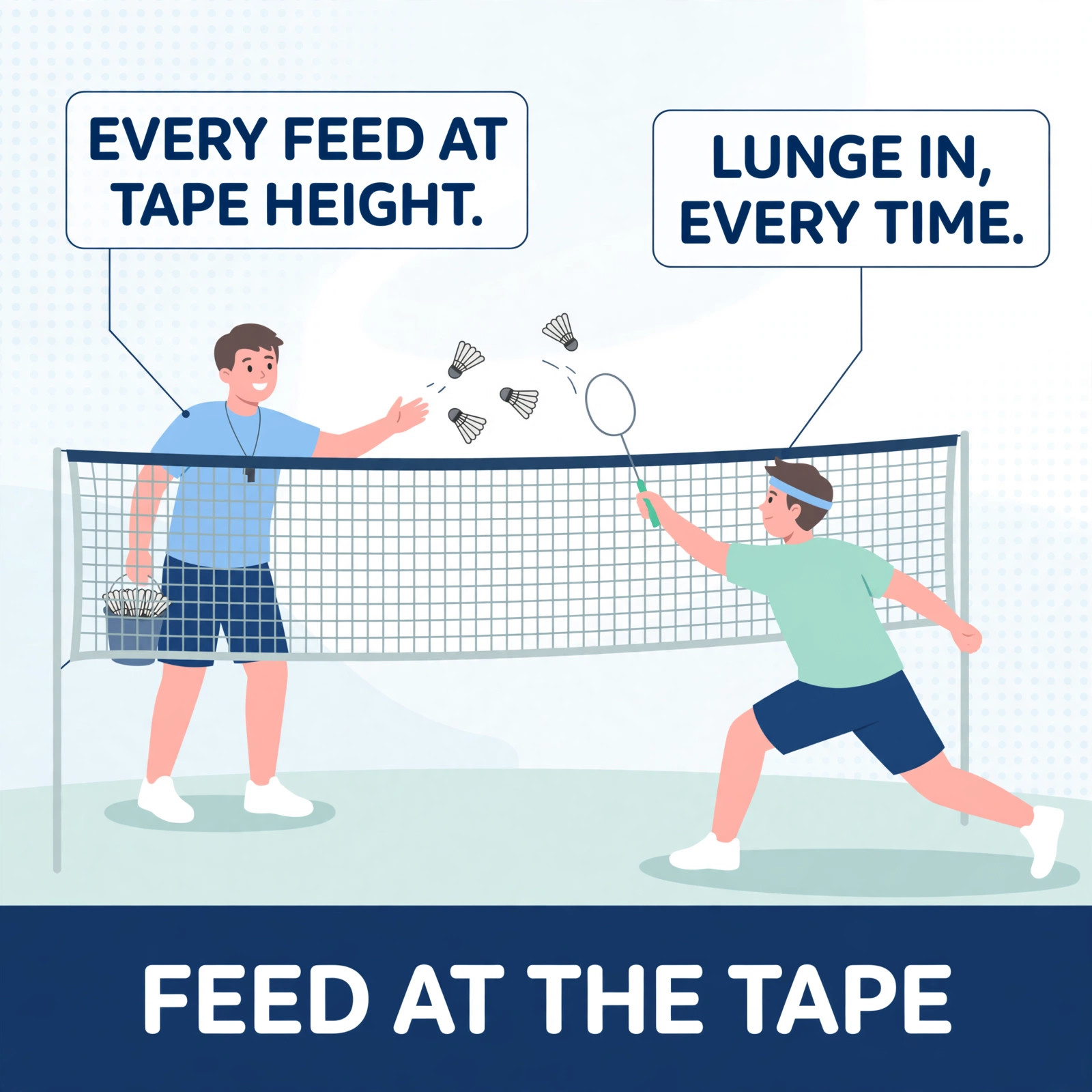
At ST Badminton Academy KL, net play is coached in live rally conditions inside small group classes capped at max 4 students. The coach feeds spinning and cross-court replies at your pace, conditioned games pay points only for front court control, and every net pattern is practised against a real opponent’s reply, because a net shot is only good if the next shot is handled too.
Mr Eric Chuar has over 15 years of coaching experience in Singapore and Malaysia. His net rule is the one this page is built on: feet first, take it early, then be soft. Within the first few feeds he can tell whether your net problem is arrival, contact height or touch, and he fixes them in that order, because touch coached onto late feet never survives a real match.
Our academy is based in Setapak, Kuala Lumpur, convenient for players from Wangsa Maju, Melati Utama, Danau Kota and Gombak. If your net shots keep catching the tape, your kills keep arriving a moment late, or the front court feels like your opponent’s property, bring your net game to a session. A few honest feeds at the tape will show us exactly where to start.
FAQs: Badminton Net Play in Malaysia (KL)
These are the questions players ask us most about net play and front court skills in Malaysia. If your question is not here, message us, tell us which net situation keeps beating you, and we will give you a straight answer about what to check first.
How can I improve my net play if I live in Setapak or Gombak?
Start with contact height. In our Setapak classes, the coach feeds net shots at a pace you can reach early, checks where you meet the shuttle, then adds spin and cross court work. Small groups of max 4 students mean every feed is at your level, and your net habits grow fast.
What matters most in badminton net play in KL?
Early contact. A net shot played above the tape, while the shuttle is still on your side and high, can spin, cross or hold. The same shot played late becomes a lift. Feet that arrive on time matter more than fancy hands, because height at contact is what buys you choices.
How often should I practise net shots to improve at a steady level?
Short net sets inside your normal sessions work best: ten focused minutes of net shots, three or four times a week. Chase contact height and tightness, not volume. Fifty early, tight net shots teach your hands more than two hundred late ones played from a stretched position.
Can a school player learn match net play while still in school?
Yes. Net play suits school players, because the winning habits are simple: move in early, racket up, take the shuttle high. Coaches feed at a controlled height while the lunge and contact become automatic, then raise the pace in small steps, so the habits hold when school matches speed up.
Which net reply should I test first in a match I enter?
Test the simple tight net shot first, played early and close to the tape. It forces a lift or a weak reply in almost every front court exchange. Once it stays tight under pressure, add the cross court net shot, then use spin as the variation that keeps opponents guessing.
Do you coach net play in classes near Wangsa Maju?
Yes. ST Badminton Academy KL is based in Setapak, a short drive from Wangsa Maju, Melati Utama and Danau Kota. Groups are capped at max 4 students, so the coach can feed spinning and cross court replies at your pace and correct your contact height while you play.
Does your academy teach net kills and spinning net shots in Malaysia?
Yes. Net kills and spinning net shots are coached at ST Badminton Academy in Malaysia as match skills: when to kill, when to hold, and how to make the shuttle tumble. Players practise against live replies, because a net shot is only good if the next shot is handled too.
Where is ST Badminton Academy KL located for net play training?
ST Badminton Academy KL is based in Setapak, Kuala Lumpur, where net work happens inside small group classes of max 4 students. The academy is convenient for players from Gombak, Air Panas, Sentul, Jalan Genting Klang and Ampang. Message us before your first session and we will confirm the venue details.
What makes Mr Eric Chuar a suitable coach for front court badminton?
Mr Eric Chuar has over 15 years of coaching experience in Singapore and Malaysia. His net rule is simple: feet first, take it early, then be soft. He checks your contact height within the first few feeds, then builds spin and deception on top of a net shot that already works.
Badminton Net Play in Action

What It Takes to Own the Net
A player meets our front court standard when five habits hold: the feet arrive before the shuttle drops, contact is made above the tape, net shots finish tight to the cord, kills are only taken with height and balance, and the recovery step happens after every single net shot. Our front court standards below are the checkpoints our coaches use.
| Factor | Rushing In | Playing the Net NET |
|---|---|---|
| Frequency | 1 or 2 times a week. Mostly for fun and sweat. | Feet arrive first and the shuttle is taken above the tape, while it can still be controlled. |
| Drills Focus | Basic static feeding. Minimal footwork pressure. | Every net shot is played to set up the next one: tight spin, cross court, or the patient hold. |
| Physical Conditioning | Rarely included. Just playing games on court. | Core, agility, and speed training included in every session to prevent injury and build stamina. |
| Tactical Awareness | "Just hit it over." No real game plan. | Video analysis, point construction, and learning to read the opponent's game. |
| Coach Ratio | Large groups (8-10 kids). Coach barely watches you. | Max 4 students. Mr Eric Chuar personally corrects every stroke and movement detail. |
| Goal Setting | Fun and exercise. | Simple weekly targets: contact above the tape, tight over the cord, recover ready for the lift. |
| Long Term Result | Good recreational player. | A player who wins the front court, because net play was built on early feet and soft hands. |
Badminton Net Play in Kuala Lumpur
This page covered badminton net play in matches: why the front court decides rallies, arriving early for contact above the tape, spinning and cross-court net shots, the kill or hold decision, deception and recovery. ST Badminton Academy KL coaches net play in small group classes of max 4 students in Setapak. If you are in Wangsa Maju, Gombak, Cheras or nearby, contact us today.





