How To Develop A Winning Badminton Net Game: Strategies And Tactics (Net Tactics Guide)
Technique decides what you can do at the net; tactics decide when you should do it. Plenty of players own a neat net shot and still lose the front court, because they arrive at the wrong moments, play the right shot at the wrong time, or keep feeding the one reply their opponent is waiting for. This guide is about those decisions: when to come in, how to force the lift you want, how to cut off replies, and how to read what the opponent is about to do before they do it.
Tactics Check #1
When to Come In: Arriving at the Net on Your Terms
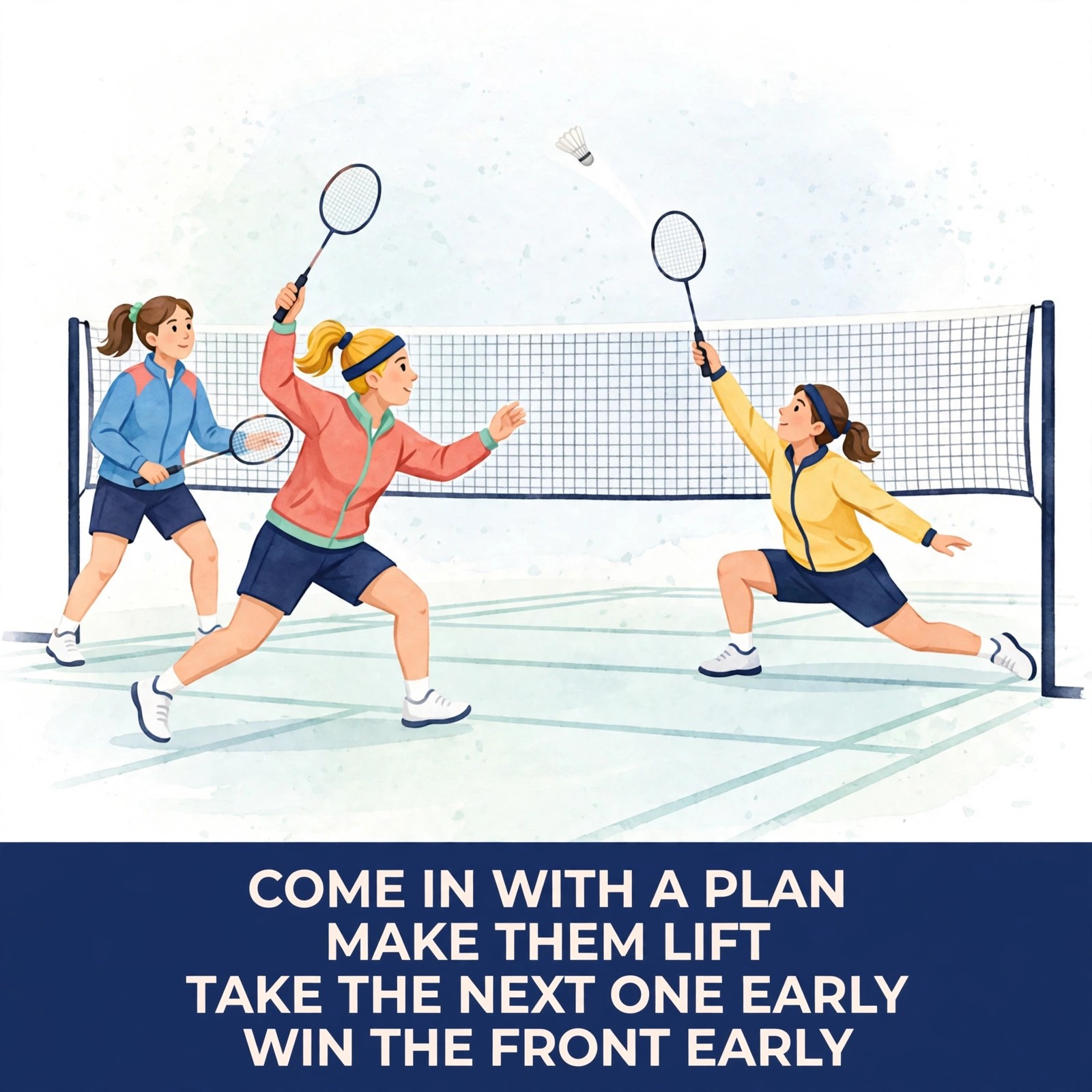
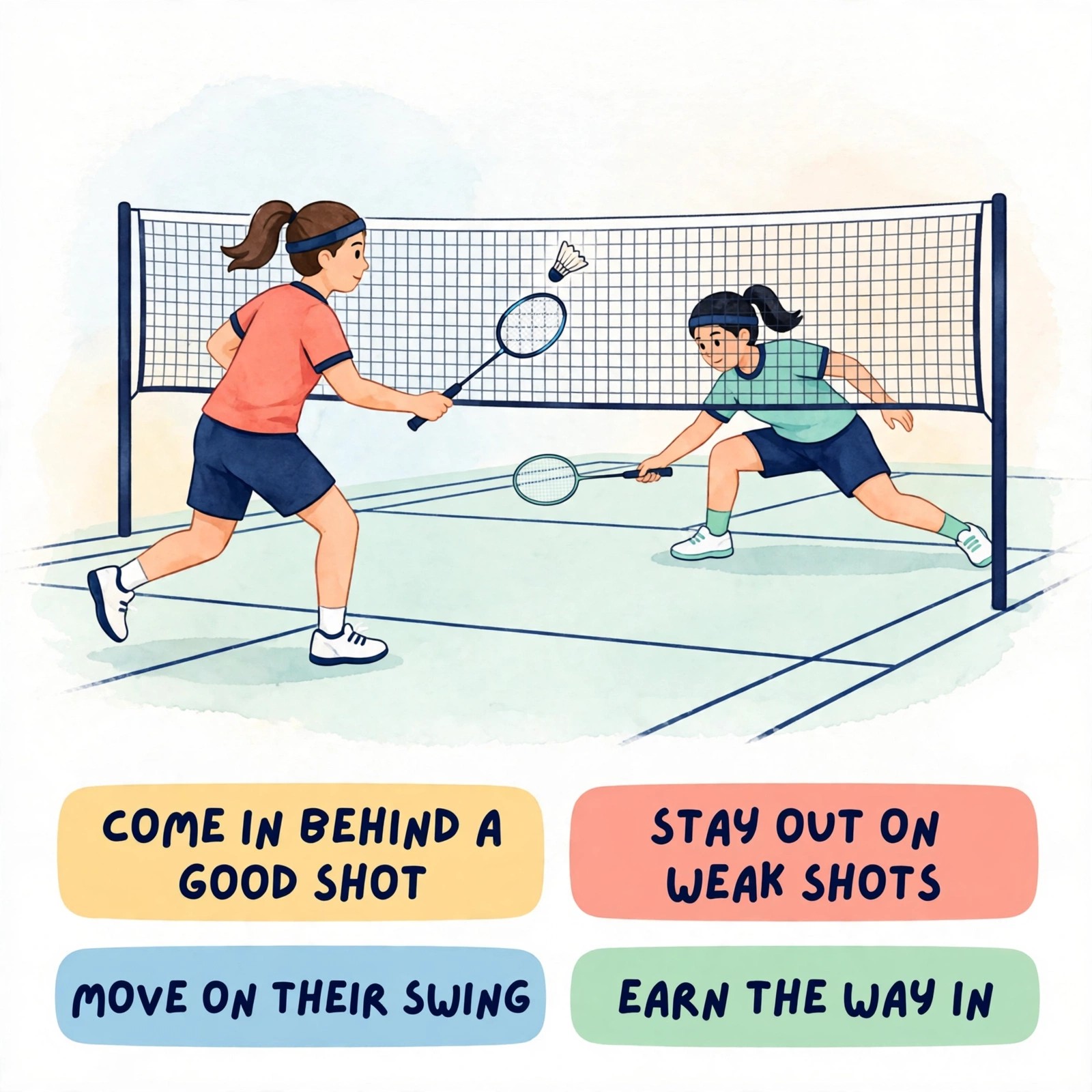
Coming in to the net is a decision, not a habit. The best moments share one feature: the opponent is stretched, moving backward, or reaching low, so their reply options have already shrunk before you move. A deep clear that pushes them into the rear corner, or a drop shot that makes them lunge, buys you both time and a worse reply. Step in behind shots like those and the front court is yours. Step in behind a loose, floating shot and you are just arriving early at your own problem.
The signals are readable once you look for them. An opponent who is late to the shuttle will lift or push, because those are the only safe replies from a stretched position. An opponent who arrives balanced and early has every option open, and charging in against them hands over the net kill. So the rule is simple to say and takes practice to keep: read their balance first, then move. The step in should answer what you saw, not what you hoped to see.
Tactics Check #2
Forcing the Lift: Making Every Other Reply a Bad Idea
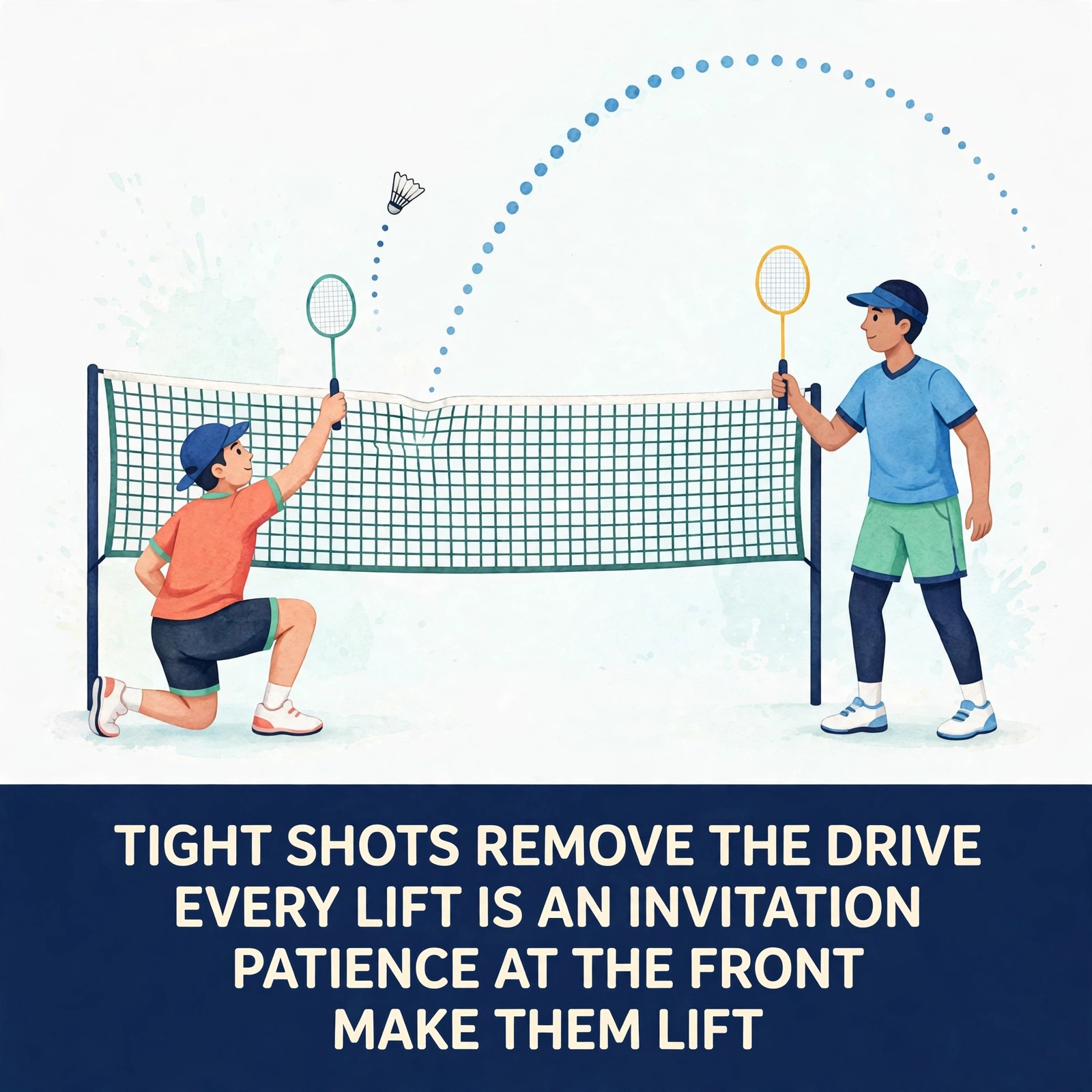
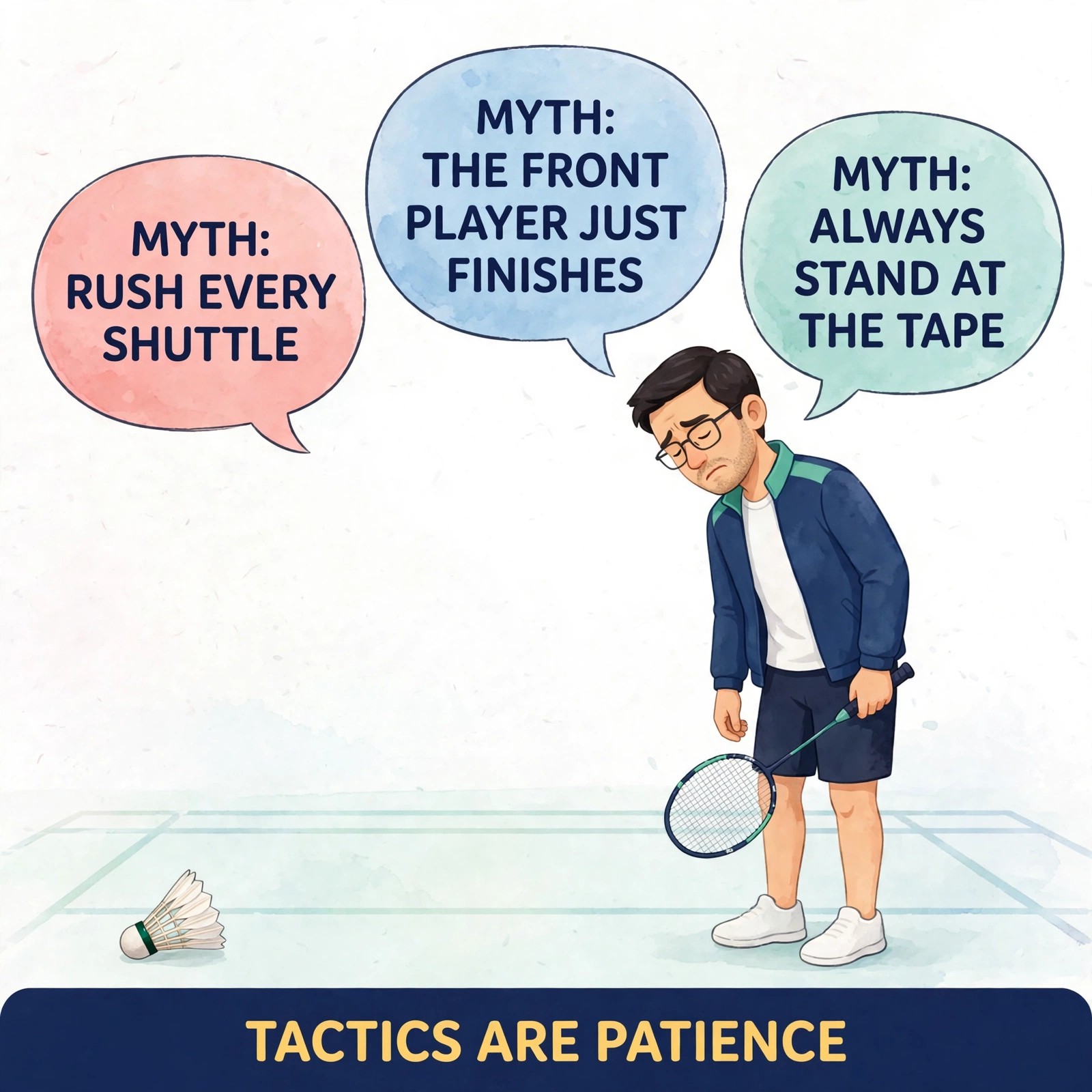
A forced lift is the most useful reply in badminton, because it hands you the attack. You force it by making every other reply a bad idea. Tight net shots that hug the tape remove the net reply. Net shots played from close in, right after your opponent has been pushed deep, remove the drive as well, because they are too far back to reach it in time. What is left is the lift, played under pressure, often shorter or flatter than they wanted.
Sequence matters more than any single shot. Push the opponent deep with a clear, follow with a drop that makes them run and reach, then take their reply at the net while they are still recovering. Each shot makes the next one easier, and the lift, when it comes, comes from a player who is tired, stretched and late. Players who try to force a lift with one heroic net shot from a neutral position usually force nothing except their own error.
Once the lift comes, the rally has changed hands. In singles, your smash or your fast drop now starts from a position of strength, with the opponent pinned deep. In doubles, the lift is the signal for the whole pair to switch into attack shape. Treat the forced lift as the start of your attacking sequence, not the end of the rally, and have your next two shots already in mind before the shuttle even leaves your opponent racket.
Tactics Check #3
Interception: Cutting Off Drives and Flat Pushes
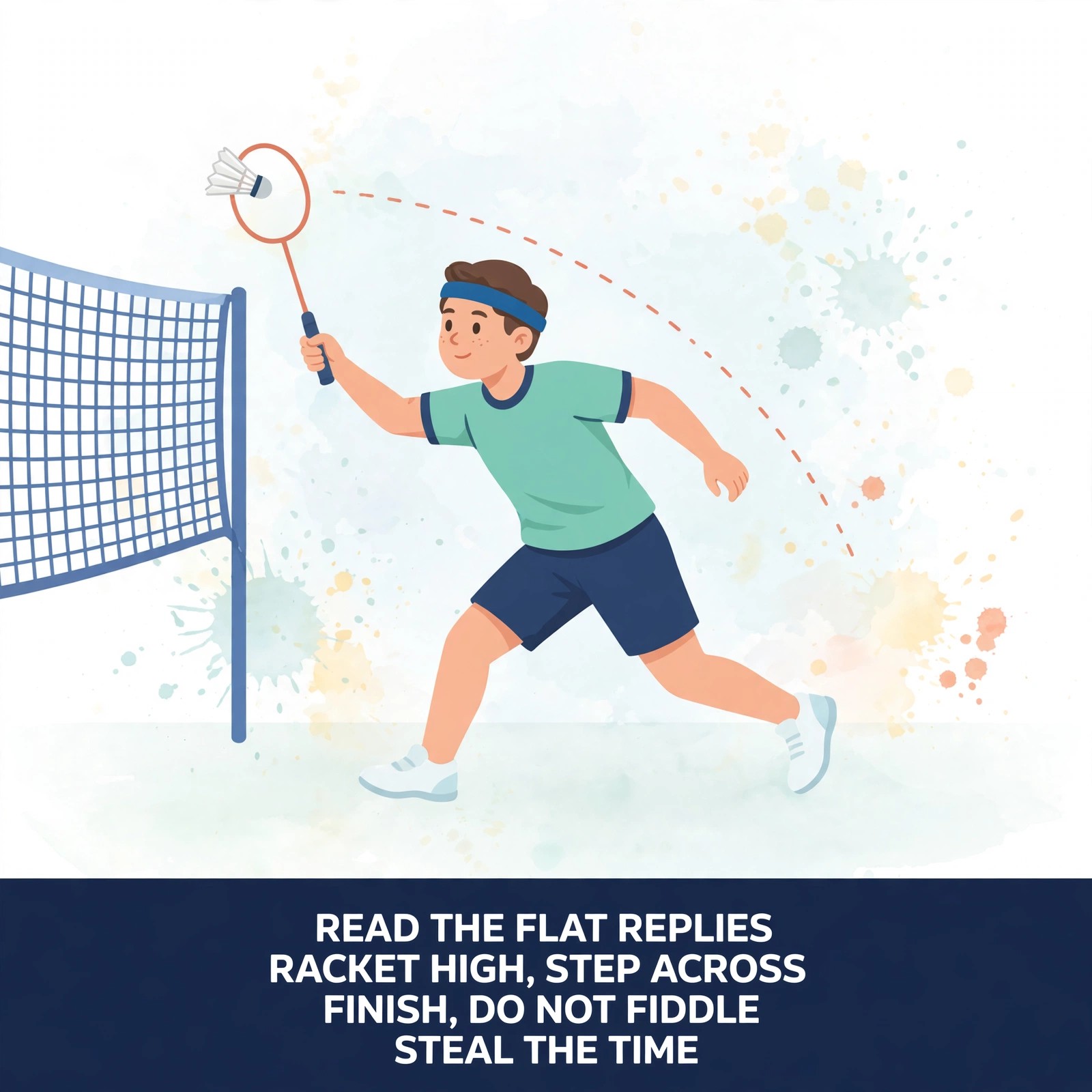
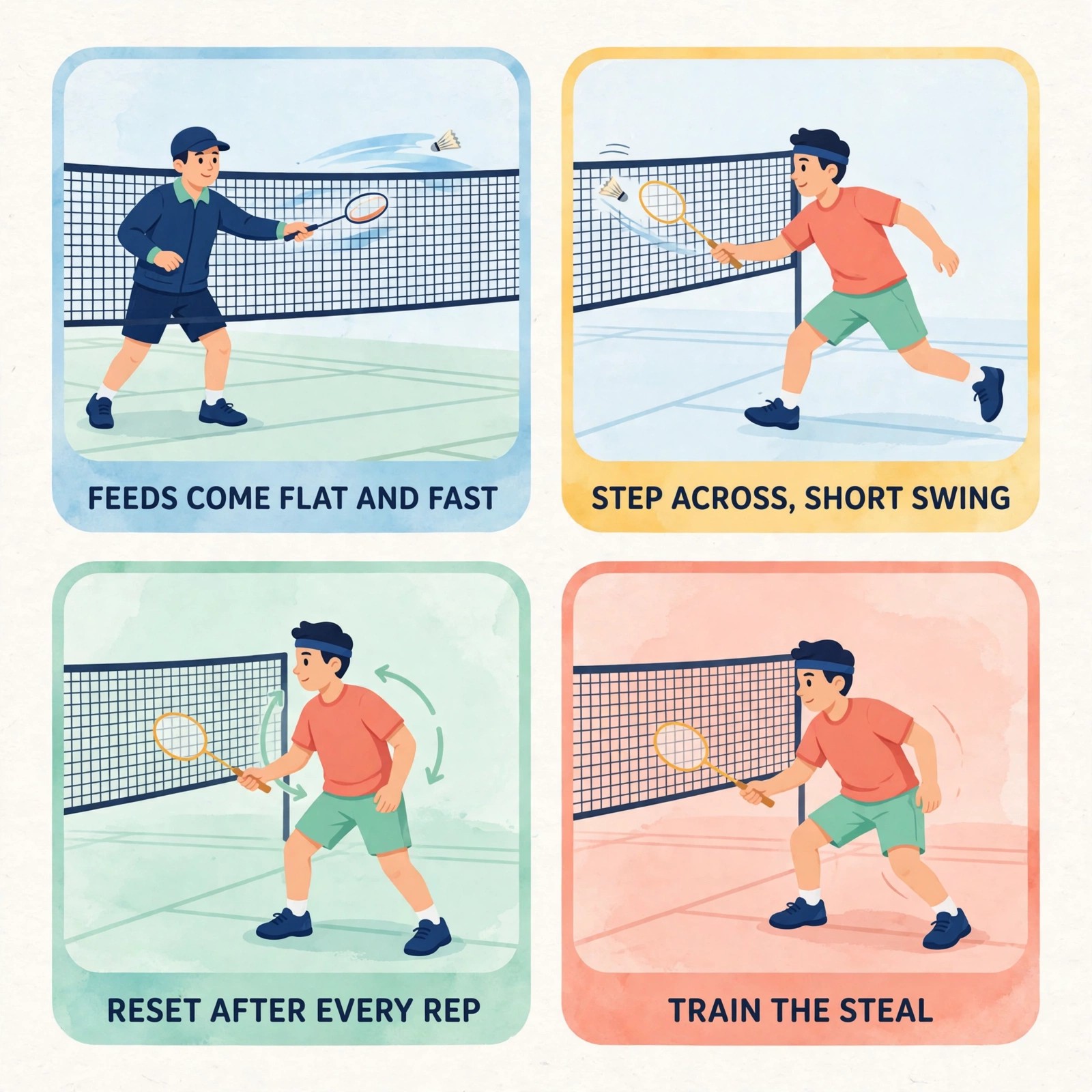
Interception is the front player habit of taking the reply early, before it crosses into your partner territory or drops into the open front court. Drives and flat pushes aimed through the middle are the main targets: stepped into and met in front of the body, they can be blocked tight, pushed into the open space, or killed outright. The interception works because of when it happens, a full step earlier than the opponent planned for, while their racket is still recovering.
The step is the whole skill. Read the opponent shoulder and racket as the shuttle leaves their strings, and if the reply is coming flat and through your zone, move on the first sign, not on the shuttle. Arriving a fraction late turns an interception into a desperate reach, and the shuttle passes you into the space you just left. Arrive on time and the shot is almost boring: a short block, a small push, or a clean kill, chosen by how high the shuttle reaches you.
Know your zone and respect it. In doubles, the front player owns the area in front of the short service line and the flat replies just behind it. Chasing replies that belong to your partner, or wandering deep to hunt interceptions, tears holes in the pair shape that good opponents find at once. Intercept inside your zone, cover it fully, and trust your partner behind you. The discipline to stay home is what makes the brave steps in work when they come.
Tactics Check #4
The Doubles Front Player: Holding the Front Court
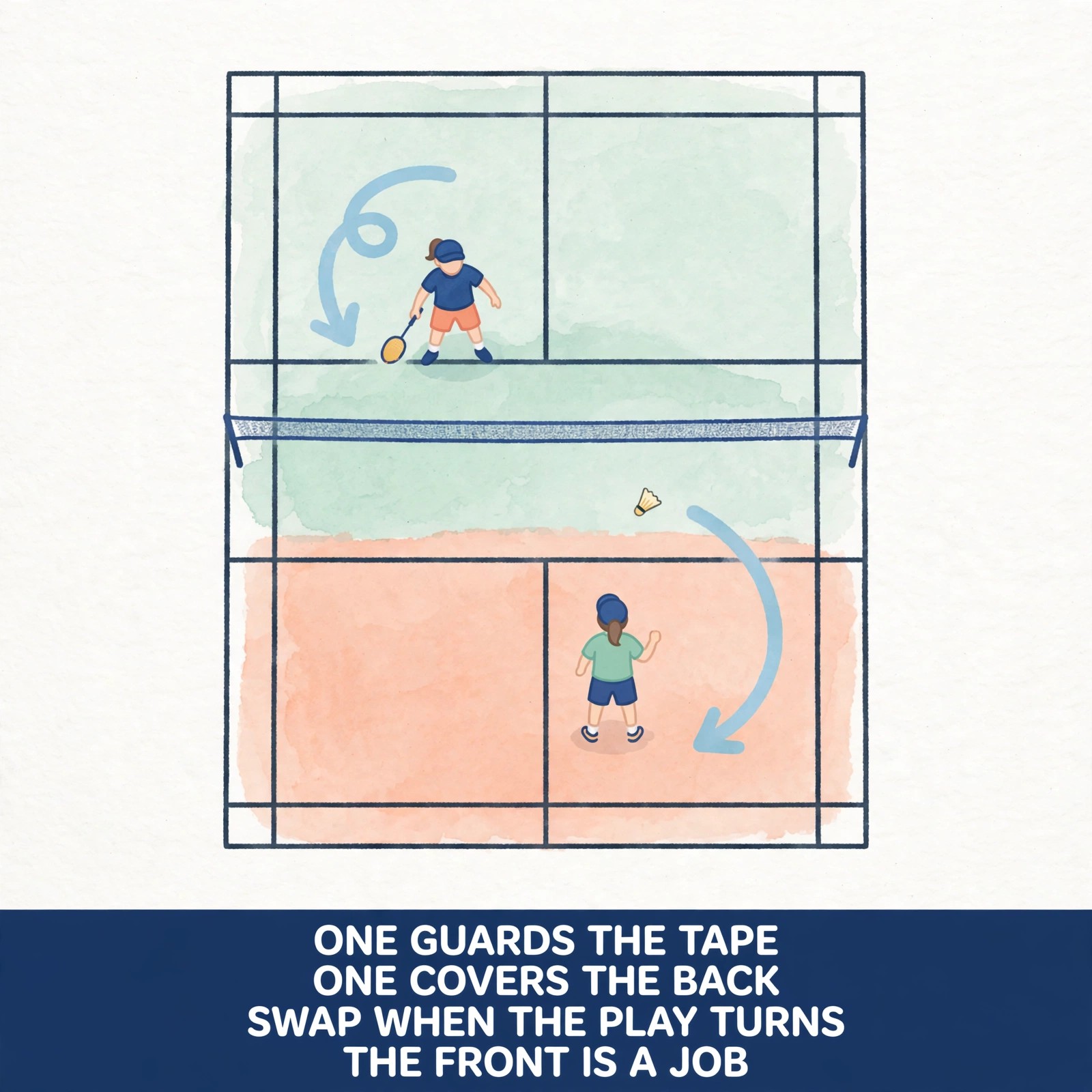
The doubles front player does not win rallies alone; they make the pair attack last. The mid court partner smashes and drives from behind, and every one of those shots invites a reply that travels forward: blocks, counters, defensive pushes. The front player job is to be standing in the path of those replies, racket up, ready to finish or to keep the pressure on with a tight block that forces yet another lift. A pair attacks in turns, and the front player turn comes first.
Positioning is a quiet skill. Stand where the likely replies will pass, usually a step inside the short service line, angled toward the smasher target, and stay on the balls of your feet rather than flat and settled. When the attack switches sides, shift with it early, so you are set before the next smash lands. Front players get beaten less by fast shuttles than by fast switches they watched instead of following, arriving set one rally too late.
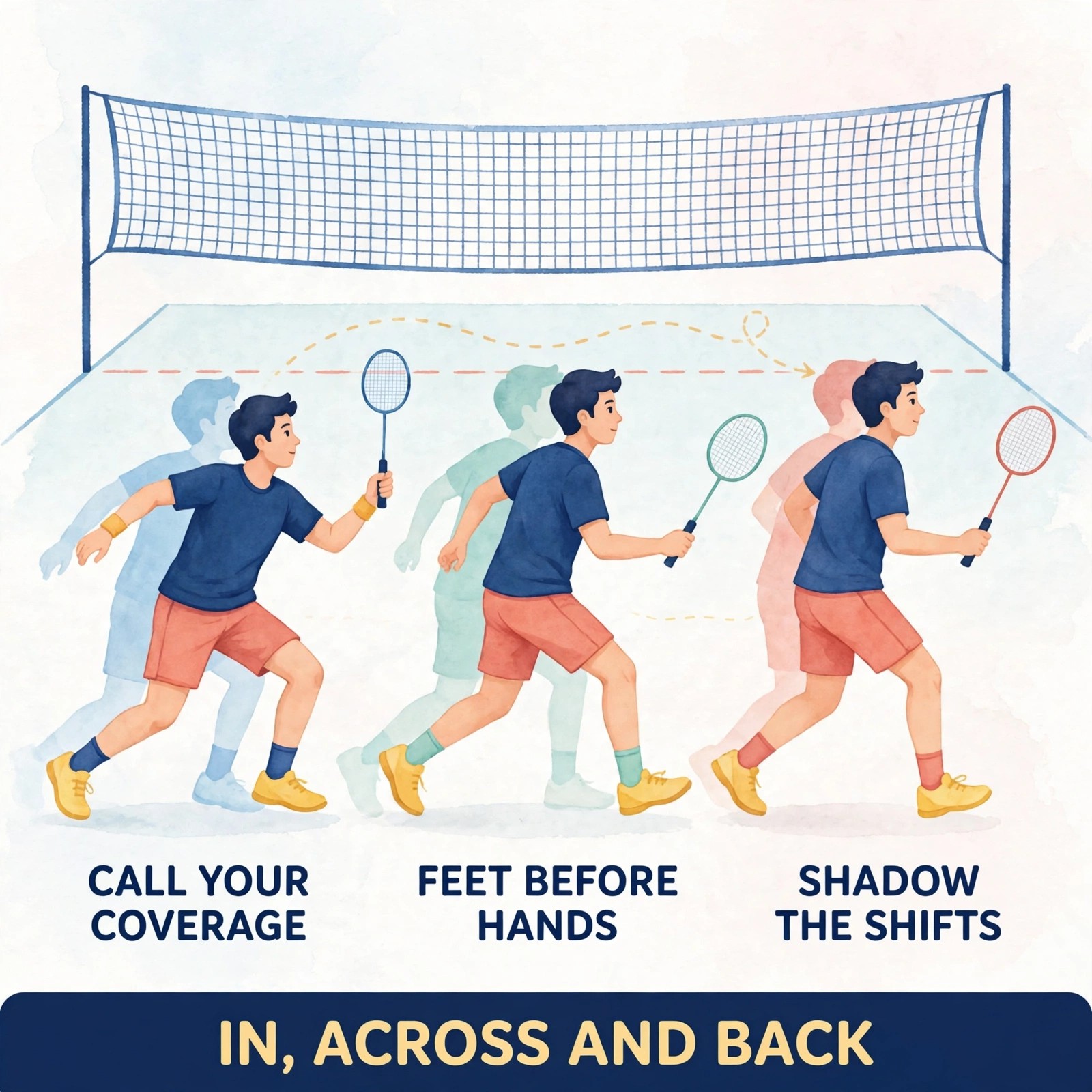
Communication keeps the role working. Call the switch when your partner rotates forward, keep the calls short, and never both chase the same reply. When a lift comes and your partner takes over the front, move out early and clear the space. Pairs that talk through these swaps keep their shape under real pressure; pairs that improvise them keep colliding in the middle, leaving the front court empty exactly when the reply arrives there.
Tactics Check #5
Reading the Reply: What Every Shot Back Tells You
Every shot you play at the net is also a question you ask the opponent, and their answer tells you what to play next. A net shot answered with a lift means your pressure is working, so keep the pattern going. A net shot answered with a cross net means they read your position, so your next visit should start a step wider. Replies are information. Players who collect them calmly adjust rally by rally; players who ignore them keep donating the same points.
Watch what repeats. If an opponent answers your net shot with the same lift to the same corner three times, that corner is their habit under pressure, and your partner or your own back court positioning should be waiting for it. If they answer with a net shot of their own every time you come in late, they are telling you your arrival is the problem. The scoreboard of a close match is often just a list of whose habits got read first.
Reading starts before the shuttle is struck. Shoulders open early on a cross reply, a lifting swing shows a longer backswing, and a player whose eyes drop to the floor is not about to play a delicate net shot. Build the habit of watching the striker, not the shuttle, during your own net visits. It feels strange for a week or two. Then rallies start to look slower, because you are seeing the decision half a second before the shot appears.
Myth vs Reality
Front Court Beliefs That Lose Rallies
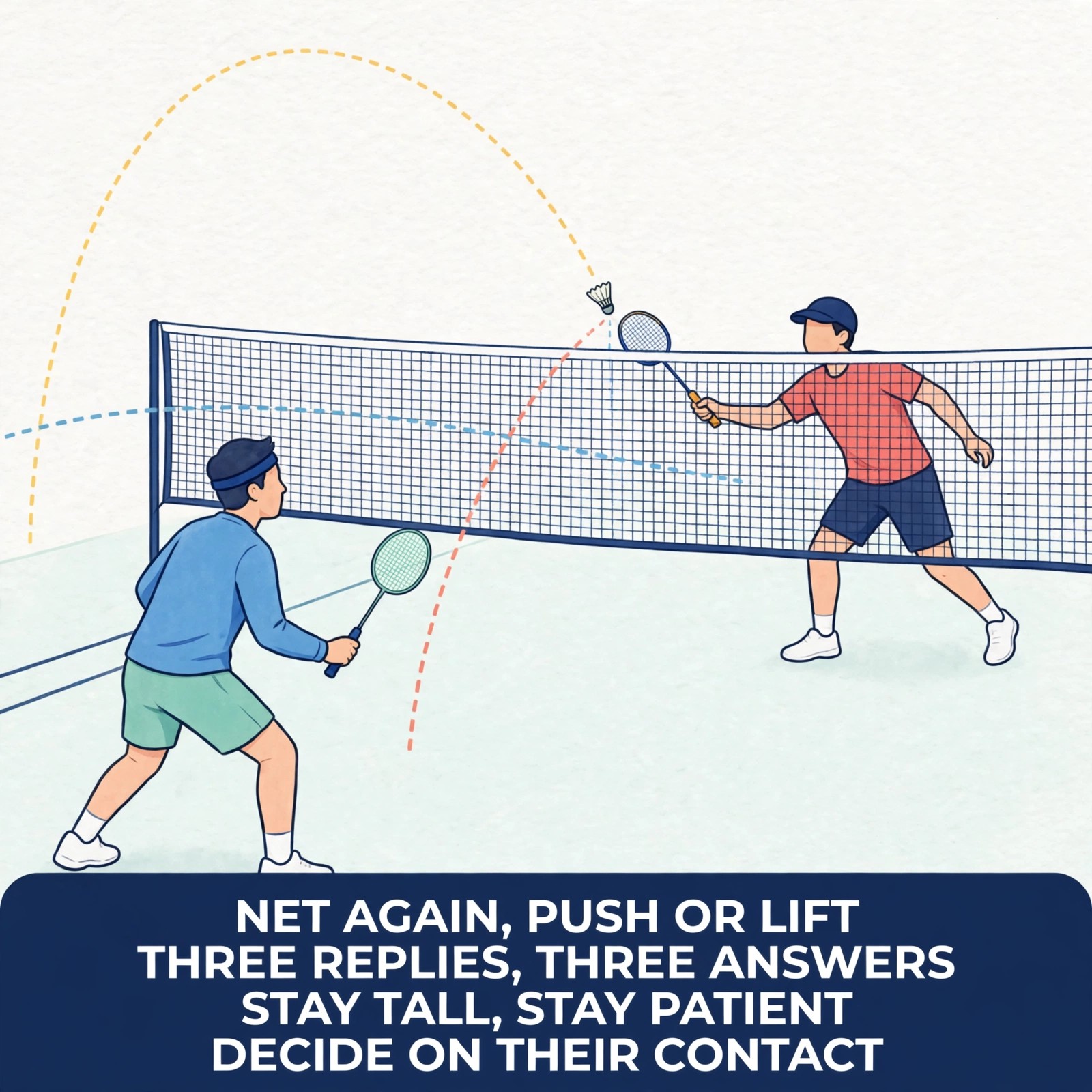
Three beliefs lose front court rallies quietly. The first is that the brave player always rushes the net, on every rally, whatever came before it. Courage without reading is just arriving early to be passed. The second is that the front player in doubles is the finisher, the one who should take the glory shots. The third is that reading opponents is a talent for the top level only, not something an ordinary club player can train.
The front player is mainly a builder. Their blocks, interceptions and pressure keep the attack alive so the rally ends on the pair terms, and many of those rallies end with the back player smash or an opponent error, not a front court winner. And reading is a habit, not a gift: watch the striker, note the favourite replies, check them against what happens next. Anyone who practises that loop for a few weeks starts seeing rallies earlier.
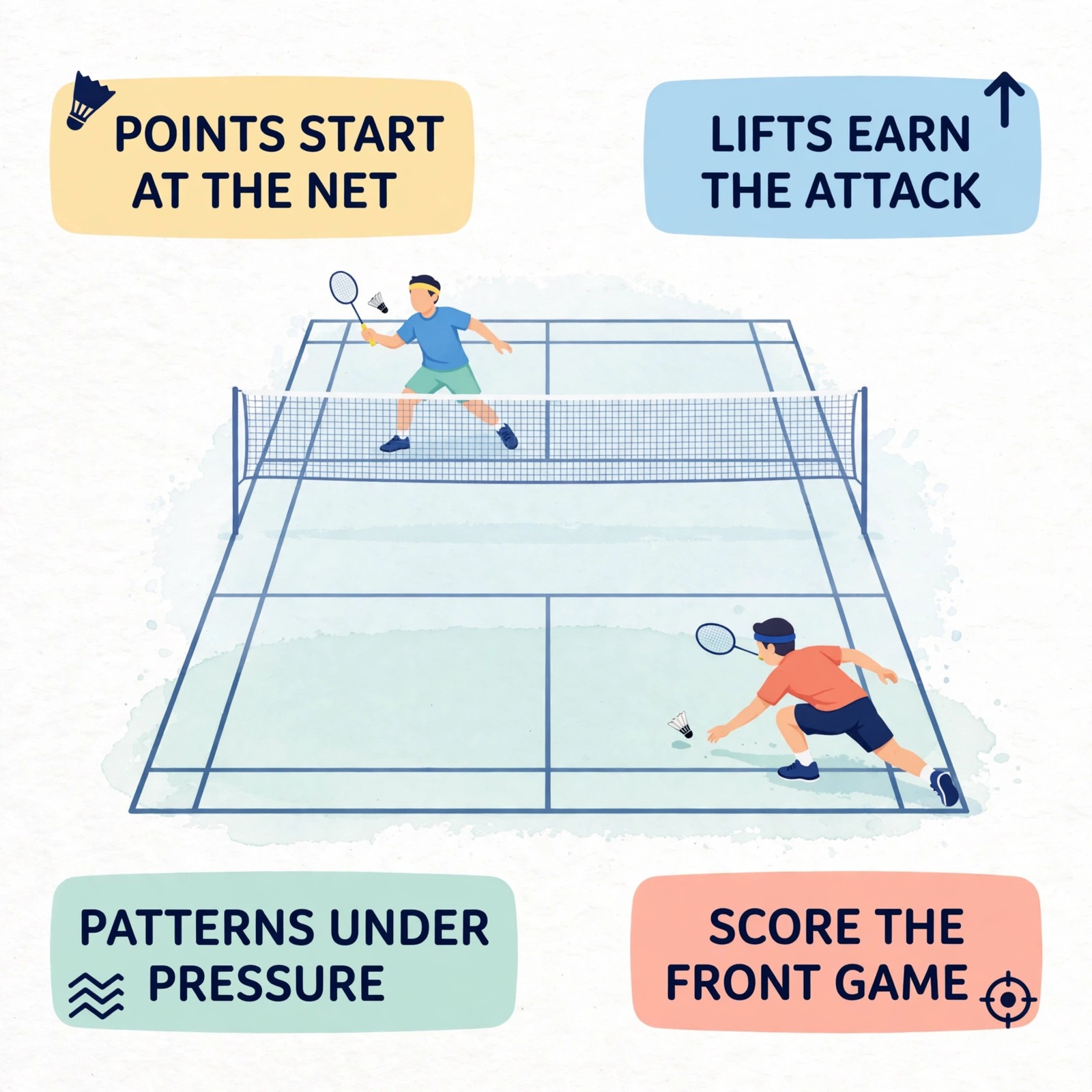
Put together, net tactics are a simple loop: move in behind pressure, force the lift, cut off the flat replies, hold the front position for your partner, and read every answer for the next decision. None of it needs new technique. It needs attention, patience and the discipline to let the rally come to you instead of chasing it around the front court.
Why Choose Us
Why Players Choose ST Badminton Academy
Tactics are hard to learn from a book, because they live in live rallies. ST Badminton Academy Malaysia is different because our head coach, Mr Eric Chuar, has over 15 years of coaching experience in Singapore and Malaysia, and he stops rallies to ask the question that matters: why did you move then? In small groups, your decisions at the net get reviewed in the moment you made them, while the rally is still fresh in your legs.
Our small group policy, with a maximum of 4 students, keeps that review personal. Conditioned games are the main teaching tool: rallies where lifts score double, where the front player must intercept once before the pair can win the point, where a pattern has to be built before anyone may smash. The games make the right decisions feel natural, because you have already made them fifty times in training before a real match asks for them.
We focus on long term player development. A player who understands the front court stops depending on one favourite shot and starts controlling whole rallies: choosing when to attack, when to build and when to let the opponent make the mistake. That understanding grows with guided match play and honest review, and it stays with you in every club game and school match you play afterward.
FAQs: Badminton Net Tactics, Interception and Doubles Front Play in Malaysia (KL)
Here are answers to common questions from players in Kuala Lumpur about net tactics, forcing lifts, interception, the doubles front player role, and how coaching at ST Badminton Academy works.
Can a club player learn net tactics from zero in Setapak or Gombak?
Yes, and sooner than most players expect. You do not need a full set of net shots to start; one reliable tight net shot is enough to begin learning when to use it. In fact, tactics learned early protect a developing technique, because you stop asking your net shot to rescue rallies it was never meant to fix.
How do you force an opponent to lift from the net in KL?
Make the other replies bad ideas. Push your opponent deep first, then play your net shot tight and low from close in, while they are still far back. A stretched player reaching low cannot drive or counter safely, so the lift is what remains, and a lift played under that pressure is often short enough to attack.
Which replies belong to the front player at club level?
Your zone is the front of the court: everything in front of the short service line, plus the flat drives and pushes that travel just behind it. If a reply is heading deep or wide into your partner area, leave it and reset your position. Intercept what passes through the front, and trust your partner with the rest.
Why do my interceptions keep arriving too late?
Usually the read came late, not the legs. Players who wait to see the shuttle clearly before moving arrive after the moment has passed. Start your step on the opponent shoulder turn and swing, the signs that show a flat reply is coming. You will step wrongly sometimes at first; that is the cost of learning the timing.
How do doubles partners avoid colliding in the middle during rallies?
Talk about the jobs before the match: who takes the front after a lift, who calls the switch, whose shuttle the middle drive is. Keep the calls one word and loud. Most collisions come from both players being polite and quiet, not from either one being greedy, so agree the system first and trust it.
Do you coach match tactics near Wangsa Maju?
Yes. ST Badminton Academy is based in Setapak, a short drive from Wangsa Maju, Melati Utama and Danau Kota. Match tactics are coached in small groups of no more than four students, so your net decisions and front court positioning are reviewed personally by the coach in live games, not just talked about.
Where does ST Badminton Academy coach net tactics in Malaysia?
We coach in Setapak, Kuala Lumpur, and the thinking travels well: come in behind pressure, force the lift, cut off the flat replies. Players from Gombak, Sentul, Ampang and nearby areas train with us each week in small, focused groups where tactics are tested in conditioned games against real opponents.
How do I book a trial session to work on net tactics before training?
Message us on WhatsApp and tell us net tactics are what you want to work on. We will place you in a small group session with plenty of live rally play, where the coach can watch your decisions at the net and show you the order we would build them in. One session is enough to leave with a plan.
What makes Mr Eric Chuar a suitable coach for tactics coaching in badminton?
Mr Eric Chuar has coached in Singapore and Malaysia for over 15 years and teaches tactics the way they hold up in matches: read first, then move. Because he coaches small groups personally, your front court choices are reviewed in the session itself, against the opponents you actually face each week at your club.
Badminton Net Tactics Training in Action

One Standard for Every Session and Every Player
Coaching net tactics at ST Badminton Academy KL follows one standard: decisions are trained in live rallies, not lectures. Every session includes conditioned games that reward the right choice, with a maximum of 4 students per group, so your front court play is reviewed while the rallies are still happening.
| Factor | Chasing the Net | Reading and Deciding TACTICS |
|---|---|---|
| Frequency | 1 or 2 times a week. Mostly for fun and sweat. | Arrivals at the net are chosen: you come in behind pressure, when the opponent is stretched and their replies have shrunk. |
| Drills Focus | Basic static feeding. Minimal footwork pressure. | Tight shots from close in force lifts on your terms, and flat replies are intercepted inside your zone a step early. |
| Physical Conditioning | Rarely included. Just playing games on court. | Core, agility, and speed training included in every session to prevent injury and build stamina. |
| Tactical Awareness | "Just hit it over." No real game plan. | Video analysis, point construction, and learning to read the opponent's game. |
| Coach Ratio | Large groups (8-10 kids). Coach barely watches you. | Max 4 students. Mr Eric Chuar personally corrects every stroke and movement detail. |
| Goal Setting | Fun and exercise. | The front player holds position, calls the switches and keeps the pair attack alive until the rally ends on your terms. |
| Long Term Result | Good recreational player. | A front court tactician: rallies are steered, lifts are forced, and opponents run out of good replies at the net. |
Badminton Net Tactics Coaching in Kuala Lumpur
This guide gives you the tactical loop: come in behind pressure, force the lift you want, intercept the flat replies, hold the front for your partner, and read every answer for the next decision. If your match play needs that structure, ST Badminton Academy in Setapak can coach you through it in a small group. Message us to book a trial session.


