How Often Should You Train For Badminton To See Results? (Malaysia)
As a badminton coach in Malaysia and Singapore, I often meet players who either train once in a while and see no progress, or train almost every day and end up tired or injured. The real key is not as much as possible, but the right number of quality sessions each week, with enough rest for your age and schedule. This guide explains how often beginners, school team players and adults should train badminton each week to see steady improvement, how to balance on-court sessions with fitness and recovery, what realistic timelines for progress look like, and how to avoid overtraining while managing busy school, work and family commitments in Kuala Lumpur, Selangor and Singapore.
A certified badminton coach in Malaysia and Singapore explains practical training frequency guidelines for kids, teenagers and adult players who want to know how many badminton sessions per week are realistic for real improvement without burning out.

Training Principle #1
What Seeing Results Really Means
Understanding what results actually look like helps players set realistic training frequency goals. At ST Badminton Academy, we teach families in Setapak, Wangsa Maju and Cheras that badminton improvement shows up in many ways beyond just winning matches. Results include cleaner stroke technique, smoother footwork patterns, better fitness allowing longer rallies, improved tactical awareness during games and increased confidence on court when facing different opponents.
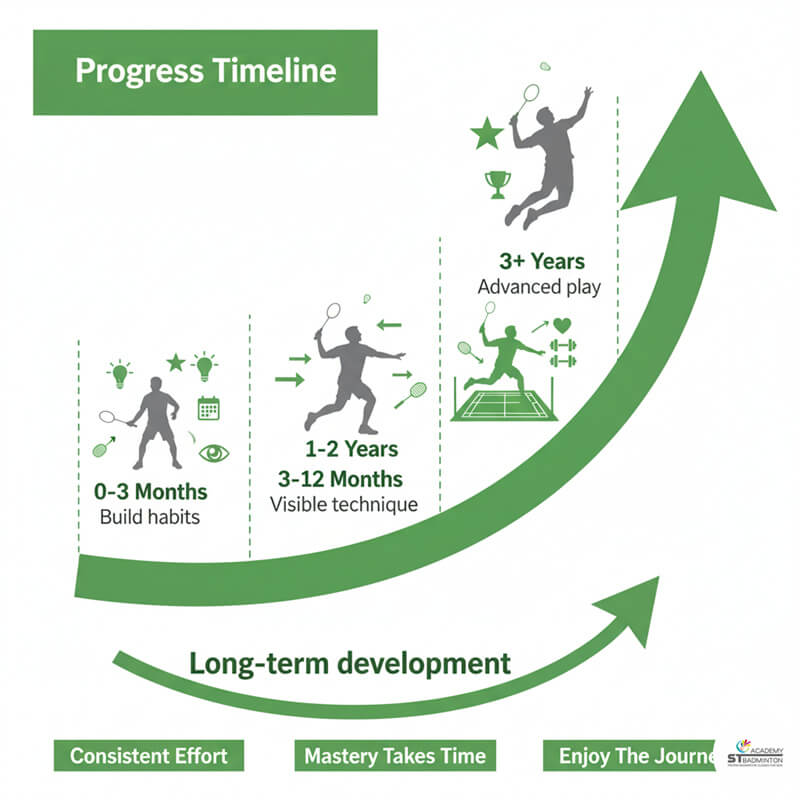
Early noticeable changes often appear within a few months of consistent training, such as feeling more stable during lunges or hitting shuttles more accurately to target areas. Deeper skills like reading opponent patterns, developing strategic thinking and building consistent match performance take years of steady work to develop fully. Our certified badminton coaches in Malaysia and Singapore help players in Kepong, Selayang and Cheras understand that many beginners see clear improvement within six to twelve months when training at least twice per week with proper structure.
Competition results take longer because opponents are also improving, so focus on your own skill development rather than only wins and losses. Players in Ampang, Petaling Jaya or Singapore areas like Jurong and Bishan who measure progress through technique quality and personal fitness gains stay motivated longer than those who only chase tournament trophies.
Training Principle #2
Key Factors Affecting Training Frequency
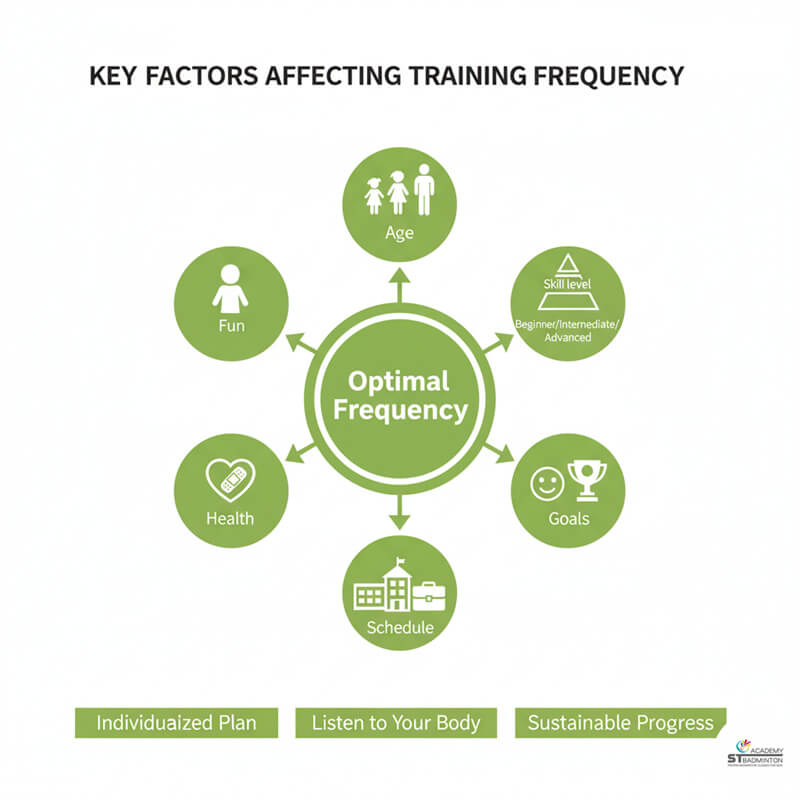
Several important factors determine how often each player should train badminton for optimal results. At ST Badminton Academy, our certified badminton coaches help families in Setapak, Gombak and Sentul consider age and school or work commitments first. Primary school kids in Kuala Lumpur typically manage two to three sessions per week alongside homework and tuition, while secondary students balancing O-level or SPM preparation might need to adjust frequency during peak exam periods.
Current skill level matters significantly. Complete beginners need fewer but more structured sessions to build fundamental technique, while intermediate school team players in Cheras, Petaling Jaya or Singapore areas like Clementi and Bishan can handle higher training volumes with proper recovery. Your goals also shape frequency choices. Players pursuing casual social games need less intensive schedules than those preparing for inter-school competitions or club tournaments across Kuala Lumpur, Selangor and Singapore.
Other sports and activities count toward total physical load. A student already doing football CCA three times weekly in Jurong or Tampines needs careful planning to add badminton without overtraining. History of injuries or health issues requires individual assessment. Players in Subang Jaya, Puchong or Singapore who experience persistent pain should consult doctors or physiotherapists before increasing training frequency.
Training Principle #3
Evidence-Based Starting Points for Frequency
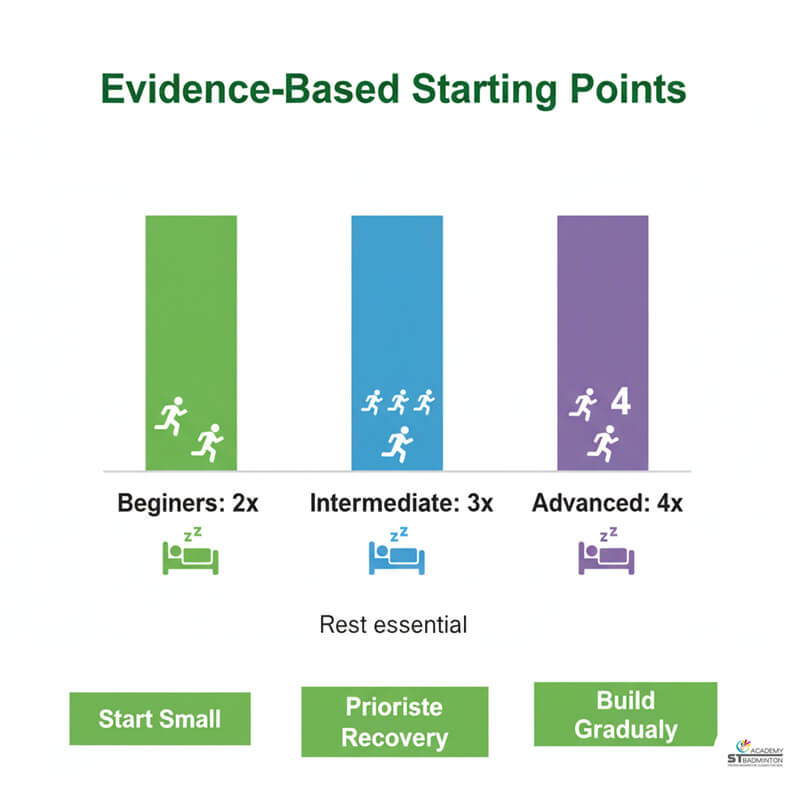
Research on skill learning and strength training provides helpful guidelines for badminton training frequency. At ST Badminton Academy, we apply these principles to players across Kuala Lumpur, Selangor and Singapore. For complete beginners learning fundamental strokes and footwork, around two structured sessions per week is a realistic minimum to see clear improvement. This frequency allows the nervous system to build movement patterns while providing enough recovery time between sessions for adaptation.
Intermediate players at school team level in Kepong, Selayang or Singapore areas like Bishan and Hougang often train three times per week of on-court badminton plus one basic fitness session focusing on strength, core or agility work. This volume supports continued technical refinement and tactical development without excessive fatigue. Advanced or competitive juniors preparing for district or national tournaments may train four or more structured sessions weekly, but this higher frequency requires careful recovery planning including adequate sleep, nutrition and at least one complete rest day.
Our certified badminton coaches in Malaysia and Singapore present these as ranges and examples rather than strict rules. A working adult in Ampang, Petaling Jaya or Jurong might see excellent progress training twice weekly for ninety minutes per session, while a dedicated school team player in Cheras or Tampines training three times plus weekend matches maintains steady improvement toward competitive goals.
Training Principle #4
Quality Over Quantity: Why Once A Week Isn’t Enough
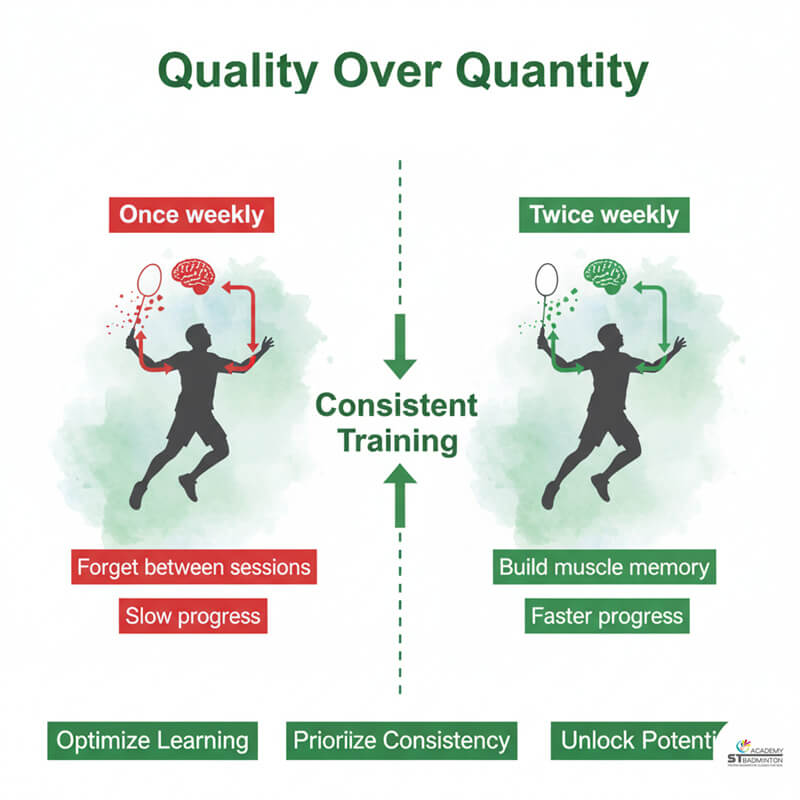
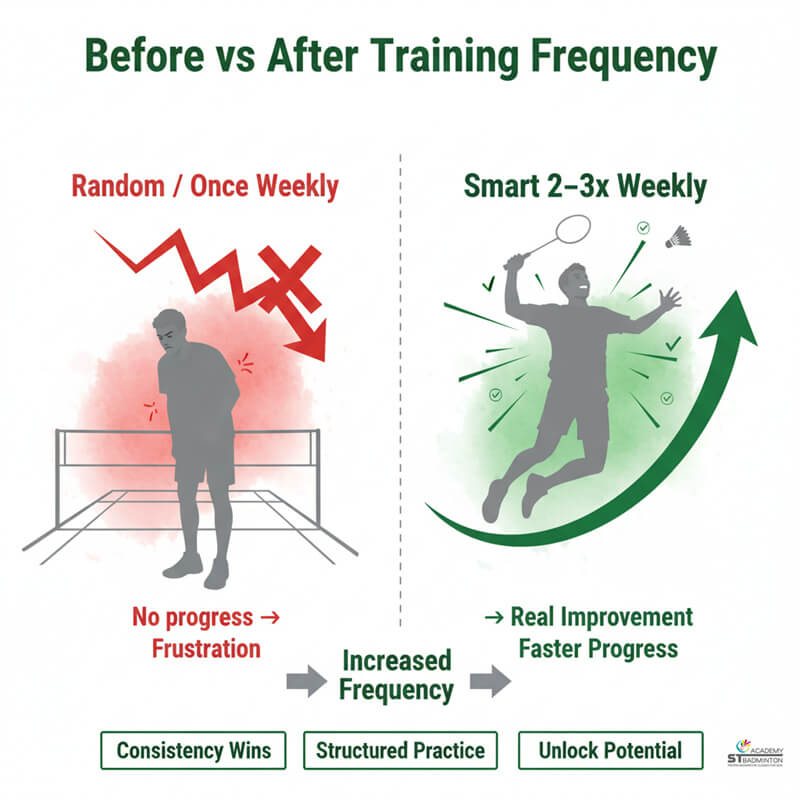
Training only once per week makes it very difficult to see meaningful badminton improvement for most players. At ST Badminton Academy, we explain to families in Setapak, Wangsa Maju and Cheras that the body and brain need more frequent practice to remember and refine technique. When you train just once weekly, each session essentially starts from scratch as muscles and neural pathways have not retained enough of the previous session’s learning.
More frequent but shorter focused sessions help build muscle memory much more effectively than one long random weekly practice. For players in Kepong, Selayang or Singapore areas like Clementi and Punggol, two sixty-minute structured sessions with clear drills work better for skill development than one three-hour session of endless unstructured games.
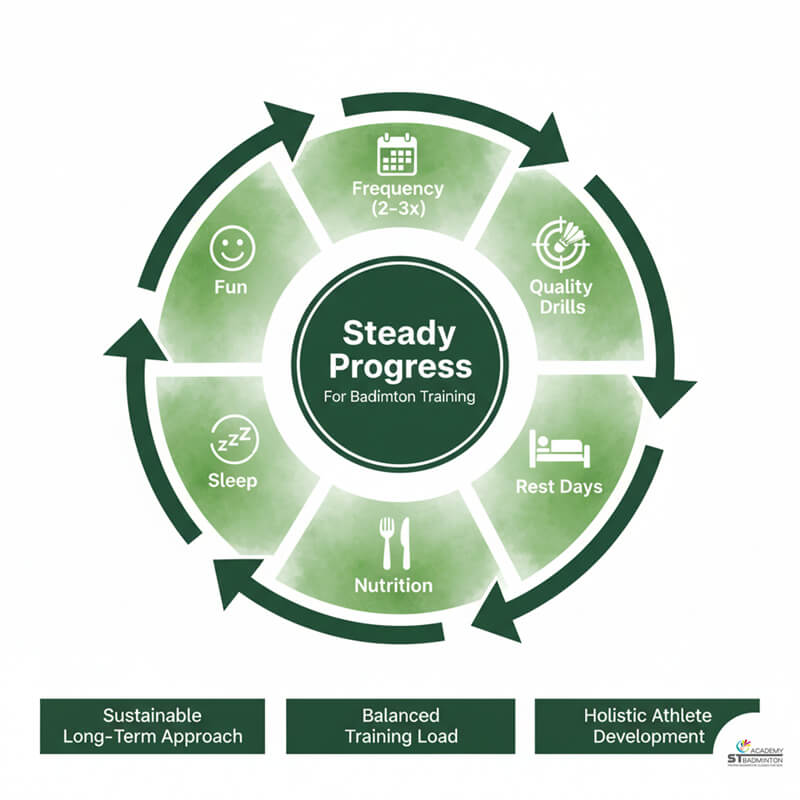
Our certified badminton coaches in Malaysia and Singapore emphasize that quality matters more than total hours. A player training twice weekly with focused drills, proper warm-up and cool-down, and deliberate practice on weak areas will progress faster than someone training daily but only playing random social games without structure. For many players in Ampang, Petaling Jaya, Subang Jaya or Singapore, two to three times per week of focused badminton practice provides the right balance between frequency for learning and recovery for adaptation.
Practical Examples
Example Weekly Plans For Different Players
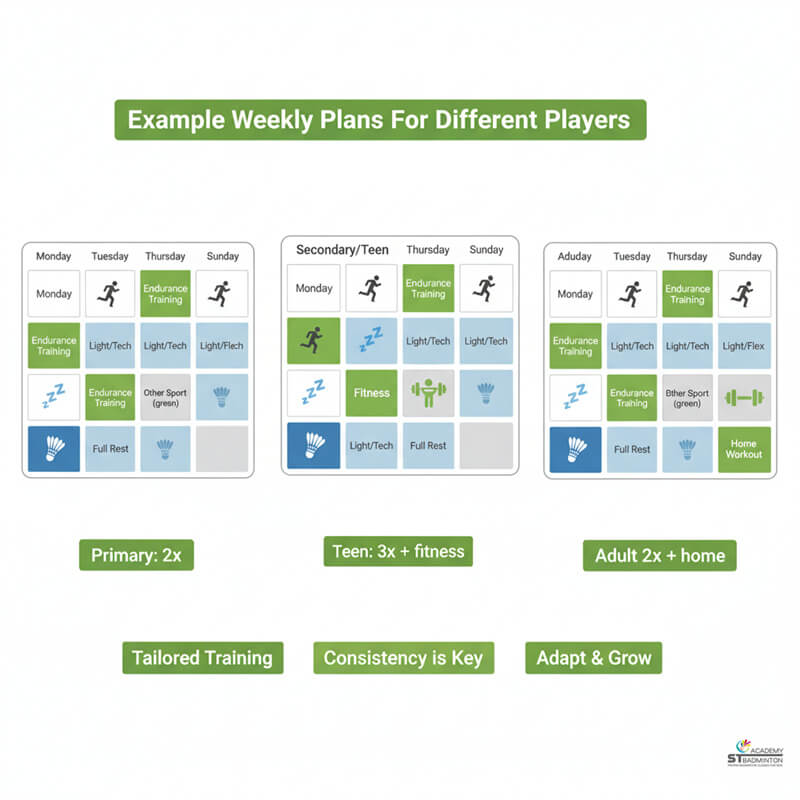
Realistic weekly training plans help players in Malaysia and Singapore understand how to structure their badminton practice. At ST Badminton Academy, we guide primary school beginners in Setapak, Cheras or Gombak toward two structured coaching sessions per week of about sixty to seventy-five minutes each, plus light home practice like shadow footwork or wall rally drills two or three times for ten to fifteen minutes. This pattern builds fundamental skills without overwhelming young children who also have homework, tuition and other activities.
Secondary school players preparing for inter-school competitions in Petaling Jaya, Kepong or Singapore areas like Bukit Timah and Bishan might train badminton two to three times weekly for ninety to one hundred twenty minutes per session, plus one fitness session focusing on strength, core or agility work for forty-five to sixty minutes. Include at least one full rest day with no structured training to allow recovery. Adults working in Subang Jaya, Puchong or Singapore areas like Jurong and Clementi can see steady improvement attending two club training nights per week for ninety minutes each, plus one short home session of footwork and fitness for thirty minutes.
Our certified badminton coaches in Malaysia and Singapore emphasize that these examples fit typical Malaysian and Singaporean lifestyle patterns including school hours, evening tuition, office work commitments and family time. Choose fixed training days each week and keep them consistent rather than training randomly whenever time appears available.
Session Duration
How Long Should Each Training Session Be?
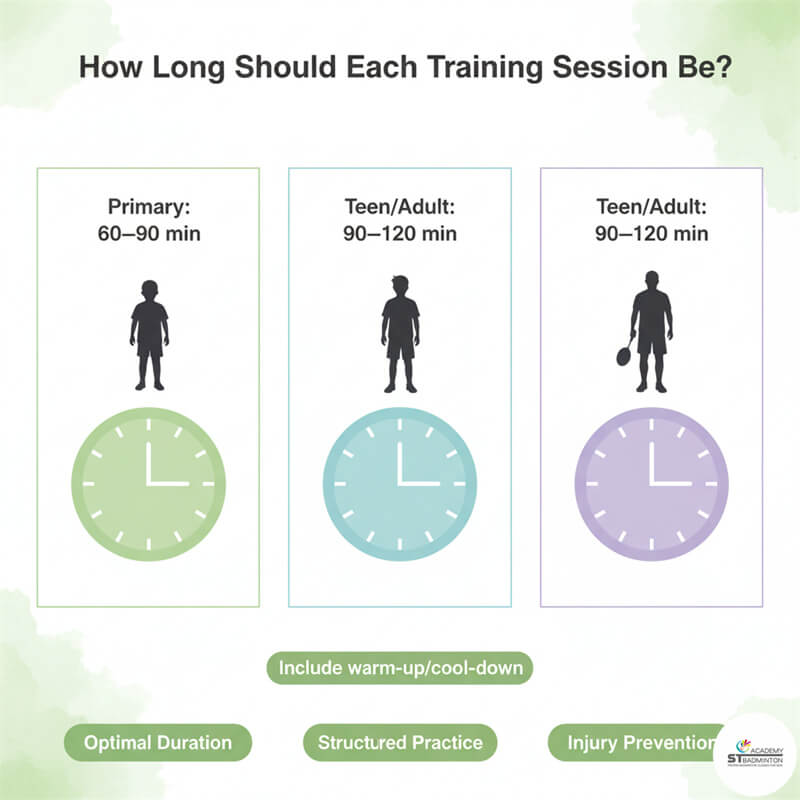
Session duration affects how much players can absorb and practice before attention and technique quality decline. At ST Badminton Academy, our certified badminton coaches recommend different lengths based on age and experience. Primary school children in Setapak, Wangsa Maju and Selayang typically train well for about sixty to ninety minutes per session including warm-up, drills and cool-down. Younger kids under age eight may benefit from shorter sixty-minute sessions to maintain focus and enthusiasm.
Teenagers and adults in Cheras, Petaling Jaya or Singapore areas like Hougang and Tampines can handle ninety to one hundred twenty minutes for structured group training or sparring sessions. This duration allows proper warm-up, focused technical drills, controlled sparring or game play, and adequate cool-down with stretching. Longer sessions beyond two hours often see declining technique quality as fatigue builds, unless the session includes significant rest breaks or mixed activities like fitness work between court time.
Players in Ampang, Subang Jaya, Puchong or Singapore should prioritize focused drills and deliberate practice over endless random games. A ninety-minute session with clear objectives, structured drills and quality feedback from coaches produces better improvement than three hours of unfocused social play. Our coaching team in Kuala Lumpur, Selangor and Singapore emphasizes that short focused training beats long unstructured sessions for building solid badminton foundations.
Avoiding Overtraining
Recognizing and Preventing Overtraining Burnout
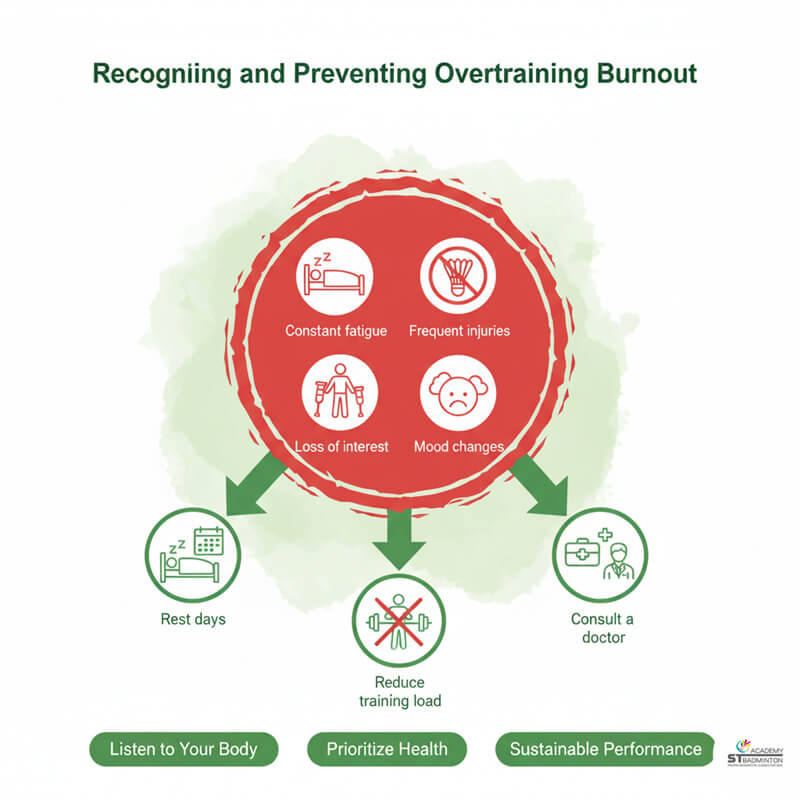
Training too often without adequate recovery leads to overtraining syndrome and burnout that harm long-term progress. At ST Badminton Academy, we teach families in Setapak, Wangsa Maju and Kepong to watch for warning signs including constant tiredness that does not improve with normal rest, loss of interest or enthusiasm for badminton training, frequent minor injuries like muscle strains or joint aches, mood changes such as increased irritability or sadness, and dropping school performance or grades.
Simple safety rules help prevent overtraining. Include at least one full rest day per week with no structured badminton or fitness training. Increase training frequency gradually, for example moving from two to three sessions per week over several weeks rather than jumping from two to five sessions immediately. Players in Selayang, Cheras or Singapore areas like Clementi and Bishan should listen to pain signals and understand the difference between normal training discomfort and warning signs of injury.
Our certified badminton coaches in Malaysia and Singapore emphasize that persistent pain, unusual fatigue or any health concerns require consultation with doctors or physiotherapists before continuing intensive training. Students in Ampang, Petaling Jaya, Puchong or Singapore areas like Jurong and Tampines should adjust training schedules during peak exam periods rather than trying to maintain maximum training load while studying late into the night.
FAQs: Badminton Training Frequency & Results
Here are answers to common questions from players in Malaysia and Singapore about how often to train badminton for real improvement.
Is once a week badminton training enough to see improvement in Kuala Lumpur or Singapore?
No, training only once per week is usually not enough for meaningful improvement. At ST Badminton Academy in Setapak, we explain to players in Wangsa Maju, Cheras and surrounding areas that the body and brain need more frequent practice to build muscle memory and retain technique. Two structured sessions per week is a realistic minimum for beginners to see clear progress. Players in Singapore areas like Jurong and Clementi who train twice weekly typically see noticeable changes within six to twelve months of consistent practice.
How many times should my child train badminton each week in Malaysia?
Primary school kids typically manage two structured sessions per week of sixty to seventy-five minutes each, plus light home practice. At ST Badminton Academy, families in Kepong, Selayang and Ampang find this frequency works well alongside homework and tuition. Secondary students preparing for school team competitions might train two to three times weekly for ninety to one hundred twenty minutes, plus one fitness session. Our certified badminton coaches in Kuala Lumpur emphasize including at least one full rest day per week.
How often should adults train badminton if they are busy with work in Singapore?
Working adults can see steady improvement training two times per week for ninety minutes per session, plus one short home fitness session if time allows. At ST Badminton Academy, players in Singapore areas like Bishan, Tampines and Hougang who attend two club nights weekly show clear technical progress over several months. Adults in Petaling Jaya, Subang Jaya or Puchong should choose fixed training days each week and maintain consistency rather than training randomly when schedule permits.
Can training too often be harmful for kids or teens in Kuala Lumpur?
Yes, training too frequently without adequate recovery can lead to overtraining syndrome and burnout. At ST Badminton Academy in Setapak, our certified badminton coaches teach families in Cheras, Gombak and Sentul to watch for warning signs like constant tiredness, loss of interest, frequent injuries or dropping school performance. Include at least one full rest day per week. Increase training frequency gradually rather than jumping from two to five sessions immediately. Students should adjust schedules during peak exam periods in Kuala Lumpur and Singapore.
How long will it take to see results from regular badminton training in Malaysia?
Beginners training two to three times per week typically feel more stable and confident within two to three months, with clear technique changes visible within six to twelve months. At ST Badminton Academy, players in Ampang, Petaling Jaya and Selayang see steady progress when maintaining consistent frequency and focusing on quality drills. Intermediate players notice tactical and fitness gains across one full season. Competition results take longer because opponents improve too. Our certified badminton coaches in Malaysia emphasize measuring progress through personal skill development rather than only wins.
What training frequency works for school team players in Singapore or KL?
School team players typically train three times per week of on-court badminton for ninety to one hundred twenty minutes, plus one basic fitness session focusing on strength or agility. At ST Badminton Academy, students in Setapak, Cheras and Singapore areas like Clementi and Punggol maintain this frequency during competition season. Include at least one full rest day weekly. Our certified badminton coaches help players balance training with exam preparation by adjusting schedules during major test periods rather than trying to maintain maximum load while studying.
How long should each badminton training session be in Kuala Lumpur?
Primary school kids train well for sixty to ninety minutes including warm-up and cool-down. Teenagers and adults can handle ninety to one hundred twenty minutes for structured sessions. At ST Badminton Academy in Setapak, players in Wangsa Maju, Kepong and Selayang find these durations allow proper warm-up, focused drills and adequate recovery without excessive fatigue. Our certified badminton coaches in Malaysia emphasize that ninety focused minutes with clear objectives produces better results than three hours of unfocused social games.
Should I include fitness training when planning weekly badminton frequency in Singapore?
Yes, basic strength and conditioning sessions count toward total training load and should be included in weekly planning. At ST Badminton Academy, players in Singapore areas like Jurong, Bishan and Tampines who train badminton twice weekly often add one fitness session of forty-five to sixty minutes focusing on core, strength or agility work. This combination supports badminton performance without excessive volume. Our certified badminton coaches in Malaysia and Singapore help players balance on-court and fitness training while maintaining adequate recovery throughout the week.
What should I do if my training schedule feels too heavy in Malaysia?
Reduce training frequency temporarily and prioritize rest if you notice constant tiredness, frequent injuries or loss of motivation. At ST Badminton Academy, our certified badminton coaches in Setapak, Cheras and Petaling Jaya help players adjust schedules when load becomes too much. Drop to fewer sessions per week or shorter session durations until energy and interest return. If persistent pain, unusual fatigue or health concerns develop, consult doctors or physiotherapists before continuing intensive training. Students in Kuala Lumpur, Selangor and Singapore should adjust during exam periods.
Smart Training Frequency in Action

Benefits of Smart Training Frequency for Badminton
Training with the right frequency allows steady skill development, adequate recovery and sustainable long-term progress for badminton players across Malaysian and Singaporean communities. Our coaching approach emphasizes realistic schedules that fit school, work and family commitments rather than unsustainable extreme training loads.
| Training Factor | Random Occasional Training | Smart Frequency With ST Badminton Academy STEADY |
|---|---|---|
| Weekly Frequency | Once in a while whenever time appears, no consistent pattern or commitment to regular practice. | Fixed schedule of two to three structured sessions per week, building muscle memory through consistent practice. |
| Skill Development | Body and brain forget technique between long gaps, starting from scratch each session without real progress. | Steady improvement in strokes, footwork and tactics through frequent practice that reinforces learning and builds foundations. |
| Improvement Timeline | No visible progress even after months because frequency is too low for adaptation and skill retention. | Clear technique changes within six to twelve months of consistent training at minimum twice weekly frequency. |
| Motivation | Loss of interest and frustration from lack of visible improvement despite occasional participation in games. | Maintained enthusiasm through steady progress, visible skill development and achievable goals with structured plans. |
| Balance With Life | Chaotic schedule conflicts with school, work and family with no predictable routine or time management. | Realistic plans that fit Malaysian and Singaporean lifestyle including homework, tuition, office work and family commitments. |
| Recovery Planning | No attention to rest or overtraining risks, either too little activity or sudden bursts of excessive training. | At least one full rest day per week, gradual frequency increases and attention to fatigue warning signs. |
| Professional Guidance | No structured coaching or planning, relying on random social games without deliberate skill focus. | Certified badminton coach guidance on realistic frequency, quality drills and sustainable long-term development plans. |
Plan Your Badminton Training Frequency in Malaysia and Singapore
This guide explains how often kids, teenagers and adults should train badminton each week to see real improvement without burning out or neglecting school, work and family responsibilities. ST Badminton Academy provides guidance on realistic training frequency, quality session planning and sustainable development schedules for players in Setapak, Wangsa Maju, Cheras, Selayang and surrounding Kuala Lumpur areas, as well as for players across Singapore who want to balance badminton training with busy lifestyles while making steady progress toward their goals. Contact us to discuss how to build a training plan that fits your schedule and supports long-term badminton improvement. Please note this is general educational information and not a substitute for medical advice. Anyone with persistent pain, unusual fatigue or health concerns should consult a doctor or physiotherapist.