
 All languages
 Chinese (Simplified)
 Chinese (Traditional)
 English
 Indonesian
 Japanese
 Korean
 Malay
 Thai
 Vietnamese


How Can You Improve Your Badminton Match Preparation Through Training (Match Preparation Guide)
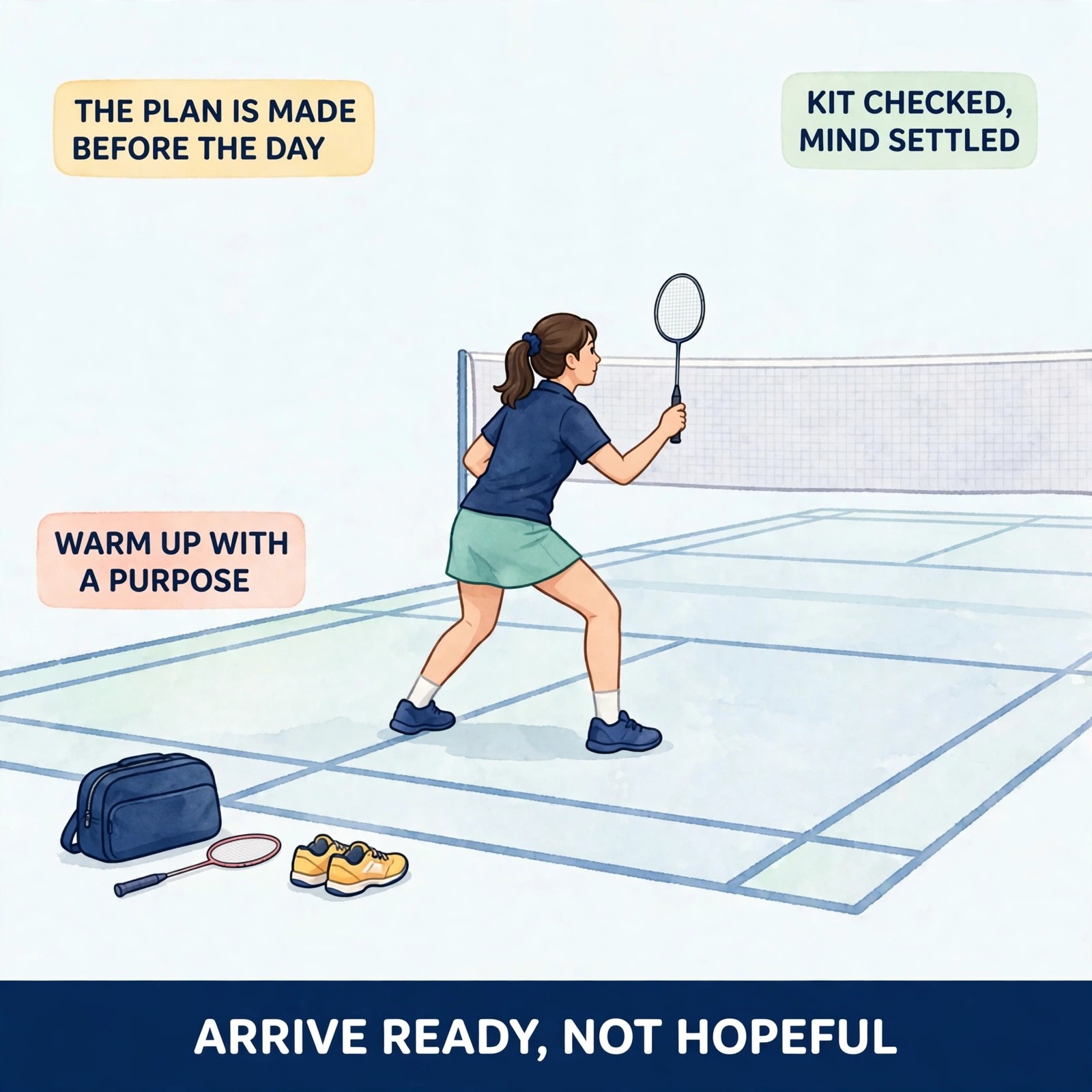
Two players can own the same shots and produce very different matches, and the gap is often decided before the first serve. One arrives with a plan, a checked bag and a rehearsed routine. The other arrives hoping the game will come to him. This page trains the first kind of arrival: how to study an opponent honestly, how to turn your own game into a plan A and a plan B, how to shape the training week so it points at the match, and how match day itself runs on a calm routine instead of last minute rushing.
Match Preparation Check #1
What Good Match Preparation Really Covers
Good match preparation covers four things, and none of them is a secret. You know something honest about the opponent: not their reputation, but their patterns. You know your own game on its current evidence: which patterns score for you and which ones leak. You have trained the week in a way that leaves you sharp rather than tired. And you have a match day routine that removes small decisions, from what is in your bag to how you warm up. When those four are in place, the match starts feeling familiar, even against someone you have never played.
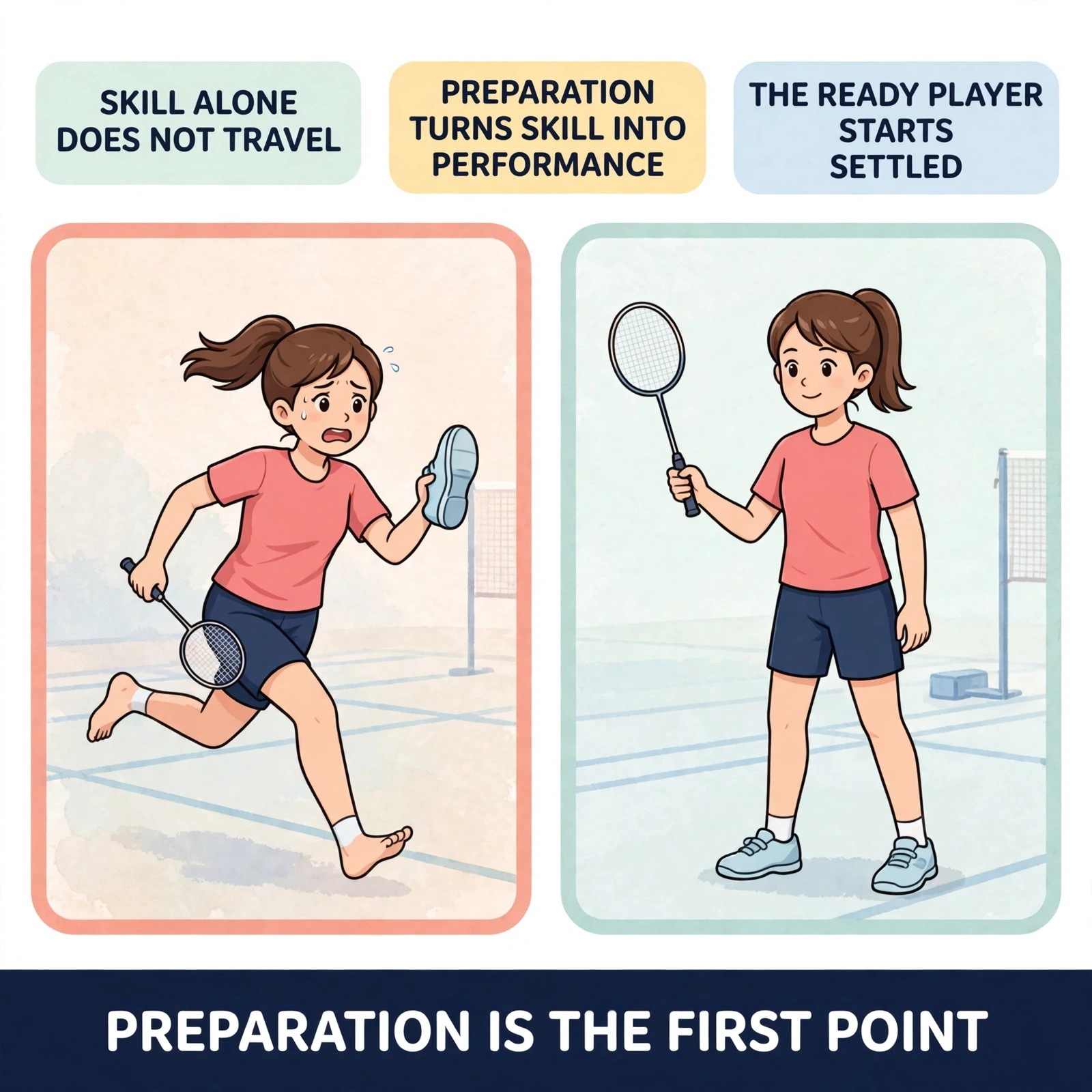
The cost of skipping preparation shows up in the first game. Players who arrive unready spend it organising themselves: testing the hall with real points, searching for a plan while the score moves, trying shots they have not rehearsed because the ones they trust have not been decided. A prepared opponent treats those minutes as free points. Preparation also protects confidence, because a player who has done the work walks in trusting his own game instead of hoping the day goes well, and trusted games hold their shape when the score tightens. Slow starts are rarely about talent. When we review matches with students, the first five rallies usually tell the story: the player with a plan is already playing, and the player without one is still arriving.
Match Preparation Check #2
Know The Opponent, Know Yourself
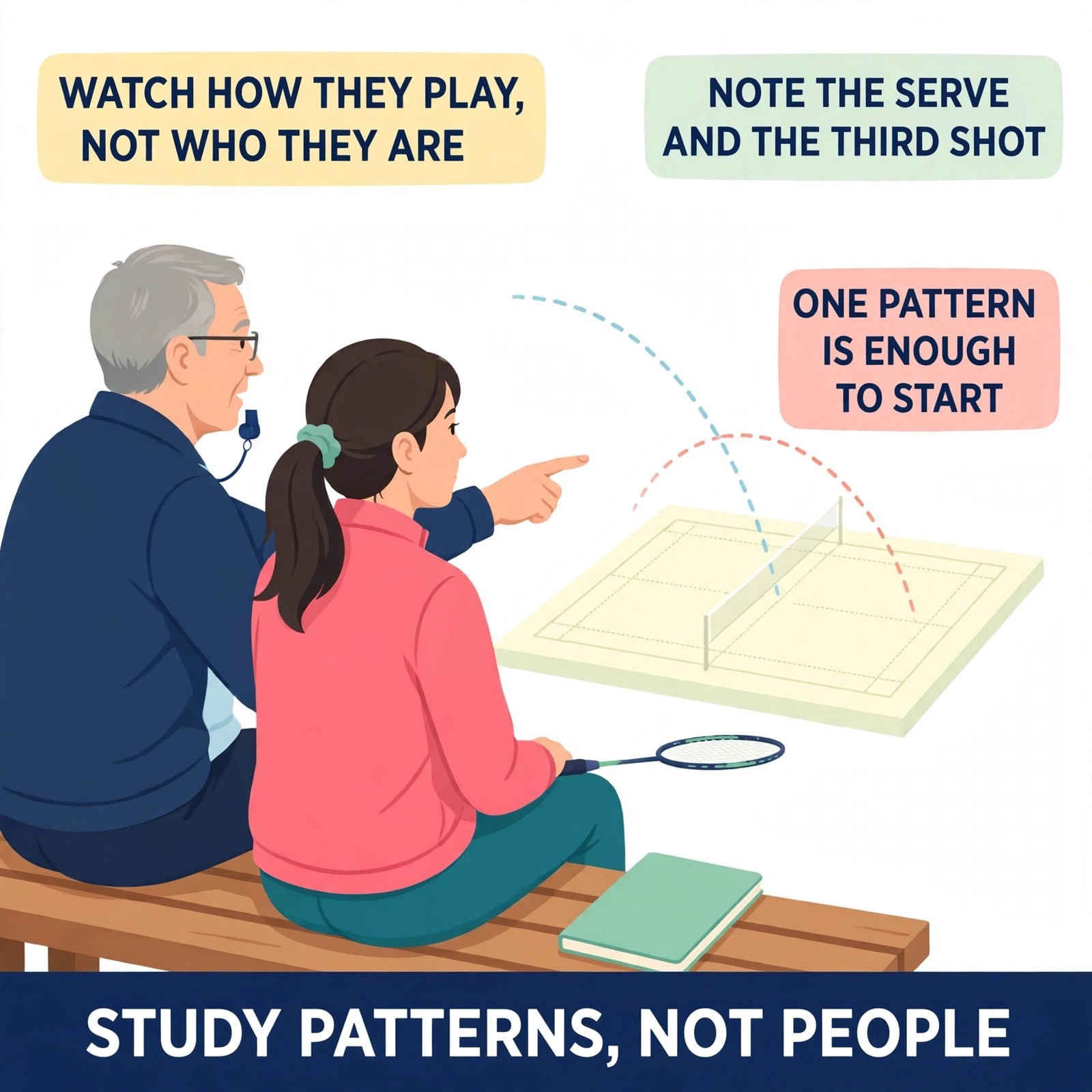
Studying an opponent means watching patterns, not collecting gossip. If you can watch them play, even for one game, note a few plain things: where their serve usually goes, what their third shot tries to do, which corner they defend late, and what they play when they are rushed at the net. One or two honest observations are enough. You are not building a dossier and you are not looking for a weakness to mock. You are giving your plan something real to stand on, and you prepare for their good shots with the same respect as their poor ones.
The other half of scouting faces the mirror. Your recent matches hold the evidence: which of your patterns won points when you were calm, which shot leaked whenever you were stretched, and what happened to your serve in the second game. Be honest without being harsh. Most players discover their game is narrower and stronger than they feared: two or three patterns they truly own, and a short list of situations that cost them. That is not bad news. A plan built on shots you actually own will survive pressure. A plan built on shots you wish you owned will not.
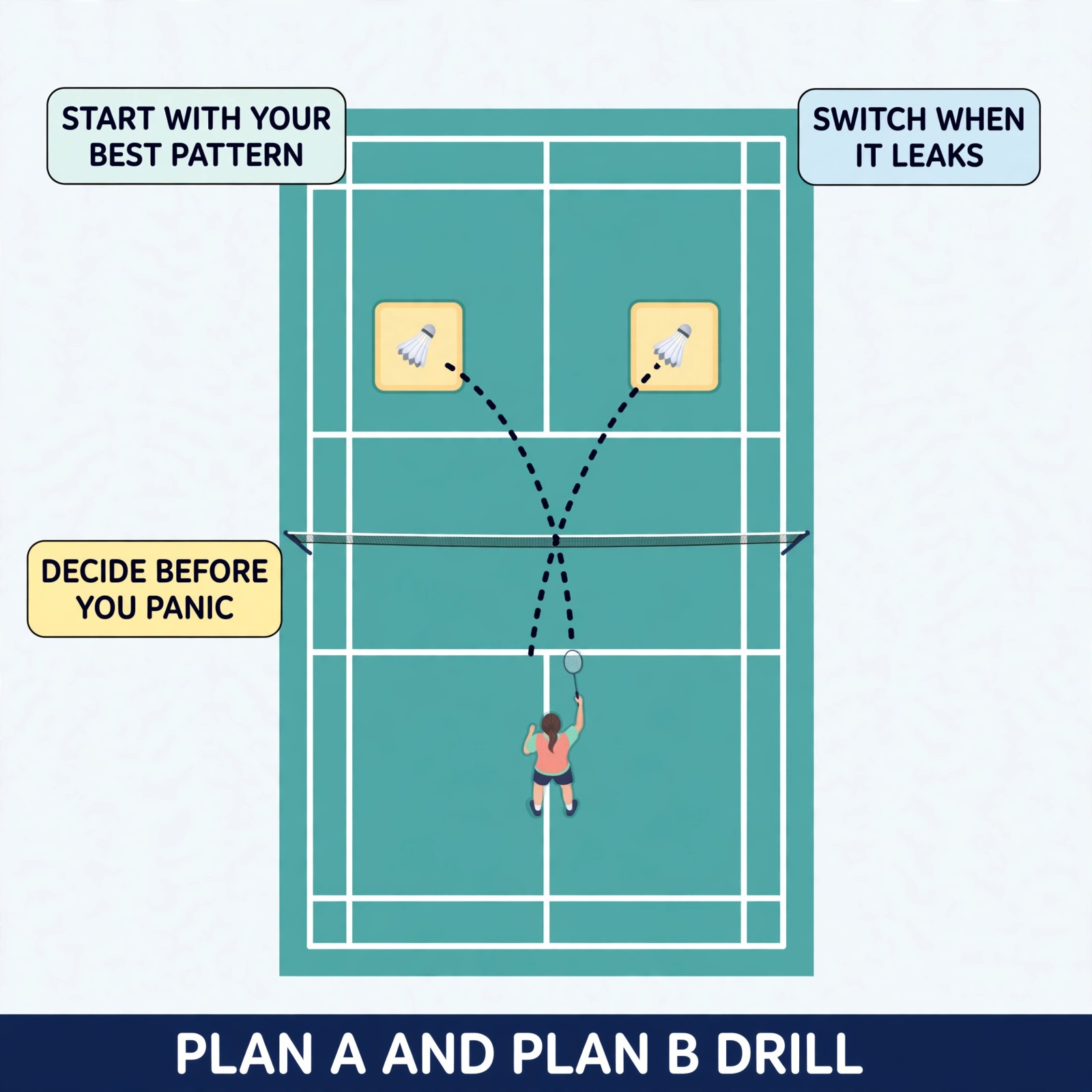
Turn the two halves into one page of decisions. Your plan A is your best pattern: the serve and third shot combination, or the rally shape, that your evidence says scores most. Your plan B is the change you make when plan A leaks: a different serve target, a slower rally, a safer margin. Write each in one line. Then decide your first three shots for the start of the match, because the opening rallies are where preparation shows. A plan this small can be remembered at 18 all in the third game, which is exactly when a long plan gets forgotten. Write the plan down, too. A plan that lives only in your head changes every time the score does, while a written line stays steady enough to return to after a bad patch.
Match Preparation Check #3
Train The Week Like A Match Week
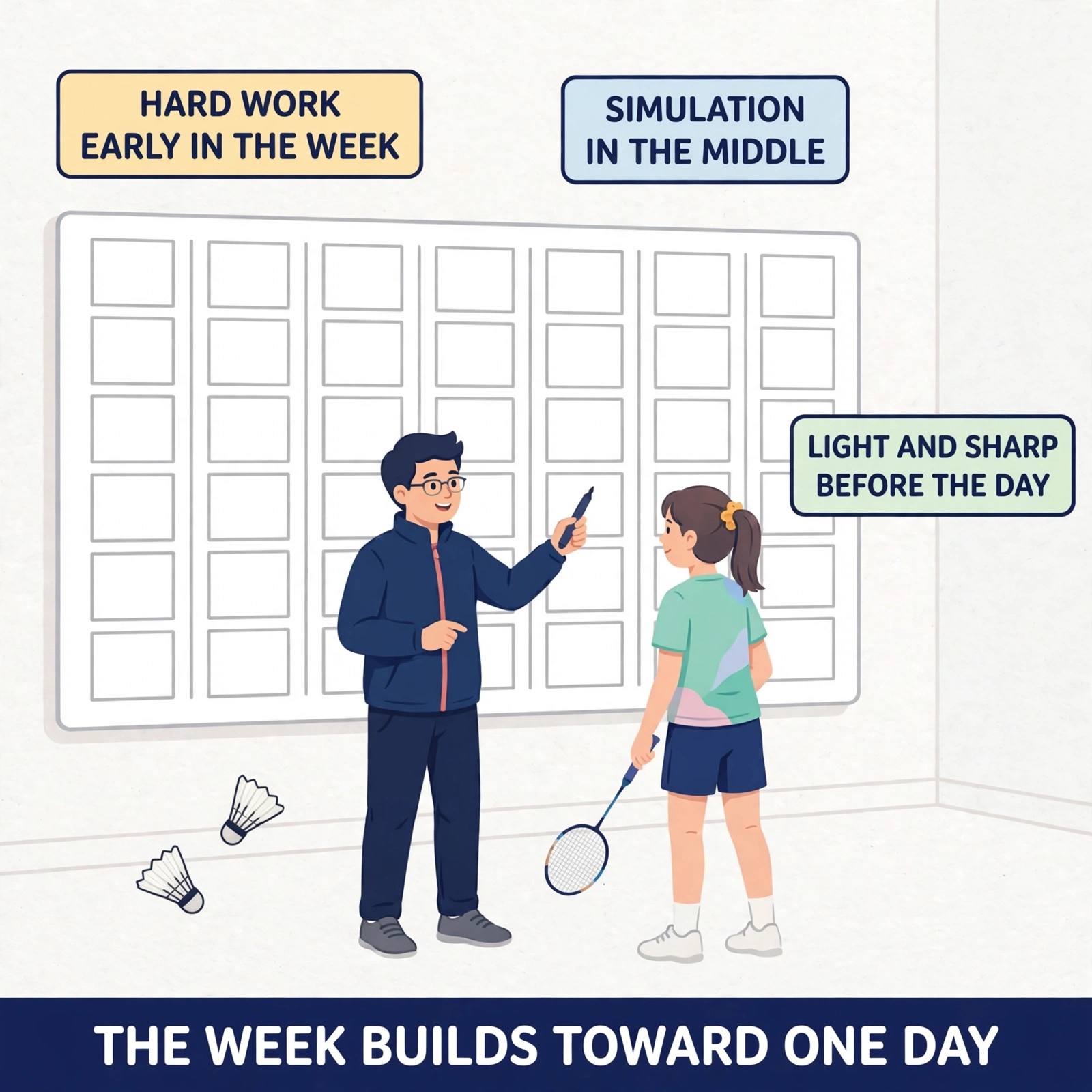
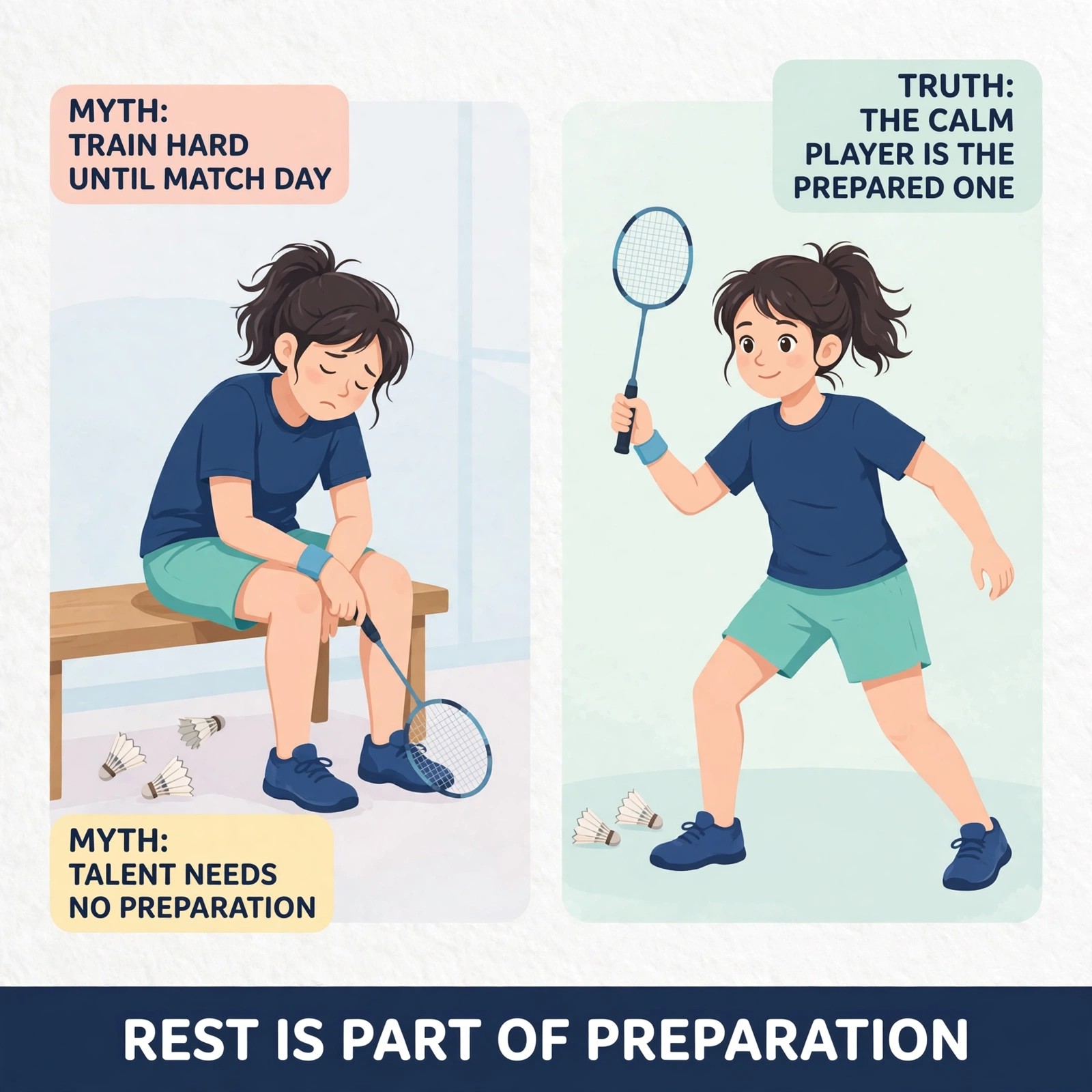
Shape the training week so it points at the match instead of away from it. The honest work belongs early in the week: the heavier rally blocks, the feeding sets, the patterns that still need fixing. As the match gets closer, training should get shorter and sharper, rehearsing what you will actually do rather than adding anything new. The last session before a match is a rehearsal, not an examination. Players who train at full stretch the day before usually carry the cost onto the court, and no pep talk refunds tired legs.
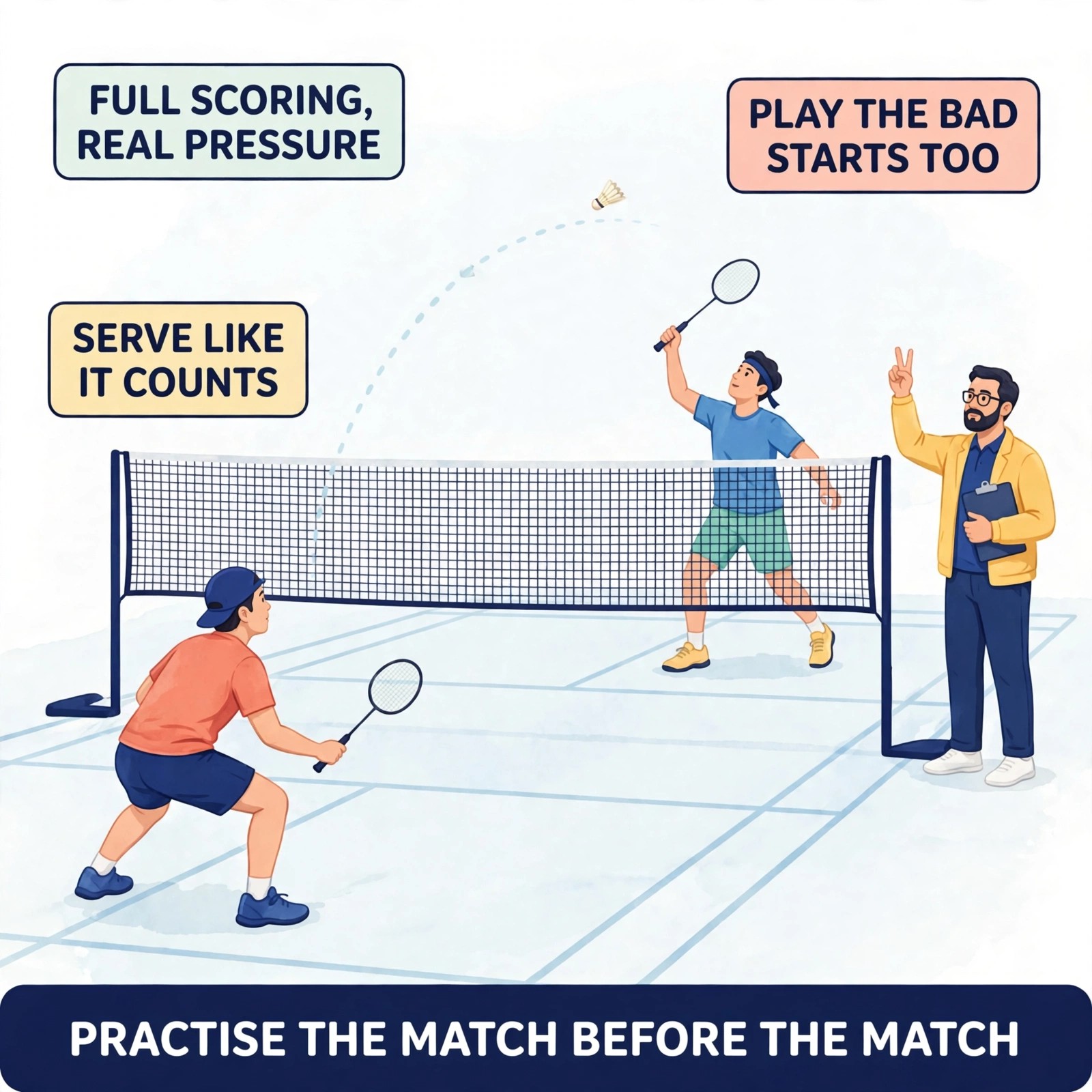
The centre of a good match week is simulation. Play games with full scoring, real serve routines and the breaks the rules allow, against partners who know what you are preparing for. Start some games a few points down. Start some at tight scores. Let your partner play the pattern you expect from your opponent, so your plan A meets its problem in practice first. Simulation does not remove match pressure, but it removes surprise, and surprise is what makes prepared players look unprepared in the first game of a real match.
Partners make preparation honest in a second way: they tell you what your game feels like from across the net. A training partner can say whether your flick serve is readable, whether your plan A pattern is easy to wait for, and whether your bad starts look rushed from outside. Walk through scenarios together calmly, away from the rally: what will you do at 18 all, what changes if the hall is slow, what is your first answer if their net game is stronger than expected. Deciding these things on a quiet Tuesday is preparation. Deciding them mid match is gambling. Keep one small notebook page per opponent style rather than per person, and your scouting stays useful for years.
Match Preparation Check #4
The Match Day Routine: Kit, Food And Timing
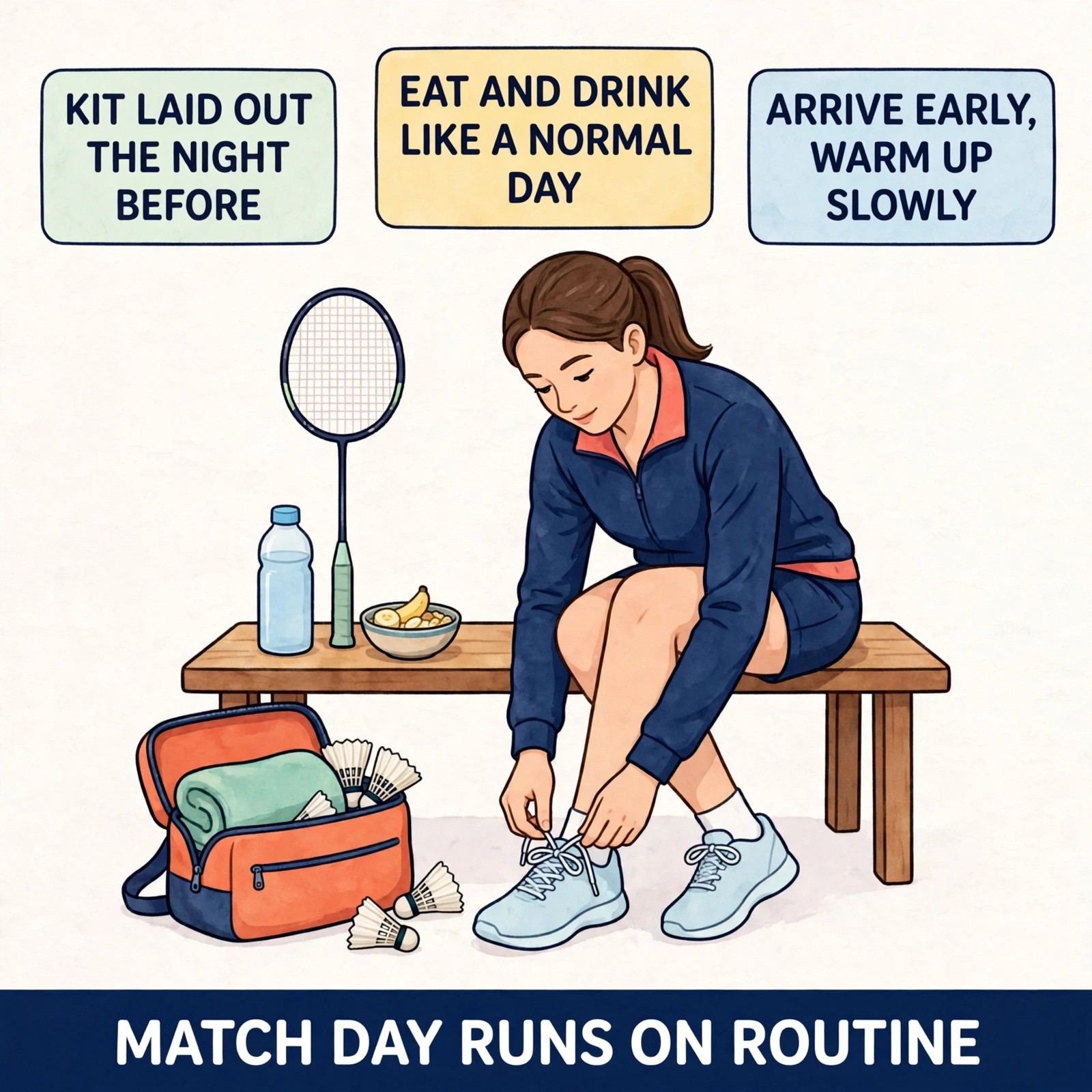
Match day runs best on a routine that was decided the night before. Lay out the kit and check it like a pilot checks a plane: rackets, shoes, spare shirt, towel, water bottle, and anything your body personally needs. Pack the bag and put it by the door. This sounds too simple to matter until the morning a player arrives at a hall with one shoe, and spends his warm up borrowing and worrying instead of preparing. The checked bag buys a calm morning, and a calm morning is worth real points across a season.
Food and drink on match day should be boring on purpose. Eat the kind of ordinary meals your body already knows, in good time before you play, and keep plain water going through the day. Match day is the worst day to experiment: a new dish, a new drink or a skipped meal can all sit badly once nerves join in. Players sometimes hunt for a special food that will give them an edge. The honest edge is familiarity. A body that has eaten normally arrives ready to work, and that is all food is asked to do.
Arrive early enough to learn the hall before the hall teaches you during points. Lights, floor grip, background and air drift change how a shuttle flies and how shots look, and a few calm minutes of hitting tells you most of it. Then warm up in the same order you always use: movement first, then easy rallies, then your first patterns, then serves. The routine is the same at home and away, in a school hall and in a stadium, so the day feels ordinary. Ordinary is the goal. Matches are won by players whose best game shows up, and best games like ordinary days. If the match is away from home, pack the night before and travel with time to spare, because a rushed arrival spends the calm you trained all week to build. Between matches on the same day, repeat the short version of the routine: shoes checked, plan reread, a few shadow swings, and quiet minutes away from the noise.
Match Preparation Check #5
Match Preparation Drills That Build Good Habits
The drills on this page share one purpose: they rehearse the match before the match. Start with the routine drill. With a partner, run your full pre match sequence exactly as you will on the day: same warm up order, same first patterns, same serve routine, timed like a real warm up. Repeat it until the sequence runs itself. A routine that has been rehearsed twenty times asks for no decisions when nerves arrive. A routine invented on match morning asks for decisions at the worst possible moment.
Next, train the plan itself. In the plan A and plan B drill, rallies may only start with your plan A pattern until your partner calls for the switch, and then only plan B may be used, so the change is practised as a decision and not as a panic. Add the pressure points drill: games that begin at a tight score, serves played under a count kept out loud, and a rule that every point starts with your full routine. The score is pretend. The habits it builds are not.
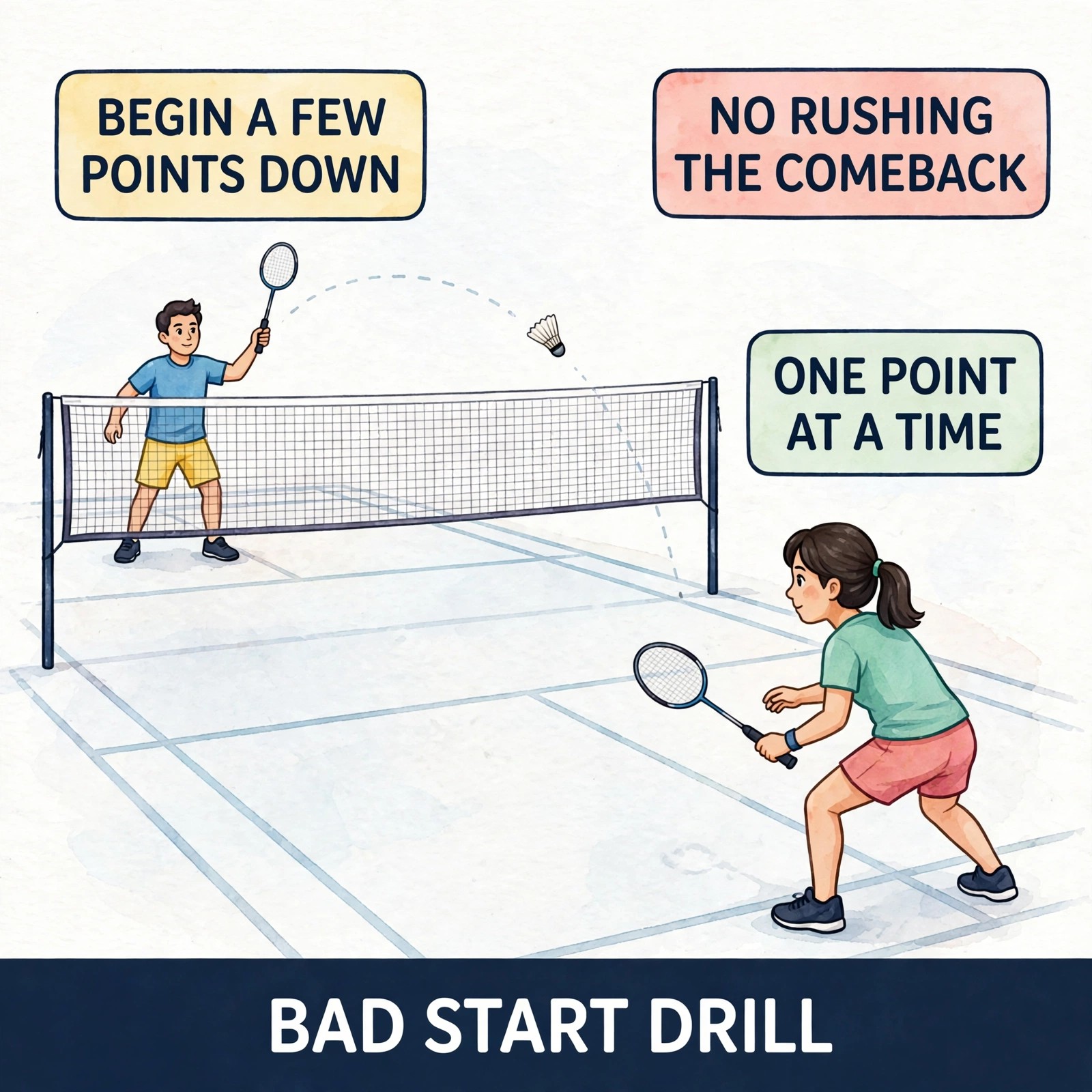
Finish preparation training with scenarios and a short review. The bad start drill begins every game a few points down, and the only target is a calm next three rallies, played to plan. Simulate the small disasters too: a slow hall, a noisy crowd corner, a string of line calls against you. After every match, real or simulated, write down one lesson only: the pattern that worked, or the moment the plan was abandoned. Preparation improves fastest when each match is allowed to teach exactly one clear thing. Keep the review kind as well as honest. A player who dreads the review stops doing it, and preparation quietly dies with it.
Myth vs Reality
Myths About Match Preparation
Myth: talented players do not need to prepare. Reality: the players who look most natural in matches are usually the ones whose preparation is invisible because it is habitual: the checked bag, the known plan, the rehearsed warm up. Myth: one last hard session the day before will sharpen you. Reality: it mostly tires you, and sharpness built over weeks is not added in a day. Myth: preparation means studying the opponent for hours. Reality: one or two honest patterns and a plan for them will carry most matches at club and school level.
Myth: new gear on match day lifts your game. Reality: an untested racket, new shoes or a fresh string setup adds questions your routine cannot answer, so new things are tested in training weeks, never unveiled in matches. Myth: you should copy a professional player routine exactly. Reality: their routine fits their life, their team and their body; copy the principle, which is a fixed order you trust, and build the details around your own days. Myth: preparing for an opponent weakness is unsporting. Reality: honest preparation respects the opponent by taking their best game seriously.
One more myth sits underneath the rest: that good preparation removes nerves and guarantees the result. It does neither, and any coach who promises otherwise is selling something. Preparation gives your nerves a plan to stand next to, and it gives your best game its best chance to appear. Matches still turn on the day, on the opponent, and on luck with the net cord. What preparation changes is who you are when those turns come: a player with a rehearsed answer, or a player hoping the match will explain itself.
Why Choose Us
Why Players Choose ST Badminton Academy
Players choose ST Badminton Academy for preparation work because we treat the week as part of the match. Your plan is built from your own rally evidence, not from a template: we watch what scores for you, name what leaks, and turn both into one line you can hold under pressure. Your simulation games are scored and reviewed like real matches in small groups. Groups stay at no more than four students, so your preparation is personal: your opponent problem, your hall, your routine, worked on in the sessions before your match day.
The sessions run the way this page describes. Early week work fixes the pattern your plan depends on. Midweek, simulation games test the plan against partners briefed to play your opponent’s habits, with bad starts and tight scores built in. The last session before a match is a rehearsal: warm up order, first patterns, serve routine, and a kit check conversation. Between sessions you keep the one line plan somewhere you will see it, and after the match you bring back the one lesson it taught, which becomes the next week starting point.
We are based in Setapak, Kuala Lumpur, and our students join us from across the Klang Valley, some travelling in from Wangsa Maju, Gombak and Setiawangsa for evening sessions. Preparation work sits inside regular badminton training rather than a separate course, because matches are where training is spent. Bring the fixture that worries you: the school rival you keep losing to, the tournament draw you fear, the hall where you always start slowly. Each one becomes a plan with drills attached, rehearsed until match day feels like a repeat, not a premiere.
FAQs: Match Preparation And Badminton Training in Malaysia (KL)
These are the questions players ask us most about match preparation, before they book and during their first weeks. The short version runs through all of them: study patterns honestly, hold a plan A and a plan B, rehearse under simulation, and let match day run on routine. If your question is not covered here, bring it to a trial session and we will test it in a simulation game, where preparation questions get honest answers.
Can a beginner improve match preparation in training in Setapak or Gombak?
Yes. Preparation is a habit, not a talent, and beginners can learn it from their first friendly match. In our Setapak classes we build one simple routine at a time in groups of no more than four students: a kit check, a one line plan, and a warm up order you repeat until it feels normal.
What is the first match preparation habit a new player should build in KL?
Build the one line plan first. Before any match, write down your best pattern and your backup in a single sentence each. That small habit organises everything else: your simulation in training, your warm up, and your decisions when a match starts badly. Kit checks and routines are added one at a time after it.
Why do I keep starting matches slowly at a serious level?
Because most slow starts are preparation gaps, not ability gaps. Players who arrive rushed, warm up randomly, or hold no plan spend the first game organising themselves while a prepared opponent is already playing. Film your first five rallies honestly: if your feet and your plan arrive late together, the fix is in your week, not your talent.
I always feel nervous before matches. Should I change my routine or accept the nerves first?
Accept the nerves first. Nerves before a match are normal, even for experienced players, and fighting them usually makes them louder. Keep your familiar routine, breathe out slowly, and let the nerves sit beside the plan. If worry or low mood keeps lasting beyond match days, proper support from a doctor or counsellor is the right step.
How can I prepare for matches when I train mostly on my own in between classes?
Use the quiet parts of preparation. Lay out and check your kit, write your one line plan, and shadow your warm up order and first patterns at home so the sequence costs no thought later. Watch one recorded match and note a single pattern to prepare for. Bring the plan to class and we will test it in simulation.
Do you coach match preparation beside badminton training near Wangsa Maju?
Yes. Our academy is based in Setapak, a short drive from Wangsa Maju, and match preparation is coached inside regular sessions there: match simulation with real scoring, routine building, and plans drawn from your own patterns. Groups stay at no more than four students, so your preparation is reviewed match by match, not left to chance.
Where does ST Badminton Academy teach badminton training in Malaysia?
We teach in Setapak, Kuala Lumpur, and students join us from across the Klang Valley. Preparation work sits inside normal training in groups of no more than four: your plan assessed in simulation games, your routine rehearsed until it is automatic, and your progress judged by how settled your first rallies look, week after week.
How do I book a trial session to test my match preparation?
Book a trial session with us in Setapak and bring your racket, court shoes and your next match worry. The coach will run a short simulation, watch how you warm up and start, and show you the first gap in your preparation before any regular training begins, so the plan starts from evidence.
What makes Mr Eric Chuar a suitable coach for match preparation in badminton?
Mr Eric Chuar coaches the academy sessions himself, with more than 15 years of coaching in Malaysia and Singapore. He teaches preparation the way this page describes: plans built from your own patterns, routines rehearsed under simulation pressure, and honest reviews after matches. No promises about results, just preparation that gives your best game its best chance to appear.
Badminton Match Preparation Training in Action


We benchmark our match preparation coaching against World Badminton (BWF) coaching standards and our own academy values: before any player trusts a training plan, they deserve honest checks. You can verify our coaches' credentials through the Badminton Association of Malaysia (BAM) coach education pathway.
One standard governs how we coach preparation: the process is judged before the result. A prepared player who loses to a better opponent has done his job and keeps our respect and his plan. A careless player who wins has homework, because luck is not a system. We check the honest things: was the plan made from evidence, was the week shaped toward the match, was the kit checked, was the review written. Results are recorded, never promised, and the process is what we promise to coach properly.
| Factor | Players Who Hope | Prepared Players PREPARATION |
|---|---|---|
| Frequency | 1 or 2 times a week. Mostly for fun and sweat. | A prepared player arrives with a plan for the opponent, the score and his own first pattern. |
| Drills Focus | Basic static feeding. Minimal footwork pressure. | Preparation is trained in the week: simulation, routines and a kit checked before the day. |
| Physical Conditioning | Rarely included. Just playing games on court. | Core, agility, and speed training included in every session to prevent injury and build stamina. |
| Tactical Awareness | "Just hit it over." No real game plan. | Video analysis, point construction, and learning to read the opponent's game. |
| Coach Ratio | Large groups (8-10 kids). Coach barely watches you. | Max 4 students. Mr Eric Chuar personally corrects every stroke and movement detail. |
| Goal Setting | Fun and exercise. | The prepared player starts settled, so his best shots show up from the first rally. |
| Long Term Result | Good recreational player. | A prepared player: plan made early, routine rehearsed, kit ready. |
Badminton Training For Match Preparation in Kuala Lumpur
Better preparation starts smaller than most players expect: one checked bag, one warm up order, one line of plan. This week, write your plan A and plan B from your last match evidence, lay your kit out the night before your next game, and rehearse your warm up in its match order once. Bring your one line plan to a trial session in Setapak, and we will test it in simulation and show you where it holds. Matches will still surprise you. You will just be ready for the surprise.


