Badminton And Mindfulness: Techniques For Mental Clarity And Focus (Focus Guide)
Ask a player what went wrong in a lost match and the answer is rarely a shot. It is a stretch of points after one mistake, a serve rushed at 19-19, a mind still arguing with the last rally while the next one starts. Mindfulness, stripped of mystery, is the habit of paying attention to the point you are actually playing. On a badminton court it is built from small, practical routines: a breathing pattern, a reset between rallies, and short rehearsal of what you are about to do. This guide explains those habits plainly, the way we coach them at ST Badminton Academy in Setapak, Kuala Lumpur.

Focus Check #1
What Mindfulness Means on a Badminton Court
Mindfulness is attention training, nothing more exotic. Between points, every mind wanders: to the error just made, to the score, to the people watching, to the game still to come. Wandering is normal and it is not the problem. The problem is staying there while the server is ready. The trainable skill is noticing the wander and bringing attention back to the next shuttle, the way you would bring a straying student back to the drill. Players already train their feet to return to base after every shot. This is the same return, done with attention.
The moments that ask for it are easy to name. The first point after a mistake. The serve at 19-19 in the third game. The long wait while an opponent ties a shoe at exactly the wrong time. You cannot control any of those moments. What you can control is the ten or so seconds before the next rally: where your feet stand, how your breath moves, what your eyes rest on. Focus habits live in those seconds, and matches turn on them often enough that coaches treat them as skills, not personality.

Focus Check #2
Breathing Routines That Settle the Mind
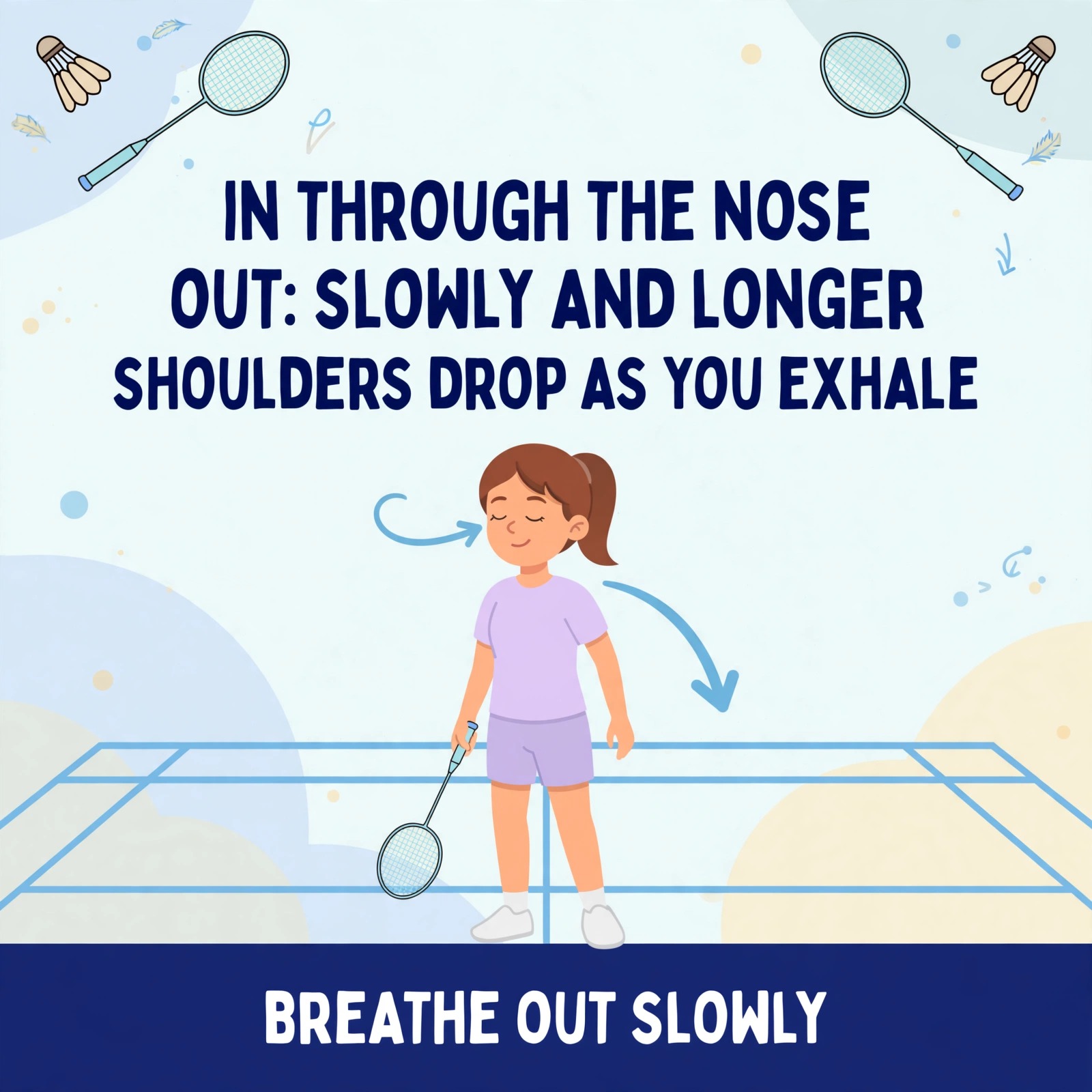
Breathing is the first tool because it is always available and it works on the body directly. The basic pattern is simple: breathe in slowly through the nose, then breathe out for longer than you breathed in, letting the shoulders drop as the breath leaves. A few cycles like that settle a racing heart and give the mind one plain job to do. On court, use it at the back of the playing area while you wait to receive, or as you walk back to serve. Nobody needs to know you are doing it. That privacy is part of its usefulness.
Two short forms cover most situations. The single breath reset is one slow exhale before you serve or receive, a way of drawing a line under the previous point. The counted pattern is for bigger pauses, between games or during a break: breathe in for a count of four, hold briefly, breathe out slowly for a count of six, repeated a few times. Long exhales are the active ingredient, so keep the out breath the longest part. If counting feels fussy, drop the numbers and simply make every out breath slower than the one before.
Breathing that has never been practised off court rarely appears on court, so give it a small home in the day. Two minutes in the morning, or two minutes before sleep, breathing in and out slowly with attention on the air moving. That is the whole practice. It feels too small to matter until the first time it works at 19-19 and you realise the habit was there because you built it on quiet days. Skills under pressure are not invented. They are borrowed from practice, and breathing is no different from footwork in that respect.
Focus Check #3
The Between Rally Reset: Seconds That Matter
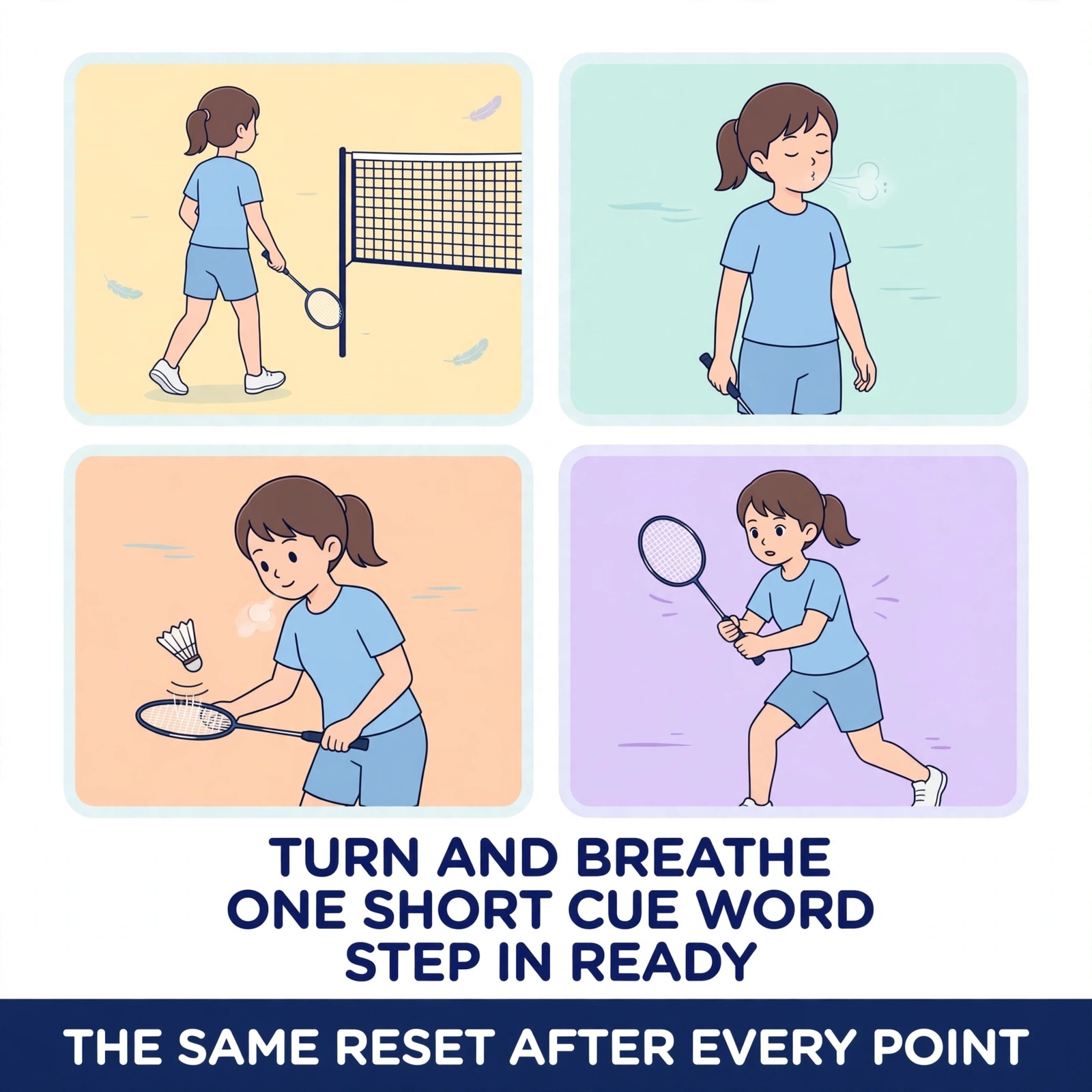
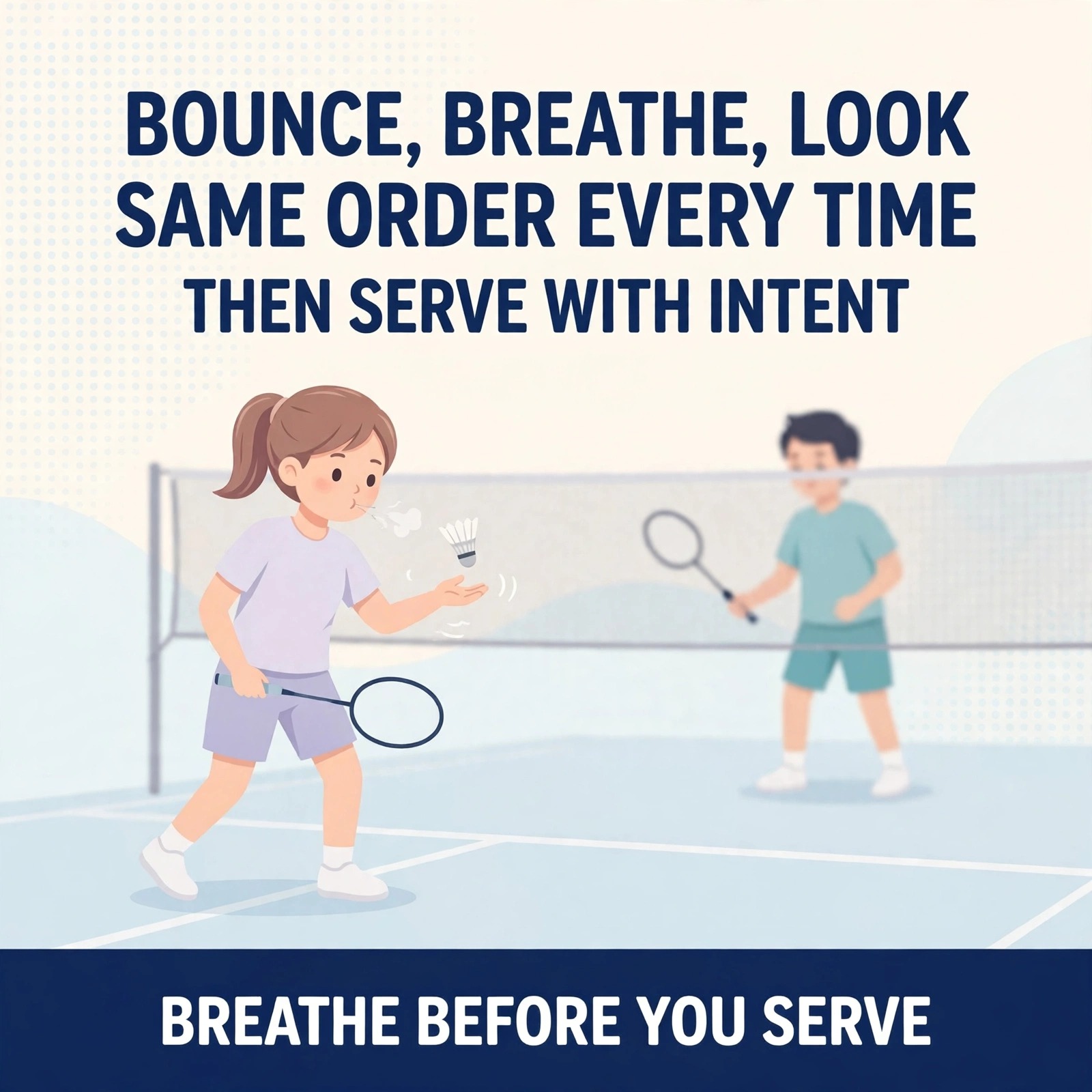
The between rally reset is where mindfulness becomes visible. Build a routine with the same order after every point: turn away from the net for a moment, take one slow breath, do one small physical thing such as touching the strings or bouncing the shuttle, say one short cue word silently, then step in ready. The routine takes seconds and asks nothing dramatic. Its power is sameness. After a winner or an error, the body runs the same steps, so the mind learns that every point ends the same way and the next one starts clean.
After an error, the reset has one extra job: closing the account. Name the mistake once, plainly and silently: late, rushed, wrong choice. Then it is done, and the routine carries you back to position. What the reset replaces is the loop most players know too well: replaying the miss during the next rally, apologising to a doubles partner for three points, or rushing the serve to get the bad feeling over with. Dwelling is also a habit. It just happens to be one that costs points, so we train a better one in its place.
The reset matters after your best shots too. A brilliant rally won often rushes the next serve more than an error does, because excitement speeds everything up and the following point is played at the wrong tempo. Same routine, same breath, same cue word. Calm is not the absence of feeling; plenty of feeling is fine. Calm is the routine holding regardless of what the feeling is. Watch experienced players and you will see it: win or lose the point, the walk back looks identical, and that sameness is trained, not temperament.
Focus Check #4
Seeing the Shot Before You Play It
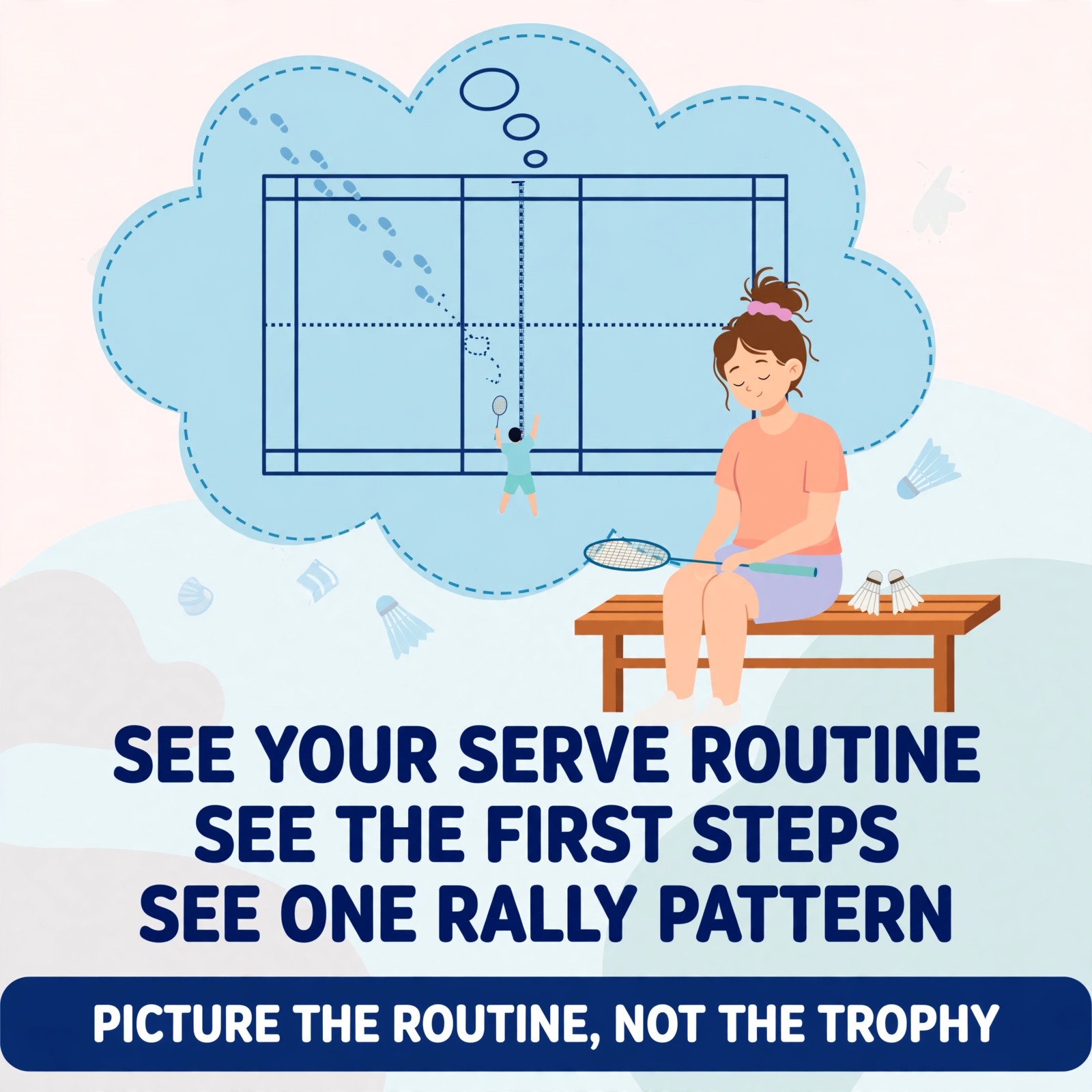
Visualisation sounds grand and is actually just rehearsal done sitting down. Before a match, take two or three quiet minutes and picture three specific things: your serve routine, step by step; your first movements, the split step and the push to the front corners; and one rally pattern you genuinely use, such as pushing to the back and following in. Short, concrete and yours. The pictures give the mind a plan to hold instead of a worry to chew, and the first minutes of the match feel familiar because you have already visited them once.
The same habit works inside training. Before a drill starts, picture the movement once: the footwork path, where the racket starts, how the recovery looks. Then do the rep. Many players find the first rep starts cleaner when the mind has run it once, the way a serve feels steadier after the practice swing. Coaches use rehearsal this way because it costs thirty seconds and no energy. Keep it attached to real actions you are about to perform, and it stays a training tool rather than daydreaming.
One rule keeps rehearsal honest: picture process, not outcomes. Seeing yourself serve well, move early and play your pattern steadies the mind, because all of that is under your control. Seeing yourself holding a trophy feeds pressure, because the outcome is not. If your pictures keep drifting to winning and losing, shorten them: one serve, one pattern, done. The aim is a player who arrives at the first rally with a plan in hand, not a verdict in mind. Attention goes where you point it in practice, which is the entire subject of this page.
Focus Check #5
How Mindfulness Fits the Training Week
Across the week, mindfulness fits in the cracks of training rather than needing its own sessions. Two minutes of breathing on ordinary days. The reset used on every rally in practice, not saved for matches. A short rehearsal before games. That is the whole menu, and its smallness is the point: habits attached to things you already do are the habits that survive busy weeks. Players who build a grand thirty minute routine in week one are usually ex players of that routine by week three.
One more quiet habit belongs here: after training, name one thing that went well. A rally you constructed, a partner who pushed you, a drill that finally clicked. A sentence, said or written, is enough. This is gratitude without ceremony, and it keeps motivation steadier across a long season than a diet of only corrections. Players return more willingly to sports they remember enjoying. It also keeps a bad session in proportion: one named good thing proves the evening was not all one colour.
Progress in focus habits shows in plain signs a coach can count. Fewer rushed serves in the points after an error. A player who walks back to base at the same pace whether the last rally was won or lost. Waits between games spent breathing instead of brooding. Note them monthly alongside the usual training notes. You are not trying to become a person who never feels pressure; pressure at big points is normal and even useful. You are building a routine that still works while the pressure is there.

Myth vs Reality
Myths About Mindfulness in Sport
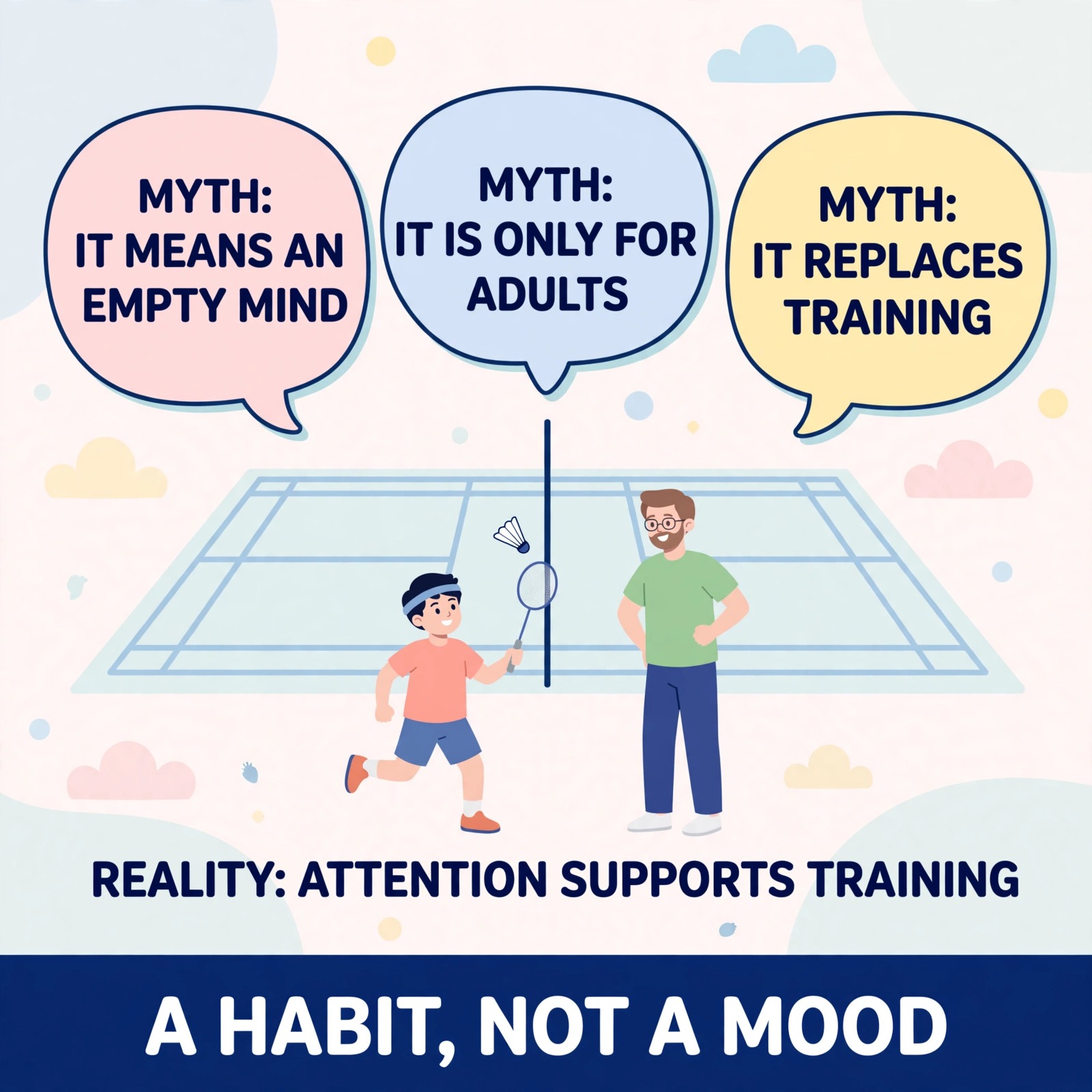
Myth one: mindfulness means emptying the mind and feeling calm all the time. Anyone who has sat for two minutes of breathing knows the mind does the opposite of emptying; it produces thoughts at industrial speed. The skill was never stopping thoughts. It is noticing where attention went and returning it, the same way you return to base after a shot: without drama, for the five hundredth time. Calm players are not thought free. They are just practised returners, and the returning can be learned by anyone willing to do it between points.
Myth two: this is only for adults and professionals, or it replaces real training. Juniors often learn resets faster than adults, because a reset is simply a routine and juniors love routines they can perform. And no focus habit replaces footwork, technique or fitness; attention decides whether the skills you already own show up in the points that matter. Think of it as the difference between having shots and having them available at 19-19. The training builds the shots. The habits keep them reachable.
The honest summary is that mindfulness for badminton is a set of small, repeatable habits: breathe out slowly, run the same reset after every point, rehearse your routines before you play them, and name one good thing when you finish. None of it is therapy and none of it is magic. It is attention treated as a skill, trained in the seconds between rallies where matches quietly turn. Players who build these habits do not stop feeling pressure. They stop donating points to it.
Why Choose Us
Why Players Choose ST Badminton Academy
At ST Badminton Academy, focus habits are coached inside ordinary training rather than in separate talks. The reset is used on training rallies until it is automatic, so it is already there when a match asks for it. Groups stay at four students or fewer, which lets a coach see who rushes after errors and who drifts during waits, and correct it the way any other habit is corrected: on the spot, kindly, and often. Breathing is taught before hard sessions so players meet it calm first. Badminton stays the main sport; attention is simply coached as one of its skills.
Head coach Eric Chuar leads the programme, with over 15 years of coaching experience across Singapore and Malaysia. Eric’s rule for focus is the same as his rule for footwork: the same routine, every repetition. He treats a rushed serve after an error as a coaching signal, not a character flaw, and he teaches the reset in plain words with no mystique attached. Players learn that a wandering mind is normal and a returning mind is trained, which removes the shame that stops many players from working on this side of the game at all.
You will find us in Setapak, Kuala Lumpur, easy to reach from Wangsa Maju, Melati Utama, Danau Kota and Gombak. If your matches unravel after one mistake, your serve speeds up at the worst moments, or your mind is anywhere except the rally you are playing, come and try a session with us. We will teach you the reset the same way we teach a split step: step by step, then live in rallies, until it holds when you need it.
FAQs: Badminton Mindfulness Training in Malaysia (KL)
Mindfulness raises practical questions about breathing, resets and where practice belongs. Here are the answers we give most often.
Where can I learn mindfulness for badminton if I live in Setapak or Gombak?
With us, in Setapak. ST Badminton Academy is based in Setapak, Kuala Lumpur, and players travel in from Gombak, Wangsa Maju, Melati Utama and Danau Kota. Focus habits are coached inside our regular small group sessions: the between rally reset used live in training rallies, breathing before hard work, and short rehearsal before practice games, all in plain language.
What does mindfulness practice look like for a badminton player in KL?
Plain and short. Two minutes of breathing on ordinary days, the same reset routine after every point in training and matches, and two or three minutes before a match picturing your serve routine, your first movements and one rally pattern you use. No apps, no equipment and no long sits. The habits attach to things a player does every day.
How often should I practise breathing work to improve at a steady level?
Little and often beats long and rare. A couple of minutes of breathing most days builds the habit, and the reset should be used on every training rally, which is where the real repetitions live. Match day then borrows what practice built. One long session a month does very little; two quiet minutes a day quietly does a great deal.
Can I use mindfulness between rallies if a match is moving fast?
Yes, that is exactly where it belongs. The reset is built for speed: one slow breath out, one short cue word, step in ready. It takes a few seconds, fits inside the normal gap between rallies, and needs no pause in play. If you can bounce the shuttle once before serving, you already have time for the whole routine.
Should I practise focus work before matches or during training?
Both, in that order. The habits are trained during practice, on ordinary rallies where the cost of learning is low, then used in matches where they are needed. Players who only try focus work for the first time in a match find it slips away under pressure. Trained in practice, the reset runs by itself when the match gets loud.
Do you coach focus and breathing routines near Wangsa Maju?
Yes. Our base is in Setapak, a short drive from Wangsa Maju, and focus coaching runs inside our regular small group sessions rather than as a separate course. Your reset routine is set by a coach, watched in live rallies, and corrected the same way footwork is corrected, until it holds in practice games.
Does your academy teach between rally resets in Malaysia?
Yes. Every player learns the same frame: turn, breathe, one small physical action, one cue word, step in ready. The details are personalised, because one player’s cue word is feet and another’s is watch the shuttle, but the frame is shared and it is practised on training rallies until it becomes automatic in matches.
Where does ST Badminton Academy coach badminton in Setapak?
At our home base in Setapak, Kuala Lumpur. Mindfulness for badminton, meaning breathing, resets and rehearsal, is coached inside regular badminton training with no more than four students in a group. Players come in from Wangsa Maju, Gombak and across the Klang Valley, and trial sessions can be arranged through the academy.
What makes Mr Eric Chuar a suitable coach for focus training in badminton?
Eric teaches focus the way he teaches everything: a routine, repeated until it holds. He watches for the signals, rushed serves after errors, shoulders climbing during waits, and corrects them on the spot with the reset. Over 15 years of coaching, he has found that players relax once they learn a wandering mind is normal and returning is a skill.
Badminton Mindfulness Training in Action


One Standard for Every Player and Every Session
Hold your focus work to five standards. One slow breath before serves and receives. The same reset after every point, won or lost. A cue word chosen and kept. Rehearsal that pictures routines, never trophies. And one good thing named after every session. Review those five monthly, the way you would review any other skill. Standards like these turn attention from a mood you hope for into a habit you own.
| Factor | Rushing | A Mindful Match Routine FOCUS |
|---|---|---|
| Frequency | 1 or 2 times a week. Mostly for fun and sweat. | Two minutes of breathing and one clear plan before the first rally. |
| Drills Focus | Basic static feeding. Minimal footwork pressure. | A short reset after every point: breathe, one cue word, then step in ready. |
| Physical Conditioning | Rarely included. Just playing games on court. | Core, agility, and speed training included in every session to prevent injury and build stamina. |
| Tactical Awareness | "Just hit it over." No real game plan. | Video analysis, point construction, and learning to read the opponent's game. |
| Coach Ratio | Large groups (8-10 kids). Coach barely watches you. | Max 4 students. Mr Eric Chuar personally corrects every stroke and movement detail. |
| Goal Setting | Fun and exercise. | Attention kept on the next shot instead of the last mistake. |
| Long Term Result | Good recreational player. | A player who stays calm and clear from the first point to match point. |
Badminton Focus Coaching in Kuala Lumpur
Attention is a skill, and badminton gives you a training ground for it twenty times a game: the seconds between points. Breathe, reset, rehearse, and return, and the shots you already own will still be there at 19-19. If you would like those habits coached rather than left to chance, train with us in Setapak. Bring your racket and your questions. We will start with the ten seconds after your next mistake.




