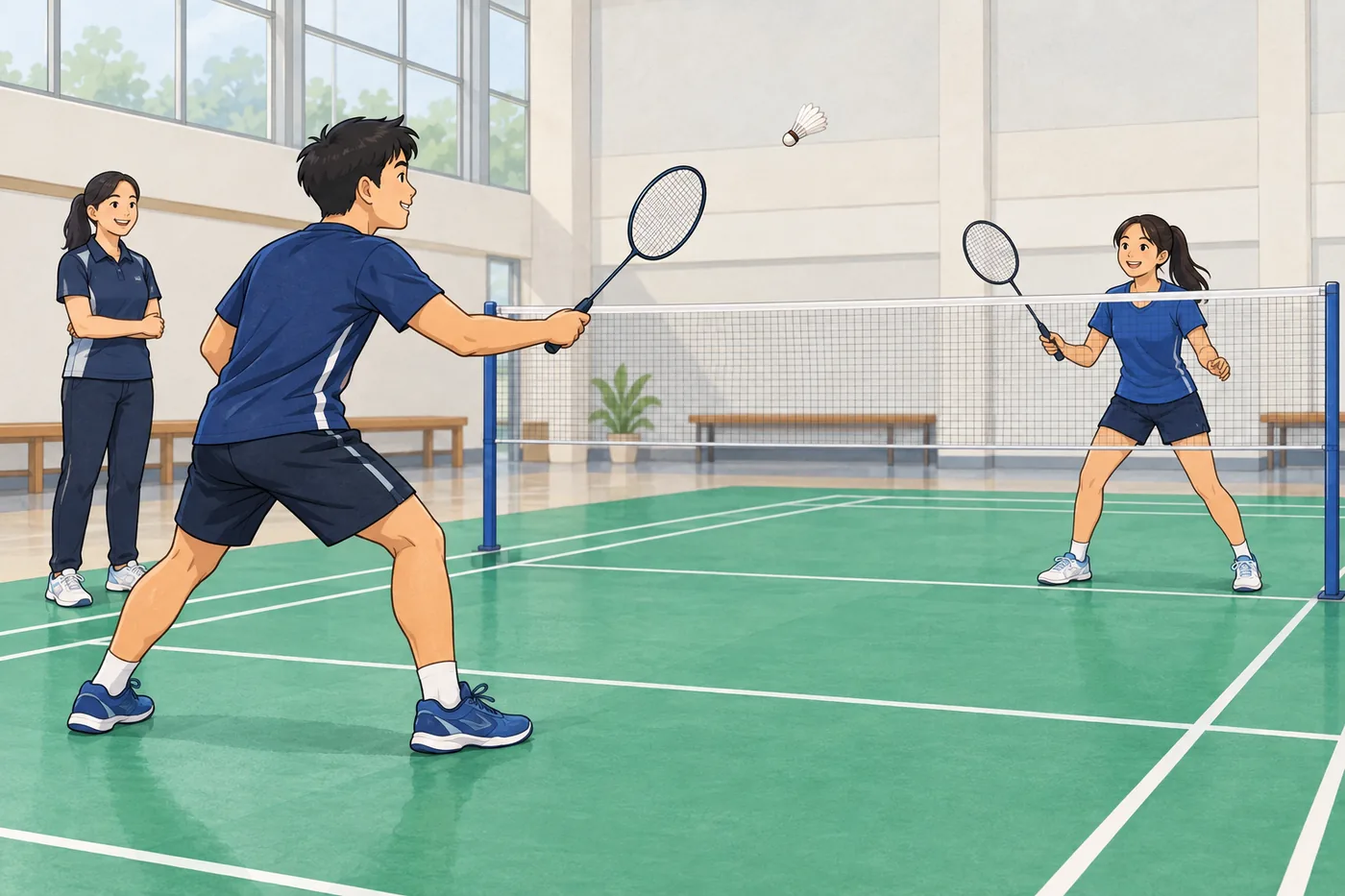
A Week in the Life of a State Player: Sample Badminton Training Schedule
This page shares a realistic, sample badminton training schedule for a state-level player, based on how our coach structures weekly programs for advanced juniors around Setapak, Wangsa Maju, Cheras, Kepong and Ampang. It shows the commitment required balancing court intensity, gym work, and recovery to reach high-performance levels in Malaysia.
The Reality
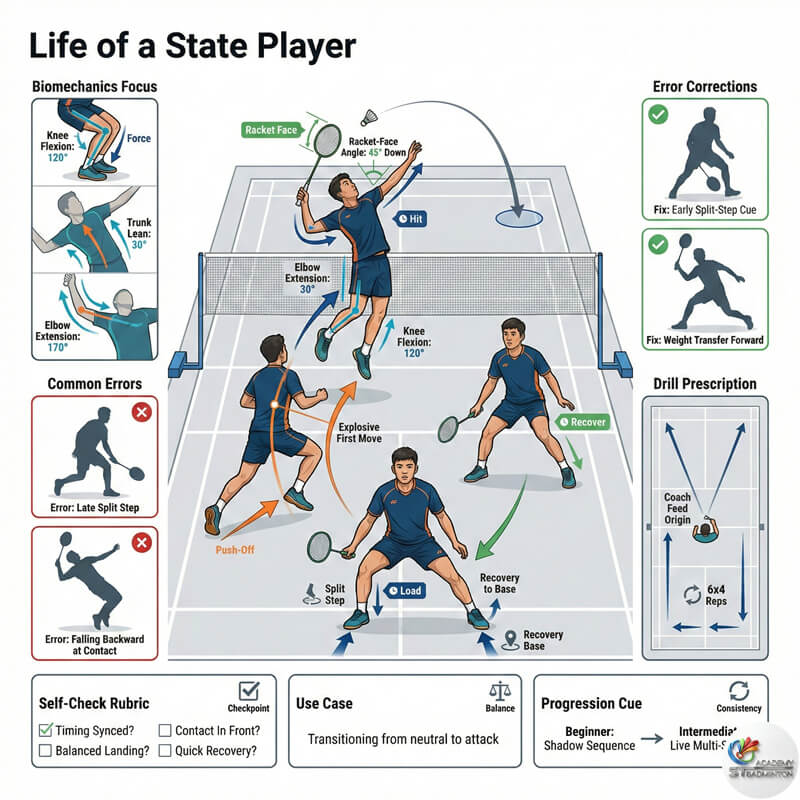
Life of a State Player
Being a state-level junior or high-performance player in Kuala Lumpur is demanding. It is not just about playing games; it involves a disciplined weekly rhythm of technical correction, high-intensity multi-shuttle drills, gym conditioning, and tactical sparring. Most school-age athletes in Setapak, Wangsa Maju, and Cheras attend school in the morning, do homework in the afternoon, and train in the evenings.
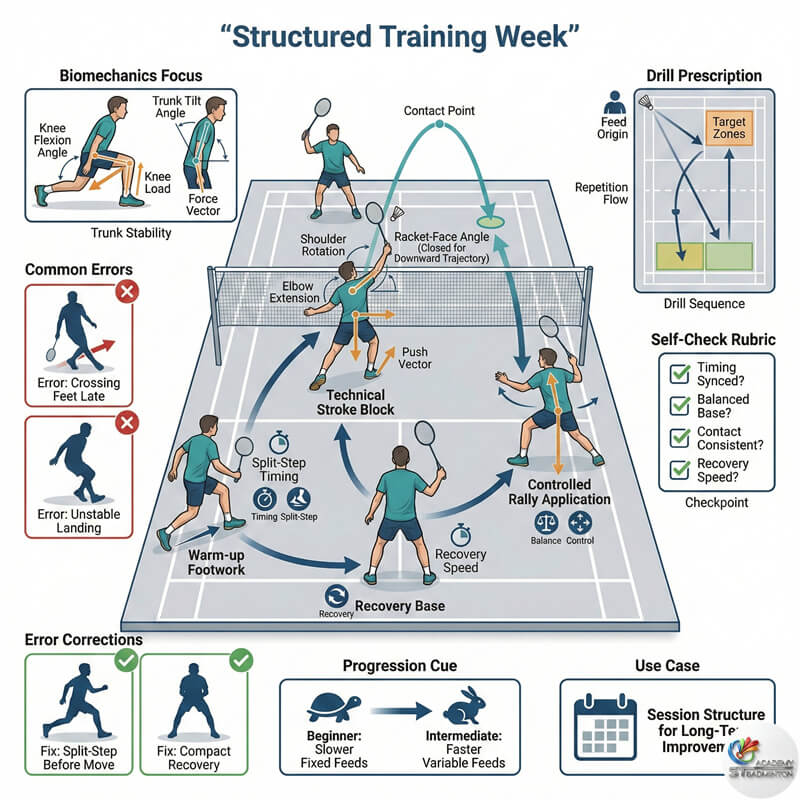
The sample schedule below is a “behind-the-scenes” look at what this workload actually involves. It includes 5–6 court sessions and 2–3 physical sessions per week. However, notice that it also includes active recovery and rest. Without rest, high-quality training is impossible. This structure helps players from areas like Gombak and Ampang build resilience without burning out.

Monday to Wednesday
High Intensity & Strength
Monday: Technical & Multi-Shuttle (Evening)
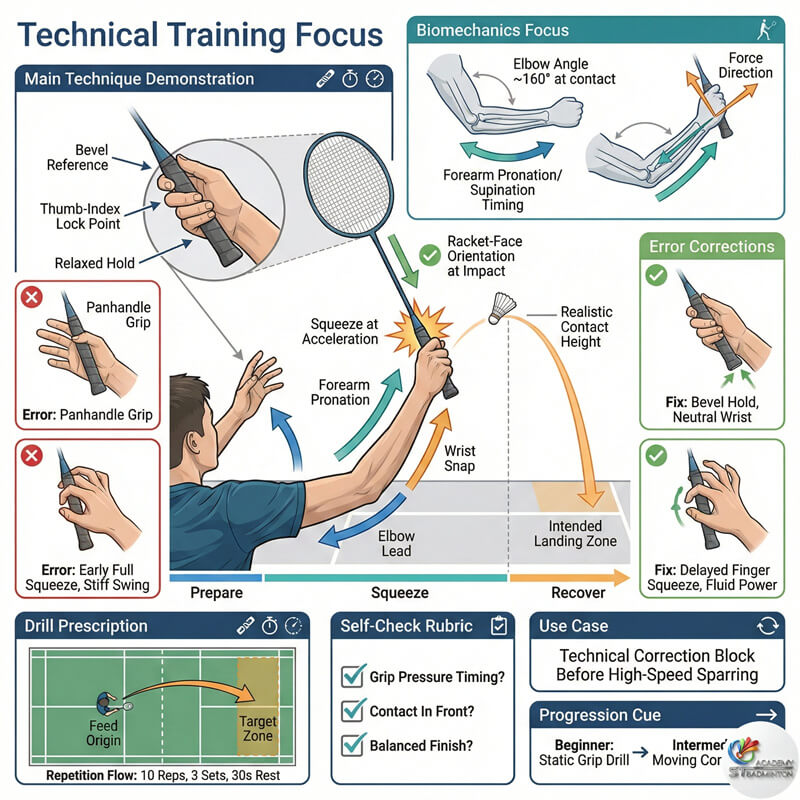
The week starts with high volume. After a warm-up, players engage in multi-shuttle drills focused on speed and consistency. The goal is to build stroke quality under pressure. Intensity: High.
Tuesday: Gym/Strength & Agility (Evening)
A physical focus day. Players work on lower-body power (squats, lunges) and core stability in the gym, followed by on-court agility ladders and shadow footwork. This supports injury prevention. Intensity: Medium/Physical.
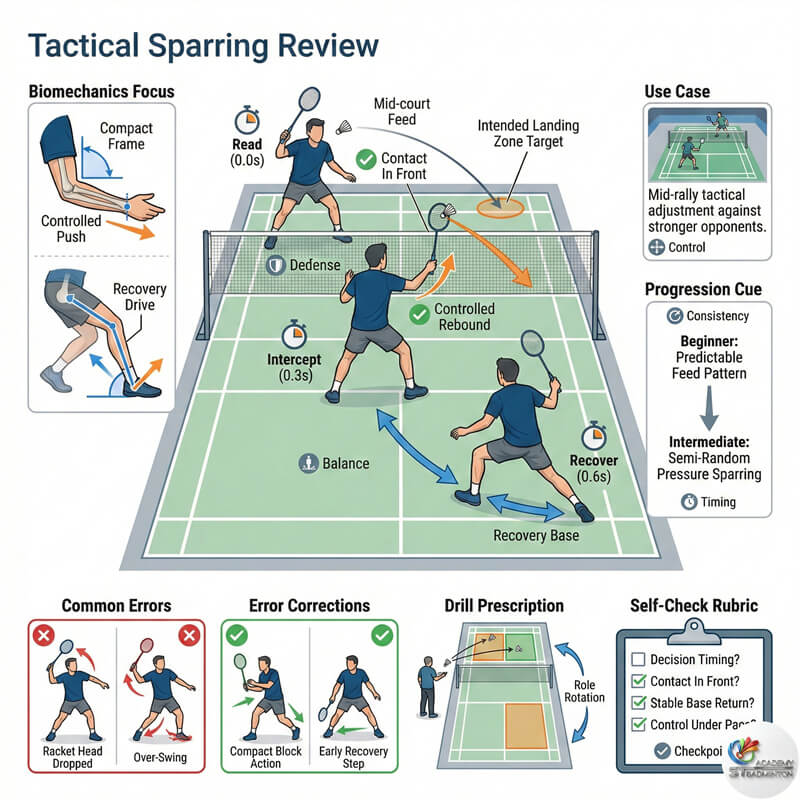
Wednesday: Matchplay & Sparring (Evening)
Mid-week is often game day. Players apply Monday’s skills in tactical sparring sessions, sometimes playing against older or stronger partners to test their defense and stamina. Intensity: High.
Thursday to Sunday
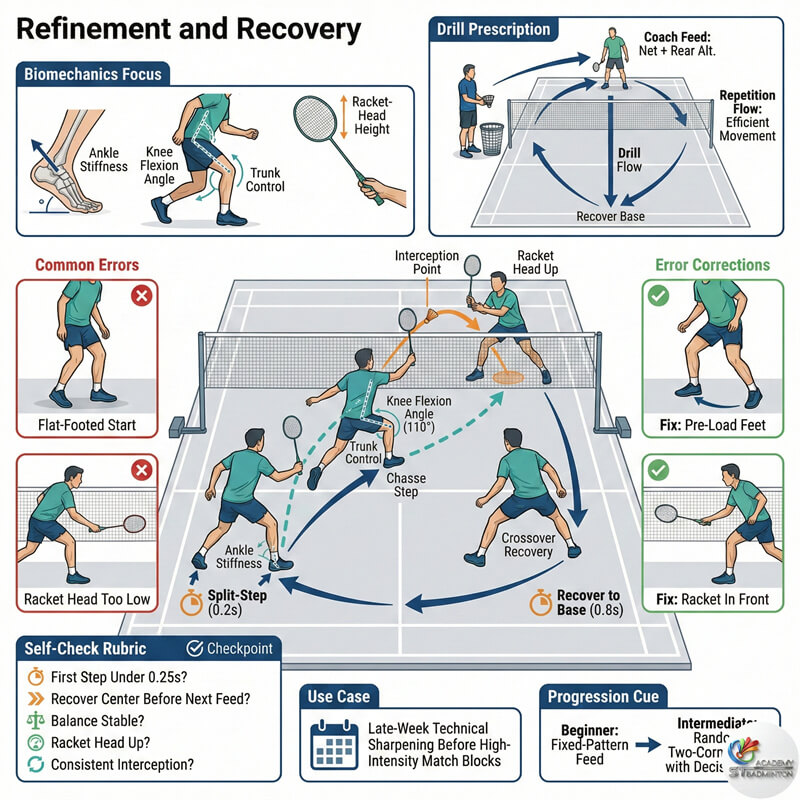
Refinement & Recovery
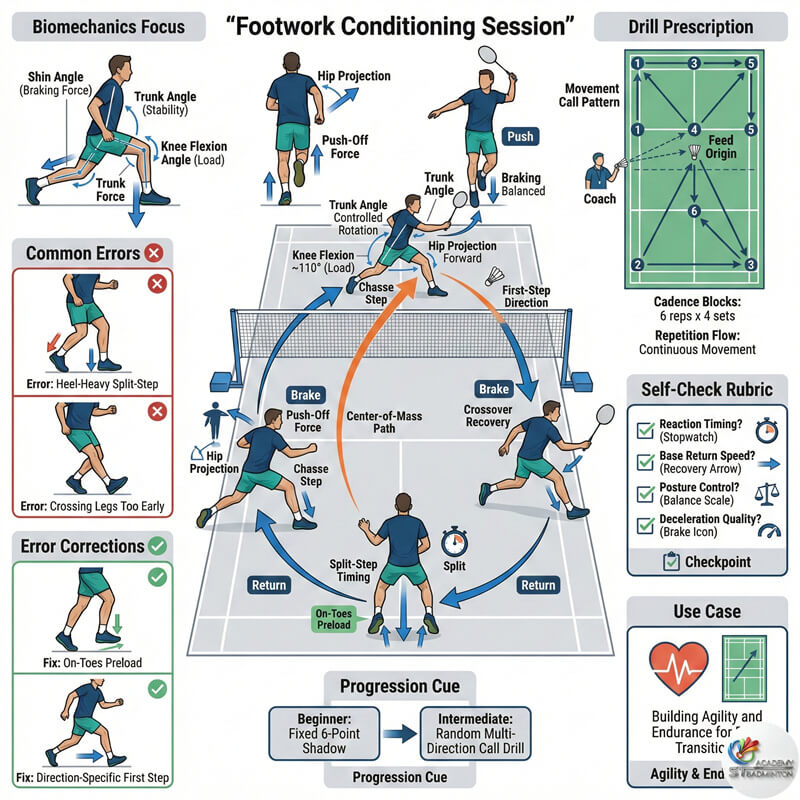
Thursday: Footwork & Movement (Evening)
Specific endurance work. Focus on efficient movement patterns to cover the court with less energy. This session reinforces the “engine” of a state player. Intensity: Medium.
Friday: Skills & Tactics (Evening)
A slightly lighter load focusing on sharp serve/return skills, net play, and fixing specific errors from Wednesday’s sparring. Intensity: Light/Medium.
Saturday: Long Sparring & Video (Morning/Afternoon)
A longer session often involving full match simulations. Some players may do video review to analyze tactics. Intensity: High.
Sunday: Rest & Active Recovery
Essential for growth. Complete rest or light stretching/swimming. No heavy training allows the body to repair for the next week.
Balance & School
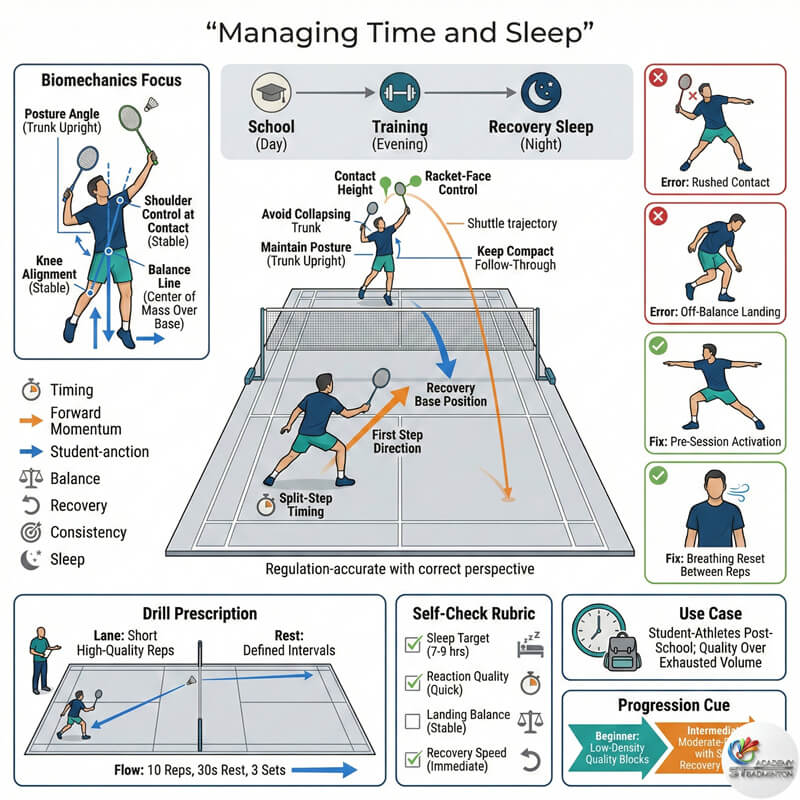
Managing Time & Sleep
The biggest challenge for juniors in Kuala Lumpur is not the training itself, but the time management. State players from Setapak and Kepong often finish school, eat a quick meal, and travel straight to training. Homework must be done efficiently, often in the afternoons or on weekends.
Sleep is the most critical recovery tool. Aiming for 8 hours is tough but necessary. Our coach emphasises that if school results drop too much or sleep is consistently under 6 hours, training load must be adjusted. Success in badminton requires a healthy, rested brain, not just strong legs.
Adaptation
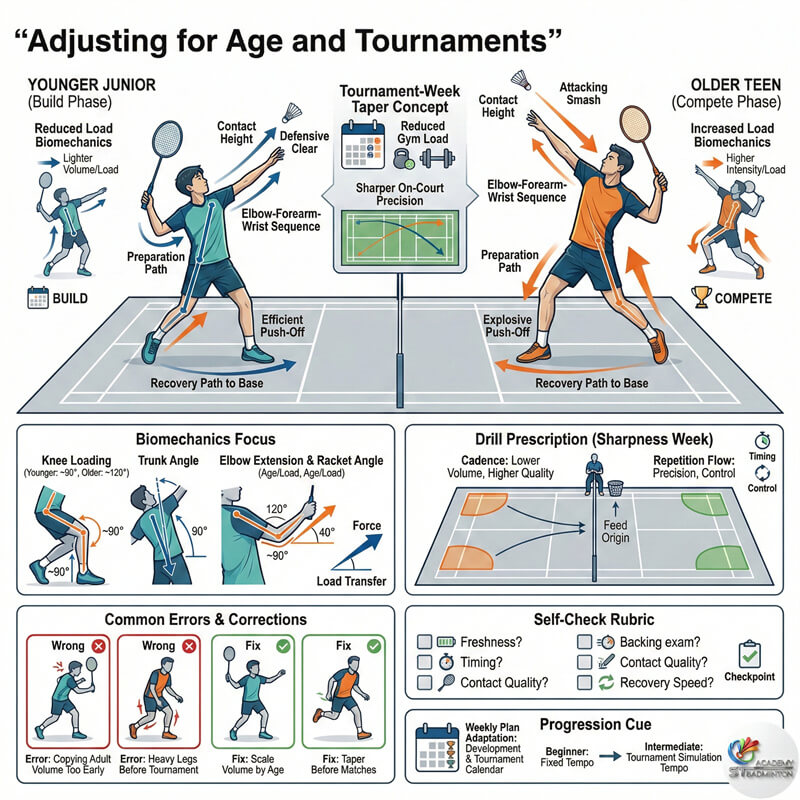
Adjusting for Age & Tournaments
This schedule is a framework, not a rigid rule. Younger juniors (under 12) might do fewer sessions (e.g., 3-4 times a week) compared to teenagers. During tournament weeks, the heavy gym sessions are reduced to keep legs fresh, and training shifts towards sharpness and tactics.
Our coach adapts this plan for different players in Setapak and Petaling Jaya. Some need more footwork drilling, while others need more sparring experience. The key is consistent, structured effort over months and years, rather than a few weeks of crazy intensity followed by burnout.

Realism & Health
A Sample, Not a Rule
This “week in the life” is a guide to help you understand the commitment level of state players. It is not a rule that everyone must follow immediately. Jumping from 1 session a week to 6 sessions can cause injury. Progress must be gradual.
Parents should discuss with coaches before drastically increasing training volume. Monitor for signs of fatigue, joint pain, or loss of motivation. The goal of ST Badminton Academy is to build long-term potential, not to break players with excessive load too early.
The Difference
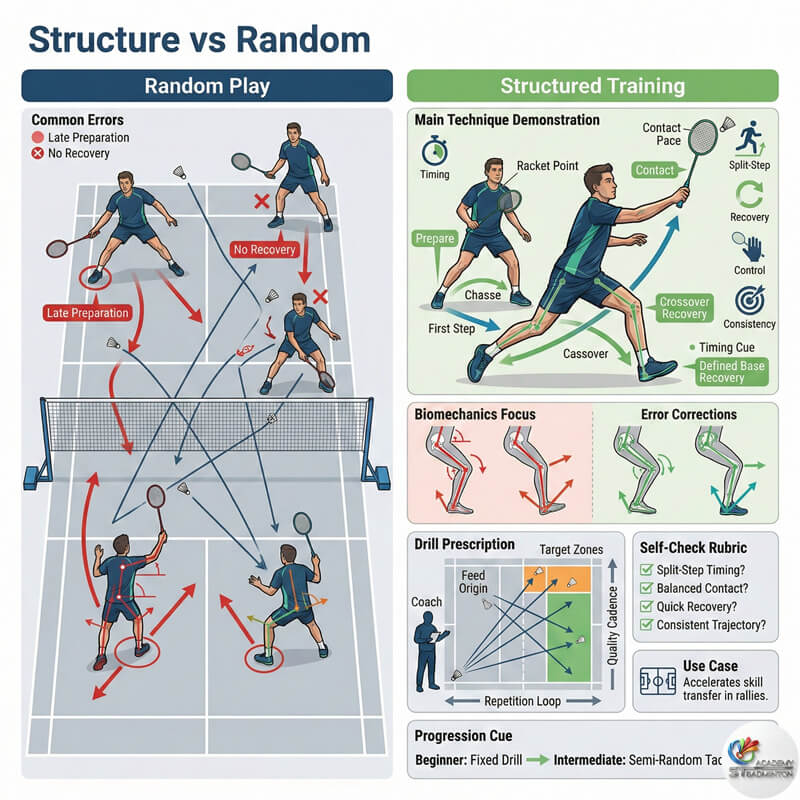
Structure vs Random
The main difference between a recreational player and a state-level player is structure. Recreational players often just “play games” randomly. State players follow a plan where some days are hard, some are technical, and some are for recovery. This cycle allows for continuous improvement.
If you live in Setapak, Wangsa Maju, or Cheras and want to move to the next level, start by adding structure. Even if you only train 3 times a week, make one session purely technical drills, one session physical/footwork, and one session matchplay. This mimics the professional approach on a smaller scale.
FAQs: State Badminton Training Schedule in KL
Common questions from parents and players in Kuala Lumpur about the training workload of state-level athletes.
How many hours per week does a typical state badminton player train?
State-level juniors typically train around 15–20 hours per week, spread across 6 days. This includes on-court sessions, gym work, and tactical analysis. However, this volume depends heavily on age and school workload. Younger players in Setapak or Cheras might start with 8–10 hours and build up gradually over years.
Can my child follow this sample badminton training schedule?
Yes, your child can aim towards this pattern, but it must be adjusted step by step. Copying a pro schedule immediately often leads to burnout or injury. At ST Badminton Academy Malaysia, we prefer to start players with a balanced mix of 3–4 sessions, monitor their recovery and exam results, and slowly increase the intensity if they cope well.
How should we adjust the training program during exam periods?
During exams (UPSR, SPM, IGCSE), training load should decrease significantly. We usually recommend reducing to maintenance mode perhaps 2 lighter sessions per week just to keep the feeling and relieve stress. Academic performance is important, and a tired brain cannot study effectively. Training can ramp back up after exams are over.
Do state players still get a full rest day in their weekly routine?
Absolutely. A full rest day (usually Sunday) is non-negotiable in a professional schedule. This is when muscles repair and the mind relaxes. Without it, the risk of overuse injuries like shin splints or shoulder pain increases drastically. Recovery is part of the training, not skipping it.
What is the difference between a normal academy schedule and a state-level program?
A normal academy schedule might focus on learning skills and fun matchplay 1–2 times a week. A state-level program is periodised meaning it changes focus throughout the year (e.g., strength phase, speed phase, tournament phase). It includes specific physical conditioning and video analysis, demanding much higher discipline and time commitment from the player and family.
Is this schedule suitable for adults in Wangsa Maju?
Adults with full-time jobs usually cannot train 6 days a week at high intensity. However, you can adapt the principles. For example, Monday: Drills, Wednesday: Sparring, Friday: Gym. This gives you a structured “pro-style” approach that fits a working lifestyle, helping you improve much faster than just playing social games every night.
Why is gym training included in the badminton timetable?
Modern badminton is fast and physical. Gym training prevents injury and builds the explosive power needed for jumps and lunges. Without gym work, a player’s body may break down under the stress of daily on-court training. It is a protective and performance-enhancing necessity for any serious player.
Is this sample schedule fixed for every player?
No, it is just a sample. Every player is different. Some may need more technical work, others more fitness. The schedule must be personalised by the coach based on the player’s strengths, weaknesses, and tournament calendar. Blindly following a generic plan is not effective.
Is sleep really that important for badminton training?
Yes. Sleep is when your body releases growth hormones to repair muscles and when your brain consolidates the new skills you learned. If you train hard but only sleep 5 hours, you are breaking your body down without letting it rebuild. 8 hours minimum is the target for high-performance juniors.
Supporting Your Game with Proper Planning
Why Structure Matters for Badminton Success
Consistent, structured training is the secret to state-level success. It transforms raw talent into reliable performance. Here are the key numbers behind a high-performance weekly routine.
| Training Aspect | Recreational / School Training | State / High-Performance Training |
|---|---|---|
| Weekly Frequency | 1-2 times per week. | 6 days per week (15-20 hours). |
| Session Focus | Mainly games and basic hitting for fun. | Specific blocks for drills, skills, gym, and sparring. |
| Physical Conditioning | Minimal or random jogging. | Structured gym sessions, agility, and footwork specific endurance. |
| Planning | Ad-hoc; play when available. | Periodised plan leading up to specific tournaments. |
| Recovery | Not a priority; rest when tired. | Active recovery, sleep tracking, and physiotherapy are essential. |
| Intensity | Moderate; social pace. | High intensity intervals mixed with technical precision. |
| Goal | Exercise and social interaction. | Peak performance, ranking improvement, and tournament wins. |
Start Your High-Performance Journey in KL
Reaching state level requires more than just talent; it requires a professional training structure. At ST Badminton Academy Malaysia, we guide players from Setapak, Wangsa Maju, Cheras, Kepong and Petaling Jaya through this exact pathway. Whether you are ready for 6 days a week or just starting to take training seriously, we have a plan for you. Contact us to discuss your goals.