Badminton Doubles Strategy: Rotation and Positioning 101 (KL & Setapak)
As a badminton coach in Kuala Lumpur, I often see doubles pairs lose not because of weak skills, but because they stand at the wrong place, clash in the middle or do not know when to rotate. Once they learn simple, clear doubles positioning rules, their game becomes more stable and confident. This guide helps juniors and social players in Setapak, Wangsa Maju, Gombak, Cheras and nearby areas understand the basics of court coverage. We explain when to use front–back attack formation, when to switch to side-by-side defence, and how to communicate effectively to win more points.
Mr Eric Chuar, head coach of ST Badminton Academy Malaysia, breaks down simple rules for rotation and tactical positioning.

Formation #1
Front and Back: The Attacking Stance
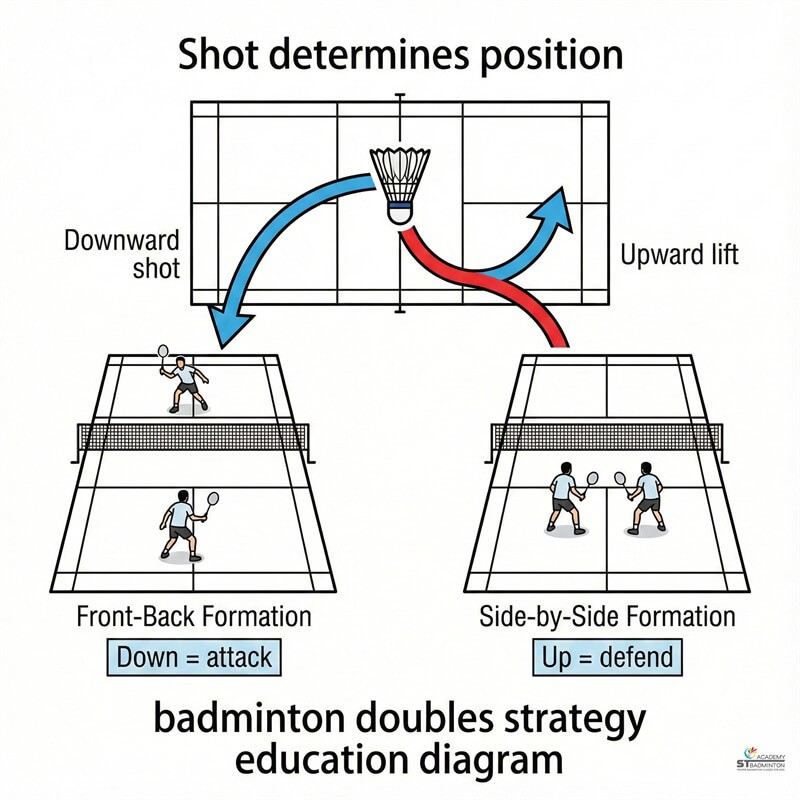
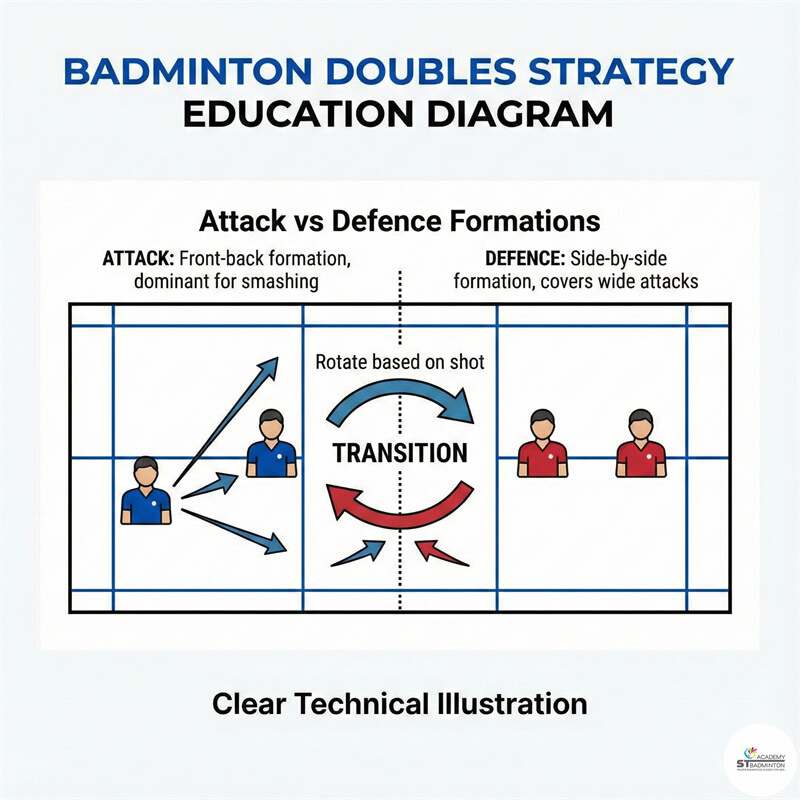
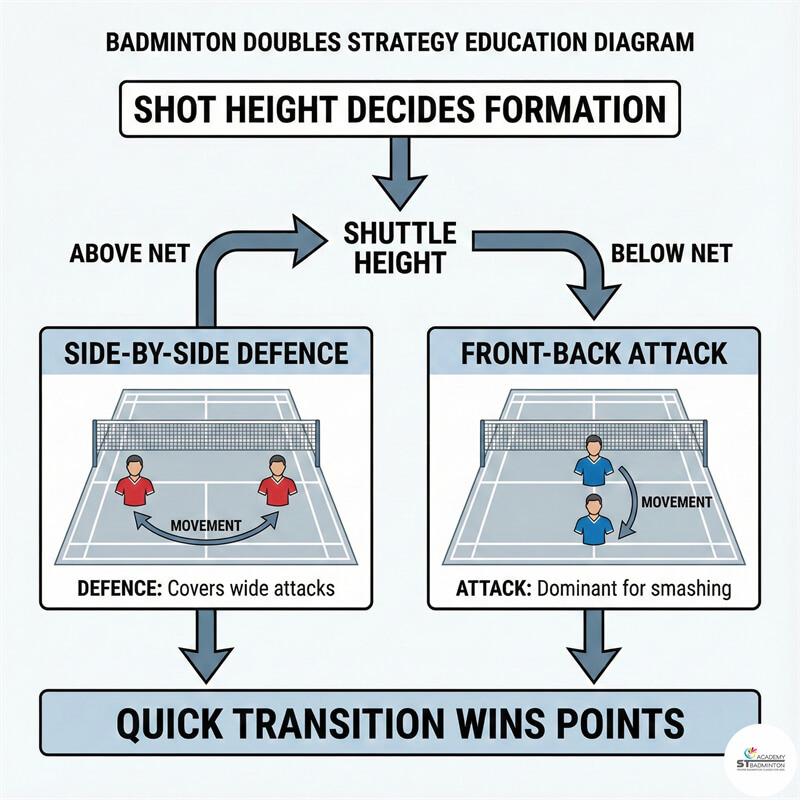
The most basic rule in badminton doubles strategy is the front–back formation. This is your attacking shape. It is used when you or your partner hits a downward shot (smash, drop, or offensive drive) that forces opponents to lift. In this formation, one player takes the front court (net area) to intercept weak returns, while the back player covers the rear court to continue smashing or dropping.
For players in Setapak and Wangsa Maju starting their doubles journey, maintaining this shape is key to applying pressure. The front player must be aggressive with the racket up, ready to kill any loose shuttle at the net. The back player commands the rear, using angles to set up the partner. If you are attacking, you should not be side-by-side; you must overlap to cover the attack zone efficiently.
Formation #2
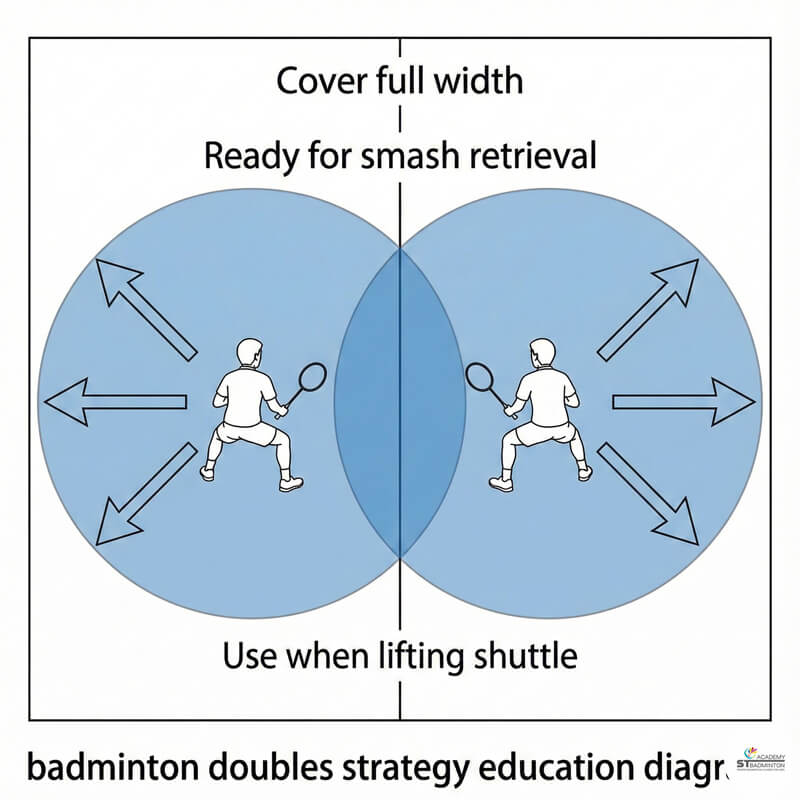
Side-by-Side: Defensive Wall
When you or your partner lifts the shuttle high to the opponent’s back court, you are now in a defensive position. You must immediately switch to side-by-side formation. This allows both players to cover the full width of the doubles court against incoming smashes. In Kuala Lumpur social leagues, a common mistake is staying front–back after a lift, leaving the sides wide open.
In this formation, each player covers their half (left or right). Standing side-by-side ensures you have the best chance to retrieve smashes and eventually counter-attack. The moment you play a defensive block or drive that puts opponents under pressure, be ready to move forward again.
Understanding when to transition from attack (front–back) to defence (side-by-side) is the core of doubles positioning 101 for players in Cheras, Kepong, and Melati Utama.

The Vital Skill
Rotation: When to Switch Positions?
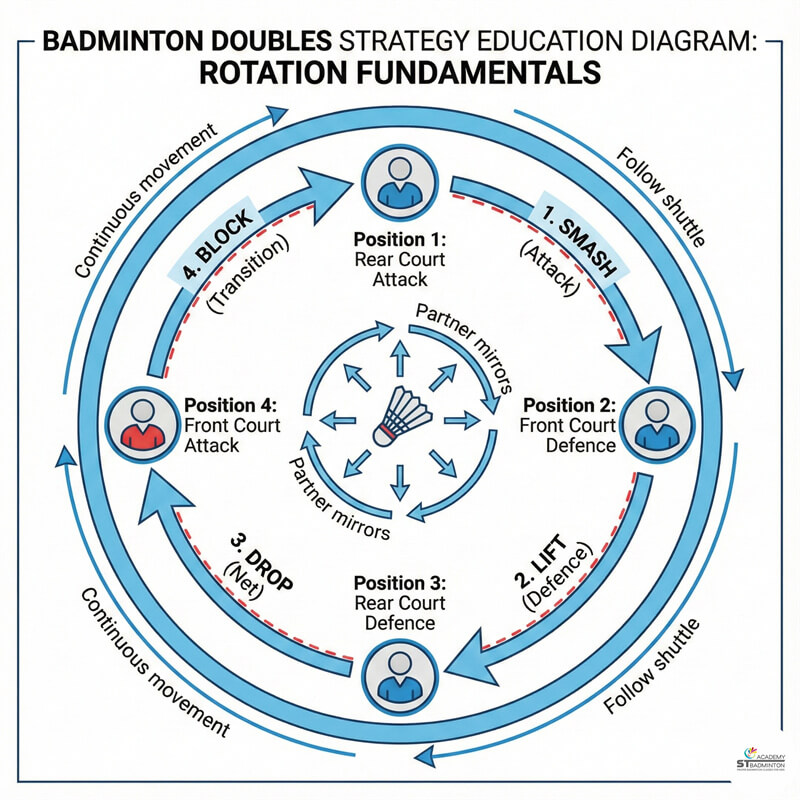
Rotation is not random; it follows the shot. The basic rule is to “follow the shuttle.” If you are at the back and play a drop shot, you should follow it forward to the net to become the front player. Your partner then rotates behind you to cover the back. This fluid movement keeps pressure on opponents and closes gaps.
Many beginners in Gombak and Danau Kota struggle because they hit a shot and stand still. In doubles, you must move after every shot. If you are forced to the rear court corner, your partner should instinctively move to the opposite front or mid-court area to balance the formation.
Proper rotation prevents two players from ending up in the same spot, reducing clashes and confusion. Training these patterns at ST Badminton Academy makes movements automatic during intense rallies.
Teamwork
Communication and Court Coverage
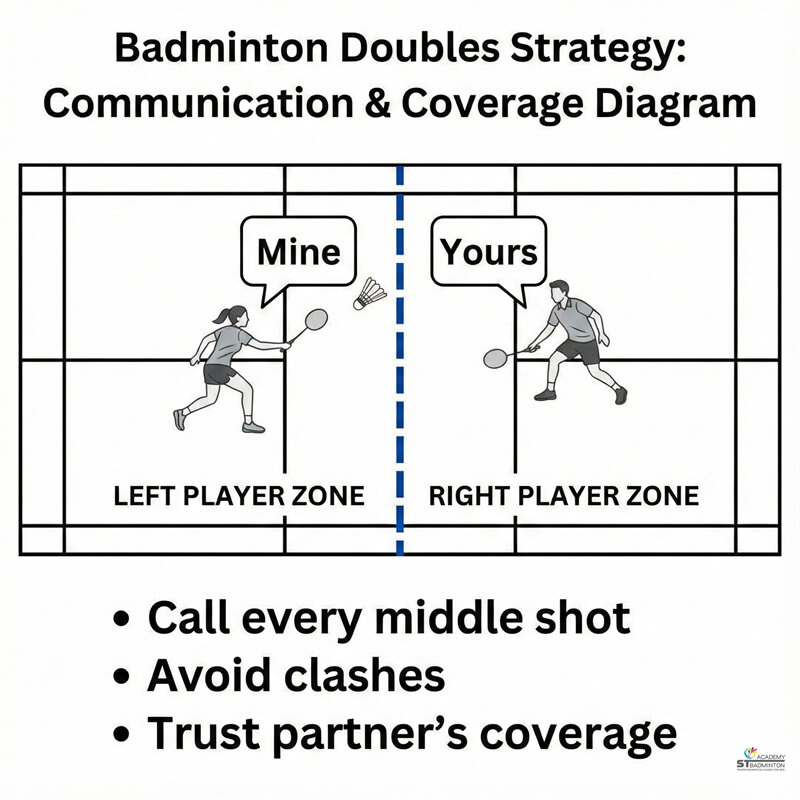
Good doubles strategy relies on clear communication. Simple calls like “Mine”, “Yours”, or “Out” can save points and prevent racket clashes. Players in Setapak often lose points simply because they both hesitate or both go for the same shuttle down the middle. Establishing simple verbal cues with your partner is essential.
Beyond talking, visual communication matters. If you serve low, your partner knows to cover the rear. If you lift, your partner knows to defend the side. Building these habits allows pairs from Wangsa Maju and Ampang to cover the court seamlessly without leaving big open spaces for opponents to exploit.
Regular training together helps build this trust. When you know where your partner will move, you can position yourself confidently to cover the next shot.
The Reality
Common Doubles Mistakes to Avoid
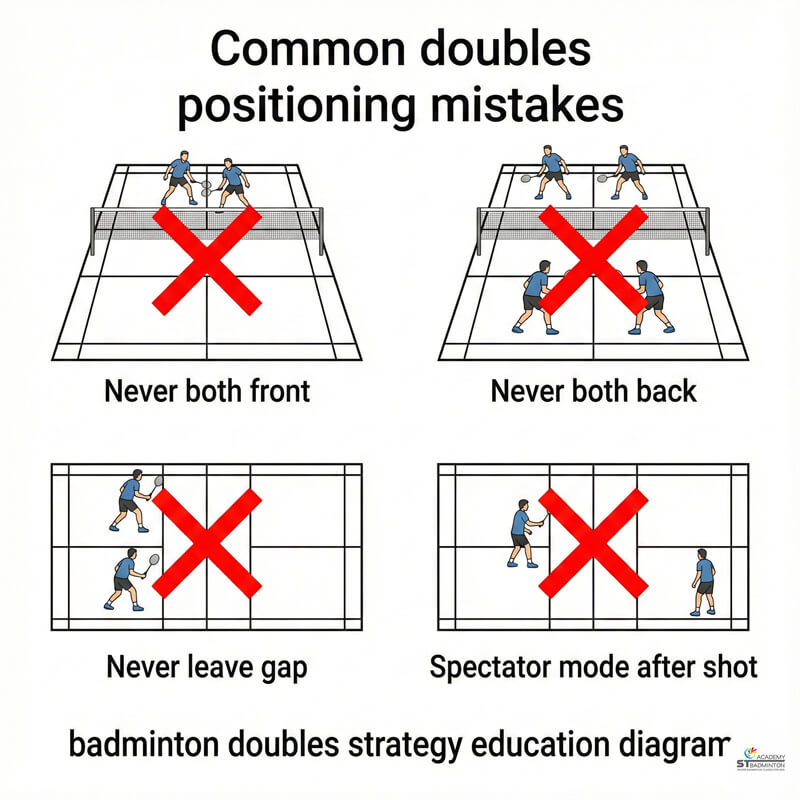
One major mistake seen in Kuala Lumpur social games is the “sides” mentality, where players split the court left and right and never change, even when attacking. This creates a weak attack. Another error is the “spectator mode” hitting a shot and then standing still to watch it, instead of immediately moving to the next position.
Finally, lack of communication leads to the classic middle clash, where both players swing for the same shuttle. Correcting these habits starts with simple drills: practising front–back entry after a serve, and side-by-side split after a lift. Discipline in these basics solves 80% of positioning errors.
At ST Badminton Academy, we focus on fixing these habits early so players can enjoy smoother, more effective games without frustration.
Myth vs Reality
Common Myths About Doubles Strategy
Myth: Doubles is just two singles players on one court. Reality: Doubles requires completely different movement and teamwork. Standing like a singles player leaves gaps. Myth: Front player only stands at the net doing nothing.
Reality: The front player is the playmaker, hunting specifically for net kills and intercepting weak shots to set up the attack. Myth: You don’t need to rotate if you are fast.
Reality: Even the fastest players cannot cover a whole doubles court alone against good opponents. Rotation is about efficiency and covering space together, not just speed. Proper positioning beats raw speed in doubles.
Training Approach
Doubles Strategy Training in Kuala Lumpur
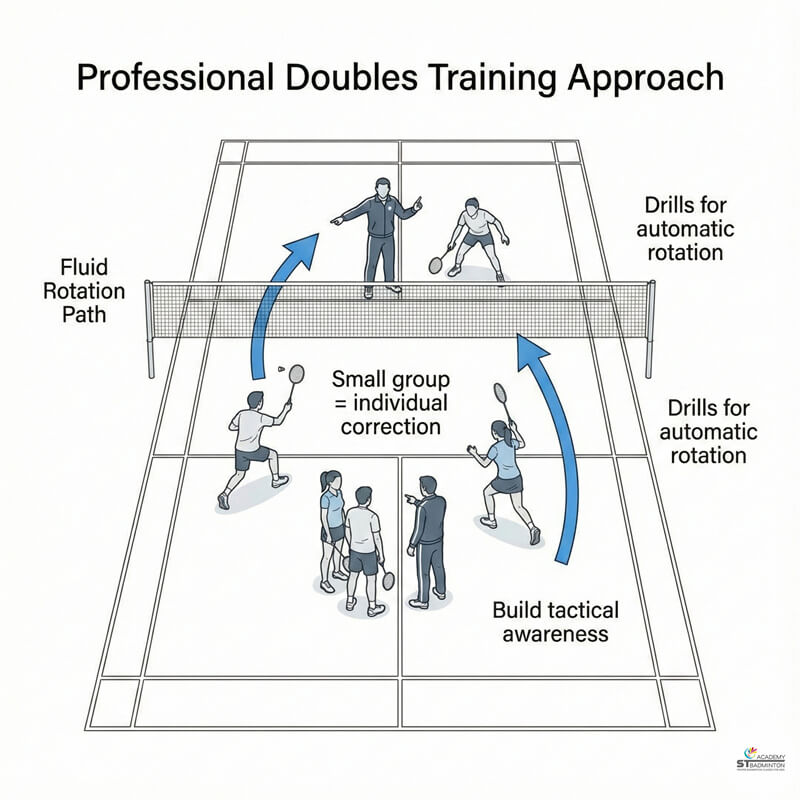
At ST Badminton Academy Malaysia, we teach strategy from the ground up. We don’t assume players know where to stand. We run specific drills for front–back attacking patterns and side-by-side defensive walls. Our sessions in Setapak are designed for school team juniors and social adults who want to stop clashing rackets and start winning points.
Small group training ensures our coach can correct your positioning in real-time. We use shadow footwork and multi-shuttle feeding to make rotation patterns feel natural. Players learn to react to the sound of the shot and their partner’s movement, not just watch the shuttle.
Whether you are a beginner or a league player from Cheras or Kepong, mastering these basics will instantly improve your game quality and enjoyment.
FAQs: Badminton Doubles Strategy & Positioning Guide
Here are answers to common questions from players in Kuala Lumpur about rotating and positioning in doubles.
How should we stand in badminton doubles after the serve in KL games?
After serving, you should generally adopt an attacking front–back formation if the serve was good (low/short). The server covers the front, partner covers the back. If you serve high (lift), you must immediately move to side-by-side defence. Players in Setapak and Wangsa Maju often practice these serve-return patterns first to avoid confusion at the start of a rally.
When should we use front and back formation in doubles?
Use front and back formation when your pair is attacking. This happens when you or your partner hits a smash, drop shot, or attacking drive downwards. The front player hunts for net interceptions while the back player keeps smashing. Maintaining this shape applies maximum pressure, a tactic we teach in our doubles strategy classes for juniors in Kuala Lumpur.
How do I know when to rotate with my partner in doubles?
The rule is to follow the shuttle. If you are at the back and play a drop shot, follow it to the net to cover the return. Your partner should naturally rotate behind you to cover the rear. Constant communication (“Mine!”) helps. This rotation prevents gaps and is essential for players in Gombak and Cheras wanting to move up from beginner level.
What is the basic difference between singles and doubles positioning?
In singles, you return to the center base after every shot. In doubles, you position relative to your partner and the shot played. You cover your partner’s openings rather than just the center. For example, if your partner is pulled wide, you shift to cover the gap. Doubles requires team-based spatial awareness, which is different from singles play in Malaysia.
Can beginners in Setapak and Wangsa Maju learn simple doubles rotation?
Yes. Beginners can start with basic rules: front–back for attack, side-by-side for defence. At ST Badminton Academy Malaysia, we teach these fundamentals first before adding complex rotations. Learning these simple habits early helps players in Setapak and Melati Utama enjoy their social games more and avoid collisions on court.
How do we stop clashing rackets with my partner in doubles?
Clashing happens when both players are unsure who takes the shot. Clear communication (calling “Mine” or “Yours”) and adhering to formation rules solves this. If you are in front, take the net shots; let the back player take the rear shots. Defining roles clearly is a key part of our doubles training near Kepong and Cheras.
Where can we train doubles strategy in Kuala Lumpur?
We conduct doubles strategy training in Setapak, Kuala Lumpur. Our location is easily accessible for players from Wangsa Maju, Gombak, Danau Kota, and Ampang. We offer sessions focused on positioning, rotation, and tactical awareness for both junior school teams and adult social players.
Do I need a fixed partner to join doubles training in KL?
No, you do not need a fixed partner. You can join individually, and we will pair you up for drills. Learning proper rotation applies to playing with any partner. Understanding the universal rules of doubles positioning makes you a better partner for anyone you play with in Malaysian social sessions.
Is side-by-side always for defence?
Primarily, yes. Side-by-side covers the width of the court best against smashes. However, in advanced play, flat drives can also be played from a side-by-side formation. For beginners in Kuala Lumpur, it is safest to think of side-by-side as your defensive shield and front–back as your attacking sword.
Badminton Doubles Positioning in Action

Benefits of Learning Doubles Strategy
Understanding where to stand and when to move changes everything. It reduces frustration, prevents injuries from collisions, and helps you win points against stronger opponents simply by being in the right place. Good strategy turns two individual players into a powerful team.
| Aspect | Attacking (Front & Back) | Defending (Side-by-Side) WALL |
|---|---|---|
| Primary Purpose | To apply pressure, smash, and kill loose shots at the net. | To cover the full court width against smashes and drives. |
| When to Use | When you or your partner hits a downward shot (smash/drop). | When you or your partner lifts the shuttle high (clear/lift). |
| Front Player Role | Intercepts net shots, pushes, and kills. Keeps racket high. | Moves back to cover one side (left or right) of the mid-court. |
| Rear Player Role | Smashes, drops, and drives from the back. Sets up the front player. | Moves forward to cover the other side (left or right) of the mid-court. |
| Middle Coverage | Back player covers most overheads; front player cuts off flat shots. | Both players communicate ("Mine!") to cover the center line. |
| Common Mistake | Front player turning around to watch partner (getting hit). | Standing too far back or leaving the front corners open. |
| Transition | If forced to lift, split to sides immediately. | If you block a smash into a net shot, follow it forward to attack. |
Doubles Positioning Training in Kuala Lumpur (Setapak)
This guide has covered the basics, but the best way to learn is on the court. ST Badminton Academy Malaysia provides specialized doubles strategy training for players in Setapak, Wangsa Maju, Gombak, and Cheras. If you want to stop clashing rackets and start moving like a pro team, contact Mr Eric Chuar to join our small group sessions focused on rotation and tactical play.