Understanding the MSSM (Majlis Sukan Sekolah Malaysia) Badminton Structure (KL & Selangor)
As a badminton coach in Malaysia, i often meet parents and students who are confused about how the MSSM system works what is MSSD, MSSS or MSSN, and how a normal school player can move step by step from school level to district, state and finally MSSM national level. This guide is written to help parents in Setapak, Wangsa Maju, Gombak, Cheras and surrounding areas understand the school badminton pathway. We explain the differences between MSSD, MSSS/MSSN and MSSM, and how students can qualify for these prestigious tournaments.
Mr Eric Chuar, head coach of ST Badminton Academy Malaysia in Kuala Lumpur, breaks down the age groups, selection process, and structure of Malaysian school sports.
The National Body
What Is MSSM Badminton?
The Majlis Sukan Sekolah Malaysia (MSSM) is the national school sports council that oversees student sports competitions across the country. For badminton, the MSSM tournament is the pinnacle event where the best school players from every state compete for national titles. It is a government-organised event designed strictly for Malaysian students in the school system.
Unlike private tournaments where you can simply register and pay, MSSM involves a strict selection pathway. Players must first succeed at the district and state levels before earning the right to wear their state jersey at the national MSSM. For families in Setapak, Wangsa Maju, and Melati Utama, the journey begins right at your child’s school. Understanding this hierarchy is crucial for planning your child’s development in the sport.
The First Step
What Is MSSD (Majlis Sukan Sekolah Daerah)?
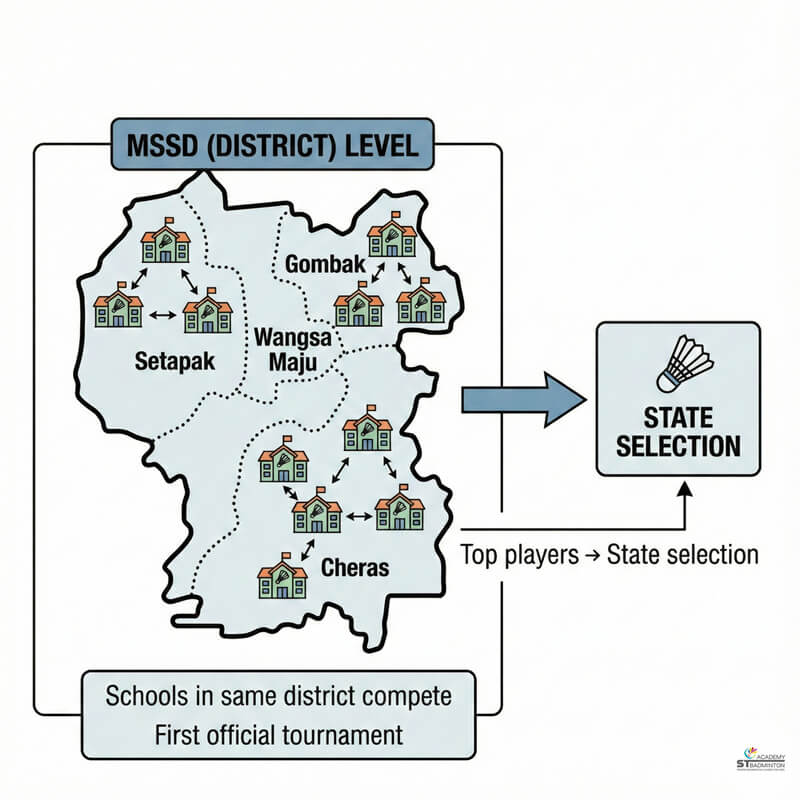
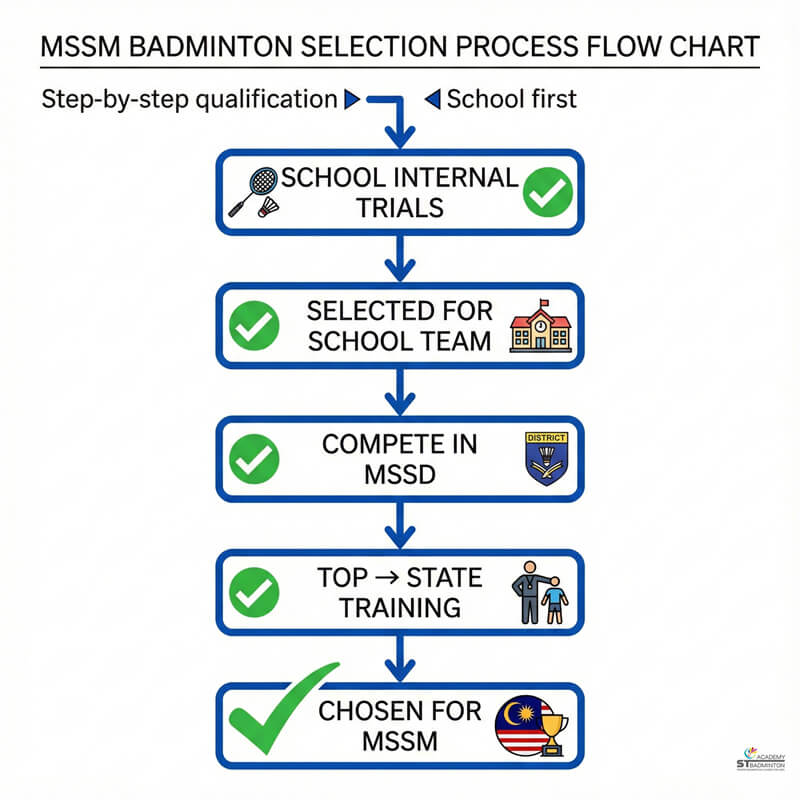
MSSD stands for Majlis Sukan Sekolah Daerah, or the District School Sports Council. This is the first major tournament in the pathway. Schools in specific zones like Setapak, Wangsa Maju, Gombak, Cheras, or Kepong compete within their own district. To reach this level, a player must first be selected by their own school to represent them.
Schools usually hold internal trials to pick their best players. If selected, your child will wear their school jersey and compete against other schools in the district. The MSSD tournament is where district coaches scout for talent. The champions and top performers from MSSD are then shortlisted to attend centralised training or selection trials for the next level.
Parents in Kuala Lumpur and Selangor should know that MSSD is highly competitive, as it gathers the best talent from all local schools in the area.

The State Level
What Is MSSN or MSSS?
MSSN (Majlis Sukan Sekolah Negeri) or MSSS (specifically for Selangor, Majlis Sukan Sekolah Selangor) is the state-level competition. The best players identified from the MSSD district tournaments are invited to compete here. This is where district teams face off against each other for example, the district team from Gombak playing against Petaling Utama.
The standard at the state level is significantly higher. Many players here train at professional academies like ST Badminton Academy Malaysia. The state tournament serves a specific purpose: to select the state team. The winners and top performers at MSSN/MSSS will earn the honor of representing their entire state at the national MSSM tournament.
For players in Kuala Lumpur and Selangor, reaching this stage is a major achievement. It requires consistent training, discipline, and a strong performance at the district level first.
Categories & Events
Age Groups: U12, U15, U18
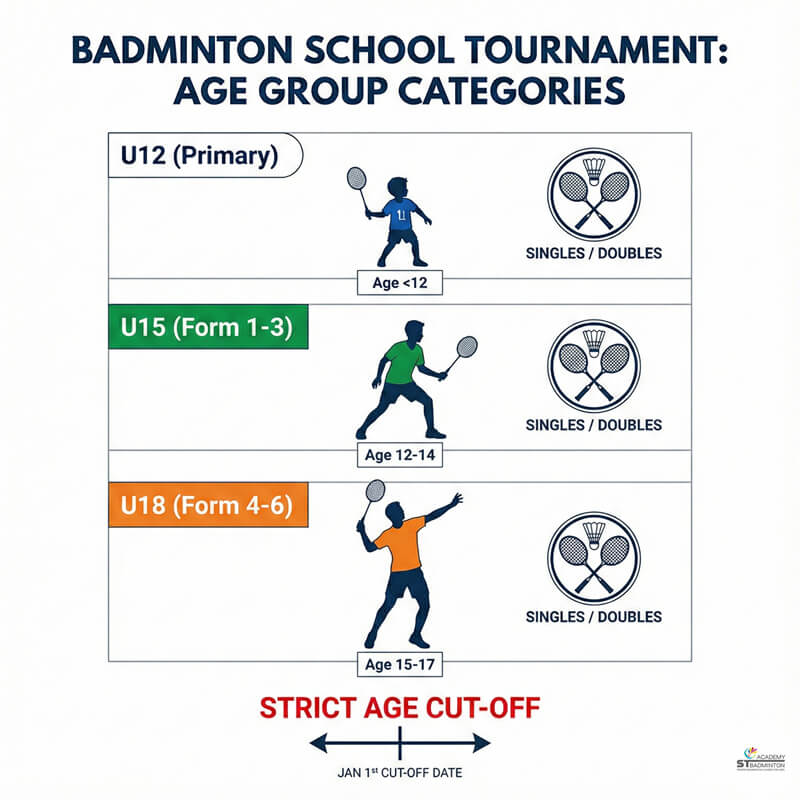
The MSSM badminton structure is divided into specific age categories to ensure fair competition. The most common age groups are Under 12 (U12), Under 15 (U15), and Under 18 (U18). Players must be within the eligible age limits for the competition year. Events typically include Boys’ Singles, Girls’ Singles, Boys’ Doubles, and Girls’ Doubles.
Schools in areas like Setapak and Danau Kota will usually send players for all these categories if they have eligible talent. It is important to note that age cut-offs are strict. For example, an Under 12 player must typically be 12 years old or younger in the current year.
Details can vary slightly by year or state policy, so parents should always check the latest circulars from their school or state education department. Proper planning with a coach helps ensure your child is ready for their specific age category.
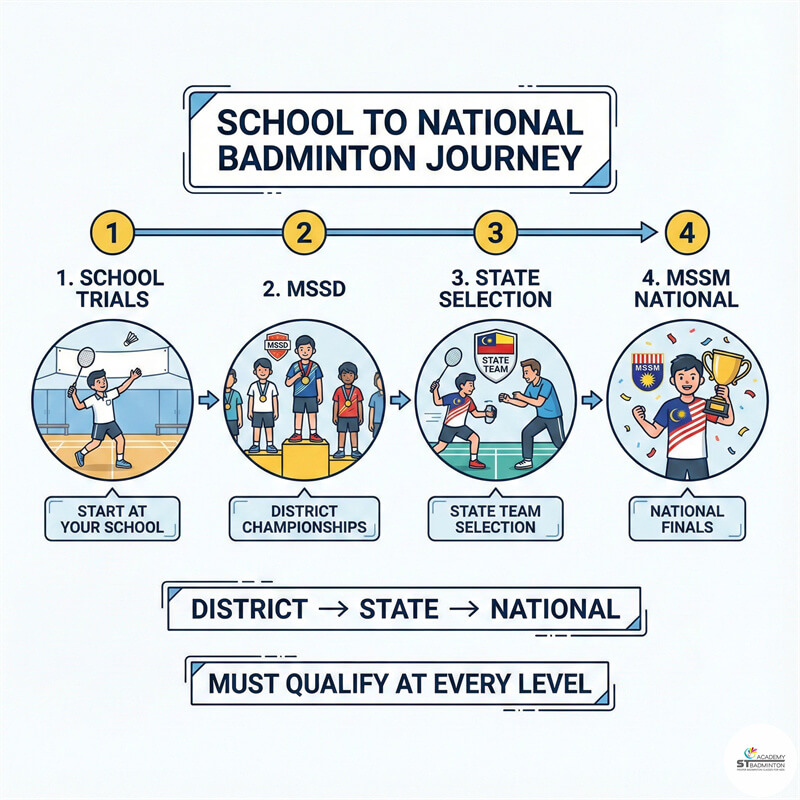
The Pathway
From School Selection to National Level
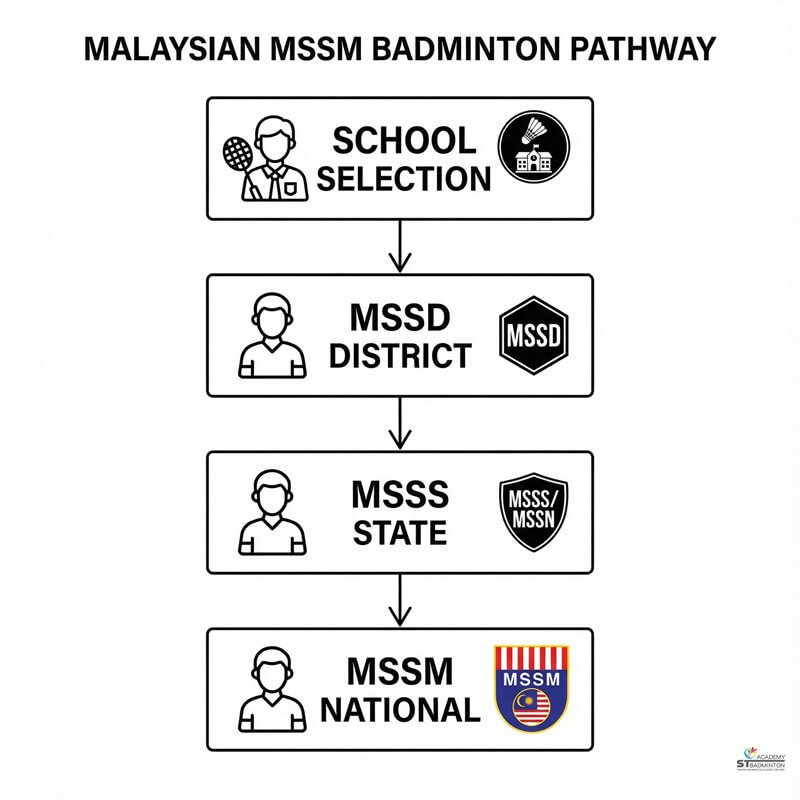
For a normal school player, the pathway is clear but challenging. It starts with Step 1: School Selection. Your child trains at a local academy like ST Badminton Academy while studying. The school teacher holds trials to pick the school team. Step 2 is the District Level (MSSD). Selected players compete against other schools in zones like Bangsar, Pudu, or Keramat.
Step 3 is the State Level (MSSN/MSSS). Winners from the district are invited to state selection. Finally, Step 4 is the National Level (MSSM). The state team travels to compete against other Malaysian states. Players do not pay individual registration fees as entries are handled through the school system. It is a journey that requires dedication, from local courts in Setapak to the national arena.
Understanding this structure helps families manage expectations. It is not just about winning one match; it is about steady development through each stage of the system.
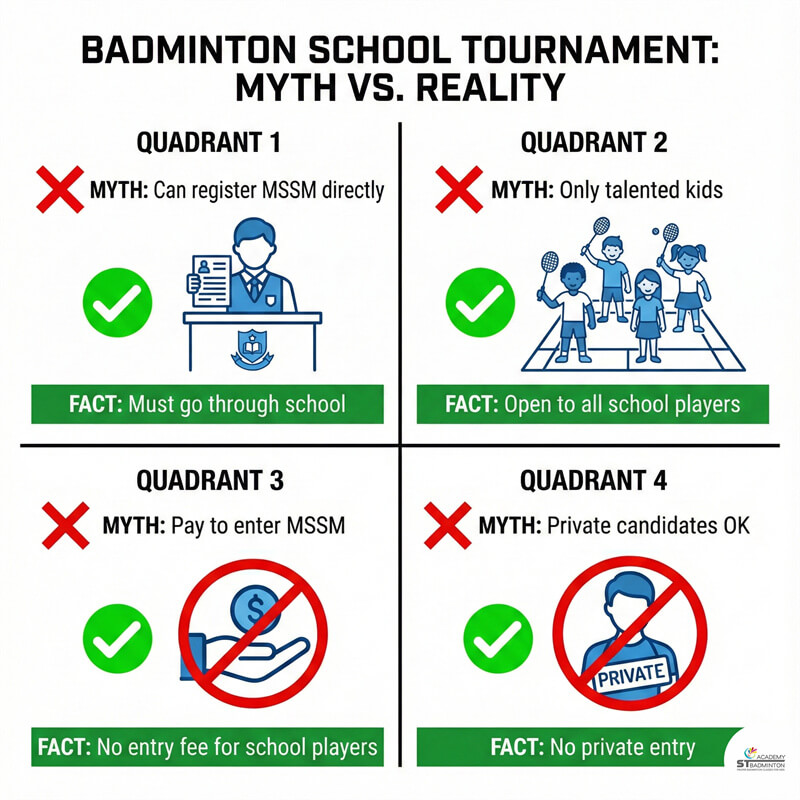
Myth vs Reality
Common Myths About School Badminton Selection
Myth: You can sign up for MSSM directly online. Reality: No, you must go through the school and district qualification process. It is not an open tournament for private registration.
Myth: Only national players can join MSSD. Reality: MSSD is for school students. While the level is competitive, it is the starting point for many players. Schools in Cheras and Kepong send their best internal players to compete. Myth: You have to pay high fees to the government to enter.
Reality: Registration is handled by the school and education ministry. Players generally do not pay entrance fees for these official government events. However, parents may need to cover their own transport or equipment costs depending on school support.
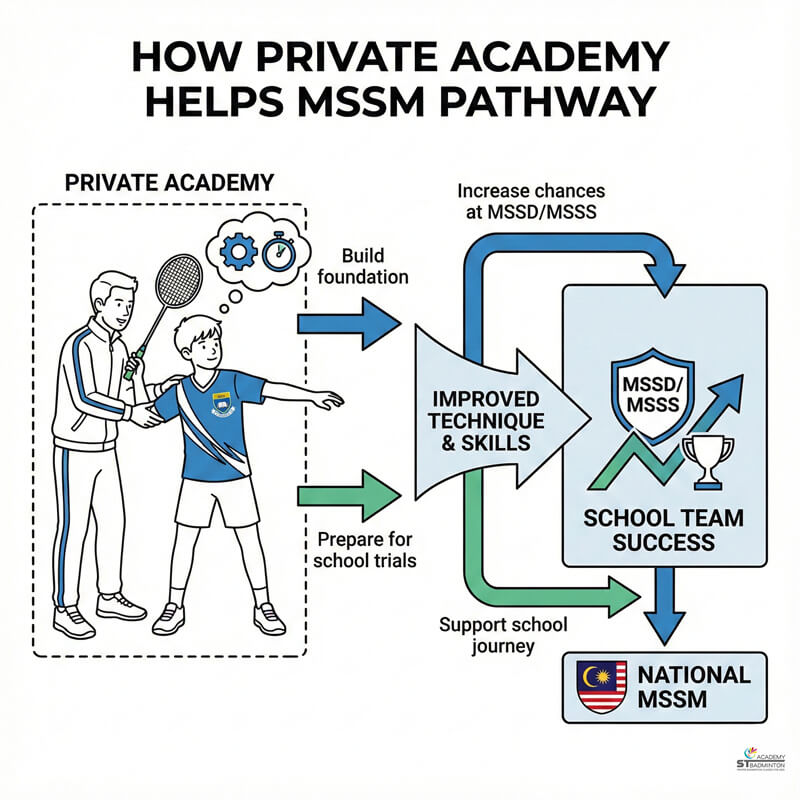
How We Help
Guiding You Through the Pathway
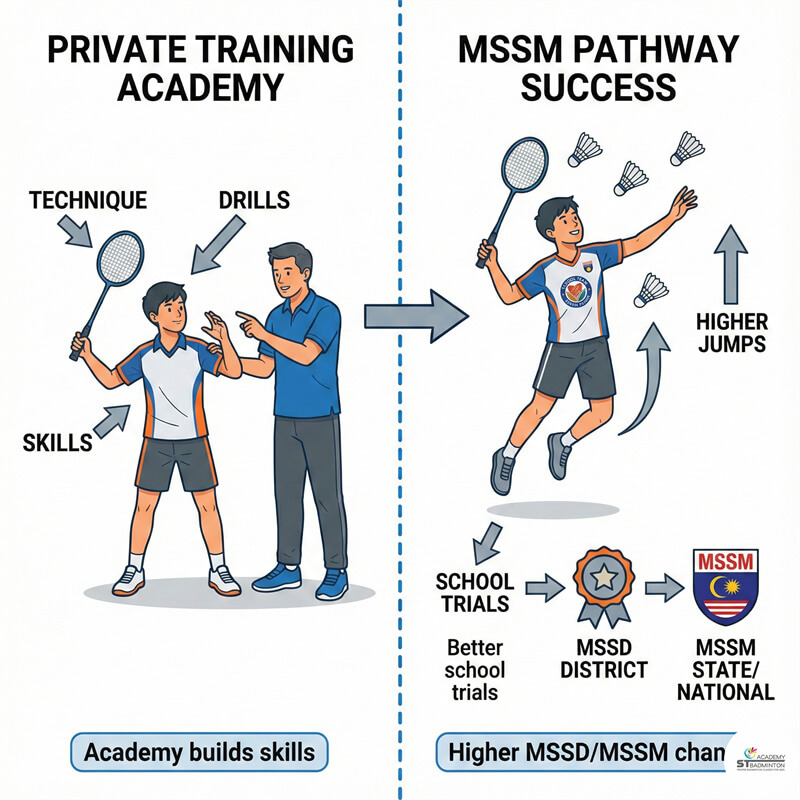
At ST Badminton Academy Malaysia, we don’t just teach strokes; we guide parents and players through the confusing school sports system. Coach Eric Chuar helps families in Kuala Lumpur understand realistic timelines for development. We prepare students for school trials by building strong fundamentals, discipline, and match confidence.
While we are a private academy, our goal is to support your child’s journey in their school team. We help you understand when to push for district selection and how to prepare for the higher intensity of state level play.
Whether your child is in Setapak, Wangsa Maju, or Ampang, understanding the MSSM structure allows you to focus on steady progress rather than chasing impossible short-term results.
FAQs: Understanding MSSM, MSSD & MSSS Badminton Malaysia
Here are answers to common questions from parents in Kuala Lumpur about how school badminton tournaments work.
What is the difference between MSSD, MSSS/MSSN and MSSM for badminton in Malaysia?
MSSD is the district-level tournament (e.g., Gombak or Bangsar). MSSS/MSSN is the state-level tournament (e.g., Selangor or Kuala Lumpur), where district winners compete. MSSM is the national tournament, where state teams compete. You must qualify through your school to MSSD, then to state, and finally to MSSM national level.
How can my child in Setapak or Wangsa Maju qualify for MSSM badminton?
The pathway starts at school. Your child must participate in their school’s internal trials. If selected, they represent the school at the MSSD district tournament (e.g., Keramat or Sentul zone). Top performers at MSSD are then invited to state selection. Always check with your school sports teacher for trial dates.
What age groups are available for MSSM badminton competitions?
The typical age groups are Under 12 (U12), Under 15 (U15), and Under 18 (U18). Events usually include boys’ and girls’ singles and doubles. Players must meet the age criteria for the competition year. These categories ensure fair play for primary and secondary school students in Malaysia.
Do we need to pay registration fees to enter MSSD or MSSM badminton?
Generally, no. MSSM is a government-run school event, and entries are submitted by the school or state education department. Players do not pay private registration fees to enter. However, parents may need to support with equipment or transport, depending on the school’s resources in areas like Cheras or Ampang.
Does every school in Kuala Lumpur send players to MSSD and MSSM?
Most schools are eligible, but participation depends on whether the school has active players and a teacher in charge. Schools in sports-active areas like Wangsa Maju and Petaling Jaya often have stronger teams. Check with your school’s co-curriculum unit to confirm if they are sending a team to the district MSSD this year.
Can private candidates join MSSM badminton without a school?
No, MSSM is strictly for students enrolled in the school system. You must represent a school to enter MSSD. Private candidates or those not attending a recognised school typically cannot join. It is designed to promote sports within the Malaysian education system for students from primary and secondary schools.
Where are MSSD and MSSM badminton tournaments usually held?
MSSD tournaments are held at district venues, such as community halls in Setapak, Gombak, or Cheras. State MSSS/MSSN events move to larger arenas like the state BA hall. The national MSSM rotates between different states each year. Players travel with their state team for the national event.
Can ST Badminton Academy help my child prepare for school trials?
Yes. While we cannot register your child for MSSM (that must be done by the school), our training in Setapak helps players build the skills needed to pass school trials. We teach proper footwork, tactics, and match play so your child has the best chance of being selected for their school team in Kuala Lumpur.
Is MSSM only for advanced players?
The national MSSM level is very advanced, featuring future national juniors. However, the district MSSD level is where many competitive school players start. It is a good target for players in local academies to test their skills against other schools in areas like Kepong and Melati Utama.
School Badminton Pathway in Action
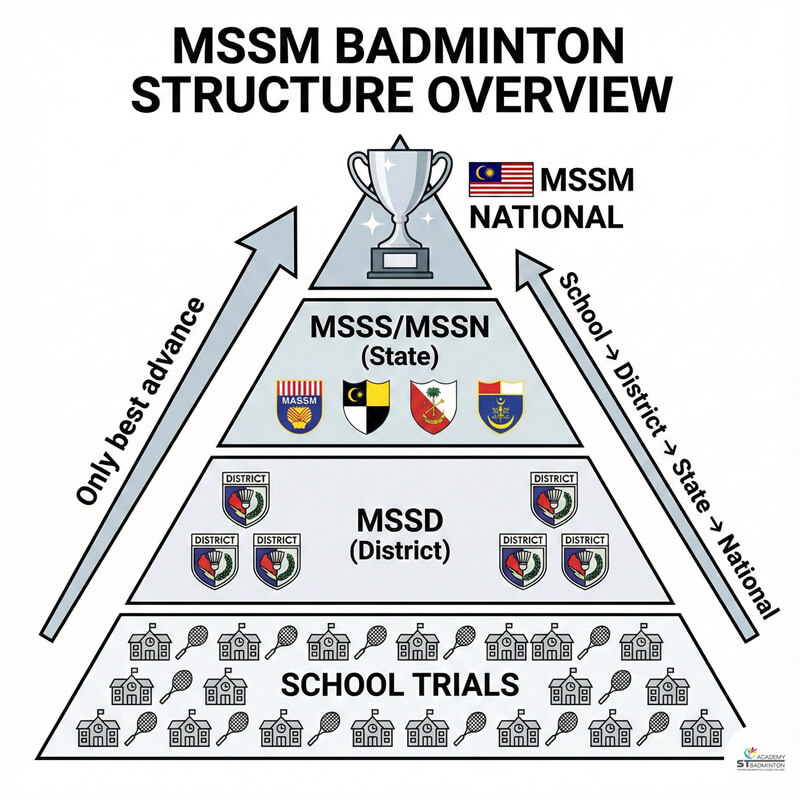

Benefits of Understanding the MSSM Pathway
Knowing how the MSSM badminton structure works allows parents and players to set realistic goals. Instead of rushing for results, you can focus on the steps needed from internal school trials to district and state representation. Our academy in Setapak supports this journey.
| Level | Description | Selection Process PATHWAY |
|---|---|---|
| School Level | Internal competition within your own school. | Players are selected by school teachers/coaches to form the school team. |
| District (MSSD) | Schools compete against other schools in the district (e.g., Gombak, Bangsar). | Winners and top players from the school represent the school at the district tournament. |
| State (MSSN / MSSS) | District teams compete against other districts in the state (e.g., Selangor, KL). | Top performers from MSSD are invited to state selection to form the state team. |
| National (MSSM) | State teams compete against other states for national titles. | The best players from the state tournament represent their state at the national event. |
| Age Groups | U12, U15, U18 (Boys & Girls). | Players must meet the age cut-off for the competition year (e.g., born in 2013 for U12). |
| Eligibility | Malaysian school students only. | Must be a student in the school system. No private candidates without school endorsement. |
Prepare for School Selection in Kuala Lumpur (Setapak)
ST Badminton Academy Malaysia provides structured training to help school players prepare for MSSD and MSSS trials. If you are a parent in Setapak, Wangsa Maju, Gombak, or surrounding areas and want to understand the MSSM structure better, contact us. Mr Eric Chuar and his team are ready to guide your child from school level to district and beyond.