What Are The Benefits Of Combining Badminton Training With Other Sports? (Malaysia)
As a coach in Malaysia and Singapore, I see many families worry that playing more than one sport will slow down badminton progress. In reality, if we choose the right mix and manage the weekly load properly, other sports often help players move better, stay healthier and enjoy badminton for many more years. This guide explains how combining badminton with complementary sports like football, swimming, athletics or basketball can improve overall coordination, strength, endurance and injury resilience for primary school kids, secondary students and adults in Kuala Lumpur, Selangor and Singapore, and how to plan multi-sport participation safely without overloading your schedule.
A certified badminton coach in Malaysia and Singapore explains the real benefits and practical planning tips for players who want to combine badminton training with other sports for long-term athletic development.

Benefit Area #1
Better Overall Physical Development
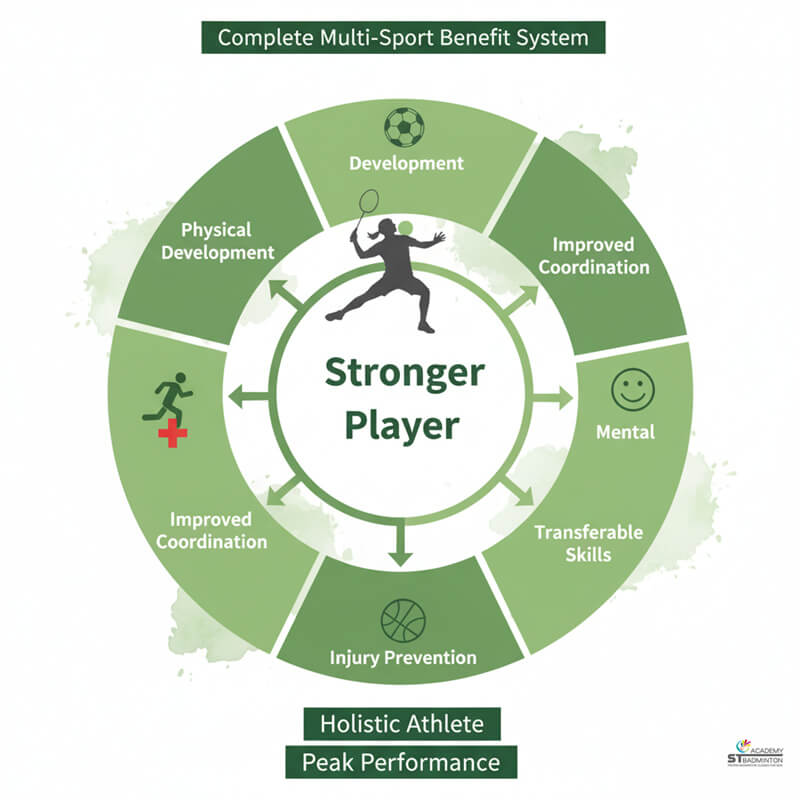
Combining badminton training with other sports builds a more complete physical foundation for players in Malaysia and Singapore. Different sports stress different muscle groups, energy systems and movement patterns. At ST Badminton Academy, we see how kids in Setapak, Wangsa Maju and Cheras who also play football or athletics develop stronger cardiovascular endurance, more powerful leg muscles and better overall stamina that directly supports their badminton performance.
Swimming provides upper body strength and core stability without loading joints. Basketball improves explosive jumping and lateral quickness. Gymnastics builds flexibility and body control that helps with balance during defence and net play. When our certified badminton coaches work with multi-sport athletes, we notice they often have better movement speed, stronger lunges and more stable landings compared to players who only train badminton.
The key is choosing sports that fill gaps in badminton rather than repeating exactly the same movements. This approach creates well-rounded athletes who can adapt to different physical challenges across Kuala Lumpur, Selangor and Singapore sports programmes.
Benefit Area #2
Improved Coordination and Agility
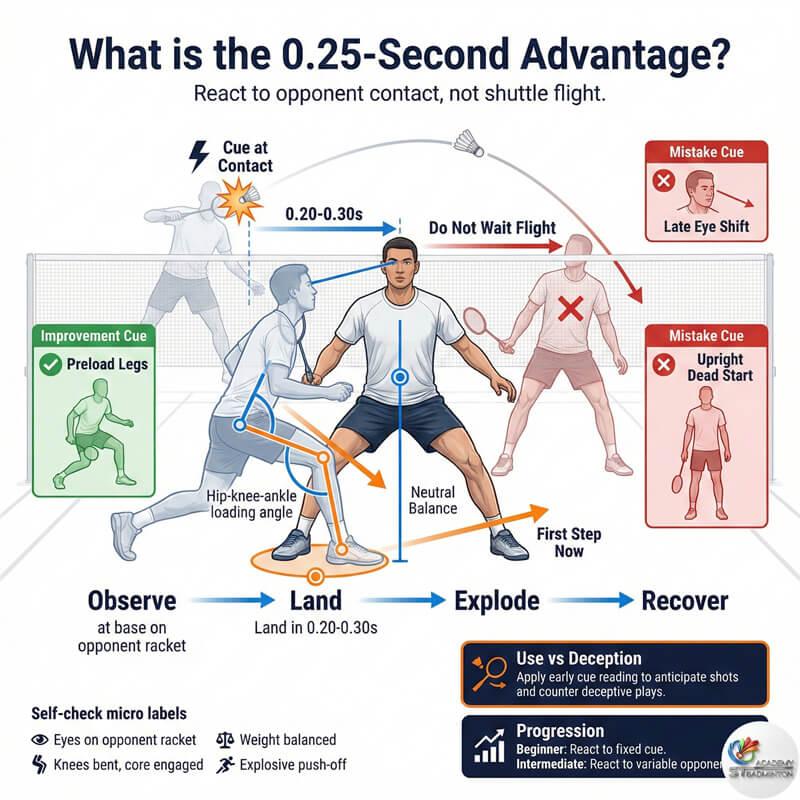
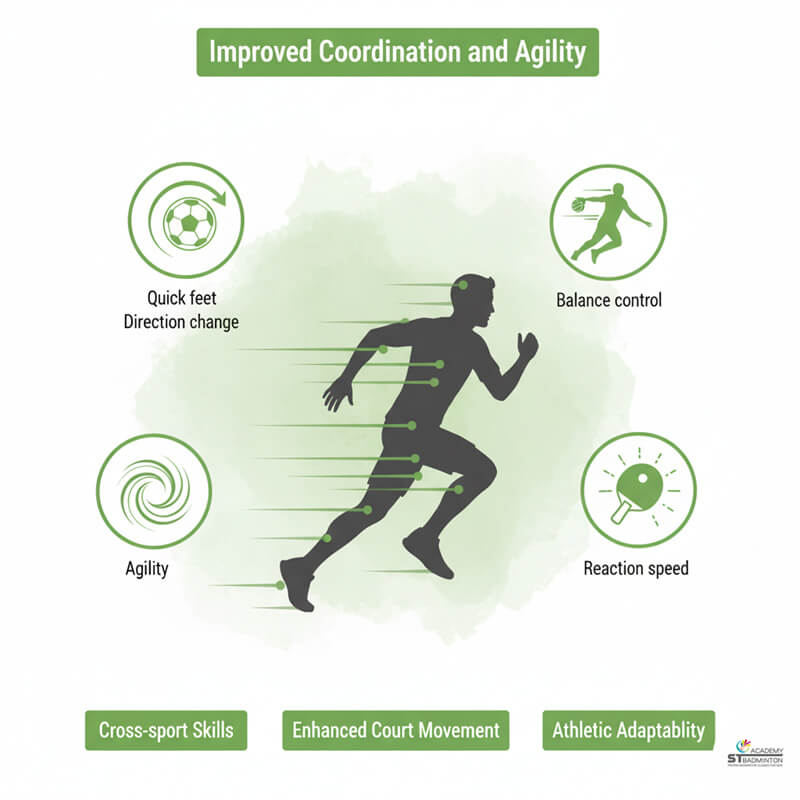
Multi-sport participation develops a wider library of movement patterns and neuromuscular control that transfers directly to badminton performance. Players in Kepong, Selayang and Ampang who play both badminton and football learn quick side-steps, rapid direction changes and better balance during sudden stops. These skills improve their recovery steps and court coverage in badminton matches.
Basketball players develop explosive cutting movements and spatial awareness that help with positioning and anticipation on the badminton court. Table tennis sharpens hand-eye coordination and reaction speed. Gymnastics builds proprioception and body control that leads to smoother footwork and more stable langes. Our certified badminton coaches at ST Badminton Academy notice that players from Petaling Jaya, Subang Jaya or Singapore areas like Jurong and Bishan who sample multiple sports often adapt faster to new techniques and show better overall movement quality.
The brain learns from varied movement experiences, creating more efficient motor patterns that improve performance across all sports. This is particularly valuable for young athletes still developing fundamental movement skills in Malaysian and Singaporean school programmes.

Benefit Area #3
Injury Prevention Through Load Sharing
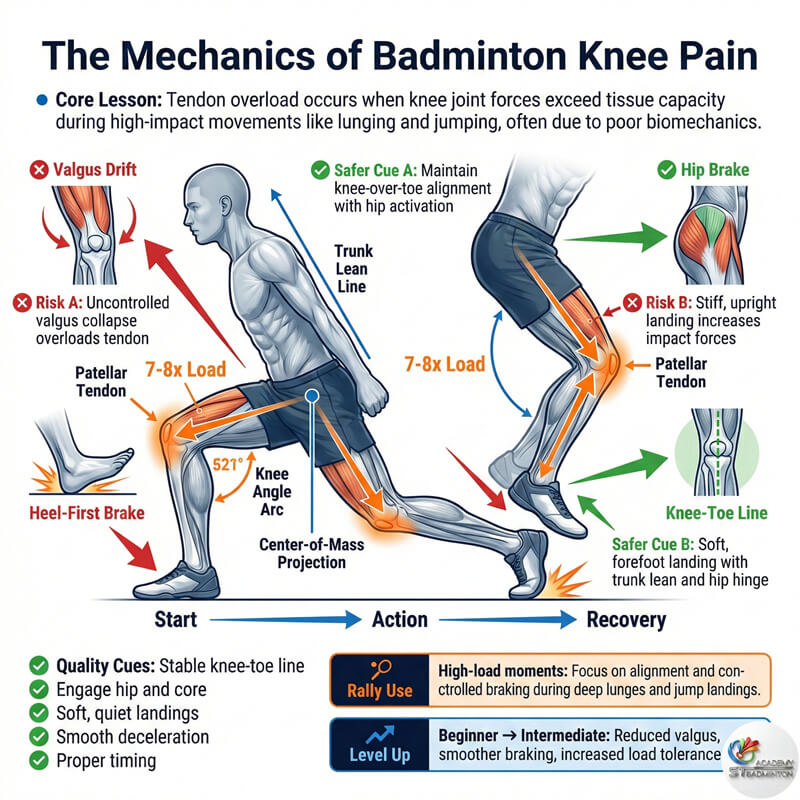
Repeating the same badminton movements too often can overload specific joints and muscle groups, increasing risk of overuse injuries. When players in Cheras, Gombak or Sentul combine badminton with other sports, they spread stress across different body systems and movement patterns. Swimming works the upper body and core without impact stress. Running builds aerobic capacity while giving racket arm and wrist a break from repetitive swinging.
Research on cross-training shows that varying physical activities can reduce overuse injuries while maintaining or even improving sport-specific performance. At ST Badminton Academy, our certified badminton coaches emphasize that multi-sport participation works best when total weekly training load is controlled. A student in Puchong or Singapore areas like Hougang and Tampines who plays badminton three times per week plus one football session gets variety without excessive volume.
However, doing badminton five times, football four times and swimming three times with no rest creates overload rather than healthy variety. The benefit comes from smart rotation, not from doing everything at maximum intensity. Players who balance different activities with adequate recovery typically stay healthier and perform better over many years across Malaysian and Singaporean school and club competitions.
Benefit Area #4
Mental Benefits and Long-Term Enjoyment
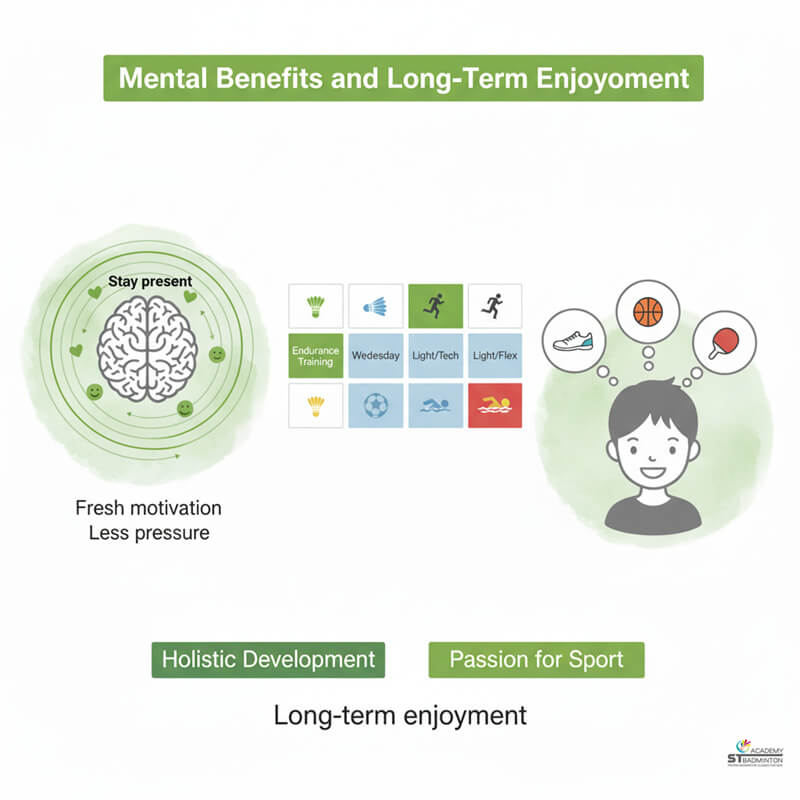
Playing more than one sport keeps training fresh and reduces mental fatigue that comes from chasing results in only one area. Kids in Kuala Lumpur, Selangor and Singapore who balance badminton with another activity experience less pressure and often maintain interest in sports for longer periods. At ST Badminton Academy, we see how variety helps students stay motivated through difficult phases when badminton progress feels slow or competitions become stressful.
Multi-sport participation builds confidence, problem-solving skills and social connections in different environments. A player who struggles with a technical issue in badminton might gain renewed energy from success in football or swimming.
This psychological flexibility is valuable for long-term development. Our certified badminton coaches in Malaysia and Singapore notice that athletes who enjoy multiple sports tend to handle setbacks better, stay physically active into adulthood and maintain a healthier relationship with competition. For busy students juggling school, tuition and CCA across Setapak, Wangsa Maju or areas like Clementi and Bishan, variety can actually reduce stress rather than add to it, as long as the total schedule remains manageable.
Practical Planning
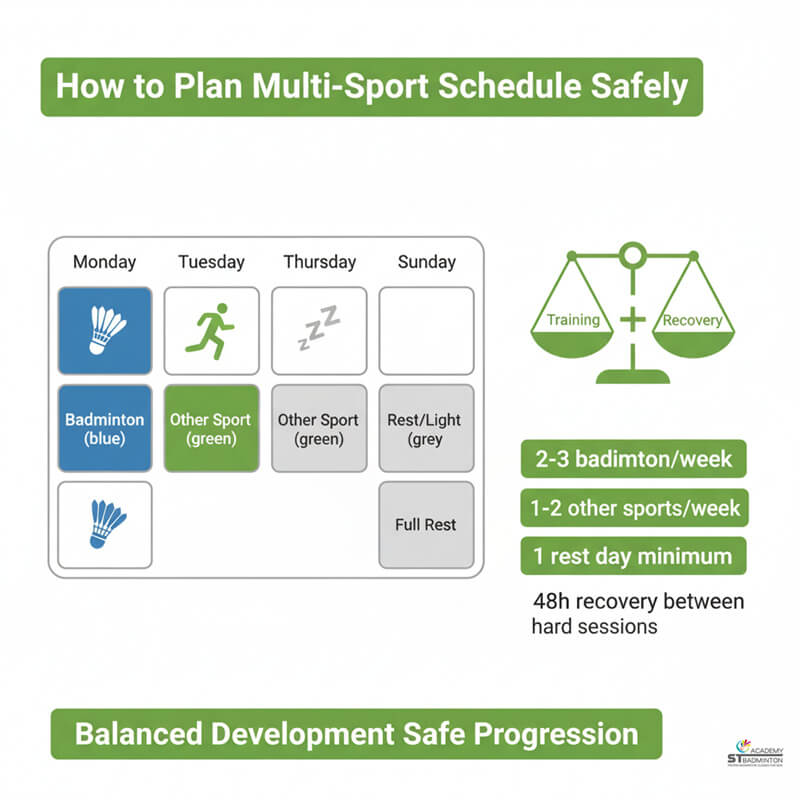
How to Plan Multi-Sport Schedule Safely
Safe multi-sport participation requires thoughtful weekly planning, not random addition of every available activity. For a primary school player in Setapak, Kepong or Cheras who loves badminton and one field sport, a realistic week might include two badminton sessions, one field sport practice, one lighter activity like swimming or gymnastics, and at least one full rest day. Secondary students in Petaling Jaya or Singapore balancing badminton, school exams and another CCA might do two badminton sessions, one CCA session and one supporting activity like strength training.
Adults in Subang Jaya, Puchong or areas like Ang Mo Kio and Yishun can combine badminton with jogging, gym work or another recreational sport two to three times per week total. At ST Badminton Academy, our certified badminton coaches emphasize avoiding back-to-back high-intensity sessions. Space demanding activities with lighter days or rest. Communication between coaches, parents and players is essential.
If a student has badminton competition on Saturday, consider lighter or no other sport training that week. Watch for warning signs like constant tiredness, frequent minor injuries, loss of interest or grades dropping. When these appear, adjust the schedule by reducing frequency or dropping one activity temporarily. The goal is sustainable long-term participation across Malaysian and Singaporean sports communities, not burning out within a few months.

Transferable Skills
Skills That Transfer Between Sports and Badminton
Football and futsal develop agility, quick feet and rapid changes of direction that improve court coverage and recovery steps in badminton. Athletics and running build aerobic base, teach pacing strategies and develop mental toughness through consistent training. Swimming strengthens core muscles, improves shoulder stability and develops breathing rhythm that supports better stamina during long rallies.
Basketball and netball enhance hand-eye coordination, spatial awareness and explosive jumping power that transfers to smash and net play. Table tennis sharpens racket awareness, reaction speed and anticipation of ball flight that directly helps badminton stroke timing. Gymnastics and martial arts improve flexibility, balance and proprioception that leads to more stable lunges and smoother footwork transitions.
At ST Badminton Academy, our certified badminton coaches help players in Kuala Lumpur, Selangor and Singapore understand which skills from their other sports apply to badminton technique. A student from Wangsa Maju or Tampines who plays both badminton and table tennis can use similar wrist action and anticipation skills. An Ampang or Hougang player doing athletics learns breath control and consistent effort that improves endurance on court. The key is recognizing these connections and applying lessons from one sport to enhance performance in another.
Age Guidelines
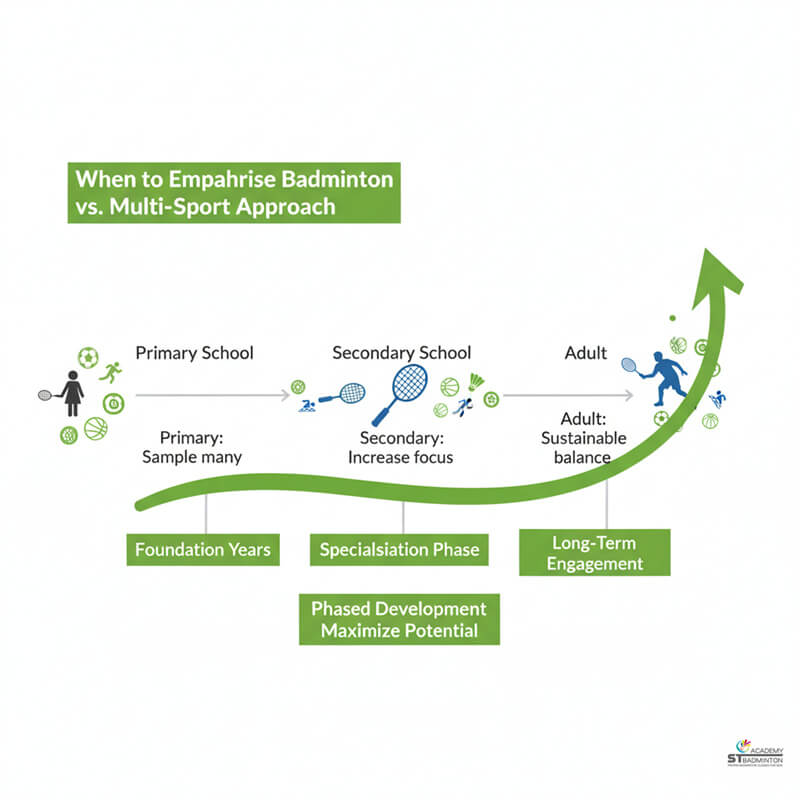
When to Emphasise Badminton vs Multi-Sport Approach
For younger kids around primary school level in Kuala Lumpur, Selangor and Singapore, sampling multiple sports while maintaining consistent badminton foundation typically produces the best long-term results. At ST Badminton Academy, we encourage families in Setapak, Cheras and Selayang to let children explore football, swimming, athletics or other activities alongside regular badminton training. This builds broader physical literacy without forcing early specialization.
As players reach secondary school and show genuine interest and commitment to badminton, they can gradually increase focus on racket sport while keeping one or two complementary activities. A dedicated student in Petaling Jaya, Puchong or Singapore might train badminton three to four times weekly, plus one session of strength work or running. This allows specialization without complete exclusion of other beneficial activities.
Adults typically choose one or two main sports and a few supporting activities that fit work and family schedules. Our certified badminton coaches emphasize that these timelines are general guidelines, not strict rules. Some kids show clear badminton focus early, while others develop interest later. The important principle is avoiding forced single-sport specialization too young while still building solid badminton fundamentals for players across Malaysian and Singaporean communities.
FAQs: Combining Badminton With Other Sports
Here are answers to common questions from families in Malaysia and Singapore about combining badminton training with other sports safely and effectively.
Will playing other sports slow down my child’s badminton progress in Kuala Lumpur or Singapore?
No, when managed properly, other sports usually help rather than slow badminton development. At ST Badminton Academy in Setapak, we see how kids who play football, swimming or athletics alongside badminton often develop better overall coordination, strength and agility that supports their racket skills. The key is balancing total weekly load and choosing complementary sports. A child in Wangsa Maju, Cheras or Singapore doing two badminton sessions plus one other sport with proper rest typically progresses well in both areas.
Which sports are best to combine with badminton training in Malaysia?
Sports that build different physical qualities work well with badminton. Football and basketball develop agility and leg power. Swimming strengthens upper body and core without joint stress. Athletics builds aerobic base and mental toughness. Table tennis sharpens hand-eye coordination and reaction speed. Our certified badminton coaches at ST Badminton Academy in Kuala Lumpur help players in Kepong, Selayang and surrounding areas choose activities that fill gaps in their badminton training while fitting their interests and schedule.
How many sports can my child safely do together with badminton in Setapak?
Most primary school children can handle badminton plus one or two other activities when the total weekly sessions stay around four to five with at least one full rest day. At ST Badminton Academy, families in Setapak, Ampang or Gombak typically find success with two badminton sessions, one field sport and one lighter activity like swimming. Secondary students balancing school and exams might focus more on badminton with one complementary sport or strength training. The limit is individual and depends on energy levels, grades and signs of fatigue.
Should I let my child specialise early in badminton or keep playing multiple sports?
Research suggests multi-sport participation during primary and early secondary years builds broader physical skills without harming long-term performance in most sports. At ST Badminton Academy in Malaysia and Singapore, we encourage kids to sample different activities while maintaining consistent badminton foundation. Early single-sport specialization can increase injury risk, stress and burnout. Players in Petaling Jaya, Subang Jaya or Singapore areas like Jurong and Clementi who play multiple sports often stay healthier and enjoy longer athletic careers than those who specialize too young.
How do I balance badminton training with school CCA and other sports in Singapore?
Create a realistic weekly plan that includes at least one full rest day and avoids stacking high-intensity sessions back to back. A student in Singapore doing badminton CCA twice weekly plus ST Badminton Academy coaching once and one other sport can manage well with proper spacing. Our certified badminton coaches help families in Bishan, Tampines and Hougang coordinate schedules. Communicate with all coaches and watch for warning signs like constant tiredness, frequent injuries or falling grades that signal the load is too heavy and needs adjustment.
Does cross training really prevent injuries in badminton players near Cheras or Selayang?
Yes, when done properly, cross training spreads physical stress across different body systems and reduces overuse injuries from repeating the same badminton movements too often. Players in Cheras, Selayang or Puchong who combine badminton with activities like swimming, strength training or running give their racket arm and specific joints a break while building overall fitness. At ST Badminton Academy, our certified badminton coaches emphasize that benefit comes from smart variety, not excessive volume. The key is managing total weekly load carefully.
What are warning signs my child is doing too many sports in Kuala Lumpur?
Watch for persistent tiredness that does not improve with rest, frequent injuries or illness, loss of interest in activities they used to enjoy, mood changes, difficulty concentrating or falling grades at school. Players in Wangsa Maju, Sentul or Kepong showing these signs need schedule adjustment. At ST Badminton Academy, our certified badminton coaches recommend reducing training frequency, dropping one activity temporarily or adding more rest days. If symptoms persist, consult a doctor or physiotherapist to rule out underlying health issues.
Can adults combine badminton with gym training or running in Petaling Jaya or Jurong?
Yes, adults can benefit greatly from combining badminton with complementary training. Players in Petaling Jaya, Subang Jaya or Singapore areas like Jurong and Ang Mo Kio often do two badminton sessions per week plus one or two gym or running sessions. Strength training improves power and reduces injury risk. Running builds aerobic capacity. At ST Badminton Academy, our certified badminton coaches help adult players create realistic schedules that fit work and family commitments while supporting better badminton performance and overall health.
Should I talk with my child’s badminton coach before adding another sport in Malaysia?
Yes, communication between parents, coaches and players is essential for safe multi-sport planning. At ST Badminton Academy in Setapak, Kuala Lumpur, our certified badminton coaches welcome discussions about your child’s total schedule. We can suggest which activities complement badminton well, help coordinate training intensity across sports and watch for signs of overload. Players in Ampang, Gombak or surrounding areas benefit from coaches who understand their full commitments and can adjust badminton training load when needed to prevent burnout.
Multi-Sport Badminton Training in Action


Benefits of Smart Multi-Sport Participation
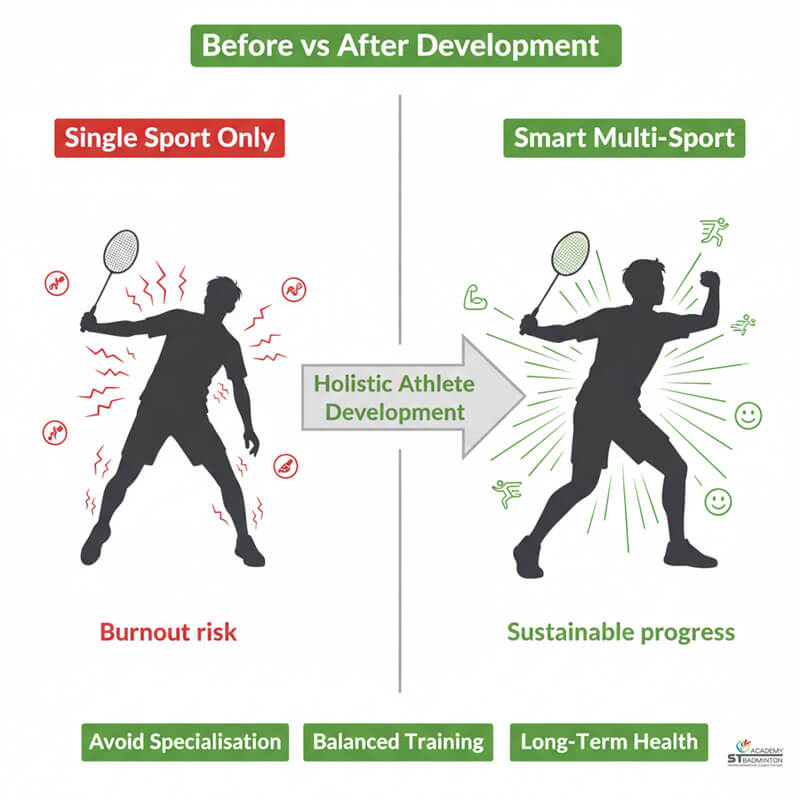
Combining badminton with complementary sports builds stronger, more resilient athletes who enjoy longer, healthier careers in Malaysian and Singaporean sports communities. Our approach emphasizes balanced development over forced early specialization, helping players stay active and motivated for many years.
| Development Area | Early Single-Sport Only | Multi-Sport With Badminton Focus BALANCED |
|---|---|---|
| Physical Development | Limited movement patterns. Higher risk of overuse injuries from repeating same motions. | Broader motor skills. Better overall strength, coordination and agility from varied activities. |
| Injury Risk | Increased overuse injuries. Same joints and muscles stressed repeatedly without variation. | Lower injury risk. Physical stress distributed across different movement patterns and body systems. |
| Mental Health | Higher pressure and burnout risk. Identity tied to single sport performance only. | Fresh motivation. Variety reduces mental fatigue and maintains long-term enjoyment of sports. |
| Skill Transfer | Narrow skill set. Limited exposure to different movement challenges and problem-solving. | Transferable skills. Football agility, swimming core strength and basketball coordination all help badminton. |
| Social Development | Limited peer groups. Only interact with same badminton teammates and environment. | Broader social connections. Meet different people and learn teamwork in various sport contexts. |
| Long-Term Participation | Higher dropout rates. Kids often quit sport completely by mid-teens due to burnout. | Sustained enjoyment. Athletes who sample multiple sports tend to stay active longer into adulthood. |
| Peak Performance Age | No guaranteed advantage. Early specialization does not predict higher achievement in most sports. | Similar or better outcomes. Research shows multi-sport athletes often reach equal or higher levels. |
Smart Multi-Sport Planning for Badminton Players in Malaysia and Singapore
This guide explains the real benefits and practical considerations of combining badminton training with other sports for long-term athletic development. ST Badminton Academy provides coaching and guidance for primary school kids, secondary students and adults in Setapak, Wangsa Maju, Cheras, Selayang and surrounding Kuala Lumpur areas, as well as for players across Singapore, who want to understand how multi-sport participation can improve coordination, strength, injury resilience and long-term enjoyment while avoiding overload. Contact us to discuss how to balance badminton with your other sporting interests in a healthy, sustainable way. Please note this is general educational information and not personal medical advice. Anyone with pain, persistent fatigue or suspected injury should consult a doctor or physiotherapist.