How to Learn Six Corners Footwork in Badminton Malaysia
This guide offers a clear, step by step introduction to Six Corners footwork for kids aged 7 and above and serious beginners in Kuala Lumpur.

Step 1: The Starting Point
Ready Position and Split Step: The Core of All Movement
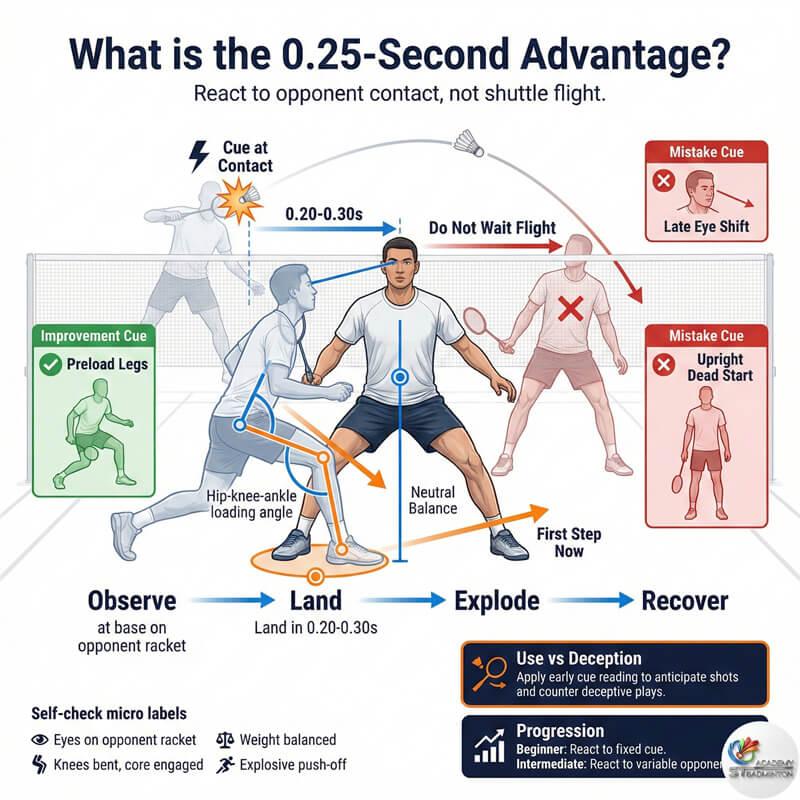
Before you can move to any of the six corners, you must have a proper home base. This is the ‘ready position’ or ‘ready stance’. It’s a balanced athletic posture at the center of the court where your feet are about shoulder width apart, knees are slightly bent, and your body weight is on the balls of your feet. Holding your racket up and in front of you is also key, as it prepares you to react to any shot. This position keeps your center of gravity low, allowing for explosive movements in any direction, which is fundamental to any badminton footwork training.
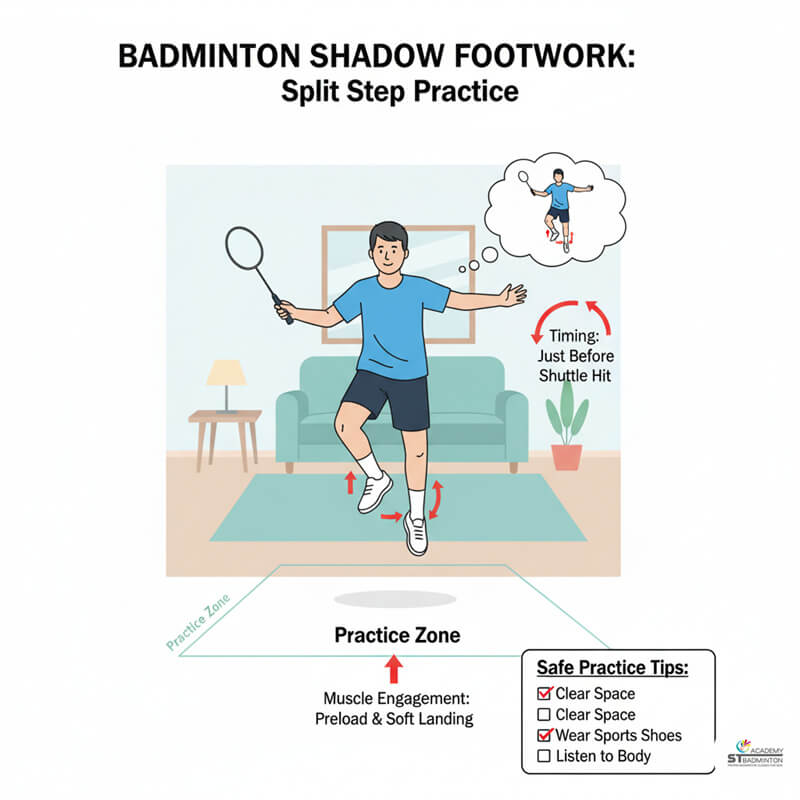
The single most important action from the ready position is the ‘split step’. This is a small, light hop that you perform just as your opponent is about to hit the shuttle. The purpose is to preload your muscles, enabling a much faster first step towards the shuttle’s direction. For safety, always land the split step softly on the balls of your feet to absorb impact and ensure you are ready to push off. A well timed split step is the trigger for efficient movement and the true starting point of the six point movement in badminton.
At our badminton academy in Kuala Lumpur, the ready stance and split step are the very first things we teach to all beginners, including kids from age 7 and above. In our small group badminton coaching, we give simple cues like calling “split!” right before the coach feeds a shuttle. This builds the reactive habit needed for real games. For students joining us from Setapak, Cheras, and nearby TAR UMT, we focus on making this foundational skill feel natural before we even start moving to the corners.

Step 2: Moving Forward
Covering the Front Court (Net Corners)
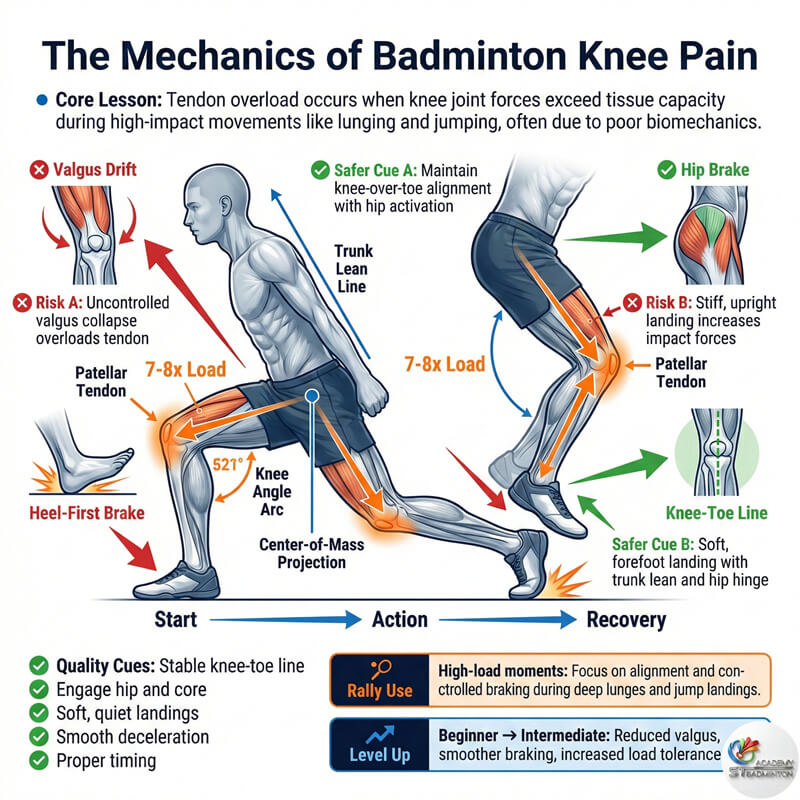
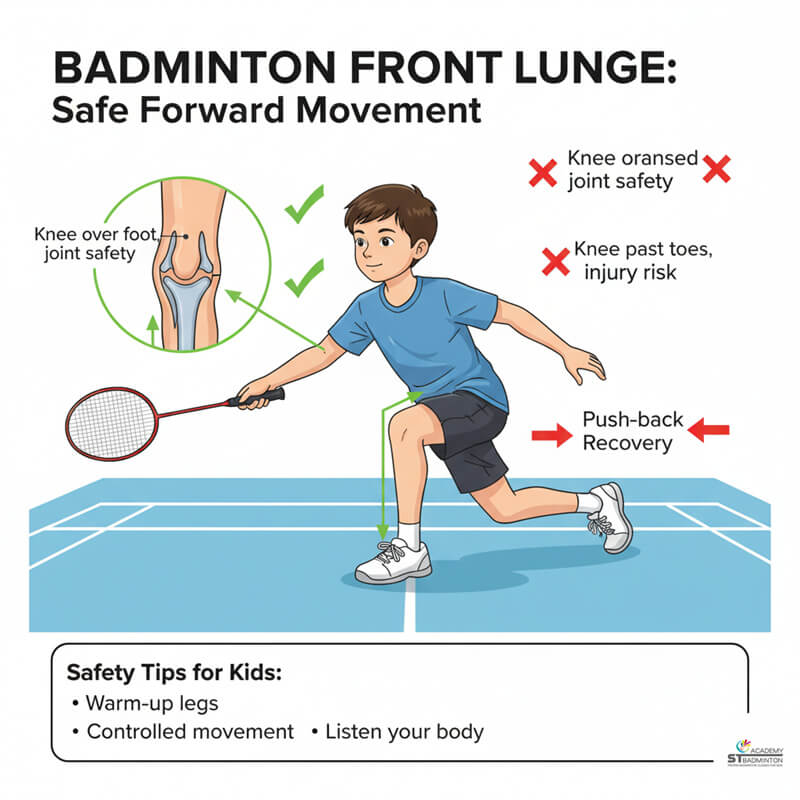
The two front corners, front left and front right—are where net shots, drops, and net kills happen. The key movement here is a controlled lunge. For a right handed player moving to the front right corner, the movement pattern after a split step is typically a step with the left foot followed by a long lunge with the right (racket) foot.
The purpose of the lunge is to cover distance quickly while keeping your body low and stable, allowing you to get under the shuttle for a controlled shot. Your final lunge step should be directed towards the shuttle with your toes pointing towards the corner.
A very common and serious mistake is lunging with the non racket leg, which collapses your core and makes recovery almost impossible. Another error is landing heavily on your heel or letting your knee extend far past your toes, which puts immense strain on the knee joint and causes imbalance. Correct form involves a wide, stable lunge with the knee aligned over the foot, ensuring you can push back to the center powerfully. Safety is paramount; always wear proper non slip indoor badminton shoes to prevent your lunging foot from slipping, which is a major cause of ankle and knee injuries.
At ST Badminton Academy Malaysia, we introduce movement to the front corners methodically. First, we teach it as a shadow footwork drill without a shuttle. We place floor markers to guide the lunge and ensure the body mechanics are correct. In our small group classes, which often include players from Wangsa Maju and Sentul, the head coach personally adjusts each player’s posture to prevent injury. We believe in building safe habits, especially for our younger players (age 7 and above) whose joints are still developing.
Step 3: Side to Side Control
Defending the Mid Court (Side Corners)
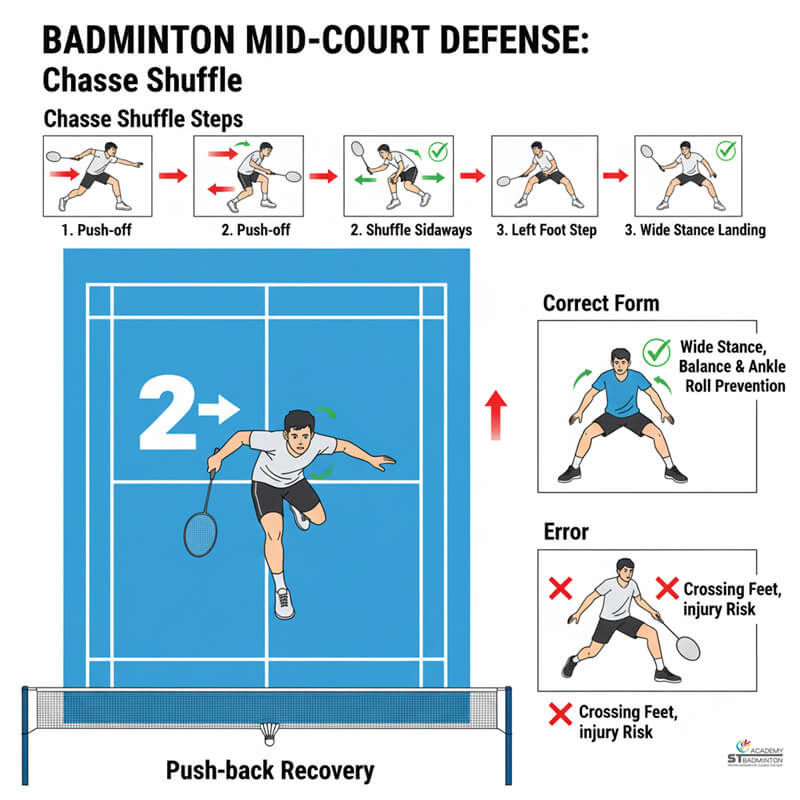
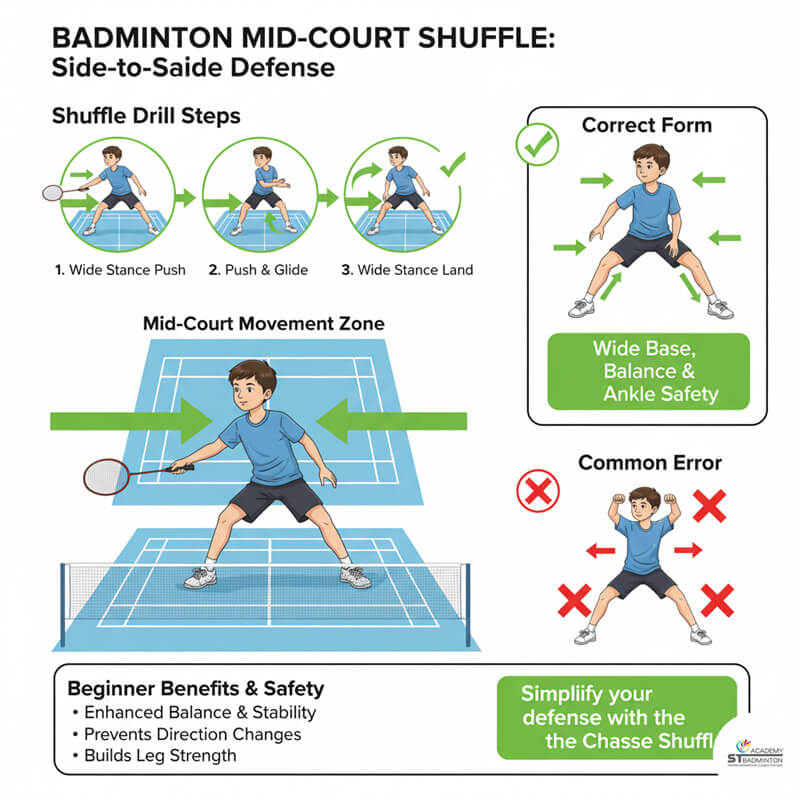
The two mid court points, on the left and right sides of the player, are primarily for defending smashes and playing drive shots. The movement here is different from the front lunge. For moving sideways, the most efficient and balanced method is the ‘chasse’ or shuffle step. Starting from your split step, you push off with the opposite foot and shuffle sideways towards the shuttle, maintaining a low, wide stance. This movement keeps your body facing the net, ensuring you are ready for a quick return and recovery.
The most common error when moving sideways is crossing one foot over the other. This action completely throws you off balance, making it slow to change direction if your opponent hits the shuttle back to the same spot or the opposite side. Correct technique is to always keep your feet apart, pushing with one leg and reaching with the other, like a side to side shuffle. In terms of safety, maintaining this stable base helps prevent ankle rolls, which are common when players get their feet tangled up. A smooth, controlled chasse keeps your movements sharp and safe.
In our badminton class for beginners, we teach the chasse step using simple drills that are easy to follow. We often work in pairs to make it interactive for our students, many of whom come from Cochrane and Taman Maluri areas, easily accessible from MRT Cochrane. The head coach provides direct oversight in our small groups of 4 to 6 students, ensuring each player develops a feel for the rhythm of the shuffle. Mastering this side movement is a major milestone in building a complete six corners footwork map.
Step 4: Reaching the Back
Moving to the Rear Court (Back Corners)
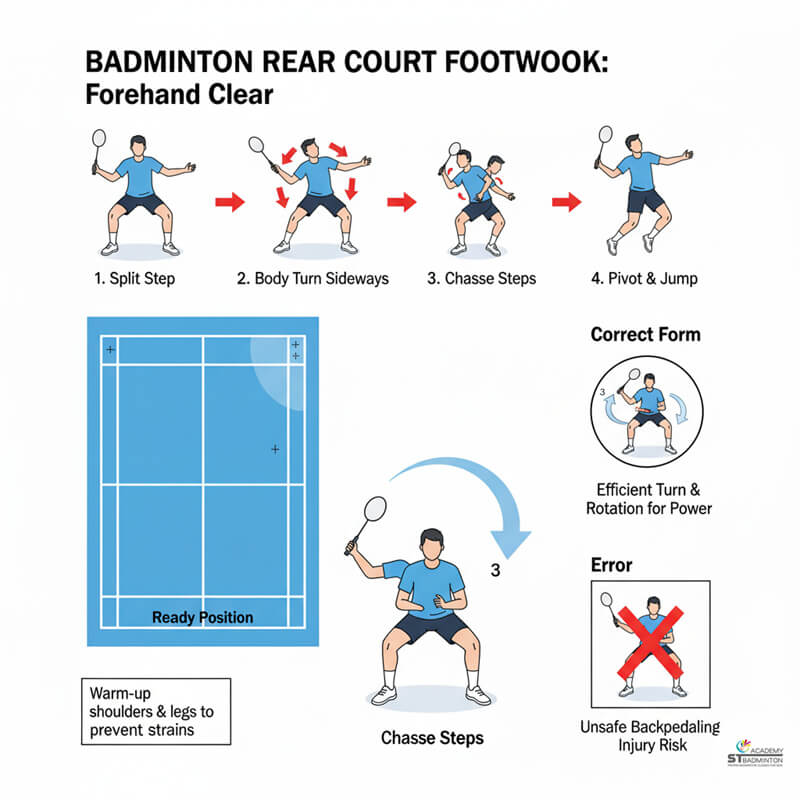
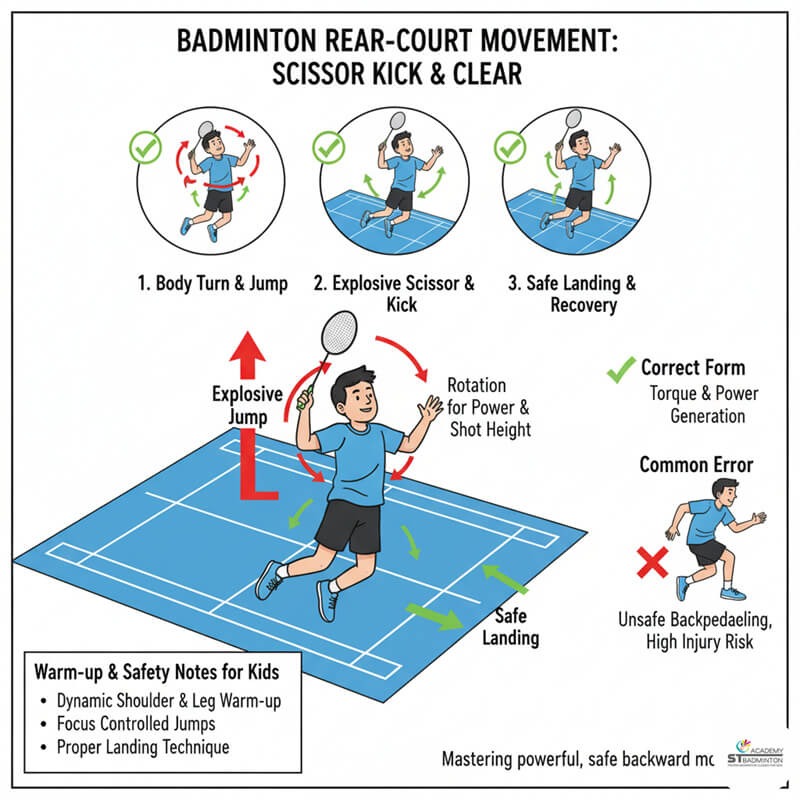
Moving backwards efficiently to hit powerful clears and smashes is often the most challenging part of the six corners footwork for beginners. The goal is to get behind the shuttle quickly. For the forehand rear corner, a common pattern involves a split step, followed by turning the body sideways and using a combination of chasse steps and a final jump or pivot to hit the shuttle. This rotation is crucial for generating power from the body, not just the arm. For the backhand corner, players can either pivot to hit an ‘around the head’ forehand shot or use specific backhand footwork.
The absolute biggest mistake is backpedalling—running backwards while facing the net. This is slow, unstable, and positions your body poorly for a powerful shot. Safety is critical here, especially in small group settings. Players must be aware of their space to avoid collisions. A thorough warm up of the shoulders and legs is also essential to prevent strains when executing the explosive movements required for rear court shots.
At our badminton academy, located near landmarks like Setapak Central Mall, we teach rear court movement progressively. We first ensure a player has mastered recovery from the front and mid court corners before introducing the more complex back corners. We break down the turning motion into simple steps, often having players practice without a racket first to feel the body rotation. This step by step process builds coordination and confidence safely, guided by a coach with over 15 years of experience in developing young players.
Step 5: Putting It All Together
Recovery and Linking All Six Points
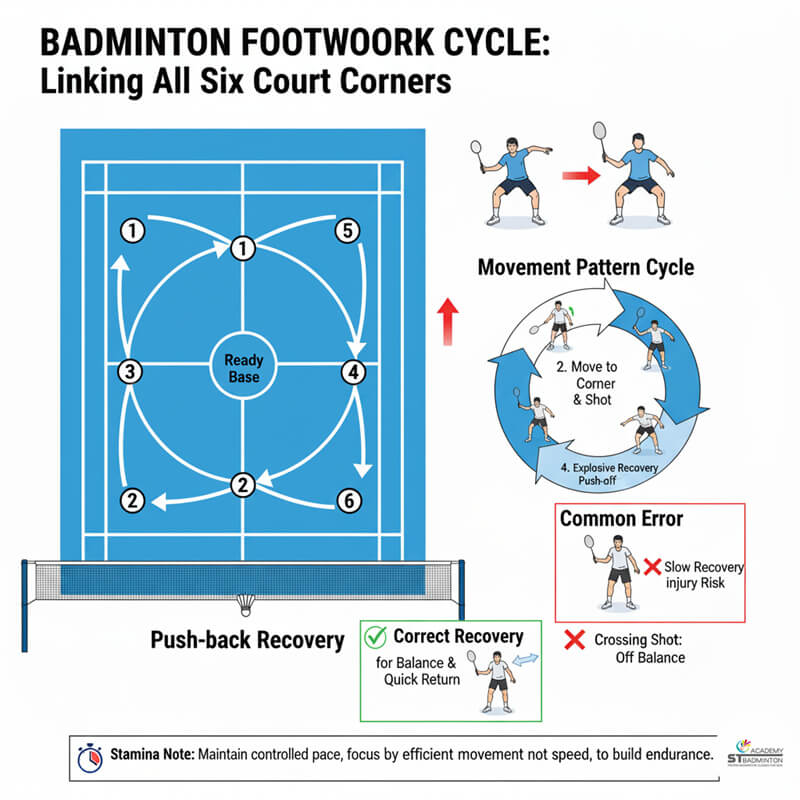
Moving to a corner is only half the battle. The most vital part of the six corners footwork is the recovery, the immediate return to the central base position after hitting every shot. A good recovery allows you to cover the next shot, no matter where your opponent places it. The cycle is always: ready at base -> split step -> move to the corner -> hit the shot -> push off and recover to base. This complete cycle defines the six point movement in badminton. It turns isolated steps into a continuous, flowing pattern across the court.
The most common mistake beginners make is admiring their own shot. They hit the shuttle and stand still in the corner to see where it lands, which leaves the rest of the court wide open. Correct technique involves an explosive push off from your lunging leg the moment you make contact with the shuttle, taking quick recovery steps back to the centre. Drifting away from the central base is another error, making it harder to reach the next shot. For safety, this continuous movement requires good stamina. In training, we ensure players maintain a controlled pace to avoid fatigue related injuries like stumbles or poor landings.
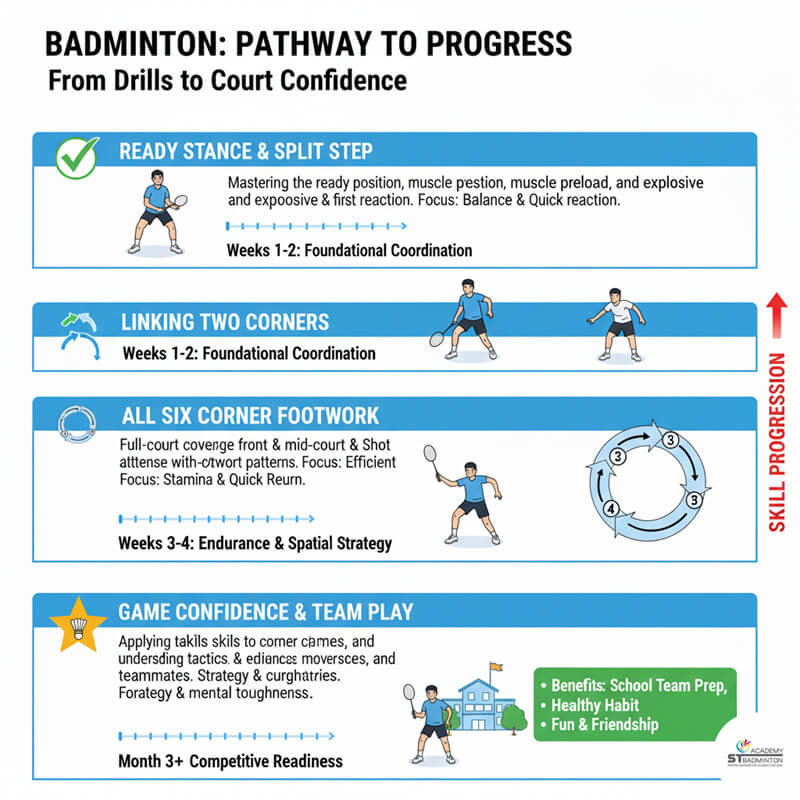
In our kids badminton training and beginner classes in Kuala Lumpur, linking the corners is taught systematically. We don’t just ask players to run randomly. We start by linking two corners (e.g., front right and back left), then four, and finally all six. Our small group format ensures the head coach can closely watch each player’s recovery steps, offering immediate correction. This is not a casual drop in gym session; it’s a structured programme designed to build correct habits steadily, with short checks before moving to more complex patterns.
Pathway to Progress
From Drills to Court Confidence
Mastering the six corners footwork is the gateway from simply hitting a shuttle to truly playing the game of badminton. Efficient movement is what links your shots together and turns defensive situations into attacking opportunities. It is the engine that drives your entire game, and learning it correctly builds a powerful advantage that stays with you throughout your playing journey.
The confidence gained from knowing you can cover the court prepares young players for the demands of school teams and CCA sessions. When a player has solid movement patterns, they can focus more on shot quality and strategy. This is why our in person badminton training programme prioritises movement skills from day one. Every session is guided directly by our head coach, ensuring that these crucial skills are built correctly for long term development.
Our Coaching Approach
Why Step by Step Learning Matters
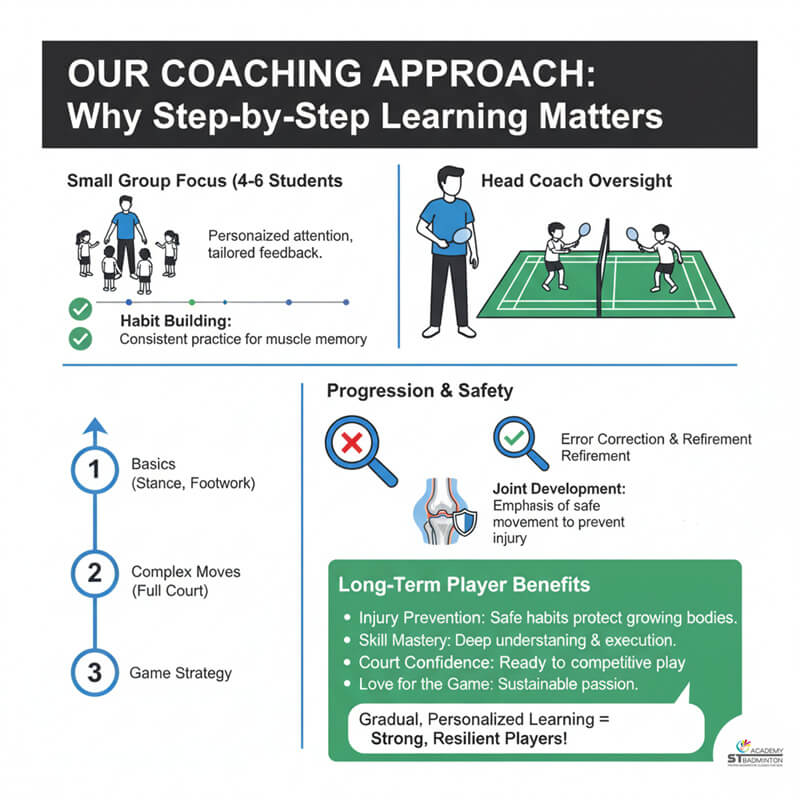
In badminton, trying to do too much too soon leads to poor habits that are difficult to correct later. That’s why we emphasize a clear, step by step learning progression. Players must feel comfortable with the ready stance and split step before moving to corners. They master forward movement before tackling the more complex rear court footwork. We believe in building habits steadily, not rushing to hit smashes on day one.
With over 15 years of coaching experience, our method prioritises safe, technically sound development. To ensure every player gets the attention they need, our group sizes are capped at 4 to 6 students. This allows for constant, individualised correction, which is essential for mastering something as detailed as six corners footwork. Our training sessions have a clear plan that players and parents can see and understand.
Parent Questions About Six Corners Footwork Training
Common questions from parents in Kuala Lumpur considering structured badminton footwork training for their child.
What exactly is “Six Corners footwork” in badminton?
Six corners footwork is a systematic way of moving that covers the entire court. The six points are the front left and front right (net area), the mid court left and right (for defence/drives), and the rear left and rear right (for clears/smashes). It is a complete movement cycle: starting from a central base, moving to a corner to play a shot, and then immediately recovering back to the base to prepare for the next shot. It’s the foundation of efficient court coverage.
Can a complete beginner or a 7 year old learn this?
Yes, absolutely. For kids age 7 and above and beginners, we teach it progressively. We don’t expect them to cover all six corners perfectly on day one. We start with the ready stance, split step, and movement to just two corners. As they build coordination and strength, we gradually add more corners. The pace is always adjusted to the student’s ability, with a strong focus on safety and correct technique to prevent injuries and build a strong foundation for future skills.
How many students are in a group and who teaches?
We keep our training groups small to ensure quality and personalised attention. Each badminton footwork training class is capped at a maximum of 4 to 6 students per coach. This allows for detailed, hands on corrections for every player. Importantly, all sessions are guided directly by our experienced head coach, ensuring that every student benefits from the highest level of instruction and consistent feedback, instead of being passed to junior assistants.
How do you prevent knee and ankle injuries?
Injury prevention is our top priority. We ensure safety by insisting on proper indoor court shoes with good grip and cushioning. We teach correct landing techniques, especially for lunges, to minimise stress on the knees. Our step by step approach also prevents injuries by ensuring players build foundational strength and coordination before attempting full speed, high impact movements. Regular warm ups and emphasizing controlled, balanced movements are core parts of our safety first coaching philosophy.
Where in Kuala Lumpur are training sessions held?
Our training sessions are conducted at dedicated badminton courts primarily in Setapak, Kuala Lumpur. This location is highly accessible for families living in surrounding areas like Wangsa Maju, Cheras, and Sentul. It’s also convenient for those commuting via public transport, being situated near transit points such as the LRT Sri Rampai and MRT Cochrane stations. We aim to provide professional badminton training in a convenient and safe indoor environment for the local community.
Does this help prepare my child for their school team (CCA)?
Yes, absolutely. Strong footwork is one of the key skills school coaches look for during CCA selections. A player who can move efficiently and cover the court with balance will always stand out. This training moves beyond casual hitting and builds the real athletic skills needed for competitive play. It gives your child the confidence and technical ability to perform well in trials and contribute effectively to a school team, setting them up for a successful and enjoyable badminton journey.
See The Basics in Action
Proven Progress for Young Beginners
Starting with structured footwork training gives children a significant advantage in coordination, speed, and overall court sense. Our professional approach ensures they build correct movement patterns for a lifelong love of badminton.
| Training Element | Casual Social Games | ST Academy Footwork Training STRUCTURED |
|---|---|---|
| Movement Habits | Random running, often reinforces bad habits like crossing legs or being flat-footed. | Builds correct muscle memory for split steps, lunges, and recovery from the start. |
| Injury Risk | Higher risk of strains from incorrect movements, heavy landings, and poor balance. | Focuses on safe, biomechanically correct motions that protect a player's joints. |
| Court Coverage | Slow and inconsistent, often late to the shuttle and leaving gaps on the court. | Drills are designed to rapidly improve court coverage, balance, and agility. |
| Stamina | Player gets tired quickly from inefficient, high-energy running patterns. | Teaches efficient movement patterns that conserve energy for longer rallies. |
| CCA/School Team Prep | May lack the fundamental movement skills that coaches look for in trials. | Directly prepares players with the core athletic skills needed to compete confidently. |
| Skill Progression | Players hit a skill ceiling because their footwork cannot support advanced shots. | Creates a strong physical base, allowing players to learn advanced skills faster. |
| Coach Feedback | Little to no specific feedback on movement in a large, casual group setting. | Small groups (4-6 players) ensure direct, consistent correction from the head coach. |
Ready for In Person Badminton Training in Kuala Lumpur?
This guide is the first step to understanding proper movement. When you are ready to put this knowledge into practice with professional feedback, our academy is here to guide your progress. Training is in person badminton training in Malaysia; we do not offer online or virtual classes. Our programme is structured, small group coaching designed for serious learners, not a casual gym session. Contact us to learn about class schedules for kids and beginners in Setapak, Wangsa Maju, and Cheras.